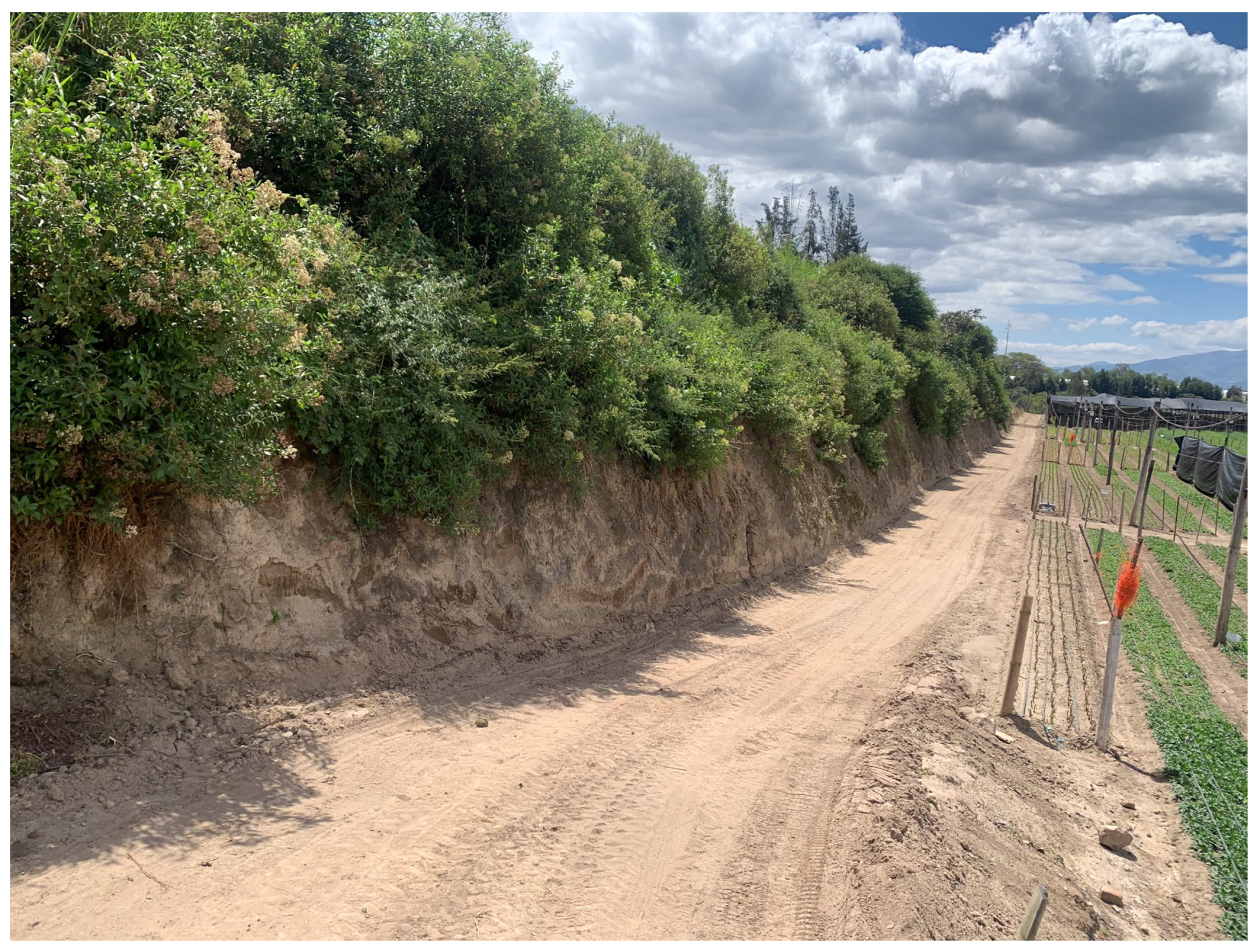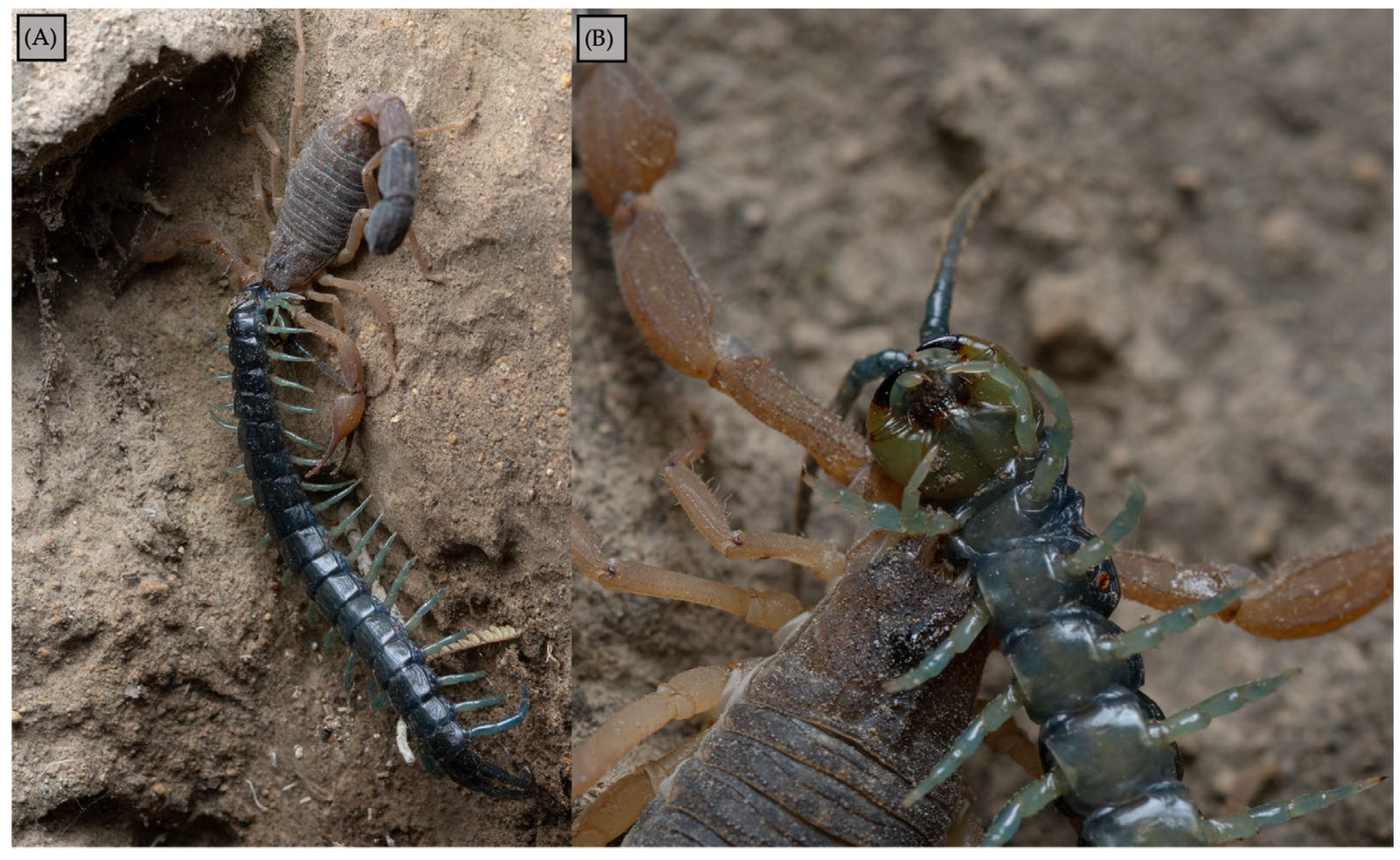


Predation of a Scolopendrid Prey by the Scorpion Tityus pugilator Pocock, 1898, in a Horticultural Landscape of Quito, Ecuador

 ,
, 
Abstract
Share and Cite
Espinoza-Regalado, A.; Quirola, D.R.; Salazar-Valenzuela, D.; Lüddecke, T. Predation of a Scolopendrid Prey by the Scorpion Tityus pugilator Pocock, 1898, in a Horticultural Landscape of Quito, Ecuador. Diversity 2025, 17, 684. https://doi.org/10.3390/d17100684
Espinoza-Regalado A, Quirola DR, Salazar-Valenzuela D, Lüddecke T. Predation of a Scolopendrid Prey by the Scorpion Tityus pugilator Pocock, 1898, in a Horticultural Landscape of Quito, Ecuador. Diversity. 2025; 17(10):684. https://doi.org/10.3390/d17100684
Chicago/Turabian StyleEspinoza-Regalado, Amalia, Diego R. Quirola, David Salazar-Valenzuela, and Tim Lüddecke. 2025. "Predation of a Scolopendrid Prey by the Scorpion Tityus pugilator Pocock, 1898, in a Horticultural Landscape of Quito, Ecuador" Diversity 17, no. 10: 684. https://doi.org/10.3390/d17100684
APA StyleEspinoza-Regalado, A., Quirola, D. R., Salazar-Valenzuela, D., & Lüddecke, T. (2025). Predation of a Scolopendrid Prey by the Scorpion Tityus pugilator Pocock, 1898, in a Horticultural Landscape of Quito, Ecuador. Diversity, 17(10), 684. https://doi.org/10.3390/d17100684