Abstract
Prince Mohammed bin Salman Royal Reserve (PMBSRR or the Reserve) is located in the northwest of Saudi Arabia and covers an area of 24,500 km2 of both marine and terrestrial ecosystems. Bat surveys have been undertaken between 2022 and 2024 across PMBSRR as part of the Reserve’s groundbreaking conservation efforts and this is the first published checklist of the bat species present within the Reserve. Survey methods included bat capture, roost inspection, and acoustic recordings. Tissue and faecal samples were taken during the surveys and compared to a global database to confirm the species present. The survey results confirmed the presence of 18 species belonging to 14 genera of eight families. This research has greatly expanded our knowledge on the diversity of bats within the Kingdom, increasing the reported bat species in the Tabuk region by seven species, with the addition of Rhyneptesicus nasutus, Rhinolophus hipposideros, Nycteris thebaica, Tadarida aegyptiaca, Rhinopoma microphyllum, Taphozous nudiventris, and Taphozous perforatus and increasing the number of species within Saudi Arabia by one species, with the addition of Vansonia rueppellii.
1. Introduction
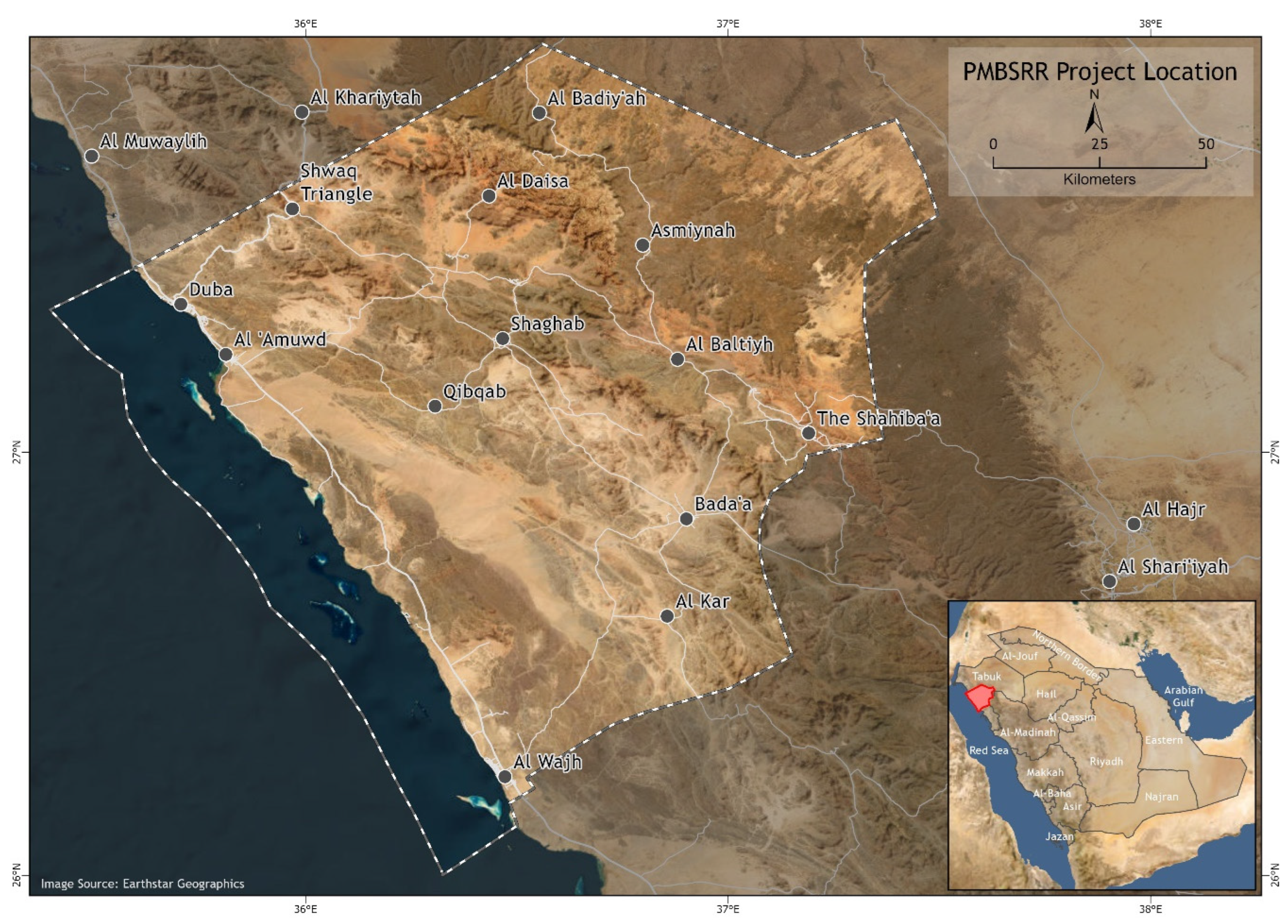
Prince Mohammed bin Salman Royal Reserve (PMBSRR or Reserve), established in June 2018 by Royal Decree, is located in the northwest of Saudi Arabia, largely in the Tabuk region, but its southeastern area extends into the Madinah region (Figure 1). The Reserve has a total footprint of 24,500 km2 with a terrestrial footprint of 20,500 km2.
Figure 1.
Geographical context of PMBSRR (source Earthstar Geographics).
The PMBSRR Development Authority (the Authority) is mandated to conserve, protect, and restore the ecological diversity and functionality present over 100 years ago. To achieve this, the Authority will implement a series of conservation strategies, as outlined in its Integrated Development Management Plan, that will aim to restore vegetation communities and habitats, which will, subsequently, improve foraging opportunities for many species, including bat fauna.
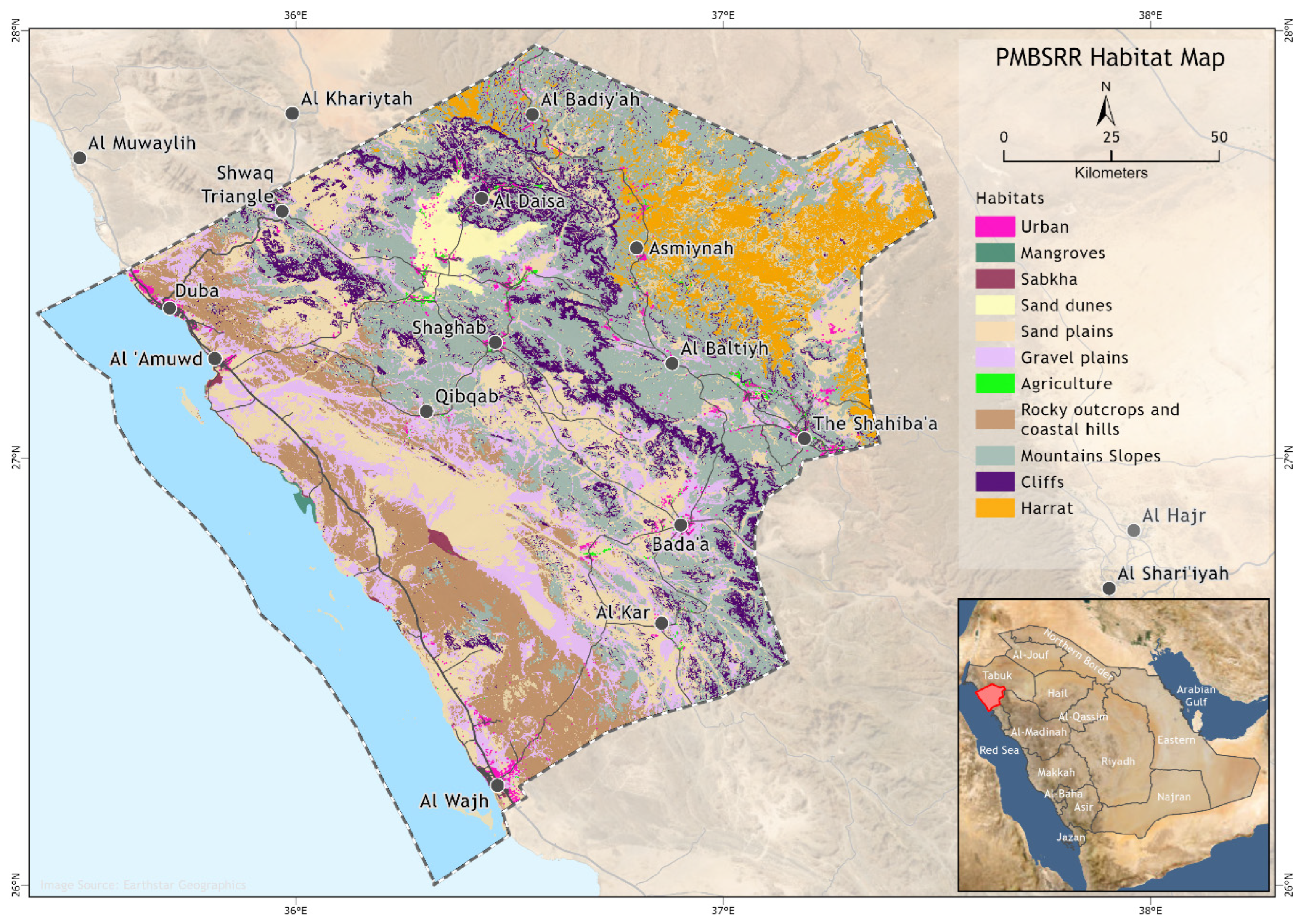
The Reserve includes coastal habitats and adjacent sand/gravel plains and rocky hills gradually rising through the expanse of flat sand/gravel desert of the Rangelands and up to the high Hejaz Mountains and deep narrow wadis. The land continues to rise up a steep escarpment to an area of volcanic rock hills and wadis. The habitats are largely defined by geology, topography, and rainfall patterns with a distinct east-west trend (Figure 2).
Figure 2.
PMBSRR Habitat Map (source PMBSRR, 2023).
Bats in Saudi Arabia have historically been under-recorded and under-researched. Initial research was conducted by Cheesman [1], Morrison-Scot [2], Hayman and Harrison [3], and Harrison [4,5]. However, throughout the 1970s, the majority research was undertaken by Nader [6,7,8,9], then by both Nader and Kock [10,11,12,13,14], and, finally, by Harrison and Bates [15]. After 1990, research on bats within Saudi Arabia was minimal; however, a publication on the Bats of the Tabuk province [16] provides information on the diversity of species based on a single short study identifying individuals caught by mist net. The majority of this research, however, predates more modern survey techniques such as the use of full spectrum bat detectors.
Although acoustic surveying is a vital method used globally to determine the presence of bats, the challenge arises when there is little published data on the echolocation calls of bats, as is the case in Saudi Arabia. Al Obaid et al. [17] provides recent insight to the bats of Saudi Arabia; however, details regarding the species composition across the north of the Kingdom are limited. This paper estimates that up to four species are present within the north of the Kingdom, including the Reserve area [17], whereas this research has indicated at least 18 species, including a number of species new to Tabuk, and a first record of Vansonia rueppellii for Saudi Arabia.
Al Obaid et al. [17,18] has summarised the total number of species present in Saudi Arabia as 31, comprising of 22 genera and 10 families.
The survey effort to date emphasises the lack of current knowledge on bats within the Kingdom, and the real need for further research and survey.
This paper briefly illustrates the species recorded within the Reserve between 2022 and 2024, providing important information on the diversity of bats within the Tabuk region of northwest Saudi Arabia, as well as within Saudi Arabia as a whole.
2. Materials and Methods
This research was conducted utilising a range of survey techniques, with mist net or harp trap surveys undertaken across 96 nights between 2022 and 2024 to identify species in-hand, whilst 573 acoustic survey nights were completed during the same period to identify species distribution and habitat usage. Diurnal searches were competed across the Reserve to identify roosts.
Diurnal surveys consisted of searching the survey areas for bat roost features such as caves, empty buildings, and natural rock structures.
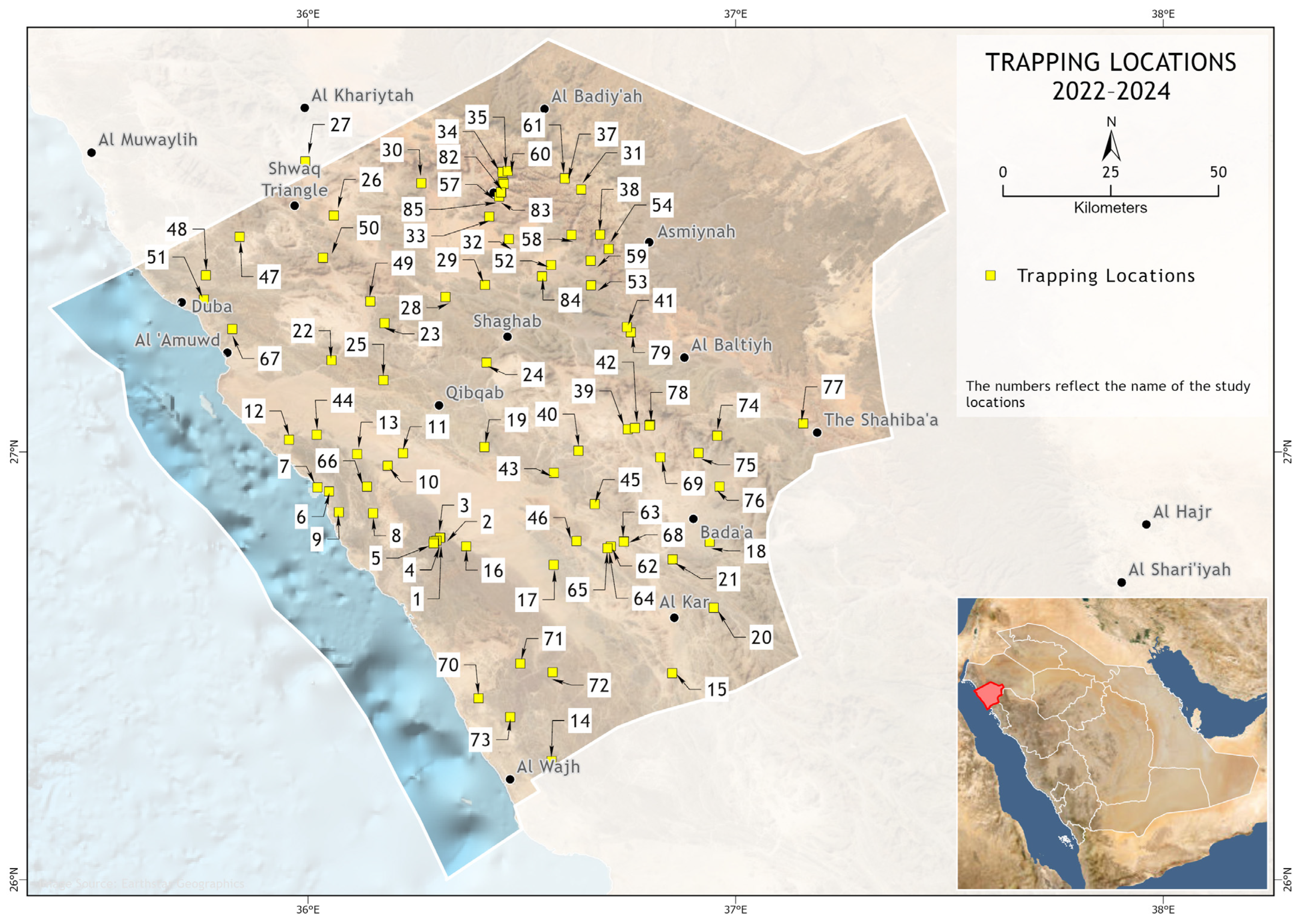
Trapping surveys were undertaken at a range of sample locations within the survey areas. Efforts were focussed on features that are considered important resources to desert bats, such as water sources or sheltered vegetated areas. A variety of Ecotone Ultra Thin Series M mist-nets were utilised during the surveys; these were either 14 mm or 20 mm and 6 m, 9 m, or 18 m in width and 3.2 m or 2.4 m high, occasionally used at double height using 6 m mist net poles. From 2023, a small 3-bank ‘tabletop’ TrapR harp trap was also utilised at cave locations. Titley Scientific Anabat Walkabout detectors were used during the trapping surveys to gather acoustic information on the bats on release, and to identify species present that may not be represented by trapping. Kaleidoscope Pro and Titley Insight software was used to analyse the call on release files from each bat, to be subsequently used to identify calls recorded on static recording surveys, alongside studies from the wider region. Biometric data were taken from each bat captured, including their weight (g), 1st finger, 3rd finger, 5th finger (2023 onwards), hind foot, forearm, ear length, tragus length, tail length, and total length (mm). Trapping locations are detailed in Figure 3 and cross referenced within Table 1.
Figure 3.
PMBSRR Trapping Locations.
Table 1.
Location of trapping surveys.
Samples taken from captured bats included plucked fur (including follicle), 2 mm wing membrane punch, or faeces. No specimens were collected as part of this study. Samples were stored in Eppendorf tubes, labelled using permanent marker, and kept within a cool box during transport and a refrigerator during storage. A selection of the samples was analysed by Applied Genomics in the United Kingdom. The analyses targeted the mitochondrial Cytochrome B (CytB) gene. A variety of primers were used for identification. CytB Mammal primers were used to produce a 725 bp amplicon that was matched against the NCBI non-redundant nucleotide database using Basic Local Alignment Search Tool (BLAST). Where the sample did not cover the CytB region from GenBank references, CytB Hänfling was used and covered an additional 255 bp. A custom primer combination, CytB Full, was created by Applied Genomics, using Hänfling et al. [19] forward primer and a significantly modified version of the Benda et al. [20] reverse primer. This achieved better coverage of the CytB gene, resulting in improved taxonomic resolutions. The accession numbers noted within the results are unique identifiers assigned to a record in GenBank sequence databases.
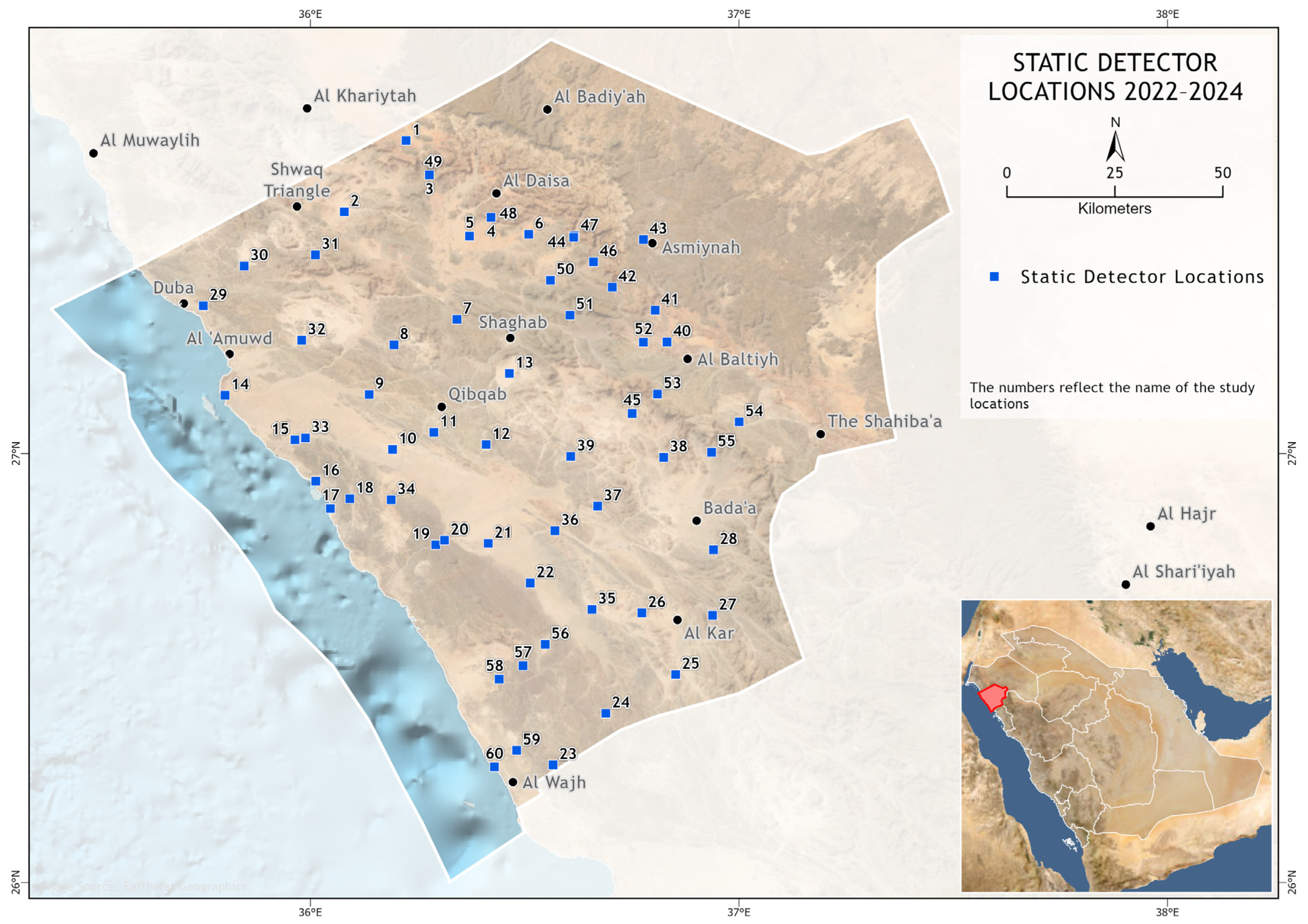
Full spectrum, Titley Anabat Swift detectors, were deployed during the static surveys, resulting in 573 recording nights. Kaleidoscope Pro was used to analyse calls recorded across the Reserve, utilising the known call on release files as reference, alongside a range of studies from the region. Static recording locations are detailed in Figure 4, and cross referenced within Table 2.
Figure 4.
PMBSRR Static Recording Locations.
Table 2.
Location of Static Recording surveys.
3. Results
A total of 327 individuals were captured during the mist netting sessions, supplemented with acoustic records during the 2022 and 2024 surveys. The results of these studies unequivocally confirmed the presence of 18 bat species belonging to 14 genera of eight families. Table 3 shows the species present, how they were recorded, and the literary significance of the record.
Table 3.
Species present within PMBSRR, record type, and literary significance.
Species which were captured were subject to DNA analysis and the results are detailed within Table 4.
Table 4.
Species captured within PMBSRR DNA Results.
Family: Vespertilionidae
Arabian barbastelle|Barbastella leucomelas (Cretzschmar, 1830)
Previous records: Barbastella leucomelas was recorded for the first time in Saudi Arabia within Tabuk province at Alagan-Algtar in 2016 [16].
Reserve distribution: Distribution of B. leucomelas within the Reserve is clustered to the north, in the southern reaches of the Hisma desert.
Habitats: Habitats where this species has been recorded include sand dune, sand plains, gravel plains, agriculture, mountain slopes, cliffs, and harrats (volcanic fields).
Observations: Evidence indicating reproduction within the Reserve was observed, including swollen testes in males in October and bald nipples in females in May.
Identification: B. leucomelas was identified through DNA analysis and from discreet morphological features such as the presence of a small lobule on the posterior margin of the pinna and the pelage colour, as noted within Benda et al. [21].
Desert long-eared bat|Otonycteris hemprichii (Cretzschmar, 1830)
Previous records: Within Saudi Arabia, Otonycteris hemprichii has been recorded from Hufuf [1], Hail and Anaiza [2], Taif [22], and Riyadh [23]. In Tabuk province, it is known from That al Haj [16] and, more recently, recorded in Abha and Al Ehsa [17].
Reserve distribution: O. hemprichii is widespread and common across the Reserve, with more records inland towards the mountains.
Habitats: Habitats where this species has been recorded include urban, sand dunes, sand plains, gravel plains, agriculture, rocky outcrops and coastal hills, mountain slopes, cliffs, and harrats.
Observations: Males in reproductive condition (swollen testes) were observed in October, with pregnant females recorded in both October and May, indicating two maternity seasons within the Reserve.
Identification: O. hemprichii is a distinctive large, long-eared bat, which is unlikely to be confused with any other species. It was confirmed through DNA analysis, and bats captured in the Reserve were as described in Dietz [24].
Botta’s serotine|Eptesicus bottae (Peters, 1869)
Previous records: In Saudi Arabia, Eptesicus bottae is has been reported from Misfera [14] and Bish [25], while it has been recorded within Tabuk province from Alagan-Algtar [16]. Al Obaid et al. [17] provide more recent records from Al Madinah, Al Munawwarah, Jeddah, and NEOM, a region in the northwest of Saudi Arabia.
Reserve distribution: E. bottae is common and widespread across the Reserve, utilising a wide range of habitats from the coastal regions towards the mountain regions.
Habitats: Habitats where this species has been recorded include urban, sand dunes, sand plains, gravel plains, agriculture, rocky outcrops and coastal hills, mountain slopes, cliffs, and harrats.
Observations: Evidence of reproduction was observed in May (bald nipples in females), and juveniles in flight (foraging at water trough) were observed in early May, indicating an early maternity period, likely beginning in March, within the Reserve.
Identification: E. bottae was identified through DNA analysis.
Christie’s long-eared bat|Plecotus christii (Gray, 1838)
Previous records: Within Saudi Arabia, Plecotus christii has been previously reported from Misfera, north of Abha [26], while in Tabuk province, it has been recorded within the Al-Bogaz tunnel of the Hejaz railway [16]. Al Obaid et al. [17] provide recent records from within northwestern Tabuk (NEOM).
Reserve distribution: P. christii records were associated with the northeast of the Reserve, within the southern reaches of the Hisma desert; however, a few other records exist within the sheltered wadis within the central mountain range.
Habitats: Habitats where this species has been recorded include sand dunes, sand plains, gravel plains, agriculture, rocky outcrops and coastal hills, mountain slopes, cliffs, and harrats.
Identification: P. christii was confirmed through DNA analysis.
Sind serotine bat|Rhyneptesicus nasutus (Dobson, 1877)
Previous records: IUCN indicated this species range extending from just north of Jeddah, south and along the east coast of Saudi Arabia, with no known occurrences within the Tabuk/Madinah region. Rhyneptesicus nasutus was not known to occur within Tabuk region; therefore, these records extend this species range in Saudi Arabia, and globally.
Reserve distribution: R. nasutus is widespread within the Reserve, from the coastal habitats to the mountain habitats.
Habitats: Habitats where this species has been recorded in PMBSRR include urban, sand dunes, sand plains, gravel plains, agriculture, rocky outcrops and coastal hills, mountain slopes, cliffs, and harrats.
Observations: Evidence indicating that this species breeds within the Reserve was observed, with bald nipples observed in the females in May and dark, filled epididymis in the males in October. Distinctive strong, musky odour.
Identification: R. nasutus was confirmed through DNA analysis.
Desert pipistrelle|Hypsugo ariel (Thomas, 1904)
Previous records: Hypsugo ariel has been previously recorded in Saudi Arabia [21], and more specifically, within Tabuk [16]. Recent records provided by Al Obaid et al. [17] indicate the presence of this species within Abha, Al Madinah Al Munawwarah, Ibex Reserve, and northwestern Tabuk (NEOM).
Reserve distribution: H. ariel is widespread across the Reserve, being the most commonly captured species.
Habitats: Habitats where this species has been recorded in PMBSRR include sand dunes, sand plains, gravel plains, agriculture, rocky outcrops and coastal hills, mountain slopes, cliffs, and harrats.
Observations: Evidence indicating that this species breeds within the Reserve was observed, with bald nipples observed in the females during May, and dark, filled epididymis in the males during October. Juveniles were recorded in flight during May.
Identification: H. ariel was confirmed through DNA analysis. Biometrics of individuals captured fall within the morphology described in Dietz [24].
Rüppell’s bat|Vansonia rueppellii (J. Fischer, 1829)
Previous records: No previous records within Saudia Arabia.
Reserve distribution: A single Vansonia rueppellii individual was captured within the Reserve, representing the first and only confirmed record to date within Saudi Arabia. Within the Reserve, the species appears to be a relatively solitary bat, having been captured once in over 100 nights of survey effort spanning a three-year period [27].
Habitats: The habitats where this individual was captured, freshwater and riparian, are typical of the known foraging habitat of this species.
Observations: The individual was captured in autumn, whereas all other surveys were completed during spring, potentially indicating a seasonal migrant, or an extremely scarce species within Saudi Arabia.
Identification: V. rueppellii was confirmed through DNA analysis.
Family Rhinolophidae
Lesser horseshoe bat|Rhinolophus hipposideros (Bechstein, 1800)
Previous records: Rhinolophus hipposideros has been recorded from Taif, Al Alys and Mothra, Al Maween north of Abha [9] with more recent records from Abha [17]. Although it is shown on the IUCN Range as being present down the eastern side of Saudi Arabia, no studies on the species being present within Tabuk have been published; therefore, these records extend this species range.
Reserve distribution: Two R. hipposideros were captured during the surveys, and acoustic records for this species were relatively rare across the Reserve, with distribution limited to the eastern and inland areas within the Reserve.
Habitats: Habitats where this species has been recorded in PMBSRR include sand dunes, sand plains, gravel plains, mountain slopes, cliffs, and harrats.
Identification: R. hipposideros was confirmed through DNA analysis.
Geoffroy’s horseshoe bat|Rhinolophus clivosus (Cretzschmar, 1828)
Previous records: Rhinolophus clivosus has been previously recorded from Al Moatham Castle [16] in Tabuk, Mekka, Muwailih, Taif [2], Wadi Ad Dawasir [7], NNE Abha, Al Baha, Al Hajeb, Al Naji, Al Mothra, Raydah escarpment, Jabal Tuwaiq, and Taif [9] as described within Al Obaid et al. [17].
Reserve distribution: This species is considered one of the rarer species within the Reserve, with a distribution restricted to the northeast.
Habitats: Habitats where this species has been recorded in PMBSRR include sand dunes, sand plains, gravel plains, agriculture, mountain slopes, cliffs, and harrats.
Observations: A pregnant female was captured, indicating reproduction within the Reserve in May.
Identification: R. clivosus was confirmed through DNA analysis.
Family: Hipposideridae
Trident leaf-nosed bat|Asellia tridens (Geoffroy, 1813)
Previous records: Asellia tridens has been recorded in Saudi Arabia, in Hufuf, Jeddah [1,2]; near Usfan, NW of Mecca and Durma [7]; and in Abha, near Taif and south of Riyadh [23]. Within Tabuk province, the species is known from the farming area in Al Bedea’a [16]. More recent records from Al Obaid et al. [17] include Ara’ar, Ben Rasheed Cave, and Jal Al Mazour.
Reserve distribution: A. tridens was one of the most infrequent species within PMBSRR, only recorded acoustically, having a relatively wide distribution but being recorded very infrequently.
Habitats: Habitats where this species has been recorded in PMBSRR include sand plains, rocky outcrops and coastal hills, mountain slopes, and cliffs.
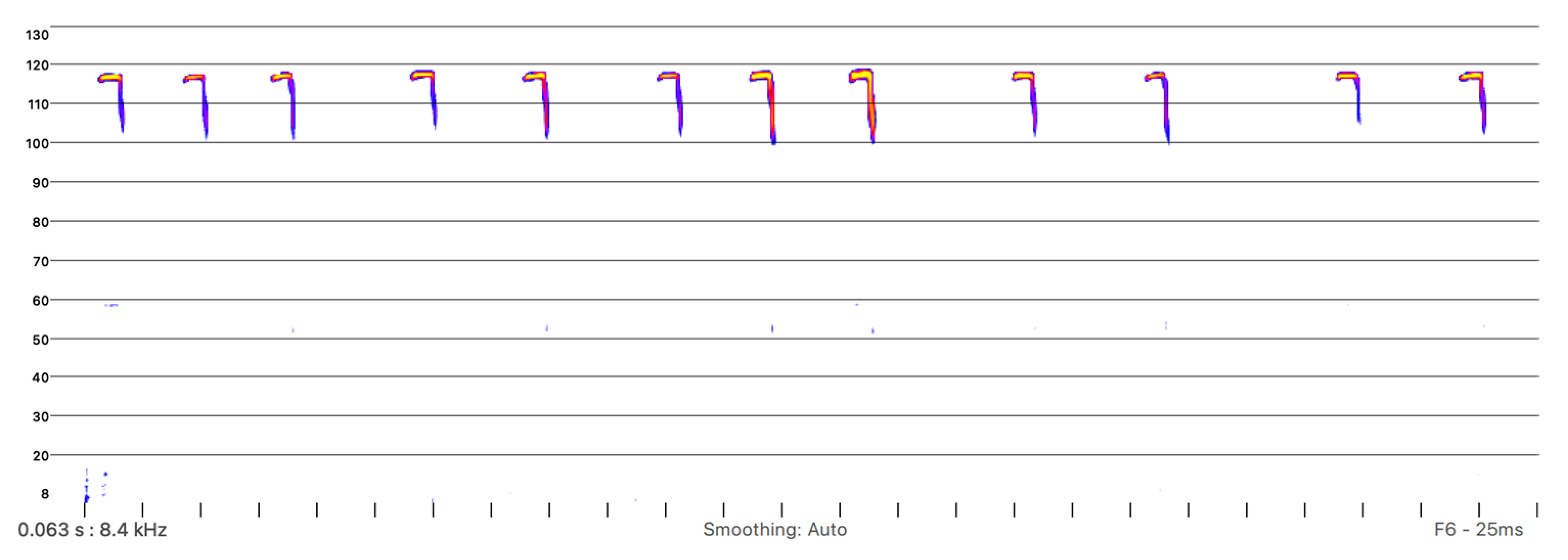
Identification: A. tridens was identified through acoustic records only. Their calls are distinctive, with peak frequencies at around 120 kHz., as detailed in Hackett et al. [28].
Family: Nycteridae
Egyptian slit-faced bat|Nycteris thebaica (É. Geoffroy Saint-Hilaire, 1813)
Previous records: Within Saudi Arabia, Nycteris thebaica has been recorded in Al Menshar, Far’a Alradadi, Wadi Khadhrah, and Wadi Jizan Dam [17]. Historical records include Jeddah, Najran [2], Jizan, Sabya [23], Abha, Ahad Rufaida, Al Jowa, Al Mothra, Ben Yeshden, Buraiman, and Dir’iyah near Riyadh [11]. This species has no previous records from Tabuk province; therefore, this research extends the known distribution for this species.
Reserve distribution: The distribution of N. thebaica is wide, being recorded both at coastal locations as well as inland, captured during surveys outside of a cave inland and whilst foraging over a water source, but records are sparse, and this is considered a rare species within the Reserve.
Habitats: Habitats where this species has been recorded in PMBSRR include sand plains, mountain slopes, and cliffs.
Identification: N. thebaica was confirmed through DNA analysis. Individuals had morphological features as detailed in previous studies [24] and acoustic parameters as described in Hackett et al. [28] and Benda et al. [21].
Family: Molossidae
European free-tailed bat|Tadarida teniotis (Rafinesque, 1814)
Previous records: In Saudi Arabia, Tadarida teniotis has been recorded at Wadi Sawawin and Taif [15], while in Tabuk province, it is known from the Tabuk Sewage Treatment Works [16]. Recent records include those from Al Madinah Al Munawwarah [17].
Reserve distribution: T. teniotis was recorded acoustically during the surveys but not captured. Acoustic records show the distribution of T. teniotis being relatively widespread inland, however, recorded infrequently.
Habitats: Habitats where this species has been recorded in PMBSRR include sand dunes, sand plains, gravel plains, agriculture, mountain slopes, and cliffs.
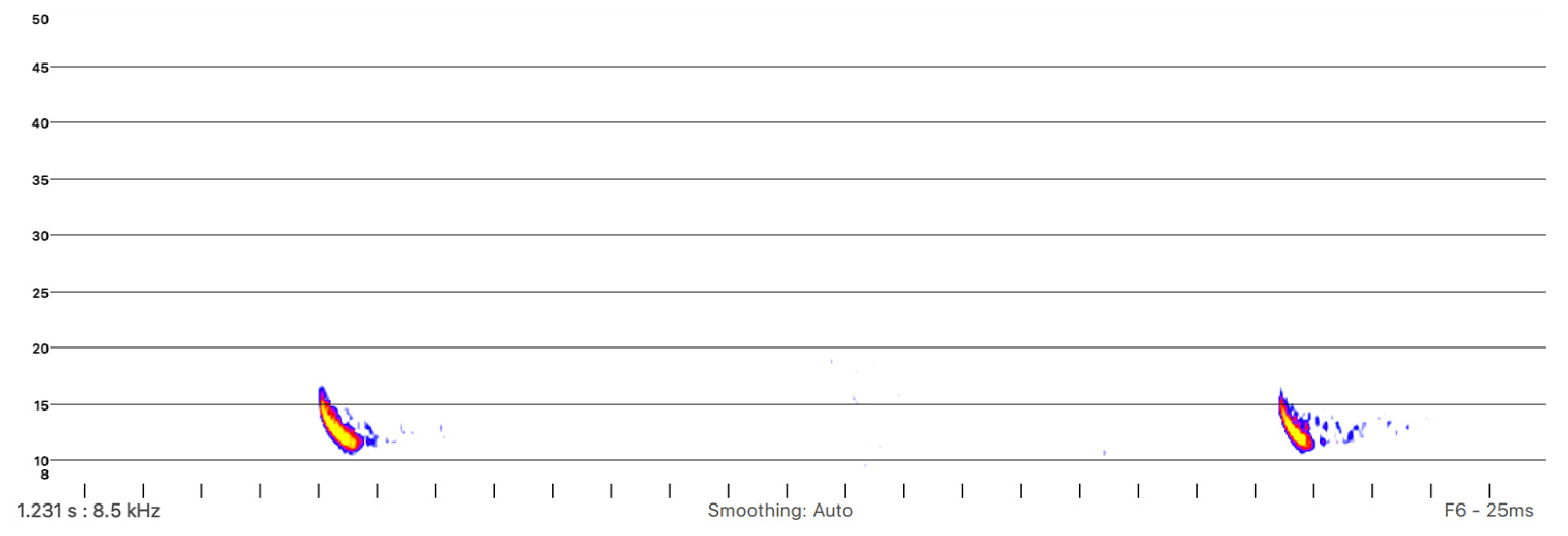
Identification: T. teniotis was recorded acoustically only. Acoustic records indicated that these calls were associated with T. teniotis with a maximum frequency of around 14.5 kHz and minimum frequency of around 11 kHz, falling in line with call parameters detailed within the literature [28].
Egyptian free-tailed bat|Tadarida aegyptiaca (E. Geoffroy 1818)
Previous records: In Saudi Arabia, Tadarida aegyptiaca has been recorded within the Hijaz Range [21]. IUCN distribution shows this species within the west of Saudi Arabia, but no further north than Jeddah. Previous records include Sabihah [29], Al Baha [15], and Abha [17]. This species has not been recorded previously in Tabuk; therefore, this research expands this species range.
Reserve distribution: T. aegyptiaca was recorded acoustically from the gravel plains and mountain habitats only and infrequently across the surveys.
Habitats: Gravel plains and mountain habitats.
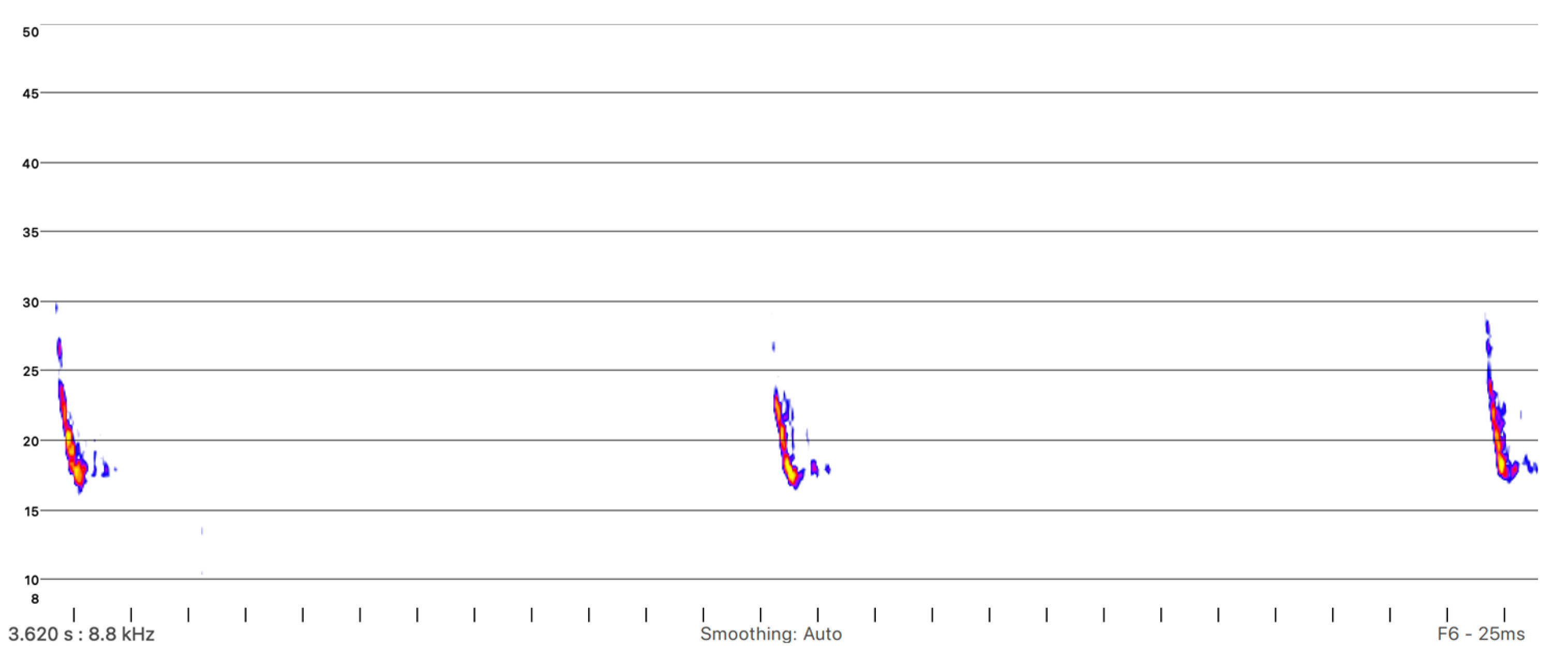
Identification: T. aegyptiaca was recorded acoustically only. Calls parameters detailed within the literature indicated that T. aegyptiaca calls with a maximum frequency of approximately 24 kHz, a minimum frequency of approximately 16 kHz, and a peak frequency of approximately 19 kHz [30,31]. Calls recorded within the Reserve fall within these parameters.
Family: Rhinopomatidae
Greater mouse-tailed bat|Rhinopoma microphyllum (Briinnicb, 1782)
Previous records: From Saudi Arabia, Rhinopoma microphyllum is known from Asir province of southwest Arabia [12,32] and Al Frawaha Cave in Uruq Bani Ma’arid Protected Area [17]. This species has no previous records from Tabuk province; therefore, this research expands the known range of this species.
Reserve distribution: R. microphyllum was recorded both acoustically and through capture within the Reserve. Distribution across the Reserve is sparse but widely distributed, with it being recorded roosting within caves and in flight within the Reserve but not captured during mist netting surveys at water troughs.
Habitats: Habitats where this species has been recorded in PMBSRR include sand dunes, sand plains, gravel plains, rocky outcrops, coastal hills and cliffs.
Observations: Roosts were found within the Reserve, where this species was cohabiting with R. cystops.
Identification: R. microphyllum was confirmed through DNA analysis.
Arabian mouse-tailed bat|Rhinopoma cystops (Thomas, 1903)
Previous records: Within Tabuk province, Rhinopoma cystops is reported from Al Bad’a and Maghair Shoaib [23]; a colony has been recorded from a cave in Tor Qunibi, Sharma [16] and from As Saqid Island [17].
Reserve distribution: R. cystops was recorded both roosting and in flight within the Reserve but was not captured during mist netting surveys at water troughs. This species was widespread across the Reserve, mostly inland; however, records were also found near to the coast.
Habitats: Habitats where this species has been recorded in PMBSRR include sand dunes, sand plains, gravel plains, agriculture, rocky outcrops and coastal hills, mountain slopes, cliffs, and harrats.
Identification: R. cystops was confirmed through DNA analysis.
Family: Emballonuridae
Naked-bellied tomb bat|Taphozous nudiventris (Cretzschmar, 1826)
Previous records: In Saudi Arabia, Taphozous nudiventris has been recorded within Najran [2], Al Jowa [11], and Taif [23]. No references in the literature detail the presence of T. nudiventris within Tabuk; therefore, this is a range extension within Saudi Arabia for this species.
Reserve distribution: This species is considered to be rare within the Reserve, being recorded at only three locations in total.
Habitats: Mountains.
Observations: A pregnant female was captured in May, indicating that this species spends the maternity period within the Reserve.
Identification: Tissue samples taken from T. nudiventris were analysed; however, a low pairwise match was returned. This is likely due to poor sequence quality. However, the bat captured had a morphology as described in the literature, with a notably bald lower back and abdomen and a radio-metacarpal pouch or sac, fur extending onto the wing [23] and had notable hair present on the feet (as noted by Desai et al. [33]). Forearm sizes for the female and male were 76.18 mm and 72.78 mm, respectively, in line with those noted within Benda et al. [20].
Egyptian tomb bat|Taphozous perforatus (E. Geoffroy, 1818)
Previous records: Taphozous perforatus has been recorded within Saudi Arabia, to the northeast of Jeddah [2], near Usfan [10], Sabya [34], Al Baha [23], Mekka, Taif, Bisha [25], and, more recently, Abha [17]. No references in the literature detail the presence of T. perforatus within Tabuk; therefore, this is a range extension for this species within Saudi Arabia.
Reserve distribution: Only recorded in four locations within the Reserve, largely within cliff and mountain habitats, this species is considered to be rare.
Habitats: Cliff and mountain habitats.
Identification: T. perforatus was confirmed through DNA analysis.
Family: Pteropodidae
Egyptian fruit bat|Rousettus aegyptiacus (Geoffroy, 1810)
Previous records: Within Saudi Arabia, this species has been recorded from near Tayif [7], Al Maski [10], Wadi Khitan, Al Baha, Raydah, and the vicinity of Abha [23]. Records have been provided for Bisha, south Mecca [25]. Unconfirmed records are present for Mecca, Madina, and Ha’il [35]. Within Tabuk, a large colony was observed at Al Hamra farms, Taima and large colonies have been observed near Al Disah and Muleh farms [16]. Recent records from Al Obaid et al. [17] are for Abha, Al Qaseem, Al Ula, Biljurashi, Jazan, Khamis Musheet, Far’a Alradadi, Wadi Al Aqeeq, Al Othaeb Farms, Al Muatadel Cave, Wadi Khadhrah, Ain Abo Dheba‘a, Al Mendasah, Yanbu Al Nakhel, and Ain Al Hamah.
Reserve distribution: R. aegyptiacus was captured during the surveys whilst it was drinking at water reservoirs, near to fruit farms. Given the distance this species can fly in one night, they are likely to utilise any fruit farms within the Reserve, depending on fruiting seasons.
Habitats: Habitats where this species has been recorded in PMBSRR include gravel plains and agriculture.
Observations: Lactating/pregnant females were observed in both May and October, indicating that the species has two defined maternity seasons within the Reserve.
Identification: R. aegyptiacus is easily identified in hand. Bats captured within the Reserve match descriptions of the species in Dietz [24].
Example sonograms from those species not confirmed by DNA are shown in Figure 5, Figure 6 and Figure 7.
Figure 5.
Example sonogram from Asellia tridens, shown in Anabat Insight, F6 true time, automatic smoothing.
Figure 6.
Example sonogram from Tadarida teniotis, shown in Anabat Insight, F6 true time, automatic smoothing.
Figure 7.
Example sonogram from Tadarida aegyptiaca, shown in Anabat Insight, F6 true time, automatic smoothing.
4. Discussion
This research expands the known diversity of bats within the Reserve, Tabuk province, and Saudi Arabia. Current research indicates that the Reserve, with an area corresponding to 1% of Saudi Arabia, supports 56% of known bat species in Saudi Arabia, including Vansonia rueppellii, a species new to Saudi Arabia. The species include 18 bat species from 14 genera from eight families, including Barbastella leucomelas, Eptesicus bottae, Plecotus christii, Otonycteris hemprichii, Hypsugo ariel, Vansonia rueppellii, Tadarida aegyptiaca, T. teniotis, Taphozous nudiventris, T. perforatus, Rousettus aegyptiacus, Rhinopoma cystops, R. microphyllum, Rhinolophus clivosus, R. hipposideros, Rhyneptesicus nasutus, Nycteris thebaica, and Asellia tridens.
These studies increase the known diversity of bat species within the Tabuk province from 10 to 18 species and also add an additional species to the known diversity in Saudi Arabia. Species new to Saudi Arabia include V. rueppellii, and range extensions for Tabuk province include those of R. nasutus, R. hipposideros, N. thebaica, T. aegyptiaca, R. microphyllum, T. nudiventris, and T. perforatus.
Other species potentially present within the Reserve include, but are not limited to, Rhinolophus euryale, R. mehelyi, R. blasii, R. ferrumequinum, Myotis spp., Pipistrellus kuhlii, and Miniopterus pallidus, species known from similar habitats in Saudi Arabia [17] or Jordan [36].
The research has also extended the known global range for a number of bat species, highlighting the importance of such long-term monitoring studies across multiple seasons. The current diversity of bat species within the Reserve, at 18 species, is higher than it is for any other area in Saudi Arabia described by Al Obaid et al. [17], emphasising the need for further research within the Kingdom and the importance of protected areas.
Author Contributions
Conceptualisation, H.H., D.W. (David White), J.S., D.W. (David Wells), and R.O.R.; methodology, H.H., D.W. (David White), J.S., D.W. (David Wells), and R.O.R.; analysis, H.H. and D.W. (David White); writing—original draft preparation, H.H. and D.W. (David White); writing—review and editing, H.H., D.W. (David White), J.S., D.W. (David Wells), and R.O.R. All authors have read and agreed to the published version of the manuscript.
Funding
This research was funded by Prince Mohammed bin Salman Royal Reserve.
Institutional Review Board Statement
The animal study protocol was approved by the faculty-led Institutional Animal Care and Use Committee (IACUC) Institutional of King Abdullah University of Science and Technology.
Data Availability Statement
Data is contained within the article.
Acknowledgments
The authors thank all Prince Mohammed bin Salman Royal Reserve Development Authority members for their hard work and dedication to conserving species and ecosystems within the Reserve. The surveys that led to the findings in this article were funded by the Prince Mohammed bin Salman Royal Reserve Development Authority. We extend our gratitude to the KAUST Beacon Development field team who have been invaluable in providing support during our field surveys over the years.
Conflicts of Interest
The authors declare no conflicts of interest.
References
- Cheesman, D.; Hinton, M. On the Mammals Collected in the Desert of Central Arabia by Major, R.E. Cheesman. E. Cheesman. Ann. Mag. Nat. Hist. 1924, 14, 548–558. [Google Scholar] [CrossRef]
- Morrison-Scott, T. Some Arabian Mammals Collected By Mr. H. St. J.B. H. St. J. B. Philby. Novit. Zool. 1939, 41, 181–211. [Google Scholar]
- Hayman, R.W.; Harrison, D.L. Notes on Some Mammals Newly Recorded from Arabia. Ann. Mag. Nat. Hist. 1950, 3, 417–419. [Google Scholar] [CrossRef]
- Harrison, D.L. Some Systematic Notes on The Trident Bats (Asellia Tridens E. Geoffroy) of Arabia. Mammalia 1957, 21, 1–8. [Google Scholar] [CrossRef]
- Harrison, D.L. A Key to the Identification of Bats (Chiroptera) of the Arabian Peninsula. Proc. Zool. Soc. Lond. 1956, 127, 447–452. [Google Scholar] [CrossRef]
- Nader, I.A. In Quest of Bats. J. Saudi Arab. Nat. Hist. Soc. 1973, 10, 5–7. [Google Scholar]
- Nader, I.A. On the Bats (Chiropetra) of the Kingdom of Saudi Arabia. J. Zool. 1975, 176, 331–340. [Google Scholar] [CrossRef]
- Nader, I.A. Bats of The Kingdom of Saudi Arabia. J. Saudi Arab. Nat. Hist. Soc. 1976, 4, 4–12. [Google Scholar]
- Nader, I.A. New distributional records of bats from the Kingdom of Saudi Arabia (Mammalia:Chiroptera). J. Zool. 1982, 198, 69–82. [Google Scholar] [CrossRef]
- Kock, D.; Nader, I.A. Two Bat Flies from The Kingdom of Saudi Arabia, Their Nomenclature, Host Specifity and Zoogeography (Insecta: Diptera:Nycteribiidae). Senckenberg. Biol. 1979, 60, 65–73. [Google Scholar]
- Nader, I.A.; Kock, D. A new slit-faced bat from Central Saudi Arabia. Senckenb. Biol. 1982, 63, 9–15. [Google Scholar]
- Nader, I.A.; Kock, D. Rhinopoma Microphyllum Asirensis N. Subsp. From Southwestern Saudi Arabia (Mammalia:Chiroptera:Rhinopomatidae). Senckenberg. Biol. 1983, 63, 147–152. [Google Scholar]
- Nader, I.A.; Kock, D. Notes on Some Bats from the Near East (Mammalia:Chiroptera). Z. Für Säugetierkunde 1983, 48, 1–9. [Google Scholar]
- Nader, I.A.; Kock, D. Eptesicus (Eptesicus) bottae (Peters 1869) in Saudi Arabia with notes on its subspecies and distribution (Mammalia:Chiroptera:Vespertilionidae). Senckenb. Biol. 1990, 70, 1–13. [Google Scholar]
- Harrison, D.L.; Bates, P.J.J. On the occurrence of the European free-tailed bat, Tadarida teniotis Rafinesque, 1814 (Chiroptera:Molossidae) in Saudi Arabia with a zoogeographical. Fauna Saudi Arab. 1984, 6, 551–556. [Google Scholar]
- Aloufi, A.H.; Amr, Z.; Nassarat, H. Bats (Mammalia:Chiroptera) from Tabuk Province, Saudi Arabia. Vertebr. Zool. 2016, 66, 207–215. [Google Scholar] [CrossRef]
- Al Obaid, A.; Shuraim, F.; Al Boug, A.; Al Jbour, S.; Neyaz, F.; Aloufi, A.H.; Amr, Z. Diversity and Conservation of Bats in Saudi Arabia. Diversity 2023, 15, 700. [Google Scholar] [CrossRef]
- Al Obaid, A.; Ahmary, A.; Shuraim, F.; Neyaz, F.; Boug, A.; Mir, Z.; Amr, Z. Small mammals from Farasan Archipelago, Saudi Arabia. Ecol. Montenegrina 2023, 65, 40–46. [Google Scholar] [CrossRef]
- Hänfling, B.; Lawson Handley, L.; Read, D.S.; Hahn, C.; Li, J.; Nichols, P.; Blackman, R.C.; Oliver, A.; Winfield, I.J. Environmental DNA metabarcoding of lake fish communities reflects long-term data from established survey methods. Mol. Ecol. 2016, 25, 3101–3119. [Google Scholar] [CrossRef] [PubMed]
- Benda, P.; Reiter, A.; Uhrin, M.; Varadínová, Z. A New Species of Pipistrelle Bat (Chiroptera:Vespertilionidae) from Southern Arabia. Acta Chiropterologica 2016, 18, 301–323. [Google Scholar] [CrossRef]
- Benda, P.; Dietz, C.; Andreas, M.; Hotový, J.; Lučan, R.K.; Maltby, A.; Meakin, K.; Truscott, J.; Vallo, P. Bats (Mammalia:Chiroptera) of the Eastern Mediterranean and Middle East. Part 6. Bats of Sinai (Egypt) with some taxonomic, ecological and echolocation data on that fauna. Acta Soc. Zool. Bohemicae 2008, 72, 185–353. [Google Scholar]
- Gaucher, P. Two New Bats in Taif Region; Taif Quarterly Report, Summer Issue; National Wildlife Research Centre: Fort Collins, CO, USA, 1988; pp. 144–147. [Google Scholar]
- Harrison, D.L.; Bates, P. The Mammals of Arabia, 2nd ed.; Harrison Zoological Museum: Kent, UK, 1991. [Google Scholar]
- Dietz, C. Illustrated Identification Key to the Bats of Egypt. 2005. Available online: https://www.mammalwatching.com/Palearctic/Otherreports/Bat%20Key%20for%20Egypt.pdf (accessed on 11 December 2024).
- Memish, Z.A.; Mishra, N.; Olival, K.J.; Fagbo, S.F.; Kapoor, V.; Epstein, J.H.; Alhakeem, R.; Durosinloun, A.; Al Asmari, M.; Islam, A.; et al. Middle East respiratory syndrome coronavirus in bats, Saudi Arabia. Emerg. Infect. Dis. 2013, 19, 1819–1823. [Google Scholar] [CrossRef] [PubMed]
- Nader, I.A.; Kock, D. Plecotus austriacus (Fischer, 1829) new to Saudi Arabia, with remarks on taxonomy and zoogeography (Mammalia:Chiroptera:Vespertilionidae). Fauna Saudi Arab. 1990, 11, 318–322. [Google Scholar]
- Haggon, H.; White, D.; Evans, T.; Parker, S.; Smithson, J.; Wells, D.; Ramalho, R.O. First record of Rüppell’s Bat Vansonia rueppellii (J. Fischer, 1829) from Saudi Arabia. Zool. Middle East 2024, 70, 275–280. [Google Scholar] [CrossRef]
- Hackett, T.; Holderied, M.; Korine, C. Echolocation call description of 15 species of Middle-Eastern desert dwelling insectivorous bats. Bioacoustics 2016, 26, 217–235. [Google Scholar] [CrossRef]
- Jennings, M. A new bat for Saudi Arabia. Saudi Arab. Nat. Hist. Soc. J. 1979, 24, 4. [Google Scholar]
- Deshpande, K.; Kelkar, N. How Do Fruit Bat Seed Shadows Benefit Agroforestry? Insights from Local Perceptions in Kerala, India. Biotropica. 2015, 47, 654–659. [Google Scholar] [CrossRef]
- Sharma, B.; Chakravarty, R.; Acharya, P.R. The first record of European free-tailed bat, Tadarida teniotis Rafinesque, 1814, and note on probable elevational movement from Nepal. J. Asia-Pac. Biodivers. 2021, 14, 248–253. [Google Scholar] [CrossRef]
- Schlitter, D.A.; Qumsiyeh, M.B. Rhinopoma microphyllum. Mamm. Species 1996, 44, 1–5. [Google Scholar] [CrossRef]
- Desai, I.; Pandya, H.; Pratyush, P.; Suresh, B. Some observations on the population of naked-rumped tomb bat (Taphozous nudiventris cretzschmar) at the Maharaja Sayajirao university of Baroda campus, Gujarat. Cibtech J. Zool. 2012, 1, 27–35. [Google Scholar]
- Harrison, D. The Mammals of Arabia. Vol 1 Insectivora Chiroptera Primate; Ernest Benn Limited: London, UK, 1964; p. 192. [Google Scholar]
- Abu Yaman, I.K. Insect pests of Saudi Arabia. J. Appl. Entomol. 1966, 58, 266–278. [Google Scholar]
- Amr, Z.S.; Abed, A.O.; Abu Baker, M. Diversity and Conservation of Bats in Jordan. In Bats—Disease-Prone but Beneficial; IntechOpen: London, UK, 2022. [Google Scholar] [CrossRef]
Disclaimer/Publisher’s Note: The statements, opinions and data contained in all publications are solely those of the individual author(s) and contributor(s) and not of MDPI and/or the editor(s). MDPI and/or the editor(s) disclaim responsibility for any injury to people or property resulting from any ideas, methods, instructions or products referred to in the content. |
© 2024 by the authors. Licensee MDPI, Basel, Switzerland. This article is an open access article distributed under the terms and conditions of the Creative Commons Attribution (CC BY) license (https://creativecommons.org/licenses/by/4.0/).