
Article

Species Diversity of Gelidium from Southern Madagascar Evaluated by an Integrative Taxonomic Approach

1
Department of Biological Sciences, Sungkyunkwan University, Suwon 16419, Korea
2
Institut de Systématique, Evolution, Biodiversité (ISYEB), Muséum National d’Histoire Naturelle, CNRS, Sorbonne Université, EPHE, 75231 Paris, France
3
Aquaculture Research Division, National Institute of Fishery Science, Gijang 46083, Korea
*
Author to whom correspondence should be addressed.
Diversity 2022, 14(10), 826; https://doi.org/10.3390/d14100826
Submission received: 11 August 2022 / Revised: 6 September 2022 / Accepted: 28 September 2022 / Published: 1 October 2022
(This article belongs to the Special Issue Algae Biodiversity: Natural and Anthropogenic Impacts)

Abstract

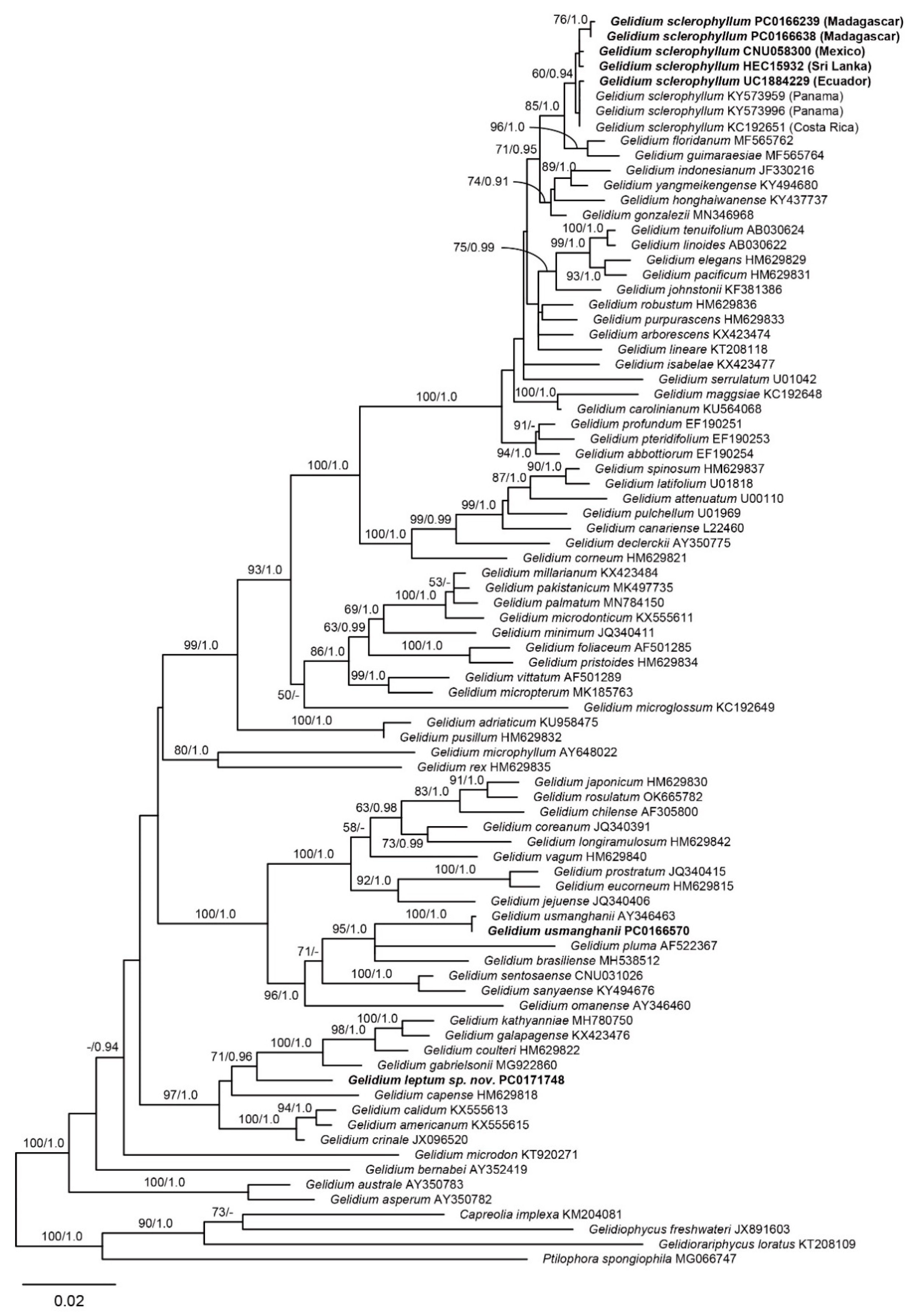
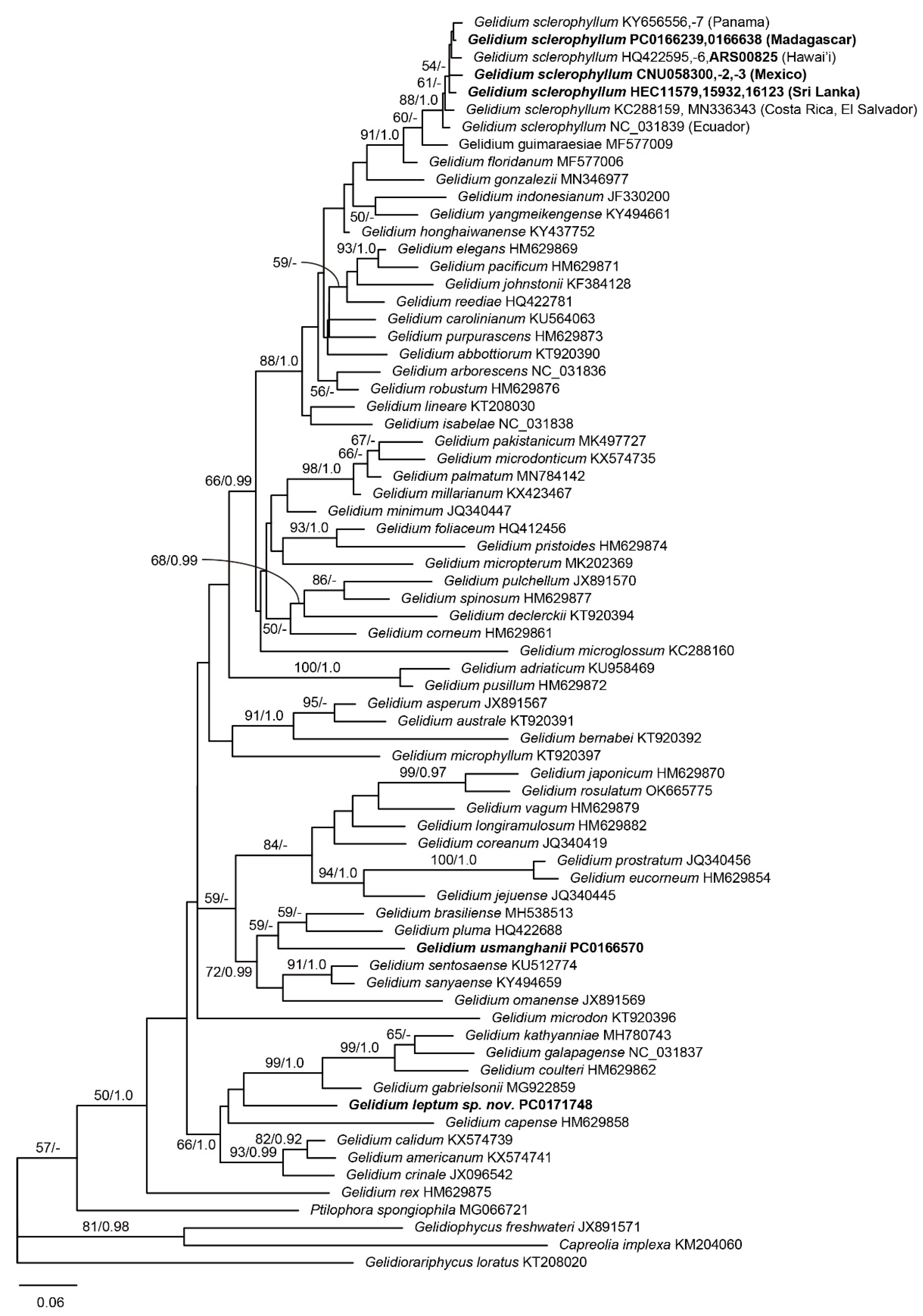
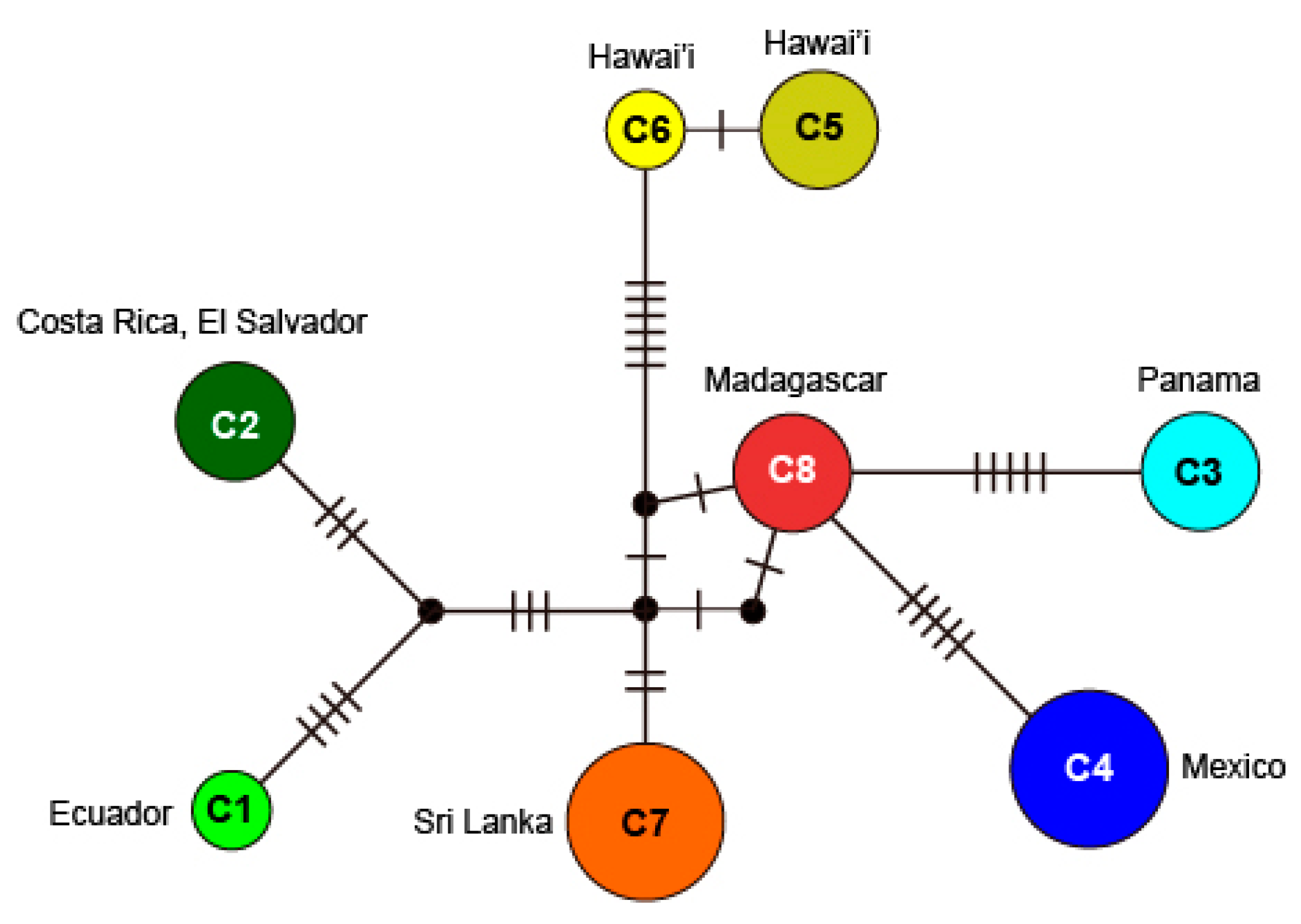
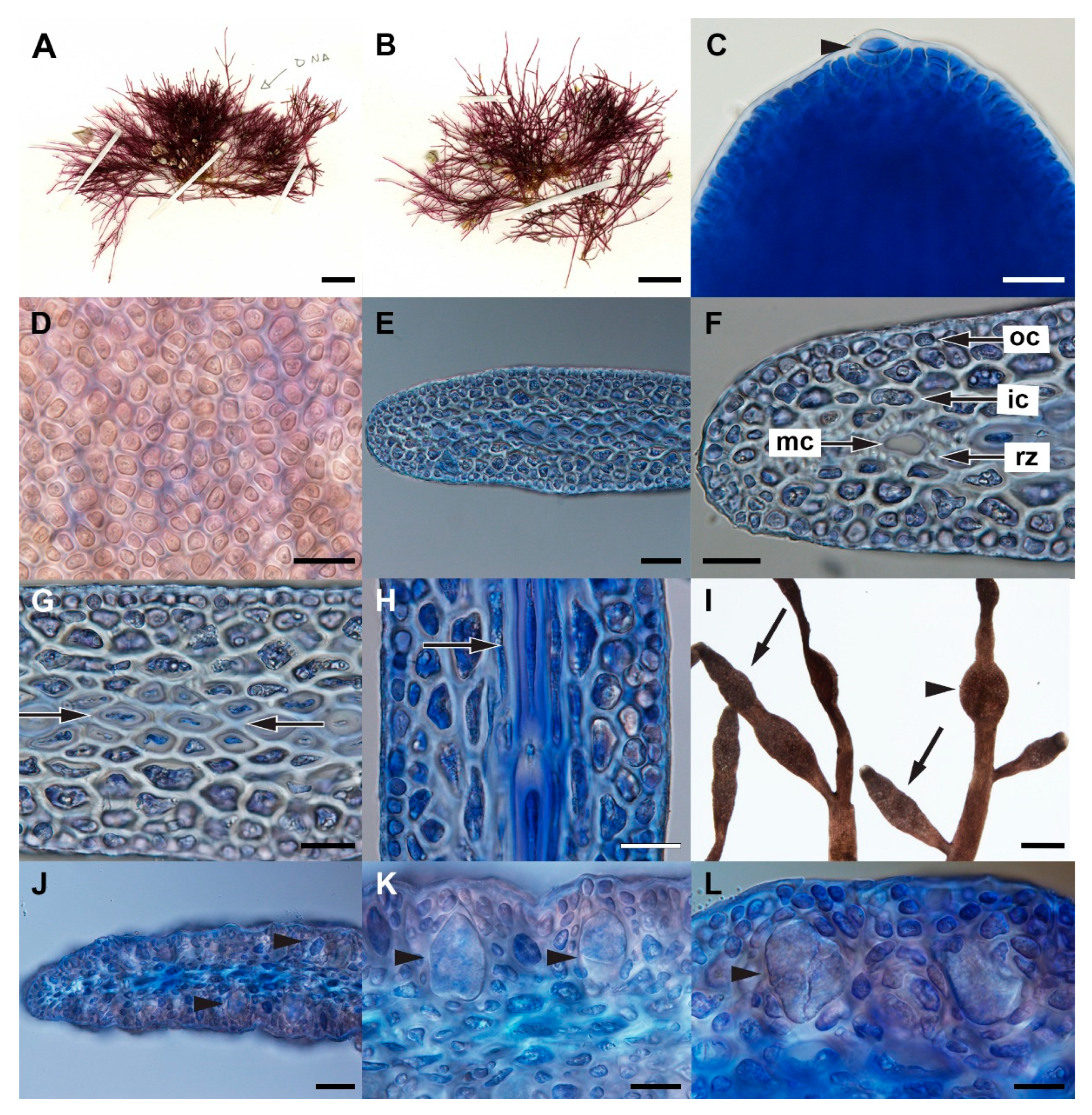
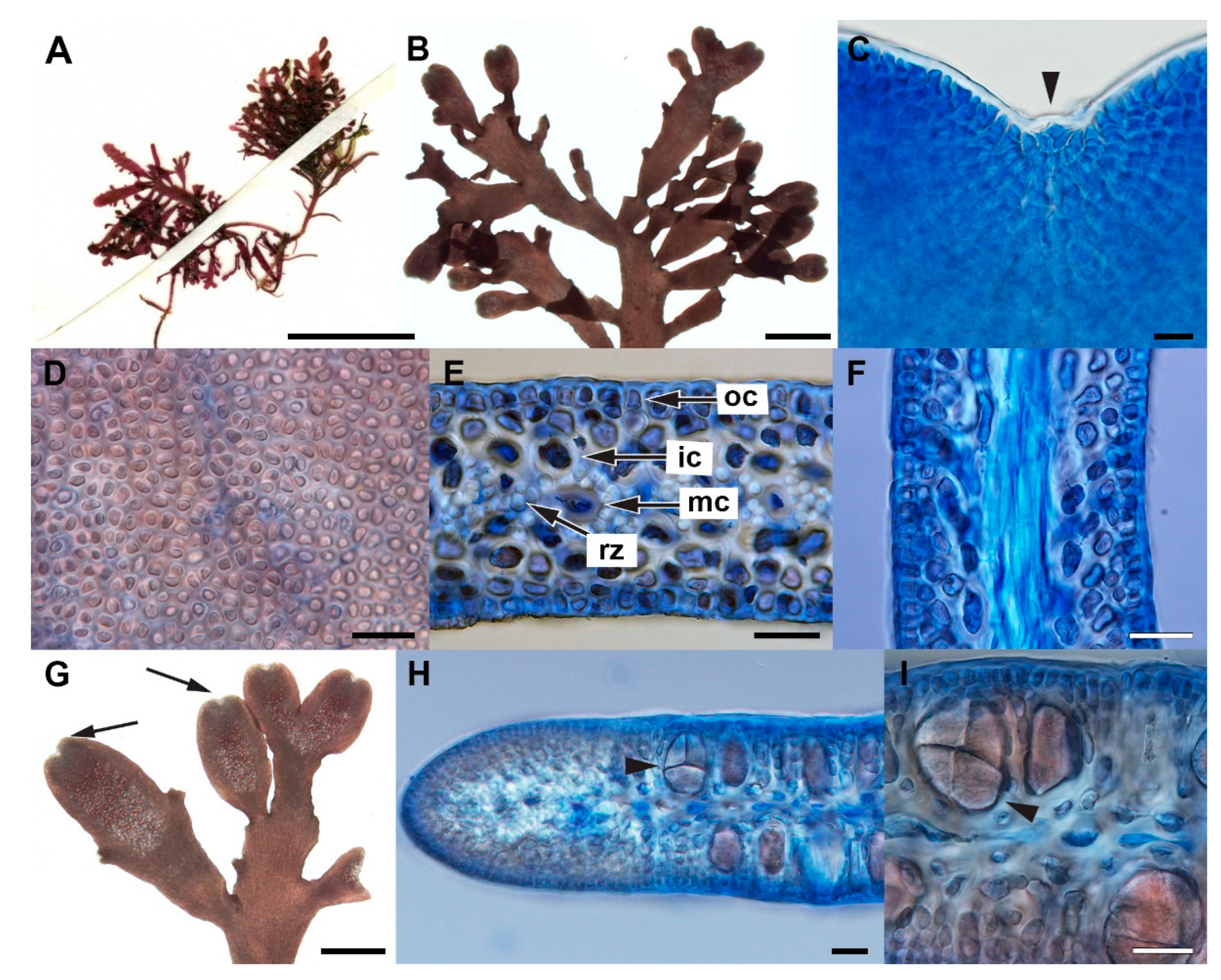
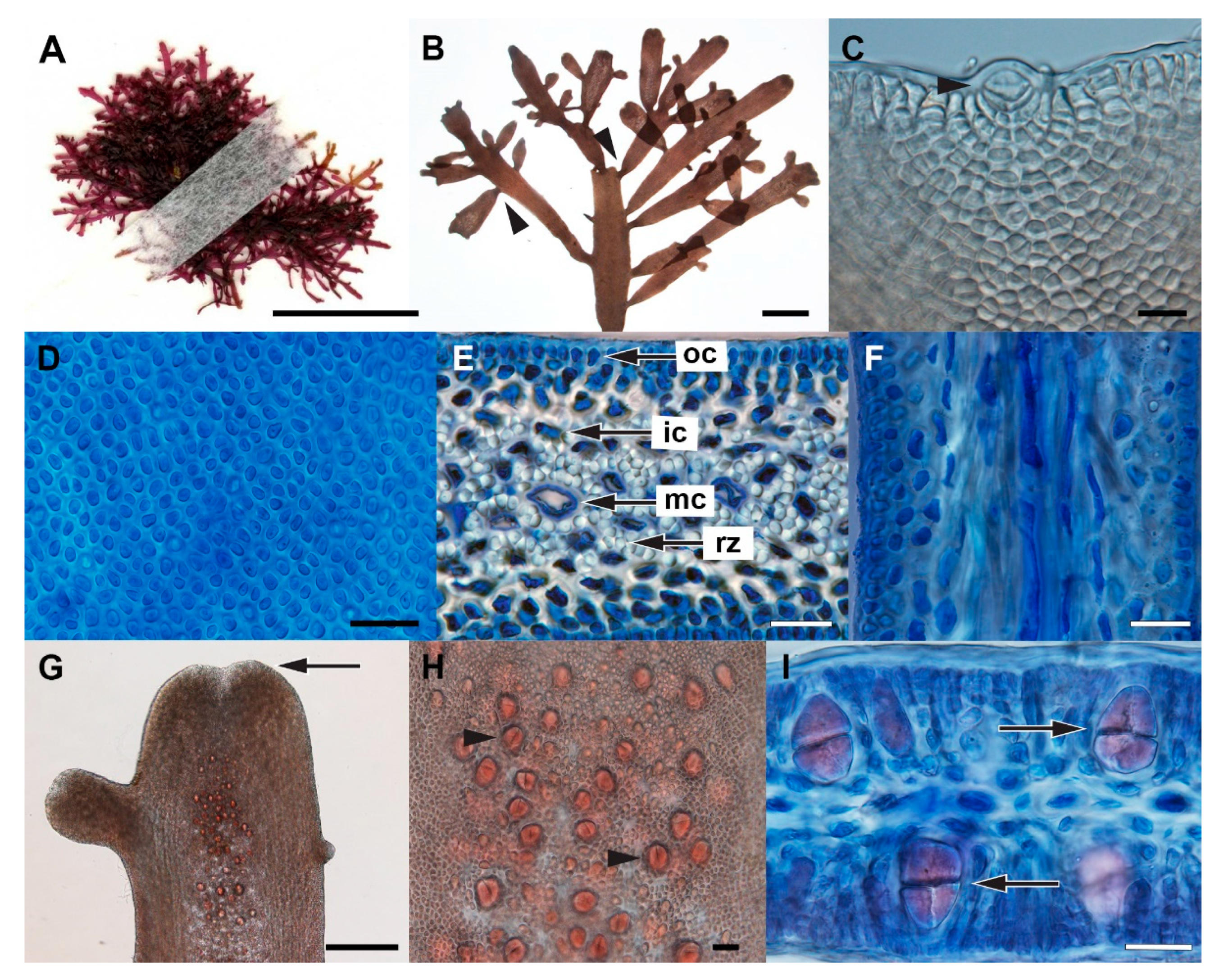
The diversity of red algae is significantly increasing; in the recent interest of climate changes, taxonomic and biogeographic studies are needed in untouched regions such as ecological important islands. We examined a collection of Gelidium specimens gathered during the 2010 Atimo Vatae expedition based on the morphology and DNA sequencing of mitochondrial cox1 and plastid rbcL. Both morphological and molecular datasets demonstrated the presence of three species in Madagascar; G. leptum G.H.Boo, L.Le Gall and H.S.Yoon, sp. nov., described here, and G. sclerophyllum W.R.Taylor and G. usmanghanii Afaq-Husain and Shameel. Gelidium leptum is distinguished by thin, slender, flattened thalli with irregular branches, compactly arranged thick-walled cells in medulla, sparse rhizoidal filaments at both sides of branches, and elongate sori of tetrasporangia. Gelidium sclerophyllum, previously considered as endemic to the Tropical Eastern Pacific, is first reported in the Indian Ocean and Hawai’i; G. usmanghanii, previously reported to occur in Pakistan and Oman, also presents a first record in the Southern Hemisphere. Phylogenies inferred from cox1 and rbcL sequences suggests that each of the three species likely diverged from different ancestors. The Madagascan Gelidium comprises two geographical elements; Madagascan endemic (G. leptum) and widespread species (G. sclerophyllum and G. usmanghanii).
Keywords: biogeography; cox1; Gelidium leptum; G. sclerophyllum; G. usmanghanii; rbcL; species diversity biogeography; cox1; Gelidium leptum; G. sclerophyllum; G. usmanghanii; rbcL; species diversity