
Short Note

Synthesis of a Calix[4]semitube with a Selectively Dinitrated Face

1
Metamaterials Unit, Faculty of Science, University of Malta, MSD 2080 Msida, Malta
2
Dipartimento di Scienze Chimiche, della Vita e della Sostenibiltà Ambientale, Univesità degli Studi di Parma, Parco Area delle Scienze 17/A, 43124 Parma, Italy
3
Centre for Molecular Medicine and Biobanking, University of Malta, MSD 2080 Msida, Malta
*
Authors to whom correspondence should be addressed.
Molbank 2026, 2026(2), M2159; https://doi.org/10.3390/M2159
Submission received: 13 March 2026 / Revised: 30 March 2026 / Accepted: 31 March 2026 / Published: 7 April 2026
(This article belongs to the Section Organic Synthesis and Biosynthesis)

Abstract

This paper describes the synthesis and characterisation of the calix semitube 5. The calix[4]semitube consists of two calix[4]arenes connected through their lower rim from two phenol groups in distal positions. One calix[4]arene is unsubstituted on its upper rim, while the upper rim of the other calix[4]arene has two nitro groups in the 1,3- position and two tert-butyl groups in the remaining ones. The synthesis procedure yielded an amorphous structure, which did not provide a single crystal. The final compound was comprehensively characterised by infrared spectroscopy, mass spectrometry, and 1H and 13C NMR spectroscopy. The results of the 1H NMR spectroscopy confirmed that the calix[4]arene units adopted a cone conformation. This was confirmed by COSY and 1H-13C HMBC. The results obtained confirm that the compound was successfully synthesised. The IUPAC name of 5 is 2,34-di-tert-butyl-39,49-dinitro-6,7,8,9,27,28,29,30-octahydro-15H,21H,36H,42H-4,32:11,25-bis(methano [1,3]benzenomethano)-16,20:37,41-di(metheno)tetrabenzo[g,g1,p,x][1,6,18,23] tetraoxacyclotetratriacontine-43,46,54,60-tetraol.

1. Introduction

The chemistry of calixarenes is highly developed owing to their remarkable versatility, arising from the various ways by which the size, conformation, and functionalization of their aromatic cavity can be tuned [1,2,3,4]. This has enabled their application in diverse fields, including the synthesis of supramolecular polymers [5,6,7] and artificial receptors for cations, anions, and neutral organic molecules [8,9,10]. Calixarenes thus serve as prototypical scaffolds for the development of guest-driven and stimuli-responsive supramolecular materials [11].
Calix[4]tubes consist of two calix[4]arene units linked in a tail-to-tail fashion through their lower rims, typically via spacer groups connecting the four phenolic hydroxyl groups [12]. These systems have been shown to be excellent potassium ion binders [13]. Their high selectivity is attributed to the formation of a rigid, pre-organised spherand-like cavity, although this feature can be associated with slow binding kinetics. To address this limitation, calix[4]semitubes were devised as a more flexible alternative to fully bridged calix[4]tubes [14]. In calix[4]semitubes, the two calixarene units are connected by only two ethylene linkers in a 1,3-arrangement. This partial linkage increases conformational flexibility while retaining high metal-ion selectivity [15,16] and enabling ion pairs and organic molecule recognition [17,18,19,20], providing suitable platforms for molecular sensor design. Moreover, the presence of free phenolic units enables selective facial functionalization, which can either be achieved by modification of single calix[4]arene units prior to semitube assembly [21] or through post-synthetic modification [17,20].
We report the development of calix[4]semitube 5, composed of two calix[4]arene units linked through two butyl spacers in a distal position and bearing distinct upper-rim functionalization. In fact, one unit features an unfunctionalized upper rim, while the other is selectively decorated with a pair of nitro groups in the 1,3-positions and a pair of tert-butyl units on the remaining ones (Figure 1). The nitro groups were introduced due to their facile transformation into amino functionalities, providing convenient anchoring points for further modification. Selective nitration of calix[4]semitubes has previously been reported through post-synthetic modification [17]. Here, we instead nitrate a mono-calix[4]arene in the 1,3-positions and subsequently couple this pre-functionalised unit to a non-nitrated calixarene to construct the semitube framework. This strategy furnishes an asymmetrical calix[4]semitube while improving the yields for the selective nitration and leaving the unfunctionalized calixarene unit available for further modifications like halogen substituents [21], thereby enabling a modular, stepwise diversification. Compound 5 also features a total of four phenolic OHs that can be exploited to introduce additional substituents at the lower rim of the two calix[4]arene units. Overall, this approach establishes calix[4]semitube 5 as a robust and versatile intermediate for the rational design of multifunctional calixarene-based receptors and materials.

2. Results

Chemical Synthesis

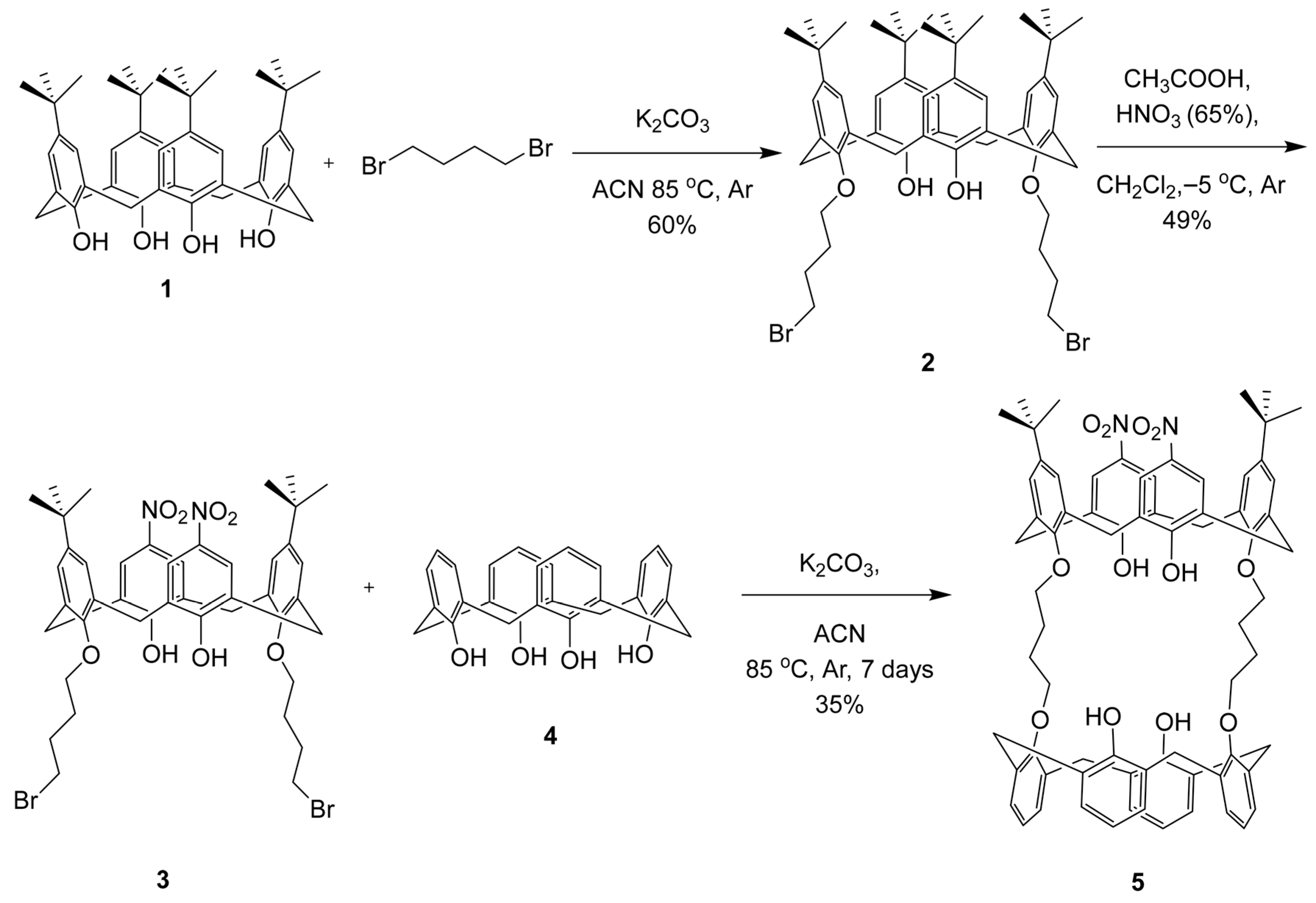
The synthesis of 5 was performed in three steps, as illustrated in Scheme 1. In the first step, 1,4-dibromobutane was added to tert-butyl calix[4]arene 1 in the presence of potassium carbonate to obtain the 1,3 di-alkylated calix[4]arene 2 with 60% yield. Calix[4]arene 2 was then selectively nitrated at the upper rim of the non-alkylated phenolic rings using 65% nitric acid and glacial acetic acid in dichloromethane at −5 °C, giving compound 3 with 49% yield after flash column chromatography. Finally, the semitube formation was successfully achieved by reaction between calix[4]arenes 3 and 4 in dry acetonitrile at 85 °C for seven days and in the presence of potassium carbonate as a base, leading to the formation of compound 5 with 35% yield.

3. Discussion

In this study, we successfully synthesised an asymmetric calix[4]tube 5 containing a free calix[4]arene on one end connected tail-to-tail with another calix[4]arene unit functionalised with two tert-butyl groups and two nitro groups. This structure was envisaged as a versatile intermediate to be used for the further functionalisation of calix[4]semitubes. We are particularly interested in the possibility of reducing the nitro group to an amino group, which would allow the attachment of 5 on solid surfaces and further functionalisation to attach receptors and other functional groups.
The 1H NMR spectrum of 5 showed that both calix[4]arene units adopted a cone conformation with distinct patterns of signals. The phenolic protons of the nitrated and unfunctionalized calix[4]arene units were visible as singlets at 9.59 ppm and 8.44 pm, respectively. In the nitrated calix[4]arene unit, the aromatic protons ortho to the nitro groups appeared at 7.91 pm, whereas those flanking the tert-butyl units were at 6.96 ppm. Instead, the aromatic protons of the unfunctionalized calix[4]arene unit gave rise to two doublets and two triplets, thus allowing to discriminate between the alkylated and non-alkylated aromatic rings. The methylene bridges on the two separate calix[4]arene units appeared as two separated pairs of doublets around 4.2–4.4 and 3.3–3.4 ppm, respectively. The protons on the alkyl chains linking the calix[4]arenes instead produced two multiplets corresponding to eight protons each at 4.19 and 2.67 ppm, respectively. On the other hand, the protons belonging to the tert-butyl groups were evident as a singlet at 1.07 ppm. This was corroborated by information from the 13C NMR spectrum, COSY, HMBC, IR, and MS to ensure the correct characterisation of the compound (SI).
The combined spectroscopic data (IR, HR-MS, and detailed 1H/13C NMR analysis) are fully consistent with the proposed asymmetric semitube structure and confirm successful formation of the tail-to-tail linked framework. Taken together, these features render compound 5 a robust and synthetically useful intermediate for the future development of multifunctional calixsemitube-based receptors and supramolecular materials.

4. Materials and Methods

Commercially available reagents and solvents were bought from Merck (Darmstadt, Germany), Carlo Erba (Milan, Italy), TCI Europe (Zwijndrecht, Belgium), Apollo Scientific Limited (Tamworth, UK), or Fluorochem (Penrose, Ireland) and used without further purification. TLCs were run on Merck 5554 silica 60 aluminium sheets. Column chromatography was performed on Merck 9385 silica gel 60 (0.040–0.063 mm) loaded in a 25 mm wide column. NMR spectra were registered on a Bruker Avance III HD NMR spectrometer equipped with an 11.75 Tesla magnet (Bruker Corporation, Billerica, MA, USA) operating at 500.13 MHz and 125.76 MHz for 1H and 13C, respectively. δ values are expressed in ppm relative to CDCl3 (7.29 ppm for 1H and 76.9 ppm for 13C). The following abbreviations are used to explain multiplicities: s = singlet; d = doublet; t = triplet; q = quartet; qui = quintuplet; dd = doublet of doublets; td = triplet of doublets; m = multiplet; br s. = broad signal. ESI-MS analyses were carried out by using a Acquity Ultra Performance LC instrument equipped with a Acquity SQ Detector and a ESI interface (Waters corporation, Milford, MA, US). HR-MS analyses were performed on a Synapt G2-Si HDMS instrument equipped with an ESI source and Q-TOF detector (Waters corporation, Milford, MA, US). Infra-red spectra were measured as very thin films in between sodium chloride discs using a Shimadzu IR-Affinity-1 spectrophotometer (Kyoto, Japan).

4.1. Synthetic Procedures

4.1.1. Synthesis of 5,11,17,23-Tetra-Tert-butyl-25,27-bis(4-Bromobutoxy)-26,28-Dihydroxycalix[4]arene 2

The method of synthesis was adapted from the literature by carrying out the reaction under argon and by using 1,4-dibromobutane as a reactant instead of shorter-chained dibromoalkanes. Otherwise, all conditions were kept identical to those of the cited method [22]. A suspension of p-tert-butylcalix[4]arene 1 (1.00 mmol, 0.65 g) and anhydrous potassium carbonate (2.53 mmol, 0.35 g) in dry acetonitrile (30 mL) was heated at 85 °C for 2 h in a sealed 100 mL Schlenk tube under an argon atmosphere.
After cooling, 1,4-dibromobutane (10 mmol, 2.15 g) was added, and the mixture was heated at 85 °C in a Schlenk tube for 4 days under an argon atmosphere. Subsequently, the reaction mixture was left to cool down slowly before being poured into HCl (1 M, 50 mL) and left in the fridge overnight. The product crystallised, forming white crystals, and was filtered under suction before drying under vacuum in a desiccator. The final mass collected was 0.55 g (0.6 mmol, yield 60%). The product displayed a visible spot both under short UV and after staining with iodine when a TLC was developed in a chamber with 7:3 hexane/ethyl acetate.
White solid: Rf = 0.87 (hexane: ethyl acetate 7:3).
1H NMR (500 MHz, CDCl3): δ 7.47 (s, 2H, Ar-OH), 7.08 (s, 4H, Ar(tBu)-H), 6.83 (s, 4H, Ar(tBu)-H), 4.27 (d, J = 12.9 Hz, 4H, Ar-CH2-Ar), 4.03 (t, J = 6.2 Hz, 4H, O-CH2), 3.66 (t, J = 6.6 Hz, 4H, CH2-Br), 3.35 (d, J = 13 Hz, 4H, Ar-CH2-Ar), 2.35 (m, 4H OCH2-CH2), 2.18 (m, 4H, CH2-CH2Br), 1.31 (s, 18 H, Ar–C(CH3)), 0.99 (s, 18H, Ar–C(CH3)).
13C NMR (125 MHz, CDCl3): δ 150.64, 149.72, 147.08, 141.61, 132.59, 127.67, 125.55, 125.10, 75.39, 33.98, 33.84, 33.77, 31.76, 31.07, 31.03, 29.57, 28.74.
IR (ν, cm−1): 3046, 2959, 2903, 2868, 1485, 1393, 1362, 1296, 1260, 1240, 1198, 1124, 1094, 1038, 872, 737.
HRMS (ESI+) m/z: [M + H]+ calcd for C52H70Br2O4H+ 917.37136; found 917.37101, [M + NH4]+ calcd for C52H70Br2O4NH4+ 934.39846; found 934.39815, [M + K]+ calcd for C52H70Br2O4K+ 955.32724; found 955.32824.

4.1.2. Synthesis of 5,17-Dinitro-11,23-di-Tert-butil-25,27-bis(4-Bromobutoxy)-26,28-Dihydroxycalix[4]arene 3

The method was adapted from the literature by making use of 65% instead of 100% nitric(V) acid and by increasing the reaction time to 6 h instead of 5 [23]. Furthermore, product isolation required purification by column chromatography. Substituted calix[4]arene 2 (0.42 g, 0.46 mmol) was suspended in dichloromethane (5 mL) and cooled to 0 °C. Separately, glacial acetic acid (100 mmol, 5.70 mL) was added dropwise to 65% nitric acid (26.7 mmol, 1.84 mL) at −5 °C in a 100 mL jacketed reaction flask. Subsequently, the calixarene solution was added to the acid mixture dropwise before leaving to stir at the same temperature for 6 h. Then, 50 mL of cold water was added before extracting with chloroform (3 × 25 mL). The combined chloroform layers were concentrated by rotary evaporation, and the crude product was precipitated out by adding methanol (10 mL). The crude solid was then purified by chromatography on silica gel (silica mesh 70–230), using an eluent mixture of hexane/ethyl acetate (8:2, then 7:3 v/v). The product was collected as a white solid, which was left to dry further under vacuum in a desiccator. The mass of collected product was 0.20 g (0.22 mmol, 49%).
Yellow solid: Rf = 0.57 (hexane: ethyl acetate 7:3).
1H NMR (500 MHz, CDCl3) δ 9.02 (s, 2H, Ar-OH), 8.08 (s, 4H, Ar(NO2)-H), 6.94 (s, 4H, Ar(tBu)-H), 4.27 (d, J = 13.3 Hz, 4H, Ar-CH2-Ar), 4.08 (t, J = 6.3 Hz, 4H, Ar-OCH2), 3.65 (t, J = 6.4 Hz, 4H, -CH2-Br), 3.52 (d, J = 13.4 Hz, 4H, Ar-CH2-Ar), 2.28- 2.18 (m, 4H, -O-CH2-CH2), 2.18–2.10 (m, 4H, -CH2-CH2-Br), 1.10 (s, 18H, Ar–C(CH3)).
13C NMR (125 MHz, CDCl3): δ 159.43, 149.59, 148.80, 139.91, 128.98, 126.33, 124.42, 122.25, 76.11, 34.26, 33.33, 31.49, 31.14, 29.39, 28.75.
IR (ν, cm−1): 3049, 2959, 2870, 1591, 1514, 1472, 1441, 1335, 1290, 1261, 1207, 1194, 1111, 1097, 1036, 1003, 908, 733.
HRMS (ESI+) m/z: [M + H]+ calcd for C44H51Br2N2O8H+ 895.21632; found 895.21662.

4.1.3. Synthesis of the Calix[4]semitube 5

Compound 3 (0.20 g, 0.23 mmol) was loaded into a dry, argon-flushed 50 mL Schlenk tube, followed by tetrahydroxy calix[4]arene 4 (0.22 mmol, 0.094 g), dry potassium carbonate (1.44 mmol, 0.20 g), and dry acetonitrile as solvent (30 mL). The reaction mixture was purged with argon for 5 min before sealing the tube with its cap and leaving it to stir for 7 days at 85 °C. Subsequently, the reaction mixture was quenched with 30 mL of 1 M HCl and then extracted using dichloromethane (3 × 30 mL). After drying over magnesium sulfate and concentrating by rotary evaporation, the crude solid was dissolved in a minimal amount of dichloromethane (0.5 mL) and loaded onto a silica-filled chromatography column with a hexane/ethyl acetate mixture in a v/v ratio of 8:2 serving as the eluent. Eventually, once the unreacted starting materials eluted, the solvent ratio was changed to 7.5:2.5 hexane/ethyl acetate. Lastly, after concentrating the fractions and drying in a vacuum desiccator, compound 5 was obtained as a yellow crystalline solid (0.090 g, 0.086 mmol, 35% yield).
Yellow solid: Rf = 0.42 (hexane: ethyl acetate 7:3).
1H NMR (500 MHz, CDCl3): δ 9.59 (s, 2H, Ar(NO2)-OH), 8.44 (s, 2H, Ar-OH), 7.90 (s, 4H, Ar(NO2)-H), 6.96 (s, 4H Ar(tBu)-H), 6.93 (d, J = 7.6 Hz, 4H, Ar-H meta), 6.90 (d, J = 7.6 Hz, 4H, Ar-H meta), 6.78 (t, J = 7.6 Hz, 2H, Ar-H para), 6.55 (t, J = 7.5 Hz, 2H, Ar-H para), 4.33 (d, J = 13.1 Hz, 4H, Ar-CH2-Ar), 4.27 (d, J = 12.93 Hz, 4H, Ar-CH2-Ar), 4.23–4.16 (m, 8H, O-CH2-CH2-CH2-CH2-O), 3.41 (d, J = 13.3 Hz, 4H, Ar-CH2-Ar), 3.30 (d, J = 12.9 Hz, 4H, Ar-CH2-Ar), 2.75–2.59 (m, 8H, -OCH2-CH2,-CH2-CH2O-), 1.07 (s, 18H, Ar–C(CH3)).
13C NMR (500 MHz, CDCl3): δ 159.70, 153.02, 151.02, 149.35, 148.75, 139.73, 133.40, 131.26, 129.10, 128.23, 128.17, 127.52, 126.37, 125.73, 124.25, 119.10, 74.92, 74.35, 34.30, 31.70, 31.55, 31.18, 24.82.
IR (ν, cm−1): 3082, 3049, 3021, 2959, 2928, 2870, 1591, 1514, 1472, 1441, 1335, 1290, 1261, 1207, 1194, 1111, 1097, 1013, 982, 908, 764, 746, 733.
HRMS (ESI+) m/z: [M + H]+ calcd for C72H73N2O12H+ 1159.53145; found 1159.53164, [M + NH4]+ calcd for C72H73N2O12NH4+ 1176.55800; found 1176.55717, [M + Na]+ calcd for C72H73N2O12Na+ 1181.5134; found 1181.51136, [M + K]+ calcd for C72H73N2O12K+ 1197.48733; found 1197.48766.

Supplementary Materials

The following supporting information can be downloaded online. Figure S1: 1H NMR spectrum of 2 in CDCl3 (500 MHz); Figure S2: 13C NMR spectrum of 2 in CDCl3 (125 MHz); Figure S3: IR spectrum of 2; Figure S4: 1H NMR spectrum of 3 in CDCl3 (500 MHz); Figure S5: 13C NMR spectrum of 3 in CDCl3 (125 MHz); Figure S6: COSY of 3 in CDCl3 (500 MHz); Figure S7: HMBC of 3 in CDCl3 (500 MHz); Figure S8: HSQC of 3 in CDCl3 (500 MHz); Figure S9: IR spectrum of 3; Figure S10: 1H NMR spectrum of 5 in CDCl3 (500 MHz); Figure S11: 13C NMR spetrum of 5 in CDCl3 (125 MHz); Figure S12: COSY spectrum of 5 in CDCl3 (500 MHz); Figure S13: HMBC spectrum of 5 in CDCl3 (500 MHz); Figure S14: IR spectrum of 5.

Author Contributions

Conceptualization: R.A., R.G. and M.A.C.; methodology: R.A., M.A.C. and S.V.; Analysis: R.A., M.A.C., S.V. and A.C.; writing—original draft preparation: M.A.C.; writing—review and editing: R.A., R.G., S.V., A.C. and M.A.C.; supervision: R.G.; project administration and funding acquisition: R.G. and M.A.C. All authors have read and agreed to the published version of the manuscript.

Funding

This research was funded by the project ‘OASES’ funded by Xjenza Malta Research Excellence Programme Grant Agreement number REP-2024-008.

Data Availability Statement

The original contributions presented in this study are included in the article/Supplementary Material. Further inquiries can be directed to the corresponding authors.

Acknowledgments

The authors thank the Metamaterials Unit and the Department of Chemistry of the Faculty of Science at the University of Malta as well as the Dipartimento di Scienze Chimiche, della Vita e della Sostenibiltà Ambientale at the Univesità degli Studi di Parma.

Conflicts of Interest

The authors declare no conflicts of interest. The funders had no role in the design of the study; in the collection, analyses, or interpretation of data; in the writing of the manuscript; or in the decision to publish the results.

References

  1. Gutsche, C.D. Calixarenes: An Introduction; RSC Publishing: Cambridge, UK, 2008. [Google Scholar] [CrossRef] [Scilit]
  2. Gutsche, C.D. The calixarenes. In Structural Chemistry; Putz, M.V., Cimpoesu, F., Ferbinteanu, M., Eds.; Springer: Berlin, Germany, 1984; pp. 1–47. [Google Scholar]
  3. Böhmer, V. Calixarenes, Macrocycles with (Almost) Unlimited Possibilities. Angew. Chem. Int. Ed. 1995, 34, 713–745. [Google Scholar] [CrossRef] [Scilit]
  4. Gutsche, C.D. Calixarenes Revisited; RSC Publishing: Cambridge, UK, 1998. [Google Scholar] [CrossRef] [Scilit]
  5. Guo, D.-S.; Liu, Y. Calixarene-based supramolecular polymerization in solution. Chem. Soc. Rev. 2012, 41, 5907–5921. [Google Scholar] [CrossRef] [Scilit] [PubMed]
  6. Zadmard, R.; Hokmabadi, F.; Jalali, M.R.; Akbarzadeh, A. Recent progress to construct calixarene-based polymers using covalent bonds: Synthesis and applications. RSC Adv. 2020, 10, 32690–32722. [Google Scholar] [CrossRef] [Scilit] [PubMed]
  7. Schubert, U.; Winter, A.; Newkome, G. Supramolecular Polymers, Based on the Host–Guest Chemistry of Calixarenes. In Supramolecular Polymers and Assemblies; Wiley-VCH GmbH: Weinham, Germany, 2021; pp. 301–342. [Google Scholar] [CrossRef] [Scilit]
  8. Patra, S.; Maity, D.; Gunupuru, R.; Agnihotri, P.; Paul, P. Calixarenes: Versatile molecules as molecular sensors for ion recognition study. J. Chem. Sci. 2012, 124, 1287–1299. [Google Scholar] [CrossRef] [Scilit]
  9. Matthews, S.E.; Beer, P.D. Calixarene-based Anion Receptors. Supramol. Chem. 2005, 17, 411–435. [Google Scholar] [CrossRef] [Scilit]
  10. Ren, H.; Wang, H.; Wen, W.; Li, S.; Li, N.; Huo, F.; Yin, C. A summary of calixarene-based fluorescent sensors developed during the past five years. Chem. Commun. 2023, 59, 13790–13799. [Google Scholar] [CrossRef] [Scilit] [PubMed]
  11. Kumar, R.; Sharma, A.; Singh, H.; Suating, P.; Kim, H.S.; Sunwoo, K.; Sim, I.; Gibb, B.C.; Kim, J.S. Revisiting Fluorescent Calixarenes: From Molecular Sensors to Smart Materials. Chem. Rev. 2019, 119, 9657–9721. [Google Scholar] [CrossRef] [Scilit] [PubMed]
  12. Felix, V.; Matthews, S.E.; Beer, P.D.; Drew, M.G.B. Selectivity of calix[4]tubes towards metal ions: A molecular dynamics study. Phys. Chem. Chem. Phys. 2002, 4, 3849–3858. [Google Scholar] [CrossRef] [Scilit]
  13. Matthews, S.E.; Schmitt, P.; Felix, V.; Drew, M.G.B.; Beer, P.D. Calix[4]tubes: A New Class of Potassium-Selective Ionophore. J. Am. Chem. Soc. 2002, 124, 1341–1353. [Google Scholar] [CrossRef] [Scilit] [PubMed]
  14. Matthews, S.E.; Beer, P.D. Calix[4]tubes and Calix[4] semitubes. In Calixarenes in the Nanoworld; Vicens, J., Harrowfield, J., Baklouti, L., Eds.; Springer: Dordrecht, The Netherlands, 2007; pp. 109–133. [Google Scholar] [CrossRef] [Scilit]
  15. Webber, P.R.A.; Cowley, A.; Drew, M.G.B.; Beer, P.D. Potassium Selective Calix[4]semitubes. Chem. Eur. J. 2003, 9, 2439–2446. [Google Scholar] [PubMed]
  16. Malakhova, M.; Gorbunov, A.; Lentin, I.; Kovalev, V.; Vatsouro, I. Switchable silver-ion complexation by triazolated calix[4]semitubes. Org. Biomol. Chem. 2022, 20, 8092–8103. [Google Scholar] [CrossRef] [Scilit] [PubMed]
  17. Webber, P.R.A.; Beer, P.D. Ion-pair recognition by a ditopic calix[4]semitube receptor. Dalton Trans. 2003, 2249–2252. [Google Scholar] [CrossRef] [Scilit]
  18. Vita, F.; Vorti, M.; Orlandini, G.; Zanichelli, V.; Massera, C.; Ugozzoli, F.; Arduini, A.; Secchi, A. Synthesis and recognition properties of calix[4]arene semitubes as ditopic hosts for N-alkylpyridinium ion pairs. CrystEngComm 2016, 18, 5017–5027. [Google Scholar] [CrossRef] [Scilit]
  19. Mizyed, S.; Marji, D.; Rawashdeh, A.M.; Foudeh, A. Synthesis of p-tert-butylcalix[4]arene semitubes and their binding studies with C60. J. Incl. Phenom. Macrocycl. Chem. 2013, 76, 113–118. [Google Scholar] [CrossRef] [Scilit]
  20. Webber, P.R.A.; Cowley, A.; Beer, P.D. Calix[4]semitube diquinone: A potassium selective redox-active ionophore. Dalton Trans. 2003, 3922–3926. [Google Scholar] [CrossRef] [Scilit]
  21. Matthews, S.E.; Felix, V.; Drew, M.G.B.; Beer, P.D. Halo-Derivatised Calix[4]tubes. Org. Biomol. Chem. 2003, 1, 1232–1239. [Google Scholar] [CrossRef] [Scilit] [PubMed]
  22. Jin, C.-M.; Twamley, B.; Shreeve, J.M. Convenient Synthesis of Biscalix[4]arene and Its Cesium Selectivity. Synthesis 2006, 2006, 2903–2906. [Google Scholar]
  23. Kumar, S.; Kurur, N.D.; Chawla, H.M.; Varadarajan, R.A. Convenient One Pot One Step Synthesis of p-Nitrocalixarenes via Ipsonitration. Synth. Commun. 2001, 31, 775–779. [Google Scholar] [CrossRef] [Scilit]
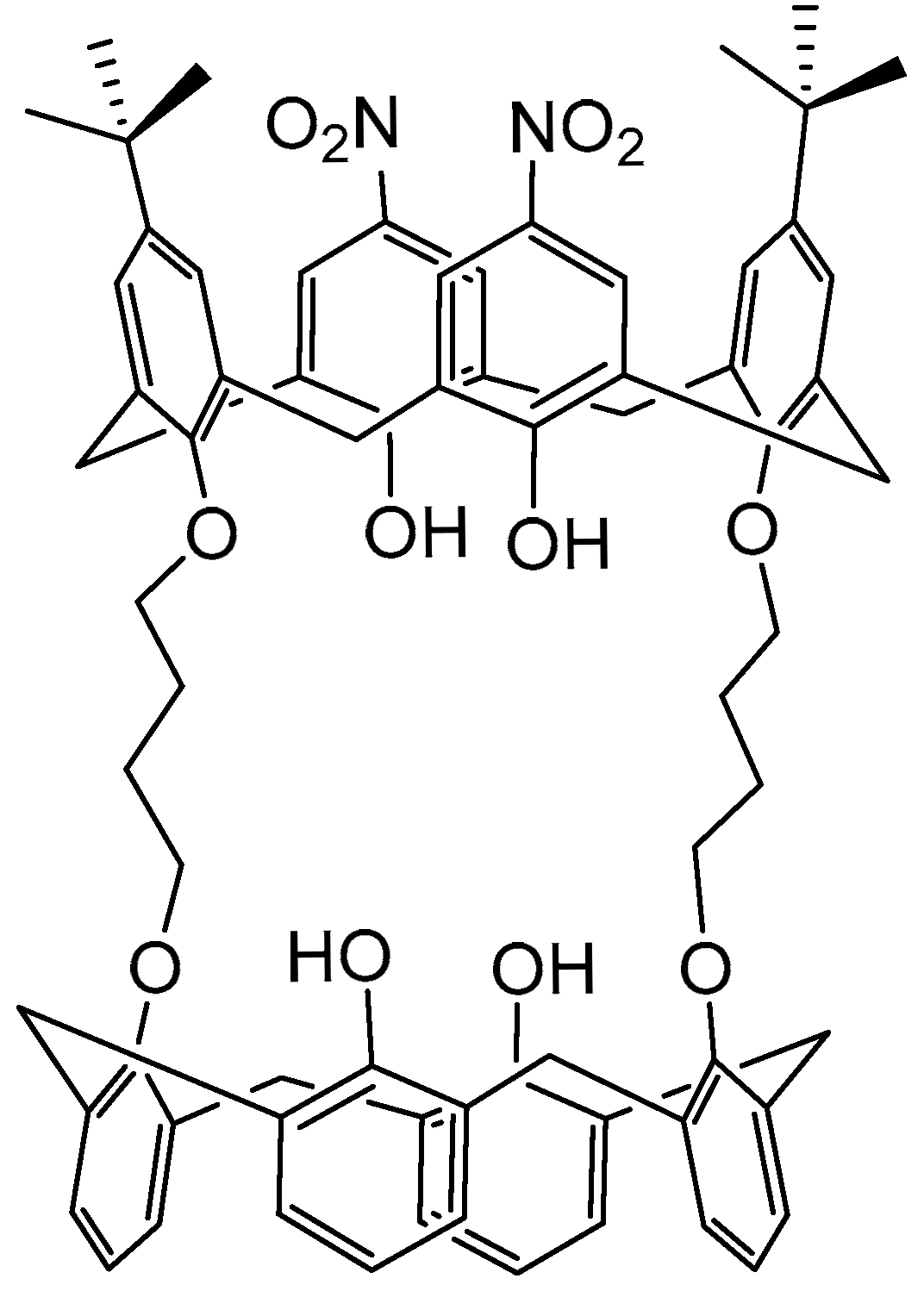
Figure 1. Structure of calix[4]semitube 5 synthesised in this work.
Molbank 2026 m2159 g001
Scheme 1. Synthetic route followed for the successful synthesis of 5.
Molbank 2026 m2159 sch001
Disclaimer/Publisher’s Note: The statements, opinions and data contained in all publications are solely those of the individual author(s) and contributor(s) and not of MDPI and/or the editor(s). MDPI and/or the editor(s) disclaim responsibility for any injury to people or property resulting from any ideas, methods, instructions or products referred to in the content.