Communication

Linear Synthesis of 10-Hydroxy-N,N-dimethyl-N-((3-(tosyloxy)pyridin-2-yl)methyl)decan-1-aminium Bromide


1
Department of Organic Chemistry, University of Chemistry and Technology, Prague, Technická 5, 166 28 Prague 6, Czech Republic
2
National Institute for NBC Protection, Kamenná 71, 262 31 Milín, Czech Republic
*
Author to whom correspondence should be addressed.
Molbank 2025, 2025(4), M2112; https://doi.org/10.3390/M2112
Submission received: 10 November 2025 / Revised: 10 December 2025 / Accepted: 12 December 2025 / Published: 16 December 2025
(This article belongs to the Section Organic Synthesis and Biosynthesis)

Abstract

In 2019, carbamates derived from 3-hydroxypyridine were classified as nerve agents and subsequently included in the Annex on Chemicals by the Conference of the States Parties. Herein, we describe the preparation of a structural simulant of this class of compounds, 10-hydroxy-N,N-dimethyl-N-((3-(tosyloxy)pyridin-2-yl)methyl)decan-1-aminium bromide. The compound was synthesized via tosylation of 2-((N,N-dimethylamino)methyl)pyridin-3-ol with tosyl chloride in the presence of sodium hydride, followed by alkylation of the resulting ((N,N-dimethylamino)methyl)pyridin-3-yl 4-methylbenzenesulfonate with 10-bromodecan-1-ol.

1. Introduction

Over the past few decades, organic synthesis has advanced rapidly in the preparation of a wide variety of structural motifs. Significant progress has been achieved, for example, in the stereoselective synthesis of trisubstituted [1,2,3,4] and tetrasubstituted alkenes [5,6,7], polycyclic aromatic hydrocarbons [8,9], and heterocyclic compounds [10,11]. The continuous exploration of synthetic methodologies is driven by the fact that numerous organic derivatives have found valuable applications in materials chemistry [12,13,14] and organic synthesis [15].
A typical example of an important structural motif is the carbamate group, well known for its role in cholinesterase inhibition [16]. The incorporation of the carbamate functionality into 3-hydroxypyridine derivatives has led to the development of a new class of cholinesterase inhibitors, which have been recognized by the Organisation for the Prohibition of Chemical Weapons (OPCW). These pyridine carbamate derivatives belong to the group of nerve agents and were added to the Annex on Chemicals by the Conference of the States Parties in 2019 [17].
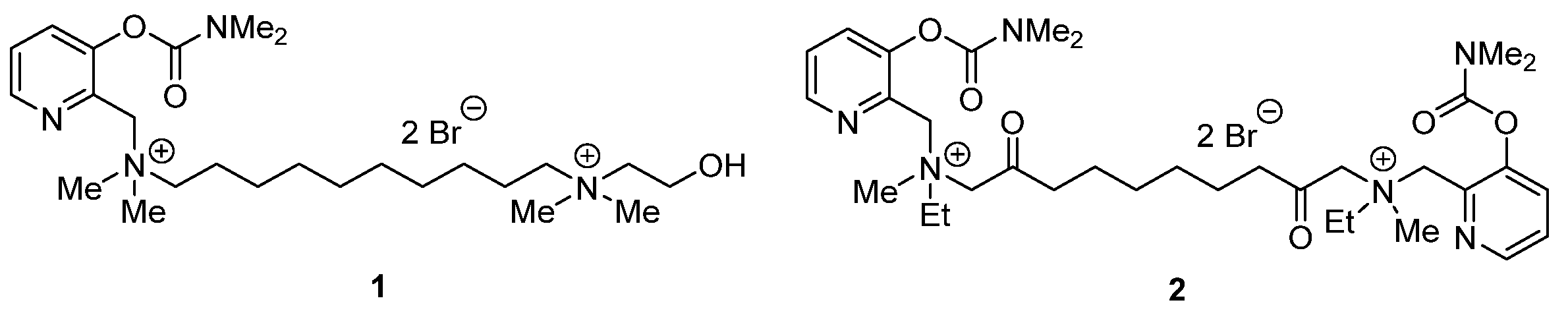
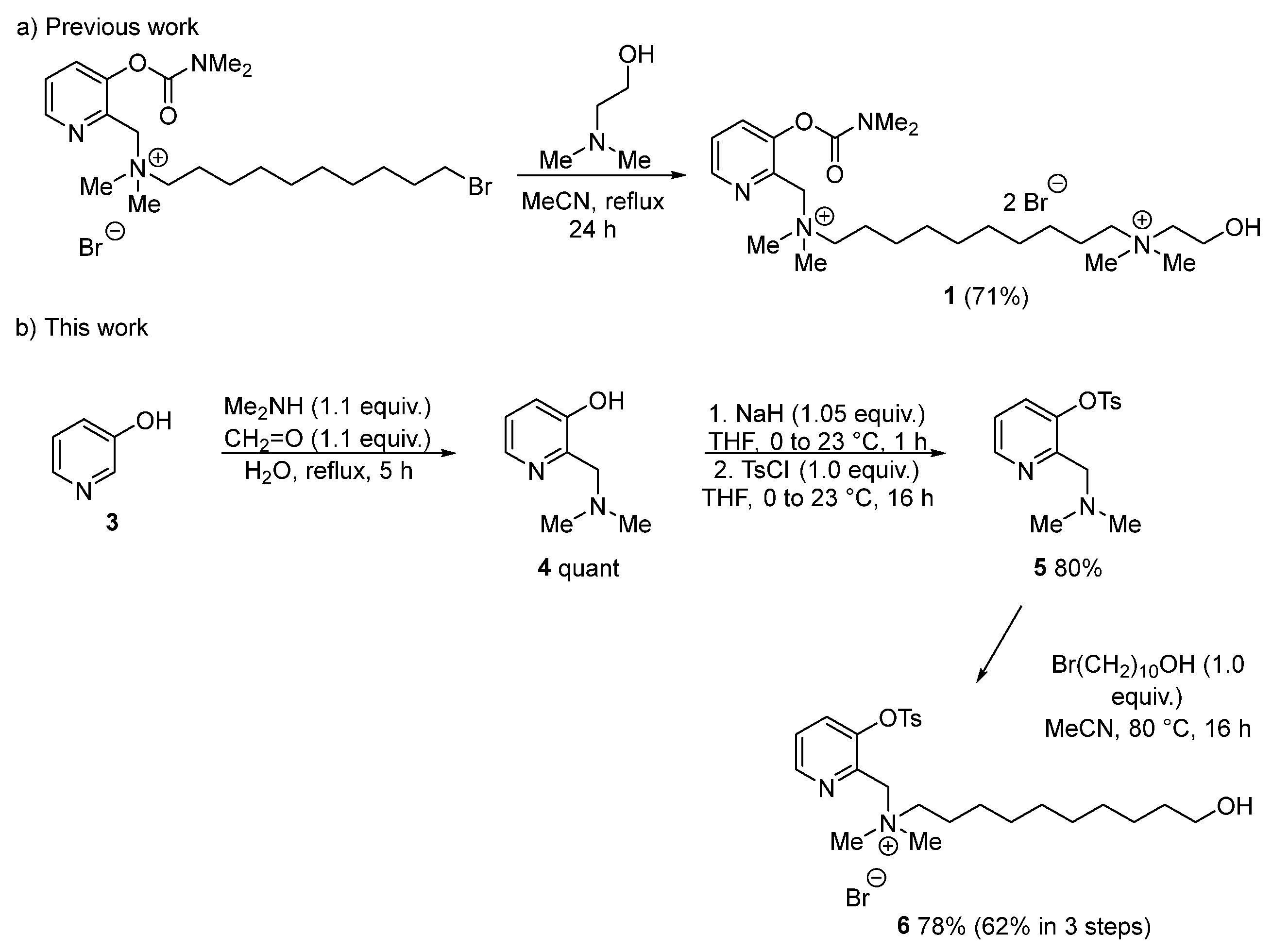
Despite the fact that carbamates 1 and 2 are classified as chemical warfare agents—or perhaps precisely because of this—their synthesis remains insufficiently explored and rarely disclosed in the open literature (Figure 1). A comprehensive search in the SciFinderⁿ and Reaxys databases revealed only three patent records describing the synthesis of compound 1. The reported procedure for carbamate 1 involves the direct reaction of 2-(N,N-dimethylamino)ethanol with the corresponding carbamate under reflux in acetonitrile, yielding compound 1 in 71% isolated yield (Scheme 1a). The easy availability of compounds incorporating the structural motifs of 1 and 2 would greatly facilitate further studies of their physicochemical properties and potential applications, especially those of their less hazardous analogues (simulants). To this end, as part of our activities devoted to the development of nerve agent chemosensors [18], we have designed a concise and operationally simple route to model compounds exemplified by derivative 3, which is obtained via straightforward alkylation of a more nucleophilic nitrogen atom with 10-bromodecan-1-ol (Scheme 1b).

2. Results

Starting material 4 was prepared by reacting 3-hydroxypyridine (3) with an aqueous solution of N,N-dimethylamine and formaldehyde under reflux (Scheme 1b) [19]. The resulting compound was obtained in quantitative yield after extractive work-up and used without further purification. The 1H and 13C NMR spectra of the crude product are provided in the Supporting Information. Since the synthesis of the tosylated derivative 5 has not been reported in the literature, we developed a straightforward tosylation of pyridine 4 with tosyl chloride in the presence of a base. Tosylation of 3-hydroxypyridine is a known transformation and is typically carried out by reacting 3-hydroxypyridine with tosyl chloride. Various bases have been employed for this transformation, including DABCO [20], pyridine [21], triethylamine [22], cesium carbonate [23], sodium hydroxide [24], and HOBt [25]. However, we avoided using nitrogenous bases for the tosylation of pyridine 4, as this reaction is accompanied by the formation of quaternary ammonium salts that must be separated from the desired product. Although sodium hydroxide initially appeared to be a suitable alternative, repeating the reported procedure for tosylation of 3-hydroxypyridine [24] afforded derivative 5 in only 63% isolated yield. In contrast, using a 60% suspension of sodium hydride in mineral oil afforded pyridine derivative 5 in 80% yield. The quaternary ammonium salt 6 was subsequently obtained by reacting compound 5 with 10-bromodecan-1-ol in acetonitrile at 80 °C. After 16 h, the desired product 6 was isolated in 78% yield, corresponding to an overall yield of 62% for the three-step sequence starting from 3-hydroxypyridine (3). Thus, the proposed route for the preparation of the simulant of compound 1 differs from the published procedure while maintaining comparably high efficiency.
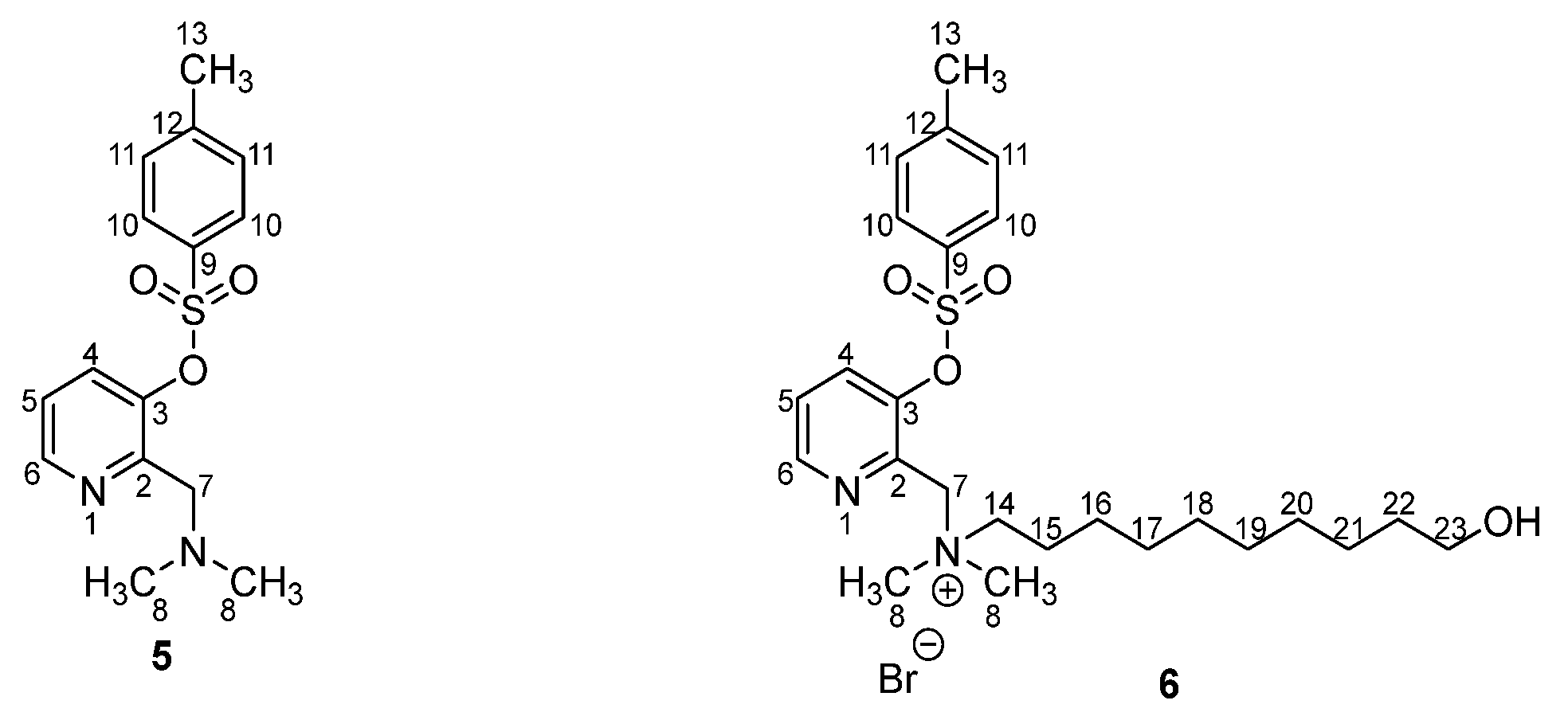
The structures of the synthesized compounds were unambiguously confirmed by 1D and 2D NMR spectroscopy (1H, 13C{1H}, 1H–1H COSY, 1H–13C HMQC, 1H–13C HMBC). In the 1H NMR spectrum of compound 5, characteristic resonances of the tosyl group were observed—two doublets at 7.74 and 7.34 ppm attributable to aromatic ortho protons, and a singlet at 2.45 ppm corresponding to the methyl substituent (Figure S3). Three additional pyridine signals appeared at 8.51, 7.48, and 7.18 ppm. Notably, the spectrum also displays resonances of the methylene group (H–7) and the N,N-dimethylamino group (H–8) at 3.34 and 2.17 ppm, respectively (Figure 2). Upon quaternization of compound 5, the proton signals H–7 and H–8 shifted markedly downfield to 4.60 and 3.42 ppm (Figure S8). Furthermore, the 1H NMR spectrum exhibits resonances of the methylene protons H–14 and H–23, aliphatic CH2 groups, and a single signal at 2.03 ppm attributable to the hydroxyl proton.

3. Materials and Methods

Materials and Methods
All reactions were carried out in a dry argon atmosphere. The progress of the reactions was monitored by thin-layer chromatography and 1H NMR spectroscopy. NMR spectra were measured using and JEOL JNM-ECZL400G (1H, 400.13 MHz; 13C, 100.61 MHz) spectrometer at 298 K. The multiplicities are reported as follows: (s) singlet, (br s) broad singlet, (d) dublet, (dd) dublet of dublets, and (m) multiplet. Mass spectra were measured using a Thermo Scientific (Waltham, MA, USA) LTQ Orbitrap Velos (Orbitrap mass analyzer). Dry and degassed THF was prepared using PureSolv MD7. Silica gel (Merck, (Darmstadt, Germany) silica gel 60, 40–63 μm or Merck, silica gel 60, 63–200 μm) was used for column chromatography. 3-Hydroxypyridine, 10-bromodecan-1-ol and other compounds were purchased from Sigma-Aldrich (St. Louis, MO, USA).
2-((N,N-Dimethylamino)methyl)pyridin-3-yl 4-methylbenzenesulfonate (5)
Sodium hydride (1.577 g, 39.4 mmol, 60% suspension in mineral oil) was added in one portion to a solution of 2-((N,N-dimethylamino)methyl)pyridin-3-ol (6.0 g, 39.4 mmol) in dry THF (100 mL), cooled to 0 °C. Then the resultant mixture was stirred for 1 h at 23 °C. The resultant mixture was again cooled to 0 °C followed by addition of tosyl chloride (7.512 g, 39.4 mmol) in one portion. The mixture was stirred for 16 h at 23 °C. Then the mixture filtrate through cellite pad and the solvents were evaporated under reduced pressure and the title compound was isolated by column chromatography (silica gel, ethyl acetate/methanol 9:1, Rf ≈ 0.2) 9.620 g (80%) as a white solid, m.p. = 53.0–54.8 °C; 1H NMR (400 MHz, CDCl3): 8.51 (dd, J = 4.7, 1.5 Hz, 1H, H–6), 7.74 (d, J = 8.4 Hz, 2H, H–10), 7.48 (dd, J = 8.3, 1.5 Hz, 1H, H–4), 7.34 (d, J = 8.1 Hz, 2H, H–11), 7.18 (dd, J = 8.3, 4.7 Hz, 1H, H–5), 3.34 (s, 2H, H–7), 2.45 (s, 3H, H–13), 2.17 (s, 6H, H–8); 13C NMR (101 MHz, CDCl3): δ 152.39 (C–2), 147.87 (C–6), 146.09 (C–12), 145.32 (C–3), 132.53 (C–9), 130.18 (C–11), 130.13 (C–4), 128.56 (C–10), 123.03 (C–5), 59.25 (C–7), 45.68 (C–8), 21.87 (C–13); HR MS (APCI) m/z: [M+H]+ Calcd. for C15H18N2O3S 307.1111; Found 307.1112.
10-Hydroxy-N,N-dimethyl-N-((3-(tosyloxy)pyridin-2-yl)methyl)decan-1-aminium Bromide (6)
10-Bromodecan-1-ol (1.186 g, 5.0 mmol) was added to a solution of 2-((N,N-dimethylamino)methyl)pyridin-3-yl 4-methylbenzenesulfonate (1.532 g, 5.0 mmol) in dry acetonitrile (40 mL). The resultant mixture was stirred for 16 h at 80 °C. Then the solvent was removed under reduced pressure and column chromatography gave 2.109 g (78%) of the title compound as a light brown oil, which crystallized within 14 days, m.p. = 81.2–83.6. 1H NMR (400 MHz, CDCl3): 8.58 (dd, J = 3.9, 2.2 Hz, 1H, H–6), 7.80 (d, J = 8.4 Hz, 2H, C-10), 7.45–7.42 (m, 4H, H–11 and H–5 and H–4), 4.60 (s, 2H), 3.75–3.67 (m, 2H, H–14), 3.60–3.56 (m, 2H, H–23), 3.42 (s, 6H, H–8), 2.48 (s, 3H, H–13), 2.03 (br s, 1H, OH), 1.80–1.75 (m, 2H), 1.57–1.46 (m, 2H), 1.39–1.13 (m, 15H). 13C NMR (101 MHz, CDCl3); 148.37 (C–6), 147.46 (C–12), 146.40 (C–3), 142.89 (C–2), 131.32 (C–4), 131.17 (C–9), 130.81 (C–11), 128.54 (C–10), 126.47 (C–5), 65.49 (C–14), 62.75 (C–23), 60.76 (C–7), 52.18 (C–8), 32.74 (aliphCH2), 29.28 (aliphCH2), 29.24 (aliphCH2), 29.14 (aliphCH2), 29.03 (aliphCH2), 26.07 (aliphCH2), 25.71 (aliphCH2), 22.99 (aliphCH2), 22.05 (C–13). HR MS (APCI) m/z: [M+H]+ Calcd. for C25H38N2O4S 463.2625; Found 463.2623.

4. Conclusions

A new and efficient procedure for the preparation of 10-hydroxy-N,N-dimethyl-N-((3-(tosyloxy)pyridin-2-yl)methyl)decan-1-aminium bromide (6) has been developed. The synthetic route involves tosylation of 2-((N,N-dimethylamino)methyl)pyridin-3-ol (5) with tosyl chloride in the presence of sodium hydride as a base, followed by alkylation of the resulting ((N,N-dimethylamino)methyl)pyridin-3-yl 4-methylbenzenesulfonate (5) with 10-bromodecan-1-ol in acetonitrile at 80 °C. The structures of intermediates and final products 5 and 6 were unambiguously confirmed by 1H and 13C NMR spectroscopy, including 2D experiments (1H–1H COSY, 1H–13C HMBC, 1H–13C HMQC).

Supplementary Materials

The following supporting information—1H-NMR, 13C-NMR, 1H–1HCOSY, 1H–13C HMQC, 1H–13C HMBC and HRMS of compounds 4, 5 and 6 are available online; Figure S1: 1H NMR (400 MHz, CDCl3) spectrum of compound 4; Figure S2: 13C{1H} NMR (101 MHz, CDCl3) spectrum of compound 4; Figure S3: 1H NMR (400 MHz, CDCl3) spectrum of compound 5; Figure S4: 13C{1H} NMR (101 MHz, CDCl3) spectrum of compound 5; Figure S5: 1H–1H COSY spectrum of compound 5 in CDCl3; Figure S6: 1H–13C HMQC spectrum of compound 5 in CDCl3; Figure S7. 1H–13C HMBC spectrum of compound 5 in CDCl3; Figure S8. 1H NMR (400 MHz, CDCl3) spectrum of compound 6; Figure S9. 13C{1H} NMR (101 MHz, CDCl3) spectrum of compound 6; Figure S10. 1H–1H COSY spectrum of compound 6 in CDCl3; Figure S11: 1H–13C HMQC spectrum of compound 6 in CDCl3; Figure S12. 1H–13C HMBC spectrum of compound 6 in CDCl3.

Author Contributions

Conceptualization: T.T.; synthesis and analysis: V.H. and T.T.; analysis: T.T.; writing, reviewing and editing: M.U., V.H. and T.T. All authors have read and agreed to the published version of the manuscript.

Funding

The work was carried out within the research project New methods of determination, identification and verification of toxic chemical substances and their precursors with a focus on selected newly determined substances of list 1 of groups 1A13 to 1A16, code number VC20232025004, realized with funding of Ministry of Interior of the Czech Republic. The authors would like to express their sincere gratitude to the Ministry of the Interior of the Czech Republic for the financial support of the present study.

Data Availability Statement

The data for the compound presented in this study are available in Supplementary Materials of this article.

Conflicts of Interest

The authors declare no conflicts of interest.

References

  1. Wang, Y.; He, Y.; Zhu, S. Nickel-Catalyzed Migratory Cross-Coupling Reactions: New Opportunities for Selective C–H Functionalization. Acc. Chem. Res. 2023, 56, 3475–3491. [Google Scholar] [CrossRef]
  2. Thowfik, S.; Afsina, C.M.A.; Anilkumar, G. Ruthenium-Catalyzed Hydroarylation Reactions as the Strategy Towards the Synthesis of Alkylated Arenes and Substituted Alkenes. RSC Adv. 2023, 13, 6246–6263. [Google Scholar] [CrossRef]
  3. Ouzounthanasis, K.A.; Rizos, S.R.; Koumbis, A.E. Julia-Kocienski Olefination in the Synthesis of Trisubstituted Alkenes: Recent Progress. Eur. J. Org. Chem. 2023, 26, e202300626. [Google Scholar] [CrossRef]
  4. Hoveyda, A.H.; Qin, C.; Sui, X.Z.; Liu, Q.; Li, X.; Nikbakht, A. Taking Olefin Metathesis to the Limit: Stereocontrolled Synthesis of Trisubstituted Alkenes. Acc. Chem. Res. 2023, 56, 2426–2446. [Google Scholar] [CrossRef] [PubMed]
  5. Edlová, T.; Čubiňák, M.; Tobrman, T. Cross-Coupling Reactions of Double or Triple Electrophilic Templates for Alkene Synthesis. Synthesis 2021, 53, 255–266. [Google Scholar]
  6. Reiser, O. Palladium-Catalyzed Coupling Reactions for the Stereoselective Synthesis of Tri- and Tetrasubstituted Alkenes. Angew. Chem. Int. Ed. 2006, 45, 2838–2840. [Google Scholar] [CrossRef] [PubMed]
  7. Tobrman, T.; Mrkobrada, S. Palladium-Catalyzed Cross-Coupling Reactions of Borylated Alkenes for the Stereoselective Synthesis of Tetrasubstituted Double Bond. Organics 2022, 3, 210–239. [Google Scholar] [CrossRef]
  8. Biagiotti, G.; Perini, I.; Richichi, B.; Cicchi, S. Novel Synthetic Approach to Heteroatom Doped Polycyclic Aromatic Hydrocarbons: Optimizing the Bottom-up Approach to Atomically Precise Doped Nanographenes. Molecules 2021, 26, 6306. [Google Scholar] [CrossRef]
  9. Li, Q.; Zhang, Y.; Xie, Z.; Zhen, Y.; Hu, W.; Dong, H. Polycyclic Aromatic Hydrocarbon-Based Organic Semiconductors: Ring-Closing Synthesis and Optoelectronic Properties. J. Mater. Chem. C 2022, 10, 2411–2430. [Google Scholar] [CrossRef]
  10. Javahershenas, R.; Nikzat, S. Recent Advances in the Multicomponent Synthesis of Heterocycles Using Tetronic Acid. RSC Adv. 2023, 13, 16619–16629. [Google Scholar] [CrossRef]
  11. Borissov, A.; Maurya, Y.K.; Moshniaha, L.; Wong, W.-S.; Żyła-Karwowska, M.; Stępień, M. Recent Advances in Heterocyclic Nanographenes and Other Polycyclic Heteroaromatic Compounds. Chem. Rev. 2022, 122, 565–788. [Google Scholar] [CrossRef] [PubMed]
  12. La, D.D.; Bhosale, S.V.; Jones, L.A.; Bhosale, S.V. Tetraphenylethylene-Based Aie-Active Probes for Sensing Applications. ACS Appl. Mater. Interfaces 2018, 10, 12189–12216. [Google Scholar] [CrossRef]
  13. Li, M.-Y.; Zhai, S.; Nong, X.-M.; Gu, A.; Li, J.; Lin, G.-Q.; Liu, Y. Trisubstituted Alkenes Featuring Aryl Groups: Stereoselective Synthetic Strategies and Applications. Sci. China Chem. 2023, 66, 1261–1287. [Google Scholar] [CrossRef]
  14. Yan, D.; Wu, Q.; Wang, D.; Tang, B.Z. Innovative Synthetic Procedures for Luminogens Showing Aggregation-Induced Emission. Angew. Chem. Int. Ed. 2021, 60, 15724–15742. [Google Scholar] [CrossRef] [PubMed]
  15. Tobrman, T.; Hron, V. Trisubstituted Alkenes as Valuable Building Blocks. Molecules 2025, 30, 3370. [Google Scholar] [CrossRef]
  16. Yılmaz, S.; Akbaba, Y.; Özgeriş, B.; Köse, L.P.; Göksu, S.; Gülçin, İ.; Alwasel, S.H.; Supuran, C.T. Synthesis and Inhibitory Properties of Some Carbamates on Carbonic Anhydrase and Acetylcholine Esterase. J. Enzyme Inhib. Med. Chem. 2016, 31, 1484–1491. [Google Scholar] [CrossRef]
  17. Opcw Conference of the States Parties 2019: Decision: Changes to Schedule 1 of the Annex on Chemicals to the Chemical Weapons Convention, C-24/Dec.5. Available online: https://www.opcw.org/sites/default/files/documents/2019/11/c24dec05%28e%29.pdf (accessed on 7 October 2025).
  18. Urban, M.; Dropa, T.; Zelenková, M.; Dymák, M.; Pitschmann, V. Detection of Novichok and V-Group Nerve Agents by Chemosensors Containing Nile Blue Chromophore. Chemosensors 2025, 13, 77. [Google Scholar] [CrossRef]
  19. Zhuang, Q.; Franjesevic, A.J.; Corrigan, T.S.; Coldren, W.H.; Dicken, R.; Sillart, S.; DeYong, A.; Yoshino, N.; Smith, J.; Fabry, S.; et al. Demonstration of in Vitro Resurrection of Aged Acetylcholinesterase after Exposure to Organophosphorus Chemical Nerve Agents. J. Med. Chem. 2018, 61, 7034–7042. [Google Scholar] [CrossRef]
  20. Gui, Y.-Y.; Liao, L.-L.; Sun, L.; Zhang, Z.; Ye, J.-H.; Shen, G.; Lu, Z.-P.; Zhou, W.-J.; Yu, D.-G. Coupling of C(Sp3)–H Bonds with C(Sp2)–O Electrophiles: Mild, General and Selective. Chem. Commun. 2017, 53, 1192–1195. [Google Scholar] [CrossRef]
  21. Ogata, T.; Hartwig, J.F. Palladium-Catalyzed Amination of Aryl and Heteroaryl Tosylates at Room Temperature. J. Am. Chem. Soc. 2008, 130, 13848–13849. [Google Scholar] [CrossRef]
  22. Yang, J.; Liu, S.; Zheng, J.-F.; Zhou, J. Room-Temperature Suzuki–Miyaura Coupling of Heteroaryl Chlorides and Tosylates. Eur. J. Org. Chem. 2012, 2012, 6248–6259. [Google Scholar] [CrossRef]
  23. Yi, Z.; Aschenaki, Y.; Daley, R.; Davick, S.; Schnaith, A.; Wander, R.; Kalyani, D. Palladium Catalyzed Arylation and Benzylation of Nitroarenes Using Aryl Sulfonates and Benzyl Acetates. J. Org. Chem. 2017, 82, 6946–6957. [Google Scholar] [CrossRef]
  24. Lei, X.; Jalla, A.; Shama, M.A.A.; Stafford, J.M.; Cao, B. Chromatography-Free and Eco-Friendly Synthesis of Aryl Tosylates and Mesylates. Synthesis 2015, 47, 2578–2585. [Google Scholar] [CrossRef]
  25. Tadros, J.; Dankers, C.; Jurisinec, A.; Menti-Platten, M.; Aldrich-Wright, J.R.; Gordon, C.P. A Comparison of Immobilised Triphenylphosphine and 1-Hydroxybenzotriazole as Mediators of Catch-and-Release Acylation under Flow Conditions. Chem. Asian J. 2022, 17, e202101308. [Google Scholar] [CrossRef]
Scheme 1. (a) Previsously reported route to carbamate 1; (b) Proposed synthetic route to 10-hydroxy-N,N-dimethyl-N-((3-(tosyloxy)pyridin-2-yl)methyl)decan-1-aminium bromide (6).
Molbank 2025 m2112 sch001
Figure 1. Structure of carbamates 1 and 2.
Molbank 2025 m2112 g001
Figure 2. Labeling of atoms in compounds 5 and 6.
Molbank 2025 m2112 g002
Disclaimer/Publisher’s Note: The statements, opinions and data contained in all publications are solely those of the individual author(s) and contributor(s) and not of MDPI and/or the editor(s). MDPI and/or the editor(s) disclaim responsibility for any injury to people or property resulting from any ideas, methods, instructions or products referred to in the content.