Short Note

Benzyl 2,4-dichlorophenyl sulfoxide

by
Maria Annunziata M. Capozzi
1,*,
Joan F. Piniella Febrer
2 and
Cosimo Cardellicchio
3,*
1
Dipartimento di Chimica, Università di Bari, Via Orabona 4, 70125 Bari, Italy
2
Departament de Geologia, Universitat Autónoma de Barcelona, Bellaterra, 08193 Barcelona, Spain
3
CNR ICCOM, Dipartimento di Chimica, Università di Bari, Via Orabona 4, 70125 Bari, Italy
*
Authors to whom correspondence should be addressed.
Molbank 2025, 2025(4), M2113; https://doi.org/10.3390/M2113
Submission received: 18 November 2025 / Revised: 11 December 2025 / Accepted: 12 December 2025 / Published: 16 December 2025

Abstract

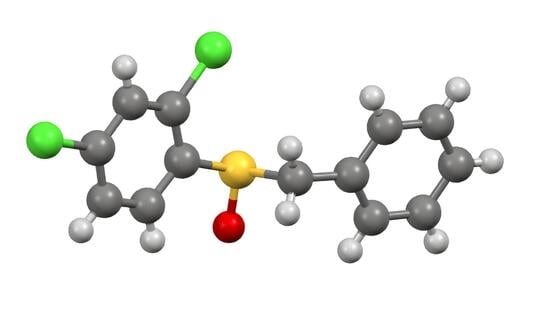
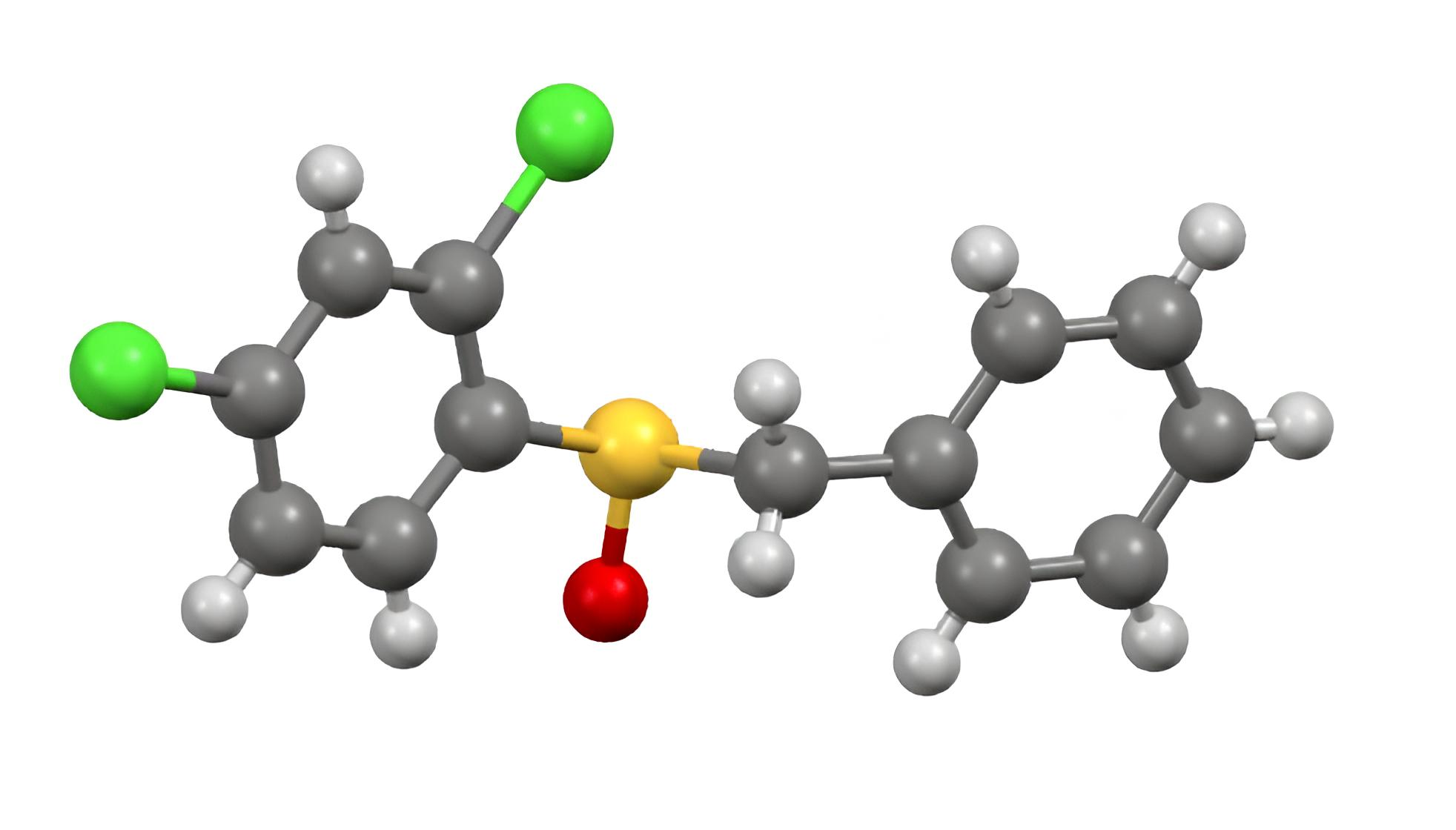
Benzyl 2,4-dichlorophenyl sulfoxide was synthesized both in racemic and in an enantiopure form. This enantiopure sulfoxide is a further successful confirmation of our straightforward protocol to yield easily chiral aryl benzyl sulfoxides. We solved also the crystal structure of racemic benzyl 2,4-dichlorophenyl sulfoxide with a single crystal X-ray diffraction experiment. The main interactions building up the crystal structure were recognized and compared with other similar sulfoxides.

Graphical Abstract

1. Introduction

Enantiopure sulfoxides [1,2] constitute a relevant class of organic compounds. Some of them are biologically active [3], such as the blockbuster drug omeprazole [3,4]; other sulfinyl compounds have application in asymmetric synthesis both as chiral ligands [5] and as starting materials in many useful protocols leading to natural and bioactive compounds [6]. Many methods have been reported for the synthesis of these intermediates [1,2], including catalytic asymmetric synthesis [7,8].
In the last three decades, we have investigated different strategies for the synthesis of enantiopure sulfoxides, working both on an unprecedented ligand exchange reaction with the displacement of a carbanionic leaving group [9] and on innovative asymmetric oxidation of sulphides [10,11,12,13,14]. A conspicuous chemical library of sulfinyl compounds has been built. Furthermore, we also reported preliminary results on the bioactivity of some elements of this library [15].
One enantioselective oxidation of pro-chiral sulphides emerges among the other methods [10,11,12,13,14]. We have reported that the enantioselective oxidation of aryl benzyl sulphides with hydroperoxides in the presence of catalytic amounts of a chiral titanium complex with (S, S)-hydrobenzoin yields easily the corresponding enantiopure aryl benzyl sulfoxides [10,11,12,13,14]. The reaction protocol is simple, uses inexpensive reactants, is performed at room temperature, and the purification steps are not complicated. Many substituents are tolerated, even when the protocol is extended to heterocycles [14] and perfluorinated materials [11,12,13]. A very large number of different enantiopure aryl benzyl sulfoxides have been synthesized in our work [10,11,12,13,14].
In our research, Density Functional Theory (DFT) calculations [10,11] explained also the reasons for the high enantioselectivity of the oxidation reaction, which is comparable with enzymatic processes. From a stereochemical point of view, the (R)-sulfoxide has been invariably obtained when the (S, S)-hydrobenzoin is used as a ligand of the titanium [10,11,12,13,14].
Finally, the crystal structures of many racemic and enantiopure aryl benzyl sulfoxides synthesized by us have been investigated with single-crystal X-ray diffraction experiments [10,11,12,13,14,16].

2. Results

2.1. Synthesis of Racemic and Enantiopure Benzyl 2,4-dichlorophenyl sulfoxide

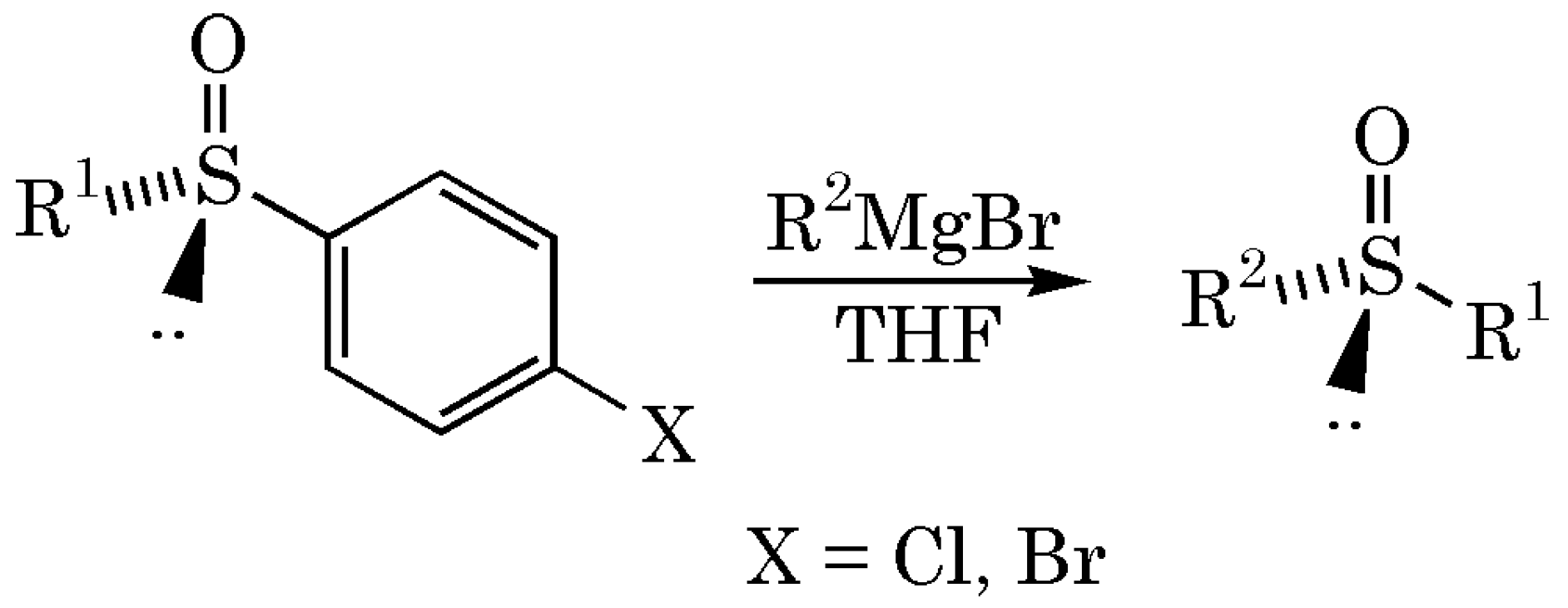
In our work on the synthetic application of the displacement of carbanionic leaving groups [9], we found that alkyl Grignard reagents react enantiospecifically with halophenyl sulfoxides with the release of the whole halophenyl moiety as a carbanionic leaving group, thus achieving a carbon-for-carbon substitution (Figure 1).
We reported that a chlorophenyl and a bromophenyl group have almost the same reactivity when sulfoxides bearing these moieties are reacted with Grignard reagents [9]. On the other hand, a sulfoxide bearing the 2-halophenyl moiety is twice as reactive as the sulfoxide bearing the 4-halophenyl moiety in the reaction with Grignard reagents [9].
At this stage, we considered it of interest to evaluate a 2,4-dichlorophenyl sulfoxide in this scale. Thus, we decided to synthesize the benzyl 2,4-dichlorophenyl sulfoxide to be employed in further reactivity tests of dichlorophenyl sulfoxides with Grignard reagents.
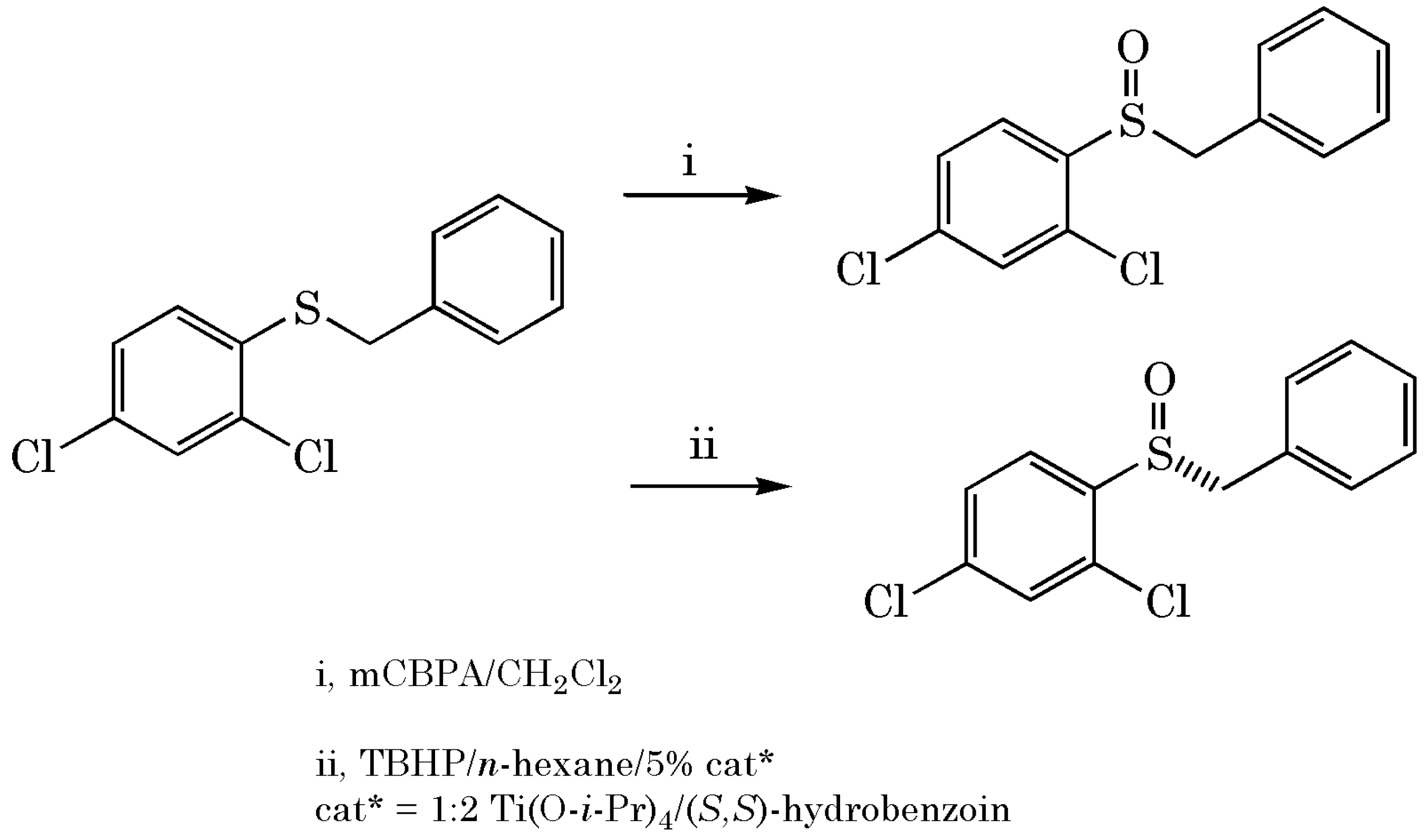
The racemic benzyl 2,4-dichlorophenyl sulfoxide was easily obtained by standard (see Experimental) m-chloroperoxybenzoic oxidation in methylene chloride (Figure 2i).
The enantiopure benzyl 2,4-dichlorophenyl sulfoxide was obtained (Figure 2ii) by applying our enantioselective sulphide oxidation with tert-butyl hydroperoxide in the presence of 5% mol catalyst constituted by a 1:2 complex between titanium i-propoxide and commercially available (S, S)-hydrobenzoin (see Experimental). According to the systematic behaviour of the other aryl benzyl sulfoxides, the (R)-sulfoxide should have been obtained also in this case.

2.2. Crystal Structure of Racemic Benzyl 2,4-dichlorophenyl sulfoxide

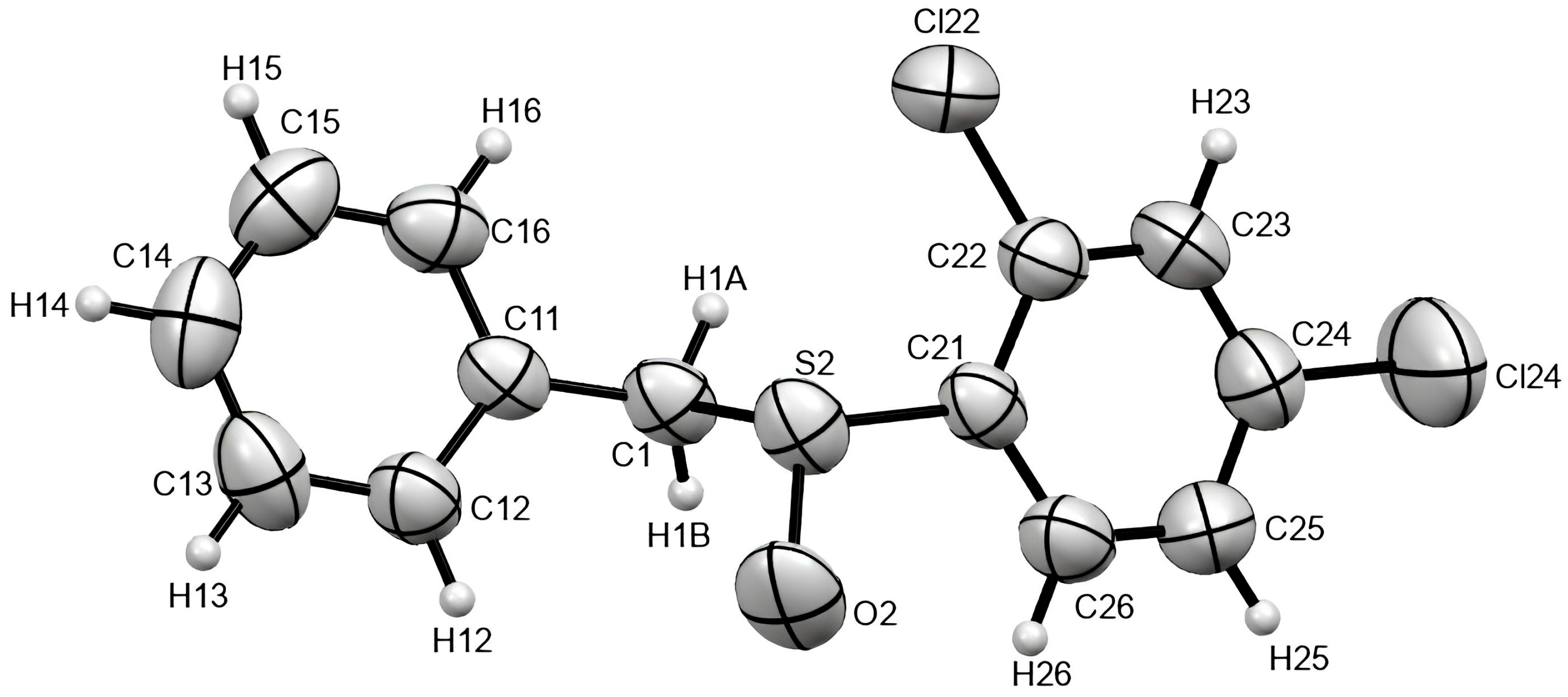
The crystals of the racemic benzyl 2,4-dichlorophenyl sulfoxide were suitable for a single crystal X-ray diffraction experiment (see Experimental and Appendix A). The ORTEP plot of the resolved crystal structure is represented in Figure 3.
Similar crystal structures were reported in the CSD, such as the 4-bromophenyl sulfoxide [13] and especially the 4-chlorophenyl sulfoxide (CSD code: BOYDEZ) [17].
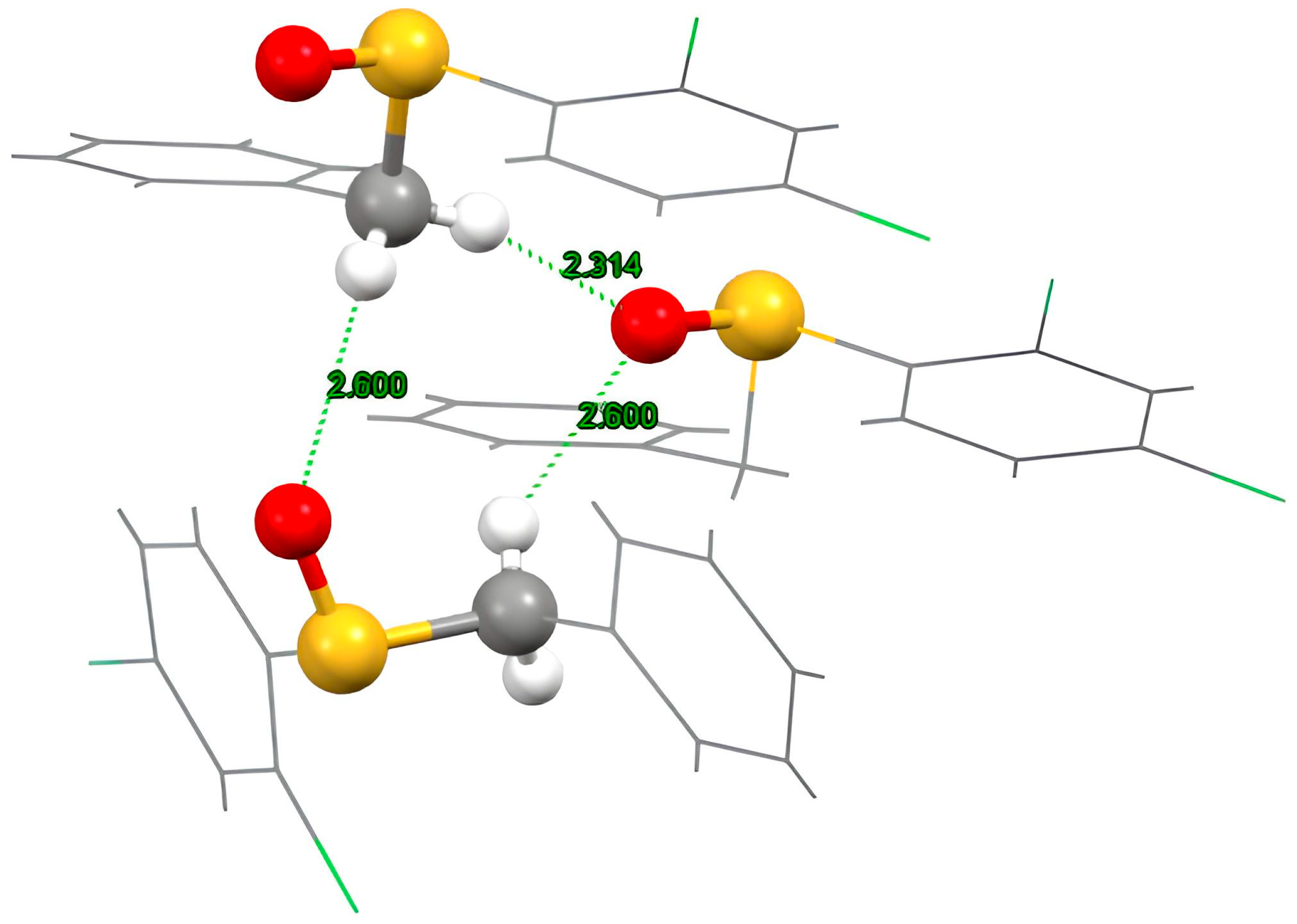
The crystal structures of aryl benzyl sulfoxides are usually built up [10,11,12,13,14,16,17,18] by a weak form of hydrogen bonding [19] involving the weakly acidic methylene hydrogen atoms, with the sulfinyl oxygen atom acting as the hydrogen bonding acceptor.
Actually, the crystal structure of racemic benzyl 2,4-dichlorophenyl sulfoxide is built according to this rule. The main characteristics of the weak hydrogen bonding are summarized in Table 1.
It is worth noting that an 8-atom network extended over three molecules [20] is built up from these weak hydrogen bonding (Figure 4).
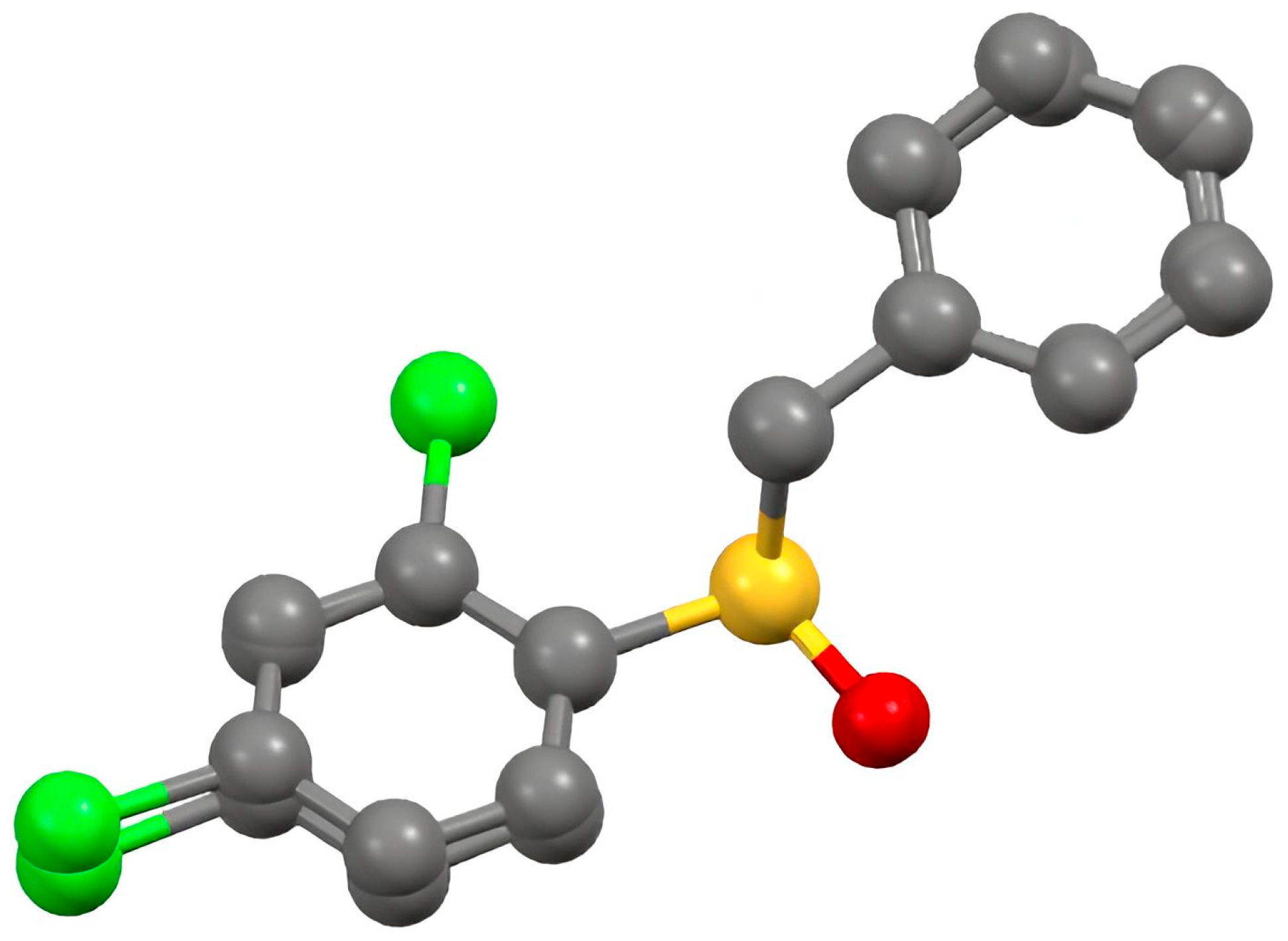
The comparison between the crystal structures of benzyl 2,4-dichlorophenyl sulfoxide and benzyl 4-chlorophenyl sulfoxide shows that they are very similar, as witnessed by their overlay (Figure 5).
In the present case, the chlorine atom in the ortho-position of the halogenated phenyl group seems to have a limited influence on the building up of the structure. This observation could be useful in future investigations on crystal structure prediction [21].

3. Materials and Methods

Chemicals were used as received. High-resolution Mass Spectra were determined with a Shimadzu (Tokyo, Japan) LCMS-IT-TOF high-performance liquid chromatography ion trap time-of-flight mass spectrometer by direct infusion of the samples using methanol as the elution solvent (the samples were previously dissolved in acetonitrile). NMR spectra were recorded on a Agilent VNMRS-500 (Agilent, Santa Clara, CA, USA).
mCPBA-mediated oxidation of benzyl 2,4-dichlorophenyl sulphide. A solution of m-chloroperoxybenzoic acid 77% (0.112 g, 0.5 mmol) in methylene chloride (6 mL) was slowly added to a solution of commercially available 2,4-dichlorophenyl sulphide (0.135 g, 0.5 mmol) in methylene chloride (4 mL) at 0 °C. The mixture was stirred for 3 h at room temperature. The reaction was quenched with a 1 M aqueous solution of sodium carbonate. The mixture was extracted three times with methylene chloride. The organic extracts were washed with water, dried with sodium sulphate, and then the solvent was removed in vacuo. The residue was subjected to column chromatography (n-hexane/ethyl acetate 9:1), followed by crystallization (n-hexane/ethanol 9:1). mp 187–189 °C. Yield 0.125 g (88%).
The separation of the enantiomers of a racemic sample of benzyl 2,4-dichlorophenyl sulfoxide was performed with HPLC (Column: Chiralcel OD-H. Eluent: n-hexane/i-propanol 9:1). Separation factor α = 1.3. These separation conditions were employed in the analysis of the chiral material to check its enantiopurity.
Enantioselective oxidation of benzyl 2,4-dichlorophenyl sulphide. A solution of titanium tetra-i-propoxide (14 mg, 0.05 mmol) in n-hexane (4 mL) was added to a solution of (S, S)-hydrobenzoin (21 mg, 0.1 mmol) in n-hexane (8 mL) under a nitrogen atmosphere. The mixture was stirred for 1 h at room temperature. A solution of benzyl 2,4-dichlorophenyl sulphide (0.269 g, 1 mmol) in n-hexane (8 mL) was then added, and the mixture was stirred for 30 min. After this time, 0.14 mL of a commercial 80% solution of tert-butyl hydroperoxide (in di-tert-butyl peroxide/water 3:2) was added, and the stirring was continued for 2 days. Then, the solvent was removed in vacuo, and the residue was subjected to column chromatography (n-hexane/ethyl acetate 9:1), yielding (R)-benzyl 2,4-dichlorophenyl sulfoxide (0.27 g, 95% yield). The sample was crystallized (n-hexane/acetonitrile 1:1). m.p. 113–115° C. [α]D25 = +426.7 (c = 0.39, acetonitrile). The crystallized sample was enantiopure (HPLC checked).
(R)-Benzyl 2,4-chlorophenyl sulfoxide: 1H NMR (500 MHz, CDCl3) δ 7.41 (d, J = 1.7 Hz, 1 H), 7.34–7.23 (m, 5 H), 7.05–7.01 (m, 2 H), 4.27 (d, J = 13.2 Hz, 1 H), 4.03 (d, J = 13.2 Hz, 1 H). 13C-NMR (125 MHz, CDCl3) δ 139.2, 137.6, 130.3, 129.3, 128.8, 128.4, 128.3, 128.0, 127.9, 127.5, 59.4. HRMS (ESI-TOF), m/z calcd for C13H1135Cl2OS [M + H]+ 284.9908. Found [M + H]+ 284.9917. IR (KBr) ν/cm−1 2928, 1664, 1562, 1447, 1027, 806.
Graphical representation of the spectral data are collected in Supplementary Materials.
X-ray diffraction experiments.
Data collection for single crystal X-ray diffraction experiments was performed by using Mo Kα radiation in a Bruker SMART-APEX diffractometer at room temperature. The intensities were corrected for Lorentz and polarization effects as well as for absorption [22]. Structures were solved by direct methods (SHELX) [23] and refined by full-matrix least-squares methods on F2 for all reflections (SHELX) [23].
Non-hydrogen atoms were refined anisotropically. Aryl hydrogen atoms were placed in calculated positions with isotropic displacement parameters fixed at 1.2 times the Ueq of the corresponding carbon atoms. Methylene hydrogen atoms were located by difference Fourier synthesis.
The crystallographic .cif file was deposited in the Cambridge Structural Database (CSD) with the number 2502976.

Supplementary Materials

Graphical representation of NMR, HRMS and IR spectrum of benzyl 2,4-dichlorophenyl sulfoxide.

Author Contributions

Synthesis and characterization of the product, M.A.M.C. and C.C. Crystal structure elaboration, J.F.P.F. and C.C. Writing—review and editing, M.A.M.C., J.F.P.F. and C.C. All authors have read and agreed to the published version of the manuscript.

Funding

This research received no external funding.

Data Availability Statement

Experimental data are available from the authors upon request. .cif data file was deposited in the Cambridge Structural Database (CSD) with the deposition number n. 2502976.

Acknowledgments

Angel Alvarez-Larena is gratefully acknowledged for the acquisition of the crystal structure at the Servei de Difracciò de Raigs X. Universitat Autònoma de Barcelona. Italian Ministero dell’Università e della Ricerca (MUR) is acknowledged for support.

Conflicts of Interest

The authors declare no conflicts of interest.

Appendix A

Crystal data and structure refinements
Empirical formula C13H10Cl2OS
Formula weight 285.17
Temperature 296 (2) K
Wavelength 0.71073 Å
Crystal system Monoclinic
Space group P 21/c
Unit cell dimensions a = 10.0619 (10) Å α = 90°.
b = 5.6732 (6) Å β = 99.870 (2)°.
c = 23.360 (3) Å γ = 90°.
Volume 1313.7 (3) Å3
Z 4
Density (calculated)1.442 Mg/m3
Absorption coefficient 0.632 mm−1
F (000) 584
Crystal size 0.37 × 0.15 × 0.04 mm3
Theta range for data collection 1.770 to 28.730°.
Index ranges−13 ≤ h ≤ 13, −7 ≤ k ≤ 7, −30 ≤ l ≤ 30
Reflections collected 10,029
Independent reflections 3214 [R(int) = 0.0503]
Completeness to theta = 25.000° 100.0 %
Absorption correction Semi-empirical from equivalents
Max. and min. transmission 1 and 0.83
Refinement methodFull-matrix least-squares on F2
Data/restraints/parameters 3214/0/160
Goodness-of-fit on F2 1.011
Final R indices [I > 2sigma(I)] R1 = 0.0573, wR2 = 0.1153
R indices (all data) R1 = 0.1241, wR2 = 0.1385
Largest diff. peak and hole 0.287 and −0.236 e.Å−3

References

  1. Wojaczyńska, E.; Wojaczyński, J. Enantioselective Synthesis of Sulfoxides 2000–2009. Chem. Rev. 2010, 110, 4303–4356. [Google Scholar] [CrossRef] [PubMed]
  2. Wojaczyńska, E.; Wojaczyński, J. Modern Stereoselective Methods of Chiral Sulfinyl Compounds. Chem. Rev. 2020, 120, 4578–4611. [Google Scholar] [CrossRef] [PubMed]
  3. Wojaczyńska, E.; Wojaczyński, J. Sulfoxides in medicine. Curr. Opin. Chem. Biol. 2023, 76, 102340. [Google Scholar] [CrossRef] [PubMed]
  4. Surur, A.S.; Schulig, L.; Link, A. Interconnection of sulfides and sulfoxides in medicinal chemistry. Arch. Pharm.—Chem. Life Sci. 2019, 352, e1800248. [Google Scholar] [CrossRef]
  5. Han, J.; Soloshonok, V.A.; Klika, K.D.; Drabowicz, J.; Wzorek, A. Chiral sulfoxides: Advances in asymmetric synthesis and problems with the accurate determination of the stereochemical outcome. Chem. Soc. Rev. 2018, 47, 1307–1350. [Google Scholar] [CrossRef]
  6. Capozzi, M.A.M.; Cardellicchio, C. Organosulfur compounds as chiral building blocks. In Chiral Building Blocks in Asymmetric Synthesis: Synthesis and Application; Wojaczynska, E., Wojaczinski, J., Eds.; Wiley VCH: Weinheim, Germany, 2022; pp. 441–462. ISBN 978-3-527-34946-3. [Google Scholar]
  7. Wang, C.-R.; Sun, J.-N.; Li, Y.; Li, J.-H. Recent advances in Catalytic Asymmetric Synthesis of Chiral Sulfinyl Compounds. Eur. J. Org. Chem. 2025, 28, e202500378. [Google Scholar] [CrossRef]
  8. Pellissier, H. Recent developments in enantioselective titanium-catalyzed transformations. Coord. Chem. Rev. 2022, 463, 214537. [Google Scholar] [CrossRef]
  9. Capozzi, M.A.M.; Cardellicchio, C.; Naso, F. Enantioselective Routes to Sulfoxides Based Upon the Use of Carbanionic Leaving Groups. Eur. J. Org. Chem. 2004, 2004, 1855–1863. [Google Scholar] [CrossRef]
  10. Naso, F.; Capozzi, M.A.M.; Bottoni, A.; Calvaresi, M.; Bertolasi, V.; Capitelli, F.; Cardellicchio, C. A Combined Theoretical and Experimental Investigation on the Enantioselective Oxidation of Aryl Benzyl Sulfides in the Presence of a Chiral Titanium Catalyst. Chem. Eur. J. 2009, 15, 13417–13426. [Google Scholar] [CrossRef]
  11. Capozzi, M.A.M.; Capitelli, F.; Bottoni, A.; Calvaresi, M.; Cardellicchio, C. The Effect of the Fluorine Substitution on the Enantioselective Oxidation of Sulfides Using Chiral Titanium Catalyst. A Combined Computational and Experimental Investigation. ChemCatChem 2013, 5, 210–219. [Google Scholar] [CrossRef]
  12. Capozzi, M.A.M.; Capitelli, F.; Cardellicchio, C. Structural Motifs in Enantiopure Halogenated Aryl Benzyl Sulfoxides: Effect of Fluorine Substitution. Cryst. Growth Des. 2014, 14, 5442–5451. [Google Scholar] [CrossRef]
  13. Capozzi, M.A.M.; Terraneo, G.; Cavallo, G.; Cardellicchio, C. The search for exceptions in the highly enantioselective titanium catalysed oxidation of aryl benzyl sulfides. Tetrahedron 2015, 71, 4810–4816. [Google Scholar] [CrossRef]
  14. Capozzi, M.A.M.; Alvarez-Larena, A.; Piniella Febrer, J.F.; Cardellicchio, C. Investigation on the titanium-mediated catalytic enantioselective oxidation of aryl benzyl sulfides containing heterocyclic groups. RSC Adv. 2024, 14, 35105–35113. [Google Scholar] [CrossRef] [PubMed]
  15. Cardellicchio, C.; Laquintana, V.; Iacobazzi, R.M.; Denora, N.; Scilimati, A.; Perrone, M.G.; Capozzi, M.A.M. Synthesis and Preliminary Screening of the Biological Activity of Sulindac Sulfoximine Derivatives. Appl. Sci. 2023, 13, 12002. [Google Scholar] [CrossRef]
  16. Capozzi, M.A.M.; Alvarez-Larena, A.; Piniella Febrer, J.F.; Cardellicchio, C. Comparison between the crystal structures of racemic and enantiopure aryl benzyl sulfoxides. RSC Adv. 2025, 15, 37824–37832. [Google Scholar] [CrossRef]
  17. Fuller, A.F.; Aitken, R.A.; Ryan, B.M.; Slawin, A.M.Z.; Woollins, J.D. The X-Ray Structures of Sulfoxides. J. Chem. Cryst. 2009, 39, 407–415. [Google Scholar] [CrossRef]
  18. Brondel, N.; Moynihan, E.J.A.; Lehane, K.N.; Eccles, K.S.; Elcoate, C.K.; Coles, S.J.; Lawrence, S.E.; Maguire, A.R. Does intermolecular S=O⋯H-C-S=O hydrogen bonding in sulfoxides and sulfones provide a robust supramolecular synthon in the solid state? CrystEngComm 2010, 12, 2910–2927. [Google Scholar] [CrossRef]
  19. Thompson, A.L.; White, N.G. Hydrogen atoms in supramolecular chemistry: A structural perspective. Where are they, and why does it matter? Chem. Soc. Rev. 2023, 52, 6254–6269. [Google Scholar] [CrossRef]
  20. Bernstein, J.; Davis, R.E.; Shimoni, L.; Chang, N.-L. Patterns in Hydrogen Bonding: Functionality and Graph Set Analysis in Crystals. Angew. Chem. Int. Ed. Engl. 1995, 14, 1555–1573. [Google Scholar] [CrossRef]
  21. Beran, G.J.O. Frontiers of molecular crystal structure prediction for pharmaceuticals and functional organic materials. Chem. Sci. 2023, 14, 13290–13312. [Google Scholar] [CrossRef]
  22. Krause, L.; Herbst-Irmer, R.; Sheldrick, G.M.; Stalke, D. Comparison of silver and molybdenum microfocus X-ray sources for single-crystal structure determination. J. Appl. Cryst. 2015, 48, 3–10. [Google Scholar] [CrossRef]
  23. Sheldrick, G.M. Crystal structure refinement with SHELXL. Acta Cryst. C 2015, 71, 3–8. [Google Scholar] [CrossRef]
Figure 1. Carbon-for-carbon substitution in halophenyl sulfoxides.
Molbank 2025 m2113 g001
Figure 2. Oxidation reactions of benzyl 2,4-dichlorophenyl sulphide.
Molbank 2025 m2113 g002
Figure 3. ORTEP plot (50% probability level) for racemic benzyl 2,4-dichlorophenyl sulfoxide.
Molbank 2025 m2113 g003
Figure 4. Network of hydrogen bonding extended over three molecules. Carbon (grey color), hydrogen (white), sulphur (yellow), oxygen (red) atoms involved in the network are in evidence. Distance (in green) measured in Å.
Molbank 2025 m2113 g004
Figure 5. Overlay of crystal structures of benzyl 4-chlorophenyl sulfoxide and benzyl 2,4-dichlorophenyl sulfoxide. Hydrogen atoms are not represented. Color code: grey = carbon; yellow = sulphur; red = oxygen; green = chlorine).
Molbank 2025 m2113 g005
Table 1. Characteristics of main intermolecular hydrogen bonding.
Angle (°)H·O (Å)C·O (Å)H-C (Å)
C1-H1A-O2160 (2)2.31 (3)3.251 (3)0.98 (3)
C1-H1B-O2144 (2)2.60 (3)3.385 (5)0.92 (3)
Disclaimer/Publisher’s Note: The statements, opinions and data contained in all publications are solely those of the individual author(s) and contributor(s) and not of MDPI and/or the editor(s). MDPI and/or the editor(s) disclaim responsibility for any injury to people or property resulting from any ideas, methods, instructions or products referred to in the content.