MicroRNA-Directed Biomarkers and Breast Cancer Therapeutics—Potential to Advance Personalised Approaches in Clinical Trials

 , , , and
Abstract
1. Introduction
2. Endocrine Receptor-Positive Disease
2.1. Clinical Characteristics and Implications
2.2. ER+ Disease Fundamentals: Ki-67
2.3. Current Value of miRNAs in Endocrine-Responsive Disease
2.4. Clinical Trials

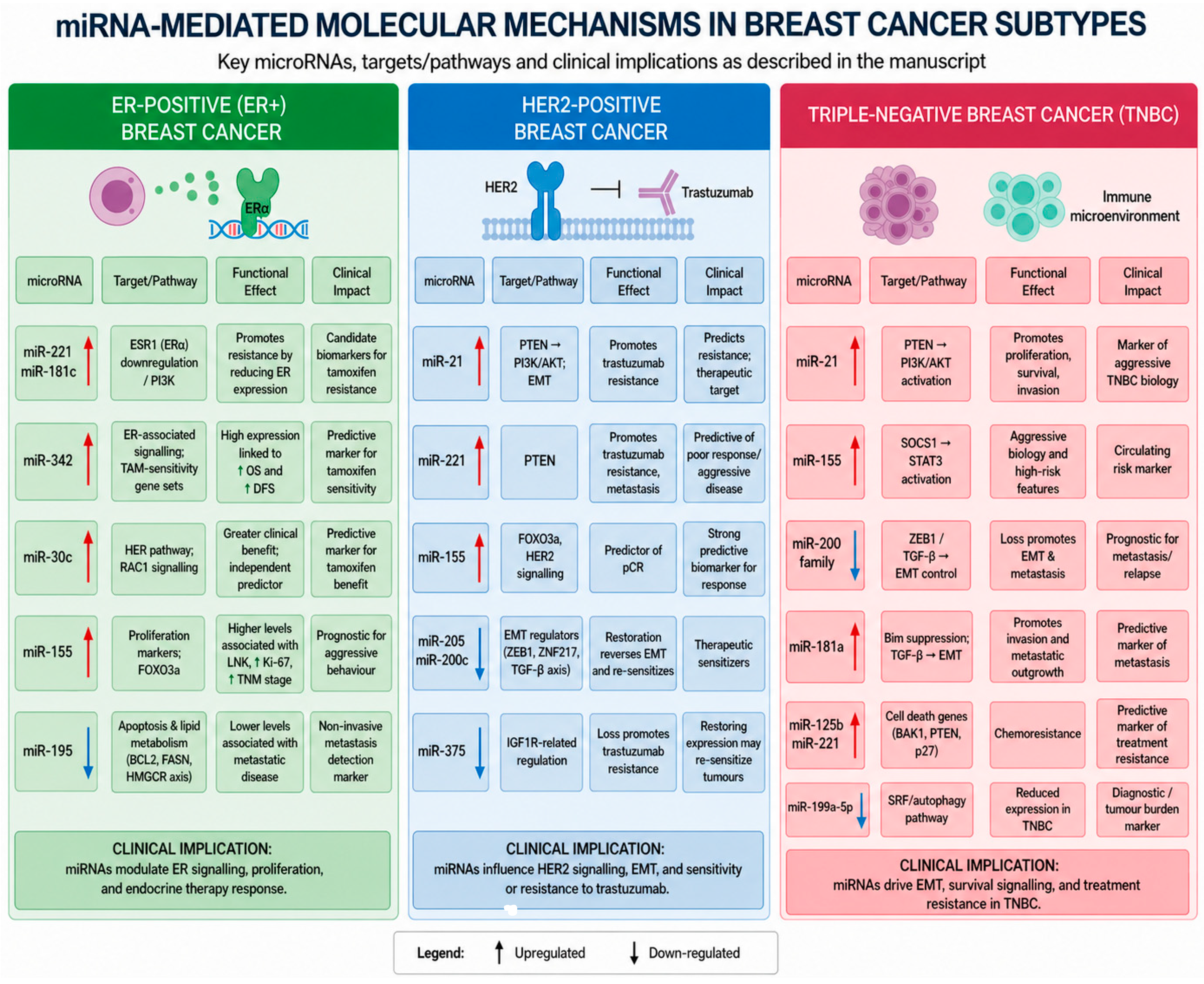
| miRNA | Tissue | Expression Change | Target/Pathway | Effect/Functional Note | Clinical Implication | Author (Year) |
|---|---|---|---|---|---|---|
| miR-10b | Tumour | ↑ with stage; ↑ in LN+ and high Ki67 | Migration/invasion pathways | Higher levels linked to worse stage, LN+, larger tumours | Prognostic for aggressive biology | [23] |
| miR-20a-5p | Tumour | ↑ in stroma/cytoplasm | miR-17–92 → proliferation/migration | Higher levels linked to ↑ Ki67 and ↑ relapse; promotes migration/invasion | Prognostic for aggressive biology | [21] |
| miR-21 | Tumour | ↑ vs. adjacent tissue | PTEN → PI3K/AKT | Higher levels linked to ↑ TNM stage, lymph node positivity, ↑ Ki67; no link to ER status | Prognostic for aggressive features | [22] |
| miR-30c | Tumour | ↑ in tumours from patients benefiting from tamoxifen | HER pathway; RAC1 cell-motility signalling | Higher levels linked to ↑ PFS and greater clinical benefit; independent predictor of TAM response | Predictive marker for tamoxifen benefit | [30] |
| miR-100 | Tumour | ↑ in endocrine-responsive tumours | PLK1, FOXA1, mTOR, IGF1R (all ↓ when miR-100 ↑) | Higher levels linked to ↓ baseline and post-treatment Ki67; ↑ chance of complete cell-cycle arrest; defines less aggressive, endocrine-sensitive biology | Predictive of aromatase inhibitor response; prognostic in luminal A | [39] |
| miR-155 | Tumour/plasma | ↑ in BC patients vs controls | OncomiR; proliferation markers (Ki67/p53 associations), FOXO3a; proliferation/anti-apoptosis | Higher levels associated with LN+, ↑ Ki67, ↑ TNM stage; higher in ER+ and PR+ tumours | Prognostic for aggressive behaviour | [24,25] |
| miR-155 | Tumour | ↑ | ZNF652, SOCS1 → pro-invasion/EMT | Promotes invasion and metastasis in ER+ disease | Pro-metastatic; no predictive role | [31] |
| miR-181-c, miR-221 | Tumour | ↑ in tamoxifen-resistant cells | ESR1 (ERα) downregulation/suppression, PI3K | Promotes resistance by reducing ER expression | Candidate biomarkers for tamoxifen resistance | [26] |
| miR-195 | Plasma/whole blood | ↓ in metastatic vs local luminal A | Apoptosis and lipid metabolism (BCL2, FASN/HMGCR axis) | Lower levels associated with metastatic disease; acts as tumour suppressor | Non-invasive metastasis detection marker | [34] |
| miR-342 | Tumour | ↑ miR-342 = favourable biology | ER-associated signalling; TAM-sensitivity gene sets | High expression linked to ↑ OS and ↑ DFS; enriched TAM-sensitivity genes; low expression enriched TAM-resistance genes | Strong prognostic and predictive marker for TAM sensitivity in ER+ disease | [35] |
| miR-342–3p | Tumour | ↓ in tamoxifen-resistant cells and ↓ in TamR patient tumours | EVL/ER-associated regulation; apoptosis and cell-cycle genes | Loss promotes TAM resistance; restoring miR-342 re-sensitises cells and ↑ apoptosis | Predictive marker for TAM response; candidate re-sensitisation target | [29] |
| miR-342–3p, miR-873, let-7b/let-7i | Tumour | All ↓ in tamoxifen-resistant cells | ERα expression/ERα36 variant regulation | Loss of these miRNAs reduces ERα signalling and promotes tamoxifen resistance; restoring them re-sensitises cells to TAM | Potential predictive markers of endocrine resistance; candidates for therapy re-sensitisation | [27] |
| miR-375 | Tumour | ↓ strongly downregulated in TamR cells | MTDH (metadherin) → EMT/invasion | Loss of miR-375 drives TAM resistance and EMT-like phenotype; re-expression restores TAM sensitivity and reduces invasion | Biomarker of TAM resistance; therapeutic re-sensitisation target | [28] |
| miR-3916 | Tumour/plasma | ↑ in metastatic vs non-metastatic breast tumours | — | Strongly discriminates metastatic from non-metastatic disease; remained significant in multivariable analysis | Independent prognostic marker for metastatic progression; improves risk prediction when added to clinicopathological variables | [40] |
| miR-3613–5p | Tumour/plasma | ↑ in metastatic vs non-metastatic breast tumours | — | Distinguishes metastatic from non-metastatic cases; remains independently associated with relapse in expanded cohort | Prognostic biomarker of metastatic risk; part of high-performing model | [40] |
| miR-451 | Tumour/plasma | Absent/↓ in aggressive disease | MDR1/stress-response pathways | Loss of miR-451 associated with more invasive biology; absence may signal functionally high-risk disease even when genomic markers look low risk | Low/absent miR-451 may help identify patients who could benefit from chemotherapy or CDK4/6 inhibitors despite low-risk genomic profiles | [36] |
3. HER2-Positive Disease
3.1. Clinical Characteristics and Implications
3.2. HER2 and Pathological Complete Response (pCR)
3.3. Trastuzumab
3.4. Current Value of miRNAs in HER2+ Disease
3.5. miRNA Clinical Trials
| miRNA | Tissue | Expression Change | Target/Pathway | Effect/Functional Note | Clinical Implication | Author (Year) |
|---|---|---|---|---|---|---|
| miR-21 | Tumour | ↑ in resistance | PTEN → PI3K/AKT; EMT; immune TME | Promotes trastuzumab resistance, EMT, immune changes | Predicts resistance; therapeutic target (anti-miR-21) | [68] |
| miR-21 | Serum | ↑ in patients vs. healthy controls; further ↑ after neoadjuvant therapy | PTEN axis; apoptosis-related signalling | Levels rise with chemotherapy; no association with pCR; higher baseline and post-therapy levels predict | Prognostic marker (poor OS) | [49] |
| miR-140a-5p | Plasma | ↑ in early trastuzumab responders | Putative tumour-suppressive pathways; predicted regulation of apoptosis, cell-cycle, Wnt pathway | Higher levels associated with greater chance of pCR and significantly better EFS | Predictive biomarker for trastuzumab; potential prognostic value; supports treatment de-escalation decisions | [52] |
| miR-145 | Plasma | ↑ in early trastuzumab responders | —(response-associated signature) | Higher plasma levels at 2 weeks associated with pCR | Early circulating predictor of pCR to trastuzumab | [51,52] |
| miR-148a-3p | Plasma | ↑ in trastuzumab responders | Not assessed in study; literature: regulates angiogenesis (NRP1) | Early increase (2 weeks into therapy) associated with pCR | Part of multi-miRNA pCR predictor for trastuzumab | [52] |
| miR-155 | Exosomal plasma | ↑ vs. healthy controls; ↓ after neoadjuvant therapy | FOXO3a, HER2 signalling, immune/inflammatory pathways | Most significant predictor of pCR | Strong predictive biomarker for pCR to neoadjuvant therapy (including carboplatin responses); dynamic marker of treatment effect | [50] |
| miR-155 | Plasma | ↑ in resistance | Immune/JAK-STAT; EMT | Associated with resistance and metastasis; dynamic changes post-therapy | Circulating biomarker for response; prognostic | [64] |
| miR-199a | Plasma | Aberrant expression associated with pCR | Tumour-suppressive (mTOR, MET) | Associated with pCR in GeparSixto HER2 cohort; inconsistent direction but strong signal | Potential component of HER2+ predictive panel | [50] |
| miR-205/miR-200c | Tumour | ↓ in resistant tumours | EMT regulators (ZEB1, ZNF217, TGF-β axis) | Restoration reverses EMT and re-sensitises to trastuzumab | Therapeutic sensitisers; prognostic for metastasis risk | [65] |
| miR-210 | Serum | ↑ vs. healthy controls; ↑ further after chemotherapy | Hypoxia/HIF-1α pathway | Elevated pre- and post-therapy; no association with pCR or survival | No predictive or prognostic utility | [49] |
| miR-221 | Tumour | ↑ in resistance | PTEN | Promotes trastuzumab resistance, metastasis | Predictive of poor response/aggressive disease | [63] |
| miR-301 | Exosomal plasma | ↑ vs. healthy controls; stable pre/post therapy | PTEN/Akt, NF-κB, ER pathway modulation | Strong independent predictor of pCR | Predictive exosomal biomarker for response to neoadjuvant therapy (especially carboplatin-based) in HER2+ BC | [50] |
| miR-373 | Serum | ↑ vs. healthy controls; ↑ further after chemotherapy | Metastasis/invasion-related pathways | Higher levels associated with advanced clinical tumour stage; no association with pCR or survival | Marker of advanced disease | [49] |
| miR-374a-5p | Plasma | ↑ in trastuzumab responders | Not assessed; literature: oncomiR promoting proliferation via ARRB1/AKT | Rise at week 2 linked to pCR to trastuzumab | Early dynamic predictor of HER2-targeted therapy response | [52] |
| miR-375 | Tumour | ↓/epigenetically silenced in resistant tumours | IGF1R-related epigenetic regulation | Loss promotes trastuzumab resistance | Restoring expression may re-sensitise tumours | [63] |
| miR-1246 | Plasma | ↑ in resistance | Oncogenic signalling (circulating) | Associated with trastuzumab resistance; circulating biomarker | Candidate circulating predictor of poor response | [64] |
4. Triple-Negative Disease
4.1. Clinical Characteristics and Challenges
4.2. Principles—Treatment Response, pCR, and Prognostic Implications
4.3. Current Value of miRNAs in TNBC
4.4. miRNAs in Clinical Trials
| miRNA | Tissue | Expression Change | Target/Pathway | Effect/Functional Note | Clinical Implication | Author (Year) |
|---|---|---|---|---|---|---|
| miR-10b, miR-145, | Whole blood | ↑ miR-145; ↑ miR-10b | — | High miR-145 → higher risk of nausea/vomiting High miR-10b → higher risk of anaemia | Circulating predictors of GI toxicity (miR-145) and chemo-induced anaemia (miR-10b) | [109] |
| miR-18b, miR-103, miR-107, miR-652 (panel) | Serum | All ↑ in relapsing vs non-relapsing TNBC | EMT, DNA repair, TP53-linked pathways | High levels predict early recurrence and poor OS; strongest when combined into 4-miRNA signature | Non-invasive prognostic panel identifying high-risk TNBC at diagnosis | [106] |
| miR-21 | Tumour/plasma | ↑ highly expressed in TNBC | PTEN → PI3K/AKT activation | Promotes proliferation, survival, invasion; TNBC shows strong PTEN loss–miR-21 axis activation | Marker of aggressive TNBC biology; potential indicator for PI3K/AKT-targeted therapy sensitivity | [90,91] |
| miR-21, miR-16, miR-199a-5p | Plasma | All ↓ in TNBC vs. non-TNBC and controls | miR-21 → PTEN/ER-linked miR-16 → cyclin E/tumour suppressor miR-199a-5p → SRF/autophagy pathway | All three reduced in TNBC; levels rise post-surgery → tumour-load dependent. miR-199a-5p shows strongest diagnostic accuracy | Combined diagnostic panel for TNBC; miR-199a-5p strongest single biomarker; useful for early detection and monitoring | [103] |
| miR-21, miR-195 | Whole blood | ↓ miR-195; ↓ miR-21 | — | Low miR-195 → higher risk of neutropenia Low miR-21 → higher risk of mucositis | Potential early markers for bone marrow suppression and mucosal toxicity during NAC | [109] |
| miR-27a/b | Tumour | ↑ upregulated in TNBC | PTEN/PPAR pathways; CDC27 cell-cycle regulation | Promotes proliferation, invasion, and hormone-independent growth; contributes to tumour aggressiveness | High expression associated with worse OS and more aggressive clinical behaviour | [104] |
| miR-30 | Tumour | ↓ downregulated in TNBC | EMT suppression (E-cadherin ↑, N-cadherin/vimentin ↓) | Loss of miR-30 promotes EMT, invasion, and tumour progression; associated with more aggressive phenotype | Low miR-30 predicts poorer RFS and may identify biologically aggressive TNBC | [104] |
| miR-34a-5p | Tumour | ↑ after chemotherapy (dynamic) | p53 pathway/tumour suppressive | Upregulated post-chemo; may reflect treatment effect | Possible dynamic biomarker of response | [97] |
| miR-34a-5p | Whole blood | ↑ after chemotherapy (dynamic) | — | Upregulated post-chemo; may reflect treatment effect | Possible dynamic biomarker of response | [110] |
| miR-301a/b | Tumour | ↑ upregulated in TNBC | CIP2A–PP2A oncogenic axis | Drives proliferation and invasion; enhances metastatic potential and supports tumour growth | Linked to more aggressive TNBC biology | [104] |
| miR-374a/b | Tumour | ↓ downregulated in TNBC | CDKN2A (cell-cycle and tumour-suppressor regulation) | Reduced miR-374a/b expression promotes tumour progression and reduced genomic stability | Low levels predict shorter DFS and may mark more aggressive TNBC | [104] |
| miR-126–5p | Tumour | ↓ after chemo (dynamic) | Angiogenesis/vascular links | Diagnostic and dynamic response marker | Diagnostic circulating signature; monitoring of response | [97] |
| miR-126–5p, miR-144–3p, miR-144–5p, let-7d-5p | Whole blood | ↑ pre-NCT; normalise post-NCT | — | Show pattern before therapy that resolves after chemo | Chemotherapy-responsive markers for monitoring NCT effect | [110] |
| miR-126–5p; miR-144–3p/5p; miR-101–3p; miR-664b-5p (panel) | Whole blood | All ↑ in TNBC vs controls (pre-NCT) | — | 7-miRNA diagnostic signature (84% sensitivity) | Diagnostic circulating signature for early TNBC | [110] |
| miR-155 | Plasma | ↑ higher in TNBC | SOCS1 → STAT3 activation | Elevated levels at diagnosis; decline after surgery/therapy; higher levels mark aggressive biology and high-risk features | Circulating risk marker | [94] |
| miR-181a | Tumour | ↑ markedly upregulated in TNBC and metastatic tumours | Bim (↓) → anoikis resistance; ↑ Src/Akt/ERK signalling; TGF-β–driven EMT | Promotes EMT, migration, invasion, survival in suspension; enhances metastatic outgrowth in vivo; inhibition restores Bim and increases apoptosis | Predictive marker of metastasis and poor survival; potential therapeutic target in metastatic TNBC | [98] |
| miR-200 family (miR-200b/c) & miR-205 | Tumour | ↓ (EMT signature) | ZEB1/TGF-β → EMT control | Loss promotes EMT and metastasis; levels change with progression | Prognostic for metastasis/relapse; therapeutic targets | [99,100] |
| miR-215–5p | Tumour | ↑ in pCR vs non-pCR | SOX9 suppression; anti-oncogenic regulatory axis | Higher baseline levels associated with chemosensitive TNBC and significantly enriched in patients achieving pCR | Potential predictive marker of NAC response | [111] |
| miR-498 | Tumour | ↑ upregulated in TNBC | BRCA1 (direct 3′UTR inhibition) | High miR-498 suppresses BRCA1; increases proliferation; inhibition restores BRCA1 and reduces TNBC cell growth (Hs578T) | Potential driver of BRCA1-low TNBC; biomarker of sporadic TNBC biology and possible therapeutic target | [95] |
5. Immunotherapy
5.1. Current Role in Breast Cancer
5.2. Biomarkers
5.3. Clinical Trials
5.4. miRNAs and Immunotherapy
6. Future Directions
Author Contributions
Funding
Data Availability Statement
Conflicts of Interest
References
- Siegel, R.L.; Miller, K.D.; Fuchs, H.E.; Jemal, A. Cancer statistics, 2022. CA Cancer J. Clin. 2022, 72, 7–33. [Google Scholar] [CrossRef] [PubMed]
- Xiong, X.; Zheng, L.W.; Ding, Y.; Chen, Y.F.; Cai, Y.W.; Wang, L.P.; Huang, L.; Liu, C.C.; Shao, Z.M.; Yu, K.D. Breast cancer: Pathogenesis and treatments. Signal Transduct. Target. Ther. 2025, 10, 49. [Google Scholar] [CrossRef] [PubMed]
- Cardoso, F.; Veer, L.J.v.t.; Bogaerts, J.; Slaets, L.; Viale, G.; Delaloge, S.; Pierga, J.-Y.; Brain, E.; Causeret, S.; DeLorenzi, M.; et al. 70-Gene Signature as an Aid to Treatment Decisions in Early-Stage Breast Cancer. N. Engl. J. Med. 2016, 375, 717–729. [Google Scholar] [CrossRef] [PubMed]
- Kalinsky, K.; Barlow, W.E.; Gralow, J.R.; Meric-Bernstam, F.; Albain, K.S.; Hayes, D.F.; Lin, N.U.; Perez, E.A.; Goldstein, L.J.; Chia, S.K.L.; et al. 21-Gene Assay to Inform Chemotherapy Benefit in Node-Positive Breast Cancer. N. Engl. J. Med. 2021, 385, 2336–2347. [Google Scholar] [CrossRef] [PubMed]
- Sparano, J.A.; Gray, R.J.; Makower, D.F.; Pritchard, K.I.; Albain, K.S.; Hayes, D.F.; Geyer, C.E.; Dees, E.C.; Goetz, M.P.; Olson, J.A.; et al. Adjuvant Chemotherapy Guided by a 21-Gene Expression Assay in Breast Cancer. N. Engl. J. Med. 2018, 379, 111–121. [Google Scholar] [CrossRef]
- Lee, R.C.; Feinbaum, R.L.; Ambros, V. The C. elegans heterochronic gene lin-4 encodes small RNAs with antisense complementarity to lin-14. Cell 1993, 75, 843–854. [Google Scholar] [CrossRef]
- Davey, M.G.; McGuire, A.; Casey, M.C.; Waldron, R.M.; Paganga, M.; Holian, E.; Newell, J.; Heneghan, H.M.; McDermott, A.M.; Keane, M.M.; et al. Evaluating the Role of Circulating MicroRNAs in Predicting Long-Term Survival Outcomes in Breast Cancer: A Prospective, Multicenter Clinical Trial. J. Am. Coll. Surg. 2023, 236, 317–327. [Google Scholar] [CrossRef]
- Fehlmann, T.; Ludwig, N.; Backes, C.; Meese, E.; Keller, A. Distribution of microRNA biomarker candidates in solid tissues and body fluids. RNA Biol. 2016, 13, 1084–1088. [Google Scholar] [CrossRef]
- Murphy, C.G.; Dickler, M.N. Endocrine resistance in hormone-responsive breast cancer: Mechanisms and therapeutic strategies. Endocr. Relat. Cancer 2016, 23, R337–R352. [Google Scholar] [CrossRef]
- Lee, E.Y.; Lee, D.W.; Lee, K.H.; Im, S.A. Recent Developments in the Therapeutic Landscape of Advanced or Metastatic Hormone Receptor-Positive Breast Cancer. Cancer Res. Treat. 2023, 55, 1065–1076. [Google Scholar] [CrossRef]
- Howard, E.W.; Yang, X. microRNA Regulation in Estrogen Receptor-Positive Breast Cancer and Endocrine Therapy. Biol. Proced. Online 2018, 20, 17. [Google Scholar] [CrossRef]
- Zhang, M.H.; Man, H.T.; Zhao, X.D.; Dong, N.; Ma, S.L. Estrogen receptor-positive breast cancer molecular signatures and therapeutic potentials (Review). Biomed. Rep. 2014, 2, 41–52. [Google Scholar] [CrossRef]
- Schonk, D.M.; Kuijpers, H.J.; van Drunen, E.; van Dalen, C.H.; Geurts van Kessel, A.H.; Verheijen, R.; Ramaekers, F.C. Assignment of the gene(s) involved in the expression of the proliferation-related Ki-67 antigen to human chromosome 10. Hum. Genet. 1989, 83, 297–299. [Google Scholar] [CrossRef]
- Probert, J.; Dodwell, D.; Broggio, J.; Charman, J.; Dowsett, M.; Kerr, A.; McGale, P.; Taylor, C.; Darby, S.C.; Mannu, G.S. Ki67 and breast cancer mortality in women with invasive breast cancer. JNCI Cancer Spectr. 2023, 7, pkad054. [Google Scholar] [CrossRef] [PubMed]
- Smith, I.; Robertson, J.; Kilburn, L.; Wilcox, M.; Evans, A.; Holcombe, C.; Horgan, K.; Kirwan, C.; Mallon, E.; Sibbering, M.; et al. Long-term outcome and prognostic value of Ki67 after perioperative endocrine therapy in postmenopausal women with hormone-sensitive early breast cancer (POETIC): An open-label, multicentre, parallel-group, randomised, phase 3 trial. Lancet Oncol. 2020, 21, 1443–1454, Correction in Lancet Oncol. 2020, 21, e553. [Google Scholar] [CrossRef]
- Gluz, O.; Nitz, U.A.; Christgen, M.; Kates, R.E.; Shak, S.; Clemens, M.; Kraemer, S.; Aktas, B.; Kuemmel, S.; Reimer, T.; et al. West German Study Group Phase III PlanB Trial: First Prospective Outcome Data for the 21-Gene Recurrence Score Assay and Concordance of Prognostic Markers by Central and Local Pathology Assessment. J. Clin. Oncol. 2016, 34, 2341–2349. [Google Scholar] [CrossRef]
- Dowsett, M.; Smith, I.E.; Ebbs, S.R.; Dixon, J.M.; Skene, A.; A’Hern, R.; Salter, J.; Detre, S.; Hills, M.; Walsh, G.; et al. Prognostic Value of Ki67 Expression After Short-Term Presurgical Endocrine Therapy for Primary Breast Cancer. JNCI J. Natl. Cancer Inst. 2007, 99, 167–170. [Google Scholar] [CrossRef]
- Davey, M.G.; Hynes, S.O.; Kerin, M.J.; Miller, N.; Lowery, A.J. Ki-67 as a Prognostic Biomarker in Invasive Breast Cancer. Cancers 2021, 13, 4455. [Google Scholar] [CrossRef] [PubMed]
- Zhong, F.; Bi, R.; Yu, B.; Yang, F.; Yang, W.; Shui, R. A Comparison of Visual Assessment and Automated Digital Image Analysis of Ki67 Labeling Index in Breast Cancer. PLoS ONE 2016, 11, e0150505. [Google Scholar] [CrossRef] [PubMed]
- Stålhammar, G.; Fuentes Martinez, N.; Lippert, M.; Tobin, N.P.; Mølholm, I.; Kis, L.; Rosin, G.; Rantalainen, M.; Pedersen, L.; Bergh, J.; et al. Digital image analysis outperforms manual biomarker assessment in breast cancer. Mod. Pathol. 2016, 29, 318–329. [Google Scholar] [CrossRef]
- Tylden, E.S.; Delgado, A.B.; Lukic, M.; Moi, L.; Busund, L.R.; Pedersen, M.I.; Lombardi, A.P.; Olsen, K.S. Roles of miR-20a-5p in breast cancer based on the clinical and multi-omic (CAMO) cohort and in vitro studies. Sci. Rep. 2024, 14, 25022. [Google Scholar] [CrossRef]
- Huang, G.L.; Zhang, X.H.; Guo, G.L.; Huang, K.T.; Yang, K.Y.; Shen, X.; You, J.; Hu, X.Q. Clinical significance of miR-21 expression in breast cancer: SYBR-Green I-based real-time RT-PCR study of invasive ductal carcinoma. Oncol. Rep. 2009, 21, 673–679. [Google Scholar]
- Zhang, J.; Yang, J.; Zhang, X.; Xu, J.; Sun, Y.; Zhang, P. MicroRNA-10b expression in breast cancer and its clinical association. PLoS ONE 2018, 13, e0192509. [Google Scholar] [CrossRef] [PubMed]
- Liu, J.; Mao, Q.; Liu, Y.; Hao, X.; Zhang, S.; Zhang, J. Analysis of miR-205 and miR-155 expression in the blood of breast cancer patients. Chin. J. Cancer Res. 2013, 25, 46–54. [Google Scholar] [PubMed]
- Zheng, S.R.; Guo, G.L.; Zhang, W.; Huang, G.L.; Hu, X.Q.; Zhu, J.; Huang, Q.D.; You, J.; Zhang, X.H. Clinical significance of miR-155 expression in breast cancer and effects of miR-155 ASO on cell viability and apoptosis. Oncol. Rep. 2012, 27, 1149–1155. [Google Scholar] [CrossRef]
- Healy, N.; Creighton, C.; Fu, X.; Tsimelzon, A.; Hilsenbeck, S.; Miller, N.; Kerin, M.; Osborne, C.; Schiff, R. P3-03-05: Identification of miRNAs and Their Associated Target Genes Involved in Endocrine Resistance in Breast Cancer. Cancer Res. 2011, 71, P3-03-05. [Google Scholar] [CrossRef]
- Muluhngwi, P.; Klinge, C.M. Roles for miRNAs in endocrine resistance in breast cancer. Endocr. Relat. Cancer 2015, 22, R279–R300. [Google Scholar] [CrossRef]
- Ward, A.; Balwierz, A.; Zhang, J.D.; Küblbeck, M.; Pawitan, Y.; Hielscher, T.; Wiemann, S.; Sahin, Ö. Re-expression of microRNA-375 reverses both tamoxifen resistance and accompanying EMT-like properties in breast cancer. Oncogene 2013, 32, 1173–1182. [Google Scholar] [CrossRef]
- Cittelly, D.M.; Das, P.M.; Spoelstra, N.S.; Edgerton, S.M.; Richer, J.K.; Thor, A.D.; Jones, F.E. Downregulation of miR-342 is associated with tamoxifen resistant breast tumors. Mol. Cancer 2010, 9, 317. [Google Scholar] [CrossRef]
- Rodríguez-González, F.G.; Sieuwerts, A.M.; Smid, M.; Look, M.P.; Meijer-van Gelder, M.E.; de Weerd, V.; Sleijfer, S.; Martens, J.W.; Foekens, J.A. MicroRNA-30c expression level is an independent predictor of clinical benefit of endocrine therapy in advanced estrogen receptor positive breast cancer. Breast Cancer Res. Treat. 2011, 127, 43–51. [Google Scholar] [CrossRef] [PubMed]
- Moutabian, H.; Radi, U.K.; Saleman, A.Y.; Adil, M.; Zabibah, R.S.; Chaitanya, M.N.L.; Saadh, M.J.; Jawad, M.J.; Hazrati, E.; Bagheri, H.; et al. MicroRNA-155 and cancer metastasis: Regulation of invasion, migration, and epithelial-to-mesenchymal transition. Pathol. Res. Pract. 2023, 250, 154789. [Google Scholar] [CrossRef]
- Heneghan, H.M.; Miller, N.; Kelly, R.; Newell, J.; Kerin, M.J. Systemic miRNA-195 differentiates breast cancer from other malignancies and is a potential biomarker for detecting noninvasive and early stage disease. Oncologist 2010, 15, 673–682. [Google Scholar] [CrossRef]
- Tokumaru, Y.; Oshi, M.; Patel, A.; Katsuta, E.; Yan, L.; Angarita, F.A.; Dasgupta, S.; Nagahashi, M.; Matsuhashi, N.; Futamura, M.; et al. Low expression of miR-195 is associated with cell proliferation, glycolysis and poor survival in estrogen receptor (ER)-positive but not in triple negative breast cancer. Am. J. Cancer Res. 2021, 11, 3320–3334. [Google Scholar]
- McAnena, P.; Tanriverdi, K.; Curran, C.; Gilligan, K.; Freedman, J.E.; Brown, J.A.L.; Kerin, M.J. Circulating microRNAs miR-331 and miR-195 differentiate local luminal a from metastatic breast cancer. BMC Cancer 2019, 19, 436. [Google Scholar] [CrossRef]
- Young, J.; Kawaguchi, T.; Yan, L.; Qi, Q.; Liu, S.; Takabe, K. Tamoxifen sensitivity-related microRNA-342 is a useful biomarker for breast cancer survival. Oncotarget 2017, 8, 99978–99989. [Google Scholar] [CrossRef]
- Motamedi, M.; Hashemzadeh Chaleshtori, M.; Ghasemi, S.; Mokarian, F. Plasma Level Of miR-21 And miR-451 In Primary And Recurrent Breast Cancer Patients. Breast Cancer 2019, 11, 293–301. [Google Scholar] [CrossRef] [PubMed]
- Reimer, T.; Stachs, A.; Veselinovic, K.; Kühn, T.; Heil, J.; Polata, S.; Marmé, F.; Müller, T.; Hildebrandt, G.; Krug, D.; et al. Axillary Surgery in Breast Cancer-Primary Results of the INSEMA Trial. N. Engl. J. Med. 2025, 392, 1051–1064. [Google Scholar] [CrossRef]
- Gentilini, O.D.; Botteri, E.; Sangalli, C.; Galimberti, V.; Porpiglia, M.; Agresti, R.; Luini, A.; Viale, G.; Cassano, E.; Peradze, N.; et al. Sentinel Lymph Node Biopsy vs No Axillary Surgery in Patients With Small Breast Cancer and Negative Results on Ultrasonography of Axillary Lymph Nodes: The SOUND Randomized Clinical Trial. JAMA Oncol. 2023, 9, 1557–1564. [Google Scholar] [CrossRef] [PubMed]
- Petrelli, A.; Bellomo, S.E.; Sarotto, I.; Kubatzki, F.; Sgandurra, P.; Maggiorotto, F.; Di Virgilio, M.R.; Ponzone, R.; Geuna, E.; Galizia, D.; et al. MiR-100 is a predictor of endocrine responsiveness and prognosis in patients with operable luminal breast cancer. ESMO Open 2020, 5, e000937. [Google Scholar] [CrossRef]
- Fontana, A.; Barbano, R.; Pasculli, B.; Mazza, T.; Palumbo, O.; Binda, E.; Trivieri, N.; Mencarelli, G.; Laurenzana, I.; Lamorte, D.; et al. Development of a microRNA-based prognostic model for accurate prediction of distant metastasis in breast cancer patients. Breast Cancer Res. 2025, 27, 170. [Google Scholar] [CrossRef] [PubMed]
- Cronin, K.A.; Harlan, L.C.; Dodd, K.W.; Abrams, J.S.; Ballard-Barbash, R. Population-based estimate of the prevalence of HER-2 positive breast cancer tumors for early stage patients in the US. Cancer Investig. 2010, 28, 963–968. [Google Scholar] [CrossRef]
- Iqbal, N.; Iqbal, N. Human Epidermal Growth Factor Receptor 2 (HER2) in Cancers: Overexpression and Therapeutic Implications. Mol. Biol. Int. 2014, 2014, 852748. [Google Scholar] [CrossRef]
- Slamon, D.J.; Leyland-Jones, B.; Shak, S.; Fuchs, H.; Paton, V.; Bajamonde, A.; Fleming, T.; Eiermann, W.; Wolter, J.; Pegram, M.; et al. Use of chemotherapy plus a monoclonal antibody against HER2 for metastatic breast cancer that overexpresses HER2. N. Engl. J. Med. 2001, 344, 783–792. [Google Scholar] [CrossRef]
- von Minckwitz, G.; Untch, M.; Blohmer, J.U.; Costa, S.D.; Eidtmann, H.; Fasching, P.A.; Gerber, B.; Eiermann, W.; Hilfrich, J.; Huober, J.; et al. Definition and impact of pathologic complete response on prognosis after neoadjuvant chemotherapy in various intrinsic breast cancer subtypes. J. Clin. Oncol. 2012, 30, 1796–1804. [Google Scholar] [CrossRef]
- Davey, M.G.; Browne, F.; Miller, N.; Lowery, A.J.; Kerin, M.J. Pathological complete response as a surrogate to improved survival in human epidermal growth factor receptor-2-positive breast cancer: Systematic review and meta-analysis. BJS Open 2022, 6, zrac028. [Google Scholar] [CrossRef]
- Cortazar, P.; Zhang, L.; Untch, M.; Mehta, K.; Costantino, J.P.; Wolmark, N.; Bonnefoi, H.; Cameron, D.; Gianni, L.; Valagussa, P.; et al. Pathological complete response and long-term clinical benefit in breast cancer: The CTNeoBC pooled analysis. Lancet 2014, 384, 164–172, Erratum in Lancet 2019, 393, 986. [Google Scholar] [CrossRef] [PubMed]
- Korde, L.A.; Somerfield, M.R.; Carey, L.A.; Crews, J.R.; Denduluri, N.; Hwang, E.S.; Khan, S.A.; Loibl, S.; Morris, E.A.; Perez, A.; et al. Neoadjuvant Chemotherapy, Endocrine Therapy, and Targeted Therapy for Breast Cancer: ASCO Guideline. J. Clin. Oncol. 2021, 39, 1485–1505. [Google Scholar] [CrossRef]
- Gianni, L.; Eiermann, W.; Semiglazov, V.; Lluch, A.; Tjulandin, S.; Zambetti, M.; Moliterni, A.; Vazquez, F.; Byakhov, M.J.; Lichinitser, M.; et al. Neoadjuvant and adjuvant trastuzumab in patients with HER2-positive locally advanced breast cancer (NOAH): Follow-up of a randomised controlled superiority trial with a parallel HER2-negative cohort. Lancet Oncol. 2014, 15, 640–647, Erratum in Lancet Oncol. 2018, 19, e667. [Google Scholar] [CrossRef]
- Müller, V.; Gade, S.; Steinbach, B.; Loibl, S.; von Minckwitz, G.; Untch, M.; Schwedler, K.; Lübbe, K.; Schem, C.; Fasching, P.A.; et al. Changes in serum levels of miR-21, miR-210, and miR-373 in HER2-positive breast cancer patients undergoing neoadjuvant therapy: A translational research project within the Geparquinto trial. Breast Cancer Res. Treat. 2014, 147, 61–68. [Google Scholar] [CrossRef] [PubMed]
- Stevic, I.; Müller, V.; Weber, K.; Fasching, P.A.; Karn, T.; Marmé, F.; Schem, C.; Stickeler, E.; Denkert, C.; van Mackelenbergh, M.; et al. Specific microRNA signatures in exosomes of triple-negative and HER2-positive breast cancer patients undergoing neoadjuvant therapy within the GeparSixto trial. BMC Med. 2018, 16, 179. [Google Scholar] [CrossRef] [PubMed]
- Davey, M.G.; Casey, M.C.; McGuire, A.; Waldron, R.M.; Paganga, M.; Holian, E.; Newell, J.; Heneghan, H.M.; McDermott, A.M.; Keane, M.M.; et al. Evaluating the Role of Circulating MicroRNAs to Aid Therapeutic Decision Making for Neoadjuvant Chemotherapy in Breast Cancer: A Prospective, Multicenter Clinical Trial. Ann. Surg. 2022, 276, 905–912. [Google Scholar] [CrossRef]
- Di Cosimo, S.; Appierto, V.; Pizzamiglio, S.; Tiberio, P.; Iorio, M.V.; Hilbers, F.; de Azambuja, E.; de la Peña, L.; Izquierdo, M.; Huober, J.; et al. Plasma miRNA Levels for Predicting Therapeutic Response to Neoadjuvant Treatment in HER2-positive Breast Cancer: Results from the NeoALTTO Trial. Clin. Cancer Res. 2019, 25, 3887–3895. [Google Scholar] [CrossRef]
- Menyhart, O.; Santarpia, L.; Györffy, B. A Comprehensive Outline of Trastuzumab Resistance Biomarkers in HER2 Overexpressing Breast Cancer. Curr. Cancer Drug Targets 2015, 15, 665–683. [Google Scholar] [CrossRef]
- Davey, M.G.; Lowery, A.J.; Miller, N.; Kerin, M.J. MicroRNA Expression Profiles and Breast Cancer Chemotherapy. Int. J. Mol. Sci. 2021, 22, 10812. [Google Scholar] [CrossRef] [PubMed]
- Piccart-Gebhart, M.J.; Procter, M.; Leyland-Jones, B.; Goldhirsch, A.; Untch, M.; Smith, I.; Gianni, L.; Baselga, J.; Bell, R.; Jackisch, C.; et al. Trastuzumab after adjuvant chemotherapy in HER2-positive breast cancer. N. Engl. J. Med. 2005, 353, 1659–1672. [Google Scholar] [CrossRef] [PubMed]
- Romond, E.H.; Perez, E.A.; Bryant, J.; Suman, V.J.; Geyer, C.E., Jr.; Davidson, N.E.; Tan-Chiu, E.; Martino, S.; Paik, S.; Kaufman, P.A.; et al. Trastuzumab plus adjuvant chemotherapy for operable HER2-positive breast cancer. N. Engl. J. Med. 2005, 353, 1673–1684. [Google Scholar] [CrossRef]
- Gradishar, W.J.; Moran, M.S.; Abraham, J.; Aft, R.; Agnese, D.; Allison, K.H.; Anderson, B.; Burstein, H.J.; Chew, H.; Dang, C.; et al. Breast Cancer, Version 3.2022, NCCN Clinical Practice Guidelines in Oncology. J. Natl. Compr. Cancer Netw. 2022, 20, 691–722. [Google Scholar] [CrossRef] [PubMed]
- Giordano, S.H.; Franzoi, M.A.B.; Temin, S.; Anders, C.K.; Chandarlapaty, S.; Crews, J.R.; Kirshner, J.J.; Krop, I.E.; Lin, N.U.; Morikawa, A.; et al. Systemic Therapy for Advanced Human Epidermal Growth Factor Receptor 2-Positive Breast Cancer: ASCO Guideline Update. J. Clin. Oncol. 2022, 40, 2612–2635. [Google Scholar] [CrossRef]
- Minckwitz, G.v.; Huang, C.-S.; Mano, M.S.; Loibl, S.; Mamounas, E.P.; Untch, M.; Wolmark, N.; Rastogi, P.; Schneeweiss, A.; Redondo, A.; et al. Trastuzumab Emtansine for Residual Invasive HER2-Positive Breast Cancer. N. Engl. J. Med. 2019, 380, 617–628. [Google Scholar] [CrossRef]
- Geyer, C.E., Jr.; Untch, M.; Huang, C.S.; Mano, M.S.; Mamounas, E.P.; Wolmark, N.; Rastogi, P.; Schneeweiss, A.; Redondo, A.; Fischer, H.H.; et al. Survival with Trastuzumab Emtansine in Residual HER2-Positive Breast Cancer. N. Engl. J. Med. 2025, 392, 249–257. [Google Scholar] [CrossRef]
- Verma, S.; Miles, D.; Gianni, L.; Krop, I.E.; Welslau, M.; Baselga, J.; Pegram, M.; Oh, D.Y.; Diéras, V.; Guardino, E.; et al. Trastuzumab emtansine for HER2-positive advanced breast cancer. N. Engl. J. Med. 2012, 367, 1783–1791. [Google Scholar] [CrossRef]
- Gong, W.; Liu, Y.; Preis, S.; Geng, X.; Petit-Courty, A.; Kiechle, M.; Muckenhuber, A.; Dreyer, T.; Dorn, J.; Courty, Y.; et al. Prognostic value of kallikrein-related peptidase 12 (KLK12) mRNA expression in triple-negative breast cancer patients. Mol. Med. 2020, 26, 19. [Google Scholar] [CrossRef]
- Ye, X.; Bai, W.; Zhu, H.; Zhang, X.; Chen, Y.; Wang, L.; Yang, A.; Zhao, J.; Jia, L. MiR-221 promotes trastuzumab-resistance and metastasis in HER2-positive breast cancers by targeting PTEN. BMB Rep. 2014, 47, 268–273. [Google Scholar] [CrossRef]
- Zhang, Z.; Zhang, L.; Yu, G.; Sun, Z.; Wang, T.; Tian, X.; Duan, X.; Zhang, C. Exosomal miR-1246 and miR-155 as predictive and prognostic biomarkers for trastuzumab-based therapy resistance in HER2-positive breast cancer. Cancer Chemother. Pharmacol. 2020, 86, 761–772. [Google Scholar] [CrossRef]
- Bai, W.D.; Ye, X.M.; Zhang, M.Y.; Zhu, H.Y.; Xi, W.J.; Huang, X.; Zhao, J.; Gu, B.; Zheng, G.X.; Yang, A.G.; et al. MiR-200c suppresses TGF-β signaling and counteracts trastuzumab resistance and metastasis by targeting ZNF217 and ZEB1 in breast cancer. Int. J. Cancer 2014, 135, 1356–1368. [Google Scholar] [CrossRef]
- De Mattos-Arruda, L.; Bottai, G.; Nuciforo, P.G.; Di Tommaso, L.; Giovannetti, E.; Peg, V.; Losurdo, A.; Pérez-Garcia, J.; Masci, G.; Corsi, F.; et al. MicroRNA-21 links epithelial-to-mesenchymal transition and inflammatory signals to confer resistance to neoadjuvant trastuzumab and chemotherapy in HER2-positive breast cancer patients. Oncotarget 2015, 6, 37269–37280. [Google Scholar] [CrossRef]
- Vo, T.H.; El-Sherbieny Abdelaal, E.; Jordan, E.; O’Donovan, O.; McNeela, E.A.; Mehta, J.P.; Rani, S. miRNAs as biomarkers of therapeutic response to HER2-targeted treatment in breast cancer: A systematic review. Biochem. Biophys. Rep. 2024, 37, 101588. [Google Scholar] [CrossRef]
- Gong, C.; Yao, Y.; Wang, Y.; Liu, B.; Wu, W.; Chen, J.; Su, F.; Yao, H.; Song, E. Up-regulation of miR-21 mediates resistance to trastuzumab therapy for breast cancer. J. Biol. Chem. 2011, 286, 19127–19137. [Google Scholar] [CrossRef] [PubMed]
- Bautista-Sánchez, D.; Arriaga-Canon, C.; Pedroza-Torres, A.; De La Rosa-Velázquez, I.A.; González-Barrios, R.; Contreras-Espinosa, L.; Montiel-Manríquez, R.; Castro-Hernández, C.; Fragoso-Ontiveros, V.; Álvarez-Gómez, R.M.; et al. The Promising Role of miR-21 as a Cancer Biomarker and Its Importance in RNA-Based Therapeutics. Mol. Ther. Nucleic Acids 2020, 20, 409–420. [Google Scholar] [CrossRef]
- Ye, X.M.; Zhu, H.Y.; Bai, W.D.; Wang, T.; Wang, L.; Chen, Y.; Yang, A.G.; Jia, L.T. Epigenetic silencing of miR-375 induces trastuzumab resistance in HER2-positive breast cancer by targeting IGF1R. BMC Cancer 2014, 14, 134. [Google Scholar] [CrossRef] [PubMed]
- Xiao, Y.; Humphries, B.; Yang, C.; Wang, Z. MiR-205 Dysregulations in Breast Cancer: The Complexity and Opportunities. Noncoding RNA 2019, 5, 53. [Google Scholar] [CrossRef]
- Davey, M.G.; Davey, M.S.; Richard, V.; Wyns, W.; Soliman, O.; Miller, N.; Lowery, A.J.; Kerin, M.J. Overview of MicroRNA Expression in Predicting Response to Neoadjuvant Therapies in Human Epidermal Growth Receptor-2 Enriched Breast Cancer—A Systematic Review. Breast Cancer 2022, 16, 11782234221086684. [Google Scholar] [CrossRef] [PubMed]
- Foulkes, W.D.; Smith, I.E.; Reis-Filho, J.S. Triple-negative breast cancer. N. Engl. J. Med. 2010, 363, 1938–1948. [Google Scholar] [CrossRef] [PubMed]
- Wu, Q.; Siddharth, S.; Sharma, D. Triple Negative Breast Cancer: A Mountain Yet to Be Scaled Despite the Triumphs. Cancers 2021, 13, 3697. [Google Scholar] [CrossRef]
- Obidiro, O.; Battogtokh, G.; Akala, E.O. Triple Negative Breast Cancer Treatment Options and Limitations: Future Outlook. Pharmaceutics 2023, 15, 1796. [Google Scholar] [CrossRef]
- Lehmann, B.D.; Bauer, J.A.; Chen, X.; Sanders, M.E.; Chakravarthy, A.B.; Shyr, Y.; Pietenpol, J.A. Identification of human triple-negative breast cancer subtypes and preclinical models for selection of targeted therapies. J. Clin. Investig. 2011, 121, 2750–2767. [Google Scholar] [CrossRef]
- Burstein, M.D.; Tsimelzon, A.; Poage, G.M.; Covington, K.R.; Contreras, A.; Fuqua, S.A.; Savage, M.I.; Osborne, C.K.; Hilsenbeck, S.G.; Chang, J.C.; et al. Comprehensive genomic analysis identifies novel subtypes and targets of triple-negative breast cancer. Clin. Cancer Res. 2015, 21, 1688–1698. [Google Scholar] [CrossRef]
- Weigelt, B.; Baehner, F.L.; Reis-Filho, J.S. The contribution of gene expression profiling to breast cancer classification, prognostication and prediction: A retrospective of the last decade. J. Pathol. 2010, 220, 263–280. [Google Scholar] [CrossRef]
- Liedtke, C.; Mazouni, C.; Hess, K.R.; André, F.; Tordai, A.; Mejia, J.A.; Symmans, W.F.; Gonzalez-Angulo, A.M.; Hennessy, B.; Green, M.; et al. Response to neoadjuvant therapy and long-term survival in patients with triple-negative breast cancer. J. Clin. Oncol. 2008, 26, 1275–1281. [Google Scholar] [CrossRef]
- Li, L.; Zhang, F.; Liu, Z.; Fan, Z. Immunotherapy for Triple-Negative Breast Cancer: Combination Strategies to Improve Outcome. Cancers 2023, 15, 321. [Google Scholar] [CrossRef] [PubMed]
- Sukumar, J.; Gast, K.; Quiroga, D.; Lustberg, M.; Williams, N. Triple-negative breast cancer: Promising prognostic biomarkers currently in development. Expert Rev. Anticancer. Ther. 2021, 21, 135–148. [Google Scholar] [CrossRef]
- Cardoso, F.; Kyriakides, S.; Ohno, S.; Penault-Llorca, F.; Poortmans, P.; Rubio, I.T.; Zackrisson, S.; Senkus, E. Early breast cancer: ESMO Clinical Practice Guidelines for diagnosis, treatment and follow-up. Ann. Oncol. 2019, 30, 1194–1220. [Google Scholar] [CrossRef]
- Sikov, W.M.; Berry, D.A.; Perou, C.M.; Singh, B.; Cirrincione, C.T.; Tolaney, S.M.; Kuzma, C.S.; Pluard, T.J.; Somlo, G.; Port, E.R.; et al. Impact of the addition of carboplatin and/or bevacizumab to neoadjuvant once-per-week paclitaxel followed by dose-dense doxorubicin and cyclophosphamide on pathologic complete response rates in stage II to III triple-negative breast cancer: CALGB 40603 (Alliance). J. Clin. Oncol. 2015, 33, 13–21. [Google Scholar]
- Loibl, S.; O’Shaughnessy, J.; Untch, M.; Sikov, W.M.; Rugo, H.S.; McKee, M.D.; Huober, J.; Golshan, M.; von Minckwitz, G.; Maag, D.; et al. Addition of the PARP inhibitor veliparib plus carboplatin or carboplatin alone to standard neoadjuvant chemotherapy in triple-negative breast cancer (BrighTNess): A randomised, phase 3 trial. Lancet Oncol. 2018, 19, 497–509. [Google Scholar] [CrossRef]
- Schmid, P.; Cortes, J.; Pusztai, L.; McArthur, H.; Kümmel, S.; Bergh, J.; Denkert, C.; Park, Y.H.; Hui, R.; Harbeck, N.; et al. Pembrolizumab for Early Triple-Negative Breast Cancer. N. Engl. J. Med. 2020, 382, 810–821. [Google Scholar] [CrossRef]
- Mittendorf, E.A.; Zhang, H.; Barrios, C.H.; Saji, S.; Jung, K.H.; Hegg, R.; Koehler, A.; Sohn, J.; Iwata, H.; Telli, M.L.; et al. Neoadjuvant atezolizumab in combination with sequential nab-paclitaxel and anthracycline-based chemotherapy versus placebo and chemotherapy in patients with early-stage triple-negative breast cancer (IMpassion031): A randomised, double-blind, phase 3 trial. Lancet 2020, 396, 1090–1100. [Google Scholar] [CrossRef] [PubMed]
- Esserman, L.J.; Berry, D.A.; DeMichele, A.; Carey, L.; Davis, S.E.; Buxton, M.; Hudis, C.; Gray, J.W.; Perou, C.; Yau, C.; et al. Pathologic complete response predicts recurrence-free survival more effectively by cancer subset: Results from the I-SPY 1 TRIAL--CALGB 150007/150012, ACRIN 6657. J. Clin. Oncol. 2012, 30, 3242–3249. [Google Scholar] [CrossRef]
- Prat, A.; Lluch, A.; Albanell, J.; Barry, W.T.; Fan, C.; Chacón, J.I.; Parker, J.S.; Calvo, L.; Plazaola, A.; Arcusa, A.; et al. Predicting response and survival in chemotherapy-treated triple-negative breast cancer. Br. J. Cancer 2014, 111, 1532–1541. [Google Scholar] [CrossRef] [PubMed]
- Qattan, A. Novel miRNA Targets and Therapies in the Triple-Negative Breast Cancer Microenvironment: An Emerging Hope for a Challenging Disease. Int. J. Mol. Sci. 2020, 21, 8905. [Google Scholar] [CrossRef]
- Chawra, H.S.; Agarwal, M.; Mishra, A.; Chandel, S.S.; Singh, R.P.; Dubey, G.; Kukreti, N.; Singh, M. MicroRNA-21’s role in PTEN suppression and PI3K/AKT activation: Implications for cancer biology. Pathol.-Res. Pract. 2024, 254, 155091. [Google Scholar] [CrossRef]
- Chen, J.; Wang, X. MicroRNA-21 in breast cancer: Diagnostic and prognostic potential. Clin. Transl. Oncol. 2014, 16, 225–233. [Google Scholar] [CrossRef] [PubMed]
- Chang, S.; Wang, R.H.; Akagi, K.; Kim, K.A.; Martin, B.K.; Cavallone, L.; Haines, D.C.; Basik, M.; Mai, P.; Poggi, E.; et al. Tumor suppressor BRCA1 epigenetically controls oncogenic microRNA-155. Nat. Med. 2011, 17, 1275–1282, Erratum in Nat. Med. 2011, 17, 1282. [Google Scholar] [CrossRef] [PubMed]
- Jiang, S.; Zhang, H.-W.; Lu, M.-H.; He, X.-H.; Li, Y.; Gu, H.; Liu, M.-F.; Wang, E.-D. MicroRNA-155 Functions as an OncomiR in Breast Cancer by Targeting the Suppressor of Cytokine Signaling 1 Gene. Cancer Res. 2010, 70, 3119–3127. [Google Scholar] [CrossRef]
- Sochor, M.; Basova, P.; Pesta, M.; Dusilkova, N.; Bartos, J.; Burda, P.; Pospisil, V.; Stopka, T. Oncogenic MicroRNAs: miR-155, miR-19a, miR-181b, and miR-24 enable monitoring of early breast cancer in serum. BMC Cancer 2014, 14, 448. [Google Scholar] [CrossRef] [PubMed]
- Matamala, N.; Teresa Vargas, M.; González-Cámpora, R.; Ignacio Arias, J.; Menéndez, P.; Andrés-León, E.; Yanowsky, K.; Llaneza-Folgueras, A.; Miñambres, R.; Martínez-Delgado, B.; et al. MicroRNA deregulation in triple negative breast cancer reveals a role of miR-498 in regulating BRCA1 expression. Oncotarget 2016, 7, 20068–20079. [Google Scholar] [CrossRef]
- Yasaman, N.; Zahra, H.; Vahid, R.; Sahar, K. Deregulated MicroRNAs involved in P53 Signaling Pathway in Breast Cancer with Focus on Triple-negative Breast Cancer. Curr. Mol. Pharmacol. 2024, 17, E18761429263841. [Google Scholar]
- Paszek, S.; Gabło, N.; Barnaś, E.; Szybka, M.; Morawiec, J.; Kołacińska, A.; Zawlik, I. Dysregulation of microRNAs in triple-negative breast cancer. Ginekol. Pol. 2017, 88, 530–536. [Google Scholar] [CrossRef]
- Taylor, M.A.; Sossey-Alaoui, K.; Thompson, C.L.; Danielpour, D.; Schiemann, W.P. TGF-β upregulates miR-181a expression to promote breast cancer metastasis. J. Clin. Investig. 2013, 123, 150–163. [Google Scholar] [CrossRef]
- Berber, U.; Yilmaz, I.; Narli, G.; Haholu, A.; Kucukodaci, Z.; Demirel, D. miR-205 and miR-200c: Predictive Micro RNAs for Lymph Node Metastasis in Triple Negative Breast Cancer. J. Breast Cancer 2014, 17, 143–148. [Google Scholar] [CrossRef]
- Gregory, P.A.; Bert, A.G.; Paterson, E.L.; Barry, S.C.; Tsykin, A.; Farshid, G.; Vadas, M.A.; Khew-Goodall, Y.; Goodall, G.J. The miR-200 family and miR-205 regulate epithelial to mesenchymal transition by targeting ZEB1 and SIP1. Nat. Cell Biol. 2008, 10, 593–601. [Google Scholar] [CrossRef]
- Papadaki, C.; Stratigos, M.; Markakis, G.; Spiliotaki, M.; Mastrostamatis, G.; Nikolaou, C.; Mavroudis, D.; Agelaki, S. Circulating microRNAs in the early prediction of disease recurrence in primary breast cancer. Breast Cancer Res. 2018, 20, 72, Correction in Breast Cancer Res. 2022, 24, 53. [Google Scholar] [CrossRef]
- Fischer, C.; Turchinovich, A.; Feisst, M.; Riedel, F.; Haßdenteufel, K.; Scharli, P.; Hartkopf, A.D.; Brucker, S.Y.; Michel, L.; Burwinkel, B.; et al. Circulating miR-200 Family and CTCs in Metastatic Breast Cancer before, during, and after a New Line of Systemic Treatment. Int. J. Mol. Sci. 2022, 23, 9535. [Google Scholar] [CrossRef]
- Shin, V.Y.; Siu, J.M.; Cheuk, I.; Ng, E.K.; Kwong, A. Circulating cell-free miRNAs as biomarker for triple-negative breast cancer. Br. J. Cancer 2015, 112, 1751–1759. [Google Scholar] [CrossRef]
- Santana, T.A.B.d.S.; de Oliveira Passamai, L.; de Miranda, F.S.; Borin, T.F.; Borges, G.F.; Luiz, W.B.; Campos, L.C.G. The Role of miRNAs in the Prognosis of Triple-Negative Breast Cancer: A Systematic Review and Meta-Analysis. Diagnostics 2023, 13, 127. [Google Scholar] [CrossRef] [PubMed]
- Wang, X.; Qiu, H.; Tang, R.; Song, H.; Pan, H.; Feng, Z.; Chen, L. miR-30a inhibits epithelial-mesenchymal transition and metastasis in triple-negative breast cancer by targeting ROR1. Oncol. Rep. 2018, 39, 2635–2643. [Google Scholar] [CrossRef]
- Kleivi Sahlberg, K.; Bottai, G.; Naume, B.; Burwinkel, B.; Calin, G.A.; Børresen-Dale, A.L.; Santarpia, L. A serum microRNA signature predicts tumor relapse and survival in triple-negative breast cancer patients. Clin. Cancer Res. 2015, 21, 1207–1214. [Google Scholar] [CrossRef]
- Zhou, M.; Liu, Z.; Zhao, Y.; Ding, Y.; Liu, H.; Xi, Y.; Xiong, W.; Li, G.; Lu, J.; Fodstad, O.; et al. MicroRNA-125b Confers the Resistance of Breast Cancer Cells to Paclitaxel through Suppression of Pro-apoptotic Bcl-2 Antagonist Killer 1 (Bak1) Expression*. J. Biol. Chem. 2010, 285, 21496–21507. [Google Scholar] [CrossRef]
- Kim, J.-Y.; Jung, E.J.; Kim, J.-M.; Son, Y.; Lee, H.S.; Kwag, S.-J.; Park, J.-H.; Cho, J.-K.; Kim, H.-G.; Park, T.; et al. MiR-221 and miR-222 regulate cell cycle progression and affect chemosensitivity in breast cancer by targeting ANXA3. Exp. Ther. Med. 2023, 25, 127. [Google Scholar] [CrossRef]
- Davey, M.G.; Abbas, R.; Kerin, E.P.; Casey, M.C.; McGuire, A.; Waldron, R.M.; Heneghan, H.M.; Newell, J.; McDermott, A.M.; Keane, M.M.; et al. Circulating microRNAs can predict chemotherapy-induced toxicities in patients being treated for primary breast cancer. Breast Cancer Res. Treat. 2023, 202, 73–81. [Google Scholar] [CrossRef]
- Kahraman, M.; Röske, A.; Laufer, T.; Fehlmann, T.; Backes, C.; Kern, F.; Kohlhaas, J.; Schrörs, H.; Saiz, A.; Zabler, C.; et al. MicroRNA in diagnosis and therapy monitoring of early-stage triple-negative breast cancer. Sci. Rep. 2018, 8, 11584. [Google Scholar] [CrossRef] [PubMed]
- Sasa, S.; Inoue, H.; Nakagawa, M.; Toba, H.; Goto, M.; Okumura, K.; Misaki, M.; Inui, T.; Yukishige, S.; Nishisho, A.; et al. Long-Term Outcomes of S-1 Combined With Low-Dose Docetaxel as Neoadjuvant Chemotherapy (N-1 Study, Phase II Trial) in Patients With Operable Breast Cancer. Clin. Breast Cancer 2024, 24, e350–e359.e2. [Google Scholar] [CrossRef]
- Longley, D.; Johnston, P. Molecular mechanisms of drug resistance. J. Pathol. 2005, 205, 275–292. [Google Scholar] [CrossRef] [PubMed]
- Li, T.; Zhang, S.; Chen, F.; Hu, J.; Yuan, S.; Li, C.; Wang, X.; Zhang, W.; Tang, R. Formononetin ameliorates the drug resistance of Taxol resistant triple negative breast cancer by inhibiting autophagy. Am. J. Transl. Res. 2021, 13, 497–514. [Google Scholar]
- Hong, D.S.; Kang, Y.-K.; Borad, M.; Sachdev, J.; Ejadi, S.; Lim, H.Y.; Brenner, A.J.; Park, K.; Lee, J.-L.; Kim, T.-Y.; et al. Phase 1 study of MRX34, a liposomal miR-34a mimic, in patients with advanced solid tumours. Br. J. Cancer 2020, 122, 1630–1637. [Google Scholar] [CrossRef]
- Aguiar Freitas, A.J.; Nunes, C.R.; Mano, M.S.; Causin, R.L.; Calfa, S.; de Oliveira, M.A.; Vidigal Santana, I.V.; Pádua Souza, C.; Chiquitelli Marques, M.M. Circulating microRNAs as potential biomarkers in triple-negative breast cancer: A translational research study of the NACATRINE trial. Future Oncol. 2024, 20, 25–38. [Google Scholar] [CrossRef] [PubMed]
- Ho, J.C.; Chen, J.; Cheuk, I.W.; Siu, M.T.; Shin, V.Y.; Kwong, A. MicroRNA-199a-3p promotes drug sensitivity in triple negative breast cancer by down-regulation of BRCA1. Am. J. Transl. Res. 2022, 14, 2021–2036. [Google Scholar]
- Wang, H.; Yee, D. I-SPY 2: A Neoadjuvant Adaptive Clinical Trial Designed to Improve Outcomes in High-Risk Breast Cancer. Curr. Breast Cancer Rep. 2019, 11, 303–310. [Google Scholar] [CrossRef] [PubMed]
- Abe, O.; Abe, R.; Enomoto, K.; Kikuchi, K.; Koyama, H.; Nomura, Y.; Sakai, K.; Sugimachi, K.; Tominaga, T.; Uchino, J.; et al. Tamoxifen for early breast cancer: An overview of the randomised trials. Lancet 1998, 351, 1451–1467. [Google Scholar] [CrossRef]
- Cortes, J.; Rugo, H.S.; Cescon, D.W.; Im, S.-A.; Yusof, M.M.; Gallardo, C.; Lipatov, O.; Barrios, C.H.; Perez-Garcia, J.; Iwata, H.; et al. Pembrolizumab plus Chemotherapy in Advanced Triple-Negative Breast Cancer. N. Engl. J. Med. 2022, 387, 217–226. [Google Scholar] [CrossRef]
- Gennari, A.; André, F.; Barrios, C.H.; Cortés, J.; de Azambuja, E.; DeMichele, A.; Dent, R.; Fenlon, D.; Gligorov, J.; Hurvitz, S.A.; et al. ESMO Clinical Practice Guideline for the diagnosis, staging and treatment of patients with metastatic breast cancer. Ann. Oncol. 2021, 32, 1475–1495. [Google Scholar] [CrossRef]
- Ishida, Y.; Agata, Y.; Shibahara, K.; Honjo, T. Induced expression of PD-1, a novel member of the immunoglobulin gene superfamily, upon programmed cell death. EMBO J. 1992, 11, 3887–3895. [Google Scholar] [CrossRef] [PubMed]
- Gradishar, W.J.; Moran, M.S.; Abraham, J.; Abramson, V.; Aft, R.; Agnese, D.; Allison, K.H.; Anderson, B.; Bailey, J.; Burstein, H.J.; et al. NCCN Guidelines® Insights: Breast Cancer, Version 5.2025. J. Natl. Compr. Cancer Netw. 2025, 23, 426–436. [Google Scholar] [CrossRef]
- Jin, M.; Fang, J.; Peng, J.; Wang, X.; Xing, P.; Jia, K.; Hu, J.; Wang, D.; Ding, Y.; Wang, X.; et al. PD-1/PD-L1 immune checkpoint blockade in breast cancer: Research insights and sensitization strategies. Mol. Cancer 2024, 23, 266. [Google Scholar] [CrossRef]
- Buchbinder, E.I.; Desai, A. CTLA-4 and PD-1 Pathways: Similarities, Differences, and Implications of Their Inhibition. Am. J. Clin. Oncol. 2016, 39, 98–106. [Google Scholar] [CrossRef]
- Passardi, A.; Canale, M.; Valgiusti, M.; Ulivi, P. Immune Checkpoints as a Target for Colorectal Cancer Treatment. Int. J. Mol. Sci. 2017, 18, 1324. [Google Scholar] [CrossRef]
- Li, M.; Panet, F.; Barberi, V.; Salgado, R.; Oliveira, M.; Loi, S. Biomarkers of response and resistance to immune checkpoint inhibitors in breast cancer. Breast 2025, 83, 104545. [Google Scholar] [CrossRef] [PubMed]
- Nanda, R.; Chow, L.Q.; Dees, E.C.; Berger, R.; Gupta, S.; Geva, R.; Pusztai, L.; Pathiraja, K.; Aktan, G.; Cheng, J.D.; et al. Pembrolizumab in Patients With Advanced Triple-Negative Breast Cancer: Phase Ib KEYNOTE-012 Study. J. Clin. Oncol. 2016, 34, 2460–2467. [Google Scholar] [CrossRef] [PubMed]
- Adams, S.; Schmid, P.; Rugo, H.S.; Winer, E.P.; Loirat, D.; Awada, A.; Cescon, D.W.; Iwata, H.; Campone, M.; Nanda, R.; et al. Pembrolizumab monotherapy for previously treated metastatic triple-negative breast cancer: Cohort A of the phase II KEYNOTE-086 study. Ann. Oncol. 2019, 30, 397–404. [Google Scholar] [CrossRef]
- Cardoso, F.; O’Shaughnessy, J.; Liu, Z.; McArthur, H.; Schmid, P.; Cortes, J.; Harbeck, N.; Telli, M.L.; Cescon, D.W.; Fasching, P.A.; et al. Pembrolizumab and chemotherapy in high-risk, early-stage, ER+/HER2− breast cancer: A randomized phase 3 trial. Nat. Med. 2025, 31, 442–448. [Google Scholar]
- Loi, S.; Salgado, R.; Curigliano, G.; Romero Díaz, R.I.; Delaloge, S.; Rojas García, C.I.; Kok, M.; Saura, C.; Harbeck, N.; Mittendorf, E.A.; et al. Neoadjuvant nivolumab and chemotherapy in early estrogen receptor-positive breast cancer: A randomized phase 3 trial. Nat. Med. 2025, 31, 433–441. [Google Scholar] [CrossRef]
- Loi, S.; Giobbie-Hurder, A.; Gombos, A.; Bachelot, T.; Hui, R.; Curigliano, G.; Campone, M.; Biganzoli, L.; Bonnefoi, H.; Jerusalem, G.; et al. Pembrolizumab plus trastuzumab in trastuzumab-resistant, advanced, HER2-positive breast cancer (PANACEA): A single-arm, multicentre, phase 1b–2 trial. Lancet Oncol. 2019, 20, 371–382. [Google Scholar] [CrossRef]
- Chen, L.; Gibbons, D.L.; Goswami, S.; Cortez, M.A.; Ahn, Y.H.; Byers, L.A.; Zhang, X.; Yi, X.; Dwyer, D.; Lin, W.; et al. Metastasis is regulated via microRNA-200/ZEB1 axis control of tumour cell PD-L1 expression and intratumoral immunosuppression. Nat. Commun. 2014, 5, 5241. [Google Scholar] [CrossRef]
- Yang, L.; Cai, Y.; Zhang, D.; Sun, J.; Xu, C.; Zhao, W.; Jiang, W.; Pan, C. miR-195/miR-497 Regulate CD274 Expression of Immune Regulatory Ligands in Triple-Negative Breast Cancer. J. Breast Cancer 2018, 21, 371–381. [Google Scholar] [CrossRef] [PubMed]
- Wang, F.; Lu, Q.; Yu, H.; Zhang, X.M. The Circular RNA circFGFR4 Facilitates Resistance to Anti-PD-1 of Triple-Negative Breast Cancer by Targeting the miR-185-5p/CXCR4 Axis. Cancer Manag. Res. 2023, 15, 825–835. [Google Scholar] [CrossRef]
- Zhang, M.; Gao, D.; Shi, Y.; Wang, Y.; Joshi, R.; Yu, Q.; Liu, D.; Alotaibi, F.; Zhang, Y.; Wang, H.; et al. miR-149-3p reverses CD8(+) T-cell exhaustion by reducing inhibitory receptors and promoting cytokine secretion in breast cancer cells. Open Biol. 2019, 9, 190061. [Google Scholar] [CrossRef]
- Liu, M.; Mo, F.; Song, X.; He, Y.; Yuan, Y.; Yan, J.; Yang, Y.; Huang, J.; Zhang, S. Exosomal hsa-miR-21-5p is a biomarker for breast cancer diagnosis. PeerJ 2021, 9, e12147. [Google Scholar] [CrossRef] [PubMed]
- Zhang, Y.; Wang, Y.; Xue, J.; Liang, W.; Zhang, Z.; Yang, X.; Qiao, Z.; Jiang, Y.; Wang, J.; Cao, X.; et al. Co-treatment with miR-21-5p inhibitor and Aurora kinase inhibitor reversine suppresses breast cancer progression by targeting sprouty RTK signaling antagonist 2. Bioengineered 2022, 13, 455–468. [Google Scholar] [CrossRef]
- Lagos-Quintana, M.; Rauhut, R.; Lendeckel, W.; Tuschl, T. Identification of novel genes coding for small expressed RNAs. Science 2001, 294, 853–858. [Google Scholar] [CrossRef]
- Calin, G.A.; Dumitru, C.D.; Shimizu, M.; Bichi, R.; Zupo, S.; Noch, E.; Aldler, H.; Rattan, S.; Keating, M.; Rai, K.; et al. Frequent deletions and down-regulation of micro- RNA genes miR15 and miR16 at 13q14 in chronic lymphocytic leukemia. Proc. Natl. Acad. Sci. USA 2002, 99, 15524–15529. [Google Scholar] [CrossRef]
- Cimmino, A.; Calin, G.A.; Fabbri, M.; Iorio, M.V.; Ferracin, M.; Shimizu, M.; Wojcik, S.E.; Aqeilan, R.I.; Zupo, S.; Dono, M.; et al. miR-15 and miR-16 induce apoptosis by targeting BCL2. Proc. Natl. Acad. Sci. USA 2005, 102, 13944–13949. [Google Scholar] [CrossRef]
- Richard, V.; Davey, M.G.; Annuk, H.; Miller, N.; Dwyer, R.M.; Lowery, A.; Kerin, M.J. MicroRNAs in Molecular Classification and Pathogenesis of Breast Tumors. Cancers 2021, 13, 5332. [Google Scholar] [CrossRef]
- Cavallari, I.; Ciccarese, F.; Sharova, E.; Urso, L.; Raimondi, V.; Silic-Benussi, M.; D’Agostino, D.M.; Ciminale, V. The miR-200 Family of microRNAs: Fine Tuners of Epithelial-Mesenchymal Transition and Circulating Cancer Biomarkers. Cancers 2021, 13, 5874. [Google Scholar] [CrossRef]
- Guessous, F.; Zhang, Y.; Kofman, A.; Catania, A.; Li, Y.; Schiff, D.; Purow, B.; Abounader, R. microRNA-34a is tumor suppressive in brain tumors and glioma stem cells. Cell Cycle 2010, 9, 1031–1036. [Google Scholar] [CrossRef] [PubMed]
- Eccles, S.A.; Aboagye, E.O.; Ali, S.; Anderson, A.S.; Armes, J.; Berditchevski, F.; Blaydes, J.P.; Brennan, K.; Brown, N.J.; Bryant, H.E.; et al. Critical research gaps and translational priorities for the successful prevention and treatment of breast cancer. Breast Cancer Res. 2013, 15, R92. [Google Scholar] [CrossRef]
- Escuin, D.; López-Vilaró, L.; Bell, O.; Mora, J.; García-Valdecasas, B.; Moral, A.; Clos, M.; Boronat, L.; Arqueros, C.; Barnadas, A. Circulating miRNA Expression Is Inversely Correlated with Tumor Tissue or Sentinel Lymph Nodes in Estrogen Receptor-Positive Early Breast Cancer Patients. Int. J. Mol. Sci. 2023, 24, 13293. [Google Scholar] [CrossRef]
- Waters, P.S.; McDermott, A.M.; Wall, D.; Heneghan, H.M.; Miller, N.; Newell, J.; Kerin, M.J.; Dwyer, R.M. Relationship between circulating and tissue microRNAs in a murine model of breast cancer. PLoS ONE 2012, 7, e50459. [Google Scholar] [CrossRef]
- Hayes, J.; Peruzzi, P.P.; Lawler, S. MicroRNAs in cancer: Biomarkers, functions and therapy. Trends Mol. Med. 2014, 20, 460–469. [Google Scholar] [CrossRef]
- Miller, T.E.; Ghoshal, K.; Ramaswamy, B.; Roy, S.; Datta, J.; Shapiro, C.L.; Jacob, S.; Majumder, S. MicroRNA-221/222 confers tamoxifen resistance in breast cancer by targeting p27Kip1. J. Biol. Chem. 2008, 283, 29897–29903. [Google Scholar] [CrossRef] [PubMed]
- Adam, L.; Zhong, M.; Choi, W.; Qi, W.; Nicoloso, M.; Arora, A.; Calin, G.; Wang, H.; Siefker-Radtke, A.; McConkey, D.; et al. miR-200 expression regulates epithelial-to-mesenchymal transition in bladder cancer cells and reverses resistance to epidermal growth factor receptor therapy. Clin. Cancer Res. 2009, 15, 5060–5072. [Google Scholar] [CrossRef] [PubMed]
- What will it take to get miRNA therapies to market? Nat. Biotechnol. 2024, 42, 1623–1624. [CrossRef]

Disclaimer/Publisher’s Note: The statements, opinions and data contained in all publications are solely those of the individual author(s) and contributor(s) and not of MDPI and/or the editor(s). MDPI and/or the editor(s) disclaim responsibility for any injury to people or property resulting from any ideas, methods, instructions or products referred to in the content. |
© 2026 by the authors. Licensee MDPI, Basel, Switzerland. This article is an open access article distributed under the terms and conditions of the Creative Commons Attribution (CC BY) license.
Share and Cite
Bouz Mkabaah, L.; Kerin, E.P.; Davey, M.G.; Filandrianou, E.; Richard, V.; Kerin, M.J. MicroRNA-Directed Biomarkers and Breast Cancer Therapeutics—Potential to Advance Personalised Approaches in Clinical Trials. Int. J. Mol. Sci. 2026, 27, 3996. https://doi.org/10.3390/ijms27093996
Bouz Mkabaah L, Kerin EP, Davey MG, Filandrianou E, Richard V, Kerin MJ. MicroRNA-Directed Biomarkers and Breast Cancer Therapeutics—Potential to Advance Personalised Approaches in Clinical Trials. International Journal of Molecular Sciences. 2026; 27(9):3996. https://doi.org/10.3390/ijms27093996
Chicago/Turabian StyleBouz Mkabaah, Luis, Eoin P. Kerin, Matthew G. Davey, Eleftheria Filandrianou, Vinitha Richard, and Michael J. Kerin. 2026. "MicroRNA-Directed Biomarkers and Breast Cancer Therapeutics—Potential to Advance Personalised Approaches in Clinical Trials" International Journal of Molecular Sciences 27, no. 9: 3996. https://doi.org/10.3390/ijms27093996
APA StyleBouz Mkabaah, L., Kerin, E. P., Davey, M. G., Filandrianou, E., Richard, V., & Kerin, M. J. (2026). MicroRNA-Directed Biomarkers and Breast Cancer Therapeutics—Potential to Advance Personalised Approaches in Clinical Trials. International Journal of Molecular Sciences, 27(9), 3996. https://doi.org/10.3390/ijms27093996