1. Introduction
Acute myeloid leukemia (AML) is a hematologic malignancy characterized by the clonal proliferation of myeloid progenitors. It is not one disorder, rather a whole spectrum of disorders, with biologic heterogeneity, phenotypic variability, and diverse clinical courses ranging from aggressive disease to biologically distinct subtypes with more favorable outcomes [
1]. Despite therapeutic advances, prognosis remains poor, with five-year overall survival approximating 40% in patients under 60 years and plummeting to 1–5% in those over 70 years [
2]. Prognosis is determined by age, comorbidities, AML subtype, but most importantly by the underlying molecular and cytogenetic alterations. In AML, cytogenetic abnormalities are well characterized and essential for disease classification. They play an important role in risk stratification and predicting disease course [
3].
Advances over the years and the advent of high-throughput sequencing have uncovered extensive genetic diversity in AML, with over 2000 somatic mutations identified across critical regulatory pathways [
4]. These mutations impact core biological processes that govern leukemogenesis, clonal evolution, and therapeutic resistance, thereby reshaping AML classification and risk stratification [
5]. Comprehensive genomic profiling at diagnosis, coupled with minimal residual disease monitoring, is now essential for guiding precision oncology and optimizing treatment decisions [
6].
AML pathogenesis and disease course are shaped by complex, co-occurring mutations that influence clonal architecture and alter clinical outcomes [
7]. Prognosis in AML is shaped by the interaction of multiple genetic alterations; for instance, the favorable impact of
NPM1 mutations is attenuated by co-mutations in
FLT3-ITD,
DNMT3A, or
IDH1, while the benefit of biallelic
CEBPA mutations may be negated by
IDH2 [
8]. These results emphasize the importance of integrated, multi-gene profiling for more accurate prognostication and better-informed treatment choices [
9].
Next-generation sequencing (NGS) has revolutionized molecular diagnostics in AML, offering high-throughput, parallel analysis of multiple genes with exceptional sensitivity [
8]. While whole-genome and exome sequencing provide broad insight, their routine use is limited by cost and complexity. In contrast, targeted myeloid gene panels deliver clinically actionable data efficiently and cost-effectively, focusing on high-yield genomic regions [
10]. These panels have become the standard in AML diagnostics, enabling timely, risk-adapted therapeutic decisions in clinical practice [
11].
Despite transformative advances in global AML genomics, the mutational landscape in Pakistan remains largely uncharted. To address this gap, we conducted the first comprehensive somatic mutational profiling of newly diagnosed Pakistani AML patients, generating a population-specific genomic dataset. Our findings will not only illuminate ethnically distinct leukemogenic pathways, but also establish a scalable framework for context-driven cancer genomics in low- and middle-income countries.
2. Results
2.1. Patient Demographics and Baseline Characteristics
Among 104 newly diagnosed AML patients, 63 were males, while 41 were females, with a male-to-female ratio of 1.5:1. The median age was 32.5 years (range: 5–72). Age distribution was skewed toward younger individuals. Pediatric patients (<15 years) constituted a small but notable subset (8.7%).
2.2. Variant Burden
Genomic profiling identified 204 somatic variants (31 unique genes) according to standard guidelines [
12]. Mean variant burden was 1.96 with a median of 2 variants per patient (range, 0–6). Variant distribution showed 24 patients (23.1%) with no detectable variant, 23 (22.1%) with 1 variant, 24 (23.1%) with 2 variants, 14 (13.5%) with 3 variants, 7 (6.7%) with 4 variants, 9 (8.7%) with 5 variants, and 3 (2.9%) with 6 variants.
2.3. Spectrum of Somatic Variants: Types, Functional Consequences, and Nucleotide Substitution Patterns
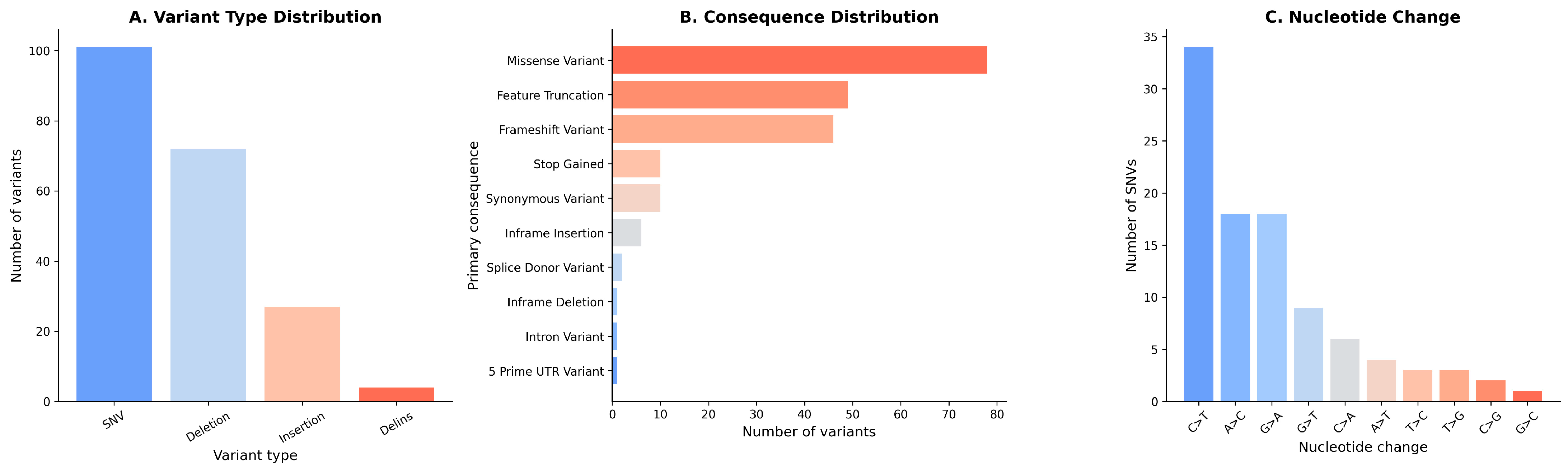
The mutational spectrum was dominated by single-nucleotide variants (SNVs; 101, 49.5%) followed by deletions (72, 35.3%), insertions (27, 13.2%), and delins (4, 2.0%). At the consequence level, missense variants were most common (78, 38.2%), alongside a substantial burden of feature-truncating (49, 24.0%) and frameshift variants (46, 22.5%); stop-gained and synonymous variants were infrequent (each 10, 4.9%), while in-frame insertions (6, 2.9%) and splice-donor variants (2, 1.0%) were rare. Nucleotide substitutions were transition-enriched, dominated by C>T transitions (33.7%), with A>C and G>A substitutions each contributing 17.8%, yielding a Ti/Tv ratio of 1.27:1 (transitions, 57.6%).
2.4. Chromosomal Distribution of Somatic Alterations
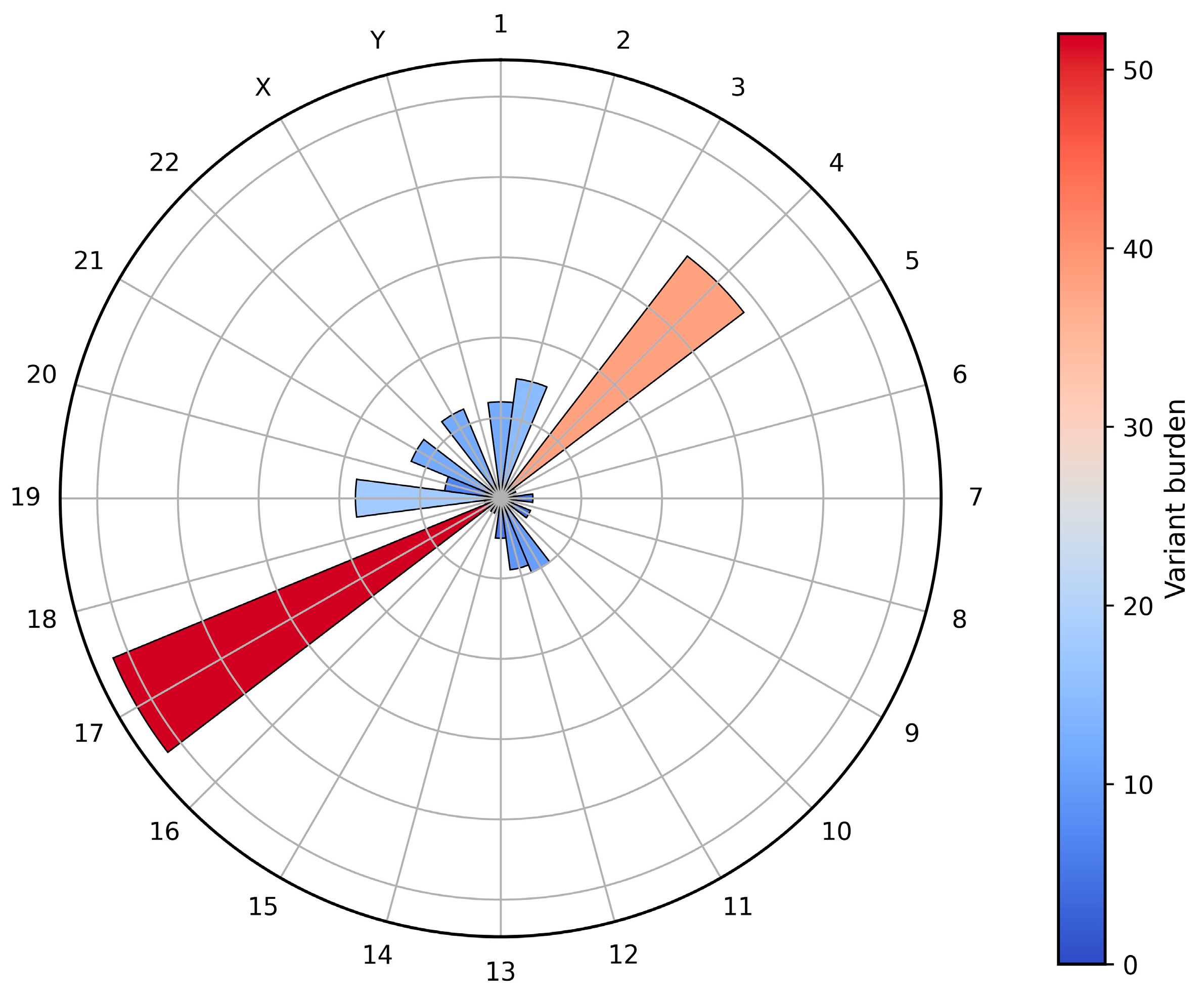
Chromosomal distribution showed dominant enrichment on chromosomes 17 (22.8%) and 4 (16.7%), together comprising nearly 40% of all events. This pattern was driven by
TP53 alterations on chromosome 17 and recurrent mutations in
KIT,
PDGFRA, and
TET2 on chromosome 4, with additional clustering on chromosomes 19 (
CEBPA), 2 (
DNMT3A,
IDH1,
SF3B1), 21 (
RUNX1,
U2AF1), and X (
BCOR,
PHF6,
STAG2,
ZRSR2).
Figure 1 summarizes variant types and consequences, while
Figure 2 gives the chromosomal distribution.
2.5. Variant Distribution Based on Pathogenicity
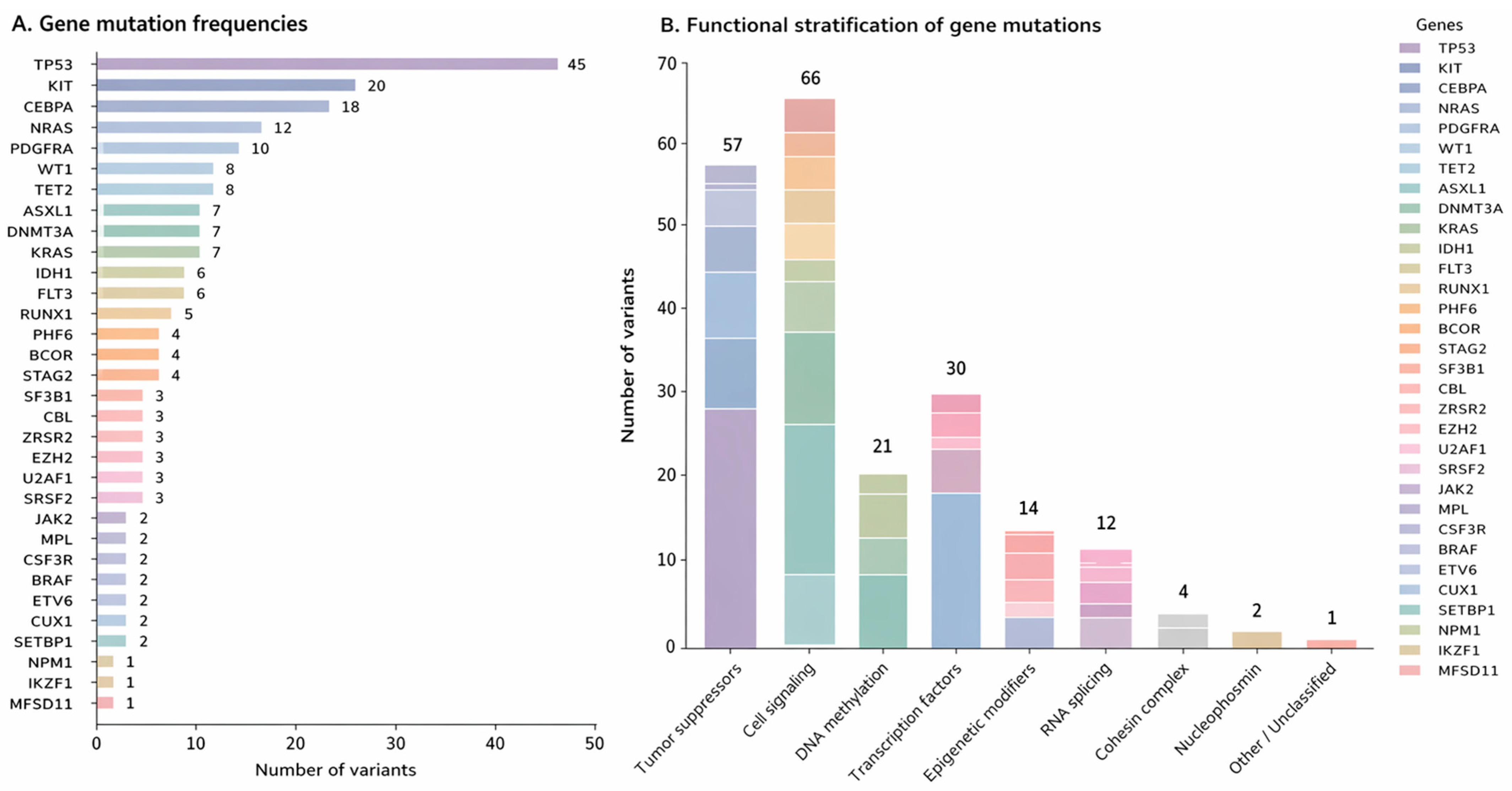
Across 104 patients, pathogenic variants accounted for 65 (31.9%) and likely pathogenic variants for 47 (23.0%), together comprising 112/204 (54.9%) of all detected alterations. Within the actionable subset, functional-group stratification showed highest representation of cell-signaling genes (43/112, 38.4%), followed by transcription factors (19/112, 17.0%), DNA methylation (13/112, 11.6%), tumor suppressors (12/112, 10.7%), and epigenetic modifiers (10/112, 8.9%), with smaller contributions from RNA splicing (9/112, 8.0%), cohesin complex (4/112, 3.6%), and NPM1 (2/112, 1.8%). Among pathogenic and likely pathogenic variants, the most frequently affected genes were NRAS (12, 10.7%), CEBPA (9, 8.0%), WT1 (8, 7.1%), TET2 (7, 6.2%), and KRAS (7, 6.2%), followed by ASXL1, U2AF1, and IDH1 (each 6, 5.4%), and RUNX1 and FLT3 (each 5, 4.5%). Variants of uncertain significance (VUS) represented 64 (31.4%). The VUS category was largely influenced by recurrent deep intronic TP53 variants (n = 43), particularly NM_000546.6; hg19 chr17:7579644_7579659. These variants lie outside known splice regions and currently lack functional or clinical evidence, suggesting they are most likely benign. Benign (25; 12.3%) and likely benign (3; 1.5%) variants were relatively infrequent and mainly involved KIT and PDGFRA.
2.6. Gene-Level Mutational Profile
Of the 204 variants identified,
TP53 was the most frequently mutated gene (45; 22.1%), followed by
KIT (20; 9.8%) and
CEBPA (18; 8.8%). Recurrent mutations were also observed in
NRAS (12; 5.9%) and
PDGFRA (10; 4.9%), with additional contributions from
TET2 and
WT1 (each 8; 3.9%). Gene-level analysis revealed marked mutational heterogeneity, with
TP53,
CEBPA,
TET2, and
ASXL1 showing high diversity and low hotspot dominance, in contrast to
NRAS,
IDH1, and
JAK2, which were dominated by recurrent hotspot mutations, while
FLT3 displayed characteristic
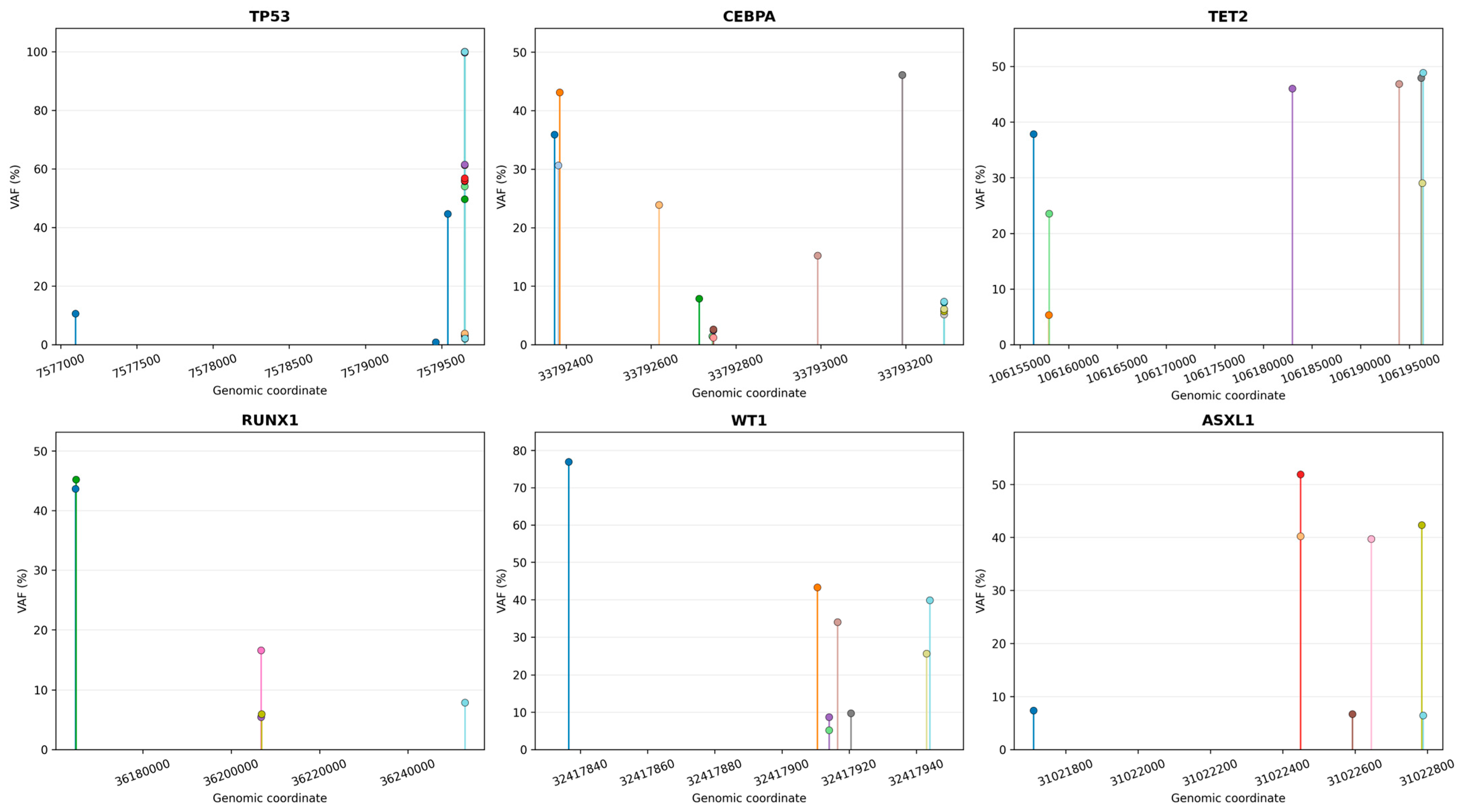
ITD/TKD-driven recurrence. Lollipop plots in
Figure 3 illustrate the genomic distribution of unique somatic variants in
TP53,
CEBPA,
TET2,
RUX1,
WT1, and
ASXL1. Each dot represents a unique variant, with vertical stems indicating precise genomic coordinates. Variants are color-coded by pathogenicity.
FLT3 variants were identified in 5 of 104 patients (4.8%), accounting for 2.5% of all detected variants and 4.5% of pathogenic/likely pathogenic alterations. All FLT3 variants were classified as likely pathogenic. The mutational spectrum was dominated by exon 14 in-frame insertion variants (60.0%), while exon 20 p.Asp835Tyr (D835Y) mutations accounted for 40.0%. FLT3 variant allele frequency was heterogeneous (median VAF 0.40; range 0.14–0.81), indicating variable clonal burden across cases.
2.7. Functional Genomic Stratification of Somatic Variants Across Biological Pathways and Functional Gene Groups
Functional classification demonstrated a predominance of cell-signaling pathway alterations (62 variants; 30.4%), largely driven by
FLT3,
NRAS, and
KRAS. Tumor suppressor genes accounted for 55 variants (27.0%), with
TP53 and
WT1 being the most frequently affected. Transcription-factor genes, principally
RUNX1,
CEBPA, and
ETV6, harbored 28 variants (13.7%). RNA-splicing genes (
SRSF2,
U2AF1,
SF3B1, and
ZRSR2) comprised 15 variants (7.4%), while epigenetic modifiers (
ASXL1,
BCOR,
EZH2, and
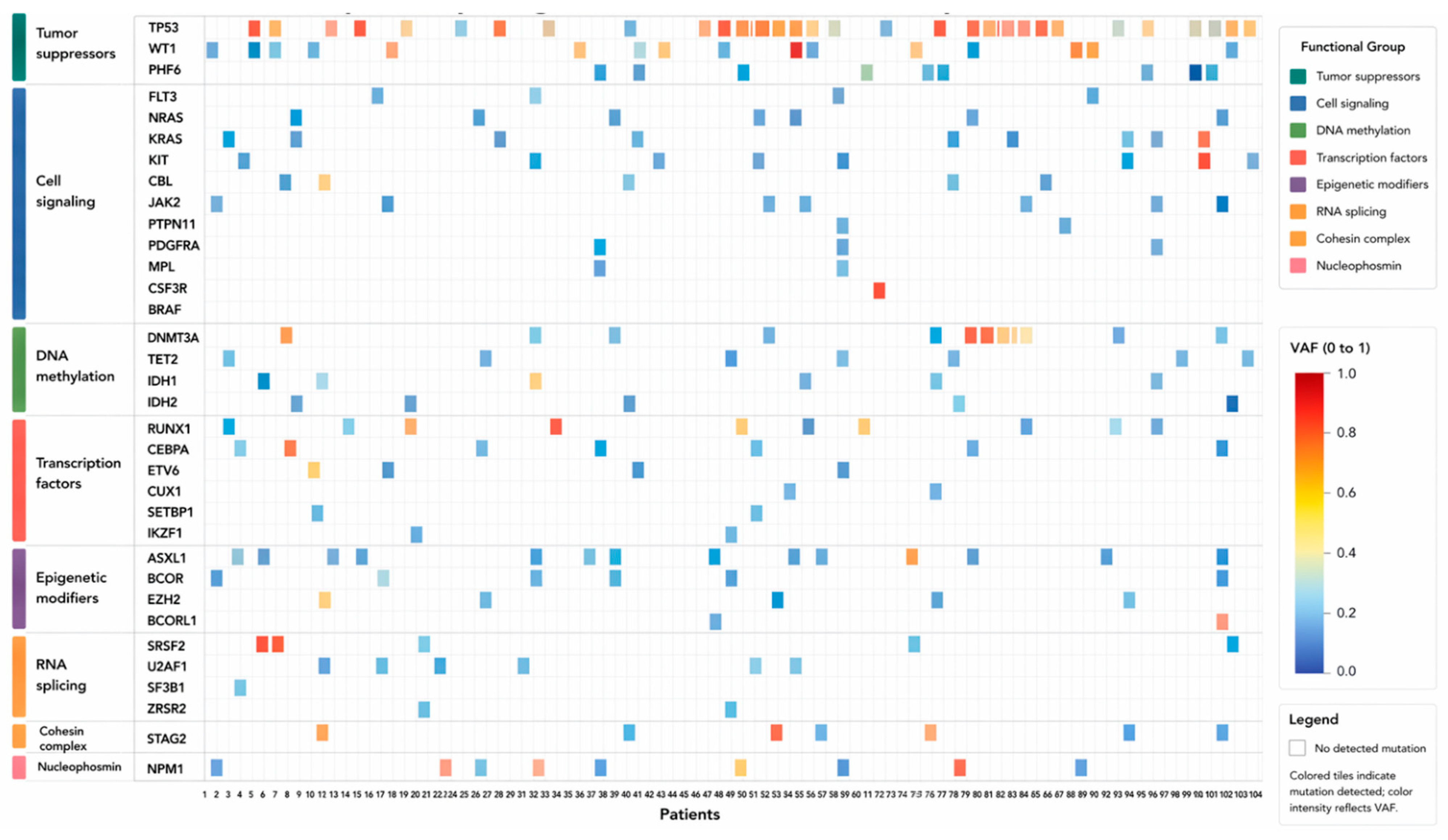
BCORL1) contributed 14 variants (6.9%). In contrast, spliceosome-associated and cohesin complex gene alterations were infrequent. The Oncoprint in
Figure 4 visualizes gene-level somatic variants across 104 AML patients, annotated by variant allele frequency (VAF), mutation type, and functional gene groups, while
Figure 5 summarizes the frequency and functional stratification of our cohort.
2.8. Variant Allele Frequency (VAF) Landscape
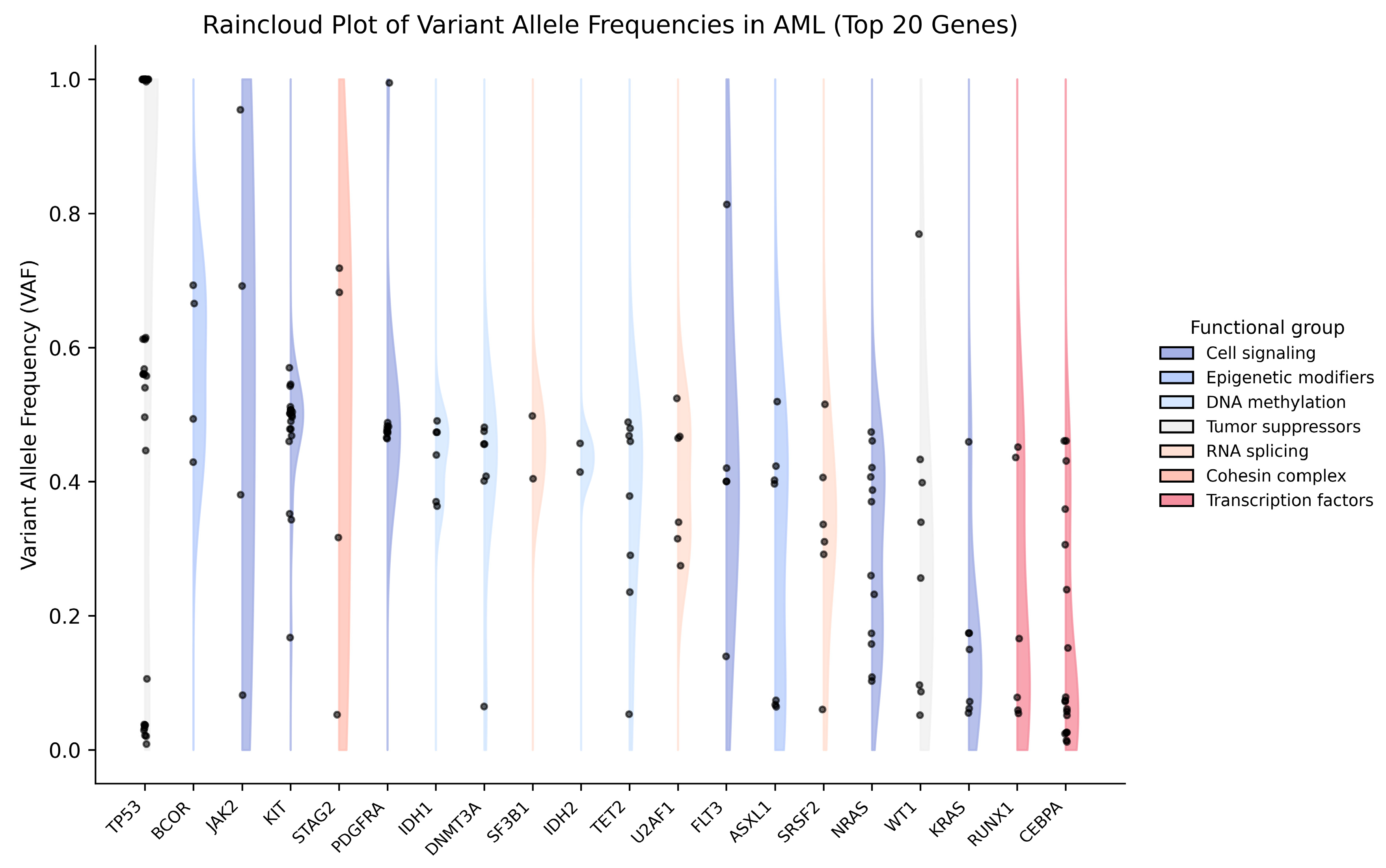
VAF analysis showed marked inter-gene and inter-patient heterogeneity, with an overall mean cohort VAF of 0.42. Tumor suppressor and epigenetic regulator mutations (
TP53,
DNMT3A,
IDH1/2,
TET2,
ASXL1) dominated the moderate-to-high VAF range, consistent with early clonal events, with
TP53 displaying a characteristic bimodal pattern as shown in
Figure 6. In contrast,
RAS pathway and transcription-factor mutations (
KRAS,
NRAS,
RUNX1,
CEBPA) were largely low-VAF, while signaling, cohesin, and RNA-splicing genes showed intermediate and heterogeneous clonal behavior.
2.9. Co-Mutation Architecture and Gene-Level Correlation Patterns
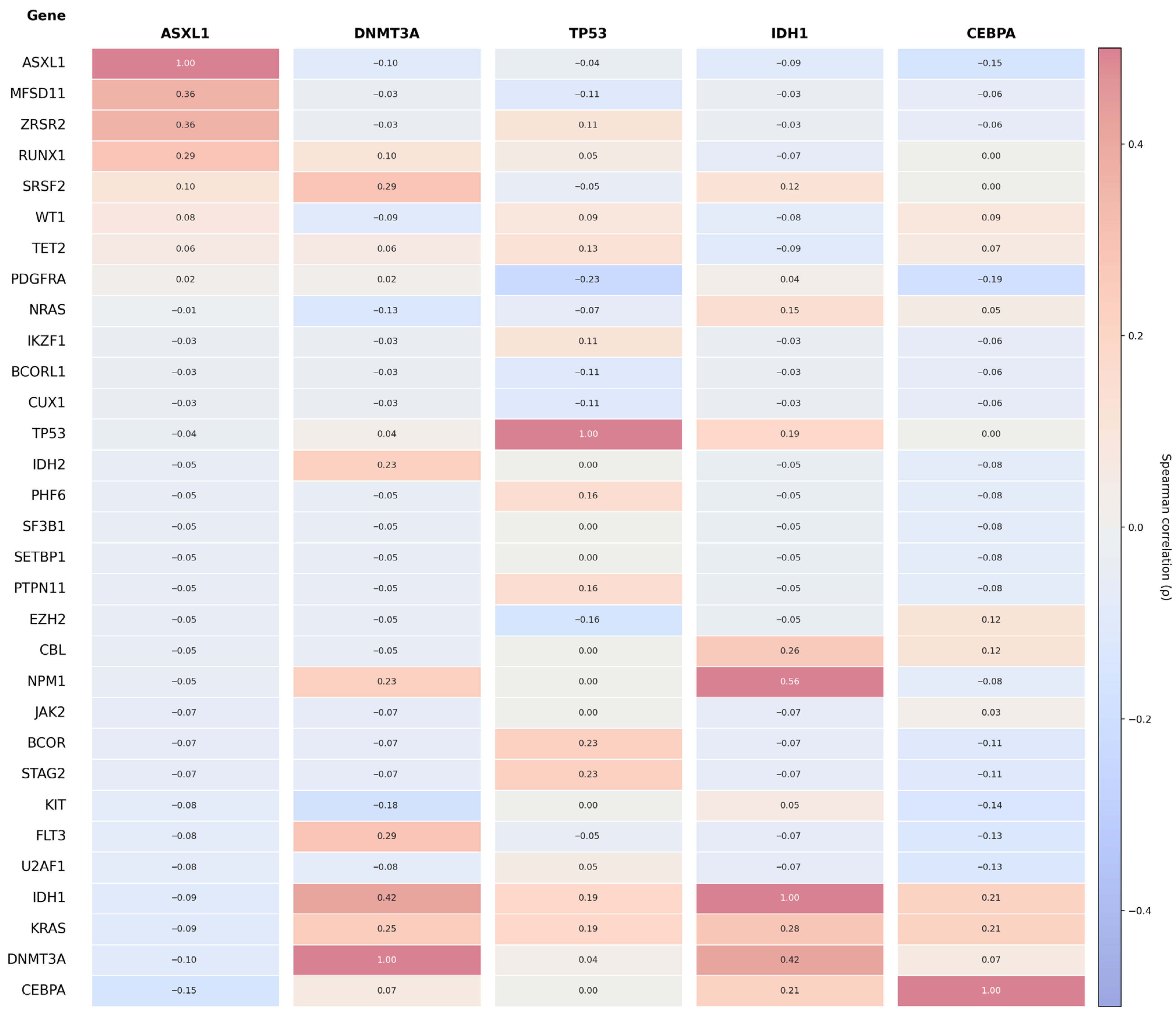
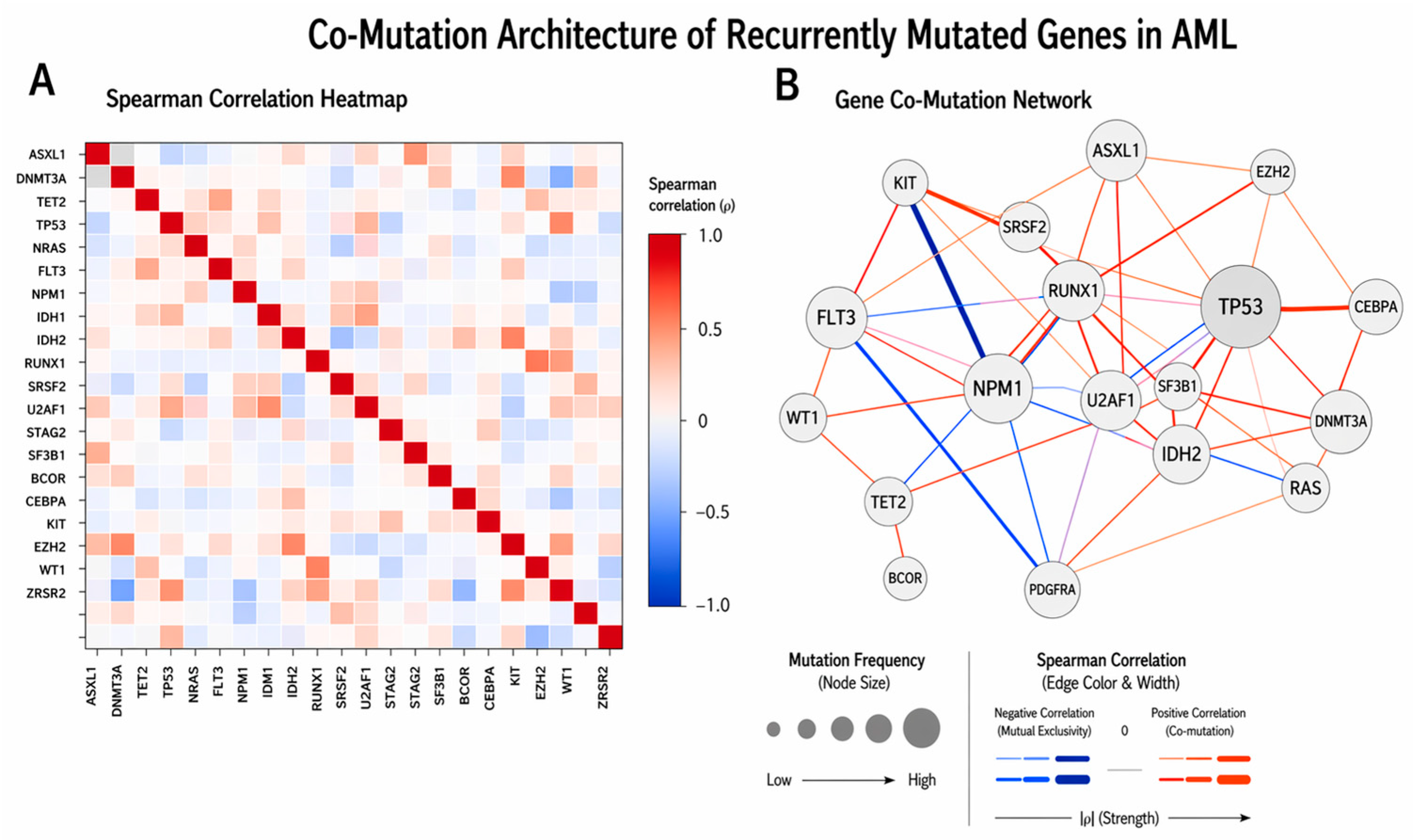
The Spearman correlation heatmap demonstrated selective positive associations, most prominently for
DNMT3A–IDH1 (ρ ≈ 0.43) as depicted in
Figure 7,
BCOR–STAG2,
BCOR–U2AF1, and
JAK2–SRSF2 (ρ ≈ 0.41–0.48), with moderate correlations observed for
KRAS–IDH1 (ρ = 0.28),
KRAS–DNMT3A (ρ = 0.25),
RUNX1–ASXL1 (ρ = 0.29), and
FLT3–DNMT3A (ρ = 0.29), whereas
KIT- and
PDGFRA-associated pairs demonstrated weak or negative correlations, consistent with relative mutational independence as seen in
Figure 8.
2.10. Functional Interaction Networks
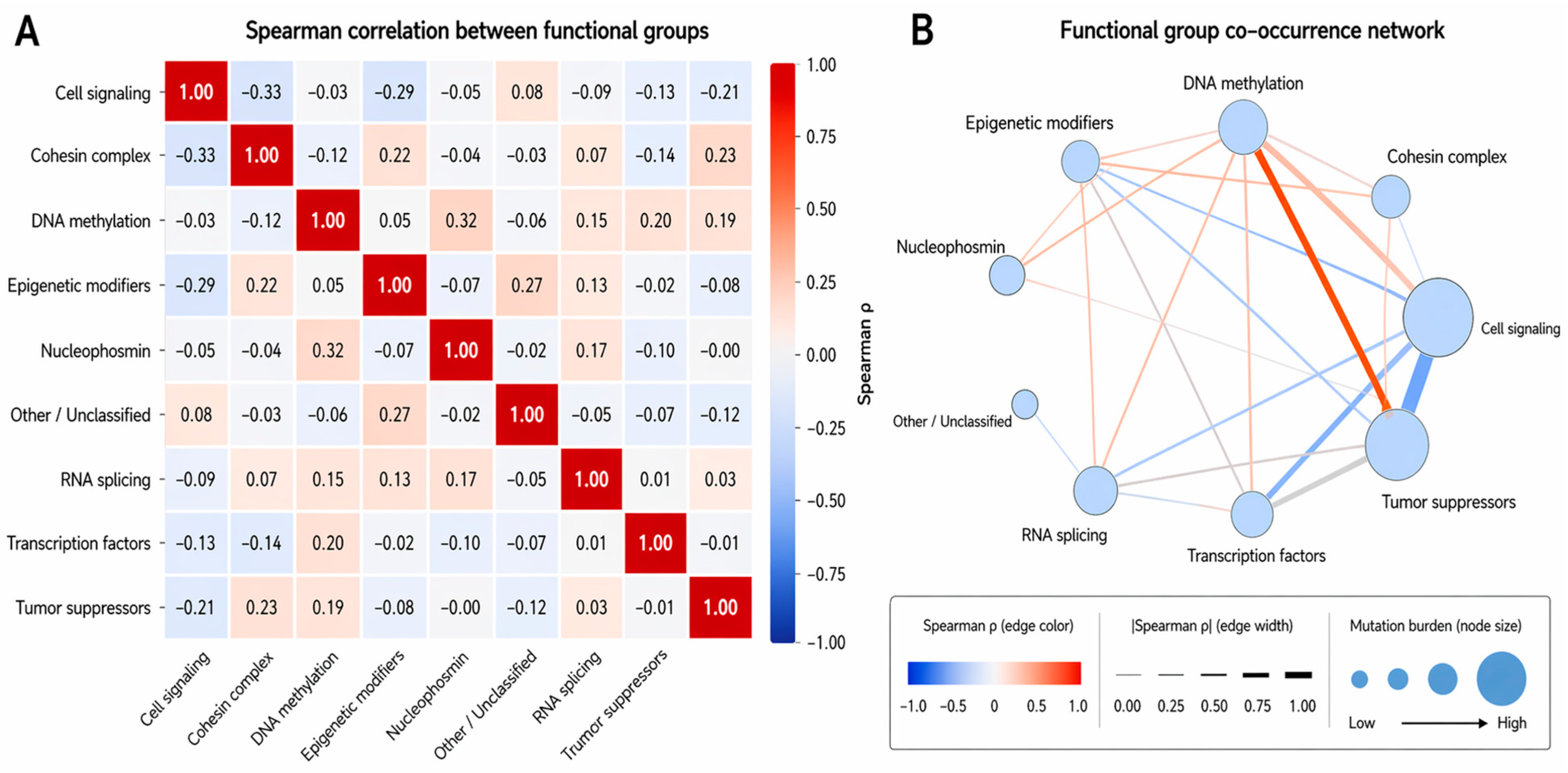
Figure 9 depicts the functional-group analysis revealing non-random mutational architecture in AML. DNA-methylation programs co-occurred with tumor suppressors (OR ≈ 4.6,
p = 0.007), transcription factors (OR ≈ 3.9,
p = 0.023), and
NPM1 (ρ = 0.32), with additional positive correlations for transcription factors (ρ = 0.20) and tumor suppressors (ρ = 0.19). Cohesin mutations showed modest coupling with tumor suppressors (ρ = 0.23) and epigenetic modifiers (ρ = 0.22). In contrast, cell-signaling alterations were depleted in epigenetic-modifier–mutant cases (OR ≈ 0.17,
p = 0.006) and demonstrated inverse associations with cohesin (ρ = −0.33), epigenetic modifiers (ρ = −0.29), and tumor suppressors (ρ = −0.21). Burden-based analysis confirmed an inverse signaling–epigenetic axis (ρ = −0.33; FDR q = 0.072), with network modeling identifying DNA methylation as a central hub and signaling pathways as a largely independent molecular trajectory.
2.11. Cytogenetic Spectrum of AML Patients
Cytogenetic analysis was available in 88/104 (85%) patients. A normal karyotype was the most frequent finding, observed in 38 patients (43.2%). Recurrent AML-defining abnormalities were identified in 21 patients (23.9%), comprising t(8;21), inv(16)/t(16;16), and t(15;17) (each 6.8%), and KMT2A rearrangements (3.4%). AML-MR–defining cytogenetic abnormalities were present in 14 patients (15.9%), with complex karyotype being the most common (6.8%), followed by −7/del(7q) (2.3%). Other AML-MR–defining abnormalities including −5/del(5q), −13/del(13q), del(11q), del(12p), i(17q), idic(X)(q13) were each observed in 1.1%. Numerical abnormalities were seen in 14 patients (15.9%), most frequently trisomy 8 (10.2%), while other gains/losses (+13, +19, +21, +22, −Y) were rare (1.1% each). Non-defining structural abnormalities were uncommon, with del(9q) identified in a single patient (1.1%).
2.12. Pediatric AML Patients
Among the cohort of 104 patients, 9 (8.7%) were of the pediatric age group with ages ranging from 5 to 13 years, and a predominance of males (7/9, 77.8%). Among them, molecular profiling revealed pathogenic or likely pathogenic variants in four patients, while 7 out of these 9 patients (77.8%) also had recurrent cytogenetic abnormalities. The molecular and cytogenetic profile of our pediatric AML patients is outlined in
Table 1.
3. Discussion
In this study, we recruited 104 newly diagnosed AML patients and performed targeted NGS using a 58-gene panel. Overall, around 77% of our patients harbored at least one somatic variant, while 23% did not show any somatic variant. The frequency of mutations detected in AML patients is variable in the literature, depending on the coverage of different NGS panels used. In a Chinese cohort of 87 AML patients, targeted NGS using a panel covering 120 genes related to myeloid disorders revealed 89.7% of the patients had somatic variants [
13]. Another study using a panel of 19 genes showed that variants were detected in approximately 80% of their AML patients [
14]. Thus, the diagnostic yield depends on the depth and coverage of genes under investigation.
The mean mutational burden of 1.96 variants per patient, with most cases harboring three or fewer mutations, closely mirrors international AML experience when analysis is limited to recurrent driver genes on targeted or clinical sequencing panels. Large genomic studies have consistently shown that, despite the presence of additional background mutations detectable by whole-genome or whole-exome sequencing, AML is typically driven by a small number of biologically meaningful lesions, most commonly involving epigenetic regulators, tumor suppressors, and signaling pathways [
4]. Data from TCGA and subsequent large AML cohorts confirm that most patients carry only a limited set of recurrent driver mutations, with higher mutational burden confined to specific high-risk subgroups [
15,
16]. A transition-to-transversion ratio (Ti/Tv) of 1.27:1 is indicative of typical somatic mutagenesis, predominantly C>T transitions (33.7%) as previously described in AML and other hematologic malignancies [
17].
Variant allele frequencies helped clarify clonal timing. High-VAF mutations in TP53, DNMT3A, IDH1/2, and TET2 likely represent early founder events, while low-VAF RAS and transcription-factor mutations appear to arise later during subclonal evolution. The bimodal VAF pattern of TP53 highlights its role both in disease initiation and subsequent clonal expansion. Although these cases represent de novo AML, delayed diagnosis in an under-resourced setting and referral-center bias likely result in presentation at more advanced stages. Despite this, the clonal hierarchy observed closely parallels international AML models, in which epigenetic and TP53 alterations arise early and activating signaling lesions are acquired later under selective pressure.
More than half of the detected variants were clinically relevant (54.9%), consistent with contemporary NGS-based AML studies demonstrating a high burden of pathogenic and likely pathogenic driver alterations that increasingly define the clinically actionable subset.
Cell-signaling mutations were the most frequent (38.4%), consistent with established AML models where these alterations drive leukemic proliferation. However, their relative enrichment in this cohort suggests a greater reliance on MAPK pathway activation. Notably, recent 2026 data indicate that NRAS–CEBPA co-mutation is associated with significantly poorer survival (HR ~3.1), underscoring a potentially high-risk cooperative biological interaction.
More than half of the detected variants were clinically relevant (54.9%), consistent with contemporary NGS-based AML studies demonstrating a high burden of pathogenic and likely pathogenic driver alterations that increasingly define the clinically actionable subset [
18]. Cell-signaling mutations were the most frequent (38.4%), consistent with established AML models where these alterations drive leukemic proliferation. However, their relative enrichment in this cohort suggests a greater reliance on
MAPK pathway activation [
19]. Notably, recent 2026 data indicate that
NRAS–CEBPA co-mutation is associated with significantly poorer survival (HR ~3.1), underscoring a potentially high-risk cooperative biological interaction [
20].
CEBPA mutations were seen in 8.0% of cases, which is in line with what has been reported internationally (~7–20%) and reflects a similar genomic pattern to global AML cohorts; importantly, certain
CEBPA mutations (particularly bZIP or double mutations) are associated with a more favorable risk profile [
21]. In contrast,
WT1 mutations were identified in 7.1% of cases; again, within the expected range (~10%); and are well known to be linked with poorer outcomes, including a higher risk of relapse and overall adverse prognosis [
22].
We found a high frequency of benign variants in the
KIT and
PDGFRA genes. According to existing literature, many mutations in AML are benign, ‘passenger’ mutations that were pre-existing in the cell as part of normal aging, and do not contribute to the disease process itself [
23]. These are detected as synonymous variants during sequencing.
Among the pediatric subgroup of our AML cohort, the most frequent pathogenic variants were of the
NRAS and
FLT3 genes. A study from the Children’s Oncology Group found that up to 10% of pediatric AML patients harbor
NRAS mutations [
24]. Similarly,
FLT3 mutations are reported in 10 to 15% of childhood AML cases and are associated with poor prognosis [
25]. We also found a single case of pediatric AML harboring a pathogenic variant of
PHF6.
PHF6 variants are a rare occurrence in childhood AML, and their prognosis remains poorly understood [
26]. Such cases require longitudinal follow-up for a better understanding of patient outcomes.
This study presents the first comprehensive mapping of somatic mutational patterns in a Pakistani AML cohort using NGS. The findings provide population-specific genomic data to inform diagnostic, prognostic, and therapeutic strategies. The strength of this study lies in its robust sample size and the use of a well-established NGS panel and bioinformatics pipeline. The findings provide population-specific genomic data to inform diagnostic, prognostic, and therapeutic strategies. Limitations include the lack of germline controls and the absence of outcome data, which remain essential to validate prognostic associations. Another limitation is the exclusion of secondary AML cases, which may limit the applicability of findings to the full spectrum of AML biology.
Our cohort reflects a real-world AML population from an under-resourced healthcare setting. Limited access to care leads to late presentation, often with advanced and biologically complex disease. As a national tertiary referral center, AFIP receives many diagnostically challenging AML cases, enriching the cohort for high-risk disease. This referral bias likely explains the higher mutational complexity and increased burden of adverse-risk genomic alterations observed, highlighting the distinct AML landscape in low- and middle-income countries.
4. Materials and Methods
4.1. Study Design and Setting
This prospective, observational cross-sectional study was conducted from July 2021 to July 2025 at the Department of Molecular Hematology, Armed Forces Institute of Pathology (AFIP), Rawalpindi, Pakistan.
4.2. Patient Selection and Eligibility Criteria
Newly diagnosed patients of any age or gender with de novo AML were enrolled. Patients with prior chemotherapy or radiotherapy, or secondary AML, were excluded. Diagnosis was established according to WHO 2022 criteria using integrated morphology, immunophenotyping, cytogenetics, and molecular profiling. Written informed consent was obtained, and clinical, laboratory, cytogenetics, and NGS data were prospectively recorded on a standardized proforma.
4.3. Cytogenetics and FISH Analysis
Conventional cytogenetic analysis was performed on bone marrow samples (3 mL, sodium heparin) using standard G-banding (Giemsa–trypsin) techniques. Karyotypes were interpreted in accordance with the International System for Human Cytogenetic Nomenclature (ISCN), with a minimum of 20 metaphases analyzed per case using the CytoVision (v4.5.2-v4.5.4 and v7.3.1-7.3.2) semi-automated imaging platform.
Interphase FISH was conducted on peripheral blood and/or bone marrow specimens following standard processing protocols. Locus-specific probes targeting KMT2A, MECOM, and NUP98 (MetaSystems v3.12.9) were applied, and ≥500 interphase nuclei per probe set were evaluated using fluorescence microscopy with appropriate dual-color filters.
4.4. Sample Collection, DNA Extraction, and Quality Assessment
Peripheral blood and/or bone marrow samples were collected in EDTA at diagnosis, with adequate blast representation in all analyzed specimens. Samples were not subjected to mononuclear cell separation; genomic DNA was extracted directly from the samples using the Thermo Fisher GeneJET Genomic DNA Purification Kit (ThermoFisher Scientific, Baltics UAB, Lithuania). DNA integrity was assessed by agarose gel electrophoresis, with storage at 4 °C (short term) and −20 °C (long term). DNA quantity was measured using the Qubit dsDNA High Sensitivity assay, targeting 50–100 ng for library preparation. DNA purity was assessed on an Inno-M microplate spectrophotometer (LTek Co., Ltd., Seongnam, South Korea), with acceptable A260/A280 ratios of 1.6–2.0.
4.5. Targeted NGS Panel and Library Preparation
DNA libraries were prepared using highly multiplexed oligonucleotide probes targeting 58 genes, comprising 18 full genes and exonic hotspots of 40 genes. The panel covers 107.9 kb of genomic content with 766 amplicons. Following the extension-ligation reaction, the DNA templates were PCR amplified. Unique sample-specific indexes were added to each library during PCR to facilitate the pooling of libraries. The final PCR products were processed into a single-stranded, adapter-ligated, normalized library using a bead-based protocol.
4.6. Next-Generation Sequencing Workflow
Sequencing was performed on an Illumina MiSeq platform (Illumina, San Diego, CA, USA), utilizing sequencing-by-synthesis (SBS) chemistry for accurate and high-throughput base-calling. Libraries were loaded into reagent cartridges, and sequencing runs included quality control samples to verify the accuracy and reproducibility of the results. Raw sequencing data were processed using MiSeq Reporter software (v2.6.2.3). The data were demultiplexed, and FASTQ files were generated for individual samples.
4.7. Bioinformatics and Variant Interpretation
FASTQ files were uploaded on Illumina Connected Analytics (ICA) software (v2.0), and the Illumina DRAGEN (Dynamic Read Analysis for GENomics) bioinformatics platform (v4.3.6; Illumina, San Diego, CA, USA) was used for further processing. Reads were aligned to the human reference genome (GRCh37/hg19) to produce BAM files. Variant calling format (VCF) files were generated, which were subsequently analyzed on the Illumina Connected Insights (ICI) (version 5.2.3; Illumina, San Diego, CA, USA). ICI performs variant annotation and filtration incorporating information from various databases such as 1000 Genomes project, gnomAD, dbSNP, ClinVar, COSMIC, OncoKB, etc. Variants were finally reported according to standardized guidelines given by the consensus recommendations of the Association of Molecular Pathology (AMP), College of American Pathologists (CAP), and American Society of Clinical Oncology (ASCO) [
12].
4.8. Statistical Analysis
Data analysis was performed using Microsoft Excel and the Statistical Package for Social Sciences (SPSS) version 23.
4.9. Ethics Approval and Consent
Ethical approval was obtained from the Institutional Review Board AFIP Rawalpindi in accordance with the Declaration of Helsinki prior to study initiation. Written informed consent for participation in the study was obtained from all patients prior to enrollment.



 ,
,