Comprehensive Review of Hydrogel-Mediated Strategies for Diabetic Wound Healing


Abstract
1. Introduction
2. Stimulus-Responsive Hydrogel
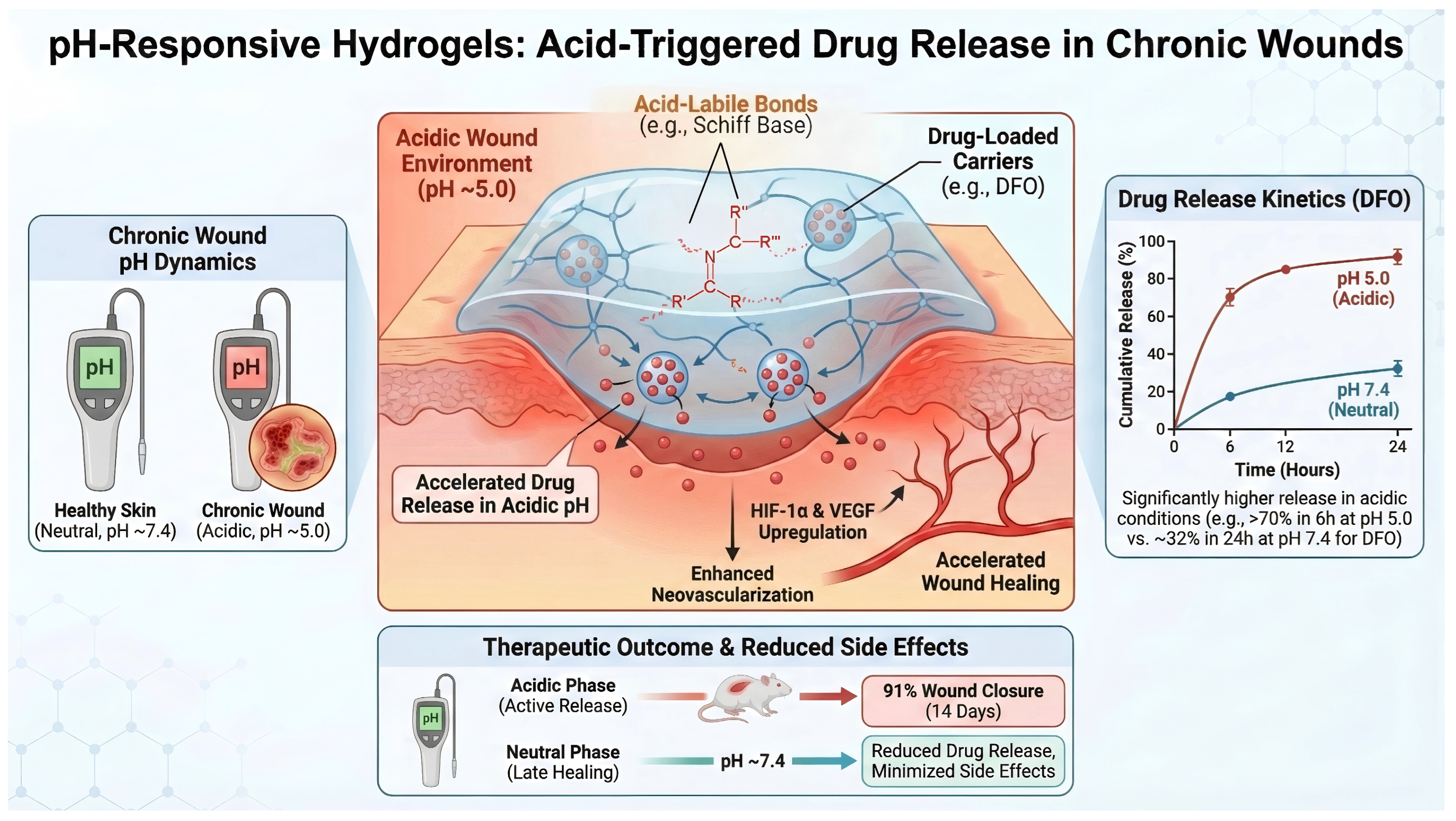
2.1. pH-Responsive Hydrogels
2.2. Glucose-Responsive Hydrogels
2.3. ROS-Responsive Hydrogels
3. Antimicrobial and Anti-Infective Strategies
3.1. Built-In Antimicrobial Drugs and Controlled-Release Systems
3.2. Photothermal and Photodynamic Antibacterial Approaches
3.3. Other Emerging Antimicrobial Mechanisms
4. Immune Regulation and Inflammation Control
4.1. Controlled Release of Anti-Inflammatory Drugs and Bioactive Molecules
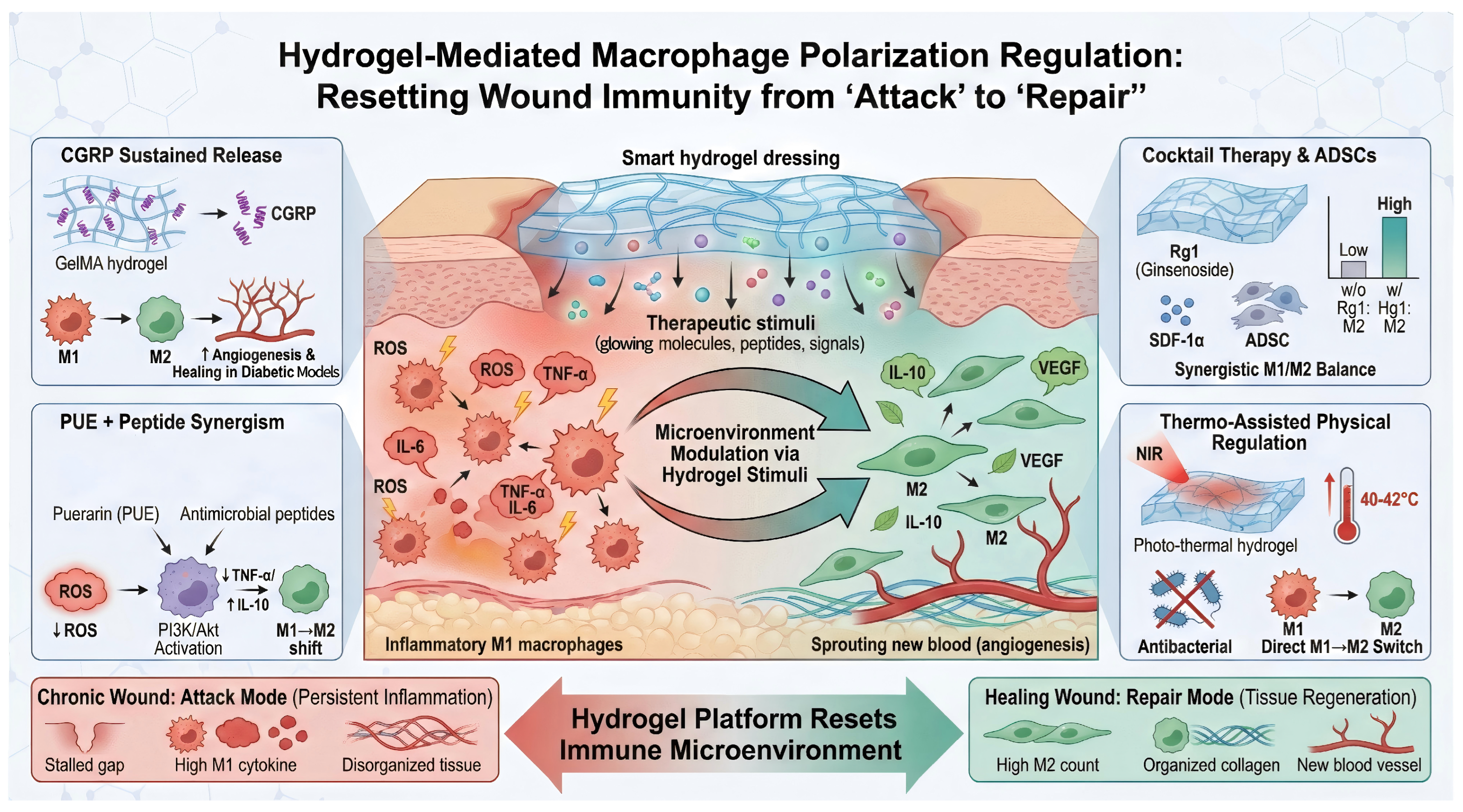
4.2. Regulation of Macrophage Polarization
4.3. Controlling the “Inflammation-Aging” Axis
5. Strategies for Promoting Angiogenesis
5.1. Delivery of Angiogenic Factors
5.2. Microenvironment Improvement and Indirect Angiogenesis Promotion
6. Supply of Oxygen and Nitric Oxide
6.1. Oxygen-Releasing Hydrogel
6.2. Nitric Oxide (NO) Release
7. Smart Dressings and Monitoring Technology
7.1. Adaptive and Visual Monitoring
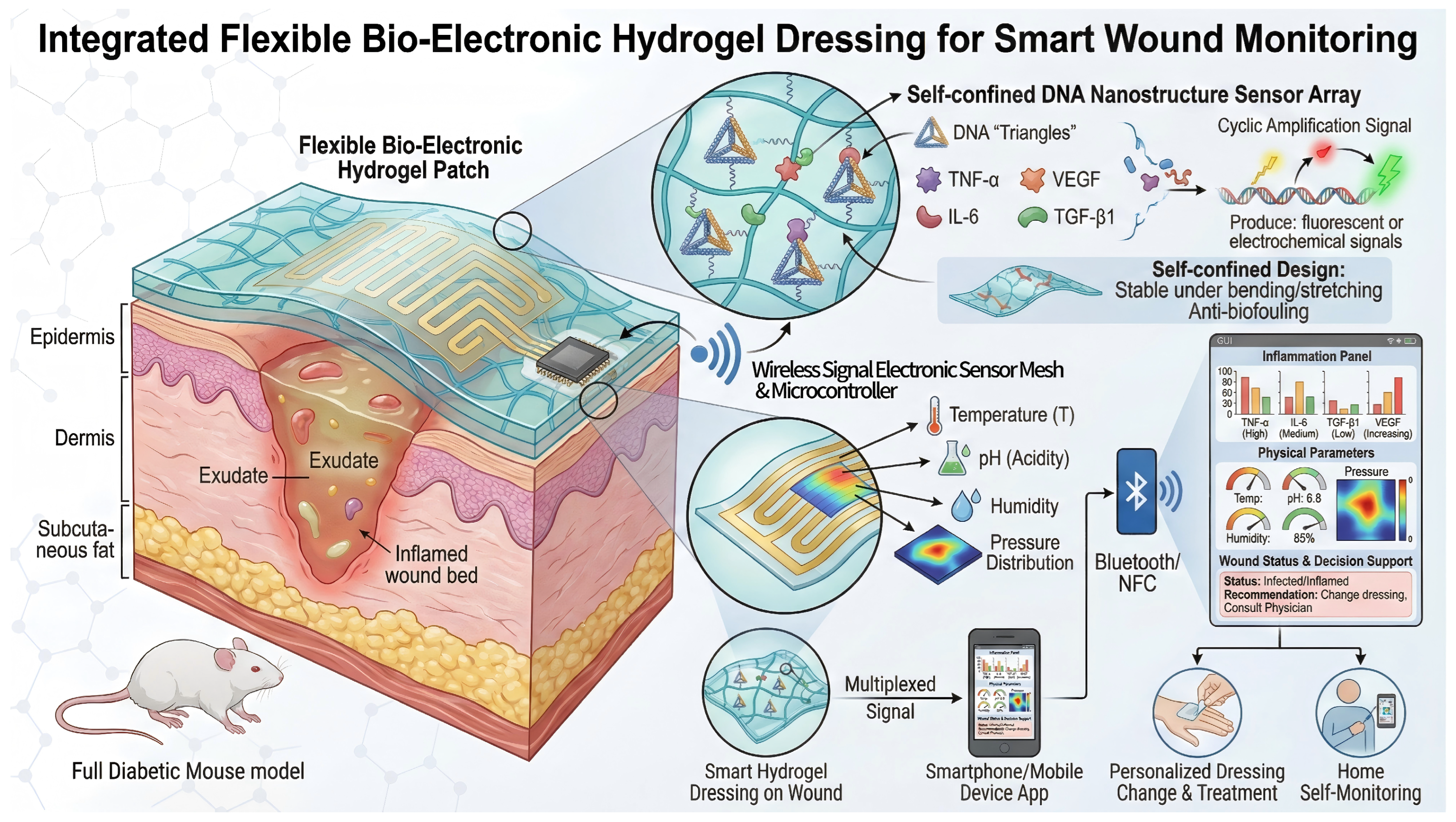
7.2. Integrated Electronic Sensors
7.3. Feedback-Based Delivery and Closed-Loop Control
8. Hydrogel Combining Stem Cells and Exosome Therapy
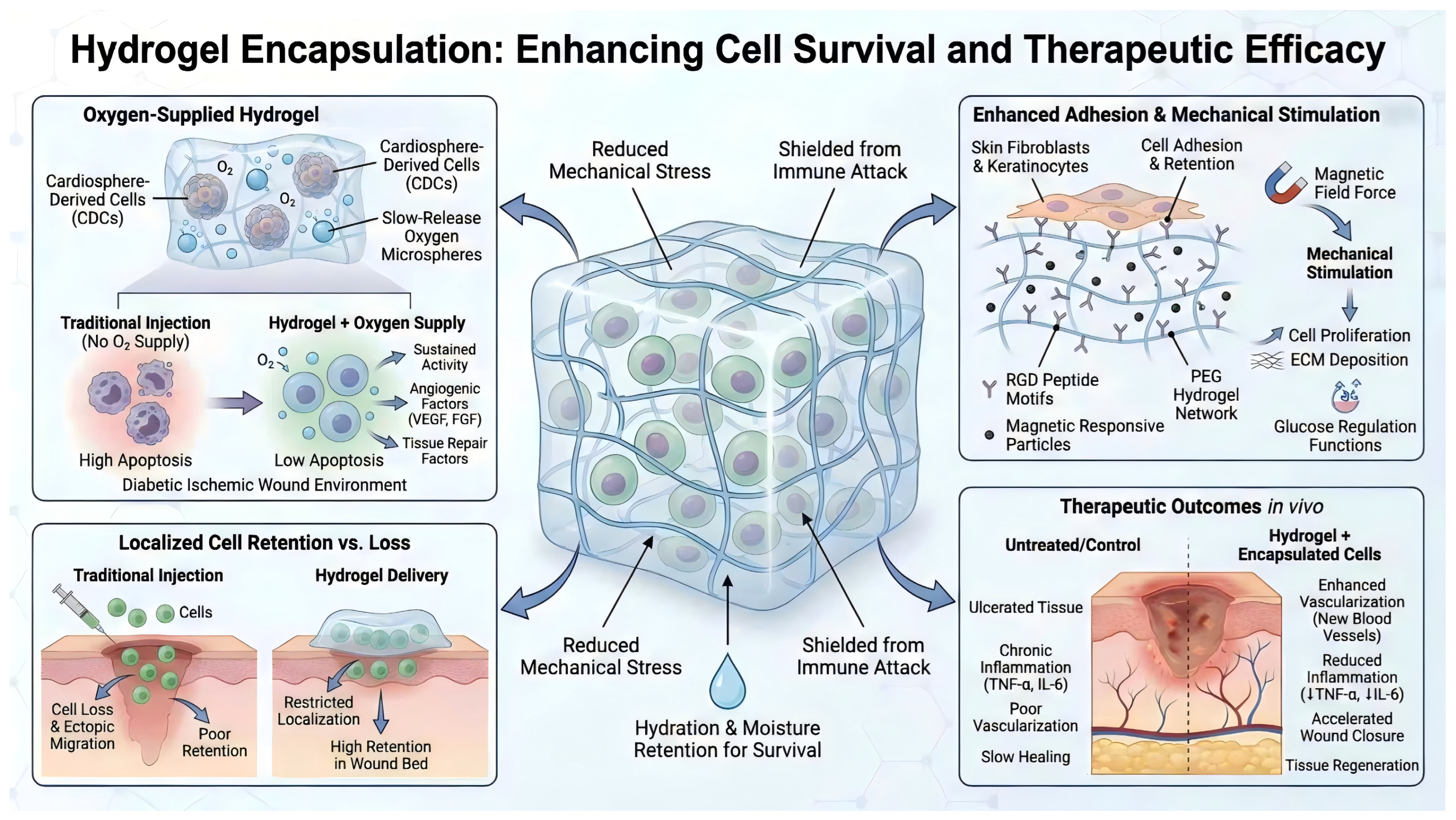
8.1. Stem Cell Encapsulation and Survival Improvement
8.2. Exosome and Secretory Product Delivery
8.3. Tissue-Engineered Skin and Biostructures
9. Hydrogel Design Enhancements: Injectable, Self-Healing, and Adhesive Properties
9.1. In Situ Molding and Shape Adaptation
9.2. Self–Healing and Durability
9.3. Strong Adhesion and Fixation
9.4. Mechanical Properties and Balance
10. Challenges and Prospects in Clinical Translation
10.1. Safety and Biocompatibility
10.2. Efficacy and Reproducibility
10.3. Ease of Use and Patient Compliance
10.4. Cost and Mass Production
11. Conclusions
Author Contributions
Funding
Institutional Review Board Statement
Informed Consent Statement
Data Availability Statement
Acknowledgments
Conflicts of Interest
Appendix A

| Categories | Hydrogels | Models | Outcome | References |
|---|---|---|---|---|
| NIR stimuli-responsive hydrogel | LIN@PG@PDA composite hydrogel (GelMA/PNIPAM semi-IPN + PDA nanoparticles; linagliptin-loaded; 405 nm photocrosslinking; 808 nm NIR trigger) | HUVECs; STZ-induced diabetic SD rat full-thickness wound | In vitro:• NIR-triggered volume shrinkage enables controllable drug release • Enhances endothelial migration/angiogenesis (↑VEGF) In vivo:• Accelerates diabetic wound closure with increased neovascularization (↑CD31/α-SMA) | [9] |
| ROS-sensitive + photothermal antibacterial + local glycemia management hydrogel | ACG gels (ROS-sensitive PVA/TSPBA hydrogel co-loaded with Au–CeO2 dumbbells and GOx) | Diabetic BALB/c mouse wounds; antibacterial assays (S. aureus/E. coli); S. aureus–infected diabetic wound model | In vitro:• ROS scavenging improves inflammatory milieu and promotes M1 → M2 polarization • ROS-triggered GOx release lowers local glucose In vivo:• NIR photothermal action strengthens antibacterial efficacy and improves healing in infected diabetic wounds | [12] |
| Zwitterionic hydrogel with sustained delivery | Photopolymerized ZW hydrogel (SBMA/HEMA; optionally loaded with CNP–miR146a) | db/db mice full-thickness wounds | In vivo:• Supports sustained release of nanoparticles/proteins • ZW gel alone improves closure (higher SBMA fraction heals faster) • 40:60 SBMA:HEMA + CNP–miR146a achieves >90% closure by day 10; full closure around days 11–13 | [18] |
| pH/ROS dual-responsive hydrogel with spatiotemporal delivery | POD/CE glycopeptide hydrogel (PBA-grafted oxidized dextran + caffeic acid–grafted ε-polylysine; Schiff base + boronic ester dynamic bonds; DS + MIC@MF embedded) | RAW264.7; L929; HUVECs; STZ-diabetic SD rat full-thickness wound with S. aureus infection | In vitro:• pH/ROS-triggered network dissociation enables DS fast release and MF sustained release • Intrinsic antibacterial/antioxidant effects reduce infection and oxidative stress In vivo:• Suppresses inflammation (↓TNF-α/IL-6, ↑IL-10) and promotes angiogenesis (↑VEGF/CD31/HIF-1α), accelerating infected diabetic wound repair | [21] |
| ROS-responsive nanofibrous dressing (multidrug + AuNRs) | PUDF electrospun nanofibers (ROS-responsive Se-containing polyurethane; loaded with Def + Indo + AuNRs) | L929; RAW264.7 (LPS); HUVECs (scratch/transwell); SD rat full-thickness wound; MRSA-infected wound | In vitro:• ROS accelerates drug release and provides strong radical scavenging In vivo:• Reduces MRSA burden and speeds wound closure (near-healed by day 14) • Immunomodulation (↓TNF-α/IL-6, ↑IL-10) and enhanced angiogenesis (↑HIF-1α/VEGF/CD31) with improved collagen organization and reduced scarring | [22] |
| Mild photothermal antibacterial hydrogel (NIR) | COG-Z@P200 hydrogel (CMCS/Gel/OSA dual-crosslinked; ZIF-8@PDA nanoparticles; 808 nm NIR mild PTT ~40–45 °C) | L929; MRSA/E. coli; STZ-diabetic C57BL/6 mouse MRSA-infected full-thickness wound | In vitro:• >99.5% MRSA killing under NIR (mild PTT + Zn2+ synergy) • Suppresses MRSA metabolism/virulence, weakening biofilm/pathogenicity In vivo:• Decreases ROS, promotes M2 polarization (Arg-1↑/TNF-α↓), enhances angiogenesis (VEGF/CD31↑) and collagen deposition, accelerating infected diabetic wound healing | [25] |
| Photo-controlled thermosensitive multifunctional hydrogel (NIR) | A-MPDA/Rh@T-Gel (thermosensitive gel with arginine-doped mesoporous PDA nanoparticles + rhein; catalyzes H2O2 → O2; 808 nm NIR-responsive) | NIH/3T3; HUVECs; RAW264.7; L929; STZ-diabetic BALB/c mouse S. aureus–infected wound | In vitro:• NIR mild PTT + rhein yields strong antibacterial activity (S. aureus/E. coli; reduced in vivo bacterial load) • Antioxidant ROS reduction and oxygen generation alleviate hypoxia (NIR-enhanced, repeatable) In vivo:• Suppresses inflammation and promotes migration/angiogenesis (CD31↑) and collagen deposition, accelerating infected diabetic wound closure | [29] |
| NIR photothermal hydrogel for growth factor delivery + antibacterial | PEGDA-GDY/G@TGF-β hydrogel (PEGDA matrix with GDY/gelatin core–shell nanocarrier loaded with TGF-β; NIR “covered → uncovered” release) | HDFs; HUVECs; bacteria (S. aureus, E. coli, P. aeruginosa, MRSA); STZ-diabetic C57BL/6 mouse full-thickness wound (daily NIR 30 s) | In vitro:• NIR enables ON/OFF programmable TGF-β release (higher cumulative release vs. no NIR) • Low-temperature PTT + GDY-mediated damage provides broad-spectrum antibacterial activity (incl. MRSA, P. aeruginosa) In vivo:• Enhances cell migration and angiogenesis (CD31↑), improving wound closure and tissue regeneration in vivo | [30] |
| Intrinsic antibiofilm + antioxidative hydrogel dressing (no irradiation) | PPN dressing (PEG network tethered cationic polyimidazolium, PIM-Mal, + N-acetylcysteine; film and Alg-PPN fiber forms) | Diabetic mouse infected wound biofilm models (MRSA or carbapenem-resistant P. aeruginosa); 3D ex vivo human skin equivalent | In vivo:• >3-log reduction (>99.9%) against MDR pathogens/biofilms, outperforming silver dressings • Faster in vivo healing (MRSA diabetic wounds ~fully closed by ~day 12; controls/silver not closed by 2 weeks) • Reduces inflammatory burden and proteases (↓CD11b+ infiltration, ↓pro-MMP9) and increases pro-repair factors (↑VEGF-A/PDGF-BB/FGF-2/EGF); improves granulation and collagen maturation (higher type I collagen fraction) | [31] |
| Chitosan-based immunomodulatory hydrogel dressing | PAAc/CFCS-vanillin hydrogel (catechol-functional chitosan + poly(acrylic acid); CFMC-Ag nanoparticles + vanillin; Schiff base; pH-dependent release) | 3T3, HUVECs, RAW264.7; S. aureus/E. coli antibacterial; infected full-thickness wounds and diabetic wound models in rats | In vivo:• Broad antibacterial activity and faster closure in infected wounds • ROS scavenging reduces oxidative damage markers (4-HNE, 8-OHdG) in diabetic wounds • Anti-inflammatory immunoregulation (↓TNF-α/IL-6, ↑IL-4/IL-10) with M1 → M2 polarization (CD206↑) and enhanced angiogenesis (CD31/VEGF↑), accelerating diabetic wound repair | [37] |
| All-natural immunomodulatory bioadhesive hydrogel | FGMA/FG/PA hydrogel (photo-crosslinked FGMA with physically entangled FG/PA; PA = protocatechuic aldehyde; Schiff base) | RAW264.7; L929; HUVECs; S. aureus–infected wounds (SD rats); STZ-diabetic SD rat full-thickness wound | In vitro:• Intrinsic bioadhesion, antibacterial activity, and ROS scavenging • Induces M1 → M2 transition (↓TNF-α/IL-1β; ↑TGF-β/VEGF) without extra additives In vivo:• Promotes angiogenesis (↑CD31/α-SMA) and accelerates diabetic wound closure with improved collagen remodeling and appendage regeneration | [39] |
| Macrophage-modulating HA-based hydrogel | HA-PF (high-MW hyaluronic acid hydrogel loaded with paeoniflorin) | BMDMs; STZ-diabetic C57BL/6J mouse full-thickness wound; L929/HUVEC cytocompatibility | In vitro:• Drives M1 → M2 polarization (↓CD86/iNOS/TNF-α/IL-1β; ↑CD206/Arg-1/IL-10/TGF-β) In vivo:• Enhances angiogenesis and repair markers (↑CD31/VEGF/α-SMA/Collagen I) • Accelerates closure vs. blank HA and commercial INTRASITE gel, reducing inflammation and improving re-epithelialization/collagen deposition | [41] |
| Nanofiber–hydrogel composite dressing | P-4HC nanofiber hydrogel (PLA/4HC short nanofibers embedded in PVA/HHA hydrogel; 4HC 1.5–3 mg/mL) | L929; HUVECs; RAW264.7 under high-glucose; db/db mouse full-thickness wound (bFGF gel control) | In vitro:• Sustained release, high water retention, and good hemocompatibility • Promotes angiogenesis (↑HUVEC migration/tube formation; ↑CD31/VEGF-A) and alleviates hypoxia (↓HIF-1α) In vivo:• Drives M1 → M2 (↓CD86/iNOS/IL-6/IL-1β/TNF-α; ↑CD206/Arg-1/IL-4/IL-10/VEGF), accelerating closure and collagen deposition (↑COL3A1); mechanism involves suppression of TLR/IL-17/TNF signaling | [42] |
| Biofactor-loaded GelMA hydrogel (immunomodulatory + pro-angiogenic) | GelMA–CGRP hydrogel (GelMA loaded with recombinant CGRP; 405 nm photocrosslinking; sustained release) | BMDMs, HUVECs, L929; E. coli inhibition;STZ + HFD-induced T2D C57BL/6J mouse full-thickness wound | In vitro:• Sustained CGRP release with good cytocompatibility and enhanced antioxidant capacity • Promotes M2 polarization via MDM2/p53/p21-related signaling (↑IL-10/TGF-β/VEGFA; ↓TNF-α/IL-6/IL-1β) • Enhances endothelial function (↑proliferation/migration; ↑VEGFA) and angiogenesis In vivo:• Accelerates diabetic wound closure with improved granulation, re-epithelialization, and collagen deposition (↑CD31/Ki67/α-SMA) | [43] |
| Self-healing drug-loaded hydrogel dressing | BP hydrogel (PVA–borax–puerarin; dynamic borate/boronic ester bonds; injectable, self-healing, ductile) | L929 biocompatibility; S. aureus antibacterial; STZ-diabetic SD rat chronic full-thickness wound | In vitro:• Excellent biocompatibility/hemocompatibility • Dose-dependent antibacterial activity against S. aureus In vivo:• Accelerates diabetic wound repair with improved re-epithelialization, neovascularization, and collagen organization • Mechanistically promotes M1 → M2 (iNOS↓, CD206↑), enhances angiogenesis (VEGFA/CD31↑), and collagen remodeling (COL-I/COL-III↑) | [44] |
| Nanozyme-modified antibacterial GelMA hydrogel (EC–macrophage crosstalk) | CeO2–Y@ZIF-8@Gel (CeO2–Y@ZIF-8 nanozyme/particles embedded in photocrosslinked GelMA; GelMA with quaternary ammonium salts for antibacterial activity) | HUVECs (ROS/mtROS, mitochondrial function, NLRP3 signaling); macrophages (cGAS–STING, M1/M2); infected diabetic mouse full-thickness wound | In vitro:• >99.99% killing against S. aureus/E. coli • Nanozyme scavenges ROS/mtROS and improves endothelial viability/proliferation • Suppresses endothelial NLRP3 activation and ox-mtDNA leakage • Downregulates macrophage cGAS–STING activation and promotes M1 → M2 (↓IL-6/IFN-γ, ↑IL-10) In vivo:• Fastest in vivo healing with enhanced angiogenesis (↑VEGF/CD31/α-SMA) | [46] |
| MMP-9-responsive exosome-releasing hydrogel | Exo@MRH (oxidized dextran + MMP-9-cleavable peptide + carboxymethyl chitosan hydrogel loaded with M2 macrophage-derived exosomes) | db/db mouse full-thickness wound; RAW264.7 polarization and exosome uptake; HDF scratch migration | In vitro:• Leverages elevated MMP-9 in diabetic wounds for inflammation-triggered degradation and on-demand exosome release • M2 exosomes promote M1 → M2 (↑CD206/Arg-1; ↓CD86/iNOS/TNF-α) In vivo:• Best in vivo closure with improved re-epithelialization and collagen deposition • Transcriptomics indicate downregulation of inflammatory pathways (NF-κB/IL-17/TNF/chemokine) and enhanced regeneration-related processes | [47] |
| Chemokine-sequestering + ROS-scavenging nanozyme hydrogel | Cu5.4O@Hep-PEG (starPEG–heparin hydrogel sequestering chemokines; loaded with ultrasmall Cu5.4O nanozymes) | chemokine binding (e.g., MCP-1/IL-8), fibroblast antioxidant assays, HUVEC proliferation/migration; leukocyte migration; acute wounds and STZ-diabetic BALB/c mouse wounds (Promogran®/Tegaderm controls) | In vitro:• Sequesters MCP-1/IL-8, reducing macrophage/neutrophil recruitment and infiltration • Broad ROS scavenging alleviates oxidative stress and lowers inflammatory mediators • Promotes angiogenesis and tissue regeneration (↑VEGF/CD31) In vivo:• Significantly accelerates closure in acute and diabetic wounds, outperforming Promogran® | [51] |
| ROS-responsive peptide-incorporated hydrogel | G/D-CuP (PVA crosslinked via ROS-responsive EBPBA phenylboronic ester; dimeric copper peptide D-CuP released under ROS) | RAW264.7; NIH/3T3/L929; HUVECs; STZ + HFD T2D C57BL/6 mouse full-thickness wounds (including infected wounds) | In vitro:• ROS scavenging with ROS-triggered D-CuP release (accelerated release under H2O2) • Promotes M1 → M2 and reduces inflammation (↓TNF-α/IL-6, ↑IL-10) • Enhances angiogenesis and cell proliferation/migration (↑VEGF, ↑CD31, ↑Ki67; improved tube formation) In vivo:• Accelerates diabetic wound repair, achieving high closure in infected wounds | [56] |
| Transparent conductive adhesive hydrogel patch for DFU + glucose monitoring | P(Py-TA)/CHA conductive patch (PTA-doped PPy nanofibrils in P(AM-Aa) network; MPBA for glucose responsiveness) | STZ-diabetic SD rat full-thickness wound; in vivo hemostasis models (liver puncture/incision, tail amputation); wound-site glucose sensing | In vitro:• High optical transparency (up to 93.6%) enables visual monitoring • Rapid hemostasis with reduced blood loss In vivo:• Accelerates diabetic wound closure with improved granulation, collagen deposition, angiogenesis (CD31↑), and re-epithelialization (K14↑) • Real-time glucose monitoring via linear resistance response to glucose (20–200 mM) | [66] |
| Self-monitoring + photothermal antibacterial hydrogel dressing (NIR) | Au/AgNDs@Gel (Au/Ag nanodots embedded in PVA hydrogel) | Type II diabetic rat bacteria-infected full-thickness wound with 808 nm NIR; in vitro antibacterial vs. S. aureus/E. coli | In vitro:• Synergistic PTT + Ag yields near-complete bacterial eradication under NIR In vivo:• Promotes infected diabetic wound healing (re-epithelialization and collagen deposition) • Anti-inflammatory (↓IL-6/TNF-α/IL-1β; ↑IL-4) and pro-angiogenic (↑VEGF/CD31) effects • Fluorescence decay reflects nanodot release, providing a visual cue for dressing replacement | [67] |
| Hypoxia-induced exosome-loaded in situ forming hydrogel | PB-Exo hydrogel (HB-PEG acrylate + HA-SH via thiol–ene Michael addition; in situ gelation) | HDF scratch; HUVEC tube formation/uptake; STZ-diabetic rat excisional wound | In vitro:• Rapid in situ gelation (~3 min) without initiators/toxic byproducts; sustained exosome release (~15 days) • Improves fibroblast migration and endothelial tube formation; prolongs exosome uptake/effect In vivo:• Accelerates diabetic wound closure with reduced inflammation (TNF-α↓) and increased mature vessels (CD31/α-SMA↑) • Increases bFGF and TGF-β1/β3, elevating TGF-β3/TGF-β1 ratio (anti-scar tendency) | [71] |
| Sprayable exosome-loaded photocrosslinkable ADM-based hydrogel | Exo@AMCN (methacrylated acellular dermal matrix; hUCMSC-Exo + β-CD–borneol; 405 nm photocrosslinking; curing time tunes degradation/release over ~2–7 days) | HaCaT scratch; HUVEC tube formation/VEGF; RAW264.7 (LPS); STZ-diabetic BALB/c mouse full-thickness wound | In vitro:• Programmable release window via curing time (≈2/5/7 days) • Multifunctional: antibacterial (>85% inhibition vs. S. aureus/E. coli), intracellular ROS reduction, enhanced migration/angiogenesis, and anti-inflammatory polarization In vivo:• Markedly accelerates in vivo healing with increased collagen deposition and neovascularization (CD31/VEGF↑), reduced inflammation (iNOS↓, CD206↑) | [72] |
| Exosome-coated oxygen nanobubble-laden self-healing hydrogel | EBO-Gel (ADSC exosome–coated BSA oxygen nanobubbles embedded in PVA/gelatin + borax dynamic hydrogel) | Fibroblasts under hypoxia; HUVEC tube formation; hemolysis and rat liver hemorrhage hemostasis; SD rat full-thickness wound | In vitro:• Oxygen supply alleviates hypoxia and reduces hypoxic signaling • Scavenges ROS/H2O2 via borate bonds and exosome-associated antioxidation • Enhances intracellular exosome cargo delivery under hypoxia by mitigating hypoxia-driven endocytic recycling • Promotes fibroblast proliferation/migration and angiogenesis In vivo:• Accelerates in vivo closure with improved collagen organization, increased CD31+ vessels, reduced ROS, M2 shift (CD206↑/CD86↓), and lower scar index | [73] |
| Sequentially triggered triple-responsive hydrogel (photothermal + glucose/pH) | APMDCG alginate hydrogel (ALG-PBA + Cu-PDA + metformin + DFO; Ca2+ crosslinked; PBA confers glucose/pH response; PDA enables NIR PTT) | RAW264.7 (LPS); HUVECs (MGO + hypoxia); STZ-diabetic C57BL/6 mouse S. aureus–infected wound | In vitro:• Infection-stage antibacterial: 808 nm NIR heating (~55 °C) plus Cu2+ release for strong bacterial killing • Hyperglycemia/acidity-triggered release of MET/DFO/Cu2+ (faster at high glucose and pH 5.0) • MET suppresses NLRP3/Caspase-1/GSDMD/IL-1β inflammatory axis • DFO activates HIF-1α/VEGF to improve endothelial function and angiogenesis In vivo:• Best in vivo repair with lowest residual area, reduced bacterial colonization, increased collagen deposition and skin thickness | [76] |
| ROS-responsive nanocomposite hydrogel (quercetin) | GelMC/PVA-UIO-66-NH2@Que (borate-bond ROS-responsive hydrogel incorporating UIO-66-NH2@Que; UV photocrosslinking) | L929; RAW264.7 (LPS); HUVECs (conditioned medium assays); STZ-diabetic SD rat full-thickness wound | In vitro:• ROS-triggered on-demand quercetin release • Reduces intracellular ROS and promotes M1 → M2 (↓CD86/IL-6/TNF-α; ↑CD206/IL-10) • Enhances angiogenesis via macrophage modulation (↑HUVEC migration/tube formation; ↑VEGFA) In vivo:• Accelerates diabetic wound healing with increased vascular maturation (↑CD31/α-SMA) | [78] |
| ECM-inspired multifunctional nanofibrous hydrogel (MR-mediated immunomodulation) | GM-Pgel/GM-P hydrogel (glucomannan + polypeptides; Schiff base + H-bonding; multifunctional peptides: AMP antibacterial, CAP antioxidant/adhesive, PAP pro-angiogenic; hierarchical nanofibrous porous network; injectable/self-healing/biodegradable) | NIH/3T3, HUVECs, HaCaT; RAW264.7 (M1/M2); antibacterial vs. MRSA/E. coli; STZ-diabetic SD rat MRSA-infected wound | In vitro:• Potent antibacterial activity (>95% sterilization vs. MRSA/E. coli) via membrane disruption • Strong ROS scavenging (>80% intracellular ROS reduction) • Mannose receptor activation drives M2 polarization (CD206↑, CD86↓) and reduces pro-inflammatory cytokines while increasing IL-10/TGF-β In vivo:• Promotes angiogenesis (↑CD31/α-SMA) and accelerates infected diabetic wound closure with improved epidermal regeneration and collagen organization | [79] |
| AuNP-based antibacterial hydrogel for drug-resistant infection | Gel/CS-AuNPs hydrogel (gelatin/SA matrix with chitosan-functionalized AuNPs; Gel/CS-Au25 optimal) | E. coli, S. aureus, MRSA; NIH3T3 cytocompatibility; type II diabetic SD rat MRSA-infected full-thickness wound | In vitro:• Broad-spectrum antibacterial activity including MRSA; dose-dependent, Gel/CS-Au25 best overall In vivo:• Accelerates infected diabetic wound closure (day 15 residual area ~3.1% for Gel/CS-Au25) • Reduces inflammation (↓TNF-α, ↑IL-10), enhances angiogenesis (↑CD31), and improves collagen deposition/remodeling and re-epithelialization | [83] |
References
- Parker, E.D.; Lin, J.; Mahoney, T.; Ume, N.; Yang, G.; Gabbay, R.A.; ElSayed, N.A.; Bannuru, R.R. Economic Costs of Diabetes in the U.S. in 2022. Diabetes Care 2024, 47, 26–43. [Google Scholar] [CrossRef]
- Sun, R.; Xu, Y.; Ji, Z.; Li, X.; Tao, Z.; Luo, W.; Yao, Y.; Chen, L.; Ma, G. Update on the impact of lipid and glucose control on diabetic wound healing. Metabol. Open 2025, 28, 100408. [Google Scholar] [CrossRef]
- Yadav, P.S.; Singh, M.; Vinayagam, R.; Shukla, P. Therapies and delivery systems for diabetic wound care: Current insights and future directions. Front. Pharmacol. 2025, 16, 1628252. [Google Scholar] [CrossRef]
- Burgess, J.L.; Wyant, W.A.; Abdo Abujamra, B.; Kirsner, R.S.; Jozic, I. Diabetic Wound-Healing Science. Medicina 2021, 57, 1072. [Google Scholar] [CrossRef] [PubMed]
- Zhao, S.; Hu, X.; Zhao, Y.; Zhang, Y.; Jin, Y.; Hua, F.; Xu, Y.; Ding, W. Hydrogel-based therapies for diabetic foot ulcers: Recent developments and clinical implications. Burn. Trauma 2025, 13, tkae084. [Google Scholar] [CrossRef]
- Mallanagoudra, P.; MRamakrishna, S.S.; Jaiswal, S.; Keshava Prasanna, D.; Seetharaman, R.; Palaniappan, A.; Kini, S. Progressive Hydrogel Applications in Diabetic Foot Ulcer Management: Phase-Dependent Healing Strategies. Polymers 2025, 17, 2303. [Google Scholar] [CrossRef]
- Se, A.M.; Li, L.; Yu, M. Poloxamer-based hydrogel with EGCG and rhEGF for diabetic foot ulcer treatment. J. Mater. Sci. Mater. Med. 2025, 36, 65. [Google Scholar] [CrossRef]
- Gao, Y.; Chen, X.; He, C.; Zhang, Z.; Yu, J. Stimulus-responsive hydrogels for diabetic wound management via microenvironment modulation. Biomater. Sci. 2025, 13, 3192–3212. [Google Scholar] [CrossRef]
- Zhao, W.; Qiang, L.; Zhang, C.; Li, S.; Liu, Y.; Wang, C.; Ma, X.; Wang, J.; Bao, Y. Near-Infrared Stimuli-Responsive Hydrogel Promotes Cell Migration for Accelerated Diabetic Wound Healing. ACS Appl. Mater. Interfaces 2024, 16, 50175–50187. [Google Scholar] [CrossRef] [PubMed]
- Khattak, S.; Ullah, I.; Sohail, M.; Usman Akbar, M.; Ahmar, R.M.; Ullah, S.; Shen, J.; Xu, H.-T. Endogenous/exogenous stimuli-responsive smart hydrogels for diabetic wound healing. Aggregate 2026, 2, 688. [Google Scholar] [CrossRef]
- Tang, L.; Zhang, Z.; Lei, S.; Zhou, J.; Liu, Y.; Yu, X.; Wang, J.; Wan, D.; Shi, J.; Wang, S. A temperature and pH dual-responsive injectable self-healing hydrogel prepared by chitosan oligosaccharide and aldehyde hyaluronic acid for promoting diabetic foot ulcer healing. Int. J. Biol. Macromol. 2023, 253, 127213. [Google Scholar] [CrossRef]
- Zhou, B.; Duan, Y.; Li, W.; Chen, T.; Wang, J.; Cao, M.; Lin, G.; Yang, K.; Lai, Z.; Wu, W. A Tailored Hydrogel with Local Glycemia Management, Antioxidant Activity, and Photothermal Antibacterial Properties for Diabetic Wound Healing. Adv. Sci. 2025, 12, e2414161. [Google Scholar] [CrossRef]
- Gong, Y.; Qi, W.; Lu, W.; Chang, Q.; Xie, Y.; Wang, J.; Deng, X. Construction of CeO2/Ti3C2Tx heterojunction with antibacterial and antioxidant capabilities for diabetic wound healing. J. Colloid Interface Sci. 2025, 689, 137247. [Google Scholar] [CrossRef]
- Fu, X.; Luo, Z.; Guo, Y.; Meng, W.; Jin, S.; Chen, J.; Cai, Y.; Luo, Z.; Huang, C.; Chen, A.; et al. Microenvironment-responsive multifunctional enzyme-linked hydrogel for diabetic bone defect regeneration. Nat. Commun. 2025, 16, 10275. [Google Scholar] [CrossRef]
- Le Thi, P.; Tran, D.L.; Hoang Thi, T.T.; Lee, Y.; Park, K.D. Injectable reactive oxygen and nitrogen species-controlling hydrogels for tissue regeneration: Current status and future perspectives. Regen. Biomater. 2022, 9, rbac069. [Google Scholar] [CrossRef]
- He, Z.; Xu, Q.; Newland, B.; Foley, R.; Lara-Sáez, I.; Curtin, J.F.; Wang, W. Reactive oxygen species (ROS): Utilizing injectable antioxidative hydrogels and ROS-producing therapies to manage the double-edged sword. J. Mater. Chem. B 2021, 9, 6326–6346. [Google Scholar] [CrossRef] [PubMed]
- Chen, S.; Wang, Y.; Bao, S.; Yao, L.; Fu, X.; Yu, Y.; Lyu, H.; Pang, H.; Guo, S.; Zhang, H.; et al. Cerium oxide nanoparticles in wound care: A review of mechanisms and therapeutic applications. Front. Bioeng. Biotechnol. 2024, 12, 1404651. [Google Scholar] [CrossRef] [PubMed]
- Stager, M.A.; Bardill, J.; Raichart, A.; Osmond, M.; Niemiec, S.; Zgheib, C.; Seal, S.; Liechty, K.W.; Krebs, M.D. Photopolymerized Zwitterionic Hydrogels with a Sustained Delivery of Cerium Oxide Nanoparticle-miR146a Conjugate Accelerate Diabetic Wound Healing. ACS Appl. Bio Mater. 2022, 5, 1092–1103. [Google Scholar] [CrossRef]
- Liu, X.; Zhang, H.; Chen, L.; Zheng, Z.; Li, W.; Huang, C.; Zhou, H.; Chen, Y.; Jiang, Z.; Liang, J.; et al. Advanced wound healing with Stimuli-Responsive nanozymes: Mechanisms, design and applications. J. Nanobiotechnol. 2025, 23, 479. [Google Scholar] [CrossRef] [PubMed]
- Jia, J.; Wang, X.; Zhang, T.; Sun, Q.; Yang, S.; Wu, W. Stimuli-responsive hydrogels based on cascade reactions: A novel strategy to promote the efficient repair of diabetic wounds. Theranostics 2026, 16, 3105–3135. [Google Scholar] [CrossRef]
- Wu, Y.; Wang, Y.; Long, L.; Hu, C.; Kong, Q.; Wang, Y. A spatiotemporal release platform based on pH/ROS stimuli-responsive hydrogel in wound repairing. J. Control. Release 2022, 341, 147–165. [Google Scholar] [CrossRef]
- Ahmed, W.; Li, S.; Liang, M.; Kang, Y.; Liu, X.; Gao, C. Multifunctional Drug- and AuNRs-Loaded ROS-Responsive Selenium-Containing Polyurethane Nanofibers for Smart Wound Healing. ACS Biomater. Sci. Eng. 2024, 10, 3946–3957. [Google Scholar] [CrossRef]
- Singh, S.B.; Park, H.; Khang, G.; Lee, D. Hydrogen peroxide-responsive engineered polyoxalate nanoparticles for enhanced wound healing. Macromol. Res. 2018, 26, 197–204. [Google Scholar]
- Ji, J.Y.; Ren, D.Y.; Weng, Y.Z. Efficiency of Multifunctional Antibacterial Hydrogels for Chronic Wound Healing in Diabetes: A Comprehensive Review. Int. J. Nanomed. 2022, 17, 3163–3176. [Google Scholar] [CrossRef]
- Gao, Q.; Hu, F.; Chai, Z.; Zheng, C.; Zhang, W.; Pu, K.; Yang, Z.; Zhang, Y.; Ramrkrishna, S.; Wu, X.; et al. Multifunctional hydrogel with mild photothermal properties enhances diabetic wound repair by targeting MRSA energy metabolism. J. Nanobiotechnol. 2025, 23, 380. [Google Scholar] [CrossRef]
- Adnan, S.B.; Maarof, M.; Fauzi, M.B.; Md Fadilah, N.I. Antimicrobial Peptides in Wound Healing and Skin Regeneration: Dual Roles in Immunity and Microbial Defense. Int. J. Mol. Sci. 2025, 26, 5920. [Google Scholar] [CrossRef] [PubMed]
- Ning, X.; Lu, H.; Zeng, H.; Zhou, Z.; Hu, P. Multifunctional self-healing hydrogels for chronic wound repair: Design, mechanisms, and applications. J. Control. Release 2025, 388, 114282. [Google Scholar] [CrossRef]
- Zhu, A.; Chen, B.; Ma, J.; Wang, J.; Tang, R.; Liu, L.; Sun, W.; Zheng, X.; Pan, G. Application of Antimicrobial Peptides in Wound Dressings. Drug. Des. Dev. Ther. 2025, 19, 8523–8539. [Google Scholar] [CrossRef]
- Yang, F.; Mo, D.; Wu, B.; Chen, J.; Liu, Q.; Chen, W.; Pang, J.; Wang, W.; Jing, X.; Xiong, Y.; et al. Photo-controlled multifunctional hydrogel for photothermal sterilization and microenvironment amelioration of infected diabetic wounds. J. Control. Release 2025, 377, 470–484. [Google Scholar] [CrossRef] [PubMed]
- Hou, J.; Jie, J.; Wei, X.; Shen, X.; Zhao, Q.; Chai, X.; Pang, H.; Shen, Z.; Wang, J.; Wu, L.; et al. A core-shell-type nanosystem promotes diabetic wound healing through Photothermal-responsive release of transforming growth factor β. J. Nanobiotechnol. 2024, 22, 449. [Google Scholar] [CrossRef]
- Pranantyo, D.; Yeo, C.K.; Wu, Y.; Fan, C.; Xu, X.; Yip, Y.S.; Vos, M.I.G.; Mahadevegowda, S.H.; Lim, P.L.K.; Yang, L.; et al. Hydrogel dressings with intrinsic antibiofilm and antioxidative dual functionalities accelerate infected diabetic wound healing. Nat. Commun. 2024, 15, 954, Erratum in Nat. Commun. 2025, 16, 9047. [Google Scholar] [CrossRef]
- Shahrour, H.; Ferreira, D.A.; Sheridan, L.; Fitzgerald-Hughes, D.; O’Gara, J.P.; Devocelle, M.; Kelly, H.; O’Neill, E. Potent antimicrobial activity of hydrogel loaded with the antimicrobial peptide, D-Bac8c2,5 Leu, against monospecies and polymicrobial biofilms of Staphylococcus aureus and Pseudomonas aeruginosa. Front. Microbiol. 2025, 16, 1571649. [Google Scholar] [CrossRef]
- Gao, D.; Zhang, Y.; Bowers, D.T.; Liu, W.; Ma, M. Functional hydrogels for diabetic wound management. APL Bioeng. 2021, 5, 031503. [Google Scholar] [CrossRef]
- Dai, Y.; Zhang, Q.; Gu, R.; Chen, J.; Ye, P.; Zhu, H.; Tang, M.; Nie, X. Metal ion formulations for diabetic wound healing: Mechanisms and therapeutic potential. Int. J. Pharm. 2024, 667, 124889. [Google Scholar] [CrossRef]
- Petit, N.; Gomes, A.; Chang, Y.J.; Da Silva, J.; Leal, E.C.; Carvalho, E.; Gomes, P.; Browne, S. Development of a bioactive hyaluronic acid hydrogel functionalised with antimicrobial peptides for the treatment of chronic wounds. Biomater. Sci. 2025, 13, 3561–3575. [Google Scholar] [CrossRef]
- Zhou, Z.; Deng, T.; Tao, M.; Lin, L.; Sun, L.; Song, X.; Gao, D.; Li, J.; Wang, Z.; Wang, X.; et al. Snail-inspired AFG/GelMA hydrogel accelerates diabetic wound healing via inflammatory cytokines suppression and macrophage polarization. Biomaterials 2023, 299, 122141. [Google Scholar] [CrossRef]
- Wei, X.; Liu, C.; Li, Z.; Gu, Z.; Yang, J.; Luo, K. Chitosan-based hydrogel dressings for diabetic wound healing via promoting M2 macrophage-polarization. Carbohydr. Polym. 2024, 331, 121873. [Google Scholar] [CrossRef] [PubMed]
- Mao, J.; Qian, S.; Zhao, Q.; Zhao, B.; Lu, B.; Zhang, L.; Mao, X.; Zhang, Y.; Cui, W.; Sun, X. Balancing macrophage polarization via stem cell-derived apoptotic bodies for diabetic wound healing. Med 2024, 5, 148–168.e8. [Google Scholar] [CrossRef] [PubMed]
- Fu, Y.J.; Shi, Y.F.; Wang, L.Y.; Zhao, Y.F.; Wang, R.K.; Li, K.; Zhang, S.T.; Zha, X.J.; Wang, W.; Zhao, X.; et al. All-Natural Immunomodulatory Bioadhesive Hydrogel Promotes Angiogenesis and Diabetic Wound Healing by Regulating Macrophage Heterogeneity. Adv. Sci. 2023, 10, e2206771, Erratum in Adv. Sci. 2024, 11, e2404890. [Google Scholar] [CrossRef] [PubMed]
- Li, J.; Wang, M.; Tan, X.; Duanmiao, Y.; Zheng, X.; Wang, Z.; Gao, F.; Miao, Y.; Li, H.; Liu, B.; et al. A dual-component particulate dressing for simultaneous microenvironment modulation and tissue regeneration in infected diabetic wounds. Mater. Today Bio 2025, 33, 102005. [Google Scholar] [CrossRef]
- Yang, H.; Song, L.; Sun, B.; Chu, D.; Yang, L.; Li, M.; Li, H.; Dai, Y.; Yu, Z.; Guo, J. Modulation of macrophages by a paeoniflorin-loaded hyaluronic acid-based hydrogel promotes diabetic wound healing. Mater. Today Bio 2021, 12, 100139. [Google Scholar] [CrossRef]
- Li, H.Y.; Li, M.Y.; Cui, C.X.; Yu, H.M.; Sun, Y.; Yang, J.J.; Li, Y.R.; Li, Y.Q.; Liu, T.M. 4’-hydroxychalcone nanofiber hydrogel dressing promotes diabetic chronic wound healing by regulating macrophage polarization via the TLR/IL-17/TNF signaling pathway. Mater. Today Bio 2025, 35, 102474. [Google Scholar] [CrossRef]
- Li, X.; Yi, M.; Song, Z.; Ni, T.; Tu, L.; Yu, M.; Zhang, L.; Shi, J.; Gao, W.; Zhang, Q.; et al. A calcitonin gene-related peptide co-crosslinked hydrogel promotes diabetic wound healing by regulating M2 macrophage polarization and angiogenesis. Acta Biomater. 2025, 196, 109–122. [Google Scholar] [CrossRef]
- Geng, S.; Liu, L.; Yimingjiang, M.; Lin, Z.; Fu, J.; Yu, S.; Li, X.; Yan, A.; Yuan, K.; Huang, G.; et al. Self-Healing Polymeric Puerarin Hydrogel Dressing Promotes Diabetic Wound Healing Through Synergistic Immunomodulation and Tissue-Regenerative Remodeling. Bioengineering 2025, 12, 427. [Google Scholar] [CrossRef] [PubMed]
- Long, J.; Liu, X.K.; Kang, Z.P.; Wang, M.X.; Zhao, H.M.; Huang, J.Q.; Xiao, Q.P.; Liu, D.Y.; Zhong, Y.B. Ginsenoside Rg1 ameliorated experimental colitis by regulating the balance of M1/M2 macrophage polarization and the homeostasis of intestinal flora. Eur. J. Pharmacol. 2022, 917, 174742. [Google Scholar] [CrossRef]
- He, S.; Li, Z.; Wang, L.; Yao, N.; Wen, H.; Yuan, H.; Zhang, J.; Li, Z.; Shen, C. A nanoenzyme-modified hydrogel targets macrophage reprogramming-angiogenesis crosstalk to boost diabetic wound repair. Bioact. Mater. 2024, 35, 17–30. [Google Scholar] [CrossRef] [PubMed]
- Meng, H.; Su, J.; Shen, Q.; Hu, W.; Li, P.; Guo, K.; Liu, X.; Ma, K.; Zhong, W.; Chen, S.; et al. A Smart MMP-9-responsive Hydrogel Releasing M2 Macrophage-derived Exosomes for Diabetic Wound Healing. Adv. Healthc. Mater. 2025, 14, e2404966. [Google Scholar] [CrossRef]
- Ma, P.; Da, J.; Zhao, G.; Suo, F.; Li, Y.; Zhou, X.; Li, Y.; Han, Y.; Zou, M.; Dou, X. Injectable Light-Responsive Hydrogel Dressing Promotes Diabetic Wound Healing by Enhancing Wound Angiogenesis and Inhibiting Inflammation. Polymers 2025, 17, 607. [Google Scholar] [CrossRef]
- Yuan, P.; Deng, M.; Li, X.; Lu, X.; Yang, H.; Jin, R.; Wang, L.; Chen, M.; Bai, T.; Liu, T.; et al. Lactobacillus extracellular vesicle-driven oxygen-releasing photothermal hydrogel reprograms macrophages and promotes angiogenesis to accelerate diabetic wound healing. Bioact. Mater. 2025, 54, 144–158. [Google Scholar] [CrossRef] [PubMed]
- Okonkwo, U.A.; DiPietro, L.A. Diabetes and Wound Angiogenesis. Int. J. Mol. Sci. 2017, 18, 1419. [Google Scholar] [CrossRef]
- Peng, Y.; He, D.; Ge, X.; Lu, Y.; Chai, Y.; Zhang, Y.; Mao, Z.; Luo, G.; Deng, J.; Zhang, Y. Construction of heparin-based hydrogel incorporated with Cu5.4O ultrasmall nanozymes for wound healing and inflammation inhibition. Bioact. Mater. 2021, 6, 3109–3124, Erratum in Bioact. Mater. 2024, 40, 275–279. [Google Scholar] [CrossRef] [PubMed]
- Li, Z.; Guan, S.; Duan, X.; Wang, L.; Zhang, Z.; Wu, J. Pro-angiogenic functionalized hyaluronic acid-based hydrogel encapsulating metformin coordinates in situ immune-inflammatory modulation for accelerating diabetic wound healing. Int. J. Biol. Macromol. 2025, 318, 144944. [Google Scholar] [CrossRef]
- Sadri, F.; Rezaei, Z.; Safarpour, H.; Kamali, H.; Shadi, M.; Mohammadparast-Tabas, P.; Fereidouni, M. SDF-1α loaded lipid liquid crystalline hydrogel accelerates diabetic wound healing in in vitro and in vivo models. Sci. Rep. 2025, 15, 26188. [Google Scholar] [CrossRef] [PubMed]
- Wang, Z.; Wang, Z.; Lu, W.W.; Zhen, W.; Yang, D.; Peng, S. Novel biomaterial strategies for controlled growth factor delivery for biomedical applications. NPG Asia Mater. 2017, 9, e435. [Google Scholar] [CrossRef]
- Guan, Y.; Niu, H.; Liu, Z.; Dang, Y.; Shen, J.; Zayed, M.; Ma, L.; Guan, J. Sustained oxygenation accelerates diabetic wound healing by promoting epithelialization and angiogenesis and decreasing inflammation. Sci. Adv. 2021, 7, eabj0153. [Google Scholar] [CrossRef]
- Cong, R.; Deng, C.; Li, P.; Tang, Y.; Hou, J.; Zhao, J.; Wang, Q.; Chen, Y.; Tu, J.; Jiang, X.; et al. Dimeric copper peptide incorporated hydrogel for promoting diabetic wound healing. Nat. Commun. 2025, 16, 5797. [Google Scholar] [CrossRef]
- Li, H.; Wei, S.; Ling, Q.; Wang, R.; Liu, T.; Yu, H.; Zhao, P.; Zhang, K.; Bian, L.; Liao, W. Nanozyme-Reinforced Hydrogel Spray as a Reactive Oxygen Species-Driven Oxygenator to Accelerate Diabetic Wound Healing. Adv. Mater. 2025, 37, e2504829. [Google Scholar] [CrossRef]
- Zhao, Y.; Luo, L.; Huang, L.; Zhang, Y.; Tong, M.; Pan, H.; Shangguan, J.; Yao, Q.; Xu, S.; Xu, H. In situ hydrogel capturing nitric oxide microbubbles accelerates the healing of diabetic foot. J. Control. Release 2022, 350, 93–106, Erratum in J. Control. Release 2023, 354, 243.. [Google Scholar] [CrossRef]
- He, X.; Wei, Y.; Xu, K. Hydrogel-Based Treatment of Diabetic Wounds: From Smart Responsive to Smart Monitoring. Gels 2025, 11, 647. [Google Scholar] [CrossRef]
- Tsegay, F.; Elsherif, M.; Alam, F.; Butt, H. Smart 3D Printed Auxetic Hydrogel Skin Wound Dressings. ACS Appl. Bio Mater. 2022, 5, 5545–5553. [Google Scholar] [CrossRef]
- Yang, X.; Chai, L.; Huang, Z.; Zhu, B.; Liu, H.; Shi, Z.; Wu, Y.; Guo, L.; Xue, L.; Lei, Y. Smart photonic crystal hydrogels for visual glucose monitoring in diabetic wound healing. J. Nanobiotechnol. 2024, 22, 618. [Google Scholar] [CrossRef] [PubMed]
- Mirani, B.; Hadisi, Z.; Pagan, E.; Dabiri, S.M.H.; van Rijt, A.; Almutairi, L.; Noshadi, I.; Armstrong, D.G.; Akbari, M. Smart Dual-Sensor Wound Dressing for Monitoring Cutaneous Wounds. Adv. Healthc. Mater. 2023, 12, e2203233, Erratum in Adv. Healthc. Mater. 2025, 14, e2502264.. [Google Scholar] [CrossRef]
- Sen, R.K.; Prabhakar, P.; Shruti Verma, P.; Vikram, A.; Mishra, A.; Dwivedi, A.; Gowri, V.S.; Chaurasia, J.P.; Mondal, D.P.; Srivastava, A.K.; et al. Smart Nanofibrous Hydrogel Wound Dressings for Dynamic Infection Diagnosis and Control: Soft but Functionally Rigid. ACS Appl. Bio Mater. 2024, 7, 999–1016. [Google Scholar] [CrossRef]
- Wang, X.; Ma, Z.; He, Y.; Sun, Y.; Peng, Q.; Zhao, M.; Huang, X.; Lei, L.; Gu, H.; Gou, K.; et al. Polydopamine Nanoparticle-Integrated Smart Bletilla striata Polysaccharide Hydrogel: Photothermal-Triggered CO2 Release for Diabetic Wound Microenvironment Modulation. Int. J. Nanomed. 2025, 20, 8873–8890. [Google Scholar] [CrossRef]
- Yang, Z.; Wang, C.; Zhang, J.; Zhang, Z.; Yu, F.; Yuan, Y.; Zhao, Z. A multifunctional sodium alginate oxide-based hydrogel with antibacterial and anti-inflammation properties for smart monitoring and accelerated diabetic wound healing. Int. J. Biol. Macromol. 2025, 329, 147846. [Google Scholar] [CrossRef]
- Liu, H.; Li, Z.; Che, S.; Feng, Y.; Guan, L.; Yang, X.; Zhao, Y.; Wang, J.; Zvyagin, A.V.; Yang, B.; et al. A smart hydrogel patch with high transparency, adhesiveness and hemostasis for all-round treatment and glucose monitoring of diabetic foot ulcers. J. Mater. Chem. B 2022, 10, 5804–5817. [Google Scholar] [CrossRef] [PubMed]
- Wang, Z.; Ou, X.; Guan, L.; Li, X.; Liu, A.; Li, L.; Zvyagin, A.V.; Qu, W.; Yang, B.; Lin, Q. Pomegranate-inspired multifunctional nanocomposite wound dressing for intelligent self-monitoring and promoting diabetic wound healing. Biosens. Bioelectron. 2023, 235, 115386. [Google Scholar] [CrossRef]
- Godau, B.; Jardim, A.; Pagan, E.; Hadisi, Z.; Dabiri, S.M.H.; Askari, E.; Walsh, T.; Hassani Najafabadi, A.; Manji, K.; Rostami, M.; et al. In vivo validation of a smart sensor-enabled dressing for remote wound monitoring. Biosens. Bioelectron. 2025, 285, 117474. [Google Scholar] [CrossRef]
- Jin, W.; Li, Y.; Yu, M.; Ren, D.; Han, C.; Guo, S. Advances of exosomes in diabetic wound healing. Burn. Trauma 2025, 13, tkae078. [Google Scholar] [CrossRef] [PubMed]
- Meng, Y.; Sun, J.; Ma, Y.; Kong, C. Exo-hydrogel therapy: A revolutionary approach to managing diabetic complications. J. Nanobiotechnol. 2025, 23, 558. [Google Scholar] [CrossRef]
- Wang, Y.; Zhao, G.; Sigen, A.; Xu, Q.; Wu, X.; Wang, W.; Rui, Y. In situ forming hypoxia-induced exosome-loaded hydrogel for enhanced diabetic wound healing. Macromol. Mater. Eng. 2025, 310, 2400402. [Google Scholar] [CrossRef]
- Liu, B.; Chen, L.; Huang, C.; Zhang, H.; Zhou, H.; Chen, Y.; Liu, X.; Xiao, Z.; Liang, K.; Xie, X.; et al. A sprayable exosome-loaded hydrogel with controlled release and multifunctional synergistic effects for diabetic wound healing. Mater. Today Bio 2025, 34, 102159. [Google Scholar] [CrossRef]
- Han, X.; Saengow, C.; Ju, L.; Ren, W.; Ewoldt, R.H.; Irudayaraj, J. Exosome-coated oxygen nanobubble-laden hydrogel augments intracellular delivery of exosomes for enhanced wound healing. Nat. Commun. 2024, 15, 3435. [Google Scholar] [CrossRef] [PubMed]
- Hu, Y.; Xv, D.; Xie, C.; Lu, X. Smart self-healing hydrogel wound dressings for diabetic wound treatment. Nanomedicine 2025, 20, 737–754. [Google Scholar] [CrossRef]
- Zhou, W.; Duan, Z.; Zhao, J.; Fu, R.; Zhu, C.; Fan, D. Glucose and MMP-9 dual-responsive hydrogel with temperature sensitive self-adaptive shape and controlled drug release accelerates diabetic wound healing. Bioact. Mater. 2022, 17, 1–17. [Google Scholar] [CrossRef] [PubMed]
- Shao, S.; Zhu, A.; Chai, Y.; Song, Z.; Chen, Y.; Xie, Y.; Tan, Q. Sequentially triggered triple-responsive hydrogels for targeted regulation of inflammation and angiogenesis in diabetic-infected wound healing. Nano Res. 2025, 18, 94907883. [Google Scholar] [CrossRef]
- Chen, R.; Wang, P.; Xie, J.; Tang, Z.; Fu, J.; Ning, Y.; Zhong, Q.; Wang, D.; Lei, M.; Mai, H.; et al. A multifunctional injectable, self-healing, and adhesive hydrogel-based wound dressing stimulated diabetic wound healing with combined reactive oxygen species scavenging, hyperglycemia reducing, and bacteria-killing abilities. J. Nanobiotechnol. 2024, 22, 444. [Google Scholar] [CrossRef]
- Qin, S.; Zhang, H.; Li, H.; Feng, Y.; Zhao, X.; Zheng, X.; Xu, J.; Cai, X.; Zhou, X.; Wen, J. ROS-responsive nanocomposite hydrogel dressing accelerates diabetic wound healing through modulation of the inflammatory microenvironment. Int. J. Pharm. 2025, 678, 125727. [Google Scholar] [CrossRef]
- Liu, W.; Liu, S.; Sun, M.; Guo, F.; Wang, P.; Jia, L.; Wang, D.; Bao, G.; Jiang, H.; Liu, X. Glycopeptide-based multifunctional nanofibrous hydrogel that facilitates the healing of diabetic wounds infected with methicillin-resistant Staphylococcus aureus. Acta Biomater. 2024, 181, 161–175. [Google Scholar] [CrossRef]
- Sawadkar, P.; Lali, F.; Garcia-Gareta, E.; Garrido, B.G.; Chaudhry, A.; Matharu, P.; Kyriakidis, C.; Greco, K. Innovative hydrogels in cutaneous wound healing: Current status and future perspectives. Front. Bioeng. Biotechnol. 2025, 13, 1454903. [Google Scholar] [CrossRef]
- Pan, G.; Zhang, J.; Liang, Y.; Guo, B. Latest Findings on Stimuli-Responsive Hydrogel Wound Dressings Applied in Diabetic Chronic Wound Repair. Sichuan Da Xue Xue Bao Yi Xue Ban. 2023, 54, 726–730. [Google Scholar] [PubMed]
- Huang, Z.; Wang, M.; Chai, L.; Chen, H.; Chen, D.; Li, Y.; Liu, H.; Wu, Y.; Yang, X.; He, L.; et al. Glucose-responsive, self-healing, wet adhesive and multi-biofunctional hydrogels for diabetic wound healing. Mater. Today Bio 2024, 27, 101159. [Google Scholar] [CrossRef]
- Meng, H.; Zhao, Y.; Cai, H.; You, D.; Wang, Y.; Wu, S.; Wang, Y.; Guo, W.; Qu, W. Hydrogels Containing Chitosan-Modified Gold Nanoparticles Show Significant Efficacy in Healing Diabetic Wounds Infected with Antibiotic-Resistant Bacteria. Int. J. Nanomed. 2024, 19, 1539–1556. [Google Scholar] [CrossRef] [PubMed]
- Singh, K.; Yadav, V.B.; Rai, M.; Nath, G.; Srivastava, A.; Saxena, P.S.; Singh, A.V. Green-synthesized silver-alginate-ciprofloxacin hydrogel: A multifaceted therapeutic for enhanced diabetic and burn wound healing. J. Biomater. Appl. 2026. [Google Scholar] [CrossRef] [PubMed]



Disclaimer/Publisher’s Note: The statements, opinions and data contained in all publications are solely those of the individual author(s) and contributor(s) and not of MDPI and/or the editor(s). MDPI and/or the editor(s) disclaim responsibility for any injury to people or property resulting from any ideas, methods, instructions or products referred to in the content. |
© 2026 by the authors. Licensee MDPI, Basel, Switzerland. This article is an open access article distributed under the terms and conditions of the Creative Commons Attribution (CC BY) license.
Share and Cite
Fan, Z.; Li, J.; Zhong, C.; Liu, D.; Fan, H.; Jiang, L.; Wang, G. Comprehensive Review of Hydrogel-Mediated Strategies for Diabetic Wound Healing. Int. J. Mol. Sci. 2026, 27, 3915. https://doi.org/10.3390/ijms27093915
Fan Z, Li J, Zhong C, Liu D, Fan H, Jiang L, Wang G. Comprehensive Review of Hydrogel-Mediated Strategies for Diabetic Wound Healing. International Journal of Molecular Sciences. 2026; 27(9):3915. https://doi.org/10.3390/ijms27093915
Chicago/Turabian StyleFan, Zihao, Jie Li, Cheng Zhong, Dengzhuo Liu, Huiyan Fan, Litong Jiang, and Guangwei Wang. 2026. "Comprehensive Review of Hydrogel-Mediated Strategies for Diabetic Wound Healing" International Journal of Molecular Sciences 27, no. 9: 3915. https://doi.org/10.3390/ijms27093915
APA StyleFan, Z., Li, J., Zhong, C., Liu, D., Fan, H., Jiang, L., & Wang, G. (2026). Comprehensive Review of Hydrogel-Mediated Strategies for Diabetic Wound Healing. International Journal of Molecular Sciences, 27(9), 3915. https://doi.org/10.3390/ijms27093915