Dysfunctional DNA Mismatch Repair Drives the Evolution of Gene Amplification in MTX-Resistant Human Colorectal Cancer Cells
 ,
,
Abstract
1. Introduction
2. Results
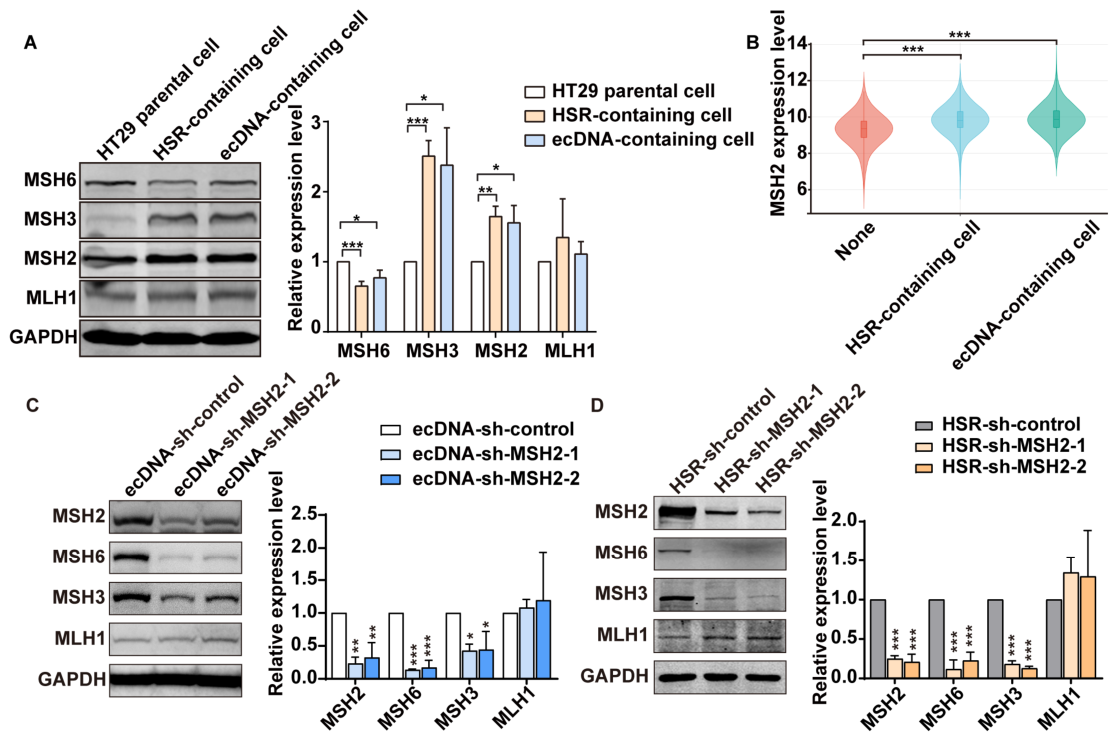
2.1. MMR-Associated Proteins Contribute to the Development of MTX Resistance and Gene Amplification in HT-29 Cells
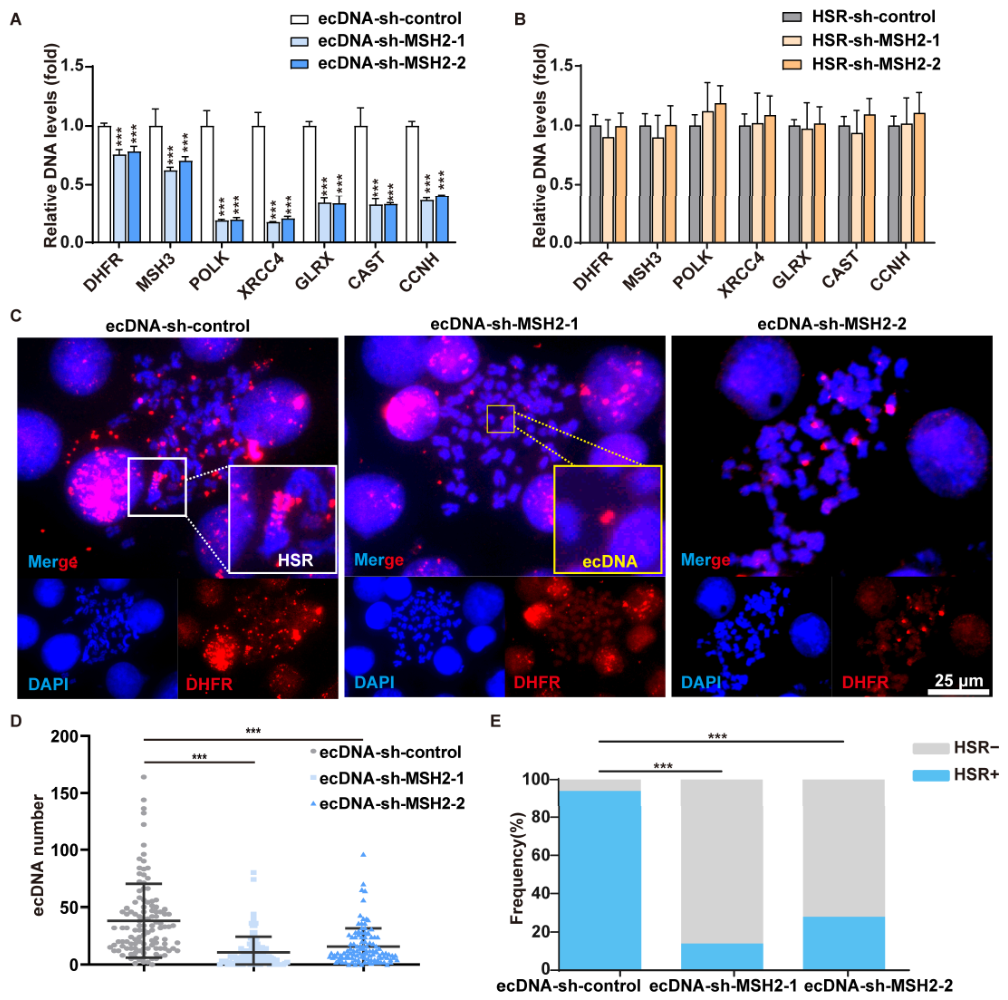
2.2. MMR Inhibition Attenuates Gene Amplification in ecDNA-Containing MTX-Resistant Cells
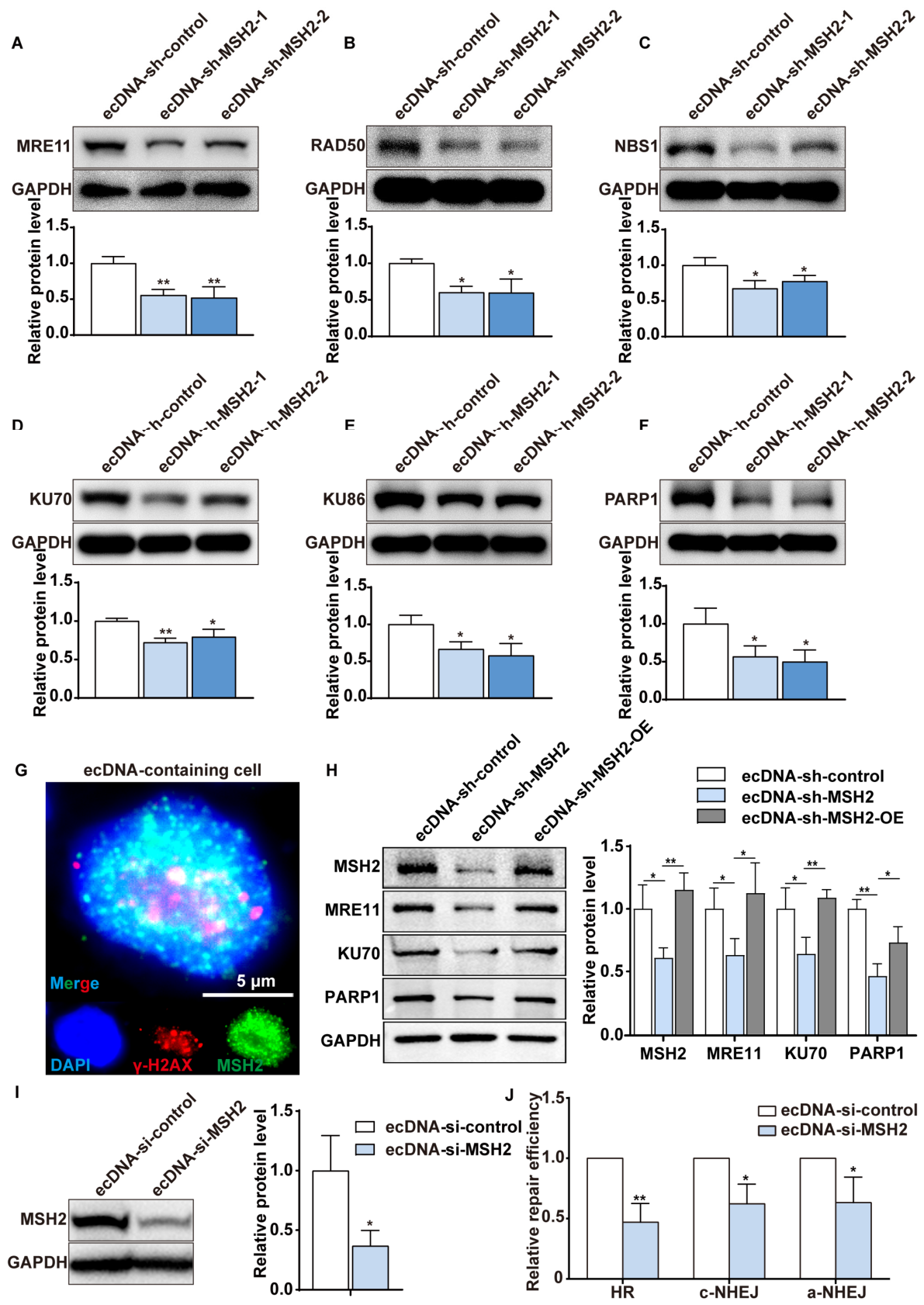
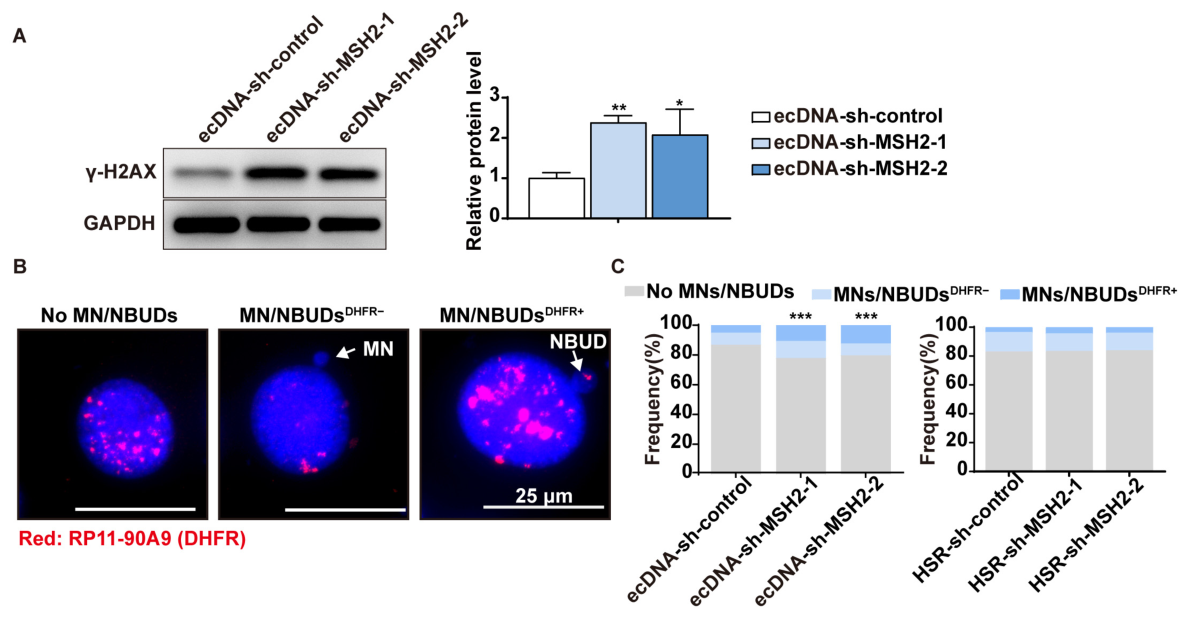
2.3. MMR May Be Involved in Formation of ecDNAs and HSR by Regulating DSBs Repair Pathways
2.4. MMR Inhibition Increases the Formation of MN/NBUDs Containing ecDNAs in ecDNA-Containing MTX-Resistant Cells
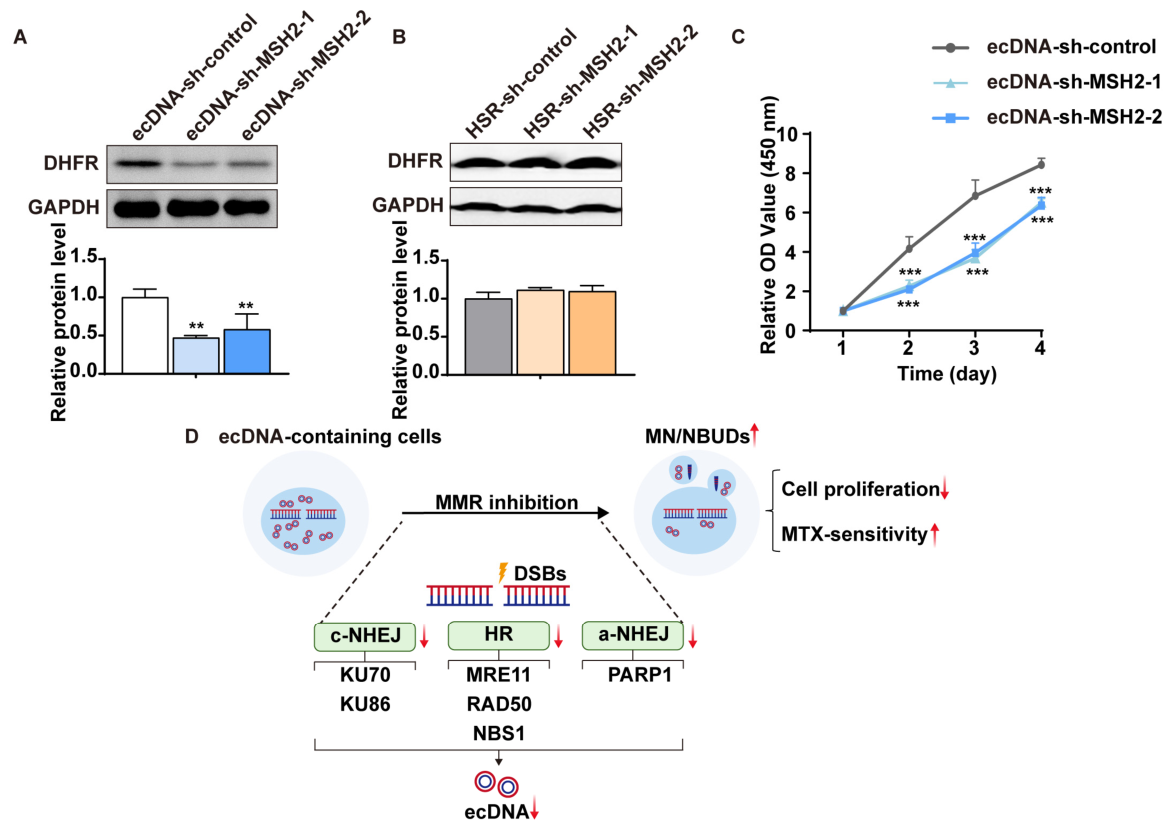
2.5. MMR Inhibition Increases MTX-Sensitivity in ecDNA-Containing MTX-Resistant Cells
3. Discussion
4. Materials and Methods
4.1. Cell Lines and Cell Culture
4.2. Western Blot Analysis
4.3. RNA Interference and Plasmid Transfection
4.4. Real-Time PCR
4.5. Fluorescence In Situ Hybridization (FISH)
4.6. Immunofluorescence
4.7. HR, c-NHEJ and a-NHEJ Assays
4.8. Proliferation Assay
4.9. Drug Sensitivity Assay
4.10. Statistical Analysis
Supplementary Materials
Author Contributions
Funding
Institutional Review Board Statement
Informed Consent Statement
Data Availability Statement
Acknowledgments
Conflicts of Interest
Abbreviations
| DSBs | Double strand breaks |
| ecDNAs | Extrachromosomal DNAs |
| HSR | Homogeneously staining regions |
| MMR | Mismatch repair |
| MN | Micronuclei |
| NBUDs | Nuclear buds |
| BFB | Breakage–fusion–bridge |
| HR | Homologous recombination |
| c-NHEJ | Classic non-homologous end joining |
| a-NHEJ | Alternative non-homologous end joining |
| MTX | Methotrexate |
| CGH | Comparative genomic hybridization |
| FISH | Fluorescence in situ hybridization |
| GFP | Green fluorescent protein |
| FACS | Fluorescence-activated cell sorting |
| siRNA | Small interfering RNA |
| DHFR | Dihydrofolate-reductase |
| BER | Base excision repair |
| NER | Nucleotide excision repair |
References
- Yi, H.; Zhang, S.; Swinderman, J.; Wang, Y.; Kanakaveti, V.; Hung, K.L.; Tsz-Lo Wong, I.; Srinivasan, S.; Curtis, E.J.; Bhargava-Shah, A.; et al. EcDNA-borne structural variants drive oncogenic fusion transcript amplification. Cell 2026, 189, 906–921.e920. [Google Scholar] [CrossRef]
- Kadali, V.N.; Shoshani, O. Aberrant nuclei with amplified DNA in cancer. Trends Cancer 2025, 11, 9–11. [Google Scholar] [CrossRef]
- Tang, J.; Weiser, N.E.; Wang, G.; Chowdhry, S.; Curtis, E.J.; Zhao, Y.; Wong, I.T.; Marinov, G.K.; Li, R.; Hanoian, P.; et al. Enhancing transcription-replication conflict targets ecDNA-positive cancers. Nature 2024, 635, 210–218. [Google Scholar] [CrossRef]
- Sankar, V.; Hung, K.L.; Gnanasekar, A.; Wong, I.T.; Shi, Q.; Kraft, K.; Jones, M.G.; He, B.J.; Yan, X.; Belk, J.A.; et al. Genetic elements promote retention of extrachromosomal DNA in cancer cells. Nature 2026, 649, 152–160. [Google Scholar] [CrossRef]
- Turner, K.M.; Deshpande, V.; Beyter, D.; Koga, T.; Rusert, J.; Lee, C.; Li, B.; Arden, K.; Ren, B.; Nathanson, D.A.; et al. Extrachromosomal oncogene amplification drives tumour evolution and genetic heterogeneity. Nature 2017, 543, 122–125. [Google Scholar] [CrossRef]
- Yi, E.; Gujar, A.D.; Guthrie, M.; Kim, H.; Zhao, D.; Johnson, K.C.; Amin, S.B.; Costa, M.L.; Yu, Q.; Das, S.; et al. Live-cell imaging shows uneven segregation of extrachromosomal DNA elements and transcriptionally active extrachromosomal DNA hubs in cancer. Cancer Discov. 2021, 12, 468–483. [Google Scholar] [CrossRef]
- Shoshani, O.; Brunner, S.F.; Yaeger, R.; Ly, P.; Nechemia-Arbely, Y.; Kim, D.H.; Fang, R.; Castillon, G.A.; Yu, M.; Li, J.S.Z.; et al. Chromothripsis drives the evolution of gene amplification in cancer. Nature 2021, 591, 137–141, Correction in Nature 2021, 591, E19. [Google Scholar] [CrossRef]
- Bailey, C.; Pich, O.; Thol, K.; Watkins, T.B.K.; Luebeck, J.; Rowan, A.; Stavrou, G.; Weiser, N.E.; Dameracharla, B.; Bentham, R.; et al. Origins and impact of extrachromosomal DNA. Nature 2024, 635, 193–200. [Google Scholar] [CrossRef]
- Albertson, D.G. Gene amplification in cancer. Trends Genet. TIG 2006, 22, 447–455. [Google Scholar] [CrossRef]
- Bantele, S.; Mordini, I.; Biran, A.; Alcaraz, N.; Zonderland, G.; Wenger, A.; Krietenstein, N.; Groth, A.; Lukas, J. Repair of DNA double-strand breaks leaves heritable impairment to genome function. Science 2025, 390, eadk6662. [Google Scholar] [CrossRef]
- Chiolo, I.; Altmeyer, M.; Legube, G.; Mekhail, K. Nuclear and genome dynamics underlying DNA double-strand break repair. Nat. Rev. Mol. Cell Biol. 2025, 26, 538–557. [Google Scholar] [CrossRef]
- Meng, X.; Qi, X.; Guo, H.; Cai, M.; Li, C.; Zhu, J.; Chen, F.; Guo, H.; Li, J.; Zhao, Y.; et al. Novel role for non-homologous end joining in the formation of double minutes in methotrexate-resistant colon cancer cells. J. Med. Genet. 2015, 52, 135–144. [Google Scholar] [CrossRef]
- Cai, M.; Zhang, H.; Hou, L.; Gao, W.; Song, Y.; Cui, X.; Li, C.; Guan, R.; Ma, J.; Wang, X.; et al. Inhibiting homologous recombination decreases extrachromosomal amplification but has no effect on intrachromosomal amplification in methotrexate-resistant colon cancer cells. Int. J. Cancer 2019, 144, 1037–1048. [Google Scholar] [CrossRef]
- Adams, D.J.; Barlas, B.; McIntyre, R.E.; Salguero, I.; van der Weyden, L.; Barros, A.; Vicente, J.R.; Karimpour, N.; Haider, A.; Ranzani, M.; et al. Genetic determinants of micronucleus formation in vivo. Nature 2024, 627, 130–136. [Google Scholar] [CrossRef]
- Modrich, P. Mechanisms in E. coli and Human Mismatch Repair (Nobel Lecture). Angew. Chem. 2016, 55, 8490–8501. [Google Scholar] [CrossRef]
- Hong, Z.; Jiang, J.; Hashiguchi, K.; Hoshi, M.; Lan, L.; Yasui, A. Recruitment of mismatch repair proteins to the site of DNA damage in human cells. J. Cell Sci. 2008, 121, 3146–3154. [Google Scholar] [CrossRef] [PubMed]
- Lyndaker, A.M.; Alani, E. A tale of tails: Insights into the coordination of 3′ end processing during homologous recombination. BioEssays News Rev. Mol. Cell. Dev. Biol. 2009, 31, 315–321. [Google Scholar] [CrossRef] [PubMed]
- Anand, R.; Beach, A.; Li, K.; Haber, J. Rad51-mediated double-strand break repair and mismatch correction of divergent substrates. Nature 2017, 544, 377–380. [Google Scholar] [CrossRef]
- Shahi, A.; Lee, J.H.; Kang, Y.; Lee, S.H.; Hyun, J.W.; Chang, I.Y.; Jun, J.Y.; You, H.J. Mismatch-repair protein MSH6 is associated with Ku70 and regulates DNA double-strand break repair. Nucleic Acids Res. 2011, 39, 2130–2143. [Google Scholar] [CrossRef]
- Smith, J.A.; Waldman, B.C.; Waldman, A.S. A role for DNA mismatch repair protein Msh2 in error-prone double-strand-break repair in mammalian chromosomes. Genetics 2005, 170, 355–363. [Google Scholar] [CrossRef] [PubMed]
- Kim, H.; Nguyen, N.P.; Turner, K.; Wu, S.; Gujar, A.D.; Luebeck, J.; Liu, J.; Deshpande, V.; Rajkumar, U.; Namburi, S.; et al. Extrachromosomal DNA is associated with oncogene amplification and poor outcome across multiple cancers. Nat. Genet. 2020, 52, 891–897. [Google Scholar] [CrossRef]
- Bone, K.M.; Wang, P.; Wu, F.; Wu, C.; Li, L.; Bacani, J.T.; Andrew, S.E.; Lai, R. NPM-ALK mediates phosphorylation of MSH2 at tyrosine 238, creating a functional deficiency in MSH2 and the loss of mismatch repair. Blood Cancer J. 2015, 5, e311. [Google Scholar] [CrossRef]
- Meng, X.N.; Ma, J.F.; Liu, Y.H.; Li, S.Q.; Wang, X.; Zhu, J.; Cai, M.D.; Zhang, H.S.; Song, T.; Xing, S.; et al. Dynamic genomic changes in methotrexate-resistant human cancer cell lines beyond DHFR amplification suggest potential new targets for preventing drug resistance. Br. J. Cancer 2024, 130, 1819–1827. [Google Scholar] [CrossRef]
- Tan, J.; Sun, X.; Zhao, H.; Guan, H.; Gao, S.; Zhou, P.K. Double-strand DNA break repair: Molecular mechanisms and therapeutic targets. MedComm 2023, 4, e388. [Google Scholar] [CrossRef]
- Bennardo, N.; Cheng, A.; Huang, N.; Stark, J.M. Alternative-NHEJ is a mechanistically distinct pathway of mammalian chromosome break repair. PLoS Genet. 2008, 4, e1000110. [Google Scholar] [CrossRef]
- Di Bona, M.; Bakhoum, S.F. Micronuclei and Cancer. Cancer Discov. 2024, 14, 214–226. [Google Scholar] [CrossRef]
- Fenech, M.; Kirsch-Volders, M.; Natarajan, A.T.; Surralles, J.; Crott, J.W.; Parry, J.; Norppa, H.; Eastmond, D.A.; Tucker, J.D.; Thomas, P. Molecular mechanisms of micronucleus, nucleoplasmic bridge and nuclear bud formation in mammalian and human cells. Mutagenesis 2011, 26, 125–132. [Google Scholar] [CrossRef]
- Arora, S.; Huwe, P.J.; Sikder, R.; Shah, M.; Browne, A.J.; Lesh, R.; Nicolas, E.; Deshpande, S.; Hall, M.J.; Dunbrack, R.L., Jr.; et al. Functional analysis of rare variants in mismatch repair proteins augments results from computation-based predictive methods. Cancer Biol. Ther. 2017, 18, 519–533. [Google Scholar] [CrossRef][Green Version]
- Wang, X.; Qu, Y.; Xing, R.; Zhou, J.; Liu, Y.; Zhang, H.; Zhu, J.; Ma, J.; Cui, X.; Song, T.; et al. Novel insights into the ecDNA formation mechanism involving MSH3 in methotrexate-resistant human colorectal cancer cells. Int. J. Oncol. 2023, 63, 134. [Google Scholar] [CrossRef]
- Kumar, C.; Williams, G.M.; Havens, B.; Dinicola, M.K.; Surtees, J.A. Distinct requirements within the Msh3 nucleotide binding pocket for mismatch and double-strand break repair. J. Mol. Biol. 2013, 425, 1881–1898. [Google Scholar] [CrossRef]
- Chang, D.K.; Ricciardiello, L.; Goel, A.; Chang, C.L.; Boland, C.R. Steady-state regulation of the human DNA mismatch repair system. J. Biol. Chem. 2000, 275, 18424–18431, Erratum in J. Biol. Chem. 2000, 275, 29178. [Google Scholar] [CrossRef]
- Reams, A.B.; Roth, J.R. Mechanisms of gene duplication and amplification. Cold Spring Harb. Perspect. Biol. 2015, 7, a016592. [Google Scholar] [CrossRef]
- Hung, K.L.; Yost, K.E.; Xie, L.; Shi, Q.; Helmsauer, K.; Luebeck, J.; Schöpflin, R.; Lange, J.T.; Chamorro González, R.; Weiser, N.E.; et al. ecDNA hubs drive cooperative intermolecular oncogene expression. Nature 2021, 600, 731–736. [Google Scholar] [CrossRef]
- Spies, M.; Fishel, R. Mismatch repair during homologous and homeologous recombination. Cold Spring Harb. Perspect. Biol. 2015, 7, a022657. [Google Scholar] [CrossRef]
- Oh, J.M.; Kang, Y.; Park, J.; Sung, Y.; Kim, D.; Seo, Y.; Lee, E.A.; Ra, J.S.; Amarsanaa, E.; Park, Y.U.; et al. MSH2-MSH3 promotes DNA end resection during homologous recombination and blocks polymerase theta-mediated end-joining through interaction with SMARCAD1 and EXO1. Nucleic Acids Res. 2023, 51, 5584–5602. [Google Scholar] [CrossRef]
- Ucher, A.J.; Ranjit, S.; Kadungure, T.; Linehan, E.K.; Khair, L.; Xie, E.; Limauro, J.; Rauch, K.S.; Schrader, C.E.; Stavnezer, J. Mismatch repair proteins and AID activity are required for the dominant negative function of C-terminally deleted AID in class switching. J. Immunol. 2014, 193, 1440–1450. [Google Scholar] [CrossRef]
- Sible, E.; Attaway, M.; Fiorica, G.; Michel, G.; Chaudhuri, J.; Vuong, B.Q. Ataxia Telangiectasia Mutated and MSH2 Control Blunt DNA End Joining in Ig Class Switch Recombination. J. Immunol. 2023, 210, 369–376. [Google Scholar] [CrossRef]
- Eccleston, J.; Yan, C.; Yuan, K.; Alt, F.W.; Selsing, E. Mismatch repair proteins MSH2, MLH1, and EXO1 are important for class-switch recombination events occurring in B cells that lack nonhomologous end joining. J. Immunol. 2011, 186, 2336–2343. [Google Scholar] [CrossRef] [PubMed]
- Goellner, E.M.; Putnam, C.D.; Graham, W.J.t.; Rahal, C.M.; Li, B.Z.; Kolodner, R.D. Identification of Exo1-Msh2 interaction motifs in DNA mismatch repair and new Msh2-binding partners. Nat. Struct. Mol. Biol. 2018, 25, 650–659, Correction in Nat. Struct. Mol. Biol. 2019, 26, 1184. [Google Scholar] [CrossRef] [PubMed]
- Kang, X.; Li, X.; Zhou, J.; Zhang, Y.; Qiu, L.; Tian, C.; Deng, Z.; Liang, X.; Zhang, Z.; Du, S.; et al. Extrachromosomal DNA replication and maintenance couple with DNA damage pathway in tumors. Cell 2025, 188, 3405–3421.e3427. [Google Scholar] [CrossRef] [PubMed]
- Harding, S.M.; Benci, J.L.; Irianto, J.; Discher, D.E.; Minn, A.J.; Greenberg, R.A. Mitotic progression following DNA damage enables pattern recognition within micronuclei. Nature 2017, 548, 466–470. [Google Scholar] [CrossRef]
- Harnevo, L.E.; Agur, Z. Drug resistance as a dynamic process in a model for multistep gene amplification under various levels of selection stringency. Cancer Chemother. Pharmacol. 1992, 30, 469–476. [Google Scholar] [CrossRef] [PubMed]
- Nie, J.; Huang, L.; Shen, Y.; Pan, H.; Wang, S.; Zhao, H.; Gao, P.; Yang, J.; Huang, X.; Zeng, S.; et al. Methotrexate resistance and its regulatory mechanisms in pediatric tumors and beyond. Drug Resist. Updates Rev. Comment. Antimicrob. Anticancer. Chemother. 2025, 81, 101225. [Google Scholar] [CrossRef] [PubMed]
- Wang, X.; Liu, Y.; Liu, H.; Zhang, M.; Yang, L.; Dinislam, K.; Hu, H.; Xiao, D.; Yang, H.; Zhang, Y. The metastasis-associated protein MTA3 promotes cardiac repair by inhibiting the fibroblast to myofibroblast transition during fibrosis. J. Biol. Chem. 2025, 301, 110448. [Google Scholar] [CrossRef]
- Livak, K.J.; Schmittgen, T.D. Analysis of relative gene expression data using real-time quantitative PCR and the 2−ΔΔCT Method. Methods 2001, 25, 402–408. [Google Scholar] [CrossRef] [PubMed]
- Vogt, N.; Gibaud, A.; Lemoine, F.; de la Grange, P.; Debatisse, M.; Malfoy, B. Amplicon rearrangements during the extrachromosomal and intrachromosomal amplification process in a glioma. Nucleic Acids Res. 2014, 42, 13194–13205. [Google Scholar] [CrossRef]
- Sun, H.; Wang, H.; Wang, X.; Aoki, Y.; Wang, X.; Yang, Y.; Cheng, X.; Wang, Z.; Wang, X. Aurora-A/SOX8/FOXK1 signaling axis promotes chemoresistance via suppression of cell senescence and induction of glucose metabolism in ovarian cancer organoids and cells. Theranostics 2020, 10, 6928–6945. [Google Scholar] [CrossRef]




| HT-29 Cell Line | IC50 (mol/L) | Fold Change |
|---|---|---|
| ecDNA-sh-control | 3.35 × 10⁻⁴ ± 4.58 × 10⁻⁵ | 1 |
| ecDNA-sh-MSH2-1 | 1.40 × 10⁻⁴ ± 2.89 × 10⁻⁵ | 2.39 ** vs. ecDNA-sh-control |
| ecDNA-sh-MSH2-2 | 1.50 × 10⁻⁴ ± 4.21 × 10⁻⁵ | 2.24 ** vs. ecDNA-sh-control |
| HSR-sh-control | 2.69 × 10⁻⁴ ± 7.89 × 10⁻⁶ | 1 |
| HSR-sh-MSH2-1 | 1.50 × 10⁻⁴ ± 1.79 × 10⁻⁶ | 1.79 *** vs. HSR-sh-control |
| HSR-sh-MSH2-2 | 1.28 × 10⁻⁴ ± 2.45 × 10⁻⁶ | 2.10 *** vs. HSR-sh-control |
Disclaimer/Publisher’s Note: The statements, opinions and data contained in all publications are solely those of the individual author(s) and contributor(s) and not of MDPI and/or the editor(s). MDPI and/or the editor(s) disclaim responsibility for any injury to people or property resulting from any ideas, methods, instructions or products referred to in the content. |
© 2026 by the authors. Licensee MDPI, Basel, Switzerland. This article is an open access article distributed under the terms and conditions of the Creative Commons Attribution (CC BY) license.
Share and Cite
Wang, X.; Li, S.; Liu, Y.; Gao, Y.; Shi, X.; Han, X.; Zhang, H.; Meng, X. Dysfunctional DNA Mismatch Repair Drives the Evolution of Gene Amplification in MTX-Resistant Human Colorectal Cancer Cells. Int. J. Mol. Sci. 2026, 27, 3774. https://doi.org/10.3390/ijms27093774
Wang X, Li S, Liu Y, Gao Y, Shi X, Han X, Zhang H, Meng X. Dysfunctional DNA Mismatch Repair Drives the Evolution of Gene Amplification in MTX-Resistant Human Colorectal Cancer Cells. International Journal of Molecular Sciences. 2026; 27(9):3774. https://doi.org/10.3390/ijms27093774
Chicago/Turabian StyleWang, Xu, Siqing Li, Yanghe Liu, Yihan Gao, Xinyu Shi, Xuejian Han, Huishu Zhang, and Xiangning Meng. 2026. "Dysfunctional DNA Mismatch Repair Drives the Evolution of Gene Amplification in MTX-Resistant Human Colorectal Cancer Cells" International Journal of Molecular Sciences 27, no. 9: 3774. https://doi.org/10.3390/ijms27093774
APA StyleWang, X., Li, S., Liu, Y., Gao, Y., Shi, X., Han, X., Zhang, H., & Meng, X. (2026). Dysfunctional DNA Mismatch Repair Drives the Evolution of Gene Amplification in MTX-Resistant Human Colorectal Cancer Cells. International Journal of Molecular Sciences, 27(9), 3774. https://doi.org/10.3390/ijms27093774