1. Introduction
Non-alcoholic fatty liver disease (NAFLD) denotes liver obesity due to the absence of substantial alcohol intake and is the most widespread chronic liver ailment globally [
1]. Surveys in epidemiology show that roughly a quarter to a third of people worldwide are impacted by NAFLD [
2]. This condition is prevalent in those dealing with obesity, type 2 diabetes, or metabolic syndrome. NAFLD is not a one-size-fits-all issue; it is more of a broad range of diseases. It starts with simple fat and goes all the way up to a more serious condition known as non-alcoholic steatohepatitis (NASH). This is a step-up from the first stage and is marked by liver cell damage, inflammation in the lobules, and different levels of scarring [
3]. As time goes on, NASH can evolve into severe liver complications such as cirrhosis, hepatic decompensation, and hepatocellular carcinoma (HCC), making it a significant menace to worldwide health and adding to the growing financial strain on healthcare systems [
4,
5,
6]. Although NAFLD is increasingly recognized as a major cause of chronic liver disease, no approved pharmacological treatment exists. Current management depends mainly on long-term, hard-to-sustain lifestyle changes and weight loss. Several drug candidates, including PPAR/FXR agonists and GLP-1 analogues, are in clinical trials, but their efficacy and safety are still limited [
7,
8,
9]. This therapeutic gap highlights the urgent need for novel agents that can target the underlying molecular drivers of NAFLD.
The primary pathology of NAFLD lies in disrupted hepatic lipid homeostasis. This manifests as increased de novo lipogenesis, impaired fatty acid β-oxidation, and diminished VLDL secretion, resulting in excessive triglyceride accumulation, lipotoxicity, oxidative stress, and chronic metabolic inflammation [
10,
11]. Considering these interconnected mechanisms, targeting hepatic lipid metabolism has emerged as an attractive therapeutic approach [
12]. Bioactive natural compounds, including flavonoids, have received considerable attention due to their wide-ranging pharmacological properties, which include anti-inflammatory, antioxidant, insulin-sensitizing, and lipid-lowering effects [
13,
14]. Among these compounds, kaempferol (KPF), a flavonoid found abundantly in fruits, vegetables, and medicinal plants [
15], has potent biological activities such as reducing inflammatory responses, suppressing oxidative injury, exerting anti-tumor effects, and providing neuroprotection [
16,
17]. KPF has also been associated with improving metabolic dysfunction by modulating signaling pathways involved in lipid regulation and oxidative stress responses [
18,
19]. However, the exact molecular targets responsible for its liver-protective effects in NAFLD remain poorly understood.
Emerging research has identified tripartite motif-containing protein 56 (TRIM56), an E3 ubiquitin ligase, as a key regulator of hepatic lipid metabolism [
20]. TRIM56 levels are significantly decreased in NAFLD, and hepatocyte-specific upregulation of this enzyme has been shown to attenuate steatosis by promoting the ubiquitination and subsequent degradation of fatty acid synthase (FASN), a major lipogenic enzyme responsible for fatty acid synthesis [
21,
22]. These discoveries position TRIM56 as a central molecular regulator of liver lipid homeostasis and suggest its potential as a novel therapeutic target for fatty liver disease.
In this study, we investigated whether KPF alleviates hepatic steatosis by targeting TRIM56 and modulating lipid metabolic pathways. Using in vivo and in vitro models of NAFLD, combined with computational prediction, biochemical validation, and functional perturbation of TRIM56, aiming to clarify the role of TRIM56 in mediating the KPF anti-fatty degeneration process, this study demonstrates that TRIM56 may become an important potential target for KPF regulation of NAFLD lipid metabolism.
3. Discussion
NAFLD continues to impose a substantial and high global health challenge, mainly due to its prevalence and the lack of effective drug treatments [
4,
24]. As the disease advances, individuals face a higher risk of developing NASH, progressive fibrotic remodeling, and hepatocellular carcinoma, all of which pose serious health threats [
25,
26]. A key process in NAFLD development is hepatic lipid accumulation, which initiates lipotoxicity and metabolic dysfunction; thus, modulation of lipid metabolic pathways is a promising strategy to attenuate disease progression [
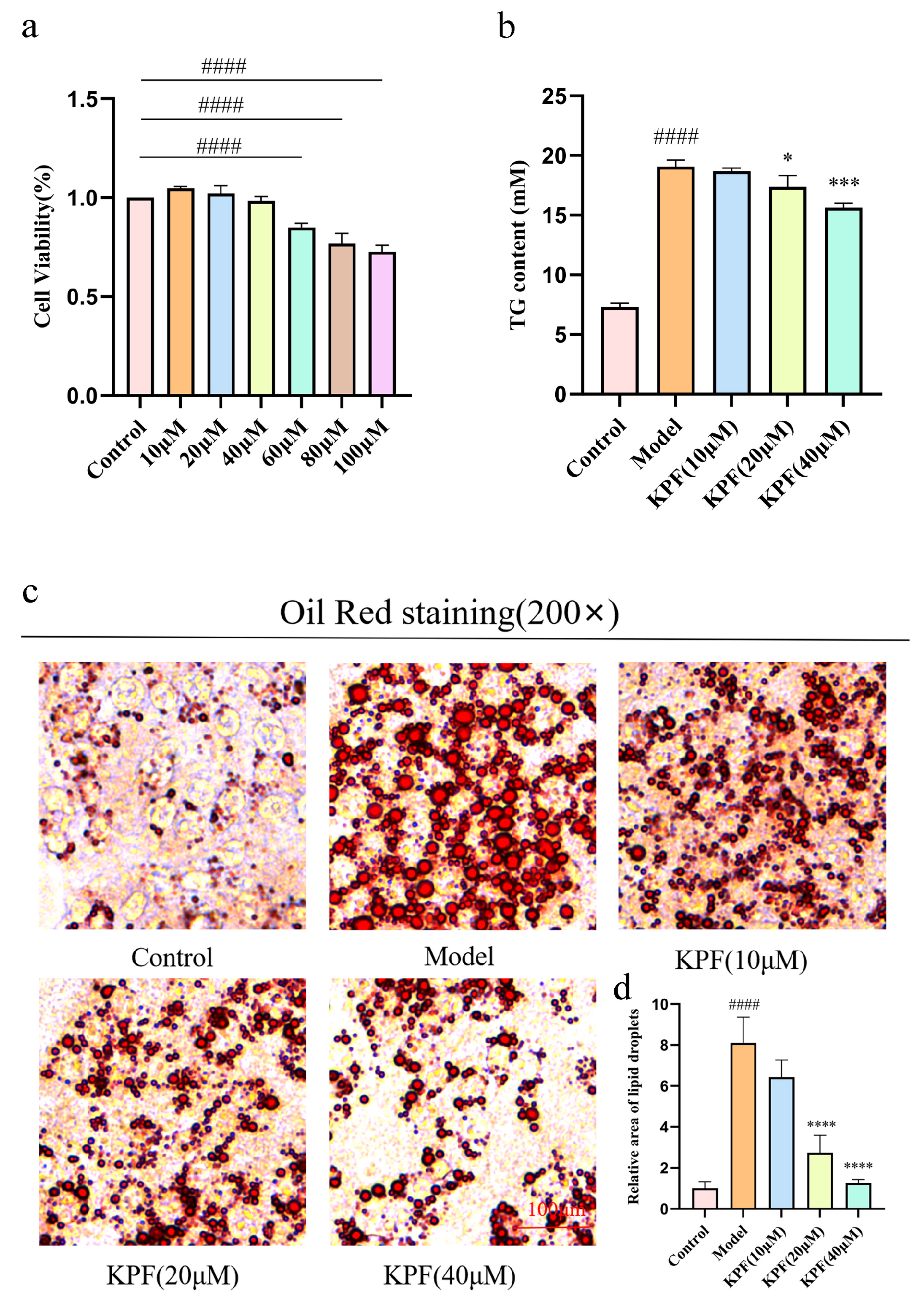
27]. In the present study, we demonstrate that KPF, a naturally occurring flavonoid, markedly alleviates hepatic steatosis and dyslipidemia in both in vivo and in vitro models of NAFLD. These improvements are accompanied by the restoration of TRIM56 expression and coordinated suppression of lipogenic pathways, supporting a mechanistic link between KPF and lipid metabolic regulation. Although the in vivo HFD model and the in vitro palmitate/oleate-loaded HepG2 model are not identical, they represent complementary levels of NAFLD modeling. The HFD model reflects systemic metabolic disturbances that drive hepatic steatosis, whereas the fatty acid-loading model recapitulates the hepatocellular lipid overload component of this process; therefore, it is suitable for elucidating the mechanism by which KPF mediates TRIM56 signaling in hepatocytes.
Accumulating evidence has identified TRIM family proteins as important regulators of metabolic homeostasis [
28]. TRIM56, an E3 ubiquitin ligase, has recently emerged as a key suppressor of hepatic steatosis, with reduced expression observed in NAFLD and hepatocyte-specific upregulation shown to attenuate lipid accumulation [
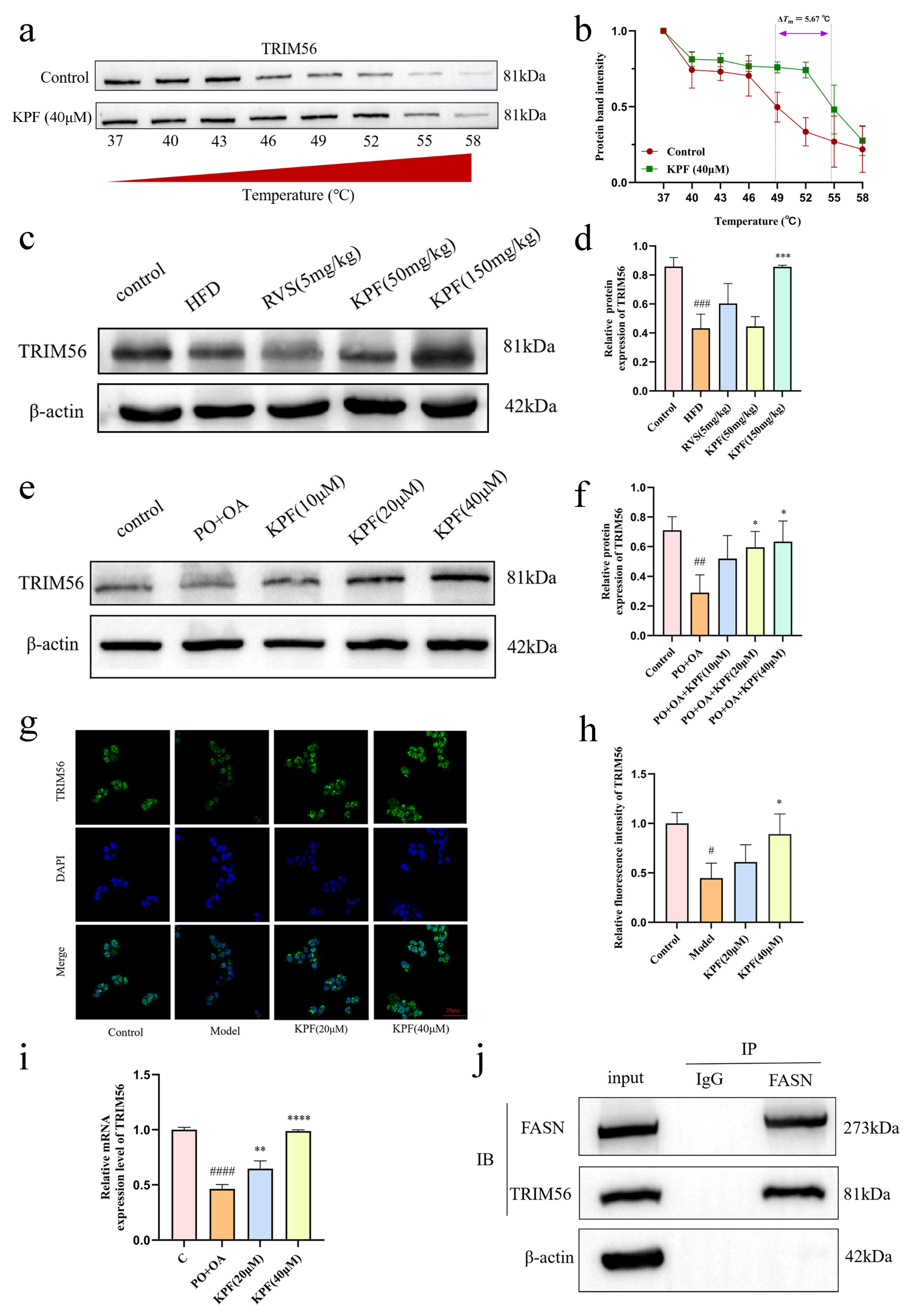
21]. In line with these reports, we observed a significant reduction of TRIM56 expression in HFD-induced NAFLD mice and fatty acid-loaded hepatocytes, whereas KPF treatment consistently restored TRIM56 levels at both the transcriptional and protein levels. These findings suggest that loss of TRIM56 may contribute to NAFLD-associated lipid dysregulation and that KPF counteracts this pathological change.
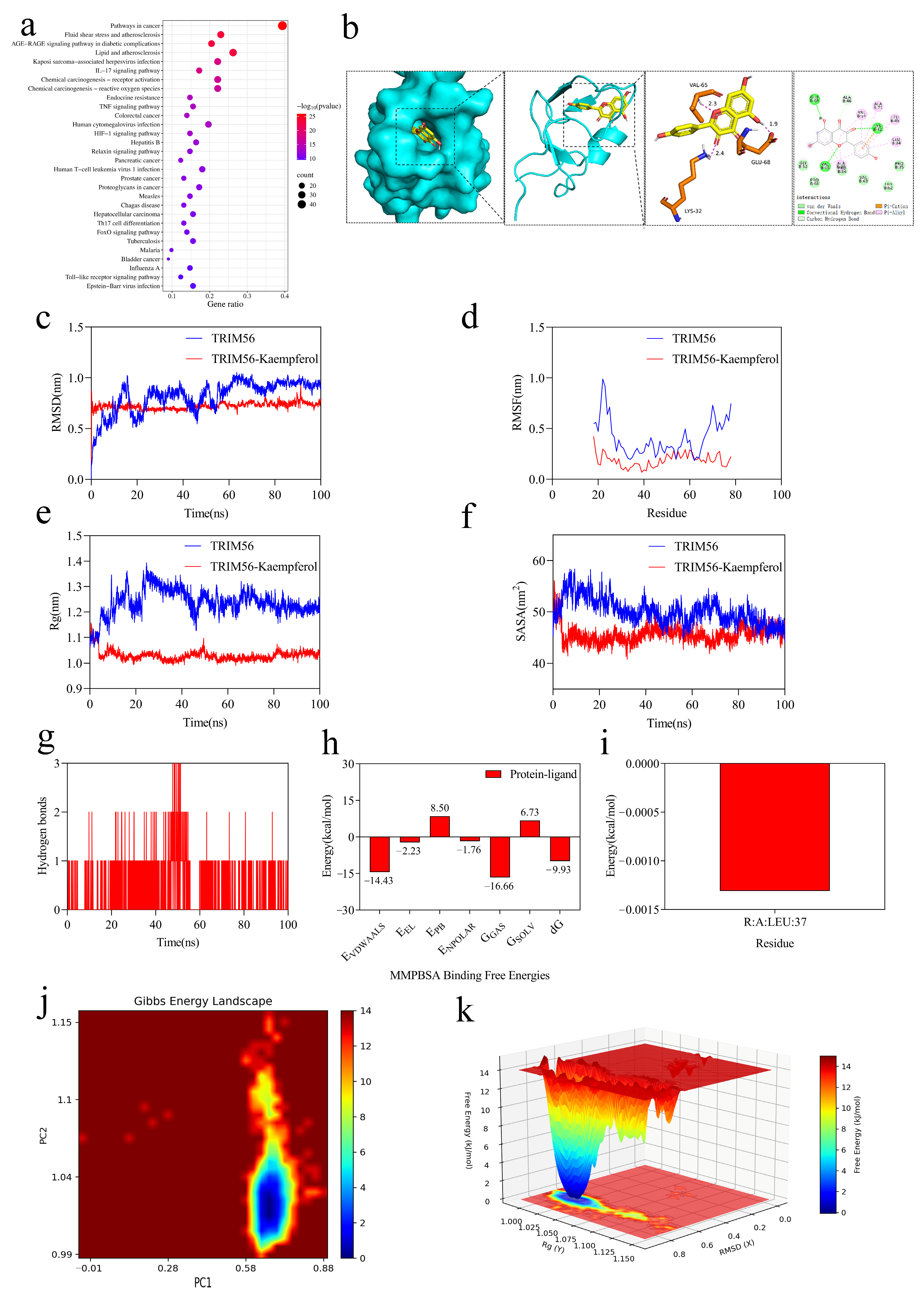
A major finding of this study is the identification of TRIM56 as a biologically relevant target of KPF. Using molecular docking, molecular dynamics simulations, and cellular thermal shift assays, we demonstrate that KPF engages TRIM56 and stabilizes its protein structure in cells, supporting target engagement under physiological conditions. Although additional biophysical validation is required to precisely determine binding affinity and kinetics, these complementary approaches collectively indicate that KPF engages TRIM56 in cells and may modulate its stability and function.
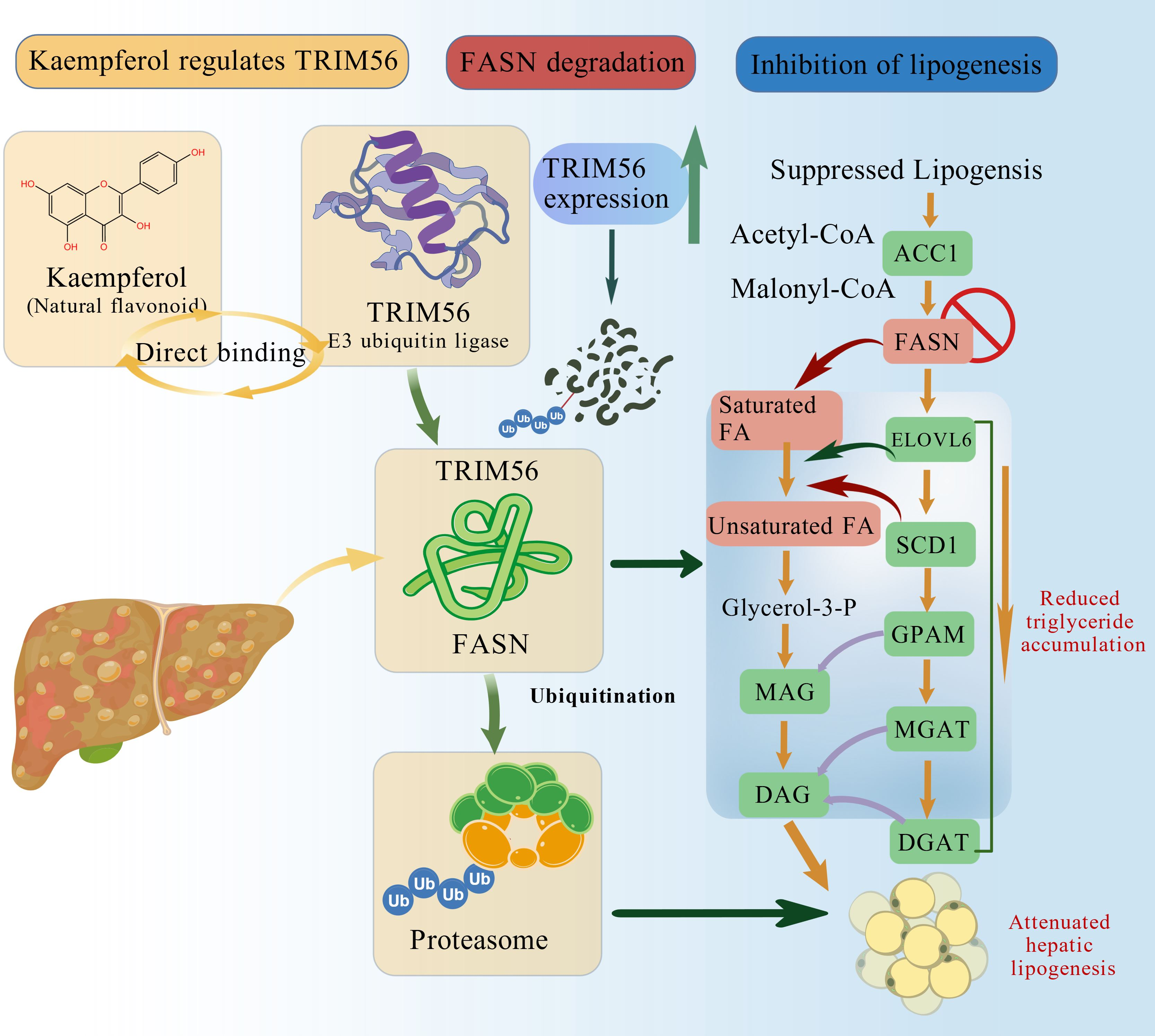
Previous studies have reported that TRIM56 can interact with FASN and promote its proteasomal turnover, thereby limiting de novo lipogenesis [
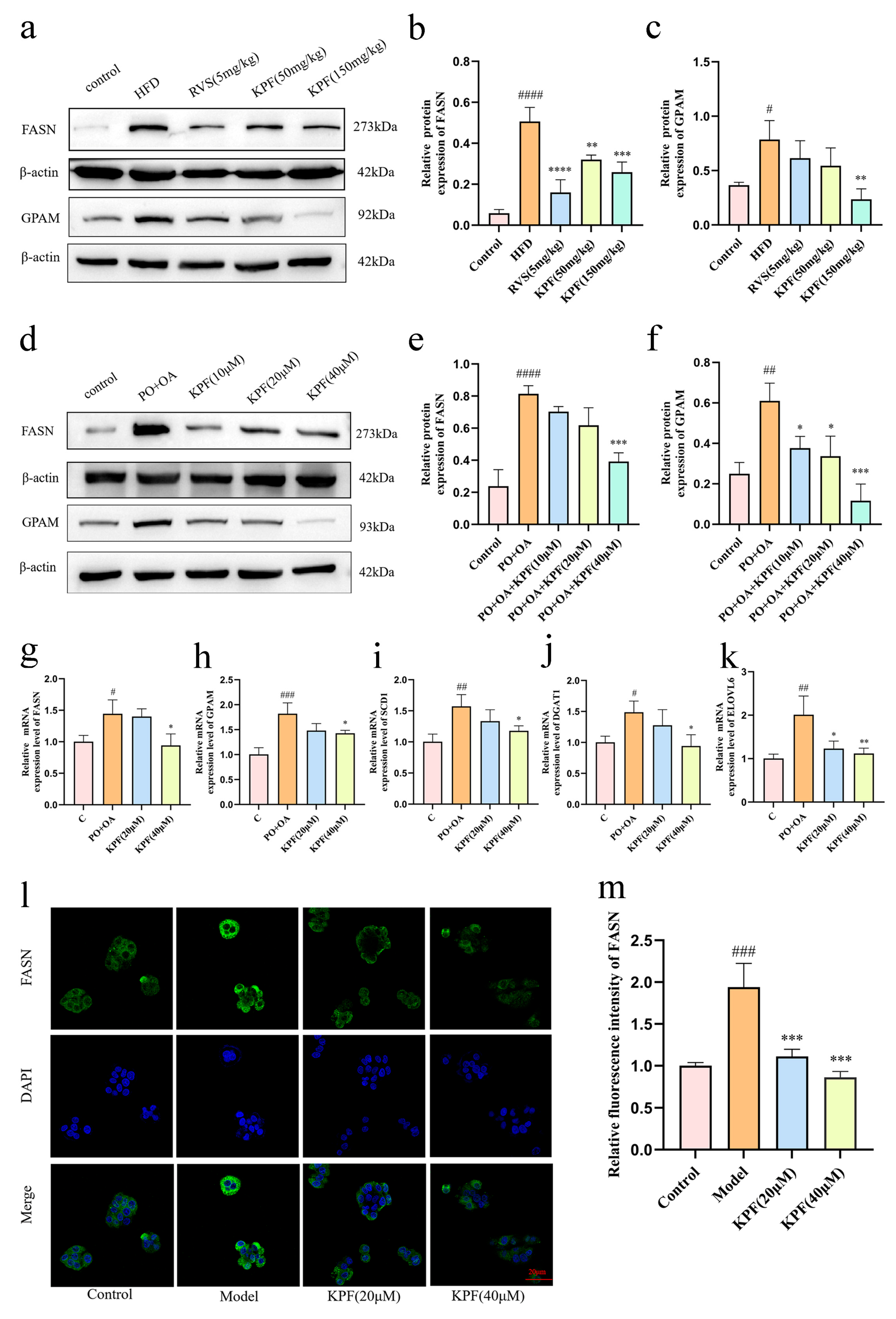
21]. In the present study, endogenous co-immunoprecipitation confirms that TRIM56 associates with FASN in hepatocytes, supporting the presence of a TRIM56–FASN protein complex relevant to lipid metabolism. Importantly, KPF treatment was accompanied by reduced expression of FASN and other key lipogenic enzymes, including GPAM, DGAT, SCD1, and ELOVL6, suggesting broad suppression of lipogenic programs [
29]. While the present data do not directly assess FASN degradation dynamics, the observed association between restored TRIM56 expression and reduced lipogenic enzyme levels is consistent with a TRIM56-centered regulatory mechanism contributing to the inhibition of hepatic lipogenesis.
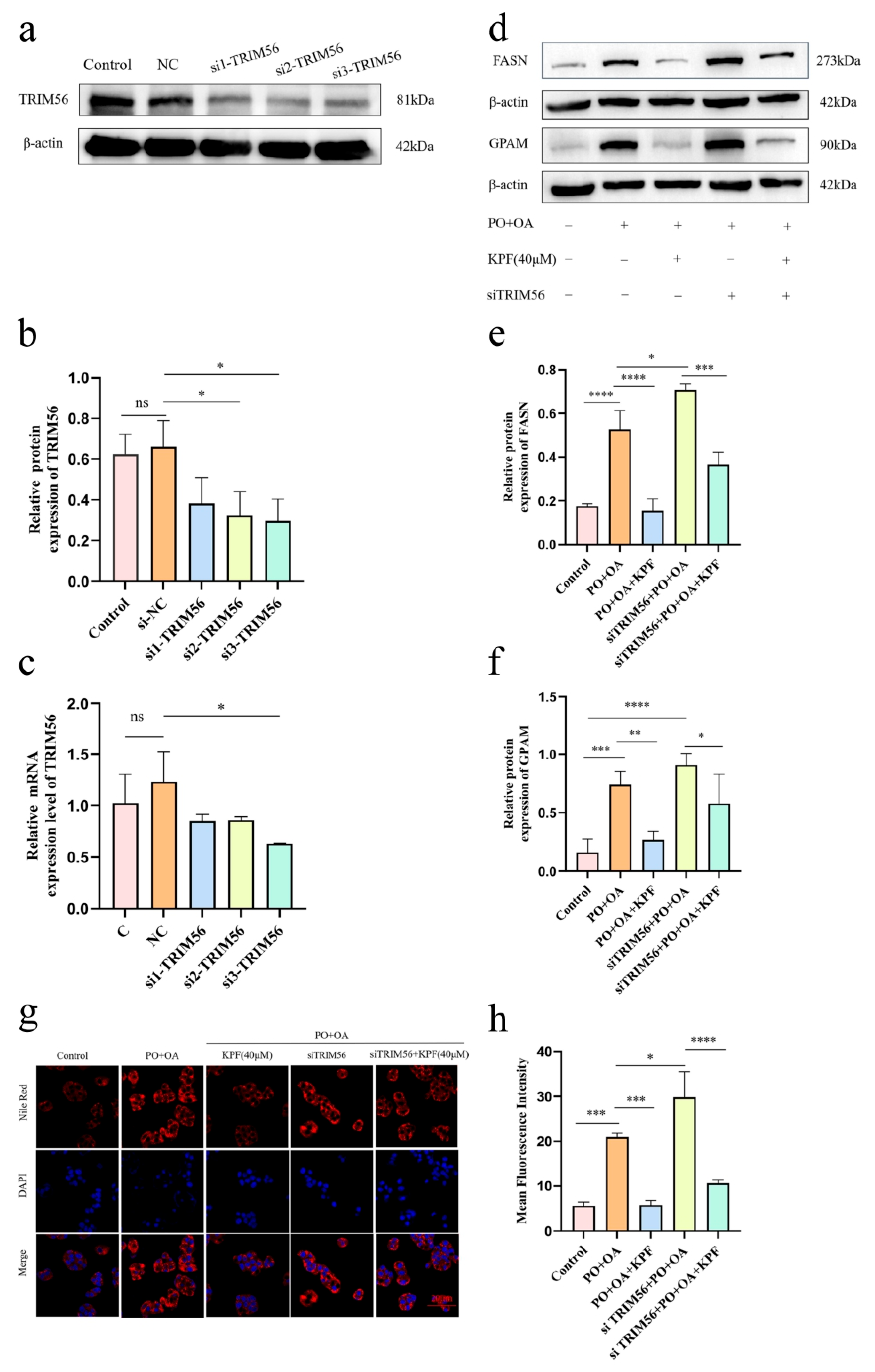
Loss-of-function experiments further clarified the functional relevance of TRIM56. Silencing TRIM56 enhanced lipogenic enzyme expression and exacerbated intracellular lipid accumulation, confirming its suppressive role in hepatic lipid metabolism. Importantly, TRIM56 knockdown markedly attenuated—but did not completely abolish—the lipid-lowering effects of KPF. This observation indicates that TRIM56 contributes substantially to KPF-mediated lipid regulation, while additional TRIM56-independent pathways may also participate in the overall metabolic response. Such a multi-target mode of action is consistent with the pleiotropic nature of flavonoids and may enhance therapeutic robustness. It should be noted that, although three TRIM56-targeting siRNAs were screened and knockdown efficiency was verified by qPCR and Western blot, potential off-target effects cannot be completely excluded. In addition, rescue experiments were not performed in the present study. Therefore, further studies incorporating rescue strategies are warranted to strengthen the specificity of the observed phenotypic changes.
Despite these advances, several limitations should be acknowledged. First, although computational and cellular assays support target engagement between KPF and TRIM56, future studies employing biophysical techniques such as surface plasmon resonance or isothermal titration calorimetry will be necessary to further characterize binding affinity and kinetics [
30]. Although the present study identified the TRIM56–FASN axis as a key pathway involved in the action of KPF, important upstream lipogenic regulators such as SREBP-1c, AMPK, and ACC were not systematically examined. Therefore, the broader regulatory network underlying the anti-steatotic effect of KPF remains to be further clarified. Second, while the present work focuses on TRIM56-dependent mechanisms, KPF may also influence additional signaling pathways involved in lipid metabolism, inflammation, or oxidative stress. Comprehensive omics-based approaches may help identify these complementary mechanisms. Finally, validation of KPF efficacy in additional NAFLD models, including fibrosis-associated or metabolic comorbidity models, will further strengthen its translational relevance.
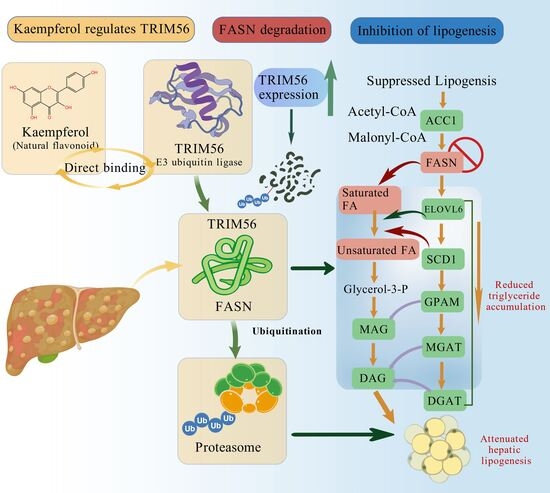
In summary, our study demonstrates that KPF effectively alleviates hepatic lipid accumulation and metabolic dysregulation in experimental NAFLD. The data support a model in which KPF engages and restores TRIM56, thereby partially regulating downstream lipogenic pathways associated with FASN and related enzymes. This TRIM56-associated regulatory mechanism provides mechanistic insight into the anti-steatotic actions of KPF and identifies TRIM56 as a promising, though not exclusive, therapeutic node for metabolic liver disease.
4. Materials and Methods
4.1. Experimental Animals and the Development of the NAFLD Model
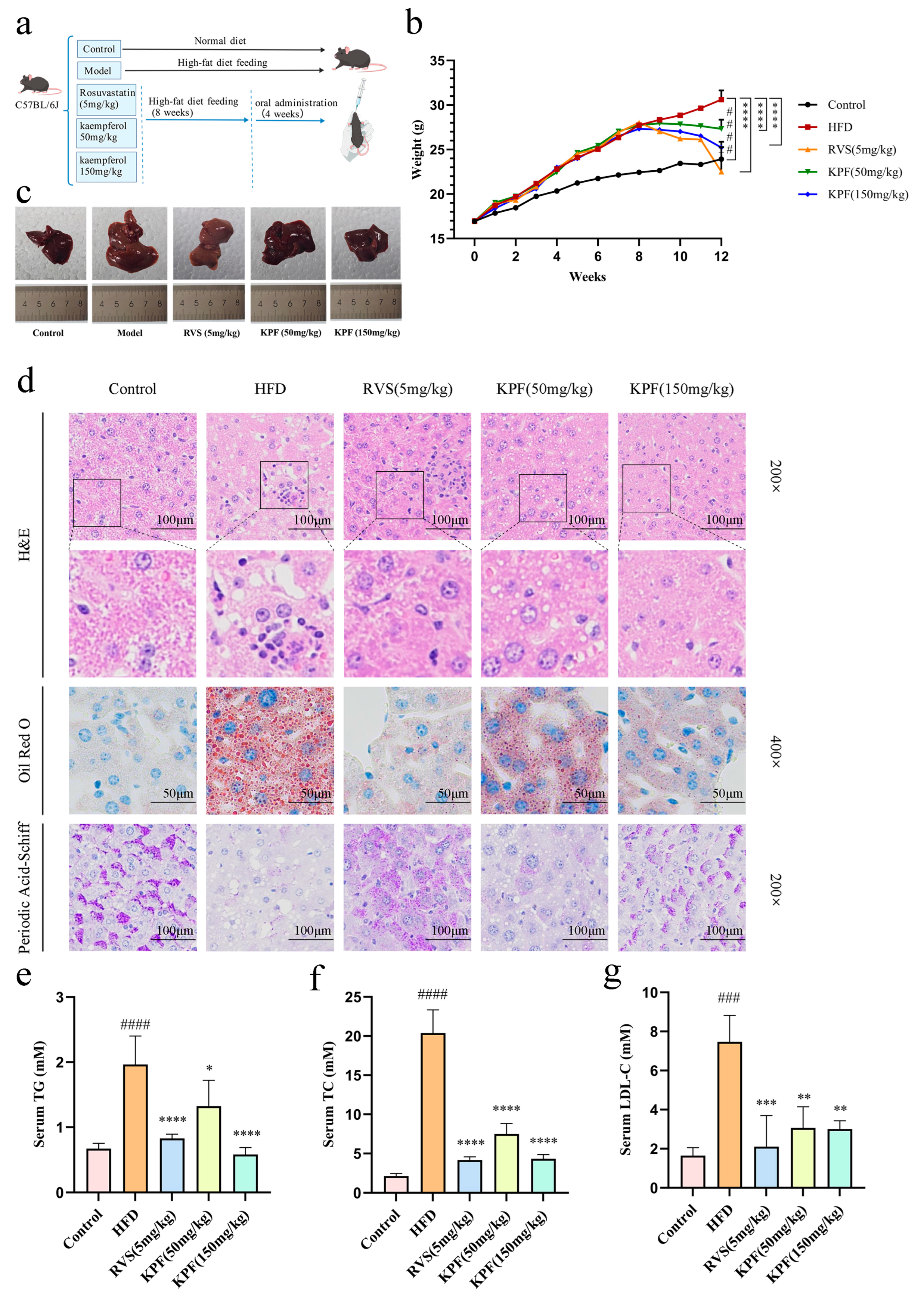
Sixty male C57BL/6J mice, four weeks of age (approximately 14 ± 2 g in weight), were purchased from Shandong Pengyue Laboratory Animal Technology Co., Ltd. (Jinan, China), a certified supplier of laboratory species. Located at Yantai University. Animals were housed in a controlled, specific-pathogen-free facility equipped with an automated light–dark cycle set to 12 h intervals. Standardized environmental conditions included unrestricted access to sterilized feed and purified water, adequate ventilation, and strict sanitation practices. After one week of acclimatization, the mice were randomly divided into two main groups: a normal control group (Control,
n = 12) fed a standard chow diet and a model group (
n = 48) fed a high-fat diet for 8 weeks to induce hepatic steatosis. The detailed composition of the HFD is listed in
Supplementary Table S1. After 8 weeks, the HFD-fed mice were further randomly divided into four subgroups (
n = 12 per group): (1) HFD model group, (2) HFD + rosuvastatin (5 mg/kg), (3) HFD + low-dose KPF (50 mg/kg), and (4) HFD + high-dose KPF (150 mg/kg). The doses of kaempferol (50 and 150 mg/kg) were selected based on previously published in vivo studies showing metabolic and hepatoprotective activity within a comparable dose range, including reports using 50 mg/kg in diabetic/NAFLD-related models and 150 mg/kg in metabolic syndrome models. Rosuvastatin at 5 mg/kg was chosen as a positive control according to prior rodent studies demonstrating efficacy in HFD-associated metabolic disease models [
31,
32,
33,
34]. Rosuvastatin was included as an in vivo positive control/reference drug to provide a pharmacological benchmark for lipid-lowering efficacy in the HFD-induced NAFLD model. All the above grouping methods employ computer-based random number generation. The control group continued on the standard diet. All pharmacological agents were freshly prepared and administered by oral gavage once daily for a total of 4 weeks. Body weight, general health indices, and behavioral changes were monitored throughout the experimental period. All animal procedures were performed in accordance with institutional and national guidelines for the care and use of laboratory animals. Appropriate measures were taken to minimize pain, suffering, and distress. Animals were anesthetized during invasive procedures, and analgesics were administered when necessary.
4.2. Measurements of Biochemical Parameters
Serum lipid quantification was performed to evaluate metabolic changes associated with NAFLD. The concentrations of TG, TC, and LDL-C were determined using standardized enzymatic colorimetric assays. Commercially prepared kits from Nanjing Jiancheng Bioengineering Institute were used (Nanjing, China), and all procedures were performed strictly according to the operational protocols provided with the reagents.
4.3. Histopathological Examination
Liver tissues were immediately immersed in 4% paraformaldehyde (PFA) to preserve morphology and fixed for 24 h. The specimens underwent a progressive dehydration process using a series of ethanol solutions, followed by clearing with xylene prior to being embedded in paraffin wax (Leica Biosystems, Wetzlar, Hesse, Germany). Using a microtome, we then sliced thin tissue sections measuring approximately 5 micrometers in thickness. Three different staining methods were used to evaluate liver pathology: H&E staining to observe overall hepatic structure, inflammatory infiltration, vacuolar changes, and hepatocellular ballooning; Oil Red O staining on frozen liver sections to detect and measure intracellular neutral lipid deposits; and Periodic Acid–Schiff (PAS) staining to visualize glycogen distribution. The process involved oxidation with periodic acid for 10 min, followed by incubation with Schiff’s reagent for approximately 15–20 min in dark conditions. All stained sections were examined under a microscope, and representative images were captured for further analysis.
4.4. Cell Culture and In Vitro Lipid Overload Model
The human hepatoblastoma cell line HepG2 was obtained from the American Type Culture Collection (ATCC, HB 8065) (American Type Culture Collection, Manassas, VA, USA). HepG2 cells were originally derived from the liver tissue of a 15-year-old male patient. The cell line is an established human cell line and was used in accordance with institutional guidelines. The HepG2 human liver cancer cell line was maintained in Dulbecco’s modified Eagle medium supplemented with a 10% concentration of fetal bovine serum and a 1% solution of penicillin–streptomycin. Cell cultures were incubated at 37 °C with 5% CO2 in a humidified environment. To induce lipid accumulation, an in vitro steatosis model was developed by exposing cells to a 2:1 molar ratio of palmitic acid and oleic acid, resulting in a final concentration of 1 mM. The incubation lasted 24 h. KPF was dissolved in dimethyl sulfoxide (DMSO) at a maximum concentration of 0.1% and used at 10, 20, or 40 µM for another 24 h after lipid induction. KPF was first dissolved in DMSO and then diluted with the vehicle solution before administration. The final concentration of DMSO in the administration solution was maintained at 0.1% or less to minimize the non-specific effects of the solvent. To control for vehicle-related interference, the same vehicle composition and administration volume were used across the relevant experimental groups.
4.5. Oil Red O Staining of Cells
Intracellular lipid accumulation was evaluated using a commercial Oil Red O staining kit [
35]. HepG2 cells were seeded into culture plates before treatment. Following the completion of the treatments, the culture media were disposed of, and the cells underwent three gentle rinses with PBS. Subsequently, the cells were immobilized at ambient temperature for thirty minutes, followed by two washes with distilled water, and briefly immersed in 60% isopropanol for 20–30 s. The prepared Oil Red O staining solution was added according to the kit protocol. After staining, excess dye was removed by rinsing repeatedly with 60% isopropanol, then washed several times with distilled water until the solution ran clear. Imaging was performed using an inverted fluorescence microscope (Olympus Corporation, Tokyo, Japan), and distilled water was used to keep the cells moist during the imaging process.. Bright-field images were captured with a light microscope, and lipid-stained areas were quantified using ImageJ 1.54f. The proportion of Oil Red O-positive signals was calculated to evaluate lipid accumulation across different treatment groups.
4.6. siRNA-Mediated TRIM56 Knockdown
Targeted silencing of TRIM56 was performed using three gene-specific small interfering RNAs (siRNAs) and a non-targeting negative control siRNA, all synthesized by Abmole Bioscience (Shanghai, China). HepG2 cells were seeded one day before transfection and grown to 60–80% confluence. Transfection was carried out using Lipofectamine 2000 (Thermo Fisher Scientific, Waltham, MA, USA) according to the manufacturer’s instructions. Briefly, siRNAs and Lipofectamine 2000 were separately diluted in Opti-MEM reduced-serum medium, incubated for 5 min at room temperature, and then mixed for 20 min to allow for the formation of transfection complexes. The complexes were added to the cells and incubated for 6 h, after which the medium was replaced with complete growth medium. After 48 h of transfection, total RNA and protein were harvested. The knockdown efficiency of the three TRIM56 siRNAs was evaluated, and the siRNA showing the highest silencing efficiency at the protein level was selected for subsequent experiments. TRIM56 knockdown was confirmed by quantitative PCR and Western blot analysis (ECL Gel Imager, Tanon, Shanghai, China).
4.7. Protein Isolation and Western Blotting
Liver tissues or HepG2 cells were homogenized in RIPA buffer containing protease and phosphatase inhibitors. Protein samples were homogenized by ultrasonic disruption. Total protein concentration was measured, and equal amounts (20 µg/lane) were loaded onto an SDS-PAGE gel under controlled voltage (80 V for 20 min, followed by 120 V for 90 min). After separation, proteins were transferred onto PVDF membranes [
36]. Membranes were briefly blocked and then incubated overnight at 4 °C with primary antibodies recognizing TRIM56, FASN, GPAM, and β-actin. After washing, the secondary antibodies conjugated with horseradish peroxidase were applied for a period of 1.5 h. Following this, enhanced chemiluminescence detection was carried out, and the intensities of the protein bands were measured with the aid of ImageJ software.
4.8. Quantitative Real-Time PCR for Gene Expression Profiles
Total RNA was extracted using the SPARK Easy Cell RNA Extraction Kit (AC0205, Spark Jade) (SparkJade, Jinan, China) following the manufacturer’s instructions. The purity and concentration of the extracted RNA were measured with a Thermo Scientific NanoDrop spectrophotometer, Thermo Fisher Scientific, Waltham, MA, USA. Complementary DNA was synthesized using the SPARK Script II ALL-IN-ONE RT SuperMix for qPCR (with gDNA removal; AG0305, Spark Jade). Following the manufacturer’s guidelines, we carried out quantitative real-time PCR with a Roche LightCycler 480 instrument, employing the 2X Universal SYBR Green qPCR Mix (AH0105, Spark Jade) as our reagent of choice (PCR Amplifier, Roche, Basel, Switzerland). Relative transcript levels were calculated using the 2
−ΔΔCT method, with
β-actin as the internal control. Primer sequences for amplification are listed in
Table 1, and all primers were synthesized by Qingke Biotechnology Co., Ltd. (Jinan, China).
4.9. Immunofluorescence Staining
Cells were cultured in confocal-compatible glass-bottom dishes throughout the experiments. After treatments, samples were fixed in 4% PFA, permeabilized with 0.2% Triton X-100, and blocked with 5% BSA. Primary antibodies targeting TRIM56 and FASN were used and incubated overnight at 4 °C, followed by staining with fluorescent secondary antibodies conjugated to Alexa Fluor dyes [
37]. Nuclear staining was performed using DAPI. Imaging was performed using a Leica confocal laser-scanning microscope to visualize protein distribution (Carl Zeiss AG, Oberkochen, Germany). Fluorescence images were acquired using identical confocal settings for all groups within each experiment. DAPI was excited at 405 nm, and the green fluorescence channel was excited at 488 nm. Fluorescence intensity was quantified using ImageJ software after background subtraction. The mean fluorescence intensity (MFI) of each field was calculated and used for statistical analysis.
4.10. Nile Red Staining
HepG2 cells were cultured in glass-bottom culture dishes. TRIM56 expression was silenced using the previously described siRNA protocol. To induce lipid overload, cells were then incubated for 24 h with a mixed fatty acid solution containing palmitic acid and oleic acid at a 2:1 molar ratio, reaching a final concentration of 1 mM. After induction, cells were treated with KPF at the specified concentration. Lipid accumulation was visualized with Nile Red staining (Solarbio, Cat. No. G1264), Beijing Solarbio Science & Technology Co., Ltd., Beijing, China [
36], and fluorescence images were captured using a Zeiss confocal microscope (Carl Zeiss AG, Oberkochen, Germany). The average fluorescence intensity was quantified to evaluate lipid droplet formation. This procedure assessed the effect of TRIM56 knockdown on lipid synthesis and accumulation after KPF treatment. For Nile Red staining, fluorescence images were obtained under identical imaging settings, and Nile Red was excited at 543 nm. The fluorescence intensity of lipid droplets was quantified using ImageJ software after background correction, and the mean fluorescence intensity was calculated for each image.
4.11. Immunoprecipitation
To investigate the potential interaction between TRIM56 and FASN, immunoprecipitation assays were performed. Cells were cultured to a certain quantity and lysed in ice-cold immunoprecipitation lysis buffer supplemented with protease inhibitors. After centrifugation to clarify the cell lysates, they were incubated with anti-FASN antibody or control IgG overnight at 4 °C with gentle rotation. Subsequently, protein A/G agarose beads were added and incubated for an additional 2–4 h. The immunoprecipitated complexes were then extensively washed, released via SDS buffer heating, and then separated by SDS-PAGE and detected through immunoblotting (ECL Gel Imager, Tanon, Shanghai, China).
4.12. Molecular Docking and Network Pharmacology Analysis
KPF was used as the primary search term to retrieve its SMILES structure from PubChem. Its potential targets were then predicted using Swiss Target Prediction, CTD, and TCMSP. Genes associated with non-alcoholic fatty liver disease were collected from the GeneCards, DisGeNET, and STRING databases and standardized and converted using UniProt. Targets related to drugs and diseases were compared using Venny 2.1.0 to identify the overlapping targets. KEGG pathway enrichment analysis was then performed for these intersecting genes, with pathways showing significant
p-values ranked accordingly. The top 30 pathways were visualized through a bubble plot. Molecular docking was performed with AutoDock Vina 1.2.2. The 3D structure of KPF was retrieved from PubChem and energy-minimized [
38]. The three-dimensional (3D) model of the receptor protein TRIM56 was generated through homology modeling. Water molecules and nonessential ligands were removed using PyMOL 1.1.2, and AutoDockTools 1.1.2 was used to add hydrogen atoms, calculate charges, and assign AD4 atom types. A docking grid box of 25 × 25 × 25 Å was defined around the predicted active site. Docking poses were ranked based on binding energy (ΔG), with lower ΔG values indicating more stable receptor–ligand interactions. The best docking conformation was visualized with PyMOL 1.1.2 [
39].
4.13. Molecular Dynamics Simulation
To investigate the TRIM56-KPF complex, we ran molecular dynamics simulations using Gromacs 2025 for a solid 100 nanoseconds. We employed the AMBER14SB force field to parameterize the protein and relied on GAFF2 for the ligand. The entire assembly was then nestled inside a cubic box with a 1.2 nm buffer zone, filled with TIP3P water molecules, and seasoned with 0.15 M NaCl to create a realistic physiological setting while keeping everything electrically neutral. The system was first subjected to energy minimization, followed by equilibration in the NVT and NPT ensembles for a total of 2 ns. The production run was carried out at 310 K and 1 bar for 100 ns with a time step of 2 fs, and the trajectory was saved every 1000 steps. Various metrics were calculated using GROMACS tools, including root-mean-square deviation (RMSD) to assess overall structural stability, root-mean-square fluctuation (RMSF) to analyze residue flexibility, radius of gyration (Rg) to characterize molecular compactness, solvent-accessible surface area (SASA) to reflect solvent exposure, the number of hydrogen bonds between the protein and ligand to evaluate interaction stability, free energy landscape maps (both 2D and 3D), and mmPBSA calculations (average binding free energy and residue decomposition energies).
4.14. Statistical Analysis
All data are presented as mean ± SD. For the animal experiments, n represents the number of biologically independent mice in each group. For the in vitro experiments, n represents the number of independent biological experiments performed on separate occasions. Mouse body weight was analyzed using two-way repeated-measures ANOVA, whereas other datasets were analyzed using one-way ANOVA followed by Tukey’s post hoc test for multiple comparisons. Before comparing between groups, use Shapiro–Wilk test to evaluate the normality of data distribution, and the Levene test was used to evaluate the homogeneity of variance. When the assumptions of parameter analysis were met, the differences between multiple groups were analyzed using one-way analysis of variance (ANOVA). Statistical analyses were performed using GraphPad Prism 9. A
p value < 0.05 was considered statistically significant [
23].
5. Conclusions
In conclusion, the present study demonstrates that KPF exerts significant hepatoprotective effects against steatosis and dyslipidemia in experimental models of non-alcoholic fatty liver disease. KPF treatment markedly reduces hepatic lipid accumulation, improves systemic lipid profiles, and suppresses aberrant lipogenic programs in both in vivo and in vitro settings.
Mechanistically, our findings support TRIM56 as a biologically relevant molecular interactor contributing to the lipid-lowering effects of KPF. KPF engages TRIM56 and restores its expression under steatotic conditions, and TRIM56 silencing substantially attenuates the ability of KPF to suppress lipogenic enzyme expression and intracellular lipid accumulation. In addition, TRIM56 is shown to associate with FASN in hepatocytes, supporting the involvement of a TRIM56-associated regulatory axis in hepatic lipid metabolism.
Taken together, these results support a model in which KPF alleviates hepatic steatosis, at least in part, through modulation of TRIM56-related lipogenic pathways linked to FASN and other key enzymes. While additional mechanisms may also contribute to the overall metabolic effects of KPF, this study provides mechanistic insight into its anti-steatotic activity and identifies TRIM56 as a promising regulatory node for therapeutic intervention in NAFLD.