Article

Aberrant Expression of Human Endogenous Retroviruses and SETDB1 in Adolescents with Anorexia Nervosa

1
Neurosciences Department, University of Torino, Via Cherasco 15, 10126 Turin, Italy
2
Department of Pathology and Care of the Child, AOU Città della Salute e della Scienza di Torino, Ospedale Infantile Regina Margherita (OIRM), 10126 Turin, Italy
3
Department of Public Health and Pediatric Sciences, University of Turin, Regina Margherita Children’s Hospital, 10126 Turin, Italy
*
Author to whom correspondence should be addressed.
Int. J. Mol. Sci. 2026, 27(9), 3755; https://doi.org/10.3390/ijms27093755
Submission received: 25 March 2026 / Revised: 17 April 2026 / Accepted: 21 April 2026 / Published: 23 April 2026
(This article belongs to the Section Molecular Microbiology)

Abstract

Human endogenous retroviruses (HERVs) represent 8% of our genome. They are remnants of ancient infections of germinal cells. HERVs are no longer infectious, but their enhanced expression is implicated in several diseases, including neuropsychiatric disorders. Their transcription is regulated by TRIM28 and SETDB1, which are involved in the regulation of epigenetic processes, in neural cell differentiation, and brain inflammation. We explored the expressions of HERVs and TRIM28/SETDB1 in adolescents affected by anorexia nervosa (AN). Through real-time PCR, we assessed the transcription levels of pol genes of HERV-H, -K, and -W, of env genes of Syncytin 1 (SYN1), Syncytin 2 (SYN2), and of HERV-W, and of TRIM28 and SETDB1 in whole blood of 37 adolescents with AN and in healthy controls (HCs) of comparable age. HERV-H-pol, HERV-K-pol and SETDB1 transcriptional levels were significantly higher in adolescents with AN as compared with HCs, while HERV-W-pol and -env were downregulated in the former. No differences were observed for SYN1, SYN2, and TRIM28 between the two groups. The observed expression pattern of HERVs is specific for AN as compared to other neuropsychiatric disorders. These aberrant expressions suggest a potential role of retroviral elements in the pathophysiology of AN, opening the way for innovative diagnostic and therapeutic strategies.

1. Introduction

Anorexia Nervosa (AN) is a severe psychiatric disorder characterized by significantly low body weight, intense fear of weight gain, and disturbed body perception [1]. Its complications affect all body systems and can be fatal [1]. The etiopathogenesis of the disease remains an unsolved enigma, and this hampers the development of novel therapeutic interventions. AN has long been considered a prevalent psychological disorder, and researchers have mainly focused on psychological fragilities. Recently, greater interest has been devoted to the biological correlates of the disease, including the genetic predisposition. Twin-based heritability of AN is estimated to reach 50–60%. Genome-wide association studies showed a genetic overlap with other psychiatric disorders, identified significant loci, and revealed direct correlations with psychiatric and metabolic components [2]. Epigenetics is an emerging element through which environmental factors can modulate gene expressions without changing their fundamental structure. Epigenetic processes are implicated in the development of mental health phenotypes, including eating disorders [3]. Other biological factors are increasingly investigated. These include the underlying inflammatory status, the dysregulation of the immune system with associated autoimmune reactions, and the intestinal microbiota dysbiosis with impact on brain functions [4,5,6].
Human endogenous retroviruses (HERVs) represent about 8% of our genome [7]. They originate from ancestral infections of germinal cells of primates millions of years ago [7,8]. Given the continuous mutations during evolution, HERVs have lost the capacity to produce infectious particles [7]. Nevertheless, their retroviral structure is maintained, with three principal genes, group associated antigens (gag), polymerase (pol), and envelope (env), flanked between two regulatory long terminal repeats (LTRs) [7,8]. Most HERVs are inactive, but some elements are transcribed, and a few encode proteins [7]. HERVs have been co-opted for essential biological functions during intrauterine life. Two envelope proteins, syncytin 1 (SYN1) and syncytin 1 (SYN2), are crucial for placental syncytiotrophoblast formation and contribute to maternal–fetal tolerance, given their vigorous immunosuppressive properties [9,10]. Postnatally, the physiological functions of HERVs remain unclear. Among human tissues, HERV expressions are consistently high in the central nervous system [11]. A transcriptional dysregulation of HERVs has been observed in several diseases and proposed in their etiopathogenesis. Actually, HERVs can influence the transactivation of neighboring cellular genes [12]. Their mRNAs can be retro-transcribed and reintegrated into DNA, causing mutations, or, being recognized as non-self by viral receptors, they can trigger a variety of inflammatory and immune reactions [13]. Furthermore, there are mutual interactions between HERVs and intestinal microbiota [14].
HERV expression is modulated by environmental factors via epigenetic mechanisms, such as DNA methylation and heterochromatin formation by histone tail modifications [15]. SETDB1 is a methyltransferase with high specificity for the lysine 9 residue of histone H3 [15,16]. It is recruited by TRIM28 to form a complex with Krüppel associated box domain zinc finger proteins (KRAB-ZFPs), the largest family of transcriptional regulators in the human genome [15,17]. Both TRIM28 and SETBD1 represent specific tags for transcriptional modulation of HERV sequences [18,19]. Additionally, they regulate the transactivation of thousands of cellular genes and are directly involved in epigenetic processes, such as the differentiation of cell lineages, the control of brain functions, and the modulation of the immune response [20,21].
Among psychiatric disorders, enhanced expressions of HERVs and SETDB1 have been found in children with autism spectrum disorders (ASDs) [22]. Increased expression of HERV-W has been evidenced in the brain and plasma of patients with schizophrenia, with some studies indicating a correlation with inflammatory markers and severity of cognitive impairment [23,24,25]. Overexpression of HERV-W-env was also described in patients with bipolar disorder [25].
These biological alterations may converge on molecular pathways known to regulate HERV expression. Despite (1) the aberrant expressions of HERVs in several neuropsychiatric disturbances and their proposed etiopathogenetic role, (2) their effects on the immune system and the intestinal microbiota, (3) the HERV associations with inflammatory markers, (4) epigenetic processes, (5) metabolic stress, and (6) the implications of TRIM28/SETDB1 (a) in the regulation of HERV transcription, their direct impact on (b) epigenetic mechanisms, and (c) immune response, no study has explored HERV expressions in patients affected by AN. AN is a psychiatric disorder in which body changes are more marked and possibly related both to the pathogenesis and maintenance of the disorder [1,2,3,4,5,6]. Thus, the rationale for exploring HERV expression is strong and possibly related to relevant therapeutic implications. Based on all these considerations, the aim of the current research was to assess the transcription levels of pol genes of HRV-H, HERV-K and HERV-W, the three most widely studied retroviral families, of the env genes of HERV-W (also called multiple sclerosis-associated retrovirus, MSRV), SYN1, and SYN2, as well as of TRIM28 and SETDB1 in whole blood from adolescents with AN and healthy controls (HCs) of comparable age.

2. Results

2.1. Study Populations

Thirty-seven adolescents with AN were enrolled in the study; their characteristics are reported in Table 1.

2.2. Transcription Levels of pol Genes of HERV-H and HERV-K in Whole Blood of Patients with AN and HCs

The transcriptional levels of HERV-H-pol and HERV-K-pol were significantly higher in adolescents with AN than in HCs (Figure 1).

2.3. Transcription Levels of pol Gene and env Gene of HERV-W in Whole Blood of Patients with AN and HCs

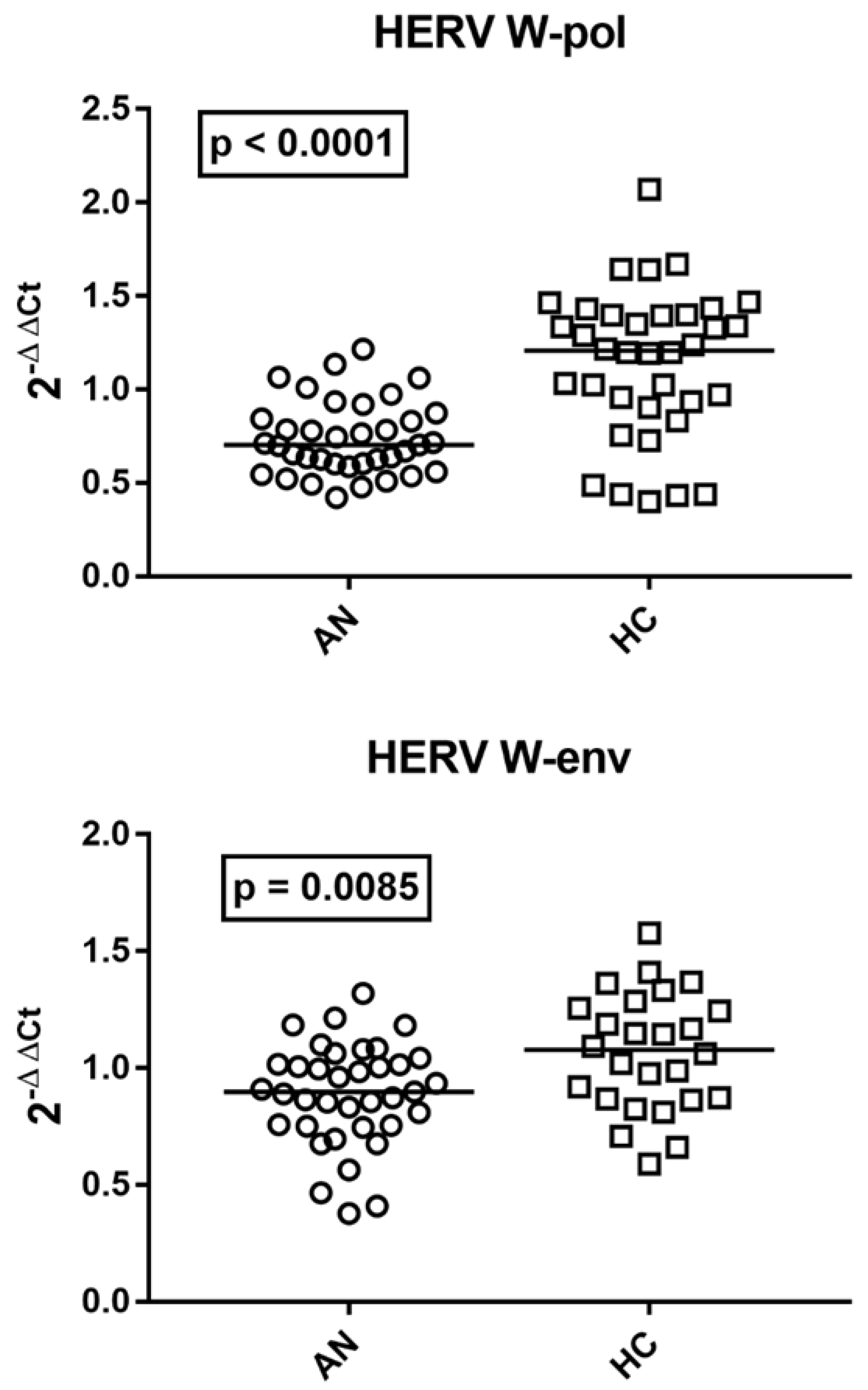
The transcriptional levels of the pol gene and env gene of HERV-W were significantly lower in adolescents with AN than in HCs (Figure 2).

2.4. Transcription Levels of env Genes of SYN 1 and SYN 2 in Whole Blood of Patients with AN and HCs

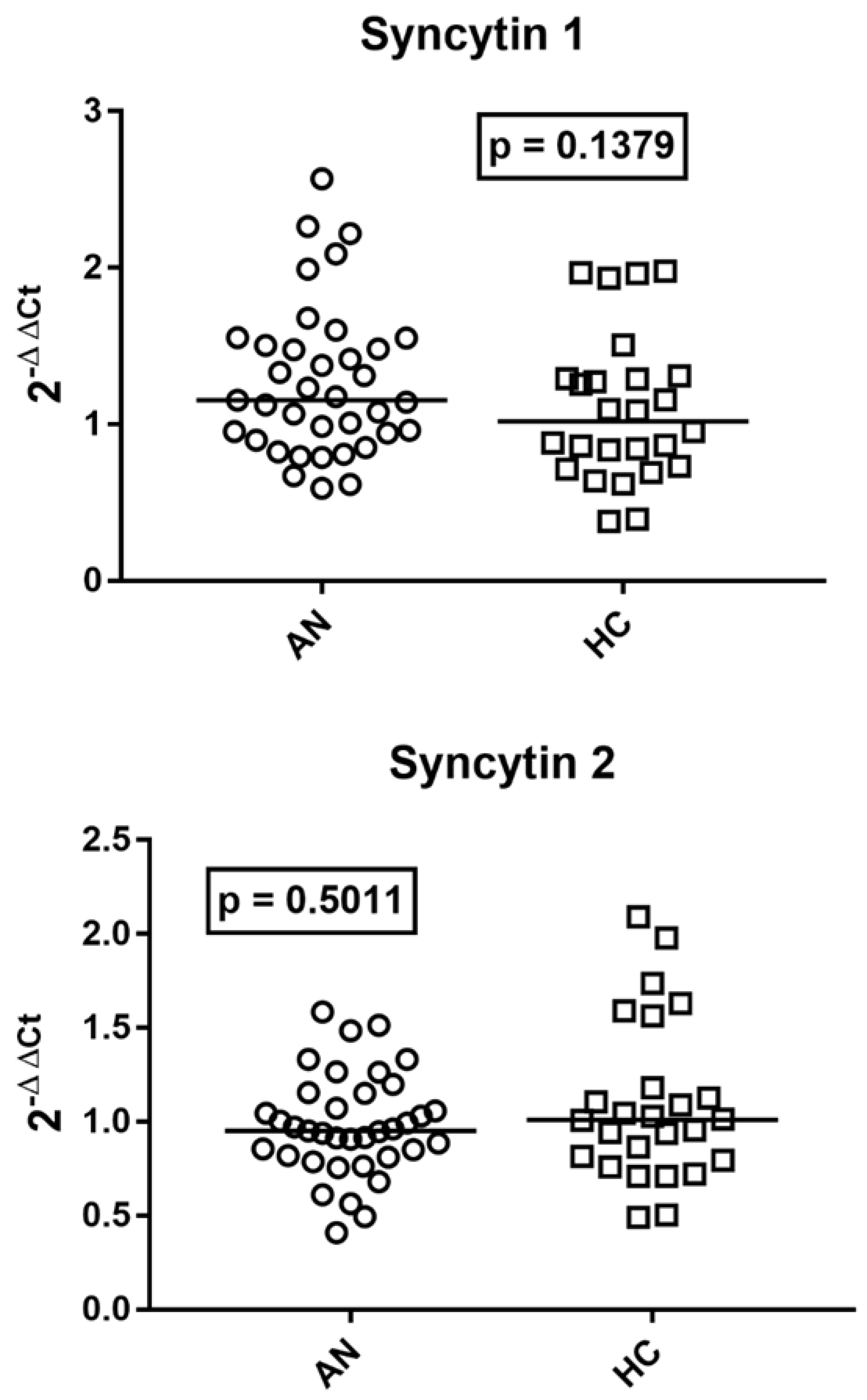
The median values of RNA levels of SYN1 and SYN2 were similar in subjects with AN and HCs (Figure 3).

2.5. Transcription Levels of TRIM28 and SETDB1 in Patients with AN and Age-Matched HCs

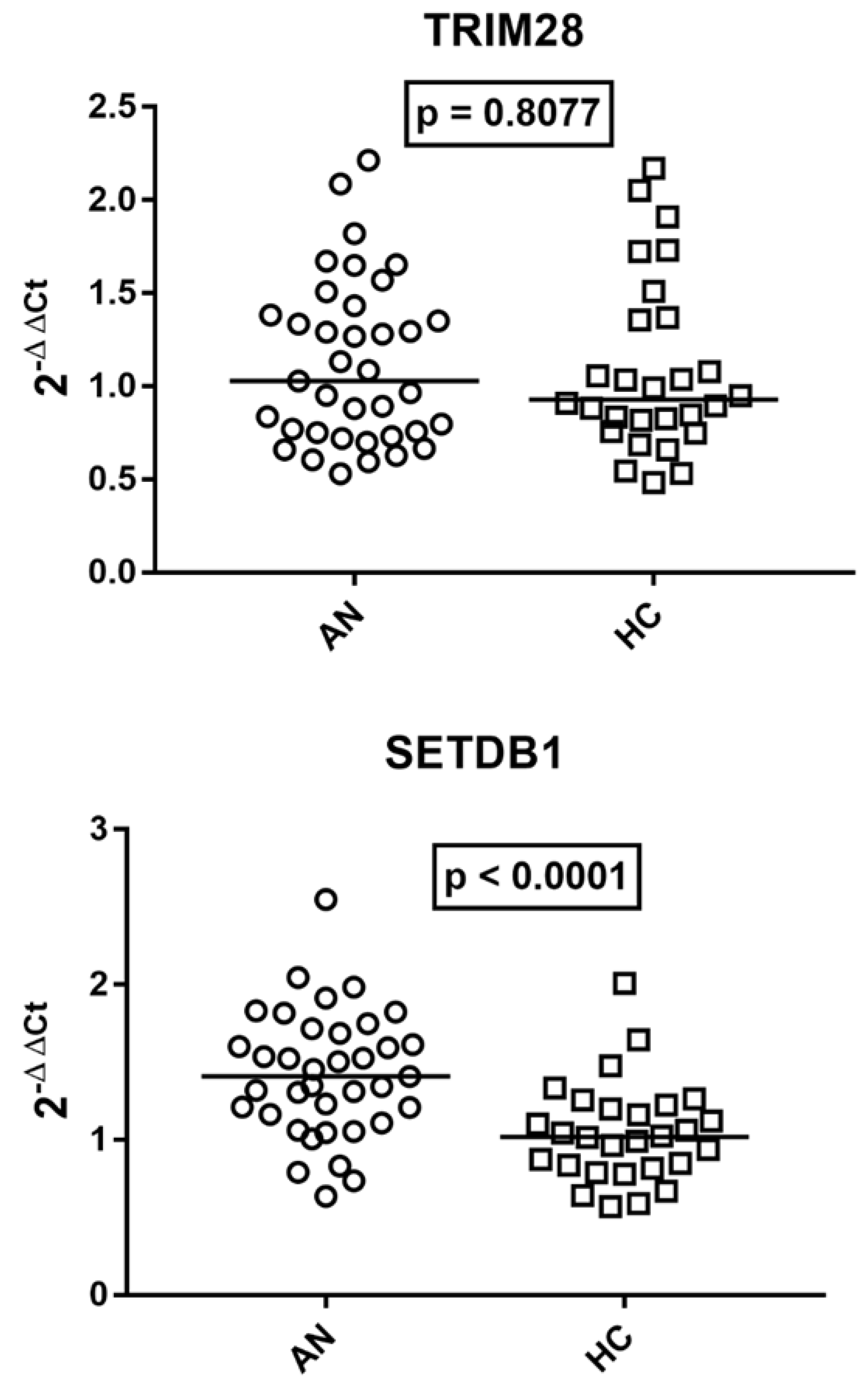
As reported in Figure 4, the median mRNA levels of TRIM28 were comparable in patients with AN vs. HCs, while the median transcriptional levels of SETDB1 were significantly higher in AN patients than in HCs.
Effect size analysis showed large differences for HERV-H-pol (r = 0.51), HERV-K-pol (r = 0.61), HERV-W-pol (r = 0.60), and SETDB1 (r = 0.53) and a moderate effect size for HERV-W-env (r = 0.39), while smaller or negligible effects were observed for the other targets.
Although some variability was observed within groups, particularly for HERV-K-pol and SETDB1, the overall distributions remained clearly distinct between AN patients and healthy controls.

3. Discussion

For the first time, our results show the pattern of expression of HERVs in adolescents with AN. We found significantly higher transcriptional levels of HERV-H-pol and HERV-K-pol as compared to HCs of comparable age. In contrast, both HERV-W-pol and -env sequences displayed reduced transcript levels, while the RNA concentrations of other retroviral elements, such as SYN1 and SYN2, were similar to HCs. It is worth mentioning that HERV-W-env (MSRV) and SYN-1 share a similar (but not identical) primary structure, while their proteins show distinct functions (pro-inflammatory for MSRV, syncytial and immunosuppressive for SYN1). This may account for the different concentrations of their transcripts in AN patients, as these elements derive from distinct genomic loci and may be subject to differential transcriptional regulation. The simultaneous higher and lower expression of single retroviruses in the same patients is a quite rare phenomenon. A higher prevalence of HERV-K sequences and a simultaneous reduction of HERV-W was reported also in cell-free plasma samples from patients with major burns as compared to normal individuals [26]. This impaired HERV-W expression was ascribed to the long time interval between injury and blood sample collection or to effects of therapies [26]. Actually, antipsychotic drugs can modulate HERV expression [27], and some of our patients were treated with antipsychotics. This mechanism might be shared with schizophrenic patients, but these display a different transcriptional pattern without downregulation of HERV-W-pol and -env [23,24]. Patients with bipolar disorder are also often treated with antipsychotic drugs, but they exhibit overexpression of HERV-W-env, not its reduction, as observed in our patients [25,28]. This supports the existence of a specific pattern of aberrant expression of retroviral sequences in adolescents suffering from AN as compared to subjects with other neuropsychiatric disorders. To this purpose it must be underlined that the differences in sample type (blood vs. brain tissue) and in age groups between our patients and the latter may limit direct comparability.
The underlying biological mechanisms responsible for the aberrant HERV expression in AN patients and their clinical meaning remain to be elucidated. Our findings suggest an apparent anomalous functioning of the interactions between HERVs and their corepressors TRIM28/SETDB1, whose activation is expected to give rise to DNA methylation and heterochromatin formation ultimately resulting in HERV silencing [19]. Given the normal expression of TRIM28 and the enhanced transcription of SETDB1, the high RNA levels of HERV-H-pol and HERV-K-pol cannot be ascribed to their impaired activation. Instead, one could hypothesize that the SETDB1 overexpression is responsible for the downregulation of HERV-W-pol and -env. It is worth mentioning that the protein complex of TRIM28/SETDB1 is essential for maintaining endogenous retroviruses in a silent state in early embryos and pluripotent stem cells [18]. In contrast, when these cells differentiate into distinct somatic cells, the transcription of retroviral sequences is no longer dependent on such repressors, which sometimes may act as transcriptional activators rather than as repressors [19,29]. It cannot be overlooked that functional interactions between TRIM28/SETDB1 and single HERVs could derive from post-translational events between the encoded proteins, while we assessed only their transcriptional profiles.
HERV expression is modulated by a variety of cellular stressors, including cytokine signaling, oxidative stress, and epigenetic modifications. Growing data document the increased levels of pro-inflammatory cytokines in anorexic subjects [4,5]. The release of inflammatory cytokines results in the proteasome-driven activation of NF-kB, which binds to specific motifs of HERVs that, along with inflammatory cytokines, lead to their enhanced transactivation [30]. Notably, HERVs are, in turn, able to induce and potentiate a variety of inflammatory and immune responses [7]. The final result may be a vicious circle leading to increasing reactive responses. Eating disorders and autoimmune diseases give each other a mutual increased risk [31]. This might be explained by the high transcript levels of retroviral elements in both conditions [7,27].
Abnormal composition of the gut microbiota has been reported in AN patients [6]. There are mutual interactions between intestinal microbiota and endogenous retroviruses [14]. Germ-free mice lose intestinal expression of several retroviruses, while exposure to bacteria and their products can stimulate retroviral transcription [32]. The dysbiosis of the gut microbiota in AN might thus contribute to the HERV overexpression found in our patients [6].
Regarding SETDB1, its upregulation is implicated in a large array of biological activities. It contributes to regular cellular homeostasis within the brain, while alterations have been associated with several neuropsychiatric disorders [33]. Through the complex with TRIM28/KRAB-ZFPs, SETDB1 conditions B and T lineage differentiations and functions, leading to peculiar inflammatory response potentially implicated in brain malfunctioning [34].
It is worth mentioning that the overexpression of HERV-H-pol, HERV-K-pol, and SETDB1 is consistent with that found in children with ASD [22]. This pattern of HERV transcription may represent a common biomarker of these neuropsychiatric disorders and support a shared pathogenetic role. Signs of ASD are overrepresented in individuals with AN, and those with co-occurrence of autistic traits have more severe disturbances and poorer prognosis [35,36]. The hyperactivation of the same retroviral elements and of SETDB1 in adolescents affected by both AN and ASD may account for their more compromised mental health and worse evolution.
Differently from schizophrenia that showed an overexpression of HERV-W [23,24] and bipolar disorders where HERV-W-env was overexpressed [25], our findings demonstrate a reduction of HERV-W-pol and -env.
The observed downregulation of HERV-W-pol and -env in AN could derive from selective epigenetic silencing via DNA methylation or histone modifications, influenced by body mass gene regulation [37,38]. Alternatively, this could reflect a compensatory mechanism to limit excessive immune activation, particularly considering the pro-inflammatory milieu associated with AN [4].
Longitudinal studies are needed to determine whether the abnormal HERV expressions persist or disappear over the course of the eating disorder or by increasing the sample size. This could lead to the identification of useful biological markers to monitor the course of the disease. The presence of psychiatric comorbidities in the AN group may represent a potential confounding factor influencing HERV expression. Further investigations are required to explore more in depth the origin of the different HERV expression patterns observed in AN and in other mental disorders [22,23,24,25] and their potential prognostic significance, given the preliminary nature of our findings. Should HERVs be confirmed as clinically relevant in the pathogenesis or maintenance of AN, antiretroviral therapies could be explored through targeted trials to modulate HERV activity in anorexic patients unresponsive to standard treatments [39,40]. It remains, however, unclear whether reducing overexpressed HERVs or enhancing those downregulated would be beneficial.

4. Materials and Methods

4.1. Study Populations

All recruited adolescents with AN were inpatients consecutively admitted at the Division of Child and Adolescent Neuropsychiatry, University of Turin, Regina Margherita Children’s Hospital, Turin, Italy. All patients received a clinical evaluation using a semi-structured interview during the first and second visit of assessment by a trained child neuropsychiatrist, ensuring they met the DSM-5-TR diagnostic criteria for AN [41]. Inclusion criteria consisted of: 1. full diagnosis of anorexia nervosa; 2. age range 12–18. Exclusion criteria were: 1. comorbid ASD, schizophrenia, bipolar or neurologic diseases; 2. intellectual disability; 3. any active medical problems, such as infections, cancer, autoimmune disorders. HCs included asymptomatic adolescents of comparable age recruited with the same exclusion criteria who were tested at the same hospital for routine laboratory examinations and whose results were all within the normal reference range.
The parents or legal guardian of all participants signed an informed consent for the purpose of including a minor into the present trial.

4.2. Blood Sample Storage

HERV expression may vary across different tissues. Studying their transcription in brain tissue from anorexic patients would have been more appropriate. However, this is not feasible in this clinical context for ethical reasons, particularly when considering age-matched healthy controls. Therefore, we performed the analyses using peripheral blood samples from AN patients and HCs. Blood samples were mixed with RNAPro Solution (Biomole, Turin, Italy) to maintain RNA integrity and subsequently stored at −80 ◦C until RNA extraction. Collection, preservation, storage, and processing procedures were the same for both patients and the control group to reduce pre-analytical variability.

4.3. Total RNA Extraction

Total RNA was extracted using the automated extractor Maxwell with an RNA Blood Kit (Promega, Madison, WI, USA), which includes treatment with DNase during the RNA extraction process. To further exclude any contamination of genomic DNA, RNA extracts were directly amplified without reverse transcription. RNA concentration and purity were assessed by traditional UV spectroscopy with absorbance at 260 and 280 nm (SimpliNano spectrophotometer, Biochrom US, Holliston, MA, USA). The RNAs were stored at −80 °C until use.

4.4. Reverse Transcription

Four hundred nanograms of total RNA was reverse-transcribed with 20 μL of buffer 10X, 4.8 μL of MgCl2 25 mM, 2 μL ImpromII (Promega, Madison, WI, USA), 1 μL of RNase inhibitor 20 U/L, 0.4 μL random hexamers 250 μM (Promega, Madison, WI, USA), 2 μL mix dNTPs 100 mM (Promega, Madison, WI, USA), and dd water in a final volume of 20 μL. The reaction mix was carried out in a GeneAmp PCR system 9700 Thermal Cycle (Applied Biosystems, Foster City, CA, USA) under the following conditions: 5 min at 25 °C, 60 min at 42 °C and 15 min at 70 °C for the inactivation of enzymes; the cDNAs were stored at −20 °C until use.

4.5. Transcription Levels of HERVs, TRIM28 and SETDB1 by Real-Time PCR Assay

Relative expression of transcription levels of pol genes of HERV-H, -K and –W and of env genes of HERV-W (MSRV), SYN1, and SYN2, as well as of TRIM28 and SETDB1, were achieved as previously described in detail using the primers and probes reported in Table 2 [42]. In particular, the use of specific primers and probes for HERV-W-env (MSRV) and SYN1 allowed us to assess the expression of these distinct HERV-W-derived elements. Briefly, 40 ng of cDNA wsd amplified in a 20 μL total volume reaction, containing 2.5 U goTaQ MaterMix (Promega, Madison, WI, USA), 1.25 mmol/L MgCl2, 500 nmol of specific primers, and 200 nmol of specific probes. All the amplifications were run in a 96-well plate at 95 °C for 10 min, followed by 45 cycles at 95 °C for 15 s and at 60 °C for 1 min. Each sample was run in triplicate. Relative expression of target gene transcripts was performed according to the 2−ΔΔCt method [43]. GAPDH was selected as a reference gene, as it has been shown to have good efficiency and excellent reproducibility with constant expression in human leukocyte samples and previously used in our studies [44]. After normalization of the PCR result of each target gene with the housekeeping gene, the method includes additional calibration of this value with the median expression of the same gene evaluated in a pool of healthy controls. The results, obtained with the 2−ΔΔCt method, show the variations in target gene transcripts relative to the standard set of controls. Since we measured Ct for every target in all samples, we argue that our methods were suitable for HERVs, SETDB1 and TRIM28 detection and quantifications. Ct values of the housekeeping gene GAPDH were comparable between AN patients and healthy controls (p = 0.1916), supporting similar RNA quality and amplification efficiency across groups.

4.6. Statistical Analysis

The Mann–Whitney test was used to compare the relative transcription levels of pol genes of HERV-H, -K and -W, of env genes of SYN1, SYN2 and HERV-W, and of TRIM28 and SETDB1 between patients with AN and healthy controls. Effect sizes for Mann–Whitney comparisons were estimated using rank-biserial correlation. Statistical analyses were done using Prism software (GraphPad Software, Version 7, San Diego, CA, USA). In all analyses, p < 0.05 was taken to be statistically significant.

5. Conclusions

In conclusion, our results show a specific pattern of aberrant expression of HERVs in AN. This might represent a molecular feature of the disorder implicated in its pathophysiology. Our findings might provide insights towards novel treatment strategies, though longitudinal investigations are needed to assess the evolution of these biological markers in different phases of disease and their possible correlation with therapeutic treatments. Limitations of our study include the simple design, based only on qPCR assays, the limited sample size and the lack of formal RNA integrity assessment (e.g., RIN values). We did not evaluate HERV protein translation, immune response to retroviral antigens, or correlations with the pro-inflammatory cytokine profile. Nevertheless, our research may pave the way for future targeted investigations, being the first time that HERVs and TRIM28/SETDB1 have been explored in AN. The age of our patients seems to suggest that the alterations found are already present in a relatively early stage of the disease. The increase in SETDB1 activity is in line with the variations in epigenetic processes observed in AN, possibly suggesting their metabolic origin. The different HERV expressions in patients with AN highlight novel host–genome interactions, potentially influenced by factors such as food restriction, metabolic distress, and pro-inflammation mechanisms. Our findings may open new research avenues, such as the discovery of useful AN biomarkers, innovative therapeutic trials in patients unresponsive to standard treatments, and the exploration of AN biological risk factors.

Author Contributions

P.-A.T., M.B. and F.A. designed the study protocol and supervised the project. P.-A.T., M.B., F.A. and A.P. drafted the manuscript. A.P., C.D., E.R., A.A., S.V., D.B., C.M. enrolled patients with AN and collected their clinical data. C.C., P.M., S.G. and I.G. performed laboratory tests. I.G. and M.B. analyzed the data and performed statistical analyses. All authors have read and agreed to the published version of the manuscript.

Funding

This research received no external funding.

Institutional Review Board Statement

The study was conducted in accordance with the Declaration of Helsinki and approved by the Ethical Committee of the Azienda Ospedaliera-Universitaria Città della Salute e della Scienza di Torino, Turin, Italy (Code 0003495, 17 December 2021).

Informed Consent Statement

All subjects enrolled in the study gave their written informed consent, and they have been fully anonymized by the authors.

Data Availability Statement

The data and research material that support the findings of this study are available from the authors for restrictions [F.A. and A.P.] upon reasonable request (the data are not publicly available due to privacy restrictions).

Acknowledgments

The authors thank the nurses and the head nurse of the day hospital and inpatient service of the SCDU Neuropsichiatria Infantile of the OIRM.

Conflicts of Interest

The authors declare no conflicts of interest.

References

  1. Guarda, A. What Are Eating Disorders? American Psychiatric Association: Washington, DC, USA, 2023. [Google Scholar]
  2. Watson, H.J.; Yilmaz, Z.; Thornton, L.M.; Hübel, C.; Coleman, J.R.I.; Gaspar, H.A.; Bryois, J.; Hinney, A.; Leppä, V.M.; Mattheisen, M.; et al. Genome-wide association study identifies eight risk loci and implicates metabo-psychiatric origins for anorexia nervosa. Nat. Genet. 2019, 51, 1207–1214. [Google Scholar] [CrossRef]
  3. Hübel, C.; Marzi, S.J.; Breen, G.; Bulik, C.M. Epigenetics in eating disorders: A systematic review. Mol. Psychiatry 2019, 24, 901–915. [Google Scholar] [CrossRef] [PubMed]
  4. Amerio, A.; Escelsior, A.; Martino, E.; Strangio, A.; Giacomini, C.; Montagna, E.; Aguglia, A.; Bellomo, M.; Sukkar, S.G.; Saverino, D. Dysfunction of Inflammatory Pathways and Their Relationship with Anti-Hypothalamic Autoantibodies in Patients with Anorexia Nervosa. Nutrients 2023, 15, 2199. [Google Scholar] [CrossRef] [PubMed]
  5. Tyszkiewicz-Nwafor, M.; Jowik, K.; Paszynska, E.; Dutkiewicz, A.; Słopien, A.; Dmitrzak-Weglarz, M. Expression of immune-related proteins and their association with neuropeptides in adolescent patients with anorexia nervosa. Neuropeptides 2022, 91, 102214. [Google Scholar] [CrossRef] [PubMed]
  6. Anton-Păduraru, D.-T.; Trofin, F.; Nastase, E.V.; Miftode, R.S.; Miftode, I.-L.; Trandafirescu, M.F.; Cojocaru, E.; Țarcă, E.; Mindru, D.E.; Dorneanu, O.S. The Role of the Gut Microbiota in Anorexia Nervosa in Children and Adults—Systematic Review. Int. J. Mol. Sci. 2023, 25, 41. [Google Scholar] [CrossRef]
  7. Grandi, N.; Tramontano, E. Human Endogenous Retroviruses Are Ancient Acquired Elements Still Shaping Innate Immune Responses. Front. Immunol. 2018, 9, 2039. [Google Scholar] [CrossRef]
  8. Johnson, W.E. Origins and evolutionary consequences of ancient endogenous retroviruses. Nat. Rev. Microbiol. 2019, 17, 355–370. [Google Scholar] [CrossRef]
  9. Garcia-Montojo, M.; Rodriguez-Martin, E.; Ramos-Mozo, P.; Ortega-Madueño, I.; Dominguez-Mozo, M.I.; Arias-Leal, A.; García-Martínez, M.Á.; Casanova, I.; Galan, V.; Arroyo, R.; et al. Syncytin-1/HERV-W envelope is an early activation marker of leukocytes and is upregulated in multiple sclerosis patients. Eur. J. Immunol. 2020, 50, 685–694. [Google Scholar] [CrossRef]
  10. Lokossou, A.G.; Toudic, C.; Nguyen, P.T.; Elisseeff, X.; Vargas, A.; Rassart, É.; Lafond, J.; LeDuc, L.; Bourgault, S.; Gilbert, C.; et al. Endogenous retrovirus-encoded Syncytin-2 contributes to exosome-mediated immunosuppression of T cells. Biol. Reprod. 2019, 102, 185–198. [Google Scholar] [CrossRef]
  11. Li, F.; Sabunciyan, S.; Yolken, R.H.; Lee, D.; Kim, S.; Karlsson, H. Transcription of human endogenous retroviruses in human brain by RNA-seq analysis. PLoS ONE 2019, 14, e0207353. [Google Scholar] [CrossRef]
  12. Isbel, L.; Whitelaw, E. Endogenous retroviruses in mammals: An emerging picture of how ERVs modify expression of adjacent genes. BioEssays 2012, 34, 734–738. [Google Scholar] [CrossRef] [PubMed]
  13. Chuong, E.B.; Elde, N.C.; Feschotte, C. Regulatory evolution of innate immunity through co-option of endogenous retroviruses. Science 2016, 351, 1083–1087. [Google Scholar] [CrossRef] [PubMed]
  14. Lima-Junior, D.S.; Krishnamurthy, S.R.; Bouladoux, N.; Collins, N.; Han, S.J.; Chen, E.Y.; Constantinides, M.G.; Link, V.M.; Lim, A.I.; Enamorado, M.; et al. Endogenous retroviruses promote homeostatic and inflammatory responses to the microbiota. Cell 2021, 184, 3794–3811.e19. [Google Scholar] [CrossRef] [PubMed]
  15. Hurst, T.P.; Magiorkinis, G. Epigenetic Control of Human Endogenous Retrovirus Expression: Focus on Regulation of Long-Terminal Repeats (LTRs). Viruses 2017, 9, 130. [Google Scholar] [CrossRef]
  16. Schultz, D.C.; Ayyanathan, K.; Negorev, D.; Maul, G.G.; Rauscher, F.J. SETDB1: A novel KAP-1-associated histone H3, lysine 9-specific methyltransferase that contributes to HP1-mediated silencing of euchromatic genes by KRAB zinc-finger proteins. Genes Dev. 2002, 16, 919–932. [Google Scholar] [CrossRef]
  17. Groner, A.C.; Meylan, S.; Ciuffi, A.; Zangger, N.; Ambrosini, G.; Dénervaud, N.; Bucher, P.; Trono, D. KRAB-zinc finger proteins and KAP1 can mediate long-range transcriptional repression through heterochromatin spreading. PLoS Genet. 2010, 6, e1000869. [Google Scholar] [CrossRef]
  18. Rowe, H.M.; Kapopoulou, A.; Corsinotti, A.; Fasching, L.; Macfarlan, T.S.; Tarabay, Y.; Viville, S.; Jakobsson, J.; Pfaff, S.L.; Trono, D. TRIM28 repression of retrotransposon-based enhancers is necessary to preserve transcriptional dynamics in embryonic stem cells. Genome Res. 2013, 23, 452–461. [Google Scholar] [CrossRef]
  19. Fukuda, K.; Shinkai, Y. SETDB1-Mediated Silencing of Retroelements. Viruses 2020, 12, 596. [Google Scholar] [CrossRef]
  20. Spyropoulou, A.; Gargalionis, A.; Dalagiorgou, G.; Adamopoulos, C.; Papavassiliou, K.A.; Lea, R.W.; Piperi, C.; Papavassiliou, A.G. Role of Histone Lysine Methyltransferases SUV39H1 and SETDB1 in Gliomagenesis: Modulation of Cell Proliferation, Migration, and Colony Formation. Neuromol. Med. 2014, 16, 70–82. [Google Scholar] [CrossRef]
  21. Mao, J.; Zhang, Q.; Cong, Y.S. Human endogenous retroviruses in development and disease. Comput. Struct. Biotechnol. J. 2021, 19, 5978–5986. [Google Scholar] [CrossRef]
  22. Tovo, P.-A.; Davico, C.; Marcotulli, D.; Vitiello, B.; Daprà, V.; Calvi, C.; Montanari, P.; Carpino, A.; Galliano, I.; Bergallo, M. Enhanced Expression of Human Endogenous Retroviruses, TRIM28 and SETDB1 in Autism Spectrum Disorder. Int. J. Mol. Sci. 2022, 23, 5964. [Google Scholar] [CrossRef]
  23. Aftab, A.; Shah, A.A.; Hashmi, A.M. Pathophysiological Role of HERV-W in Schizophrenia. J. Neuropsychiatry Clin. Neurosci. 2016, 28, 17–25. [Google Scholar] [CrossRef]
  24. Slokar, G.; Hasler, G. Human Endogenous Retroviruses as Pathogenic Factors in the Development of Schizophrenia. Front. Psychiatry 2015, 6, 183. [Google Scholar] [CrossRef] [PubMed]
  25. Misiak, B.; Ricceri, L.; Sąsiadek, M.M. Transposable Elements and Their Epigenetic Regulation in Mental Disorders: Current Evidence in the Field. Front. Genet. 2019, 10, 580. [Google Scholar] [CrossRef] [PubMed]
  26. Lee, Y.J.; Jeong, B.H.; Park, J.B.; Kwon, H.J.; Kim, Y.S.; Kwak, I.S. The prevalence of human endogenous retroviruses in the plasma of major burn patients. Burns 2013, 39, 1200–1205. [Google Scholar] [CrossRef] [PubMed]
  27. Diem, O.; Schäffner, M.; Seifarth, W.; Leib-Mösch, C. Influence of antipsychotic drugs on human endogenous retrovirus (HERV) transcription in brain cells. PLoS ONE 2012, 7, e30054. [Google Scholar] [CrossRef]
  28. Perron, H.; Hamdani, N.; Faucard, R.; Lajnef, M.; Jamain, S.; Daban-Huard, C.; Sarrazin, S.; LeGuen, E.; Houenou, J.; Delavest, M.; et al. Molecular characteristics of Human Endogenous Retrovirus type-W in schizophrenia and bipolar disorder. Transl. Psychiatry 2012, 2, e201, Erratum in Transl. Psychiatry 2013, 3, e226. [Google Scholar] [CrossRef]
  29. Randolph, K.; Hyder, U.; D’Orso, I. KAP1/TRIM28: Transcriptional Activator and/or Repressor of Viral and Cellular Programs? Front. Cell. Infect. Microbiol. 2022, 12, 834636. [Google Scholar] [CrossRef]
  30. Manghera, M.; Ferguson-Parry, J.; Lin, R.; Douville, R.N. NF-κB and IRF1 Induce Endogenous Retrovirus K Expression via Interferon-Stimulated Response Elements in Its 5′ Long Terminal Repeat. J. Virol. 2016, 90, 9338–9349. [Google Scholar] [CrossRef]
  31. Sirufo, M.M.; Magnanimi, L.M.; Ginaldi, L.; De Martinis, M. Anorexia nervosa and autoimmune comorbidities: A bidirectional route? CNS Neurosci. Ther. 2022, 28, 1921–1929. [Google Scholar] [CrossRef]
  32. Panova, V.; Attig, J.; Young, G.R.; Stoye, J.P.; Kassiotis, G. Antibody-induced internalisation of retroviral envelope glycoproteins is a signal initiation event. PLoS Pathog. 2020, 16, e1008605. [Google Scholar] [CrossRef]
  33. Zhu, Y.; Sun, D.; Jakovcevski, M.; Jiang, Y. Epigenetic mechanism of SETDB1 in brain: Implications for neuropsychiatric disorders. Transl. Psychiatry 2020, 10, 115. [Google Scholar] [CrossRef] [PubMed]
  34. Chikuma, S.; Yamanaka, S.; Nakagawa, S.; Ueda, M.T.; Hayabuchi, H.; Tokifuji, Y.; Kanayama, M.; Okamura, T.; Arase, H.; Yoshimura, A. TRIM28 Expression on Dendritic Cells Prevents Excessive T Cell Priming by Silencing Endogenous Retrovirus. J. Immunol. 2021, 206, 1528–1539. [Google Scholar] [CrossRef] [PubMed]
  35. Saure, E.; Laasonen, M.; Raevuori, A. Anorexia nervosa and comorbid autism spectrum disorders. Curr. Opin. Psychiatry 2021, 34, 569–575. [Google Scholar] [CrossRef] [PubMed]
  36. Westwood, H.; Tchanturia, K. Autism Spectrum Disorder in Anorexia Nervosa: An Updated Literature Review. Curr. Psychiatry Rep. 2017, 19, 41. [Google Scholar] [CrossRef]
  37. Lavie, L.; Kitova, M.; Maldener, E.; Meese, E.; Mayer, J. CpG methylation directly regulates transcriptional activity of the human endogenous retrovirus family HERV-K(HML-2). J. Virol. 2005, 79, 876–883. [Google Scholar] [CrossRef]
  38. Chiappinelli, K.B.; Strissel, P.L.; Desrichard, A.; Li, H.; Henke, C.; Akman, B.; Hein, A.; Rote, N.S.; Cope, L.M.; Snyder, A.; et al. Inhibiting DNA Methylation Causes an Interferon Response in Cancer via dsRNA Including Endogenous Retroviruses. Cell 2015, 162, 974–986. [Google Scholar] [CrossRef]
  39. Giménez-Orenga, K.; Oltra, E. Human Endogenous Retrovirus as Therapeutic Targets in Neurologic Disease. Pharmaceuticals 2021, 14, 495. [Google Scholar] [CrossRef]
  40. Baldwin, E.T.; Götte, M.; Tchesnokov, E.P.; Arnold, E.; Hagel, M.; Nichols, C.; Dossang, P.; Lamers, M.; Wan, P.; Steinbacher, S.; et al. Human endogenous retrovirus-K (HERV-K) reverse transcriptase (RT) structure and biochemistry reveals remarkable similarities to HIV-1 RT and opportunities for HERV-K–specific inhibition. Proc. Natl. Acad. Sci. USA 2022, 119, e2200260119. [Google Scholar] [CrossRef]
  41. Bevere, F.; Maj, M.; Marabelli, R.; Ruocco, G.; Simonetti, G. Appropriatezza Clinica, Strutturale e Operativa Nella Prevenzione, Diagnosi e Terapia dei Disturbi Dell’alimentazione; Ministero della Salute: Rome, Italy, 2013.
  42. Tovo, P.-A.; Galliano, I.; Parodi, E.; Calvi, C.; Gambarino, S.; Licciardi, F.; Dini, M.; Montanari, P.; Branca, M.; Ramenghi, U.; et al. Children with Chronic Immune Thrombocytopenia Exhibit High Expression of Human Endogenous Retroviruses TRIM28 and SETDB1. Genes 2023, 14, 1569. [Google Scholar] [CrossRef]
  43. Livak, K.J.; Schmittgen, T.D. Analysis of Relative Gene Expression Data Using Real-Time Quantitative PCR and the 2−ΔΔCT Method. Methods 2001, 25, 402–408. [Google Scholar] [CrossRef]
  44. Spinsanti, G.; Zannolli, R.; Panti, C.; Ceccarelli, I.; Marsili, L.; Bachiocco, V.; Frati, F.; Aloisi, A.M. Quantitative Real-Time PCR detection of TRPV1-4 gene expression in human leukocytes from healthy and hyposensitive subjects. Mol. Pain 2008, 4, 51. [Google Scholar] [CrossRef]
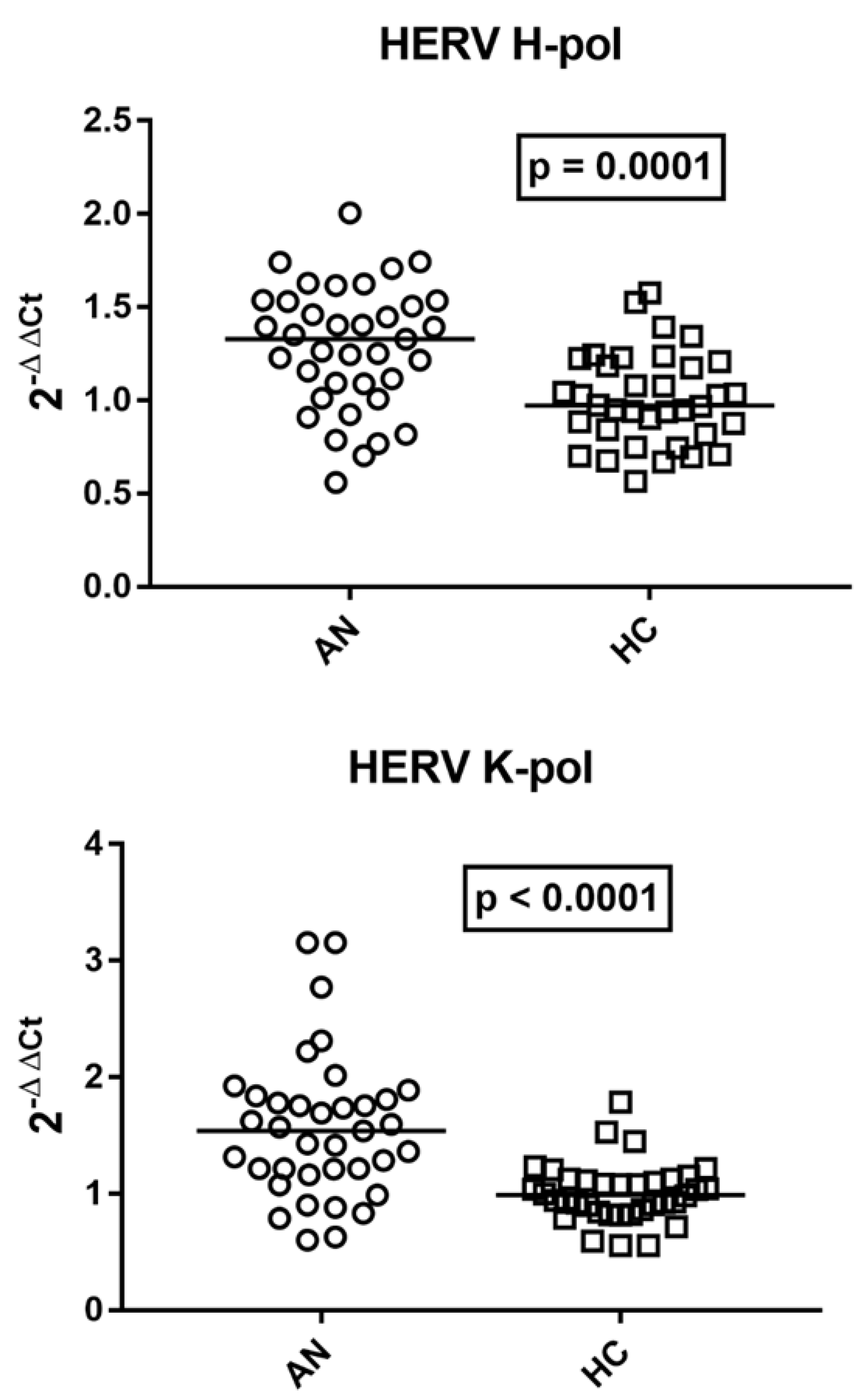
Figure 1. Transcription levels of pol genes of HERV-H and HERV-K in whole blood from 37 adolescents with AN and 36 age-matched HCs. Medians and IQR 25–75%: HERV-H-pol: AN 1.33, 1.09–1.53; HC 0.97, 0.84–1.21; HERV-K-pol: AN 1.54, 1.21–1.81; HC 1.00, 0.86–1.12. 2−ΔΔCt = Relative expression according to the 2−ΔΔCt method. Circles and squares show the median of three individual measurements; horizontal lines show the median values.
Ijms 27 03755 g001
Figure 2. Transcription levels of pol gene and env gene of HERV-W in whole blood from 37 adolescents with AN and 36 age-matched HCs. Medians and IQR 25–75%: HERV-W-pol: AN 0.70, 0.60–0.84; HC 1.21, 0.93–1.40; HERV-W-env: AN 0.90, 0.75–1.02; HC 1.08, 0.87–1.25. 2−ΔΔCt = Relative expression according to the 2−ΔΔCt method. Circles and squares show the median of three individual measurements; horizontal lines show the median values.
Ijms 27 03755 g002
Figure 3. Transcription levels of env genes of SYN 1 and SYN 2 in whole blood from 37 subjects with AN and 26 HC. Medians and IQR 25–75%: SYN 1: AN 1.15, 0.94–1.50; HC 1.02, 0.76–1.29; SYN 2: AN 0.95, 0.82–1.15; HC 1.01, 0.80–1.17. 2−ΔΔCt = Relative expression according to the 2−ΔΔCt method. Circles and squares show the median of three individual measurements; horizontal lines show the median values.
Ijms 27 03755 g003
Figure 4. Transcription levels of TRIM28 and SETDB1 in whole blood from 37 adolescents with AN and 26 age-matched HCs. Medians and IQR 25–75%: TRIM28 AN 1.03, 0.75–1.38; HC 0.93, 0.77–1.29; SETDB1 AN 1.41, 1.16–1.69; HC 1.02, 0.84–1.19. 2−ΔΔCt = Relative expression according to the 2−ΔΔCt method. Circles and squares show the median of three individual measurements; horizontal lines show the median values.
Ijms 27 03755 g004
Table 1. Demographics and clinical characteristics of the sample. IQR: inter-quartile range. * Comorbidities: at least one among major depression, polarized anxiety disorder, obsessive-compulsive disorder or post-traumatic stress disorder. ** Pharmacotherapy: at least one among SSRI, benzodiazepines or atypical antipsychotics.
Total sample, n37
Females, n (%)37 (100)
AN-R, n (%)37 (100)
DH service, n (%)17 (46)
Inpatient, n (%)20 (54)
Age, yr, median (IQR)14.95 (14.23–15.96)
Age at onset, yr, median (IQR)13 (12–14)
Age at admission, yr, median (IQR)14 (13–15.5)
Comorbidities *, n (%)37 (100)
Pharmacotherapy **, n (%)31 (83.78)
Bingeing, n (%)1 (2.70)
Vomiting, n (%)3 (8.10)
Misuse of laxatives, n (%)1 (2.70)
Table 2. Primers and probes used to assess the transcription levels of pol genes of HERV-H, -K and –W, of env genes of Syncytin 1, Syncytin 2 and HERV-W (MSRV), of TRIM28 and SETDB1, and of GDPH.
NamePrimer/
Probe
Sequence
HERV-H polForward5′-TGGACTGTGCTGCCGCAA-3′
Reverse5′-GAAGSTCATCAATATATTGAATAAGGTGAGA-3′
Probe6FAM-5′-TTCAGGGACAGCCCTCGTTACTTCAGCCAAGCTC-3′-TAMRA
HERV-K polForward5′-CCACTGTAGAGCCTCCTAAACCC-3′
Reverse5′-TTGGTAGCGGCCACTGATTT-3′
Probe6FAM-5′-CCCACACCGGTTTTTCTGTTTTCCAAGTTAA-3′-TAMRA
HERV-W polForward5′-ACMTGGAYKRTYTTRCCCCAA-3′
Reverse5′-GTAAATCATCCACMTAYYGAAGGAYMA-3′
Probe6FAM-5′-TYAGGGATAGCCCYCATCTRTTTGGYCAGGCA-3′-TAMRA
Syncytin 1 envForward5′-ACTTTGTCTCTTCCAGAATCG-3′
Reverse5′-GCGGTAGATCTTAGTCTTGG-3′
Probe6FAM-5′-TGCATCTTGGGCTCCAT-3′-TAMRA
Syncytin 2 envForward5′-GCCTGCAAATAGTCTTCTTT-3′
Reverse5′-ATAGGGGCTATTCCCATTAG-3′
Probe6FAM-5′-TGATATCCGCCAGAAACCTCCC-3′-TAMRA
HERV-W envForward5′-CTTCCAGAATTGAAGCTGTAAAGC-3′
Reverse5′-GGGTTGTGCAGTTGAGATTTCC-3′
Probe6FAM-5′-TTCTTCAAATGGAGCCCCAGATGCAG-3′-TAMRA
TRIM28Forward5′-GCCTCTGTGTGAGACCTGTGTAGA-3′
Reverse5′-CCAGTAGAGCGCACAGTATGGT-3′
Probe6FAM-5′-CGCACCAGCGGGTGAAGTACACC-3′-TAMRA
SETDB1Forward5′-GCCGTGACTTCATAGAGGAGTATGT-3′
Reverse5′-GCTGGCCACTCTTGAGCAGTA-3′
Probe6FAM-5′-TGCCTACCCCAACCGCCCCAT-3′-TAMRA
GAPDHForward5′-CGAGATCCCTCCAAAATCAA-3′
Reverse5′-TTCACACCCATGACGAACAT-3′
Probe6FAM-5′-TCCAACGCAAAGCAATACATGAAC-3′-TAMRA
Disclaimer/Publisher’s Note: The statements, opinions and data contained in all publications are solely those of the individual author(s) and contributor(s) and not of MDPI and/or the editor(s). MDPI and/or the editor(s) disclaim responsibility for any injury to people or property resulting from any ideas, methods, instructions or products referred to in the content.