Development of Small-Molecule Allosteric Modulators of Beta-Galactosidase (β-Gal) for the Treatment of GM1 Gangliosidosis and Morquio B

 , , , , , and
Abstract
1. Introduction
2. Results
2.1. Allosteric Binding Site Selection Using Magellan Technology
2.2. Discovery and Experimental Validation of Small-Molecule Hits That Stabilize β-Gal
2.2.1. In Silico Identification of Small-Molecule Hits
2.2.2. Experimental Validation of Hit Compounds by Thermal Stability Assessment of Recombinant GLB1 Protein
2.3. Immunocytochemistry as a Screening Tool for Evaluating Hit Compounds in GM1 Gangliosidosis Fibroblasts
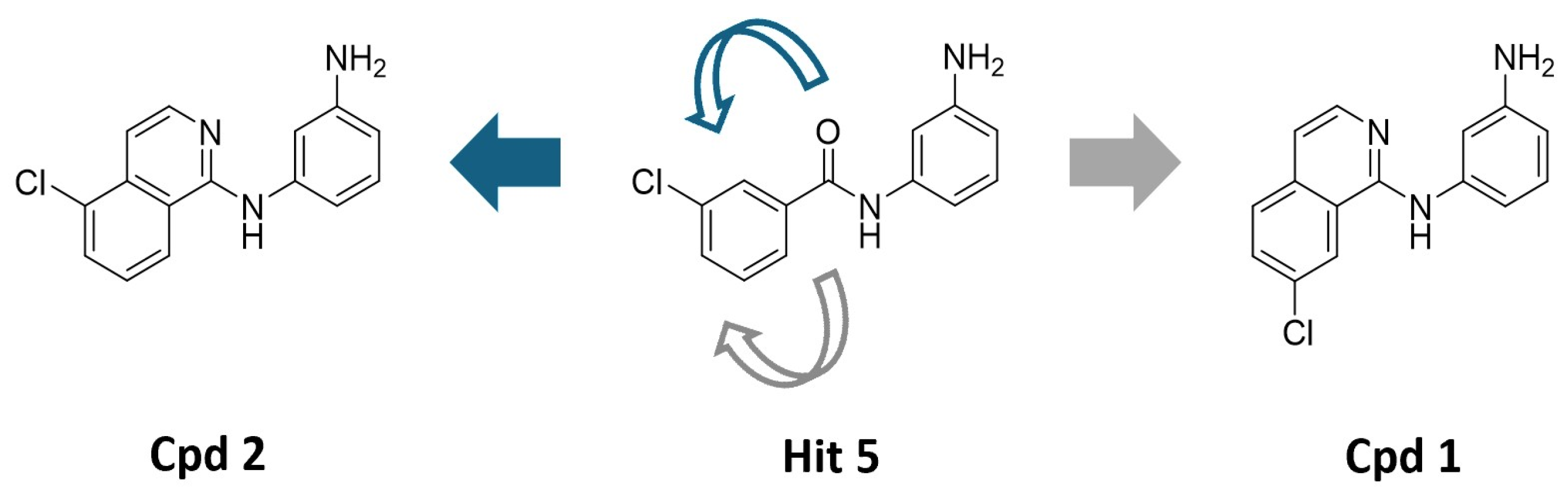
2.4. Identification of a Novel Chemical Series of GLB1 STARs Through Scaffold Hopping
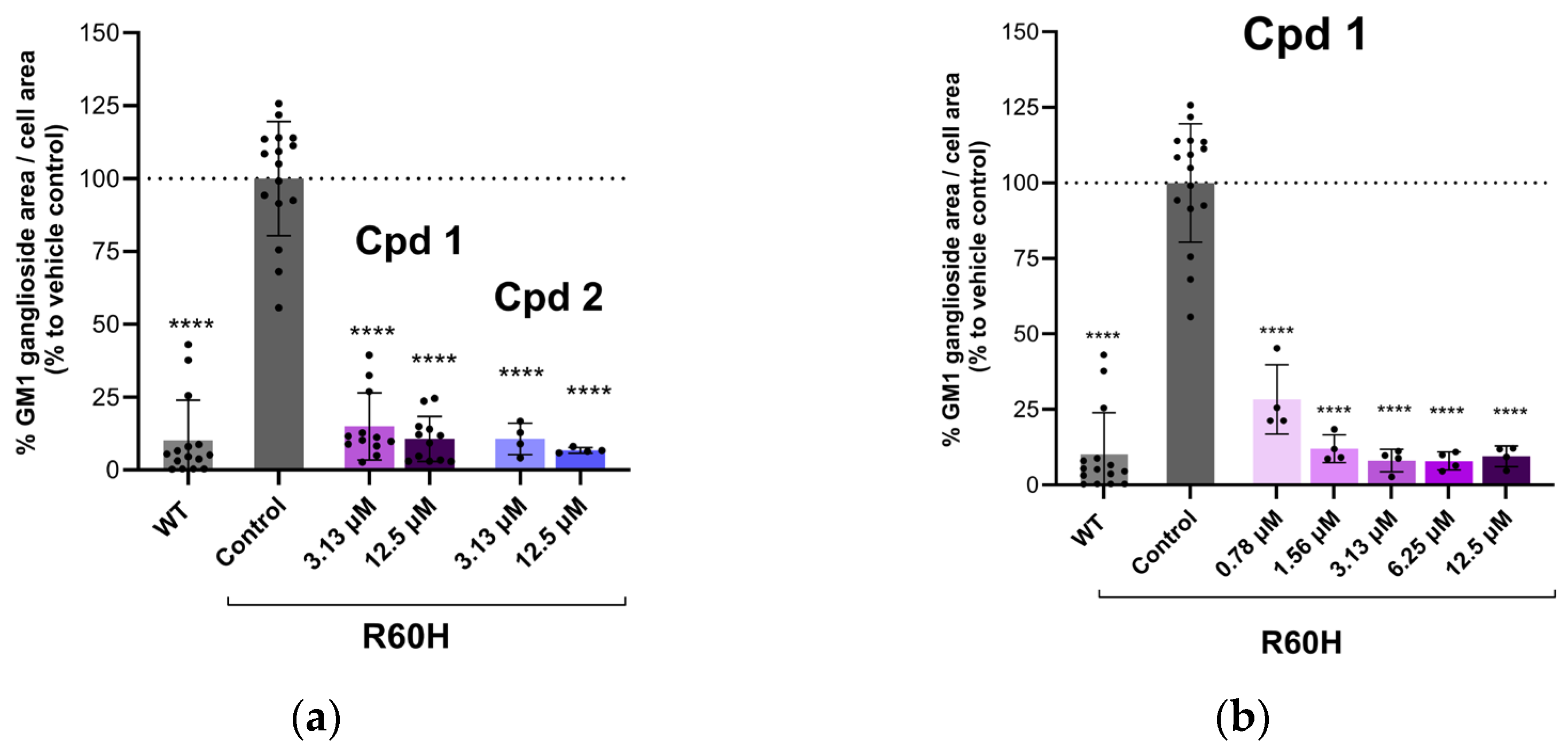
2.5. Dose-Dependent Efficacy of Cpd 1 and Cpd 2
2.6. SAR Exploration and Optimization of the Chemical Series
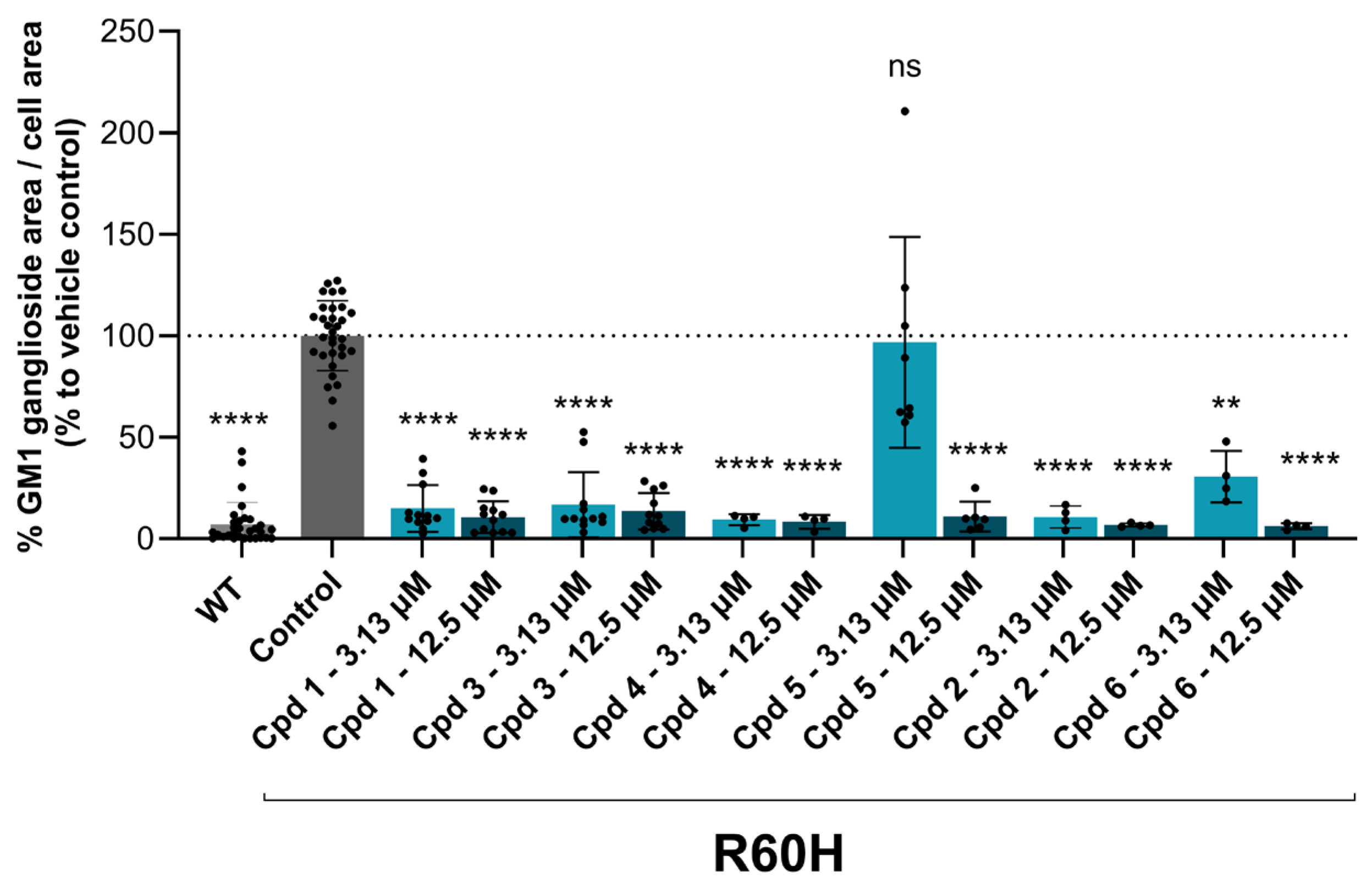
2.6.1. SAR Exploration
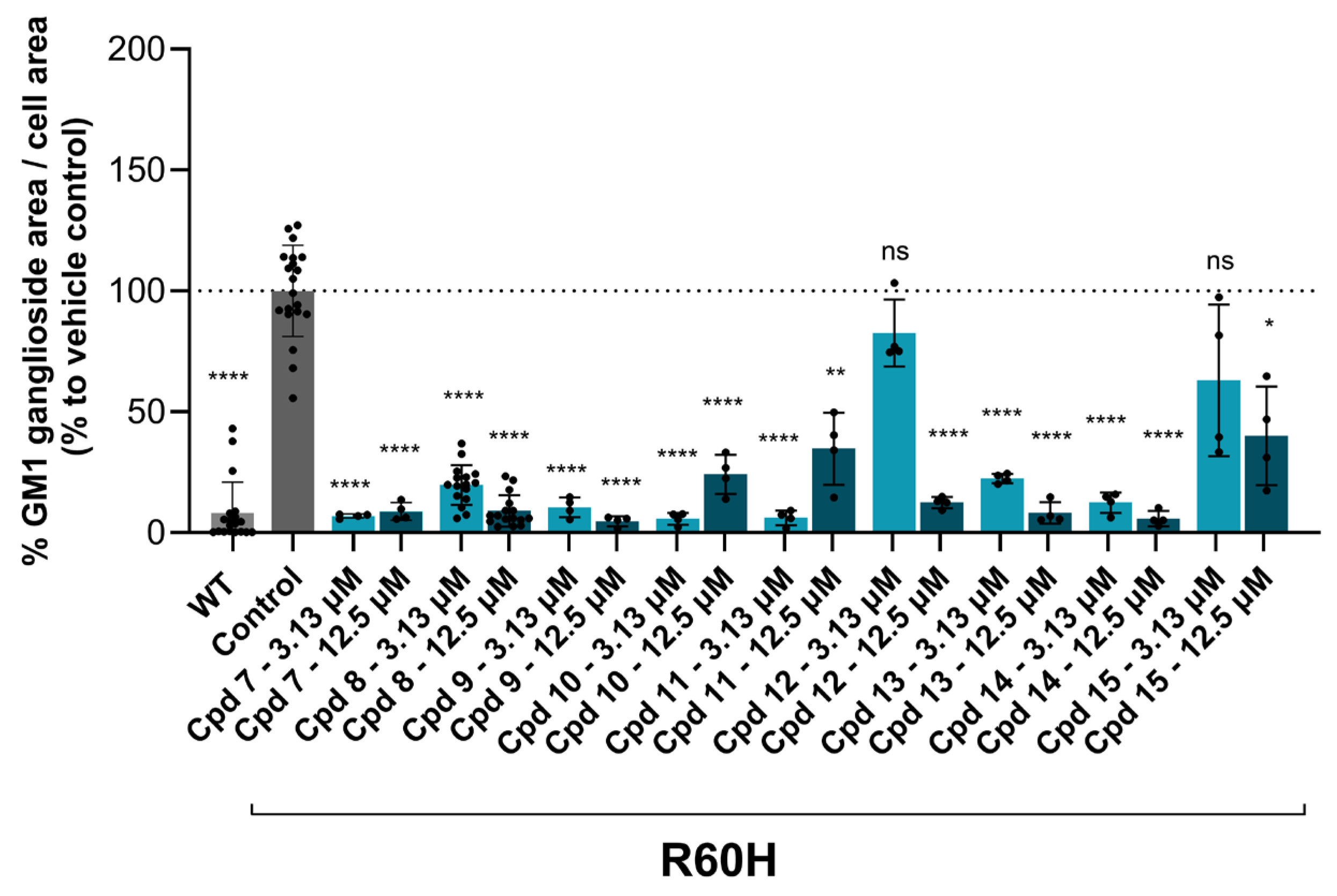
2.6.2. Exploration of Substituted Isoquinolines
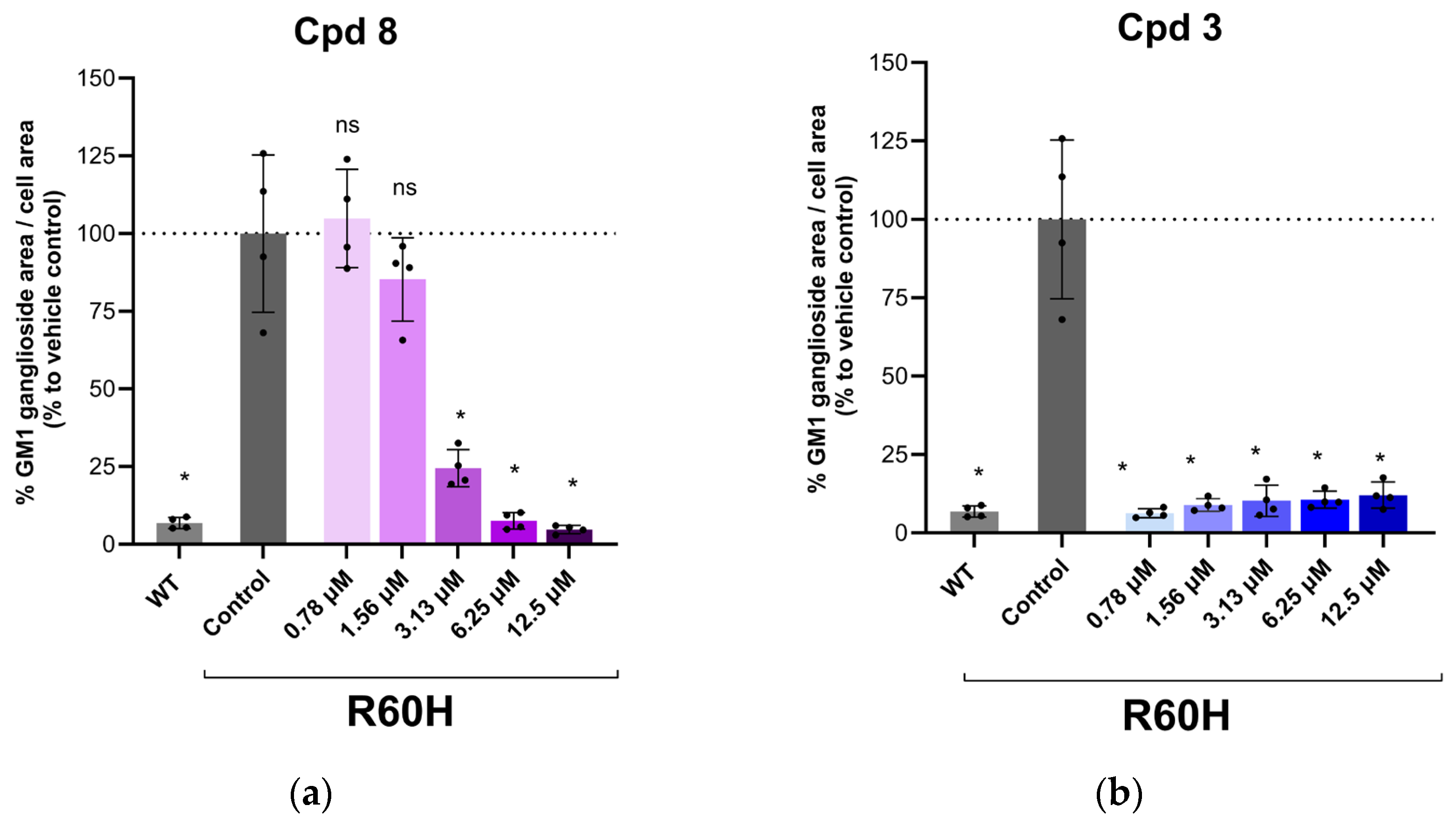
2.6.3. Extended Dose–Response Analysis
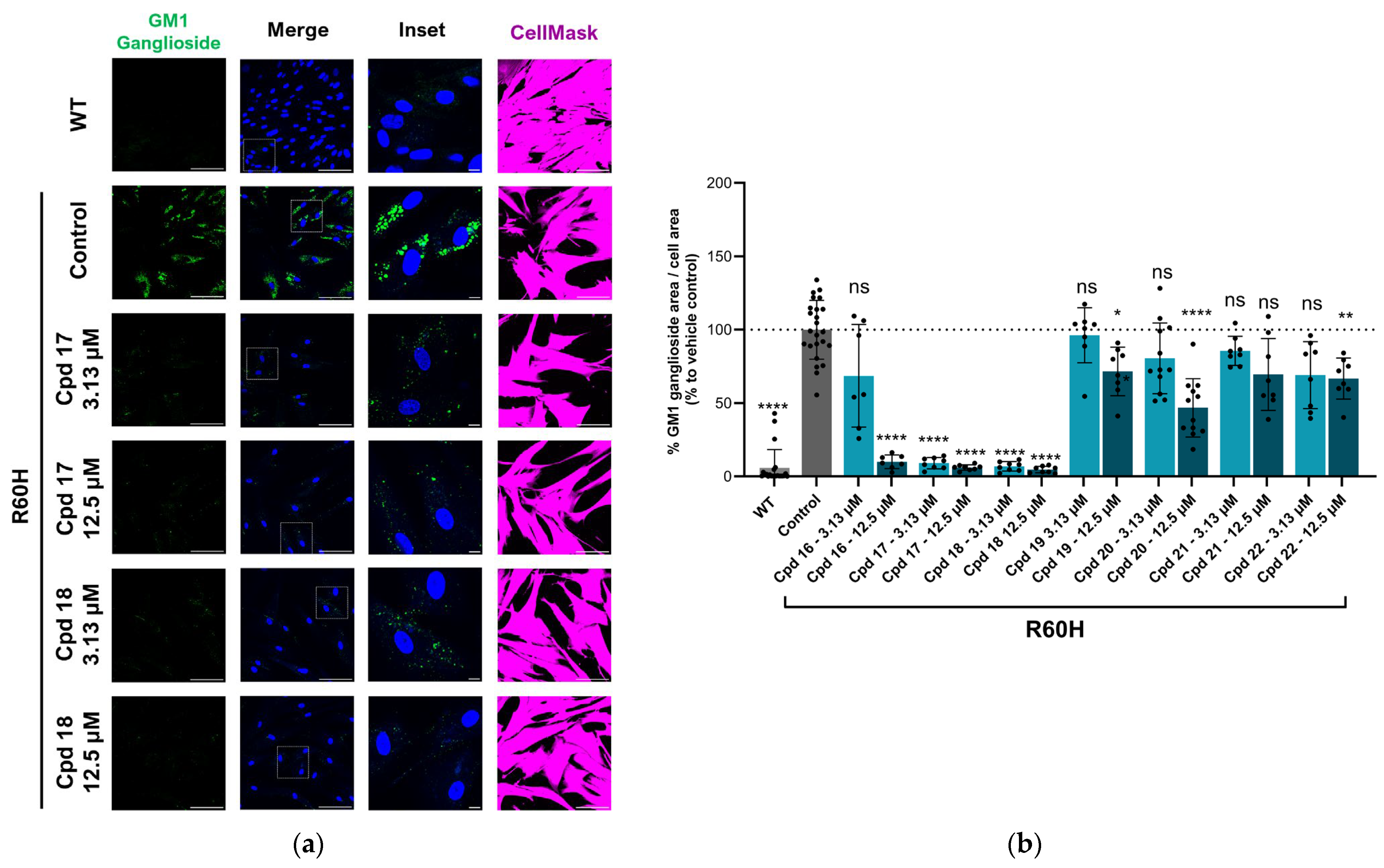
2.6.4. Exploration of Diaminoaryl Moiety
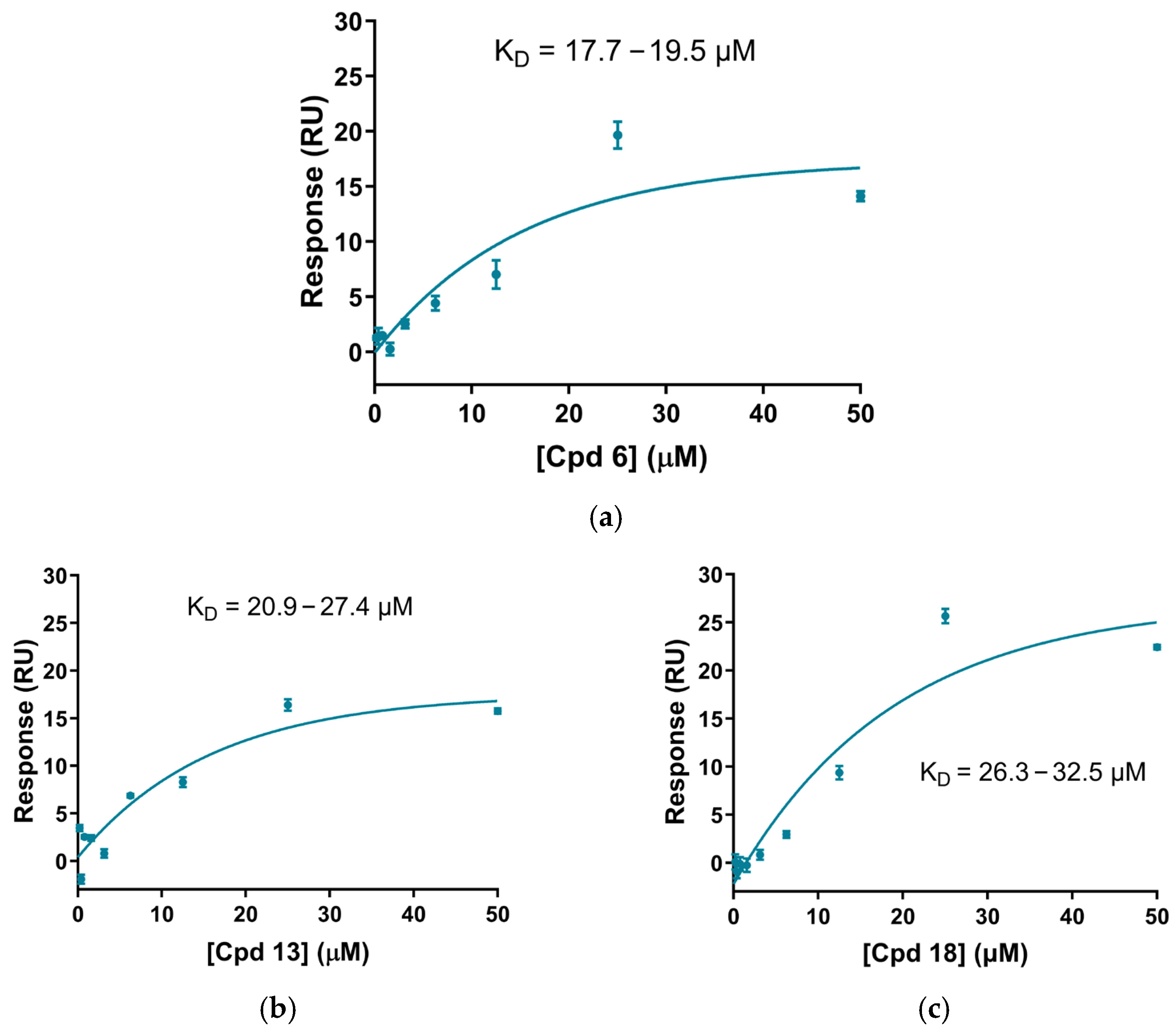
2.7. Confirmation of STARS Binding to β-Gal by Surface Plasmon Resonance (SPR)
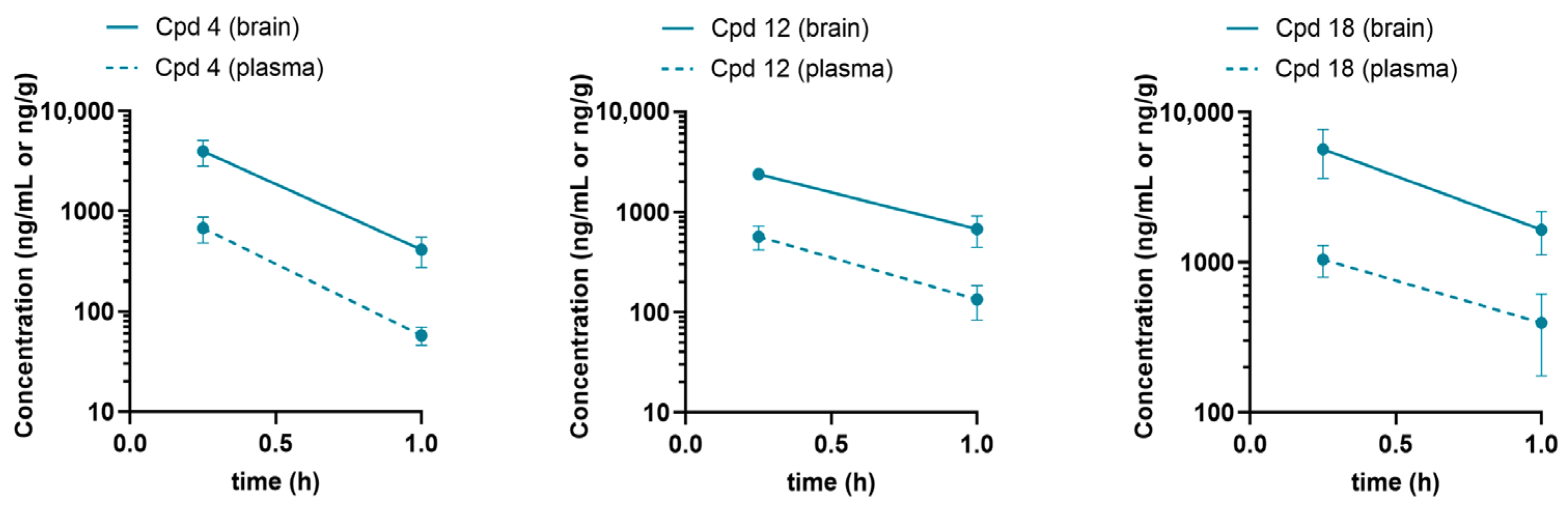
2.8. BBB Penetration
3. Discussion
4. Materials and Methods
4.1. Virtual Screening Using Magellan Technology
4.2. Differential Scanning Fluorimetry (DSF) Assay
4.3. Immunocytochemistry and Microscopy Imaging
4.3.1. Cell Culture
4.3.2. Fixing and Staining
4.3.3. Imaging and Analysis
4.3.4. Statistical Analysis
4.4. Surface Plasmon Resonance (SPR) Binding Assay
4.4.1. Protein Immobilization
4.4.2. Binding Studies
4.4.3. Data Analysis
4.5. BBB Penetration (NeuroPK Assay)
4.5.1. Sample Collection and Quantification
4.5.2. LC-MS/MS Conditions
5. Conclusions
Supplementary Materials
Author Contributions
Funding
Institutional Review Board Statement
Informed Consent Statement
Data Availability Statement
Acknowledgments
Conflicts of Interest
Abbreviations
| ANOVA | Analysis of variance |
| BBB | Blood–brain barrier |
| β-Gal | Beta-galactosidase |
| BSA | Bovine Serum Albumin |
| CHO | Chinese hamster ovary |
| CNS | Central nervous system |
| Cpd | Compound |
| DAPI | 4′,6-diamidino-2-phenylindole |
| DMEM | Dulbecco’s Modified Eagle Medium |
| DMSO | Dimethyl sulfoxide |
| DSF | Differential scanning fluorimetry |
| ERT | Enzyme replacement therapy |
| FCS | Fetal calf serum |
| GLB1 | Galactosidase beta 1 |
| GM1 | Monosialotetrahexosylganglioside |
| ICC | Immunocytochemistry |
| i.p. | Intraperitoneal |
| KD | Dissociation constant |
| Kp | Partition coefficient |
| LLOQ | Lower Limit of Quantification |
| LC-MS/MS | Liquid chromatography–tandem mass spectrometry |
| LSDs | Lysosomal storage disorders |
| MDmix | Molecular Dynamics in Organic–Aqueous Solvent Mixtures |
| MPS IV | Mucopolysaccharidosis type IVB |
| NMP | N-methyl-2-pyrrolidone |
| NN-DGJ | N-nonyl-deoxygalactonojirimycin |
| PBS | Phosphate-buffered saline |
| PC | Pharmacological chaperone |
| PK | Pharmacokinetics |
| RT | Room temperature |
| RU | Resonance units |
| SAR | Structure–activity relationship |
| SD | Standard deviation |
| SEE-Tx | Site-directed enzyme enhancement therapy |
| SPR | Surface Plasmon Resonance |
| SRT | Substrate reduction therapy |
| STARs | Structurally targeted allosteric regulators |
| Tm | Melting temperature |
| VS | Virtual screening |
| WT | Wild type |
References
- Nicoli, E.R.; Annunziata, I.; d’Azzo, A.; Platt, F.M.; Tifft, C.J.; Stepien, K.M. GM1 gangliosidosis—A mini-review. Front. Genet. 2021, 12, 734878. [Google Scholar] [CrossRef]
- Callahan, J.W. Molecular basis of GM1 gangliosidosis and Morquio disease, type B. Structure–function studies of lysosomal β-galactosidase and the non-lysosomal β-galactosidase-like protein. Biochim. Biophys. Acta Mol. Basis Dis. 1999, 1455, 85–103. [Google Scholar] [CrossRef] [PubMed]
- Brunetti-Pierri, N.; Scaglia, F. GM1 gangliosidosis: Review of clinical, molecular, and therapeutic aspects. Mol. Genet. Metab. 2008, 94, 391–396. [Google Scholar] [CrossRef]
- Baehner, F.; Schmiedeskamp, C.; Krummenauer, F.; Miebach, E.; Bajbouj, M.; Whybra, C.; Kohlschütter, A.; Kampmann, C.; Beck, M. Cumulative incidence rates of the mucopolysaccharidoses in Germany. J. Inherit. Metab. Dis. 2005, 28, 1011–1017. [Google Scholar] [CrossRef]
- Yuskiv, N.; Higaki, K.; Stockler-Ipsiroglu, S. Morquio B disease. Disease characteristics and treatment options of a distinct GLB1-related dysostosis multiplex. Int. J. Mol. Sci. 2020, 21, 9121. [Google Scholar] [CrossRef]
- Foster, D.; Williams, L.; Arnold, N.; Larsen, J. Therapeutic developments for neurodegenerative GM1 gangliosidosis. Front. Neurosci. 2024, 18, 1392683. [Google Scholar] [CrossRef]
- Stütz, A.E.; Thonhofer, M.; Weber, P.; Wolfsgruber, A.; Wrodnigg, T.M. Pharmacological chaperones for β-galactosidase related to G(M1)—Gangliosidosis and Morquio B: Recent sdvances. Chem. Rec. 2021, 21, 2980–2989. [Google Scholar] [CrossRef] [PubMed]
- Fantur, K.; Hofer, D.; Schitter, G.; Steiner, A.J.; Pabst, B.M.; Wrodnigg, T.M.; Stütz, A.E.; Paschke, E. DLHex-DGJ, a novel derivative of 1-deoxygalactonojirimycin with pharmacological chaperone activity in human G(M1)-gangliosidosis fibroblasts. Mol. Genet. Metab. 2010, 100, 262–268. [Google Scholar] [CrossRef]
- Steiner, A.J.; Schitter, G.; Stütz, A.E.; Wrodnigg, T.M.; Tarling, C.A.; Withers, S.G.; Fantur, K.; Mahuran, D.; Paschke, E.; Tropak, M. 1-Deoxygalactonojirimycin-lysine hybrids as potent D-galactosidase inhibitors. Bioorganic Med. Chem. 2008, 16, 10216–10220. [Google Scholar] [CrossRef]
- Suzuki, Y.; Ogawa, S.; Sakakibara, Y. Chaperone therapy for neuronopathic lysosomal diseases: Competitive inhibitors as chemical chaperones for enhancement of mutant enzyme activities. Perspect. Med. Chem. 2009, 3, 7–19. [Google Scholar] [CrossRef] [PubMed]
- Valenzano, K.J.; Khanna, R.; Powe, A.C.; Boyd, R.; Lee, G.; Flanagan, J.J.; Benjamin, E.R. Identification and characterization of pharmacological chaperones to correct enzyme deficiencies in lysosomal storage disorders. Assay Drug Dev. Technol. 2011, 9, 213–235. [Google Scholar] [CrossRef]
- Parenti, G. Treating lysosomal storage diseases with pharmacological chaperones: From concept to clinics. EMBO Mol. Med. 2009, 1, 268–279. [Google Scholar] [CrossRef]
- Tran, M.L.; Génisson, Y.; Ballereau, S.; Dehoux, C. Second-generation pharmacological chaperones: Beyond inhibitors. Molecules 2020, 25, 3145. [Google Scholar] [CrossRef]
- Lindquist, S.L.; Kelly, J.W. Chemical and biological approaches for adapting proteostasis to ameliorate protein misfolding and aggregation diseases: Progress and prognosis. Cold Spring Harb. Perspect. Biol. 2011, 3, a004507. [Google Scholar] [CrossRef]
- Matsuda, J.; Suzuki, O.; Oshima, A.; Yamamoto, Y.; Noguchi, A.; Takimoto, K.; Itoh, M.; Matsuzaki, Y.; Yasuda, Y.; Ogawa, S.; et al. Chemical chaperone therapy for brain pathology in GM1-gangliosidosis. Proc. Natl. Acad. Sci. USA 2003, 100, 15912–15917. [Google Scholar] [CrossRef] [PubMed]
- Rigat, B.A.; Tropak, M.B.; Buttner, J.; Crushell, E.; Benedict, D.; Callahan, J.W.; Martin, D.R.; Mahuran, D.J. Evaluation of N-nonyl-deoxygalactonojirimycin as a pharmacological chaperone for human GM1 gangliosidosis leads to identification of a feline model suitable for testing enzyme enhancement therapy. Mol. Genet. Metab. 2012, 107, 203–212. [Google Scholar] [CrossRef] [PubMed]
- Front, S.; Biela-Banaś, A.; Burda, P.; Ballhausen, D.; Higaki, K.; Caciotti, A.; Morrone, A.; Charollais-Thoenig, J.; Gallienne, E.; Demotz, S.; et al. (5aR)-5a-C-Pentyl-4-epi-isofagomine: A powerful inhibitor of lysosomal β-galactosidase and a remarkable chaperone for mutations associated with GM1-gangliosidosis and Morquio disease type B. Eur. J. Med. Chem. 2017, 126, 160–170. [Google Scholar] [CrossRef] [PubMed]
- Clemente, F.; Martínez-Bailén, M.; Matassini, C.; Morrone, A.; Falliano, S.; Caciotti, A.; Paoli, P.; Goti, A.; Cardona, F. Synthesis of a new β-galactosidase inhibitor displaying pharmacological chaperone properties for GM1 gangliosidosis. Molecules 2022, 27, 4008. [Google Scholar] [CrossRef]
- Siriwardena, A.; Sonawane, D.P.; Bande, O.P.; Markad, P.R.; Yonekawa, S.; Tropak, M.B.; Ghosh, S.; Chopade, B.A.; Mahuran, D.J.; Dhavale, D.D. Synthesis of 1,5-dideoxy-1,5-iminoribitol C-glycosides through a nitrone–olefin cycloaddition domino strategy: Identification of pharmacological chaperones of mutant human lysosomal β-galactosidase. J. Org. Chem. 2014, 79, 4398–4404. [Google Scholar] [CrossRef]
- Fregno, I.; Pérez-Carmona, N.; Rudinskiy, M.; Soldà, T.; Bergmann, T.J.; Ruano, A.; Delgado, A.; Cubero, E.; Bellotto, M.; García-Collazo, A.M.; et al. Allosteric modulation of GCase enhances lysosomal activity and reduces ER stress in GCase-related disorders. Int. J. Mol. Sci. 2025, 26, 4392. [Google Scholar] [CrossRef]
- Montpeyo, M.; Pérez-Carmona, N.; Cubero, E.; Delgado, A.; Ruano, A.; Carrillo, J.; Bellotto, M.; Martinez-Vicente, M.; Garcia-Collazo, A.M. Developing allosteric chaperones for GBA1-associated disorders-An integrated computational and experimental approach. Int. J. Mol. Sci. 2024, 26, 9. [Google Scholar] [CrossRef]
- Ohto, U.; Usui, K.; Ochi, T.; Yuki, K.; Satow, Y.; Shimizu, T. Crystal structure of human β-galactosidase: Structural basis of GM1 gangliosidosis and Morquio B diseases. J. Biol. Chem. 2012, 287, 1801–1812. [Google Scholar] [CrossRef] [PubMed]
- Rudinskiy, M.; Pons-Vizcarra, M.; Soldà, T.; Fregno, I.; Bergmann, T.J.; Ruano, A.; Delgado, A.; Morales, S.; Barril, X.; Bellotto, M.; et al. Validation of a highly sensitive HaloTag-based assay to evaluate the potency of a novel class of allosteric β-galactosidase correctors. PLoS ONE 2023, 18, e0294437. [Google Scholar] [CrossRef] [PubMed]
- Seco, J.; Luque, F.J.; Barril, X. Binding site detection and druggability index from first principles. J. Med. Chem. 2009, 52, 2363–2371. [Google Scholar] [CrossRef]
- Barril Alonso, X.; Alvarez Garcia, D.; Schmidtke, P. Method of Binding Site and Binding Energy Determination by Mixed Explicit Solvent Simulations. 2021. Available online: https://patentscope.wipo.int/search/en/WO2013092922 (accessed on 6 October 2025).
- Alvarez-Garcia, D.; Barril, X. Molecular simulations with solvent competition quantify water displaceability and provide accurate interaction maps of protein binding sites. J. Med. Chem. 2014, 57, 8530–8539. [Google Scholar] [CrossRef]
- Alvarez-Garcia, D.; Schmidtke, P.; Cubero, E.; Barril, X. Extracting atomic contributions to binding free energy using Molecular Dynamics Simulations with Mixed Solvents (MDmix). Curr. Drug Discov. Technol. 2022, 19, 62–68. [Google Scholar] [PubMed]
- Ruiz-Carmona, S.; Alvarez-Garcia, D.; Foloppe, N.; Garmendia-Doval, A.B.; Juhos, S.; Schmidtke, P.; Barril, X.; Hubbard, R.E.; Morley, S.D. rDock: A fast, versatile and open source program for docking ligands to proteins and nucleic acids. PLoS Comput. Biol. 2014, 10, e1003571. [Google Scholar] [CrossRef]
- Durant, J.L.; Leland, B.A.; Henry, D.R.; Nourse, J.G. Reoptimization of MDL keys for use in drug discovery. J. Chem. Inf. Comput. Sci. 2002, 42, 1273–1280. [Google Scholar] [CrossRef]
- Niesen, F.H.; Berglund, H.; Vedadi, M. The use of differential scanning fluorimetry to detect ligand interactions that promote protein stability. Nat. Protoc. 2007, 2, 2212–2221. [Google Scholar] [CrossRef]
- Lucas, T.G.; Gomes, C.M.; Henriques, B.J. Thermal shift and stability assays of disease-related misfolded proteins using differential scanning fluorimetry. In Protein Misfolding Diseases: Methods and Protocols; Gomes, C.M., Ed.; Springer: New York, NY, USA, 2019; pp. 255–264. [Google Scholar]
- Wang, Z.H.; Zeng, B.; Shibuya, H.; Johnson, G.S.; Alroy, J.; Pastores, G.M.; Raghavan, S.; Kolodny, E.H. Isolation and characterization of the normal canine beta-galactosidase gene and its mutation in a dog model of GM1-gangliosidosis. J. Inherit. Metab. Dis. 2000, 23, 593–606. [Google Scholar] [CrossRef]
- Schuck, P. Use of surface plasmon resonance to probe the equilibrium and dynamic aspects of interactions between biological macromolecules. Annu. Rev. Biophys. Biomol. Struct. 1997, 26, 541–566. [Google Scholar] [CrossRef] [PubMed]
- Ramakrishnan, N.A.; Drescher, M.J.; Sheikhali, S.A.; Khan, K.M.; Hatfield, J.S.; Dickson, M.J.; Drescher, D.G. Molecular identification of an N-type Ca2+ channel in saccular hair cells. Neuroscience 2006, 139, 1417–1434. [Google Scholar] [CrossRef]
- Schalli, M.; Weber, P.; Tysoe, C.; Pabst, B.M.; Thonhofer, M.; Paschke, E.; Stütz, A.E.; Tschernutter, M.; Windischhofer, W.; Withers, S.G. A new type of pharmacological chaperone for G(M1)-gangliosidosis related human lysosomal β-galactosidase: N-Substituted 5-amino-1-hydroxymethyl-cyclopentanetriols. Bioorganic Med. Chem. Lett. 2017, 27, 3431–3435. [Google Scholar] [CrossRef] [PubMed]
- Edelmann, M.J.; Maegawa, G.H.B. CNS-targeting therapies for lysosomal storage diseases: Current advances and challenges. Front. Mol. Biosci. 2020, 7, 559804. [Google Scholar] [CrossRef]
- Ellison, S.; Parker, H.; Bigger, B. Advances in therapies for neurological lysosomal storage disorders. J. Inh. Metab. Dis. 2023, 46, 874–905. [Google Scholar] [CrossRef]
- Langdon, S.R.; Ertl, P.; Brown, N. Bioisosteric replacement and scaffold hopping in lead generation and optimization. Mol. Inf. 2010, 29, 366–385. [Google Scholar] [CrossRef]
- Zhao, H. Scaffold selection and scaffold hopping in lead generation: A medicinal chemistry perspective. Drug Discov. Today 2007, 12, 149–155. [Google Scholar] [CrossRef] [PubMed]



 |  | ||||||
| R1 | Cpd | % GM1 Ganglioside Area/Cell Area (% to Vehicle Control) | R1 | Cpd | % GM1 Ganglioside Area/Cell Area (% to Vehicle Control) | ||
| 12.5 µM | 3.13 µM | 12.5 µM | 3.13 µM | ||||
 | 1 | 11 | 15 |  | 2 | 7 | 11 |
 | 3 | 14 | 17 |  | 6 | 6 | 31 |
 | 4 | 8 | 9 | ||||
 | 5 | 11 | 97 | ||||
 | |||||||
| R1 | Cpd | % GM1 Ganglioside Area/Cell Area (% to Vehicle Control) | R1 | Cpd | % GM1 Ganglioside Area/Cell Area (% to Vehicle Control) | ||
| 12.5 µM | 3.13 µM | 12.5 µM | 3.13 µM | ||||
 | 7 | 9 | 7 |  | 12 | 12 | 83 |
 | 8 | 9 | 20 |  | 13 | 8 | 22 |
 | 9 | 5 | 12 |  | 14 | 6 | 12 |
 | 10 | 24 | 6 |  | 15 | 40 | 63 |
 | 11 | 35 | 6 | ||||
 | |||||
| R1 | R2 | R3 | Cpd | % GM1 Ganglioside Area/Cell Area (% to Vehicle Control) | |
| 12.5 µM | 3.13 µM | ||||
 | -CF3 | -H | 16 | 10 | 69 |
 | -Cl | -H | 17 | 6 | 9 |
 | -Cl | -H | 18 | 5 | 7 |
 | -Cl | -H | 19 | 72 | 96 |
 | -OMe | -H | 20 | 47 | 80 |
 | -H | -CN | 21 | 70 | 86 |
 | -H | -CN | 22 | 67 | 69 |
| Compound | Dose Response (pH 7.4) | KD (µM) |
|---|---|---|
| NN-DGJ (control) | Yes | 0.37–1.12 |
| Cpd 6 | Yes | 17.7–19.5 |
| Cpd 8 | Yes | 21.5–24.3 |
| Cpd 10 | Yes | 36.9–45.8 |
| Cpd 11 | Yes | 38.3–46.3 |
| Cpd 12 | Yes | 39.5–61 |
| Cpd 13 | Yes | 20.9–27.4 |
| Cpd 16 | Yes | 60.1–62.8 |
| Cpd 17 | Yes | 72.2–110 |
| Cpd 18 | Yes | 26.3–32.5 |
| Cpd 19 | Yes | 21–23.7 |
| Compound | Time (h) | Plasma Concentration (ng/mL) | Brain Concentration (ng/g) | Brain-Kp |
|---|---|---|---|---|
| Cpd 18 (i.p. 10 mg/kg) | 0.25 | 1042 | 5647 | 5.46 |
| 1 | 395 | 1645 | 4.50 | |
| Cpd 12 (i.p. 10 mg/kg) | 0.25 | 570 | 2389 | 4.40 |
| 1 | 134 | 678 | 5.32 | |
| Cpd 4 (i.p. 10 mg/kg) | 0.25 | 678 | 3950 | 5.93 |
| 1 | 58 | 412 | 7.70 |
| Antibody | Manufacturer | Catalog Number/Clone | Dilution |
|---|---|---|---|
| HCS CellMask | ThermoFisher | T8787 | 1:5000 (IF) |
| Ganglioside GM1 | Abcam | ab23943 | 1:500 (IF) |
| Alexa Fluor® 488 Donkey anti-Rabbit IgG | Invitrogen | A21206 | 1:2000 (IF) |
Disclaimer/Publisher’s Note: The statements, opinions and data contained in all publications are solely those of the individual author(s) and contributor(s) and not of MDPI and/or the editor(s). MDPI and/or the editor(s) disclaim responsibility for any injury to people or property resulting from any ideas, methods, instructions or products referred to in the content. |
© 2026 by the authors. Licensee MDPI, Basel, Switzerland. This article is an open access article distributed under the terms and conditions of the Creative Commons Attribution (CC BY) license.
Share and Cite
Pérez-Carmona, N.; Cubero, E.; Ruano, A.; Pons-Vizcarra, M.; Delgado, A.; Trapero, A.; Reves, M.; Rodríguez-Pascau, L.; Taylor, J.; Martinell, M.; et al. Development of Small-Molecule Allosteric Modulators of Beta-Galactosidase (β-Gal) for the Treatment of GM1 Gangliosidosis and Morquio B. Int. J. Mol. Sci. 2026, 27, 3631. https://doi.org/10.3390/ijms27083631
Pérez-Carmona N, Cubero E, Ruano A, Pons-Vizcarra M, Delgado A, Trapero A, Reves M, Rodríguez-Pascau L, Taylor J, Martinell M, et al. Development of Small-Molecule Allosteric Modulators of Beta-Galactosidase (β-Gal) for the Treatment of GM1 Gangliosidosis and Morquio B. International Journal of Molecular Sciences. 2026; 27(8):3631. https://doi.org/10.3390/ijms27083631
Chicago/Turabian StylePérez-Carmona, Natàlia, Elena Cubero, Ana Ruano, Maria Pons-Vizcarra, Aida Delgado, Ana Trapero, Marc Reves, Laura Rodríguez-Pascau, Joanne Taylor, Marc Martinell, and et al. 2026. "Development of Small-Molecule Allosteric Modulators of Beta-Galactosidase (β-Gal) for the Treatment of GM1 Gangliosidosis and Morquio B" International Journal of Molecular Sciences 27, no. 8: 3631. https://doi.org/10.3390/ijms27083631
APA StylePérez-Carmona, N., Cubero, E., Ruano, A., Pons-Vizcarra, M., Delgado, A., Trapero, A., Reves, M., Rodríguez-Pascau, L., Taylor, J., Martinell, M., Barril, X., & García-Collazo, A. M. (2026). Development of Small-Molecule Allosteric Modulators of Beta-Galactosidase (β-Gal) for the Treatment of GM1 Gangliosidosis and Morquio B. International Journal of Molecular Sciences, 27(8), 3631. https://doi.org/10.3390/ijms27083631