Higher 25(OH)D Levels at Admission Predict a Favorable Disease Evolution in Moderate-to-Severe COVID-19 Patients
 , , , , , , , ,
  ,
,  and add
Show full author list
and add
Show full author list
Abstract
1. Introduction
2. Results
3. Discussion
4. Materials and Methods
4.1. Patients
4.2. Endpoints Definition
- (1)
- The association between baseline plasma vitamin D levels and an adverse in-hospital outcome (in-hospital death or ICU admission at any time during hospitalization);
- (2)
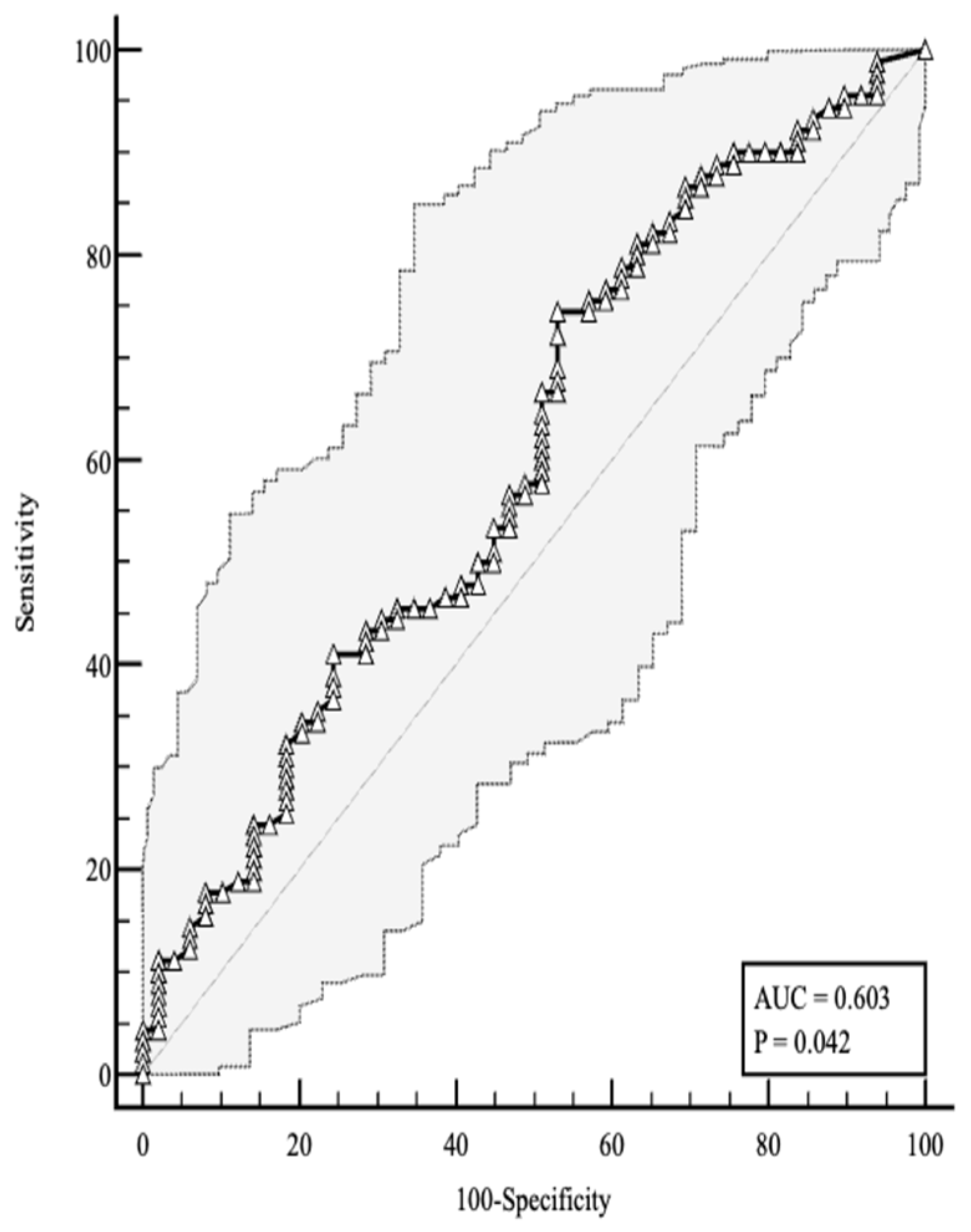
- The association between baseline plasma vitamin D levels and a favorable in-hospital outcome, defined as discharge from hospital within 14 days from admission and/or a National Early Warning Score 2 (NEWS2) ≤2 maintained for at least 24 h within the first 14 days of hospitalization.
4.3. Blood Sample Collection
4.4. Routine Laboratory Evaluation
4.5. Vitamin D Evaluation
4.6. Parathyroid Hormone Evaluation
4.7. Data Collection and Statistical Analysis
5. Conclusions
Author Contributions
Funding
Institutional Review Board Statement
Informed Consent Statement
Data Availability Statement
Conflicts of Interest
References
- Burki, T. WHO ends the COVID-19 public health emergency. Lancet Respir. Med. 2023, 11, 588. [Google Scholar] [CrossRef]
- World Health Organization. Disease Outbreak News; COVID-19—Global Situation. 2025. Available online: https://www.who.int/emergencies/disease-outbreak-news/item/2025-DON572 (accessed on 2 June 2025).
- Jeong, Y.J.; Wi, Y.M.; Park, H.; Lee, J.E.; Kim, S.H.; Lee, K.S. Current and emerging knowledge in COVID-19. Radiology 2023, 306, e222462. [Google Scholar] [CrossRef] [PubMed]
- Zsichla, L.; Müller, V. Risk factors of severe COVID-19: A review of host, viral and environmental factors. Viruses 2023, 15, 175. [Google Scholar] [CrossRef] [PubMed]
- Rizzi, M.; Costanzo, M.; Tonello, S.; Matino, E.; Casciaro, F.G.; Croce, A.; Rizzi, E.; Zecca, E.; Pedrinelli, A.; Vassia, V.; et al. Prognostic markers in hospitalized COVID-19 patients: The role of IP-10 and C-reactive protein. Dis. Markers 2022, 2022, 3528312. [Google Scholar] [CrossRef] [PubMed]
- Corradini, E.; Ventura, P.; Ageno, W.; Cogliati, C.B.; Muiesan, M.L.; Girelli, D.; Pirisi, M.; Gasbarrini, A.; Angeli, P.; Querini, P.R.; et al. Clinical factors associated with death in 3044 COVID-19 patients managed in internal medicine wards in Italy: Results from the SIMI-COVID-19 study of the Italian Society of Internal Medicine (SIMI). Intern. Emerg. Med. 2021, 16, 1005–1015. [Google Scholar] [CrossRef]
- Matheus, S.; Houcke, S.; Lontsi Ngoulla, G.R.; Higel, N.; Ba, A.; Cook, F.; Gourjault, C.; Nkontcho, F.; Demar, M.; Nacher, M.; et al. Mortality trend of severe COVID-19 in under-vaccinated population admitted to ICU in French Amazonia. Trop. Med. Infect. Dis. 2024, 9, 15. [Google Scholar] [CrossRef]
- Vulturar, D.M.; Moacă, L.Ș.; Neag, M.A.; Mitre, A.O.; Alexescu, T.G.; Gherman, D.; Făgărășan, I.; Chețan, I.M.; Gherman, C.D.; Melinte, O.E.; et al. Delta variant in the COVID-19 pandemic: A comparative study on clinical outcomes based on vaccination status. J. Pers. Med. 2024, 14, 358. [Google Scholar] [CrossRef]
- Bohnert, A.S.; Kumbier, K.; Rowneki, M.; Gupta, A.; Bajema, K.; Hynes, D.M.; Viglianti, E.; O’Hare, A.M.; Osborne, T.; Boyko, E.J.; et al. Adverse outcomes of SARS-CoV-2 infection with delta and omicron variants in vaccinated versus unvaccinated US veterans: Retrospective cohort study. BMJ 2023, 381, e074521. [Google Scholar] [CrossRef]
- Dyer, O. COVID-19: Unvaccinated face 11 times risk of death from delta variant, CDC data show. BMJ 2021, 374, n2282. [Google Scholar] [CrossRef]
- Spinoni, E.G.; Mennuni, M.; Rognoni, A.; Grisafi, L.; Colombo, C.; Lio, V.; Renda, G.; Foglietta, M.; Petrilli, I.; D’Ardes, D.; et al. Contribution of Atrial Fibrillation to In-Hospital Mortality in Patients With COVID-19. Circ. Arrhythm. Electrophysiol. 2021, 14, e009375. [Google Scholar] [CrossRef]
- Barrea, L.; Verde, L.; Grant, W.B.; Frias-Toral, E.; Sarno, G.; Vetrani, C.; Ceriani, F.; Garcia-Velasquez, E.; Contreras-Briceño, J.; Savastano, S.; et al. Vitamin D: A role also in long COVID-19? Nutrients 2022, 14, 1625. [Google Scholar] [CrossRef]
- Rizzi, M.; D’Onghia, D.; Tonello, S.; Minisini, R.; Colangelo, D.; Bellan, M.; Castello, L.M.; Gavelli, F.; Avanzi, G.C.; Pirisi, M.; et al. COVID-19 biomarkers at the crossroad between patient stratification and targeted therapy: The role of validated and proposed parameters. Int. J. Mol. Sci. 2023, 24, 7099. [Google Scholar] [CrossRef]
- Barberis, E.; Amede, E.; Khoso, S.; Castello, L.; Sainaghi, P.P.; Bellan, M.; Balbo, P.E.; Patti, G.; Brustia, D.; Giordano, M.; et al. Metabolomics Diagnosis of COVID-19 from Exhaled Breath Condensate. Metabolites 2021, 11, 847. [Google Scholar] [CrossRef]
- Rizzi, M.; Sainaghi, P.P. Vitamin D: A nutraceutical supplement at the crossroad between respiratory infections and COVID-19. Int. J. Mol. Sci. 2025, 26, 2550. [Google Scholar] [CrossRef]
- Feentved Ødum, S.L.; Kongsbak-Wismann, M. Vitamin D and SARS-CoV-2. Basic Clin. Pharmacol. Toxicol. 2023, 133, 6–15. [Google Scholar] [CrossRef]
- Ismailova, A.; White, J.H. Vitamin D, infections and immunity. Rev. Endocr. Metab. Disord. 2022, 23, 265–277. [Google Scholar] [CrossRef] [PubMed]
- White, J.H. Emerging roles of vitamin D-induced antimicrobial peptides in antiviral innate immunity. Nutrients 2022, 14, 284. [Google Scholar] [CrossRef] [PubMed]
- Cui, A.; Zhang, T.; Xiao, P.; Fan, Z.; Wang, H.; Zhuang, Y. Global and regional prevalence of vitamin D deficiency in population-based studies from 2000 to 2022: A pooled analysis of 7.9 million participants. Front. Nutr. 2023, 10, 1070808. [Google Scholar] [CrossRef] [PubMed]
- Alhamlan, F.S.; Al-Qahtani, A.A. SARS-CoV-2 variants: Genetic insights, epidemiological tracking, and implications for vaccine strategies. Int. J. Mol. Sci. 2025, 26, 1263. [Google Scholar] [CrossRef]
- Astroth, C.; Shah, K.S.; Agrawal, S.; Agrawal, A. Weathering the storm: How age and biologics influence the COVID-19 cytokine surge. Pathogens 2025, 14, 346. [Google Scholar] [CrossRef]
- Romero Starke, K.; Reissig, D.; Petereit-Haack, G.; Schmauder, S.; Nienhaus, A.; Seidler, A. The isolated effect of age on the risk of COVID-19 severe outcomes: A systematic review with meta-analysis. BMJ Glob. Health 2021, 6, e006434. [Google Scholar] [CrossRef]
- Giustina, A.; Bouillon, R.; Dawson-Hughes, B.; Ebeling, P.R.; Lazaretti-Castro, M.; Lips, P.; Marcocci, C.; Bilezikian, J.P. Vitamin D in the older population: A consensus statement. Endocrine 2023, 79, 31–44. [Google Scholar] [CrossRef]
- Marcos-Pérez, D.; Sánchez-Flores, M.; Proietti, S.; Bonassi, S.; Costa, S.; Teixeira, J.P.; Fernández-Tajes, J.; Pásaro, E.; Valdiglesias, V.; Laffon, B.; et al. Low vitamin D levels and frailty status in older adults: A systematic review and meta-analysis. Nutrients 2020, 12, 2286. [Google Scholar] [CrossRef] [PubMed]
- Mosekilde, L. Vitamin D and the elderly. Clin. Endocrinol. 2005, 62, 265–281. [Google Scholar] [CrossRef] [PubMed]
- Wimalawansa, S.J. Infections and autoimmunity—The immune system and vitamin D: A systematic review. Nutrients 2023, 15, 3842. [Google Scholar] [CrossRef] [PubMed]
- Ao, T.; Kikuta, J.; Ishii, M. The effects of vitamin D on immune system and inflammatory diseases. Biomolecules 2021, 11, 1624. [Google Scholar] [CrossRef]
- Zhang, Y.; Leung, D.Y.; Richers, B.N.; Liu, Y.; Remigio, L.K.; Riches, D.W.; Goleva, E. Vitamin D inhibits monocyte/macrophage pro-inflammatory cytokine production by targeting MAPK phosphatase-1. J. Immunol. 2012, 188, 2127–2135. [Google Scholar] [CrossRef]
- Adams, J.S.; Hewison, M. Unexpected actions of vitamin D: New perspectives on the regulation of innate and adaptive immunity. Nat. Clin. Pract. Endocrinol. Metab. 2008, 4, 80–90. [Google Scholar] [CrossRef]
- Athanassiou, L.; Kostoglou-Athanassiou, I.; Nikolakopoulou, S.; Konstantinou, A.; Mascha, O.; Siarkos, E.; Samaras, C.; Athanassiou, P.; Shoenfeld, Y. Vitamin D levels as a marker of severe SARS-CoV-2 infection. Life 2024, 14, 210. [Google Scholar] [CrossRef]
- Sabit, H.; Abdel-Ghany, S.; Abdallah, M.S.; Abul-Maaty, O.; Khoder, A.I.; Shoman, N.A.; Farrag, M.S.; Martasek, P.; Noreddin, A.M.; Nazih, M. Vitamin D: A key player in COVID-19 immunity and lessons from the pandemic to combat immune-evasive variants. Inflammopharmacology 2024, 32, 3631–3652, Erratum in Inflammopharmacology 2025, 33, 3513–3514. [Google Scholar] [CrossRef]
- Hafez, W.; Saleh, H.; Arya, A.; Alzouhbi, M.; Fdl Alla, O.; Lal, K.; Kishk, S.; Ali, S.; Raghu, S.; Elgaili, W.; et al. Vitamin D status in relation to the clinical outcome of hospitalized COVID-19 patients. Front. Med. 2022, 9, 843737. [Google Scholar] [CrossRef]
- Adil, M.; Saleem, M.M.; Vijay, S.; Ehsan, M.; Atiq, I.; Anwar, E.; Oduoye, M.O. Efficacy of vitamin D supplementation in the treatment of patients with COVID-19: A systematic review and meta-analysis of randomized controlled trials. Ann. Med. Surg. 2024, 86, 6079–6090. [Google Scholar] [CrossRef]
- Sobczak, M.; Pawliczak, R. Effect of vitamin D3 supplementation on severe COVID-19: A meta-analysis of randomized clinical trials. Nutrients 2024, 16, 1402. [Google Scholar] [CrossRef]
- Zhang, X.; Wu, J.; Dong, H.; Shang, N.; Li, Y.; Zhang, Y.; Guo, S.; Mei, X. The impact of supplementing vitamin D through different methods on the prognosis of COVID-19 patients: A systematic review and meta-analysis. Front. Nutr. 2024, 11, 1441847. [Google Scholar] [CrossRef] [PubMed]
- Sainaghi, P.P.; Bellan, M.; Nerviani, A.; Sola, D.; Molinari, R.; Cerutti, C.; Pirisi, M. Superiority of a high loading dose of cholecalciferol to correct hypovitaminosis D in patients with inflammatory/autoimmune rheumatic diseases. J. Rheumatol. 2013, 40, 166–172. [Google Scholar] [CrossRef] [PubMed]
- Sainaghi, P.P.; Bellan, M.; Antonini, G.; Bellomo, G.; Pirisi, M. Unsuppressed parathyroid hormone in patients with autoimmune/inflammatory rheumatic diseases: Implications for vitamin D supplementation. Rheumatology 2011, 50, 2290–2296. [Google Scholar] [CrossRef] [PubMed]


| Median | IQR | |
|---|---|---|
| Age (years) | 64.23 | 56.19–72.00 |
| Days from illness onset and hospital admission | 6 | 5–8 |
| Clinical scores | ||
| Charlson Comorbidity Index | 2 | 1–3 |
| NEWS2 | 5 | 4–6 |
| Vital parameters | ||
| Temperature (°C) | 36.50 | 36.10–36.70 |
| Heart rate (beats/min) | 85 | 75–95 |
| Respiratory rate (breaths/min) § | 22 | 18–26 |
| SpO2 § | 96.00 | 94.00–98.00 |
| Laboratory findings | ||
| Hemoglobin (g/dL) | 14.20 | 12.50–15.00 |
| Leukocytes (cells × 103/μL) | 6.99 | 5.05–9.70 |
| Neutrophils (cells × 103/μL) | 5.66 | 4.20–8.56 |
| Eosinophils (cells × 103/μL) | 0.00 | 0.00–0.00 |
| Lymphocytes (cells × 103/μL) | 0.70 | 0.53–0.95 |
| Platelets (cells × 103/μL) | 205.00 | 161.00–263.00 |
| ALT (U/L) | 37.00 | 28.00–55.00 |
| AST (U/L) | 41.00 | 31.00–57.00 |
| Bilirubin (mg/dL) | 0.60 | 0.50–0.80 |
| Creatinine (mg/dL) | 0.81 | 0.64–0.96 |
| Glomerular filtration rate (mL/min) | 90.00 | 70.00–103.00 |
| CRP (mg/dL) | 8.00 | 4.40–12.97 |
| LDH (U/L) | 718.00 | 539.00–870.00 |
| Troponin I (ng/mL) | 8.00 | 3.00–15.00 |
| ESR (mm/h) | 40.00 | 27.00–51.00 |
| Ferritin (ng/mL) | 820.50 | 361.50–1340.00 |
| D-dimer (μg/mL) | 697.00 | 517.00–1317.00 |
| IL-6 (pg/mL) | 11.30 | 5.00–31.30 |
| Albumin (g/dL) | 4.00 | 3.60–4.20 |
| Variable | Adverse Disease Outcome | All Other Patients | Z | p-Value | ||||
|---|---|---|---|---|---|---|---|---|
| n | Median (ng/mL) | IQR | n | Median (ng/mL) | IQR | |||
| PTH | 29 | 21.10 | 14.50–32.80 | 106 | 19.60 | 11.60–29.30 | −0.8681 | 0.3854 |
| 25(OH)D | 30 | 11.10 | 8.80–16.20 | 109 | 15.50 | 9.90–24.80 | 2.0045 | 0.0450 |
| 1,25(OH)D | 27 | 64.00 | 34.80–83.00 | 94 | 72.15 | 52.70–102.00 | 1.8770 | 0.0605 |
| Variable | Positive Disease Outcome | All Other Patients | Z | p-Value | ||||
|---|---|---|---|---|---|---|---|---|
| n | Median (ng/mL) | IQR | n | Median (ng/mL) | IQR | |||
| PTH | 87 | 19.90 | 11.50–29.30 | 48 | 19.35 | 14.70–31.65 | 0.8045 | 0.4211 |
| 25(OH)D | 90 | 15.25 | 10.70–24.80 | 49 | 13.30 | 7.47–19.60 | −2.0082 | 0.0446 |
| 1,25(OH)D | 76 | 73.70 | 52.10–104.50 | 45 | 66.20 | 52.70–80.90 | −2.0406 | 0.0413 |
| Parameter | Coefficient | p-Value | Odds Ratio | 95% CI |
|---|---|---|---|---|
| Age | 0.0754 | 0.0007 | 1.0783 | 1.0324–1.1263 |
| Sex (female) | −1.4943 | 0.0079 | 0.2244 | 0.0745–0.6757 |
| PiO2/FiO2 | −0.0089 | 0.0582 | 0.9911 | 0.9821–1.0003 |
| Parameter | Coefficient | p-Value | Odds Ratio | 95% CI |
|---|---|---|---|---|
| Age | −0.0847 | <0.0001 | 0.9188 | 0.8836–0.9555 |
| 25(OH)D | 0.0469 | 0.0494 | 1.0481 | 1.0001–1.0983 |
| PiO2/FiO2 | 0.0113 | 0.0072 | 1.0113 | 1.0031–1.0197 |
| Parameter | Coefficient | p-Value | Odds Ratio | 95% CI |
|---|---|---|---|---|
| Age | −0.0812 | <0.0001 | 0.9220 | 0.8875–0.9579 |
| 25(OH)D | 0.8971 | 0.0445 | 2.4524 | 1.0223–5.8832 |
| PiO2/FiO2 | 0.0121 | 0.0033 | 1.0122 | 1.0040–1.0204 |
Disclaimer/Publisher’s Note: The statements, opinions and data contained in all publications are solely those of the individual author(s) and contributor(s) and not of MDPI and/or the editor(s). MDPI and/or the editor(s) disclaim responsibility for any injury to people or property resulting from any ideas, methods, instructions or products referred to in the content. |
© 2026 by the authors. Licensee MDPI, Basel, Switzerland. This article is an open access article distributed under the terms and conditions of the Creative Commons Attribution (CC BY) license.
Share and Cite
Rizzi, M.; Vincenzi, F.; Tonello, S.; Rizzi, E.; Casciaro, G.F.; Matino, E.; Costanzo, M.; Zecca, E.; Croce, A.; Pedrinelli, A.; et al. Higher 25(OH)D Levels at Admission Predict a Favorable Disease Evolution in Moderate-to-Severe COVID-19 Patients. Int. J. Mol. Sci. 2026, 27, 3541. https://doi.org/10.3390/ijms27083541
Rizzi M, Vincenzi F, Tonello S, Rizzi E, Casciaro GF, Matino E, Costanzo M, Zecca E, Croce A, Pedrinelli A, et al. Higher 25(OH)D Levels at Admission Predict a Favorable Disease Evolution in Moderate-to-Severe COVID-19 Patients. International Journal of Molecular Sciences. 2026; 27(8):3541. https://doi.org/10.3390/ijms27083541
Chicago/Turabian StyleRizzi, Manuela, Federica Vincenzi, Stelvio Tonello, Eleonora Rizzi, Giuseppe Francesco Casciaro, Erica Matino, Martina Costanzo, Erika Zecca, Alessandro Croce, Anita Pedrinelli, and et al. 2026. "Higher 25(OH)D Levels at Admission Predict a Favorable Disease Evolution in Moderate-to-Severe COVID-19 Patients" International Journal of Molecular Sciences 27, no. 8: 3541. https://doi.org/10.3390/ijms27083541
APA StyleRizzi, M., Vincenzi, F., Tonello, S., Rizzi, E., Casciaro, G. F., Matino, E., Costanzo, M., Zecca, E., Croce, A., Pedrinelli, A., Vassia, V., Landi, R., Zeqaj, I., Boccafoschi, F., Tillio, P. A., Rolla, R., Dianzani, U., Castello, L. M., Pirisi, M., ... Sainaghi, P. P. (2026). Higher 25(OH)D Levels at Admission Predict a Favorable Disease Evolution in Moderate-to-Severe COVID-19 Patients. International Journal of Molecular Sciences, 27(8), 3541. https://doi.org/10.3390/ijms27083541