1. Introduction
Hydrocolloids are a well-known and extensively studied group of materials. Synthetic and natural, they have been described and classified in detail by many. Hydrocolloid-based hydrogels are polymeric 3D structures that are capable of swelling with water or biological fluids. Their structure makes them very useful in many areas of application [
1].
In recent years, focus has shifted from synthetic polymers to naturally sourced ones in an attempt on the part of the scientific community to align with a more environmentally friendly approach to science. The use of polymers for obtaining hydrogels has been studied for the last 60 years, starting with the research of Drahoslav Lim and Otto Wichtarle of the Institute of Chemical Technology in Prague in 1960. They designed hydrogels based on poly (2-hydroxyethyl methacrylate) and inferred the possibility of using them to manufacture contact lenses and arteries. They created the first biomaterial that could be used for humans for the manufacturing of contact lenses [
2].
Previously, the use of the term “hydrogel” had been used by Dutch chemist Jakob Maarten van Bemmelen, in 1894. His work referred to the production of hydrogel from inorganic salts [
3]. Hydrogel’s ability to retain a massive amount of fluid/water without dissolution is its basic and most important characteristic. While maintaining their structure, hydrogels also display flexibility, biocompatibility and stimuli-responsiveness [
4].
In the family of naturally sourced hydrocolloids, pectin has an important role to play. Initially used in the food industry as a gelling and thickening agent, pectin has found new applications in the pharmaceutical and medical industries.
Pectin is a complex natural polysaccharide primarily extracted from citrus peels, apples or sugar beet, traditionally used in the food industry as a gelling agent (E440i). In recent decades, due to its high biocompatibility, biodegradability, and low toxicity, pectin has attracted increasing interest as a biomaterial for modern biomedical applications [
5]. Its chemical structure—based on partially methylated D-galacturonic acid chains branched with rhamnogalacturonan regions—provides multiple sites for chemical modification, allowing fine-tuning of its physicochemical and biological properties [
6]. Pectins can form gels in the presence of ions (e.g., Ca
2+ for low-methoxy pectins) or through hydrogen bonding in acidic sugar media (high-methoxy pectins), making them versatile as pharmaceutical excipients. Moreover, pectin exhibits intrinsic bioactive properties (immunomodulatory, anti-inflammatory, antioxidant, antitumor, etc.) that can enhance therapeutic effects [
7].
More recently, pectins have been explored as part of innovative drug delivery systems in combination with other polymers [
8,
9,
10,
11]. This abundant, naturally sourced polysaccharide has a complex structure that can be modified to suit a particular purpose [
12,
13,
14,
15]. Pectin also has many intrinsic protective properties that add to its value in the pharmaceutical industry [
16]. As the study on the potential of pectin continues, it has been proposed as a novel stabilizing agent in Pickering emulsions [
17].
The importance of being conscientious regarding the impact of daily activities on the environment is at the basis of the research that combines the needs of society with a certain degree of care towards nature. In that sense, the idea of sustainability is very easy to understand, but at times hard to put into practice. The purpose of eco-pharmacy is the development of novel techniques and methods of extractions, applications and disposal that are safe for the environment.
This synthesis reviews state-of-the-art applications of pectin in various biomedical fields, regulatory aspects and safety profile, main derivatives used and current trends in pectin research.
2. A General Overview of Hydrocolloids
Research is being done in several fields of science on the development of better performing hydrocolloid-based hydrogels for agriculture [
18], the food industry [
19], biomaterials [
20,
21], wound dressing [
22], drug delivery [
1,
23], wastewater treatment [
24] and many others.
Although in the beginning, the research of hydrocolloid-based hydrogels started with synthetic polymers, today a lot of work is put into natural-sourced monomers and polymers [
25,
26]. Natural-sourced monomers and polymers have several advantages over the synthetic ones, such as biocompatibility, biodegradability and being environmentally friendly.
Hydrogels have the ability to imbibe a large amount of water, due to the hydrophilic polymer skeleton within their structure, while maintaining said structure. This property is referred to as swelling. The swelling capacity of hydrogels can be altered to suit the needs of particular uses. For instance, in the case of biomedical applications, such as tissue engineering and bioelectronics, a low swelling hydrogel is required to preserve structure and rigidity [
27]. The amount of fluid a particular hydrogel may absorb is related to the hydrophilic molecules in its structure, mainly -OH, -CONH, -CONH
2 and -SO
3H [
28].
Mesh size is an important and measurable property of hydrocolloid-based hydrogels, and it refers to the size of the pores between the polymeric chains. It decreases with the increase in cross-linking density [
29].
Not all hydrocolloids have the ability to form gels, despite their viscosity-increasing properties. Most known gel-forming hydrocolloid natural sourced materials are agar, alginate, gelatine, pectin, gellan gum, starch, methylcellulose, chitosan, carrageenan [
26]. There are several criteria by which a classification of hydrocolloid-based hydrogels might be made: source of the polymers, configuration, type of cross-linking, physical appearance, and network electrical charge [
30].
The hydrogel network formation mechanism has two stages: (i) The macromolecular polymer chains are linked together into a polydisperse structure that retains its solubility and is named ‘sol’, and (ii) the continuation of the linking process increases the size of the structure and ultimately decreases its solubility, creating what is called a ‘gel’. The transition from ‘sol’ to ‘gel’ is called ‘gelation’, and the moment the gel appears is the ‘gel point’ [
31]. Links between the polymer chains differ and therefore their strength. Physical links usually create reversible and weaker structures, while chemical links provide permanent, stronger ones [
32].
With regard to the benefits of hydrocolloids in pharmaceutical formulations, several ones from varied sources have found use in the pharmaceutical and medical industries. Firstly, synthetic colloids and lately natural ones are employed with the purpose of improving pharmaceutical formulations. As research continues to focus on “green” materials, many well-known hydrocolloids find new avenues for application.
3. Pectins: Properties and Sources
3.1. Natural Sources of Pectins, Extraction and Purification Methods
Pectin is extremely well represented in the natural world, as this polysaccharide is found in the cell wall of superior plants, mainly in the middle lamella. The cell wall plants mainly comprise three classes of polysaccharides: cellulose, hemicellulose, and pectin. As an anionic carbohydrate, pectin is important in superior plants’ structural stability by providing rigidity to the cell wall and contributing to cell adhesion. Pectins can also be found in different
Streptophyta sp. and green algae (
Chlorophyta), members of which have a global distribution in aquatic freshwater and marine habitats [
33].
Traditionally, different varieties of citrus and apples are the usual sources of pectin because these provide the highest extraction yields by conventional methods. However, various fruit and vegetable processing by-products have been investigated as alternative pectin sources and finding use for “leftovers” is in keeping with the ideas of a circular economy. A number of these alternative pectin sources are listed in
Table 1, showing also a variety of extraction methods and yields. Usually, on an industrial level, pectin is extracted from citrus and apple peels [
34,
35] and in a smaller amount from sugar beet [
36]. However, pectin can be found and extracted from many sources such as apple pomace [
37], pineapple peel, watermelon rind [
38,
39], mango peel [
40], banana peel [
41], sweet potato peel [
42], cocoa husk, okra pods, pumpkin peel and others.
The extraction methods usually involve acidic or basic hydrolysis combined with enzymatic treatment or a chelating agent. Dependent on the type of hydrolysis, two types of pectin might be obtained. If acidic hydrolysis is used, the pectin will be high-methoxylated, whereas with basic hydrolysis, the pectin will be low-methoxylated. After extraction, alcoholic precipitation is used to separate the impurities [
43]. This method has a high energy and solvent cost and takes a long time (1–6 h). There are several other methods of extracting pectin that are generally considered “greener”, but the yield is not as satisfactory as the traditional methods [
15,
44].
Some of the newer methods are enzyme extraction [
45], microwave-assisted extraction [
14,
46,
47], ultrasound-assisted extraction [
48], subcritical water extraction [
49,
50], extraction with deep eutectic solvents [
15] and extraction with natural deep eutectic solvents [
51].
Table 1.
Alternate sources of pectin and extraction methods.
Table 1.
Alternate sources of pectin and extraction methods.
Emerging Sources
of Pectin | Method of Extraction | Yield % | References |
|---|
| Jackfruit peel | Subcritical water extraction, | 14.5–30.42 | [14,52] |
| Acidic extraction |
| Mango peel | Acidic extraction; | 1.55–21.82 | [53,54,55,56] |
| Ultrasound extraction assisted citric acid |
| Potato pulp | Acidic extraction | 14.34 | [57] |
| Pomegranate peel | Citric acid ultrasound extraction | 8.5–31.0 | [58,59,60] |
| Banana peel | Acidic extraction | 15.89–24.08 | [47,61,62] |
| Ultrasound extraction |
| Microwave-assisted extraction |
| Cocoa pod husk | Acidic extraction | 8.00–11.31 | [63,64] |
| Ultrasound extraction |
| Microwave-assisted extraction |
| Sunflower heads | Conventional heating | 7.36–14.5 | [65,66] |
| Ultrasonic extraction, superfine grinding pretreatment |
| Soy | Conventional heating | 26.00–28.00 | [67] |
| Grape pomace | Microwave-assisted extraction | 3.96–11.20 | [46] |
| Okra pods | Hot buffer extraction at pH 6.0 | 11.00–14.00 | [68] |
| Strawberry | Conventional heating, Ultrasonic extraction, Enzymatic extraction | 4.10–9.00 | [69] |
3.2. Chemical Structure of Pectins
Pectin is a naturally occurring heteropolysaccharide that can be found in the cell wall of superior plants. As it is a natural polymer, pectin has a complex structure mostly comprising α-(1-4)-linked D-galacturonic acid units linked on a backbone, with units of 1,2-β-l-rhamnose [
70].
Pectic polysaccharides are present in plants and have a structural function, predominantly as a mechanical strengthener and cell adhesion agent [
38]. Due to the variability and complexity of its chemical structure, it is appropriate to regard this biomaterial as a group rather than a single compound. This variation in structure is explained by the different plants from which pectin is extracted, as well as the extraction method. Most commonly, pectin structure may consist of homogalacturonan and rhamnogalacturonan I, which are covalently linked, and to a smaller degree, rhamnogalacturonan II and xylogalacturonan [
52].
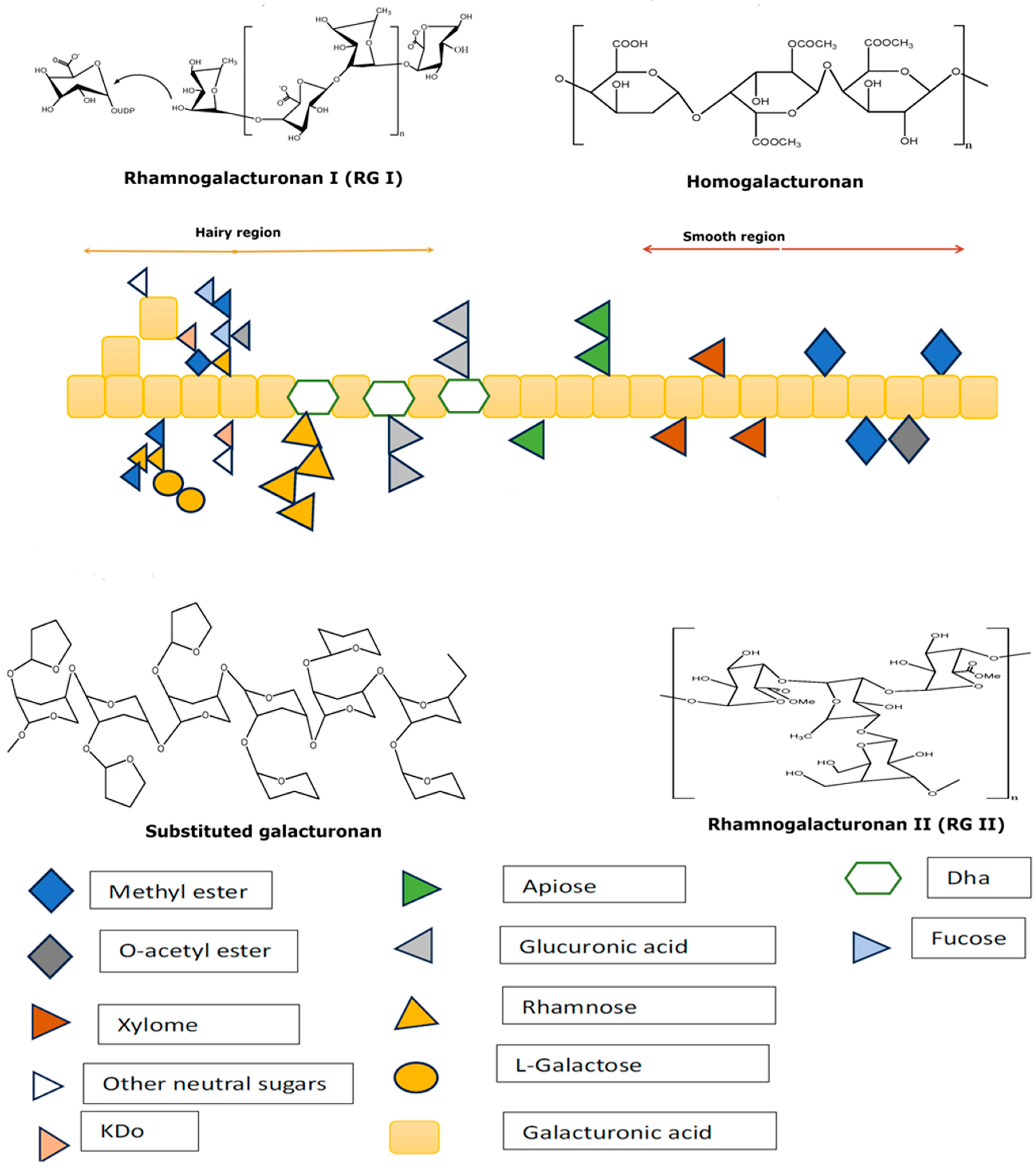
Usually, pectin is constituted of approximately 65% homogalacturonan, about 20–35% rhamnogalacturonan I, and up to 10% rhamnogalacturonan II. Homogalacturonan is built of galacturonic acid units and has a linear structure, with the ability to crystallize, while rhamnogalacturonan I and rhamnogalacturonan II are branched and provide a branched structure also known as “hairy”. Types of pectin with a large percentage of homogalacturonan are used as thickeners and gels, especially in the food industry, but also in the pharmaceutical and cosmetics industries. However, rhamnogalacturonan I -enriched pectic polysaccharides have properties that make them useful in anti-cancer or immunomodulatory therapies, and also as prebiotics [
71].
The complexity of its structure, as shown in
Figure 1, explains the variation in pectin’s properties (gelling capacity, rheological behavior, solubility) and the many different uses in the pharmaceutical, food and biomedical industries [
72].
3.3. Physicochemical Properties of Pectins
The degree of esterification is also known as the degree of methoxylation of pectin, and it refers to the number and distribution of methyl-ester groups (the index of carboxyl groups that can be esterified with methyl groups). It is an extremely important parameter to determine, as it influences pectin’s properties and consequently its possible uses.
High-methoxylated pectin has a degree of esterification of 50% or above and forms gels in a low pH medium (2.5–3.5) in the presence of sucrose or other soluble solids. The 3D network of high-methoxylated pectin gels is formed through connecting zones that are stabilized by hydrogen bonding between carboxyl and secondary alcohol groups, as well as hydrophobic interactions involving methyl esters. The vast majority of pectins found in nature are high-methoxylated [
43,
73].
Low-methoxylated pectin has a degree of esterification below 50% and forms gels at a wide pH range (between 2 and 6) in the presence of Ca
2+ ions, by a similar mechanism to alginate’s egg-box model [
74]. Pectin has found use in the pharmaceutical and medical world through biological activities [
7,
75].
3.4. Pectin in the Context of Other Natural Polymers
To offer an accurate overview of pectins’ place among other biopolymers, it is appropriate to do a comparison between them and several other materials that have also been used in the development of drug delivery systems.
Pectin occupies a distinct position among natural polymers commonly used in pharmaceutical and biomedical applications, including alginate, chitosan, gelatine, and cellulose derivatives. Like alginate, pectin is an anionic polysaccharide capable of ionic gelation in the presence of divalent cations such as Ca
2+, following a similar egg-box crosslinking mechanism; however, pectin offers the additional advantage of pH-responsive behavior and colon-specific degradation by microbial enzymes, making it more suitable for targeted gastrointestinal delivery [
76]. Chitosan, by contrast, is a cationic polymer with strong mucoadhesive and antimicrobial properties, but its use is limited by poor solubility at physiological pH and concerns regarding its animal origin; pectin complements chitosan well in polyelectrolyte complexes, where the two oppositely charged polymers combine to produce systems with enhanced stability and mucoadhesion [
77]. Gelatin, obtained by the hydrolysis of collagen, offers excellent biocompatibility and cell-adhesive properties useful in tissue engineering, but it lacks pectin’s intrinsic bioactive properties—particularly its immunomodulatory and antitumour activities—and degrades rapidly at physiological temperatures without chemical crosslinking [
78]. Cellulose derivatives such as hydroxypropyl methylcellulose and carboxymethylcellulose are widely used as thickeners and film formers, but are not degraded by the human body and lack the biological activity of pectin [
76]. Overall, pectin’s combination of plant-based origin, tunable gelling behavior, intrinsic bioactivity, colonic degradability, and regulatory acceptance positions it favorably relative to these alternatives, particularly for sustainable and multifunctional biomedical applications.
4. Modern Applications of Pectin in Drug Delivery Systems and Emerging Biomaterials
The discovery and first description of pectin as a polysaccharide in 1825 by Henry Braconnot opened many possibilities for obtaining this material. Starting with traditional and pursuing novel sources, exploring various extraction techniques and eventually investigating the modifying possibilities and studying probable applications [
79].
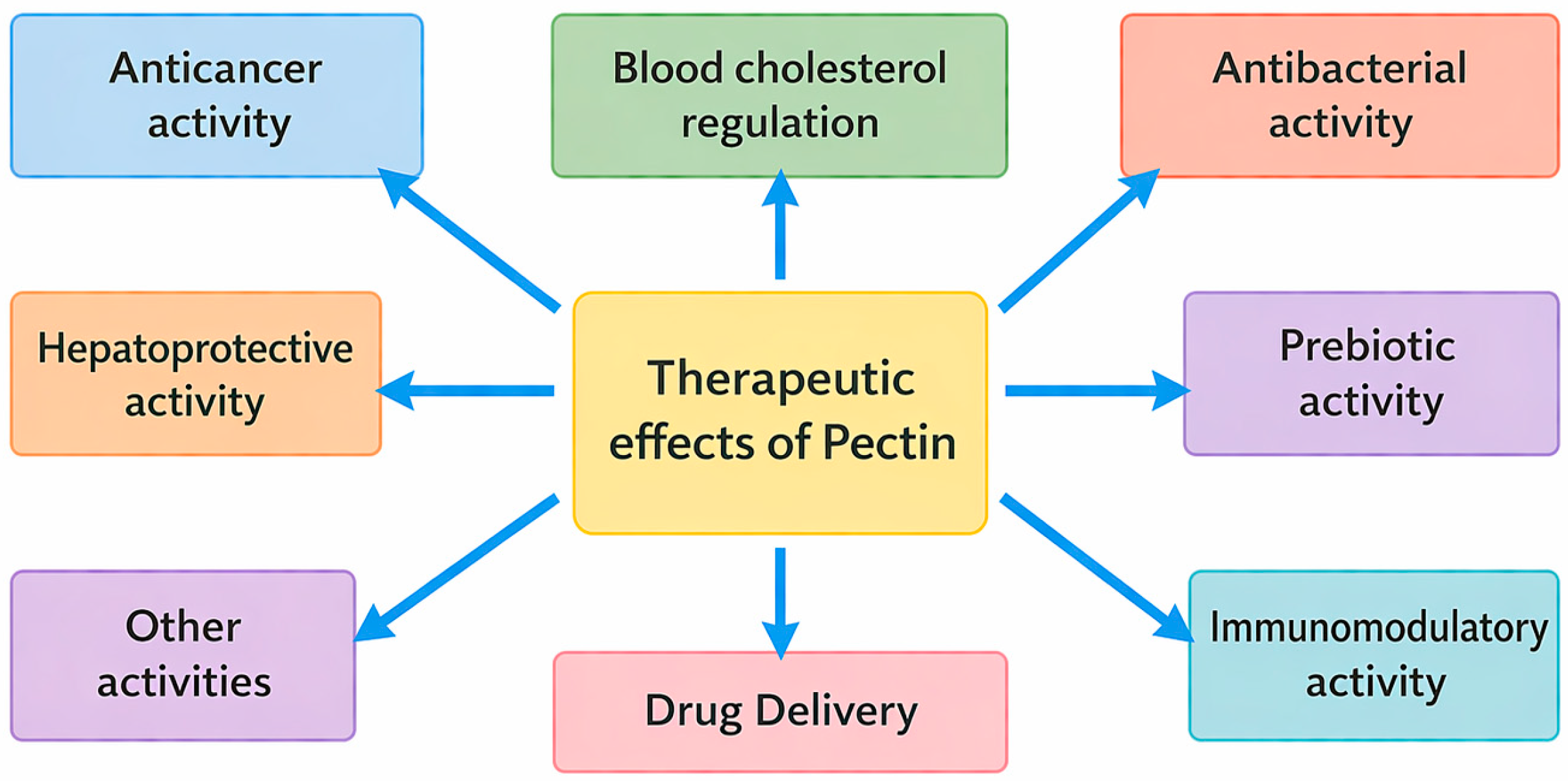
Figure 2 gives a summary description of the relevant therapeutic effects of pectin that have been investigated.
Pectin is traditionally used as an excipient in pharmaceutical formulations due to its excellent binding capacity, but as studies progressed, it has been revealed that pectin has intrinsic health benefits, presented in
Table 2, both for its potentially preventative activity and for its capacity to ameliorate various afflictions.
This family of heteropolysaccharides, pectins, has been studied with regard to colon and breast cancer. Pectin has the ability to travel the length of the digestive tract intact and ultimately be degraded almost completely in the colon by pectinolytic enzymes produced by the gut microflora [
80]. Pectin’s anti-cancerous potential has been explored at length and has not been exhausted as of yet [
81,
82].
Pectin was shown to be highly effective in inhibiting the growth and spread of cancerous cells in several in vivo and in vitro studies [
83,
84,
85,
86,
87]. This opens the possibility of designing therapeutic drug delivery systems specifically targeting the cancerous cells in the colon [
86].
Table 2.
A selection of explored health benefits and their action mechanisms.
Table 2.
A selection of explored health benefits and their action mechanisms.
| Health Benefit | Action Mechanism | Pectin Source/Type | References |
|---|
| Reduced risk of gastric ulcers | Protection of the mucosal lining
Normalizing gastric acid and pepsin levels
Free radical scavenging activity. | Citrus/Apple | [87] |
Lipid-lowering activity
Cholesterol-lowering activity | Reduction in the bile acid reabsorption,
Production of volatile fatty acids,
Decrease in the cholesterol absorption. | Citrus | [88,89] |
| Hepatoprotective effects | Elimination of the toxic compounds via the intestine and the kidney,
Antioxidant properties. | Citrus | [90,91] |
| Prebiotic activity (decreasing risk of diarrhea) | Modulating gut microbiome; facilitating colonic microbiotic balance. | Citrus/beet | [33,92,93] |
| Removal of toxic metal ions | Formation of the strong pectin-metal complexes; Elimination of the toxic metal ion. | Citrus/grapefruit | [94,95] |
| Reduced risk of colorectal cancer | Formation of the short-chain fatty acid as a result of the pectin bacterial fermentation. | Citrus | [93] |
| Inhibition of tumor growth | Inhibition of cell growth, reduction in cell attachment and chromatin fragmentation. | Citrus | [71] |
| Reduced metastasis rate | Suppression of the galectin-3-mediated agglutination. | Citrus | [96,97] |
Pectin has been shown to exert a protective role on the gastric mucosa through multiple mechanisms. Its gel-forming capacity allows it to create a protective coating on the gastric lining, while simultaneously reducing gastric acid and pepsin secretion and exhibiting radical scavenging activity, thereby lowering the risk of gastric ulcer development [
88,
98]. Furthermore, pectin acts as a prebiotic substrate in the colon, where it is fermented by resident microbiota into short-chain fatty acids. This fermentation process normalizes gut bacterial balance and has been associated with a reduced incidence of diarrhea and improved overall gastrointestinal health [
90,
92].
Beyond its structural and delivery applications, pectin exhibits clinically relevant metabolic effects. Its lipid-lowering activity is attributed to the reduction in bile acid reabsorption in the intestine, stimulation of volatile fatty acid production, and decreased cholesterol absorption—collectively contributing to a favorable lipid profile [
99]. Closely related are pectin’s hepatoprotective effects: by facilitating the elimination of toxic compounds via the intestine and kidneys, and through its intrinsic antioxidant properties, pectin has been shown to reduce hepatic oxidative stress and protect liver tissue from damage [
33].
Pectin’s polyanionic character grants it a strong affinity for divalent and trivalent metal ions, enabling the formation of stable pectin-metal complexes. This property has been exploited for the removal of toxic metal ions from the gastrointestinal tract, representing a potential application in the management of heavy metal exposure [
100].
4.1. Oral Administration Targeting Colon-Specific Delivery
Pectin has been extensively investigated as an excipient for oral controlled-release formulations, particularly for colon-targeted drug delivery. The main rationale lies in the fact that pectin resists degradation in the stomach and small intestine but is fermented by the colonic microbiota—a mechanism that can be exploited to selectively release drugs in the large intestine. Various natural polysaccharides have been tested for this purpose, but pectin holds a position among them [
101].
For example, oral formulations, coated with a layer of pectin (often combined with insoluble polymers like ethylcellulose), might prevent the early dissolution of the drug in the upper gastrointestinal tract and ensure its release after exposure to the intestinal microbiota. High methoxylated pectin is mostly preferred for coating, because the high methoxilation reduces its solubility in stomach fluid and increases gelation [
92,
102].
A recent study showed the feasibility of using high-methoxylated pectin as a gastro-resistant coating film through different techniques (spray-coating vs. powder-layering), achieving delayed-release profiles and reproducible microbially triggered release, useful in the treatment of inflammatory bowel diseases [
101].
Additionally, pectin-based matrix formulations (tablets or beads) have been proposed for colon-specific delivery; for example, pectin–zein microparticles have demonstrated the ability to protect active substances from digestive enzymes (with zein limiting particle swelling and porosity, and pectin protecting zein from proteases), ensuring the release of the active substance in the colon [
103]. Such pectin-based colon-specific systems are being investigated for the administration of peptides, proteins, probiotics, and drugs intended for colon disorders (ulcerative colitis, colon cancer) [
104,
105]. In conclusion, pectin offers a flexible platform for targeted oral drug-delivery systems, as it can be processed into microspheres, gelatin capsules, films, or composites to meet various clinical requirements.
4.2. Transdermal Delivery Systems
The administration of active substances through the skin offers the advantage of avoiding hepatic metabolism and increasing patient compliance, as it is a non-invasive method. Pectin is used in transdermal patches in the form of hydrogels or adhesive matrices. The properties of pectin can be adjusted for transdermal applications by modifying its degree of esterification: highly methoxylated pectins are more hydrophobic, contributing to the prolonged release of hydrophobic compounds into the skin, whereas low-esterified (more hydrophilic) pectins can enhance the penetration of active substances through the skin [
106,
107].
A notable example is the use of pectin in dermal patch formulations for insulin delivery. Sibiya et al. showed that pectin–insulin patches (82.9 μg/kg) reduced blood glucose levels and improved diabetes-induced lipid abnormalities. The study concluded that pectin–insulin patches may protect against cardiovascular complications associated with diabetes and could represent a potential alternative to subcutaneous insulin therapy [
108].
Beyond insulin, pectin is also being explored in transdermal patches for various drugs, where it serves as a gel-forming polymer that controls diffusion through the skin [
109,
110]. Pectin-based transdermal systems represent an emerging direction, offering a natural, biocompatible polymeric vector capable of delivering a wide range of therapeutic molecules across the skin barrier in a controlled manner.
4.3. Therapy and Diagnostics in Oncology
The applications of pectin in oncology follow two main directions: firstly, targeted drug delivery for anticancer agents, and secondly, its use as an adjuvant or diagnostic agent based on the intrinsic properties of pectin.
As a drug carrier, pectin can be formulated as nanoparticles, microspheres, or injectable hydrogels that deliver cytostatics directly to tumors, thereby reducing systemic side effects. For instance, pectin–magnetite or pectin–gold nanoparticles have been investigated as vehicles for doxorubicin and other cytotoxic agents, targeting preferential accumulation in tumors via the enhanced permeability and retention (EPR) effect or through surface ligand attachment.
A current trend involves the functional modification of pectin with tumor-targeting ligands: studies have reported folic acid-decorated pectin nanoparticles capable of binding to folate receptors overexpressed on cancer cells and selectively releasing drugs such as hydroxycamptothecin directly into tumor cells [
111].
In parallel, modified pectins (usually known as Modified Citrus Pectins—MCPs) have attracted attention as antimetastatic and chemopreventive agents. MCP is a low-molecular-weight, low-esterified pectin derived from citrus pectin by controlled treatment; it can inhibit the protein galectin-3, which is implicated in tumor cell adhesion and metastasis [
7]. Pectin is also thought to act by binding to immune receptors, including galectin-3, and thereby modulating cytokine release. Evidence suggests that pectins promote the production of anti-inflammatory cytokines, including IL-10 and TGF-β, while reducing levels of pro-inflammatory cytokines such as TNF-α and IL-6. This profile indicates that pectins may exert beneficial immunomodulatory effects rather than toxic effects within the organism [
112,
113].
Preclinical and clinical studies suggest that MCP can hinder the progression of certain cancers. For example, in a Phase II clinical trial involving patients with non-metastatic biochemically relapsed prostate cancer, oral administration of 4.8 g of MCP (PectaSol-C) three times daily resulted in disease stabilization in approximately 78% of patients after six months (46 out of 59 patients showed no progression), allowing entry into an extended follow-up phase [
114].
Mechanistically, pectin (especially oligo-galacturonic fragments derived from its degradation) has been observed to induce apoptosis or sensitize cancer cells to chemotherapy, while also exhibiting beneficial immunomodulatory effects by stimulating anti-tumor cytokines [
115,
116].
In diagnostic applications, pectin-coordinated metallic nanoparticles are being explored as contrast agents in imaging. Thiolated pectin, for example, has been used to stabilize gold and iron oxide nanoparticles, producing biocompatible nanocomplexes (TPG-IN) that can be loaded with target molecules. These nanocomplexes have demonstrated potential for tumor imaging through enhanced contrast (e.g., in MRI) and even in improving tumor radiosensitivity during radiotherapy [
117].
Lastly, pectin is used as a coating layer for silver or other metallic nanoparticles, generating antimicrobial nanosystems applicable in the management of oncological infections or local sterilization. For instance, silver nanoparticles coated with pectin have shown remarkable bactericidal activity against both Gram-positive and Gram-negative pathogens [
75]. It has been proven that pectin provides oncology with both a safe and flexible delivery platform for drugs or contrast agents, as well as a promising adjuvant therapeutic agent owing to its documented anti-cancer bioactivities.
4.4. Pectin-Based Nanoparticulate Systems
The formulation of pectin into nanoparticulate systems has emerged as one of the most dynamic areas of pectin research, owing to the polymer’s intrinsic biocompatibility, ease of surface functionalization, and ability to form stable colloidal structures. Pectin-based nanoparticles can be prepared by a variety of methods, including ionic gelation, nanoprecipitation, and polyelectrolyte complexation, yielding particles in the 100–500 nm range suitable for parenteral, oral, or mucosal administration [
118].
As drug carriers, pectin nanoparticles offer the advantage of protecting labile active substances from premature degradation while enabling controlled and targeted release. Pectin–magnetite and pectin–gold nanoparticles have been investigated as vehicles for cytotoxic agents such as doxorubicin, exploiting the enhanced permeability and retention effect for passive tumor accumulation [
119]. Active targeting has been achieved by surface decoration with tumor-specific ligands: folic acid-functionalized pectin nanoparticles demonstrated selective binding to folate receptors overexpressed on cancer cells, enabling direct intracellular delivery of hydroxycamptothecin [
120].
Beyond oncological applications, pectin nanoparticles have shown promise in antimicrobial therapy. Silver nanoparticles coated with pectin exhibit broad-spectrum bactericidal activity against both Gram-positive and Gram-negative pathogens, with the pectin shell improving colloidal stability and reducing cytotoxicity compared to uncoated silver nanoparticles [
120,
121]. This approach is particularly relevant in the context of wound infection management and oncological infection prophylaxis.
In diagnostic applications, pectin serves as a stabilizing matrix for metallic nanoparticles used as imaging contrast agents. Thiolated pectin has been employed to produce gold and iron oxide nanocomplexes (TPG-IN) with demonstrated utility in MRI contrast enhancement and tumor radiosensitization [
122,
123]. The multifunctional character of these systems—combining diagnostic and therapeutic functions in a single nanoplatform—positions pectin as a promising component of theranostic nanomedicine.
A further area of development involves pectin-based nanoparticles for oral protein and peptide delivery, where the polymer’s mucoadhesive properties and resistance to gastric degradation protect biologics until their release in the intestinal environment [
124,
125]. Taken together, pectin-loaded nanoparticulate systems bring forward new opportunities for research that combine drug delivery, diagnostics and antimicrobial therapy.
5. International Regulations on the Use of Pectin (EFSA, FDA, WHO)
5.1. In the European Union—European Food Safety Authority (EFSA)
Pectin (E 440i) and amidated pectin (E 440ii) are authorized as food additives, classified as thickeners, gelling agents, stabilizers, and emulsifiers. The European Food Safety Authority (EFSA) conducted a comprehensive re-evaluation of the safety of these additives in 2017, concluding that there is no safety concern regarding the use of pectin and amidated pectin in foods for the general population [
7].
For adults and older children, no numerical Acceptable Daily Intake (ADI) has been established, as pectin is considered safe within the limits of good manufacturing practice (ADI “not specified”). However, certain sensitive population groups required special attention: in 2021, the EFSA Panel on Food Additives and Flavorings (FAF) evaluated the use of pectin in infant formulas (<16 weeks). It was found that at the previously permitted maximum level (0.5% in infant formula), pectin intake could lead to excessive methanol exposure (derived from pectin de-esterification), exceeding the safety margin for infants [
126].
As a result, EFSA recommended lowering the maximum allowed pectin concentration in follow-on formulas for infants to 0.2%, to prevent any potential adverse effects (e.g., methanol accumulation or laxative effects). Additionally, EFSA proposed stricter purity specifications for pectins, introducing tighter limits for contaminants such as arsenic, lead, cadmium, mercury, and aluminum, as well as microbiological criteria, thereby ensuring that industrially used pectin maintains a high degree of purity and safety [
126].
At the European level, pectin (including amidated pectin) is recognized as safe, with special precautions applying only to infant use, and is regulated in the Codex Alimentarius as additive E440 without the need for a numerical ADI (Acceptable Daily Intake).
5.2. In the United States—Food and Drug Administration (FDA)
The U.S. Food and Drug Administration (FDA) includes pectin on the list of GRAS (Generally Recognized as Safe) substances for direct use in food. According to 21 CFR §184.1588, pectins (including those with different degrees of esterification, amidated pectin, pectinates, and pectic acids) may be added to foods without quantitative limitation, provided that good manufacturing practice (GMP) is observed [
75].
Pectin is approved as an emulsifying, stabilizing, and gelling agent in numerous food products, ranging from jams and jellies to soluble fiber supplements. It is also listed in the United States Pharmacopeia (USP) as a pharmaceutical excipient—for instance, as a binder in tablets and as a release-retarding agent in certain oral formulations.
The FDA does not impose a maximum dose, considering dietary intake of pectin to be safe and self-limiting due to gastrointestinal tolerance (high doses may cause bloating or a laxative effect, but no significant systemic toxicity). In summary, under U.S. regulation, pectin enjoys a favorable status as a long-established, well-characterized ingredient approved both as a food additive and a pharmaceutical excipient, with no strict dosage restrictions if GMP standards are maintained [NO_PRINTED_FORM] [
75].
5.3. World Health Organization (WHO)—Joint Food and Agriculture Organization (FAO)/WHO Expert Committee on Food Additives (JECFA)
The Joint FAO/WHO Expert Committee on Food Additives (JECFA) has evaluated pectins on multiple occasions.
According to JECFA’s report, pectins (amidated and non-amidated) are normal constituents of the human diet and have even been administered intravenously in high doses to human volunteers without notable acute toxic effects. Toxicological studies in animals support this safety profile: dietary supplementation with pectin up to 5% in rats produced no adverse effects (only a compensatory enlargement of the cecum due to fiber fermentation). Even at 10% dietary inclusion, amidated pectin caused only a minor reduction in growth rate in rats—a non-significant effect; two-year studies showed no meaningful toxicological differences between amidated and non-amidated pectin [
127].
JECFA has also specifically examined pectin use in infants (similarly to EFSA) and, based on a study in newborn piglets, concluded that adding 0.2% pectin to infant formula is safe, with a sufficient margin of exposure relative to the no-adverse-effect level (MOE~2.4–2.9) [
51]. At 0.5%, however, infant exposure approached levels where minor growth effects were observed; thus, 0.5% was considered too high [
75,
127].
In conclusion, the WHO/JECFA classifies pectin among the safest food additives, permitting unrestricted use in general foods and recommending caution only for formulations intended for very young infants.
5.4. Other International Significant Regulatory Framework
There are several national and regional authorities that have independently regulated the use of pectin, considering its safety profile, and the consensus remains broadly consistent throughout. Considering pectin’s extensive global history of use as a food additive and lately a pharmaceutical excipient, this polysaccharide is accepted as safe for use.
China is one of the largest producers and consumers of pectin and, therefore, has specifically addressed the matter of pectin safety. Its regulatory body, the National Medical Products Administration (NMPA), permits the use of pectin under the national standard GB 2760, which governs the use of food additives in the People’s Republic of China [
128].
Australia and New Zealand’s joint regulatory body aligns with EFSA and JECFA decisions through the Food Standard 1.3.1 [
129], where it is stated that the use of pectin is permitted as a food additive without a maximum level. Food Standards Australia New Zealand (FSANZ) regulation is incumbent on the need for good manufacturing practices to be observed [
129].
Brazil’s prominent position as a producer of tropical fruit and the opportunity of increased pectin extraction from the by-product—specifically mango and passion fruit peels—has urged its regulatory authority, the National Health Surveillance Agency (ANVISA), to give a resolution on pectin. Resolution RDC No. 380/2025 permits the use of pectin as a food additive and technological adjuvant, essentially harmonizing national regulations with international ones [
130].
Canada’s authority on food safety, Health Canada, aligned with the FDA by classifying pectin as an approved food additive under the Food and Drug Regulations (FDR), permitted for use as a gelling agent, stabilizer and thickener [
131].
The regulatory consensus on pectin reinforces the safety profile as both a food additive and a pharmaceutical excipient. This facilitates global trade and encourages study on pectin-based applications while also supporting its use in emerging biomedical research.
6. Toxicity and Safety of Pectin and Its Derivatives in the Biomedical Context
6.1. General Toxicological Profile
Pectin is recognized as a non-toxic polymer, well-tolerated by the human body. Being essentially a soluble fiber, high doses of ingested pectin can cause gastrointestinal discomfort (bloating, mechanical laxative effect), but no systemic toxic effects. Animal studies have shown no toxicity even at extremely high intake levels: diets containing 5–10% pectin did not cause organ damage or hematological alterations, except for minor physiological adaptations (e.g., increased cecum weight due to fiber fermentation) [
132].
Pectin’s major biomedical advantage lies in its biocompatibility—its favorable interaction with tissues and cells. Pectin-based hydrogels and surfaces do not induce acute inflammatory responses or cytotoxicity. On the contrary, pectin has been observed to exert local anti-inflammatory effects: for example, in vivo studies have shown reduced systemic and intestinal inflammation in animals treated with low-esterified pectin [
133].
The proposed mechanism involves pectin binding to immune receptors (e.g., lectin-type receptors, such as galectin-3 mentioned earlier) and modulating cytokine release. Pectins appear to stimulate the production of anti-inflammatory cytokines (IL-10, TGF-β) while decreasing pro-inflammatory ones (TNF-α, IL-6), giving them a beneficial rather than toxic profile within the organism [
134,
135].
Pectin exerts its immunomodulatory effects through both direct and indirect mechanisms. Among the direct effects, pectin interacts with immune cells through electrostatic interactions with dendritic cells and macrophages, leading to the blockage of pro-inflammatory Toll-like receptor TLR2/1 and TLR4 signaling pathways—an effect particularly associated with citrus pectin fractions with lower degrees of methylation. Additionally, highly esterified degree pectin has been shown to inhibit macrophage activation by suppressing iNOS, COX-2, IKK, NF-κB and MAPK signaling, resulting in reduced pro-inflammatory activity. Pectin also interacts with G-protein coupled receptors (GPR), contributing to a protective effect on epithelial barrier function, and modified low molecular weight pectin has been shown to activate T cells, B cells and natural killer cells, stimulating adaptive immunity [
112,
113].
6.2. Safety of Pectin Derivatives
In many biomedical applications, pectin is chemically modified (e.g., amidation, oxidation, sulfhydrylation) to improve its functional properties. These modifications raise safety questions, particularly due to native pectin’s non-toxic character. Available data suggest that amidated pectin—the only derivative authorized for food use—has a safety profile very similar to that of native pectin. Chronic studies in rats fed 10% amidated pectin showed only a slight reduction in growth, without other signs of toxicity or teratogenic effects; at 2–5% dietary inclusion, no differences from non-amidated pectin were observed [
7].
Thus, amidated pectin is considered safe for consumption and medical use, with EFSA identifying no specific safety concerns for this [
7]. Pectins with different degrees of methoxylation (high-methoxylated vs. low-methoxylated) are metabolized similarly by the colonic microbiota; however, highly methylated pectins release more methanol upon degradation. In adults, the amount of methanol generated and absorbed from typical pectin doses is negligible compared to endogenous production or fruit intake. In very young infants (under 3 months), however, methanol metabolism is less efficient, which explains the precautionary limits on pectin in infant formulas [
126].
From a pharmaceutical standpoint, the safety of pectin and its derivatives has been demonstrated in multiple preclinical studies: for instance, pectin-based wound dressings cause no skin irritation or allergic reactions; a new pectin–honey hydrogel tested in animal wound models accelerated healing without notable adverse effects [
136]. Similarly, pectin-based tissue implants (e.g., pectin–collagen hydrogels for bone engineering) have proven non-immunogenic and gradually resorbed without chronic fibrosis [
137].
6.3. Tolerance and Compatibility Considerations
In vivo, pectin is generally degraded into fermentable oligomers by the intestinal microbiome or by macrophages (which can secrete acidic hydrolases). The degradation products—mainly galacturonic acid and oligosaccharides—are harmless. Moreover, pectins have been studied as prebiotics, stimulating the growth of beneficial colonic microbiota (e.g., Bifidobacteria) and improving gastrointestinal health [
138].
Biocompatibility is also evident at the cellular level: in vitro experiments show that mammalian cells (fibroblasts, keratinocytes, osteoblasts) can adhere to and proliferate on pectin-treated or pectin–composite surfaces without cytotoxicity or oxidative stress [
137]. A clear example is the use of pectin in 3D cultures of mesenchymal stem cells for cartilage regeneration: photo-crosslinked methacrylated pectin formed porous scaffolds supporting chondrogenic differentiation, and after implantation in animals, they were colonized by cells without acute immune reactions. In implantable devices, enzymatic degradation of pectin can be slower (in the absence of microbiota), but it can be tuned by modifications (e.g., introducing lysozyme-sensitive linkages or locally adding pectinolytic enzymes) [
139].
7. Recent Trends in the Biocompatibility, Degradability, Functional Modifications, and Multidisciplinary Applications of Pectin
7.1. Biocompatibility and Biological Interactions
Current research trends in pectin focus on optimizing its interaction with biological systems. Pectin is already recognized as non-toxic and biocompatible, but recent studies investigate ways to enhance its bio-interactivity—for example, by functionalizing pectin with bioactive peptide sequences (such as RGD or others) to improve cell adhesion and proliferation on scaffolds in tissue engineering. “Smart” pectins that respond to biological stimuli are also being explored, such as enzyme-sensitive pectin hydrogels (which degrade faster in the presence of specific enzymes from target tissues) or pH-responsive gels (which swell at the pathological tissue’s pH, thereby enabling targeted drug release) [
5,
140].
Another emerging area involves the use of pectin in artificial microbiomes: encapsulating probiotic bacteria in pectin microgels to protect them from harsh conditions and deliver them to the intestine. These systems serve dual roles—pharmaceutical (microbiota restoration) and material (pectin as a probiotic biomaterial) [
141].
The long-term biocompatibility of pectin-based implants is also being investigated. Current results indicate an absence of chronic toxicity, though subtle tissue responses (e.g., fibrosis at the implantation site) are being evaluated in comparison with other biomaterials) [
137]. Overall, pectin continues to stand out as a cell-friendly biomaterial, with recent research strengthening this position and expanding its applicability into new clinical directions.
7.2. Degradability and Sustainability
An important trend is the integration of pectin into the concept of “eco-pharmacy” and sustainable materials. Being naturally biodegradable (by composting or environmental microbiota), pectin leaves a minimal ecological footprint after use. This feature is leveraged in two main ways: (i) biodegradable medical devices—for instance, drug delivery systems that decompose in the body after releasing the therapeutic agent, thus eliminating the need for surgical removal (e.g., oesophageal or ureteral stents made of pectin that gradually dissolve post-therapy)and (ii) reduction in pharmaceutical pollution—pectins are proposed as “green” excipients that could replace poorly biodegradable synthetic polymers (like HPMC or PVA) in various formulations, thereby reducing the environmental impact of pharmaceutical waste [
142,
143].
Progress is also being made in developing more eco-friendly pectin extraction methods (e.g., ultrasound-assisted extraction, supercritical fluids, or natural deep eutectic solvents), making the entire life cycle of pectin—from production to disposal—sustainable [
15,
48,
50,
72].
Controlled degradability is another research topic: by adjusting the degree of esterification or introducing labile linkages (e.g., enzyme-cleavable bonds), pectins with specific degradation times (from days to months) can be engineered, tailored to their intended application (e.g., wound healing versus long-term tissue scaffolding) [
144,
145].
Although pectin offers numerous benefits, it also has several limitations that should be taken into account in future research. Pectin forms hydrogels with relatively weak mechanical strength compared to synthetic polymers, which restricts its application in load-bearing contexts unless it is reinforced or chemically crosslinked [
77]. Variability between batches of commercially available pectin, due to variations in plant sources, extraction techniques, and degrees of esterification, can also impact reproducibility during formulation [
146]. Also, developing pectin-based nanoparticle systems on an industrial scale could prove difficult, as does achieving accurate control over their in vivo degradation behavior [
147]. Overcoming these challenges will require standardized extraction methods, the design of hybrid composite materials, and more extensive in vivo and clinical investigations to achieve pectin’s potential as a biomedical material.
7.3. Innovative Functional Modifications
From a polymer chemistry perspective, pectin research has seen remarkable growth in recent years, with numerous new derivatives and modifications reported. The main goal is to endow pectin with novel functionalities, moving beyond its traditional role as an inert gelling agent. The structural customization of pectin for each specific application, through targeted chemical modifications, focuses on improving performance—whether in drug loading capacity, targeting specificity, mechanical strength, or biological activity.
One direction aims to enhance pectin’s interaction with bioactive molecules—for example, acylation with gallic acid or other phenolic acids yields amphiphilic derivatives that can solubilize hydrophobic compounds while exhibiting intrinsic antioxidant and antibacterial properties. Such acylated pectins have been tested as high-performance pharmaceutical emulsifiers and as edible films with prolonged antimicrobial action [
148,
149].
Another approach involves grafting polymers or reactive groups onto the pectin backbone. For instance, methacrylated pectin (Pec-MA)—obtained by substituting hydroxyl groups with vinyl methacrylate—can be crosslinked under UV light, enabling the rapid formation of injectable hydrogels directly in the body (using a UV or LED lamp in minimally invasive procedures). Pec-MA has demonstrated biocompatibility and, as noted, showed enhanced antitumour activity in vitro compared to native pectin (e.g., inhibition of colon cancer cell proliferation), paving the way for its in vivo evaluation as a chemo-embolizing agent (a hydrogel that locally releases cytostatic while blocking tumor vascularization) [
107,
150].
Cationic pectins represent another trend: by introducing amino or quaternary groups, the anionic pectin is transformed into a cationic polyelectrolyte capable of forming complexes with nucleic acids (DNA/RNA). These cationic pectin derivatives are being studied as non-viral vectors for gene therapy, promising better biocompatibility than synthetic polymers (e.g., PEI) and enzymatic degradation after gene release. The cationic groups also impart excellent mucoadhesive properties (through interactions with negatively charged mucins)—as reported in earlier studies, pectins bearing primary amine groups showed superior mucosal adhesion, making them effective for nasal and other mucosal delivery routes [
151,
152].
Another line of research involves the conjugation of biological ligands—for example, terpyridine-modified pectins that can complex with metal ions, granting the material enhanced antibacterial activity via controlled metal ion release [
153].
7.4. Multidisciplinary Applications and Domain Convergence
A remarkable feature of pectin is its presence at the intersection of multiple disciplines: food technology, pharmacology, materials engineering, nanotechnology, and clinical medicine. The most recent trends highlight precisely this multidisciplinary convergence.
In the global context of replacing conventional plastics and developing sustainable medical materials, pectin has emerged as a key candidate for biodegradable bioplastics and interdisciplinary applications. Due to its hydrophilic polysaccharide nature, pectin can be processed into films, fibers, or foams with performance properties suitable for various uses.
For instance, in active and intelligent food packaging, pectin is employed to create edible and biodegradable films, sometimes loaded with antimicrobial agents or freshness indicators [
154]. This trend of using pectin as a packaging biopolymer reduces dependence on fossil-based plastics and provides properties such as oxygen barrier capacity and the ability to retain useful volatile compounds [
155].
In medicine, pectin-based bioplastics are being developed for temporary medical devices (for example, tissue regeneration matrices that degrade after healing) or for resorbable prosthetic components. A concrete example of a biomaterial already in clinical use is the hydrocolloid dressing: these gelling patches, used for the treatment of chronic wounds (ulcers, pressure sores), contain pectin combined with carboxymethylcellulose and gelatine [
156,
157]. The pectin in these dressings absorbs exudate and forms a soft gel at the wound surface, maintaining an optimal moist environment for healing while also exhibiting a local anti-inflammatory effect. Such hydrocolloids demonstrate the biocompatibility of pectin in direct contact with tissues and their capacity to accelerate epithelialization. Other emerging applications include the use of pectin in bio-inks for 3D tissue printing, in ocular delivery devices (ophthalmic films that dissolve on the surface of the eye), or as a nucleation agent for crystal growth in the manufacture of implantable drug delivery systems [
156,
158].
Due to its chemical versatility, pectin can be combined with numerous other natural polymers (cellulose, alginates, chitin, etc.) or with inorganic nanoparticles, generating intelligent composites. For example, pectin has been incorporated into conductive hydrogels (containing carbon nanotubes) for electrically stimulated controlled drug release or crosslinked with ferric vanadyl chloride to obtain self-healing materials suitable for advanced wound dressings [
159,
160].
In the cosmetic and dermatological sectors, pectin is incorporated into hydrogels for facial masks that release anti-aging actives, technologies closely related to those used in transdermal pharmaceutical systems [
160]. Another emerging trend involves combining pectin with advanced technologies such as 3D printing and microfluidics: pectin microcapsules produced via microfluidic systems offer precisely controlled sizes for individualized drug doses, while 3D bioprinting with pectin–cellulose bioinks produces porous scaffolds for customized cell cultures [
150,
156,
161].
The use of pectin has expanded considerably in recent years, encompassing applications such as edible food-protective coatings, antimicrobial bio-derived films, nanoparticulate delivery systems, wound-healing materials, and cancer treatment platforms. Innovations in extraction technologies, diversification of botanical sources, and enhanced understanding of structural modification strategies have substantially improved its physicochemical properties, recovery yields, and technological versatility [
72].
8. Conclusions
Eco-pharmacy is a particular area of pharmacological studies that aims at reducing the polluting effects of pharmaceutical products on the environment, and an important part of that is focusing on environmentally friendly substances that degrade without causing harm in nature. Pectins are a remarkable group of hydrocolloids, and even if they have been adopted from the food sector, they are an important part of developing a mindful use of resources in the pharmaceutical and medical industries.
An ongoing search for new extraction and disposal methods with a reduced impact on the environment makes natural-sourced biomaterials a valuable resource to be continually explored. Pectin has evolved beyond its traditional role as a food additive, becoming a central player in the field of modern biomaterials.
This synthesis has shown that pectin and its derivatives offer promising platforms for oral and transdermal drug delivery, make unique contributions to oncology (as drug carriers and anti-metastatic agents), provide eco-friendly solutions for developing medical bioplastics and biodegradable packaging, and exhibit an excellent safety profile confirmed by major regulatory authorities (EFSA, FDA, WHO). Its ability to undergo chemical modification gives pectin exceptional flexibility to meet diverse functional requirements—from enhanced mucoadhesion to stimuli-responsive properties and molecular targeting. Although pectin, as a biomaterial, offers many directions of study, it is also appropriate to mention various limitations. As a standalone hydrogel, its mechanical strength is lower than that of synthetic polymers, which restricts its use in applications requiring structural support. Secondly, the variability between commercial pectin batches, which arises from differences in plant source, extraction method and degree of esterification, can affect the reproducibility of formulations. Future research should focus on standardizing extraction processes, developing pectin-based composite materials, and conducting more in-depth in vivo studies to address these limitations.
Recent trends indicate an increasing multidisciplinary character in pectin research, integrating insights from materials science, biology, and food science to create the next generation of intelligent and sustainable therapeutic systems. With such a portfolio of attributes—biocompatibility, biodegradability, safety, and versatility—pectin stands out as a key natural polymer for the development of future biomedical innovations.
Funding
This work was financially supported by “Carol Davila” University of Medicine and Pharmacy, Bucharest, Romania, through the INOFORMDOC project (MySMIS Code 351225).
Institutional Review Board Statement
Not applicable.
Data Availability Statement
No new data were created or analyzed in this study. Data sharing is not applicable to this article.
Acknowledgments
Irina-Alexandra Dumitrescu sincerely acknowledges the senior research team of the Innovative Therapeutic Structures Research and Development Center (InnoTher), Faculty of Pharmacy, “Carol Davila” University of Medicine and Pharmacy, Bucharest, Romania, for their valuable guidance and support in structuring the manuscript for publication.
Conflicts of Interest
The author declares no conflicts of interest.
References
- Nassar, N.; Kasapis, S. Fundamental Advances in Hydrogels for the Development of the next Generation of Smart Delivery Systems as Biopharmaceuticals. Int. J. Pharm. 2023, 633, 122634, Correction in Int. J. Pharm. 2025, 682, 125996. https://doi.org/10.1016/j.ijpharm.2025.125996. [Google Scholar] [CrossRef] [Scilit]
- Buwalda, S.J.; Boere, K.W.M.; Dijkstra, P.J.; Feijen, J.; Vermonden, T.; Hennink, W.E. Hydrogels in a Historical Perspective: From Simple Networks to Smart Materials. J. Control. Release 2014, 190, 254–273. [Google Scholar] [CrossRef] [Scilit] [PubMed]
- van Bemmelen, J.M. Das Hydrogel Und Das Krystallinische Hydrat Des Kupferoxyds. Z. Anorg. Chem. 1894, 5, 466–483. [Google Scholar] [CrossRef] [Scilit]
- Aswathy, S.H.; Narendrakumar, U.; Manjubala, I. Commercial Hydrogels for Biomedical Applications. Heliyon 2020, 6, e03719. [Google Scholar] [CrossRef] [Scilit] [PubMed]
- Sultana, N. Biological Properties and Biomedical Applications of Pectin and Pectin-Based Composites: A Review. Molecules 2023, 28, 7974. [Google Scholar] [CrossRef] [Scilit]
- Dambuza, A.; Rungqu, P.; Oyedeji, A.O.; Miya, G.; Oriola, A.O.; Hosu, Y.S.; Oyedeji, O.O. Therapeutic Potential of Pectin and Its Derivatives in Chronic Diseases. Molecules 2024, 29, 896. [Google Scholar] [CrossRef] [Scilit]
- EFSA Panel on Food Additives and Nutrient Sources added to Food (ANS); Mortensen, A.; Aguilar, F.; Crebelli, R.; Di Domenico, A.; Dusemund, B.; Frutos, M.J.; Galtier, P.; Gott, D.; Gundert-Remy, U.; et al. Re-Evaluation of Pectin (E 440i) and Amidated Pectin (E 440ii) as Food Additives. EFSA J. 2017, 15, e04866. [Google Scholar] [CrossRef] [Scilit]
- Jing, S.; Chen, H.; Liu, E.; Zhang, M.; Zeng, F.; Shen, H.; Fang, Y.; Muhitdinov, B.; Huang, Y. Oral Pectin/Oligochitosan Microspheres for Colon-Specific Controlled Release of Quercetin to Treat Inflammatory Bowel Disease. Carbohydr. Polym. 2023, 316, 121025. [Google Scholar] [CrossRef] [Scilit]
- Zhang, F.; Zheng, X.; Ma, Y.; Nan, W.; Wu, W.; Chu, Z.; Sun, X.; Huang, J.; Muratkhan, M.; Yue, F.; et al. Sodium Alginate/Low Methoxyl Pectin Composite Hydrogel Beads Prepared via Gas-Shearing Technology for Enhancing the Colon-Targeted Delivery of Probiotics and Modulating Gut Microbiota. Int. J. Biol. Macromol. 2025, 300, 140375. [Google Scholar] [CrossRef] [Scilit]
- Liu, Y.; Fan, X.; Yu, X.; Liu, T.; Guo, X.; Zhang, J. Enhancing Curcumin Stability and Bioavailability through Chickpea Protein Isolate–Citrus Pectin Conjugate Emulsions: Targeted Delivery and Gut Microecology Modulation. Int. J. Biol. Macromol. 2025, 300, 140295. [Google Scholar] [CrossRef] [Scilit]
- Ashraf, M.U.; Iqbal, M.A.; Barkat, K.; Anjum, I.; Mushtaq, M.N.; Gul, R.; Aamir, M.; Ibenmoussa, S.; Salamatullah, A.M.; Bourhia, M.; et al. Exploring the Potential of a PH-Sensitive Hydrogel Sponge: Interpenetrating Network of Tragacanth and Pectin for Controlled Delivery of Levosulpiride. Naunyn Schmiedebergs Arch. Pharmacol. 2024, 398, 5579–5592. [Google Scholar] [CrossRef] [Scilit]
- Morris, V.J.; Belshaw, N.J.; Waldron, K.W.; Maxwell, E.G. The Bioactivity of Modified Pectin Fragments. Bioact. Carbohydr. Diet. Fibre 2013, 1, 21–37. [Google Scholar] [CrossRef] [Scilit]
- Schmelter, T.; Wientjes, R.; Vreeker, R.; Klaffke, W. Enzymatic Modifications of Pectins and the Impact on Their Rheological Properties. Carbohydr. Polym. 2002, 47, 99–108. [Google Scholar] [CrossRef] [Scilit]
- Tran, N.T.K.; Nguyen, V.B.; Van Tran, T.; Nguyen, T.T.T. Microwave-Assisted Extraction of Pectin from Jackfruit Rags: Optimization, Physicochemical Properties and Antibacterial Activities. Food Chem. 2023, 418, 135807. [Google Scholar] [CrossRef] [Scilit]
- Fu, M.; Sun, X.; Fei, C.; Li, D.; Zhang, D.; Tuo, X.; Gao, S.; Han, X.; Xiu, J.; Wang, J.; et al. Optimization and Characterization of Pectin Extracted from Hawthorn by Deep Eutectic Solvent. Int. J. Biol. Macromol. 2024, 256, 128688. [Google Scholar] [CrossRef] [Scilit] [PubMed]
- Ciriminna, R.; Fidalgo, A.; Meneguzzo, F.; Presentato, A.; Scurria, A.; Nuzzo, D.; Alduina, R.; Ilharco, L.M.; Pagliaro, M. Pectin: A Long-Neglected Broad-Spectrum Antibacterial. ChemMedChem 2020, 15, 2228–2235. [Google Scholar] [CrossRef] [Scilit] [PubMed]
- Zheng, C.; Huang, Y.; Liang, X.; Shen, B.; Zhang, G.; Fei, P. Novel Pickering Emulsion Gels Stabilized Solely by Phenylalanine Amidated Pectin: Characterization, Stability and Curcumin Bioaccessibility. Int. J. Biol. Macromol. 2023, 244, 125483. [Google Scholar] [CrossRef] [Scilit] [PubMed]
- Sammalisto, S.; Mäkelä-Salmi, N.; Wang, Y.; Coda, R.; Katina, K. Potential of Microbial and Cereal β-Glucans as Hydrocolloids in Gluten-Free Oat Baking. LWT 2024, 191, 115678. [Google Scholar] [CrossRef] [Scilit]
- Iacovino, S.; Cofelice, M.; Sorrentino, E.; Cuomo, F.; Messia, M.C.; Lopez, F. Alginate-Based Emulsions and Hydrogels for Extending the Shelf Life of Banana Fruit. Gels 2024, 10, 245. [Google Scholar] [CrossRef] [Scilit]
- Ratner, B.D.; Hoffman, A.S. Synthetic Hydrogels for Biomedical Applications. In Hydrogels for Medical and Related Applications; American Chemical Society: Washington, DC, USA, 1976; Volume 31, pp. 1–36. [Google Scholar] [CrossRef] [Scilit]
- Farasati Far, B.; Naimi-Jamal, M.R.; Jahanbakhshi, M.; Rostamani, H.; Karimi, M.; Keihankhadiv, S. Synthesis and Characterization of Chitosan/Collagen/Polycaprolactone Hydrogel Films with Enhanced Biocompatibility and Hydrophilicity for Artificial Tendon Applications. Int. J. Biol. Macromol. 2023, 253, 127448. [Google Scholar] [CrossRef] [Scilit] [PubMed]
- Zhang, R.; Huang, X.; Wu, Q.; Chu, S.; Bai, X.; Zhou, Y.; You, J.; Yang, C.; Tan, H. Multifunctional Gelatin Nanoparticle Stabilized-Pickering Emulsion Hydrogel Based on Dextran and Amikacin with Controlled Drug Release and Enhanced Antibacterial Capability for Promoting Infected Wound Healing. Int. J. Biol. Macromol. 2024, 262, 130172. [Google Scholar] [CrossRef] [Scilit]
- Siqueira, N.M.; Cirne, M.F.R.; Immich, M.F.; Poletto, F. 13-Stimuli-Responsive Polymeric Hydrogels and Nanogels for Drug Delivery Applications. In Stimuli Responsive Polymeric Nanocarriers for Drug Delivery Applications, Volume 1; Makhlouf, A.S.H., Abu-Thabit, N.Y., Eds.; Woodhead Publishing: Cambridge, UK, 2018; pp. 343–374. ISBN 978-0-08-101997-9. [Google Scholar]
- Sinha, V.; Chakma, S. Advances in the Preparation of Hydrogel for Wastewater Treatment: A Concise Review. J. Environ. Chem. Eng. 2019, 7, 103295. [Google Scholar] [CrossRef] [Scilit]
- Petitjean, M.; Isasi, J.R. Locust Bean Gum, a Vegetable Hydrocolloid with Industrial and Biopharmaceutical Applications. Molecules 2022, 27, 8265. [Google Scholar] [CrossRef] [Scilit]
- Pirsa, S.; Hafezi, K. Hydrocolloids: Structure, Preparation Method, and Application in Food Industry. Food Chem. 2023, 399, 133967. [Google Scholar] [CrossRef] [Scilit]
- Zhan, Y.; Fu, W.; Xing, Y.; Ma, X.; Chen, C. Advances in Versatile Anti-Swelling Polymer Hydrogels. Mater. Sci. Eng. C 2021, 127, 112208. [Google Scholar] [CrossRef] [Scilit]
- Gyles, D.A.; Castro, L.D.; Silva, J.O.C.; Ribeiro-Costa, R.M. A Review of the Designs and Prominent Biomedical Advances of Natural and Synthetic Hydrogel Formulations. Eur. Polym. J. 2017, 88, 373–392. [Google Scholar] [CrossRef] [Scilit]
- Peppas, N.A.; Lustig, S.R. The Role of Cross-Links, Entanglements, and Relaxations of the Macromolecular Carrier in the Diffusional Release of Biologically Active Materialsa. Ann. N. Y. Acad. Sci. 1985, 446, 26–40. [Google Scholar] [CrossRef] [Scilit] [PubMed]
- Ahmed, E.M. Hydrogel: Preparation, Characterization, and Applications: A Review. J. Adv. Res. 2015, 6, 105–121. [Google Scholar] [CrossRef] [Scilit]
- Gulrez, S.K.H.; Al-Assaf, S.; Phillips, G.O. Hydrogels: Methods of Preparation, Characterisation and Applications. In Progress in Molecular and Environmental Bioengineering; Carpi, A., Ed.; IntechOpen: Rijeka, Croatia, 2011; p. 5. [Google Scholar]
- Qureshi, D.; Nayak, S.K.; Maji, S.; Anis, A.; Kim, D.; Pal, K. Environment Sensitive Hydrogels for Drug Delivery Applications. Eur. Polym. J. 2019, 120, 109220. [Google Scholar] [CrossRef] [Scilit]
- Elshahed, M.S.; Miron, A.; Aprotosoaie, A.C.; Farag, M.A. Pectin in Diet: Interactions with the Human Microbiome, Role in Gut Homeostasis, and Nutrient-Drug Interactions. Carbohydr. Polym. 2021, 255, 117388. [Google Scholar] [CrossRef] [Scilit]
- Fracasso, A.F.; Perussello, C.A.; Carpiné, D.; Petkowicz, C.L.d.O.; Haminiuk, C.W.I. Chemical Modification of Citrus Pectin: Structural, Physical and Rheologial Implications. Int. J. Biol. Macromol. 2018, 109, 784–792. [Google Scholar] [CrossRef] [Scilit]
- Ohkami, H.; Tazawa, K.; Yamashita, I.; Shimizu, T.; Murai, K.; Kobashi, K.; Fujimaki, M. Effects of Apple Pectin on Fecal Bacterial Enzymes in Azoxymethane-Induced Rat Colon Carcinogenesis. Jpn. J. Cancer Res. 1995, 86, 523–529. [Google Scholar] [CrossRef] [Scilit]
- Wang, W.; Chen, W.; Zou, M.; Lv, R.; Wang, D.; Hou, F.; Feng, H.; Ma, X.; Zhong, J.; Ding, T.; et al. Applications of Power Ultrasound in Oriented Modification and Degradation of Pectin: A Review. J. Food Eng. 2018, 234, 98–107. [Google Scholar] [CrossRef] [Scilit]
- Luo, J.; Xu, Y.; Fan, Y. Upgrading Pectin Production from Apple Pomace by Acetic Acid Extraction. Appl. Biochem. Biotechnol. 2019, 187, 1300–1311. [Google Scholar] [CrossRef] [Scilit]
- Owusu, F.W.A.; El Boakye-Gyasi, M.; Bayor, M.T.; Osei-Asare, C.; Johnson, R.; Osei, Y.A.; Asare, V.A.; Mensah, K.A.; Acquah Jnr, P.G.; Otu, D.A.B.; et al. Pharmaceutical Assessment of Watermelon Rind Pectin as a Suspending Agent in Oral Liquid Dosage Forms. BioMed Res. Int. 2022, 2022, 9526404. [Google Scholar] [CrossRef] [Scilit]
- Mamiru, D.; Gonfa, G. Extraction and Characterization of Pectin from Watermelon Rind Using Acetic Acid. Heliyon 2023, 9, e13525. [Google Scholar] [CrossRef] [Scilit] [PubMed]
- Wongkaew, M.; Chaimongkol, P.; Leksawasdi, N.; Jantanasakulwong, K.; Rachtanapun, P.; Seesuriyachan, P.; Phimolsiripol, Y.; Chaiyaso, T.; Ruksiriwanich, W.; Jantrawut, P.; et al. Mango Peel Pectin: Recovery, Functionality and Sustainable Uses. Polymers 2021, 13, 3898. [Google Scholar] [CrossRef] [Scilit] [PubMed]
- Mao, Y.; Dewi, S.R.; Harding, S.E.; Binner, E. Influence of Ripening Stage on the Microwave-Assisted Pectin Extraction from Banana Peels: A Feasibility Study Targeting Both the Homogalacturonan and Rhamnogalacturonan-I Region. Food Chem. 2024, 460, 140549. [Google Scholar] [CrossRef] [Scilit]
- Han, C.; Zhao, X.; Yang, L.; Yao, M.; Zhang, J.; He, Q.; Liu, J.; Liu, L. Extraction and Structural Analysis of Sweet Potato Pectin and Characterization of Its Gel. Polymers 2024, 16, 1977. [Google Scholar] [CrossRef] [Scilit] [PubMed]
- Belkheiri, A.; Forouhar, A.; Ursu, A.V.; Dubessay, P.; Pierre, G.; Delattre, C.; Djelveh, G.; Abdelkafi, S.; Hamdami, N.; Michaud, P. Extraction, Characterization, and Applications of Pectins from Plant By-Products. Appl. Sci. 2021, 11, 6596. [Google Scholar] [CrossRef] [Scilit]
- Li, L.; Gao, X.; Liu, J.; Chitrakar, B.; Wang, B.; Wang, Y. Hawthorn Pectin: Extraction, Function and Utilization. Curr. Res. Food Sci. 2021, 4, 429–435. [Google Scholar] [CrossRef] [Scilit]
- Wikiera, A.; Grabacka, M.; Byczyński, Ł.; Stodolak, B.; Mika, M. Enzymatically Extracted Apple Pectin Possesses Antioxidant and Antitumor Activity. Molecules 2021, 26, 1434. [Google Scholar] [CrossRef] [Scilit]
- Spinei, M.; Oroian, M. Microwave-Assisted Extraction of Pectin from Grape Pomace. Sci. Rep. 2022, 12, 12722. [Google Scholar] [CrossRef] [Scilit]
- Rivadeneira, J.P.; Wu, T.; Ybanez, Q.; Dorado, A.A.; Migo, V.P.; Nayve, F.R.P., Jr.; Castillo-Israel, K.A.T. Microwave-Assisted Extraction of Pectin from “Saba” Banana Peel Waste: Optimization, Characterization, and Rheology Study. Int. J. Food Sci. 2020, 2020, 8879425. [Google Scholar] [CrossRef] [Scilit]
- Sengar, A.S.; Rawson, A.; Muthiah, M.; Kalakandan, S.K. Comparison of Different Ultrasound Assisted Extraction Techniques for Pectin from Tomato Processing Waste. Ultrason. Sonochem. 2020, 61, 104812. [Google Scholar] [CrossRef] [Scilit]
- Peighambardoust, S.H.; Jafarzadeh-Moghaddam, M.; Pateiro, M.; Lorenzo, J.M.; Domínguez, R. Physicochemical, Thermal and Rheological Properties of Pectin Extracted from Sugar Beet Pulp Using Subcritical Water Extraction Process. Molecules 2021, 26, 1413. [Google Scholar] [CrossRef] [Scilit] [PubMed]
- Basak, S.; Annapure, U.S. The Potential of Subcritical Water as a “Green” Method for the Extraction and Modification of Pectin: A Critical Review. Food Res. Int. 2022, 161, 111849. [Google Scholar] [CrossRef] [Scilit] [PubMed]
- Chen, M.; Falourd, X.; Lahaye, M. Sequential Natural Deep Eutectic Solvent Pretreatments of Apple Pomace: A Novel Way to Promote Water Extraction of Pectin and to Tailor Its Main Structural Domains. Carbohydr. Polym. 2021, 266, 118113. [Google Scholar] [CrossRef] [Scilit] [PubMed]
- Li, W.-J.; Fan, Z.-G.; Wu, Y.-Y.; Jiang, Z.-G.; Shi, R.-C. Eco-Friendly Extraction and Physicochemical Properties of Pectin from Jackfruit Peel Waste with Subcritical Water. J. Sci. Food Agric. 2019, 99, 5283–5292. [Google Scholar] [CrossRef] [Scilit]
- Wongkaew, M.; Sommano, S.R.; Tangpao, T.; Rachtanapun, P.; Jantanasakulwong, K. Mango Peel Pectin by Microwave-Assisted Extraction and Its Use as Fat Replacement in Dried Chinese Sausage. Foods 2020, 9, 450. [Google Scholar] [CrossRef] [Scilit]
- Gemechu, B.; Keyata, E.O.; Geleta, T.E.; Gemede, H.F.; Bayata, A. Optimization of Mango Peel Pectin Extraction (Mangifera Indica L.): For the Production of Jam and Jelly. Appl. Food Res. 2024, 4, 100411. [Google Scholar] [CrossRef] [Scilit]
- Ribeiro, A.C.B.; Cunha, A.P.; da Silva, L.M.R.; Mattos, A.L.A.; de Brito, E.S.; de Souza Filho, M.d.S.M.; de Azeredo, H.M.C.; Ricardo, N.M.P.S. From Mango By-Product to Food Packaging: Pectin-Phenolic Antioxidant Films from Mango Peels. Int. J. Biol. Macromol. 2021, 193, 1138–1150. [Google Scholar] [CrossRef] [Scilit] [PubMed]
- Wongkaew, M.; Kittiwachana, S.; Phuangsaijai, N.; Tinpovong, B.; Tiyayon, C.; Pusadee, T.; Chuttong, B.; Sringarm, K.; Bhat, F.M.; Sommano, S.R.; et al. Fruit Characteristics, Peel Nutritional Compositions, and Their Relationships with Mango Peel Pectin Quality. Plants 2021, 10, 1148. [Google Scholar] [CrossRef] [Scilit] [PubMed]
- Yang, J.-S.; Mu, T.-H.; Ma, M.-M. Extraction, Structure, and Emulsifying Properties of Pectin from Potato Pulp. Food Chem. 2018, 244, 197–205. [Google Scholar] [CrossRef] [Scilit]
- Yang, X.; Nisar, T.; Hou, Y.; Gou, X.; Sun, L.; Guo, Y. Pomegranate Peel Pectin Can Be Used as an Effective Emulsifier. Food Hydrocoll. 2018, 85, 30–38. [Google Scholar] [CrossRef] [Scilit]
- Zhuang, H.; Chu, S.; Wang, P.; Zhou, B.; Han, L.; Yu, X.; Fu, Q.; Li, S. Study on the Emulsifying Properties of Pomegranate Peel Pectin from Different Cultivation Areas. Molecules 2019, 24, 1819. [Google Scholar] [CrossRef] [Scilit]
- Podetti, C.; Riveros-Gomez, M.; Román, M.C.; Zalazar-García, D.; Fabani, M.P.; Mazza, G.; Rodríguez, R. Polyphenol-Enriched Pectin from Pomegranate Peel: Multi-Objective Optimization of the Eco-Friendly Extraction Process. Molecules 2023, 28, 7656. [Google Scholar] [CrossRef] [Scilit]
- Lepilova, O.; Aleeva, S.; Koksharov, S.; Lepilova, E. Supramolecular Structure of Banana Peel Pectin and Its Transformations during Extraction by Acidic Methods. Int. J. Biol. Macromol. 2023, 242, 124616. [Google Scholar] [CrossRef] [Scilit]
- Phaiphan, A. Ultrasound Assisted Extraction of Pectin from Banana Peel Waste as a Potential Source for Pectin Production. Acta Sci. Pol. Technol. Aliment. 2022, 21, 17–30. [Google Scholar] [CrossRef] [Scilit]
- Barrios-Rodríguez, Y.F.; Salas-Calderón, K.T.; Orozco-Blanco, D.A.; Gentile, P.; Girón-Hernández, J. Cocoa Pod Husk: A High-Pectin Source with Applications in the Food and Biomedical Fields. ChemBioEng Rev. 2022, 9, 462–474. [Google Scholar] [CrossRef] [Scilit]
- Jarrín-Chacón, J.P.; Núñez-Pérez, J.; Espín-Valladares, R.d.C.; Manosalvas-Quiroz, L.A.; Rodríguez-Cabrera, H.M.; Pais-Chanfrau, J.M. Pectin Extraction from Residues of the Cocoa Fruit (Theobroma Cacao L.) by Different Organic Acids: A Comparative Study. Foods 2023, 12, 590. [Google Scholar] [CrossRef] [Scilit]
- Tan, J.; Hua, X.; Liu, J.; Wang, M.; Liu, Y.; Yang, R.; Cao, Y. Extraction of Sunflower Head Pectin with Superfine Grinding Pretreatment. Food Chem. 2020, 320, 126631. [Google Scholar] [CrossRef] [Scilit]
- Ma, X.; Yu, J.; Jing, J.; Zhao, Q.; Ren, L.; Hu, Z. Optimization of Sunflower Head Pectin Extraction by Ammonium Oxalate and the Effect of Drying Conditions on Properties. Sci. Rep. 2021, 11, 10616. [Google Scholar] [CrossRef] [Scilit]
- Kalapathy, U.; Proctor, A. Effect of Acid Extraction and Alcohol Precipitation Conditions on the Yield and Purity of Soy Hull Pectin. Food Chem. 2001, 73, 393–396. [Google Scholar] [CrossRef] [Scilit]
- Kpodo, F.M.; Agbenorhevi, J.K.; Alba, K.; Bingham, R.J.; Oduro, I.N.; Morris, G.A.; Kontogiorgos, V. Pectin Isolation and Characterization from Six Okra Genotypes. Food Hydrocoll. 2017, 72, 323–330. [Google Scholar] [CrossRef] [Scilit]
- Muñoz-Almagro, N.; Ruiz-Torralba, A.; Méndez-Albiñana, P.; Guerra-Hernández, E.; García-Villanova, B.; Moreno, R.; Villamiel, M.; Montilla, A. Berry Fruits as Source of Pectin: Conventional and Non-Conventional Extraction Techniques. Int. J. Biol. Macromol. 2021, 186, 962–974. [Google Scholar] [CrossRef] [Scilit] [PubMed]
- Fiedot, M.; Junka, A.; Brożyna, M.; Cybulska, J.; Artur, Z.; Kockova, O.; Lis, K.; Chomiak, K.; Czajkowski, M.; Jędrzejewski, R.; et al. The Influence of the Pectin Structure on the Properties of Hydrogel Dressings Doped with Octenidine-Containing Antiseptic. Carbohydr. Polym. 2024, 343, 122463. [Google Scholar] [CrossRef] [Scilit]
- Ornelas, A.; Ferguson, S.; DePlaza, M.; Adekunle, T.; Basha, R. Anti-Cancer Pectins and Their Role in Colorectal Cancer Treatment. Onco Ther. 2022, 9, 43–55. [Google Scholar] [CrossRef] [Scilit] [PubMed]
- Freitas, C.M.P.; Coimbra, J.S.R.; Souza, V.G.L.; Sousa, R.C.S. Structure and Applications of Pectin in Food, Biomedical, and Pharmaceutical Industry: A Review. Coatings 2021, 11, 922. [Google Scholar] [CrossRef] [Scilit]
- Singhal, S.; Swami Hulle, N.R. Citrus Pectins: Structural Properties, Extraction Methods, Modifications and Applications in Food Systems—A Review. Appl. Food Res. 2022, 2, 100215. [Google Scholar] [CrossRef] [Scilit]
- Wu, C.; Liao, J.; Wang, J.; Qi, J. Gelation Behavior and Mechanism of Low Methoxyl Pectin in the Presence of Erythritol and Sucrose: The Role of Co-Solutes. Int. J. Biol. Macromol. 2024, 271, 132261. [Google Scholar] [CrossRef] [Scilit] [PubMed]
- U.S. Food and Drug Administration. CFR-Code of Federal Regulations Title 21; U.S. Food and Drug Administration: Washington, DC, USA, 2018. [Google Scholar]
- del Campo, K.N.; Rivas-Gastelum, M.F.; Garcia-Amezquita, L.E.; Sepulveda-Villegas, M.; López-Mena, E.R.; Mejía-Méndez, J.L.; Sánchez-López, A.L. From Nature to Science: A Review of the Applications of Pectin-Based Hydrogels. Macromol 2025, 5, 58. [Google Scholar] [CrossRef] [Scilit]
- Segneanu, A.-E.; Bejenaru, L.E.; Bejenaru, C.; Blendea, A.; Mogoşanu, G.D.; Biţă, A.; Boia, E.R. Advancements in Hydrogels: A Comprehensive Review of Natural and Synthetic Innovations for Biomedical Applications. Polymers 2025, 17, 2026. [Google Scholar] [CrossRef] [Scilit]
- Lapomarda, A.; Pulidori, E.; Cerqueni, G.; Chiesa, I.; De Blasi, M.; Geven, M.A.; Montemurro, F.; Duce, C.; Mattioli-Belmonte, M.; Tiné, M.R.; et al. Pectin as Rheology Modifier of a Gelatin-Based Biomaterial Ink. Materials 2021, 14, 3109. [Google Scholar] [CrossRef] [Scilit]
- Marenda, F.R.B.; Mattioda, F.; Demiate, I.M.; de Francisco, A.; de Oliveira Petkowicz, C.L.; Canteri, M.H.G.; de Mello Castanho Amboni, R.D. Advances in Studies Using Vegetable Wastes to Obtain Pectic Substances: A Review. J. Polym. Environ. 2019, 27, 549–560. [Google Scholar] [CrossRef] [Scilit]
- Zhao, Y.; Bi, J.; Zhao, X.; Engelsen, S.B.; Wu, X.; Ma, Y.; Guo, Y.; Du, Q.; Yi, J. New Insight into Pectic Fractions of Cell Wall: Impact of Extraction on Pectin Structure and in Vitro Gut Fermentation. Int. J. Biol. Macromol. 2023, 253, 127515. [Google Scholar] [CrossRef] [Scilit] [PubMed]
- Garrido, G.; Garrido-Suárez, B.B.; Mieres-Arancibia, M.; Valdes-Gonzalez, M.; Ardiles-Rivera, A. Modified Pectin with Anticancer Activity in Breast Cancer: A Systematic Review. Int. J. Biol. Macromol. 2024, 254, 127692. [Google Scholar] [CrossRef] [Scilit]
- Attallah, O.; Shetta, A.; Elshishiny, F.; Mamdouh, W. Essential Oil Loaded Pectin/Chitosan Nanoparticles Preparation and Optimization via Box-Behnken Design against MCF-7 Breast Cancer Cell Lines. RSC Adv. 2020, 10, 8703–8708. [Google Scholar] [CrossRef] [Scilit]
- Emran, T.B.; Islam, F.; Mitra, S.; Paul, S.; Nath, N.; Khan, Z.; Das, R.; Chandran, D.; Sharma, R.; Lima, C.M.G.; et al. Pectin: A Bioactive Food Polysaccharide with Cancer Preventive Potential. Molecules 2022, 27, 7405. [Google Scholar] [CrossRef] [Scilit]
- Prado, S.B.R.d.; Ferreira, G.F.; Harazono, Y.; Shiga, T.M.; Raz, A.; Carpita, N.C.; Fabi, J.P. Ripening-Induced Chemical Modifications of Papaya Pectin Inhibit Cancer Cell Proliferation. Sci. Rep. 2017, 7, 16564. [Google Scholar] [CrossRef] [Scilit]
- Farasati Far, B.; Isfahani, A.A.; Nasiriyan, E.; Pourmolaei, A.; Mahmoudvand, G.; Karimi Rouzbahani, A.; Namiq Amin, M.; Naimi-Jamal, M.R. An Updated Review on Advances in Hydrogel-Based Nanoparticles for Liver Cancer Treatment. Livers 2023, 3, 161–189. [Google Scholar] [CrossRef] [Scilit]
- Doggwiler, V.; Lanz, M.; Paredes, V.; Lipps, G.; Imanidis, G. Tablet Formulation with Dual Control Concept for Efficient Colonic Drug Delivery. Int. J. Pharm. 2023, 631, 122499. [Google Scholar] [CrossRef] [Scilit]
- Chen, L.; Zhang, H.; McClements, D.J.; Zhang, Z.; Zhang, R.; Jin, Z.; Tian, Y. Effect of Dietary Fibers on the Structure and Digestibility of Fried Potato Starch: A Comparison of Pullulan and Pectin. Carbohydr. Polym. 2019, 215, 47–57. [Google Scholar] [CrossRef] [Scilit]
- Khotimchenko, M.; Makarova, K.; Khozhaenko, E.; Kovalev, V. Lead-Binding Capacity of Calcium Pectates with Different Molecular Weight. Int. J. Biol. Macromol. 2017, 97, 526–535. [Google Scholar] [CrossRef] [Scilit]
- Khotimchenko, M. Pectin Polymers for Colon-Targeted Antitumor Drug Delivery. Int. J. Biol. Macromol. 2020, 158, 1110–1124. [Google Scholar] [CrossRef] [Scilit] [PubMed]
- Jing, X.; Zhou, G.; Zhu, A.; Jin, C.; Li, M.; Ding, K. RG-I Pectin-like Polysaccharide from Rosa Chinensis Inhibits Inflammation and Fibrosis Associated to HMGB1/TLR4/NF-ΚB Signaling Pathway to Improve Non-Alcoholic Steatohepatitis. Carbohydr. Polym. 2024, 337, 122139. [Google Scholar] [CrossRef] [Scilit]
- Zhou, Z.; Li, G.; Gao, L.; Zhou, Y.; Xiao, Y.; Bi, H.; Yang, H. Lichen Pectin-Containing Polysaccharide from Xanthoria Elegans and Its Ability to Effectively Protect LX-2 Cells from H2O2-Induced Oxidative Damage. Int. J. Biol. Macromol. 2024, 265, 130712. [Google Scholar] [CrossRef] [Scilit] [PubMed]
- Lee, H.-B.; Kim, Y.-S.; Park, H.-Y. Pectic Polysaccharides: Targeting Gut Microbiota in Obesity and Intestinal Health. Carbohydr. Polym. 2022, 287, 119363. [Google Scholar] [CrossRef] [Scilit] [PubMed]
- Jin, M.; Kalainy, S.; Baskota, N.; Chiang, D.; Deehan, E.C.; McDougall, C.; Tandon, P.; Martínez, I.; Cervera, C.; Walter, J.; et al. Faecal Microbiota from Patients with Cirrhosis Has a Low Capacity to Ferment Non-Digestible Carbohydrates into Short-Chain Fatty Acids. Liver Int. 2019, 39, 1437–1447. [Google Scholar] [CrossRef] [Scilit]
- Kartel, M.T.; Kupchik, L.A.; Veisov, B.K. Evaluation of Pectin Binding of Heavy Metal Ions in Aqueous Solutions. Chemosphere 1999, 38, 2591–2596. [Google Scholar] [CrossRef] [Scilit] [PubMed]
- Rizwan, K.; Babar, Z.B.; Munir, S.; Arshad, A.; Rauf, A. Recent Advancements in Engineered Biopolymeric-Nanohybrids: A Greener Approach for Adsorptive-Remediation of Noxious Metals from Aqueous Matrices. Environ. Res. 2022, 215, 114398. [Google Scholar] [CrossRef] [Scilit]
- Jayaram, S.; Kapoor, S.; Dharmesh, S.M. Pectic Polysaccharide from Corn (Zea Mays L.) Effectively Inhibited Multi-Step Mediated Cancer Cell Growth and Metastasis. Chem. Biol. Interact. 2015, 235, 63–75. [Google Scholar] [CrossRef] [Scilit]
- Fang, T.; Liu, D.; Ning, H.; Liu, D.; Sun, J.; Huang, X.; Dong, Y.; Geng, M.; Yun, S.; Yan, J.; et al. Modified Citrus Pectin Inhibited Bladder Tumor Growth through Downregulation of Galectin-3. Acta Pharmacol. Sin. 2018, 39, 1885–1893. [Google Scholar] [CrossRef] [Scilit]
- Zhang, J.; Sun, Z.; Cheng, L.; Kang, J.; Liu, Y.; Zhao, Y.; Xiao, M.; Liu, H.; Zhu, Q.; Guo, Q.; et al. Structural Characterization of Water-Soluble Pectin from the Fruit of Diospyros Lotus L. and Its Protective Effects against DSS-Induced Colitis in Mice. J. Agric. Food Chem. 2025, 73, 1630–1641. [Google Scholar] [CrossRef] [Scilit]
- Leveille, G.A.; Sauberlich, H.E. Mechanism of the Cholesterol-Depressing Effect of Pectin in the Cholesterol-Fed Rat. J. Nutr. 1966, 88, 209–214. [Google Scholar] [CrossRef] [Scilit]
- Wang, R.; Liang, R.; Dai, T.; Chen, J.; Shuai, X.; Liu, C. Pectin-Based Adsorbents for Heavy Metal Ions: A Review. Trends Food Sci. Technol. 2019, 91, 319–329. [Google Scholar] [CrossRef] [Scilit]
- Moutaharrik, S.; Palugan, L.; Cerea, M.; Meroni, G.; Casagni, E.; Roda, G.; Martino, P.A.; Gazzaniga, A.; Maroni, A.; Foppoli, A. Colon Drug Delivery Systems Based on Swellable and Microbially Degradable High-Methoxyl Pectin: Coating Process and In Vitro Performance. Pharmaceutics 2024, 16, 508. [Google Scholar] [CrossRef] [Scilit]
- Tung, N.-T.; Nguyen, C.-H.; Nguyen, V.-D.; Nguyen, T.-H.-T.; Nguyen, V.-L.; Tran, C.-S.; Pham, T.-M.-H. Formulation and in Vivo Imaging Evaluation of Colonic Targeting Tablets Prepared by a Simple Dry Powder Coating Technique. J. Pharm. Investig. 2020, 50, 383–398. [Google Scholar] [CrossRef] [Scilit]
- Liu, L.; Yang, S.; Chen, F.; Cheng, K.-W. Polysaccharide-Zein Composite Nanoparticles for Enhancing Cellular Uptake and Oral Bioavailability of Curcumin: Characterization, Anti-Colorectal Cancer Effect, and Pharmacokinetics. Front. Nutr. 2022, 9, 846282. [Google Scholar] [CrossRef] [Scilit] [PubMed]
- Tung, N.-T.; Pham, T.-M.-H.; Nguyen, T.-H.; Pham, T.-T.; Nguyen, T.-Q. Pectin/HPMC Dry Powder Coating Formulations for Colon Specific Targeting Tablets of Metronidazole. J. Drug Deliv. Sci. Technol. 2016, 33, 19–27. [Google Scholar] [CrossRef] [Scilit]
- Ugurlu, T.; Turkoglu, M.; Gurer, U.S.; Akarsu, B.G. Colonic Delivery of Compression Coated Nisin Tablets Using Pectin/HPMC Polymer Mixture. Eur. J. Pharm. Biopharm. 2007, 67, 202–210. [Google Scholar] [CrossRef] [Scilit]
- Liu, L.; Fishman, M.L.; Hicks, K.B. Pectin in Controlled Drug Delivery—A Review. Cellulose 2007, 14, 15–24. [Google Scholar] [CrossRef] [Scilit]
- Kapoor, D.U.; Garg, R.; Gaur, M.; Pareek, A.; Prajapati, B.G.; Castro, G.R.; Suttiruengwong, S.; Sriamornsak, P. Pectin Hydrogels for Controlled Drug Release: Recent Developments and Future Prospects. Saudi Pharm. J. 2024, 32, 102002. [Google Scholar] [CrossRef] [Scilit] [PubMed]
- Sibiya, N.; Ngubane, P.; Mabandla, M. Cardioprotective Effects of Pectin–Insulin Patch in Streptozotocin-Induced Diabetic Rats. J. Diabetes 2017, 9, 1073–1081. [Google Scholar] [CrossRef] [Scilit] [PubMed]
- Tavasli, A.; Kocaaga, B.; Guner, F.S. Development of Procaine Loaded Transdermal Patches Based on Biopolymer Pectin, Castor Oil, and Polyethylene Glycol for Controllable Drug Release Studies and Their Characterizations. ChemistrySelect 2023, 8, e202301115. [Google Scholar] [CrossRef] [Scilit]
- Suksaeree, J.; Prasomkij, J.; Panrat, K.; Pichayakorn, W. Comparison of Pectin Layers for Nicotine Transdermal Patch Preparation. Adv. Pharm. Bull. 2018, 8, 401–410. [Google Scholar] [CrossRef] [Scilit] [PubMed]
- Liu, Y.; Kong, T.; Yang, Z.; Zhang, Y.; Lei, J.; Zhao, P. Self-Assembled Folic Acid-Targeted Pectin-Multi-Arm Polyethylene Glycol Nanoparticles for Tumor Intracellular Chemotherapy. ACS Omega 2021, 6, 1223–1234. [Google Scholar] [CrossRef] [Scilit]
- Blanco-Pérez, F.; Steigerwald, H.; Schülke, S.; Vieths, S.; Toda, M.; Scheurer, S. The Dietary Fiber Pectin: Health Benefits and Potential for the Treatment of Allergies by Modulation of Gut Microbiota. Curr. Allergy Asthma Rep. 2021, 21, 43. [Google Scholar] [CrossRef] [Scilit]
- Ye, M.B.; Lim, B.O. Dietary Pectin Regulates the Levels of Inflammatory Cytokines and Immunoglobulins in Interleukin-10 Knockout Mice. J. Agric. Food Chem. 2010, 58, 11281–11286. [Google Scholar] [CrossRef] [Scilit]
- Keizman, D.; Frenkel, M.; Peer, A.; Rosenbaum, E.; Sarid, D.; Leibovitch, I.; Mano, R.; Yossepowitch, O.; Wolf, I.; Geva, R.; et al. Modified Citrus Pectin Treatment in Non-Metastatic Biochemically Relapsed Prostate Cancer: Long-Term Results of a Prospective Phase II Study. Nutrients 2023, 15, 3533. [Google Scholar] [CrossRef] [Scilit] [PubMed]
- Ashrafian, B.; Hosseini-Abari, A. Investigation of Bioactivity of Unsaturated Oligo-galacturonic Acids Produced from Apple Waste by Alcaligenes Faecalis AGS3 and Paenibacillus Polymyxa S4 Pectinases. Sci. Rep. 2022, 12, 15830. [Google Scholar] [CrossRef] [Scilit]
- Merheb, R.; Abdel-Massih, R.M.; Karam, M.C. Immunomodulatory Effect of Natural and Modified Citrus Pectin on Cytokine Levels in the Spleen of BALB/c Mice. Int. J. Biol. Macromol. 2019, 121, 1–5. [Google Scholar] [CrossRef] [Scilit]
- Sood, A.; Arora, V.; Kumari, S.; Sarkar, A.; Kumaran, S.S.; Chaturvedi, S.; Jain, T.K.; Agrawal, G. Imaging Application and Radiosensitivity Enhancement of Pectin Decorated Multifunctional Magnetic Nanoparticles in Cancer Therapy. Int. J. Biol. Macromol. 2021, 189, 443–454. [Google Scholar] [CrossRef] [Scilit] [PubMed]
- Opanasopit, P.; Apirakaramwong, A.; Ngawhirunpat, T.; Rojanarata, T.; Ruktanonchai, U. Development and Characterization of Pectinate Micro/Nanoparticles for Gene Delivery. AAPS PharmSciTech 2008, 9, 67–74. [Google Scholar] [CrossRef] [Scilit]
- Prajapati, B.G.; Uniyal, P.; Gandhi, S.M.; Rashid, S.; Patel, S.R.; Kapoor, D.U. Harnessing Pectin Nanoparticles for Targeted Drug Delivery in Cancer Therapy. Carbohydr. Polym. 2025, 364, 123815. [Google Scholar] [CrossRef] [Scilit]
- Nguyen, T.T.T.; Tran, N.T.K.; Le, T.Q.; Nguyen, T.T.A.; Nguyen, L.T.M.; Tran, T. Van Passion Fruit Peel Pectin/Chitosan Based Antibacterial Films Incorporated with Biosynthesized Silver Nanoparticles for Wound Healing Application. Alex. Eng. J. 2023, 69, 419–430. [Google Scholar] [CrossRef] [Scilit]
- Demchenko, V.; Riabov, S.; Sinelnikov, S.; Radchenko, O.; Kobylinskyi, S.; Rybalchenko, N. Novel Approach to Synthesis of Silver Nanoparticles in Interpolyelectrolyte Complexes Based on Pectin, Chitosan, Starch and Their Derivatives. Carbohydr. Polym. 2020, 242, 116431. [Google Scholar] [CrossRef] [Scilit]
- Sharma, R.; Ahuja, M. Thiolated Pectin: Synthesis, Characterization and Evaluation as a Mucoadhesive Polymer. Carbohydr. Polym. 2011, 85, 658–663. [Google Scholar] [CrossRef] [Scilit]
- Leonard, T.E.; Liko, A.F.; Gustiananda, M.; Putra, A.B.N.; Juanssilfero, A.B.; Hartrianti, P. Thiolated Pectin-Chitosan Composites: Potential Mucoadhesive Drug Delivery System with Selective Cytotoxicity towards Colorectal Cancer. Int. J. Biol. Macromol. 2023, 225, 1–12. [Google Scholar] [CrossRef] [Scilit] [PubMed]
- Itoh, K.; Yahaba, M.; Takahashi, A.; Tsuruya, R.; Miyazaki, S.; Dairaku, M.; Togashi, M.; Mikami, R.; Attwood, D. In Situ Gelling Xyloglucan/Pectin Formulations for Oral Sustained Drug Delivery. Int. J. Pharm. 2008, 356, 95–101. [Google Scholar] [CrossRef] [Scilit]
- Wu, M.; Ping, H.; Wang, K.; Ding, H.; Zhang, M.; Yang, Z.; Du, Q. Oral Delivery of Pectin-Chitosan Hydrogels Entrapping Macrophage-Targeted Curcumin-Loaded Liposomes for the Treatment of Ulcerative Colitis. Int. J. Pharm. 2023, 647, 123510. [Google Scholar] [CrossRef] [Scilit]
- EFSA Panel on Food Additives and Flavourings (FAF); Younes, M.; Aquilina, G.; Castle, L.; Engel, K.-H.; Fowler, P.; Frutos Fernandez, M.J.; Fürst, P.; Gürtler, R.; Husøy, T.; et al. Opinion on the Re-Evaluation of Pectin (E 440i) and Amidated Pectin (E 440ii) as Food Additives in Foods for Infants below 16 Weeks of Age and Follow-up of Their Re-Evaluation as Food Additives for Uses in Foods for All Population Groups. EFSA J. 2021, 19, e06387. [Google Scholar] [CrossRef] [Scilit]
- Joint FAO/WHO Expert Committee Evaluations of the Joint FAO/WHO Expert Committee on Food Additives (JECFA). Available online: https://apps.who.int/food-additives-contaminants-jecfa-database/Home/Chemical/3043 (accessed on 27 February 2026).
- Huang, M.; Sun, Y.; Tan, C. Recent Advances in Emerging Pectin-Derived Nanocarriers for Controlled Delivery of Bioactive Compounds. Food Hydrocoll. 2023, 140, 108682. [Google Scholar] [CrossRef] [Scilit]
- Food Standards Australia New Zealand (FSANZ). Australia New Zealand Food Standards Code—Standard 1.3.1—Food Additives. Available online: https://www.foodstandards.gov.au/consumer/additives/additiveoverview (accessed on 30 March 2026).
- Brazilian National Health Surveillance Agency (Anvisa). Available online: https://anvisalegis.datalegis.net/action/UrlPublicasAction.php?acao=abrirAtoPublico&num_ato=00000380&sgl_tipo=INM&sgl_orgao=DC/ANVISA/MS&vlr_ano=2025&seq_ato=000&cod_modulo=134&cod_menu=1696 (accessed on 30 March 2026).
- Health Canada List of Permitted Preservatives (Lists of Permitted Food Additives). Available online: https://www.canada.ca/en/health-canada/services/food-nutrition/food-safety/food-additives/lists-permitted/11-preservatives.html (accessed on 30 March 2026).
- Delorme, C.B.; Gordon, C.I. The Effect of Pectin on the Utilization of Marginal Levels of Dietary Protein by Weanling Rats. J. Nutr. 1983, 113, 2432–2441. [Google Scholar] [CrossRef] [Scilit]
- Popov, S.V.; Markov, P.A.; Popova, G.Y.; Nikitina, I.R.; Efimova, L.; Ovodov, Y.S. Anti-Inflammatory Activity of Low and High Methoxylated Citrus Pectins. Biomed. Prev. Nutr. 2013, 3, 59–63. [Google Scholar] [CrossRef] [Scilit]
- Zhang, Y.; Su, D.; Wang, Y.; Wang, Z.; Ren, Y.; Liu, R.; Du, B.; Duan, R.; Shi, Y.; Liu, L.; et al. Locally Delivered Modified Citrus Pectin—A Galectin-3 Inhibitor Shows Expected Anti-Inflammatory and Unexpected Regeneration-Promoting Effects on Repair of Articular Cartilage Defect. Biomaterials 2022, 291, 121870. [Google Scholar] [CrossRef] [Scilit] [PubMed]
- Sahasrabudhe, N.M.; Beukema, M.; Tian, L.; Troost, B.; Scholte, J.; Bruininx, E.; Bruggeman, G.; van den Berg, M.; Scheurink, A.; Schols, H.A.; et al. Dietary Fiber Pectin Directly Blocks Toll-Like Receptor 2–1 and Prevents Doxorubicin-Induced Ileitis. Front. Immunol. 2018, 9, 383. [Google Scholar] [CrossRef] [Scilit]
- Giusto, G.; Vercelli, C.; Comino, F.; Caramello, V.; Tursi, M.; Gandini, M. A New, Easy-to-Make Pectin-Honey Hydrogel Enhances Wound Healing in Rats. BMC Complement. Altern. Med. 2017, 17, 266. [Google Scholar] [CrossRef] [Scilit] [PubMed]
- Lapomarda, A.; Acutis, A.D.; Maria, C.D.; Vozzi, G. Pectin-Based Scaffolds for Tissue Engineering Applications. In Pectins-The New-Old Polysaccharides; Masuelli, M.A., Ed.; IntechOpen: London, UK, 2021. [Google Scholar]
- de Oliveira, D.P.; Todorov, S.D.; Fabi, J.P. Exploring the Prebiotic Potentials of Hydrolyzed Pectins: Mechanisms of Action and Gut Microbiota Modulation. Nutrients 2024, 16, 3689. [Google Scholar] [CrossRef] [Scilit]
- Chang, H.-C.; Jørgensen, B.; Di Silvio, L.; Gurzawska-Comis, K. 3D Bioprinted Pectin-Based Hydrogel as Sustainable Biomaterials for Musculoskeletal Tissue Engineering. Sustain. Mater. Technol. 2023, 38, e00732. [Google Scholar] [CrossRef] [Scilit]
- Sobczak, M. Enzyme-Responsive Hydrogels as Potential Drug Delivery Systems—State of Knowledge and Future Prospects. Int. J. Mol. Sci. 2022, 23, 4421. [Google Scholar] [CrossRef] [Scilit] [PubMed]
- Rajam, R.; Subramanian, P. Encapsulation of Probiotics: Past, Present and Future. Beni. Suef. Univ. J. Basic Appl. Sci. 2022, 11, 46. [Google Scholar] [CrossRef] [Scilit]
- Mohanrasu, K.; Manivannan, A.C.; Rengarajan, H.J.R.; Kandaiah, R.; Ravindran, A.; Panneerselvan, L.; Palanisami, T.; Sathish, C.I. Eco-Friendly Biopolymers and Composites: A Sustainable Development of Adsorbents for the Removal of Pollutants from Wastewater. npj Mater. Sustain. 2025, 3, 13. [Google Scholar] [CrossRef] [Scilit]
- Dirpan, A.; Deliana, Y.; Ainani, A.F.; Irwan; Bahmid, N.A. Exploring the Potential of Pectin as a Source of Biopolymers for Active and Intelligent Packaging: A Review. Polymers 2024, 16, 2783. [Google Scholar] [CrossRef] [Scilit]
- Ma, X.; Wang, W.; Wang, D.; Ding, T.; Ye, X.; Liu, D. Degradation Kinetics and Structural Characteristics of Pectin under Simultaneous Sonochemical-Enzymatic Functions. Carbohydr. Polym. 2016, 154, 176–185. [Google Scholar] [CrossRef] [Scilit]
- Axelos, M.A.V.; Branger, M. The Effect of the Degree of Esterification on the Thermal Stability and Chain Conformation of Pectins. Food Hydrocoll. 1993, 7, 91–102. [Google Scholar] [CrossRef] [Scilit]
- Riyamol; Gada Chengaiyan, J.; Rana, S.S.; Ahmad, F.; Haque, S.; Capanoglu, E. Recent Advances in the Extraction of Pectin from Various Sources and Industrial Applications. ACS Omega 2023, 8, 46309–46324. [Google Scholar] [CrossRef] [Scilit]
- Nalini, T.; Basha, S.K.; Sadiq, A.M.; Kumari, V.S. Pectin/Chitosan Nanoparticle Beads as Potential Carriers for Quercetin Release. Mater. Today Commun. 2022, 33, 104172. [Google Scholar] [CrossRef] [Scilit]
- Mikus, M.; Galus, S. The Effect of Selected Phenolic Acids on the Functional Properties of Pectin-Based Packaging Films. Appl. Sci. 2026, 16, 797. [Google Scholar] [CrossRef] [Scilit]
- Liu, J.; Wang, T.; Huang, B.; Zhuang, Y.; Hu, Y.; Fei, P. Pectin Modified with Phenolic Acids: Evaluation of Their Emulsification Properties, Antioxidation Activities, and Antibacterial Activities. Int. J. Biol. Macromol. 2021, 174, 485–493. [Google Scholar] [CrossRef] [Scilit]
- Wang, J.-H.; Tsai, C.-W.; Tsai, N.-Y.; Chiang, C.-Y.; Lin, R.-S.; Pereira, R.F.; Li, Y.-C.E. An Injectable, Dual Crosslinkable Hybrid Pectin Methacrylate (PECMA)/Gelatin Methacryloyl (GelMA) Hydrogel for Skin Hemostasis Applications. Int. J. Biol. Macromol. 2021, 185, 441–450. [Google Scholar] [CrossRef] [Scilit]
- Katav, T.; Liu, L.; Traitel, T.; Goldbart, R.; Wolfson, M.; Kost, J. Modified Pectin-Based Carrier for Gene Delivery: Cellular Barriers in Gene Delivery Course. J. Control. Release 2008, 130, 183–191. [Google Scholar] [CrossRef] [Scilit] [PubMed]
- Cai, X.; Dou, R.; Guo, C.; Tang, J.; Li, X.; Chen, J.; Zhang, J. Cationic Polymers as Transfection Reagents for Nucleic Acid Delivery. Pharmaceutics 2023, 15, 1502. [Google Scholar] [CrossRef] [Scilit] [PubMed]
- Hassan, E.A.; Abou Elseoud, W.S.; Abo-Elfadl, M.T.; Hassan, M.L. New Pectin Derivatives with Antimicrobial and Emulsification Properties via Complexation with Metal-Terpyridines. Carbohydr. Polym. 2021, 268, 118230. [Google Scholar] [CrossRef] [Scilit] [PubMed]
- Espitia, P.J.P.; Du, W.-X.; Avena-Bustillos, R.d.J.; Soares, N.d.F.F.; McHugh, T.H. Edible Films from Pectin: Physical-Mechanical and Antimicrobial Properties—A Review. Food Hydrocoll. 2014, 35, 287–296. [Google Scholar] [CrossRef] [Scilit]
- Said, N.S.; Lee, W.Y. Pectin-Based Active and Smart Film Packaging: A Comprehensive Review of Recent Advancements in Antimicrobial, Antioxidant, and Smart Colorimetric Systems for Enhanced Food Preservation. Molecules 2025, 30, 1144. [Google Scholar] [CrossRef] [Scilit]
- Munarin, F.; Guerreiro, S.G.; Grellier, M.A.; Tanzi, M.C.; Barbosa, M.A.; Petrini, P.; Granja, P.L. Pectin-Based Injectable Biomaterials for Bone Tissue Engineering. Biomacromolecules 2011, 12, 568–577. [Google Scholar] [CrossRef] [Scilit]
- Jantrawut, P.; Bunrueangtha, J.; Suerthong, J.; Kantrong, N. Fabrication and Characterization of Low Methoxyl Pectin/Gelatin/Carboxymethyl Cellulose Absorbent Hydrogel Film for Wound Dressing Applications. Materials 2019, 12, 1628. [Google Scholar] [CrossRef] [Scilit]
- Andriotis, E.G.; Eleftheriadis, G.K.; Karavasili, C.; Fatouros, D.G. Development of Bio-Active Patches Based on Pectin for the Treatment of Ulcers and Wounds Using 3D-Bioprinting Technology. Pharmaceutics 2020, 12, 56. [Google Scholar] [CrossRef] [Scilit]
- Yang, S.; Pan, J.; Fu, H.; Zheng, J.; Chen, F.; Zhang, M.; Gong, Z.; Liang, K.; Wang, C.; Lai, J.; et al. Preparation of Carbon-Based Conductive Hydrogels and Their Potential for Promoting Nerve Regeneration. Adv. Compos. Hybrid Mater. 2025, 8, 185. [Google Scholar] [CrossRef] [Scilit]
- Jia, B.; Hao, T.; Chen, Y.; Deng, Y.; Qi, X.; Zhou, C.; Liu, Y.; Guo, S.; Qin, J. Mussel-Inspired Tissue Adhesive Composite Hydrogel with Photothermal and Antioxidant Properties Prepared from Pectin for Burn Wound Healing. Int. J. Biol. Macromol. 2024, 270, 132436. [Google Scholar] [CrossRef] [Scilit] [PubMed]
- Chanpirom, S.; Khat-udomkiri, N.; Tree-Udom, T.; Ditthawutthikul, N.; Saewan, N.; Vinardell, M.P.; Sripisut, T. Potential of Cissampelos pareira L. Pectin as a Bioactive Compound in Moisturizing and Anti-Aging Applications. Cosmetics 2025, 12, 5. [Google Scholar] [CrossRef] [Scilit]
| Disclaimer/Publisher’s Note: The statements, opinions and data contained in all publications are solely those of the individual author(s) and contributor(s) and not of MDPI and/or the editor(s). MDPI and/or the editor(s) disclaim responsibility for any injury to people or property resulting from any ideas, methods, instructions or products referred to in the content. |






 ,
,