Piceatannol from Passion Fruit Seed Waste: A Circular Bioeconomy-Driven Pathway Toward a Skin-Targeted Bioactive



Abstract
1. Introduction
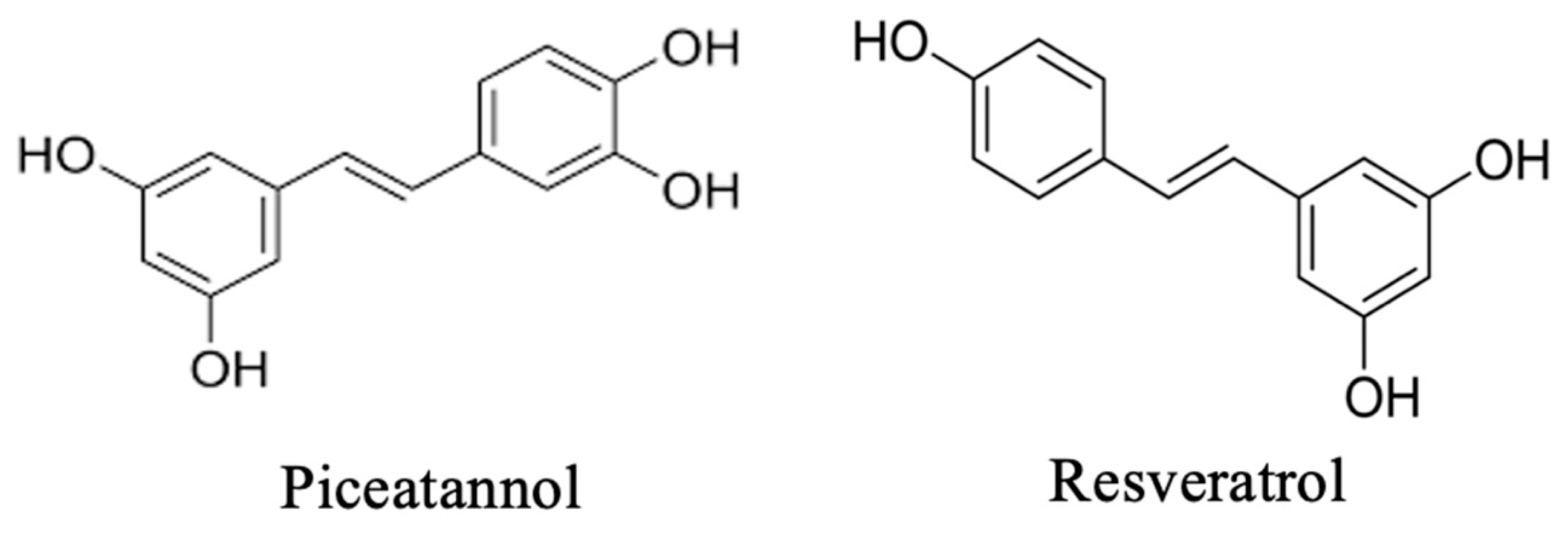
2. Sources, Chemical Properties, and Delivery Imperatives
3. Preclinical Evidence for Multi-Target Dermatological Activity
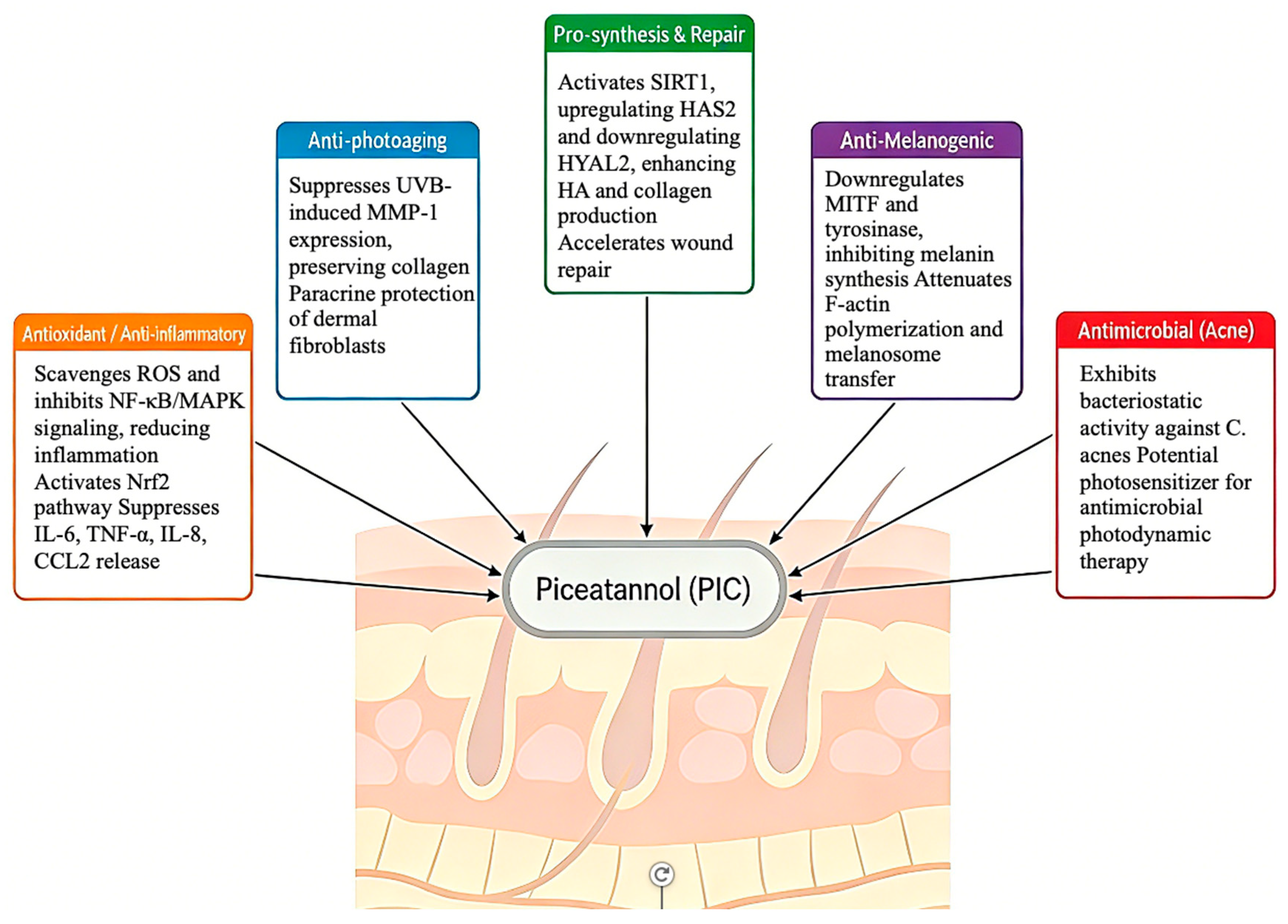
3.1. Combating Oxidative Stress, Inflammation, and Photoaging
3.2. Promoting Skin Biosynthesis and Repair: A Dual Role
3.3. Targeting Hyperpigmentation and Acne

| Biological Activity | Model System | Key Findings | Relevance to Cosmeceutical Claims | Representative Refs. |
|---|---|---|---|---|
| Antioxidant & Anti-inflammatory | Human keratinocytes (HaCaT), murine macrophages (RAW 264.7) | PIC scavenges ROS and suppresses LPS-induced pro-inflammatory cytokines (TNF-α, IL-6) via inhibition of NF-κB and MAPK signaling pathways. | Soothing, redness reduction, anti-pollution, barrier support | [33,34,36,37,38,41] |
| Anti-photoaging | Human dermal fibroblasts (HDFs), UVB-irradiated HaCaT cells | PIC inhibits UVB-induced MMP-1/3 expression and collagen degradation; enhances type I procollagen synthesis via SIRT1 activation. Superior to resveratrol in some assays. | Anti-wrinkle, firming, collagen-boosting, photoprotection booster | [39,40,41] |
| Hydration & Extracellular Matrix Support | HDFs, 3D human skin equivalents | PIC upregulates hyaluronic acid synthase 2 (HAS2), increasing HA production; stimulates collagen and elastin synthesis. | Deep hydration, plumping, and skin elasticity improvement | [42] |
| Anti-melanogenic (Brightening) | B16F10 murine melanoma cells, α-MSH-stimulated human melanocytes | PIC reduces melanin synthesis by downregulating MITF and tyrosinase expression, without cytotoxicity at effective doses. | Brightening, even skin tone, and hyperpigmentation correction | [9,16,44,49] |
| Antibacterial (Acne-targeted) | Cutibacterium acnes cultures | PIC exhibits direct bacteriostatic activity against C. acnes, with MIC values in the low μg/mL range. | Acne prevention, purifying, microbiome-balancing | [43,46] |
4. Bridging Preclinical Findings and Clinical Application: The Defining Gap
4.1. Animal Studies: Systemic Benefits with Skin Relevance
4.2. Lack of Human Evidence and Standardized Methodologies (Table 2)
| Study Design | Intervention | Primary Dermatological Finding | Critical Limitation |
|---|---|---|---|
| RCT (Oral) | Passion fruit seed extract providing 5 mg PIC/day for 8 weeks | Significantly improved skin hydration (corneometer measurement) | Lack of correlation with skin-level biomarkers (e.g., HAS2, AQP3); unknown contribution of other extract components [57] |
| Open-label (Topical) | 3% passion fruit seed extract cream applied twice daily for 8 weeks | Reduced inflammatory acne lesions in patients with mild-to-moderate acne | No vehicle control; extract was not chemically standardized for PIC content or other actives [57] |
| RCT (Oral) | Passion fruit seed extract providing 100 mg piceatannol/day for 4 weeks | Increased SIRT1 mRNA expression in whole blood | No direct skin-related clinical or molecular endpoints assessed; relevance to dermal SIRT1 activity remains speculative [51,52,53] |
4.3. The Translational Gap: A Summary
5. Towards a Circular Dermocosmetic Ingredient: A Translational Framework
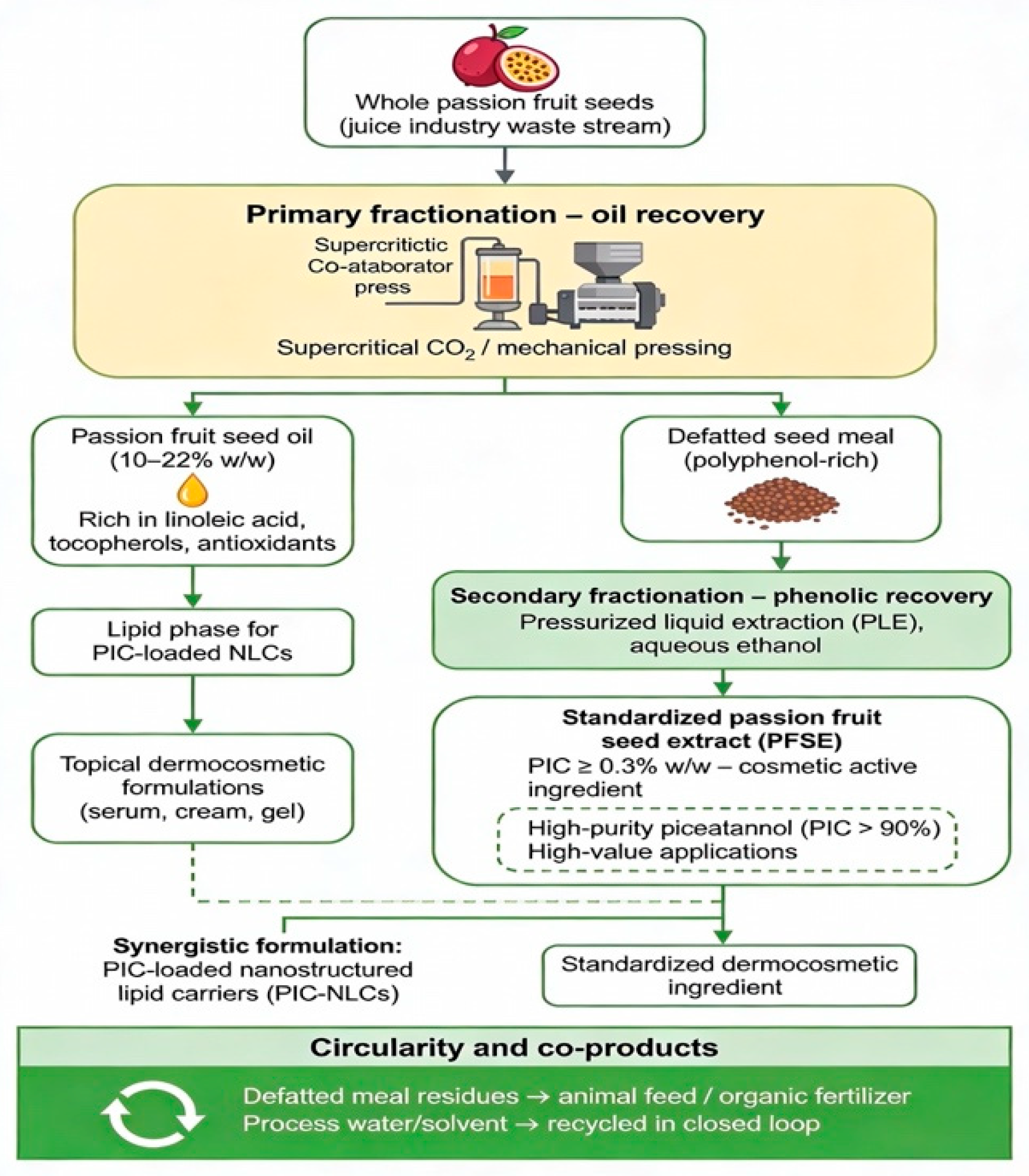
5.1. Foundational Imperative I: Establishing Phytochemical Standardization
5.2. Foundational Imperative II: Implementing a Cascading Biorefinery for Sustainable Sourcing
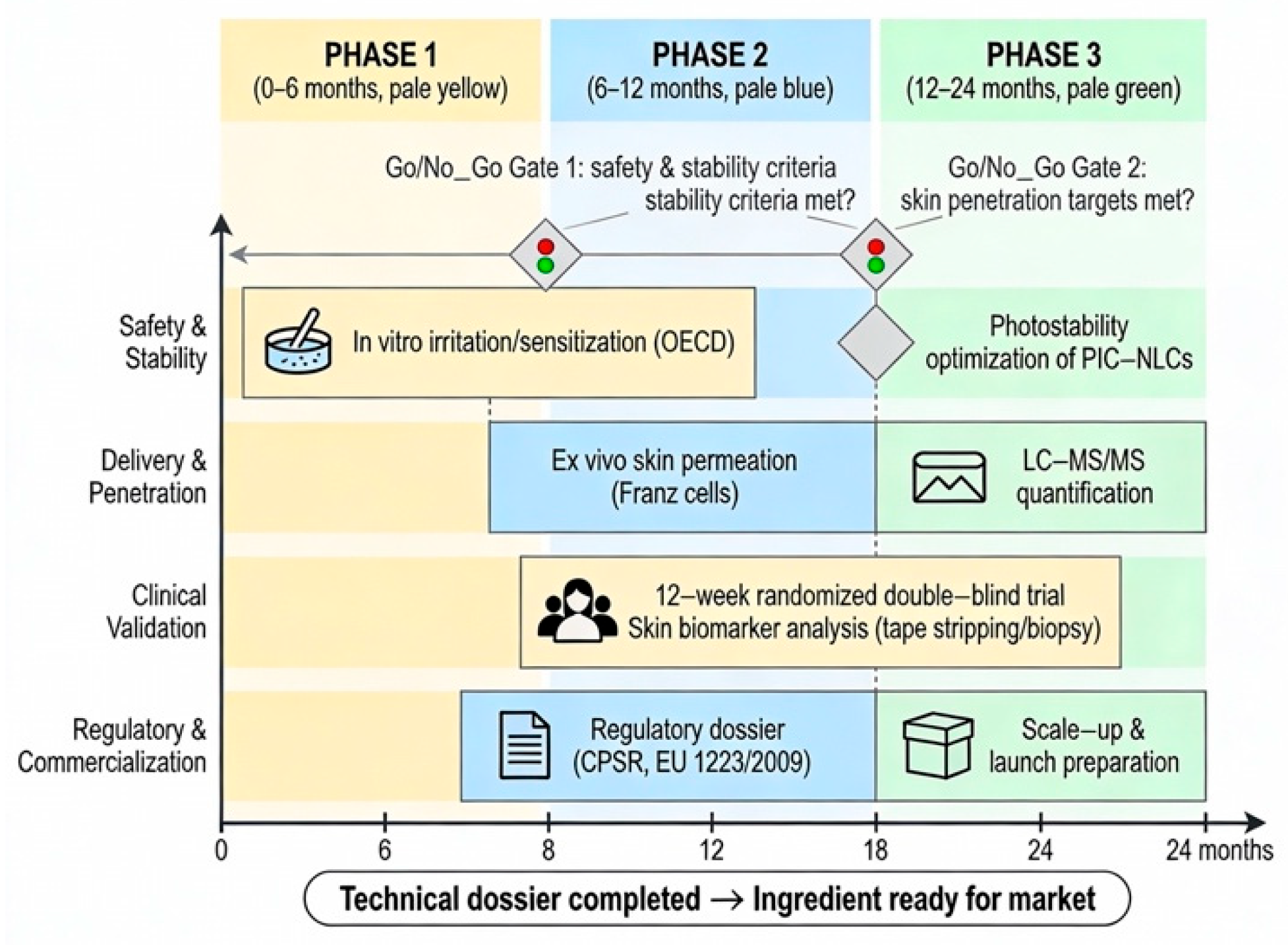
5.3. A Phase-Gate Translational Pipeline: From Standardized Extract to Clinical Validation
- Objective: Establish a preliminary safety margin and overcome inherent physicochemical instability.
- Key activities:
- Safety profiling. Conduct in vitro skin irritation and sensitization assays in line with OECD guidelines (e.g., reconstructed human epidermis models for irritation and ARE-Nrf2 luciferase assays for sensitization) on the standardized PFS extract compared to the PIC reference standard, addressing the current lack of dermal safety data for this stilbene [69]. Beyond initial in vitro irritation and sensitization assays, a comprehensive dermal safety dossier should include phototoxicity testing (e.g., 3T3 NRU phototoxicity assay per OECD 432), given PIC’s potential to absorb UV radiation and its intended use in topical formulations. Repeated-dose toxicity studies in reconstructed human epidermis models can provide insights into cumulative irritation potential and barrier disruption following prolonged exposure. To leverage existing toxicological knowledge, read-across from the structurally related, more extensively characterized polyphenol resveratrol is scientifically justified, as both share a stilbene backbone and are metabolized via similar phase-II pathways. Available data indicate that resveratrol exhibits a favorable dermal safety profile with no evidence of genotoxicity or significant phototoxicity at concentrations up to 10% in topical formulations; however, confirmation for PIC and PIC-rich extracts is required due to the additional catechol moiety, which may alter redox activity and toxicokinetic properties.
- Photostabilization. Formulate PIC within PFS oil-based nanostructured lipid carriers (NLCs) and test the hypothesis that such encapsulation significantly reduces UVA/UVB-induced photodegradation compared to an unformulated control using established photostability protocols adapted from ICH Q1B and prior NLC photostability work. While systemic delivery differs from topical application, the principle that nanoencapsulation can profoundly enhance the stability and bioactivity of PIC is further supported by recent advances in nanomedicine, including a red blood cell membrane-coated biomimetic nanoparticle that achieved sustained release of PIC under hypoxic conditions [70]. This reinforces the rationale for exploring lipid-based nanocarriers in dermal delivery. Moreover, the compatibility of antioxidant-loaded NLCs with nanosized UV filters in stable, non-irritating topical gels has been recently demonstrated, supporting the feasibility of integrating PIC-NLCs into multifunctional photoprotective formulations [71].
- Objective: Quantify and optimize cutaneous bioavailability.
- Key activity:
- Perform ex vivo permeation and deposition studies using human skin mounted on Franz-type diffusion cells, comparing PIC-loaded NLCs with a conventional oil-in-water emulsion. Since the skin permeability of phenolic compounds is highly dependent on molecular characteristics, it can be preliminarily assessed using in silico Log Kp modelling [72]. The working hypothesis is that NLCs will substantially enhance PIC deposition in the stratum corneum and viable epidermis compared to a conventional formulation, consistent with improvements reported for other actives in lipid nanocarriers, with LC-MS/MS used for quantitative analysis [20,21,71].
- Objective: Obtain preliminary efficacy evidence with mechanistic insight.
- Key activity:
- Execute a randomized, double-blind, vehicle-controlled clinical trial of a PIC-NLC formulation at a concentration and duration aligned with prior cosmeceutical studies on similar bioactives [55,73]. We hypothesize that the intervention will produce measurable and statistically significant gains across objective endpoints (e.g., skin hydration, elasticity, pigmentation) while, critically, incorporating correlative skin biomarker analysis—such as minimally invasive biopsies or tape-stripping to assess changes in genes/proteins such as SIRT1, HAS2, and MMP-1, which have been implicated in PIC’s dermal actions in vitro and in the biology of skin aging [39,42,50,55].
5.4. Regulatory Integration and Commercial Pathway
5.5. Synthesis: A Blueprint for Action
5.6. Technology Readiness Level and Implementation Bottlenecks
5.7. Broader Applicability to Other Agricultural Waste Valorization
6. Conclusions
Author Contributions
Funding
Institutional Review Board Statement
Informed Consent Statement
Data Availability Statement
Conflicts of Interest
Abbreviations
| Abbreviation | Full Form |
| PIC | Piceatannol |
| PFS | Passion fruit seed |
| CQAs | Critical quality attributes |
| NLCs | Nanostructured lipid carriers |
| SIRT1 | Sirtuin 1 |
| HAS2 | Hyaluronan synthase 2 |
| MMP-1 | Matrix metalloproteinase-1 |
| MITF | Microphthalmia-associated transcription factor |
| C. acnes | Cutibacterium acnes |
| ROS | Reactive oxygen species |
| NF-κB | Nuclear factor kappa-light-chain-enhancer of activated B cells |
| MAPK | Mitogen-activated protein kinase |
| OECD | Organisation for Economic Co-operation and Development |
References
- Antoniassi, R.; Wilhelm, A.; Reis, S.; Regis, S.; Faria-Machado, A.; Bizzo, H.; Cenci, S. Expeller pressing of passion fruit seed oil: Pressing efficiency and quality of oil. Braz. J. Food Technol. 2022, 25, e2021168. [Google Scholar] [CrossRef]
- Weyya, G.; Belay, A.; Tadesse, E. Passion fruit (Passiflora edulis Sims) by-products as a source of bioactive compounds for non-communicable disease prevention: Extraction methods and mechanisms of action: A systematic review. Front. Nutr. 2024, 11, 1340511. [Google Scholar] [CrossRef]
- Nikolova, K.; Velikova, M.; Gentscheva, G.; Gerasimova, A.; Slavov, P.; Harbaliev, N.; Makedonski, L.; Buhalova, D.; Petkova, N.; Gavrilova, A. Chemical compositions, pharmacological properties and medicinal effects of genus Passiflora L.: A review. Plants 2024, 13, 228. [Google Scholar] [CrossRef]
- Kawakami, S.; Morinaga, M.; Tsukamoto-Sen, S.; Mori, S.; Matsui, Y.; Kawama, T. Constituent characteristics and functional properties of passion fruit seed extract. Life 2021, 12, 38. [Google Scholar] [CrossRef] [PubMed]
- Chalortham, N.; Phumsuwan, N.; Kreawsa, S.; Moonsawat, K.; Yasamoot, D.; Jaisit, N.; Saefong, C.; Leepatanakun, L.; Pongtakam, C.; Na Lamphun, J.; et al. Comparison of piceatannol content in seed coat and embryo of passion fruit. Thai Bull. Pharm. Sci. 2019, 14, 35–48. [Google Scholar] [CrossRef]
- Martinez-Marquez, A.; Selles-Marchart, S.; Najera, H.; Morante-Carriel, J.; Martinez-Esteso, M.J.; Bru-Martinez, R. Biosynthesis of piceatannol from resveratrol in grapevine can be mediated by cresolase-dependent ortho-hydroxylation activity of polyphenol oxidase. Plants 2024, 13, 2602. [Google Scholar] [CrossRef]
- Duta-Bratu, C.G.; Nitulescu, G.M.; Mihai, D.P.; Olaru, O.T. Resveratrol and other natural oligomeric stilbenoid compounds and their therapeutic applications. Plants 2023, 12, 2935. [Google Scholar] [CrossRef] [PubMed]
- Rajan, R.K. Piceatannol—Can it be used to treat hyperpigmentation of the skin? Pigment Cell Melanoma Res. 2025, 38, e70008. [Google Scholar] [CrossRef]
- Yokozawa, T.; Kim, Y.J. Piceatannol inhibits melanogenesis by its antioxidative actions. Biol. Pharm. Bull. 2007, 30, 2007–2011. [Google Scholar] [CrossRef] [PubMed]
- Das, G.; Kameswaran, S.; Ramesh, B.; Bangeppagari, M.; Nath, R.; Das Talukdar, A.; Shin, H.S.; Patra, J.K. Anti-aging effect of traditional plant-based food: An overview. Foods 2024, 13, 3785. [Google Scholar] [CrossRef]
- Al-Jaber, H.I.; Shakya, A.K.; Al-Qudah, M.A.; Barhoumi, L.M.; Abu-Sal, H.E.; Hasan, H.S.; Al-Bataineh, N.; Abu-Orabi, S.; Mubarak, M.S. Piceatannol, a comprehensive review of health perspectives and pharmacological aspects. Arab. J. Chem. 2024, 17, 105939. [Google Scholar] [CrossRef]
- Sun, R.; Li, W.; Liao, M.; Yu, Y.; Mou, Y.; Ji, J.; Chen, F.; Hu, X.; Ma, L. Piceatannol, a catechol analog of resveratrol, is more effective in improving glucose metabolism disorders. Food Biosci. 2025, 71, 107348. [Google Scholar] [CrossRef]
- Hosoda, R.; Hamada, H.; Uesugi, D.; Iwahara, N.; Nojima, I.; Horio, Y.; Kuno, A. Different antioxidative and antiapoptotic effects of piceatannol and resveratrol. J. Pharmacol. Exp. Ther. 2021, 376, 385–396. [Google Scholar] [CrossRef]
- Cordova-Gomez, M.; Galano, A.; Alvarez-Idaboy, J. Piceatannol, a better peroxyl radical scavenger than resveratrol. RSC Adv. 2013, 3, 20209. [Google Scholar] [CrossRef]
- Bhat, D.; Patil, A. Passiflora edulis seeds: Phytochemical analysis and therapeutic properties. Int. J. Res. 2024, 11, 284–291. [Google Scholar] [CrossRef]
- Matsui, Y.; Sugiyama, K.; Kamei, M.; Takahashi, T.; Suzuki, T.; Katagata, Y.; Ito, T. Extract of passion fruit (Passiflora edulis) seed containing high amounts of piceatannol inhibits melanogenesis and promotes collagen synthesis. J. Agric. Food Chem. 2010, 58, 11112–11118. [Google Scholar] [CrossRef] [PubMed]
- Tambuwala, M.M.; Khan, M.N.; Thompson, P.; McCarron, P.A. Albumin nano-encapsulation of caffeic acid phenethyl ester and piceatannol potentiated its ability to modulate HIF and NF-kB pathways and improves therapeutic outcome in experimental colitis. Drug Deliv. Transl. Res. 2019, 9, 14–24. [Google Scholar] [CrossRef] [PubMed]
- Dai, Y.; Lim, J.X.; Yeo, S.C.M.; Xiang, X.; Tan, K.S.; Fu, J.H.; Huang, L.; Lin, H.S. Biotransformation of piceatannol, a dietary resveratrol derivative: Promises to human health. Mol. Nutr. Food Res. 2020, 64, e1900905. [Google Scholar] [CrossRef]
- Miksits, M.; Maier-Salamon, A.; Vo, T.P.; Sulyok, M.; Schuhmacher, R.; Szekeres, T.; Jäger, W. Glucuronidation of piceatannol by human liver microsomes: Major role of UGT1A1, UGT1A8 and UGT1A10. J. Pharm. Pharmacol. 2010, 62, 47–54. [Google Scholar] [CrossRef]
- Hua, S. Lipid-based nano-delivery systems for skin delivery of drugs and bioactives. Front. Pharmacol. 2015, 6, 219. [Google Scholar] [CrossRef]
- Li, B.; Ge, Z.Q. Nanostructured lipid carriers improve skin permeation and chemical stability of idebenone. AAPS PharmSciTech 2012, 13, 276–283. [Google Scholar] [CrossRef] [PubMed]
- Madawi, E.A.; Al Jayoush, A.R.; Rawas-Qalaji, M.; Thu, H.E.; Khan, S.; Sohail, M.; Mahmood, A.; Hussain, Z. Polymeric nanoparticles as tunable nanocarriers for targeted delivery of drugs to skin tissues for treatment of topical skin diseases. Pharmaceutics 2023, 15, 657. [Google Scholar] [CrossRef] [PubMed]
- Krambeck, K.; Santos, D.; Sousa Lobo, J.M.; Amaral, M.H. Benefits of skin application of piceatannol—A minireview. Australas. J. Dermatol. 2023, 64, e21–e25. [Google Scholar] [CrossRef]
- Fathi, F.; Machado, T.O.X.; de Almeida, C.K.H.; Portugal, I.; Ferreira, I.O.; Zielinska, A.; Oliveira, M.; Souto, E.B. Solid lipid nanoparticles (SLN) and nanostructured lipid carriers (NLC) for the delivery of bioactives sourced from plants: Part I—Composition and production methods. Expert Opin. Drug Deliv. 2024, 21, 1479–1490. [Google Scholar] [CrossRef]
- Malacrida, C.R.; Jorge, N. Yellow passion fruit seed oil (Passiflora edulis f. flavicarpa): Physical and chemical characteristics. Braz. Arch. Biol. Technol. 2012, 55, 127–134. [Google Scholar] [CrossRef]
- Caldeira, C.; Vlysidis, A.; Fiore, G.; De Laurentiis, V.; Vignali, G.; Sala, S. Sustainability of food waste biorefinery: A review on valorisation pathways, techno-economic constraints, and environmental assessment. Bioresour. Technol. 2020, 312, 123575. [Google Scholar] [CrossRef] [PubMed]
- Krambeck, K.; Silva, V.; Silva, R.; Fernandes, C.; Cagide, F.; Borges, F.; Santos, D.; Otero-Espinar, F.; Lobo, J.M.S.; Amaral, M.H. Design and characterization of nanostructured lipid carriers (NLC) and nanostructured lipid carrier-based hydrogels containing Passiflora edulis seeds oil. Int. J. Pharm. 2021, 600, 120444. [Google Scholar] [CrossRef]
- Zheng, L.; Wang, S.; Yang, Y.; Zheng, X.; Xiao, D.; Ai, B.; Sheng, Z. Volatile aroma compounds of passion fruit seed oils: HS-GC-IMS analysis and interpretation. Food Chem. X 2024, 21, 101212. [Google Scholar] [CrossRef]
- Zhou, D.D.; Cheng, J.; Li, J.; Wu, S.X.; Xiong, R.G.; Huang, S.Y.; Cheung, P.C.; Li, H.B. Resveratrol and its analogues: Anti-ageing effects and underlying mechanisms. Subcell. Biochem. 2024, 107, 183–203. [Google Scholar] [CrossRef]
- Bernini, R.; Barontini, M.; Spatafora, C. New lipophilic piceatannol derivatives exhibiting antioxidant activity prepared by aromatic hydroxylation with 2-iodoxybenzoic acid (IBX). Molecules 2009, 14, 4669–4681. [Google Scholar] [CrossRef]
- Lu, Y.; Wang, A.; Shi, P.; Zhang, H. A theoretical study on the antioxidant activity of piceatannol and isorhapontigenin scavenging nitric oxide and nitrogen dioxide radicals. PLoS ONE 2017, 12, e0169773. [Google Scholar] [CrossRef]
- Sueishi, Y.; Nii, R.; Kakizaki, N. Resveratrol analogues like piceatannol are potent antioxidants as quantitatively demonstrated through the high scavenging ability against reactive oxygen species and methyl radical. Bioorganic Med. Chem. Lett. 2017, 27, 5203–5206. [Google Scholar] [CrossRef]
- Cai, Y.J.; Wei, Q.Y.; Fang, J.G.; Yang, L.; Liu, Z.L.; Wyche, J.H.; Han, Z. The 3,4-dihydroxyl groups are important for trans-resveratrol analogs to exhibit enhanced antioxidant and apoptotic activities. Anticancer Res. 2004, 24, 999–1002. [Google Scholar]
- Li, H.; Shi, Y.; Wang, X.; Li, P.; Zhang, S.; Wu, T.; Yan, Y.; Zhan, Y.; Ren, Y.; Rong, X.; et al. Piceatannol alleviates inflammation and oxidative stress via modulation of the Nrf2/HO-1 and NF-κB pathways in diabetic cardiomyopathy. Chem. Biol. Interact. 2019, 310, 108754. [Google Scholar] [CrossRef] [PubMed]
- Zhang, X.; Chen, X.; Bao, J. Piceatannol alleviates oxidative stress and ferroptosis in alcohol-induced liver injury by activation of Nrf2/GPX4 signaling. Int. Immunopharmacol. 2025, 165, 115420. [Google Scholar] [CrossRef] [PubMed]
- Khan, I.; Preeti, K.; Kumar, R.; Khatri, D.K.; Singh, S.B. Piceatannol promotes neuroprotection by inducing mitophagy and mitobiogenesis in the experimental diabetic peripheral neuropathy and hyperglycemia-induced neurotoxicity. Int. Immunopharmacol. 2023, 116, 109793. [Google Scholar] [CrossRef]
- Gao, X.; Kang, X.; Lu, H.; Xue, E.; Chen, R.; Pan, J.; Ma, J. Piceatannol suppresses inflammation and promotes apoptosis in rheumatoid arthritis-fibroblast-like synoviocytes by inhibiting the NF-κB and MAPK signaling pathways. Mol. Med. Rep. 2022, 25, 106. [Google Scholar] [CrossRef] [PubMed]
- Zhou, Y.; Khan, H.; Hoi, M.P.M.; Cheang, W.S. Piceatannol protects brain endothelial cell line (bEnd.3) against lipopolysaccharide-induced inflammation and oxidative stress. Molecules 2022, 27, 1206. [Google Scholar] [CrossRef]
- Maruki-Uchida, H.; Kurita, I.; Sugiyama, K.; Sai, M.; Maeda, K.; Ito, T. The protective effects of piceatannol from passion fruit (Passiflora edulis) seeds in UVB-irradiated keratinocytes. Biol. Pharm. Bull. 2013, 36, 845–849. [Google Scholar] [CrossRef]
- Cavinato, M.; Waltenberger, B.; Baraldo, G.; Grade, C.V.C.; Stuppner, H.; Jansen-Dürr, P. Plant extracts and natural compounds used against UVB-induced photoaging. Biogerontology 2017, 18, 499–516. [Google Scholar] [CrossRef]
- Kim, D.J.; Iwasaki, A.; Chien, A.L.; Kang, S. UVB-mediated DNA damage induces matrix metalloproteinases to promote photoaging in an AhR- and SP1-dependent manner. JCI Insight 2022, 7, e156344. [Google Scholar] [CrossRef] [PubMed]
- Yoshihara, M.; Kawakami, S.; Matsui, Y.; Kawama, T. Piceatannol enhances hyaluronic acid synthesis through SIRT1-mediated HAS2 upregulation in human dermal fibroblasts. Biochem. Biophys. Rep. 2024, 39, 101746. [Google Scholar] [CrossRef]
- Zhu, T.; Fang, F.; Sun, D.; Yang, S.; Zhang, X.; Yu, X.; Yang, L. Piceatannol inhibits P. acnes-induced keratinocyte proliferation and migration by downregulating oxidative stress and the inflammatory response. Inflammation 2020, 43, 347–357. [Google Scholar] [CrossRef]
- Kanlayavattanakul, M.; Lourith, N. Plants and natural products for the treatment of skin hyperpigmentation—A review. Planta Med. 2018, 84, 988–1006. [Google Scholar]
- Kunsorn, P.; Payuhakrit, W.; Povichit, N.; Suwannalert, P. Piceatannol-rich extract from Passiflora edulis Sims seeds attenuates morphological differentiation through the reduction of MITF mRNA expression and F-actin polymerization in UVB-induced hyperpigmented B16F10 cells. J. Pharm. Pharmacogn. Res. 2024, 12, 900–910. [Google Scholar]
- Putra, I.B.; Dewi, N.K. Antibacterial activity of passion fruit purple variant (Passiflora edulis Sims var. edulis) seeds extract against Propionibacterium acnes. Clin. Cosmet. Investig. Dermatol. 2020, 13, 99–104. [Google Scholar] [CrossRef]
- Wang, X.; Wang, L.; Fekrazad, R.; Zhang, L.; Jiang, X.; He, G.; Wen, X. Polyphenolic natural products as photosensitizers for antimicrobial photodynamic therapy: Recent advances and future prospects. Front. Immunol. 2023, 14, 1275859. [Google Scholar] [CrossRef]
- Kunsorn, P.; Payuhakrit, W.; Petit, V.; Larue, L.; Champakam, S.; Suwannalert, P. Skin anti-aging and wound healing effects of a passion fruit seed extract rich in piceatannol. Nutr. Healthy Aging 2024, 9, 101–112. [Google Scholar] [CrossRef]
- Sukketsiri, W.; Daodee, S.; Parhira, S.; Malakul, W.; Tunsophon, S.; Sutthiwong, N.; Tanasawet, S.; Chonpathompikunlert, P. Chemical characterization of Passiflora edulis extracts and their in vitro antioxidant, anti-inflammatory, anti-lipid activities, and ex-vivo vasodilation effect. J. King Saud Univ. Sci. 2023, 35, 102431. [Google Scholar] [CrossRef]
- Lee, H.J.; Kang, M.G.; Cha, H.Y.; Kim, Y.M.; Lim, Y.; Yang, S.J. Effects of piceatannol and resveratrol on sirtuins and hepatic inflammation in high-fat diet-fed mice. J. Med. Food 2019, 22, 833–840. [Google Scholar] [CrossRef] [PubMed]
- Kitada, M.; Ogura, Y.; Maruki-Uchida, H.; Sai, M.; Suzuki, T.; Kanasaki, K.; Hara, Y.; Seto, H.; Kuroshima, Y.; Monno, I.; et al. The effect of piceatannol from passion fruit (Passiflora edulis) seeds on metabolic health in humans. Nutrients 2017, 9, 1142. [Google Scholar] [CrossRef]
- Dewi, N.K.; Putra, I.B.; Jusuf, N.K. Passion fruit purple variant (Passiflora edulis Sims var. edulis) seeds extract 10% cream in acne vulgaris treatment: An open-label pilot study. Int. J. Dermatol. 2020, 59, 1506–1512. [Google Scholar] [CrossRef]
- Muslim, M.; Jusuf, N.K.; Putra, I.B. The effect of 3% passion fruit purple variant (Passiflora edulis Sims var. edulis) seed extract cream on facial skin aging. J. Pak. Assoc. Dermatol. 2023, 33, 566–573. [Google Scholar]
- Tanaka, K.; Kawakami, S.; Mori, S.; Yamaguchi, T.; Saito, E.; Setoguchi, Y.; Matsui, Y.; Nishimura, E.; Ebihara, S.; Kawama, T. Piceatannol upregulates SIRT1 expression in skeletal muscle cells and in human whole blood: In vitro assay and a randomized, double-blind, placebo-controlled, parallel-group comparison trial. Life 2024, 14, 589. [Google Scholar] [CrossRef] [PubMed]
- Tsukiashi, M.; Kawakami, S.; Maruki-Uchida, H.; Iemoto, N. The effect of piceatannol from passion fruit seed extract on sirtuin expression. Innov. Aging 2024, 8, 1278. [Google Scholar] [CrossRef]
- Bielach-Bazyluk, A.; Zbroch, E.; Mysliwiec, H.; Rydzewska-Rosolowska, A.; Kakareko, K.; Flisiak, I.; Hryszko, T. Sirtuin 1 and skin: Implications in intrinsic and extrinsic aging—A systematic review. Cells 2021, 10, 813. [Google Scholar] [CrossRef]
- Medrano-Padial, C.; Prieto, A.I.; Puerto, M.; Pichardo, S. Toxicological evaluation of piceatannol, pterostilbene, and ε-viniferin for their potential use in the food industry: A review. Foods 2021, 10, 592. [Google Scholar] [CrossRef]
- Cui, Q.; Wang, H. Resveratrol in dermatological therapy: A critical review of mechanisms, delivery innovations, and clinical frontiers. Clin. Cosmet. Investig. Dermatol. 2025, 18, 2229–2242. [Google Scholar] [CrossRef]
- Zhang, X.; Chen, S.; Luo, D.; Chen, D.; Zhou, H.; Zhang, S.; Chen, X.; Lu, W.; Liu, W. Systematic study of resveratrol nanoliposomes transdermal delivery system for enhancing anti-aging and skin-brightening efficacy. Molecules 2023, 28, 2738. [Google Scholar] [CrossRef]
- Silva, G.C.; Rodrigues, R.A.F.; Bottoli, C.B.G. Passion fruit seed extract enriched in piceatannol obtained by microwave-assisted extraction. Sustain. Chem. Pharm. 2021, 22, 100472. [Google Scholar] [CrossRef]
- Silva, G.C.; Rodrigues, R.A.; Bottoli, C.B. Formulation stability of sunscreens with passion fruit seed and paracress extracts. J. Braz. Chem. Soc. 2025, 36, e20250132. [Google Scholar] [CrossRef]
- Dos Santos, L.C.; Mendiola, J.A.; Sánchez-Camargo, A.D.P.; Álvarez-Rivera, G.; Viganó, J.; Cifuentes, A.; Ibáñez, E.; Martínez, J. Selective extraction of piceatannol from Passiflora edulis by-products: Application of HSPs strategy and inhibition of neurodegenerative enzymes. Int. J. Mol. Sci. 2021, 22, 6248. [Google Scholar] [CrossRef]
- Martins Strieder, M.; Lopes de Oliveira, I.; Sanchez Bragagnolo, F.; Lacerda Sanches, V.; Stein Pizani, R.; Mendes de Souza Mesquita, L.; Rostagno, M.A. Consistency of phenolic compounds in plant residues parts: A review of primary sources, key compounds, and extraction trends. J. Agric. Food Chem. 2025, 73, 11515–11534. [Google Scholar] [CrossRef]
- Yepes, A.; Ochoa-Bautista, D.; Murillo-Arango, W.; Quintero-Saumeth, J.; Bravo, K.; Osorio, E. Purple passion fruit seeds (Passiflora edulis f. edulis Sims) as a promising source of skin anti-aging agents: Enzymatic, antioxidant and multi-level computational studies. Arab. J. Chem. 2021, 14, 102905. [Google Scholar] [CrossRef]
- Viganó, J.; Martinez, J. Trends for the application of passion fruit industrial by-products: A review on the chemical composition and extraction techniques of phytochemicals. Food Public Health 2015, 5, 164–173. [Google Scholar] [CrossRef]
- Soni, N.; Jat, S.; Kumar, A.; Gulbake, A.; Bhatt, M.; Das, B.; Matsa, R.; Gore, P.V.; Maykar, D.; Kumar, P. QbD-driven extraction and purification of piceatannol from passion fruit seeds and its cubosomes development, characterization, and neuronal cellular analysis. Food Biosci. 2025, 71, 107277. [Google Scholar] [CrossRef]
- Fang, T.; Wang, M.; He, R.; Chen, Q.; He, D.; Chen, X.; Li, Y.; Ren, R.; Yu, W.; Zeng, L. A 224-bp Indel in the promoter of PeMYB114 accounts for anthocyanin accumulation of skin in passion fruit (Passiflora spp.). J. Agric. Food Chem. 2024, 72, 10138–10148. [Google Scholar] [CrossRef] [PubMed]
- Benvenutti, L.; Moura, F.M.; Zanghelini, G.; Barrera, C.; Seguí, L.; Zielinski, A.A.F. An upcycling approach from fruit processing by-products: Flour for use in food products. Foods 2025, 14, 153. [Google Scholar] [CrossRef]
- OECD. Test No. 406: Skin Sensitisation. In OECD Guidelines for the Testing of Chemicals, Section 4; OECD Publishing: Paris, France, 2022. [Google Scholar] [CrossRef]
- Zhou, M.; Niu, H.; Huang, G.; Zhou, M.; Cui, D.; Li, H.; Wen, H.; Zhang, H.; Liang, F.; Chen, R. Biomimetic nano-delivery of small-molecule piceatannol modulates tumor stemness and suppresses colorectal cancer metastasis via Hippo/YAP1/SOX9 signaling. Small 2025, 21, e2407191. [Google Scholar] [CrossRef] [PubMed]
- Badalkhani, O.; Pires, P.C.; Mohammadi, M.; Babaie, S.; Paiva-Santos, A.C.; Hamishehkar, H. Nanogel containing gamma-oryzanol-loaded nanostructured lipid carriers and TiO2/MBBT: A synergistic nanotechnological approach of potent natural antioxidants and nanosized UV filters for skin protection. Pharmaceuticals 2023, 16, 670. [Google Scholar] [CrossRef]
- Majdi, H.; Chaabani, E.; Yeddes, W.; Aidi Wannes, W.; Bourgou, S. Phenolic compounds and skin permeability: An in silico investigation. Avicenna J. Med. Biochem. 2023, 11, 11–18. [Google Scholar] [CrossRef]
- Ronlan, A. Cosmetic Formulations of Piceatannol and Retinoids and Methods of Use Thereof. U.S. Patent 20080200499A1, 21 August 2008. [Google Scholar]
- Sharafan, M.; Malinowska, M.A.; Ekiert, H.; Kwaśniak, B.; Sikora, E.; Szopa, A. Vitis vinifera (vine grape) as a valuable cosmetic raw material. Pharmaceutics 2023, 15, 1372. [Google Scholar] [CrossRef] [PubMed]
- European Parliament. Regulation (EC) No 1223/2009 of the European Parliament and of the Council on Cosmetic Products. Off. J. Eur. Union 2009, L342, 59–209. [Google Scholar]
- Nukaga, T.; Hirota, M.; Hisaki, T.; Sekine, S.; Imai, K.; Tamura, A. P22-11: Case study of resveratrol as a cosmetic ingredient for systemic toxicity using the new approach methodologies of next generation risk assessment. Toxicol. Lett. 2023, 384, S253. [Google Scholar] [CrossRef]
- Gafner, S.; Blumenthal, M.; Foster, S.; Cardellina, J.H., II; Khan, I.A.; Upton, R. Botanical ingredient forensics: Detection of attempts to deceive commonly used analytical methods for authenticating herbal dietary and food ingredients and supplements. J. Nat. Prod. 2023, 86, 460–472. [Google Scholar] [CrossRef] [PubMed]
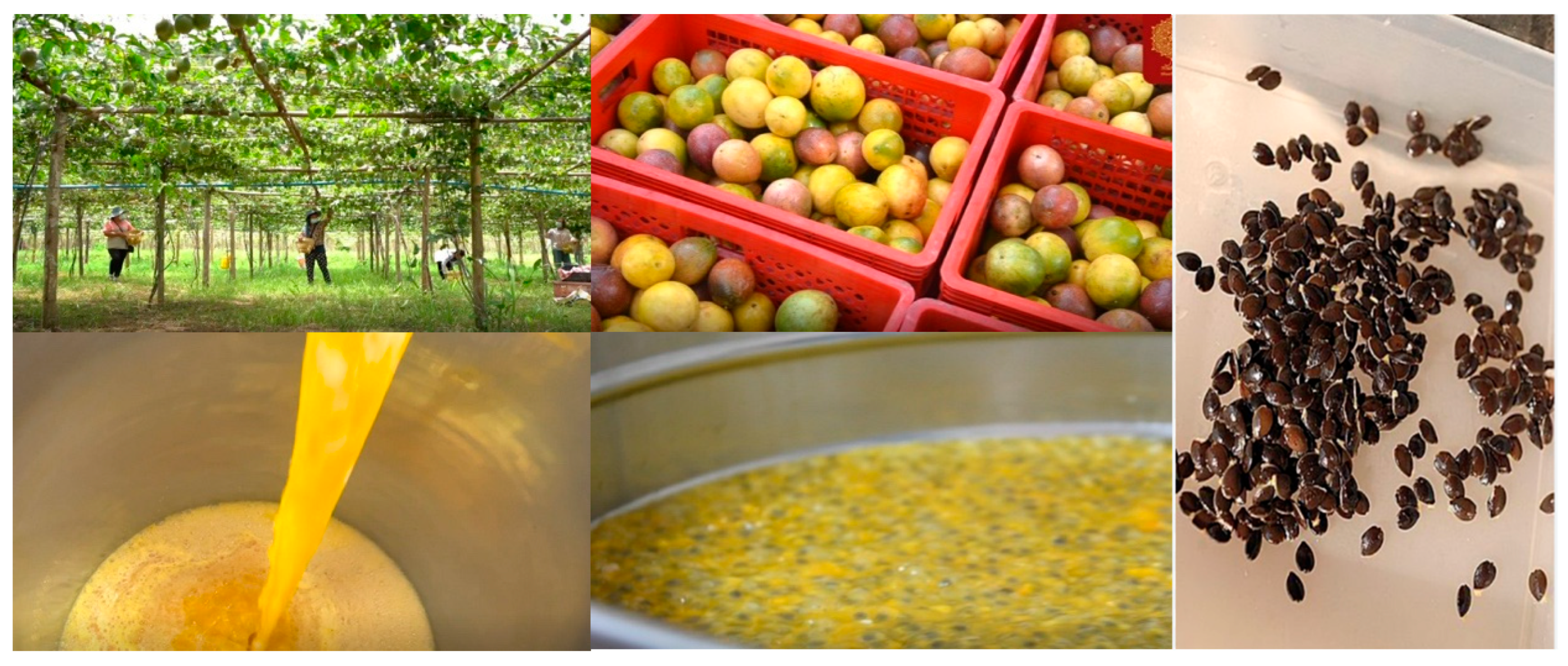


Disclaimer/Publisher’s Note: The statements, opinions and data contained in all publications are solely those of the individual author(s) and contributor(s) and not of MDPI and/or the editor(s). MDPI and/or the editor(s) disclaim responsibility for any injury to people or property resulting from any ideas, methods, instructions or products referred to in the content. |
© 2026 by the authors. Licensee MDPI, Basel, Switzerland. This article is an open access article distributed under the terms and conditions of the Creative Commons Attribution (CC BY) license.
Share and Cite
Zhang, D.; Chittasupho, C.; Jiranusornkul, S. Piceatannol from Passion Fruit Seed Waste: A Circular Bioeconomy-Driven Pathway Toward a Skin-Targeted Bioactive. Int. J. Mol. Sci. 2026, 27, 3451. https://doi.org/10.3390/ijms27083451
Zhang D, Chittasupho C, Jiranusornkul S. Piceatannol from Passion Fruit Seed Waste: A Circular Bioeconomy-Driven Pathway Toward a Skin-Targeted Bioactive. International Journal of Molecular Sciences. 2026; 27(8):3451. https://doi.org/10.3390/ijms27083451
Chicago/Turabian StyleZhang, Dian, Chuda Chittasupho, and Supat Jiranusornkul. 2026. "Piceatannol from Passion Fruit Seed Waste: A Circular Bioeconomy-Driven Pathway Toward a Skin-Targeted Bioactive" International Journal of Molecular Sciences 27, no. 8: 3451. https://doi.org/10.3390/ijms27083451
APA StyleZhang, D., Chittasupho, C., & Jiranusornkul, S. (2026). Piceatannol from Passion Fruit Seed Waste: A Circular Bioeconomy-Driven Pathway Toward a Skin-Targeted Bioactive. International Journal of Molecular Sciences, 27(8), 3451. https://doi.org/10.3390/ijms27083451