Article

Comprehensive Analysis of the Complete Mitochondrial Genomes of Dendrobium nobile Lindl. and Dendrobium denneanum Kerr., Two Precious Traditional Chinese Medicinal Herbs


1
Chengdu Institute of Biology, Chinese Academy of Sciences, Chengdu 610213, China
2
Department of Natural Sciences, Pitzer College, Claremont, CA 91711, USA
*
Authors to whom correspondence should be addressed.
Int. J. Mol. Sci. 2026, 27(8), 3441; https://doi.org/10.3390/ijms27083441 (registering DOI)
Submission received: 5 February 2026 / Revised: 27 March 2026 / Accepted: 8 April 2026 / Published: 11 April 2026
(This article belongs to the Section Molecular Biology)

Abstract

The plant mitochondrial genome has become a current research hotspot as an independent genetic model. Nevertheless, mitochondrial genome information for most Dendrobium species remains unknown. In this study, the assembly of mitochondrial genome of Dendrobium nobile Lindl.,1830 and Dendrobium denneanum Kerr., 1933 was conducted through the application of second- and third-generation sequencing technologies, with the mitochondrial genome of D. denneanum Kerr. being reported first. The results revealed that the mitochondrial genomes of the two species possessed a multi-chromosome circular structure. Their total lengths were 641,414 bp and 558,760 bp, consisting of 21 and 19 contigs, respectively. A total of 67 and 72 genes, 993 and 1491 repeat sequences, and 549 and 553 RNA editing sites were identified. Gene loss was observed. A total of 26 and 36 homologous fragments were detected between the mitochondrial and the chloroplast genome, accounting for 5.09% and 4.93% of the total lengths, respectively, indicating intracellular gene transfer. Synteny and phylogenetic analyses revealed that the two species shared extensive collinear regions and clustered together in a distinct clade of the phylogenetic tree, indicating a close sister relationship. These findings enrich the mitochondrial genome database and provide valuable insights to guide future research on species identification and molecular evolution of the genus Dendrobium.

1. Introduction

Dendrobium nobile Lindl. and D. denneanum Kerr. are two Dendrobium species in the Orchidaceae family; both are precious traditional Chinese medicinal herbs and are listed in the Pharmacopoeia of the People’s Republic of China [1]. The two species are used as raw materials for producing health products that have special efficacy in moistening the lungs, generating body fluid, nourishing yin and clearing heat, owing to some important chemical contents, including alkaloids, polysaccharides, flavonoids, tannins, etc. Meanwhile, their blooms are very beautiful, with vibrant colors. Since the wild resources of the two species are protected under national key protection, the current strategy is to develop artificial cultivation, which plays a role in windbreaking, soil stabilization, and beautifying barren mountains. Given their significant medicinal, ecological, and scientific value, our previous studies have focused on various aspects of the two species, including at morphological, chemical, and molecular levels [2,3,4,5,6,7,8,9]. At the molecular level, these studies have involved partial nuclear DNA sequences and partial chloroplast DNA sequences. As research advances, it is necessary to explore other DNA systems in order to accumulate more genetic information.
The analysis of plant mitochondrial genomes has become a current research hotspot as an independent genetic model separate from the nuclear genome. Mitochondria are the genetic system for cellular respiration, supplying energy for various cellular activities and playing a crucial role in plant growth and development [10]. In the early 1860s, genetic material within mitochondria was first discovered [11]. Subsequently, researchers successively identified all the components required for replication, transcription, and protein translation in mitochondria, such as DNA polymerase, RNA polymerase, transfer RNA, ribosomal RNA, and so on. These findings collectively demonstrated that mitochondria possess a relatively independent genetic and transcriptional system. Since the completion of Arabidopsis thaliana mitochondrial genome sequencing in 1997 [12], an increasing number of plant mitochondrial genomes have been sequenced and listed in the NCBI-Genome database with the development and widespread adoption of high-throughput sequencing technologies in recent years [13]. The plant mitochondrial genome has also become an important tool for genetic breeding, species identification and population phylogeny [14,15,16].
Within the genus Dendrobium (Orchidaceae), the mitochondrial genomes of several species have been reported [17,18,19,20]. These studies showed that the mitochondrial genome of the genus Dendrobium has a different structure, including monocyclic and polycyclic structural variation, frequent gene recombination, abundant repetitive sequences, and intracellular gene transfer (IGT). The multi-chromosomal structure provided new insights for the precise identification of medicinal plants [21]. The presence of extensive homologous sequences and repetitive sequences was considered an important reason for genome expansion. However, among the 1500 Dendrobium species, fewer than 10 have been sequenced, which is far from sufficient. Mitochondrial genome information for most species remains unknown. Furthermore, even within the same genus and species, differences in the mitochondrial genome may exist due to variations in geographical origin, which has hindered further research. It is necessary to increase the number of samples and conduct more sequencing.
In this study, D. nobile Lindl. and D. denneanum Kerr., representative species from the Sichuan and Guizhou provinces in southwestern China, were selected as experimental accessions. Firstly, whole-genome sequencing, assembly, and annotation of the mitochondrial genomes of the two species were completed through second- and third-generation sequencing methods. Secondly, codon usage, repeat sequences, RNA editing sites, Ka/Ks value, and homologous sequences between chloroplast and mitochondria were determined and synteny and phylogenetic analysis were conducted. Taken together, we hope these findings will provide valuable insights to guide future research on Dendrobium species, expand the genus mitogenome database, and offer important information on genetic variation, species identification, breeding, and molecular evolution within the genus.

2. Results

2.1. Mitochondrial Genome Characteristics of D. nobile Lindl. and D. denneanum Kerr.

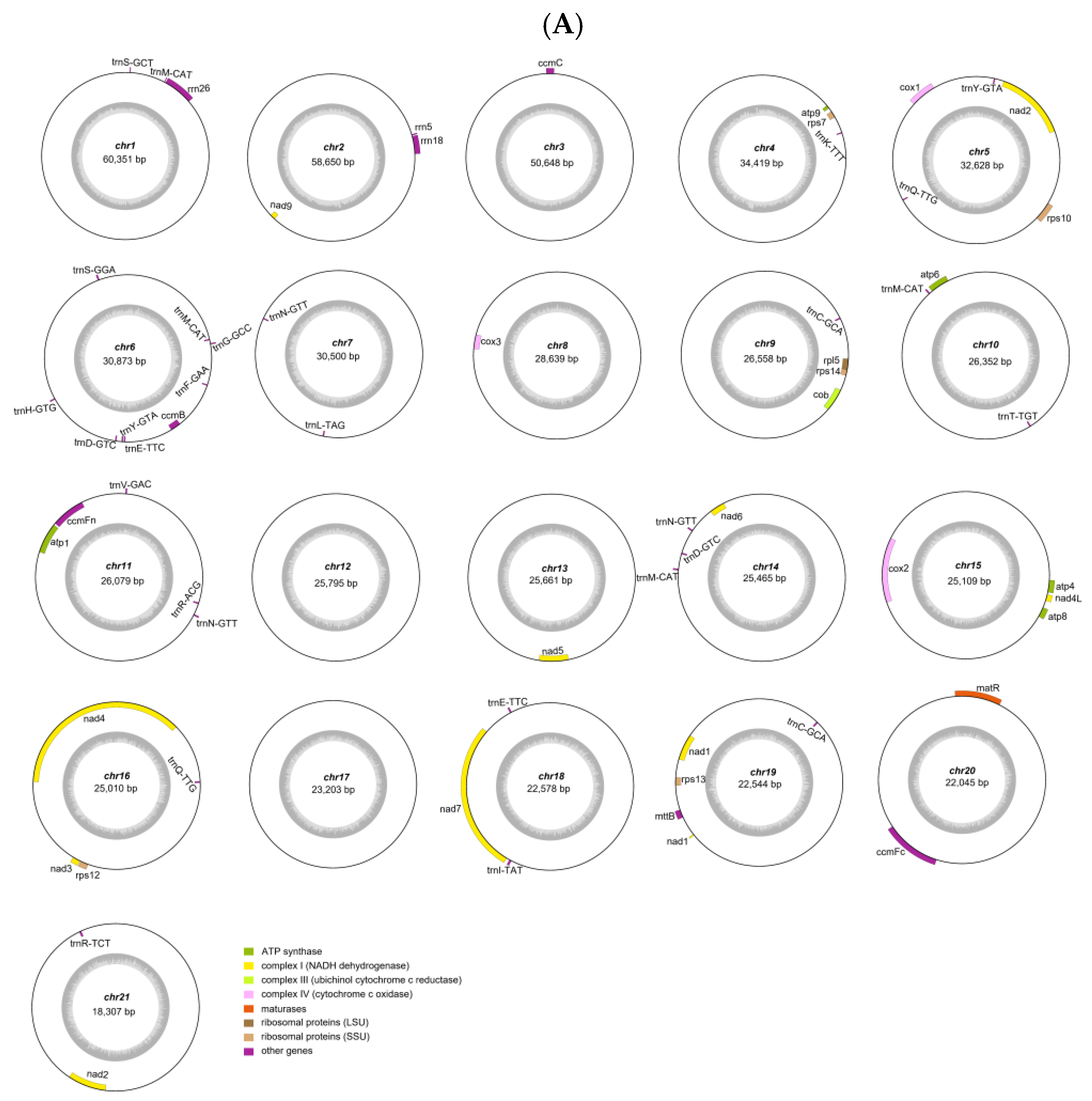
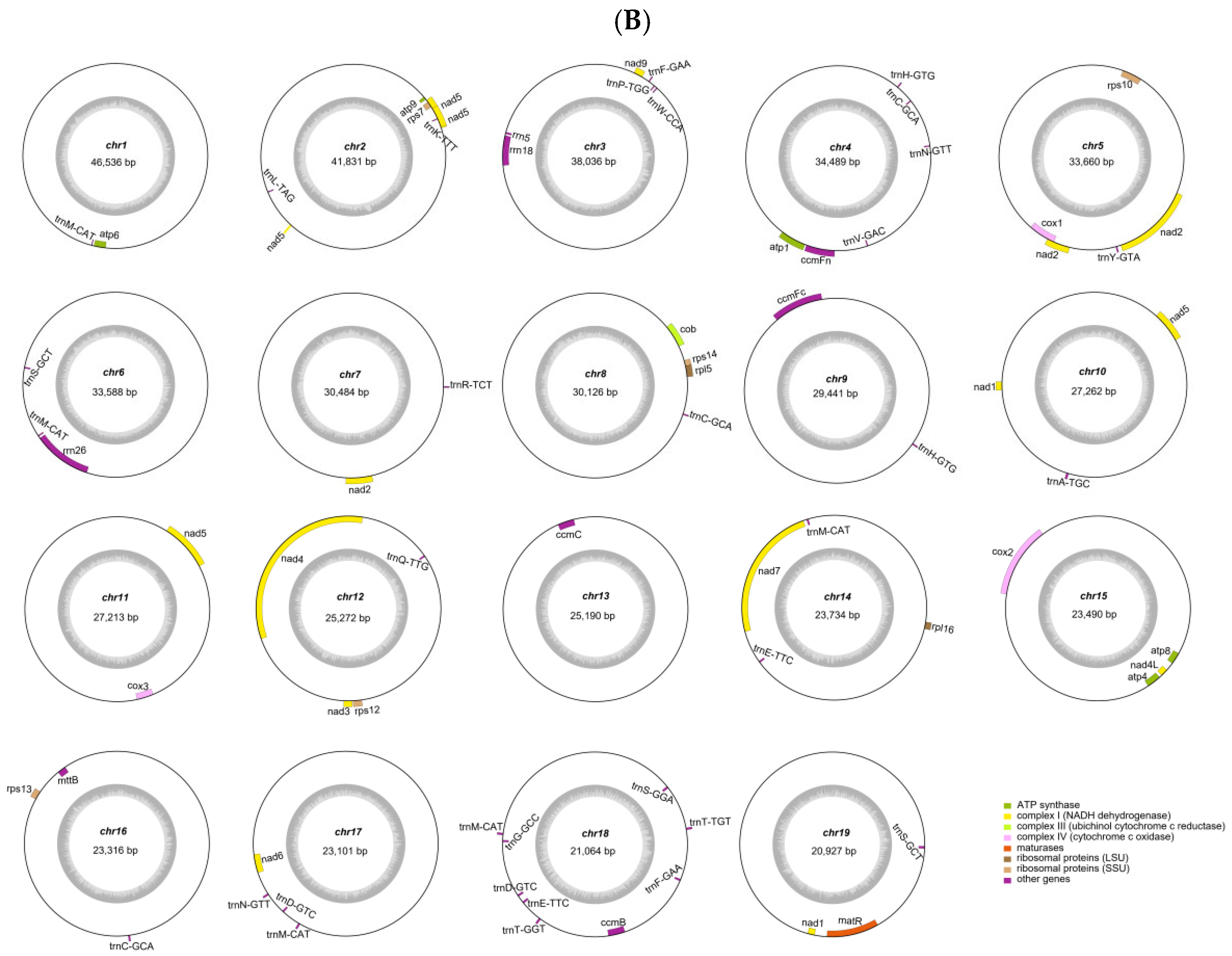
Illumina and Nanopore sequencing platforms were used to acquire basic data for the mitochondrial genomes of D. nobile Lindl. and D. denneanum Kerr. Among them, the raw Illumina data were 11.92 Gb and 18.16 Gb, and the Nanopore raw data were 13.04 Gb and 12.57 Gb, with N50 values of 22,850 bp and 23,931 bp and average read lengths of 10,574 bp and 8081 bp, respectively (Supplementary Table S1). Graphical assembly by aligning Illumina and Nanopore sequencing yielded 21 circular contigs for D. nobile Lindl. and 19 circular contigs for D. denneanum Kerr. (Figure 1), which depict the complete mitochondrial genomes of the two species. We designated these contigs as chromosomes, all of which had a circular structure. Additionally, the total lengths of the mitochondrial genomes were 641,414 bp and 558,760 bp, ranging from 18,307 bp to 60,351 bp and 20,927 bp to 46,536 bp, respectively. The average GC content was 43.40% and 43.49%, with ranges of 39.64% to 46.18% and 37.99% to 45.07%, respectively (Table 1).
The complete mitochondrial genomes of D. nobile Lindl. and D. denneanum Kerr. were annotated, containing a total of 67 and 72 genes, respectively, including 35 and 36 protein-coding genes (PCGs), 29 and 33 tRNA genes, and three rRNA genes (Supplementary Table S2). On the one hand, the two species shared the same PCGs, including ATP synthase (atp1, atp4, atp6, atp8, atp9), cytochrome c biogenesis (ccmB, ccmC, ccmFc, ccmFn), ubiquinol cytochrome c reductase (cob), cytochrome c oxidase (cox1, cox2, cox3), maturases (matR), transport membrane protein (mttB), NADH dehydrogenase (nad1, nad2, nad3, nad4, nad4L, nad5, nad6, nad7, nad9), and small subunits of ribosomes (SSUs) (rps10, rps12, rps13, rps14, rps7). The ribosomal RNAs included rrn18, rrn26, and rrn5. Among the PCGs, both species also had the same number of introns: ccmFc had one intron, cox2 had two introns, nad4 contained three introns, and nad1, nad2, nad5 and nad7 each contained four introns. On the other hand, the difference was that D. nobile Lindl. had only one large subunit of a ribosome (rpl5), while D. denneanum Kerr. had two large subunits of ribosomes (rpl16, rpl5). Simultaneously, while some tRNA genes were the same in the two species (trnC-GCA, trnD-GTC, trnE-TTC, trnF-GAA, trnG-GCC, trnH-GTG, trnK-TTT, trnL-TAG, trnM-CAT, trnN-GTT, trnQ-TTG, trnR-ACG, trnR-TCT, trnS-GCT, trnS-GGA, trnT-TGT, trnV-GAC, trnY-GTA), only D. nobile Lindl. had trnI-TAT and D. denneanum Kerr. possessed three additional tRNA genes: trnA-TGC, trnP-TGG, and trnW-CCA (Table 2).

2.2. RNA Editing Sites of Mitochondrial Genomes of D. nobile Lindl. and D. denneanum Kerr.

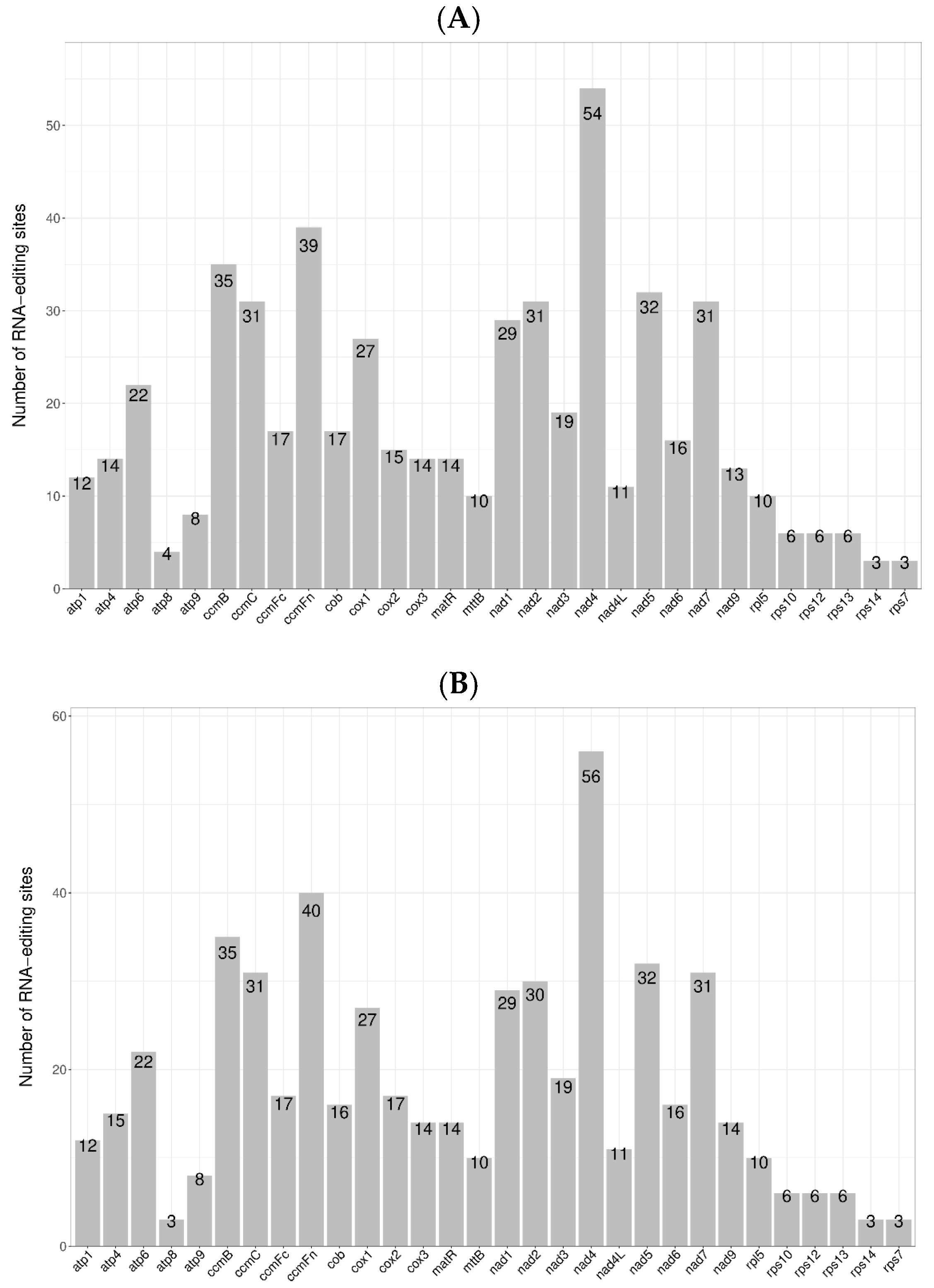
In the mitochondrial genomes of D. nobile Lindl. and D. denneanum Kerr., a total of 549 and 553 RNA editing sites, respectively, were predicted in PCGs (Figure 2). The distribution of these editing sites across different genes was uneven, ranging from 3 to 54 or 56 sites. Among these PCGs, the nad4 gene had the most RNA editing sites, with 54 and 56 sites, accounting for 9.84% and 10.13% respectively; it was followed by the ccmFn gene, which had 39 and 40 RNA editing sites, accounting for 7.10% in both species. The genes with the fewest RNA editing sites were rps14 and rps7, each having only three editing sites. Furthermore, after RNA editing, the hydrophilicity or hydrophobicity of the amino acids encoded by the codons may change. Further analysis showed that 264 and 266 RNA editing sites (48.09%, 48.10%) led to amino acids changing from hydrophilic to hydrophobic and 50 sites (9.11%, 9.04%) from hydrophobic to hydrophilic; only two editing sites (0.36%) of the amino acids became stop codons (Table 3).

2.3. Relative Synonymous Codon Usage (RSCU) of the Mitochondrial Genomes of D. nobile Lindl. and D. denneanum Kerr.

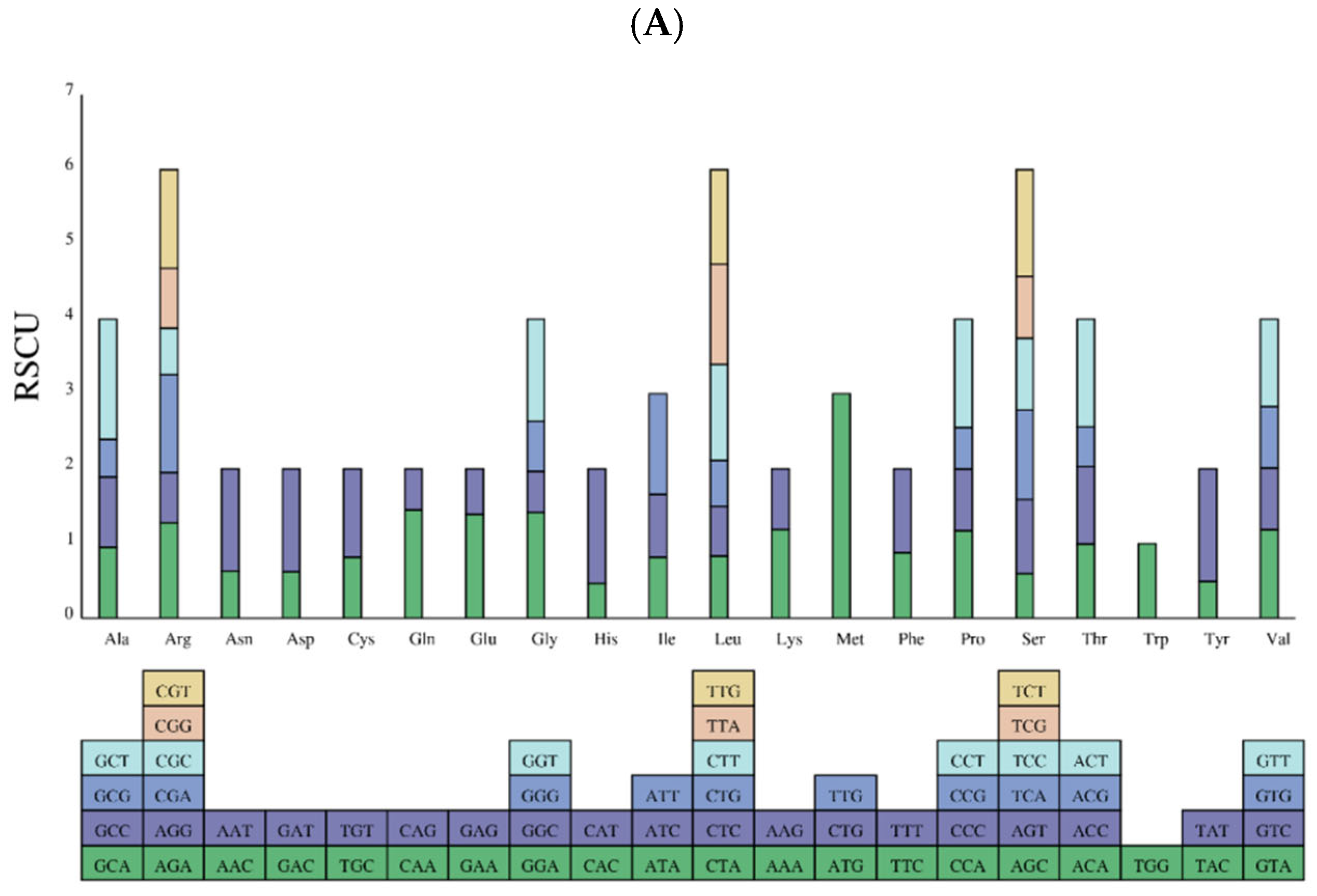
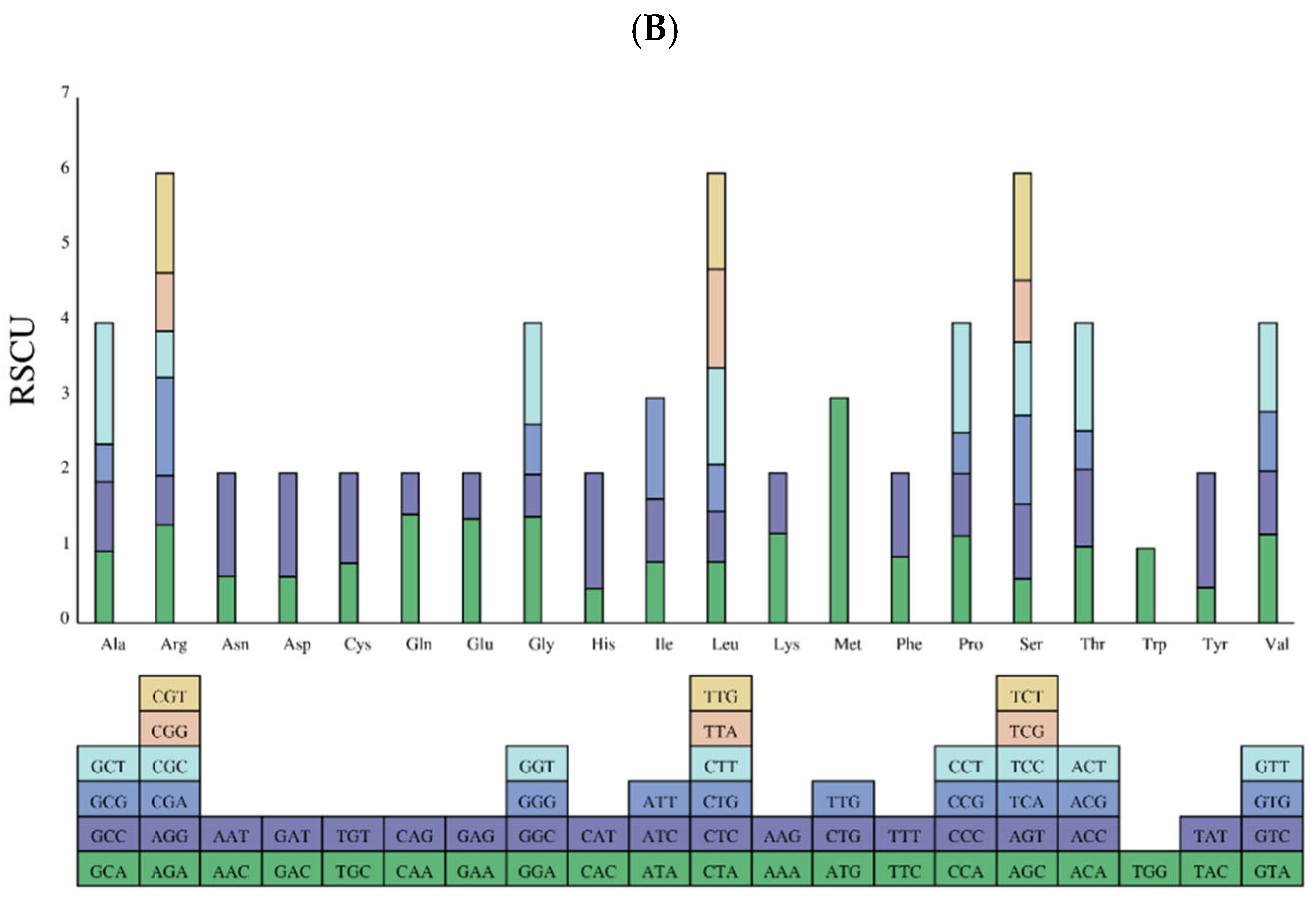
The results showed that all genes were encoded by 8768 and 8838 codons, which encode 20 amino acids in D. nobile Lindl. and D. denneanum Kerr., respectively (Supplementary Table S3). Notably, 5368 and 5548 codons had RSCU values greater than 1.0, indicating a higher frequency of usage. Furthermore, the RSCU values of UAA and UGA were greater than 1.0 among the three stop codons (UAA, UGA, UAG), indicating a higher frequency of usage in both species. All codons with an RSCU value greater than 1.0 ended with an A or U base (Figure 3).

2.4. Repeat Sequence of Mitochondrial Genomes in D. nobile Lindl. and D. denneanum Kerr.

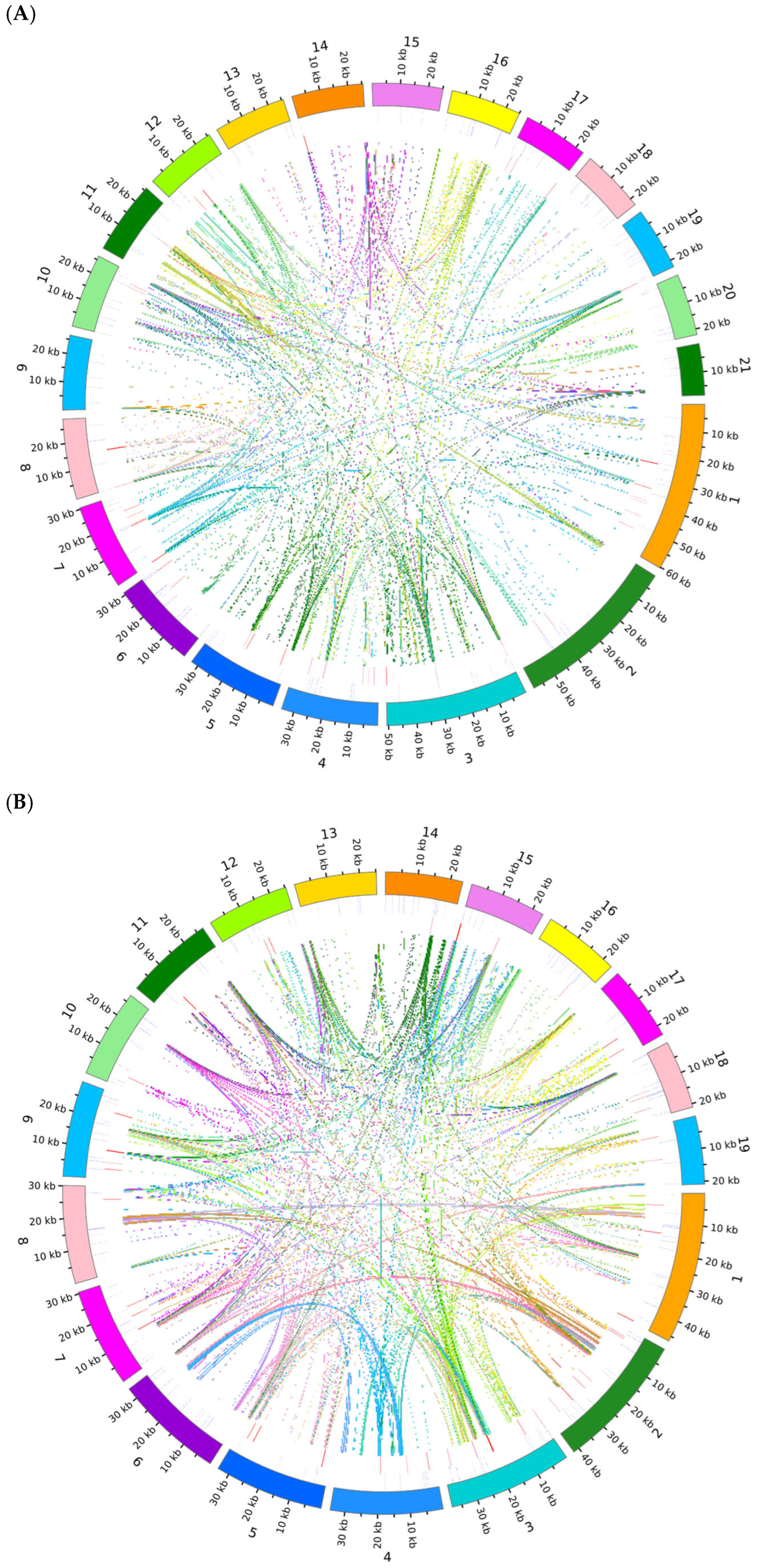
A total of 993 and 1491 repeat sequences were detected in the mitochondrial genomes of D. nobile Lindl. and D. denneanum Kerr., including 791 and 1283 dispersed repeats, 158 and 157 simple sequence repeats (SSRs), and 44 and 51 tandem repeats respectively (Figure 4). The dispersed repeats consisted of 385 and 574 forward repeats and 406 and 709 palindromic repeats; the maximum length of forward repeats was 887 bp and 981 bp, respectively, while the largest palindromic repeats had sizes of 709 bp and 939 bp. The total length of the dispersed repeats was 67,722 bp and 127,226 bp, accounting for 10.56% and 22.77% of the total mitochondrial genome length in both species (Supplementary Table S4). Notably, among the 158 and 157 SSRs, 43 and 33 mononucleotide repeats, 34 and 42 dinucleotide repeats, 22 and 22 trinucleotide repeats, 55 and 43 tetranucleotide repeats, 2 and 10 pentanucleotide repeats, and 2 and 7 hexanucleotide repeat types were identified, respectively (Supplementary Tables S5 and S6). Moreover, among the mononucleotide repeats, A/T repeats were the most common. The length of tandem repeats ranged from 12 bp to 60 bp, and their matching degree exceeded 66.0%. Additionally, the length ranged from 6 bp to 34 bp, with a matching degree exceeding 67%. Meanwhile, tandem repeats of D. nobile Lindl. were most frequently distributed on chromosome 1 (7 repeats), chr4 (5 repeats), and chr7 (6 repeats), whereas in D. denneanum Kerr., they were most frequent on chr1 (6 repeats), chr 2 (7 repeats), chr 3 (6 repeats), and chr 9 (5 repeats) (Supplementary Tables S7 and S8).

2.5. Substitution Rates of PCGs

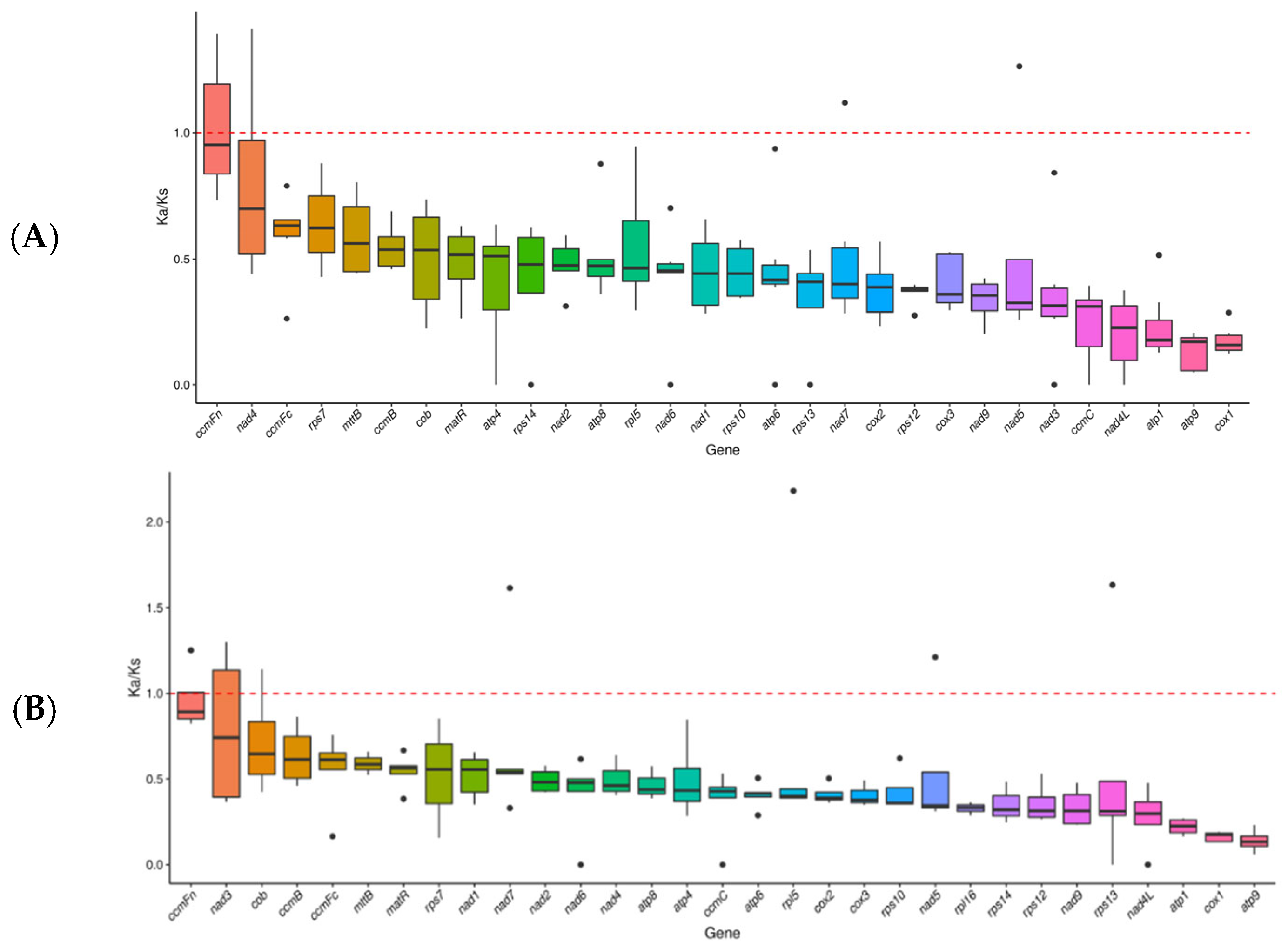
In this study, the ratio of the nonsynonymous to synonymous substitution rate (Ka/Ks) was calculated for 30 and 31 PCGs from the mitochondrial genomes of D. nobile Lindl. and D. denneanum Kerr., respectively, and compared to the mitochondrial genomes of other representative medicinal plants, in order to investigate the evolutionary rates of mitochondrial genes. As shown in Figure 5, the average Ka/Ks ratios were less than 1 in 29 PCGs of D. nobile Lindl. and all 31 PCGs of D. denneanum Lindl., indicating that these PCGs were subject to negative selection (purifying selection) to varying degrees during the evolutionary process, reflecting their high conservation. In contrast, the average Ka/Ks ratio of the ccmFn (1.017) gene in D. nobile Lindl. mitogenome was close to 1.0, indicating that it underwent neutral evolution (Supplementary Table S9).

2.6. DNA Transfer from Chloroplast to Mitochondrional Genome

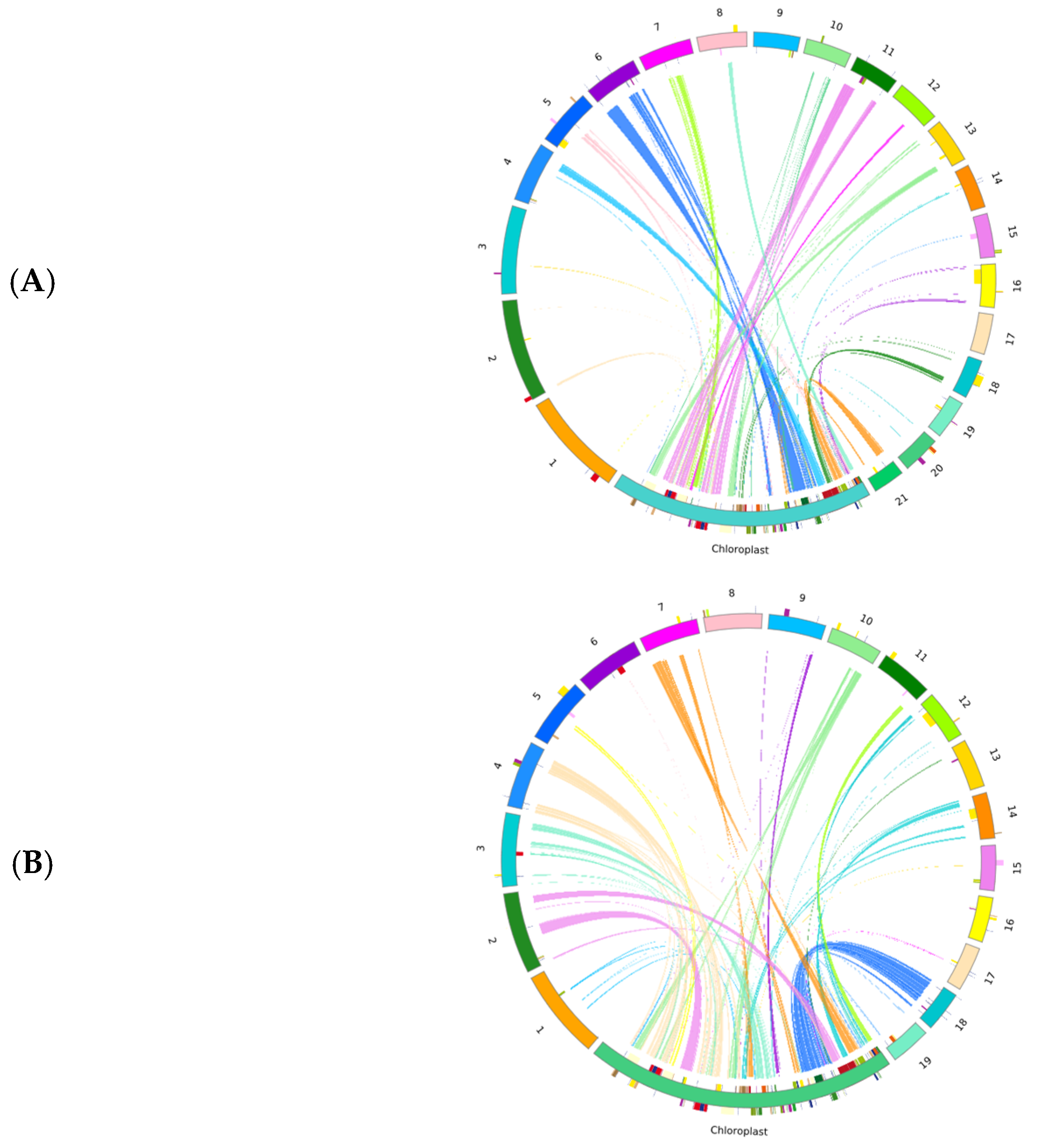
Sequence similarity analysis revealed that there were 26 and 36 homologous fragments shared between the mitochondrial and chloroplast genomes, with total lengths of 32,657 bp and 27,558 bp, accounting for 5.09% and 4.93% of the total lengths of the mitogenomes of the two species, respectively (Figure 6). Among these, 9 and 11 fragments were longer than 1000 bp, with the longest fragments measuring 9550 bp and 3260 bp, and the shortest fragments (Chr 6, Chr14) being 29 bp and 73 bp respectively. As shown in Table 4, annotation of these homologous sequences identified 18 integrated chloroplast-derived genes in D. nobile Lindl. and 23 in D. denneanum Kerr. Moreover, two incomplete rRNA genes were also discovered in D. nobile Lindl.—rrn18 (partial: 43.36%) and rrn26 (partial: 2.83%)—as well as the rpl16 gene and the incomplete rRNA gene rrn26 (partial: 2.83%) in D. denneanum Kerr. It is noteworthy that all the transferred genes were tRNA genes and partial rRNA genes; no PCGs were found.

2.7. Synteny Analysis of D. nobile Lindl. and D. denneanum Kerr.

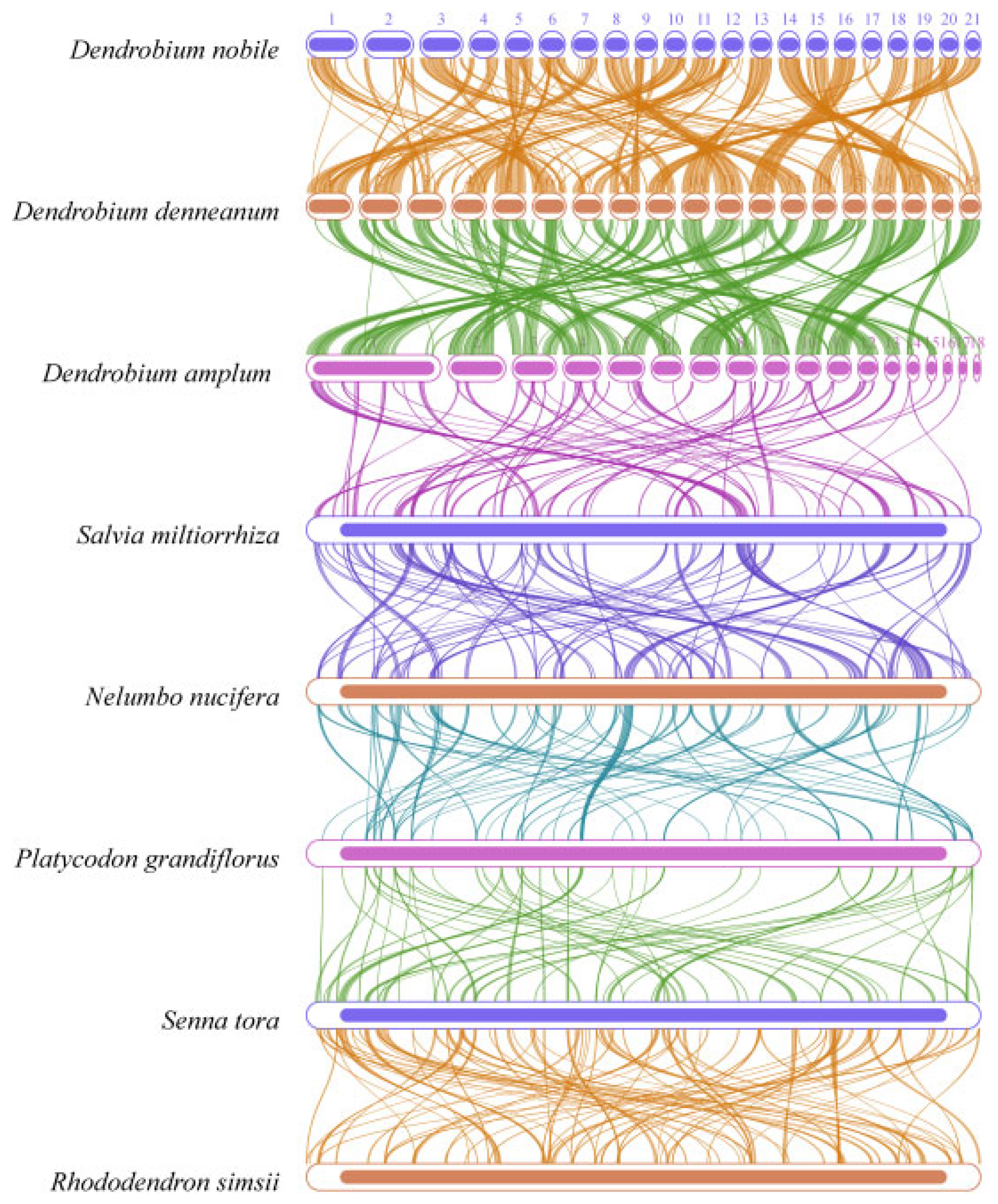
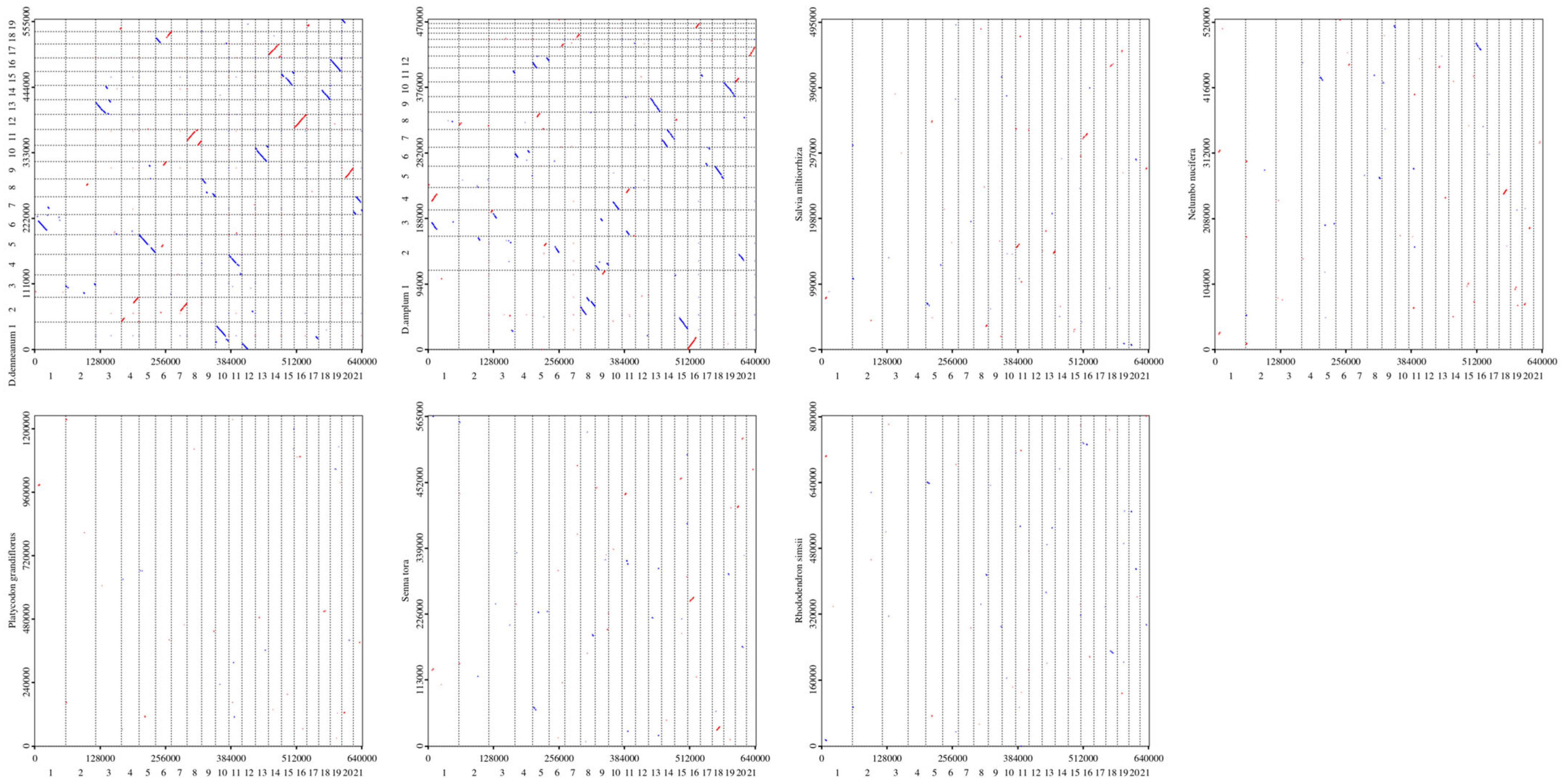
Based on sequence similarity analysis, a multiple synteny map was constructed for D. nobile Lindl., D. denneanum Kerr. and six other species (D. amplum, Salvia miltiorrhiza, Nelumbo nucifera, Platycodon grandiflorus, Senna tora, Rhododendron simsii) (Figure 7). A large number of syntenic collinear blocks were found between D. nobile Lindl. and D. denneanum Kerr. Meanwhile, analysis of the dot plot (Figure 8) revealed scattered syntenic regions between the mitochondrial genomes of the target species and the other five species (S. miltiorrhiza, N. nucifera, P. grandiflorus, C. obtusifolia, R. simsii), indicating a low degree of collinearity. Notably, collinearity analysis revealed that the syntenic blocks were not fully identical among D. nobile Lindl., D. denneanum Kerr., and D. amplum, indicating that the mitochondrial genomes of Dendrobium species have undergone extensive rearrangement events, leading to highly divergent structures and low conservation.

2.8. Phylogenetic Analysis of D. nobile Lindl. and D. denneanum Kerr.

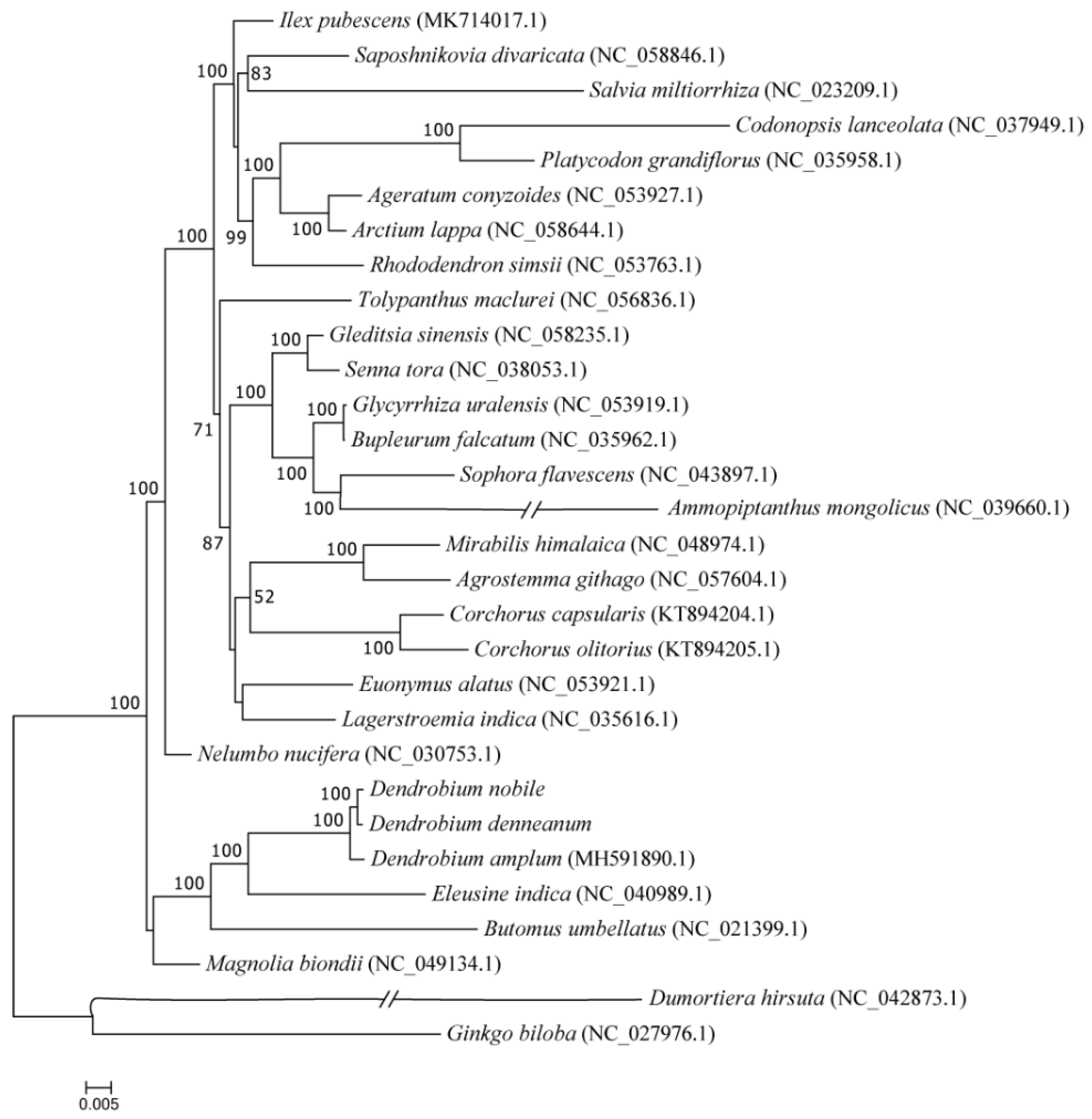
To determine the phylogenetic positions of D. nobile Lindl. and D. denneanum Kerr., phylogenetic trees were constructed using mitochondrial genome CDS sequences retrieved from GenBank for these Dendrobium species and other traditional medicinal plants (Figure 9). The results showed that the two target species, D. nobile Lindl. and D. denneanum Kerr., clustered together and further grouped with D. amplum. This suggests that the three Dendrobium species, which are placed in the same genus in traditional taxonomy, also exhibit a close molecular phylogenetic relationship. Molecular phylogenetic analysis thus supports the reliability of traditional classification and provides robust evidence for the close relationship among the three species distributed in southwestern China. In addition, species of the genus Dendrobium and Eleusine indica (Poaceae) formed another clade, which subsequently clustered with Butomus umbellatus (Butomaceae), and this larger clade further clustered with Magnolia biondii (Magnoliaceae), with 100% bootstrap, indicating a close phylogenetic relationship among these taxa.

3. Discussion

3.1. Characteristics of Complex Multi-Chromosome Circular Structures

Previous studies have revealed that the diversity in plant mitochondrial genome structure is a remarkable feature. For instance, species such as Camellia sinensis [22] and Eucalyptus grandis [23] possess a single circular structure, whereas Cucumis sativus [24] has been found to have three independent circular chromosomes. Similarly, the mitochondrial genome architecture in Dendrobium also displays both monocyclic and polycyclic structural types. For example, the mitochondrial genome of root tip cells from tissue-cultured D. hancockii [17] was meticulously assembled into one single large circular molecule, whereas most species in the genus Dendrobium exhibit a complex multibranched and multi-chromosomal conformation [18,19,20].
Our assembly results showed that the mitochondrial genomes of D. nobile Lindl. and D. denneanum Kerr. also exhibited a multi-chromosomal circular structure, with 21 and 19 contigs, respectively. Previous studies have extensively investigated both the monomeric circular and multi-chromosomal structures of mitochondrial genomes. Researchers have proposed that a single circular genomic map does not necessarily reflect the absolute in vivo conformation of the mitochondrial genome, since alternative configurations could be generated via intramolecular or intermolecular recombination [25]. Likewise, multi-chromosomal structures may be caused by environment-induced alterations of the mitochondrial genome. For instance, under stressful conditions, plants may downregulate the expression of genes that normally suppress recombination among short repetitive sequences in the mitochondrial genome [17]. In conclusion, the multi-chromosomal circular architecture of the mitochondrial genome contributes to the genomic complexity of Dendrobium species, and the underlying regulatory mechanism remains to be further elucidated.

3.2. The Phenomenon of Gene Loss

The composition of plant mitochondrial-encoded genes and the fate of lost genes have attracted considerable attention in previous studies [14]. Gene loss in the mitochondrial genomes of Dendrobium species has also been documented [19]. In the present study, we detected gene loss events in two species: D. nobile Lindl. and D. denneanum Kerr. Compared with the previously reported D. nobile Lindl., both species lost several non-core ribosomal protein genes, including rps1, rps2, rps3, rps4, rps11, and rps19. In addition, the previously reported D. nobile Lindl. loses an additional large ribosomal subunit gene, rpl16 [20]. Interestingly, gene loss patterns varied, even within the same species, according to geographical origin. Loss of the rpl16 gene has been reported in other plants [26]. However, the concurrent loss of six rps genes encoding small ribosomal subunits in these two Dendrobium species is relatively rare. Such extensive gene loss may imply that the mitochondrial genomes of Dendrobium have undergone rapid structural evolution.
Similarly, the succinate dehydrogenase subunit genes sdh3 and sdh4 were not annotated in either species. These two genes have been lost repeatedly in the mitochondrial genomes of numerous other angiosperms [27] and are also commonly absent in Orchidaceae, consistent with the pattern observed in most monocots [28,29]. In fact, mitochondrial gene loss represents a widespread and ongoing process in angiosperms. As suggested by previous studies, most lost mitochondrial genes may have been transferred to the nuclear genome via endosymbiotic gene transfer [30,31]. Like other orchids, Dendrobium species may have rewired their protein synthesis and energy metabolism pathways. Such modifications could potentially compensate for mitochondrial gene loss through alternative pathways or mechanisms, thereby conferring adaptive advantages under specific environmental conditions [28]. With the increasing availability of genomic data for Dendrobium species, further investigation may uncover the reasons behind these genetic patterns.

3.3. Abundant Repeat Sequences as Potentially Important Molecular Markers

Previous studies have shown that plant mitochondrial genomes contain numerous repeat sequences, which represent potentially important molecular markers [32] and can be used in genetic and evolutionary research [33]. Furthermore, no clear correlation has been observed between mitochondrial genome size and the number of repeat sequences [34,35]. Our results are consistent with these reports: the complete mitochondrial genomes of D. nobile Lindl. and D. denneanum Kerr. were 641,414 bp and 558,760 bp in length, respectively, while 993 and 1491 repeat sequences were identified in the two species. In addition, SSRs are frequently employed in genetic diversity assessment [36,37,38]. In this study, 158 and 157 SSRs were detected within the mitochondrial genomes of the two species, respectively, providing abundant potential molecular markers for future species identification. Among these SSRs, mononucleotide A/T repeats were the most abundant, similar to observations in other Orchidaceae species [35,39]. This may be attributed to the lower binding energy required to break A-T bonds compared with G-C bonds [40,41]. Meanwhile, 791 and 1283 dispersed repeats, as well as 44 and 51 tandem repeats, were identified, respectively, and tandem repeats were found to be unevenly distributed across the mitochondrial genomes of the two Dendrobium species. As previous studies have suggested, diverse repetitive sequences can mediate frequent recombination events within the mitochondrial genome [42]. During evolution, frequent recombination may have played a key role in reshaping the mitochondrial genome structure and conformation, leading to increased complexity [43]. Furthermore, recombination can induce genomic rearrangements, which may affect gene function and enhance the intrinsic adaptability of plants [44,45].

3.4. Intracellular Gene Transfer

As is well known, a prominent characteristic of plant mitochondrial genome evolution is the frequent integration of foreign DNA via horizontal gene transfer [46]. Therefore, investigating gene transfer events is critical for exploring the evolutionary dynamics of plant mitochondrial genomes. Sequence transfers between the chloroplast and mitochondrial genomes are generally referred to as intracellular gene transfer (IGT). The transfer of tRNA gene sequences from the chloroplast to the mitochondrion is common in flowering plants [47]. Our study revealed that 18 of the 29 tRNA genes in D. nobile Lindl. and 23 of the 33 tRNA genes in D. denneanum Kerr. were derived from the chloroplast genome, indicating high conservation of chloroplast tRNA genes in the two Dendrobium species. The homologous fragments between the mitochondrial and chloroplast genomes accounted for 5.09% and 4.93% of the mitochondrial genomes in the two species, respectively. These values were lower than the range (6.81–10.34%) reported in other Orchidaceae species [39,48], but similar to the approximate 5% observed in most other angiosperms [25]. Previous studies have proposed that intergenomic transfer is the primary cause of the abundant tRNAs in the genus Dendrobium [20], reflecting the conservation of transport functions in the mitochondrial genome. This pattern is also widespread in angiosperms [49]. To date, the molecular mechanism underlying IGT remains unclear, and such events have been suggested to be largely random and independent [50]. With more mitochondrial genomic data becoming available for Dendrobium species, the mechanisms of IGT may be further elucidated. Elucidating the patterns of inter-organellar sequence transfer is also of great significance for tracing ancient recombination events and structural variations in plant mitochondrial genomes, warranting further in-depth investigation.

4. Materials and Methods

4.1. Plant Materials

Seedlings of D. nobile Lindl. and D. denneanum Kerr. were collected from imitation-wild cultivated populations growing in Chishui City, Guizhou Province, and Guangyuan City, Sichuan Province, in southwestern China. The GPS coordinates of the two populations were recorded as E105°52′, N28°30′ and E105°18′, N32°14′. Young, fresh, healthy and disease-free leaves were excised from seedlings and immediately stored in self-sealing bags containing dry silica gel. They were then taken back to the laboratory and stored in a refrigerator at −80 °C prior to use. The collected species were authenticated by the authors. Finally, these accessions were sent to Genepioneer Biotechnologies Co., Ltd. (Nanjing, China) for sequencing.

4.2. DNA Extraction and Sequencing

Total genomic DNA was extracted from fresh leaves of Dendrobium species using a modified CTAB method [51]. DNA integrity was detected by electrophoresis on 1.0% (w/v) agarose gel. DNA concentration and purity were quantified using a NanoDrop One spectrophotometer (Thermo Fisher Scientific, Waltham, MA, USA). Only DNA samples with an A260/A280 ratio of 1.8–2.0 and an A260/A230 ratio of 2.0–2.2, indicating high purity without protein or carbohydrate contamination, were retained for library construction. The electrophoretic bands were clear and distinct, with no signs of diffusion or tailing and the assessment grade of DNA quality was A, indicating the DNA samples met the quality requirements.
To achieve high-accuracy, full-length mitochondrial genome assembly, short-read and long-read sequencing technologies were combined in this study. The short-read sequencing platform was Illumina Novaseq 6000 (Illumina, San Diego, CA, USA) and the paired-end sequencing (PE) read length was 150 bp, and fastp (version 0.23.4) software was used to filter the original data and get high-quality reads. The long-read sequencing platform was Nanopore PromethION (Nanopore, Oxford, UK); then, the sequencing data was filtered by filtlong (v0.2.1) software with the parameters: —min_length 1000—min_mean_q 7.

4.3. Assembly and Annotation

Plant mitochondrial genes are very conserved. Taking advantage of this feature, the comparison software Minimap2 (v2.1) [52] was used to compare the original long-read sequencing data with the reference gene sequence (plant mitochondrial core gene, https://github.com/xul962464/plant_mt_ref_gene, accessed on 10 April 2023); sequences with similar fragments longer than 50 bp were selected as candidate sequences. The candidate sequences with more aligned genes (one sequence contains multiple core genes) and higher alignment quality (covering more complete core genes) were selected as the seed sequence. Then, compared the original long-read sequencing data with the seed sequence, the sequences with minimum overlap of 1kb and at least 70% similarity were added to the seed sequence and the original data was iteratively aligned to the seed sequence, so as to obtain all long-read sequencing data for the mitochondrial genome. Then, the assembly software canu [53] was used to correct the long-read sequencing data obtained, and bowtie2 (v2.3.5.1) was used to align the short-read sequencing data to the corrected sequence. Then, the default parameter Unicycler (v0.4.8) was used to compare the above short-read sequencing data and the corrected long-read sequencing data for concatenation. Finally, the ring mitochondrial genome of D. nobile Lindl. and D. denneanum Kerr. was obtained.
Mitochondrial genome structure annotation was divided into the following steps: (1) For the encoding protein and rRNA, BLAST v2.10.1 was used to align the published plant mitochondrial sequences as refs; further manual adjustments were made for related species. (2) tRNA was annotated using tRNAs-canSE (http://lowelab.ucsc.edu/tRNAscan-SE/, accessed on 12 April 2023) [54]. (3) The Open Reading Frame (ORF) Finder (http://www.ncbi.nlm.nih.gov/gorf/gorf.html, accessed on 12 April 2023) was used to annotate ORFs; the shortest length was set to 102 bp and redundant sequences and sequences with overlap with known genes were excluded. Sequence alignments greater than 300 bp were annotated to the NR library. To obtain more accurate annotation results, the above results were checked and manually corrected. Then, the mitochondrial genome was mapped using OGDRAW (https://chlorobox.mpimp-golm.mpg.de/OGDraw.html, accessed on 12 April 2023).
All assembly mitochondrial genome sequences of D. nobile Lindl. and D. denneanum Kerr. have been deposited in GenBank and assigned accession numbers: D. nobile Lindl.: PX171404-PX171424, D. denneanum Kerr.: PX171425-PX171443 (Table 1).

4.4. RNA Editing Sites

In higher plants, RNA editing is a post-transcriptional process essential for mitochondrial gene expression [55]. The plant mitochondrial gene-encoding proteins were used as the reference proteins to identify RNA editing sites within the mitochondrial genes of both species. In this study, the mitochondrial genome RNA editing site was predicted according to the tool PmtREP (http://112.86.217.82:9919/#/tool/alltool/detail/336, accessed on 14 April 2023), constructed by Genepioneer Biotechnologies Co., Ltd. (Nanjing, China).

4.5. RSCU Analysis

CodonW1.4.4 was used to employ RSCU to assess synonymous codon usage patterns in the mitochondrial genome [56]. The R package ggplot2 (v3.5.1) was used to generate visualizations of the RSCU data, providing a clear and informative representation of codon usage patterns. Generally, an RSCU value greater than 1.0 indicates a relatively high usage frequency and a preference for specific amino acid codons; an RSCU value equal to 1.0 indicates no usage bias; and an RSCU value less than 1.0 indicates a low usage frequency.

4.6. Repeat Sequences

Three kinds of repeats (simple sequence, tandem, and dispersed) were detected in the Dendrobium species mitochondrial genome. The MIcroSAtellite (MISA) identification tool Perl script was used to detect simple sequence repeats [57] (v1.0, parameter: 1-10 2-5 3-4 4-3 5-3 6-3). Tandem repeats (>6 bp repeat units) were detected using Tandem Repeats Finder v4.09 software (http://tandem.bu.edu/trf/trf.submit.options.html, accessed on 13 April 2023) (trf409.linux64, parameter: 2 7 7 80 10 50 2000 -f -d -m) [58] with default parameters. Dispersed repeats were detected using blastn (v2.10.1, parameters: -word size 7, evalue 1 × 10⁻⁵, remove redundancy, remove tandem duplication). Circos v0.69-5 was used to visualize these repeats.

4.7. The Non-Synonymous (Ka) and Synonymous (Ks) Value

To understand the natural selection pressure in the evolution of the genus Dendrobium, homologous protein sequences of D. nobile Lindl., D. denneanum Kerr. and other species, including D. amplum (MH591890.1), S. miltiorrhiza (NC023209.1), N. nucifera (NC030753.1), P. grandifloras (NC035958.1), S. tora (NC038053.1), R. simsii (NC053763.1), N. (NC006581.1), Z. jujuba (NC029809.1), C. nucifera (NC031696.1), and S. sphenanthera (NC042758.1), were obtained using BLASTN v2.10.1. Then, the shared protein-coding genes were aligned using MAFFT v7 [59]. Ka/Ks ratios were calculated using KaKs_Calculator v 2.0 [60]. If Ka/Ks > 1.0, positive selection is inferred; if Ka/Ks = 1.0, neutral selection is assumed; and if Ka/Ks < 1.0, purifying selection is indicated.

4.8. Homologous Sequences Between Mitochondrial and Chloroplast Genome

The homologous sequences between the mitochondrial genome and chloroplast (SRR35031937, SRR35031936) were aligned using BLAST v2.10.1 software with a similarity threshold of no less than 70%. The homologous fragments between mitochondrial and chloroplast genomes were visually displayed using the Circos v0.69-5 procedure.

4.9. Synteny Analysis

Synteny analysis was conducted by comparing whole-genome alignments between the assembled sequence and selected sequences of other related species, resulting in a dot plot. The assembled species and selected species were compared pairwise, and collinearity maps were generated.

4.10. Phylogenetic Tree

To analyze the phylogenetic status of Dendrobium plants, the complete mitochondrial genomes of 28 other traditional Chinese medicinal plants were downloaded from the NCBI database, namely: D. amplumz (MH591890.1), Lagerstroemia indica (NC035616.1), Saposhnikovia divaricate (NC058846.1), Arctium lappa (NC058644.1), Gleditsia sinensis (NC058235.1), Agrostemma githago (NC057604.1), Tolypanthus maclurei (NC056836.1), Ageratum conyzoides (NC053927.1), Euonymus alatus (NC053921.1), Glycyrrhiza uralensis (NC053919.1), R. simsii (NC053763.1), Magnolia biondii (NC049134.1), Mirabilis himalaica (NC048974.1), Sophora flavescens (NC043897.1), Dumortiera hirsute (NC042873.1), Eleusine indica (NC040989.1), Ammopiptanthus mongolicus (NC039660.1), S. tora (NC038053.1), Codonopsis lanceolata (NC037949.1), Bupleurum falcatum (NC035962.1), P. grandifloras (NC035958.1), N. nucifera (NC030753.1), Ginkgo biloba (NC027976.1), S. miltiorrhiza (NC023209.1), Butomus umbellatus (NC021399.1), Ilex pubescens (MK714017.1), Corchorus olitorius (KT894205.1), Corchorus capsularis (KT894204.1). The shared CDSs of Dendrobium species’ protein-coding genes were aligned using the MAFFT [59] procedure. Maximum likelihood (ML): a maximum likelihood (ML) phylogenetic tree was constructed by RAxML v8.2.10 (https://cme.h-its.org/exelixis/software.html, accessed on 15 April 2023) (GTRGAMMA model) estimation with 1000 bootstrap replications. Bayesian inference (BI): The optimal nucleotide substitution model was calculated by jModelTest v2.1.10 (https://github.com/ddarriba/jmodeltest2, accessed on 15 April 2023), and then MrBayes v3.2.7a (http://nbisweden.github.io/MrBayes/, accessed on 15 April 2023) was used to establish a Bayesian inference (BI) phylogenetic tree; the parameters of MrBayes v3.2.7 software were based on jModelTest v2.1.10 results.

5. Conclusions

In this study, the complete mitochondrial genome of D. denneanum Kerr. was the first to be reported. The results revealed that the mitochondrial genomes of D. nobile Lindl. and D. denneanum Kerr. had typical complex multi-chromosome circular structures. Furthermore, it was found that the two species possessed abundant repeat sequences as potential important molecular markers and simultaneous loss of most rps genes encoding small ribosomal proteins. A total of 26 and 36 chloroplast genomic DNA fragments were transferred to the mitochondrial genome of the two species, indicating that most tRNA genes had undergone IGT. Additionally, synteny and phylogenetic analyses were also conducted, enhancing our understanding of evolutionary relationships and genetic models. In conclusion, this study lays the foundation for further research on molecular markers, species identification, and evolutionary relationships among these species. It also contributes to understanding how mitochondrial genomes adapt to environmental pressures for survival.

Supplementary Materials

The following supporting information can be downloaded at: https://www.mdpi.com/article/10.3390/ijms27083441/s1.

Author Contributions

T.H. (Tao He): Conceptualization, Funding acquisition, Writing—review and editing. L.Z.: Writing—original draft. X.F.: Methodology. T.H. (Tianfang Huang): Investigation. Y.J.: Project administration. Z.Y.: Software. Y.L.: Formal analysis. Y.G.: Data curation. H.Z.: Validation, Supervision. All authors have read and agreed to the published version of the manuscript.

Funding

This project was sponsored by the National Natural Science Foundation of China (31870308), and the Science and technology poverty alleviation program of the Chinese Academy of Sciences (KFJ-FP-202006).

Institutional Review Board Statement

Not applicable.

Informed Consent Statement

Not applicable.

Data Availability Statement

All assembled mitochondrial genome sequences of D. nobile Lindl. and D. denneanum Kerr. have been deposited in GenBank and assigned the following accession numbers: D. nobile Lindl.: PX171404-PX171424, D. denneanum Kerr.: PX171425-PX171443.

Conflicts of Interest

The authors declare no conflicts of interest.

References

  1. National Pharmacopoeia Committee. Pharmacopoeia of the People’s Republic of China; China Medical Science and Technology Press: Beijing, China, 2020; pp. 94–97.
  2. He, T.; Deng, L.; Lin, Y.; Li, B.; Yang, X.F.; Wang, F.; Chun, Z. Comparative analysis of agronomic and qualitative characters in different lines of Dendrobium denneanum. China J. Chin. Mater. Medica 2010, 35, 2124–2128. [Google Scholar]
  3. He, T.; Fan, X.L.; Lu, L.; Huang, T.F. Phenotypic trait diversity of Dendrobium nobile from different provenances and their correlations with geographical factors. J. Plant Resour. Environ. 2021, 30, 1–11. [Google Scholar] [CrossRef]
  4. He, T.; Fan, X.L.; Huang, T.F.; Zhang, Y.J. Phytochemical diversity of cultivated Dendrobium nobile Lindl. in southwestern China and its association with environmental conditions. Appl. Ecol. Environ. Res. 2023, 21, 3923–3943. [Google Scholar] [CrossRef]
  5. Liu, J.; He, T.; Chun, Z. Analysis and authentication of chloroplast matK gene sequences of Herba dendrobii. Acta Pharm. Sin. 2009, 44, 1051–1055. [Google Scholar]
  6. Liu, J.; He, T.; Chun, Z. DNA molecular identification of Herba dendrobii and its adulterant species based on ITS sequence analysis. China J. Chin. Mater. Medica 2009, 34, 2853–2856. [Google Scholar]
  7. Sun, J.; He, T.; Wan, R.L.; Peng, X.F.; Chun, Z. The codon usage bias of UDP-glucose pyrophosphorylase gene (UGP) in Dendrobium officinale. Chin. J. Appl. Environ. Biol. 2014, 20, 759–766. [Google Scholar] [CrossRef]
  8. Peng, X.F.; He, T.; Chun, Z.; Hu, Y.D.; Wan, R.L. Interspecific and intraspecific identification of Dendrobium based on the psbA-trnH intergenic region sequences and the 5S rRNA gene spacer sequences. Chin. J. Appl. Environ. Biol. 2015, 21, 887–896. [Google Scholar] [CrossRef]
  9. He, T.; Ye, C.R.; Zeng, Q.; Fan, X.L.; Huang, T.F. Genetic diversity and population structure of cultivated Dendrobium nobile Lindl. in southwest of China based on genotyping-by-sequencing. Genet. Resour. Crop Evol. 2022, 69, 2803–2818. [Google Scholar] [CrossRef]
  10. Noam, S.; Dan, M. The mitochondrial genome-on selective constraints and signatures at the organism, cell, and single mito-chondrion levels. Front. Ecol. Evol. 2019, 7, 342. [Google Scholar] [CrossRef]
  11. Nass, M.M.K.; Nass, S. Intramitochondrial fibers with DNA characteristics: I. fixation and electron staining reactions. J. Cell Biol. 1963, 19, 593–611. [Google Scholar] [CrossRef]
  12. Unseld, M.; Marienfeld, J.R.; Brandt, P.; Brennicke, A. The mitochondrial genome of Arabidopsis thaliana contains 57 genes in 366,924 nucleotides. Nat. Genet. 1997, 15, 57–61. [Google Scholar] [CrossRef]
  13. Wang, J.; Kan, S.L.; Liao, X.Z.; Zhou, J.W.; Tembrock, L.R. Plant organellar genomes: Much done, much more to do. Trends Plant Sci. 2024, 29, 7. [Google Scholar] [CrossRef]
  14. Kan, S.L.; Shen, T.T.; Ran, J.H.; Wang, X.Q. Both conifer II and gnetales are characterized by a high frequency of ancient mitochondrial gene transfer to the nuclear genome. BMC Biol. 2021, 19, 146. [Google Scholar] [CrossRef] [PubMed]
  15. Møller, I.M.; Rasmusson, A.G.; Aken, O.V. Plant mitochondria—Past, present and future. Plant J. 2021, 108, 912–959. [Google Scholar] [CrossRef] [PubMed]
  16. Lu, G.L.; Wang, W.H.; Mao, J.; Li, Q.; Que, Y.X. Complete mitogenome assembly of Selenicereus monacanthus revealed its molecular features, genome evolution, and phylogenetic implication. BMC Plant Biol. 2023, 23, 541. [Google Scholar] [CrossRef]
  17. Hou, Z.Y.; Wang, M.T.; Jiang, Y.; Xue, Q.Y.; Liu, W.; Niu, Z.T.; Ding, X.Y. Mitochondrial genome insights into the spatio-temporal distribution and genetic diversity of Dendrobium hancockii Rolfe (Orchidaceae). Front. Plant Sci. 2024, 15, 1469267. [Google Scholar] [CrossRef]
  18. Tong, W.J.; Yu, D.D.; Zhu, X.J.; Le, Z.F.; Chen, H.; Hu, F.L.; Wu, S.M. The whole mitochondrial genome sequence of Dendrobium loddigesii Rolfe, an endangered Orchid species in China, reveals a complex multi-chromosome structure. Genes 2024, 15, 834. [Google Scholar] [CrossRef]
  19. Wang, M.T.; Hou, Z.Y.; Li, C.; Yang, J.P.; Niu, Z.T.; Xue, Q.Y.; Liu, W.; Ding, X.Y. Rapid structural evolution of Dendrobium mitogenomes and mito-nuclear phylogeny discordances in Dendrobium (Orchidaceae). J. Syst. Evol. 2023, 61, 790–805. [Google Scholar] [CrossRef]
  20. Wang, L.; Liu, X.; Wang, Y.D.; Ming, X.J.; Qi, J.S.; Zhou, Y.Q. Comparative analysis of the mitochondrial genomes of four Dendrobium species (Orchidaceae) reveals heterogeneity in structure, synteny, intercellular gene transfer, and RNA editing. Front. Plant Sci. 2024, 15, 1429545. [Google Scholar] [CrossRef]
  21. Wang, M.T.; Yang, J.P.; Hou, Z.Y.; Li, C.; Niu, Z.T.; Zhang, B.H.; Xue, Q.Y.; Liu, W.; Ding, X.Y. The multi-chromosomal structure of mitogenomes provided new insights into the accurate authentication of medicinal Dendrobium species. BMC Plant Biol. 2025, 25, 202. [Google Scholar] [CrossRef]
  22. Li, J.; Tang, H.; Luo, H.; Tang, J.; Zhong, N.; Xiao, L.Z. Complete mitochondrial genome assembly and comparison of Camellia sinensis var. Assamica cv. Duntsa. Front. Plant Sci. 2023, 14, 1117002. [Google Scholar] [CrossRef]
  23. Pinard, D.; Myburg, A.A.; Mizrachi, E. The plastid and mitochondrial genomes of Eucalyptus grandis. BMC Genom. 2019, 20, 132. [Google Scholar] [CrossRef] [PubMed]
  24. Alverson, A.J.; Rice, D.W.; Dickinson, S.; Barry, K.; Palmer, J.D. Origins and recombination of the bacterial-sized multichromosomal mitochondrial genome of cucumber. Plant Cell 2011, 23, 2499–2513. [Google Scholar] [CrossRef]
  25. Sloan, D.B.; Wu, Z.Q. History of plastid DNA insertions reveals weak deletion and AT mutation biases in angiosperm mitochondrial genomes. Genome Biol. Evol. 2014, 6, 3210–3221. [Google Scholar] [CrossRef]
  26. Chen, X.Y.; Zhu, S.W.; Jiang, Z.Z. Structural characterization and phylogenetic evolution analysis of mitochondrial genomes of Prunus plants. J. Fujian Agric. For. Univ. (Nat. Sci. Ed.) 2024, 53, 491–500. [Google Scholar]
  27. Adams, K.L.; Qiu, Y.L.; Stoutemyer, M.; Palmer, J.D. Punctuated evolution of mitochondrial gene content: High and variable rates of mitochondrial gene loss and transfer to the nucleus during angiosperm evolution. Proc. Natl. Acad. Sci. USA 2002, 99, 9905–9912. [Google Scholar] [CrossRef] [PubMed]
  28. Chen, T.C.; Su, Y.Y.; Wu, C.H.; Liu, Y.C.; Huang, C.H.; Chang, C.C. Analysis of mitochondrial genomics and transcriptomics reveal abundant RNA edits and differential editing status in moth orchid, Phalaenopsis aphrodite subsp. formosana. Sci. Hortic. 2020, 267, 109304. [Google Scholar] [CrossRef]
  29. Zheng, Q.Y.; Luo, X.T.; Huang, Y.; Ke, S.J.; Liu, Z.J. The complete mitogenome of Apostasia fujianica Y. Li & S. Lan and comparative analysis of mitogenomes across Orchidaceae. Int. J. Mol. Sci. 2024, 25, 8151. [Google Scholar] [CrossRef] [PubMed]
  30. Kelly, S. The economics of organellar gene loss and endosymbiotic gene transfer. Genome Biol. 2021, 22, 345. [Google Scholar] [CrossRef]
  31. Anselmetti, Y.; El-Mabrouk, N.; Lafond, M.; Ouangraoua, A. Gene tree and species tree reconciliation with endosymbiotic gene transfer. Bioinformatics 2021, 37, i120–i132. [Google Scholar] [CrossRef] [PubMed]
  32. Chevigny, N.; Schatz-daas, D.; Lotfi, F.; José Manuel Gualberto, J.M. DNA repair and the stability of the plant mitochondrial genome. Int. J. Mol. Sci. 2020, 21, 328. [Google Scholar] [CrossRef]
  33. Qin, Z.; Wang, Y.P.; Wang, Q.M.; Li, A.X.; Hou, F.Y.; Zhang, L.M. Evolution analysis of simple sequence repeats in plant genome. PLoS ONE 2015, 10, e0144108. [Google Scholar] [CrossRef] [PubMed]
  34. Wang, M.T.; Yu, W.H.; Yang, J.P.; Hou, Z.H.; Li, C.; Niu, Z.T.; Zhang, B.H.; Xue, Q.Y.; Liu, W.; Ding, X.Y. Mitochondrial genome comparison and phylogenetic analysis of Dendrobium (Orchidaceae) based on whole mitogenomes. BMC Plant Biol. 2023, 23, 586. [Google Scholar] [CrossRef]
  35. Ke, S.J.; Liu, D.K.; Tu, X.D.; He, X.; Zhang, M.M.; Zhu, M.J.; Zhang, D.Y.; Zhang, C.L.; Lan, S.R.; Liu, Z.J. Apostasia mitochondrial genome analysis and monocot mitochondria phylogenomics. Int. J. Mol. Sci. 2023, 24, 7837. [Google Scholar] [CrossRef]
  36. Khera, P.; Saxena, R.; Sameerkumar, C.V.; Saxena, K.; Varshney, R.K. Mitochondrial SSRs and their utility in distinguishing wild species, CMS lines and maintainer lines in pigeonpea (Cajanus cajan L.). Euphytica 2015, 206, 737–746. [Google Scholar] [CrossRef]
  37. Li, J.L.; Xu, Y.C.; Shan, Y.Y.; Pei, X.Y.; Yong, S.Y.; Liu, C.; Yu, J. Assembly of the complete mitochondrial genome of an endemic plant, Scutellaria tsinyunensis, revealed the existence of two conformations generated by a repeat mediated recombination. Planta 2021, 254, 36. [Google Scholar] [CrossRef] [PubMed]
  38. Xiong, Y.L.; Yu, Q.Q.; Xiong, Y.; Zhao, J.M.; Lei, X.; Liu, L.; Liu, W.; Peng, Y.; Zhang, J.; Li, D.; et al. The complete mitogenome of Elymus sibiricus and insights into its evolutionary pattern based on simple repeat sequences of seed plant mitogenomes. Front. Plant Sci. 2021, 12, 802321. [Google Scholar] [CrossRef] [PubMed]
  39. Shen, B.M.; Shen, A.R.; Liu, L.N.; Tan, Y.; Li, S.N.; Tan, Z.M. Assembly and comparative analysis of the complete multichromosomal mitochondrial genome of Cymbidium ensifolium, an orchid of high economic and ornamental value. BMC Plant Biol. 2024, 24, 255. [Google Scholar] [CrossRef] [PubMed]
  40. Qiao, Y.G.; Zhang, X.R.; Li, Z.; Song, Y.; Sun, Z. Assembly and comparative analysis of the complete mitochondrial genome of Bupleurum Chinense DC. BMC Genom. 2022, 23, 664. [Google Scholar] [CrossRef] [PubMed]
  41. Zhao, Z.; Li, Y.Y.; Zhai, J.W.; Liu, Z.J.; Li, M.H. Organelle genomes of Epipogium roseum provide insight into the evolution of Myco heterotrophic Orchids. Int. J. Mol. Sci. 2024, 25, 1578. [Google Scholar] [CrossRef]
  42. Li, J.H.; Li, J.L.; Ma, Y.B.; Kou, L.; Wei, J.J.; Wang, W.X. The complete mitochondrial genome of okra (Abelmoschus esculentus): Using nanopore long reads to investigate gene transfer from chloroplast genomes and rearrangements of mitochondrial DNA molecules. BMC Genom. 2022, 23, 481. [Google Scholar] [CrossRef] [PubMed]
  43. Wynn, E.L.; Christensen, A.C. Repeats of unusual size in plant mitochondrial genomes: Identification, incidence and evolution. G3 2019, 9, 549–559. [Google Scholar] [CrossRef] [PubMed]
  44. Cole, L.W.; Guo, W.H.; Mower, J.P.; Palmer, J.D. High and variable rates of repeat-mediated mitochondrial genome rearrangement in a genus of plants. Mol. Biol. Evol. 2018, 35, 2773–2785. [Google Scholar] [CrossRef] [PubMed]
  45. Dong, S.S.; Zhao, C.X.; Chen, F.; Liu, Y.H.; Zhang, S.Z.; Wu, H.; Zhang, L.S.; Liu, Y. The complete mitochondrial genome of the early flowering plant Nymphaea colorata is highly repetitive with low recombination. BMC Genom. 2018, 19, 614. [Google Scholar] [CrossRef]
  46. Rose, R.J. Contribution of massive mitochondrial fusion and subsequent fission in the plant life cycle to the integrity of the mitochondrion and its genome. Int. J. Mol. Sci. 2021, 22, 5429. [Google Scholar] [CrossRef]
  47. Bergthorsson, U.; Adams, K.L.; Thomason, B.; Palmer, J.D. Widespread horizontal transfer of mitochondrial genes in flowering plants. Nature 2003, 424, 197–201. [Google Scholar] [CrossRef]
  48. Yang, J.X.; Dierckxsens, N.; Bai, M.Z.; Guo, Y.Y. Multichromosomal mitochondrial genome of Paphiopedilum micranthum: Compact and fragmented genome, and rampant intracellular gene transfer. Int. J. Mol. Sci. 2023, 24, 3976. [Google Scholar] [CrossRef]
  49. Simmonds, S.E.; Smith, J.F.; Davidson, C.; Buerki, S. Phylogenetics and comparative plastome genomics of two of the largest genera of angiosperms, Piper and Peperomia (Piperaceae). Mol. Phylogenetics Evol. 2021, 163, 107229. [Google Scholar] [CrossRef]
  50. Park, S.; Grewe, F.; Zhu, A.; Ruhlman, T.A.; Sabir, J.; Mower, J.P.; Jansen, R.K. Dynamic evolution of Geranium mitochondrial genomes through multiple horizontal and intracellular gene transfers. New Phytol. 2015, 208, 570–583. [Google Scholar] [CrossRef]
  51. Doyle, J.J.; Doyle, J.L. A rapid DNA isolation procedure for small quantities of fresh leaf tissue. Phytochem. Bull. 1987, 19, 11–15. [Google Scholar]
  52. Li, H. Minimap2: Pairwise alignment for nucleotide sequences. Bioinformatics 2018, 34, 3094–3100. [Google Scholar] [CrossRef]
  53. Koren, S.; Walenz, B.P.; Berlin, K.; Miller, J.R.; Bergman, N.H.; Phillippy, A.M. Canu: Scalable and accurate long-read assembly via adaptive k-mer weighting and repeat separation. Genome Res. 2017, 27, 722–736. [Google Scholar] [CrossRef] [PubMed]
  54. Chan, P.P.; Lowe, T.M. tRNAscan-SE: Searching for tRNA genes in genomic sequences. Methods Mol. Biol. 2019, 1962, 1–14. [Google Scholar] [CrossRef]
  55. Salojärvi, J.; Smolander, O.P.; Nieminen, K.; Rajaraman, S.; Safronov, O.; Safdari, P.; Lamminmäki, A.; Immanen, J.; Lan, T.; Tanskanen, J. Genome sequencing and population genomic analyses provide insights into the adaptive landscape of silver birch. Nat. Genet. 2017, 49, 904–912. [Google Scholar] [CrossRef] [PubMed]
  56. Peden, J.F. Analysis of Codon Usage. Ph.D. Thesis, University of Nottingham, Nottingham, UK, 2000; pp. 73–74. [Google Scholar]
  57. Beier, S.; Thiel, T.; Münch, T.; Scholz, U.; Mascher, M. MISA-web: A web server for microsatellite prediction. Bioinformatics 2017, 33, 2583–2585. [Google Scholar] [CrossRef]
  58. Benson, G. Tandem repeats finder: A program to analyze DNA sequences. Nucleic Acids Res. 1999, 27, 573–580. [Google Scholar] [CrossRef]
  59. Katoh, K.; Standley, D.M. MAFFT multiple sequence alignment software version 7: Improvements in performance and usability. Mol. Biol. Evol. 2013, 30, 772–780. [Google Scholar] [CrossRef] [PubMed]
  60. Wang, D.P.; Zhang, Y.B.; Zhang, Z.; Zhu, J.; Yu, J. KaKs_Calculator 2.0: A toolkit incorporating gamma-series methods and sliding window strategies. Genom. Proteom. Bioinform. 2010, 8, 77–80. [Google Scholar] [CrossRef]
Figure 1. The mitochondrial genome maps of D. nobile Lindl. (A) and D. denneanum Kerr. (B). The genome consisted of 21 circular contigs in D. nobile Lindl. and 19 circular contigs in D. denneanum Kerr.. Each concentric circle represents a circular chromosome sequence. The text in the center indicates the chromosome’s number and length. Genes are classified into different groups based on different colors. Circles outside genes represent forward coding of genes; circles inside genes represent reverse coding of genes. Internal gray circles represent different GC contents.
Ijms 27 03441 g001aIjms 27 03441 g001b
Figure 2. Statistics of the number of RNA editing sites for each gene of D. nobile Lindl. (A) and D. denneanum Kerr. (B). The x-axis represents the gene; the y-axis represents the quantity.
Ijms 27 03441 g002
Figure 3. Relative synonymous codon usage (RSCU) in the mitochondrial genome of D. nobile Lindl. (A) and D. denneanum Kerr. (B). The x-axis represents the different kinds of amino acids. The y-axis represents the value of RSCU. The boxes below represent all the codons that encode each amino acid.
Ijms 27 03441 g003aIjms 27 03441 g003b
Figure 4. Repeat sequence distribution in the mitochondrial genomes of D. nobile Lindl. (A) and D. denneanum Kerr. (B). The outermost circle is the chromosomal sequence, followed by the SSRs and tandem repeat sequences, and the innermost is the dispersed repeat sequences. These are shown in different colors for each chromosome.
Ijms 27 03441 g004
Figure 5. Boxplot of pairwise Ka/Ks values of protein-coding genes (PCGs) in the mitochondrial genomes among D. nobile Lindl. with different species, namely D. amplum, Salvia miltiorrhiza, Nelumbo nucifera, Platycodon grandifloras, Senna tora, and Rhododendron simsii (A), and D. denneanum Kerr. with different species, namely D. amplum, Nicotiana tabacum, Ziziphus jujuba, Cocos nucifera, and Schisandra sphenanthera (B). The x-axis indicates the different PCGs and the y-axis indicates the Ka/Ks values. Black dots represent outliners.
Ijms 27 03441 g005
Figure 6. The visualization of homologous sequences between the chloroplast and mitochondrial genomes of D. nobile Lindl. (A) and D. denneanum Kerr. (B). The large outer arcs represent chromosome sequences. “Chloroplast” refers to the chloroplast genome, while the remaining parts represent the mitochondrial genome. The colored small arcs on the large arcs indicate different types of genes within each chromosome. The connecting lines in the middle show the homologous sequences between the chloroplast and mitochondrial genomes. Homologous sequences between different chromosomes within the chloroplast and mitochondrial genomes are represented by different colors.
Ijms 27 03441 g006
Figure 7. A synteny map comparing mitochondrial genomes of the different species (D. nobile, Lindl., D. denneanum Kerr., D. amplum, S. miltiorrhiza, N. nucifera, P. grandiflorus, S. tora, R. simsii). The boxes in each row represent the mitochondrial genomes, and the lines between every two mitochondrial genomes in the middle represent homologous regions.
Ijms 27 03441 g007
Figure 8. The dot plots showing the mitochondrial genome of the target species (D. nobile Lindl.) compared to that of other species (D. denneanum Kerr., D. amplum, S. miltiorrhiza, N. nucifera, P. grandiflorus, S.tora, R. simsii). The x-axis in each box represents the coordinates of the chromosomes in the target genome; the y-axis represents the coordinates of chromosomes from other species. The red line in each box indicates a forward comparison, whereas the blue line represents a reverse complementary comparison.
Ijms 27 03441 g008
Figure 9. The phylogenetic tree was constructed based on mitochondrial genome CDS sequences from 30 representative traditional Chinese medicinal plants, namely: D. nobile Lindl., D. denneanum Kerr., D. amplumz, L. indica, S. divaricate, A. lappa, G. sinensis, A. githago, T. maclurei, A. conyzoides, E. alatus, G. uralensis, R. simsii, M. biondii, M. himalaica, S. flavescens, D. hirsute, E. indica, A. mongolicus, S. tora, C. lanceolata, B. falcatum, P. grandifloras, N. nucifera, G. biloba, S. miltiorrhiza, B. umbellatus, I. pubescens, C. olitorius, C. capsularis. The branch support was determined by computing 1000 non-parametric bootstrap replicates.
Ijms 27 03441 g009
Table 1. Assembly results of mitochondrial genomes in D. nobile Lindl. and D. denneanum Kerr.
Sequence
Name
Accession Number
(NCBI Public Database)
Sequence
Type
Genome Length
(bp)
GC Content
(%)
D. nobile-1PX171404circular60,35144.34
D. nobile-2PX171405circular58,65042.12
D. nobile-3PX171406circular50,64844.38
D. nobile-4PX171407circular34,41941.66
D. nobile-5PX171408circular32,62843.61
D. nobile-6PX171409circular30,87339.64
D. nobile-7PX171410circular30,50041.39
D. nobile-8PX171411circular28,63943.52
D. nobile-9PX171412circular26,55844.76
D. nobile-10PX171413circular26,35243.83
D. nobile-11PX171414circular26,07944.23
D. nobile-12PX171415circular25,79540.64
D. nobile-13PX171416circular25,66142.91
D. nobile-14PX171417circular25,46544.54
D. nobile-15PX171418circular25,10944.98
D. nobile-16PX171419circular25,01045.95
D. nobile-17PX171420circular23,20343.35
D. nobile-18PX171421circular22,57843.99
D. nobile-19PX171422circular22,54445.29
D. nobile-20PX171423circular22,04546.18
D. nobile-21PX171424circular18,30741.46
D. nobile_Total 641,41443.40
D. denneanum-1PX171425circular46,53642.48
D. denneanum-2PX171426circular41,83141.20
D. denneanum-3PX171427circular38,03643.27
D. denneanum-4PX171428circular34,48944.77
D. denneanum-5PX171429circular33,66044.68
D. denneanum-6PX171430circular33,58844.41
D. denneanum-7PX171431circular30,48442.13
D. denneanum-8PX171432circular30,12643.26
D. denneanum-9PX171433circular29,44144.87
D. denneanum-10PX171434circular27,26242.94
D. denneanum-11PX171435circular27,21343.28
D. denneanum-12PX171436circular25,27244.87
D. denneanum-13PX171437circular25,19043.94
D. denneanum-14PX171438circular23,73444.46
D. denneanum-15PX171439circular23,49044.81
D. denneanum-16PX171440circular23,31645.07
D. denneanum-17PX171441circular23,10144.01
D. denneanum-18PX171442circular21,06437.99
D. denneanum-19PX171443circular20,92744.88
D. denneanum_Total 558,76043.49
Table 2. Gene composition in the mitochondrial genomes of D. nobile Lindl. and D. denneanum Kerr.
Group of GenesD. nobile Lindl.D. denneanum Kerr.
Name of GenesName of Genes
ATP synthaseatp1, atp4, atp6, atp8, atp9atp1, atp4, atp6, atp8, atp9
Cytochrome c biogenesisccmB, ccmC, ccmFc *, ccmFnccmB, ccmC, ccmFc *, ccmFn
Ubiquinol cytochrome c reductasecobcob
Cytochrome c oxidasecox1, cox2 **, cox3cox1, cox2 **, cox3
MaturasesmatRmatR
Transport membrane proteinmttBmttB
NADH dehydrogenasenad1 ****, nad2 ****, nad3, nad4 ***, nad4L, nad5 ****, nad6, nad7 ****, nad9nad1 ****, nad2 ****, nad3, nad4 ***, nad4L, nad5 ****, nad6, nad7 ****, nad9
Large subunit of ribosomerpl5rpl16, rpl5
Small subunit of ribosomerps10 *, rps12, rps13, rps14, rps7rps10 *, rps12, rps13, rps14, rps7
Ribosomal RNAsrrn18, rrn26, rrn5rrn18, rrn26, rrn5
Transfer RNAstrnC-GCA(2), trnD-GTC(2), trnE-TTC(2),
trnF-GAA, trnG-GCC, trnH-GTG, trnI-TAT *,
trnK-TTT, trnL-TAG, trnM-CAT(4), trnN-GTT(3), trnQ-TTG(2), trnR-ACG, trnR-TCT, trnS-GCT, trnS-GGA, trnT-TGT, trnV-GAC, trnY-GTA(2)
trnA-TGC *, trnC-GCA(3), trnD-GTC(2) trnE-TTC(2), trnF-GAA(2), trnG-GCC, trnH-GTG(2), trnK-TTT, trnL-TAG, trnM-CAT(5), trnN-GTT(2), trnP-TGG, trnQ-TTG, trnR-TCT, trnS-GCT(2), trnS-GGA, trnT-GGT, trnT-TGT, trnV-GAC, trnW-CCA, trnY-GTA
Notes: * indicates one intron, ** indicates two introns, *** indicates three introns, **** indicates four introns; Gene (2) indicates number of copies of multi-copy genes.
Table 3. Statistic results of change in the hydrophilic and hydrophobic properties induced by RNA editing in the mitochondrial genomes of D. nobile Lindl. and D. denneanum Kerr.
TypeRNA EditD. nobile Lindl.D. denneanum Kerr.
No.%No.%
hydrophilic–hydrophilicCAC (H) => TAC (Y)10 10
CAT (H) => TAT (Y)19 18
CGC (R) => TGC (C)12 13
CGT (R) => TGT (C)32 32
total7313.30%7313.20%
hydrophilic–hydrophobicACA (T) => ATA (I)5 5
ACG (T) => ATG (M)7 8
ACT (T) => ATT (I)5 5
CGG (R) => TGG (W)34 34
TCA (S) => TTA (L)78 78
TCC (S) => TTC (F)37 38
TCG (S) => TTG (L)42 43
TCT (S) => TTT (F)56 54
ACC (T) => ATC (I) 1
total26448.09%26648.10%
hydrophilic–stopCGA (R) => TGA (X)2 2
total20.36%20.36%
hydrophobic–hydrophilicCCA (P) => TCA (S)9 9
CCC (P) => TCC (S)14 14
CCG (P) => TCG (S)7 7
CCT (P) => TCT (S)20 20
total509.11%509.04%
hydrophobic–hydrophobicCCA (P) => CTA (L)48 48
CCC (P) => CTC (L)10 10
CCC (P) => TTC (F)6 6
CCG (P) => CTG (L)27 28
CCT (P) => CTT (L)28 29
CCT (P) => TTT (F)14 14
CTC (L) => TTC (F)6 5
CTT (L) => TTT (F)11 12
GCA (A) => GTA (V)1 1
GCC (A) => GTC (V)1 1
GCG (A) => GTG (V)4 4
GCT (A) => GTT (V)4 4
total16029.14%16229.29%
All549100%553100%
Note: Type indicates the type of hydrophilic/hydrophobic property change; RNA editing indicates the type of RNA editing; Number indicates the number of RNA edits; Percentage indicates the proportion.
Table 4. (A) DNA fragments transferred from the chloroplast to the mitochondrial genome in D. nobile Lindl. (B) DNA fragments transferred from the chloroplast to the mitochondrial genome in D. denneanum Kerr.
Subject-MtIdentity
(%)
Alignment Length
(bp)
CP Start CP End Mt Start Mt EndGenes
(A)
chr698.942955036,00645,5372339752trnG-GCC, trnM-CAT, trnS-GGA
chr695.881165147,00248,64530,87129,252trnF-GAA (partial: 72.60%)
chr695.64180331,22432,02522,71623,502trnY-GTA, trnE-TTC
chr698.52927230,94931,22022,34322,614trnD-GTC
chr697.03101149,841149,94117,97217,872trnH-GTG
chr697.0310185,44385,54317,87217,972trnH-GTG
chr6100298330835895309502trnS-GGA (partial: 29.90%)
chr1199.892738131,483134,22080505313trnV-GAC
chr1199.892738101,164103,90153138050trnV-GAC
chr1194.62315108,462110,75426,07823,809trnN-GTT, trnR-ACG
chr1194.62315124,630126,92223,80926,078trnN-GTT, trnR-ACG
chr782.328481124,641125,10513,42812,984trnN-GTT
chr782.328481110,279110,74312,98413,428trnN-GTT
chr795.902122112,241112,36222,00821,887trnL-TAG
chr2194.108252910,34412,86058983455trnR-TCT
chr1095.756146145,49646,94921,00522,461trnT-TGT
chr1086.8971786,88987,57910,3169640trnM-CAT
chr1086.89717147,805148,495964010,316trnM-CAT
chr588.06210896215726418,15319,184trnQ-TTG
chr1690.596319682871331318trnQ-TTG
chr1496.2580110,362110,44110,36410,285trnN-GTT
chr1496.2580124,943125,02210,28510,364trnN-GTT
chr274.183887132,017132,8801577719rrn18 (partial: 43.36%)
chr274.183887102,504103,3677191577rrn18 (partial: 43.36%)
chr185.56797128,685128,78174877391rrn26 (partial: 2.83%)
chr185.56797106,603106,69973917487rrn26 (partial: 2.83%)
32,657
(B)
chr295.726117118,331118,44723,58323,467trnL-TAG
chr1896.258326042,82946,07249081705trnS-GGA
chr1897.666244236,27238,70811,0468629trnM-CAT, trnG-GCC
chr1892.341138432,03833,38413,15514,505trnT-GGT
chr1893.977112946,06647,1821366261trnT-TGT
chr1888.51143647,57848,98121,06419,719trnF-GAA (partial: 72.60%)
chr1896.24334631,09431,43112,39012,735trnD-GTC
chr1897.48719931,65931,85712,75612,954trnE-TTC
chr1098.754883139,318140,19919,38918,516trnA-TGC
chr1098.754883107,181108,06218,51619,389trnA-TGC
chr796.22615910,33610,49330,32630,484trnR-TCT
chr1496.355101583,97584,98423,73422,730rpl16
chr1495.8973157,239157,31170817009trnM-CAT (partial: 98.65%)
chr1495.897390,06990,14170097081trnM-CAT (partial: 98.65%)
chr499.1571661133,160134,8131922262trnN-GTT
chr499.1571661112,567114,2202621922trnN-GTT
chr497.8061185104,079105,26128,20827,032trnV-GAC
chr497.8061185142,119143,30127,03228,208trnV-GAC
chr491.701122987,07388,27538285032trnH-GTG
chr490.451932159,105160,01050324125trnH-GTG
chr485.89678728,31129,07537923059trnC-GCA
chr384.58246768,23968,70049515385trnP-TGG
chr374.183887105,133105,99619,28718,429rrn18 (partial: 43.36%)
chr374.183887141,384142,24718,42919,287rrn18 (partial: 43.36%)
chr380.46543048,62949,04654215828trnF-GAA
chr997.03101159,275159,37526,63026,530trnH-GTG
chr997.0310188,00588,10526,53026,630trnH-GTG
chr1291.1853297007732222562583trnQ-TTG
chr185.042722157,239157,92933,02132,351trnM-CAT
chr185.04272289,45190,14132,35133,021trnM-CAT
chr1994.3534258244866420,51320,927trnS-GCT
chr1978.4098845,48345,56920,86420,777trnS-GCT
chr1796.38683112,990113,07213,71413,632trnN-GTT
chr1796.38683134,308134,39013,63213,714trnN-GTT
chr686.59897109,232109,32822,94622,850rrn26 (partial: 2.83%)
chr686.59897138,052138,14822,85022,946rrn26 (partial: 2.83%)
27,558
Disclaimer/Publisher’s Note: The statements, opinions and data contained in all publications are solely those of the individual author(s) and contributor(s) and not of MDPI and/or the editor(s). MDPI and/or the editor(s) disclaim responsibility for any injury to people or property resulting from any ideas, methods, instructions or products referred to in the content.