Article

Novel Molecular Insights into the Anti-Inflammatory and Antifibrotic Effects of Dexamethasone on Human Ligamentum Flavum-Derived Cells

by
Alfonso Cordero-Barreal
1,
Djedjiga Ait Eldjoudi
1,
Mariam Farrag
1,
Laura González-Blanco
1,2,
Maximo Alberto Diez-Ulloa
3,
Miguel Ángel González-Gay
4,5,
Raquel Largo
4,
Francisca Lago
6,7,
Yousof Farrag
1,*,
Jesus Pino
1,8 and
Oreste Gualillo
1,9,*
1
IDIS (Instituto de Investigación Sanitaria de Santiago), C027 NEIRID Lab (Neuroendocrine Interactions in Rheumatology and Inflammatory Diseases), Research Laboratory 9, Santiago University Clinical Hospital, Trav Choupana s/n, 15706 Santiago de Compostela, Spain
2
Tissue Engineering for Orthopaedics and Mechanobiology, Bone & Joint Program, Department for BioMedical Research (DBMR), University of Bern, 3008 Bern, Switzerland
3
Division of Orthopaedics and Traumatological Surgery, Santiago University Clinical Hospital, 15706 Santiago de Compostela, Spain
4
Division of Rheumatology, Fundación Jiménez-Diaz Instituto de Investigación Sanitaria, 28006 Madrid, Spain
5
Department of Medicine and Psychiatry, University of Cantabria, 39006 Santander, Spain
6
SERGAS (Servizo Galego de Saude) and IDIS (Instituto de Investigación Sanitaria de Santiago), Molecular and Cellular Cardiology Lab, Research Laboratory 7, Santiago University Clinical Hospital, 15706 Santiago de Compostela, Spain
7
Centro de Investigación Biomédica en Red de Enfermedades Cardiovasculares (CIBERCV), Instituto de Salud Carlos III, 28220 Madrid, Spain
8
Department of Surgery and Medical Surgery Specialties, University of Santiago de Compostela, 15705 Santiago de Compostela, Spain
9
SERGAS (Servizo Galego de Saude), Área Sanitaria de Santiago de Compostela e Barbanza, Hospital Clínico Universitario de Santiago de Compostela, 15706 Santiago de Compostela, Spain
*
Authors to whom correspondence should be addressed.
Int. J. Mol. Sci. 2026, 27(7), 3047; https://doi.org/10.3390/ijms27073047
Submission received: 13 February 2026 / Revised: 16 March 2026 / Accepted: 25 March 2026 / Published: 27 March 2026

Abstract

Lumbar spinal stenosis (LSS) is caused by multiple degenerative changes including the hypertrophy of the ligamentum flavum (LFH). Inflammation and fibrosis contribute to LFH and glucocorticoid drugs (GCDs) are generally used to manage LSS symptoms. However, a thorough understanding of the molecular mechanisms exerted by GCD in ligamentum flavum (LF) cells remains incomplete. Primary human LF cells were isolated from surgical specimens and stimulated with pro-inflammatory agents (IL-1α, IL-1β, LPS) or the profibrotic cytokine TGFβ1, in the presence or absence of dexamethasone. Gene and protein expression levels of inflammatory, fibrotic, and ossification-related markers were analysed using RT-qPCR and Western blotting. Dexamethasone significantly suppressed the expression of key pro-inflammatory, fibrotic, and ossification markers (IL-6, COX2, COL3A1, MMPs, TNFRSF11b) in both acute and prolonged models of LF inflammation. However, under TGFβ1 stimulation, dexamethasone attenuated inflammatory gene expression but failed to reduce the expression of major fibrosis-associated genes, such as COL3A1, bFGF, and POSTN. Dexamethasone effectively suppresses inflammation-mediated fibrosis in LF-derived cells, indicating its potential to both prevent and reverse LFH progression in the context of LSS. However, its limited efficacy against TGFβ1-driven fibrotic pathways highlights the need for combination therapies targeting both inflammation and fibrosis for more comprehensive management of LFH. These findings support further exploration of corticosteroids as therapeutic agents for hypertrophic ligament disorders.

1. Introduction

Lumbar spinal stenosis (LSS) is a degenerative condition that is particularly common among the elderly and characterised by lower back and leg pain, numbness, and intermittent claudication, all of which substantially impair the quality of life of those affected. It is a leading cause of morbidity and work-related disability in older adults [1]. A key structural factor contributing to the narrowing of the spinal canal in LSS is hypertrophy of the ligamentum flavum (LFH), which frequently occurs alongside intervertebral disc degeneration and facet joint arthrosis [2].
The ligamentum flavum (LF) is located in the posterior and lateral walls of the spinal canal and is mainly composed of elastic fibres (80% of extracellular matrix) [3]. During LFH, a series of chronic changes occur within the tissue, which results in increased thickness and collagen levels, decreased elastic fibre levels, and the appearance of local calcifications. These alterations result in canal stenosis and severe myelopathies, as the enlarged LF compresses the spinal cord and nerves [4,5,6].
Recent studies have suggested that LFH results from chronic and recurrent tissue inflammation, which ultimately leads to fibrosis [1,7,8]. This inflammatory process can be triggered by several factors such as increased mechanical and oxidative stress [9,10], or the extravasation of immune system cells into the tissue [11]. During inflammation and fibrosis of the LF, there is an increase in the synthesis of collagen, metalloproteases, and TGFβ1, leading to tissue hypertrophy [12].
Currently, the treatment of canal stenosis depends on the severity of the disease, with surgical treatment (laminectomy) eligible for people with severe pain or morbidity. In less advanced stages, non-invasive therapies are usually used, including physiotherapy, lumbar traction, anti-inflammatory drugs, or epidural corticosteroid injections [13,14].
Corticosteroids are widely used as anti-inflammatory and immunosuppressive drugs to treat various conditions, including rheumatoid arthritis, lupus, asthma, and organ transplant rejection [15]. Interestingly, epidural steroid injections were demonstrated to reduce pain scores and Oswestry Disability Index (ODI) scores in 60% of LSS patients [16]. However, the molecular mechanisms underlying the action of glucocorticoids in LFH are still largely unknown.
Therefore, the aim of this study was to evaluate the molecular effects of dexamethasone on both inflammatory and fibrotic pathways in human LF-derived cells.

2. Results

2.1. Analysis of Anti-Inflammatory Effect of Dexamethasone in Ligamentum Flavum Cells

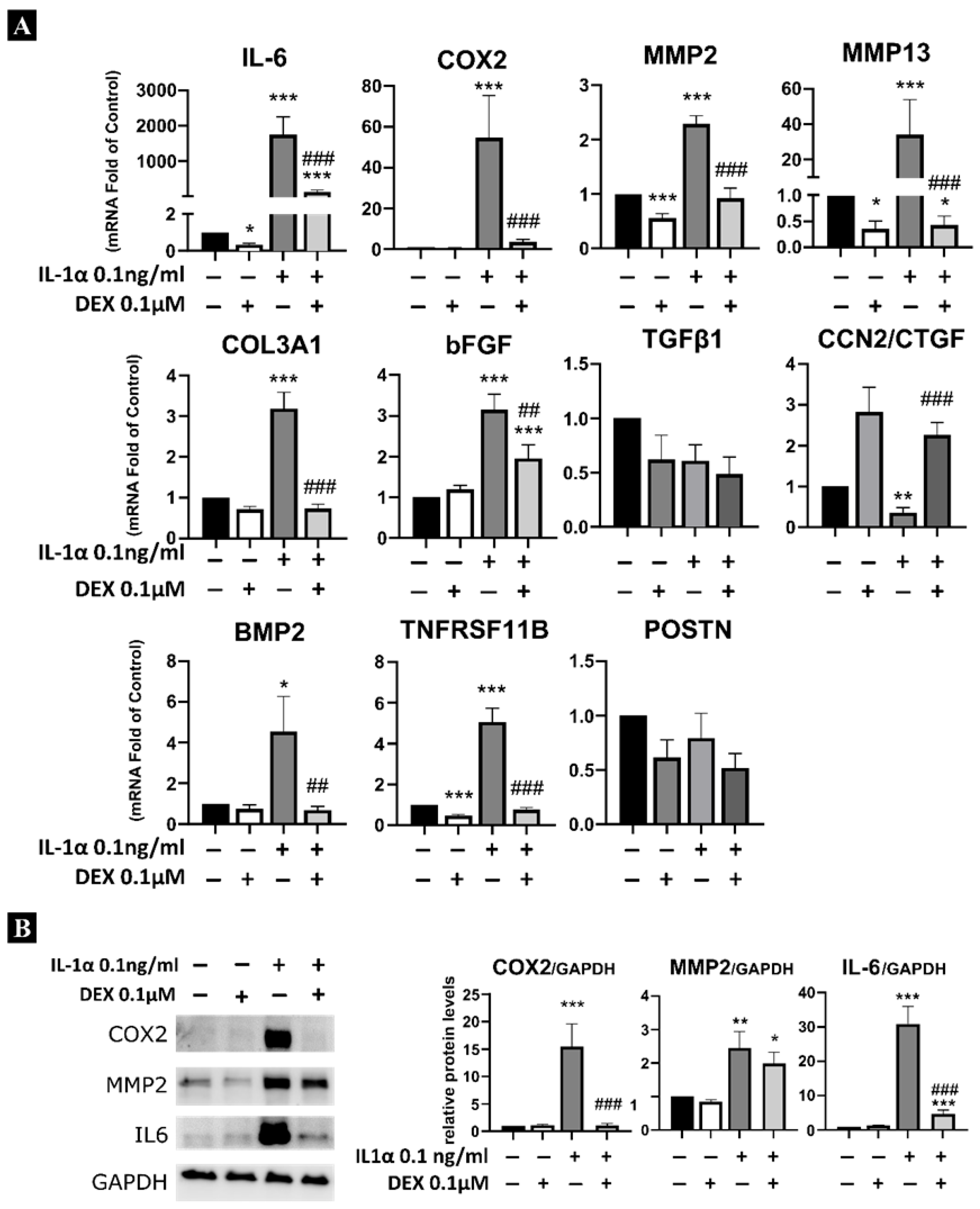
As shown in Figure 1, stimulation of LF derived cells (LFC) with 0.1 ng/mL IL-1α for 24 h upregulated the mRNA expression of inflammation-associated genes such as IL-6, COX2 and ELF3, extracellular matrix (ECM) remodelling genes such as MMP2 and MMP13, hypertrophy-related genes such as COL3A1 and bFGF, and ossification-associated genes such as BMP2 and TNFRSF11b. Conversely, a significant reduction in the expression of CCN2/CTGF was observed. No significant differences were observed in TGFβ1 and POSTN gene expressions following IL-1α treatment.
LF cells treated with a combination of IL-1α (0.1 ng/mL) and 0.1 µM of dexamethasone showed significant modulation in the mRNA expression of all the aforementioned upregulated genes. Interestingly, CCN2 exhibited a distinct response: while IL-1α alone reduced its expression, dexamethasone alone induced CCN2. Moreover, the combination of dexamethasone and IL-1α also resulted in CCN2 upregulation, effectively counteracting the IL-1α-induced reduction. Western blot analysis further corroborated these findings, showing a significant downregulation in the protein expression of IL-6 and COX2 (Figure 1B). While the protein expression of MMP2 also decreased, this reduction was not statistically significant. Notably, comparable outcomes were observed when assessing dexamethasone’s capacity to suppress prolonged inflammation during a 7-day co-treatment with IL-1α (Figure S2).
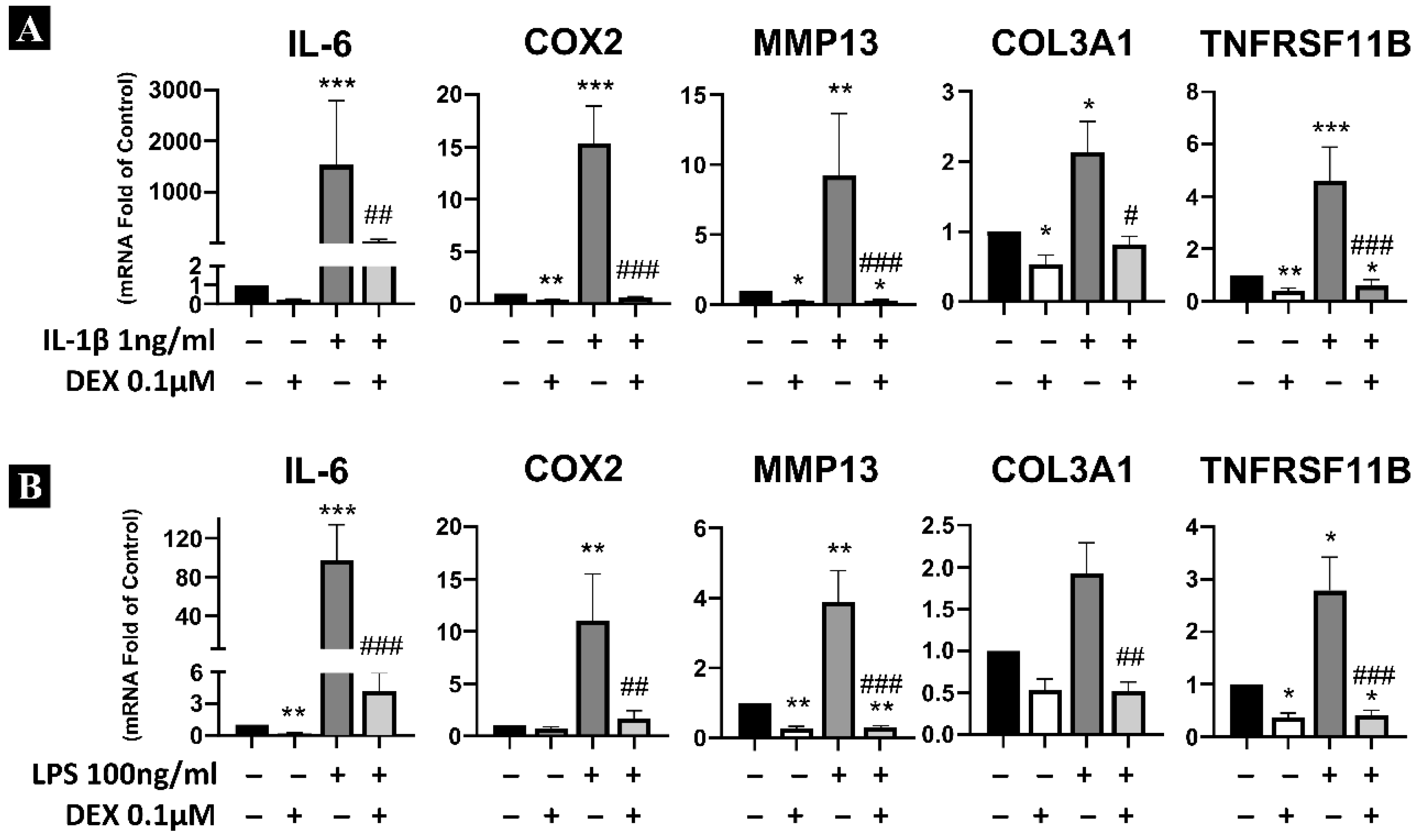
As shown in Figure 2, dexamethasone produced similar effects when combined with other pro-inflammatory agents such as IL-1β (Figure 2A) and LPS (Figure 2B). It significantly downregulated the mRNA expression of pro-inflammatory genes (IL-6, COX2), the metalloprotease MMP13, and markers associated with hypertrophy and ossification (COL3A1, TNFRSF11b) in inflamed LFCs.

2.2. Analysis of the Anti-Inflammatory Effect of Dexamethasone in Long Term-Inflamed Ligamentum Flavum Cells

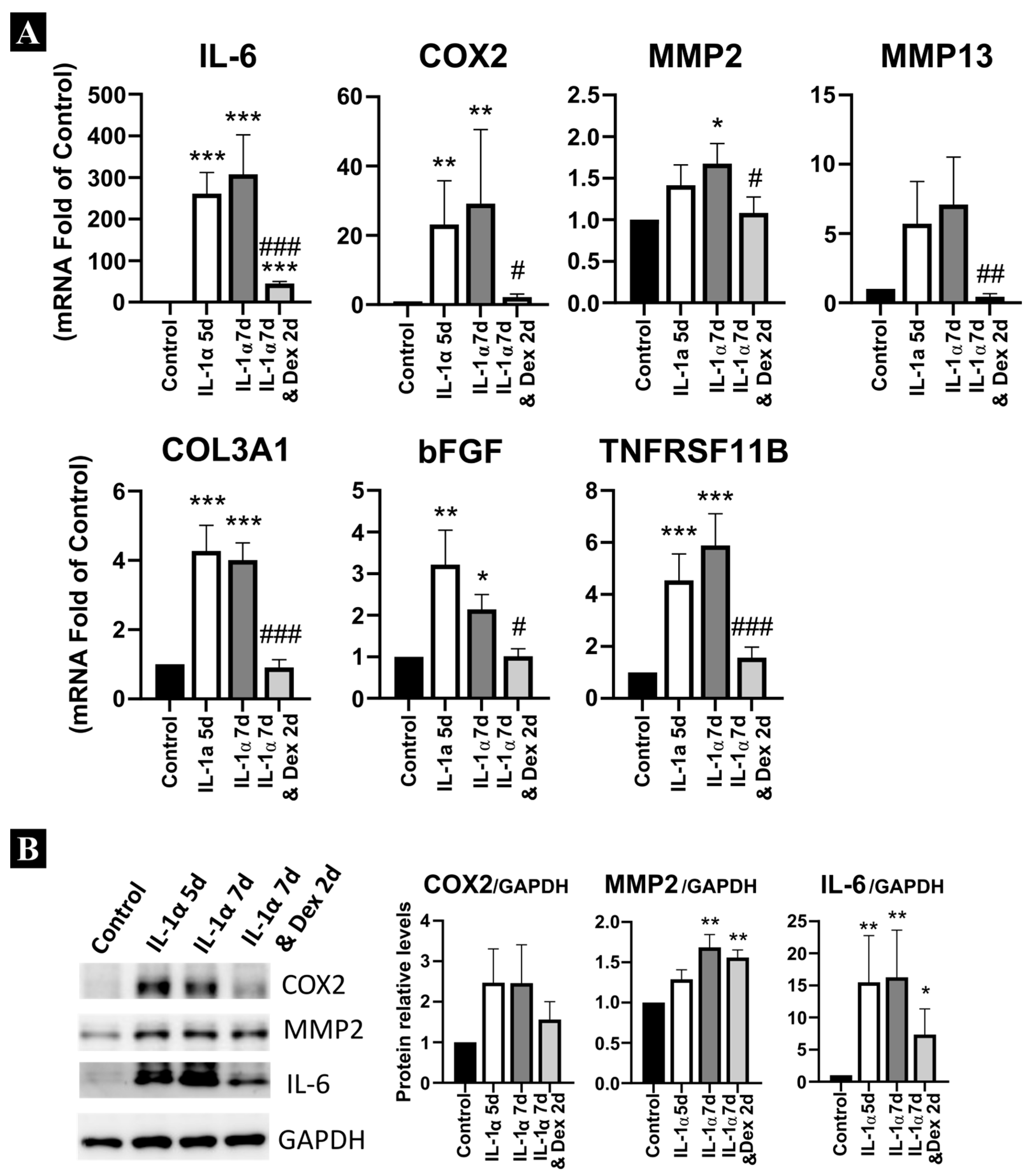
To mimic a state of chronic inflammation, LF cells were exposed to 0.1 ng/mL IL-1α for five days. Subsequently, dexamethasone was introduced at a concentration of 0.1 µM for an additional two days, while IL-1α treatment was continued concurrently. As shown in Figure 3A,B, dexamethasone reduced the mRNA expression and protein levels of genes associated with inflammatory responses such as IL-6 and COX2, synthesis of metalloproteases such as MMP2 and MMP13 and genes associated with hypertrophy such as bFGF, COL3A1 and TNFRSF11b.

2.3. Analysis of the Effect of Dexamethasone in Ligamentum Flavum Cell Fibrosis

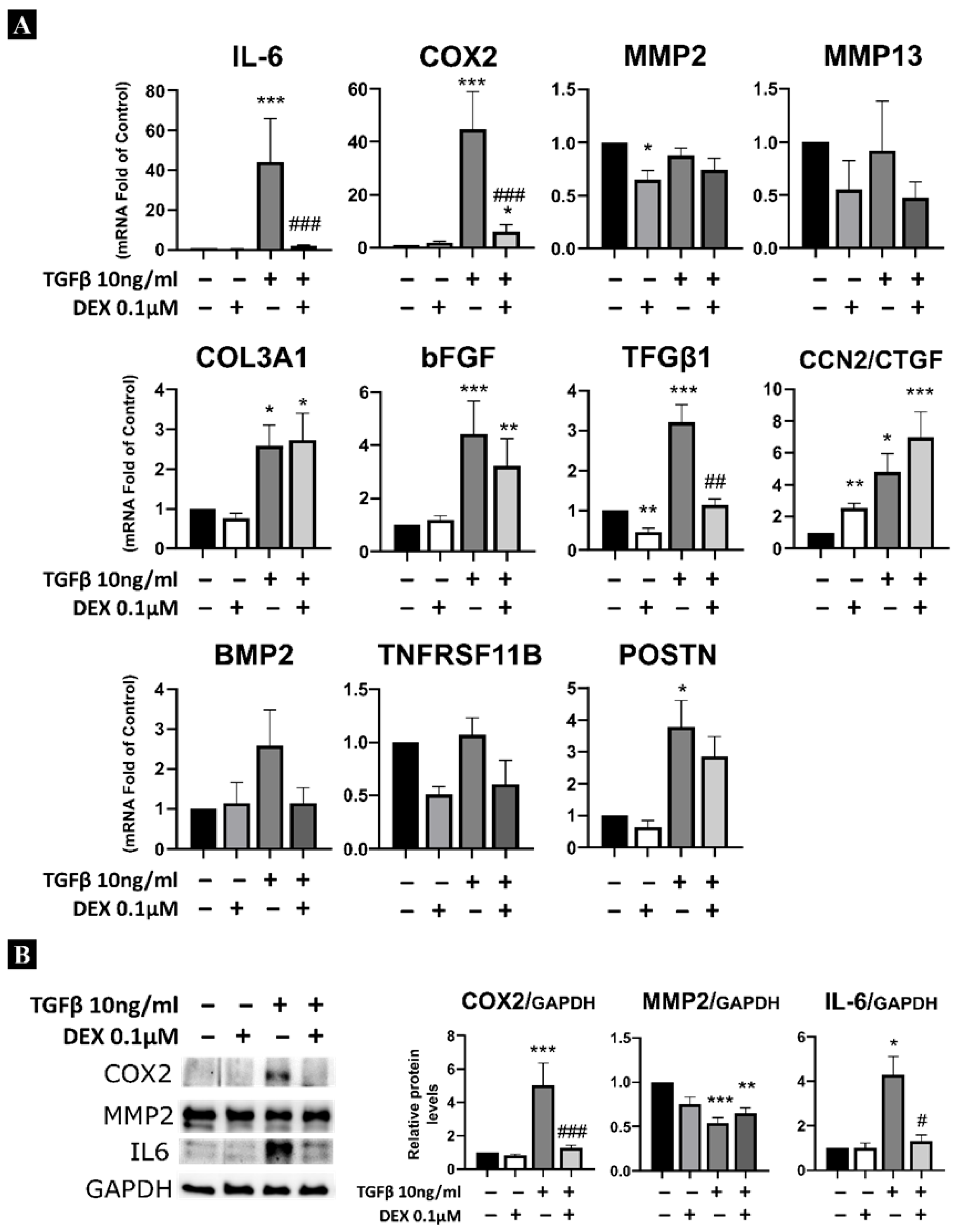
As shown in Figure 4, TGFβ1 was able to induce gene expression of inflammatory markers such as IL-6 and COX2; fibrotic markers such as COL3A1 and bFGF; ossification markers such as BMP2 and POSTN; and fibrotic factors such as TGFβ1 and CTGF/CCN2. Notably, TGFβ1 treatment did not induce metalloprotease (MMP2 and MMP9) and TNFRSF11B expression.
Dexamethasone addition reduced the TGFβ1-induced expression of genes associated with inflammatory response such as IL-6 and COX2, in addition to TGFβ1 and BMP2. However, no significant reduction was observed in the mRNA expression of fibrosis-related genes such as COL3A1, bFGF, and POSTN. Moreover, CTGF/CCN2 mRNA expression levels increased during dexamethasone treatment alone, further enhancing the induction when combined with TGFβ1 treatment.

3. Discussion

Glucocorticoids are extensively utilised in the treatment of various inflammatory disorders, including asthma, cystic fibrosis, and rheumatoid arthritis, owing to their strong anti-inflammatory effects [17]. In cases of spinal canal stenosis, corticosteroids, administered either epidurally or systemically, are prescribed for patients who do not require surgical intervention. Nonetheless, recent research has suggested that these therapies may be limited in their effectiveness at relieving pain associated with canal stenosis, particularly over extended periods [18,19,20]. The challenge is further compounded by the limited understanding of the molecular mechanisms through which glucocorticoids exert their effects in LFH. To the best of our knowledge, the present study is the first to evaluate corticosteroid action, specifically dexamethasone, on the inflammation and fibrotic process of the ligamentum flavum cells.
In LF cells, dexamethasone robustly suppresses the acute inflammatory response triggered through IL-1R and TLR4 activation, mirroring its effects in other tissues [21,22]. Beyond its anti-inflammatory activity, dexamethasone treatment also supresses the expression of metalloproteinases (MMP2 and MMP13) as well as fibrotic markers such as COL3A1 and bFGF, which are involved in LF remodelling [23,24]. Moreover, it reduces the expression of ossification-related genes, including RUNX2, BMP2, and TNFRSF11B, which are typically elevated during LF hypertrophy [25,26]. Notably, dexamethasone’s effects are not confined to the early stages of inflammation. It continues to suppress the expression of these pro-inflammatory, fibrotic, and ossification markers even during sustained inflammatory conditions. These results indicate that dexamethasone may not only hinder the progression of ligamentum flavum hypertrophy by suppressing inflammation, but may also hold the potential to counteract established inflammatory processes within the tissue.
Elevated levels of TGFβ1 have been observed in hypertrophic LF tissue, where this cytokine is thought to play a pivotal role in driving pathological remodelling [27]. In vitro studies have shown that stimulation of LF cells with exogenous TGFβ1 leads to a significant upregulation of both inflammatory markers, such as IL-6 and COX2, and fibrotic markers, including COL3A1, bFGF, and POSTN [28,29]. These findings underscore the dual function of TGFβ1 as both a pro-inflammatory and pro-fibrotic factor in the remodelling of ligamentum flavum tissue. Interestingly, TGFβ1 also appears to induce a self-sustaining loop through autocrine signalling. The exogenous administration of TGFβ1 has been shown to stimulate its own gene expression in LF cells, suggesting a positive feedback mechanism that may contribute to the chronic activation of fibrogenic pathways. This hypothesis is supported by immunohistochemical analyses of hypertrophic LF tissue, which frequently demonstrate cytoplasmic accumulation of TGFβ1 within fibroblasts, indicative of persistent and dysregulated production of this cytokine [30].
When evaluating the modulatory effects of dexamethasone on TGFβ1-induced responses, a differential pattern emerges. Dexamethasone significantly attenuates the expression of inflammatory genes induced by TGFβ1, confirming its robust anti-inflammatory action even in a profibrotic environment. However, in contrast to its suppression of inflammation, dexamethasone fails to significantly reduce the expression of key fibrosis-associated genes, including COL3A1, bFGF, and POSTN. This is in line with previous studies on fibroblasts from other tissues, where glucocorticoids likewise failed to effectively suppress the expression of fibrotic markers such as ACTA2, FN1, and COL1A1 [31]. Finally, although dexamethasone effectively counteracts inflammation-mediated fibrosis, it may have limited efficacy in counteracting fibrogenesis initiated by non-inflammatory stimuli such as TGFβ1.
Another significant observation is the increase in CTGF/CCN2 mRNA expression following treatment with dexamethasone alone, which was further amplified when combined with TGFβ1 treatment. CTGF/CCN2 is a well-established mediator of fibrosis and tissue remodelling, often acting downstream of TGFβ signalling [32]. In line with these results, the treatment with dexamethasone was observed to upregulate pro-fibrotic markers in other tissues [33,34,35]. These results raise the possibility that, under certain circumstances, dexamethasone may promote fibrotic remodelling despite its well-known anti-inflammatory properties. Therefore, although dexamethasone remains an effective anti-inflammatory agent, its potential to contribute to fibrosis in specific situations highlights the need for caution when considering long-term or repeated use in the treatment of LFH. This observation may also have clinical implications, as epidural corticosteroids are widely used to reduce inflammation and alleviate symptoms in degenerative spine disorders [36]. Repeated exposure to glucocorticoids could potentially contribute to fibrotic changes in the ligamentum flavum microenvironment, as we observed in CTGF/CCN2 levels, potentially facilitating the progression of ligamentum flavum hypertrophy. Further experiments and clinical studies are required to clarify the paradoxical fibrogenic effect of dexamethasone in LFH management. In conclusion, dexamethasone exerts potent anti-inflammatory effects in LF cells but its impact on fibrotic remodelling appears to be limited, particularly when fibrosis is driven by non-inflammatory mechanisms.
These findings provide valuable insights that could inform the rational use of glucocorticoids in LFH, highlighting the importance of concurrently targeting inflammatory and fibrotic pathways to enhance therapeutic efficacy. Given that LFH involves both inflammatory and non-inflammatory fibrotic components, a singular reliance on corticosteroids might be insufficient to halt the long-term progression of lumbar spinal stenosis. Therefore, further research into a ‘dual-target’ therapeutic strategy that combines steroids with anti-fibrotic agents is needed. Potential targets could include TGF-β receptor inhibitors, CTGF-neutralising antibodies, or SMAD signalling inhibitors. Potential risks of pathway over-suppression should be carefully considered. Excessive inhibition of TGF-β/SMAD or CTGF signalling may impair normal extracellular matrix turnover and physiological wound healing, potentially leading to delayed or impaired tissue regeneration. Moreover, combined suppression of inflammatory and fibrotic pathways could disrupt normal immune homeostasis. This study has several limitations inherent to its in vitro design. Firstly, although the use of primary LF cells is valuable, it does not fully replicate the complex cellular interactions and microenvironment found in vivo such as interactions with immune cells, vascular components, and mechanical stress. Moreover, fibrosis in vivo develops through prolonged and multifactorial signalling networks, whereas our experimental system relies on simplified cytokine stimulation. Consequently, the effects observed may not completely represent the physiological context of ligamentum flavum hypertrophy. Furthermore, we believe that caution is warranted when translating these findings clinically, as systemic or repeated local corticosteroid administration is associated with adverse effects and inconsistent efficacy in patients. Future research involving in vivo models and clinical specimens is essential to validate these results and to investigate combination therapies that more effectively address both the inflammatory and fibrotic aspects of ligamentum flavum hypertrophy.

4. Materials and Methods

4.1. Cell Cultures

Ligamentum flavum (LF) tissue samples were obtained from patients undergoing spinal surgeries (Table S1). Written informed consent was obtained from all patients enrolled in the study. Ethical approval was granted by local ethical committee. Each sample was cut into small fragments and digested for 30 min with Pronase (Promega, Madison, WI, USA), followed by an 8 h digestion with Collagenase (Promega, Madison, WI, USA). The resulting cell suspensions were filtered using a 40 μm cell strainer and cultured at 37 °C in a humidified atmosphere containing 5% CO2 until reaching 70–90% confluence in DMEM/F-12 (Corning, Corning, NY, USA) supplemented with 10% foetal bovine serum (FBS; Hyclone, Holland), 2 mM L-glutamine, and antibiotics (penicillin 50 units/mL and streptomycin 50 μg/mL). All cells used in the following experiments were below passage number 6. Cell phenotype verification throughout the passages was performed by qPCR, analysing specific LF cell markers, such as COL3A1, NC and SCX (Figure S1).
Then, 200,000 cells/well were seeded in 6-well plates to approximately 75% confluence. The 24 h experiments were performed after a 4 h starvation period in FBS-free conditions. Longer-duration experiments, more than 24 h, were performed in a 5% FBS-supplemented medium. LPS, IL-1α and IL-1β from Sigma-Aldrich (St. Louis, MO, USA), TGFβ1 from Thermo Fisher Scientific (Waltham, MA, USA) and dexamethasone (DEX) from Kern Pharma (Carnaxide, Portugal) were used to treat the cells.

4.2. RNA Extraction and Real-Time Reverse Transcription–Polymerase Chain Reaction (RT-qPCR)

Total RNA was isolated from LF cells using NZYol (NZYTech, Lisbon, Portugal) and E.Z.N.A. Total RNA Kit I (Omega Bio-tek, Norcross, GA, USA) according to the manufacturer’s instructions. Reverse transcription was performed using NZY First-Strand cDNA Synthesis Kit (NZYTech, Portugal). Real-time qPCR was performed using RT2 SYBR Green qPCR Mastermix (Qiagen, Hilden, Germany) in an AriaMx Real-time PCR System (Agilent Technologies, Santa Clara, CA, USA) according to the manufacturer’s instructions. The primers used are listed in Table 1. Quantitative results were calculated using the comparative ΔΔCT method and using ARIA MX software (V. 2.1.1, Agilent, Santa Clara, CA, USA).

4.3. Western Blot Analysis

Proteins were extracted using lysis buffer (10 mM Tris/HCl, pH 7.5, 5 mM EDTA, 150 mM NaCl, 30 mM sodium pyrophosphate, 50 mM sodium fluoride, 1 mM sodium orthovanadate, 0.5% Triton X-100, 1 mM PMSF, and protease inhibitor cocktail from Thermo Fisher Scientific (Waltham, MA, USA)) and prepared for Western blot as previously described [37]. Primary antibodies against COX2 (1:1000), IL-6 (1:1000) from Cell Signaling Technology (Danvers, MA, USA), MMP2(1:1000, GeneTex, Irvine, CA, USA) and GAPDH (1:2000; Sigma-Aldrich, Saint Louis, MO, USA) were incubated overnight at 4 °C. Later, appropriate secondary antibodies, goat anti-rabbit IgG HRP (1:5000) from GE Healthcare (Chicago, IL, USA), and proteins were detected using Immobilon Western Detection kit (Millipore, Burlington, MA, USA). The images were captured with ChemiDoc MP Imaging System and analysed with Image Lab 6.0.1 Software, both from Bio-Rad Laboratories (Hercules, CA, USA).

4.4. Statistical Analysis

Statistical analyses were performed using GraphPad Prism 9.3.1 (Software, https://www.graphpad.com). Data from at least four independent experiments using LF cells from different patients were analysed using one-way analysis of variance (ANOVA), followed by Bonferroni multiple comparison test. A p-value less than 0.05 was considered statistically significant. Data are shown at graphics as mean ± SEM.

Supplementary Materials

The following supporting information can be downloaded at https://www.mdpi.com/article/10.3390/ijms27073047/s1.

Author Contributions

O.G., J.P., A.C.-B. and Y.F., have full access to all the data in the study and take responsibility for the integrity of the data and the accuracy of the data analysis. Conception and design: O.G., A.C.-B. and Y.F. Acquisition, analysis, or interpretation of data: all authors. Drafting of the manuscript: A.C.-B. and Y.F. Critical revision of the manuscript for important intellectual content: all authors. Obtaining of funding: O.G. and J.P. All authors have read and agreed to the published version of the manuscript.

Funding

O.G. and F.L. hold positions as Staff Personnel (I3SNS Stable Researcher) at Xunta de Galicia (Servizo Galego de Saude (SERGAS)). O.G., M.Á.G.-G. and R.L. are members of the RICORS Program, Red de Enfermedades Inflamatorias (REI) RD24/0007/0031, through ISCIII and European Regional Development Fund (FEDER) European Union and European Commission. F.L. is a member of Centro de Investigación Biomédica en Red de Enfermedades Cardiovasculares (CIBERCV). The research of O.G. and J.P. (PI23/00289) and F.L. (PI24/00114 and CB16/11/00226) is financially supported by ISCIII and FEDER European Union and European Commission. O.G. and Y.F. are members of the COST action CA21110 (Building a European Network on Osteoarthritis (NETWOARK)), funded by the European Union and European Commission under the European Cooperation in science and technology program (COST). O.G. and J.P. received grants from GEER (Sociedad Española de Columna vertebral) beca 2023. O.G. is the beneficiary of a grant funded by Xunta de Galicia, Consellería de Educación, Universidade e Formación Profesional and Consellería de Economía, Emprego e Industria (GAIN) (GPC IN607B-2025/03). A.C.-B. was a recipient of a pre-doctoral contract funded by Secretaría de Estado de Universidades, Investigación, Desarrollo e Innovación, Ministerio de Universidades (FPU2018-04165). L.G.-B. is a recipient of a postdoctoral fellowship funded by Xunta de Galicia, GAIN (IN606B-2025/003). D.A.E. is a ‘Sara Borrell’ researcher funded by ISCIII and Co, funded by the European Union (UE-FEDER) (CD25/00199). M.F. is supported by a predoctoral fellowship funded by ISCIII and Co, funded by the European Union (UE-FEDER) (EXP: FI25/00181).

Institutional Review Board Statement

The study was conducted in accordance with the Declaration of Helsinki, and approved by SERGAS (Comité de Ética de la investigación de Santiago-Lugo; Code 2017/279, approved on 14 December 2023).

Informed Consent Statement

Informed consent was obtained from all subjects involved in the study.

Data Availability Statement

The original contributions presented in this study are included in the article/Supplementary Materials. Further inquiries can be directed to the corresponding authors.

Conflicts of Interest

The authors declare no conflicts of interest. The funders had no role in the design of the study; in the collection, analyses, or interpretation of data; in the writing of the manuscript; or in the decision to publish the results.

Abbreviations

The following abbreviations are used in this manuscript:
ACTA2Actin Alpha 2, Smooth Muscle
bFGFBasic Fibroblast Growth Factor
BMP2Bone Morphogenetic Protein 2
CCN2/CTGFCellular Communication Network Factor 2/Connective Tissue Growth Factor
PTGS2/COX2Prostaglandin-endoperoxide synthase 2 (Cyclooxygenase-2)
COL3A1Collagen Type III Alpha 1 Chain
ELF3E74 Like ETS Transcription Factor 3
FN1Fibronectin 1
GAPDHGlyceraldehyde-3-Phosphate Dehydrogenase
IL-1αInterleukin-1 Alpha
IL-1βInterleukin-1 Beta
IL-6Interleukin-6
LFLigamentum Flavum
LFHLigamentum Flavum Hypertrophy
LFCLigamentum Flavum Cells
LPSLipopolysaccharide
LSSLumbar Spinal Stenosis
MMP2Matrix Metalloproteinase-2
MMP9Matrix Metalloproteinase-9
MMP13Matrix Metalloproteinase-13
POSTNPeriostin
qPCR/RT-qPCR Quantitative Polymerase Chain Reaction/Reverse Transcription Quantitative PCR
RUNX2Runt-Related Transcription Factor 2
TGFβ/TGFβ1Transforming Growth Factor Beta/Transforming Growth Factor Beta 1
TLR4Toll-Like Receptor 4
TNFRSF11BTumour Necrosis Factor Receptor Superfamily Member 11B

References

  1. Sairyo, K.; Biyani, A.; Goel, V.; Leaman, D.; Booth, R.; Thomas, J.; Gehling, D.; Vishnubhotla, L.; Long, R.; Ebraheim, N. Pathomechanism of Ligamentum Flavum Hypertrophy: A Multidisciplinary Investigation Based on Clinical, Biomechanical, Histologic, and Biologic Assessments. Spine 2005, 30, 2649–2656. [Google Scholar] [CrossRef] [PubMed]
  2. Siebert, E.; Prüss, H.; Klingebiel, R.; Failli, V.; Einhäupl, K.M.; Schwab, J.M. Lumbar spinal stenosis: Syndrome, diagnostics and treatment. Nat. Rev. Neurol. 2009, 5, 392–403. [Google Scholar] [CrossRef]
  3. Viejo-Fuertes, D.; Liguoro, D.; Rivel, J.; Midy, D.; Guerin, J. Morphologic and histologic study of the ligamentum flavum in the thoraco-lumbar region. Surg. Radiol. Anat. 1998, 20, 171–176. [Google Scholar]
  4. Sugimoto, K.; Nakamura, T.; Tokunaga, T.; Uehara, Y.; Okada, T.; Taniwaki, T.; Fujimoto, T.; Mizuta, H. Matrix metalloproteinase promotes elastic fiber degradation in ligamentum flavum degeneration. PLoS ONE 2018, 13, e0200872. [Google Scholar] [CrossRef]
  5. Zhai, J.; Guo, S.; Li, J.; Chen, B.; Zhao, Y. Progression of Spinal Ligament Ossification in Patients with Thoracic Myelopathy. Orthop. Surg. 2022, 14, 1958–1963. [Google Scholar] [CrossRef]
  6. Zhang, B.; Chen, G.; Yang, X.; Fan, T.; Chen, X.; Chen, Z. Dysregulation of MicroRNAs in Hypertrophy and Ossification of Ligamentum Flavum: New Advances, Challenges, and Potential Directions. Front. Genet. 2021, 12, 641575. [Google Scholar] [CrossRef] [PubMed]
  7. Löhr, M.; Hampl, J.A.; Lee, J.Y.; Ernestus, R.I.; Deckert, M.; Stenzel, W. Hypertrophy of the lumbar ligamentum flavum is associated with inflammation-related TGF-β expression. Acta Neurochir. 2011, 153, 134–141. [Google Scholar] [CrossRef] [PubMed]
  8. Sairyo, K.; Biyani, A.; Goel, V.K.; Leaman, D.W.; Booth, R.; Thomas, J.; Ebraheim, N.A.; Cowgill, I.A.; Mohan, S.E. Lumbar Ligamentum Flavum Hypertrophy Is Due to Accumulation of Inflammation-Related Scar Tissue. Spine 2007, 32, E340–E347. [Google Scholar] [CrossRef]
  9. Nakatani, T.; Marui, T.; Hitora, T.; Doita, M.; Nishida, K.; Kurosaka, M. Mechanical stretching force promotes collagen synthesis by cultured cells from human ligamentum flavum via transforming growth factor-β1. J. Orthop. Res. 2002, 20, 1380–1386. [Google Scholar]
  10. Chao, Y.H.; Tsuang, Y.H.; Sun, J.S.; Sun, M.G.; Chen, M.H. Centrifugal force induces human ligamentum flavum fibroblasts inflammation through activation of JNK and p38 pathways. Connect. Tissue Res. 2012, 53, 422–429. [Google Scholar] [CrossRef]
  11. Moon, H.J.; Park, Y.K.; Ryu, Y.; Kim, J.H.; Kwon, T.H.; Chung, H.S.; Kim, J.H. The angiogenic capacity from ligamentum flavum subsequent to inflammation: A critical component of the pathomechanism of hypertrophy. Spine 2012, 37, E147–E155. [Google Scholar] [PubMed]
  12. Sun, C.; Zhang, H.; Wang, X.; Liu, X. Ligamentum flavum fibrosis and hypertrophy: Molecular pathways, cellular mechanisms, and future directions. FASEB J. 2020, 34, 9854–9868. [Google Scholar] [CrossRef] [PubMed]
  13. Lurie, J.; Tomkins-Lane, C. Management of lumbar spinal stenosis. BMJ 2016, 352. [Google Scholar] [CrossRef]
  14. Lee, B.H.; Moon, S.H.; Suk, K.S.; Kim, H.S.; Yang, J.H.; Lee, H.M. Lumbar Spinal Stenosis: Pathophysiology and Treatment Principle: A Narrative Review. Asian Spine J. 2020, 14, 682–693. [Google Scholar] [CrossRef] [PubMed]
  15. Ramamoorthy, S.; Cidlowski, J.A. Corticosteroids. Mechanisms of Action in Health and Disease. Rheum. Dis. Clin. N. Am. 2016, 42, 15–31. [Google Scholar]
  16. Manchikanti, L.; Cash, K.A.; McManus, C.D.; Pampati, V.; Abdi, S. Preliminary results of a randomized, equivalence trial of fluoroscopic caudal epidural injections in managing chronic low back pain: Part 4—Spinal stenosis. Pain Physician 2008, 11, 833–848. [Google Scholar]
  17. Barnes, P.J. How corticosteroids control inflammation: Quintiles Prize Lecture 2005. Br. J. Pharmacol. 2006, 148, 245–254. [Google Scholar] [CrossRef]
  18. Chou, R.; Pinto, R.Z.; Fu, R.; Lowe, R.A.; Henschke, N.; Dana, T. Systemic corticosteroids for radicular and non-radicular low back pain. Cochrane Database Syst. Rev. 2016, 2016, CD012450. [Google Scholar] [CrossRef]
  19. Rodrigues, L.C.L.; Natour, J. A double-blind, randomized controlled, prospective trial assessing the effectiveness of oral corticoids in the treatment of symptomatic lumbar canal stenosis. J. Negat. Results Biomed. 2014, 13, 13. [Google Scholar] [CrossRef]
  20. Akbari Aghdam, H.; Andalib, A.; Asadiyan Ardakani, H.; Telloo, M.; Sheikhbahaei, E. A short-term oral corticosteroid for refractory lumbar spinal stenosis: A double-blinded randomized placebo-controlled clinical trial. Int. J. Rehabil. Res. 2020, 43, 342–346. [Google Scholar]
  21. Patil, R.H.; Naveen Kumar, M.; Kiran Kumar, K.M.; Nagesh, R.; Kavya, K.; Babu, R.L.; Ramesh, G.T.; Sharma, S.C. Dexamethasone inhibits inflammatory response via down regulation of AP-1 transcription factor in human lung epithelial cells. Gene 2018, 645, 85–94. [Google Scholar] [CrossRef]
  22. Chen, Y.; Zhang, C.; Xiao, C.X.; Li, X.D.; Hu, Z.L.; He, S.D.; Xiao, X.J.; Xu, F. Dexamethasone can attenuate the pulmonary inflammatory response via regulation of the lncH19/miR-324-3p cascade. J. Inflamm. 2021, 18, 1. [Google Scholar] [CrossRef]
  23. Fei, C.; Chen, Y.; Tan, R.; Yang, X.; Wu, G.; Li, C.; Shi, J.; Le, S.; Yang, W.; Xu, J.; et al. Single-cell multi-omics analysis identifies SPP1+ macrophages as key drivers of ferroptosis-mediated fibrosis in ligamentum flavum hypertrophy. Biomark. Res. 2025, 13, 33. [Google Scholar] [CrossRef]
  24. Chuang, H.C.; Tsai, K.L.; Tsai, K.J.; Tu, T.Y.; Shyong, Y.J.; Jou, I.M.; Hsu, C.-C.; Shih, S.-S.; Liu, Y.-F.; Lin, C.-L. Oxidative stress mediates age-related hypertrophy of ligamentum flavum by inducing inflammation, fibrosis, and apoptosis through activating Akt and MAPK pathways. Aging 2020, 12, 24168–24183. [Google Scholar] [CrossRef] [PubMed]
  25. Uchida, K.; Yayama, T.; Cai, H.X.; Nakajima, H.; Sugita, D.; Guerrero, A.R.; Kobayashi, S.; Yoshida, A.; Chen, K.-B.; Baba, H. Ossification process involving the human thoracic ligamentum flavum: Role of transcription factors. Arthritis Res. Ther. 2011, 13, R144. [Google Scholar] [CrossRef] [PubMed]
  26. Hou, X.F.; Fan, D.W.; Sun, C.G.; Chen, Z.Q. Recombinant human bone morphogenetic protein-2-induced ossification of the ligamentum flavum in rats and the associated global modification of histone H3. J. Neurosurg. Spine 2014, 21, 334–341. [Google Scholar]
  27. Wang, S.; Qu, Y.; Fang, X.; Ding, Q.; Zhao, H.; Yu, X.; Xu, T.; Lu, R.; Jing, S.; Liu, C.; et al. Decorin: A potential therapeutic candidate for ligamentum flavum hypertrophy by antagonizing TGF-β1. Exp. Mol. Med. 2023, 55, 1413–1423. [Google Scholar] [CrossRef] [PubMed]
  28. Yang, K.; Chen, Y.; Xiang, X.; Lin, Y.; Fei, C.; Chen, Z.; Lai, Z.; Yu, Y.; Tan, R.; Dong, J.; et al. EGF Contributes to Hypertrophy of Human Ligamentum Flavum via the TGF-β1/Smad3 Signaling Pathway. Int. J. Med. Sci. 2022, 19, 1510–1518. [Google Scholar]
  29. Ye, S.; Kwon, W.K.; Bae, T.; Kim, S.; Lee, J.B.; Cho, T.H.; Park, J.; Kim, K.; Hur, J.K.; Hur, J.W. CCN5 Reduces Ligamentum Flavum Hypertrophy by Modulating the TGF-β Pathway. J. Orthop. Res. 2019, 37, 2634–2644. [Google Scholar]
  30. Park, J.B.; Chang, H.; Lee, J.K. Quantitative Analysis of Transforming Growth Factor-Beta 1 in Ligamentum Flavum of Lumbar Spinal Stenosis and Disc Herniation. Spine 2001, 26, E492–E495. [Google Scholar] [CrossRef]
  31. Nakamura, R.; Mukudai, S.; Bing, R.; Garabedian, M.J.; Branski, R.C. Complex fibroblast response to glucocorticoids may underlie variability of clinical efficacy in the vocal folds. Sci. Rep. 2020, 10, 20458. [Google Scholar] [CrossRef] [PubMed]
  32. Sun, C.; Zhang, H.; Liu, X. Emerging role of CCN family proteins in fibrosis. J. Cell. Physiol. 2021, 236, 4195–4206. [Google Scholar]
  33. Sarsenbayeva, A.; Pereira, M.J.; Nandi Jui, B.; Ahmed, F.; Dipta, P.; Fanni, G.; Almby, K.; Kristófi, R.; Hetty, S.; Eriksson, J.W. Excess glucocorticoid exposure contributes to adipose tissue fibrosis which involves macrophage interaction with adipose precursor cells. Biochem. Pharmacol. 2022, 198, 114976. [Google Scholar] [CrossRef]
  34. Okada, H.; Kikuta, T.; Inoue, T.; Kanno, Y.; Ban, S.; Sugaya, T.; Takigawa, M.; Suzuki, H. Dexamethasone induces connective tissue growth factor expression in renal tubular epithelial cells in a mouse strain-specific manner. Am. J. Pathol. 2006, 168, 737–747. [Google Scholar] [CrossRef]
  35. Gan, Q.; Pan, H.; Zhang, W.; Yuan, Y.; Qian, J.; Liu, C. Fabrication and evaluation of a BMP-2/dexamethasone co-loaded gelatin sponge scaffold for rapid bone regeneration. Regen. Biomater. 2022, 9, rbac008. [Google Scholar]
  36. Chou, R.; Hashimoto, R.; Friedly, J.; Fu, R.; Bougatsos, C.; Dana, T.; Sullivan, S.D.; Jarvik, J. Epidural corticosteroid injections for radiculopathy and spinal stenosis. Ann. Intern. Med. 2015, 163, 373–381. [Google Scholar] [CrossRef] [PubMed]
  37. Conde, J.; Scotece, M.; López, V.; Gómez, R.; Lago, F.; Pino, J.; Gómez-Reino, J.J.; Gualillo, O. Adiponectin and Leptin Induce VCAM-1 Expression in Human and Murine Chondrocytes. PLoS ONE 2012, 7, e52533. [Google Scholar] [CrossRef]
Figure 1. Effect of dexamethasone on the stimulated ligamentum flavum-derived cells (LFCs). mRNA (A), measured by rt-qPCR, and protein (B), measured by Western blot, 24 h after treatment with IL-1α (0.1 ng/mL) and/or dexamethasone (0.1 µM). Statistical significance is represented as follows: * p < 0.05, ** p < 0.01, *** p < 0.001 compared with control expression levels; ## p < 0.01, ### p < 0.001 compared with IL-1α treatment.
Ijms 27 03047 g001
Figure 2. Study of the effect of dexamethasone on inflammatory response with different pro-inflammatory agents. (A) Analysis of the effect of dexamethasone on gene expression (mRNA) in the inflammatory response induced by IL-1β (1 ng/mL). (B) Analysis of the effect of dexamethasone on gene expression (mRNA) in the inflammatory response induced by LPS (100 ng/mL). Statistical significance is represented as follows: * p < 0.05, ** p < 0.01, *** p < 0.001 compared with control expression levels; # p < 0.05, ## p < 0.01, ### p < 0.001 compared with IL-1β or LPS treatment.
Ijms 27 03047 g002
Figure 3. Analysis of the effect of dexamethasone on prolonged inflammation in ligamentum flavum-derived cells. Cells were pretreated with IL-1α for 5 days and then treated with IL-1α in the presence or absence of dexamethasone for two additional days. Expression of mRNA (A) and protein (B) was analysed. Statistical significance is represented as follows: * p < 0.05, ** p < 0.01, *** p < 0.001 compared with control expression levels; # p < 0.05, ## p < 0.01, ### p < 0.001 compared with IL-1α treatment.
Ijms 27 03047 g003
Figure 4. Analysis of the inhibitory capacity of dexamethasone in ligamentum flavum cells treated with TGFβ1. (A) Analysis of mRNA levels of cells treated with TGFβ1 (10 ng/mL) and/or dexamethasone (0.1 µM). (B) Analysis of protein expression levels of cells treated with TGFβ1 and/or dexamethasone. Statistical significance is represented as follows: * p < 0.05, ** p < 0.01, *** p < 0.001 compared with control expression levels; # p < 0.05, ## p < 0.01, ### p < 0.001 compared with TGFβ1 treatment.
Ijms 27 03047 g004
Table 1. The primer sequences used in RT-QPCR.
GeneForwardReverseAmplicon (bp)
ACTBACAGAGCCTCGCCTTTGCGATATCATCATCCATGGTGAGCTGG70 bp
bFGFAAGAGCGACCCTCACATCAA ACGGTTAGCACACACTCCTT81 bp
BMP2TGTATCGCAGGCACTCAGGTCACCACTCGTTTCTGGTAGTTCTTC133 bp
CCN2/CTGFGGAGTGGGTGTGTGACGAGGTCTTCCAGTCGGTAAGCCG73 bp
COL3A1GAAAGAGGATCTGAGGGCTCCAAACCGCCAGCTTTTTCACC137 bp
ELF3Qiagen (PPH09786A)
GAPDHQiagen (PPH00150F)
MMP13ACTGAGAGGCTCCGAGAAATGGAACCCCGCATCTTGGCTT103 bp
MMP2AGCGAGTGGATGCCGCCTTTAACATTCCAGGCATCTGCGATGAG138 bp
POSTNGACCAAGGAAAACTCACTACCTGTTTAACTGGTATGGCAC84 bp
PTGS2/COX2Qiagen (PPH01136F)
RUNX2TCGCCTCACAAACAACCACAGCTTGCAGCCTTAAATGACTCT144 bp
TGFβ1GGCCAGATCCTGTCCAAGCGTGGGTTTCCACCATTAGCAC201 pb
TNFRSF11bCCAAGCCCCTGAGGTTTCCGATGTCCAGAAACACGAGCG71 bp
Disclaimer/Publisher’s Note: The statements, opinions and data contained in all publications are solely those of the individual author(s) and contributor(s) and not of MDPI and/or the editor(s). MDPI and/or the editor(s) disclaim responsibility for any injury to people or property resulting from any ideas, methods, instructions or products referred to in the content.