1. Introduction
The formal recognition of cardio-oncology as a distinct clinical entity is relatively recent, yet its roots date back to the late 1960s and early 1970s. The first major milestone occurred with the introduction of anthracyclines, specifically daunorubicin and doxorubicin, into clinical practice. While these agents showed unprecedented efficacy against leukemias and solid tumors, clinicians quickly noticed a paradoxical increase in severe, often fatal, heart failure among survivors. Initial clinical observations by Lefrak et al. in 1973 [
1] were among the first to systematically describe the dose-dependent nature of anthracycline-induced cardiomyopathy, establishing the concept of “cumulative cardiotoxicity”.
Throughout the 1980s, the discovery of the cardioprotective potential of dexrazoxane and the development of endomyocardial biopsy techniques allowed for a deeper histological understanding of myofibrillar dropout and vacuolization. However, it was not until the late 1990s, with the advent of trastuzumab (the first HER2-targeted therapy), that the field realized cardiotoxicity was not limited to direct cytotoxic cell death but could also arise from the interruption of essential cardiac signaling pathways. This led Ewer et al. [
2] to propose the classic distinction between Type I (irreversible) and Type II (reversible) cardiac injury, a classification that remains a foundational pillar of cardio-oncological education today. These early discoveries shifted the oncological focus from simple tumor eradication to a more balanced approach that considers the “collateral damage” to the cardiovascular system.
The growing success of cancer therapies has significantly increased patient survival, bringing attention to long-term cardiovascular complications caused by these treatments [
3,
4]. Cardio-oncology has thus emerged to address the management of heart damage related to anticancer drugs, focusing on prevention, early detection, and treatment of cardiotoxicity [
5,
6]. This paradigm shift is driven by the realization that cardiovascular disease is now a leading cause of morbidity and mortality among cancer survivors, sometimes exceeding the risk of cancer recurrence itself.
Anticancer agents, including chemotherapy, targeted therapies, and immunotherapies, can induce cardiac dysfunction ranging from heart failure with reduced ejection fraction (HFrEF) to heart failure with preserved ejection fraction (HFpEF) [
7,
8]. HFrEF typically results from direct myocardial injury by drugs like anthracyclines, while HFpEF involves complex mechanisms such as systemic inflammation and microvascular dysfunction often exacerbated by comorbidities common in cancer patients [
2,
9].
Given the complexity of cardiotoxic effects and their impact on cancer care, a multidisciplinary approach involving oncologists and cardiologists is essential [
10]. Early risk stratification and cardioprotective strategies are key to improving outcomes [
11,
12,
13]. Ongoing research into biomarkers and therapies aims to reduce cardiac risks without compromising cancer treatment efficacy [
14]. This review explores the pathophysiology of cardiotoxicity induced by cancer treatments, the clinical features of associated heart failure, and current therapeutic options, aiming to support better integrated patient care in this evolving field [
15,
16] [
Table 1].
Research Objective and Literature Search Strategy
The primary objective of this review is to provide a comprehensive and updated analysis of the molecular mechanisms, clinical manifestations, and management strategies of cancer therapy-related cardiac dysfunction (CTRCD). Unlike existing narrative reviews, this work specifically addresses the “multimodal cardiotoxicity” of 2026, integrating classic cytotoxic injury with novel immune-mediated and targeted therapy-related challenges.
To ensure transparency and reproducibility, a structured literature search was conducted in accordance with the PRISMA (Preferred Reporting Items for Systematic Reviews and Meta-Analyses) guidelines. We searched PubMed/MEDLINE, Scopus, and Web of Science for articles published between January 2015 and January 2026. Search terms included: “cardio-oncology”, “ICI-myocarditis”, “GLS-guided therapy”, “BTK-inhibitors cardiotoxicity”, “RARG pediatric cardiotoxicity”, and “AI in heart failure oncology”.
Inclusion Criteria:
Randomized controlled trials (RCTs) and meta-analyses.
International guidelines (ESC 2022, ASCO 2017) [
4,
30].
Observational studies with a minimum follow-up of 12 months.
Peer-reviewed articles in English.
Exclusion Criteria:
Case reports and small case series (n < 10).
Non-peer-reviewed conference abstracts.
Studies focused exclusively on pre-clinical animal models without clinical translation.
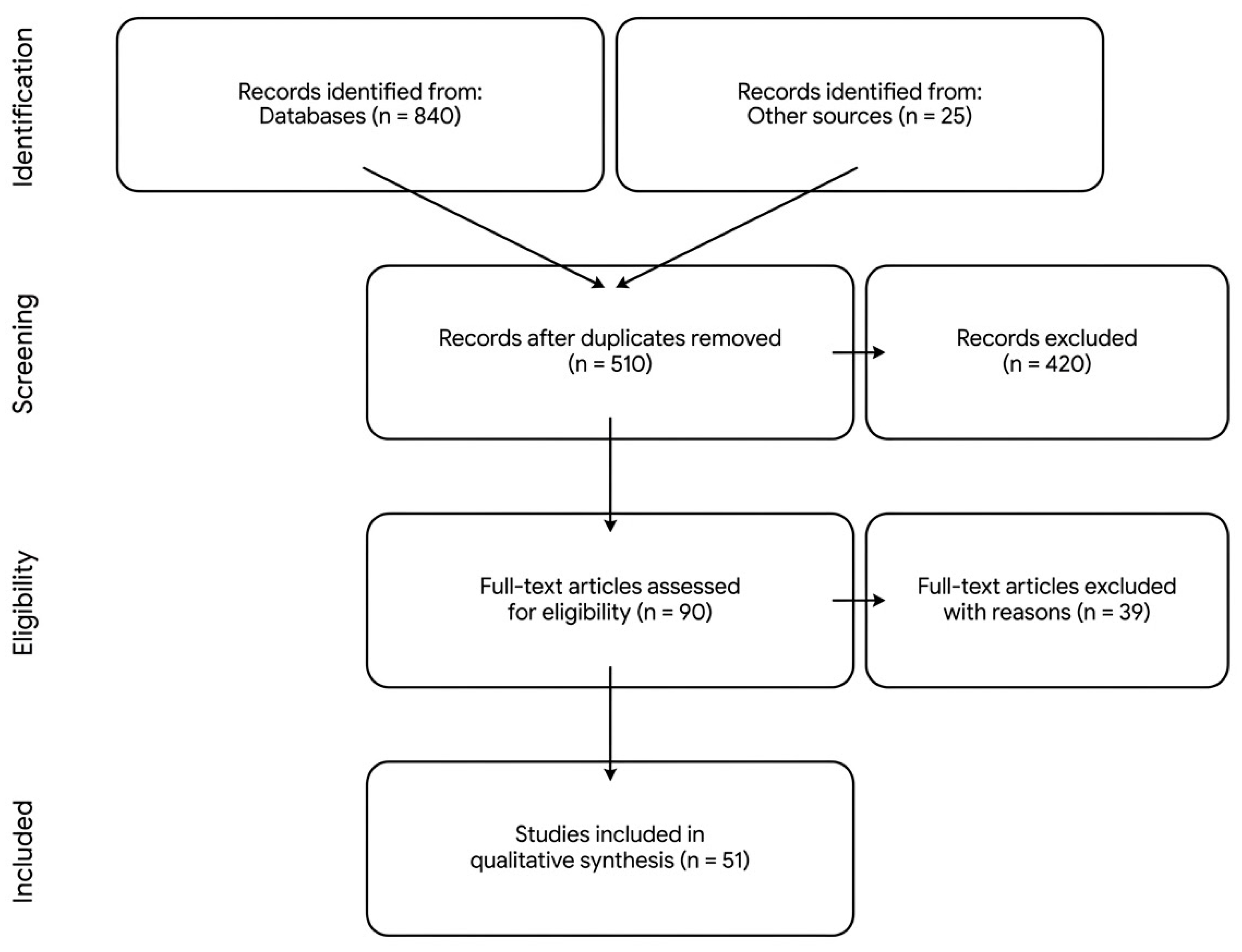
The study selection process, including identification, screening, and inclusion, is summarized in the PRISMA flow diagram (
Figure 1).
The flow diagram illustrates the systematic process of identification, screening, eligibility, and inclusion of studies for this review. From an initial identification of 865 records across three electronic databases (PubMed/MEDLINE, Scopus, and Web of Science) and secondary sources, 51 studies met the pre-defined inclusion criteria. The selection focused on clinical trials, international guidelines (ESC/ASCO), and high-impact systematic reviews published between 2015 and 2026 to ensure an updated evidence base for the cardiovascular management of cancer patients.
4. Immunotherapy and CAR-T Cell Therapy: Cardiovascular Implications
A new frontier in cardio-oncology is the management of Chimeric Antigen Receptor (CAR) T-cell therapy, a revolutionary form of adoptive immunotherapy that has transformed the prognosis for refractory hematological malignancies, such as B-cell acute lymphoblastic leukemia and non-Hodgkin lymphomas [
37]. This therapy involves a sophisticated genetic engineering process: a patient’s own T-lymphocytes are extracted and modified ex vivo to express a synthetic receptor (the CAR) designed to recognize specific tumor antigens, such as CD19, independently of the major histocompatibility complex (MHC). Once re-infused into the patient, these “living drugs” undergo rapid clonal expansion and execute a targeted cytotoxic strike against malignant cells. However, the unprecedented efficacy of CAR T-cells comes with a unique set of cardiovascular challenges.
The primary concern is Cytokine Release Syndrome (CRS), a systemic inflammatory response triggered by the massive activation of CAR T-cells and bystander immune cells, such as macrophages. This results in an exponential surge of pro-inflammatory mediators, particularly interleukin-6 (IL-6), interferon-gamma (IFN-γ), and tumor necrosis factor-alpha (TNF-α) [
10,
24]. From a cardiovascular perspective, this immune storm translates into a state of distributive shock characterized by profound peripheral vasodilation and increased capillary permeability, often referred to as capillary leak. More critically, high levels of IL-6 exert a direct, acute suppressive effect on myocardial contractility by modulating calcium handling and mitochondrial function, potentially triggering arrhythmias, localized pericarditis, or a stress-induced cardiomyopathy that mimics Takotsubo syndrome [
37].
6. Electrophysiology: Arrhythmias and Ibrutinib
Ibrutinib, a first-in-class Bruton tyrosine kinase (BTK) inhibitor, has significantly improved outcomes in B-cell malignancies but is associated with a notable incidence of atrial fibrillation (AF) and a complex profile of hemorrhagic complications. The cardiotoxicity of Ibrutinib is primarily driven by the “off-target” inhibition of C-terminal Src kinase (CSK) in the myocardium, a protein essential for maintaining cardiac electrophysiological stability. This inhibition alters calcium handling within cardiomyocytes, creating a pro-arrhythmogenic substrate that significantly increases the risk of AF, with an incidence reaching up to 15% in treated cohorts [
27,
42].
The clinical management of these patients is further complicated by a unique “thrombo-hemorrhagic paradox” (
Table 4). While Ibrutinib promotes the embolic risk associated with AF, it simultaneously inhibits platelet aggregation through the blockade of BTK and Tec kinases, which are critical signaling components for collagen-induced platelet activation [
27]. This dual effect creates a significant challenge for clinicians, as the patient is at high risk for both thromboembolic events and mucocutaneous bleeding, particularly when anticoagulation is initiated. According to current management algorithms, the choice of anticoagulation must be carefully balanced, often preferring non-vitamin K antagonist oral anticoagulants (NOACs) while vigilantly monitoring for drug–drug interactions [
27,
28].
As summarized in
Table 4, Ibrutinib metabolism occurs predominantly via the cytochrome P450 (CYP3A4) pathway. This shared metabolic route with many common cardiovascular medications, such as diltiazem, verapamil, and certain azole antifungals, can lead to dangerous fluctuations in drug plasma levels and heightened toxicity [
27]. Furthermore, the evolution of BTK inhibitors has led to the development of second-generation agents like Acalabrutinib and Zanubrutinib, which exhibit higher selectivity for BTK and reduced off-target inhibition of CSK and Tec. These newer molecules offer a more favorable safety profile, with a significantly lower incidence of atrial fibrillation and bleeding compared to Ibrutinib [
27]. This distinction underscores the importance of a personalized approach in cardio-oncology, where the selection of the specific inhibitor must be guided by the patient’s baseline cardiovascular risk and the potential for long-term complications [
4,
27].
7. Vascular Toxicities and Radiation-Induced Valvular Disease
Radiation therapy remains a cornerstone in the treatment of various malignancies, including breast cancer, Hodgkin lymphoma, and lung cancer. However, the incidental exposure of the heart to ionizing radiation can lead to a spectrum of cardiovascular complications, collectively known as Radiation-Induced Heart Disease (RIHD) (
Table 5). The pathophysiology of RIHD is fundamentally distinct from chemotherapy-induced injury, as it primarily involves microvascular damage, accelerated atherosclerosis of the coronary arteries, and progressive myocardial fibrosis [
15,
23].
As established in the landmark study by Darby et al. [
15], the risk of major coronary events increases linearly with the mean dose of radiation to the heart, with no clear threshold below which the risk is eliminated. Specifically, the study demonstrated that the rate of major coronary events increases by 7.4% per Gray (Gy) of mean heart dose, and this risk persists for decades after exposure [
15]. Furthermore, radiation-induced injury can affect the heart valves, typically leading to calcification and stenosis (most commonly the aortic and mitral valves), as well as the conduction system, resulting in various degrees of heart block or arrhythmias [
4,
15,
43].
The modern approach to RIHD emphasizes advanced radiotherapy techniques, such as Deep Inspiration Breath Hold (DIBH) and Intensity-Modulated Radiation Therapy (IMRT), which aim to minimize the mean heart dose (MHD). According to the 2022 ESC Guidelines, long-term clinical surveillance is mandatory for survivors who received significant cardiac radiation, particularly those with pre-existing cardiovascular risk factors or those treated with concomitant cardiotoxic chemotherapy [
4]. This monitoring strategy, summarized in
Table 5, integrates periodic clinical evaluation with advanced imaging to detect late-onset valvular disease or coronary artery disease before they become symptomatic [
4,
23,
29,
30].
8. Clinical Trial Evidence and Prophylaxis
The current evidence-based framework for cardio-oncology is guided by several pivotal randomized controlled trials that have redefined the timing and nature of intervention (
Table 6). The PRADA trial provided critical insights into pharmacological prophylaxis, demonstrating that the angiotensin receptor blocker candesartan could effectively attenuate the decline in left ventricular ejection fraction (LVEF) during anthracycline-based regimens, whereas the beta-blocker metoprolol showed a more significant effect on reducing biomarkers of myocardial injury rather than preserving volumetric function [
44,
45] especially in patients with preexisting cardiovascular disease [
46].
Similarly, the SUCCOUR trial represented a milestone in diagnostic-led therapy, validating that a management strategy guided by Global Longitudinal Strain (GLS)—specifically starting cardioprotection when a relative reduction in strain (>15%) is detected—prevents a further decline in LVEF and the development of overt heart failure compared to traditional monitoring [
18,
47]. Furthermore, the CECCY trial supported the early use of carvedilol in patients receiving doxorubicin, highlighting its role in reducing subclinical myocardial injury and improving diastolic parameters, even when the primary endpoint of LVEF preservation was not fully met [
48,
49]. Collectively, these studies underline the clinical imperative of a “preventative” approach, shifting the focus toward starting cardioprotective therapy at the first sign of subclinical damage, well before the ejection fraction drops below the threshold of clinical heart failure [
4,
12,
13].
9. Current Guidelines for Cardio-Monitoring and Management of Suspected Cardiotoxicity
The clinical surveillance of oncology patients has been standardized by recent international consensus to transition from a reactive model to a proactive, risk-based strategy (
Table 7). Central to this framework are the 2022 ESC Guidelines on Cardio-Oncology and the ASCO Clinical Practice Guidelines, which mandate that the intensity of monitoring be dictated by the patient’s baseline cardiovascular risk, determined through validated tools such as the HFA-ICOS assessment [
4,
29,
30]. This structured approach ensures that high-risk individuals receive frequent biochemical and imaging evaluations to detect subclinical injury before it progresses to overt heart failure.
In clinical practice, a suspicion of cardiotoxicity is often triggered by an asymptomatic decline in LVEF (typically a drop of >10 percentage points to a value below 50%) or a significant elevation in cardiac biomarkers such as high-sensitivity Troponin and NT-proBNP [
4,
14,
23]. When such a suspicion arises, a specialized diagnostic workup is mandatory. This includes the use of Global Longitudinal Strain (GLS) to identify subtle myocardial deformation and Cardiac Magnetic Resonance (CMR) to characterize tissue-level changes, such as inflammatory edema or replacement fibrosis [
24,
36,
38]. If cardiotoxicity is confirmed, the immediate initiation of evidence-based heart failure therapies—primarily ACE-inhibitors and beta-blockers—is recommended to facilitate myocardial recovery and ensure that life-saving oncological treatments can be safely continued [
12,
13,
48].
For specialized therapies like Immune Checkpoint Inhibitors (ICIs), the clinical suspicion of myocarditis represents a medical emergency that requires the immediate cessation of the drug and the administration of high-dose corticosteroids, followed by continuous telemetry and daily biomarker monitoring [
23,
24,
37]. This integrated management strategy, which balances the need for aggressive cancer therapy with the preservation of hemodynamic stability, is now recognized as the gold standard in cardio-oncological care, necessitating a multidisciplinary team to manage the most complex cases [
4,
5,
6].
10. Future Perspectives: AI and Precision Medicine
The integration of Artificial Intelligence (AI) and machine learning represents the definitive frontier in the personalization of cardio-oncological care, addressing the clinical need to synthesize vast datasets from multi-modality monitoring into actionable insights (
Table 8). Contemporary literature highlights that deep learning algorithms can significantly refine the precision of echocardiographic assessments, particularly in automated chamber segmentation and the prediction of left ventricular ejection fraction (LVEF) decline. These models often outperform manual human assessments by reducing inter-observer variability and increasing the speed of analysis in high-volume clinical cohorts [
25,
32,
50,
51].
A pivotal application of AI in this field is the automated analysis of Global Longitudinal Strain (GLS) through advanced speckle-tracking software. By providing real-time, highly reproducible measurements of myocardial deformation, AI-driven tools facilitate the early identification of subclinical cardiotoxicity, enabling the timely initiation of cardioprotective therapies as demonstrated in the SUCCOUR trial [
18,
32]. Beyond imaging, machine learning models are being developed to create integrated polygenic risk scores. These algorithms can process complex “omics” data to identify specific genetic susceptibilities, such as the RARG variant that predisposes pediatric survivors to anthracycline-induced damage, effectively transitioning the field toward a model of precision medicine [
19,
40].
Furthermore, the emerging field of radiomics—the high-throughput extraction of quantitative features from standard medical images—allows AI to detect subtle myocardial and vascular alterations that are invisible to the naked eye. In patients undergoing radiation therapy, AI-assisted analysis of Cardiac Magnetic Resonance (CMR) and CT scans can identify early patterns of myocardial stiffening and coronary calcification, providing a crucial roadmap for predicting long-term Radiation-Induced Heart Disease (RIHD) [
15,
29,
36].
According to the 2022 ESC Guidelines, the future of cardio-oncology lies in the development of digital health platforms where AI can integrate data from wearable devices, serial biomarkers, and advanced imaging to provide a continuous, real-time “cardiovascular risk trajectory” for each patient [
4,
14]. As emphasized by the JACC Council, these technological advancements will be essential to manage the complex needs of the global population of cancer survivors, ensuring that life-saving oncological treatments are not overshadowed by preventable cardiovascular morbidity [
3,
35,
52].
11. Discussion
The rapid evolution of oncological therapies has fundamentally shifted the clinical focus from acute survival to long-term survivorship management. As underscored by the 2024 Cancer Statistics, the growing population of cancer survivors—exceeding 18 million in the US alone—highlights an urgent need for standardized cardio-oncological care to mitigate the “competing risks” of cancer recurrence and cardiovascular morbidity [
3,
4]. The evidence synthesized in this review demonstrates that chemotherapy-induced cardiotoxicity is not a single clinical entity but a heterogeneous spectrum of molecular insults, ranging from the permanent DNA-Top2b-mediated damage of anthracyclines to the transient, often reversible, signaling disruptions caused by HER2 inhibitors [
3,
7,
22].
A critical point of discussion is the diagnostic paradigm shift from ejection fraction monitoring to myocardial deformation imaging. While traditional LVEF assessment remains the standard for defining heart failure with reduced ejection fraction (HFrEF), it often fails to detect subclinical injury during the “therapeutic window” where intervention is most effective [
12,
23,
40]. The SUCCOUR trial provided definitive evidence in this regard, demonstrating that a management strategy guided by Global Longitudinal Strain (GLS)—initiating cardioprotection when a >15% relative reduction is detected—is superior to LVEF-based monitoring in preventing a subsequent clinical decline in cardiac function [
18,
32,
40]. This proactive approach is further supported by the PRADA and CECCY trials, which validate the use of candesartan and carvedilol as effective prophylactic agents to preserve myocardial integrity during high-risk regimens [
46,
48].
The pathophysiology of cardiotoxicity in specialized populations, such as pediatric survivors and the elderly, further complicates the clinical landscape. In pediatric cases, the mismatch between somatic growth and myocardial mass gain—the “thin-walled” cardiomyopathy model—creates a lifelong vulnerability to hemodynamic stress [
26,
30]. Contrastingly, in geriatric patients, the primary challenge is the “unmasking” of pre-existing diastolic dysfunction (HFpEF) by newer agents like Tyrosine Kinase Inhibitors (TKIs) and Immune Checkpoint Inhibitors (ICIs) [
11,
41]. The management of these patients requires a sophisticated understanding of the “thrombo-hemorrhagic paradox” seen with Ibrutinib, where the risk of atrial fibrillation must be balanced against the drug’s inhibitory effect on platelet aggregation [
27,
33,
42,
43,
52,
53].
Moreover, the emergence of immunotherapy has introduced a high-acuity phenotype of cardiotoxicity, exemplified by ICI-induced myocarditis and CAR-T related cytokine release syndrome (CRS) [
25,
54]. Unlike the cumulative dose-dependent toxicity of anthracyclines, these events are often idiosyncratic and characterized by a rapid, lethal progression if not identified early through daily monitoring of biomarkers like Troponin and NT-proBNP [
14,
24,
37]. The mandatory use of high-dose corticosteroids, such as Methylprednisolone, represents a cornerstone of management, yet it underscores the necessity for multidisciplinary cardio-oncology teams to balance immunosuppression with oncological efficacy [
4,
23,
24,
55].
Finally, the future of the field lies in the integration of artificial intelligence (AI) and radiomics. By synthesizing polygenic risk scores (e.g., the RARG variant) with high-throughput imaging features, AI can provide a personalized “cardiovascular risk trajectory” that was previously unattainable [
19,
32,
40]. This aligns with the 2022 ESC Guidelines, which advocate for a stratified surveillance model based on individual baseline risk scores like HFA-ICOS [
3,
4]. In conclusion, the transition toward precision cardio-oncology, supported by robust clinical trial evidence and emerging technologies, is essential to fulfill the promise of modern oncology while ensuring the long-term cardiovascular health of cancer survivors [
4,
6,
20,
52,
56].
12. Limitations
Despite the structured approach, this review is subject to several limitations. First, the field of cardio-oncology is evolving rapidly; the recent approval of next-generation targeted agents (2024–2025) means that long-term cardiovascular safety data for some molecules are still emerging. Second, significant heterogeneity exists among clinical trials regarding the definitions of cardiotoxicity and the thresholds used for LVEF decline, which complicates the direct comparison of different cardioprotective interventions. Third, the literature search was restricted to English-language publications, which may introduce a geographic selection bias. Finally, while we emphasize the role of Artificial Intelligence and radiomics, these technologies are still largely in the validation phase and have not yet reached universal clinical implementation.



 ,
,