Characterization of the D8P1C1 Anti-ADAM17 Inhibitory Monoclonal Antibody and Generation of Its Bispecific T-Cell Engager Derivative

 and
and
Abstract
1. Introduction
2. Results
2.1. Purification of the D8P1C1 mAb
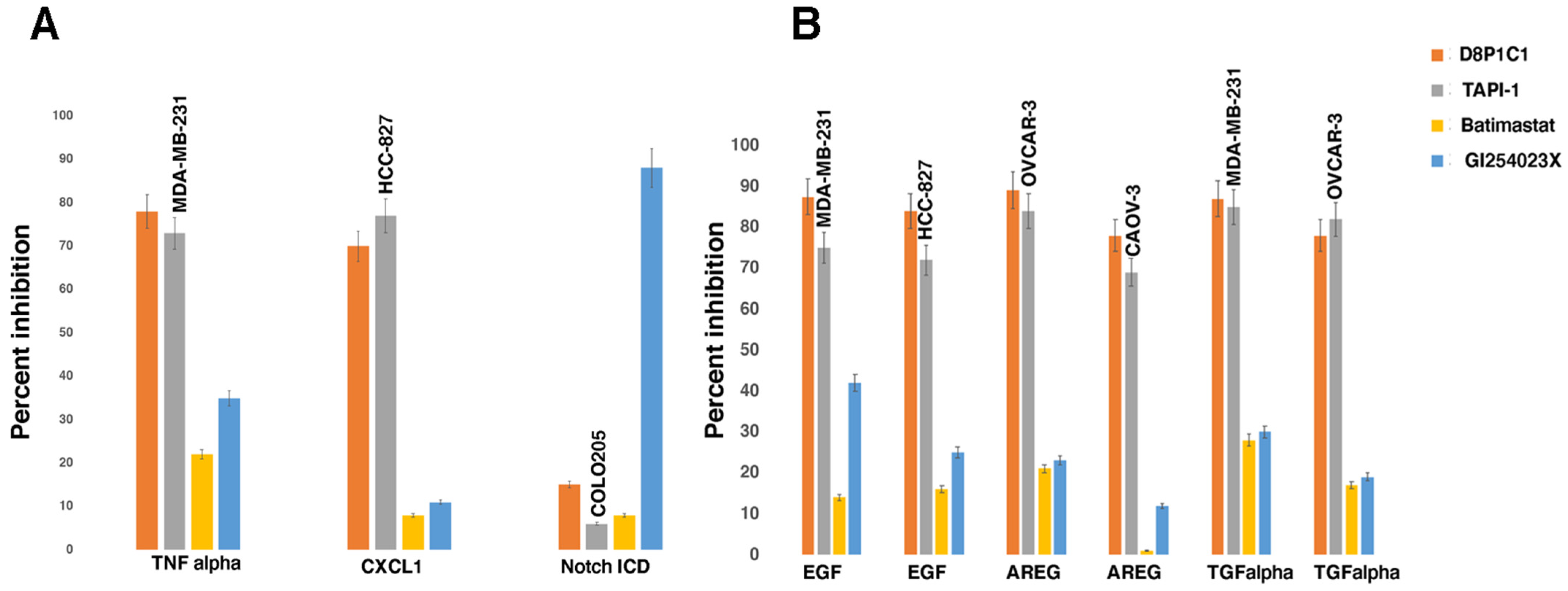
2.2. The D8P1C1 mAb Blocks EGFR Ligand Shedding from Cancer Cells with High Efficiency, While Its Effect on the Cleavage of Other ADAM17 Substrates Varies
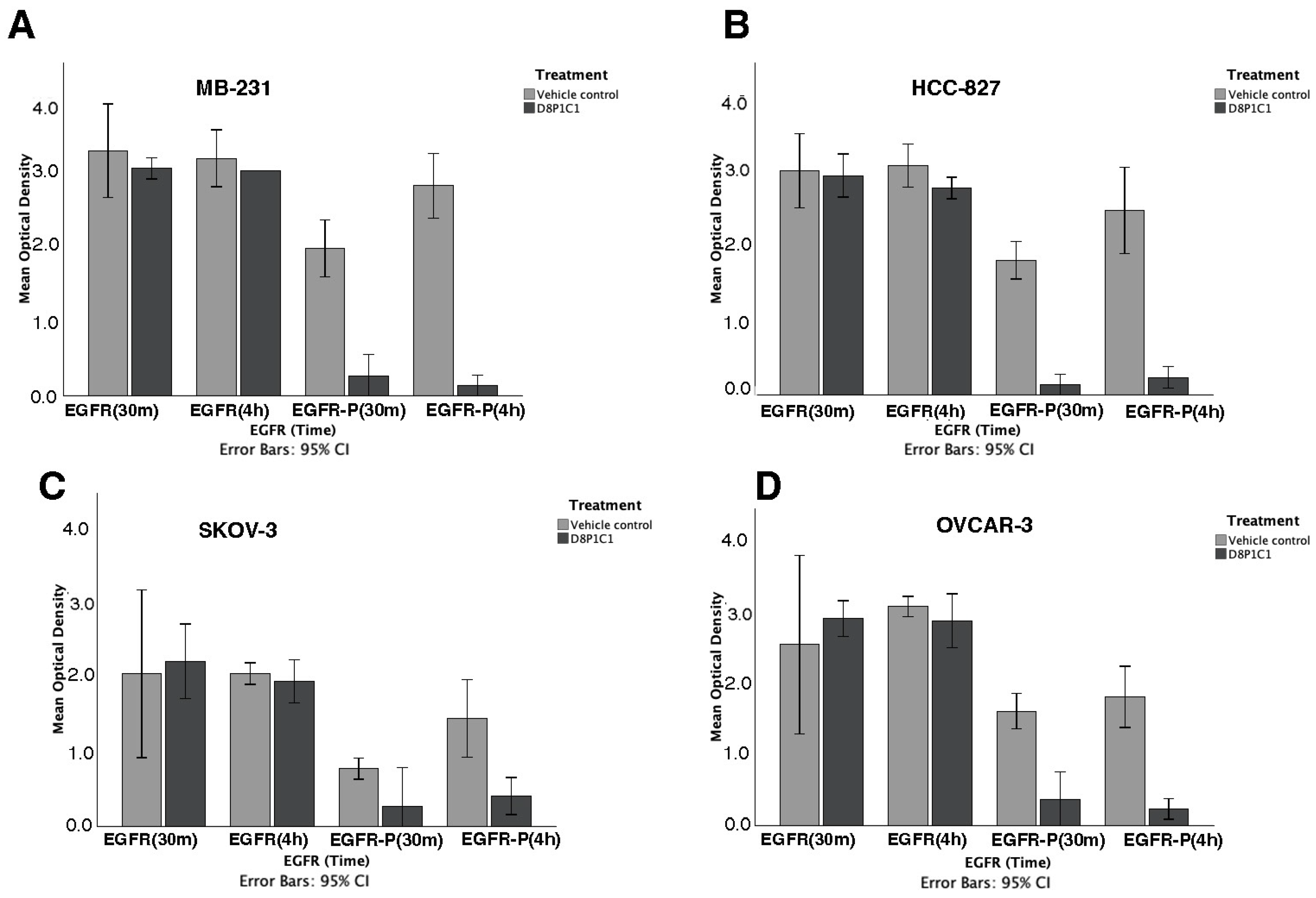
2.3. D8P1C1 Inhibits EGFR Phosphorylation in MDA-MB-231, HCC827, OVCAR-3, and SKOV-3 Cells
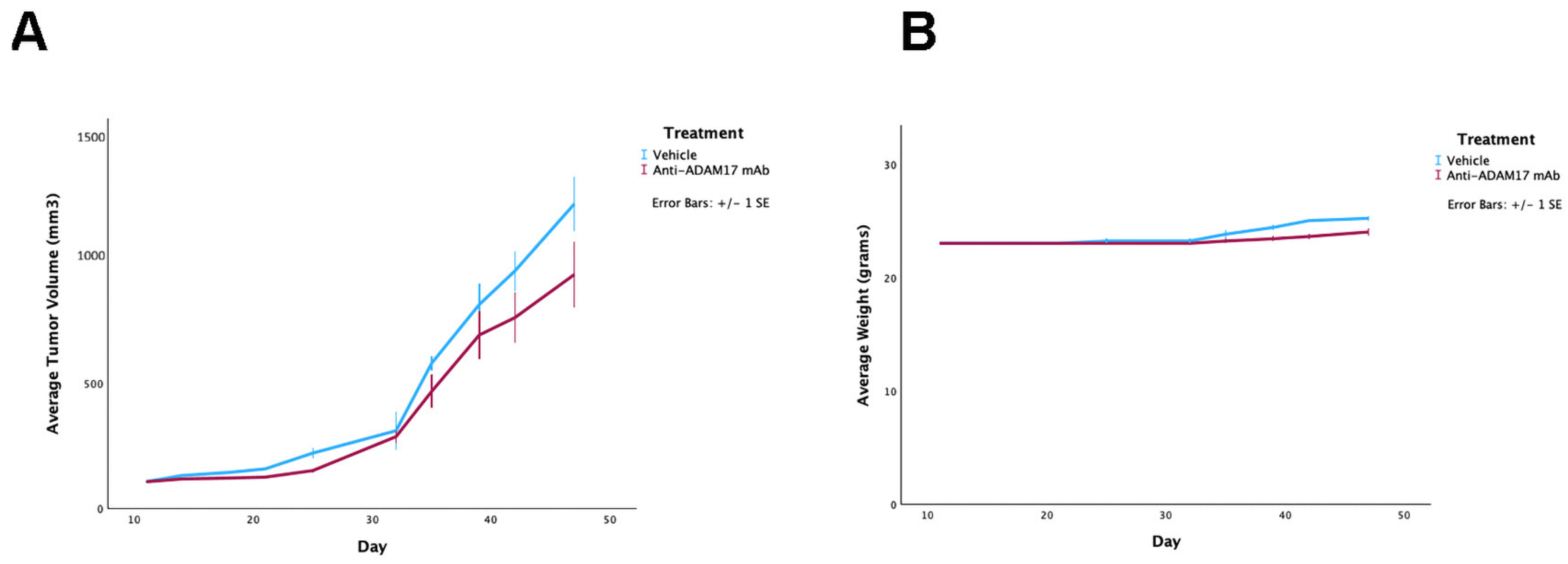
2.4. Xenograft Assay to Estimate the Anti-Tumor Potential of D8P1C1 in OVCAR-3 HGSOC Cells
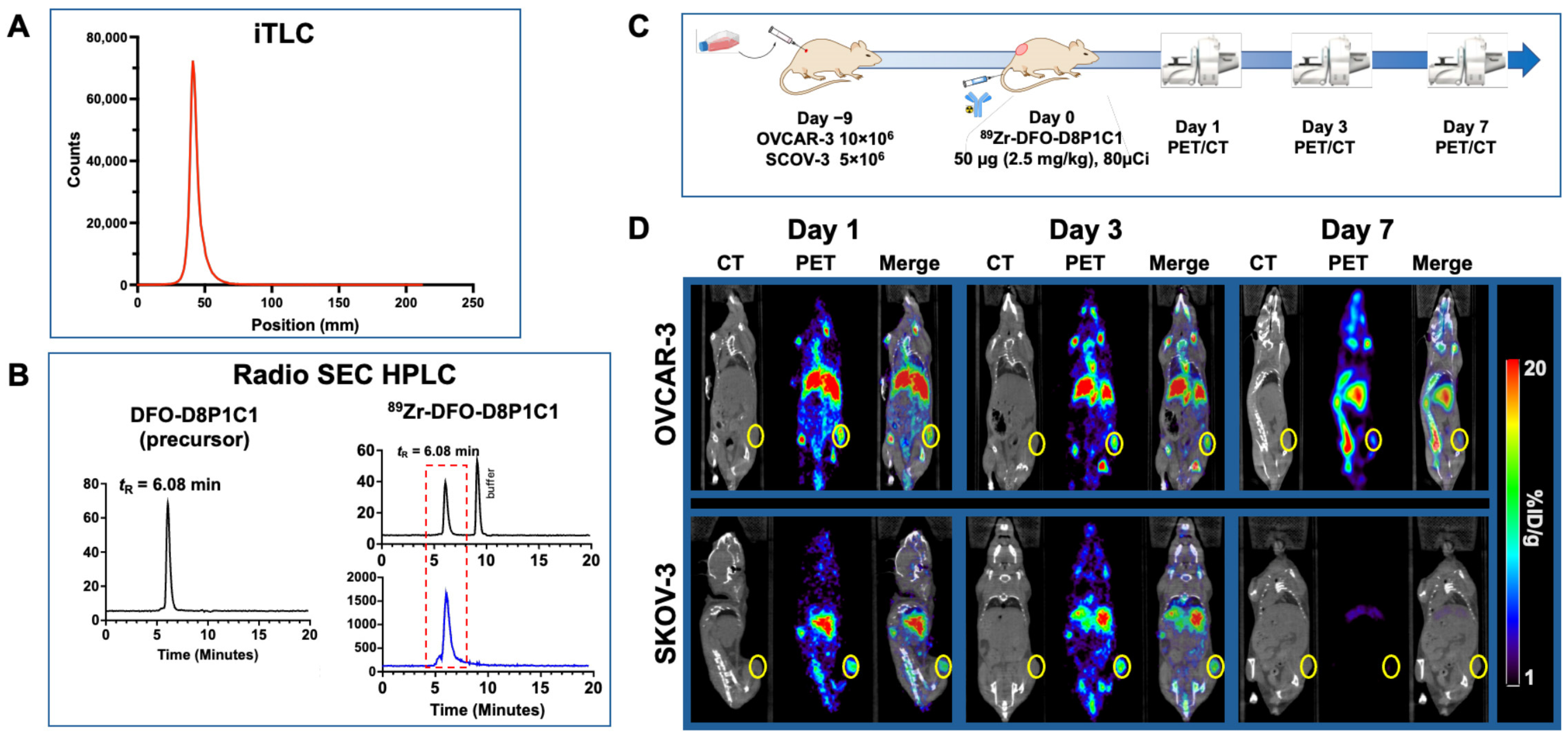
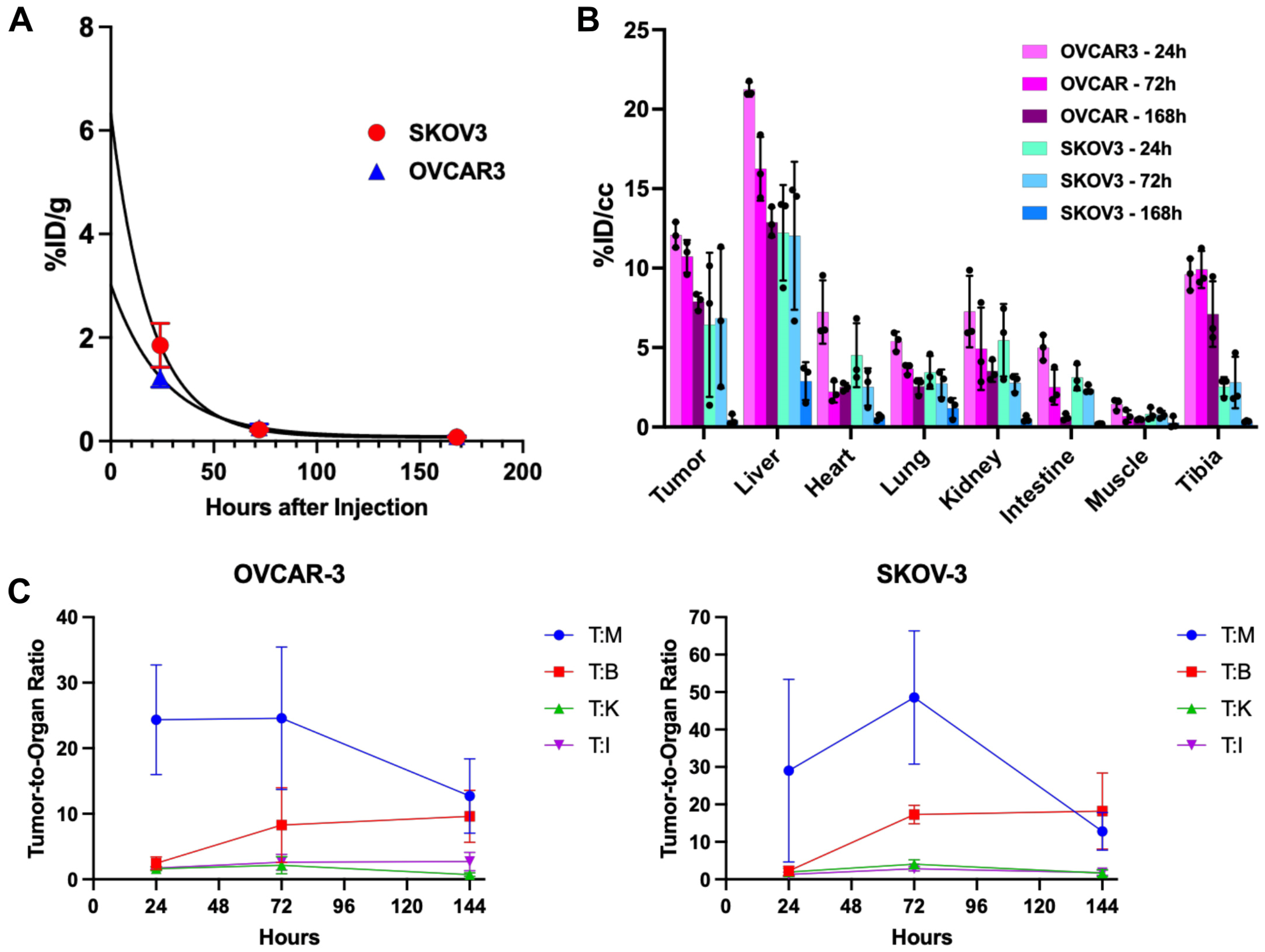
2.5. Radiolabeling, PET/CT Imaging and Biodistribution Studies to Investigate the In Vivo Pharmacokinetics and Distribution of D8P1C1 In Vivo
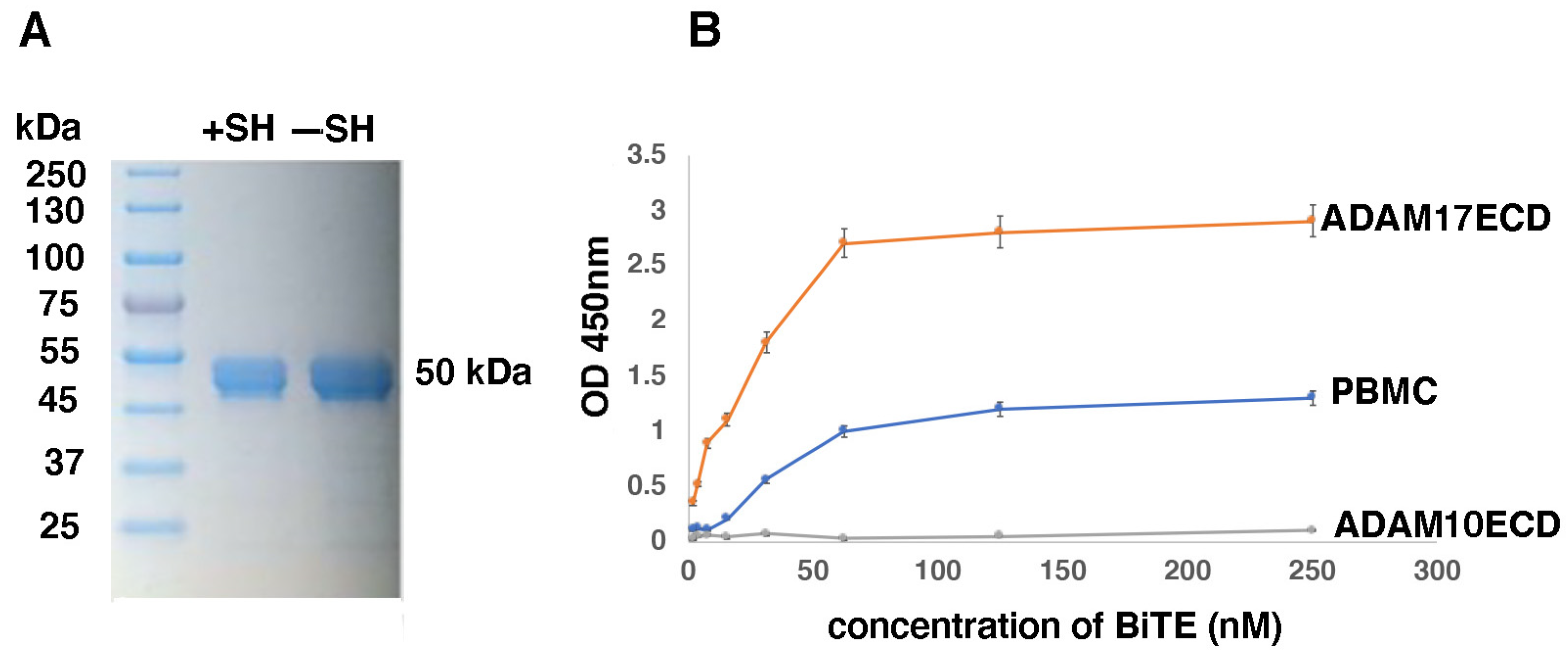
2.6. Generation and Characterization of D8P1C1 BiTE
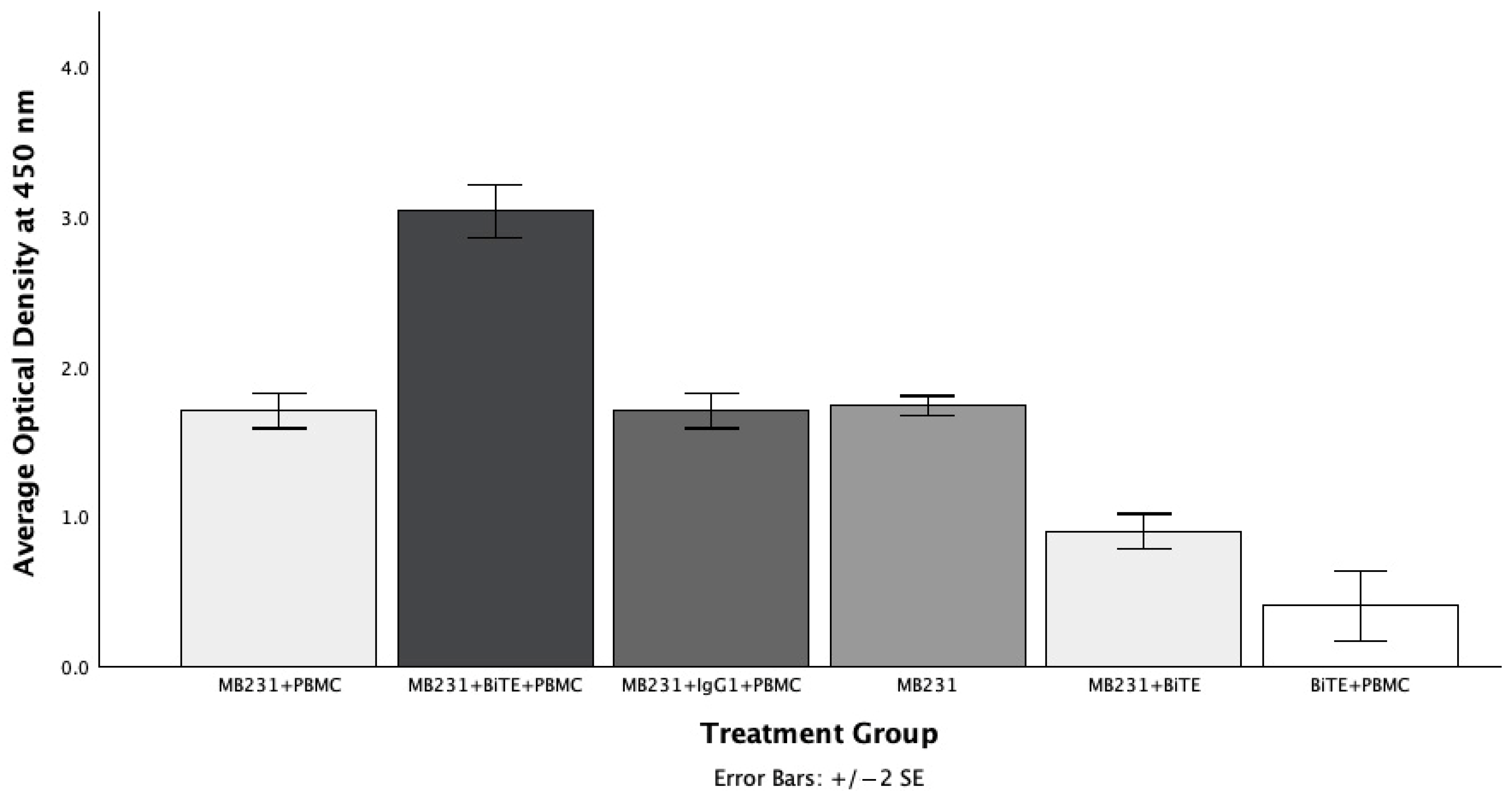
2.7. Activation of PBMC (T Cells) by the D8P1C1 BiTE
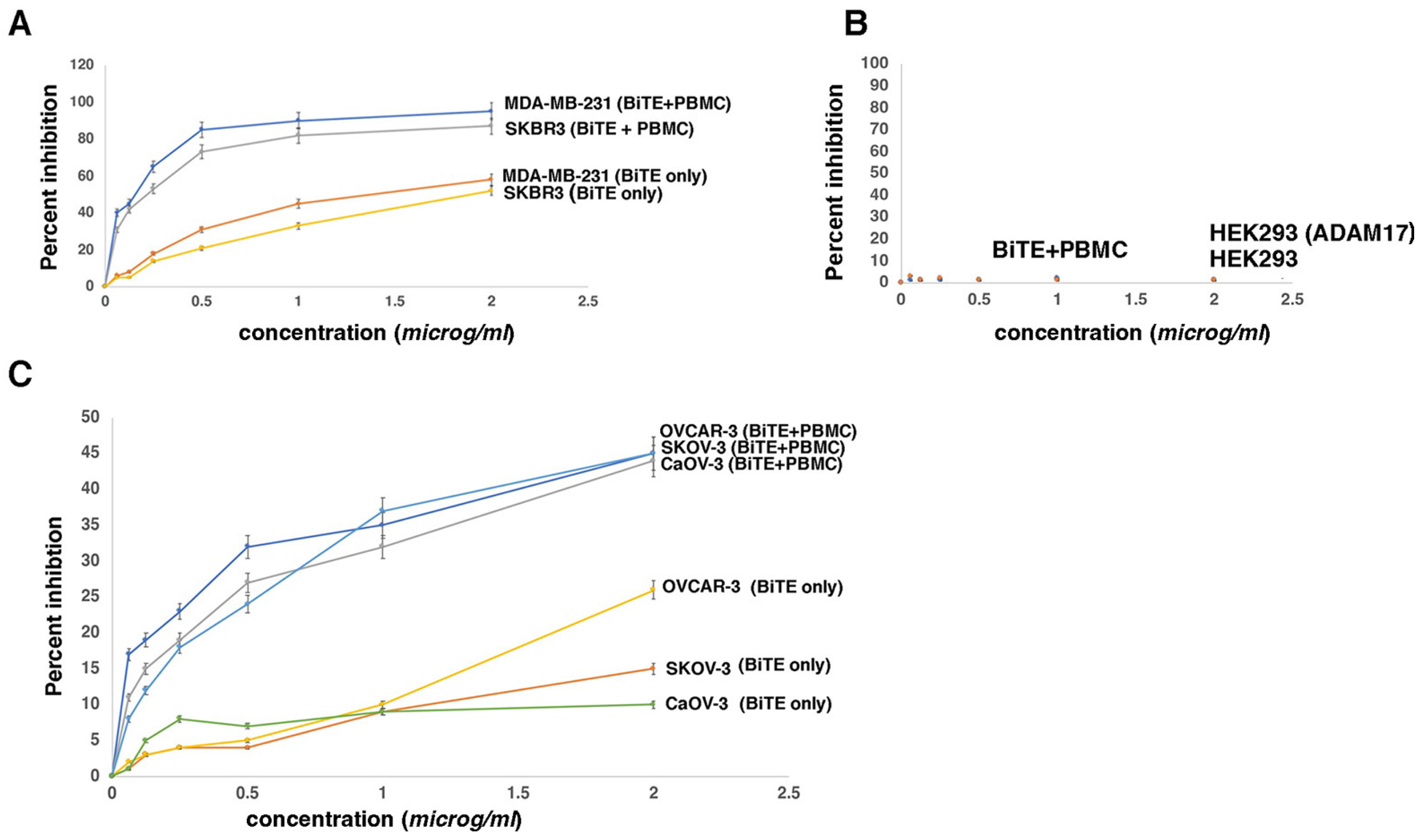
2.8. Cell Viability Assays in the Presence of PBMC Document That the D8P1C1-BiTE Is More Potent in Inhibiting Breast and Ovarian Cancer Cell Lines than the Parental D8P1C1 mAb
3. Discussion
4. Materials and Methods
4.1. Cell Lines
4.2. Sandwich ELISA to Quantitate Endogenous Levels of Total EGFR and EGFR-P (Phosphorylated EGFR) in Lysates of MDA-MB-231, HCC-827, OVCAR-3 and SKOV-3 Cells, Untreated and Treated with D8P1C1
4.3. Sandwich ELISA to Quantitate the Cleavage of EGFR Ligands and Other ADAM17 Substrates from Cancer Cell Lines Untreated and Treated with D8P1C1
4.4. In Vivo Anti-Tumor Efficacy Studies
4.5. Radiochemistry, PET Imaging and Biodistribution
4.6. Generation of D8P1C1-BiTE by Fusing the Single Chain Variable Fragment (scFv) of D8P1C1 to the scFv of an Anti-CD3 mAb
4.7. Statistical Analysis
Supplementary Materials
Author Contributions
Funding
Institutional Review Board Statement
Informed Consent Statement
Data Availability Statement
Acknowledgments
Conflicts of Interest
Abbreviations
References
- Normano, N.; de Luca, A.; Bianco, C.; Strizzi, L.; Mancino, M.; Maiello, M.R.; Carotenuto, A.; De Feo, G.; Caponigro, F.; Salomon, D.S. Epidermal growth factor receptor (EGFR) signaling in cancer. Gene 2006, 366, 2–16. [Google Scholar] [CrossRef]
- Santiago-Josefat, B.; Esselens, C.; Bech-Serra, J.J.; Arribas, J. Post-transcriptional Up-regulation of ADAM17 upon Epidermal Growth Factor Receptor Activation and in Breast Tumors. J. Biol. Chem. 2007, 282, 8325–8331. [Google Scholar] [CrossRef]
- Gnosa, S.P.; Blasco, L.P.; Piotrowski, K.B.; Freiberg, M.L.; Savickas, S.; Madsen, D.H.; auf dem Keller, U.; Kronqvist, P.; Kveiborg, M. ADAM17-mediated EGFR ligand shedding directs macrophage-promoted cancer cell invasion. J. Clin. Investig. 2022, 7, e155296. [Google Scholar] [CrossRef] [PubMed]
- Baumgart, A.; Seidl, S.; Vlachou, P.; Michel, L.; Mitova, N.; Schatz, N.; Specht, K.; Koch, I.; Schuster, T.; Grundler, R.; et al. ADAM17 regulates epidermal growth factor receptor expression through the activation of Notch1 in non-small cell lung cancer. Cancer Res. 2010, 70, 5368–5378. [Google Scholar] [CrossRef] [PubMed]
- Murphy, G. The ADAMS: Signalling scissors in the tumour microenvironment. Nat. Rev. Cancer 2008, 8, 929–941. [Google Scholar] [CrossRef]
- McGowan, P.M.; Mullooly, M.; Caiazza, F.; Sukor, S.; Madden, S.F.; Maguire, A.A.; Pierce, A.; McDermott, E.W.; Crown, J.; O’Donovan, N.; et al. ADAM-17: A novel therapeutic target for triple negative breast cancer. Ann. Oncol. 2013, 24, 362–369, Erratum in Ann. Oncol. 2013, 24, 2199. [Google Scholar] [CrossRef]
- Rogmans, C.; Kuhlmann, J.D.; Hugendieck, G.; Link, T.; Arnold, N.; Weimer, J.P.; Flörkemeier, I.; Rambow, A.C.; Lieb, W.; Maass, N.; et al. ADAM17—A Potential Blood-Based Biomarker for Detection of Early-Stage Ovarian Cancer. Cancers 2021, 13, 5563. [Google Scholar] [CrossRef] [PubMed]
- Arribas, J.; Esselens, C. ADAM17 as a therapeutic target in multiple diseases. Curr. Pharm. Des. 2009, 15, 2319–2335. [Google Scholar] [CrossRef]
- Seals, F.; Courtneidge, S.A. The ADAMs family of metalloproteases: Multidomain proteins with multiple functions. Genes. Dev. 2003, 17, 7–30. [Google Scholar] [CrossRef]
- Janes, P.W.; Saha, N.; Barton, W.A.; Kolev, M.V.; Wimmer-Kleikamp, S.H.; Nievergall, E.; Blobel, C.P.; Himanen, J.P.; Lackmann, M.; Nikolov, D.B. Adam meets Eph: An ADAM substrate recognition module acts as a molecular switch for ephrin cleavage in trans. Cell 2005, 123, 291–304. [Google Scholar] [CrossRef]
- Saha, N.; Robev, D.; Himanen, J.P.; Nikolov, D.B. ADAM proteases: Emerging role and targeting of the non-catalytic domains. Cancer Lett. 2019, 467, 50–57. [Google Scholar] [CrossRef] [PubMed]
- Atapattu, L.; Saha, N.; Chheang, C.; Eissman, M.F.; Xu, K.; Vail, M.E.; Hi, L.; Llerena, C.; Liu, Z.; Horvay, K.; et al. An activated form of ADAM10 is tumor selective and regulates cancer stem-like cells and tumor growth. J. Exp. Med. 2016, 213, 1741–1757. [Google Scholar] [CrossRef]
- Saha, N.; Baek, D.S.; Mendoza, R.P.; Robev, D.; Xu, Y.; Goldgur, Y.; De La Cruz, M.J.; Stanchina, E.; Janes, P.W.; Xu, K.; et al. Fully human monoclonal antibody targeting activated ADAM10 on colorectal cancer cells. Biomed. Pharmacother. 2023, 161, 114494. [Google Scholar] [CrossRef]
- Turk, B. Targeting proteases: Successes, failures, and future prospects. Nat. Rev. Drug Discov. 2006, 5, 785–799. [Google Scholar] [CrossRef]
- Saha, N.; Xu, K.; Zhu, Z.; Robev, D.; Kalidindi, T.; Xu, Y.; Himanen, J.; de Stanchina, E.; Pillarsetty, N.V.K.; Dimitrov, D.S.; et al. Inhibitory monoclonal antibody targeting ADAM17 expressed on cancer cells. Transl. Oncol. 2022, 15, 101265. [Google Scholar] [CrossRef]
- Baeuerle, P.A.; Reinhardt, C. Bispecific T-cell engaging antibodies for cancer therapy. Cancer Res. 2009, 69, 4941–4944. [Google Scholar] [CrossRef]
- Zagami, P.; Carey, L.A. Triple negative breast cancer: Pitfalls and progress. NPJ Breast Cancer 2022, 8, 95. [Google Scholar] [CrossRef]
- Chandra, A.; Pius, C.; Nabeel, M.; Nair, M.; Vishwanatha, J.K.; Ahmad, S.; Basha, R. Ovarian cancer: Current status and strategies for improving therapeutic outcomes. Cancer Med. 2019, 8, 7018–7031. [Google Scholar] [CrossRef] [PubMed]
- Rios-Doria, D.; Sabol, J.; Chesebrough, D.; Stewart, L.; Xu, R.; Tammali, L.; Cheng, Q.; Du, K.; Schifferli, R.; Rothstein, C.C.; et al. Monoclonal Antibody to ADAM17 Inhibits Tumor Growth by Inhibiting EGFR and Non-EGFR-Mediated Pathways. Mol. Cancer Ther. 2015, 14, 1637–1649. [Google Scholar] [CrossRef] [PubMed]
- Gaba, S.; Sahu, M.; Chauhan, N.; Jain, U. Transforming growth factor alpha: Key insights into physiological role, cancer therapeutics, and biomarker potential. Int. J. Biol. Macromol. 2025, 310, 143212. [Google Scholar] [CrossRef]
- Schultz, G.; Rotatori, D.S.; Clark, W. EGF and TGF-α in wound healing and repair. J. Cell Biochem. 1991, 45, 346–352. [Google Scholar] [CrossRef] [PubMed]
- Giricz, O.; Calvo, V.; Peterson, E.A.; Abouzeid, C.M.; Kenny, P.A. TACE-dependent TGF-alpha shedding drives triple-negative breast cancer cell invasion. Int. J. Cancer 2013, 133, 2587–2595. [Google Scholar]
- Price, J.T.; Tiganis, T.; Agarwal, A.; Djakiew, D.; Thompsom, E.W. Epidermal Growth Factor Promotes MDA-MB-231 Breast Cancer Cell Migration through a Phosphatidylinositol 3′-Kinase and Phospholipase C-dependent Mechanism. Cancer Res. 1999, 59, 5475–5478. [Google Scholar] [PubMed]
- Zhou, L.; Leung, B.S. Growth regulation of ovarian cancer cells by epidermal growth factor and transforming growth factors α and β1. Biochim. Biophys. Acta 1992, 1180, 130–136. [Google Scholar] [CrossRef]
- Ebott, J.; McAdams, J.; Kim, C.; Jansen, M.; Woodman, P.D.; La Cruz, J.; Schrol, C.; Ribeiro, N.J. Enhanced amphiregulin exposure promotes modulation of the high grade serous ovarian cancer tumor immune microenvironment. Front. Pharmacol. 2024, 15, 1375421. [Google Scholar] [CrossRef]
- Narasimhan, H.; Ferraro, F.; Bleilevens, A.; Weiskirchen, R.; Stickeler, E.; Maurer, J. Tumor Necrosis Factor-α (TNFα) Stimulate Triple-Negative Breast Cancer Stem Cells to Promote Intratumoral Invasion and Neovasculogenesis in the Liver of a Xenograft Model. Biol. 2022, 11, 1481. [Google Scholar] [CrossRef]
- Zhao, C.; Gao, Y.; Ding, P.; Wu, T.; Ji, G. The role of CXCL family members in different diseases. Cell Death Discov. 2023, 9, 212. [Google Scholar] [CrossRef]
- Van Tetering, G.; van Diest, P.; Verlaan, I.; van der Wall, E.; Kopan, R.; Vooijs, M. Metalloprotease ADAM10 Is Required for Notch1 Site 2 Cleavage. J. Biol. Chem. 2009, 284, 31018–31027. [Google Scholar] [CrossRef]
- Lee, C.S.M.; Kaur, A.; Montague, S.J.; Hicks, S.M.; Andrews, R.K.; Gardiner, E.E. Tissue inhibitors of metalloproteinases (TIMPs) modulate platelet ADAM10 activity. Platelets 2023, 34, 2288213. [Google Scholar] [CrossRef] [PubMed]
- Oikawa, H.; Maesawa, C.; Tatemichi, Y.; Nishinari, Y.; Nishiya, M.; Mizugai, H.; Ikeda, A.; Oikawa, K.; Takikawa, Y.; Masuda, T. A disintegrin and metalloproteinase 17 (ADAM17) mediates epidermal growth factor receptor transactivation by angiotensin II on hepatic stellate cells. Life Sci. 2014, 97, 137–144. [Google Scholar] [CrossRef]
- Pallarès, V.; Calay, D.; Cedó, L.; Castell-Auví, A.; Raes, M.; Pinent, M.; Ardévol, A.; Arola, L.; Blay, M. Enhanced anti-inflammatory effect of resveratrol and EPA in treated endotoxin-activated RAW 264.7 macrophages. Br. J. Nutr. 2012, 108, 1562–1573. [Google Scholar] [CrossRef]
- Tuna, M.; Ju, Z.; Yoshihara, K.; Amos, C.I.; Tanyi, J.L.; Mills, G.B. Clinical relevance of TP53 hotspot mutations in high-grade serous ovarian cancers. Br. J. Cancer 2020, 122, 405–412. [Google Scholar] [CrossRef]
- Chen, Y.; Clark, S.; Wong, T.; Chen, Y.; Chen, Y.; Dennis, M.S.; Luis, E.; Zhong, F.; Bheddah, S.; Koeppen, H.; et al. Armed antibodies targeting the mucin repeats of the ovarian cancer antigen, MUC16, are highly efficacious in animal tumor models. Cancer Res. 2007, 67, 4924–4932. [Google Scholar] [CrossRef]
- Dai, F.; Zhang, Y.; Zhu, X.; Shan, N.; Chen, Y. The anti-chemoresistant effect and mechanism of MUC1 aptamer-miR-29b chimera in ovarian cancer. Gynecol. Oncol. 2013, 131, 451–459. [Google Scholar] [CrossRef] [PubMed]
- Yoon, J.K.; Park, B.N.; Ryu, E.K.; An, Y.S.; Lee, S.J. Current Perspectives on 89Zr-PET Imaging. Int. J. Mol. Sci. 2020, 21, 4309. [Google Scholar] [CrossRef]
- Saha, N.; Lee, S.G.; Brockmann, E.C.; de la Cruz, M.J.; Goldgur, Y.; Mendoza, R.P.; Stanchina, E.; Love, T.M.; Marvald, J.; Xu, Y.; et al. Fully human monoclonal antibody targeting the cysteine-rich substrate-interacting region of ADAM17 on cancer cells. Biomed. Pharmacother. 2024, 180, 117605. [Google Scholar] [CrossRef]
- Cioffi, M.; Dorado, J.; Baeuerle, P.A.; Heeschen, C. EpCAM/CD3-bispecific T-cell engaging antibody MT110 eliminates primary human pancreatic cancer stem cells. Clin. Cancer Res. 2012, 18, 465–474. [Google Scholar] [CrossRef] [PubMed]
- Bargou, R.; Leo, E.; Zugmaier, G.; Klinger, M.; Goebeler, M.; Knop, S.; Noppeney, R.; Viardot, A.; Hess, G.; Schuler, M.; et al. Tumor regression in cancer patients by very low doses of a T cell-engaging antibody. Science 2008, 321, 974–977. [Google Scholar] [CrossRef] [PubMed]
- Horn, L.A.; Ciavattone, N.G.; Atkinson, R.; Woldergerima, N.; Wolf, J.; Clements, V.K.; Sinha, P.; Poudel, M.; Ostrand-Rosenberg, S. CD3xPDL1 bi-specific T cell engager (BiTE) simultaneously activates T cells and NKT cells, kills PDL1+ tumor cells, and extends the survival of tumor-bearing humanized mice. Oncotarget 2017, 8, 57964–57980. [Google Scholar] [CrossRef]
- Kjer-Nielsen, L.; Dunstone, M.A.; Kostenko, L.; Ely, L.K.; Beddoe, T.; Mifsud, N.A.; Purcell, A.W.; Brooks, A.G.; McCluskey, J.; Rossjohn, J. Crystal structure of the human T cell receptor CD3εγ heterodimer complexed to the therapeutic mAb OKT3. Proc. Natl. Acad. Sci. USA 2004, 101, 7675–7680. [Google Scholar] [CrossRef]
- Ebsen, H.; Lettau, M.; Kabelitz, D.; Janssen, O. Subcellular localization and activation of ADAM proteases in the context of FasL shedding in T lymphocytes. Mol. Immunol. 2015, 65, 416–428. [Google Scholar] [CrossRef]
- Becker-Pauly, C.; Christoph Rose-John, S. TNFα cleavage beyond TACE/ADAM17: Matrix metalloproteinase 13 is a potential therapeutic target in sepsis and colitis. EMBO Mol. Med. 2013, 5, 970–972. [Google Scholar] [CrossRef] [PubMed]
- Link, M.A.; Lücke, K.; Schmid, J.; Schumacher, V.; Eden, T.; Rose-John, S.; Mittrücker, H.W. The role of ADAM17 in the T-cell response against bacterial pathogens. PLoS ONE 2017, 12, e0184320. [Google Scholar] [CrossRef]
- O’Brien, J.; Wilson, I.; Orton, T.; Pognan, F. Investigation of the Alamar Blue (resazurin) fluorescent dye for the assessment of mammalian cytotoxicity. Eur. J. Biochem. 2000, 267, 5421–5426. [Google Scholar] [CrossRef] [PubMed]
- Engelbertsa, P.J.; Hiemstraa, I.; Jonga, B.; Schuurhuisa, D.H.; Meestersa, J.; Hernandeza, I.B.; Oostindiea Neijssena, S.C.; vandenBrinka, J.; JeanHorbacha, E.N.; Verploegena, G.; et al. DuoBody-CD3xCD20 induces potent T-cell-mediated killing of malignant B cells in preclinical models and provides opportunities for subcutaneous dosing. EBioMedicine 2020, 52, 102625. [Google Scholar] [CrossRef]
- Smits, N.C.; Sentman, C.L. Bispecific T-Cell Engagers (BiTEs) as Treatment of B-Cell Lymphoma. J. Clin. Oncol. 2016, 34, 1131–1133. [Google Scholar] [CrossRef]
- Lutterbuese, R.; Raum, T.; Kischel, R.; Hoffmann, P.; Mangold, S.; Rattel, B.; Friedrich, M.; Thomas, O.; Lorenczewski, G.; Rau, D.; et al. T cell-engaging BiTE antibodies specific for EGFR potently eliminate KRAS- and BRAF-mutated colorectal cancer cells. Proc. Natl. Acad. Sci. USA 2010, 107, 12605–12610. [Google Scholar] [CrossRef]
- Ramalingam, P. Morphologic, Immunophenotypic, and Molecular Features of Epithelial Ovarian Cancer. Oncology 2016, 30, 166–176. [Google Scholar]
- Kim, S.; Han, Y.; Kim, S.I.; Kim, H.S.; Song, Y.S. Tumor evolution and chemoresistance in ovarian cancer. NPJ Precis. Oncol. 2018, 2, 20. [Google Scholar] [CrossRef] [PubMed]
- Wong-Brown, M.W.; van der Westhuizen, A.; Bowden, N.A. Targeting DNA repair in ovarian cancer treatment resistance. Clin. Oncol. 2020, 32, 518–526. [Google Scholar] [CrossRef]
- Hugendieck, G.; Lettau, M.; Andreas, S.; Neumann, S.; Reinhardt, N.; Arnold, P.; Theilig, F.; Bastian, L.; Rogmans, C.; Weimer, J.P.; et al. Chemotherapy-induced release of ADAM17 bearing EV as a potential resistance mechanism in ovarian cancer. J. Extracell. Vesicles 2023, 12, e12338. [Google Scholar] [CrossRef]
- Hedemann, N.; Herz, A.; Schiepanski, J.H.; Dittrich, J.; Sebens, S.; Dempfle, A.; Feuerborn, J.; Rogmans, C.; Tribian, N.; Flörkemeier, I.; et al. ADAM17 Inhibition Increases the Impact of Cisplatin Treatment in Ovarian Cancer Spheroids. Cancers 2021, 13, 2039. [Google Scholar] [CrossRef]
- Das, S.; Batra, S.K. Understanding unique attributes of MUC16 (CA125): Potential implications in targeted therapy. Cancer Res. 2015, 75, 5337–5353. [Google Scholar] [CrossRef]
- Neuber, T.; Frese, K.; Jaehrling, J.; Jager, S.; Daubert, D.; Felderer, K.; Linnemann, M.; Höhne, A.; Kaden, S.; Kölln, J.; et al. Characterization and screening of IgG binding to the neonatal Fc receptor. mAbs 2014, 6, 928–942. [Google Scholar] [CrossRef]
- Zurrida, S.; Veronesi, U. Milestones in Breast Cancer Treatment. Breast J. 2015, 21, 3–12. [Google Scholar] [CrossRef]
- O’Donovan, N.; Crown, J. EGFR and HER-2 antagonists in breast cancer. Anticancer Res. 2007, 27, 1285–1294. [Google Scholar]
- Tokunaga, E.; Oki, E.; Nishida, K.; Koga, T.; Egashira, A.; Morita, M.; Kakeji, Y.; Maehara, Y. Trastuzumab and breast cancer: Developments and current status. Int. J. Clin. Oncol. 2006, 11, 199–208. [Google Scholar] [CrossRef] [PubMed]
- Modi, S.; D’Andrea, G.; Norton, L.; Yao, T.J.; Caravelli, J.; Rosen, P.P.; Hudis, C.; Seidman, A.D. A Phase I Study of Cetuximab/Paclitaxel in Patients with Advanced-Stage Breast Cancer. Clin. Breast Cancer 2006, 7, 270–277. [Google Scholar] [CrossRef] [PubMed]
- Carey, L.A.; Rugo, H.S.; Marcom, P.K.; Mayer, E.L.; Esteva, F.J.; Ma, C.X.; Liu, M.C.; Storniolo, A.M.; Rimawi, M.F.; Forero-Torres, A.; et al. TBCRC 001: Randomized Phase II Study of Cetuximab in Combination with Carboplatin in Stage IV Triple-Negative Breast Cancer. J. Clin. Oncol. 2012, 30, 2615–2623. [Google Scholar] [CrossRef]
- Fan, G.; Wang, Z.; Hao, M.; Li, J. Bispecific antibodies and their applications. J. Hematol. Oncol. 2015, 8, 130. [Google Scholar] [CrossRef] [PubMed]
- Yamamoto, K.; Trad, A.; Baumgart, L.; Huske, I.; Lorenzen, A.; Chalaris, J.; Grotzinger, T.; Dechow, T.; Scheller, J.; Rose-John, S. A novel bispecific single-chain antibody for ADAM17 and CD3 induces T-cell-mediated lysis of prostate cancer cells. Biochem. J. 2012, 445, 135–144. [Google Scholar] [CrossRef] [PubMed]
- Scott, C.L.; Becker, M.A.; Haluska, P.; Samimi, G. Patient-derived xenograft models to improve targeted therapy in epithelial ovarian cancer treatment. Front. Oncol. 2013, 3, 295. [Google Scholar] [CrossRef]
- Jiang, A.N.; Liu, J.T.; Zhao, K.; Wu, H.; Wang, S.; Yan, K.; Yang, W. Specific Inhibitor of Matrix Metalloproteinase Decreases Tumor Invasiveness After Radiofrequency Ablation in Liver Tumor Animal Model. Front. Oncol. 2020, 10, 561805. [Google Scholar] [CrossRef] [PubMed]
- Van Tetering, G.; Vooijs, M. Proteolytic Cleavage of Notch: “HIT and RUN”. Curr. Mol. Med. 2011, 11, 255–269. [Google Scholar] [CrossRef] [PubMed]
- Vosjan, L.R.; Pderk, G.W.; Visser, M.; Budde, P.; Jurek, G.E.; Keifer, G.A.; Van Dongan, G. Conjugation and radiolabeling of monoclonal antibodies with zirconium-89 for PET imaging using the bifunctional chelate p-isothiocyanatobenzyl-desferrioxamine. Nat. Protocol 2010, 5, 739–743. [Google Scholar] [CrossRef]
- Loening, A.M.; Gambhir, S.S. AMIDE: A Free Software Tool for Multimodality Medical Image Analysis. Mol. Imaging 2003, 2, 131–137. [Google Scholar] [CrossRef]
- Mason, E.O.; Goldgur, Y.; Robev, D.; Freywald, A.; Nikolov, D.B.; Himanen, J.P. Structure of the EphB6 receptor ectodomain. PLoS ONE 2021, 16, e0247335. [Google Scholar] [CrossRef]
- Saha, N.; Chan, E.; Mendoza, R.P.; Romin, Y.; Tipping, M.J.; Nikolov, D.B. Antibodies targeting ADAM17 reverse neurite outgrowth inhibition by myelin-associated inhibitors. Life Sci. Alliance 2025, 8, e202403126. [Google Scholar] [CrossRef]



| Cell Line | OVCAR-3 | SKOV-3 | ||||
|---|---|---|---|---|---|---|
| Time (Hours) | 24 | 72 | 168 | 24 | 72 | 168 |
| Tumor | 12.08 ± 0.80 | 10.74 ± 1.03 | 7.89 ± 0.54 | 6.43 ± 4.54 | 6.85 ± 4.41 | 0.45 ± 0.33 |
| Heart | 7.24 ± 1.99 | 2.20 ± 0.66 | 2.51 ± 0.26 | 4.52 ± 2.01 | 2.52 ± 1.17 | 0.60 ± 0.19 |
| Lung | 5.39 ± 0.61 | 3.67 ± 0.34 | 2.56 ± 0.52 | 3.44 ± 1.04 | 2.74 ± 0.88 | 1.18 ± 0.65 |
| Liver | 21.25 ± 0.45 | 16.25 ± 2.00 | 12.88 ± 0.92 | 12.22 ± 3.01 | 12.04 ± 4.65 | 2.89 ± 1.20 |
| Intestine (S + L) | 5.00 ± 0.81 | 2.51 ± 1.11 | 0.61 ± 0.21 | 3.12 ± 0.81 | 2.37 ± 0.26 | 0.20 ± 0.02 |
| Kidney | 7.27 ± 2.25 | 4.93 ± 2.59 | 3.51 ± 0.66 | 5.46 ± 2.28 | 2.77 ± 0.56 | 0.50 ± 0.20 |
| Muscle | 1.43 ± 0.37 | 0.68 ± 0.38 | 0.48 ± 0.03 | 0.82 ± 0.39 | 0.77 ± 0.25 | 0.26 ± 0.38 |
| Bone/Tibia | 9.61 ± 1.01 | 9.91 ± 1.17 | 7.11 ± 2.07 | 2.53 ± 0.61 | 2.80 ± 1.62 | 0.36 ± 0.04 |
Disclaimer/Publisher’s Note: The statements, opinions and data contained in all publications are solely those of the individual author(s) and contributor(s) and not of MDPI and/or the editor(s). MDPI and/or the editor(s) disclaim responsibility for any injury to people or property resulting from any ideas, methods, instructions or products referred to in the content. |
© 2026 by the authors. Licensee MDPI, Basel, Switzerland. This article is an open access article distributed under the terms and conditions of the Creative Commons Attribution (CC BY) license.
Share and Cite
Saha, N.; Lee, S.G.; de Stanchina, E.; Mendoza, R.P.; Veach, D.R.; Nikolov, D.B. Characterization of the D8P1C1 Anti-ADAM17 Inhibitory Monoclonal Antibody and Generation of Its Bispecific T-Cell Engager Derivative. Int. J. Mol. Sci. 2026, 27, 2936. https://doi.org/10.3390/ijms27072936
Saha N, Lee SG, de Stanchina E, Mendoza RP, Veach DR, Nikolov DB. Characterization of the D8P1C1 Anti-ADAM17 Inhibitory Monoclonal Antibody and Generation of Its Bispecific T-Cell Engager Derivative. International Journal of Molecular Sciences. 2026; 27(7):2936. https://doi.org/10.3390/ijms27072936
Chicago/Turabian StyleSaha, Nayanendu, Sang Gyu Lee, Elisa de Stanchina, Rachelle P. Mendoza, Darren R. Veach, and Dimitar B. Nikolov. 2026. "Characterization of the D8P1C1 Anti-ADAM17 Inhibitory Monoclonal Antibody and Generation of Its Bispecific T-Cell Engager Derivative" International Journal of Molecular Sciences 27, no. 7: 2936. https://doi.org/10.3390/ijms27072936
APA StyleSaha, N., Lee, S. G., de Stanchina, E., Mendoza, R. P., Veach, D. R., & Nikolov, D. B. (2026). Characterization of the D8P1C1 Anti-ADAM17 Inhibitory Monoclonal Antibody and Generation of Its Bispecific T-Cell Engager Derivative. International Journal of Molecular Sciences, 27(7), 2936. https://doi.org/10.3390/ijms27072936