Kappa-Opioid Receptor Antagonism Prolongs the Antidepressant Effects of Ketamine in Adult Mice with Depression-like Behavior Induced by Adolescent Chronic Unpredictable Stress



Abstract
1. Introduction
2. Results
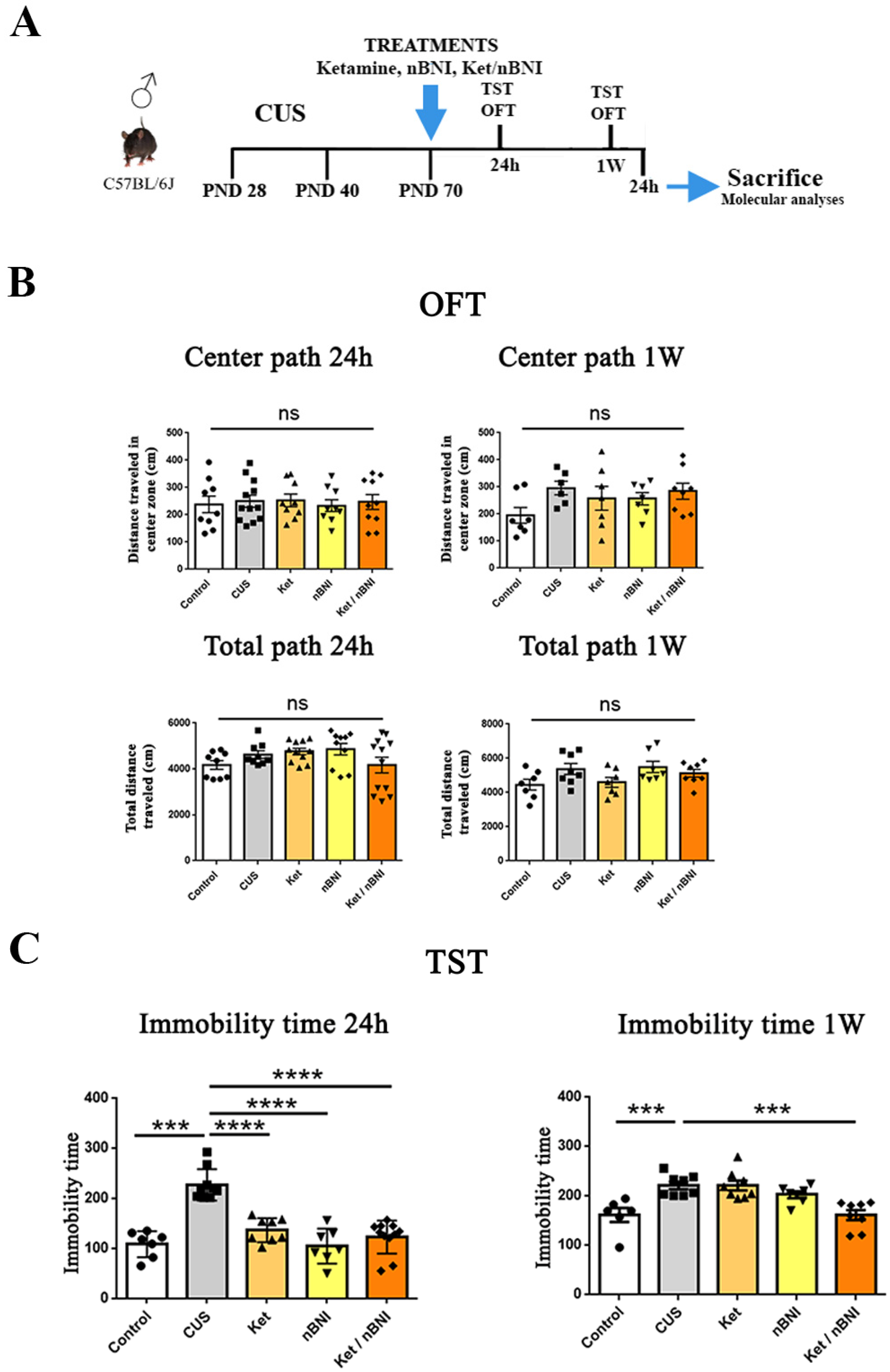
2.1. Kappa Opioid Receptor Inhibition Prolongs the Antidepressant Effects of Ketamine in Mice Exposed to Chronic Unpredictable Stress
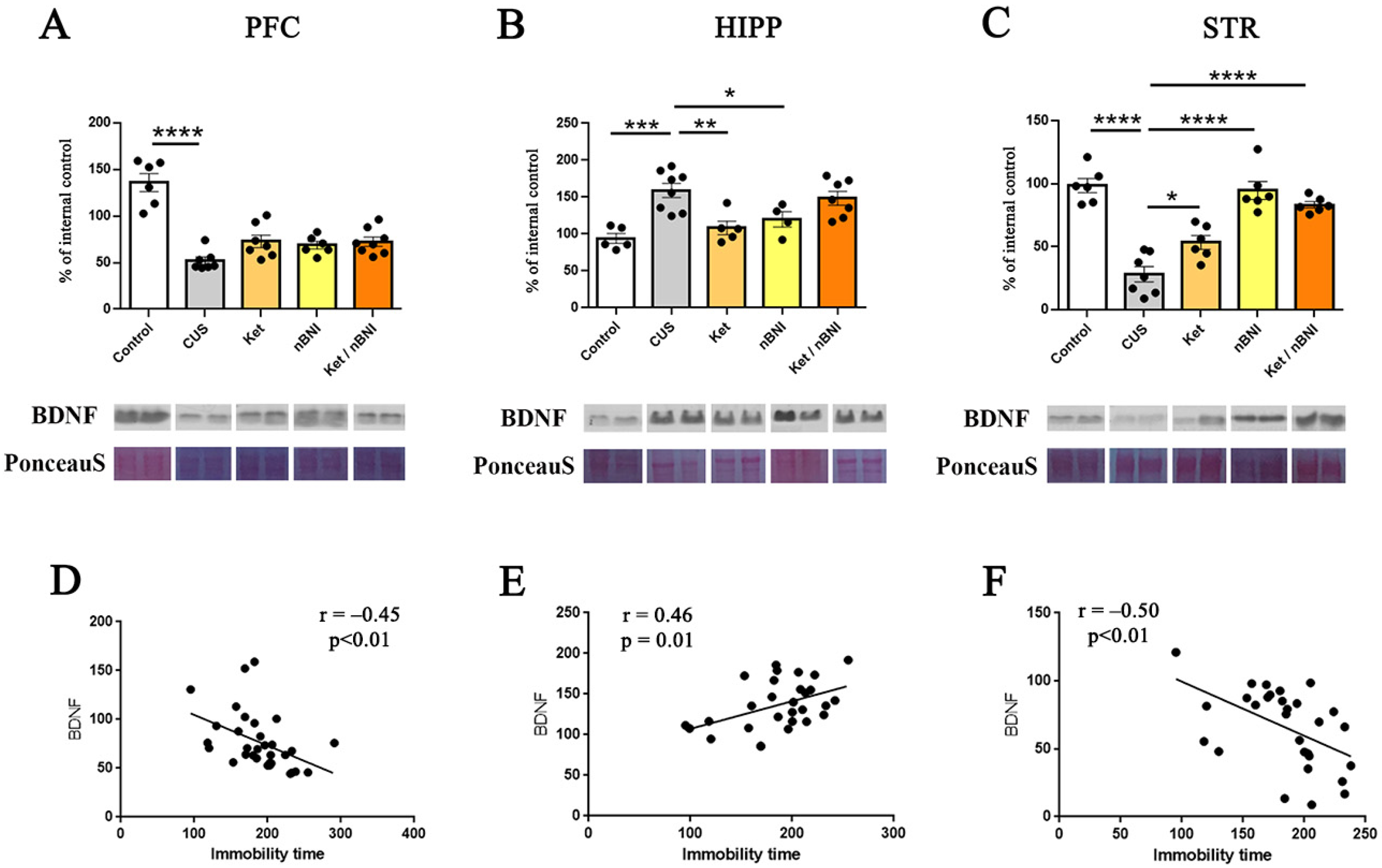
2.2. Molecular Effects Associated with Chronic Unpredictable Stress and Drug Treatments
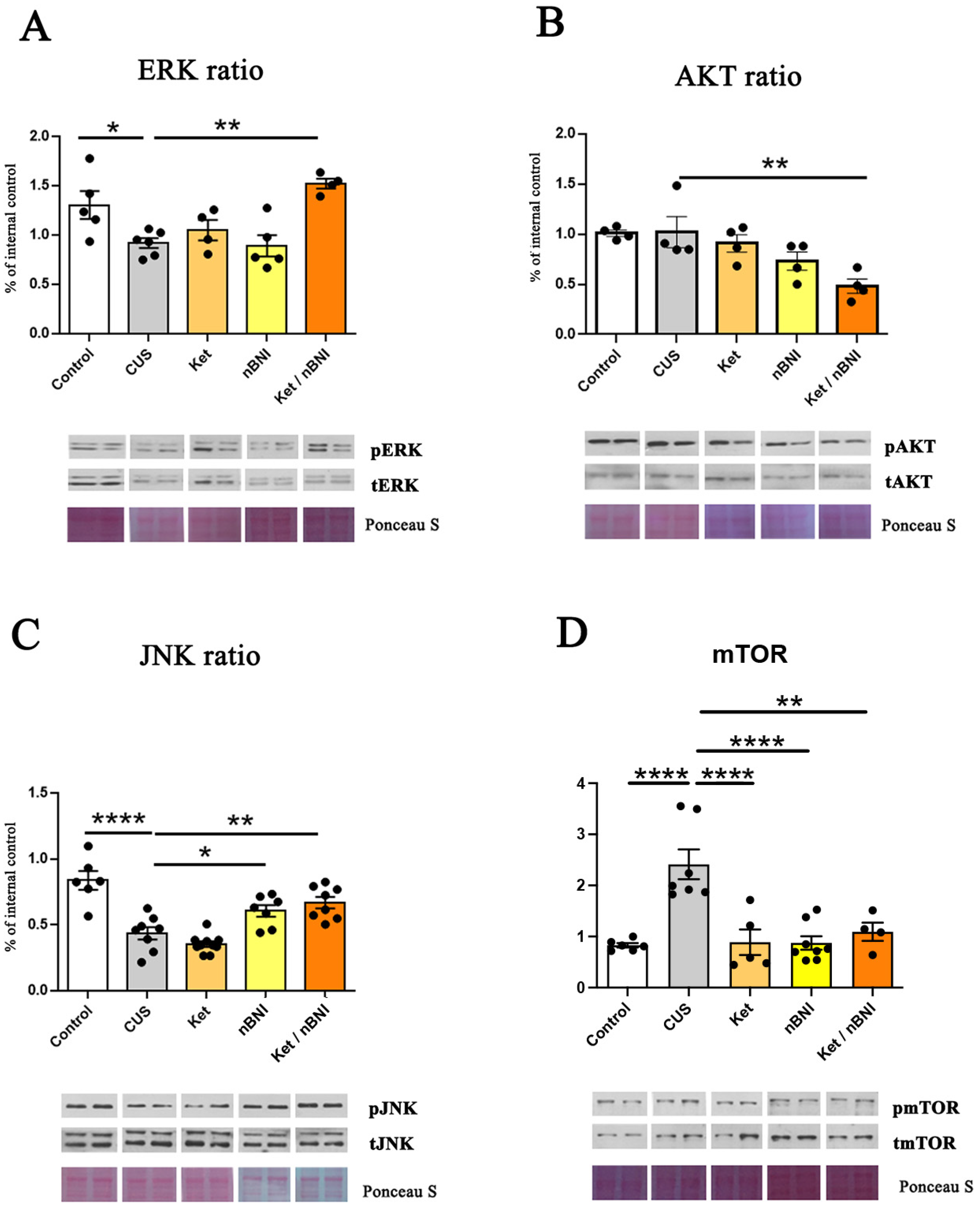
2.2.1. Prefrontal Cortex
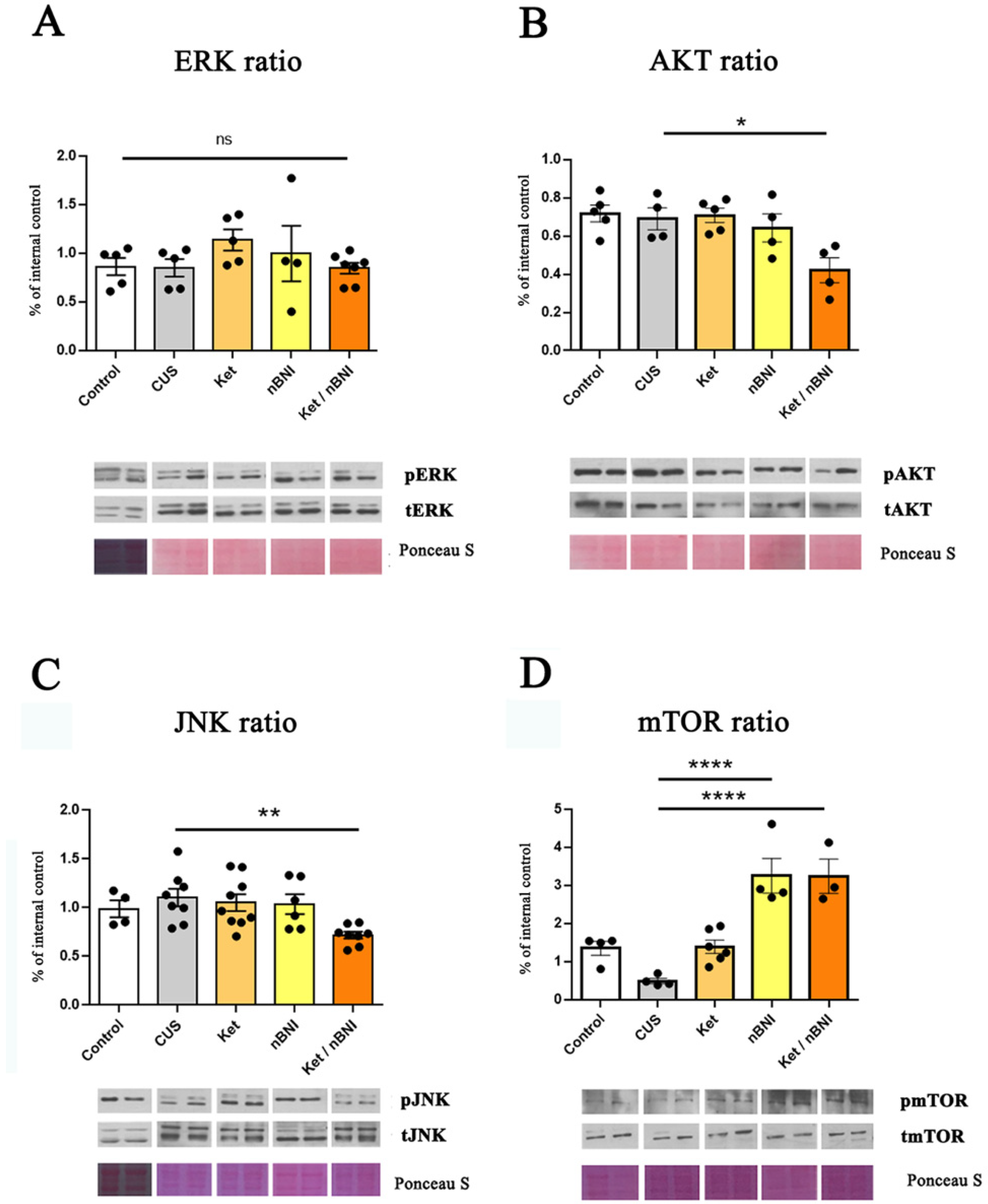
2.2.2. Hippocampus
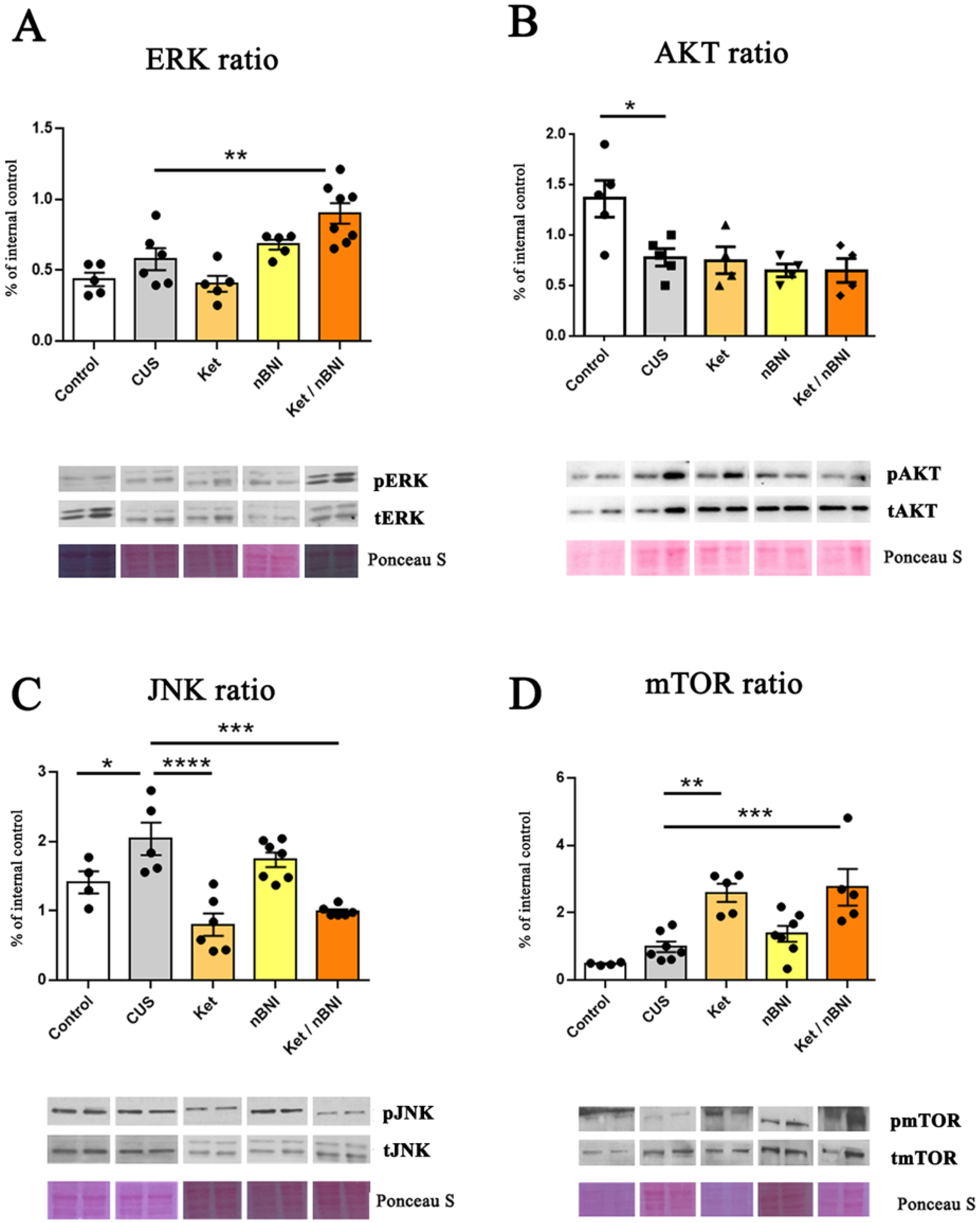
2.2.3. Striatum
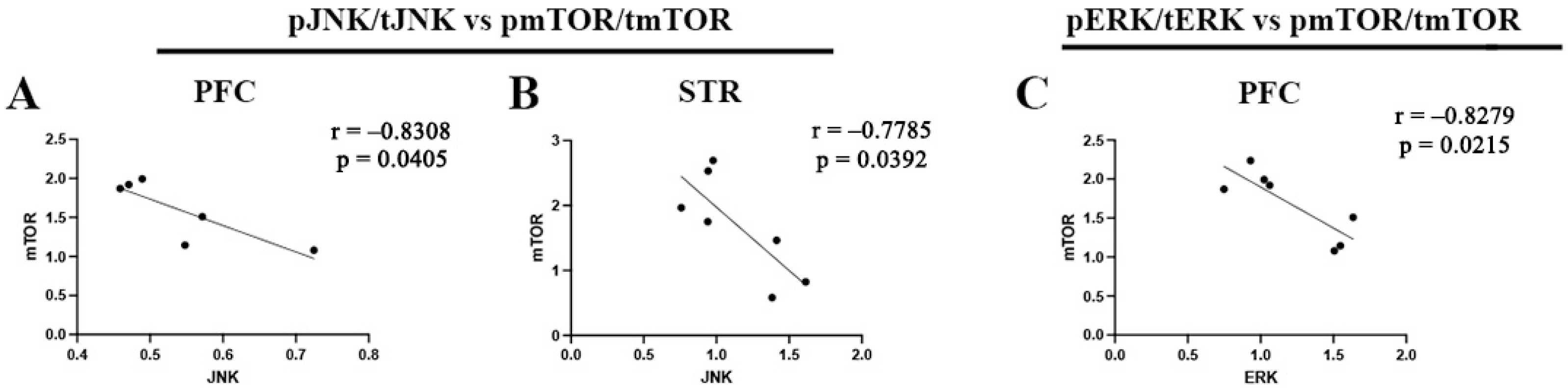
2.3. Correlations Between Molecular Markers
2.4. Regional Differences in Stress- and Treatment-Associated Modulation of BDNF
3. Discussion
3.1. Long-Term Impact of Adolescent Stress on Adult Brain Signaling
3.2. Region-Specific Molecular Changes Following the Combined Ket/nBNI Treatment
3.2.1. PFC
3.2.2. Hippocampus
3.2.3. Striatum
3.3. Integration of Correlation Analyses
3.4. Limitations and Future Directions
4. Materials and Methods
4.1. Animals
4.2. Chronic Unpredictable Stress (CUS)
4.3. Experimental Groups and Treatments
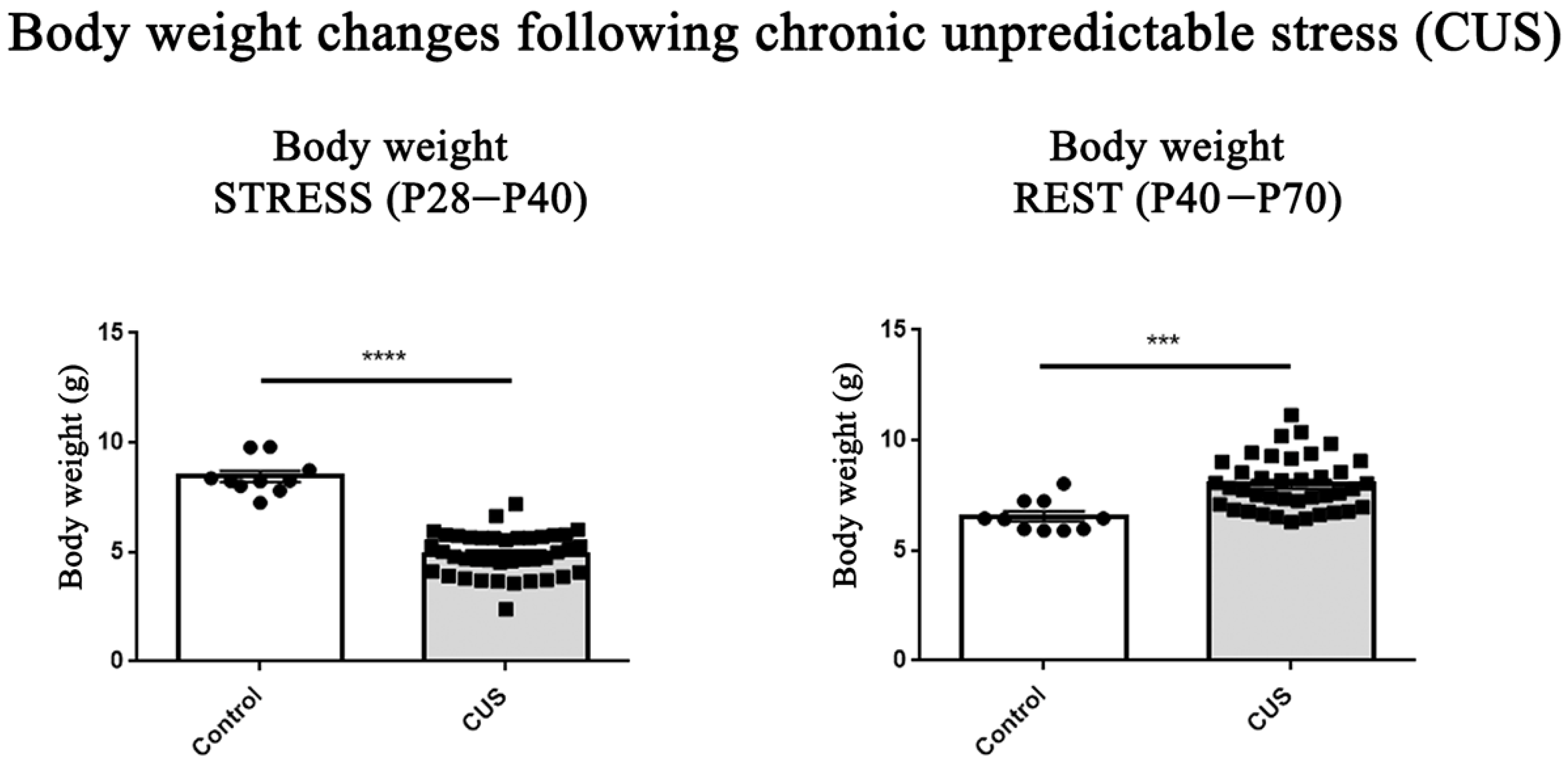
4.4. Body Weight Measurement
4.5. Behavioral Tests
4.5.1. Open Field Test
4.5.2. Tail Suspension Test
4.6. Western Blot Analysis
4.7. Statistical Analysis
5. Conclusions
Author Contributions
Funding
Institutional Review Board Statement
Informed Consent Statement
Data Availability Statement
Conflicts of Interest
Abbreviations
| AKT | Protein kinase B, PKB |
| AMPA | α-amino-3-hydroxy-5-methyl-4-isoxazolepropionic acid |
| BDNF | Brain-derived neurotrophic factor |
| CUS | Chronic unpredictable stress |
| ERK | Extracellular signal-regulated kinase |
| HIPP | Hippocampus |
| JNK | c-Jun N-terminal kinase |
| Ket | Ketamine |
| Ket/nBNI | Combination treatment with ketamine and norbinaltorphimine |
| KOR | κ-opioid receptor |
| MDD | Major depressive disorder |
| mTOR | Mammalian target of rapamycin |
| nBNI | Norbinaltorphimine |
| NMDA | N-methyl-D-aspartate |
| ns | Not significant |
| OFT | Open field test |
| PFC | Prefrontal cortex |
| p-AKT | Phosphorylated protein kinase B |
| p-ERK | Phosphorylated extracellular signal-regulated kinase |
| p-JNK | Phosphorylated c-Jun N-terminal kinase |
| p-mTOR | Phosphorylated mammalian target of rapamycin |
| STR | Striatum |
| PND | Postnatal day |
| SEM | Standard error of the mean |
| TST | Tail suspension test |
References
- World Health Organization. Depressive Disorder (Depression) [Internet]; WHO: Geneva, Switzerland, 2025; Available online: https://www.who.int/news-room/fact-sheets/detail/depression (accessed on 1 December 2024).
- Berk, M.; Köhler-Forsberg, O.; Turner, M.; Penninx, B.W.J.H.; Wrobel, A.; Firth, J.; Loughman, A.; Reavley, N.J.; McGrath, J.J.; Momen, N.C.; et al. Comorbidity between major depressive disorder and physical diseases: A comprehensive review of epidemiology, mechanisms and management. World Psychiatry 2023, 22, 366–387. [Google Scholar] [CrossRef]
- World Health Organization. Depression and Other Common Mental Disorders [Internet]; WHO: Geneva, Switzerland, 2017; Available online: https://www.who.int/publications/i/item/depression-global-health-estimates (accessed on 1 July 2025).
- Andersen, S.L.; Teicher, M.H. Delayed effects of early stress on hippocampal development. Neuropsychopharmacology 2004, 29, 1988–1993. [Google Scholar] [CrossRef]
- McEwen, B.S.; Akil, H. Revisiting the Stress Concept: Implications for Affective Disorders. J. Neurosci. 2020, 40, 12–21. [Google Scholar] [CrossRef] [PubMed]
- Aleksic, M.; Brkic, Z.; Petrovic, Z.; Francija, E.; Lukic, I.; Adzic, M. Sex-specific contribution of glucocorticoid receptor α isoforms to anxiety and depressive-like behavior in mice. J. Neurosci. Res. 2022, 100, 1239–1253. [Google Scholar] [CrossRef] [PubMed]
- Lukic, I.; Ivkovic, S.; Glavonic, E.; Adzic, M.; Mitic, M. Long-Lasting Depressive Behavior of Adolescent Chronically Stressed Mice Is Mediated by Gut Microbiota Dysbiosis. Mol. Neurobiol. 2025, 62, 8868–8886. [Google Scholar] [CrossRef]
- Kim, J.W.; Monteggia, L.M. Increasing doses of ketamine curtail antidepressant responses and suppress associated synaptic signaling pathways. Behav. Brain Res. 2020, 380, 112378. [Google Scholar] [CrossRef] [PubMed]
- Richards, N.D.; Howell, S.J.; Bellamy, M.C.; Beck, J. The diverse effects of ketamine, jack-of-all-trades: A narrative review. Br. J. Anaesth. 2025, 134, 649–661. [Google Scholar] [CrossRef]
- Zorumski, C.F.; Izumi, Y.; Mennerick, S. Ketamine: NMDA receptors and beyond. J. Neurosci. 2016, 36, 11158–11164. [Google Scholar] [CrossRef]
- Abdallah, C.G.; Sanacora, G.; Duman, R.S.; Krystal, J.H. Ketamine and rapid-acting antidepressants: A window into a new neurobiology for mood disorder therapeutics. Annu. Rev. Med. 2015, 66, 509–523. [Google Scholar] [CrossRef]
- Yang, C.; Yang, J.; Luo, A.; Hashimoto, K. Molecular and Cellular Mechanisms Underlying the Antidepressant Effects of Ketamine Enantiomers and Its Metabolites. Transl. Psychiatry 2019, 9, 280. [Google Scholar] [CrossRef]
- Winter, J.N.; Jefferson, L.S.; Kimball, S.R. ERK and Akt Signaling Pathways Function through Parallel Mechanisms to Promote mTORC1 Signaling. Am. J. Physiol. Cell Physiol. 2011, 300, C1172–C1180. [Google Scholar] [CrossRef]
- Ryskalin, L.; Lazzeri, G.; Flaibani, M.; Biagioni, F.; Gambardella, S.; Frati, A.; Fornai, F. mTOR-Dependent Cell Proliferation in the Brain. Biomed. Res. Int. 2017, 2017, 7082696. [Google Scholar] [CrossRef]
- Zarate, C.A., Jr.; Singh, J.B.; Carlson, P.J.; Brutsche, N.E.; Ameli, R.; Luckenbaugh, D.A.; Charney, D.S.; Manji, H.K. A randomized trial of an N-methyl-D-aspartate antagonist in treatment-resistant major depression. Arch. Gen. Psychiatry 2006, 63, 856–864. [Google Scholar] [CrossRef] [PubMed]
- Schoepfer, K.J.; Strong, C.E.; Saland, S.K.; Wright, K.N.; Kabbaj, M. Sex- and dose-dependent abuse liability of repeated subanesthetic ketamine in rats. Physiol. Behav. 2019, 203, 60–69. [Google Scholar] [CrossRef] [PubMed]
- Jiang, C.; DiLeone, R.J.; Pittenger, C.; Duman, R.S. The endogenous opioid system in the medial prefrontal cortex mediates ketamine’s antidepressant-like actions. Transl. Psychiatry 2024, 14, 90. [Google Scholar] [CrossRef] [PubMed]
- Peciña, M.; Karp, J.F.; Mathew, S.; Todtenkopf, M.S.; Ehrich, E.W.; Zubieta, J.-K. Endogenous opioid system dysregulation in depression: Implications for new therapeutic approaches. Mol. Psychiatry 2019, 24, 576–587. [Google Scholar] [CrossRef]
- Adzic, M.; Lukic, I.; Mitic, M.; Glavonic, E.; Dragicevic, N.; Ivkovic, S. Contribution of the opioid system to depression and to the therapeutic effects of classical antidepressants and ketamine. Life Sci. 2023, 326, 121803. [Google Scholar] [CrossRef]
- Levinstein, M.R.; Budinich, R.C.; Bonaventura, J.; Schatzberg, A.F.; Zarate, C.A.; Michaelides, M. Redefining Ketamine Pharmacology for Antidepressant Action: Synergistic NMDA and Opioid Receptor Interactions? J. Psych. 2025, 82, 247–258. [Google Scholar] [CrossRef]
- Carlezon, W.A., Jr.; Krystal, A.D. Kappa-opioid antagonists for psychiatric disorders: From bench to clinical trials. Depress. Anxiety 2016, 33, 895–906. [Google Scholar] [CrossRef]
- Williams, N.R.; Heifets, B.D.; Blasey, C.; Sudheimer, K.; Pannu, J.; Pankow, H.; Hawkins, J.; Birnbaum, J.; Lyons, D.M.; Schatzberg, A.F. Attenuation of antidepressant effects of ketamine by opioid receptor an-tagonism. Am. J. Psychiatry 2018, 175, 1205–1215. [Google Scholar] [CrossRef]
- Jacobson, M.L.; Browne, C.A.; Lucki, I. Kappa Opioid Receptor Antagonists as Potential Therapeutics for Stress-Related Disorders. Ann. Rev. Pharm. Toxicol. 2020, 60, 615–636. [Google Scholar] [CrossRef]
- Metcalf, M.D.; Coop, A. Kappa Opioid Antagonists: Past Successes and Future Prospects. AAPS J. 2005, 7, E704–E722. [Google Scholar] [CrossRef]
- Patkar, K.A.; Wu, J.; Ganno, M.L.; Singh, H.D.; Ross, N.C.; Rasakham, K.; Toll, L.; McLaughlin, J.P. Physical presence of nor-binaltorphimine in mouse brain over 21 days after a single administration cor-responds to its long-lasting antagonistic effect on κ-opioid receptors. J. Pharmacol. Exp. Ther. 2013, 346, 545–554. [Google Scholar] [CrossRef] [PubMed]
- Jackson, K.J.; McLaughlin, J.P.; Carroll, F.I.; Damaj, M.I. Effects of the kappa opioid receptor antagonist, norbinaltorphimine, on stress and drug-induced reinstatement of nicotine-conditioned place preference in mice. Psychopharmacology 2013, 226, 763–768. [Google Scholar] [CrossRef]
- Prut, L.; Belzung, C. The open field as a paradigm to measure the effects of drugs on anxiety-like behaviors: A review. Eur. J. Pharmacol. 2003, 463, 3–33. [Google Scholar] [CrossRef] [PubMed]
- Can, A.; Dao, D.T.; Terrillion, C.E.; Piantadosi, S.C.; Bhat, S.; Gould, T.D. The Tail Suspension Test. J. Vis. Exp. 2012, 59, e3769. [Google Scholar] [CrossRef]
- Autry, A.E.; Adachi, M.; Nosyreva, E.; Na, E.S.; Los, M.F.; Cheng, P.-F.; Kavalali, E.T.; Monteggia, L.M. NMDA receptor blockade at rest triggers rapid behavioural antidepressant responses. Nature 2011, 475, 91–95. [Google Scholar] [CrossRef] [PubMed]
- Cryan, J.F.; Mombereau, C.; Vassout, A. The tail suspension test as a model for assessing antidepressant activity: Review of pharmacological and genetic studies in mice. Neurosci. Biobehav. Rev. 2005, 29, 571–625. [Google Scholar] [CrossRef]
- Duman, R.S.; Voleti, B. Signaling pathways underlying the pathophysiology and treatment of depression: Novel mechanisms for rapid-acting agents. Trends Neurosci. 2012, 35, 47–56. [Google Scholar] [CrossRef]
- Hollos, P.; Marchisella, F.; Coffey, E.T. JNK Regulation of Depression and Anxiety. Brain Plast. 2018, 3, 145–155. [Google Scholar] [CrossRef]
- Yuen, E.Y.; Wei, J.; Liu, W.; Zhong, P.; Li, X.; Yan, Z. Repeated stress causes cognitive impairment by suppressing glutamate receptor expression and function in prefrontal cortex. Neuron 2012, 73, 962–977. [Google Scholar] [CrossRef]
- Zhang, J.; Li, W.; Yue, Q.; Liu, L.; Hou, S.-T.; Ju, J. Rapamycin exerts an antidepressant effect and enhances myelination in the prefrontal cortex of chronic restraint stress mice. Neuroscience 2023, 535, 99–107. [Google Scholar] [CrossRef] [PubMed]
- Saxton, R.A.; Sabatini, D.M. mTOR signaling in growth, metabolism, and disease. Cell 2017, 168, 960–976, Correction in Cell 2017, 169, 361–371. https://doi.org/10.1016/j.cell.2017.02.004. [Google Scholar] [CrossRef]
- Adžić, M.; Djordjević, J.; Djordjević, A.; Niciforović, A.; Demonacos, C.; Radojčić, M.; Krstić-Demonacos, M. Acute or Chronic Stress Induce Cell Compartment-Specific Phosphorylation of Glucocorticoid Receptor and Alter Its Transcriptional Activity in Wistar Rat Brain. J. Endocrinol. 2009, 202, 87–97. [Google Scholar] [CrossRef] [PubMed]
- Meller, R.; Clayton, C.; Torrey, D.J.; Schindler, C.K.; Lan, J.Q.; Henshall, D.C.; Simon, R.P. Region-Specific Effects of Acute and Repeated Restraint Stress on the Phosphorylation of Mitogen-Activated Protein Kinases. Brain Res. 2003, 979, 57–64. [Google Scholar] [CrossRef] [PubMed]
- Liu, J.; Meng, F.; Dai, J.; Wu, M.; Wang, W.; Liu, C.; Zhao, D.; Wang, H.; Zhang, J.; Li, C. The BDNF FoxO1 Axis in the medial prefrontal cortex modulates depressive like behaviors induced by chronic unpredictable stress in postpartum female mice. Mol. Brain 2020, 13, 91. [Google Scholar] [CrossRef]
- Marmigère, F.; Givalois, L.; Rage, F.; Arancibia, S.; Tapia-Arancibia, L. Rapid induction of BDNF expression in the hippocampus during immobilization stress challenge in adult rats. Hippocampus 2003, 13, 646–655. [Google Scholar] [CrossRef]
- Autry, A.E.; Monteggia, L.M. Brain-derived neurotrophic factor and neuropsychiatric disorders. Pharm. Rev. 2012, 64, 238–258. [Google Scholar] [CrossRef]
- Duman, R.S.; Aghajanian, G.K. Synaptic dysfunction in depression: Potential therapeutic targets. Science 2012, 338, 68–72. [Google Scholar] [CrossRef]
- Miao, Z.; Wang, Y.; Sun, Z. The Relationships Between Stress, Mental Disorders, and Epigenetic Regulation of BDNF. Int. J. Mol. Sci. 2020, 21, 1375. [Google Scholar] [CrossRef]
- Dhanasekaran, D.N.; Reddy, E.P. JNK signaling in apoptosis. Oncogene 2008, 27, 6245–6251. [Google Scholar] [CrossRef]
- Tran, C.H.; Weickert, C.S.; Weickert, T.W.; Sinclair, D. Early life stress alters expression of glucocorticoid stress response genes and trophic factor transcripts in the rodent basal ganglia. Int. J. Mol. Sci. 2022, 23, 5333. [Google Scholar] [CrossRef]
- Fumagalli, F.; Bedogni, F.; Perez, J.; Racagni, G.; Riva, M.A. Corticostriatal brain-derived neurotrophic factor dysregulation in adult rats following prenatal stress. Eur. J. Neurosci. 2004, 20, 1348–1354. [Google Scholar] [CrossRef]
- Lakshminarasimhan, H.; Chattarji, S. Stress leads to contrasting effects on the levels of brain-derived neurotrophic factor in the hippocampus and amygdala. PLoS ONE 2012, 7, e30481. [Google Scholar] [CrossRef]
- Gray, J.D.; Milner, T.A.; McEwen, B.S. Dynamic plasticity: The role of glucocorticoids, brain-derived neurotrophic factor and other trophic factors. Neuroscience 2013, 239, 214–227. [Google Scholar] [CrossRef] [PubMed]
- Duric, V.; Banasr, M.; Licznerski, P.; Schmidt, H.D.; Stockmeier, C.A.; Simen, A.A.; Newton, S.S.; Duman, R.S. A negative regulator of MAP kinase causes depressive behavior. Nat. Med. 2010, 16, 1328–1332. [Google Scholar] [CrossRef]
- Boudreau, A.C.; Reimers, J.M.; Milovanovic, M.; Wolf, M.E. Cell surface AMPA receptors in the rat nucleus accumbens increase during cocaine withdrawal but internalize after cocaine challenge in association with altered activation of mitogen-activated protein kinases. J. Neurosci. 2007, 27, 10621–10635. [Google Scholar] [CrossRef] [PubMed]
- Dogra, S.; Kumar, A.; Umrao, D.; Sahasrabuddhe, A.A.; Yadav, P.N. Chronic Kappa opioid receptor activation modulates NR2B: Implication in treatment resistant depression. Sci. Rep. 2016, 6, 33401. [Google Scholar] [CrossRef] [PubMed]
- Walker, A.K.; Budac, D.P.; Bisulco, S.; Lee, A.W.; Smith, R.A.; Beenders, B.; Kelley, K.W.; Dantzer, R. NMDA receptor blockade by ketamine abrogates lipopolysaccharide induced depressive like behavior in C57BL/6J mice. Neuropsychopharmacology 2013, 38, 1609–1616. [Google Scholar] [CrossRef]
- Browne, C.A.; Lucki, I. Antidepressant effects of ketamine: Mechanisms underlying fast-acting novel anti-depressants. Front. Pharmacol. 2013, 4, 161. [Google Scholar] [CrossRef]
- Zanos, P.; Moaddel, R.; Morris, P.J.; Riggs, L.M.; Highland, J.N.; Georgiou, P.; Pereira, E.F.R.; Albuquerque, E.X.; Thomas, C.J.; Zarate, C.A.; et al. NMDAR inhibition-independent antidepressant actions of ketamine metabolites. Nature 2016, 533, 481–486. [Google Scholar] [CrossRef]
- Saland, S.K.; Kabbaj, M. Sex differences in the pharmacokinetics of low-dose ketamine in plasma and brain of male and female rats. J. Pharmacol. Exp. Ther. 2018, 367, 393–404. [Google Scholar] [CrossRef] [PubMed]
- Zhang, H.; Shi, Y.G.; Woods, J.H.; Watson, S.J.; Ko, M.C. Central κ-opioid receptor-mediated antidepressant-like effects of nor-binaltorphimine: Behavioral and BDNF mRNA expression studies. Eur. J. Pharmacol. 2007, 570, 89–96. [Google Scholar] [CrossRef]
- Bruchas, M.R.; Yang, T.; Schreiber, S.; DeFino, M.; Kwan, S.C.; Li, S.; Chavkin, C. Long acting κ opioid antagonists disrupt re-ceptor signaling and produce noncompetitive effects by activating c Jun N terminal kinase. J. Biol. Chem. 2007, 282, 29803–29811. [Google Scholar] [CrossRef]
- Melief, E.J.; Miyatake, M.; Bruchas, M.R.; Chavkin, C. Ligand-directed c-Jun N-terminal kinase activation disrupts opioid receptor signaling. Proc. Natl. Acad. Sci. USA 2010, 107, 11608–11613. [Google Scholar] [CrossRef] [PubMed]
- Li, N.; Lee, B.; Liu, R.J.; Banasr, M.; Dwyer, J.M.; Iwata, M.; Li, X.Y.; Aghajanian, G.; Duman, R.S. mTOR-dependent synapse formation underlies the rapid antidepressant effects of NMDA antagonists. Science 2010, 329, 959–964. [Google Scholar] [CrossRef] [PubMed]
- O’Reilly, K.E.; Rojo, F.; She, Q.B.; Solit, D.; Mills, G.B.; Smith, D.; Lane, H.; Hofmann, F.; Hicklin, D.J.; Ludwig, D.L.; et al. mTOR inhibition induces upstream receptor tyrosine kinase signaling and activates Akt. Cancer Res. 2006, 66, 1500–1508. [Google Scholar] [CrossRef]
- Um, S.H.; Frigerio, F.; Watanabe, M.; Picard, F.; Joaquin, M.; Sticker, M.; Fumagalli, S.; Allegrini, P.R.; Kozma, S.C.; Auwerx, J.; et al. Absence of S6K1 protects against age- and diet-induced obesity while enhancing insulin sensitivity. Nature 2004, 431, 200–205, Erratum in Nature 2004, 431, 485. [Google Scholar] [CrossRef]
- Ma, X.M.; Blenis, J. Molecular mechanisms of mTOR-mediated translational control. Nat. Rev. Mol. Cell Biol. 2009, 10, 307–318. [Google Scholar] [CrossRef]
- Franceschelli, A.; Sens, J.; Herchick, S.; Thelen, C.; Pitychoutis, P.M. Sex differences in the rapid and the sustained antidepressant-like effects of ketamine in stress-naïve and “depressed” mice exposed to chronic mild stress. Neuroscience 2015, 290, 49–60. [Google Scholar] [CrossRef]
- Carrier, N.; Kabbaj, M. Sex differences in the antidepressant-like effects of ketamine. Neuropharmacology 2013, 70, 27–34. [Google Scholar] [CrossRef]
- Dossat, A.M.; Wright, K.N.; Strong, C.; Kabbaj, M. Behavioral and biochemical sensitivity to low doses of ketamine: Influence of estrous cycle in C57BL/6 mice. Neuropharmacology 2018, 130, 30–41. [Google Scholar] [CrossRef]
- Bosch, K.; Sbrini, G.; Burattini, I.; Nieuwenhuis, D.; Calabrese, F.; Schubert, D.; Henckens, M.J.A.G.; Homberg, J.R. Repeated testing modulates chronic unpredictable mild stress effects in male rats. Behav. Brain Res. 2022, 432, 113960. [Google Scholar] [CrossRef]
- Yohn, N.L.; Blendy, J.A. Adolescent chronic unpredictable stress exposure is a sensitive window for long term changes in adult behavior in mice. Neuropsychopharmacology 2017, 42, 1670–1678. [Google Scholar] [CrossRef]
- Willner, P. The Chronic Mild Stress (CMS) Model of Depression: History, Evaluation and Usage. Neurobiol. Stress 2017, 6, 78–93. [Google Scholar] [CrossRef]
- Markwell, M.A.; Haas, S.M.; Bieber, L.L.; Tolbert, N.E. A modification of the Lowry procedure to simplify protein determination in membrane and lipoprotein samples. Anal. Biochem. 1978, 87, 206–210. [Google Scholar] [CrossRef] [PubMed]
- Laemmli, U.K. Cleavage of structural proteins during the assembly of the head of bacteriophage T4. Nature 1970, 227, 680–685. [Google Scholar] [CrossRef] [PubMed]
- Cohen, J. Statistical Power Analysis for the Behavioral Sciences, 2nd ed.; Lawrence Erlbaum Associates: Hillsdale, NJ, USA, 1988. [Google Scholar]
- Leys, C.; Ley, C.; Klein, O.; Bernard, P.; Licata, L. Detecting outliers: Do not use standard deviation around the mean, use absolute deviation around the median. J. Exp. Soc. Psychol. 2013, 49, 764–766. [Google Scholar] [CrossRef]



| CUS | PFC | HIPP | STR |
|---|---|---|---|
| ERK |  | ns | ns |
| AKT | ns | ns | |
| JNK | | ns |  |
| mTOR | | ns | ns |
| BDNF | | | |
—decreased activation; —increased activation.| PFC | Ket/nBNI | KET | nBNI |
|---|---|---|---|
| ERK | | ns | ns |
| AKT | | ns | ns |
| JNK | | ns | |
| mTOR | | | |
| BDNF | ns | ns | ns |
| HIPP | Ket/nBNI | KET | nBNI |
| ERK | ns | ns | ns |
| AKT | | ns | ns |
| JNK | | ns | ns |
| mTOR | | ns | |
| BDNF | ns | | |
| STR | Ket/nBNI | KET | nBNI |
| ERK | | ns | ns |
| AKT | ns | ns | ns |
| JNK | | | ns |
| mTOR | | | ns |
| BDNF | | | |
—decreased activation; —increased activation.| Day of CUS | 9 a.m. | 2 p.m. | 6 p.m. |
|---|---|---|---|
| 1 | Lights on | ||
| 2 | Cold 4 °C, 1 h | Lights off/cage tilt, 3 h | Food deprivation |
| 3 | Cage tilt 45°, 3 h | Cold/shaking, 1 h | Stroboscope |
| 4 | Rat odor, 3 h | Swim 18°, 10 min | Wet bedding |
| 5 | Restraint, 1 h | Cold, 1 h | Cage tilt |
| 6 | Lights off, 3 h | Cold/shaking, 1 h | Lights on |
| 7 | Cold, 1 h | Rat odor, 3 h | Stroboscope |
| 8 | Restraint, 1 h | Lights off/cage tilt, 3 h | Wet bedding |
| 9 | Swim 18°, 10 min | Rat odor, 3 h | Food deprivation |
| 10 | Restraint, 1 h | Cold, 1 h | Stroboscope |
| 11 | New partner, 3 h | Restraint, 1 h | Lights on/no bedding |
| 12 | Swim, 10 min | Cold/shaking, 1 h | Wet bedding |
| Protein | Dilution for WB | Company | Cat. No. |
|---|---|---|---|
| p-mTOR (Ser 2448) | 1:500 | Santa Cruz Biotechnology, Dallas, TX, USA | sc-101738 |
| mTOR | 1:500 | Santa Cruz Biotechnology | sc-517464 |
| p-Erk1/2 (Thr202/Tyr 204) | 1:1000 | Cell Signaling, Danvers, MA, USA | #9101 |
| Erk1/2 | 1:1000 | Cell Signaling | #9102 |
| p-Akt (Ser 473) | 1:1000 | Santa Cruz Biotechnology | sc-7985-R |
| Akt | 1:1000 | Cell Signaling | #9272S |
| p-JNK (Thr 183/Tyr 185) | 1:500 | Santa Cruz Biotechnology | sc-6254 |
| JNK | 1:2000 | Santa Cruz Biotechnology | sc-571 |
| BDNF | 1:2000 | Abcam, Cambridge, UK | ab108319 |
Disclaimer/Publisher’s Note: The statements, opinions and data contained in all publications are solely those of the individual author(s) and contributor(s) and not of MDPI and/or the editor(s). MDPI and/or the editor(s) disclaim responsibility for any injury to people or property resulting from any ideas, methods, instructions or products referred to in the content. |
© 2026 by the authors. Licensee MDPI, Basel, Switzerland. This article is an open access article distributed under the terms and conditions of the Creative Commons Attribution (CC BY) license.
Share and Cite
Zivanovic, A.; Mitic, M.; Lukic, I.; Glavonic, E.; Adzic, M.; Ivkovic, S. Kappa-Opioid Receptor Antagonism Prolongs the Antidepressant Effects of Ketamine in Adult Mice with Depression-like Behavior Induced by Adolescent Chronic Unpredictable Stress. Int. J. Mol. Sci. 2026, 27, 2815. https://doi.org/10.3390/ijms27062815
Zivanovic A, Mitic M, Lukic I, Glavonic E, Adzic M, Ivkovic S. Kappa-Opioid Receptor Antagonism Prolongs the Antidepressant Effects of Ketamine in Adult Mice with Depression-like Behavior Induced by Adolescent Chronic Unpredictable Stress. International Journal of Molecular Sciences. 2026; 27(6):2815. https://doi.org/10.3390/ijms27062815
Chicago/Turabian StyleZivanovic, Ana, Milos Mitic, Iva Lukic, Emilija Glavonic, Miroslav Adzic, and Sanja Ivkovic. 2026. "Kappa-Opioid Receptor Antagonism Prolongs the Antidepressant Effects of Ketamine in Adult Mice with Depression-like Behavior Induced by Adolescent Chronic Unpredictable Stress" International Journal of Molecular Sciences 27, no. 6: 2815. https://doi.org/10.3390/ijms27062815
APA StyleZivanovic, A., Mitic, M., Lukic, I., Glavonic, E., Adzic, M., & Ivkovic, S. (2026). Kappa-Opioid Receptor Antagonism Prolongs the Antidepressant Effects of Ketamine in Adult Mice with Depression-like Behavior Induced by Adolescent Chronic Unpredictable Stress. International Journal of Molecular Sciences, 27(6), 2815. https://doi.org/10.3390/ijms27062815