EDIL3/Del-1-Dependent Induction of AMPKβ Phosphorylation Regulates the Progression of Mesenchymal Stem-like Triple-Negative Breast Cancer

 , , , , , , , , and
Abstract
1. Introduction
2. Results
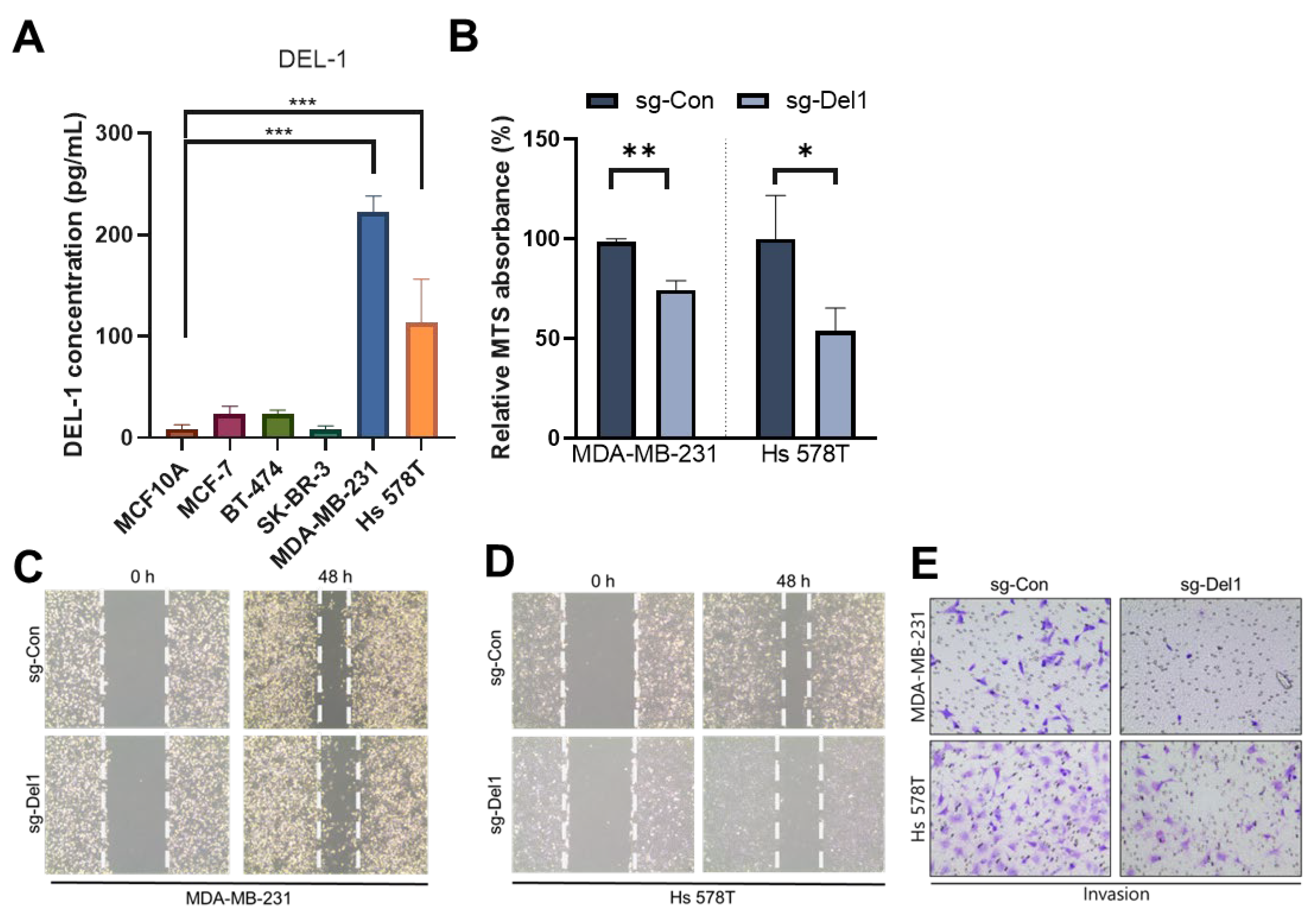
2.1. Del-1 Knockout Suppresses Breast Cancer Cell Metastasis
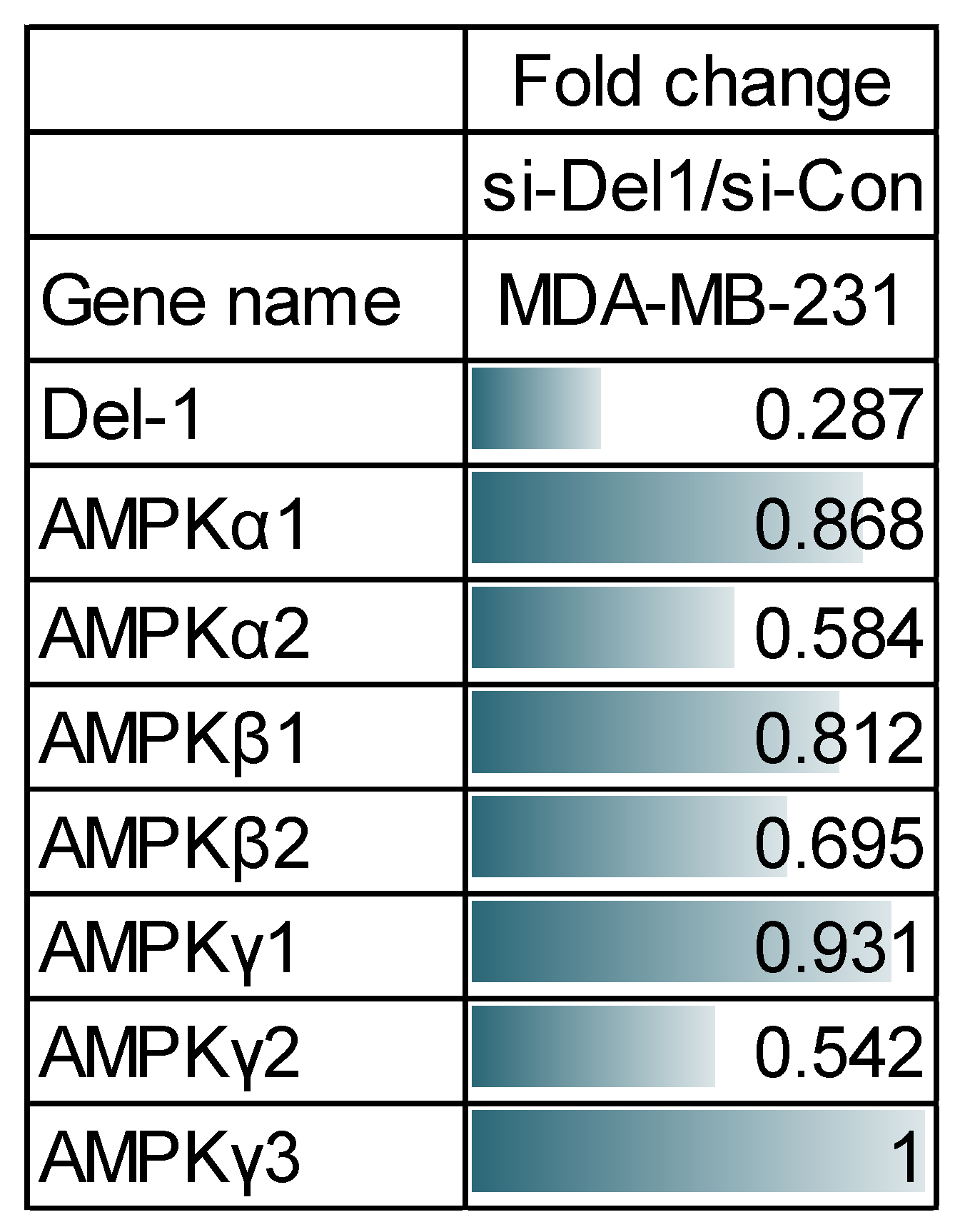
2.2. Del-1 Silencing Downregulates AMPK Family Members in Breast Cancer Cells upon RNA Sequencing Analysis
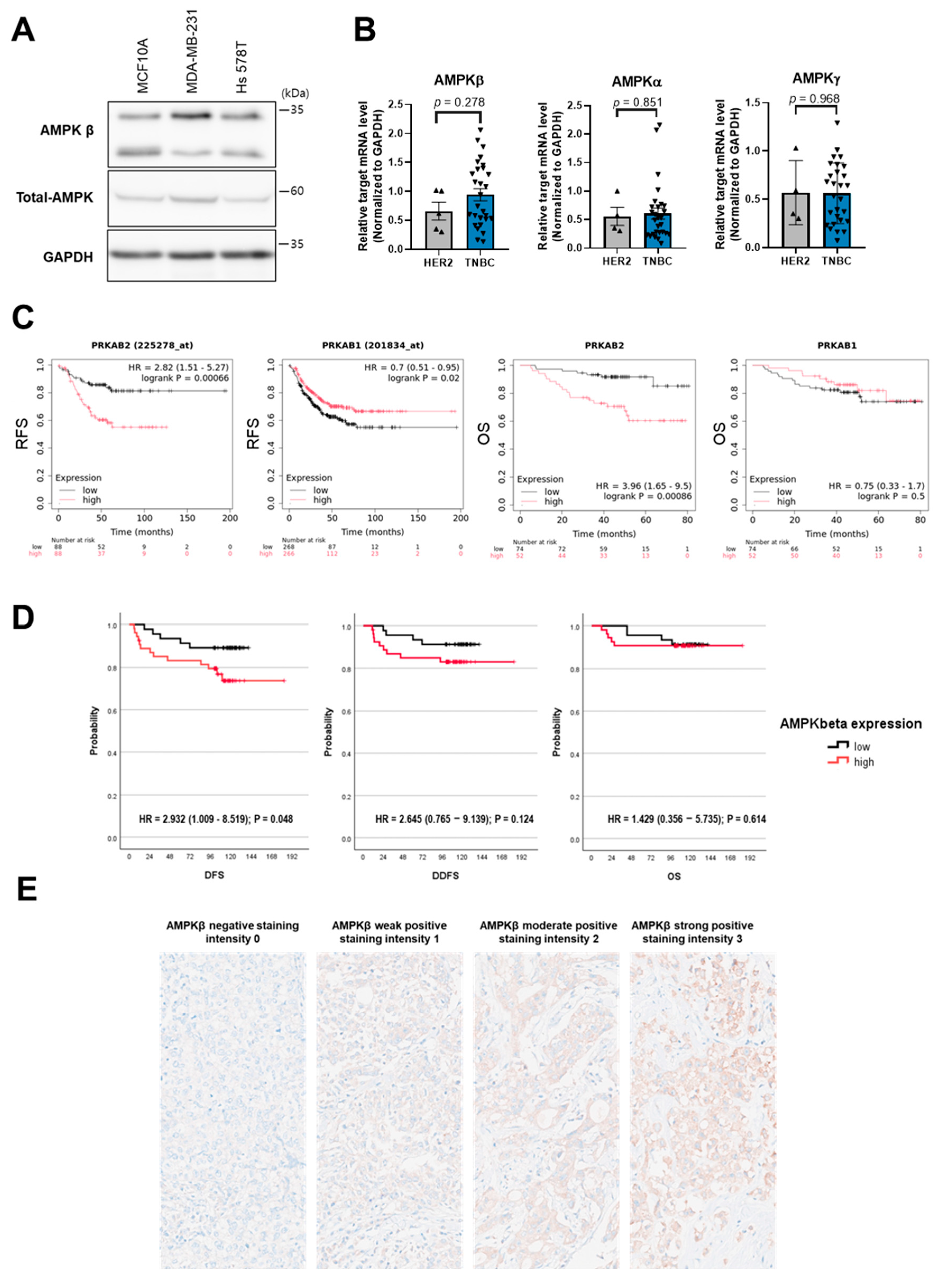
2.3. Increased AMPKβ Expression Is Associated with Breast Cancer
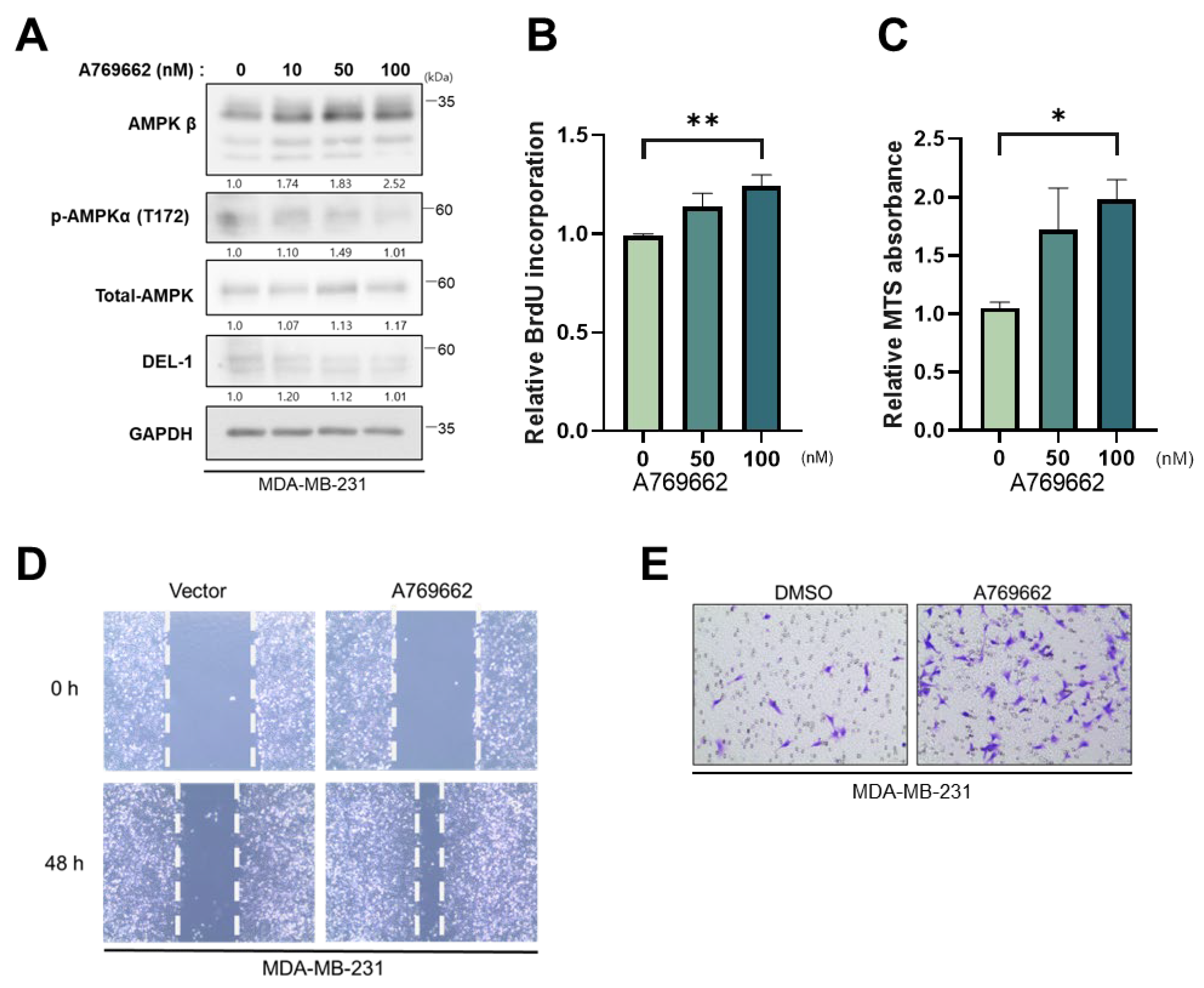
2.4. Pharmacological Activation of AMPKβ Promotes Proliferation and Invasion in MDA-MB-231 Cells
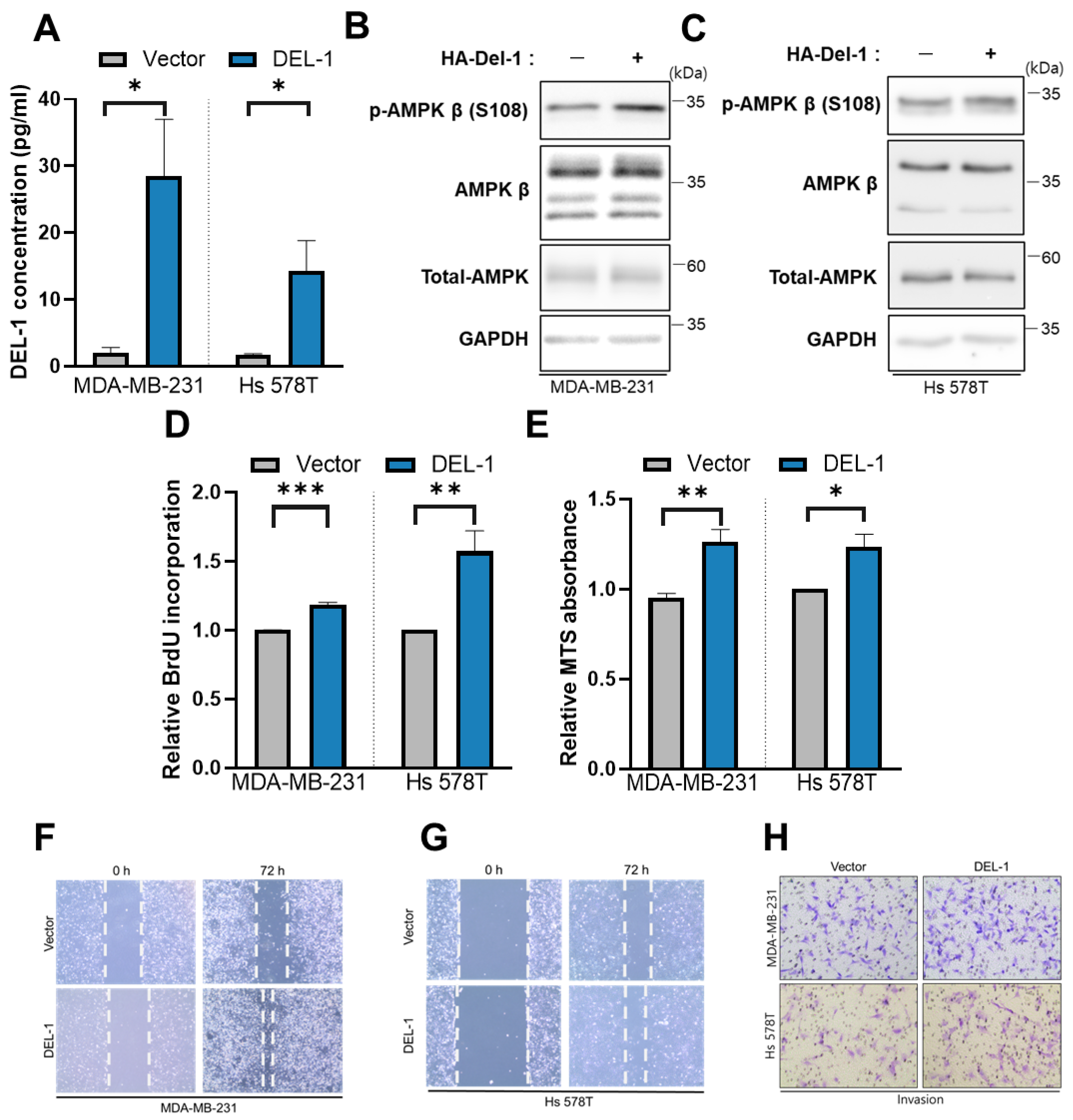
2.5. Del-1 Overexpression Enhances AMPKβ Expression and Drives Proliferation, Migration, and Invasion
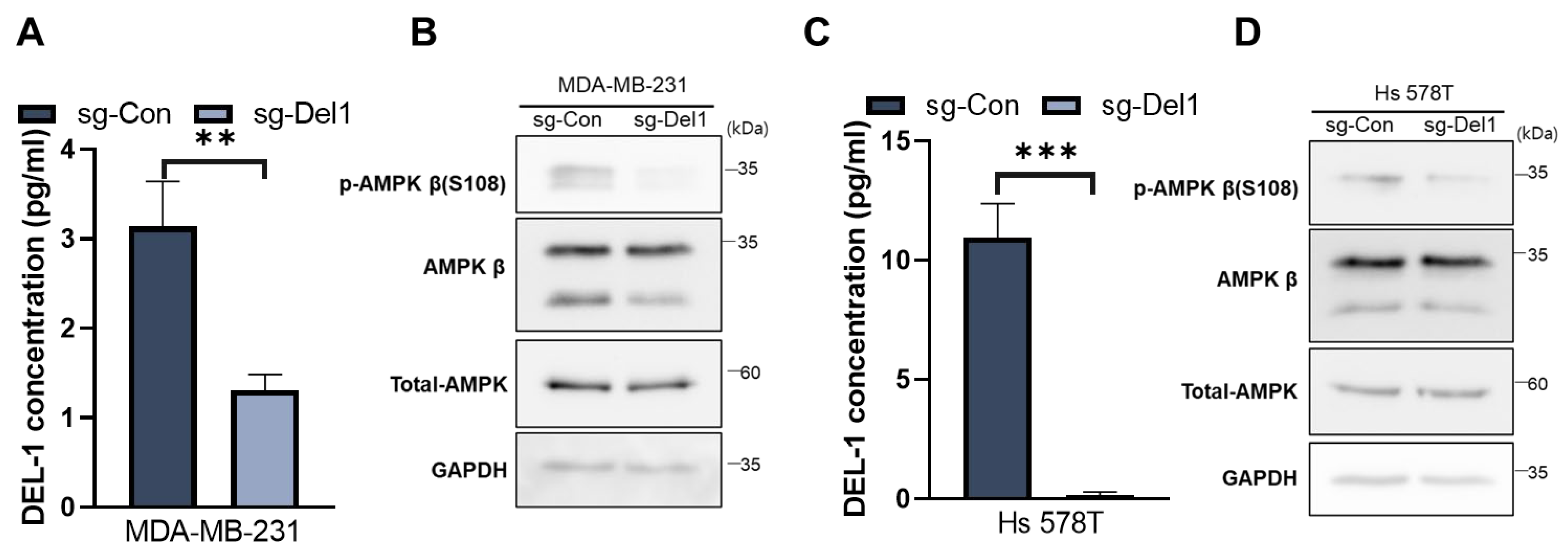
2.6. Loss of Del-1 Reduces AMPKβ Levels
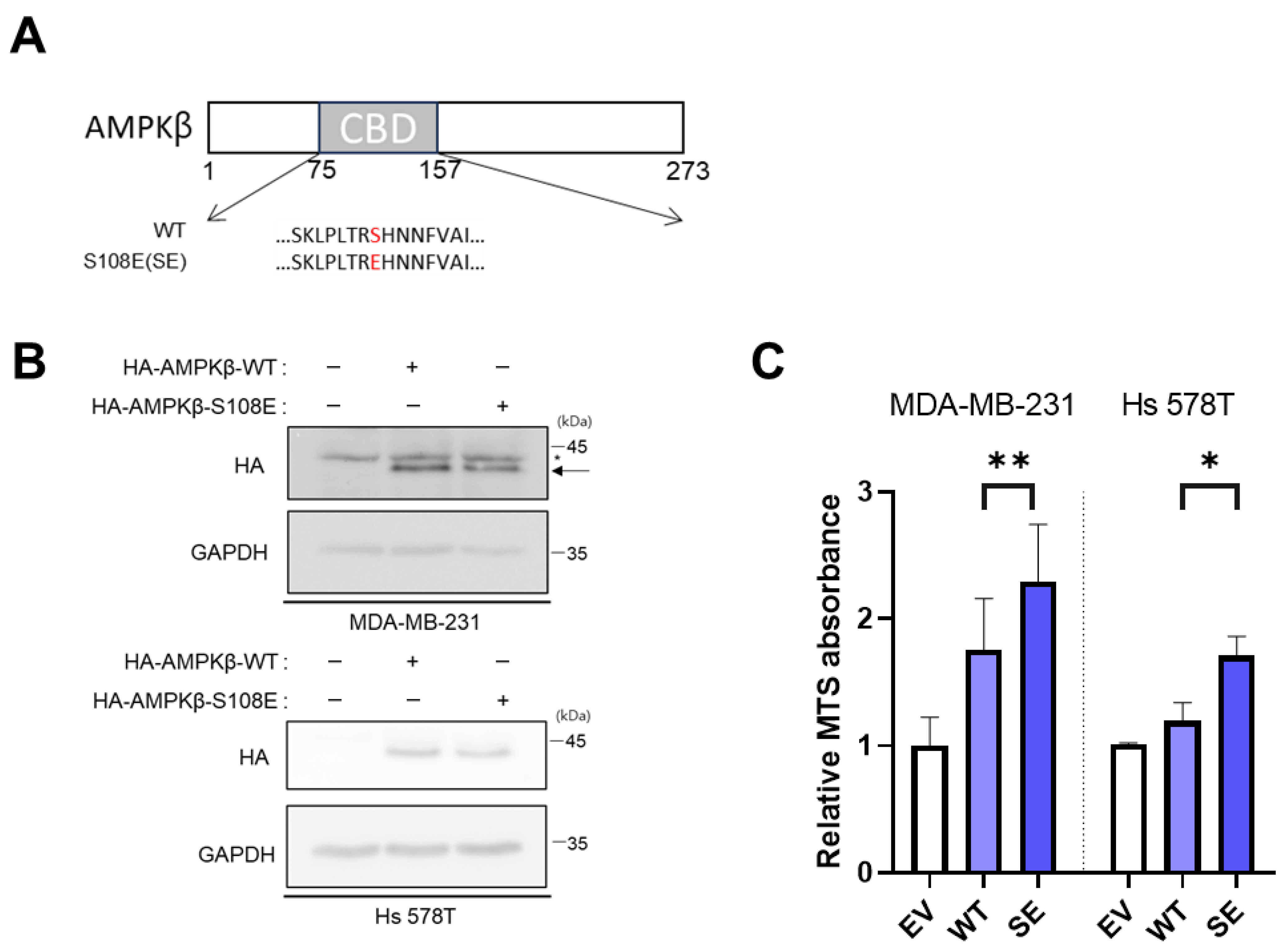
2.7. Del-1-Mediated Phosphorylation of AMPKβ at S108 Is Crucial for TNBC Cell Metastasis
3. Discussion
4. Materials and Methods
4.1. Antibodies and Reagents
4.2. Cell Culture
4.3. Establishment of CRISPR-Cas9-Engineered Knockout Cell Lines
4.4. Western Blotting
4.5. Matrigel Invasion Assay
4.6. BrdU Proliferation Assay
4.7. MTS Assay
4.8. Migration Assay
4.9. RNA Sequencing
4.10. RT-PCR
4.11. Immunohistochemistry
4.12. Statistical Analysis
Supplementary Materials
Author Contributions
Funding
Institutional Review Board Statement
Informed Consent Statement
Data Availability Statement
Conflicts of Interest
Abbreviations
| AMPK | AMP-activated protein kinase |
| sg-Del1 | CRISPR-Cas9 Del-1 knockout |
| Del-1 | developmental endothelial locus-1 |
| HER2 | human epidermal growth factor receptor 2 |
| HER2+ | HER2 positive |
| EMT | Epithelial–Mesenchymal Transition |
| ER | estrogen receptor |
| IHC | immunohistochemistry |
| IM | immunomodulatory |
| MELK | maternal embryonic leucine zipper kinase |
| MSL | mesenchymal stem-like |
| PR | progesterone receptor |
| TMA | Tissue microarray |
| TNBC | Triple-negative breast cancer |
| p-AMPKβ | phosphorylated AMPKβ |
| S108 | serine 108 site |
References
- Sung, H.; Ferlay, J.; Siegel, R.L.; Laversanne, M.; Soerjomataram, I.; Jemal, A.; Bray, F. Global Cancer Statistics 2020: GLOBOCAN Estimates of Incidence and Mortality Worldwide for 36 Cancers in 185 Countries. CA Cancer J. Clin. 2021, 71, 209–249. [Google Scholar] [CrossRef] [Scilit]
- Harris, L.N.; Ismaila, N.; McShane, L.M.; Andre, F.; Collyar, D.E.; Gonzalez-Angulo, A.M.; Hammond, E.H.; Kuderer, N.M.; Liu, M.C.; Mennel, R.G.; et al. Use of Biomarkers to Guide Decisions on Adjuvant Systemic Therapy for Women with Early-Stage Invasive Breast Cancer: American Society of Clinical Oncology Clinical Practice Guideline. J. Clin. Oncol. 2016, 34, 1134–1150. [Google Scholar] [CrossRef] [Scilit]
- Morris, G.J.; Naidu, S.; Topham, A.K.; Guiles, F.; Xu, Y.; McCue, P.; Schwartz, G.F.; Park, P.K.; Rosenberg, A.L.; Brill, K.; et al. Differences in breast carcinoma characteristics in newly diagnosed African-American and Caucasian patients: A single-institution compilation compared with the National Cancer Institute’s Surveillance, Epidemiology, and End Results database. Cancer 2007, 110, 876–884. [Google Scholar] [CrossRef] [Scilit]
- Dent, R.; Trudeau, M.; Pritchard, K.I.; Hanna, W.M.; Kahn, H.K.; Sawka, C.A.; Lickley, L.A.; Rawlinson, E.; Sun, P.; Narod, S.A. Triple-Negative Breast Cancer: Clinical Features and Patterns of Recurrence. Clin. Cancer Res. 2007, 13, 4429–4434. [Google Scholar] [CrossRef] [Scilit]
- Lehmann, B.D.; Jovanović, B.; Chen, X.; Estrada, M.V.; Johnson, K.N.; Shyr, Y.; Moses, H.L.; Sanders, M.E.; Pietenpol, J.A. Refinement of Triple-Negative Breast Cancer Molecular Subtypes: Implications for Neoadjuvant Chemotherapy Selection. PLoS ONE 2016, 11, e0157368. [Google Scholar] [CrossRef] [Scilit]
- Foulkes, W.D.; Smith, I.E.; Reis-Filho, J.S. Triple-Negative Breast Cancer. N. Engl. J. Med. 2010, 363, 1938–1948. [Google Scholar] [CrossRef] [Scilit] [PubMed]
- Bianchini, G.; Balko, J.M.; Mayer, I.A.; Sanders, M.E.; Gianni, L. Triple-negative breast cancer: Challenges and opportunities of a heterogeneous disease. Nat. Rev. Clin. Oncol. 2016, 13, 674–690. [Google Scholar] [CrossRef] [Scilit] [PubMed]
- Moon, P.-G.; Lee, J.-E.; Cho, Y.-E.; Lee, S.J.; Jung, J.H.; Chae, Y.S.; Bae, H.-I.; Kim, Y.-B.; Kim, I.-S.; Park, H.Y.; et al. Identification of Developmental Endothelial Locus-1 on Circulating Extracellular Vesicles as a Novel Biomarker for Early Breast Cancer Detection. Clin. Cancer Res. 2016, 22, 1757–1766. [Google Scholar] [CrossRef] [Scilit]
- Lee, S.J.; Lee, J.; Kim, W.W.; Jung, J.H.; Park, H.Y.; Park, J.-Y.; Chae, Y.S. Del-1 Expression as a Potential Biomarker in Triple-Negative Early Breast Cancer. Oncology 2018, 94, 243–256. [Google Scholar] [CrossRef] [Scilit] [PubMed]
- Hardie, D.G.; Ross, F.A.; Hawley, S.A. AMPK: A nutrient and energy sensor that maintains energy homeostasis. Nat. Rev. Mol. Cell Biol. 2012, 13, 251–262. [Google Scholar] [CrossRef] [Scilit]
- Stapleton, D.; Mitchelhill, K.I.; Gao, G.; Widmer, J.; Michell, B.J.; Teh, T.; House, C.M.; Fernandez, C.S.; Cox, T.; Witters, L.A.; et al. Mammalian AMP-activated Protein Kinase Subfamily. J. Biol. Chem. 1996, 271, 611–614. [Google Scholar] [CrossRef] [Scilit]
- Ross, F.A.; MacKintosh, C.; Hardie, D.G. AMP-activated protein kinase: A cellular energy sensor that comes in 12 flavours. FEBS J. 2016, 283, 2987–3001. [Google Scholar] [CrossRef] [Scilit]
- Rajamohan, F.; Reyes, A.R.; Frisbie, R.K.; Hoth, L.R.; Sahasrabudhe, P.; Magyar, R.; Landro, J.A.; Withka, J.M.; Caspers, N.L.; Calabrese, M.F.; et al. Probing the enzyme kinetics, allosteric modulation and activation of α1- and α2-subunit-containing AMP-activated protein kinase (AMPK) heterotrimeric complexes by pharmacological and physiological activators. Biochem. J. 2016, 473, 581–592. [Google Scholar] [CrossRef] [Scilit] [PubMed]
- Polekhina, G.; Gupta, A.; Michell, B.J.; van Denderen, B.; Murthy, S.; Feil, S.C.; Jennings, I.G.; Campbell, D.J.; Witters, L.A.; Parker, M.W.; et al. AMPK β subunit targets metabolic stress sensing to glycogen. Curr. Biol. 2003, 13, 867–871. [Google Scholar] [CrossRef] [Scilit]
- McBride, A.; Ghilagaber, S.; Nikolaev, A.; Hardie, D.G. The Glycogen-Binding Domain on the AMPK β Subunit Allows the Kinase to Act as a Glycogen Sensor. Cell Metab. 2009, 9, 23–34. [Google Scholar] [CrossRef] [Scilit]
- Goh, J.Y.; Feng, M.; Wang, W.; Oguz, G.; Yatim, S.M.J.M.; Lee, P.L.; Bao, Y.; Lim, T.H.; Wang, P.; Tam, W.L.; et al. Chromosome 1q21.3 amplification is a trackable biomarker and actionable target for breast cancer recurrence. Nat. Med. 2017, 23, 1319–1330. [Google Scholar] [CrossRef] [Scilit] [PubMed]
- Smiles, W.J.; Ovens, A.J.; Oakhill, J.S.; Kofler, B. The metabolic sensor AMPK: Twelve enzymes in one. Mol. Metab. 2024, 90, 102042. [Google Scholar] [CrossRef] [Scilit] [PubMed]
- Cheng, W.; Su, Y.; Xu, F. CHD1L: A novel oncogene. Mol. Cancer 2013, 12, 170. [Google Scholar] [CrossRef] [Scilit]
- Lee, I.H.; Lee, S.J.; Kang, B.; Lee, J.; Jung, J.H.; Park, H.Y.; Park, J.-Y.; Park, N.J.-Y.; Kim, E.A.; Kang, J.; et al. Exploration of MELK as a downstream of Del-1 and druggable targets in triple-negative breast cancer. Breast Cancer Res. Treat. 2024, 205, 181–191. [Google Scholar] [CrossRef] [Scilit]
- Saxena, M.; Balaji, S.A.; Deshpande, N.; Ranganathan, S.; Pillai, D.M.; Hindupur, S.K.; Rangarajan, A. AMP-activated protein kinase promotes epithelial-mesenchymal transition in cancer cells through Twist1 upregulation. J. Cell Sci. 2018, 131, jcs208314. [Google Scholar] [CrossRef] [Scilit] [PubMed]
- Lehmann, B.D.; Bauer, J.A.; Chen, X.; Sanders, M.E.; Chakravarthy, A.B.; Shyr, Y.; Pietenpol, J.A. Identification of human triple-negative breast cancer subtypes and preclinical models for selection of targeted therapies. J. Clin. Investig. 2011, 121, 2750–2767. [Google Scholar] [CrossRef] [Scilit]
- Kao, J.; Salari, K.; Bocanegra, M.; Choi, Y.-L.; Girard, L.; Gandhi, J.; Kwei, K.A.; Hernandez-Boussard, T.; Wang, P.; Gazdar, A.F.; et al. Molecular Profiling of Breast Cancer Cell Lines Defines Relevant Tumor Models and Provides a Resource for Cancer Gene Discovery. PLoS ONE 2009, 4, e6146. [Google Scholar] [CrossRef] [Scilit]
- Steinberg, G.R.; Kemp, B.E. AMPK in Health and Disease. Physiol. Rev. 2009, 89, 1025–1078. [Google Scholar] [CrossRef] [Scilit] [PubMed]
- Lee, S.J.; Jeong, J.-H.; Lee, J.; Park, H.Y.; Jung, J.H.; Kang, J.; Kim, E.A.; Park, N.J.-Y.; Park, J.-Y.; Lee, I.H.; et al. MicroRNA-496 inhibits triple negative breast cancer cell proliferation by targeting Del-1. Medicine 2021, 100, e25270. [Google Scholar] [CrossRef] [Scilit]
- Lee, S.J.; Jeong, J.-H.; Kang, S.H.; Kang, J.; Kim, E.A.; Lee, J.; Jung, J.H.; Park, H.Y.; Chae, Y.S. MicroRNA-137 Inhibits Cancer Progression by Targeting Del-1 in Triple-Negative Breast Cancer Cells. Int. J. Mol. Sci. 2019, 20, 6162. [Google Scholar] [CrossRef] [Scilit]
- Lee, J.; Jeong, J.-H.; Jung, J.H.; Kim, W.W.; Lee, S.J.; Park, J.-Y.; Park, J.Y.; Kang, S.H.; Kim, E.A.; Park, J.H.; et al. Overcoming Tamoxifen Resistance by Regulation of Del-1 in Breast Cancer. Oncology 2019, 97, 180–188, Erratum in Oncology 2019, 97, 254. [Google Scholar] [CrossRef] [Scilit] [PubMed]
- Lee, I.H.; Kim, E.A.; Lee, S.J.; Kang, B.; Lee, J.; Jung, J.H.; Park, H.Y.; Park, J.-Y.; Park, N.J.-Y.; Kang, J.; et al. The Role of EMP2 in Triple-negative Breast Cancer. Anticancer Res. 2025, 45, 2417–2427. [Google Scholar] [CrossRef] [Scilit]
- Wang, D.-Y.; Jiang, Z.; Ben-David, Y.; Woodgett, J.R.; Zacksenhaus, E. Molecular stratification within triple-negative breast cancer subtypes. Sci. Rep. 2019, 9, 19107. [Google Scholar] [CrossRef] [Scilit]
- Krakhmal, N.V.; Babyshkina, N.N.; Vtorushin, S.V. Mesenchymal Subtype of Triple-Negative Breast Cancer: A Review of Specific Features. Int. J. Biomed. 2023, 13, 14–19. [Google Scholar] [CrossRef] [Scilit]
- Harano, K.; Wang, Y.; Lim, B.; Seitz, R.S.; Morris, S.W.; Bailey, D.B.; Hout, D.R.; Skelton, R.L.; Ring, B.Z.; Masuda, H.; et al. Rates of immune cell infiltration in patients with triple-negative breast cancer by molecular subtype. PLoS ONE 2018, 13, e0204513. [Google Scholar] [CrossRef] [Scilit]
- Kim, S.; Moon, B.-I.; Lim, W.; Park, S.; Cho, M.S.; Sung, S.H. Feasibility of Classification of Triple Negative Breast Cancer by Immunohistochemical Surrogate Markers. Clin. Breast Cancer 2018, 18, e1123–e1132. [Google Scholar] [CrossRef] [Scilit]
- Zhao, H.; Orhan, Y.C.; Zha, X.; Esencan, E.; Chatterton, R.T.; Bulun, S.E. AMP-activated protein kinase and energy balance in breast cancer. Am. J. Transl. Res. 2017, 9, 197–213. [Google Scholar]
- Zhuang, Y.; Miskimins, W.K. Cell cycle arrest in Metformin treated breast cancer cells involves activation of AMPK, downregulation of cyclin D1, and requires p27Kip1 or p21Cip1. J. Mol. Signal. 2008, 3, 18. [Google Scholar] [CrossRef] [Scilit] [PubMed]
- Li, J.; Jiang, P.; Robinson, M.; Lawrence, T.S.; Sun, Y. AMPK-beta1 subunit is a p53-independent stress responsive protein that inhibits tumor cell growth upon forced expression. Carcinogenesis 2003, 24, 827–834. [Google Scholar] [CrossRef] [Scilit] [PubMed]
- Shi, F.; Tang, Z.; Jiang, S.; Xiong, Z.; Zhang, W.; Li, Y.; Lin, H.; Luo, Z.; Ying, Y. AMP-activated protein kinase β1 or β2 deletion enhances colon cancer cell growth and tumorigenesis. Acta Biochim. Biophys. Sin. 2022, 54, 1140–1147. [Google Scholar] [CrossRef] [Scilit] [PubMed]
- Rezaee, M.; Penta, K.; Quertermous, T. Del1 mediates VSMC adhesion, migration, and proliferation through interaction with integrin αvβ3. Am. J. Physiol. Circ. Physiol. 2002, 282, H1924–H1932. [Google Scholar] [CrossRef] [Scilit]
- Hajishengallis, G.; Chavakis, T. DEL-1-Regulated Immune Plasticity and Inflammatory Disorders. Trends Mol. Med. 2019, 25, 444–459. [Google Scholar] [CrossRef] [Scilit]


Disclaimer/Publisher’s Note: The statements, opinions and data contained in all publications are solely those of the individual author(s) and contributor(s) and not of MDPI and/or the editor(s). MDPI and/or the editor(s) disclaim responsibility for any injury to people or property resulting from any ideas, methods, instructions or products referred to in the content. |
© 2026 by the authors. Licensee MDPI, Basel, Switzerland. This article is an open access article distributed under the terms and conditions of the Creative Commons Attribution (CC BY) license.
Share and Cite
Jeong, S.-H.; Lee, S.J.; Lee, I.H.; Lee, J.; Kang, B.; Moon, J.S.; Park, H.Y.; Park, J.Y.; Park, N.J.Y.; Kim, E.A.; et al. EDIL3/Del-1-Dependent Induction of AMPKβ Phosphorylation Regulates the Progression of Mesenchymal Stem-like Triple-Negative Breast Cancer. Int. J. Mol. Sci. 2026, 27, 2679. https://doi.org/10.3390/ijms27062679
Jeong S-H, Lee SJ, Lee IH, Lee J, Kang B, Moon JS, Park HY, Park JY, Park NJY, Kim EA, et al. EDIL3/Del-1-Dependent Induction of AMPKβ Phosphorylation Regulates the Progression of Mesenchymal Stem-like Triple-Negative Breast Cancer. International Journal of Molecular Sciences. 2026; 27(6):2679. https://doi.org/10.3390/ijms27062679
Chicago/Turabian StyleJeong, Seol-Hwa, Soo Jung Lee, In Hee Lee, Jeeyeon Lee, Byeongju Kang, Joon Suk Moon, Ho Yong Park, Ji Young Park, Nora Jee Young Park, Eun Ae Kim, and et al. 2026. "EDIL3/Del-1-Dependent Induction of AMPKβ Phosphorylation Regulates the Progression of Mesenchymal Stem-like Triple-Negative Breast Cancer" International Journal of Molecular Sciences 27, no. 6: 2679. https://doi.org/10.3390/ijms27062679
APA StyleJeong, S.-H., Lee, S. J., Lee, I. H., Lee, J., Kang, B., Moon, J. S., Park, H. Y., Park, J. Y., Park, N. J. Y., Kim, E. A., Kang, J., & Chae, Y. S. (2026). EDIL3/Del-1-Dependent Induction of AMPKβ Phosphorylation Regulates the Progression of Mesenchymal Stem-like Triple-Negative Breast Cancer. International Journal of Molecular Sciences, 27(6), 2679. https://doi.org/10.3390/ijms27062679