Functional Characterization of a Signal Peptide Peptidase in Phaffia rhodozyma Reveals a Potential Role in Protein Stress Response but Not in Activation of the SREBP Ortholog Sre1
 , ,
, ,
Abstract
1. Introduction
2. Results and Discussion
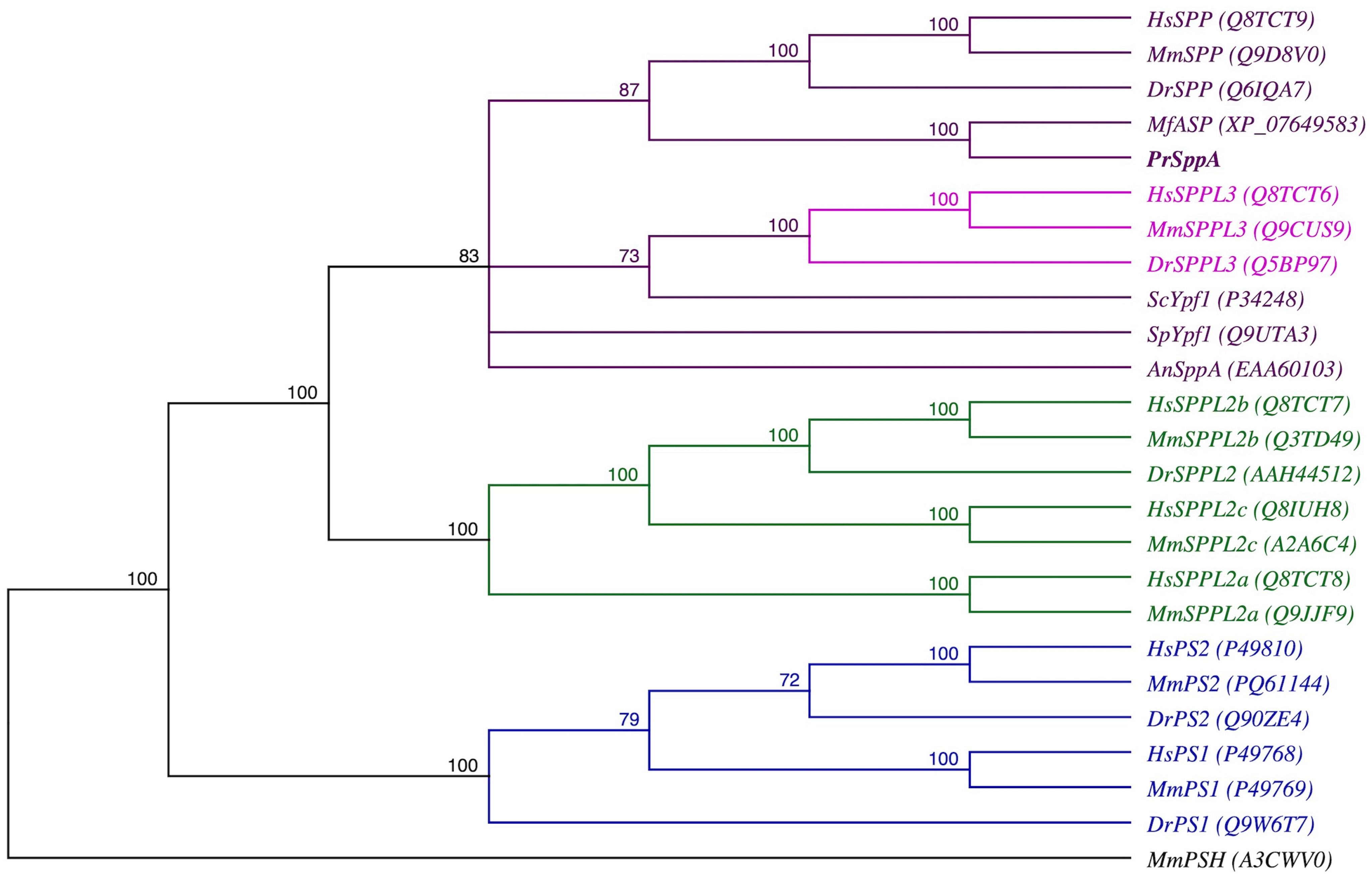
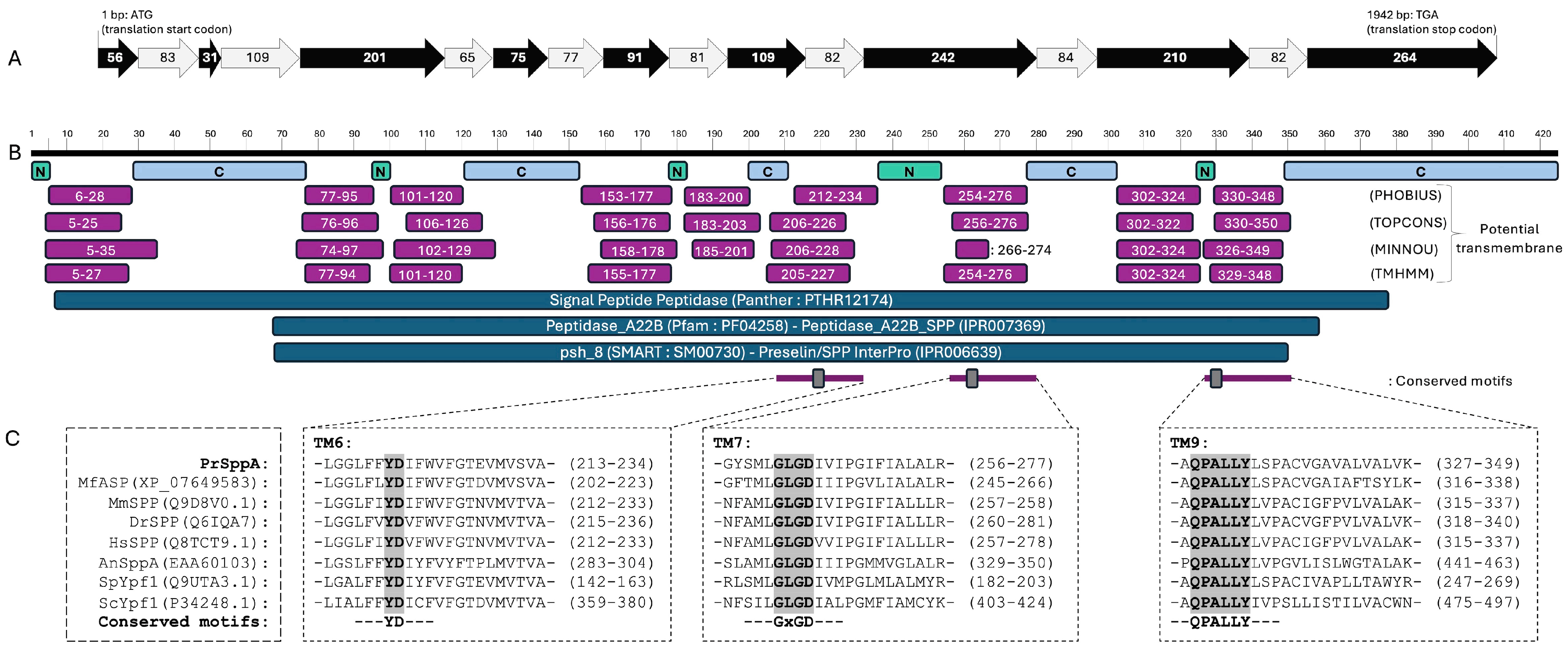
2.1. Identification and Bioinformatic Characterization of the P. rhodozyma SppA Gene

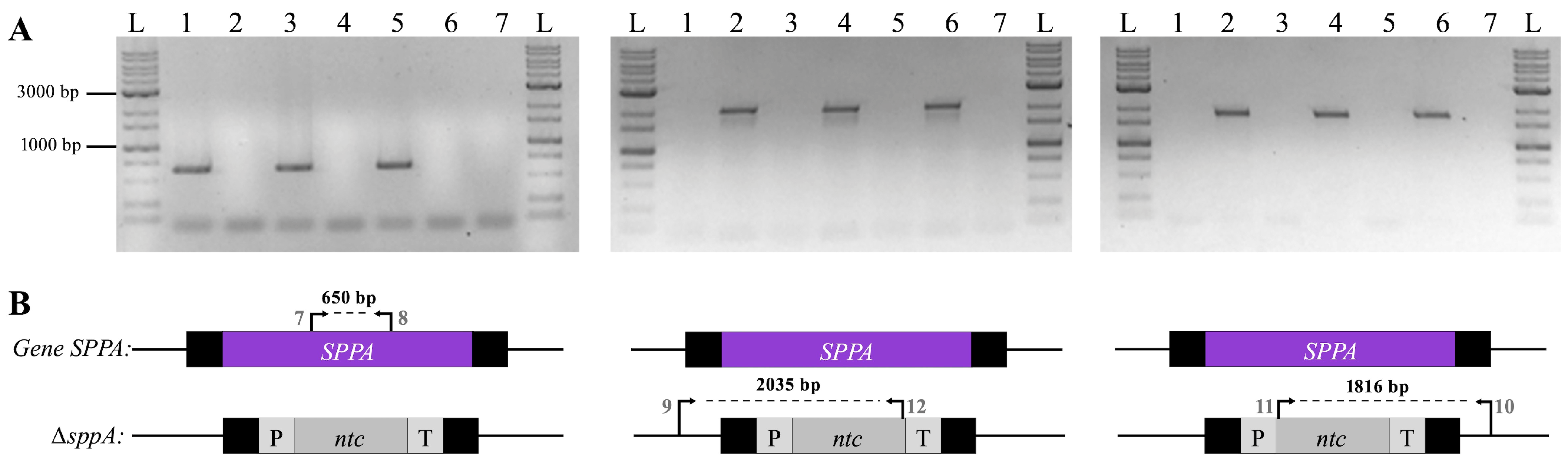
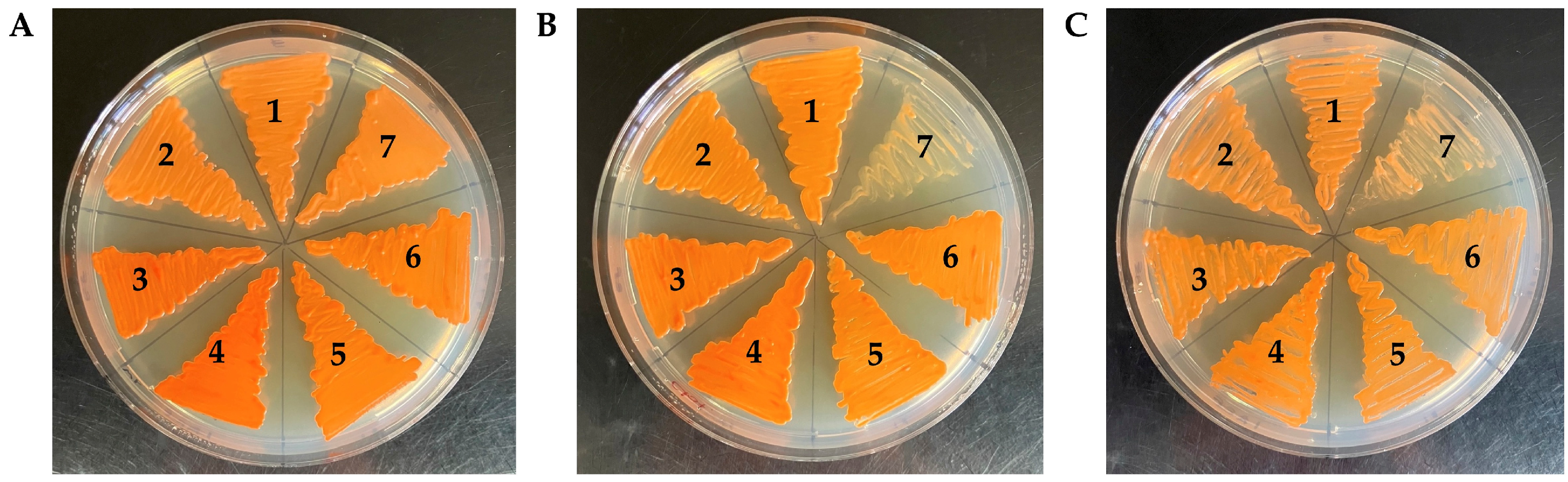
2.2. SPPA Gene Mutation in P. rhodozyma
2.3. Transcriptional Effects of SPPA Gene Deletion in Distinct Genetic Backgrounds
3. Materials and Methods
3.1. Identification and Bioinformatic Characterization of the P. rhodozyma SPPA Gene
3.2. Microorganisms and Culture Conditions
3.3. Nucleic Acid Purification and PCR Analysis
3.4. Plasmid Construction and Yeast Transformation
3.5. RNA Extraction, Library Preparation, and Sequencing
3.6. RNA-Seq Data Processing and Differential Expression Analysis
4. Conclusions
Supplementary Materials
Author Contributions
Funding
Institutional Review Board Statement
Informed Consent Statement
Data Availability Statement
Conflicts of Interest
Abbreviations
| ATF6 | Activating Transcription Factor 6 |
| bHLH-ZIP | basic helix-loop-helix leucine zipper |
| CDS | Coding sequence |
| DEGs | Differentially Expressed Genes |
| Dsc | Defective for SREBP cleavage |
| DTT | dithiothreitol |
| ER | Endoplasmic Reticulum |
| ERAD | Endoplasmic Reticulum-Associated Degradation |
| GO | Gene Ontology |
| INSIG | Insulin induced gene |
| IRE1 | Inositol-Requiring Enzyme 1 |
| MAFFT | Multiple Alignment using Fast Fourier Transform |
| MVA | Mevalonate |
| NES | Normalized Enrichment Score |
| ORF | Open Reading Frame |
| padj | Adjusted p-value |
| PERK | PKR-like ER kinase |
| RNA-seq | RNA sequencing |
| RPKM | Reads Per Kilobase per Million mapped reads |
| S1P | Site-1 Protease |
| S2P | Site-2 Protease |
| SCAP | SREBP Cleavage-Activating Protein |
| SPP | Signal peptide peptidase |
| SPPL | Signal peptide peptidase like |
| SRE | Sterol Regulatory Element |
| SREBP | Sterol Regulatory Element-Binding Protein |
| TM | Transmembrane |
| TMHMM | TransMembrane Hidden Markov Model |
| TPM | Transcripts Per Million |
| UPR | Unfolded Protein Response |
| XBP1 | X-box Binding Protein 1 |
| XBP1s | Spliced XBP1 |
| XBP1u | Unspliced XBP1 |
References
- Higuera-Ciapara, I.; Félix-Valenzuela, L.; Goycoolea, F.M. Astaxanthin: A review of its chemistry and applications. Crit. Rev. Food Sci. Nutr. 2006, 46, 185–196. [Google Scholar] [CrossRef]
- Galasso, C.; Corinaldesi, C.; Sansone, C. Carotenoids from marine organisms: Biological functions and industrial applications. Antioxidants 2017, 6, 96. [Google Scholar] [CrossRef]
- Sun, J.; Zhang, Z.; Gao, L.; Yang, F. Advances and trends for astaxanthin synthesis in Phaffia rhodozyma. Microb. Cell Fact. 2025, 24, 100. [Google Scholar] [CrossRef] [PubMed]
- Loto, I.; Gutiérrez, M.S.; Barahona, S.; Sepúlveda, D.; Martínez-Moya, P.; Baeza, M.; Cifuentes, V.; Alcaíno, J. Enhancement of carotenoid production by disrupting the C22-sterol desaturase gene (CYP61) in Xanthophyllomyces dendrorhous. BMC Microbiol. 2012, 12, 235. [Google Scholar] [CrossRef]
- Gómez, M.; Campusano, S.; Gutiérrez, M.S.; Sepúlveda, D.; Barahona, S.; Baeza, M.; Cifuentes, V.; Alcaíno, J. Sterol regulatory element-binding protein Sre1 regulates carotenogenesis in the red yeast Xanthophyllomyces dendrorhous. J. Lipid Res. 2020, 61, 1658–1674. [Google Scholar] [CrossRef]
- Gómez, M.; Baeza, M.; Cifuentes, V.; Alcaíno, J. The SREBP (Sterol Regulatory Element-Binding Protein) pathway: A regulatory bridge between carotenogenesis and sterol biosynthesis in the carotenogenic yeast Xanthophyllomyces dendrorhous. Biol. Res. 2021, 54, 34. [Google Scholar] [CrossRef]
- Bien, C.M.; Espenshade, P.J. Sterol Regulatory Element Binding Proteins in fungi: Hypoxic transcription factors linked to pathogenesis. Eukaryot. Cell 2010, 9, 352–359. [Google Scholar] [CrossRef]
- Shimano, H.; Sato, R. SREBP-regulated lipid metabolism: Convergent physiology—Divergent pathophysiology. Nat. Rev. Endocrinol. 2017, 13, 710–730. [Google Scholar] [CrossRef] [PubMed]
- DeBose-Boyd, R.A.; Ye, J. SREBPs in lipid metabolism, insulin signaling, and beyond. Trends Biochem. Sci. 2018, 43, 358–368. [Google Scholar] [CrossRef] [PubMed]
- Goldstein, J.L.; DeBose-Boyd, R.A.; Brown, M.S. Protein sensors for membrane sterols. Cell 2006, 124, 35–46. [Google Scholar] [CrossRef]
- Chandrasekaran, P.; Weiskirchen, R. The Role of SCAP/SREBP as Central Regulators of Lipid Metabolism in Hepatic Steatosis. Int. J. Mol. Sci. 2024, 25, 1109. [Google Scholar] [CrossRef]
- Yang, T.; Espenshade, P.J.; Wright, M.E.; Yabe, D.; Gong, Y.; Aebersold, R.; Goldstein, J.L.; Brown, M.S. Crucial step in cholesterol homeostasis: Sterols promote binding of SCAP to INSIG-1, a membrane protein that facilitates retention of SREBPs in ER. Cell 2002, 110, 489–500. [Google Scholar] [CrossRef]
- Yabe, D.; Brown, M.S.; Goldstein, J.L. Insig-2, a second endoplasmic reticulum protein that binds SCAP and blocks export of sterol regulatory element-binding proteins. Proc. Natl. Acad. Sci. USA 2002, 99, 12753–12758. [Google Scholar] [CrossRef]
- Sakai, J.; Duncan, E.A.; Rawson, R.B.; Hua, X.; Brown, M.S.; Goldstein, J.L. Sterol-regulated release of SREBP-2 from cell membranes requires two sequential cleavages, one within a transmembrane segment. Cell 1996, 85, 1037–1046. [Google Scholar] [CrossRef] [PubMed]
- Duncan, E.A.; Brown, M.S.; Goldstein, J.L.; Sakai, J. Cleavage site for Sterol-Regulated Protease localized to a leu-ser bond in the lumenal loop of Sterol Regulatory Element-Binding Protein-2. J. Biol. Chem. 1997, 272, 12778–12785. [Google Scholar] [CrossRef] [PubMed]
- Rawson, R.B.; Zelenski, N.G.; Nijhawan, D.; Ye, J.; Sakai, J.; Hasan, M.T.; Chang, T.Y.; Brown, M.S.; Goldstein, J.L. Complementation cloning of S2P, a gene encoding a putative metalloprotease required for intramembrane cleavage of SREBPs. Mol. Cell 1997, 1, 47–57. [Google Scholar] [CrossRef]
- Brown, M.S.; Goldstein, J.L. A proteolytic pathway that controls the cholesterol content of membranes, cells, and blood. Proc. Natl. Acad. Sci. USA 1999, 96, 11041–11048. [Google Scholar] [CrossRef]
- Hughes, A.L.; Todd, B.L.; Espenshade, P.J. SREBP pathway responds to sterols and functions as an oxygen sensor in fission yeast. Cell 2005, 120, 831–842. [Google Scholar] [CrossRef] [PubMed]
- Stewart, E.V.; Nwosu, C.C.; Tong, Z.; Roguev, A.; Cummins, T.D.; Kim, D.U.; Hayles, J.; Park, H.O.; Hoe, K.L.; Powell, D.W.; et al. Yeast SREBP cleavage activation requires the Golgi Dsc E3 ligase complex. Mol. Cell 2011, 42, 160–171. [Google Scholar] [CrossRef]
- Cheung, R.; Espenshade, P.J. Structural requirements for sterol regulatory element-binding protein (SREBP) cleavage in fission yeast. J. Biol. Chem. 2013, 288, 20351–20360. [Google Scholar] [CrossRef]
- Hwang, J.; Ribbens, D.; Raychaudhuri, S.; Cairns, L.; Gu, H.; Frost, A.; Urban, S.; Espenshade, P.J. A Golgi rhomboid protease Rbd2 recruits Cdc48 to cleave yeast SREBP. EMBO J. 2016, 35, 2332–2349. [Google Scholar] [CrossRef]
- Chang, Y.C.; Bien, C.M.; Lee, H.; Espenshade, P.J.; Kwon-Chung, K.J. Sre1p, a regulator of oxygen sensing and sterol homeostasis, is required for virulence in Cryptococcus neoformans. Mol. Microbiol. 2007, 64, 614–629. [Google Scholar] [CrossRef] [PubMed]
- Bien, C.M.; Chang, Y.C.; Nes, W.D.; Kwon-Chung, K.J.; Espenshade, P.J. Cryptococcus neoformans Site-2 protease is required for virulence and survival in the presence of azole drugs. Mol. Microbiol. 2009, 74, 672–690. [Google Scholar] [CrossRef]
- Willger, S.D.; Cornish, E.J.; Chung, D.; Fleming, B.A.; Lehmann, M.M.; Puttikamonkul, S.; Cramer, R.A. Dsc orthologs are required for hypoxia adaptation, triazole drug responses, and fungal virulence in Aspergillus fumigatus. Eukaryot. Cell 2012, 11, 1557–1567. [Google Scholar] [CrossRef]
- Vaknin, Y.; Hillmann, F.; Iannitti, R.; Ben Baruch, N.; Sandovsky-Losica, H.; Shadkchan, Y.; Romani, L.; Brakhage, A.; Kniemeyer, O.; Osherov, N. Identification and Characterization of a Novel Aspergillus fumigatus Rhomboid Family Putative Protease, RbdA, Involved in Hypoxia Sensing and Virulence. Infect. Immun. 2016, 84, 1866–1878. [Google Scholar] [CrossRef]
- Dhingra, S.; Kowalski, C.H.; Thammahong, A.; Beattie, S.R.; Bultman, K.M.; Cramer, R.A. RbdB, a Rhomboid Protease Critical for SREBP Activation and Virulence in Aspergillus fumigatus. mSphere 2016, 1, e00035-16, Erratum in mSphere 2019, 4, e00678-19. https://doi.org/10.1128/msphere.00678-19. [Google Scholar] [CrossRef]
- Dhingra, S.; Cramer, R.A. Regulation of sterol biosynthesis in the human fungal pathogen Aspergillus fumigatus: Opportunities for therapeutic development. Front. Microbiol. 2017, 8, 92. [Google Scholar] [CrossRef]
- Bat-Ochir, C.; Kwak, J.Y.; Koh, S.K.; Jeon, M.H.; Chung, D.; Lee, Y.W.; Chae, S.K. The signal peptide peptidase SppA is involved in sterol regulatory element-binding protein cleavage and hypoxia adaptation in Aspergillus nidulans. Mol. Microbiol. 2016, 100, 635–655. [Google Scholar] [CrossRef]
- Gutiérrez, M.S.; Campusano, S.; González, A.M.; Gómez, M.; Barahona, S.; Sepúlveda, D.; Espenshade, P.J.; Fernández-Lobato, M.; Baeza, M.; Cifuentes, V.; et al. Sterol Regulatory Element-Binding Protein (Sre1) promotes the synthesis of carotenoids and sterols in Xanthophyllomyces dendrorhous. Front. Microbiol. 2019, 10, 586. [Google Scholar] [CrossRef] [PubMed]
- Gómez, M.; Gutiérrez, M.S.; González, A.M.; Gárate-Castro, C.; Sepúlveda, D.; Barahona, S.; Baeza, M.; Cifuentes, V.; Alcaíno, J. Metallopeptidase Stp1 activates the transcription factor Sre1 in the carotenogenic yeast Xanthophyllomyces dendrorhous. J. Lipid Res. 2020, 61, 229–243. [Google Scholar] [CrossRef] [PubMed]
- Yücel, S.S.; Lemberg, M.K. Signal Peptide Peptidase-Type Proteases: Versatile Regulators with Functions Ranging from Limited Proteolysis to Protein Degradation. J. Mol. Biol. 2020, 432, 5063–5078. [Google Scholar] [CrossRef] [PubMed]
- Weihofen, A.; Lemberg, M.K.; Ploegh, H.L.; Bogyo, M.; Martoglio, B. Release of signal peptide fragments into the cytosol requires cleavage in the transmembrane region by a protease activity that is specifically blocked by a novel cysteine protease inhibitor. J. Biol. Chem. 2000, 275, 30951–30956. [Google Scholar] [CrossRef]
- Weihofen, A.; Binns, K.; Lemberg, M.K.; Ashman, K.; Martoglio, B. Identification of signal peptide peptidase, a presenilin-type aspartic protease. Science 2002, 296, 2215–2218. [Google Scholar] [CrossRef]
- Mentrup, T.; Loock, A.C.; Fluhrer, R.; Schröder, B. Signal peptide peptidase and SPP-like proteases—Possible therapeutic targets. Biochim. Et Biophys. Acta (BBA)-Mol. Cell Res. 2017, 1864, 2169–2182. [Google Scholar] [CrossRef] [PubMed]
- Wolfe, M.S.; Xia, W.; Ostaszewski, B.L.; Diehl, T.S.; Kimberly, W.T.; Selkoe, D.J. Two transmembrane aspartates in presenilin-1 required for presenilin endoproteolysis and γ-secretase activity. Nature 1999, 398, 513–517. [Google Scholar] [CrossRef]
- De Strooper, B.; Annaert, W.; Cupers, P.; Saftig, P.; Craessaerts, K.; Mumm, J.S.; Schroeter, E.H.; Schrijvers, V.; Wolfe, M.S.; Ray, W.J. A presenilin-1-dependent γ-secretase-like protease mediates release of Notch intracellular domain. Nature 1999, 398, 518–522. [Google Scholar] [CrossRef]
- De Strooper, B. Aph-1, Pen-2, and nicastrin with presenilin generate an active γ-secretase complex. Neuron 2003, 38, 9–12. [Google Scholar] [CrossRef]
- Mentrup, T.; Fluhrer, R.; Schröder, B. Latest emerging functions of SPP/SPPL intramembrane proteases. Eur. J. Cell Biol. 2017, 96, 372–382. [Google Scholar] [CrossRef] [PubMed]
- Baeza, M.; Gómez, M.; Barahona, S.; Coche-Miranda, M.; Apariz, G.; Alcaíno, J. Comparative Transcriptomic Analyses Reveal Potential Stp1 Regulatory Roles Independent of Sre1 in Phaffia rhodozyma. Int. J. Mol. Sci. 2025, 26, 12008. [Google Scholar] [CrossRef]
- Friedmann, E.; Lemberg, M.K.; Weihofen, A.; Dev, K.K.; Dengler, U.; Rovelli, G.; Martoglio, B. Consensus analysis of signal peptide peptidase and homologous human aspartic proteases reveals opposite topology of catalytic domains compared with presenilins. J. Biol. Chem. 2004, 279, 50790–50798. [Google Scholar] [CrossRef]
- Nyborg, A.C.; Ladd, T.B.; Jansen, K.; Kukar, T.; Golde, T.E. Intramembrane proteolytic cleavage by human signal peptide peptidase like 3 and malaria signal peptide peptidase. FASEB J. 2006, 20, 1671–1679. [Google Scholar] [CrossRef]
- Höppner, S.; Schröder, B.; Fluhrer, R. Structure and function of SPP/SPPL proteases: Insights from biochemical evidence and predictive modeling. FEBS J. 2023, 290, 5456–5474. [Google Scholar] [CrossRef]
- Voss, M.; Schröder, B.; Fluhrer, R. Mechanism, specificity, and physiology of signal peptide peptidase (SPP) and SPP-like proteases. Biochim. Biophys. Acta 2013, 1828, 2828–2839. [Google Scholar] [CrossRef]
- Wang, J.; Beher, D.; Nyborg, A.C.; Shearman, M.S.; Golde, T.E.; Goate, A. C-terminal PAL motif of presenilin and presenilin homologues required for normal active site conformation. J. Neurochem. 2006, 96, 218–227. [Google Scholar] [CrossRef]
- Mentrup, T.; Cabrera-Cabrera, F.; Fluhrer, R.; Schröder, B. Physiological functions of SPP/SPPL intramembrane proteases. Cell Mol. Life Sci. 2020, 77, 2959–2979. [Google Scholar] [CrossRef]
- Kall, L.; Krogh, A.; Sonnhammer, E.L.L. Advantages of combined transmembrane topology and signal peptide prediction—The Phobius web server. Nucleic Acids Res. 2007, 35, W429–W432. [Google Scholar] [CrossRef] [PubMed]
- Tsirigos, K.D.; Peters, C.; Shu, N.; Käll, L.; Elofsson, A. The TOPCONS web server for consensus prediction of membrane protein topology and signal peptides. Nucleic Acids Res. 2015, 43, W401–W407. [Google Scholar] [CrossRef] [PubMed]
- Cao, B.; Porollo, A.; Adamczak, R.; Jarrell, M.; Meller, J. Enhanced recognition of protein transmembrane domains with prediction-based structural profiles. Bioinformatics 2006, 22, 303–309. [Google Scholar] [CrossRef] [PubMed]
- Krogh, A.; Larsson, B.; von Heijne, G.; Sonnhammer, E.L.L. Predicting transmembrane protein topology with a hidden markov model: Application to complete genomes. J. Mol. Biol. 2001, 305, 567–580. [Google Scholar] [CrossRef]
- Mi, H.; Muruganujan, A.; Ebert, D.; Huang, X.; Thomas, P.D. PANTHER version 14: More genomes, a new PANTHER GO-slim and improvements in enrichment analysis tools. Nucleic Acids Res. 2019, 47, D419–D426. [Google Scholar] [CrossRef]
- Mistry, J.; Chuguransky, S.; Williams, L.; Qureshi, M.; Salazar, G.A.; Sonnhammer, E.L.L.; Tosatto, S.C.E.; Paladin, L.; Raj, S.; Richardson, L.J.; et al. Pfam: The protein families database in 2021. Nucleic Acids Res. 2021, 49, D412–D419. [Google Scholar] [CrossRef]
- Letunic, I.; Bork, P. 20 years of the SMART protein domain annotation resource. Nucleic Acids Res. 2018, 46, D493–D496. [Google Scholar] [CrossRef] [PubMed]
- Avci, D.; Fuchs, S.; Schrul, B.; Fukumori, A.; Breker, M.; Frumkin, I.; Chen, C.Y.; Biniossek, M.L.; Kremmer, E.; Schilling, O.; et al. The yeast ER-intramembrane protease Ypf1 refines nutrient sensing by regulating transporter abundance. Mol. Cell 2014, 56, 630–640. [Google Scholar] [CrossRef] [PubMed]
- Lamb, D.C.; Baldwin, B.C.; Kwon-Chung, K.J.; Kelly, S.L. Stereoselective interaction of the azole antifungal agent SCH39304 with the cytochrome P-450 monooxygenase system isolated from Cryptococcus neoformans. Antimicrob. Agents Chemother. 1997, 41, 1465–1467. [Google Scholar] [CrossRef] [PubMed]
- Lee, H.; Bien, C.M.; Hughes, A.L.; Espenshade, P.J.; Kwon-Chung, K.J.; Chang, Y.C. Cobalt chloride, a hypoxia-mimicking agent, targets sterol synthesis in the pathogenic fungus Cryptococcus neoformans. Mol. Microbiol. 2007, 65, 1018–1033. [Google Scholar] [CrossRef]
- Venegas, M.; Durán, A.; Campusano, S.; Barahona, S.; Sepúlveda, D.; Baeza, M.; Cifuentes, V.; Alcaíno, J. Identification of Potential New Genes Related to the SREBP Pathway in Xanthophyllomyces dendrorhous. Biomolecules 2024, 14, 778. [Google Scholar] [CrossRef]
- Chen, C.Y.; Malchus, N.S.; Hehn, B.; Stelzer, W.; Avci, D.; Langosch, D.; Lemberg, M.K. Signal peptide peptidase functions in ERAD to cleave the unfolded protein response regulator XBP1u. EMBO J. 2014, 33, 2492–2506. [Google Scholar] [CrossRef]
- Ruggiano, A.; Foresti, O.; Carvalho, P. Quality control: ER-associated degradation: Protein quality control and beyond. J. Cell Biol. 2014, 204, 869–879. [Google Scholar] [CrossRef]
- Walter, P.; Ron, D. The Unfolded Protein Response: From Stress Pathway to Homeostatic Regulation. Science 2011, 334, 1081–1086. [Google Scholar] [CrossRef]
- Le Goupil, S.; Laprade, H.; Aubry, M.; Chevet, E. Exploring the IRE1 interactome: From canonical signaling functions to unexpected roles. J. Biol. Chem. 2024, 300, 107169. [Google Scholar] [CrossRef]
- Zhou, H.; Zhang, J.; Wang, R.; Huang, J.; Xin, C.; Song, Z. The unfolded protein response is a potential therapeutic target in pathogenic fungi. FEBS J. 2025, 292, 5008–5025. [Google Scholar] [CrossRef]
- Manghwar, H.; Li, J. Endoplasmic Reticulum Stress and Unfolded Protein Response Signaling in Plants. Int. J. Mol. Sci. 2022, 23, 828. [Google Scholar] [CrossRef]
- Altschul, S.F.; Gish, W.; Miller, W.; Myers, E.W.; Lipman, D.J. Basic local alignment search tool. J. Mol. Biol. 1990, 215, 403–410. [Google Scholar] [CrossRef]
- Dobin, A.; Davis, C.A.; Schlesinger, F.; Drenkow, J.; Zaleski, C.; Jha, S.; Batut, P.; Chaisson, M.; Gingeras, T.R. STAR: Ultrafast universal RNA-seq aligner. Bioinformatics 2013, 29, 15–21. [Google Scholar] [CrossRef] [PubMed]
- Katoh, K.; Standley, D.M. MAFFT multiple sequence alignment software version 7: Improvements in performance and usability. Mol. Biol. Evol. 2013, 30, 772–780. [Google Scholar] [CrossRef] [PubMed]
- Li, X.; Dang, S.; Yan, C.; Gong, X.; Wang, J.; Shi, Y. Structure of a presenilin family intramembrane aspartate protease. Nature 2013, 493, 56–61. [Google Scholar] [CrossRef] [PubMed]
- Paysan-Lafosse, T.; Blum, M.; Chuguransky, S.; Grego, T.; Pinto, B.L.; Salazar, G.A.; Bileschi, M.L.; Bork, P.; Bridge, A.; Colwell, L.; et al. InterPro in 2022. Nucleic Acids Res. 2023, 51, D418–D427. [Google Scholar] [CrossRef]
- Ødum, M.T.; Teufel, F.; Thumuluri, V.; Almagro Armenteros, J.J.; Johansen, A.R.; Winther, O.; Nielsen, H. DeepLoc 2.1: Multi-label membrane protein type prediction using protein language models. Nucleic Acids Res. 2024, 52, W215–W220. [Google Scholar] [CrossRef]
- Sambrook, J.; Russell, D.W. Molecular Cloning: A Laboratory Manual, 3rd ed.; Cold Spring Harbor Laboratory Press: Cold Spring Harbor, NY, USA, 2001; p. 2100. [Google Scholar]
- Adrio, J.L.; Veiga, M. Transformation of the astaxanthin-producing yeast Phaffia rhodozyma. Biotechnol. Tech. 1995, 9, 509–512. [Google Scholar] [CrossRef]
- Kim, I.G.; Nam, S.K.; Sohn, J.H.; Rhee, S.K.; An, G.H.; Lee, S.H.; Choi, E.S. Cloning of the ribosomal protein L41 gene of Phaffia rhodozyma and its use a drug resistance marker for transformation. Appl. Environ. Microbiol. 1998, 64, 1947–1949. [Google Scholar] [CrossRef]
- Chen, S.; Zhou, Y.; Chen, Y.; Gu, J. fastp: An ultra-fast all-in-one FASTQ preprocessor. Bioinformatics 2018, 34, i884–i890. [Google Scholar] [CrossRef]
- Liao, Y.; Smyth, G.K.; Shi, W. The R package Rsubread is easier, faster, cheaper and better for alignment and quantification of RNA sequencing reads. Nucleic Acids Res. 2019, 47, e47. [Google Scholar] [CrossRef]
- Li, H.; Handsaker, B.; Wysoker, A.; Fennell, T.; Ruan, J.; Homer, N.; Marth, G.; Abecasis, G.; Durbin, R.; 1000 Genome Project Data Processing Subgroup. The Sequence Alignment/Map format and SAMtools. Bioinformatics 2009, 25, 2078–2079. [Google Scholar] [CrossRef]
- Love, M.I.; Huber, W.; Anders, S. Moderated estimation of fold change and dispersion for RNA-seq data with DESeq2. Genome Biol. 2014, 15, 550. [Google Scholar] [CrossRef] [PubMed]
- Subramanian, A.; Tamayo, P.; Mootha, V.K.; Mukherjee, S.; Ebert, B.L.; Gillette, M.A.; Paulovich, A.; Pomeroy, S.L.; Golub, T.R.; Lander, E.S. Gene set enrichment analysis: A knowledge-based approach for interpreting genome-wide expression profiles. Proc. Natl. Acad. Sci. USA 2005, 102, 15545–15550. [Google Scholar] [CrossRef] [PubMed]
- Ashburner, M.; Ball, C.A.; Blake, J.A.; Botstein, D.; Butler, H.; Cherry, J.M.; Davis, A.P.; Dolinski, K.; Dwight, S.S.; Eppig, J.T.; et al. Gene ontology: Tool for the unification of biology. The Gene Ontology Consortium. Nat. Genet. 2000, 25, 25–29. [Google Scholar] [CrossRef]
- Yu, G.; Wang, L.G.; Han, Y.; He, Q.Y. clusterProfiler: An R package for comparing biological themes among gene clusters. OMICS 2012, 16, 284–287. [Google Scholar] [CrossRef]
- Benjamini, Y.; Hochberg, Y. Controlling the false discovery rate: A practical and powerful approach to multiple testing. J. R. Stat. Soc. Ser. B Stat. Methodol. 1995, 57, 289–300. [Google Scholar] [CrossRef]
- McKinney, W. Data structures for statistical computing in Python. Proc. Python Sci. Conf. 2010, 445, 51–56. [Google Scholar] [CrossRef]
- Hunter, J.D. Matplotlib: A 2D graphics environment. Comput. Sci. Eng. 2007, 9, 90–95. [Google Scholar] [CrossRef]
- Waskom, M. seaborn: Statistical data visualization. J. Open Source Softw. 2021, 6, 3021. [Google Scholar] [CrossRef]
- Harris, C.R.; Millman, K.J.; van der Walt, S.J.; Gommers, R.; Virtanen, P.; Cournapeau, D.; Wieser, E.; Taylor, J.; Berg, S.; Smith, N.J.; et al. Array programming with NumPy. Nature 2020, 585, 357–362. [Google Scholar] [CrossRef] [PubMed]



| Gene | BLASTp Hit | log2 | padj |
|---|---|---|---|
| g4728 | Sterol regulatory element binding protein homolog (Sre1) | −0.5 | 1.2 × 10⁻¹ |
| g904 | Sterol 24-C-methyltransferase | −0.8 | 3.6 × 10⁻² |
| g1347 | Delta(14)-sterol reductase Erg24 | −0.6 | 1.7 × 10⁻¹ |
| g2630 | C-4 methylsterol oxidase Erg25 | −1.0 | 1.1 × 10⁻⁴ |
| g602 | Methylsterol monooxygenase Erg25b | −0.3 | 5.5 × 10⁻¹ |
| g3516 | Hydroxymethylglutaryl-coa synthase | −0.9 | 3.6 × 10⁻¹ |
| g3611 | Lanosterol synthase | −0.5 | 7.1 × 10⁻² |
| g190 | Lanosterol 14-alpha demethylase | −0.3 | 5.0 × 10⁻¹ |
| g580 | Hypothetical protein_g580 | −0.7 | 2.8 × 10⁻² |
| g5794 | Delta(7)-sterol 5(6)-desaturase Erg3b | −0.5 | 8.0 × 10⁻² |
| g1512 | hypothetical protein_g1512 | 0.3 | 4.9 × 10⁻¹ |
| g1377 | 3-hydroxy-3-methylglutaryl-coenzyme a reductase | −0.4 | 4.4 × 10⁻¹ |
| g4727 | Orotate phosphoribosyltransferase | −0.2 | 7.1 × 10⁻¹ |
| g2015 | Retrovirus-related pol polyprotein from transposon TNT 1-94 | −0.1 | 1.0 × 100 |
| Strains/Plasmids | Description | Reference or Source |
|---|---|---|
| Strains | ||
| E. coli | ||
| DH5α | AmpS. Used for molecular cloning and plasmid maintenance. | [69] |
| P. rhodozyma | ||
| CBS 6938 | P. rhodozyma wild-type strain from which all mutants derive (ZeoS, HygS and NtcS) | ATCC 96594 |
| CBS.FLAG.SRE1 | Strain WTF. Mutant ZeoS, HygR and NtcS. The SRE1 gene was replaced by a gene variant that expresses the Sre1 protein fused to the 3xFLAG epitope at its N-terminus, followed by the hygromycin B resistance cassette. | [30] |
| CBS.FLAG.SRE1.∆sppA | Strain ΔsppA. Mutant ZeoS, HygR and NtcR. The SRE1 gene was replaced by a gene variant that expresses the Sre1 protein fused to the 3xFLAG epitope at its N-terminus, followed by the hygromycin B resistance cassette. The SPPA locus was replaced by the nourseothricin resistance cassette. | This work |
| CBS.cyp61−.FLAG.SRE1 | Strain cyp61−. Mutant ZeoR, HygR and NtcS. The SRE1 gene was replaced by a gene variant that expresses the Sre1 protein fused to the 3xFLAG epitope at its N-terminus, followed by the hygromycin B resistance cassette. The CYP61 locus was interrupted by the zeocin resistance cassette. | [30] |
| CBS.cyp61−.FLAG.SRE1.∆sppA | Strain cyp61−ΔsppA. Mutant ZeoR, HygR and NtcR. The CYP61 locus was interrupted by the hygromycin B resistance cassette. The SRE1 gene was replaced by a gene variant that expresses the Sre1 protein fused to the 3xFLAG epitope at its N-terminus, followed by the hygromycin B resistance cassette. The SPPA locus was replaced by the nourseothricin resistance cassette. | This work |
| CBS.FLAG.SRE1N | Strain Sre1N. Mutant ZeoR, HygS and NtcS. The SRE1 gene was replaced by a gene version that expresses Sre1N fused to the 3xFLAG epitope at its N-terminal, followed by the zeocin resistance cassette. | [29] |
| CBS.FLAG.SRE1N.ΔsppA | Strain Sre1NΔsppA. Mutant ZeoR, HygS and NtcR. The SRE1 gene was replaced by a gene version that expresses Sre1N fused to the 3xFLAG epitope at its N-terminal, followed by the zeocin resistance cassette. The SPPA locus was replaced by the nourseothricin resistance cassette. | This work |
| CBS.sre1− | Strain Δsre1. Mutant ZeoR, HygS and NtcS. Approximately 90% of the coding region of gene SRE1 was replaced by the zeocin resistance cassette. | [29] |
| Plasmids | ||
| pBluescript SK- (pBS) | Cloning vector (ColE1 ori, AmpR, blue-white colony selection). | Agilent Technologies Inc., Santa Clara, CA, USA |
| pBS-nat | pBS containing the nourseothricin resistance cassette at the EcoRV site used for P. rhodozyma transformant selection. | [30] |
| pBS-ΔsppAntc | pBS carrying the DNA fragment used for P. rhodozyma transformation. The construct contains 642 bp upstream and 623 bp downstream of the SPPA gene, flanking the nourseothricin resistance cassette at the EcoRV site of the vector. This fragment was used to delete the P. rhodozyma SPPA gene through homologous recombination. | This work |
Disclaimer/Publisher’s Note: The statements, opinions and data contained in all publications are solely those of the individual author(s) and contributor(s) and not of MDPI and/or the editor(s). MDPI and/or the editor(s) disclaim responsibility for any injury to people or property resulting from any ideas, methods, instructions or products referred to in the content. |
© 2026 by the authors. Licensee MDPI, Basel, Switzerland. This article is an open access article distributed under the terms and conditions of the Creative Commons Attribution (CC BY) license.
Share and Cite
Baeza, M.; Gómez, M.; Apariz, G.; Barahona, S.; Alcaíno, J. Functional Characterization of a Signal Peptide Peptidase in Phaffia rhodozyma Reveals a Potential Role in Protein Stress Response but Not in Activation of the SREBP Ortholog Sre1. Int. J. Mol. Sci. 2026, 27, 2628. https://doi.org/10.3390/ijms27062628
Baeza M, Gómez M, Apariz G, Barahona S, Alcaíno J. Functional Characterization of a Signal Peptide Peptidase in Phaffia rhodozyma Reveals a Potential Role in Protein Stress Response but Not in Activation of the SREBP Ortholog Sre1. International Journal of Molecular Sciences. 2026; 27(6):2628. https://doi.org/10.3390/ijms27062628
Chicago/Turabian StyleBaeza, Marcelo, Melissa Gómez, Gabriela Apariz, Salvador Barahona, and Jennifer Alcaíno. 2026. "Functional Characterization of a Signal Peptide Peptidase in Phaffia rhodozyma Reveals a Potential Role in Protein Stress Response but Not in Activation of the SREBP Ortholog Sre1" International Journal of Molecular Sciences 27, no. 6: 2628. https://doi.org/10.3390/ijms27062628
APA StyleBaeza, M., Gómez, M., Apariz, G., Barahona, S., & Alcaíno, J. (2026). Functional Characterization of a Signal Peptide Peptidase in Phaffia rhodozyma Reveals a Potential Role in Protein Stress Response but Not in Activation of the SREBP Ortholog Sre1. International Journal of Molecular Sciences, 27(6), 2628. https://doi.org/10.3390/ijms27062628