2.1. Elemental Concentration in the Frontal Pole Area of the Brain
Brain tissue from the frontal pole was analyzed for metals (Mn, Cu, Zn, Cr, Pb, Cd, Ni) and metalloid (Se) using ICP-MS. Descriptive statistics based on the measured data are summarized in
Table 1. Across all analyzed elements, the distributions of concentrations in brain tissue deviate significantly from normality, as indicated by the Shapiro–Wilk test (
p < 0.05) with Holm correction (all adjusted
p-values < 0.001). As shown in
Table 1, these distributions are characterized by substantial positive skewness and high kurtosis for most variables, reflecting strongly right-skewed patterns with heavy tails and the presence of extreme values. These results indicate pronounced distributional asymmetry and heterogeneity, implying that parametric methods assuming normality may be inappropriate and that robust or non-parametric approaches should be preferred for subsequent analyses.
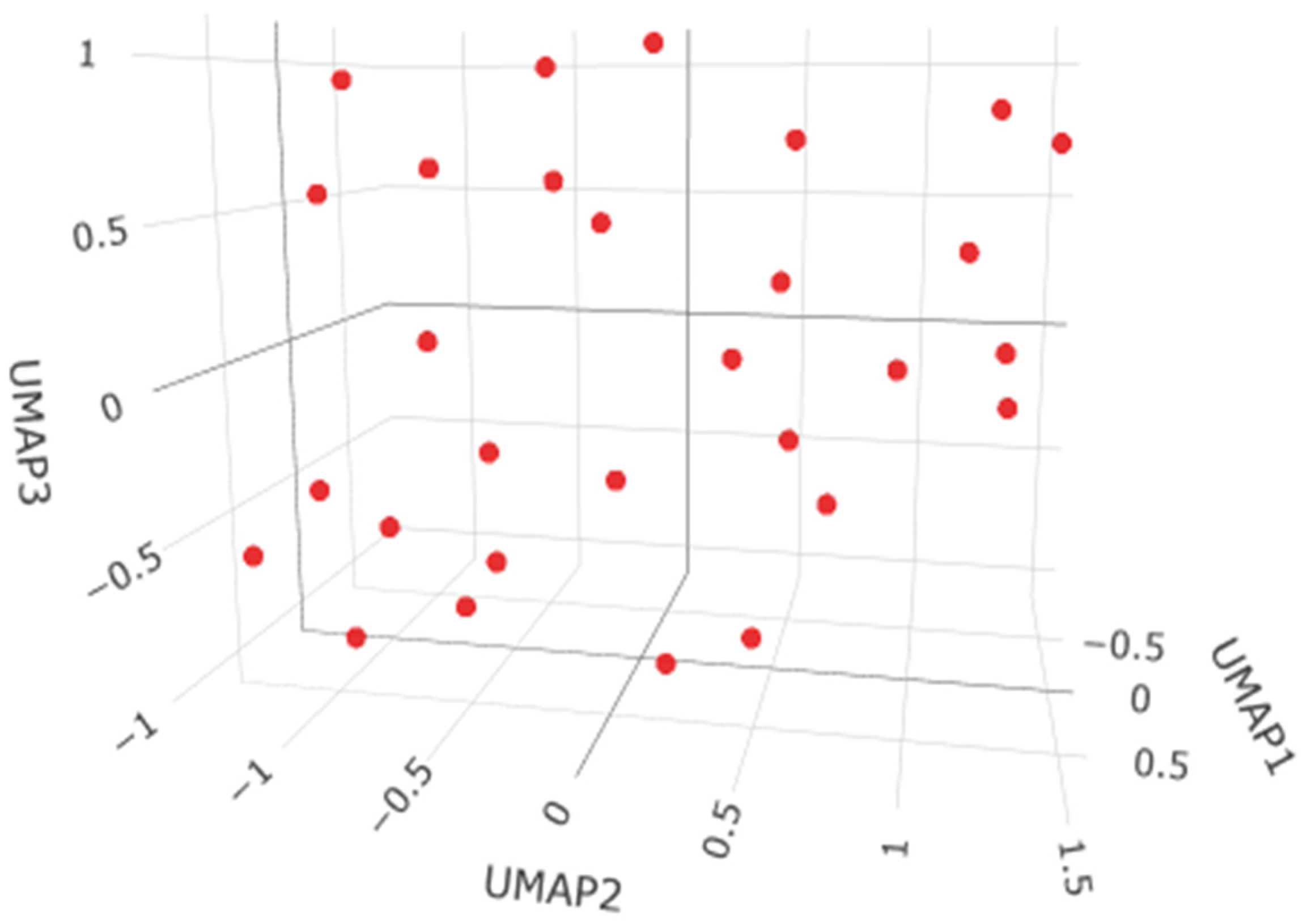
The HDBSCAN clustering analysis performed on 39 observations (minPts = 5) did not identify any meaningful clusters, classifying all objects as noise (
Figure 1). This result indicates the absence of well-defined density-based groupings in the data, suggesting that the observations do not exhibit a natural cluster structure and instead form a largely homogeneous or continuously distributed set without distinct subpopulations.
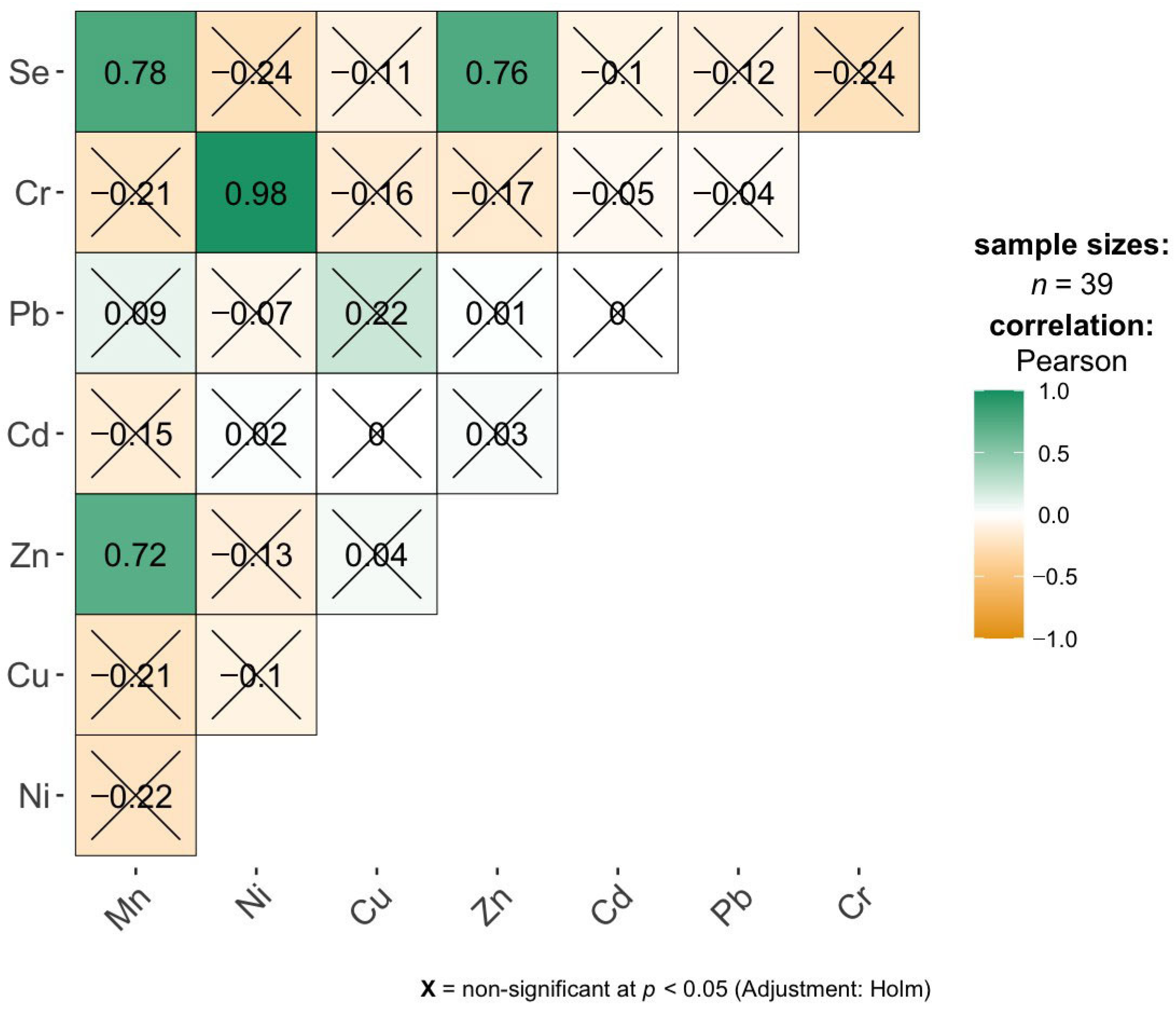
The correlation matrix for the brain samples indicates a very limited number of statistically significant linear relationships between elemental concentrations (
Figure 2). After applying the Holm correction for multiple comparisons, only three positive correlations remain significant: a very strong correlation between Cr and Ni (r = 0.98), and high correlations between Se and Mn (r = 0.78) as well as Se and Zn (r = 0.76). This suggests that, in the studied group, Cr and Ni concentrations increase almost proportionally, while Se shows a clear co-variation with both Mn and Zn. All other element pairs do not exhibit significant correlations after adjustment, with correlation coefficients generally low and close to zero, indicating weak or negligible linear associations. Overall, the results imply that elemental profiles in brain tissue are largely independent, with only a few specific pairs potentially reflecting shared accumulation pathways, metabolic regulation, or common exposure sources.
2.2. Elemental Concentration in the Liver
In the liver samples, most elemental concentrations deviate significantly from normality according to the Shapiro–Wilk test with Holm correction (all adjusted
p-values < 0.001), with the notable exception of Zn, for which no evidence against normality was found (
p = 0.940). Strong positive skewness and very high kurtosis are observed for several elements, particularly Cu, Cd, Pb, and Cr, indicating highly right-skewed distributions with heavy tails and extreme values, as also reflected by large discrepancies between means and medians and very high maximum concentrations (e.g., Cu and Cd) (
Table 2). In contrast, Mn exhibits an approximately symmetric distribution with near-zero skewness and kurtosis, yet still departs from normality, suggesting subtle but statistically detectable deviations. Overall, the liver data show pronounced heterogeneity and non-Gaussian structure for most elements, implying that parametric methods based on normality assumptions are generally inappropriate, with Zn being the only variable plausibly consistent with a normal distribution in this tissue.
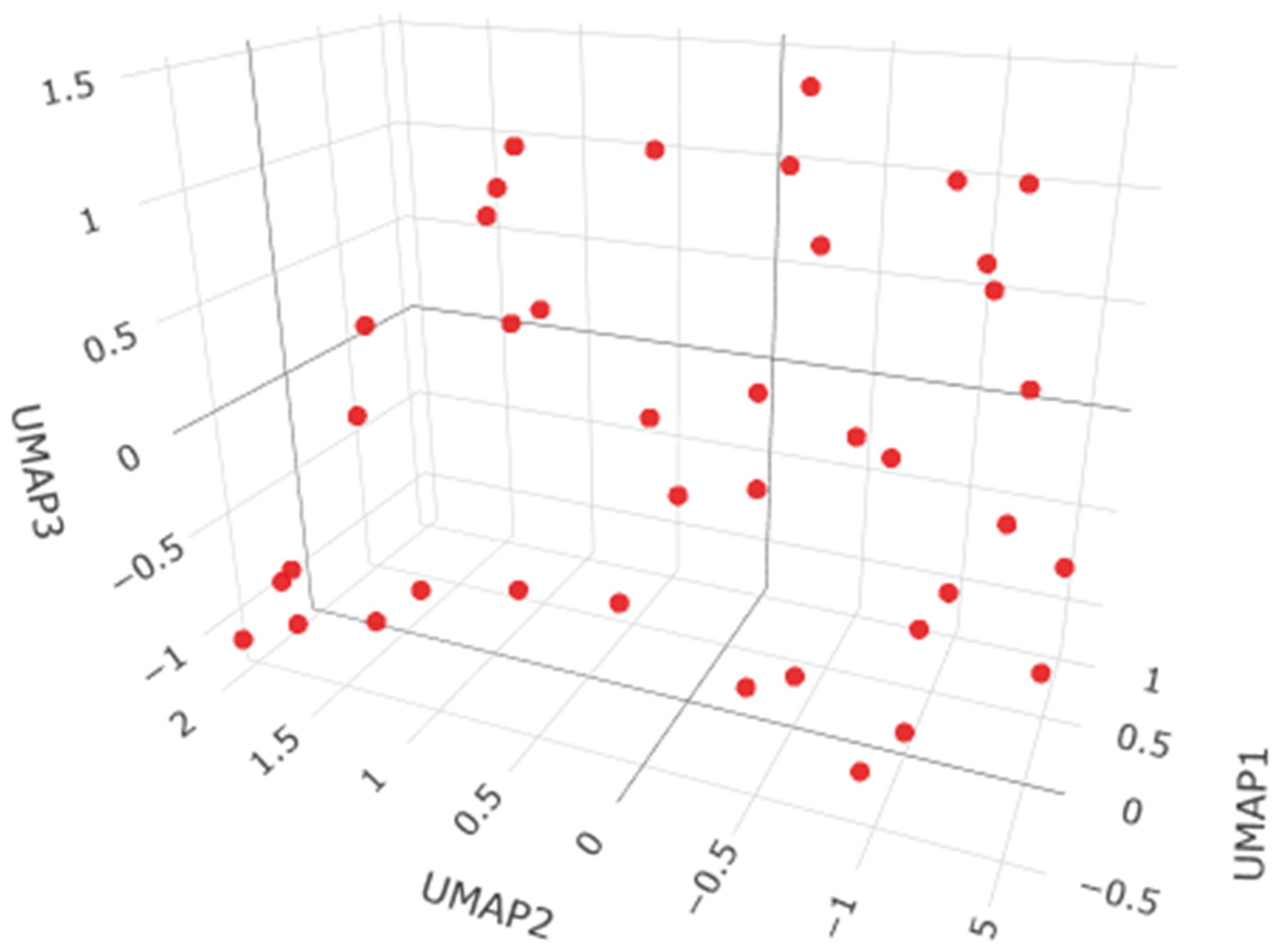
The HDBSCAN clustering analysis for the liver dataset (37 observations, minPts = 5) did not identify any meaningful clusters, with all observations classified as noise (
Figure 3). This outcome indicates that the data lack a clear density-based clustering structure and do not form distinct subgroups, suggesting a continuous or homogeneous distribution of observations rather than separable clusters.
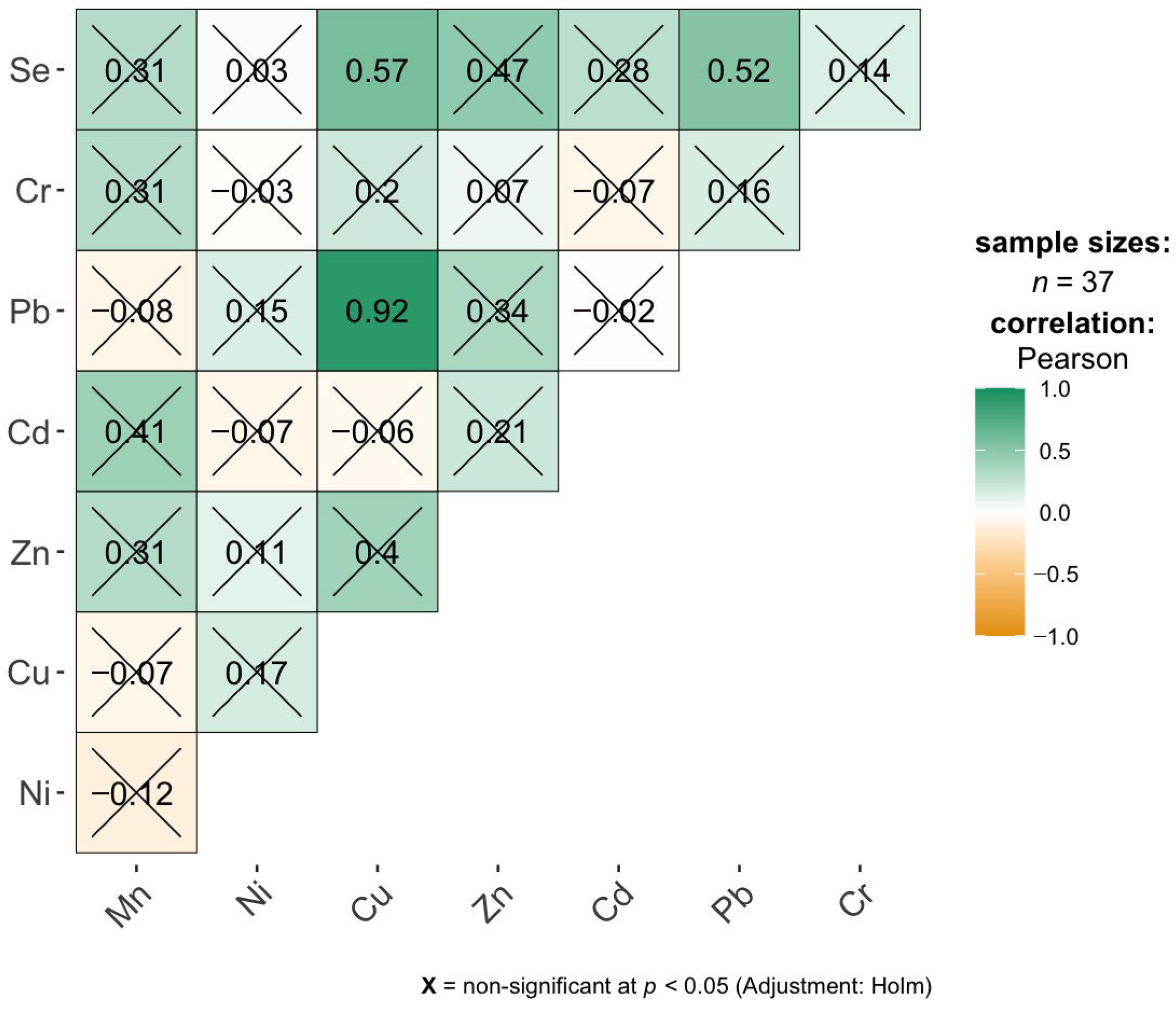
The correlation matrix for the liver samples reveals several moderate to strong positive associations between elemental concentrations at the descriptive level, although most of them do not remain statistically significant after applying the Holm correction for multiple testing (
Figure 4). The strongest observed correlation is between Pb and Cu (r = 0.92), indicating a very high co-variation between Pb and Cu concentrations in liver tissue. Other relatively strong positive correlations include Se with Cu (r = 0.57), Se with Zn (r = 0.47), Se with Cd (r = 0.28), Se with Pb (r = 0.52), and Pb with Zn (r = 0.84), suggesting that Se and Pb tend to co-occur with several other elements. However, all these correlations are marked as non-significant after adjustment, implying that, despite their magnitude, they cannot be considered statistically robust given the sample size and multiple testing. Most remaining correlations are weak and close to zero. Overall, the liver data suggest the presence of some potentially meaningful co-accumulation patterns, particularly involving Pb, Cu, and Se, but these relationships should be interpreted cautiously and treated as exploratory rather than confirmatory.
2.3. Elemental Concentration in the Lungs
In the lung samples, most elemental concentrations show significant departures from normality based on the Shapiro–Wilk test with Holm correction (adjusted
p-values ≤ 0.001 for all variables except Se). The distributions of Mn, Ni, Cd, Pb, and Cr are strongly right-skewed with high kurtosis, indicating pronounced asymmetry and heavy tails, consistent with the presence of extreme observations and substantial heterogeneity across subjects (
Table 3). Cu and Zn also significantly deviate from normality despite exhibiting more moderate skewness and kurtosis, suggesting that even relatively symmetric-looking distributions fail to meet Gaussian assumptions. In contrast, Se does not significantly depart from normality (
p = 0.128), although its skewness and kurtosis values still indicate some degree of asymmetry. Overall, the lung data are largely non-Gaussian, implying that robust or non-parametric statistical methods are generally more appropriate, with Se being the only element plausibly consistent with a normal distribution in this tissue.
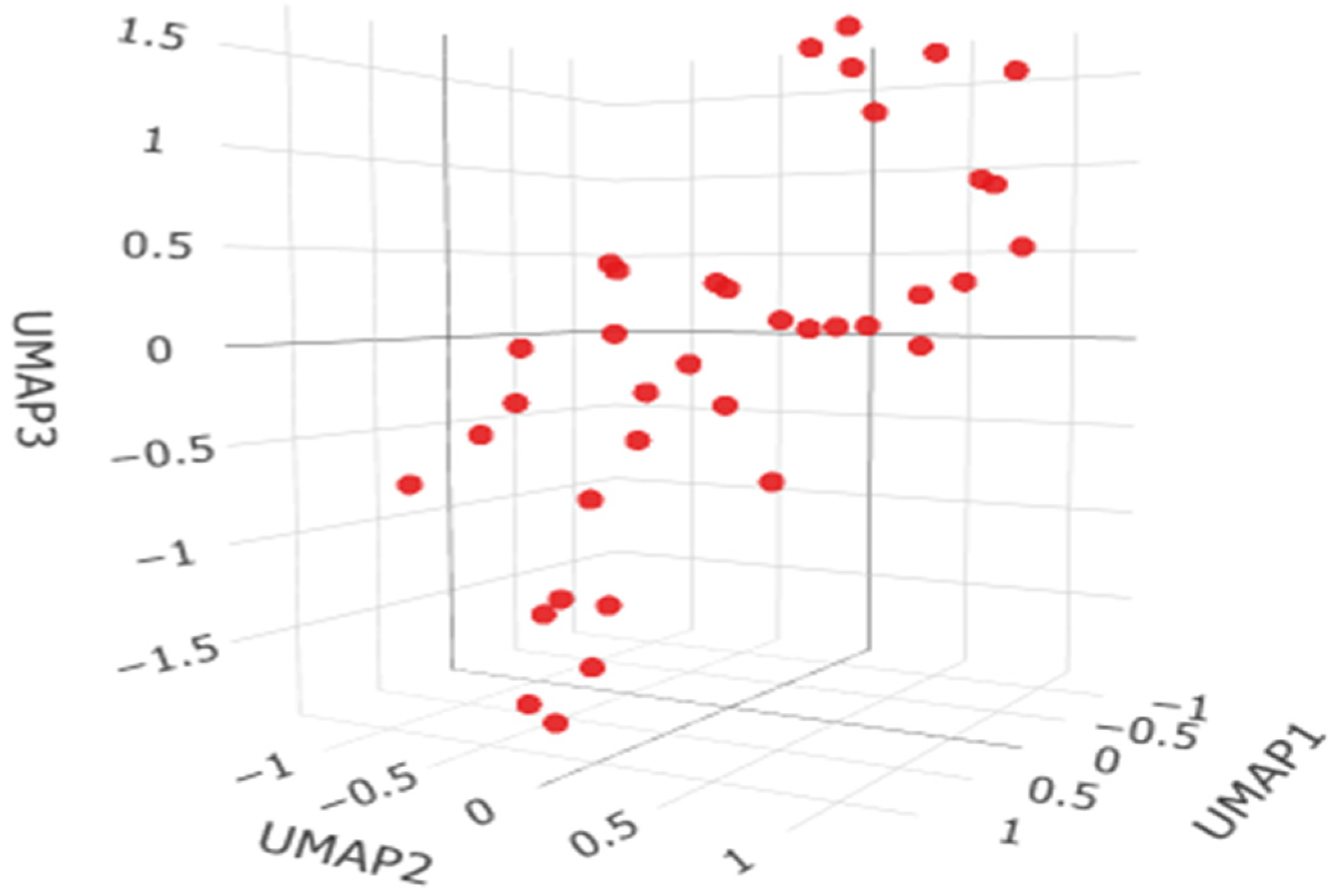
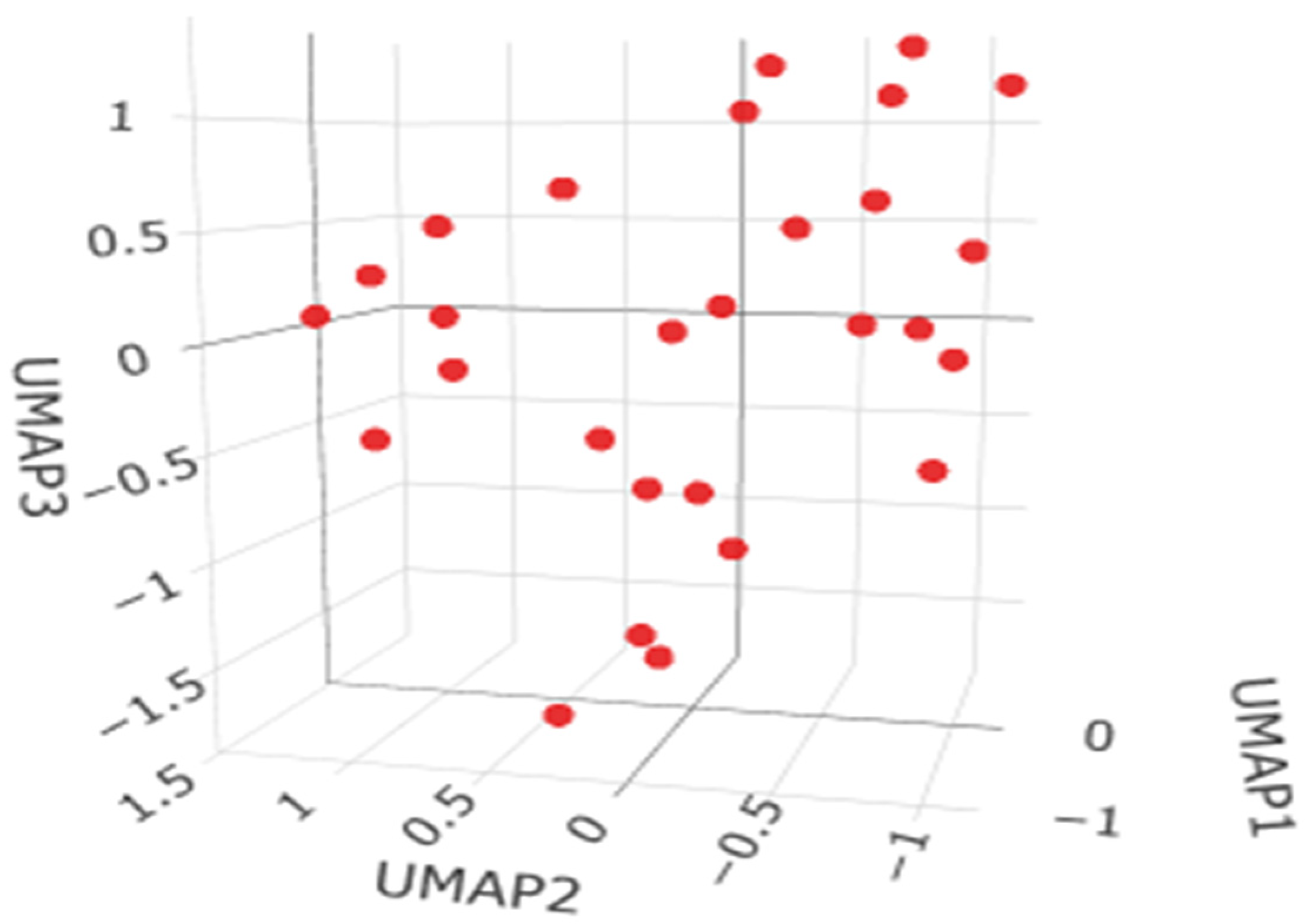
The HDBSCAN clustering analysis for the lung dataset (29 observations, minPts = 5) did not reveal any distinct clusters, with all observations classified as noise (
Figure 5). This result suggests that the data do not exhibit a clear density-based clustering structure and that the observations do not separate into well-defined subgroups, indicating a lack of natural clustering in the dataset.
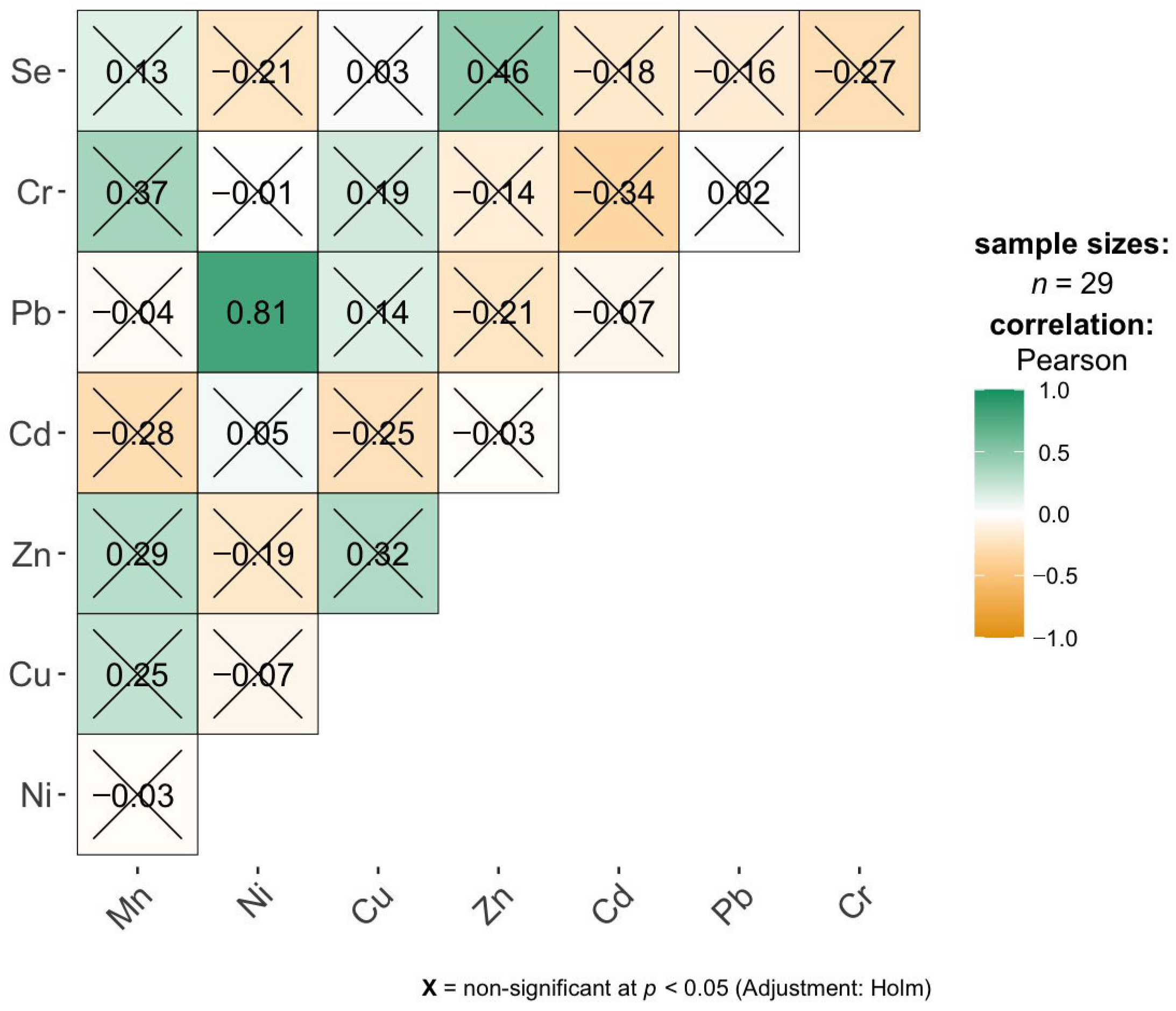
The correlation matrix for the lung samples shows only one statistically significant association after Holm correction, namely a strong positive correlation between Pb and Ni (r = 0.81), indicating a pronounced co-variation of Pb and Ni concentrations in lungs (
Figure 6). This suggests that these two elements may share common exposure sources or similar accumulation mechanisms in the respiratory system. All other correlations are non-significant after adjustment and are generally weak to moderate in magnitude. Although some descriptive correlations appear relatively high (e.g., Zn with Cu, r = 0.82; Cr with Mn, r = 0.87; Se with Zn, r = 0.46), they do not reach statistical significance when controlling for multiple testing. Overall, the results indicate that elemental concentrations in lungs are largely independent, with Pb and Ni being the only pair showing a robust and statistically reliable linear relationship.
2.4. Elemental Concentration in the Bronchi
In the bronchi samples, most elemental concentrations also exhibit departures from normality, as indicated by the Shapiro–Wilk test with Holm correction, with significant results for Mn, Ni, Cu, Zn, Cd, and Pb (adjusted
p-values ≤ 0.005). These variables show positive skewness and elevated kurtosis, particularly for Ni, Cu, Cd, and Cr, suggesting right-skewed distributions with heavy tails and the presence of extreme observations (
Table 4). In contrast, Cr and Se do not significantly deviate from normality (
p = 0.069 and
p = 0.095, respectively), and their distributions are comparatively more symmetric, with low skewness and kurtosis close to zero. Overall, the bronchi data display substantial heterogeneity and asymmetry for most elements, although the degree of non-normality appears less extreme than in the brain for some variables (e.g., Mn and Zn), indicating that non-parametric or robust methods remain generally advisable, with possible exceptions for Cr and Se.
The HDBSCAN clustering analysis for the bronchi dataset (28 observations, minPts = 5) did not detect any distinct clusters, with all observations classified as noise (
Figure 7). This indicates that the data do not exhibit a clear density-based clustering structure, suggesting the absence of well-defined subgroups and a lack of natural separation among the observations.
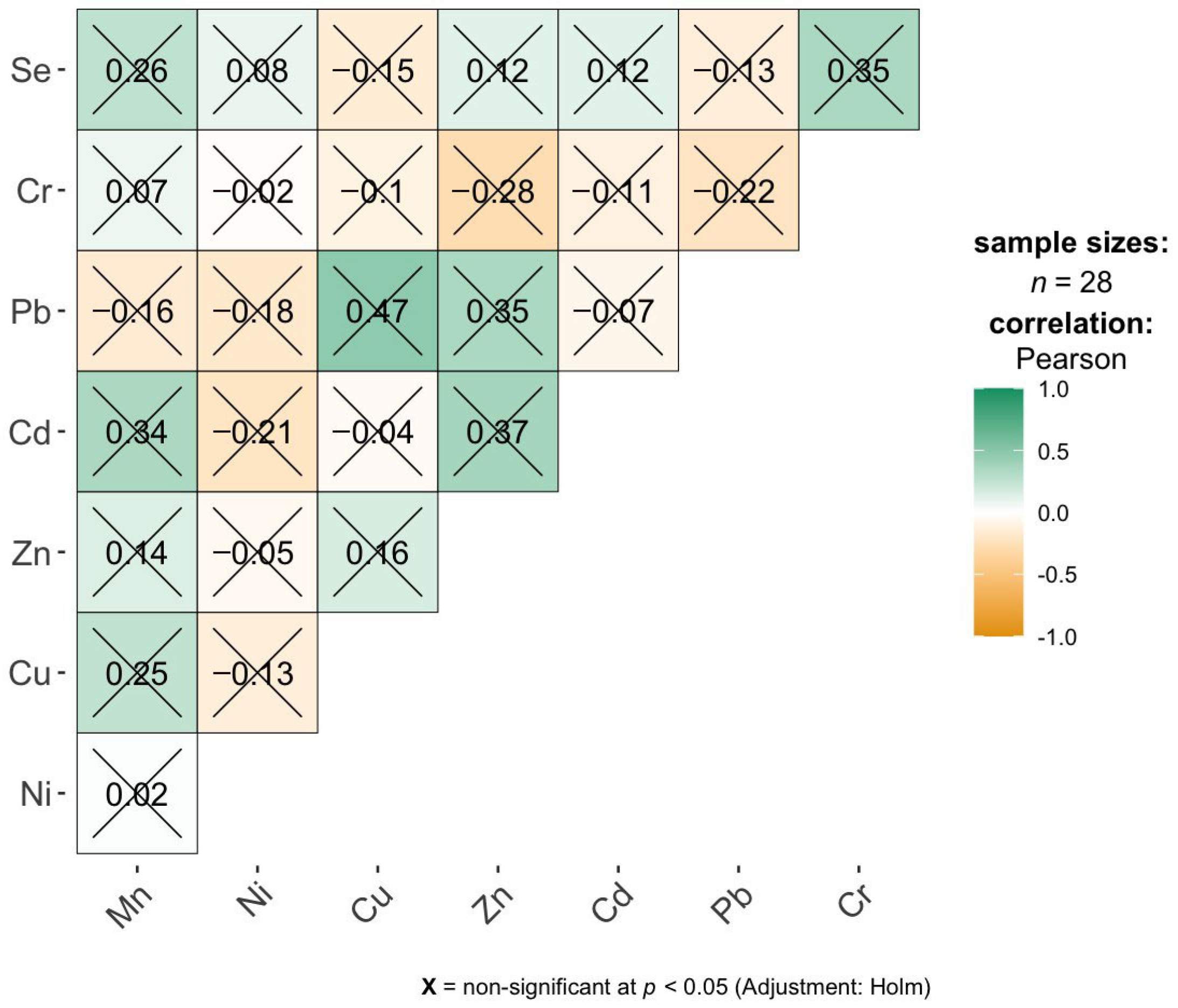
The correlation matrix for the bronchi samples shows only a small number of moderate to strong linear associations between elemental concentrations, and none of them remain statistically significant after applying the Holm correction for multiple testing (
Figure 8). The strongest positive correlations are observed between Cd and Mn (r = 0.84), Cd and Zn (r = 0.87), Pb and Zn (r = 0.85), and Se and Cr (r = 0.85), indicating pronounced co-variation between these element pairs at the descriptive level. However, all correlations are marked as non-significant after adjustment, which suggests that these relationships are not sufficiently robust given the sample size and the number of comparisons. Most other pairs exhibit weak correlations close to zero, implying little or no linear association. Overall, the results indicate that elemental concentrations in bronchi do not form stable, statistically reliable correlation patterns, and the observed associations should be interpreted cautiously as exploratory rather than conclusive.
2.5. Comparison of the Elemental Composition of the Organs
Permutational Multivariate Analysis of Variance (PERMANOVA) is a semi-parametric method of determining significance based on dissimilarity measures that does not assume multivariate normality of the distribution. A permutational MANOVA (PERMANOVA) was used instead of a classical parametric MANOVA because the key assumptions required for the latter were clearly violated. The Mardia tests for multivariate normality indicated significant departures from normality in both skewness and kurtosis (
p < 0.001), demonstrating that the joint distribution of variables is not multivariate Gaussian (
Table 5).
In addition, Box’s M test showed a highly significant result (
p < 0.001), indicating heterogeneity of covariance matrices across groups, thus violating the assumption of homoscedasticity (
Table 6).
The assessment of homogeneity of variances across tissue groups indicates that this assumption is violated for several elements (
Table 7).
Specifically, significant differences in dispersion between groups were observed for Cd (p = 0.0018), Mn (p < 10−12), Se (p = 0.0003), and Zn (p < 10−5), demonstrating that the variability of these elemental concentrations differs substantially across tissues. In contrast, no significant heterogeneity of variances was found for Cr, Cu, Ni, and Pb (p > 0.05), suggesting comparable dispersion for these elements across groups. Since parametric MANOVA is sensitive to both non-normality and unequal covariance structures, especially in moderate sample sizes, its results would be unreliable in this setting. PERMANOVA, being a non-parametric, permutation-based method, does not rely on distributional assumptions and is therefore more appropriate for these data, providing a robust framework for testing group differences under severe violations of classical MANOVA assumptions.
The PERMANOVA results indicate a statistically significant effect of tissue area on the multivariate elemental profile. The factor Area explains approximately 42.2% of the total variance in the data (R2 = 0.422), which represents a substantial proportion of the overall variability. The associated pseudo-F statistic is high (F = 31.40), and the permutation-based p-value is highly significant (p = 1 × 10⁻⁴), indicating that the observed group differences are very unlikely to have arisen by chance. These results provide strong evidence that the multivariate composition of elemental concentrations differs significantly between the analyzed tissue areas, with tissue type being a major determinant of the overall elemental profile.
Since the assumptions for parametric ANOVA tests were not met (lack of normality, heterogeneity of variance), the nonparametric Kruskal–Wallis test was used for each element separately, with Holm correction for multiple comparisons (
Table 8).
The Kruskal–Wallis test results indicate statistically significant differences in elemental concentrations between tissue groups for almost all analyzed elements. After applying Holm correction for multiple comparisons, very strong group effects are observed for Mn, Zn, Cd, and Se (all adjusted p-values < 10−15), demonstrating highly significant differences in their distributions across the four tissues. These elements show the largest χ2 statistics, indicating pronounced and systematic variation between organs.
Moderate but still statistically significant group differences are found for Cr, Cu, and Pb (adjusted p-values ranging from 10−6 to 10−3), suggesting that their concentrations also vary significantly between tissues, although the magnitude of the effect is smaller compared to Mn, Zn, Cd, and Se. In contrast, no statistically significant differences are observed for Ni (p = 0.079 after correction), indicating that nickel concentrations do not differ reliably between tissue types.
For elements with significant differences in the Kruskal–Wallis test, post hoc analysis was performed using Dunn’s test with Holm correction (
Table 9).
The pairwise Dunn post hoc comparisons reveal clear and element-specific patterns of differences between tissues.
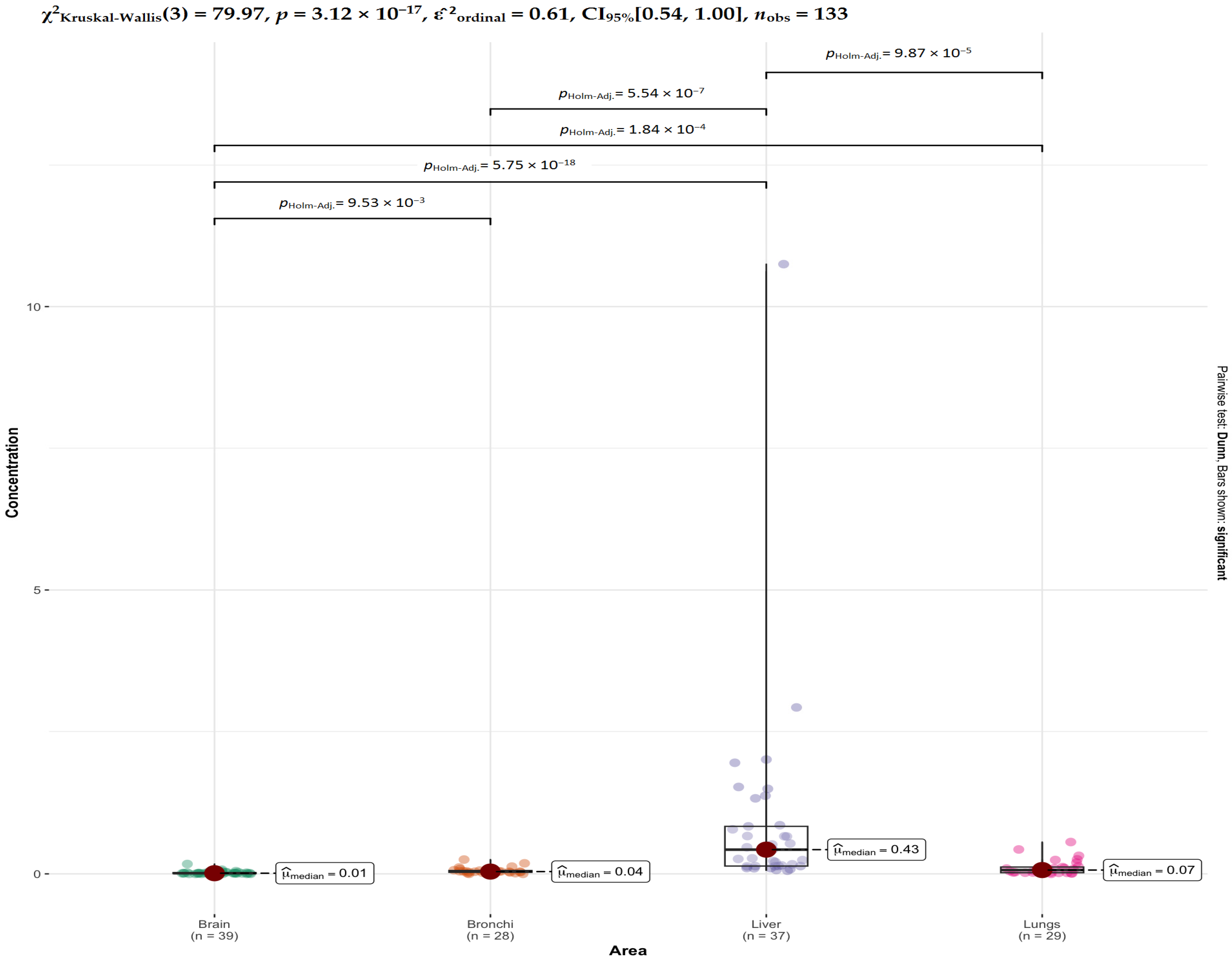
For Cd, highly significant differences are observed between the liver and all other tissues (brain, bronchi, and lungs), indicating that cadmium concentrations in the liver are markedly different from those in the remaining organs (
Figure 9). Additional significant differences are found between brain and lungs and between brain and bronchi, whereas bronchi and lungs do not differ significantly, suggesting similar Cd levels in these two tissues.
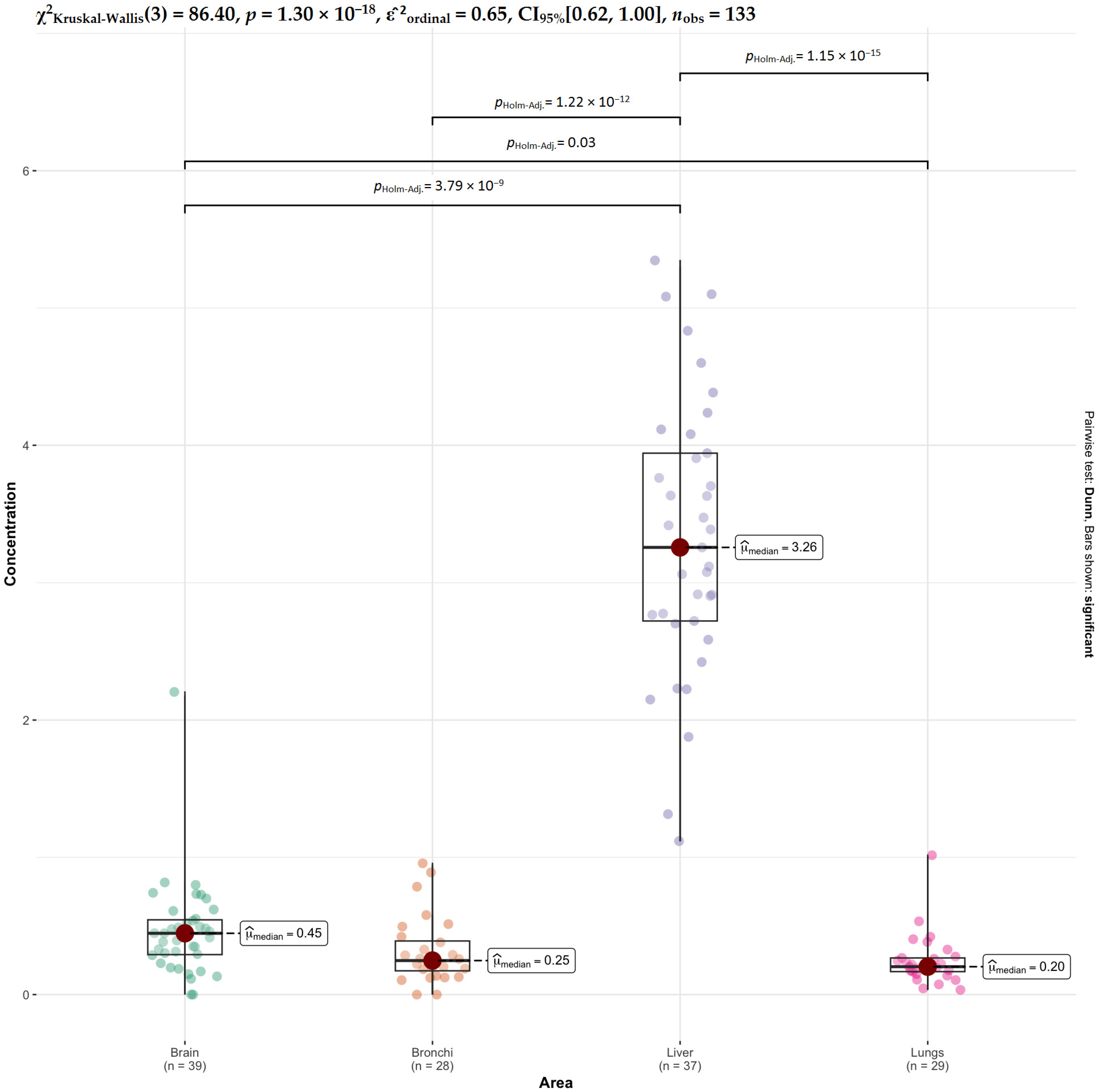
For Cr, significant differences are mainly driven by comparisons involving the lungs (
Figure S1). Both bronchi and liver differ strongly from lungs, and brain also differs from lungs, while no significant differences are observed among brain, bronchi, and liver. This indicates that chromium concentrations in lung tissue are distinct from the other organs, which show relatively comparable levels.
For Cu, significant differences are found between liver and both bronchi and lungs, as well as between brain and bronchi and brain and lungs (
Figure S2). However, brain and liver do not differ significantly, and neither do bronchi and lungs. This suggests a gradient in copper concentrations, with liver and brain forming one group and bronchi and lungs forming another.
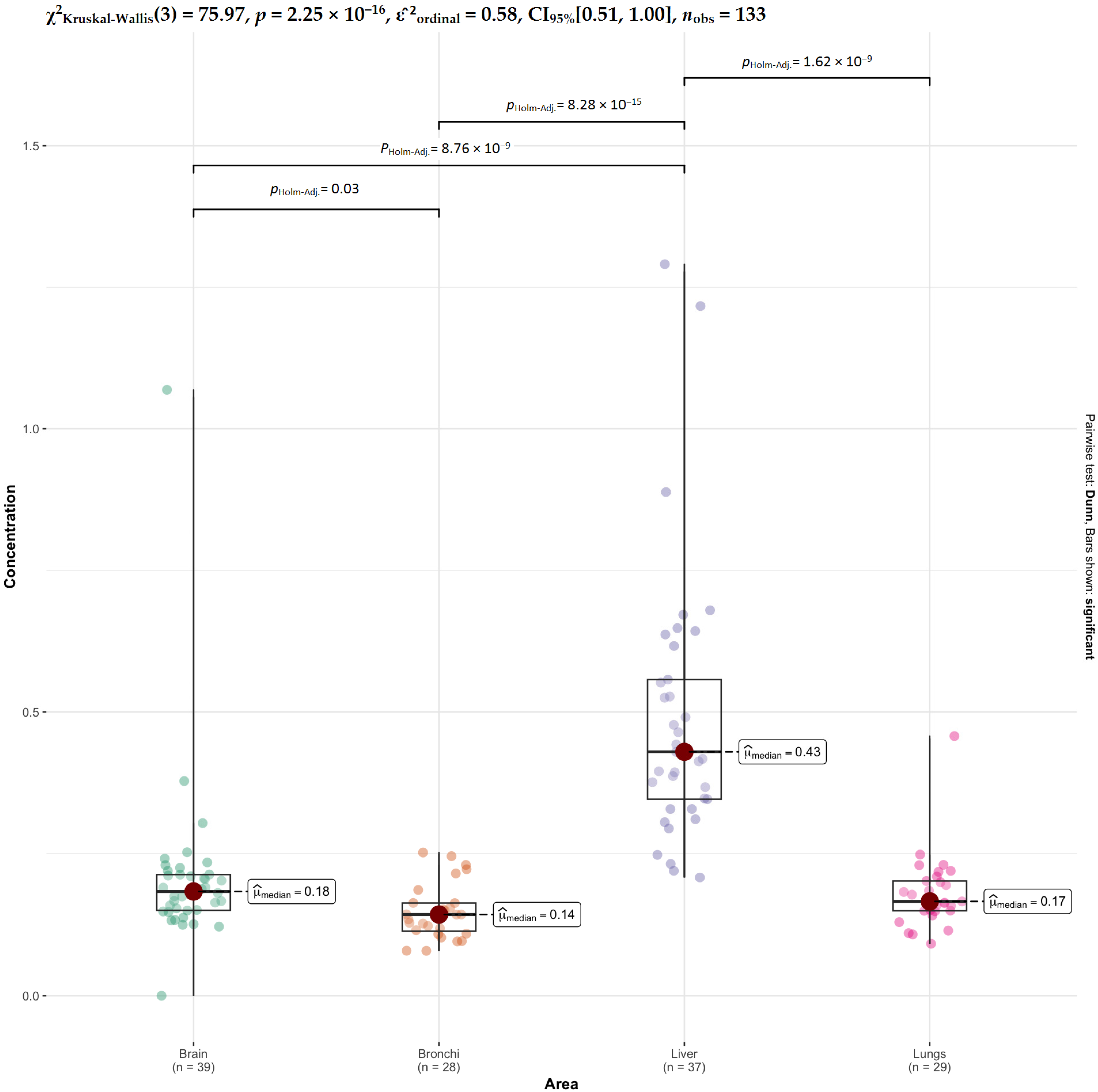
For Mn, the strongest contrasts involve the liver, which differs highly significantly from all other tissues (
Figure 10). Brain also differs from lungs, while no significant differences are observed between brain and bronchi or between bronchi and lungs. This indicates that manganese is particularly elevated or reduced in liver compared to the other organs, with relatively similar levels among respiratory tissues and brain.
For Ni, none of the pairwise comparisons are statistically significant after Holm correction (
Figure S3). This confirms the Kruskal–Wallis result and indicates that nickel concentrations do not differ meaningfully between any of the examined tissues.
For Pb, significant differences are observed only between brain and liver and between liver and lungs, whereas all other pairwise comparisons are non-significant (
Figure S4). This suggests that lead concentrations in the liver differ from those in brain and lungs, while bronchi do not differ significantly from any other tissue.
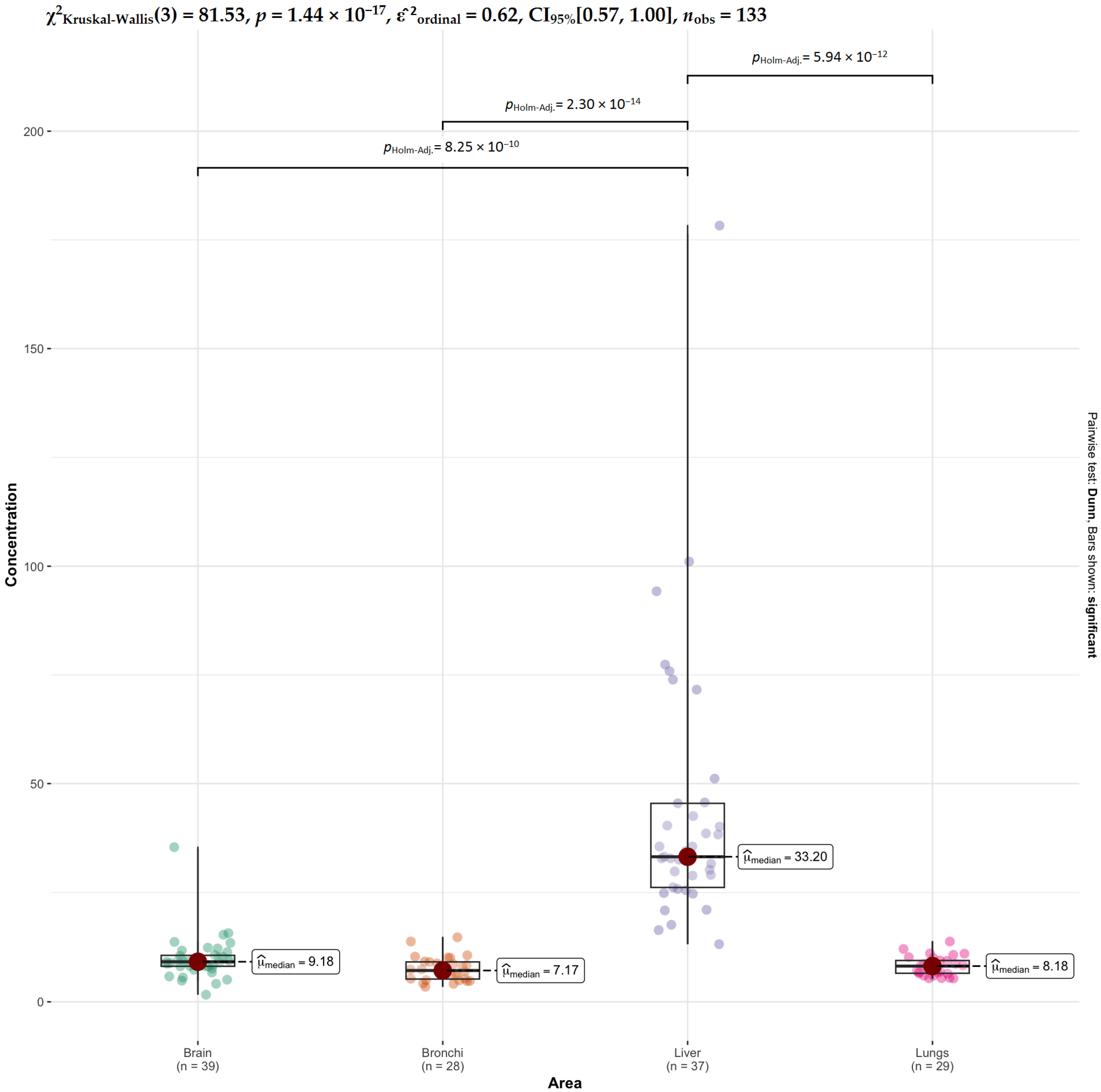
For Se, highly significant differences are again driven by the liver, which differs from bronchi, lungs, and brain (
Figure 11). A weaker but significant difference is also observed between brain and bronchi, while no differences are found between brain and lungs or between bronchi and lungs. This indicates a strong liver-specific pattern for selenium, with relatively similar levels across the other tissues.
Finally, for Zn, very strong differences are observed between liver and all other tissues (brain, bronchi, and lungs), whereas no significant differences are found among brain, bronchi, and lungs (
Figure 12). This demonstrates that zinc concentrations are distinctly different in liver tissue, while the remaining organs form a relatively homogeneous group.
Overall, these results show that the liver is the primary driver of tissue-specific differences for most elements (Cd, Mn, Se, Zn, and partly Cu and Pb), whereas the lungs show specific differences mainly for Cr. Nickel stands out as the only element with no detectable tissue-specific variation. This pattern indicates strong organ-specific accumulation mechanisms, particularly for the liver, which acts as the main site of differentiation in elemental concentrations.





 ,
,