Immunological Analysis of Oral Cytobrush Specimens for Early Detection of Oral Cancer Biomarkers: A Comprehensive Review

 , , , ,
  , , , , , and
Abstract
1. Introduction
1.1. Limitations of Conventional Diagnostic Biopsy Methods
- Invasiveness: histological diagnosis requires a tissue biopsy, an inherently invasive procedure. Although generally safe, it can cause discomfort, and many necessitate additional follow-up procedures, often resulting in lower patient compliance. This is particularly relevant in OC screening, where early detection may require multiple biopsies from different sites. Minimally invasive alternatives, such as OCB sampling, offer a patient-friendly approach that reduces procedural burden while enabling repeated collection for diagnostic purposes [9].
- Sampling Error: the reliability of histopathology is highly dependent on the quality/representativeness of the biopsy sample. Oral lesions can be heterogeneous, and if the biopsy does not capture the most representative tissue, or is taken from a less affected area, it may fail to detect malignancy or dysplasia [10]. This is particularly problematic in cases where cancer is localised or at an early stage, where lesions might be large in extent or difficult to access [11].
- Inter-Observer Variability: histopathological interpretation can vary between pathologists, particularly when evaluating subtle architectural and cytological changes. This variability is most pronounced in the assessment and grading of oral epithelial dysplasia and OPMDs, where diagnostic thresholds are less well defined [11]. Although histopathology remains essential for the diagnosis of OSCC, differences in interpretation may influence diagnostic categorisation and grading, potentially affecting clinical decision-making.
- Limited Ability to Detect Early-Stage Cancer: histopathology often relies on the presence of visible lesions that can be biopsied. However, early-stage OSCC or potentially malignant lesions may not present obvious signs, leading to delayed diagnosis with, as a consequence, missed opportunity for successful early treatment [10]. By the time a diagnosis can be proved based on the representative biopsy, cancer may already have progressed, reducing the chances of successful treatment.
- Tissue Preservation and Processing Issues: the reliability of histopathology is contingent upon proper tissue preservation and processing. Delays in fixation or suboptimal tissue handling can lead to degradation, making it difficult to accurately assess the sample [12]. Even small errors in tissue preparation can lead to diagnostic inaccuracies, particularly when diagnosing early-stage lesions that require precise evaluation.
- Incomplete Molecular and Genetic Information: histopathology primarily provides information on tissue cellular morphology, but it does not capture molecular or genetic alterations that can be critical for personalised cancer treatment. Many OSCCs exhibit distinct genetic mutations or molecular changes (e.g., TP53 mutations, EGFR alterations), which are not detectable via histopathological analysis alone [13]. In addition, histopathology is semi-quantitative, so it is difficult to measure the exact levels of specific biomarkers [14]. Tissue processing may also change the tissue and reduce information about its original state [14]. Several studies have shown that single biomarkers or biomarker panels can help with the early detection of OSCC and pre-malignant lesions [15,16,17,18,19,20,21].
- Ability to Detect Micrometastasis or Regional Spread: histopathology is effective in diagnosing localised tumours, but it is less reliable in detecting micrometastasis or regional spread. Similarly, OCB sampling is limited to local epithelial assessment, and cannot detect metastatic dissemination. Early cancer metastasis often occurs before clinical signs are visible, and neither histopathology nor OCB may identify small tumour deposits in distant tissues or lymph nodes, requiring additional imaging techniques [22,23].
1.2. Oral Cytobrush—Minimally Invasion Method
1.3. Importance of Immunological Biomarkers for Early Detection of OSCC
- Identify and characterise key immunological biomarkers linked to early oral carcinogenesis.
- Evaluate the diagnostic utility of minimally invasive OCB sampling for detecting these biomarkers.
2. Immune/Biomarker Pathway
2.1. Tumour Suppressor Pathways
2.2. Inflammatory Pathway
2.3. Immune Evasion and Checkpoint Markers: B7-H6, PD-L1
3. Biomarkers for Early Oral Cancer Detection
3.1. Tumour Suppressor/Proliferation Markers
3.2. Epithelial Differentiation Marker
3.3. Growth Factor Signalling
3.4. Inflammatory Cytokines
3.5. Immune Checkpoint/Emerging Markers
4. Sample Collection and Immunological Analysis Methodology
4.1. Cytobrush Collection Technique and Its Advantages
- Minimally invasive and painless: it eliminates the need for anaesthesia and reduces patient anxiety and post-procedural discomfort [65].
- Repeatable and site-specific: it allows for serial sampling of the same lesion or multiple mucosal sites for longitudinal monitoring [66].
- Reduced cost and time: suitable for outpatient and screening settings [67].
- Preserves cellular integrity: it provides intact epithelial cells and associated proteins for morphological and molecular analyses [55].
- Improves patient compliance [65].
4.2. Immunoassay Methods for Biomarker Detection
4.2.1. Immunocytochemistry (ICC)
4.2.2. Enzyme-Linked Immunosorbent Assay (ELISA)
4.2.3. Immunofluorescence
4.2.4. Multiplex Immunoassays
4.3. Standardisation and Quality Control Considerations
- Pre-analytical variables such as the time from collection to processing, transport medium, and storage temperature can significantly affect the stability of proteins and cytokines. Immediate fixation or prompt processing is generally recommended, to preserve antigenicity for downstream assays. In some workflows, temporary storage at 4 °C prior to processing may slow biochemical degradation, but specific preservation methods (e.g., stabilising buffers, rapid fixation) should be chosen based on the target analyte and assay type [38].
- Sampling consistency: the number of brush rotations, the site selection (lesion vs. normal mucosa), and operator technique should be standardised and documented for reproducibility.
- Assay calibration: use of internal controls, duplicate testing, and calibration curves for each biomarker ensure quantitative reliability.
- Antibody validation: antibodies used for ICC, ELISA, or multiplex assays must be pre-validated for specificity and sensitivity in oral epithelial cells [29].
- Inter-laboratory harmonisation: cross-validation of results between laboratories or study centres helps establish standardised reference ranges for biomarker expression.
5. Clinical Applications and Precision Medicine
5.1. Biomarker-Based Risk Stratification and Early Intervention
5.2. Monitoring Treatment Response
5.3. Integration into Precision Medicine Framework
- Predictive: PD-L1 and B7-H6 expression may identify patients likely to benefit from immune checkpoint inhibitors.
- Prognostic: high levels of IL-6 or TNF-α may correlate with aggressive biological behaviour and poor survival.
- Diagnostic: elevated Ki-67 and p53 help confirm dysplastic transformation, even before morphological features become evident.
5.4. Assessing Photobiomodulation Effects in OPMDs Using Biomarkers
6. Clinical Protocol for Performing OCB
- Initial patient consultation: a thorough history should be taken from the patient with a suspicious oral mucosal lesion, identifying associated risk factors for OSCC [84], such as smoking, alcohol consumption, poor oral hygiene, a family history of cancer, previous HPV infection, autoimmune or dermatological diseases, or typical symptoms of mouth or throat cancer.
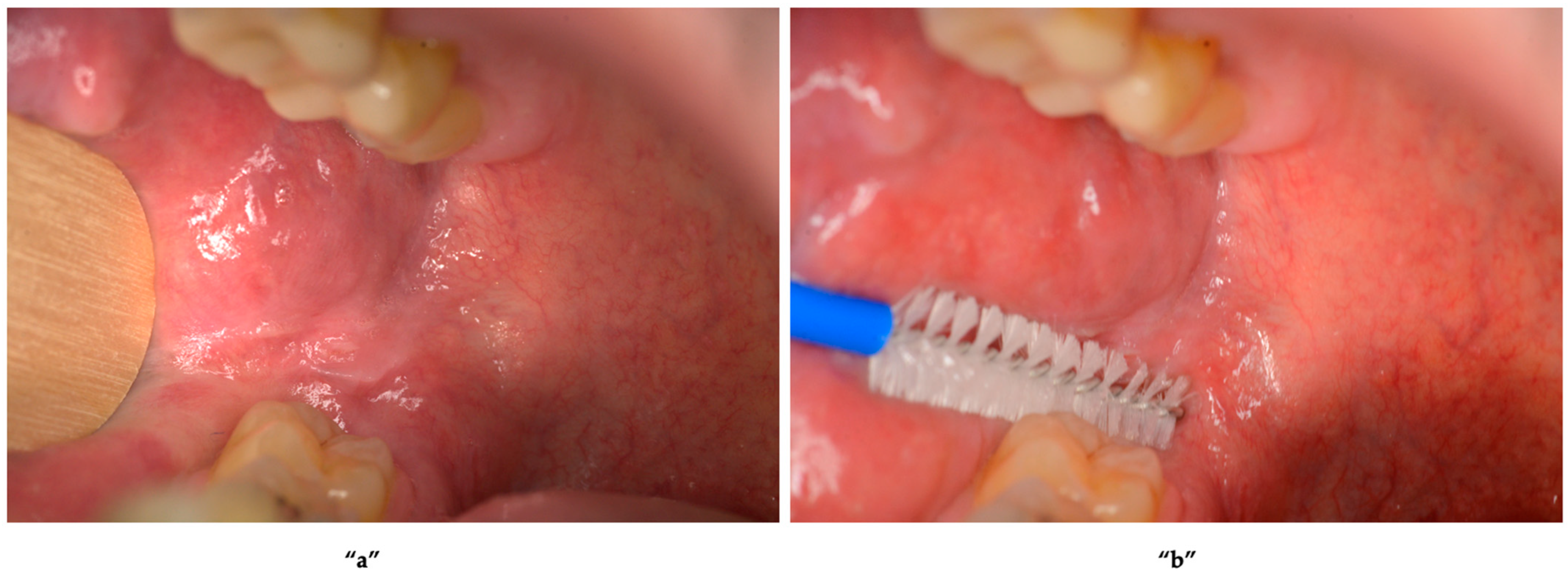
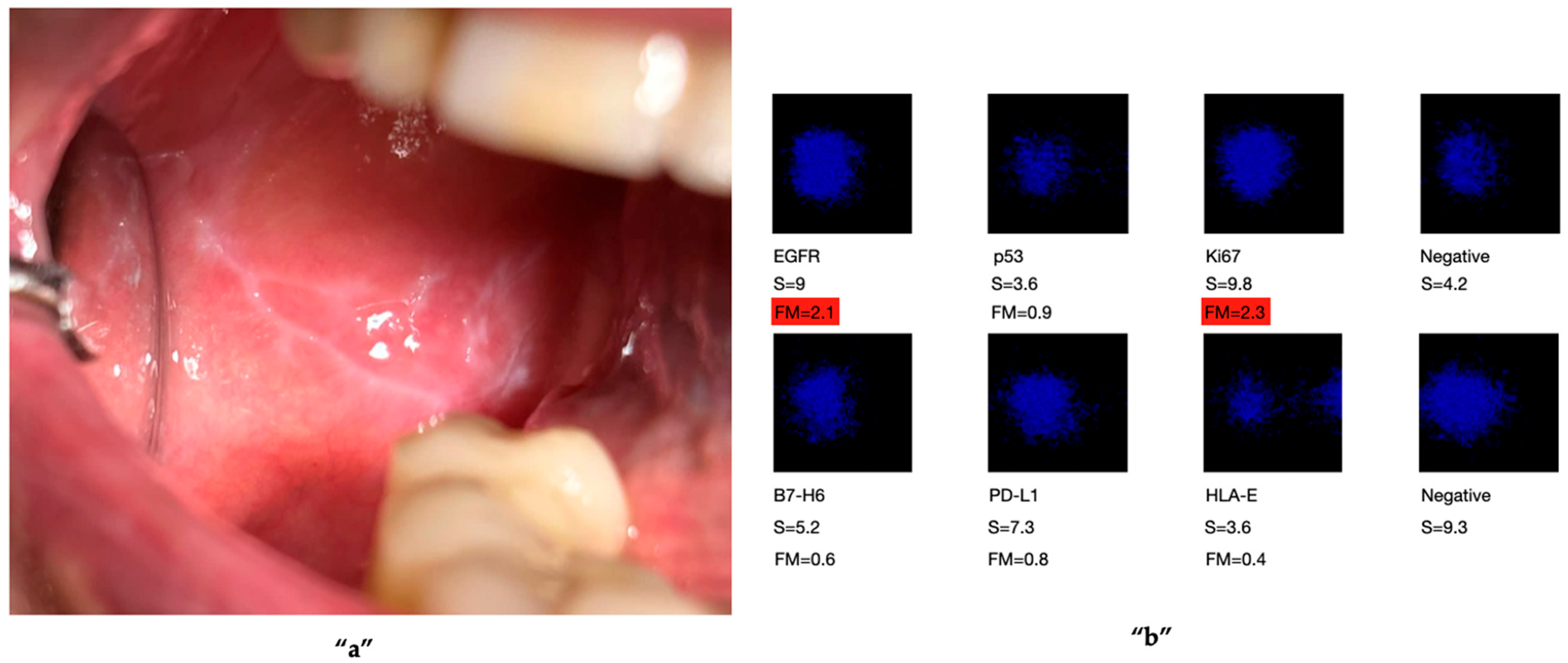
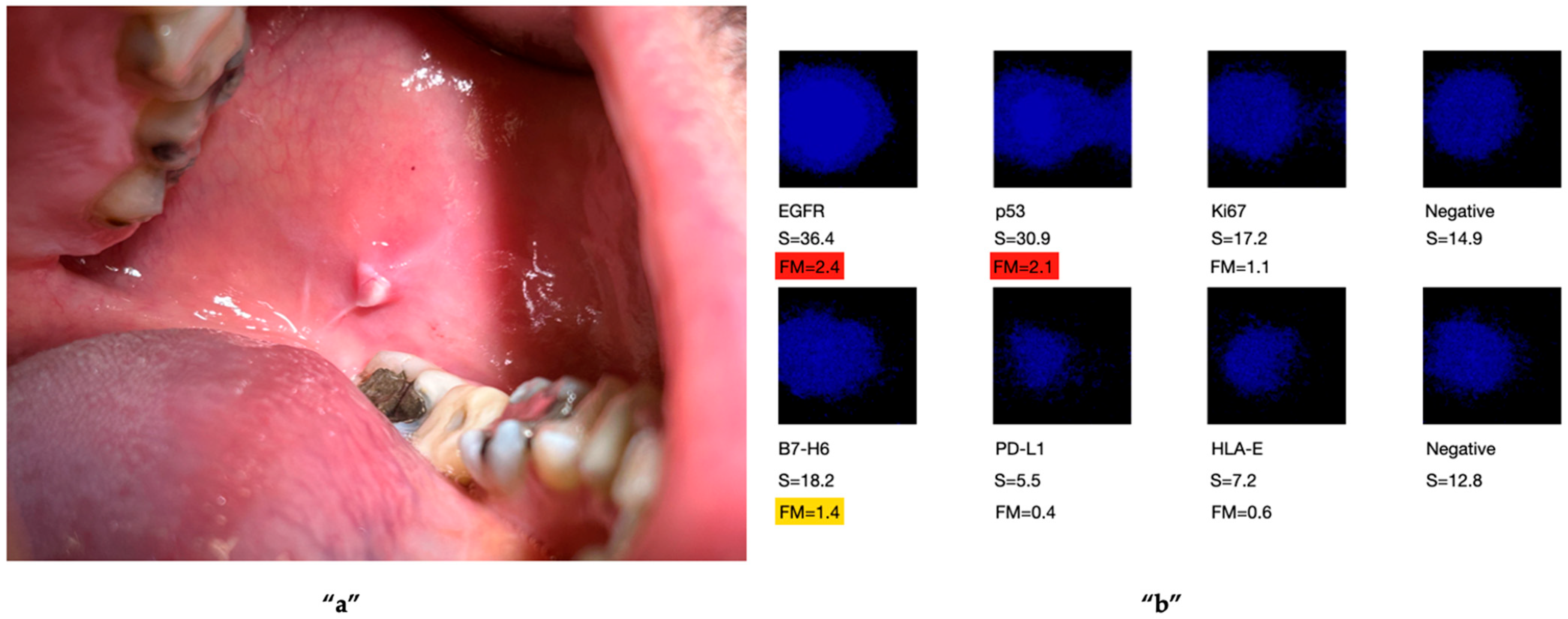
- Extraoral examination: detecting any lymph nodes involvement is as important as the for identifying any oral abnormalities or any changes in the oral mucosa (Figure 5a).
- Documentation of the findings: all the findings should be documented in the patient’s records, including initial intraoral photos of the lesion, location (mucosal, submucosal, and intraosseous), colour, number, duration, size, shape, borders, surface texture, consistency on palpation, and any visible or palpable vascular pulsations.
- Informed consent: prior to performing the OCB procedure, obtain written consent from the patient after providing a full explanation of the test procedure, its benefits and potential post-operative complications.
- Pre-sampling procedure: before OCB sampling, the patient should rinse their mouth with only sterile normal saline solution to help remove any superficial debris and excess saliva. Oral disinfectants or antiseptic mouthwashes (e.g., chlorhexidine) should not be used immediately prior to sampling, as they can alter cellular morphology. Moreover, there is currently no evidence in the literature supporting an improvement in cytology specimen quality when they are used.
- OCB sampling: the OCB should be utilised by vigorously brushing over the entire lesion, with a motion that combines both brushing and rotation, to ensure a sufficient number of cells are collected for analysis (Figure 5b).
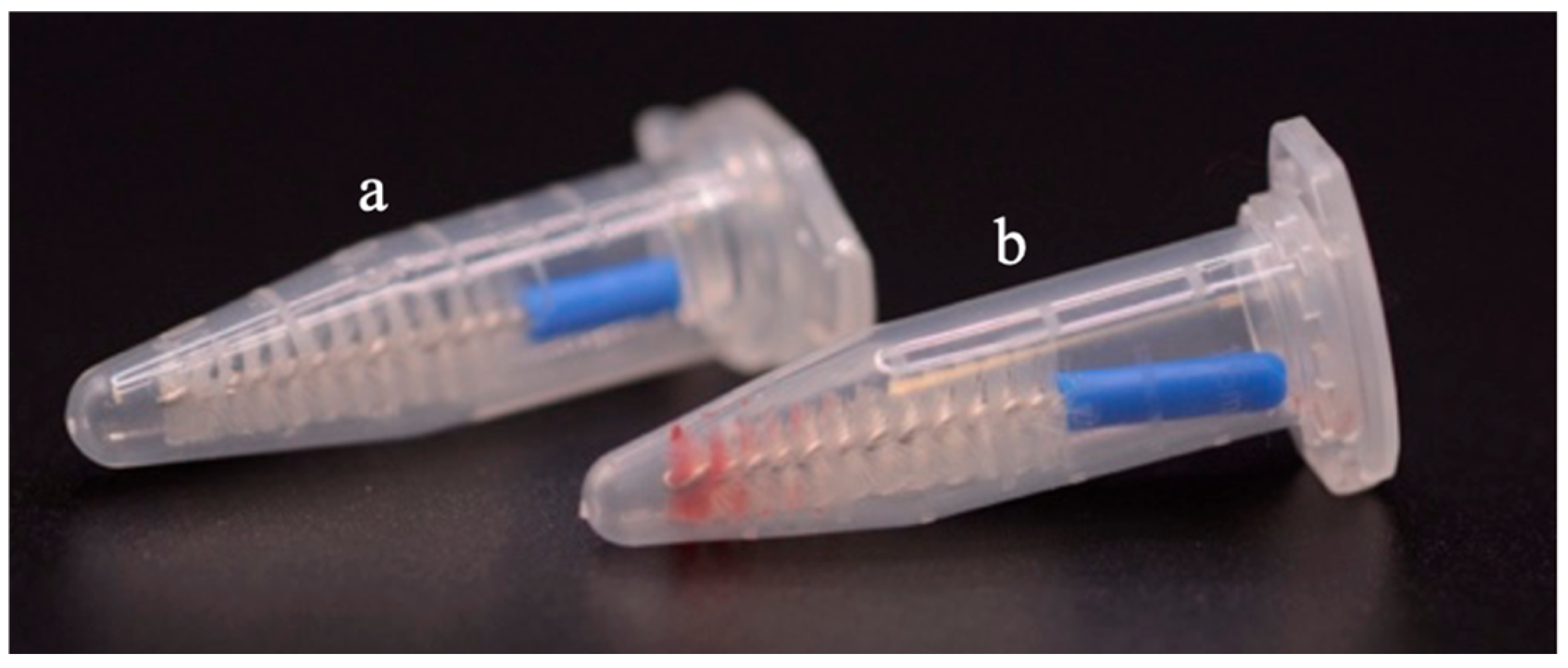
- Appropriate sample collection: the OCB should not be contaminated by blood, pyrogens or disinfectants. After sampling, the OCB should be placed into an Eppendorf tube, and the excess handle should be cut off using shears. Figure 6a shows an OCB following a proper cell collection without visible contamination, such as blood, pyrogens, or disinfectants, whereas the OCB in Figure 6b was deemed unsuitable for analysis, due to significant blood contamination.
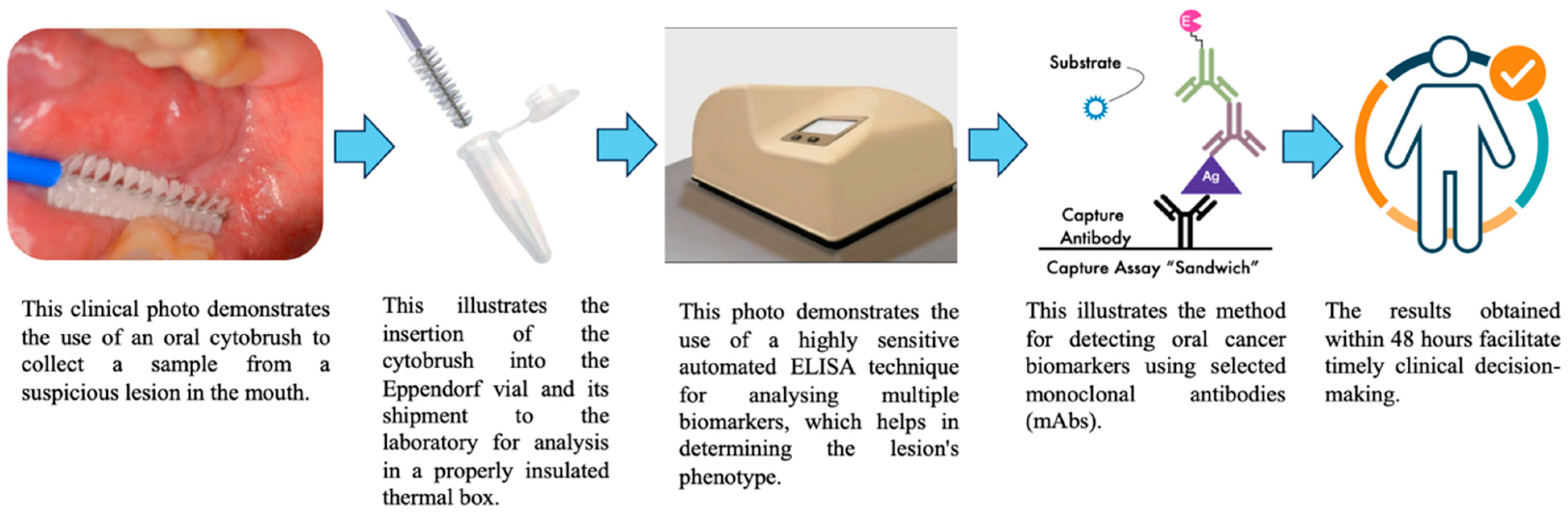
- Sample storage and laboratory delivery: place the vial inside a thermal box with a frozen ice pack, accompanied by a detailed report.
- Follow-up appointment: schedule a follow-up appointment one week after the test to inform the patient of the diagnosis and, subsequently, plan the necessary treatment.
7. Challenges and Limitations
7.1. Standardisation of Collection and Assay Protocols
7.2. Need for Large-Scale Validation Studies
- Prospective longitudinal designs to evaluate biomarker performance over time in predicting malignant transformation [86].
- Multivariate analyses combining immunological, histological, and genetic data for robust risk modelling [87].
- Comparison with gold-standard biopsy and histopathology to define sensitivity, specificity, and predictive values [88].
8. Future Directions
8.1. AI and Multi-Omics Integration
8.2. Development of Biomarker Panels for Improved Sensitivity and Specificity
8.3. Combination of Immunological Analysis with Salivary Diagnostics
9. Conclusions
Author Contributions
Funding
Institutional Review Board Statement
Informed Consent Statement
Data Availability Statement
Acknowledgments
Conflicts of Interest
References
- Badwelan, M.; Muaddi, H.; Ahmed, A.; Lee, K.T.; Tran, S.D. Oral Squamous Cell Carcinoma and Concomitant Primary Tumors, What Do We Know? A Review of the Literature. Curr. Oncol. 2023, 30, 3721–3734. [Google Scholar] [CrossRef]
- Kumar, M.; Nanavati, R.; Modi, T.; Dobariya, C. Oral cancer: Etiology and risk factors: A review. J. Cancer Res. Ther. 2016, 12, 458–463. [Google Scholar] [CrossRef]
- Yang, J.; Guo, K.; Zhang, A.; Li, X.; Wang, L.; Chen, H.; Liu, Y.; Zhao, M.; Sun, Q.; Wu, P. Survival analysis of age-related oral squamous cell carcinoma: A population study based on SEER. Eur. J. Med. Res. 2023, 28, 413. [Google Scholar] [CrossRef]
- Mauceri, R.; Bazzano, M.; Coppini, M.; Tozzo, P.; Panzarella, V.; Campisi, G. Diagnostic delay of oral squamous cell carcinoma and the fear of diagnosis: A scoping review. Front. Psychol. 2022, 13, 13. [Google Scholar] [CrossRef]
- Akbulut, N.; Oztas, B.; Kursun, S.; Evirgen, S. Delayed diagnosis of oral squamous cell carcinoma: A case series. J. Med. Case Rep. 2011, 5, 489. [Google Scholar] [CrossRef]
- Goy, J.; Hall, S.F.; Feldman-Stewart, D.; Groome, P.A. Diagnostic delay and disease stage in head and neck cancer: A systematic review. Laryngoscope 2009, 119, 889–898. [Google Scholar] [CrossRef]
- Mercadante, V.; Paderni, C.; Campisi, G. Novel non-invasive adjunctive techniques for early oral cancer diagnosis and oral lesions examination. Curr. Pharm. Des. 2012, 18, 5442–5451. [Google Scholar] [CrossRef]
- Seoane, J.; Alvarez-Novoa, P.; Gomez, I.; Takkouche, B.; Diz, P.; Warnakulasiruya, S.; Soeane-Romero, J.M.; Varela-Centelles, P. Early oral cancer diagnosis: The Aarhus statement perspective. A systematic review and meta-analysis. Head Neck 2016, 38, E2182–E2189. [Google Scholar] [CrossRef]
- Liew, Y.X.; Kadir, K.; Phan, C.W.; Leong, K.H.; Kallarakkal, T.G.; Tilakaratne, W.M. Salivary biomarkers: Effective diagnostic tool for oral leukoplakia and oral squamous cell carcinoma. Oral Dis. 2024, 30, 3591–3599. [Google Scholar] [CrossRef]
- Sankaranarayanan, R.; Ramadas, K.; Amarasinghe, H.; Subramanian, S.; Johnson, N. Oral cancer: Prevention, early detection, and treatment. In Disease Control Priorities, Third Edition (Volume 3): Cancer; Gelband, H., Jha, P., Sankaranarayanan, R., Horton, S., Eds.; World Bank Group: Washington, DC, USA, 2015; Chapter 5. [Google Scholar] [CrossRef]
- Sritippho, T.; Chotjumlong, P.; Iamaroon, A. Role of HPV and p16 in oral cancer: A review. Asian Pac. J. Cancer Prev. 2015, 16, 1693–6200. [Google Scholar] [CrossRef]
- Howat, W.J.; Wilson, B.A. Tissue fixation and the effect of molecular fixatives on downstream staining procedures. Methods 2014, 70, 12–19. [Google Scholar] [CrossRef]
- Manzano-Moreno, F.J.; Costela-Ruiz, V.J.; García-Recio, E.; Olmedo-Gaya, M.V.; Ruiz, C.; Reyes-Botella, C. Role of Salivary MicroRNA and Cytokines in the Diagnosis and Prognosis of Oral Squamous Cell Carcinoma. Int. J. Mol. Sci. 2021, 22, 12215. [Google Scholar] [CrossRef]
- Bhatia, N.; Lalla, Y.; Vu, A.N.; Farah, C.S. Advances in optical adjunctive AIDS for visualisation and detection of oral malignant and potentially malignant lesions. Int. J. Dent. 2013, 2013, 103908. [Google Scholar] [CrossRef]
- Pierce, M.; Yu, D.; Richards-Kortum, R. High-resolution fiber-optic microendoscopy for in situ cellular imaging. J. Vis. Exp. 2010, 47, e2306. [Google Scholar] [CrossRef]
- Cordero, E.; Latka, I.; Matthäus, C.; Schie, I.W.; Popp, J. In-vivo Raman spectroscopy: From basics to applications. J. Biomed. Opt. 2018, 23, 7120. [Google Scholar] [CrossRef]
- Pence, I.; Mahadevan-Jansen, A. Clinical instrumentation and applications of Raman spectroscopy. Chem. Soc. Rev. 2016, 45, 1958–1979. [Google Scholar] [CrossRef]
- Jeng, M.J.; Sharma, M.; Sharma, L.; Gupta, D. Raman spectroscopy analysis for optical diagnosis of oral cancer detection. J. Clin. Med. 2019, 8, 1313. [Google Scholar] [CrossRef]
- Fontes, K.B.F.d.C.; Cunha, K.S.G.; Rodrigues, F.R.; da Silva, L.E.; Dias, E.P. Concordance between cytopathology and incisional biopsy in the diagnosis of oral squamous cell carcinoma. Braz. Oral Res. 2013, 27, 122–127. [Google Scholar] [CrossRef]
- Yang, E.C.; Tan, M.T.; Schwarz, R.A.; Richards-Kortum, R.R.; Gillenwater, A.M.; Vigneswaran, N. Noninvasive diagnostic adjuncts for the evaluation of potentially premalignant oral epithelial lesions: Current limitations and future directions. Oral Surg. Oral Med. Oral Pathol. Oral Radiol. 2018, 125, 670–681. [Google Scholar] [CrossRef]
- Perkins, R.B.; Wentzensen, N.; Guido, R.S.; Schiffman, M. Cervical cancer screening: A review. JAMA 2023, 330, 547–558. [Google Scholar] [CrossRef]
- Tayebi-Hillali, H.; Lorenzo-Pouso, A.I.; Marichalar-Mendía, X.; Gándara-Vila, P.; Reboiras-López, D.; Blanco-Carrión, A.; Coppini, M.; Caponio, V.C.A.; Pérez-Sayáns, M. Accuracy of Cytological Methods in Early Detection of Oral Squamous Cell Carcinoma and Potentially Malignant Disorders: A Systematic Review and Meta-Analysis. J. Oral Pathol. Med. 2025, 54, 507–527. [Google Scholar] [CrossRef]
- Wu, C.; Gleysteen, J.; Teraphongphom, N.T.; Li, Y.; Rosenthal, E. In-vivo optical imaging in head and neck oncology: Basic principles, clinical applications and future directions. Int. J. Oral Sci. 2018, 10, 25. [Google Scholar] [CrossRef]
- Piazza, C.; Del Bon, F.; Peretti, G.; Nicolai, P. Narrow band imaging in endoscopic evaluation of the larynx. Curr. Opin. Otolaryngol. Head Neck Surg. 2012, 20, 472–476. [Google Scholar] [CrossRef]
- Ni, X.G.; Wang, G.Q. The role of narrow band imaging in head and neck cancers. Curr. Oncol. Rep. 2016, 18, 10. [Google Scholar] [CrossRef]
- Shi, L.; Wang, Y.; Li, C.; Liu, W. Current evidence on DNA aneuploidy cytology in noninvasive detection of oral cancer. Oral Oncol. 2020, 101, 104367. [Google Scholar] [CrossRef]
- Aro, K.; Kaczor-Urbanowicz, K.; Carreras-Presas, C.M. Salivaomics in oral cancer. Curr. Opin. Otolaryngol. Head Neck Surg. 2019, 27, 91–97. [Google Scholar] [CrossRef]
- Gissi, D.B.; Morandi, L.; Colella, G.; De Luca, R.; Campisi, G.; Mauceri, R.; Romeo, U.; Tenore, G.; Mignogna, M.D.; Adamo, D.; et al. Clinical validation of 13-gene DNA methylation analysis in oral brushing samples for detection of oral carcinoma: An Italian multicenter study. Head Neck 2021, 43, 1563–1573. [Google Scholar] [CrossRef]
- Rebaudi, F.; De Rosa, A.; Greppi, M.; Pistilli, R.; Pucci, R.; Govoni, F.A.; Iacoviello, P.; Broccolo, F.; Tomasello, G.; Pesce, S.; et al. A new method for oral cancer biomarkers detection with a non-invasive cyto-salivary sampling and rapid-highly sensitive ELISA immunoassay: A pilot study in humans. Front. Immunol. 2023, 14, 1216107. [Google Scholar] [CrossRef]
- Rebaudi, F.; Rebaudi, A.; De Rosa, A.; Rebaudi, A.L.; Pesce, S.; Greppi, M.; Roghi, M.; Boggio, M.; Candiani, S.; Marcenaro, E. Case report: Non-invasive cyto-salivary sampling and biomarker detection via ELISA versus histopathology for diagnosing oral potentially malignant disorders- Insights from a case-control study. Front. Immunol. 2024, 29, 1477477. [Google Scholar] [CrossRef]
- Nanayakkara, P.G.C.L.; Dissanayaka, W.L.; Nanayakkara, B.G.; Amaratunga, E.A.P.D.; Tilakaratne, W.M. Comparison of spatula and cytobrush cytological techniques in early detection of oral malignant and premalignant lesions: A prospective and blinded study. J. Oral Pathol. Med. 2016, 45, 268–274. [Google Scholar] [CrossRef]
- Chu, H.-W.; Chang, K.-P.; Hsu, C.-W.; Chang, I.Y.-F.; Liu, H.-P.; Chen, Y.-T.; Wu, C.-C. Identification of salivary biomarkers for oral cancer detection with untargeted and targeted quantitative proteomics approaches. Mol. Cell Proteom. 2019, 18, 1796–1806. [Google Scholar] [CrossRef] [PubMed]
- Abati, S.; Bramati, C.; Bondi, S.; Lissoni, A.; Trimarchi, M. Oral cancer and precancer: A narrative review on the relevance of early diagnosis. Int. J. Environ. Res. Public Health 2020, 17, 9160. [Google Scholar] [CrossRef]
- Humayun, S.; Prasad, V.R. Expression of p53 protein and Ki-67 antigen in oral premalignant lesions and oral squamous cell carcinomas: An immunohistochemical study. Natl. J. Maxillofac. Surg. 2011, 2, 38–46. [Google Scholar] [CrossRef]
- None, V.K.; Singh, S.S.; Manmohan, M. Comparative study of p53, Ki-67 expression in oral squamous cell carcinoma precancerous lesions. J. Contemp. Clin. Pract. 2025, 11, 456–467. [Google Scholar]
- Matsuhira, A.; Noguchi, S.; Sato, K.; Tanaka, Y.; Yamamoto, G.; Mishima, K.; Katakura, A. Cytokeratin 13, Cytokeratin 17, Ki-67 and p53 expression in upper layers of epithelial dysplasia surrounding tongue squamous cell carcinoma. Bull. Tokyo Dent. Coll. 2015, 56, 223–231. [Google Scholar] [CrossRef]
- Babiuch, K.; Kuśnierz-Cabala, B.; Kęsek, B.; Okoń, K.; Darczuk, D.; Chomyszyn-Gajewska, M. Evaluation of proinflammatory, NF-kappaB dependent cytokines: IL-1α, IL-6, IL-8, and TNF-α in tissue specimens and saliva of patients with oral squamous cell carcinoma and oral potentially malignant disorders. J. Clin. Med. 2020, 9, 867. [Google Scholar] [CrossRef]
- Huang, L.; Luo, F.; Deng, M.; Zhang, J. The relationship between salivary cytokines and oral cancer and their diagnostic capability for oral cancer: A systematic review and network meta-analysis. BMC Oral Health 2024, 24, 1044. [Google Scholar] [CrossRef]
- Sanmamed, M.F.; Chen, L. Inducible expression of B7-H1 (PD-L1) and its selective role in tumor site immune modulation. Cancer J. 2014, 20, 256–261. [Google Scholar] [CrossRef] [PubMed]
- Lee, S.; Kim, J.H.; Jang, I.H.; Jo, S.; Lee, S.Y.; Oh, S.C.; Kim, S.M.; Kong, L.; Ko, J.; Kim, T.D. Harnessing B7-H6 for anticancer immunotherapy: Expression, pathways, and therapeutic strategies. Int. J. Mol. Sci. 2024, 25, 10326. [Google Scholar] [CrossRef] [PubMed]
- Pesce, S.; Greppi, M.; Tabellini, G.; Rampinelli, F.; Parolini, S.; Olive, D.; Moretta, L.; Moretta, A.; Marcenaro, E. Identification of a subset of human natural killer cells expressing high levels of programmed death 1: A phenotypic and functional characterization. J. Allergy Clin. Immunol. 2017, 139, 335–346.e3. [Google Scholar] [CrossRef]
- Sieviläinen, M.; Almahmoudi, R.; Al-Samadi, A.; Salo, T.; Pirinen, M.; Almangush, A. The prognostic value of immune checkpoints in oral squamous cell carcinoma. Oral Dis. 2019, 25, 1435–1445. [Google Scholar] [CrossRef]
- Vousden, K.H.; Lane, D.P. p53 in health and disease. Nat. Rev. Mol. Cell Biol. 2007, 8, 275–283. [Google Scholar] [CrossRef]
- Poeta, M.L.; Manola, J.; Goldwasser, M.A.; Forastiere, A.; Benoit, N.; Califano, J.A.; Ridge, J.A.; Goodwin, W.J.; Kenady, D.; Saunders, J.; et al. TP53 mutations and survival in squamous-cell carcinoma of the head and neck. N. Engl. J. Med. 2007, 357, 2552–2561. [Google Scholar] [CrossRef] [PubMed]
- Montebugnoli, L.; Felicetti, L.; Gissi, D.B.; Cervellati, F.; Servidio, D.; Marchetti, C.; Prati, C.; Flamminio, F.; Foschini, M.P. Predictive Role of p53 Protein as a Single Marker or Associated to Ki67 Antigen in Oral Carcinogenesis. Open Dent. J. 2008, 2, 24–29. [Google Scholar] [CrossRef]
- Das, P.L.; Bastian, T.S.; Selvamani, M.; Nair, M.S.; Prakash, R.; Karthika, P.S. Expression of p53 in Oral Squamous Cell Carcinoma—An IHC Study; Deep Insight into P53. Oral Maxillofac. Pathol. J. 2024, 15, 61–69. [Google Scholar]
- Pandya, A.; Boaz, K.; Natarajan, S.; Manaktala, N.; Nandita, K.P.; Lewis, A.J. A correlation of immunohistochemical expression of TP53 and CDKN1A in oral epithelial dysplasia and oral squamous cell carcinoma. J. Cancer Res. 2018, 14, 666–670. [Google Scholar] [CrossRef] [PubMed]
- Scholzen, T.; Gerdes, J. The Ki-67 protein: From the known and the unknown. J. Cell Physiol. 2000, 182, 311–322. [Google Scholar] [CrossRef]
- Gupta, V.; Ramalingam, K.; Yasothkumar, D.; Debnath, D.; Sundar, V. Ki-67 Expression as a Prognostic Marker: A Comparative Immunohistochemical Analysis of Oral Epithelial Dysplasia and Oral Squamous Cell Carcinoma. Cureus 2023, 15, e38941. [Google Scholar] [CrossRef]
- Kawaharada, M.; Yamazaki, M.; Maruyama, S.; AbÉ, T.; Chan, N.N.; Kitano, T.; Kobayashi, T.; Maeda, T.; Tanuma, J.I. Novel cytological model for the identification of early oral cancer diagnostic markers: The carcinoma sequence model. Oncol Lett. 2022, 23, 76. [Google Scholar] [CrossRef]
- Mittal, A.; Awasthi, S.; Chauhan, R.; Ahmad, F.; Kumar, A.; Mitra, N. Ki-67 Expression in Oral Potential Malignant and Malignant Lesions and Correlation of Mitotic Index with MIB-1 Labeling Index. Acta Medica Int. 2022, 9, 14–20. [Google Scholar] [CrossRef]
- Senadja, S.; Pohl, M.; Kühnisch, J.; Eickelberg, O.; Hoffmann, T.; Gellrich, N.C. Digital Tracking for Early Detection of Potentially Malignant Oral Disorders: Implementation and Clinical Relevance. J. Oral Pathol. Med. 2021, 50, 113–120. [Google Scholar] [CrossRef]
- Reibel, J. Prognosis of oral remalignant lesions: Significance of clinical histopathological and molecular biological characteristics. Crit. Rev. Oral Biol. Med. 2003, 14, 47–62. [Google Scholar] [CrossRef]
- Sukswai, N.; Khoury, J.D. Immunohistochemistry Innovations for Diagnosis and Tissue-Based Biomarker Detection. Curr. Hematol. Malig. Rep. 2019, 14, 368–375. [Google Scholar] [CrossRef] [PubMed]
- Alsarraf, H.; Kujan, O.; Farah, C.S. The utility of oral brush cytology in the early detection of oral cancer and oral potentially malignant disorders: A systematic review. J. Oral Pathol. Med. 2018, 47, 104–116. [Google Scholar] [CrossRef] [PubMed]
- Rajeswari, P.; Janardhanan, M.; Suresh, R.; Savithri, V.; Aravind, T.; Raveendran, G.C. Expression of CK 19 as a biomarker in early detection of oral squamous cell carcinoma. J. Oral Maxillofac. Pathol. 2020, 24, 523–529. [Google Scholar] [CrossRef]
- Idrees, M.; Shearston, K.; Farah, C.S.; Kujan, O. Immunoexpression of oral brush biopsy enhances the accuracy of diagnosis for oral lichen planus and lichenoid lesions. J. Oral Pathol. Med. 2022, 51, 563–572. [Google Scholar] [CrossRef]
- Tu, H.F.; Chang, K.W.; Lin, S.C.; Hung, W.W.; Ji, S.H.; Wu, H.L.; Liu, C.J. Aberrant miR-10b, miR-372, and miR-375 expression in the cytobrushed samples from oral potentially malignant disorders. J. Dent. Sci. 2022, 17, 688–695. [Google Scholar] [CrossRef]
- Ribeiro, D.C.; Gleber-Netto, F.O.; Sousa, S.F.; Bernardes, V.F.; Guimarães-Abreu, M.H.N.; Aguiar, M.C.F. Immunohistochemical expression of EGFR in oral leukoplakia: Association with clinicopathological features and cellular proliferation. Med. Oral Patol. Oral Cir. Bucal. 2012, 17, e739–e744. [Google Scholar] [CrossRef]
- López-Jornet, P.; Olmo-Monedero, A.; Peres-Rubio, C.; Pons-Fuster, E.; Tvarijonaviciute, A. Preliminary Evaluation Salivary Biomarkers in Patients with Oral Potentially Malignant Disorders (OPMD): A Case-Control Study. Cancers 2023, 15, 5256. [Google Scholar] [CrossRef]
- Uma Maheswari, T.N.; Nivedhitha, M.S.; Ramani, P. Expression profile of salivary micro RNA-21 and 31 in oral potentially malignant disorders. Braz. Oral Res. 2020, 34, e002. [Google Scholar] [CrossRef] [PubMed]
- Chiamulera, M.M.A.; Zancan, C.B.; Remor, A.P.; Cordeiro, M.F.; Gleber-Netto, F.O.; Baptistella, A.R. Salivary cytokines as biomarkers of oral cancer: A systematic review and meta-analysis. BMC Cancer 2021, 21, 205. [Google Scholar] [CrossRef]
- Brandt, C.S.; Baratin, M.; Yi, E.C.; Kennedy, J.; Gao, Z.; Fox, B.; Haldeman, B.; Ostrander, C.D.; Kaifu, T.; Chabannon, C.; et al. The B7 family member B7-H6 is a tumor cell ligand for the activating natural killer cell receptor NKp30 in humans. J. Exp. Med. 2009, 206, 1495–1503. [Google Scholar] [CrossRef]
- Wang, J.; Jin, X.; Liu, J.; Zhao, K.; Xu, H.; Wen, J.; Jiang, L.; Zeng, X.; Li, J.; Chen, Q. The prognostic value of B7-H6 protein expression in human oral squamous cell carcinoma. J. Oral Pathol. Med. 2017, 46, 766–772. [Google Scholar] [CrossRef] [PubMed]
- Deuerling, L.; Gaida, K.; Neumann, H.; Remmerbach, T.W. Evaluation of the Accuracy of Liquid-Based Oral Brush Cytology in Screening for Oral Squamous Cell Carcinoma. Cancers 2019, 11, 1813. [Google Scholar] [CrossRef] [PubMed]
- Trakroo, A.; Sunil, M.K.; Trivedi, A.; Garg, R.; Kulkarni, A.; Arora, S. Efficacy of Oral Brush Biopsy without Computer-Assisted Analysis in Oral Premalignant and Malignant Lesions: A Study. J. Int. Oral Health 2015, 7, 33–38. [Google Scholar] [PubMed]
- Idrees, M.; Farah, C.S.; Sloan, P.; Kujan, O. Oral brush biopsy using liquid-based cytology is a reliable tool for oral cancer screening: A cost-utility analysis: Oral brush biopsy for oral cancer screening. Cancer Cytopathol. 2022, 130, 740–748. [Google Scholar] [CrossRef]
- Dash, K.C.; Mahapatra, N.; Bhuyan, L.; Panda, A.; Behura, S.S.; Mishra, P. An immunohistochemical study showing Ki-67 as an analytical marker in oral malignant and premalignant lesions. J. Pharm. Bioallied Sci. 2020, 12, S274–S278. [Google Scholar] [CrossRef]
- Schinke, H.; Shi, E.; Lin, Z.; Quadt, T.; Kranz, G.; Zhou, J.; Wang, H.; Hess, J.; Heuer, S.; Belka, C.; et al. A transcriptomic map of EGFR-induced epithelial-to-mesenchymal transition identifies prognostic and therapeutic targets for head and neck cancer. Mol. Cancer 2022, 21, 1–25. [Google Scholar] [CrossRef]
- Arockiam, S.; Raj, B.; Prabha, N.; Dharani, M. Diagnostic Utility of Immunofluorescence in Oral Lesions: A Systematic Review. J. Oral Maxillofac. Res. 2024, 15, e2. [Google Scholar] [CrossRef]
- Ferrari, E.; Pezzi, M.E.; Cassi, D.; Pertinhez, T.A.; Spisni, A.; Meleti, M. Salivary cytokines as biomarkers for oral squamous cell carcinoma: A systematic review. Int. J. Mol. Sci. 2021, 22, 6795. [Google Scholar] [CrossRef]
- Lippman, S.M.; Hong, W.K. Molecular markers of the risk of oral cancer. N. Engl. J. Med. 2001, 344, 1323–1326. [Google Scholar] [CrossRef] [PubMed]
- Mighell, A.J.; Gallagher, J.E. Oral cancer—Improving early detection and promoting prevention. Br. Dent. J. 2012, 213, 297–299. [Google Scholar] [CrossRef]
- Kujan, O.; van Schaijik, B.; Farah, C.S. Immune Checkpoint Inhibitors in Oral Cavity Squamous Cell Carcinoma and Oral Potentially Malignant Disorders: A Systematic Review. Cancers 2020, 12, 1937. [Google Scholar] [CrossRef] [PubMed]
- Riccardi, G.; Bellizzi, M.G.; Fatuzzo, I.; Zoccali, F.; Cavalcanti, L.; Greco, A.; De Vincentiis, M.; Ralli, M.; Fiore, M.; Petrella, C.; et al. Salivary biomarkers in oral squamous cell carcinoma: A proteomic overview. Proteomes 2022, 10, 37. [Google Scholar] [CrossRef]
- Márton, I.J.; Horváth, J.; Lábiscsák, P.; Márkus, B.; Dezső, B.; Szabó, A.; Tar, I.; Piffkó, J.; Jakus, P.; Barabás, J.; et al. Salivary IL-6 mRNA is a robust biomarker in oral squamous cell carcinoma. J. Clin. Med. 2019, 8, 1958. [Google Scholar] [CrossRef]
- Espressivo, A.; Pan, Z.S.; Usher-Smith, J.A.; Harrison, H. Risk Prediction Models for Oral Cancer: A Systematic Review. Cancers 2024, 16, 617. [Google Scholar] [CrossRef]
- Hanna, R.; Chow, R.; Dalvi, S.; Arany, P.R.; Bensadoun, R.-J.; Santos-Silva, A.R.; Tunér, J.; Carroll, J.D.; Hamblin, M.R.; Anders, J.; et al. Photobiomodulation Therapy in the Management of Orofacial Neuropathic Pain—WALT Position Paper 2026. J. Clin. Med. 2026, 15, 1304. [Google Scholar] [CrossRef]
- Hanna, R.; Dalvi, S.; Bensadoun, R.J.; Raber-Durlacher, J.E.; Benedicenti, S. Role of Photobiomodulation Therapy in Neurological Primary Burning Mouth Syndrome. A Systematic Review and Meta-Analysis of Human Randomised Controlled Clinical Trials. Pharmaceutics 2021, 13, 1838. [Google Scholar] [CrossRef]
- Hanna, R.; Bensadoun, R.J.; Beken, S.V.; Burton, P.; Carroll, J.; Benedicenti, S. Outpatient Oral Neuropathic Pain Management with Photobiomodulation Therapy: A Prospective Analgesic Pharmacotherapy-Paralleled Feasibility Trial. Antioxidants 2022, 11, 533. [Google Scholar] [CrossRef]
- Hanna, R.; Dalvi, S.; Benedicenti, S.; Amaroli, A.; Sălăgean, T.; Pop, I.D.; Todea, D.; Bordea, I.R. Photobiomodulation therapy in oral mucositis and potentially malignant oral lesions: A therapy towards the future. Cancers 2020, 12, 1949. [Google Scholar] [CrossRef] [PubMed]
- Hanna, R.; Dalvi, S.; Tomov, G.; Hopper, C.; Rebaudi, F.; Rebaudi, A.L.; Bensadoum, R.J. Emerging potential of phototherapy in management of symptomatic oral lichen planus: A systematic review of randomised controlled clinical trials. J. Biophotonics 2023, 16, e202300046. [Google Scholar] [CrossRef]
- Mutafchieva, M.Z.; Draganova, M.N.; Zagorchev, P.I.; Hanna, R.; Tomov, G.T. Molecular evidence for the efficacy of photobiomodulation therapy in the treatment of oral lichen planus. Photodiagnosis Photodyn. Ther. 2025, 51, 104479. [Google Scholar] [CrossRef] [PubMed]
- Villa, A.; Gohel, A. Oral potentially malignant disorders in a large dental population. J. Appl. Oral Sci. 2014, 22, 473–476. [Google Scholar] [CrossRef]
- Van Dycke, K.C.; Pennings, J.L.; van Oostrom, C.T.; van Kerkhof, L.W.; van Steeg, H.; van der Horst, G.T.; Rodenburg, W. Biomarkers for circadian rhythm disruption independent of time of day. PLoS ONE 2015, 10, e0127075. [Google Scholar] [CrossRef]
- Martin, J.L.; Gottehrer, N.; Zalesin, H.; Hoff, P.T.; Shaw, M.; Clarkson, J.H.; Haan, P.; Vartanian, M.; McLeod, T.; Swanick, S.M. Evaluation of Salivary Transcriptome Markers for the Early Detection of Oral Squamous Cell Cancer in a Prospective Blinded Trial. Compend. Contin. Educ. Dent. 2015, 36, 365–373. [Google Scholar] [PubMed]
- Ardila, C.M.; Vivares-Builes, A.M.; Pineda-Vélez, E. Molecular Biomarkers and Machine Learning in Oral Cancer: A Systematic Review and Meta-Analysis. Oral Dis. 2025; Online ahead of print. [Google Scholar] [CrossRef]
- Parihar, A.S.; Tariq, M.; Singh, A.K.; Mathur, P.; Bhattacharjee, A.; Priyadarshini, K. Salivary Biomarkers vs. Conventional Biopsy for Oral Cancer Detection in India: A Comparative Study. J. Pharm. Bioallied Sci. 2025, 17, S278–S280. [Google Scholar] [CrossRef]
- Li, L.; Sun, M.; Wang, J.; Wan, S. Multi-omics based artificial intelligence for cancer research. Adv. Cancer Res. 2024, 163, 303–356. [Google Scholar] [CrossRef]
- Shi, M.; Dou, H.; Lou, X.; Wang, H.; Su, Y. Identification of diagnostic biomarkers and immune cell infiltration in tongue squamous cell carcinoma using bioinformatic approaches. Eur. J. Med. Res. 2024, 29, 428. [Google Scholar] [CrossRef] [PubMed]
- Yang, L.; Guo, L.; Zhu, Y.; Zhang, Z. Integrated bioinformatics analysis of common molecular mechanisms and biomarkers in oral squamous cell carcinoma and periodontal disease. Discov. Onc. 2025, 16, 1891. [Google Scholar] [CrossRef]
- Zhao, L.; Qiu, Z.; Wu, C.; Liu, Y.; Jia, M.; Zhang, Z. Machine learning-assisted analysis of the oral cancer immune microenvironment: From single-cell level to prognostic model construction. J. Cell. Mol. Med. 2025, 29, e70637. [Google Scholar] [CrossRef]
- Crispino, A.; Varricchio, S.; Ilardi, G.; Russo, D.; Di Crescenzo, R.M.; Staibano, S.; Merolla, F. A digital workflow for automated assessment of tumor-infiltrating lymphocytes in oral squamous cell carcinoma using QuPath and a StarDist-based model. Pathologica 2024, 116, 390–403. [Google Scholar] [CrossRef] [PubMed]
- Monteiro, L.S.; Diniz-Freitas, M.; Warnakulasuriya, S.; Garcia-Caballero, T.; Forteza, J.; Fraga, M. An immunohistochemical score to predict the outcome for oral squamous cell carcinoma. J. Oral Pathol. Med. 2018, 47, 375–381. [Google Scholar] [CrossRef] [PubMed]
- Warnakulasuriya, S.; Patil, S. Salivary and Serum Liquid Biopsy Biomarkers for HPV-Associated Oral and Oropharyngeal Cancer: A Narrative Review. J. Clin. Med. 2025, 14, 7598. [Google Scholar] [CrossRef] [PubMed]




| Biomarker | Specimen Type | Pathway/Role | Clinical Relevance | Reference |
|---|---|---|---|---|
| p53 | Cytobrush, epithelial cells, tissue | Tumour suppressor; DNA damage response; apoptosis | Early dysplasia detection; correlates with progression to OSCC | [34] |
| Ki-67 | Cytobrush cells, tissue | Proliferation marker; cell cycle regulation | Indicates proliferative activity; higher index in dysplasia and OSCC | [35] |
| Cytokeratins (CK17, CK13) | Cytobrush cells, tissue | Epithelial differentiation | Distinguishes dysplastic vs. normal epithelium; aberrant expression in early lesions | [36] |
| IL-6 | Cytobrush, unstimulated saliva | JAK/STAT3 pathway; pro-inflammatory | Promotes proliferation, angiogenesis, elevated in OSCC | [37,39] |
| IL-8 | Cytobrush, unstimulated saliva | Chemokine neutrophil recruitment, angiogenesis | Elevated in dysplasia and OSCC, sensitive early marker | [37] |
| IL-1β | Cytobrush, unstimulated saliva | Pro-inflammatory cytokine: NF-κB pathway | Early inflammatory changes, marker of tumour-promoting microenvironment | [38] |
| TNF-α | Cytobrush, unstimulated saliva | NF-κB activation: pro-inflammatory | Sustains tumour-promoting inflammation; high diagnostic accuracy | [38] |
| PD-L1 | Cytobrush, tissue | Immune checkpoint; T-cell inhibition | Indicates immune evasion; potential therapeutic target | [39] |
| B7-H6 | Cytobrush, tissue | Immune checkpoint; NK cell modulation | Tumour-restricted expression; early immune evasion marker | [40] |
Disclaimer/Publisher’s Note: The statements, opinions and data contained in all publications are solely those of the individual author(s) and contributor(s) and not of MDPI and/or the editor(s). MDPI and/or the editor(s) disclaim responsibility for any injury to people or property resulting from any ideas, methods, instructions or products referred to in the content. |
© 2026 by the authors. Licensee MDPI, Basel, Switzerland. This article is an open access article distributed under the terms and conditions of the Creative Commons Attribution (CC BY) license.
Share and Cite
Hanna, R.; Rebaudi, A.L.; Warnakulasuriya, S.; Koljenovic, S.; Menini, M.; Laganà, F.; Bianchi, B.; Iacoviello, P.; Labanca, M.; Greppi, M.; et al. Immunological Analysis of Oral Cytobrush Specimens for Early Detection of Oral Cancer Biomarkers: A Comprehensive Review. Int. J. Mol. Sci. 2026, 27, 2059. https://doi.org/10.3390/ijms27042059
Hanna R, Rebaudi AL, Warnakulasuriya S, Koljenovic S, Menini M, Laganà F, Bianchi B, Iacoviello P, Labanca M, Greppi M, et al. Immunological Analysis of Oral Cytobrush Specimens for Early Detection of Oral Cancer Biomarkers: A Comprehensive Review. International Journal of Molecular Sciences. 2026; 27(4):2059. https://doi.org/10.3390/ijms27042059
Chicago/Turabian StyleHanna, Reem, Alberto Luigi Rebaudi, Saman Warnakulasuriya, Senada Koljenovic, Maria Menini, Francesco Laganà, Bernardo Bianchi, Paolo Iacoviello, Mauro Labanca, Marco Greppi, and et al. 2026. "Immunological Analysis of Oral Cytobrush Specimens for Early Detection of Oral Cancer Biomarkers: A Comprehensive Review" International Journal of Molecular Sciences 27, no. 4: 2059. https://doi.org/10.3390/ijms27042059
APA StyleHanna, R., Rebaudi, A. L., Warnakulasuriya, S., Koljenovic, S., Menini, M., Laganà, F., Bianchi, B., Iacoviello, P., Labanca, M., Greppi, M., Rebaudi, F., Pesce, S., Rebaudi, A., & Marcenaro, E. (2026). Immunological Analysis of Oral Cytobrush Specimens for Early Detection of Oral Cancer Biomarkers: A Comprehensive Review. International Journal of Molecular Sciences, 27(4), 2059. https://doi.org/10.3390/ijms27042059