From the Literature on Mining to Computational Verification: A Review of the Anti-Radiation Mechanisms of Sulfur Compounds in the Seeds of Lepidium apetalum Willd and Descurainia sophia (L.) Webb ex Prantl
 ,
,
Abstract
1. Introduction
2. Literature Search Strategy
- (1)
- Data Sources and Search Strategy for Sulfur Compounds. The sulfur compounds found in Lepidii semen and Descurainiae semen were primarily retrieved from specialized databases, including TCMSP (https://www.tcmsp-e.com/ (accessed on 28 October 2024)), PubMed (https://pubmed.ncbi.nlm.nih.gov/), and SciFinder (https://scifinder.cas.org/) [44]. These platforms were queried using the seed names (“Lepidii semen”, “Lepidium apetalum”, “Descurainiae semen”, “Descurainia sophia”) as primary keywords to identify their known chemical constituents, with a focus on sulfur-containing compounds.
- (2)
- Systematic Literature Review for Radioprotective Effects. To gather literature on the radioprotective effects and mechanisms, a systematic search was conducted across PubMed, Web of Science, and China National Knowledge Infrastructure (CNKI). The search was designed to cover publications from the inception of the respective databases through the end of March 2025 to ensure comprehensiveness. The search strategy utilized a combination of keywords and Boolean operators (AND, OR) to maximize relevance: (Radioprotect OR “radiation protection” OR “anti-radiation” OR “radiotherapy side effects”) AND (Sulfur compound OR “glucosinolates” OR “isothiocyanates” OR “thiocyanate”) AND (“Lepidii semen” OR “Lepidium apetalum” OR “Descurainiae semen” OR “Descurainia sophia” OR “Tinglizi”) AND (Pathway OR mechanism OR “PI3K/AKT” OR “Nrf2” OR “NF-κB” OR antioxidant OR anti-inflammatory).
- (3)
- Inclusion and Exclusion Criteria. Inclusion Criteria: Studies published in peer-reviewed journals; Studies that investigated the chemical constituents, specifically sulfur-containing compounds, of Lepidii semen or Descurainiae semen; Studies that evaluated the radioprotective, antioxidant, or anti-inflammatory effects of these seeds or their isolated compounds, either in vitro or in vivo; Studies that explored the underlying molecular mechanisms. Exclusion Criteria: Non-peer-reviewed publications, conference abstracts, patents, or theses (unless providing critical unique data); Studies not focused on the radioprotective or direct pharmacological properties relevant to radiation damage.
- (4)
- Study Selection and Data Extraction. The literature search and screening process were conducted by two independent authors to minimize bias. Initially, titles and abstracts were screened to exclude irrelevant studies. Subsequently, the full texts of the remaining articles were reviewed against the inclusion and exclusion criteria. Discrepancies were resolved through discussion until a consensus was reached. Key data from the included studies, such as the type of sulfur compound, observed biological effects, and proposed mechanisms, were extracted and synthesized in this review.
3. Exploring Potential Mechanisms
3.1. The PI3K/AKT Signaling Pathway: A Key Mechanistic Framework for Radioprotection
3.1.1. Pathway Overview and Relevance to Radiation Response
3.1.2. Mechanistic Link to Radioprotective Phenotypes
- (1)
- (2)
- (3)
- Inhibiting apoptosis: The PI3K/AKT/mTOR pathway and its downstream effectors are involved in regulating the apoptotic process, exerting an inhibitory effect on it [74].
3.2. The Chemical Composition and Pharmacological Activity of Descurainiae Semen and Lepidii Semen

| No. | Chemical Composition | Classification of Compounds | Plant Source | References |
|---|---|---|---|---|
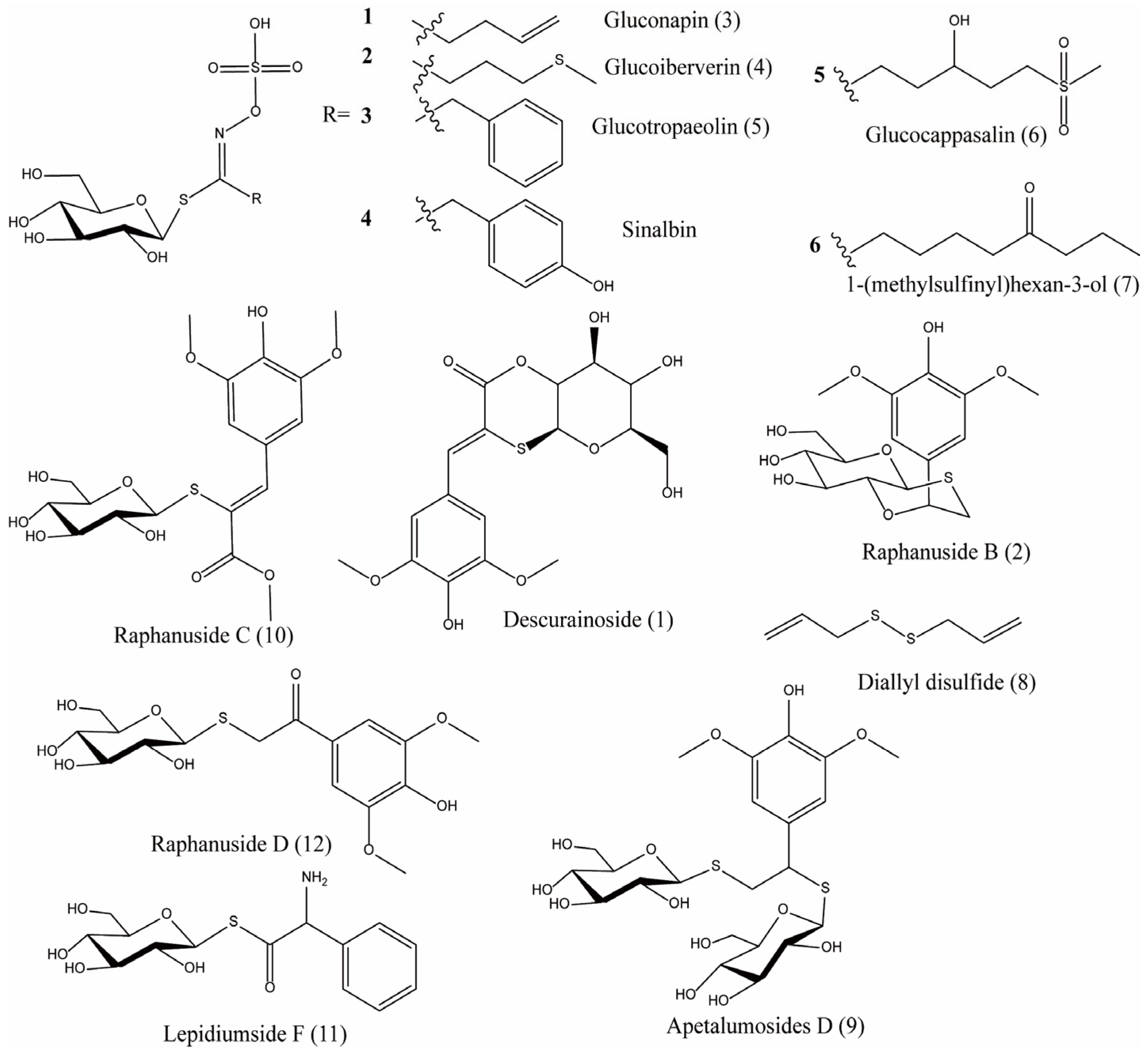
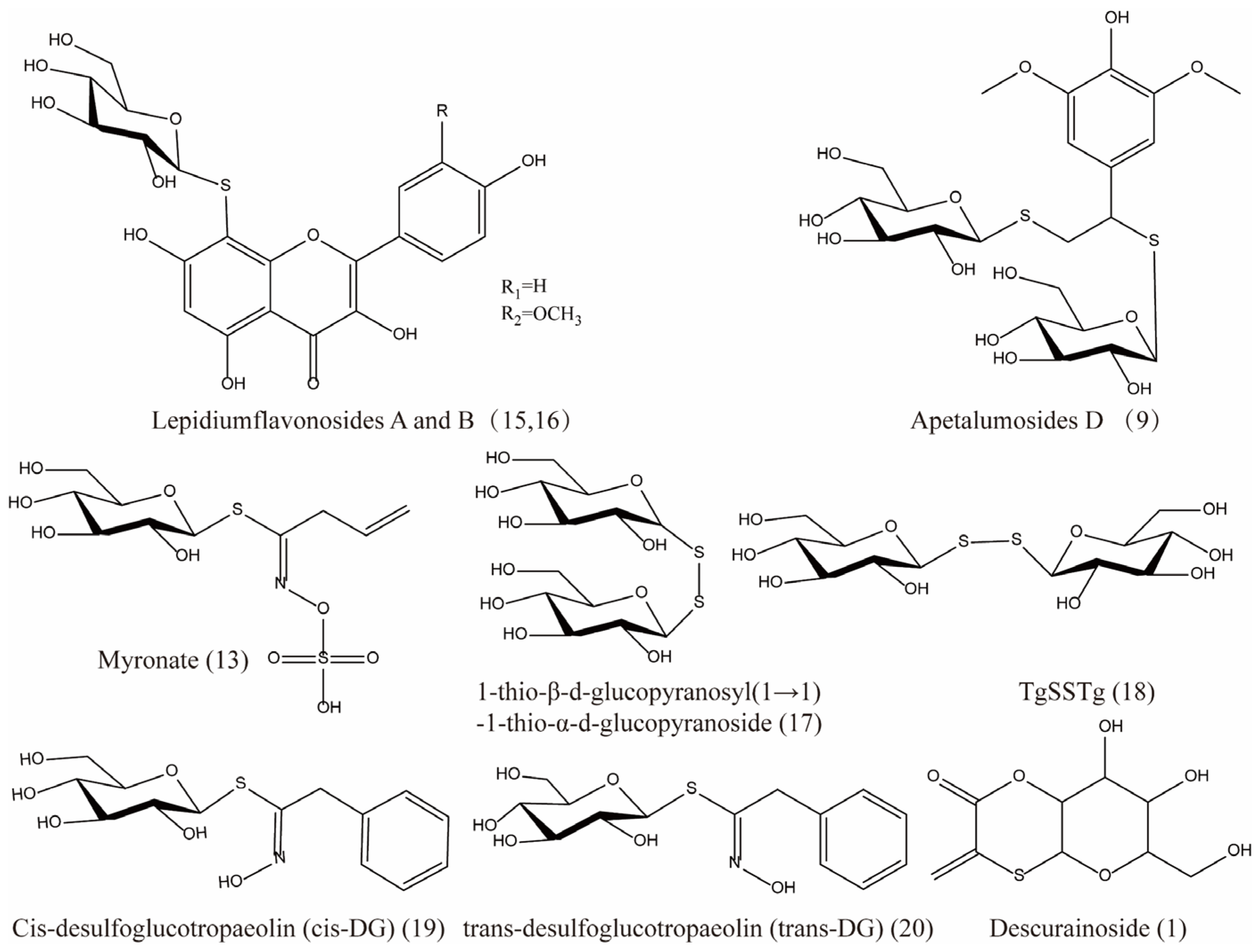
| 1 | descurainoside | Organic sulfur compounds | 1 | [82] |
| 2 | raphanuside B | 1 | [83] | |
| 3 | gluconapin | 1 | [84] | |
| 4 | glucoiberverin | 1 | [84] | |
| 5 | glucotropaeolin | 1 | [84] | |
| 6 | glucocappasalin | 1 | [84] | |
| 7 | 1-(methylsulfinyl)hexan-3-ol | 1 | [84] | |
| 8 | diallyl disulfide | 1 | [85] | |
| 9 | apetalumosides D | 1 | [47] | |
| 10 | raphanuside C | 1 | [83] | |
| 11 | lepidiumside F | 1 | [84] | |
| 12 | raphanuside D | 1 | [83] | |
| 13 | myronate | 2 | [85] | |
| 14 | sinalbin | 1 | [85] | |
| 15 | lepidiumflavonosides A | 2 | [48] | |
| 16 | lepidiumflavonosides B | 2 | [48] | |
| 17 | 1-thio-β-d-glucopyranosyl(1→1)-1-thio-α-d-glucopyranoside | 2 | [47] | |
| 18 | TgSSTg | 2 | [47] | |
| 19 | cis-desulfoglucotropaeolin (cis-DG) | 2 | [49] | |
| 20 | trans-desulfoglucotropaeolin (trans-DG) | 2 | [49] | |
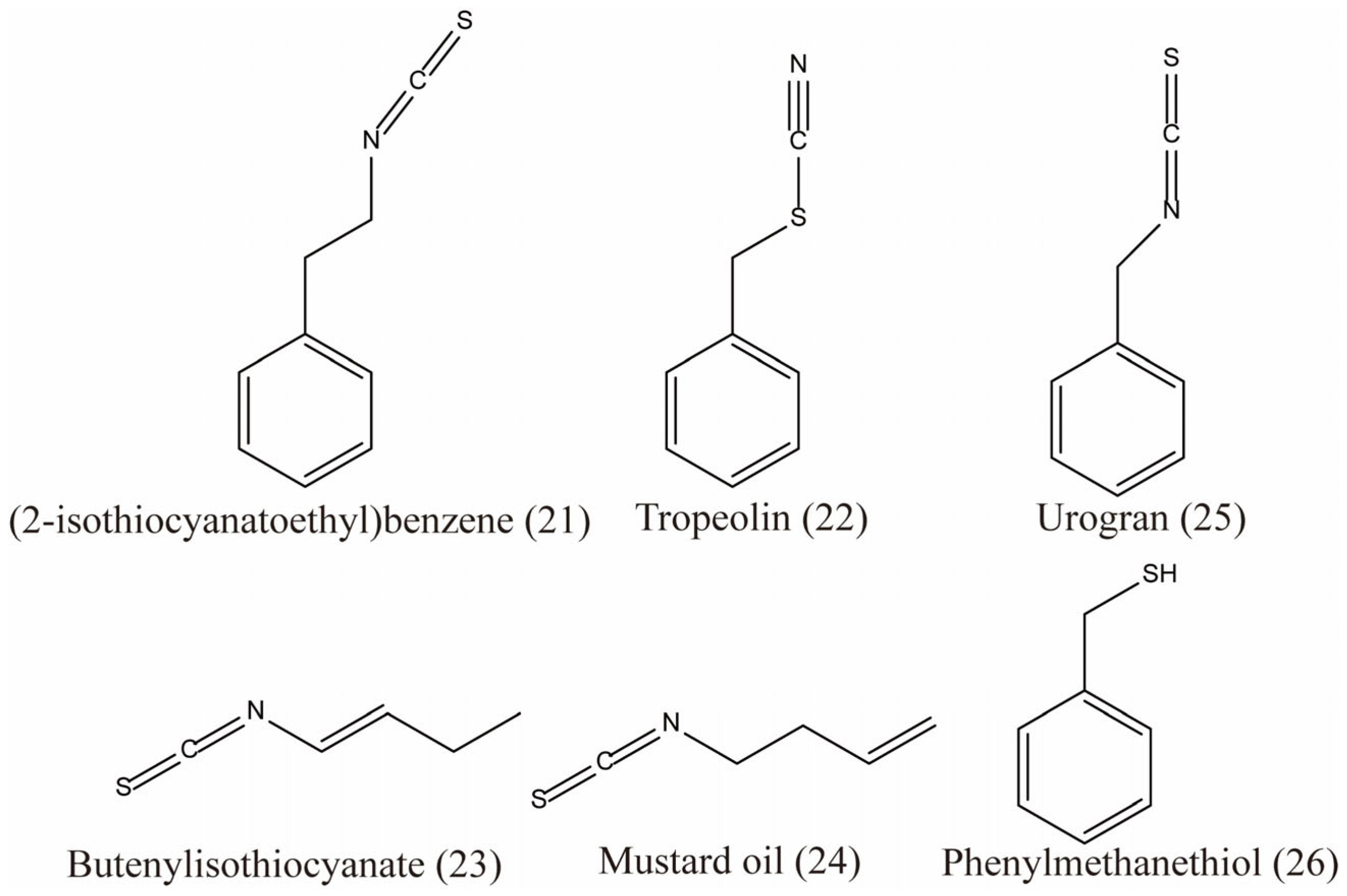
| 21 | (2-isothiocyanatoethyl)benzene | 1, 2 | TCMSP | |
| 22 | tropeolin | 1, 2 | TCMSP | |
| 23 | butenylisothiocyanate | 1, 2 | TCMSP | |
| 24 | mustard oil | 1, 2 | TCMSP | |
| 25 | urogran | 1, 2 | TCMSP | |
| 26 | phenylmethanethiol | 1, 2 | TCMSP | |
| 27 | kaempferol | Flavonoid compounds | 1 | [86,87] |
| 28 | isorhamnetin | 1 | [88] | |
| 29 | quercetin | 1, 2 | [87,89] | |
| 30 | isorhamnetin-3-O-β-D-glucopyranoside | 1, 2 | [88,89] | |
| 31 | quercetin-3-O-β-D-glucopyranoside | 1, 2 | [88,89] | |
| 32 | descurainin A | 1 | [90,91] | |
| 33 | quercetin-3-O-β-D-glucopyranosyl-7-O-β-gentiobioside | 1 | [92] | |
| 34 | kaempferol-3-O-β-D-glucopyranosyl-7-O-β-gentiobioside | 1 | [92] | |
| 35 | isorhamnetin-3-O-β-D-glucopyranosyl-7-O-β-gentiobioside | 1 | [92] | |
| 36 | quercetin-7-O-β-gentiobioside | 1 | [87,92] | |
| 37 | kaempferol-7-O-β-gentiobioside | 1 | [92] | |
| 38 | isorhamnetin-7-O-β-gentiobioside | 1 | [92] | |
| 39 | quercetin-3,7-di-O-β-D-glucopyranoside | 1 | [92] | |
| 40 | kaempferol-3,7-di-O-β-D-glucopyranoside | 1 | [92] | |
| 41 | isorhamnetin-3,7-di-O-β-D-glucopyranoside | 1 | [92] | |
| 42 | kaempferol-3-O-β-D-glucopyranosyl-7-O-[(2-O-trans-sinapoyl)-β-D-glucopyranosyl(1→6))-β-D-glucopyranoside | 1 | [92] | |
| 43 | drabanemoroside | 1 | [88] | |
| 44 | quercetin-3-O-α-L-rhamnopyranosyl-(1→2)-α-L-arabinopyranose | 1 | [88] | |
| 45 | quercetin-3-O-β-D-[2-O-(6-O-sinapoyl)-β-D-glucopyranosyl)-glucopyranoside | 2 | [89] | |
| 46 | isorhamnetin-3-O-β-D-[2-O-(6-O-sinapoyl)-β-D-glucopyranosyl)-glucopyranoside | 2 | [89] | |
| 47 | quercetin-7-O-β-D-glucopyranoside | 2 | [89] | |
| 48 | isorhamnetin-7-O-β-D-glucopyranoside | 2 | [89] | |
| 49 | kaempferol-7-O-β-D-glucopyranoside | 2 | [89] | |
| 50 | strophanthidin | Cardiotonic glycoside compounds | 1 | [93] |
| 51 | evomonoside | 1, 2 | [93,94] | |
| 52 | helveticoside | 1 | [93] | |
| 53 | evobioside | 1 | [93] | |
| 54 | erysimoside | 1 | [93] | |
| 55 | descurainolide A | Lignans compounds | 1 | [95] |
| 56 | descurainolide B | 1 | [95] | |
| 57 | syringaresinol | 1 | [95] | |
| 58 | scopoletine | Coumarin compounds | 1 | [95] |
| 59 | isoscopoline | 1 | [96] | |
| 60 | xanthtoxol | 1 | [96] | |
| 61 | xanthtoxin | 1 | [96] | |
| 62 | psoralene | 1 | [96] | |
| 63 | bergaptane | 1 | [96] | |
| 64 | 3,4,5-trimethoxycinnamic acid (4-methoxy sinapic acid) | Organic acid compounds | 1 | [88] |
| 65 | sinapic acid ethyl ester | 1 | [88] | |
| 66 | descuraic acid | 1 | [97] | |
| 67 | isovanillic acid | 1 | [98] | |
| 68 | syringic acid | 1 | [98] | |
| 69 | p-hydroxybenzoic acid | 1 | [98] | |
| 70 | p-hydroxybenzaldehyde | 1 | [98] | |
| 71 | nicotinic acid | 1 | [98] | |
| 72 | sinapic acid | 1 | [87] | |
| 73 | descurainoside B | Benzopyrone compounds | 1 | [99] |
| 74 | 3,5-dimethoxy-4-hydroxybenzaldehyde (syringaldehyde) | Phenolic compounds | 1 | [87] |
| 75 | 4-pentenamide | Unsaturated fatty amide | 1 | [99] |
| 76 | β-amyrin | Pentacyclic triterpenoids | 1 | [96] |
| 77 | β-sitosterol | Steroid compounds | 1, 2 | [87,89] |
| 78 | cholesterol | 1 | [96] | |
| 79 | β-daucosterol (or β-sitosterol-3-O-β-D-glucoside) | 1, 2 | [87,89] | |
| 80 | sinapine bisulfate | Benzodiazepine compounds | 1 | [87] |
| 81 | uracil | 1 | [99] | |
| 82 | thymine | 1 | [99] | |
| 83 | scopoline | 1 | [96] | |
| 84 | 3-methoxyinositol | Others | 1 | [99] |
| 85 | 5-hydroxymethylfurfural | 1, 2 | [90,91,99] | |
| 86 | 2,5-dimethyl-7-hydroxychromone | 1 | [99] | |
| 87 | descurainin | 1 | [95] |
4. The Sulfur Compounds Found in Descurainiae Semen and Lepidii Semen
5. Theoretical Insights into Sulfur Compounds Targeting the PI3K/AKT Pathway
6. Summary and Perspectives
- (1)
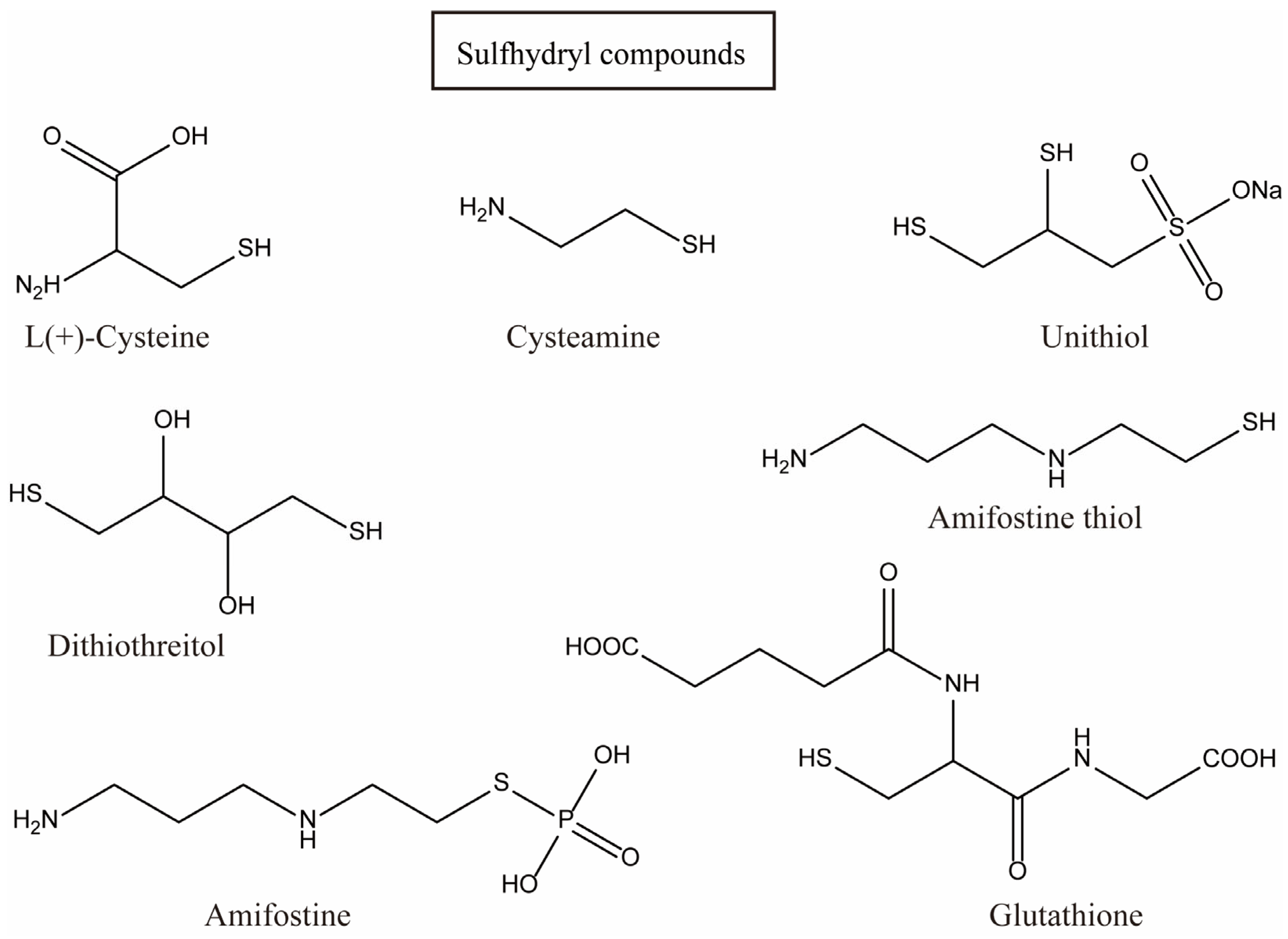
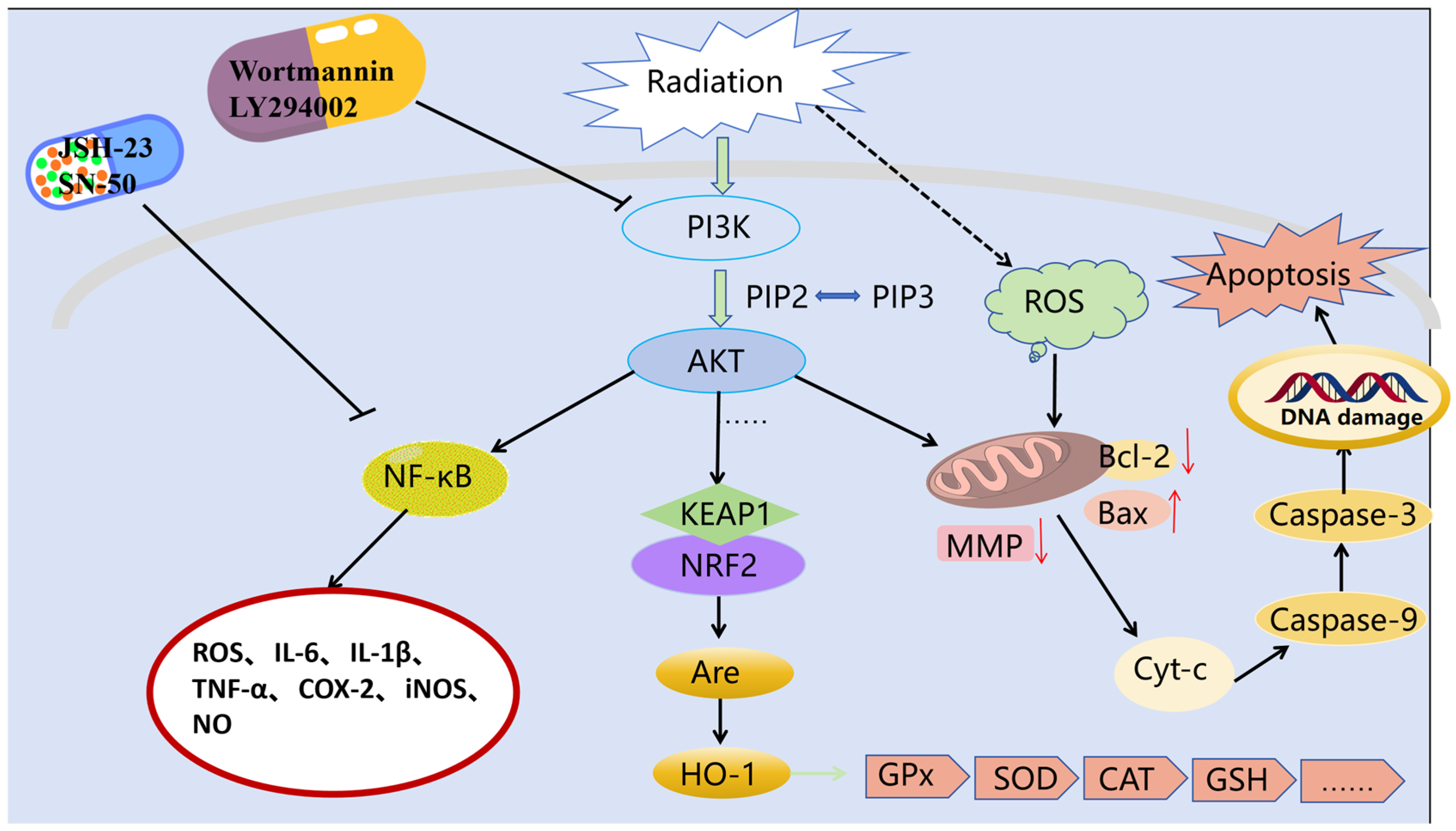
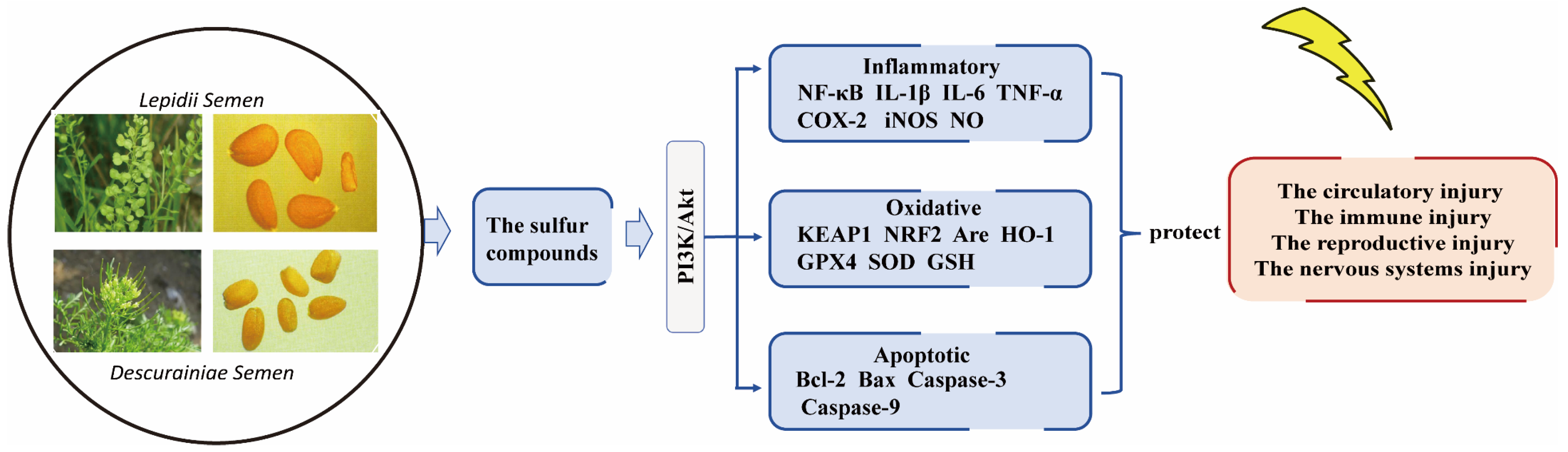
- Antioxidant Mechanisms: Specifically, a key mode of action for many pharmacological and natural radioprotective agents is the activation of the PI3K/AKT signaling pathway. Once activated, this kinase cascade leads to the phosphorylation and nuclear translocation of the transcription factor Nrf2, a master regulator of the cellular antioxidant response. This results in the upregulated expression of heme oxygenase-1 (HO-1) and a suite of other cytoprotective enzymes. Through this coordinated Nrf2/HO-1 axis, these agents effectively scavenge and neutralize radiation-induced reactive oxygen species (ROS), thereby reducing intracellular ROS accumulation, preventing oxidative damage to lipids, proteins, and DNA, and enhancing cell survival post-irradiation [57,58]. For example, one of the core pharmacological effects of amifostine is its effective inhibition of oxidative stress. It achieves protection of normal tissues through two mechanisms: directly eliminating free radicals and indirectly enhancing the endogenous antioxidant enzyme system within cells [109].
- (2)
- Anti-inflammatory Pathways: Beyond its antioxidant role, amifostine potently mediates anti-inflammatory cytoprotection by suppressing dysregulated inflammatory signaling. A primary mechanism involves its active metabolite, amifostine, directly inhibiting the activation of the PI3K/AKT pathway in normal cells. This inhibition blocks the subsequent phosphorylation and nuclear translocation of the pro-inflammatory master transcription factor NF-κB. Consequently, the expression of its downstream target genes is significantly downregulated, leading to a substantial reduction in the synthesis and release of key pro-inflammatory cytokines and enzymes, including TNF-α, IL-1β, IL-6, and COX-2. This systematic dampening of the PI3K/AKT/NF-κB axis attenuates radiation- or chemotherapy-induced inflammatory cascades, thereby preventing secondary tissue damage and contributing to the preservation of normal tissue architecture and function [110].
- (3)
- Anti-apoptotic Effects: Furthermore, amifostine directly promotes cell survival by executing robust anti-apoptotic effects through the regulation of the PI3K/AKT/mTOR axis. Its active thiol metabolite, amifostine, facilitates the activation of PI3K, leading to the phosphorylation and activation of AKT at key serine/threonine residues. Activated AKT serves as a central node, directly phosphorylating and inactivating critical pro-apoptotic factors such as BAD and procaspase-9, thereby blocking the intrinsic mitochondrial apoptosis pathway. Concurrently, AKT stimulates the mTOR complex, a master regulator of cell growth and metabolism, which promotes protein synthesis and inhibits autophagy-associated cell death. This concerted signaling cascade, initiated by amifostine, shifts the cellular balance decisively towards survival, enhancing the resistance of normal tissues to the genotoxic and cytotoxic insults of radiotherapy and chemotherapy [60,61,110].
Supplementary Materials
Author Contributions
Funding
Data Availability Statement
Conflicts of Interest
Abbreviations
| Akt | Protein Kinase B |
| PI3K | Phosphatidylinositol 3-Kinase |
| CNKI | China National Knowledge Infrastructure |
| IL-1β | Interleukin-1 Beta |
| IL-6 | Interleukin-6 |
| NO | Nitric Oxide |
| iNOS | Inducible Nitric Oxide Synthase |
| HO-1 | Heme Oxygenase-1 |
| COX-2 | Cyclooxygenase-2 |
| IL-10 | Interleukin-10 |
| NF-κB | Nuclear Factor Kappa-Light-Chain-Enhancer of Activated B Cells |
| NMR | Nuclear Magnetic Resonance |
| PDB | Protein Data Bank |
| PDBQT | Protein Data Bank, Partial Charge (Q), and Atom Type (T) |
| ROS | Reactive Oxygen Species |
| TCM | Traditional Chinese Medicine |
| TCMSP | Traditional Chinese Medicine Systems Pharmacology |
| TNF-α | Tumor Necrosis Factor-Alpha |
| mTOR | Mammalian Target of Rapamycin |
References
- Mukherjee, S.; Dutta, A.; Chakraborty, A. The interaction of oxidative stress with MAPK, PI3/AKT, NF-κB, and DNA damage kinases influences the fate of γ-radiation-induced bystander cells. Arch. Biochem. Biophys. 2022, 725, 109302. [Google Scholar] [CrossRef]
- Lumniczky, K.; Impens, N.; Armengol, G.; Candéias, S.; Georgakilas, A.G.; Hornhardt, S.; Martin, O.A.; Rödel, F.; Schaue, D. Low dose ionizing radiation effects on the immune system. Environ. Int. 2021, 149, 106212. [Google Scholar] [CrossRef]
- Einor, D.; Bonisoli-Alquati, A.; Costantini, D.; Mousseau, T.A.; Møller, A.P. Ionizing radiation, antioxidant response and oxidative damage: A meta-analysis. Sci. Total Environ. 2016, 548–549, 463–471. [Google Scholar] [CrossRef] [PubMed]
- Pariset, E.; Malkani, S.; Cekanaviciute, E.; Costes, S.V. Ionizing radiation-induced risks to the central nervous system and countermeasures in cellular and rodent models. Int. J. Radiat. Biol. 2021, 97, S132–S150. [Google Scholar] [CrossRef]
- Jelonek, K.; Pietrowska, M.; Widlak, P. Systemic effects of ionizing radiation at the proteome and metabolome levels in the blood of cancer patients treated with radiotherapy: The influence of inflammation and radiation toxicity. Int. J. Radiat. Biol. 2017, 93, 683–696. [Google Scholar] [CrossRef] [PubMed]
- Foye, W.O. Sulfur compounds in therapy: Radiation-protective agents, amphetamines, and mucopolysaccharide sulfation. Ann. Pharmacother. 1992, 9, 1144–1147. [Google Scholar] [CrossRef]
- Rix-Montel, M.A.; Kranck, H.; Vasilescu, D. Interaction between synthetic lecithin and various sulfur-containing radioprotectors. Physiol. Chem. Phys. 1981, 6, 549–558. [Google Scholar]
- Reliene, R.; Pollard, J.M.; Sobol, Z.; Trouiller, B.; Gatti, R.A.; Schiestl, R.H. N-acetyl cysteine protects against ionizing radiation-induced DNA damage but not against cell killing in yeast and mammals. Mutat. Res. 2009, 665, 37–43. [Google Scholar] [CrossRef]
- Soltysiak-Pawluczuk, D.; Bitny-Szlachto, S. Effects of ionizing radiation and cysteamine (MEA) on activity of mouse spleen adenyl cyclase. Int. J. Radiat. Biol. Relat. Stud. Phys. Chem. Med. 1976, 29, 549–553. [Google Scholar] [CrossRef]
- Grachev, S.A.; Sverdlov, A.G.; Nikanorova, N.G.; Bol’shakova, O.I.; Korolva, I.K. Snizhenie toksicheskogo deĭstviia aminotiolovykh radioprotektorov i povyshenie éffekta khimicheskoĭ zashchity ot ioniziruiushcheĭ radiatsii s pomoshchiu unitiola. Radiats Biol. Radioecol. 1994, 34, 424–429. [Google Scholar]
- Kataoka, Y.; Murley, J.S.; Baker, K.L.; Grdina, D.J. Relationship between phosphorylated histone H2AX formation and cell survival in human microvascular endothelial cells (HMEC) as a function of ionizing radiation exposure in the presence or absence of thiol-containing drugs. Radiat. Res. 2007, 168, 106–114. [Google Scholar] [CrossRef]
- Kim, J.H.; Lee, E.J.; Hyun, J.W.; Kim, S.H.; Mar, W.; Kim, J.K. Reduction of radiation-induced chromosome aberration and apoptosis by dithiothreitol. Arch. Pharm. Res. 1998, 21, 683–687. [Google Scholar] [CrossRef]
- Ji, L.; Cui, P.; Zhou, S.; Qiu, L.; Huang, H.; Wang, C.; Wang, J. Advances of Amifostine in Radiation Protection: Administration and Delivery. Mol. Pharm. 2023, 20, 5383–5395. [Google Scholar] [CrossRef]
- Patwardhan, R.S.; Sharma, D.; Checker, R.; Thoh, M.; Sandur, S.K. Spatio-temporal changes in glutathione and thioredoxin redox couples during ionizing radiation-induced oxidative stress regulate tumor radio-resistance. Free Radic Res. 2015, 49, 1218–1232. [Google Scholar] [CrossRef] [PubMed]
- Vasin, M.V.; Ushakov, I.B.; Kovtun, V.Y.; Komarova, S.N.; Semenova, L.A.; Galkin, A.A.; Afanas’ev, R.V.; Bukhtiyarov, I.V. Pharmacological Analysis of the Therapeutic Effect of Radioprotectors Cystamine and Indralin in the Capacity of Radiomitigators. Bull. Exp. Biol. Med. 2017, 162, 466–469. [Google Scholar] [CrossRef]
- Tripathy, J.; Chowdhury, A.R.; Prusty, M.; Muduli, K.; Priyadarshini, N.; Reddy, K.S.; Banerjee, B.; Elangovan, S. α-Lipoic acid prevents the ionizing radiation-induced epithelial-mesenchymal transition and enhances the radiosensitivity in breast cancer cells. Eur. J. Pharmacol. 2020, 871, 172938. [Google Scholar] [CrossRef]
- Takeshita, K.; Ueno, M.; Fujii-Aikawa, K.; Okazaki, S.; Ohta, Y.; Ozawa, T. Protective effects of 2-aminoethylthiosulfuric acid and structurally analogous organosulfur compounds against ionizing radiation. J. Clin. Biochem. Nutr. 2023, 72, 117–125. [Google Scholar] [CrossRef] [PubMed]
- Davydova, S.A.; Dorofeev, V.M.; Yakovlev, V.G. Possibility of using definition of the quantity of some compounds in urine for choosing radioprotectors. Radiobiologiya 1966, 6, 93–96. [Google Scholar]
- Mozzhukhin, A.S.; Rachinskii FIu Tank, L.I. Relation of chemical structure to protective activity against roentgen- and gama-radiations in various mercaptoamines. Med. Radiol. 1960, 5, 78–81. [Google Scholar]
- Paull, R.M.; Melville, G.S.J. Radioprotection with 2-(1 Decylamino) Ethanethiosulfuric Acid in the Rhesus Monkey. SAM-TR-68-110. Technical Report SAM-TR. 1969, pp. 1–7. Available online: https://apps.dtic.mil/sti/html/tr/AD0680844/ (accessed on 21 December 2025).
- Parke, Davis and Co. Phenylalkylaminoethyl Thiosulfates. U.S. Patent 3,453,309, 1 July 1969. [Google Scholar]
- Mukhomorov, V.K. Entropy approach to the study of biological activity of chemical compounds: The other side of radioprotectors. Adv. Biol. Chem. 2011, 1, 1–5. [Google Scholar] [CrossRef]
- Hassan, A.Y.; Ghorab, M.M.; Nassar, O.M. Synthesis and antiradiation activity of some sulfur containing thiophene derivatives. Phosphorus Sulfur. Silicon Relat. Elem. 1998, 134, 77–86. [Google Scholar] [CrossRef]
- Westland, R.D.; Cooley, R.A., Jr.; Holmes, J.L.; Hong, J.S.; Lin, M.H.; Zwiesler, M.L. Antiradiation agents. Substituted 2-pyridyloxy and 2-quinolyloxy derivatives of S-2-(alkylamino) ethyl hydrogen thiosulfates and 3-alkylthiazolidines and substituted 2-pyridyloxy derivatives of 2-(alkylamino)ethanethiols and corresponding disulfides. J. Med. Chem. 1973, 16, 319–327. [Google Scholar] [CrossRef]
- Sosnovsky, G.; Schneider, P. Synthesis of amidine derivatives of alkylthiosulfuric acids as potential antiradiation agents. Tetrahedron 1963, 19, 1313–1318. [Google Scholar] [CrossRef]
- Zebro, T.; Stachura, J.; Prochnicka, B.; Szczepkowski, T. Chemical protection from ionizing radiation. III. Dynamics of hematologic changes in mice treated with sodium cystein-ethiosulfonate before irradiation with large doses of x-rays. Acta Med. Polona. 1965, 6, 155–169. [Google Scholar]
- Srivastava, P.K.; Field, L.; Grenan, M.M. Organic disulfides and related substances. 38. Some disulfide and trisulfide sulfinate salts as antiradiation drugs. J. Med. Chem. 1975, 18, 798–802. [Google Scholar] [CrossRef] [PubMed]
- Piper, J.R.; Stringfellow, C.R., Jr.; Johnston, T.P. Terminally substituted S-[2(ω-aminoalkylamino) ethyl] dihydrogen phosphorothioates and related compounds as potential antiradiation agents. J. Med. Chem. 1969, 12, 244–253. [Google Scholar] [CrossRef] [PubMed]
- Paul, P.; Unnikrishnan, M.K.; Nagappa, A.N. Phytochemicals as radioprotective agents-a review. Indian. J. Nat. Prod. Resour. 2011, 2, 137–150. [Google Scholar]
- Yu, G.Y.; Zhao, B.; Shen, X.; Long, W.; Zhang, H.; Jiang, M.; Liu, P.X. Radioprotective activity of 2,2-dimethyl thiazolidine derivatives. Yiyao Daobao 2013, 32, 1403–1406. [Google Scholar]
- Westland, R.D.; Lin, M.H.; Cooley, R.A., Jr.; Zwisler, M.L. Antiradiation agents. 3-[(Alkylthio) alkyl] thiazolidines and substituted 2-{[(3-thiazolidinyl) alkyl] thio} pyridines and -quinolines. J. Med. Chem. 1973, 16, 328–331. [Google Scholar] [CrossRef]
- Upadhyay, S.N.; Singh, S.; Chose, A. Physicochemical properties of a combination of 5-hydroxy-L-tryptophan with β-aminoethylisothiuronium bromide hydrobromide. J. Indian. Chem. Soc. 1993, 70, 681–687. [Google Scholar]
- Nekrasova, I.V.; Mandrugin, A.A.; Gintsburg, E.I.; Tarasenko, A.G.; Fedoseev, V.M.; Graevskii, E.Y. Radioprotective activity of aminoalkylthiouronium compounds and their heterocyclic derivatives. Radiobiologiya 1974, 14, 215–218. [Google Scholar]
- Huang, Z.; Peng, R.; Yu, H.; Chen, Z.; Wang, S.; Wang, Z.; Dong, S.; Li, W.; Jiang, Q.; Li, F.; et al. Dimethyl Sulfoxide Attenuates Radiation-Induced Testicular Injury through Facilitating DNA Double-Strand Break Repair. Oxid. Med. Cell Longev. 2022, 2022, 9137812. [Google Scholar] [CrossRef] [PubMed]
- Ma, N.; Kato, T.; Isogai, T.; Gu, Y.; Yamashita, T. The Potential Effects of Taurine in Mitigation of Radiation Nephropathy. Adv. Exp. Med. Biol. 2019, 1155, 497–505. [Google Scholar] [PubMed]
- Musa, A.E.; Shabeeb, D.; Okoro, N.O.E.; Agbele, A.T. Radiation protection by Ex-RAD: A systematic review. Environ. Sci. Pollut. Res. Int. 2020, 27, 33592–33600. [Google Scholar] [CrossRef]
- Singh, V.K.; Seed, T.M. The efficacy and safety of amifostine for the acute radiation syndrome. Expert. Opin. Drug Saf. 2019, 11, 1077–1090. [Google Scholar] [CrossRef]
- Carpenter, A.D.; Li, Y.; Janocha, B.L.; Wise, S.Y.; Fatanmi, O.O.; Maniar, M.; Cheema, A.K.; Singh, V.K. Analysis of the Proteomic Profile in Serum of Irradiated Nonhuman Primates Treated with Ex-Rad, a Radiation Medical Countermeasure. J. Proteome Res. 2023, 4, 1116–1126. [Google Scholar] [CrossRef]
- Kaur, R.; Lang, D.K.; Singh, H.; Arora, A.; Garg, N.; Saini, B. Repurposing of Various Current Medicines as Radioprotective Agents. Anticancer. Agents Med. Chem. 2023, 10, 1104–1121. [Google Scholar] [CrossRef] [PubMed]
- Gu, R.Q. Basic research and technological innovation. Adv. Bioeng. 1995, 11, 6–7. [Google Scholar]
- Liao, X.J.; Hu, X.S.; Xin, L. Glucosinolates and their degradation products in food and feed. Food Sci. 1999, 10, 19–22. [Google Scholar]
- Kim, S.B.; Seo, Y.S.; Kim, H.S.; Lee, A.Y.; Chun, J.M.; Moon, B.C.; Kwon, B.I. Anti-asthmatic effects of lepidii seu Descurainiae Semen plant species in ovalbumin-induced asthmatic mice. J. Ethnopharmacol. 2019, 15, 112083. [Google Scholar] [CrossRef]
- Zhou, X.D.; Tang, L.Y.; Zhou, G.H.; Kou, Z.Z.; Wang, T.; Wang, Z.J. Advances on Lepidii Semen and Descurainiae Semen. Zhongguo Zhong Yao Za Zhi 2014, 39, 4699–4708. [Google Scholar] [PubMed]
- Li, X.; Wei, S.; Niu, S.; Ma, X.; Li, H.; Jing, M.; Zhao, Y. Network pharmacology prediction and molecular docking-based strategy to explore the potential mechanism of Huanglian Jiedu Decoction against sepsis. Comput. Biol. Med. 2022, 144, 105389. [Google Scholar] [CrossRef]
- Pan, L.; Cheng, Y.; Yang, W.; Wu, X.; Zhu, H.; Hu, M.; Zhang, Y.; Zhang, M. Nintedanib Ameliorates Bleomycin-Induced Pulmonary Fibrosis, Inflammation, Apoptosis, and Oxidative Stress by Modulating PI3K/AKT/mTOR Pathway in Mice. Inflammation 2023, 46, 1531–1542. [Google Scholar] [CrossRef] [PubMed]
- Liu, Y.; Gong, S.; Li, K.; Wu, G.; Zheng, X.; Zheng, J.; Lu, X.; Zhang, L.; Li, J.; Su, Z.; et al. Coptisine protects against hyperuricemic nephropathy through alleviating inflammation, oxidative stress and mitochondrial apoptosis via PI3K/AKT signaling pathway. Biomed. Pharmacother. 2022, 156, 113941. [Google Scholar] [CrossRef]
- Wang, S.; Shi, P.; Qu, L.; Ruan, J.; Yang, S.; Yu, H.; Zhang, Y.; Wang, T. Bioactive Constituents Obtained from the Seeds of Lepidium apetalum Willd. Molecules 2017, 22, 540. [Google Scholar] [CrossRef]
- Li, M.; Wang, X.L.; Zhang, J.K.; Zeng, M.N.; Sun, Y.J.; Chen, H.; Hao, Z.Y.; Feng, W.S.; Zheng, X.K. Two new flavonoid thioglucosides from the seeds of Lepidium apetalum. J. Asian Nat. Prod. Res. 2023, 25, 976–982. [Google Scholar] [CrossRef]
- Yuan, P.; Zheng, X.; Li, M.; Ke, Y.; Fu, Y.; Zhang, Q.; Wang, X.; Feng, W. Two Sulfur Glycoside Compounds Isolated from Lepidium apetalum Willd Protect NRK52e Cells against Hypertonic-Induced Adhesion and Inflammation by Suppressing the MAPK Signaling Pathway and RAAS. Molecules 2017, 22, 1956. [Google Scholar] [CrossRef]
- Yang, L.; Ran, H.; Yin, Y.; Liu, J.; Lu, B.; Ran, X.; Luo, S.; Wang, W.; Yang, Z.; Li, R. Mitochondrial Targeted Cerium Oxide Nanoclusters for Radiation Protection and Promoting Hematopoiesis. Int. J. Nanomed. 2024, 19, 6463–6483. [Google Scholar] [CrossRef]
- Ferrandon, S.; DeVecchio, J.; Duraes, L.; Chouhan, H.; Karagkounis, G.; Davenport, J.; Orloff, M.; Liska, D.; Kalady, M.F. CoA Synthase (COASY) Mediates Radiation Resistance via PI3K Signaling in Rectal Cancer. Cancer Res. 2020, 80, 334–346. [Google Scholar] [CrossRef]
- Ito, K.; Suda, T. Metabolic requirements for the maintenance of self-renewing stem cells. Nat. Rev. Mol. Cell Biol. 2014, 15, 243–256. [Google Scholar] [CrossRef] [PubMed]
- Toulany, M.; Lee, K.-J.; Fattah, K.R.; Lin, Y.F.; Fehrenbacher, B.; Schaller, M.; Chen, B.P.; Chen, D.J.; Rodemann, H.P. Akt Promotes Post-Irradiation Survival of Human Tumor Cells through Initiation, Progression, and Termination of DNA-PKcs–Dependent DNA Double-Strand Break Repair. Mol. Cancer Res. 2012, 10, 945–957. [Google Scholar] [CrossRef] [PubMed]
- Deng, R.; Tang, J.; Ma, J.G.; Chen, S.P.; Xia, L.P.; Zhou, W.J.; Li, D.-D.; Feng, G.-K.; Zeng, Y.-X.; Zhu, X.-F.; et al. PKB/Akt promotes DSB repair in cancer cells through upregulating Mre11 expression following ionizing radiation. Oncogene 2011, 30, 944–955. [Google Scholar] [CrossRef]
- Plastaras, J.P.; Dorsey, J.F.; Carroll, K.; Kim, S.H.; Birnbaum, M.J.; El-Deiry, W.S. Role of PI3K/AKT signaling in TRAIL- and radiation-induced gastrointestinal apoptosis. Cancer Biol. Ther. 2008, 7, 2047–2053. [Google Scholar] [CrossRef]
- Li, B.; Wang, Z.; He, Y.; Chen, T.; Zhang, Y.; Yuan, X.; Li, P. Adropin Improves Radiation-Induced Myocardial Injury via VEGFR2/PI3K/AKT Pathway. Oxid. Med. Cell Longev. 2022, 2022, 8230214. [Google Scholar] [CrossRef]
- Brasil, F.B.; Bertolini Gobbo, R.C.; Souza de Almeida, F.J.; Luckachaki, M.D.; Dall’Oglio, E.L.; de Oliveira, M.R. The signaling pathway PI3K/AKT/Nrf2/HO-1 plays a role in the mitochondrial protection promoted by astaxanthin in the SH-SY5Y cells exposed to hydrogen peroxide. Neurochem. Int. 2021, 146, 105024. [Google Scholar] [CrossRef] [PubMed]
- Zhao, R.; Feng, J.; He, G. Hypoxia increases Nrf2-induced HO-1 expression via the PI3K/AKT pathway. Front. Biosci. 2016, 21, 385–396. [Google Scholar]
- Wan, J.; Li, M.; Yuan, X.; Yu, X.; Chen, A.; Shao, M.; Kang, H.; Cheng, P. Rutaecarpine ameliorates osteoarthritis by inhibiting PI3K/AKT/NF-κB and MAPK signalling transduction through integrin αVβ3. Int. J. Mol. Med. 2023, 52, 97. [Google Scholar] [CrossRef]
- Xu, K.; He, Y.; Moqbel, S.A.A.; Zhou, X.; Wu, L.; Bao, J. SIRT3 ameliorates osteoarthritis via regulating chondrocyte autophagy and apoptosis through the PI3K/AKT/mTOR pathway. Int. J. Biol. Macromol. 2021, 175, 351–360. [Google Scholar] [CrossRef]
- Tong, C.; Wu, Y.; Zhang, L.; Yu, Y. Insulin resistance, autophagy and apoptosis in patients with polycystic ovary syndrome: Association with PI3K signaling pathway. Front. Endocrinol. 2022, 13, 1091147. [Google Scholar] [CrossRef]
- Bellezza, I.; Giambanco, I.; Minelli, A.; Donato, R. Nrf2-Keap1 signaling in oxidative and reductive stress. Biochim. Biophys. Acta Mol. Cell Res. 2018, 5, 721–733. [Google Scholar] [CrossRef] [PubMed]
- Shi, S.; Chen, Y.; Luo, Z.; Nie, G.; Dai, Y. Role of oxidative stress and inflammation-related signaling pathways in doxorubicin-induced cardiomyopathy. Cell Commun. Signal 2023, 1, 61. [Google Scholar] [CrossRef]
- Indo, H.P.; Masuda, D.; Sriburee, S.; Ito, H.; Nakanishi, I.; Matsumoto, K.I.; Mankhetkorn, S.; Chatatikun, M.; Surinkaew, S.; Udomwech, L.; et al. Evidence of Nrf2/Keap1 Signaling Regulation by Mitochodria-Generated Reactive Oxygen Species in RGK1 Cells. Biomolecules 2023, 3, 445. [Google Scholar]
- Rajesh, R.; Devegowda, D.; Thimmulappa, R.K. Human papillomavirus-driven repression of NRF2 signalling confers chemo-radio sensitivity and predicts prognosis in head and neck squamous cell carcinoma. Free. Radic. Biol. Med. 2023, 205, 234–243. [Google Scholar]
- Ma, C.; Gu, C.; Lian, P.; Wazir, J.; Lu, R.; Ruan, B.; Wei, L.; Li, L.; Pu, W.; Peng, Z.; et al. Sulforaphane alleviates psoriasis by enhancing antioxidant defense through KEAP1-NRF2 Pathway activation and attenuating inflammatory signaling. Cell Death Dis. 2023, 11, 768. [Google Scholar] [CrossRef] [PubMed]
- Houghton, C.A.; Fassett, R.G.; Coombes, J.S. Sulforaphane and Other Nutrigenomic Nrf2 Activators: Can the Clinician’s Expectation Be Matched by the Reality? Oxid. Med. Cell. Longev. 2016, 2016, 7857186. [Google Scholar] [CrossRef]
- Qiu, X.; Dong, K.; Guan, J.; He, J. Hydrogen attenuates radiation-induced intestinal damage by reducing oxidative stress and inflammatory response. Int. Immunopharmacol. 2020, 84, 106517. [Google Scholar] [CrossRef] [PubMed]
- Zheng, S.; Ma, M.; Chen, Y.; Li, M. Effects of quercetin on ovarian function and regulation of the ovarian PI3K/AKT/FoxO3a signalling pathway and oxidative stress in a rat model of cyclophosphamide-induced premature ovarian failure. Basic. Clin. Pharmacol. Toxicol. 2022, 130, 240–253. [Google Scholar] [CrossRef]
- Yu, C.; Xiao, J.H. The Keap1-Nrf2 System: A Mediator between Oxidative Stress and Aging. Oxid. Med. Cell. Longev. 2021, 6635460. [Google Scholar] [CrossRef] [PubMed]
- Xue, R.; Wan, Y.; Sun, X.; Zhang, X.; Gao, W.; Wu, W. Nicotinic Mitigation of Neuroinflammation and Oxidative Stress After Chronic Sleep Deprivation. Front. Immunol. 2019, 10, 2546. [Google Scholar] [CrossRef]
- Li, Y.; Ding, Q.; Gao, J.; Li, C.; Hou, P.; Xu, J.; Cao, K.; Hu, M.; Cheng, L.; Wang, X.; et al. Novel mechanisms underlying inhibition of inflammation-induced angiogenesis by dexamethasone and gentamicin via PI3K/AKT/NF-κB/VEGF pathways in acute radiation proctitis. Sci. Rep. 2022, 12, 14116. [Google Scholar] [CrossRef]
- You, Z.; Yang, Z.; Cao, S.; Deng, S.; Chen, Y. The Novel KLF4/BIG1 Regulates LPS-mediated Neuro-inflammation and Migration in BV2 Cells via PI3K/AKT/NF-kB Signaling Pathway. Neuroscience 2022, 488, 102–111. [Google Scholar] [CrossRef]
- Yang, J.; Pi, C.; Wang, G. Inhibition of PI3K/AKT/mTOR pathway by apigenin induces apoptosis and autophagy in hepatocellular carcinoma cells. Biomed. Pharmacother. 2018, 103, 699–707. [Google Scholar] [CrossRef]
- Yang, M.Q.; Chen, C.; Mao, Y.F.; Li, Y.; Zhong, X.; Yu, Y.D.; Xue, Y.T.; Song, Y.M. Application of network pharmacology and molecular docking approach to explore active compounds and potential pharmacological mechanisms of Aconiti Lateralis Radix Praeparata and Lepidii Semen Descurainiae Semen for treatment of heart failure. Medicine 2022, 101, e30102. [Google Scholar] [CrossRef]
- Liu, G.; Liu, D.; Zhang, X.Y. A Preliminary Study of Ant-i senile Function of Descurainia sophia on Drosophila and Mice. J. Sichuan Norm. Univ. 2004, 27, 295–297. [Google Scholar]
- Chu, K.; Xu, W.; Li, H.; Chen, L.; Zhang, Y.; Tang, X. Extraction of Lepidium apetalum seed oil using supercritical carbon dioxide and anti-oxidant activity of the extracted oil. Molecules 2011, 16, 10029–10045. [Google Scholar] [CrossRef]
- Meng, L.; Zheng, X.K.; Zhang, Z.G.; Zhang, J.K.; Zhao, X.; Yang, Y.Y.; Wang, X.L.; Kuang, H.X.; Feng, W.S. A new phenylacetamide from the seeds of Lepidium apetalum Willd. Yao Xue Xue Bao 2016, 51, 1881–1884. [Google Scholar]
- Dinh, T.N.; Parat, M.O.; Ong, Y.S.; Khaw, K.Y. Anticancer activities of dietary benzyl isothiocyanate: A comprehensive review. Pharmacol. Res. 2021, 169, 105666. [Google Scholar] [CrossRef] [PubMed]
- Chen, H.W.; Yen, C.C.; Kuo, L.L.; Lo, C.W.; Huang, C.S.; Chen, C.C.; Lii, C.K. Benzyl isothiocyanate ameliorates high-fat/cholesterol/cholic acid diet-induced nonalcoholic steatohepatitis through inhibiting cholesterol crystal-activated NLRP3 inflammasome in Kupffer cells. Toxicol. Appl. Pharmacol. 2020, 393, 114941. [Google Scholar] [CrossRef] [PubMed]
- Chuang, W.T.; Yen, C.C.; Huang, C.S.; Chen, H.W.; Lii, C.K. Benzyl Isothiocyanate Ameliorates High-Fat Diet-Induced Hyperglycemia by Enhancing Nrf2-Dependent Antioxidant Defense-Mediated IRS-1/AKT/TBC1D1 Signaling and GLUT4 Expression in Skeletal Muscle. J. Agric. Food Chem. 2020, 68, 15228–15238. [Google Scholar] [CrossRef] [PubMed]
- Sun, K.; Li, X. A novel sulphur glycoside from the seeds of Descurainia sophia (L.). J. Asian Nat. Prod. Res. 2005, 6, 853. [Google Scholar] [CrossRef]
- Feng, W.S.; Li, C.G.; Zheng, X.K.; Li, L.L.; Chen, W.J.; Zhang, Y.L.; Cao, Y.G.; Gong, J.H.; Kuang, H.X. Three new sulphur glycosides from the seeds of Descurainia sophia. Nat. Prod. Res. 2016, 30, 1675–1681. [Google Scholar] [CrossRef]
- Gong, J.H. Chemical Constituents from the Seeds of Deseurainia Sophia; Heilongjiang University of Chinese Medicine: Harbin, China, 2016. [Google Scholar]
- Wang, Y.A. Study on the Chemical Constituents of Draba aba; Changchun University of Traditional Chinese Medicine: Changchun, China, 2008. [Google Scholar]
- Huang, L.Q. Atlas of Chinese Herbal and Ethnic Drug Materia Medica; Peking University Medical Press: Beijing, China, 2005; pp. 168–189. [Google Scholar]
- Sun, K.; Li, X. Chemical Constituents of Descurainiae Semen. J. Shenyang Pharm. Univ. 2003, 6, 419. [Google Scholar]
- Lee, Y.J.; Kim, N.S.; Kim, H.; Yi, J.M.; Oh, S.M.; Bang, O.S.; Lee, J. Cytotoxic and anti-inflammatory constituents from the seeds of Descurainia sophia. Arch. Pharm. Res. 2013, 5, 536–541. [Google Scholar] [CrossRef]
- Zhao, H.Y.; Fan, M.X.; Shi, J.L.; Wang, A.Q.; Li, J.L. Isolation and structure identification of chemical constituents from seeds of Lepidium apetalum. Chin. Tradit. Herb Drug. 2010, 1, 14–18. [Google Scholar]
- Sun, K.; Li, X. Two new compounds from the seeds of Descurainia sophia. Pharmazie 2005, 60, 717. [Google Scholar] [CrossRef] [PubMed]
- Sun, K. Studies on the Chemical Constituents and Biological Activity of Descurainiae Semen; Shenyang Pharmaceutical University: Shenyang, China, 2005. [Google Scholar]
- Wang, A.Q.; Wang, X.K.; Li, J.L.; Cui, X.Y. Isolation and Structural Elucidation of Chemical Constituents from Descurainiae Semen. Acta Pharm. Sin. 2004, 1, 46. [Google Scholar]
- Chen, Y.Q.; Li, R.Z.; Wang, Y.W. Isolation and identification of cardiac glycosides from Descurainia sophia (L.) Webb ex Prantl. Acta Pharm. Sin. 1981, 1, 62. [Google Scholar]
- Hyun, J.W.; Shin, J.E. Evomonoside: The cytotoxic cardiac glycoside from Lepidium apetalum. Planta Med. 1995, 3, 294. [Google Scholar] [CrossRef]
- Sun, K.; Li, X.; Li, W.; Wang, J.; Liu, J.; Sha, Y. Two new lactones and one new aryl-8-oxa-bicyclo[3, 2, 1]oct-3-en-2-one from Descurainia sophia. Chem. Pharm. Bull. 2004, 12, 1483. [Google Scholar] [CrossRef] [PubMed]
- Mohamed, N.H.; Mahrous, A.E. Chemical constituents of Descurainia sophia L. and its biological activity. Rec. Nat. Prod. 2009, 1, 58. [Google Scholar]
- Sun, K.; Li, X.; Li, W.; Liu, J.-M.; Wang, J.-H.; Sha, Y. A new nor-lignan from the seeds of Descurainia sophia. Nat. Prod. Res. 2006, 6, 519. [Google Scholar] [CrossRef]
- Chen, D.; Liu, X.; Yang, X.H.; Sun, K. Chemical constituents from Descurainiae Semen. Spec. Res. 2010, 2, 62. [Google Scholar]
- Sun, K.; Li, X.; Li, W.; Wang, J.H.; Liu, J.M.; Sha, Y. Chemical constituents from Descurainiae Semen. J. Shenyang Pharm. Univ. 2005, 3, 181. [Google Scholar]
- Chen, D.G.; Seukep, A.J.; Guo, M. Recent advances in molecular docking for the research and discovery of potential marine drugs. Mar. Drugs. 2020, 18, 545. [Google Scholar] [CrossRef]
- Wei, Z.Z.; Ge, C.B.; Wang, Y.J.; Li, B.; Tian, Y.; Zhou, T.Q.; Liu, S.C.; Yi, J.F. Phytochemicals, Two New Sulphur Glycosides and Two New Natural Products, from Shepherd’s Purse Seed and Their Activities. Molecules 2024, 17, 4145. [Google Scholar] [CrossRef]
- Li, Q.; Guo, F.Q.; Gu, R.Q. Radiation protection effects of sinapine on Drosophila melanogaster in a sex-linked recessive lethal test system. Shi Yan Sheng Wu Xue Bao 1993, 26, 269–274. [Google Scholar]
- Jelveh, S.; Kaspler, P.; Bhogal, N.; Mahmood, J.; Lindsay, P.E.; Okunieff, P.; Doctrow, S.R.; Bristow, R.G.; Hill, R.P. Investigations of antioxidant-mediated protection and mitigation of radiation-induced DNA damage and lipid peroxidation in murine skin. Int. J. Radiat. Biol. 2013, 89, 618–627. [Google Scholar] [CrossRef]
- Szejk, M.; Poplawski, T.; Sarnik, J.; Pawlaczyk-Graja, I.; Czechowski, F.; Olejnik, A.K.; Gancarz, R.; Zbikowska, H.M. Polyphenolic glycoconjugates from medical plants of Rosaceae/Asteraceae family protect human lymphocytes against γ-radiation-induced damage. Int. J. Biol. Macromol. 2017, 94, 585–593. [Google Scholar] [CrossRef] [PubMed]
- Okunieff, P.; Swarts, S.; Keng, P.; Sun, W.; Wang, W.; Kim, J.; Yang, S.; Zhang, H.; Liu, C.; Williams, J.P.; et al. Antioxidants reduce consequences of radiation exposure. Adv. Exp. Med. Biol. 2008, 614, 165–178. [Google Scholar]
- Singh, G. In silico Prediction and Pharmacokinetic Studies on Glucosinolates as a Potential Drug and Key Inhibitor Molecule for Lanosterol-14α- demethylase: A Fungal Membrane Biosynthesis Enzyme. Curr. Drug Discov. Technol. 2022, 19, e150622206033. [Google Scholar] [CrossRef] [PubMed]
- Toulany, M.; Baumann, M.; Rodemann, H.P. Stimulated PI3K-AKT signaling mediated through ligand or radiation-induced EGFR depends indirectly, but not directly, on constitutive K-Ras activity. Mol. Cancer Res. 2007, 5, 863–872. [Google Scholar] [CrossRef] [PubMed]
- Xie, S.; Wang, X. CRYAB reduces cigarette smoke-induced inflammation, apoptosis, and oxidative stress by retarding PI3K/AKT and NF-κB signaling pathways in human bronchial epithelial cells. Allergol. Immunopathol. 2022, 50, 23–29. [Google Scholar] [CrossRef]
- Aghajanshakeri, S.; Salmanmahiny, A.; Aghajanshakeri, S.; Babaei, A.; Alishahi, F.; Babayani, E.; Shokrzadeh, M. Modulatory effect of amifostine (WR-1065) against genotoxicity and oxidative stress induced by methotrexate in human umbilical vein endothelial cells (HUVECs). Toxicol. Mech. Methods 2023, 33, 755–765. [Google Scholar] [CrossRef]
- Yang, W.; Pan, L.; Cheng, Y.; Wu, X.; Huang, S.; Du, J.; Zhu, H.; Zhang, M.; Zhang, Y. Amifostine attenuates bleomycin-induced pulmonary fibrosis in mice through inhibition of the PI3K/AKT/mTOR signaling pathway. Sci. Rep. 2023, 13, 10485. [Google Scholar] [CrossRef]
- Holler, M.; Grottke, A.; Mueck, K.; Manes, J.; Jücker, M.; Rodemann, H.P.; Toulany, M. Dual Targeting of AKT and mTORC1 Impairs Repair of DNA Double-Strand Breaks and Increases Radiation Sensitivity of Human Tumor Cells. PLoS ONE 2016, 11, e0154745. [Google Scholar] [CrossRef]
- Kim, K.H.; Moon, E.; Kim, S.Y.; Choi, S.U.; Lee, J.H.; Lee, K.R. 4-Methylthio-butanyl derivatives from the seeds of Raphanus sativus and their biological evaluation on anti-inflammatory and antitumor activities. J. Ethnopharmacol. 2014, 151, 503–508. [Google Scholar] [CrossRef]
- Zhang, R.; Liu, J.; Yan, H.; Peng, X.; Zhang, L.; Qiu, M. Macathiohydantoin L, a Novel Thiohydantoin Bearing a Thioxohexahydroimidazo [1,5-a] Pyridine Moiety from Maca (Lepidium meyenii Walp.). Molecules 2021, 26, 4934. [Google Scholar] [CrossRef]
- Burley, S.K.; Bhikadiya, C.; Bi, C.; Bittrich, S.; Chen, L.; Crichlow, G.V.; Christie, C.H.; Dalenberg, K.; Di Costanzo, L.; Duarte, J.M.; et al. RCSB Protein Data Bank: powerful new tools for exploring 3D structures of biological macromolecules for basic and applied research and education in fundamental biology, biomedicine, biotechnology, bioengineering and energy sciences. Nucleic Acids Res. 2021, 49, 437–451. [Google Scholar] [CrossRef]
- Seeliger, D.; de Groot, B.L. Ligand docking and binding site analysis with PyMOL and Autodock/Vina. J. Comput. Aided Mol. Des. 2010, 5, 417–422. [Google Scholar] [CrossRef] [PubMed]
- He, Q.; Liu, C.; Wang, X.; Rong, K.; Zhu, M.; Duan, L.; Zheng, P.; Mi, Y. Exploring the mechanism of curcumin in the treatment of colon cancer based on network pharmacology and molecular docking. Front. Pharmacol. 2023, 14, 1102581. [Google Scholar] [CrossRef] [PubMed]
- King, M.; Joseph, S.; Albert, A.; Thomas, T.V.; Nittala, M.R.; Woods, W.C.; Vijayakumar, S.; Packianathan, S. Use of Amifostine for Cytoprotection during Radiation Therapy: A Review. Oncology 2020, 2, 61–80. [Google Scholar] [CrossRef] [PubMed]
- Alizadeh, S.R.; Ebrahimzadeh, M.A. Quercetin derivatives: Drug design, development, and biological activities, a review. Eur. J. Med. Chem. 2022, 229, 114068. [Google Scholar] [CrossRef] [PubMed]
- Liu, F.; Feng, Q.; Yang, M.; Yang, Y.; Nie, J.; Wang, S. Quercetin prevented diabetic nephropathy by inhibiting renal tubular epithelial cell apoptosis via the PI3K/AKT pathway. Phytother. Res. 2024, 7, 3594–3606. [Google Scholar] [CrossRef]
- Uko, N.E.; Güner, O.F.; Matesic, D.F.; Bowen, J.P. Akt Pathway Inhibitors. Curr. Top. Med. Chem. 2020, 10, 883–900. [Google Scholar] [CrossRef] [PubMed]




| Species | Compounds |
|---|---|
| Sulfhydryl | L(+)-Cysteine [8], Cysteamine [9], Unithiol [10]. Amifostine thiol [11], Dithiothreitol [12], Amifostine [13], Glutathione [14] |
| Disulfide | Cystamine dihydrochloride [15], 5-(1,2-dithiolan-3-yl) pentanoic acid [16] |
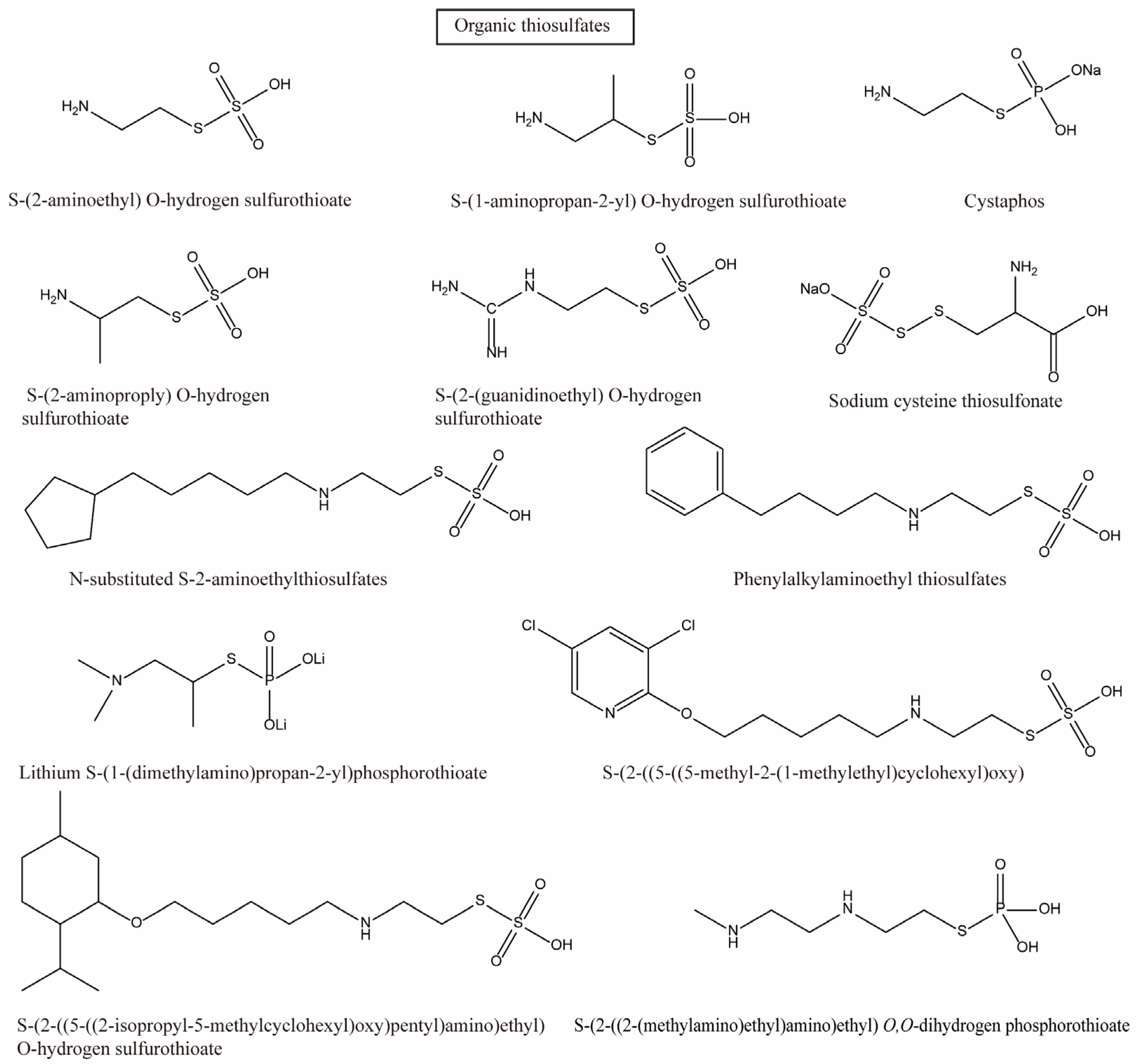
| Organic-thiosulfate | S-(2-aminoethyl) O-hydrogen sulfurothioate [17], S-(1-aminopropan-2-yl) O-hydrogen sulfurothioate [18], S-(2-aminoproply) O-hydrogen sulfurothioate [19], 2-(N-decylamino)ethanethiosulfuric acid [20], Phenylalkylaminoethyl thiosulfates [21], N-substituted S-2-aminoethylthiosulfates [22], S-(2-((5-((2-isopropyl-5-methylcyclohexyl)oxy)pentyl)amino)ethyl) O-hydrogen sulfurothioate [23], S-(2-((5-((5-methyl-2-(1-methylethyl)cyclohexyl)oxy) [24], S-(2-(guanidinoethyl) O-hydrogen sulfurothioate [25], sodium cysteine thiosulfonate [26], Cystaphos [27], S-(2-((2-(methylamino)ethyl)amino)ethyl) O, O-dihydrogen phosphorothioate and Lithium S-(1-(dimethylamino)propan-2-yl)phosphorothioate [28,29] |
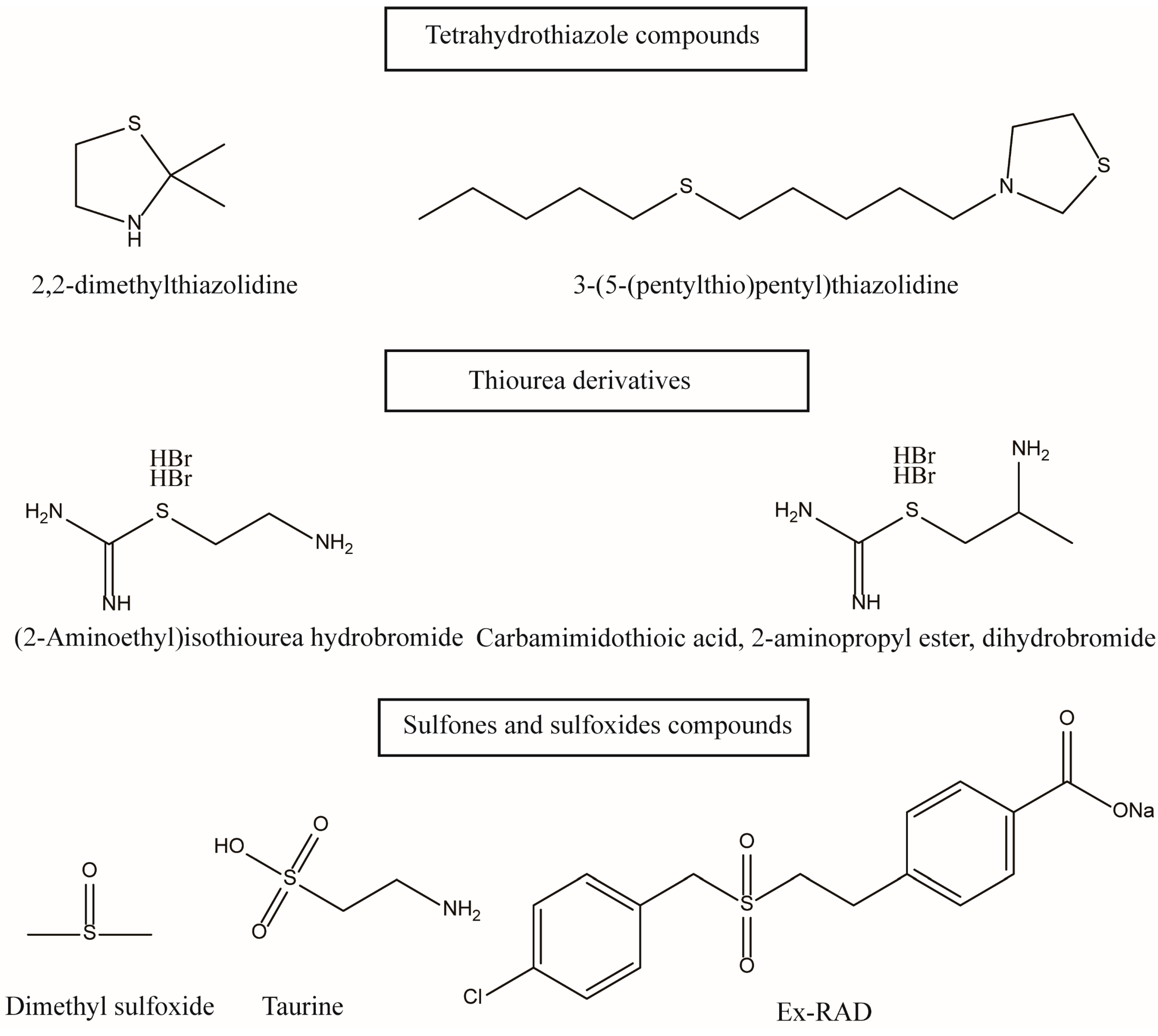
| Tetrahydrothiazole | 2,2-dimethylthiazolidine [30], 3-(5-(pentylthio)pentyl)thiazolidine [31] |
| Thiourea derivatives | (2-Aminoethyl)isothiourea hydrobromide [32], Carbamimidothioic acid, 2-aminopropyl ester, dihydrobromide [33] |
| Sulfone and sulfoxide compounds | Dimethyl sulfoxide [34,35], Ex-RAD [36] |
Disclaimer/Publisher’s Note: The statements, opinions and data contained in all publications are solely those of the individual author(s) and contributor(s) and not of MDPI and/or the editor(s). MDPI and/or the editor(s) disclaim responsibility for any injury to people or property resulting from any ideas, methods, instructions or products referred to in the content. |
© 2026 by the authors. Licensee MDPI, Basel, Switzerland. This article is an open access article distributed under the terms and conditions of the Creative Commons Attribution (CC BY) license.
Share and Cite
Wei, Z.; Wang, Y.; Lu, Y.; Yang, C.; Wen, K.; Feng, C.; Yi, J.; Liu, Q. From the Literature on Mining to Computational Verification: A Review of the Anti-Radiation Mechanisms of Sulfur Compounds in the Seeds of Lepidium apetalum Willd and Descurainia sophia (L.) Webb ex Prantl. Int. J. Mol. Sci. 2026, 27, 1847. https://doi.org/10.3390/ijms27041847
Wei Z, Wang Y, Lu Y, Yang C, Wen K, Feng C, Yi J, Liu Q. From the Literature on Mining to Computational Verification: A Review of the Anti-Radiation Mechanisms of Sulfur Compounds in the Seeds of Lepidium apetalum Willd and Descurainia sophia (L.) Webb ex Prantl. International Journal of Molecular Sciences. 2026; 27(4):1847. https://doi.org/10.3390/ijms27041847
Chicago/Turabian StyleWei, Zhenzhen, Yujie Wang, Yuan Lu, Chao Yang, Ke Wen, Chunyan Feng, Jianfeng Yi, and Qian Liu. 2026. "From the Literature on Mining to Computational Verification: A Review of the Anti-Radiation Mechanisms of Sulfur Compounds in the Seeds of Lepidium apetalum Willd and Descurainia sophia (L.) Webb ex Prantl" International Journal of Molecular Sciences 27, no. 4: 1847. https://doi.org/10.3390/ijms27041847
APA StyleWei, Z., Wang, Y., Lu, Y., Yang, C., Wen, K., Feng, C., Yi, J., & Liu, Q. (2026). From the Literature on Mining to Computational Verification: A Review of the Anti-Radiation Mechanisms of Sulfur Compounds in the Seeds of Lepidium apetalum Willd and Descurainia sophia (L.) Webb ex Prantl. International Journal of Molecular Sciences, 27(4), 1847. https://doi.org/10.3390/ijms27041847