Modulation of Nociceptive Ion Channels by Protease-Activated Receptor-2 in Inflammatory Pain: Molecular Mechanisms and Therapeutic Potential
 , ,
, ,
Abstract
1. Introduction
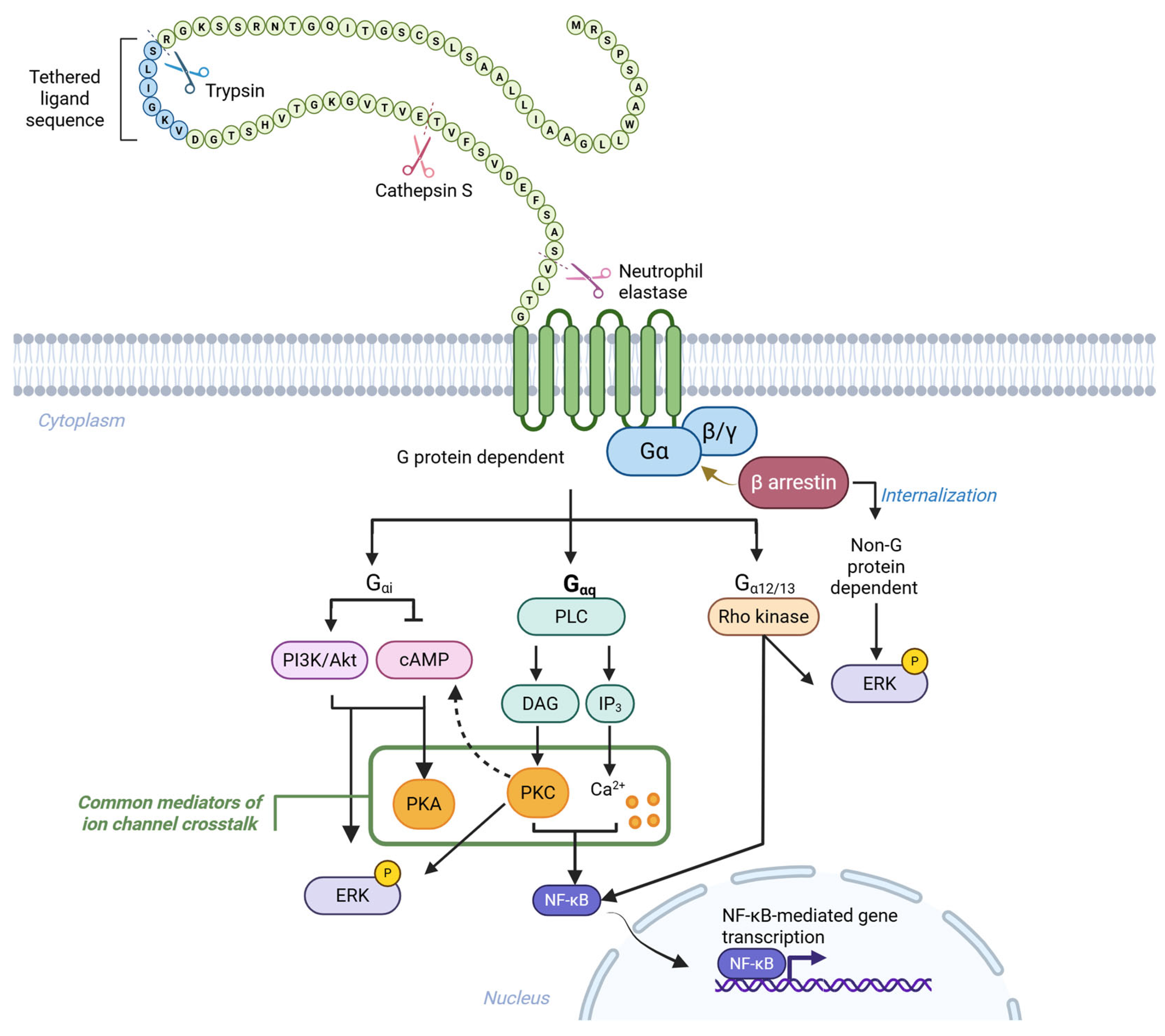
2. Overview of PAR2 and Its Signaling Pathways
3. PAR2-Driven Sensitization Mechanisms in Inflammatory Pain
3.1. Signaling Mechanisms Driving Pain Sensitization
3.2. Peripheral and Central Sensitization via PAR2
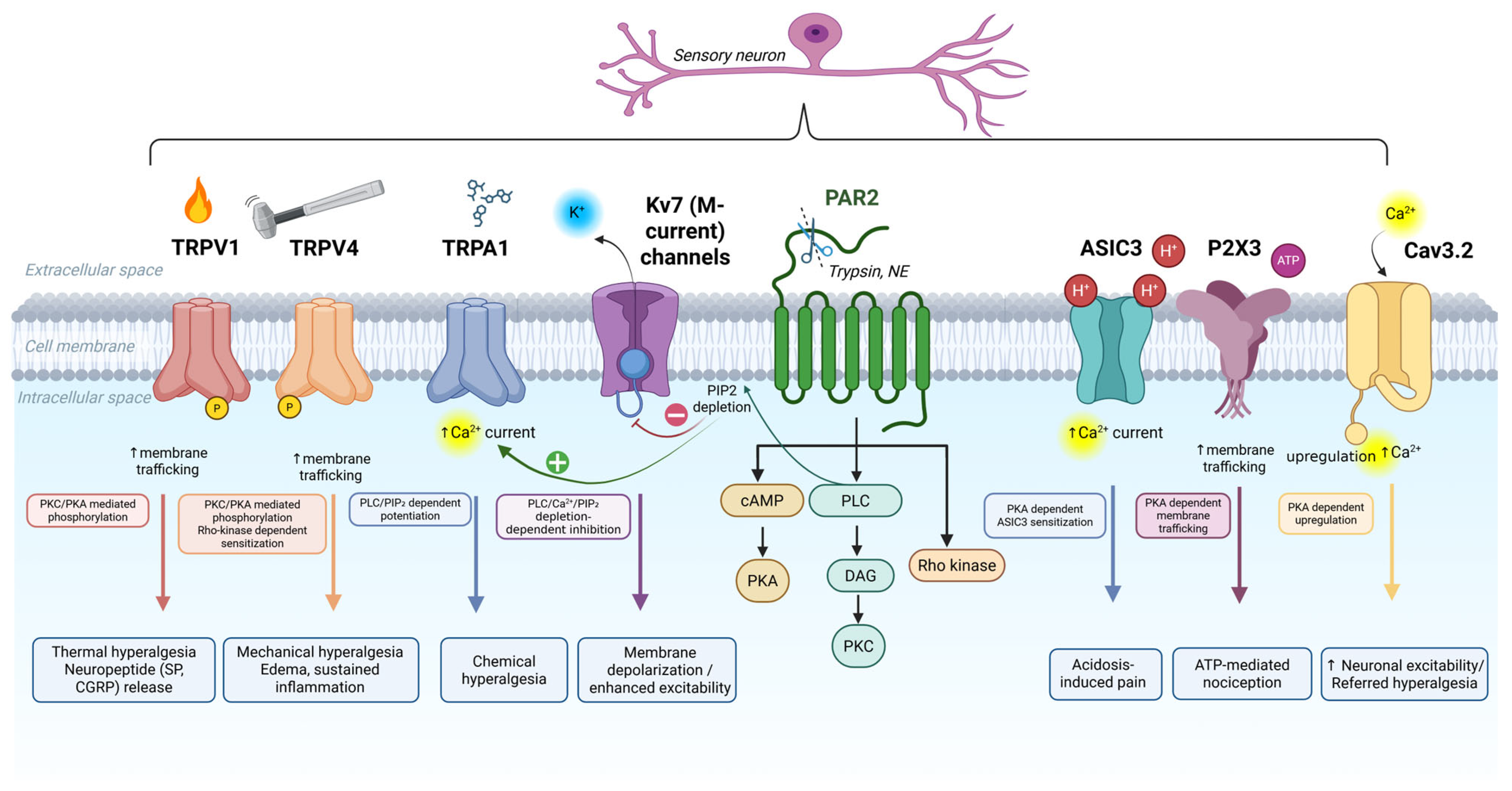
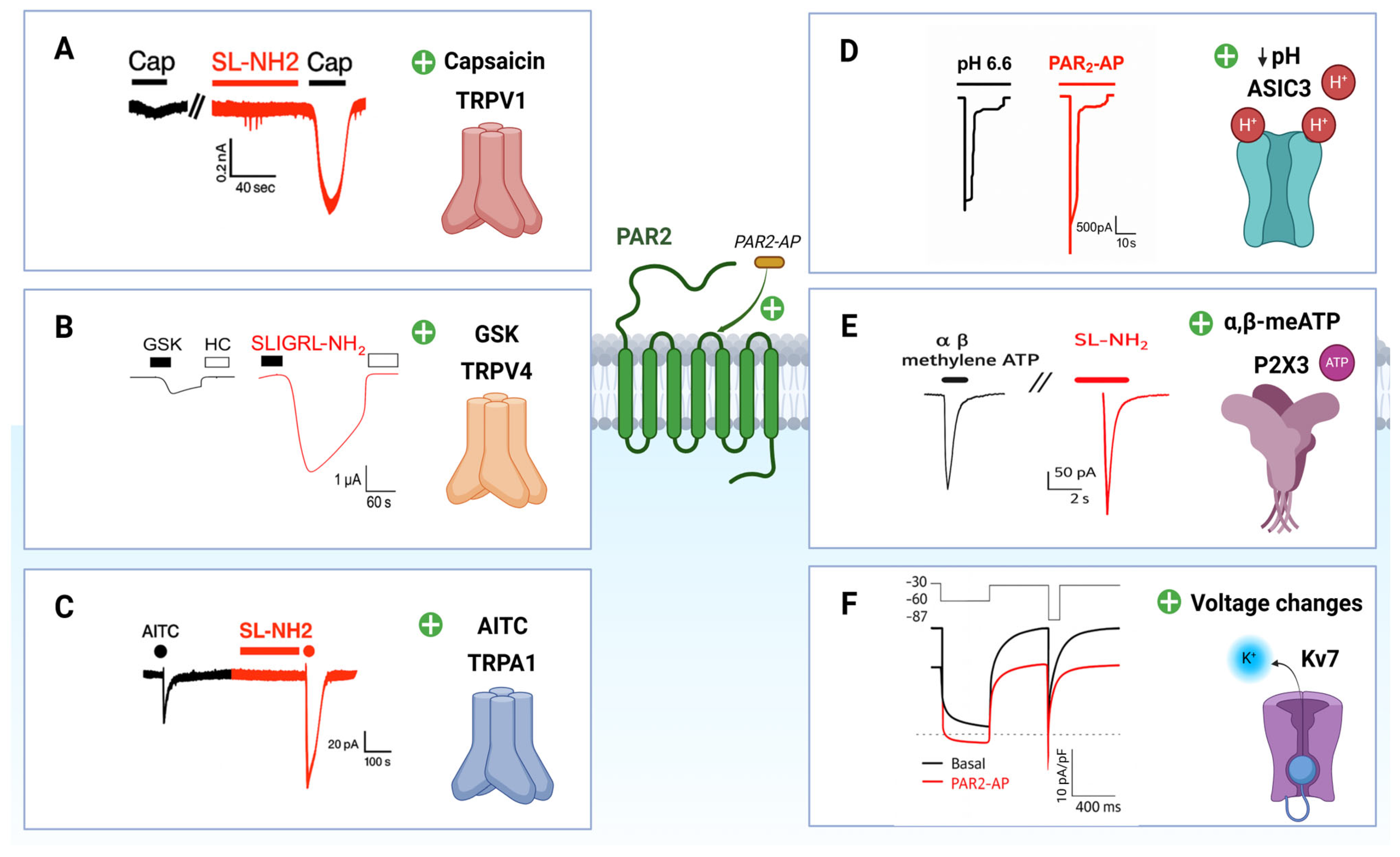
4. Role of PAR2 in Modulation of Ion Channels

| Ion Channel | Key Experimental Models/Techniques | Mechanistic Summary of Findings | Functional Significance | Citation |
|---|---|---|---|---|
| TRPV1 | Mouse model of inflammatory pain; HEK293, DRG neurons; Ca2+ imaging; electrophysiology; Western blot (TRPV1 phosphorylation) and IP; behavioral assays (thermal hyperalgesia). | PAR2 activation (SLIGRL-NH2/trypsin/tryptase) enhanced TRPV1 currents, Ca2+ influx, and neuropeptide (SP/CGRP) release via PLC/PKC, and increased TRPV1 phosphorylation. Effect reversed by TRPV1 antagonist or knockout. | PAR2–TRPV1 coupling in thermal hyperalgesia. | Amadesi et al. (2004) [65] |
| Mouse model of inflammatory pain; HEK293, DRG neurons; electrophysiology; immunohistochemistry (Fos); behavioral assays (thermal and mechanical hypersensitivity). | PAR2 activation (SL-NH2/trypsin/tryptase) potentiated TRPV1 responses to capsaicin, heat, and protons via PKC signaling. PAR2-induced enhanced Fos expression and pain behaviors were reduced in TRPV1-deficient mice. | PAR2–TRPV1 sensitization is PKC-dependent underlying thermal and mechanical hyperalgesia. | Dai et al. (2004) [60] | |
| Mouse model of inflammatory pain; HEK293, DRG neurons; electrophysiology; Ca2+ imaging; behavioral assays (thermal hyperalgesia). | PAR2 activation (SLIGRL-NH2/trypsin) sensitized TRPV1 via PKCε and PKA, increasing TRPV1 currents and Ca2+ influx. Co-application with capsaicin induced robust thermal hyperalgesia in vivo. | PAR2–TRPV1 sensitization is PKCε/PKA-dependent contributing to inflammatory thermal hyperalgesia. | Amadesi et al. (2006) [66] | |
| Rat and mouse arthritis models; behavioral assays (mechanical allodynia, weight bearing); ELISA (IL-1β, TNF-α) | Intra-articular PAR2 activation (SLIGRL-NH2) induced secondary mechanical hyperalgesia and spontaneous pain, which were attenuated by TRPV1 antagonism or genetic deletion. PAR2-induced IL-1β release was unaffected by TRPV1 inhibition. | TRPV1 mediates PAR2-induced mechanical hypersensitivity in arthritis, independent of cytokine release. | Helyes et al. (2010) [67] | |
| Rat arthritis model; electrophysiology (joint afferent recordings); intravital microscopy (leukocyte kinetics). | PAR2 activation (2-fu-LIGRLO-NH2) increased joint afferent firing and promoted leukocyte rolling and adhesion. These effects were blocked by TRPV1 and NK1 receptor antagonists. | PAR2–TRPV1–NK1 axis contributes to peripheral sensitization and inflammation in arthritis. | Russell et al. (2012) [68] | |
| Rat model of inflammatory pain; electrophysiology; behavioral assays (thermal and mechanical hypersensitivity). | Intrathecal PAR2 activation (SLIGKV-NH2) increased synaptic transmission and thermal hyperalgesia via TRPV1-dependent mechanisms in the spinal dorsal horn. | Spinal PAR2–TRPV1 signaling enhances nociceptive transmission and thermal sensitivity. | Mrozkova et al. (2016) [69] | |
| Mouse model of myocardial ischemia/reperfusion; Langendorff heart preparation; hemodynamic analysis; TTC staining. | PAR2 activation (SLIGRL) reduced infarct size and improved cardiac function through TRPV1 sensitization via a 12-LOX-dependent pathway, promoting CGRP and SP release. Effects were abolished in TRPV1-deficient mice. | TRPV1 mediates PAR2-driven cardioprotection through neuropeptide-dependent signaling. | Zhong et al. (2019) [70] | |
| Rat model of carrageenan-induced inflammatory pain; electrophysiology; behavioral assay (thermal hyperalgesia). | Intrathecal PAR2 inhibition (FSLLRY-NH2) reduced thermal hyperalgesia and attenuated excitatory synaptic transmission in the dorsal horn via TRPV1 and kinase-dependent pathways. | PAR2–TRPV1 signaling sustains spinal sensitization and thermal pain in inflammatory states. | Mrozkova et al. (2021) [59] | |
| TRPV1, Cav3.2 (T-type Ca2+ channel) | Mouse model of cystitis; human bladder epithelial T24 cells; behavioral assay (referred hyperalgesia). | PAR2 activation (SLIGRL) increased COX-2–mediated PGE2 production, leading to TRPV1 sensitization and Cav3.2 upregulation via PKA signaling. TRPV1 blockade prevented referred hyperalgesia. | PAR2–TRPV1 signaling promotes visceral hypersensitivity through prostanoid–PKA pathways. | Tsubota et al. (2018) [71] |
| TRPV4 | Mouse model of inflammatory pain; HBE cells, HEK293, DRG neurons; Ca2+ imaging; electrophysiology; neuropeptide assays; behavioral assay (mechanical hyperalgesia). | PAR2 activation (SLIGRL-NH2) sensitized TRPV4 by enhancing Ca2+ influx and currents via PLCβ, PKC, and PKA pathways. This increased SP and CGRP release from dorsal horn neurons. | PAR2–TRPV4 signaling amplifies mechanical hypersensitivity through kinase-dependent sensitization and neuropeptide release. | Grant et al. (2007) [72] |
| Rat model of inflammatory pain; HEK293 cells, DRG neurons; Ca2+ imaging; inflammation assessment (paw thickness). | PAR2 activation (trypsin, SLIGRL-NH2) induced sustained TRPV4-mediated Ca2+ influx via arachidonic acid derivatives (e.g., 5,6-EET) and Src-dependent Tyr-110 phosphorylation. TRPV4 deficiency reduced paw edema. | TRPV4 activation by PAR2 contributes to sustained inflammatory signaling via lipid mediators and tyrosine phosphorylation. | Poole et al. (2013) [73] | |
| Mouse model of inflammatory pain; HEK293, KNRK cells, DRG neurons, Xenopus oocytes; Ca2+ imaging; electrophysiology; behavioral assays (mechanical hyperalgesia, paw edema) | Cathepsin S cleaved PAR2 at a non-canonical site (E56↓T57), inducing biased Gαs/cAMP/PKA signaling without Ca2+ mobilization or ERK activation. This sensitized TRPV4 and enhanced neuronal excitability and mechanical hyperalgesia. | Biased PAR2 signaling via Cathepsin S drives TRPV4-dependent mechanical pain and inflammation. | Zhao et al. (2014) [30] | |
| Mouse model of inflammatory pain; HEK293 cells; Ca2+ imaging; behavioral assay (mechanical hyperalgesia) | PAR2 activation (SLIGRL-NH2, trypsin) induced sustained TRPV4-mediated Ca2+ influx, which was blocked by the tyrosine kinase inhibitor bafetinib. Bafetinib also attenuated PAR2–TRPV4-induced mechanical hyperalgesia in vivo. | Tyrosine kinase–dependent TRPV4 sensitization underlies PAR2-mediated mechanical hypersensitivity. | Grace et al. (2014) [74] | |
| Xenopus oocytes; electrophysiology; intracellular Ca2+ chelation (BAPTA-AM) | PAR2 activation (trypsin, SLIGRL-NH2) enhanced TRPV4 responses independent of intracellular Ca2+ signaling. This sensitization was independent of intracellular Ca2+ signaling (BAPTA-AM had no effect). Neutrophil elastase, a biased PAR2 agonist, sensitized TRPV4 via the Rho-kinase pathway. | TRPV4 sensitization by biased PAR2 agonists occurs through Ca2+-independent, Rho-kinase–mediated mechanisms. | Sostegni et al. (2015) [61] | |
| Mouse model of inflammatory pain; KNRK cells, HEK293 cells, Xenopus oocytes; electrophysiology; Ca2+ imaging; behavioral assays (mechanical hyperalgesia, paw edema) | Neutrophil elastase, a biased PAR2 agonist, selectively activated Gαs/cAMP/PKA signaling (not Gαq/Ca2+), leading to TRPV4 sensitization, ERK phosphorylation, and TRPV4-dependent mechanical hyperalgesia with inflammatory edema. | Biased PAR2 signaling promotes TRPV4-dependent pain and inflammation via Gαs–PKA pathways. | Zhao et al. (2015) [45] | |
| Mouse model of LPS-induced acute lung injury; alveolar macrophage culture; cytosolic Ca2+ measurement | PAR2 activation (thrombin) increased cAMP in alveolar macrophages, which suppressed TRPV4-mediated Ca2+ influx and downstream NFAT activation. PAR2 deletion enhanced TRPV4 activity and inflammation; restoration of PAR2 or TRPV4 inhibition reversed the effect. | PAR2 negatively regulates TRPV4 in lung inflammation, contributing to resolution of acute lung injury. | Rayees et al. (2019) [75] | |
| TRPA1 | Rat model of inflammatory pain; HEK293 cells, DRG neurons; electrophysiology; behavioral assay (chemical-induced acute pain) | PAR2 activation (SLIGRL-NH2) enhanced TRPA1 currents in vitro through a PLC–PIP2–dependent pathway. In vivo, PAR2 agonist increased nocifensive responses to TRPA1 agonists. | PAR2–TRPA1 coupling heightens chemical nociception via PLC–PIP2 signaling. | Dai et al. (2007) [62] |
| Rat model of cystitis; cystometry; Western blot (TRPA1 expression); behavioral assay (mechanical hypersensitivity) | Inhibition of PAR2 (FSLLRY-NH2) reduced TRPA1 upregulation in spinal tissue and alleviated bladder hyperactivity and mechanical pain in inflamed rats. | Spinal PAR2–TRPA1 signaling contributes to cystitis-associated pain and bladder dysfunction. | Chen et al. (2016) [76] | |
| Multiple mouse models of migraine; behavioral assay (cutaneous allodynia) | Cutaneous allodynia induced by TRPA1 activation was abolished by PAR2 inhibition using the monoclonal antibody MEDI0618. | PAR2 signaling maintains TRPA1-driven allodynia in migraine, indicating a therapeutic target. | Kopruszinski et al. (2025) [77] | |
| TRPA1, TRPV1 | Mouse model of pancreatitis; immunohistochemistry (spinal Fos expression); behavioral assay (referred hyperalgesia) | PAR2 activation (SLIGRL-NH2) in the pancreas increased spinal Fos expression. TRPA1 inhibition blocked this effect; TRPV1 inhibition reversed referred hyperalgesia, which was further reduced by combined TRPA1 and TRPV1 blockade. | TRPA1 and TRPV1 act synergistically downstream of PAR2 to mediate pancreatitis-associated referred pain. | Terada et al. (2013) [78] |
| TRPV1, TRPA1, TRPV4 | Rat model of oral mucositis; behavioral assays (spontaneous pain, mechanical allodynia) | PAR2 activation by neutrophil elastase sensitized TRPV1 and TRPA1 to mediate spontaneous pain, and TRPV4 to drive prolonged mechanical allodynia. | PAR2–TRPV1/TRPA1 signaling underlies spontaneous pain, while PAR2–TRPV4 drives mechanical allodynia in mucositis. | Ito et al. (2017) [79] |
| ASIC3, TRPV1 | Primary human esophageal epithelial cells (HEECs); ATP bioluminescence assay; siRNA knockdown; Western blot; IP | PAR2 activation (trypsin, SLIGKV-NH2) enhanced weak acid–induced ATP release via TRPV1 and ASIC3 sensitization. TRPV1, but not ASIC3, was phosphorylated. Effects were reduced by antagonists or gene silencing. | PAR2 enhances acid-induced ATP signaling in esophageal cells via TRPV1 and ASIC3, contributing to sensory hypersensitivity. | Wu et al. (2015) [80] |
| ASIC3 | Rat model of acidosis-induced inflammatory pain; CHO cells, DRG neurons; electrophysiology; behavioral assay (acetic acid test) | PAR2 activation (2-fu-LIGRLO-NH2) potentiated ASIC3 currents via PLC, PKC, and PKA signaling. This enhanced nocifensive behavior in response to tissue acidosis. | PAR2–ASIC3 signaling amplifies acid-evoked pain through kinase-dependent sensitization. | Wu et al. (2017) [63] |
| P2X3 | Rat model of α,β-meATP–induced acute pain; DRG neurons; immunohistochemistry (c-Fos); behavioral assay (chemical nociception) | PAR2 activation (SLIGRL-NH2) enhanced α,β-meATP–evoked nocifensive behavior and increased spinal c-Fos expression, indicating elevated P2X3 activity and central sensitization. | PAR2 enhances P2X3-mediated pain signaling and spinal activation during acute chemical nociception. | Zhu et al. (2006) [81] |
| DRG neurons; electrophysiology | PAR2 activation (SL-NH2 or trypsin) reduced the amplitude but accelerated the opening kinetics of P2X3 currents, indicating a dual modulatory effect on channel function. | PAR2 modulates P2X3 gating properties, altering sensory neuron excitability. | Lu et al. (2010) [82] | |
| Rat model of α,β-meATP–induced pain; DRG neurons; electrophysiology; Western blot; immunoprecipitation (IP); immunohistochemistry (ERK); P2X3 trafficking assays; behavioral assay (chemical nociception test) | PAR2 activation (SL-NH2 or trypsin) enhanced P2X3 currents via PKA/PKC-dependent membrane trafficking. This increased ERK phosphorylation and nocifensive behavior in response to α,β-meATP. | PAR2 enhances P2X3-mediated nociception by promoting receptor trafficking and spinal signal amplification. | Wang et al. (2012) [64] | |
| Kv7 (M-current potassium channel) | Rat model of inflammatory pain; DRG neurons; electrophysiology; behavioral assays (thermal and mechanical hyperalgesia) | PAR2 activation (2f-LIGRLO-amide, trypsin) inhibited Kv7 (M-current) via a PLC-dependent pathway involving intracellular Ca2+ increase and PIP2 depletion, leading to neuronal depolarization and excitability. Co-application with Kv7 blocker (XE991) enhanced nociception. | PAR2 suppresses Kv7 activity, increasing sensory neuron excitability and contributing to inflammatory hyperalgesia. | Linley et al. (2008) [48] |
4.1. TRPV1
4.2. TRPV4
4.3. TRPA1
4.4. ASIC3
4.5. P2X3
4.6. Cav3.2 and Kv7
5. Conclusions
Author Contributions
Funding
Data Availability Statement
Acknowledgments
Conflicts of Interest
Abbreviations
| ATP | Adenosine triphosphate |
| ASIC3 | Acid-sensing ion channel 3 |
| cAMP | cyclic adenosine monophosphate |
| CGRP | Calcitonin gene-related peptide |
| DAG | Diacylglycerol |
| DRG | Dorsal root ganglia |
| ERK | Extracellular Signal-Regulated Kinase |
| Fos | an immediate early gene product used as a marker of neuronal activation |
| GPCR | G protein-coupled receptor |
| HEK | human embryonic kidney |
| IP3 | Inositol Trisphosphate |
| Kv7 | Voltage-gated potassium channels |
| MAPK | Mitogen-Activated Protein Kinase |
| PAR2 | Protease-activated receptor 2 |
| PAR2-AP | PAR2-activating peptide |
| PGE2 | prostaglandin E2 |
| PIP2 | Phosphatidylinositol 4,5-bisphosphate |
| PKA | Protein kinase A |
| PKC | Protein kinase C |
| PLCβ | Phospholipase C-β |
| P2X3 | P2X purinoceptor 3 |
| SP | Substance P |
| SL-NH2 | Ser-Leu amide (PAR2-agonist peptide) |
| SLIGRL-NH2 | H-Ser-Leu-Ile-Gly-Arg-Leu-NH2 (PAR2-agonist peptide) |
| TG | Trigeminal ganglia |
| TL | Tethered ligand |
| TRPA1 | Transient receptor potential ankyrin 1 |
| TRPV1, TRPV4 | Transient receptor potential vanilloid 1 and 4 |
References
- Layne-Stuart, C.M.; Carpenter, A.L. Chronic Pain Considerations in Patients with Cardiovascular Disease. Anesthesiol. Clin. 2022, 40, 791–802. [Google Scholar] [CrossRef] [PubMed]
- Zhang, Y.H.; Adamo, D.; Liu, H.; Wang, Q.; Wu, W.; Zheng, Y.L.; Wang, X.Q. Editorial: Inflammatory Pain: Mechanisms, Assessment, and Intervention. Front. Mol. Neurosci. 2023, 16, 1286215. [Google Scholar] [CrossRef] [PubMed]
- Ji, R.R.; Xu, Z.Z.; Gao, Y.J. Emerging Targets in Neuroinflammation-Driven Chronic Pain. Nat. Rev. Drug Discov. 2014, 13, 533–548. [Google Scholar] [CrossRef] [PubMed]
- Muley, M.M.; Krustev, E.; McDougall, J.J. Preclinical Assessment of Inflammatory Pain. CNS Neurosci. Ther. 2016, 22, 88–101. [Google Scholar] [CrossRef]
- Simpson, J.A.; Fitch, W. Chapter 5—Sensation. In Applied Neurophysiology; Butterworth-Heinemann: London, UK, 1988; pp. 55–62. [Google Scholar] [CrossRef]
- Matsuda, M.; Huh, Y.; Ji, R.-R. Roles of Inflammation, Neurogenic Inflammation, and Neuroinflammation in Pain. J. Anesth. 2019, 33, 131–139. [Google Scholar] [CrossRef]
- Guan, Z.; Hellman, J.; Schumacher, M. Contemporary Views on Inflammatory Pain Mechanisms: TRPing over Innate and Microglial Pathways. F1000Research 2016, 5, 2425. [Google Scholar] [CrossRef]
- Prescott, S.A.; Ratté, S. Somatosensation and Pain. In Conn’s Translational Neuroscience; Academic Press: Cambridge, MA, USA, 2017; pp. 517–539. [Google Scholar]
- Julius, D.; Basbaum, A.I. Molecular Mechanisms of Nociception. Nature 2001, 413, 203–210. [Google Scholar] [CrossRef]
- Ji, R.R.; Nackley, A.; Huh, Y.; Terrando, N.; Maixner, W. Neuroinflammation and Central Sensitization in Chronic and Widespread Pain. Anesthesiology 2018, 129, 343–366. [Google Scholar] [CrossRef]
- Moore, C.; Gupta, R.; Jordt, S.E.; Chen, Y.; Liedtke, W.B. Regulation of Pain and Itch by TRP Channels. Neurosci. Bull. 2018, 34, 120–142. [Google Scholar] [CrossRef]
- Bautista, D.M.; Jordt, S.E.; Nikai, T.; Tsuruda, P.R.; Read, A.J.; Poblete, J.; Yamoah, E.N.; Basbaum, A.I.; Julius, D. TRPA1 Mediates the Inflammatory Actions of Environmental Irritants and Proalgesic Agents. Cell 2006, 124, 1269–1282. [Google Scholar] [CrossRef]
- Kidd, B.L.; Urban, L.A. Mechanisms of Inflammatory Pain. Br. J. Anaesth. 2001, 87, 3–11. [Google Scholar] [CrossRef] [PubMed]
- Ji, R.R.; Gereau, R.W., IV; Malcangio, M.; Strichartz, G.R. MAP Kinase and Pain. Brain Res. Rev. 2009, 60, 135–148. [Google Scholar] [CrossRef]
- Obata, K.; Yamanaka, H.; Dai, Y.; Tachibana, T.; Fukuoka, T.; Tokunaga, A.; Yoshikawa, H.; Noguchi, K. Differential Activation of Extracellular Signal-Regulated Protein Kinase in Primary Afferent Neurons Regulates Brain-Derived Neurotrophic Factor Expression after Peripheral Inflammation and Nerve Injury. J. Neurosci. 2003, 23, 4117–4126. [Google Scholar] [CrossRef] [PubMed]
- Gold, M.S.; Levine, J.D.; Correa, A.M. Modulation of TTX-R INa by PKC and PKA and Their Role in PGE2-Induced Sensitization of Rat Sensory Neurons In Vitro. J. Neurosci. 1998, 18, 10345–10355. [Google Scholar] [CrossRef] [PubMed]
- Ji, R.R.; Samad, T.A.; Jin, S.X.; Schmoll, R.; Woolf, C.J. p38 MAPK Activation by NGF in Primary Sensory Neurons after Inflammation Increases TRPV1 Levels and Maintains Heat Hyperalgesia. Neuron 2002, 36, 57–68. [Google Scholar] [CrossRef]
- Amaya, F.; Shimosato, G.; Nagano, M.; Ueda, M.; Hashimoto, S.; Tanaka, Y.; Suzuki, H.; Tanaka, M. NGF and GDNF Differentially Regulate TRPV1 Expression That Contributes to Development of Inflammatory Thermal Hyperalgesia. Eur. J. Neurosci. 2004, 20, 2303–2310. [Google Scholar] [CrossRef]
- Amaya, F.; Oh-Hashi, K.; Naruse, Y.; Iijima, N.; Ueda, M.; Shimosato, G.; Tominaga, M.; Tanaka, Y.; Tanaka, M. Local Inflammation Increases Vanilloid Receptor 1 Expression within Distinct Subgroups of DRG Neurons. Brain Res. 2003, 963, 190–196. [Google Scholar] [CrossRef]
- Latremoliere, A.; Woolf, C.J. Central Sensitization: A Generator of Pain Hypersensitivity by Central Neural Plasticity. J. Pain 2009, 10, 895–926. [Google Scholar] [CrossRef]
- Moore, K.A.; Kohno, T.; Karchewski, L.A.; Scholz, J.; Baba, H.; Woolf, C.J. Partial Peripheral Nerve Injury Promotes a Selective Loss of GABAergic Inhibition in the Superficial Dorsal Horn of the Spinal Cord. J. Neurosci. 2002, 22, 6724–6731. [Google Scholar] [CrossRef]
- Fu, K.Y.; Light, A.R.; Maixner, W. Relationship between Nociceptor Activity, Peripheral Edema, Spinal Microglial Activation and Long-Term Hyperalgesia Induced by Formalin. Neuroscience 2000, 101, 1127–1135. [Google Scholar] [CrossRef]
- Berta, T.; Park, C.K.; Xu, Z.Z.; Xie, R.G.; Liu, T.; Lü, N.; Liu, Y.C.; Ji, R.R. Extracellular Caspase-6 Drives Murine Inflammatory Pain via Microglial TNF-α Secretion. J. Clin. Investig. 2014, 124, 1173–1186. [Google Scholar] [CrossRef] [PubMed]
- Scholz, J.; Woolf, C.J. The Neuropathic Pain Triad: Neurons, Immune Cells and Glia. Nat. Neurosci. 2007, 10, 1361–1368. [Google Scholar] [CrossRef] [PubMed]
- Liu, T.; Gao, Y.J.; Ji, R.R. Emerging Role of Toll-like Receptors in the Control of Pain and Itch. Neurosci. Bull. 2012, 28, 131–144. [Google Scholar] [CrossRef] [PubMed]
- Raja, S.N.; Carr, D.B.; Cohen, M.; Finnerup, N.B.; Flor, H.; Gibson, S.; Keefe, F.J.; Mogil, J.S.; Ringkamp, M.; Sluka, K.A.; et al. The Revised International Association for the Study of Pain Definition of Pain: Concepts, Challenges, and Compromises. Pain 2020, 161, 1976–1982. [Google Scholar] [CrossRef]
- Woolf, C.J. Central Sensitization: Implications for the Diagnosis and Treatment of Pain. Pain 2011, 152, S2–S15. [Google Scholar] [CrossRef]
- Schaible, H.G. Nociceptive Neurons Detect Cytokines in Arthritis. Arthritis Res. Ther. 2014, 16, 470. [Google Scholar] [CrossRef]
- Peach, C.J.; Edgington-Mitchell, L.E.; Bunnett, N.W.; Schmidt, B.L. Protease-Activated Receptors in Health and Disease. Physiol. Rev. 2023, 103, 717–785. [Google Scholar] [CrossRef]
- Zhao, P.; Lieu, T.; Barlow, N.; Metcalf, M.; Veldhuis, N.A.; Jensen, D.D.; Kocan, M.; Sostegni, S.; Haerteis, S.; Baraznenok, V.; et al. Cathepsin S Causes Inflammatory Pain via Biased Agonism of PAR2 and TRPV4. J. Biol. Chem. 2014, 289, 27215–27234. [Google Scholar] [CrossRef]
- Kume, M.; Ahmad, A.; Shiers, S.; Burton, M.D.; DeFea, K.A.; Vagner, J.; Dussor, G.; Boitano, S.; Price, T.J. C781, a β-Arrestin Biased Antagonist at Protease-Activated Receptor-2 (PAR2), Displays in Vivo Efficacy Against Protease-Induced Pain in Mice. J. Pain 2023, 24, 605–616. [Google Scholar] [CrossRef]
- Gilman, A.G. G Proteins: Transducers of Receptor-Generated Signals. Annu. Rev. Biochem. 1987, 56, 615–649. [Google Scholar] [CrossRef]
- Nystedt, S.; Emilsson, K.; Wahlestedt, C.; Sundelin, J. Molecular Cloning of a Potential Proteinase Activated Receptor. Proc. Natl. Acad. Sci. USA 1994, 91, 9208–9212. [Google Scholar] [CrossRef] [PubMed]
- Chandrabalan, A.; Ramachandran, R. Molecular Mechanisms Regulating Proteinase-Activated Receptors (PARs). FEBS J. 2021, 288, 2697–2726. [Google Scholar] [CrossRef] [PubMed]
- Heuberger, D.M.; Schuepbach, R.A. Protease-Activated Receptors (PARs): Mechanisms of Action and Potential Therapeutic Modulators in PAR-Driven Inflammatory Diseases. Thromb. J. 2019, 17, 4, Correction in Thromb. J. 2019, 17, 22. [Google Scholar] [CrossRef]
- Zhao, P.; Metcalf, M.; Bunnett, N.W. Biased Signaling of Protease-Activated Receptors. Front. Endocrinol. 2014, 5, 67, Corrigendum in Front. Endocrinol. 2015, 5, 228. [Google Scholar] [CrossRef]
- Macfarlane, S.R.; Sloss, C.M.; Cameron, P.; Kanke, T.; McKenzie, R.C.; Plevin, R. The Role of Intracellular Ca2+ in the Regulation of Proteinase-Activated Receptor-2 Mediated Nuclear Factor Kappa B Signalling in Keratinocytes. Br. J. Pharmacol. 2005, 145, 535–544. [Google Scholar] [CrossRef]
- DeFea, K.A.; Zalevsky, J.; Thoma, M.S.; Dery, O.; Mullins, R.D.; Bunnett, N.W. Beta-Arrestin-Dependent Endocytosis of Proteinase-Activated Receptor 2 Is Required for Intracellular Targeting of Activated ERK1/2. J. Cell Biol. 2000, 148, 1267–1281. [Google Scholar] [CrossRef]
- Déry, O.; Thoma, M.S.; Wong, H.; Grady, E.F.; Bunnett, N.W. Trafficking of Proteinase-Activated Receptor-2 and Beta-Arrestin-1 Tagged with Green Fluorescent Protein. Beta-Arrestin-Dependent Endocytosis of a Proteinase Receptor. J. Biol. Chem. 1999, 274, 18524–18535. [Google Scholar] [CrossRef]
- Jacob, C.; Cottrell, G.S.; Gehringer, D.; Schmidlin, F.; Grady, E.F.; Bunnett, N.W. C-Cbl Mediates Ubiquitination, Degradation, and down-Regulation of Human Protease-Activated Receptor 2. J. Biol. Chem. 2005, 280, 16076–16087. [Google Scholar] [CrossRef]
- Hasdemir, B.; Murphy, J.E.; Cottrell, G.S.; Bunnett, N.W. Endosomal Deubiquitinating Enzymes Control Ubiquitination and Down-Regulation of Protease-Activated Receptor 2. J. Biol. Chem. 2009, 284, 28453–28466. [Google Scholar] [CrossRef]
- Böhm, S.K.; Kong, W.; Brömme, D.; Smeekens, S.P.; Anderson, D.C.; Connolly, A.; Kahn, M.; Nelken, N.A.; Coughlin, S.R.; Payan, D.G.; et al. Molecular Cloning, Expression and Potential Functions of the Human Proteinase-Activated Receptor-2. Biochem. J. 1996, 314, 1009–1016. [Google Scholar] [CrossRef]
- Hollenberg, M.D.; Mihara, K.; Polley, D.; Suen, J.Y.; Han, A.; Fairlie, D.P.; Ramachandran, R. Biased Signalling and Proteinase-Activated Receptors (PARs): Targeting Inflammatory Disease. Br. J. Pharmacol. 2014, 171, 1180–1194. [Google Scholar] [CrossRef]
- Kelso, E.B.; Lockhart, J.C.; Hembrough, T.; Dunning, L.; Plevin, R.; Hollenberg, M.D.; Sommerhoff, C.P.; McLean, J.S.; Ferrell, W.R. Therapeutic Promise of Proteinase-Activated Receptor-2 Antagonism in Joint Inflammation. J. Pharmacol. Exp. Ther. 2006, 316, 1017–1024. [Google Scholar] [CrossRef] [PubMed]
- Zhao, P.; Lieu, T.M.; Barlow, N.; Sostegni, S.; Haerteis, S.; Korbmacher, C.; Liedtke, W.; Jimenez-Vargas, N.N.; Vanner, S.J.; Bunnett, N.W. Neutrophil Elastase Activates Protease-Activated Receptor-2 (PAR2) and Transient Receptor Potential Vanilloid 4 (TRPV4) to Cause Inflammation and Pain. J. Biol. Chem. 2015, 290, 13875–13887. [Google Scholar] [CrossRef] [PubMed]
- Rothmeier, A.S.; Ruf, W. Protease-Activated Receptor 2 Signaling in Inflammation. Semin. Immunopathol. 2011, 34, 133–149. [Google Scholar] [CrossRef] [PubMed]
- Cheng, L.; Xia, F.; Li, Z.; Shen, C.; Yang, Z.; Hou, H.; Sun, S.; Feng, Y.; Yong, X.; Tian, X.; et al. Structure, Function and Drug Discovery of GPCR Signaling. Mol. Biomed. 2023, 4, 46. [Google Scholar] [CrossRef]
- Linley, J.E.; Rose, K.; Patil, M.; Robertson, B.; Akopian, A.N.; Gamper, N. Inhibition of M Current in Sensory Neurons by Exogenous Proteases: A Signaling Pathway Mediating Inflammatory Nociception. J. Neurosci. 2008, 28, 11240–11249. [Google Scholar] [CrossRef]
- Chen, Y.; Yang, C.; Wang, Z.J. Proteinase-Activated Receptor 2 Sensitizes Transient Receptor Potential Vanilloid 1, Transient Receptor Potential Vanilloid 4, and Transient Receptor Potential Ankyrin 1 in Paclitaxel-Induced Neuropathic Pain. Neuroscience 2011, 193, 440–451. [Google Scholar] [CrossRef]
- Muley, M.M.; Reid, A.R.; Botz, B.; Bölcskei, K.; Helyes, Z.; McDougall, J.J. Neutrophil Elastase Induces Inflammation and Pain in Mouse Knee Joints via Activation of Proteinase-Activated Receptor-2. Br. J. Pharmacol. 2016, 173, 766–777. [Google Scholar] [CrossRef]
- Lopes, A.H.; Brandolini, L.; Aramini, A.; Bianchini, G.; Silva, R.L.; Zaperlon, A.C.; Verri, W.A.; Alves-Filho, J.C.; Cunha, F.Q.; Teixeira, M.M.; et al. DF2755A, a Novel Non-Competitive Allosteric Inhibitor of CXCR1/2, Reduces Inflammatory and Post-Operative Pain. Pharmacol. Res. 2016, 103, 69–79. [Google Scholar] [CrossRef]
- Cunha, T.M.; Barsante, M.M.; Guerrero, A.T.; Verri, W.A.; Ferreira, S.H.; Coelho, F.M.; Bertini, R.; Di Giacinto, C.; Allegretti, M.; Cunha, F.Q.; et al. Treatment with DF 2162, a Non-Competitive Allosteric Inhibitor of CXCR1/2, Diminishes Neutrophil Influx and Inflammatory Hypernociception in Mice. Br. J. Pharmacol. 2008, 154, 460–470. [Google Scholar] [CrossRef]
- Buddenkotte, J.; Stroh, C.; Engels, I.H.; Moormann, C.; Shpacovitch, V.M.; Seeliger, S.; Vergnolle, N.; Vestweber, D.; Luger, T.A.; Schulze-Osthoff, K.; et al. Agonists of Proteinase-Activated Receptor-2 Stimulate Upregulation of Intercellular Cell Adhesion Molecule-1 in Primary Human Keratinocytes via Activation of NF-Kappa B. J. Investig. Dermatol. 2005, 124, 38–45. [Google Scholar] [CrossRef]
- Steinhoff, M.; Vergnolle, N.; Young, S.H.; Tognetto, M.; Amadesi, S.; Ennes, H.S.; Trevisani, M.; Hollenberg, M.D.; Wallace, J.L.; Caughey, G.H.; et al. Agonists of Proteinase-Activated Receptor 2 Induce Inflammation by a Neurogenic Mechanism. Nat. Med. 2000, 6, 151–158. [Google Scholar] [CrossRef] [PubMed]
- Kong, W.; McConalogue, K.; Khitin, L.M.; Hollenberg, M.D.; Payan, D.G.; Böhm, S.K.; Bunnett, N.W. Luminal Trypsin May Regulate Enterocytes through Proteinase-Activated Receptor 2. Proc. Natl. Acad. Sci. USA 1997, 94, 8884–8889. [Google Scholar] [CrossRef] [PubMed]
- Liu, Q.; Weng, H.J.; Patel, K.N.; Tang, Z.; Bai, H.; Steinhoff, M.; Dong, X. The Distinct Roles of Two GPCRs, MrgprC11 and PAR2, in Itch and Hyperalgesia. Sci. Signal. 2011, 4, ra45. [Google Scholar] [CrossRef] [PubMed]
- Hassler, S.N.; Kume, M.; Mwirigi, J.M.; Ahmad, A.; Shiers, S.; Wangzhou, A.; Ray, P.R.; Belugin, S.N.; Naik, D.K.; Burton, M.D.; et al. The Cellular Basis of Protease-Activated Receptor 2-Evoked Mechanical and Affective Pain. JCI Insight 2020, 5, e137393. [Google Scholar] [CrossRef]
- Lieu, T.; Savage, E.; Zhao, P.; Edgington-Mitchell, L.; Barlow, N.; Bron, R.; Poole, D.P.; McLean, P.; Lohman, R.J.; Fairlie, D.P.; et al. Antagonism of the Proinflammatory and Pronociceptive Actions of Canonical and Biased Agonists of Protease-Activated Receptor-2. Br. J. Pharmacol. 2016, 173, 2752–2765. [Google Scholar] [CrossRef]
- Mrozkova, P.; Spicarova, D.; Palecek, J. Spinal PAR2 Activation Contributes to Hypersensitivity Induced by Peripheral Inflammation in Rats. Int. J. Mol. Sci. 2021, 22, 991. [Google Scholar] [CrossRef]
- Dai, Y.; Moriyama, T.; Higashi, T.; Togashi, K.; Kobayashi, K.; Yamanaka, H.; Tominaga, M.; Noguchi, K. Proteinase-Activated Receptor 2-Mediated Potentiation of Transient Receptor Potential Vanilloid Subfamily 1 Activity Reveals a Mechanism for Proteinase-Induced Inflammatory Pain. J. Neurosci. 2004, 24, 4293–4299. [Google Scholar] [CrossRef]
- Sostegni, S.; Diakov, A.; McIntyre, P.; Bunnett, N.; Korbmacher, C.; Haerteis, S. Sensitisation of TRPV4 by PAR2 Is Independent of Intracellular Calcium Signalling and Can Be Mediated by the Biased Agonist Neutrophil Elastase. Pflügers Arch.-Eur. J. Physiol. 2015, 467, 687–701, Erratum in Pflügers Arch.-Eur. J. Physiol. 2017, 469, 845–846. [Google Scholar] [CrossRef]
- Dai, Y.; Wang, S.; Tominaga, M.; Yamamoto, S.; Fukuoka, T.; Higashi, T.; Kobayashi, K.; Obata, K.; Yamanaka, H.; Noguchi, K. Sensitization of TRPA1 by PAR2 Contributes to the Sensation of Inflammatory Pain. J. Clin. Investig. 2007, 117, 1979–1987. [Google Scholar] [CrossRef]
- Wu, J.; Liu, T.T.; Zhou, Y.M.; Qiu, C.Y.; Ren, P.; Jiao, M.; Hu, W.P. Sensitization of ASIC3 by Proteinase-Activated Receptor 2 Signaling Contributes to Acidosis-Induced Nociception. J. Neuroinflamm. 2017, 14, 150. [Google Scholar] [CrossRef]
- Wang, S.; Dai, Y.; Kobayashi, K.; Zhu, W.; Kogure, Y.; Yamanaka, H.; Wan, Y.; Zhang, W.; Noguchi, K. Potentiation of the P2X3 ATP Receptor by PAR-2 in Rat Dorsal Root Ganglia Neurons, through Protein Kinase-Dependent Mechanisms, Contributes to Inflammatory Pain. Eur. J. Neurosci. 2012, 36, 2293–2301. [Google Scholar] [CrossRef]
- Amadesi, S.; Nie, J.; Vergnolle, N.; Cottrell, G.S.; Grady, E.F.; Trevisani, M.; Manni, C.; Geppetti, P.; McRoberts, J.A.; Ennes, H.; et al. Protease-Activated Receptor 2 Sensitizes the Capsaicin Receptor Transient Receptor Potential Vanilloid Receptor 1 to Induce Hyperalgesia. J. Neurosci. Off. J. Soc. Neurosci. 2004, 24, 4300–4312. [Google Scholar] [CrossRef]
- Amadesi, S.; Cottrell, G.S.; Divino, L.; Chapman, K.; Grady, E.F.; Bautista, F.; Karanjia, R.; Barajas-Lopez, C.; Vanner, S.; Vergnolle, N.; et al. Protease-Activated Receptor 2 Sensitizes TRPV1 by Protein Kinase Cε- and A-Dependent Mechanisms in Rats and Mice. J. Physiol. 2006, 575, 555–571. [Google Scholar] [CrossRef] [PubMed]
- Helyes, Z.; Sándor, K.; Borbély, E.; Tékus, V.; Pintér, E.; Elekes, K.; Tóth, D.M.; Szolcsányi, J.; McDougall, J.J. Involvement of Transient Receptor Potential Vanilloid 1 Receptors in Protease-Activated Receptor-2-Induced Joint Inflammation and Nociception. Eur. J. Pain 2010, 14, 351–358. [Google Scholar] [CrossRef] [PubMed]
- Russell, F.; Schuelert, N.; Veldhoen, V.; Hollenberg, M.; McDougall, J. Activation of PAR2 Receptors Sensitizes Primary Afferents and Causes Leukocyte Rolling and Adherence in the Rat Knee Joint. Br. J. Pharmacol. 2012, 167, 1665–1678. [Google Scholar] [CrossRef] [PubMed]
- Mrozkova, P.; Spicarova, D.; Palecek, J. Hypersensitivity Induced by Activation of Spinal Cord PAR2 Receptors Is Partially Mediated by TRPV1 Receptors. PLoS ONE 2016, 11, e0163991. [Google Scholar] [CrossRef]
- Zhong, B.; Ma, S.; Wang, D.H. Protease-Activated Receptor 2 Protects against Myocardial Ischemia-Reperfusion Injury through the Lipoxygenase Pathway and TRPV1 Channels. Exp. Ther. Med. 2019, 18, 3636–3642. [Google Scholar] [CrossRef]
- Tsubota, M.; Ozaki, T.; Hayashi, Y.; Okawa, Y.; Fujimura, A.; Sekiguchi, F.; Nishikawa, H.; Kawabata, A. Prostanoid-Dependent Bladder Pain Caused by Proteinase-Activated Receptor-2 Activation in Mice: Involvement of TRPV1 and T-Type Ca2+ Channels. J. Pharmacol. Sci. 2018, 136, 46–49. [Google Scholar] [CrossRef]
- Grant, A.D.; Cottrell, G.S.; Amadesi, S.; Trevisani, M.; Nicoletti, P.; Materazzi, S.; Altier, C.; Cenac, N.; Zamponi, G.W.; Bautista-Cruz, F.; et al. Protease-Activated Receptor 2 Sensitizes the Transient Receptor Potential Vanilloid 4 Ion Channel to Cause Mechanical Hyperalgesia in Mice. J. Physiol. 2007, 578, 715–733. [Google Scholar] [CrossRef]
- Poole, D.P.; Amadesi, S.; Veldhuis, N.A.; Abogadie, F.C.; Lieu, T.M.; Darby, W.; Liedtke, W.; Lew, M.J.; McIntyre, P.; Bunnett, N.W. Protease-Activated Receptor 2 (PAR2) Protein and Transient Receptor Potential Vanilloid 4 (TRPV4) Protein Coupling Is Required for Sustained Inflammatory Signaling. J. Biol. Chem. 2013, 288, 5790–5802. [Google Scholar] [CrossRef]
- Grace, M.S.; Lieu, T.; Darby, B.; Abogadie, F.C.; Veldhuis, N.; Bunnett, N.W.; Mcintyre, P. The Tyrosine Kinase Inhibitor Bafetinib Inhibits PAR2-Induced Activation of TRPV4 Channels In Vitro and Pain In Vivo. Br. J. Pharmacol. 2014, 171, 3881–3894. [Google Scholar] [CrossRef]
- Rayees, S.; Joshi, J.C.; Tauseef, M.; Anwar, M.; Baweja, S.; Rochford, I.; Joshi, B.; Hollenberg, M.D.; Reddy, S.P.; Mehta, D. PAR2-Mediated cAMP Generation Suppresses TRPV4-Dependent Ca2+ Signaling in Alveolar Macrophages to Resolve TLR4-Induced Inflammation. Cell Rep. 2019, 27, 793–805.e4. [Google Scholar] [CrossRef] [PubMed]
- Chen, D.; Liu, N.; Li, M.; Liang, S. Blocking PAR2 Alleviates Bladder Pain and Hyperactivity via TRPA1 Signal. Transl. Neurosci. 2016, 7, 133–138. [Google Scholar] [CrossRef] [PubMed]
- Kopruszinski, C.M.; Linley, J.E.; Thornton, P.; Walker, A.S.; Newton, P.; Podichetty, S.; Ruparel, R.H.; Moreira de Souza, L.H.; Navratilova, E.; Meno-Tetang, G.; et al. Efficacy of MEDI0618, a pH-Dependent Monoclonal Antibody Targeting PAR2, in Preclinical Models of Migraine. Brain 2025, 148, 1345–1359. [Google Scholar] [CrossRef] [PubMed]
- Terada, Y.; Fujimura, M.; Nishimura, S.; Tsubota, M.; Sekiguchi, F.; Nishikawa, H.; Kawabata, A. Contribution of TRPA1 as a Downstream Signal of Proteinase-Activated Receptor-2 to Pancreatic Pain. J. Pharmacol. Sci. 2013, 123, 284–287. [Google Scholar] [CrossRef]
- Ito, M.; Ono, K.; Hitomi, S.; Nodai, T.; Sago, T.; Yamaguchi, K.; Harano, N.; Gunnjigake, K.; Hosokawa, R.; Kawamoto, T.; et al. Prostanoid-Dependent Spontaneous Pain and PAR2-Dependent Mechanical Allodynia Following Oral Mucosal Trauma: Involvement of TRPV1, TRPA1 and TRPV4. Mol. Pain 2017, 13, 1744806917704138. [Google Scholar] [CrossRef]
- Wu, L.; Oshima, T.; Shan, J.; Sei, H.; Tomita, T.; Ohda, Y.; Fukui, H.; Watari, J.; Miwa, H. PAR-2 Activation Enhances Weak Acid-Induced ATP Release through TRPV1 and ASIC Sensitization in Human Esophageal Epithelial Cells. Am. J. Physiol. Liver Physiol. 2015, 309, G695–G702. [Google Scholar] [CrossRef]
- Zhu, W.J.; Dai, Y.; Fukuoka, T.; Yamanaka, H.; Kobayashi, K.; Obata, K.; Wang, S.; Noguchi, K. Agonist of Proteinase-Activated Receptor 2 Increases Painful Behavior Produced by Alpha, Beta-Methylene Adenosine 5′-Triphosphate. NeuroReport 2006, 17, 1257–1261. [Google Scholar] [CrossRef]
- Lu, Z.J.; Miao, X.R.; Wu, J.X.; Wang, X.Y.; Miao, Q.; Yu, W.F. Acute PAR2 Activation Reduces α, β-MeATP Sensitive Currents in Rat Dorsal Root Ganglion Neurons. NeuroReport 2010, 21, 227–232. [Google Scholar] [CrossRef]
- Samanta, A.; Hughes, T.E.T.; Moiseenkova-Bell, V.Y. Transient Receptor Potential (TRP) Channels. In Membrane Protein Complexes: Structure and Function; Subcellular Biochemistry; Springer: Singapore, 2018; Volume 87, pp. 141–165. [Google Scholar] [CrossRef]
- Alier, K.A.; Endicott, J.A.; Stemkowski, P.L.; Cenac, N.; Cellars, L.; Chapman, K.; Andrade-Gordon, P.; Vergnolle, N.; Smith, P.A. Intrathecal Administration of Proteinase-Activated Receptor-2 Agonists Produces Hyperalgesia by Exciting the Cell Bodies of Primary Sensory Neurons. J. Pharmacol. Exp. Ther. 2008, 324, 224–233. [Google Scholar] [CrossRef]
- Wegierski, T.; Lewandrowski, U.; Müller, B.; Sickmann, A.; Walz, G. Tyrosine Phosphorylation Modulates the Activity of TRPV4 in Response to Defined Stimuli. J. Biol. Chem. 2009, 284, 2923–2933. [Google Scholar] [CrossRef]
- Nguyen, M.Q.; von Buchholtz, L.J.; Reker, A.N.; Ryba, N.J.; Davidson, S. Single-Nucleus Transcriptomic Analysis of Human Dorsal Root Ganglion Neurons. Elife 2021, 10, e71752. [Google Scholar] [CrossRef] [PubMed]
- Tavares-Ferreira, D.; Shiers, S.; Ray, P.R.; Wangzhou, A.; Jeevakumar, V.; Sankaranarayanan, I.; Cervantes, A.M.; Reese, J.C.; Chamessian, A.; Copits, B.A.; et al. Spatial Transcriptomics of Dorsal Root Ganglia Identifies Molecular Signatures of Human Nociceptors. Sci. Transl. Med. 2022, 14, eabj8186. [Google Scholar] [CrossRef] [PubMed]
- Moore, C.; Cevikbas, F.; Pasolli, H.A.; Chen, Y.; Kong, W.; Kempkes, C.; Parekh, P.; Lee, S.H.; Kontchou, N.-A.; Yeh, I.; et al. UVB Radiation Generates Sunburn Pain and Affects Skin by Activating Epidermal TRPV4 Ion Channels and Triggering Endothelin-1 Signaling. Proc. Natl. Acad. Sci. USA 2013, 110, E3225–E3234, Correction in Proc. Natl. Acad. Sci. USA 2013, 110, 15502. [Google Scholar] [CrossRef] [PubMed]
- Chen, Y.; Fang, Q.; Wang, Z.; Zhang, J.Y.; MacLeod, A.S.; Hall, R.P.; Liedtke, W.B. Transient Receptor Potential Vanilloid 4 Ion Channel Functions as a Pruriceptor in Epidermal Keratinocytes to Evoke Histaminergic Itch. J. Biol. Chem. 2016, 291, 10252–10262. [Google Scholar] [CrossRef]
- Nagata, K.; Duggan, A.; Kumar, G.; García-Añoveros, J. Nociceptor and Hair Cell Transducer Properties of TRPA1, a Channel for Pain and Hearing. J. Neurosci. Off. J. Soc. Neurosci. 2005, 25, 4052–4061. [Google Scholar] [CrossRef]
- Kobayashi, K.; Fukuoka, T.; Yamanaka, H.; Dai, Y.; Obata, K.; Tokunaga, A.; Noguchi, K. Differential Expression Patterns of mRNAs for P2X Receptor Subunits in Neurochemically Characterized Dorsal Root Ganglion Neurons in the Rat. J. Comp. Neurol. 2005, 481, 377–390. [Google Scholar] [CrossRef]
- Zygmunt, P.M.; Högestätt, E.D. TRPA1. In Mammalian Transient Receptor Potential (TRP) Cation Channels; Springer: Berlin/Heidelberg, Germany, 2014; Volume 222, pp. 583–630. [Google Scholar] [CrossRef]
- Jordt, S.E.; Bautista, D.M.; Chuang, H.H.; McKemy, D.D.; Zygmunt, P.M.; Högestätt, E.D.; Meng, I.D.; Julius, D. Mustard Oils and Cannabinoids Excite Sensory Nerve Fibres through the TRP Channel ANKTM1. Nature 2004, 427, 260–265. [Google Scholar] [CrossRef]
- Bandell, M.; Story, G.M.; Hwang, S.W.; Viswanath, V.; Eid, S.R.; Petrus, M.J.; Earley, T.J.; Patapoutian, A. Noxious Cold Ion Channel TRPA1 Is Activated by Pungent Compounds and Bradykinin. Neuron 2004, 41, 849–857. [Google Scholar] [CrossRef]
- Jaquemar, D.; Schenker, T.; Trueb, B. An Ankyrin-like Protein with Transmembrane Domains Is Specifically Lost after Oncogenic Transformation of Human Fibroblasts. J. Biol. Chem. 1999, 274, 7325–7333. [Google Scholar] [CrossRef]
- Story, G.M.; Peier, A.M.; Reeve, A.J.; Eid, S.R.; Mosbacher, J.; Hricik, T.R.; Earley, T.J.; Hergarden, A.C.; Andersson, D.A.; Hwang, S.W.; et al. ANKTM1, a TRP-like Channel Expressed in Nociceptive Neurons, Is Activated by Cold Temperatures. Cell 2003, 112, 819–829. [Google Scholar] [CrossRef]
- Wemmie, J.A.; Price, M.P.; Welsh, M.J. Acid-Sensing Ion Channels: Advances, Questions and Therapeutic Opportunities. Trends Neurosci. 2006, 29, 578–586. [Google Scholar] [CrossRef] [PubMed]
- Deval, E.; Lingueglia, E. Acid-Sensing Ion Channels and Nociception in the Peripheral and Central Nervous Systems. Neuropharmacology 2015, 94, 49–57. [Google Scholar] [CrossRef]
- Price, M.P.; McIlwrath, S.L.; Xie, J.; Cheng, C.; Qiao, J.; Tarr, D.E.; Sluka, K.A.; Brennan, T.J.; Lewin, G.R.; Welsh, M.J. The DRASIC Cation Channel Contributes to the Detection of Cutaneous Touch and Acid Stimuli in Mice. Neuron 2001, 32, 1071–1083, Erratum in Neuron 2002, 35, 407. [Google Scholar] [CrossRef]
- Deval, E.; Noël, J.; Lay, N.; Alloui, A.; Diochot, S.; Friend, V.; Jodar, M.; Lazdunski, M.; Lingueglia, E. ASIC3, a Sensor of Acidic and Primary Inflammatory Pain. EMBO J. 2008, 27, 3047–3055. [Google Scholar] [CrossRef] [PubMed]
- Wemmie, J.A.; Taugher, R.J.; Kreple, C.J. Acid-Sensing Ion Channels in Pain and Disease. Nat. Rev. Neurosci. 2013, 14, 461–471. [Google Scholar] [CrossRef] [PubMed]
- Heusser, S.A.; Pless, S.A. Acid-Sensing Ion Channels as Potential Therapeutic Targets. Trends Pharmacol. Sci. 2021, 42, 1035–1050. [Google Scholar] [CrossRef]
- Steen, K.H.; Reeh, P.W.; Anton, F.; Handwerker, H.O. Protons Selectively Induce Lasting Excitation and Sensitization to Mechanical Stimulation of Nociceptors in Rat Skin, In Vitro. J. Neurosci. Off. J. Soc. Neurosci. 1992, 12, 86–95. [Google Scholar] [CrossRef]
- Basbaum, A.I.; Bautista, D.M.; Scherrer, G.; Julius, D. Cellular and Molecular Mechanisms of Pain. Cell 2009, 139, 267–284. [Google Scholar] [CrossRef]
- Burnstock, G. P2X Receptors in Sensory Neurones. Br. J. Anaesth. 2000, 84, 476–488. [Google Scholar] [CrossRef]
- Dunn, P.M.; Zhong, Y.; Burnstock, G. P2X Receptors in Peripheral Neurons. Prog. Neurobiol. 2001, 65, 107–134. [Google Scholar] [CrossRef]
- Chizh, B.; Illés, P. P2X Receptors and Nociception. Pharmacol. Rev. 2001, 53, 553–568. [Google Scholar] [CrossRef]


Disclaimer/Publisher’s Note: The statements, opinions and data contained in all publications are solely those of the individual author(s) and contributor(s) and not of MDPI and/or the editor(s). MDPI and/or the editor(s) disclaim responsibility for any injury to people or property resulting from any ideas, methods, instructions or products referred to in the content. |
© 2026 by the authors. Licensee MDPI, Basel, Switzerland. This article is an open access article distributed under the terms and conditions of the Creative Commons Attribution (CC BY) license.
Share and Cite
Aburamadan, H.; Lozon, Y.; Cyril, A.C.; Parambath, A.N.; Ali, N.M.; Jan, R.K.; Plevin, R.; Radhakrishnan, R. Modulation of Nociceptive Ion Channels by Protease-Activated Receptor-2 in Inflammatory Pain: Molecular Mechanisms and Therapeutic Potential. Int. J. Mol. Sci. 2026, 27, 1769. https://doi.org/10.3390/ijms27041769
Aburamadan H, Lozon Y, Cyril AC, Parambath AN, Ali NM, Jan RK, Plevin R, Radhakrishnan R. Modulation of Nociceptive Ion Channels by Protease-Activated Receptor-2 in Inflammatory Pain: Molecular Mechanisms and Therapeutic Potential. International Journal of Molecular Sciences. 2026; 27(4):1769. https://doi.org/10.3390/ijms27041769
Chicago/Turabian StyleAburamadan, Haneen, Yosra Lozon, Asha Caroline Cyril, Anagha Nelliyulla Parambath, Najma Mohamed Ali, Reem Kais Jan, Robin Plevin, and Rajan Radhakrishnan. 2026. "Modulation of Nociceptive Ion Channels by Protease-Activated Receptor-2 in Inflammatory Pain: Molecular Mechanisms and Therapeutic Potential" International Journal of Molecular Sciences 27, no. 4: 1769. https://doi.org/10.3390/ijms27041769
APA StyleAburamadan, H., Lozon, Y., Cyril, A. C., Parambath, A. N., Ali, N. M., Jan, R. K., Plevin, R., & Radhakrishnan, R. (2026). Modulation of Nociceptive Ion Channels by Protease-Activated Receptor-2 in Inflammatory Pain: Molecular Mechanisms and Therapeutic Potential. International Journal of Molecular Sciences, 27(4), 1769. https://doi.org/10.3390/ijms27041769