The Analgesic Effects of Nrf2 Activators in Chemotherapy-Induced Neuropathic Pain: Evidence from Animal Studies and Consequences for Translation into Clinical Trials


Abstract
1. Introduction
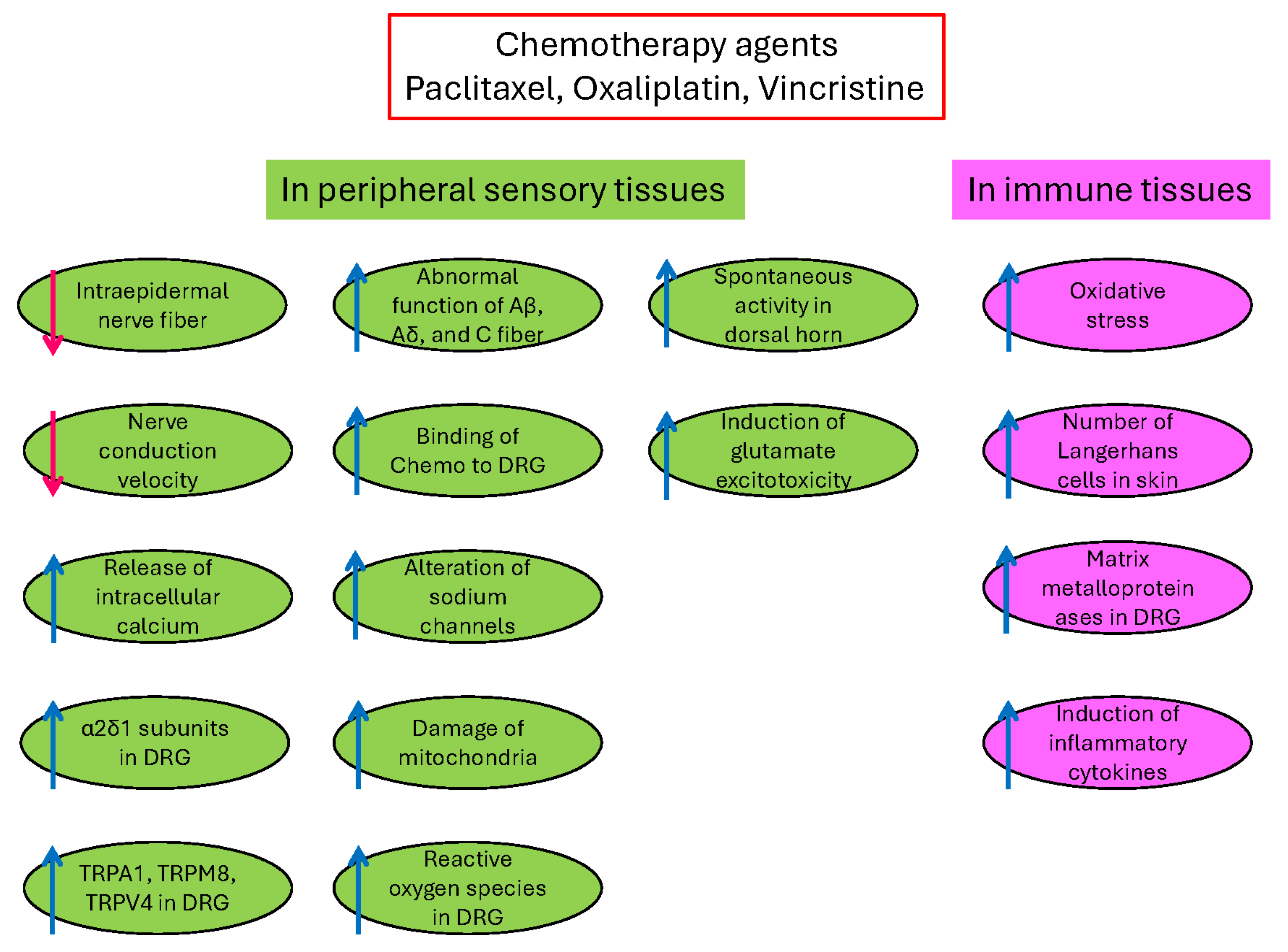
1.1. Patho-Mechanisms of CINP
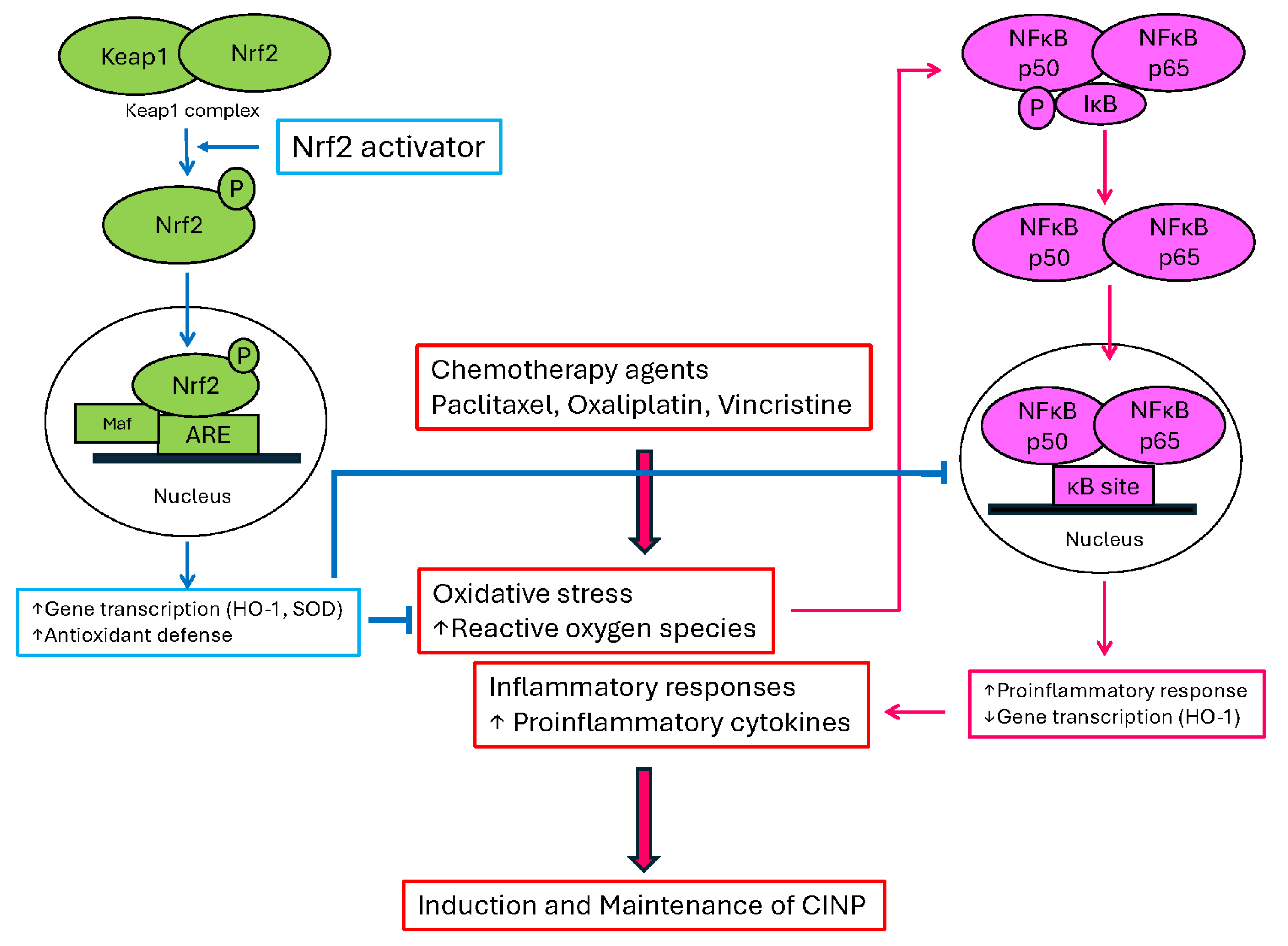
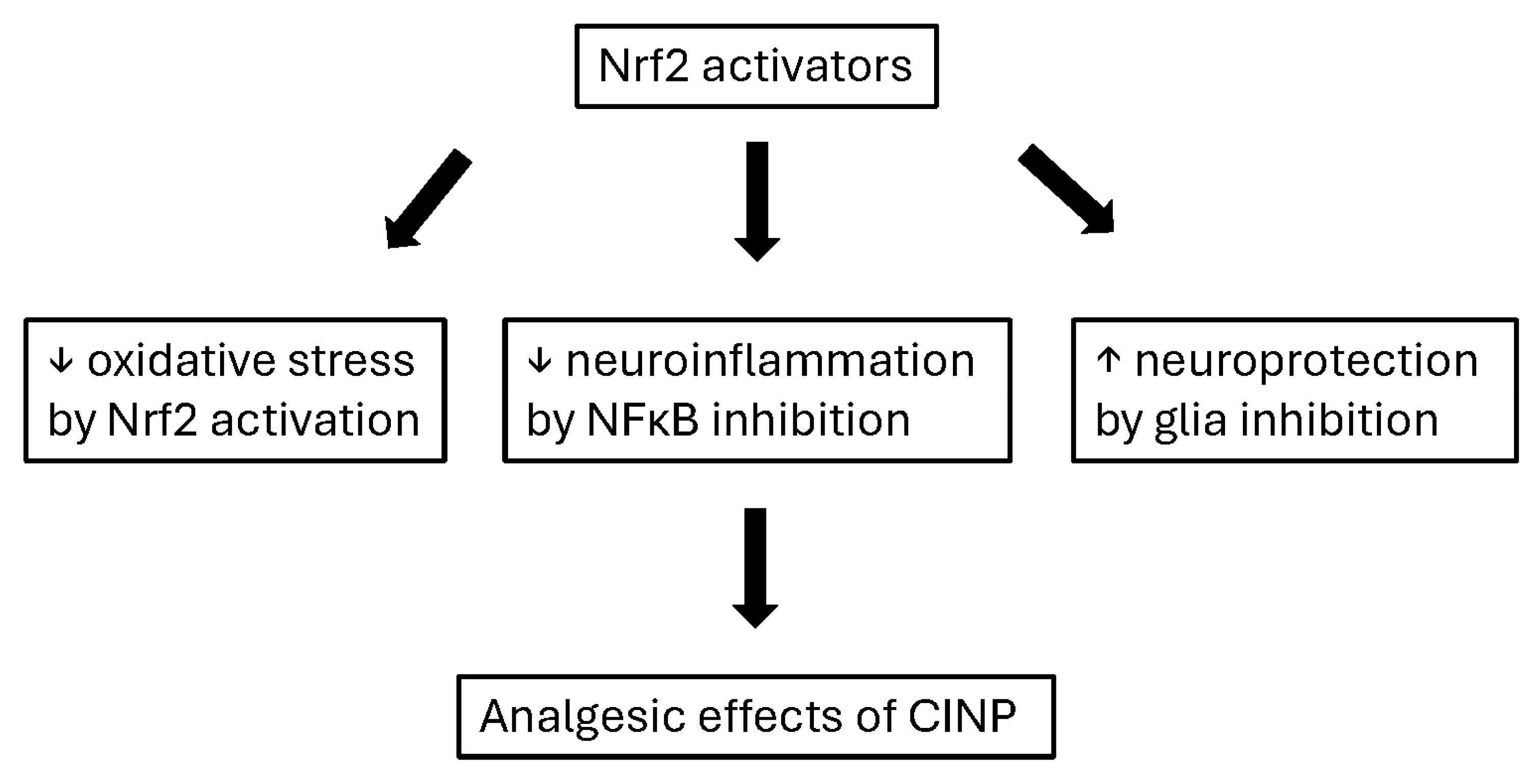
1.2. Action of Nrf2 Activators in CINP
2. Results and Discussion
2.1. Analgesic Effects of Nrf2 Activators in CINP: Preclinical (Animal) Studies
2.1.1. Paclitaxel-Induced Neuropathic Pain (PINP) Model

| Treatment | Mechanisms of Action | Analgesic Effects | Reference |
|---|---|---|---|
| Electroacupuncture (EA) | EA modulates Nrf2-antioxidant response element (Nrf2-ARE) and increases the expression of superoxide dismutases (SOD) in the dorsal root ganglion (DRG). | EA significantly reduced mechanical and thermal hypersensitivity in PINP rats | [18] |
| Tempol (SOD mimetic, 20 mg/kg, ip), vitamin C (500 mg/kg), GKT137831 (NADPH oxidase inhibitor, 1 mg/kg) | The treatments restore Nrf2-ARE signaling, increase SOD levels, and reduce proinflammatory cytokines (IL-1β, IL-6, and TNF-α) in the DRG. | The treatments significantly attenuated mechanical and thermal hypersensitivity in PINP rats. | [28] |
| Oltipraz (Nrf2 activator, 10, 50, 100 mg/kg during days 14–18, ip) | Oltipraz activates Nrf2 and upregulates Heme oxygenase 1 (HO-1) in the spinal cord. | Oltipraz reduced mechanical allodynia in PINP rats. | [19] |
| Rosiglitazone (PPARγ agonist, 50 mg/kg daily ip during days 14–18) | Rosiglitazone activates peroxisome proliferator-activated receptor γ (PPARγ) and activates the Nrf2/HO-1 pathway in the spinal cord. | Rosiglitazone alleviated established PINP and delayed the onset of neuropathic pain. | [20] |
| Hydrogen-rich water (HRW) | HRW modulates Kv7 potassium channels and the Nrf2-HO-1-NAD(P)H: quinone oxidoreductase 1 pathway. | HRW reduced mechanical and thermal allodynia in PINP. | [21] |
| Pristimerin (0.25, 0.5, 0.75, 1 mg/kg, ip, days 1–4, 7–11) | Pristimerin upregulates Nrf2 and inhibits monoacylglycerol lipase activity. | Pristimerin prevented mechanical allodynia in PINP. | [22] |
| Cannabidiol (CBD, 10 mg/kg, ip, twice a week for 6 weeks) and Tetrahydrocannabivarin (THCV, 15 mg/kg, ip, twice a week for 6 weeks) | Combination therapy of CBD and THCV modulates Nrf2 in DRG and improves mitochondrial function by reducing superoxide levels. | The combination of CBD and THCV improved both thermal and mechanical hypersensitivity in PINP. | [23] |
| Daidzein (DZ, 0.1, 1, 10 mg/kg, ip, days 8–14) | DZ (1) downregulates TRPV1 channels and P2Y purinergic receptors, (2) activates the Nrf2/HO-1, (3) reduces neuronal apoptosis, and (4) reduces the production of pro-inflammatory mediators. | DZ significantly alleviates pain hypersensitivity in PINP, improving mechanical and thermal thresholds in behavior tests. In addition, DZ reverses histological damage caused by paclitaxel and inhibits the increase in vascular permeability. | [24] |
| Commiphora myrrha (CM) resin extract (250 mg/kg, oral, days −7~−3, 0–4) | CM inhibits the TRPV1 activity in the spinal cord and increases the expression of Nrf2 in the paw skin of mice. | CM reduced thermal hyperalgesia and mechanical allodynia and prevented the development of PINP. | [24] |
| Resolvin D1 (RvD1, 5 μg/kg, ip for days 0–16) | RvD1 activates N-formyl peptide receptor 2, increases IL-10 production in macrophages, and activates the Nrf2-HO-1 in DRG. | RvD1 reduced mechanical pain hypersensitivity in PINP mice. | [25] |
| Bardoxolone methyl (BM, 10 mg/kg, ip, days 21–24) | BM activates Nrf2, increases phosphorylated Nrf2 (pNrf2), reduces inflammatory mediators, and restores mitochondrial function. | BM treatment effectively ameliorates PINP in rats, both after a single injection and with repeated injections | [11] |
| The combined treatment of CoPP (a HO-1 inducer) and hydrogen-rich water (HRW) | CoPP promotes HO-1 expression and Nrf2 activation. HRW reduces oxidative stress. The combination decreases the activation of the NLRP3 inflammasome and reduces oxidative markers such as 4-hydroxynonenal in the DRG and amygdala. In addition, the combination treatment increases expression of Nrf2, HO-1, SOD 1, and glutathione S-transferase mu 1 in the DRG. | The combination treatment of CoPP and HRW significantly reduced mechanical and thermal allodynia compared to either treatment alone, showing faster and stronger effects in alleviating pain. In addition, the combined treatment also reduced anxiodepressive-like behaviors associated with CINP. | [26] |
| Caffeic acid phenethyl ester (CAPE, 10, 30 mg/kg, ip, days 21–28) | CAPE reduces β-catenin, a key component of the Wnt signaling pathway and decreases matrix metalloproteinases-2, which is associated with tissue remodeling and inflammation in neuropathic pain. It also increases the expression of Nrf2 against oxidative stress. | CAPE improved the pain threshold in PINP rats. | [27] |
2.1.2. Oxaliplatin-Induced Neuropathic Pain (OINP) Model
| Treatment | Mechanisms of Action | Analgesic Effects | Reference |
|---|---|---|---|
| miR-155 inhibitor (2 μg/day, intrathecal injection, days 0–5) | Inhibition of miR-155 restores Nrf2-ARE signaling in the dorsal horn and suppresses NOX4. This also decreased TRPA1 upregulation. | The treatment significantly attenuated mechanical allodynia and cold hyperalgesia in OINP. | [29] |
| Puerarin (Pue, 10 mg/kg, ip, days 15–21) | Pue activates Nrf2, increases its association with glutathione peroxidase 4 (GPX4), and increases antioxidative elements within the spinal cord. Additionally, this suppresses the NLRP3 inflammasome-mediated inflammatory responses. | Pue improved pain hypersensitivity (mechanical pain threshold and thermal latency), spontaneous pain, and motor coordination in OINP mice. | [32] |
| Resveratrol (RESV, oral 7, 14 mg/kg/day during days 4–17) | RESV, a natural antioxidant, works by modulating key antioxidant and anti-inflammatory pathways, including upregulating Nrf2, HO-1, restoration of the GSH/GSSG ratio, reduction of the expression of NFκB and TNFα, and reduction of neuronal injury markers like ATF3 and c-fos in the spinal cord and dorsal root ganglia. | RESV administration prevented mechanical and thermal allodynia in OINP. | [30] |
| Curcumin (CUR, 100, 200 mg/kg, oral) | CUR reduces NLRP3-mediated inflammation in the spinal cord. | Cur alleviated ONIP. | [31] |
| Mesenchymal stem cells (MSC, single iv injection 106 cells on day 6) | MSCs increase the levels of anti-inflammatory cytokines like IL-10 and TGF-β in the spinal cord, enhance SOD and Nrf-2, and decrease nitrite and malondialdehyde levels. | MSC treatment completely reversed mechanical allodynia and thermal hyperalgesia in OINP. In comparison, gabapentin provided only transient relief. | [33] |
2.1.3. Vincristine-Induced Neuropathic Pain (VINP) Model
2.2. Clinically Available Nrf2 Activators
2.2.1. Natural Nrf2 Activators (Phytochemicals)
2.2.2. Synthetic Nrf2 Activators
| Name | Mechanisms | Safety | Reference |
|---|---|---|---|
| Curcumin (N) | Direct Keap1 modification and modulation of upstream signaling | Generally Well-Tolerated | [42] |
| Clinical trial Disease: Acute Lymphoblastic Leukemia Condition: Vincristine 1.5 mg/m2 weekly Patient: Pediatric male and female, 5–15 years old Curcumin: 3 mg/kg twice daily, oral for 3 months Result: The results showed that curcumin is effective in preventing the development of vincristine-induced peripheral neuropathy and leads to its improvement in these patients. Adverse events: mild gastrointestinal symptoms (diarrhea, anorexia, constipation, and vomiting). No significant difference was observed in terms of gastrointestinal complications between the curcumin and placebo groups. | [37] | ||
| Alpha-Lipoic Acid (N) | Potent antioxidant and indirect activator of Nrf2 | Generally Well-Tolerated | [43] |
| Clinical trial Disease: Breast cancer (stage II and III) Condition: Doxorubicin 60 mg/m2 + cyclophosphamide 600 mg/m2 + paclitaxel 80 mg/m2 Patient: Female, 36–63 years old Alpha-lipoic acid: 600 mg/day, oral for 6 months with ipidacrine hydrochloride Results: Alpha-lipoic acid may represent a promising adjuvant therapy to attenuate paclitaxel-associated neuropathy and doxorubicin-induced cardiotoxicity in women with breast cancer. Adverse events: headache, nausea, abdominal discomfort, and abdominal pain. There were similar adverse events in the chemotherapy regimen. | [38] | ||
| Sulforaphane (N) | Potent electrophilic Nrf2 activator via Keap1 modification | Generally Regarded as Safe | [44] |
| Clinical trial Disease: Lung cancer Condition: Former smokers (high risk) Patient: male and female, 55–75 years old Sulforaphane: 95 μmol/day, oral for 12 months Results: This study demonstrated that oral supplementation of sulforaphane for 12 months significantly reduced the Ki-67 index, a potential surrogate endpoint of biomarkers for lung cancer risk. Adverse events: 85% of the sulforaphane group and 91% of the placebo group reported gastrointestinal adverse events, including flatulence, followed by constipation, diarrhea, and dry mouth. There were 71% of the sulforaphane group and 68% of the placebo group reported neurological adverse events such as dizziness, headache, and mood change. | [45] | ||
| Resveratrol (N) | direct Nrf2 activation and involvement of SIRT1 | Generally Well-Tolerated | [46] |
| Clinical trial Disease: Polycystic ovary syndrome Condition: Assisted reproduction Patient: Female, 18–35 years old Resveratrol: 800 mg/day, oral for 2 months Results: This study indicated that resveratrol may be a promising therapeutic agent for patients with polycystic ovary syndrome undergoing assisted reproduction. Adverse events: Resveratrol was well tolerated throughout the treatment, with no patients reporting any side effects. | [47] | ||
| Quercetin (N) | Direct interaction with Keap1 and modulation of signaling pathways | Generally safe for 12 weeks | [48] |
| Clinical trial Disease: Polycystic ovary syndrome Condition: Assisted reproduction Patient: Female, 18–35 years old Quercetin: 500 mg/day, oral for 40 days Results: Quercetin consumption causes improvement in oocyte and embryo grade and the pregnancy rate. Adverse events: No major side effects with quercetin were reported. | [49] | ||
| Oltipraz (N) | The electrophile that modifies Keap1 cysteine residues | Dermatological issues (skin irritation, photosensitivity), gastrointestinal disturbances, and fatigue | [50] |
| Clinical trial Disease: Colorectal cancer Condition: Risk for colorectal cancer Patient: Male and female, 46–82 years old Oltipraz: 125 or 250 mg/m2 twice weekly for 12 weeks Results: The 125 mg/m2 was tolerated in patients. Adverse events: Two of seven patients at 250 mg/m2 produced significant fatigue. | [51] | ||
| Berberine (N) | Nrf2 activation and modulation of upstream kinases | Generally Safe at moderate doses | [52] |
| Clinical trial Disease: Colorectal adenoma Condition: Risk for colorectal cancer Patient: Male and female, 60–71 years old Berberine: 0.3 g twice daily for 2 years Results: Berberine may serve as a potential long-term preventive agent against adenoma recurrence after polypectomy. Adverse events: No severe adverse events | [53] | ||
| Dimethyl Fumarate (DMF) and Monomethyl Fumarate (MMF) (S) | Electrophilic compounds that covalently modify Keap1 cysteine residues, leading to Nrf2 release | Serious Side Effects: lymphopenia and liver injury | [40] |
| Clinical trial Disease: Cutaneous T-cell Lymphoma (CTCL; Stages Ib to IV) Patient: Male and female, >18 years old DMF: The dose was escalated weekly by 30 mg/day up to 120 mg/day for 24 weeks Results: This study presents DMF as an effective and excellently tolerable therapeutic option in CTCL to be further evaluated in a phase 3 study or real-life patient care, as well as in combination therapies. Adverse events: Three patients experienced an adverse event that required the drug to be withdrawn. The main side effects observed under the study were diarrhea (52.2% of the patients experienced diarrhea at least once), eosinophilia (21.7%), pain in extremity (21.7%), flushing (21.7%), upper abdominal pain (17.4%), fatigue (17.4%), pruritus (17.4%), and nasopharyngitis (17.4%). | [54] | ||
| Omaveloxolone (S) | Potent electrophilic Nrf2 activator via Keap1 modification | Serious Side Effects: Liver Injury, lipid abnormalities | [41] |
| Clinical trial Disease: Friedreich Ataxia (FA) Patient: Male and female, 16–40 years old Omaveloxolone: 150 mg/day, oral for 48 weeks Results: Omaveloxolone significantly improved neurological function compared to placebo and was generally safe and well-tolerated. Adverse events: A total of 3 patients in the omaveloxolone group and 2 patients in the placebo group reported severe adverse events (SAEs) during the treatment period. Two additional patients in the omaveloxolone group experienced SAEs approximately two weeks after their final dose. Four patients receiving omaveloxolone and 2 patients receiving placebo stopped treatment due to adverse events. Notably, no serious adverse events or treatment-halting adverse events were observed in the pediatric participants during this study. | [55] | ||
| Bardoxolone Methyl (BM) (S) | Potent activator for Nrf2 | Safety Issue: increased risk of heart failure. | [56] |
| Clinical trial Disease: Advanced Solid Tumors and Lymphomas Patient: Male and female, >18 years old BM: 300, 600, 900 mg/day, oral for 21 days Results: Bardoxolone methyl was well-tolerated with a maximum tolerated dose of 900 mg/d. A complete tumor response occurred in a mantle cell lymphoma patient, and a partial response was observed in an anaplastic thyroid carcinoma patient. The estimated glomerular filtration rate was also increased. Adverse events: The dose-limiting toxicities were grade 3 reversible liver transaminase elevations. | [57] | ||
2.2.3. Considerations in Nrf2 CINP Clinical Trials
2.3. Limitations
2.4. Future Prospects
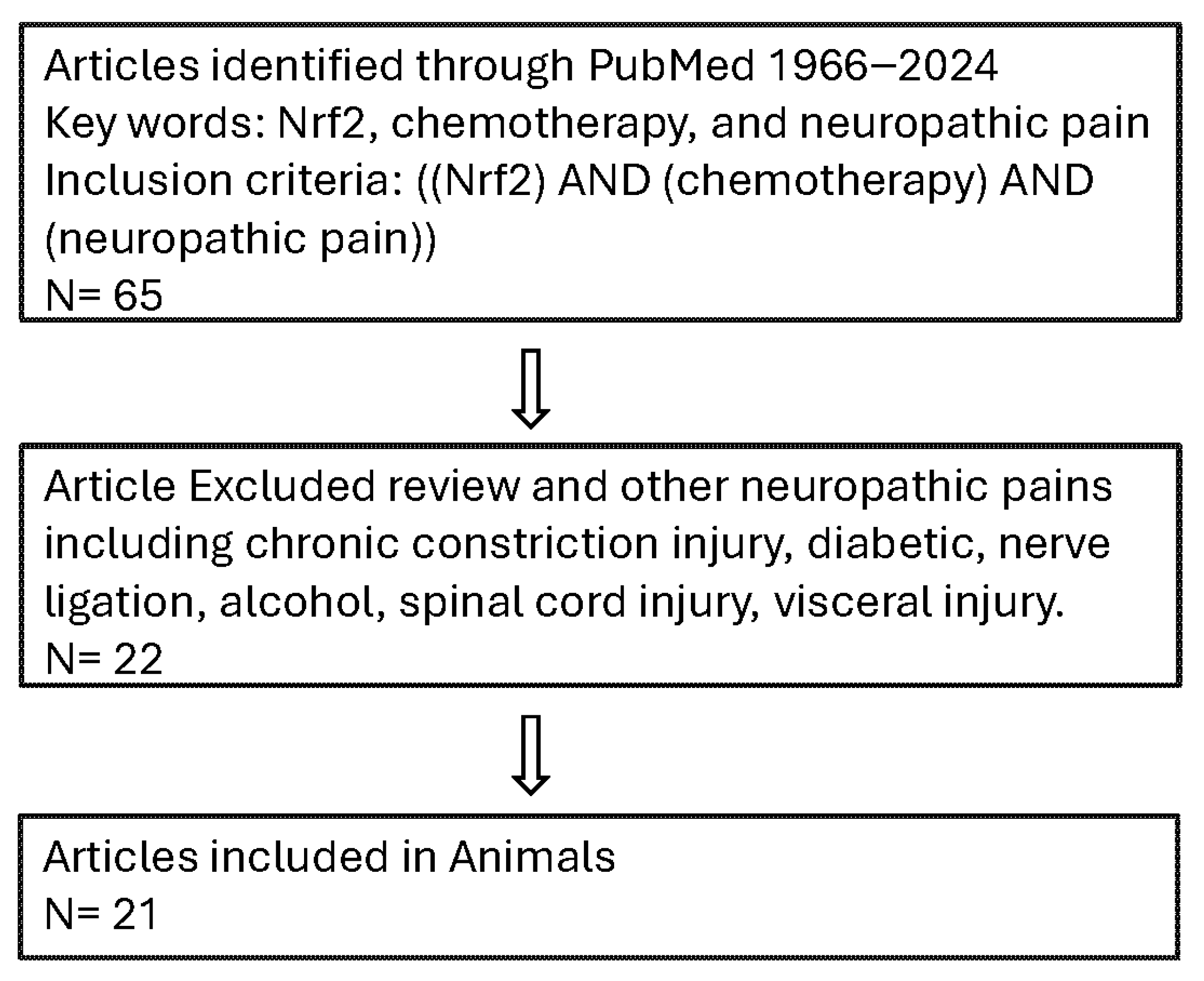
3. Materials and Methods
4. Conclusions
Author Contributions
Funding
Institutional Review Board Statement
Informed Consent Statement
Data Availability Statement
Conflicts of Interest
Correction Statement
Abbreviations
| ARE | antioxidant response element |
| BM | bardoxolone methyl |
| CAPE | caffeic acid phenethyl ester |
| CBD | cannabidiol |
| CINP | chemotherapy-induced neuropathic pain |
| CM | Commiphora myrrha |
| CoPP | cobalt protoporphyrin IX |
| DRG | dorsal root ganglia |
| DZ | Daidzein |
| GPX | glutathione peroxidase |
| GPX4 | glutathione peroxidase 4 |
| HO-1 | heme oxygenase-1 |
| HRW | Hydrogen-rich water |
| l-CDL | levo-corydalmine |
| MAF | muscle aponeurosis fibromatosis |
| NF-κB | nuclear factor kappa B. |
| NQO1 | NAD(P)H:quinone oxidoreductase1 |
| Nrf2 | nuclear factor erythroid 2-related factor 2 |
| OINP | oxaliplatin-induced neuropathic pain |
| PINP | paclitaxel-induced neuropathic pain |
| PPARγ | peroxisome proliferator-activated receptor γ |
| RvD1 | resolvin D1 |
| SOD | superoxide dismutase |
| THCV | tetrahydrocannabivarin |
| TRP | transient receptor potential |
| VINP | vincristine-induced neuropathic pain |
References
- Ahn, J.; Shahriarirad, R.; Kwon, K.; Bejarano-Pineda, L.; Waryasz, G.; Ashkani-Esfahani, S. Comparative analysis of the therapeutic effects of pregabalin, gabapentin, and duloxetine in diabetic peripheral neuropathy: A retrospective study. J. Diabetes Complicat. 2025, 39, 109001. [Google Scholar] [CrossRef] [PubMed]
- Malik, A.; Javed, S. Does Chemotherapy-Induced Peripheral Neuropathy Fall Within the Spectrum of Complex Regional Pain Syndrome? A Narrative Review. Curr. Pain Headache Rep. 2025, 29, 77. [Google Scholar] [CrossRef] [PubMed]
- Massey, R.L.; Kim, H.K.; Abdi, S. Brief review: Chemotherapy-induced painful peripheral neuropathy (CIPPN): Current status and future directions. Can. J. Anaesth. 2014, 61, 754–762. [Google Scholar] [CrossRef] [PubMed]
- Colvin, L.A. Chemotherapy-induced peripheral neuropathy: Where are we now? Pain 2019, 160, S1–S10. [Google Scholar] [CrossRef]
- Staff, N.P.; Grisold, A.; Grisold, W.; Windebank, A.J. Chemotherapy-induced peripheral neuropathy: A current review. Ann. Neurol. 2017, 81, 772–781. [Google Scholar] [CrossRef]
- Yoon, S.Y.; Oh, J. Neuropathic cancer pain: Prevalence, pathophysiology, and management. Korean J. Intern. Med. 2018, 33, 1058–1069. [Google Scholar] [CrossRef]
- Loprinzi, C.L.; Lacchetti, C.; Bleeker, J.; Cavaletti, G.; Chauhan, C.; Hertz, D.L.; Kelley, M.R.; Lavino, A.; Lustberg, M.B.; Paice, J.A.; et al. Prevention and Management of Chemotherapy-Induced Peripheral Neuropathy in Survivors of Adult Cancers: ASCO Guideline Update. J. Clin. Oncol. 2020, 38, 3325–3348. [Google Scholar] [CrossRef]
- Basu, P.; Averitt, D.L.; Maier, C.; Basu, A. The Effects of Nuclear Factor Erythroid 2 (NFE2)-Related Factor 2 (Nrf2) Activation in Preclinical Models of Peripheral Neuropathic Pain. Antioxidants 2022, 11, 430. [Google Scholar] [CrossRef]
- Zhou, Y.Q.; Mei, W.; Tian, X.B.; Tian, Y.K.; Liu, D.Q.; Ye, D.W. The therapeutic potential of Nrf2 inducers in chronic pain: Evidence from preclinical studies. Pharmacol. Ther. 2021, 225, 107846. [Google Scholar] [CrossRef]
- Hou, S.; Huh, B.; Kim, H.K.; Kim, K.H.; Abdi, S. Treatment of Chemotherapy-Induced Peripheral Neuropathy: Systematic Review and Recommendations. Pain Physician 2018, 21, 571–592. [Google Scholar] [CrossRef]
- Kim, H.K.; Wang, Q.; Hwang, S.H.; Dougherty, P.M.; Wang, J.; Abdi, S. Bardoxolone Methyl Ameliorates Chemotherapy-Induced Neuropathic Pain by Activation of Phosphorylated Nuclear Factor Erythroid 2-Related Factor 2 in the Dorsal Root Ganglia. Anesth. Analg. 2024, 138, 664–675. [Google Scholar] [CrossRef]
- Chen, Y.; Luo, X.; Yin, Y.; Thomas, E.R.; Liu, K.; Wang, W.; Li, X. The interplay of iron, oxidative stress, and alpha-synuclein in Parkinson’s disease progression. Mol. Med. 2025, 31, 154. [Google Scholar] [CrossRef] [PubMed]
- Kim, H.K.; Hwang, S.H.; Abdi, S. Tempol Ameliorates and Prevents Mechanical Hyperalgesia in a Rat Model of Chemotherapy-Induced Neuropathic Pain. Front. Pharmacol. 2016, 7, 532. [Google Scholar] [CrossRef] [PubMed]
- Mzyk, A.; Reyes-San-Martin, C.; Dogan, Y.; Woudstra, W.; Zhang, Y.; Yilmaz, E.; Bron, R.; de Haan-Visser, W.; Berg-Sorensen, K.; Schirhagl, R. Quantum sensing to monitor changes in free radical generation by intracellular vesicles of polarized macrophages. Acta Biomater. 2025, 199, 315–323. [Google Scholar] [CrossRef] [PubMed]
- Abadin, X.; de Dios, C.; Zubillaga, M.; Ivars, E.; Puigros, M.; Mari, M.; Morales, A.; Vizuete, M.; Vitorica, J.; Trullas, R.; et al. Neuroinflammation in Age-Related Neurodegenerative Diseases: Role of Mitochondrial Oxidative Stress. Antioxidants 2024, 13, 1440. [Google Scholar] [CrossRef]
- Yao, R.; Qiu, L.; Zhu, L.; Chen, X.; Zhai, J.; Wang, W.; Qi, P.; Liao, Z.; Buttino, I.; Yan, X.; et al. The Functional Significance of McMafF_G_K in Molluscs: Implications for Nrf2-Mediated Oxidative Stress Response. Int. J. Mol. Sci. 2023, 24, 16800. [Google Scholar] [CrossRef]
- Sun, J.; Hoshino, H.; Takaku, K.; Nakajima, O.; Muto, A.; Suzuki, H.; Tashiro, S.; Takahashi, S.; Shibahara, S.; Alam, J.; et al. Hemoprotein Bach1 regulates enhancer availability of heme oxygenase-1 gene. EMBO J. 2002, 21, 5216–5224. [Google Scholar] [CrossRef]
- Zhao, X.; Liu, L.; Wang, Y.; Wang, G.; Zhao, Y.; Zhang, Y. Electroacupuncture enhances antioxidative signal pathway and attenuates neuropathic pain induced by chemotherapeutic paclitaxel. Physiol. Res. 2019, 68, 501–510. [Google Scholar] [CrossRef]
- Zhou, Y.Q.; Liu, D.Q.; Chen, S.P.; Chen, N.; Sun, J.; Wang, X.M.; Cao, F.; Tian, Y.K.; Ye, D.W. Nrf2 activation ameliorates mechanical allodynia in paclitaxel-induced neuropathic pain. Acta Pharmacol. Sin. 2020, 41, 1041–1048. [Google Scholar] [CrossRef]
- Zhou, Y.Q.; Liu, D.Q.; Chen, S.P.; Chen, N.; Sun, J.; Wang, X.M.; Li, D.Y.; Tian, Y.K.; Ye, D.W. PPARgamma activation mitigates mechanical allodynia in paclitaxel-induced neuropathic pain via induction of Nrf2/HO-1 signaling pathway. Biomed. Pharmacother. 2020, 129, 110356. [Google Scholar] [CrossRef]
- Martinez-Martel, I.; Bai, X.; Batalle, G.; Pol, O. New Treatment for the Cognitive and Emotional Deficits Linked with Paclitaxel-Induced Peripheral Neuropathy in Mice. Antioxidants 2022, 11, 2387. [Google Scholar] [CrossRef] [PubMed]
- Al-Romaiyan, A.; Masocha, W. Pristimerin, a triterpene that inhibits monoacylglycerol lipase activity, prevents the development of paclitaxel-induced allodynia in mice. Front. Pharmacol. 2022, 13, 944502. [Google Scholar] [CrossRef] [PubMed]
- Kumar Kalvala, A.; Bagde, A.; Arthur, P.; Kumar Surapaneni, S.; Ramesh, N.; Nathani, A.; Singh, M. Role of Cannabidiol and Tetrahydrocannabivarin on Paclitaxel-induced neuropathic pain in rodents. Int. Immunopharmacol. 2022, 107, 108693. [Google Scholar] [CrossRef] [PubMed]
- Zafar, S.; Luo, Y.; Zhang, L.; Li, C.H.; Khan, A.; Khan, M.I.; Shah, K.; Seo, E.K.; Wang, F.; Khan, S. Daidzein attenuated paclitaxel-induced neuropathic pain via the down-regulation of TRPV1/P2Y and up-regulation of Nrf2/HO-1 signaling. Inflammopharmacology 2023, 31, 1977–1992. [Google Scholar] [CrossRef]
- Su, C.J.; Zhang, J.T.; Zhao, F.L.; Xu, D.L.; Pan, J.; Liu, T. Resolvin D1/N-formyl peptide receptor 2 ameliorates paclitaxel-induced neuropathic pain through the activation of IL-10/Nrf2/HO-1 pathway in mice. Front. Immunol. 2023, 14, 1091753. [Google Scholar] [CrossRef]
- Martinez-Martel, I.; Bai, X.; Kordikowski, R.; Leite-Panissi, C.R.A.; Pol, O. The Combination of Molecular Hydrogen and Heme Oxygenase 1 Effectively Inhibits Neuropathy Caused by Paclitaxel in Mice. Antioxidants 2024, 13, 856. [Google Scholar] [CrossRef]
- Kulkarni, N.P.; Vaidya, B.; Narula, A.S.; Sharma, S.S. Caffeic Acid Phenethyl Ester (CAPE) Attenuates Paclitaxel-induced Peripheral Neuropathy: A Mechanistic Study. Curr. Neurovasc. Res. 2022, 19, 293–302. [Google Scholar]
- Miao, H.; Xu, J.; Xu, D.; Ma, X.; Zhao, X.; Liu, L. Nociceptive behavior induced by chemotherapeutic paclitaxel and beneficial role of antioxidative pathways. Physiol. Res. 2019, 68, 491–500. [Google Scholar] [CrossRef]
- Miao, F.; Wang, R.; Cui, G.; Li, X.; Wang, T.; Li, X. Engagement of MicroRNA-155 in Exaggerated Oxidative Stress Signal and TRPA1 in the Dorsal Horn of the Spinal Cord and Neuropathic Pain During Chemotherapeutic Oxaliplatin. Neurotox. Res. 2019, 36, 712–723. [Google Scholar] [CrossRef]
- Recalde, M.D.; Miguel, C.A.; Noya-Riobo, M.V.; Gonzalez, S.L.; Villar, M.J.; Coronel, M.F. Resveratrol exerts antioxidant and anti-inflammatory actions and prevents oxaliplatin-induced mechanical and thermal allodynia. Brain Res. 2020, 1748, 147079. [Google Scholar] [CrossRef]
- Zhang, M.W.; Sun, X.; Xu, Y.W.; Meng, W.; Tang, Q.; Gao, H.; Liu, L.; Chen, S.H. Curcumin relieves oxaliplatin-induced neuropathic pain via reducing inflammation and activating antioxidant response. Cell Biol. Int. 2024, 48, 872–882. [Google Scholar] [CrossRef] [PubMed]
- Dai, C.; Zhen, F.; Yu, L.; Xin, S. Puerarin alleviates oxaliplatin-induced neuropathic pain by promoting Nrf2/GPX4-mediated antioxidative response. PLoS ONE 2024, 19, e0308872. [Google Scholar] [CrossRef] [PubMed]
- Dos Santos, G.G.L.; Oliveira, A.L.L.; Santos, D.S.; do Espirito Santo, R.F.; Silva, D.N.; Juiz, P.J.L.; Soares, M.B.P.; Villarreal, C.F. Mesenchymal stem cells reduce the oxaliplatin-induced sensory neuropathy through the reestablishment of redox homeostasis in the spinal cord. Life Sci. 2021, 265, 118755. [Google Scholar] [CrossRef] [PubMed]
- Zhou, L.; Ao, L.; Yan, Y.; Li, C.; Li, W.; Ye, A.; Liu, J.; Hu, Y.; Fang, W.; Li, Y. Levo-corydalmine Attenuates Vincristine-Induced Neuropathic Pain in Mice by Upregulating the Nrf2/HO-1/CO Pathway to Inhibit Connexin 43 Expression. Neurotherapeutics 2020, 17, 340–355. [Google Scholar] [CrossRef]
- Chen, X.J.; Wang, L.; Song, X.Y. Mitoquinone alleviates vincristine-induced neuropathic pain through inhibiting oxidative stress and apoptosis via the improvement of mitochondrial dysfunction. Biomed. Pharmacother. 2020, 125, 110003. [Google Scholar] [CrossRef]
- Khan, A.; Shal, B.; Ullah Khan, A.; Ullah Shah, K.; Saniya Zahra, S.; Ul Haq, I.; Ud Din, F.; Ali, H.; Khan, S. Neuroprotective mechanism of Ajugarin-I against Vincristine-Induced neuropathic pain via regulation of Nrf2/NF-kappaB and Bcl2 signalling. Int. Immunopharmacol. 2023, 118, 110046. [Google Scholar] [CrossRef]
- Eghbali, A.; Adibifar, M.; Ghasemi, A.; Afzal, R.R.; Moradi, K.; Eghbali, A.; Faress, F.; Ghaffari, K. The effect of oral curcumin on vincristine-induced neuropathy in pediatric acute lymphoblastic leukemia: A double-blind randomized controlled clinical trial. BMC Cancer 2025, 25, 344. [Google Scholar] [CrossRef]
- Holotiuk, I.; Kryzhanivska, A.; Holotiuk, S.; Teren, T.; Hirna, H. Prevention of Paclitaxel-Induced Motor Neuropathy of Fibular and Tibial Nerves with Alpha-Lipoic Acid and Ipidacrin Hydrochloride in Breast Cancer Patients. Exp. Oncol. 2025, 47, 230–237. [Google Scholar] [CrossRef]
- Neganova, M.E.; Yudaev, P.A.; Aleksandrova, Y.R.; Brel, V.K. Monocarbonyl synthetic curcumin analogues with antitumour potential. Chemical and biological aspects. Russ. Chem. Rev. 2025, 94, RCR5189. [Google Scholar] [CrossRef]
- Pane, C.; Marra, A.M.; Aliberti, L.; Campanile, M.; Coscetta, F.; Crisci, G.; D’Assante, R.; Marsili, A.; Puorro, G.; Salzano, A. Rationale and protocol of a double-blind, randomized, placebo-controlled trial to test the efficacy, safety, and tolerability of dimethyl fumarate in Friedreich Ataxia (DMF-FA-201). Front. Neurosci. 2023, 17, 1260977. [Google Scholar] [CrossRef]
- Gunther, K.; Profeta, V.; Keita, M.; Park, C.; Wells, M.; Sharma, S.; Schadt, K.; Lynch, D.R. Safety Monitoring of Omaveloxolone in Friedreich Ataxia: Results from One Year of Clinical Treatment. Neurol. Ther. 2025, 14, 1105–1114. [Google Scholar] [CrossRef] [PubMed]
- Zhai, J.; Chen, Z.; Zhu, Q.; Guo, Z.; Sun, X.; Jiang, L.; Li, J.; Wang, N.; Yao, X.; Zhang, C.; et al. Curcumin inhibits PAT-induced renal ferroptosis via the p62/Keap1/Nrf2 signalling pathway. Toxicology 2024, 506, 153863. [Google Scholar] [CrossRef] [PubMed]
- Rago, R.; Gallo, M.; Dal Lago, A.; Licata, E.; Paciotti, G.; Amodei, M.; Meneghini, C.; Fabiani, C.; Dani, G.; Liberanome, C.; et al. Controlled, prospective, observational study on the efficiency and tolerability of a combination of potential Nrf2-inducing antioxidants and micronutrients as pre-treatment for ICSI in dyspermic patients with previous failure. Eur. Rev. Med. Pharmacol. Sci. 2017, 21, 1645–1652. [Google Scholar]
- Michalickova, D.; Hrncir, T.; Canova, N.K.; Slanar, O. Targeting Keap1/Nrf2/ARE signaling pathway in multiple sclerosis. Eur. J. Pharmacol. 2020, 873, 172973. [Google Scholar] [CrossRef] [PubMed]
- Yuan, J.M.; Kensler, T.W.; Dacic, S.; Hartman, D.J.; Wang, R.; Balogh, P.A.; Sufka, P.; Turner, M.A.; Fuhrer, K.; Seigh, L.; et al. Randomized Phase II Clinical Trial of Sulforaphane in Former Smokers at High Risk for Lung Cancer. Cancer Prev. Res. 2025, 18, 335–345. [Google Scholar] [CrossRef]
- Elsayed Abouzed, D.E.; Ezelarab, H.A.A.; Selim, H.; Elsayed, M.M.A.; El Hamd, M.A.; Aboelez, M.O. Multimodal modulation of hepatic ischemia/reperfusion-induced injury by phytochemical agents: A mechanistic evaluation of hepatoprotective potential and safety profiles. Int. Immunopharmacol. 2024, 138, 112445. [Google Scholar] [CrossRef]
- Ardehjani, N.A.; Agha-Hosseini, M.; Nashtaei, M.S.; Khodarahmian, M.; Shabani, M.; Jabarpour, M.; Fereidouni, F.; Rastegar, T.; Amidi, F. Resveratrol ameliorates mitochondrial biogenesis and reproductive outcomes in women with polycystic ovary syndrome undergoing assisted reproduction: A randomized, triple-blind, placebo-controlled clinical trial. J. Ovarian Res. 2024, 17, 143. [Google Scholar] [CrossRef]
- Jayasuriya, R.; Dhamodharan, U.; Ali, D.; Ganesan, K.; Xu, B.; Ramkumar, K.M. Targeting Nrf2/Keap1 signaling pathway by bioactive natural agents: Possible therapeutic strategy to combat liver disease. Phytomedicine 2021, 92, 153755. [Google Scholar] [CrossRef]
- Vaez, S.; Parivr, K.; Amidi, F.; Rudbari, N.H.; Moini, A.; Amini, N. Quercetin and polycystic ovary syndrome; inflammation, hormonal parameters and pregnancy outcome: A randomized clinical trial. Am. J. Reprod. Immunol. 2023, 89, e13644. [Google Scholar] [CrossRef]
- Kelley, M.J.; Glaser, E.M.; Herndon, J.E., 2nd; Becker, F.; Bhagat, R.; Zhang, Y.J.; Santella, R.M.; Carmella, S.G.; Hecht, S.S.; Gallot, L.; et al. Safety and efficacy of weekly oral oltipraz in chronic smokers. Cancer Epidemiol. Biomark. Prev. 2005, 14, 892–899. [Google Scholar] [CrossRef]
- Szarka, C.E.; Yao, K.S.; Pfeiffer, G.R.; Balshem, A.M.; Litwin, S.; Frucht, H.; Goosenberg, E.B.; Engstrom, P.F.; Clapper, M.L.; O’Dwyer, P.J. Chronic dosing of oltipraz in people at increased risk for colorectal cancer. Cancer Detect. Prev. 2001, 25, 352–361. [Google Scholar] [PubMed]
- Bansod, S.; Saifi, M.A.; Godugu, C. Molecular updates on berberine in liver diseases: Bench to bedside. Phytother. Res. 2021, 35, 5459–5476. [Google Scholar] [CrossRef] [PubMed]
- Tan, Y.J.; Zou, T.H.; Yu, K.; Sheng, J.Q.; Jin, P.; Zhang, M.J.; Zou, X.P.; Dou, X.T.; Liu, S.D.; Huang, S.H.; et al. Berberine for preventing colorectal adenoma recurrence and neoplasm occurrence: 6-Year follow-up of a randomized clinical trial. Cell Rep. Med. 2025, 6, 102293. [Google Scholar] [CrossRef] [PubMed]
- Nicolay, J.P.; Melchers, S.; Albrecht, J.D.; Assaf, C.; Dippel, E.; Stadler, R.; Wehkamp, U.; Wobser, M.; Zhao, J.; Burghaus, I.; et al. Dimethyl fumarate treatment in relapsed and refractory cutaneous T-cell lymphoma: A multicenter phase 2 study. Blood 2023, 142, 794–805. [Google Scholar] [CrossRef]
- Lynch, D.R.; Chin, M.P.; Delatycki, M.B.; Subramony, S.H.; Corti, M.; Hoyle, J.C.; Boesch, S.; Nachbauer, W.; Mariotti, C.; Mathews, K.D.; et al. Safety and Efficacy of Omaveloxolone in Friedreich Ataxia (MOXIe Study). Ann. Neurol. 2021, 89, 212–225, Correction in Ann. Neurol. 2023, 94, 1190. [Google Scholar] [CrossRef]
- Ikejiri, K.; Suzuki, T.; Muto, S.; Takama, H.; Yamawaki, K.; Miyazawa, T.; Urakawa, I.; Aoki, Y.; Otsuki, A.; Katsuoka, F.; et al. Effects of NRF2 polymorphisms on safety and efficacy of bardoxolone methyl: Subanalysis of TSUBAKI study. Clin. Exp. Nephrol. 2024, 28, 225–234. [Google Scholar] [CrossRef]
- Hong, D.S.; Kurzrock, R.; Supko, J.G.; He, X.; Naing, A.; Wheler, J.; Lawrence, D.; Eder, J.P.; Meyer, C.J.; Ferguson, D.A.; et al. A phase I first-in-human trial of bardoxolone methyl in patients with advanced solid tumors and lymphomas. Clin. Cancer Res. 2012, 18, 3396–3406. [Google Scholar] [CrossRef]
- Grilc, N.K.; Sova, M.; Kristl, J. Drug Delivery Strategies for Curcumin and Other Natural Nrf2 Modulators of Oxidative Stress-Related Diseases. Pharmaceutics 2021, 13, 2137. [Google Scholar] [CrossRef]
- Sharbafshaaer, M.; Pepe, R.; Notariale, R.; Canale, F.; Tedeschi, G.; Tessitore, A.; Bergamo, P.; Trojsi, F. Beyond Antioxidants: The Emerging Role of Nrf2 Activation in Amyotrophic Lateral Sclerosis (ALS). Int. J. Mol. Sci. 2025, 26, 9872. [Google Scholar] [CrossRef]
- Yang, J.; Fu, X.; Liao, X.; Li, Y. Nrf2 Activators as Dietary Phytochemicals Against Oxidative Stress, Inflammation, and Mitochondrial Dysfunction in Autism Spectrum Disorders: A Systematic Review. Front. Psychiatry 2020, 11, 561998. [Google Scholar] [CrossRef]


| Treatment | Mechanisms of Action | Analgesic Effects | Reference |
|---|---|---|---|
| Levo-corydalmine (l-CDL, 5, 10, and 20 mg/kg for 9 days from the last vincristine injection) | l-CDL activates the Nrf2/HO-1/carbon monoxide pathway and improves mitochondrial function in sensory fibers (A-fibers and C-fibers) and inhibits Connexin 43-mediated pathways. | l-CDL reduced pain hypersensitivity and sciatic nerve degeneration in VINP. | [34] |
| Mitoquinone (MitoQ, a mitochondrial-targeted antioxidant, 2.5, 5 and 10 mg/kg once a day for days 6–14) | MitoQ enhances Nrf2 expression in the nucleus, reduces oxidative stress, decreases pro-inflammatory cytokines, inhibits mitochondrial fission (Drp1 and Fis), improves mitochondrial fusion and function, and reduces apoptosis. | MitoQ reduced pain hypersensitivity and glial activation in VINP. | [35] |
| Ajugarin-I (Aju-I, 1, 5 mg/kg, ip, days 11–21) | Aju-I upregulates Nrf2, suppresses NF-κB, reduces apoptosis in neuronal tissues, and restores the balance between antioxidant and oxidative stress factors in the spinal cord and sciatic nerve. | Aju-I treatment significantly alleviated hyperalgesia and allodynia in VINP mice. In addition, Aju-I reversed histological damage in the sciatic nerve, spinal cord, and brain caused by vincristine. | [36] |
Disclaimer/Publisher’s Note: The statements, opinions and data contained in all publications are solely those of the individual author(s) and contributor(s) and not of MDPI and/or the editor(s). MDPI and/or the editor(s) disclaim responsibility for any injury to people or property resulting from any ideas, methods, instructions or products referred to in the content. |
© 2026 by the authors. Licensee MDPI, Basel, Switzerland. This article is an open access article distributed under the terms and conditions of the Creative Commons Attribution (CC BY) license.
Share and Cite
Kim, J.; Kim, J.; Kim, H.K.; Abdi, S. The Analgesic Effects of Nrf2 Activators in Chemotherapy-Induced Neuropathic Pain: Evidence from Animal Studies and Consequences for Translation into Clinical Trials. Int. J. Mol. Sci. 2026, 27, 1748. https://doi.org/10.3390/ijms27041748
Kim J, Kim J, Kim HK, Abdi S. The Analgesic Effects of Nrf2 Activators in Chemotherapy-Induced Neuropathic Pain: Evidence from Animal Studies and Consequences for Translation into Clinical Trials. International Journal of Molecular Sciences. 2026; 27(4):1748. https://doi.org/10.3390/ijms27041748
Chicago/Turabian StyleKim, Jimin, Jeongmin Kim, Hee Kee Kim, and Salahadin Abdi. 2026. "The Analgesic Effects of Nrf2 Activators in Chemotherapy-Induced Neuropathic Pain: Evidence from Animal Studies and Consequences for Translation into Clinical Trials" International Journal of Molecular Sciences 27, no. 4: 1748. https://doi.org/10.3390/ijms27041748
APA StyleKim, J., Kim, J., Kim, H. K., & Abdi, S. (2026). The Analgesic Effects of Nrf2 Activators in Chemotherapy-Induced Neuropathic Pain: Evidence from Animal Studies and Consequences for Translation into Clinical Trials. International Journal of Molecular Sciences, 27(4), 1748. https://doi.org/10.3390/ijms27041748