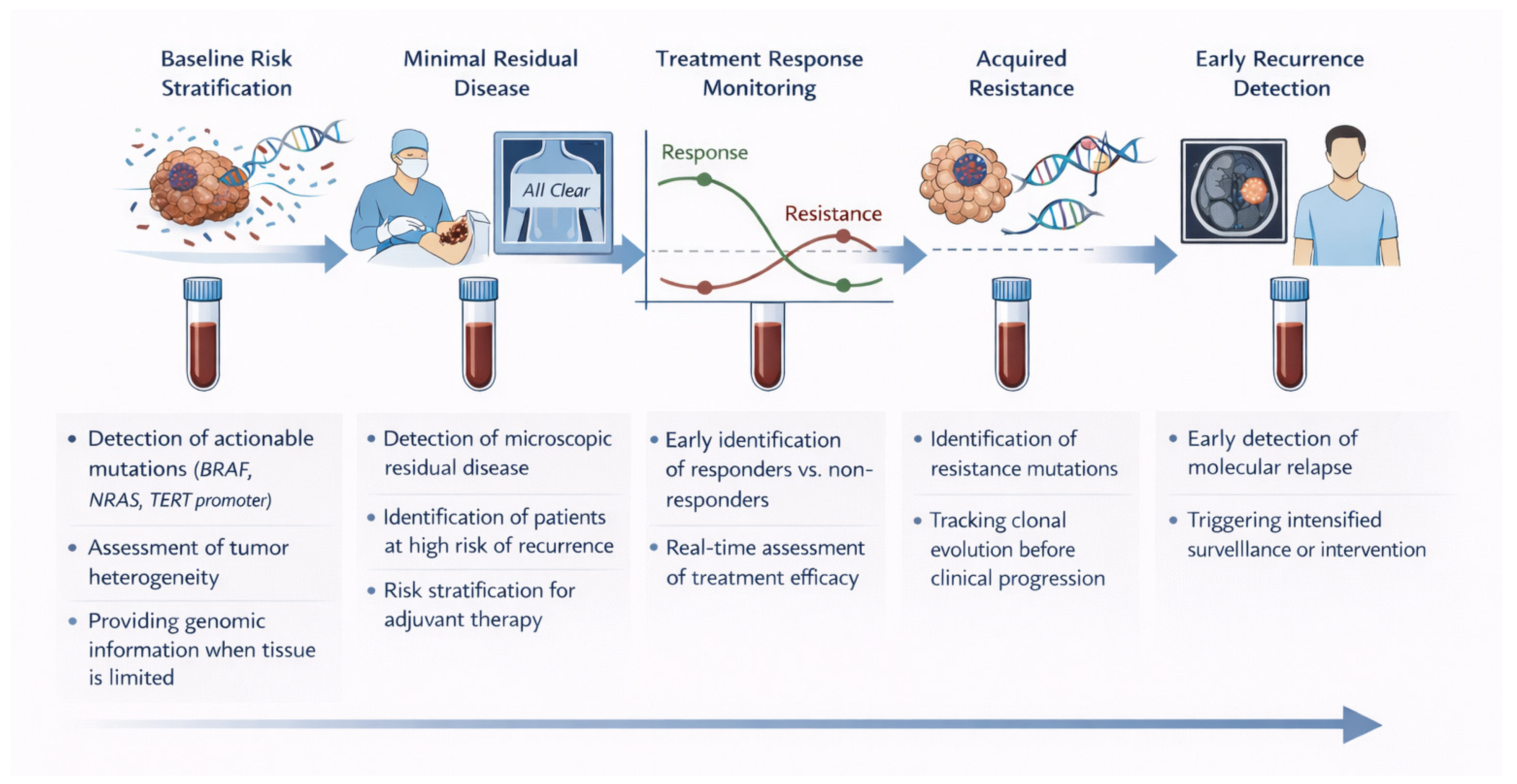
Circulating Tumor DNA in Melanoma: Advances in Detection, Clinical Applications, and Integration with Emerging Technologies

 , , ,
, , ,  , , ,
, , , Abstract
Share and Cite
Charbel, N.; Rizkallah, J.; Bal, M.N.; El Masri, A.; Armache, E.; Ghezzawi, M.; Awada, A.; Kreidieh, L.; Mehdi, J.; Kreidieh, F. Circulating Tumor DNA in Melanoma: Advances in Detection, Clinical Applications, and Integration with Emerging Technologies. Int. J. Mol. Sci. 2026, 27, 1569. https://doi.org/10.3390/ijms27031569
Charbel N, Rizkallah J, Bal MN, El Masri A, Armache E, Ghezzawi M, Awada A, Kreidieh L, Mehdi J, Kreidieh F. Circulating Tumor DNA in Melanoma: Advances in Detection, Clinical Applications, and Integration with Emerging Technologies. International Journal of Molecular Sciences. 2026; 27(3):1569. https://doi.org/10.3390/ijms27031569
Chicago/Turabian StyleCharbel, Nicole, Joe Rizkallah, Mark Nicolas Bal, Amal El Masri, Elsa Armache, Malak Ghezzawi, Ali Awada, Lara Kreidieh, Jad Mehdi, and Firas Kreidieh. 2026. "Circulating Tumor DNA in Melanoma: Advances in Detection, Clinical Applications, and Integration with Emerging Technologies" International Journal of Molecular Sciences 27, no. 3: 1569. https://doi.org/10.3390/ijms27031569
APA StyleCharbel, N., Rizkallah, J., Bal, M. N., El Masri, A., Armache, E., Ghezzawi, M., Awada, A., Kreidieh, L., Mehdi, J., & Kreidieh, F. (2026). Circulating Tumor DNA in Melanoma: Advances in Detection, Clinical Applications, and Integration with Emerging Technologies. International Journal of Molecular Sciences, 27(3), 1569. https://doi.org/10.3390/ijms27031569