Neurophysiological Profiles in a Family with Multiple SHANK3-Related Phelan–McDermid Syndrome Cases
 , ,
, ,
Abstract
1. Introduction
2. Results
2.1. Phenotyping and Clinical Description
2.1.1. SH011
Developmental History
Clinical Examination
2.1.2. SH006
Developmental History
Clinical Examination
History of Oncology
2.1.3. D125
Developmental History
Clinical Examination
Summary of Phenotypic Features
2.2. Genetics
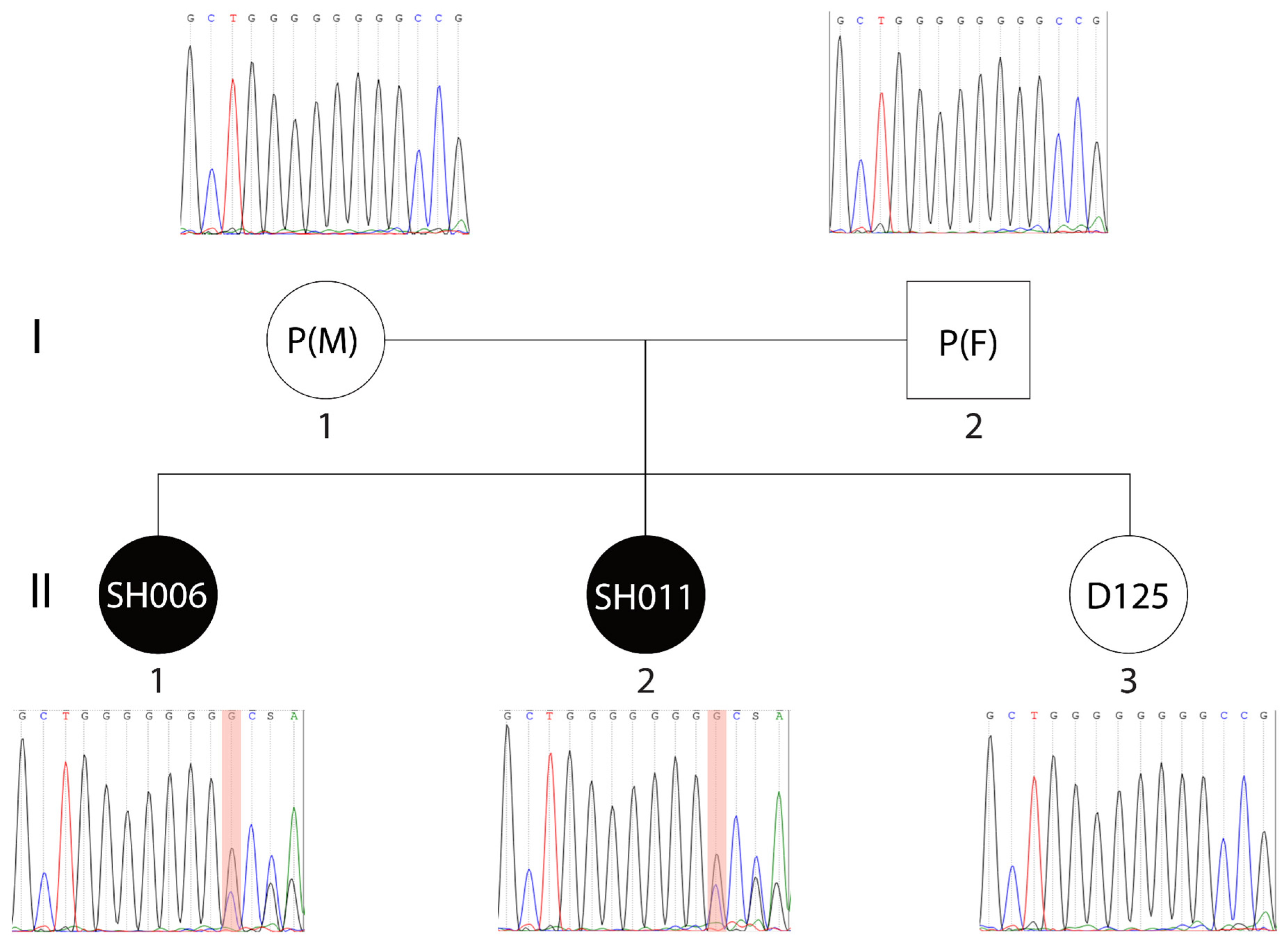
2.2.1. Segregation Analysis
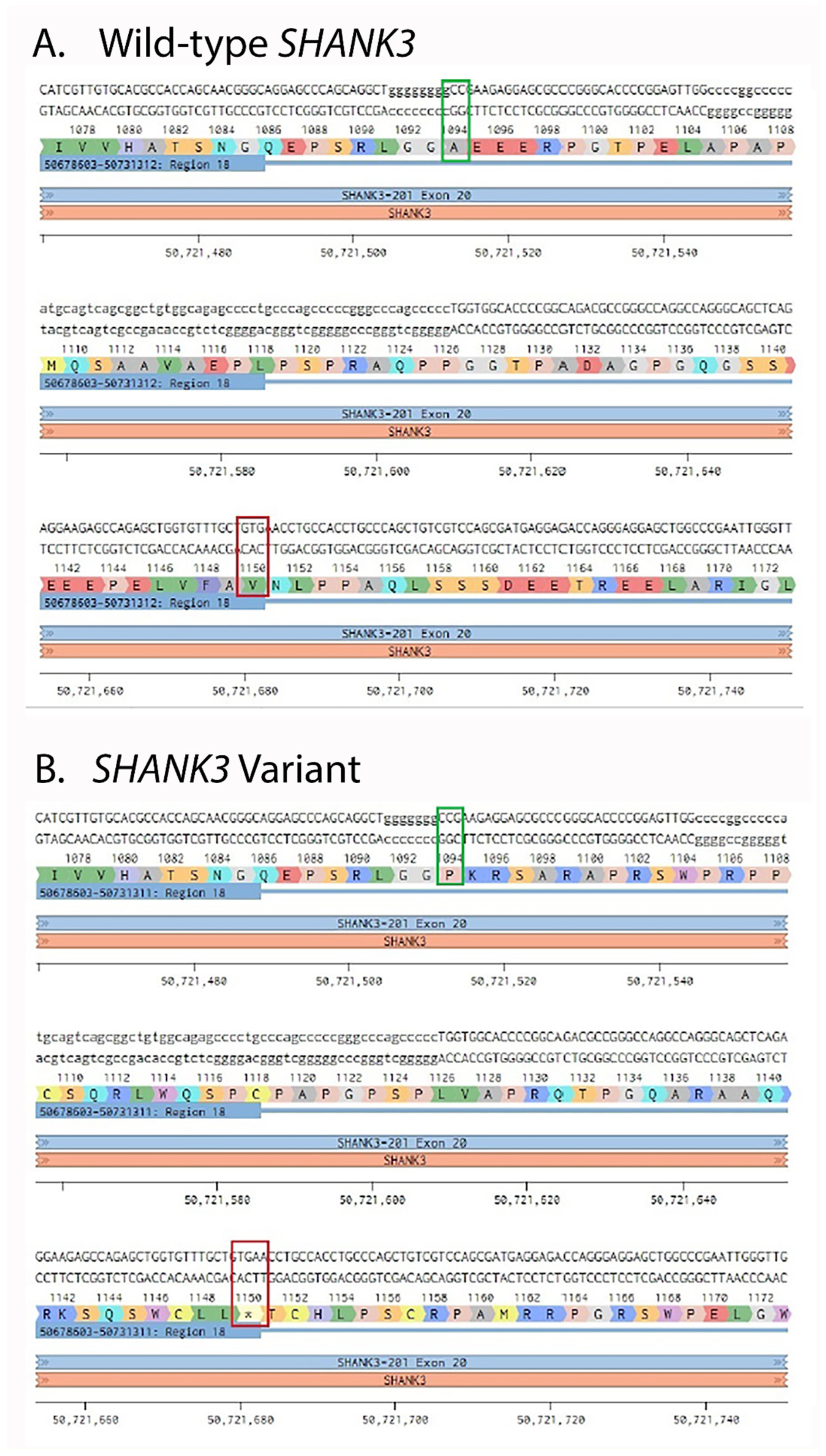
2.2.2. In Silico Modeling and Predicted Molecular Effect
2.3. Electroencephalography
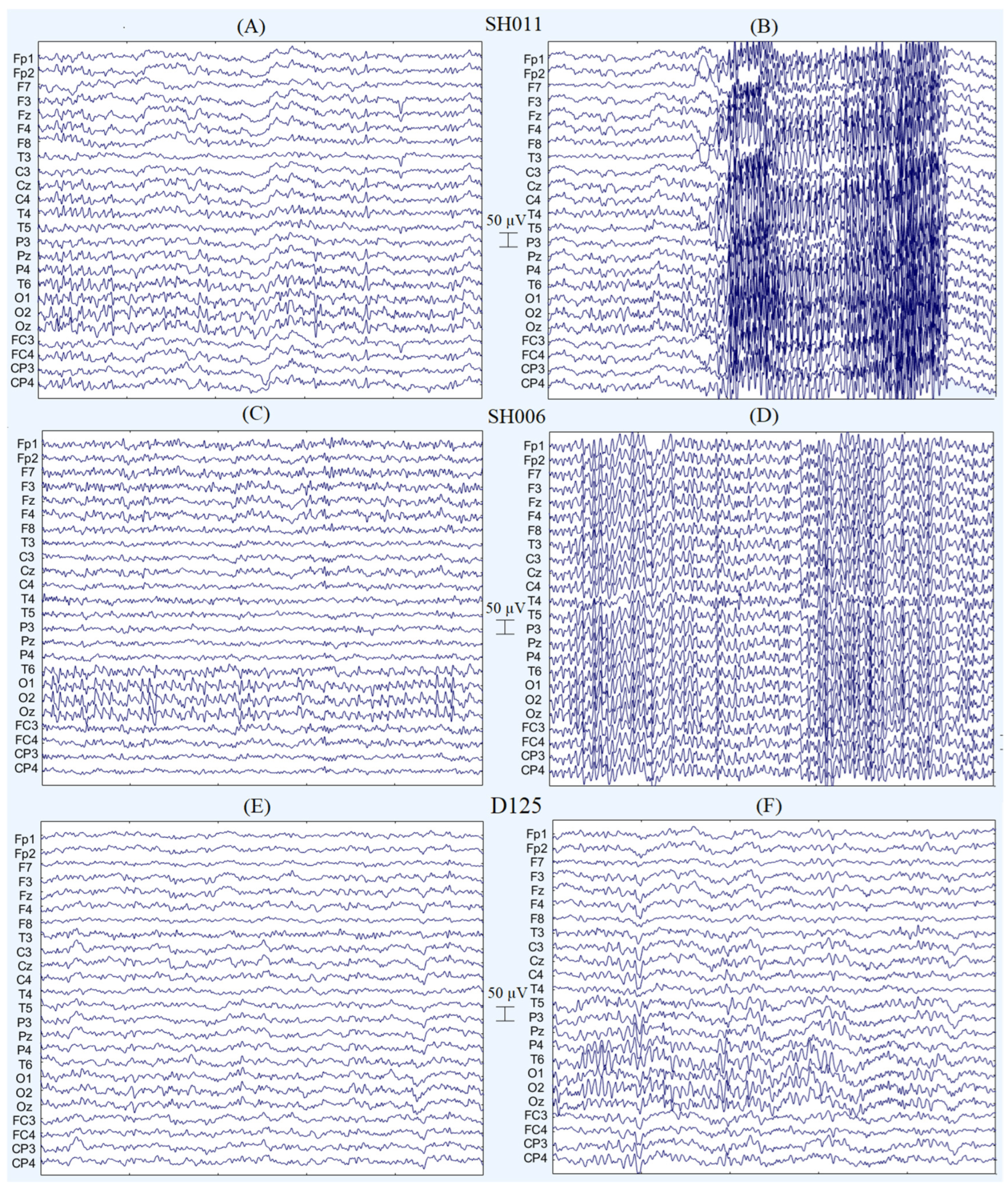
2.3.1. Clinical EEG Examination
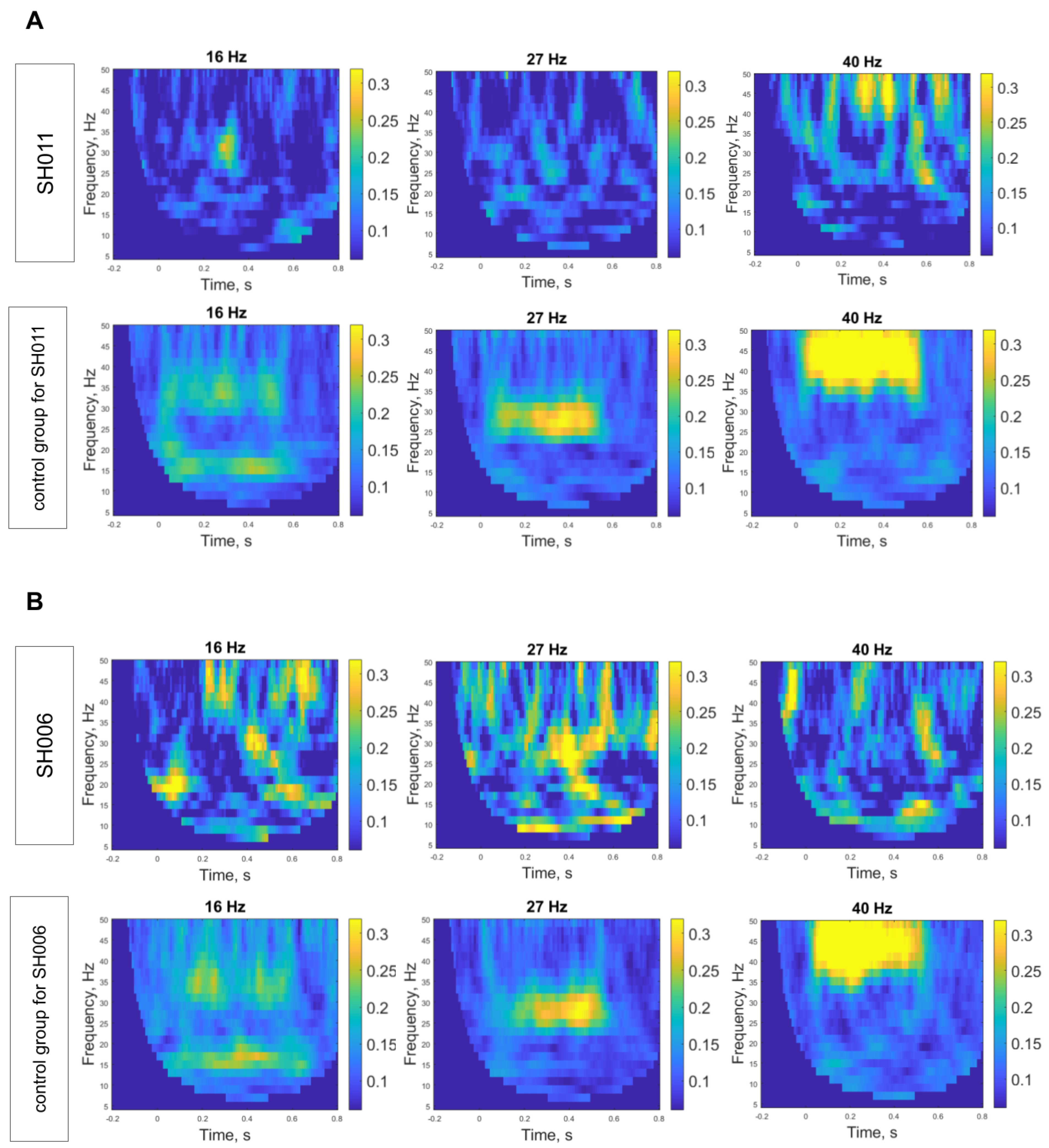
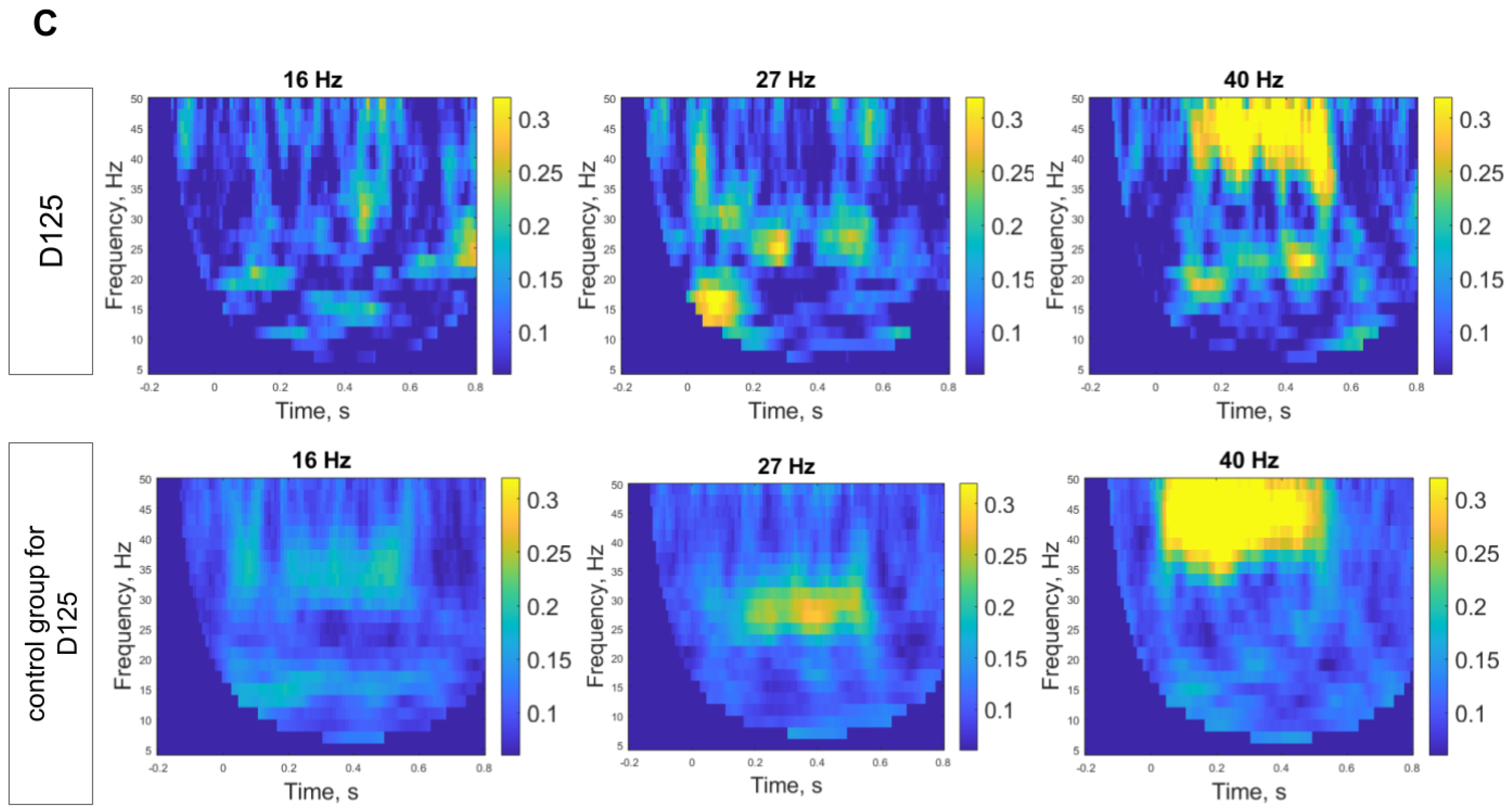
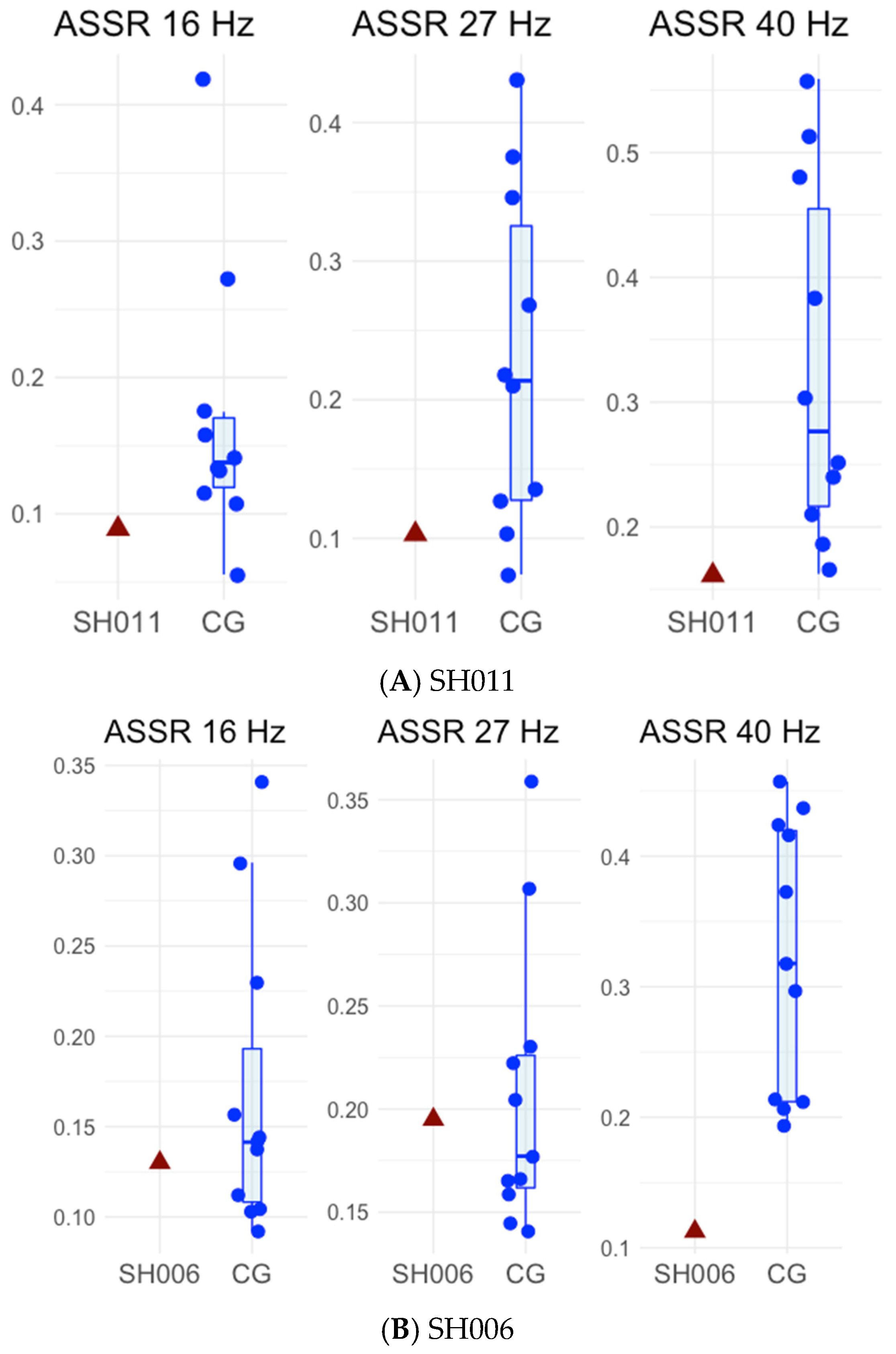
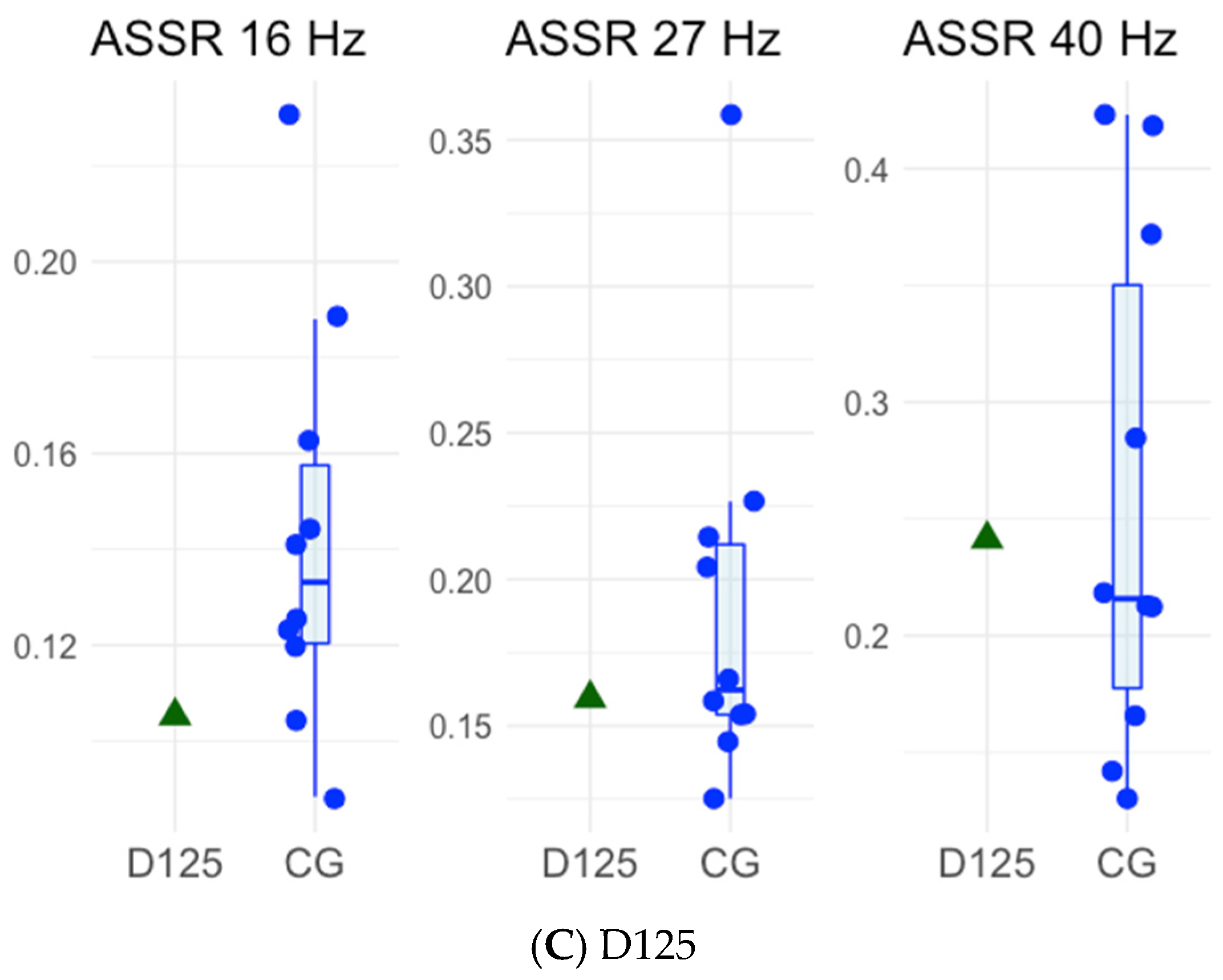
2.3.2. Auditory Steady-State Response
3. Discussion
40 Hz ASSR as an Early Biomarker of SHANK3 Disruption
4. Methods and Materials
4.1. Clinical Evaluation
4.2. Genetic Examination
4.2.1. Sanger Sequencing and Segregation Analysis
4.2.2. Bioinformatic Tools
4.3. Electroencephalographic Study
4.3.1. Participants
4.3.2. Stimulation
4.3.3. EEG Acquisition and Processing
4.3.4. Clinical EEG Evaluation
4.3.5. Statistical Analysis
5. Conclusions
Author Contributions
Funding
Institutional Review Board Statement
Informed Consent Statement
Data Availability Statement
Acknowledgments
Conflicts of Interest
Abbreviations
| EEG | Electroencephalography |
| ITPC | Intertrial phase coherence |
| ASSR | Auditory steady-state response |
| ASD | Autistic spectrum disorder |
| PMS | Phelan–McDermid syndrome |
Appendix A

| Evidence Code | Criterion | Evidence of Pathogenicity |
|---|---|---|
| PVS1 | Null variant (nonsense, frameshift, canonical +/−1 or 2 splice sites, initiation codon, single or multi-exon deletion) in a gene where loss of function (LOF) is a known mechanism of disease | Very Strong |
| PM1 | Located in a mutational hot spot and/or critical and well-established functional domain (e.g., active site of an enzyme) without benign variation | Moderate |
| PM2 | Absent from controls (or at extremely low frequency if recessive) in Exome Sequencing Project, 1000 Genomes or ExAC | Moderate |
| PP1 | Co-segregation with disease in multiple affected family members in a gene definitively known to cause the disease | Supporting |
| PP4 | Patient’s phenotype or family history is highly specific for a disease with a single genetic etiology | Supporting |
References
- Phelan, K.; McDermid, H.E. The 22q13.3 Deletion Syndrome (Phelan-McDermid Syndrome). Mol. Syndromol. 2012, 2, 186–201. [Google Scholar] [CrossRef] [Scilit]
- Srivastava, S.; Condy, E.; Carmody, E.; Filip-Dhima, R.; Kapur, K.; Bernstein, J.A.; Berry-Kravis, E.; Powell, C.M.; Soorya, L.; Thurm, A.; et al. Parent-Reported Measure of Repetitive Behavior in Phelan-McDermid Syndrome. J. Neurodev. Disord. 2021, 13, 53. [Google Scholar] [CrossRef] [Scilit]
- Sarasua, S.M.; Boccuto, L.; Sharp, J.L.; Dwivedi, A.; Chen, C.-F.; Rollins, J.D.; Rogers, R.C.; Phelan, K.; DuPont, B.R. Clinical and Genomic Evaluation of 201 Patients with Phelan–McDermid Syndrome. Hum. Genet. 2014, 133, 847–859. [Google Scholar] [CrossRef] [Scilit]
- Soorya, L.; Kolevzon, A.; Zweifach, J.; Lim, T.; Dobry, Y.; Schwartz, L.; Frank, Y.; Wang, A.T.; Cai, G.; Parkhomenko, E.; et al. Prospective Investigation of Autism and Genotype-Phenotype Correlations in 22q13 Deletion Syndrome and SHANK3 Deficiency. Mol. Autism 2013, 4, 18. [Google Scholar] [CrossRef] [Scilit]
- Phelan, K.; Boccuto, L.; Powell, C.M.; Boeckers, T.M.; van Ravenswaaij-Arts, C.; Rogers, R.C.; Sala, C.; Verpelli, C.; Thurm, A.; Bennett, W.E.; et al. Phelan-McDermid Syndrome: A Classification System after 30 Years of Experience. Orphanet J. Rare Dis. 2022, 17, 27. [Google Scholar] [CrossRef] [Scilit]
- Sarasua, S.M.; Dwivedi, A.; Boccuto, L.; Rollins, J.D.; Chen, C.-F.; Rogers, R.C.; Phelan, K.; DuPont, B.R.; Collins, J.S. Association between Deletion Size and Important Phenotypes Expands the Genomic Region of Interest in Phelan-McDermid Syndrome (22q13 Deletion Syndrome). J. Med. Genet. 2011, 48, 761–766. [Google Scholar] [CrossRef] [Scilit]
- Smith, M.R.; Berry-Kravis, E.; Thaliath, A.; Isenstein, E.L.; Durkin, A.R.; Foss-Feig, J.; Siper, P.M.; Nelson, C.A.; Baczewski, L.; Levin, A.R.; et al. Phenotypic Variation in Neural Sensory Processing by Deletion Size, Age, and Sex in Phelan-McDermid Syndrome. J. Neurodev. Disord. 2025, 17, 51. [Google Scholar] [CrossRef] [Scilit]
- Boeckers, T.M.; Bockmann, J.; Kreutz, M.R.; Gundelfinger, E.D. ProSAP/Shank Proteins—A Family of Higher Order Organizing Molecules of the Postsynaptic Density with an Emerging Role in Human Neurological Disease. J. Neurochem. 2002, 81, 903–910. [Google Scholar] [CrossRef] [Scilit] [PubMed]
- Harris, K.P.; Akbergenova, Y.; Cho, R.W.; Baas-Thomas, M.S.; Littleton, J.T. Shank Modulates Postsynaptic Wnt Signaling to Regulate Synaptic Development. J. Neurosci. 2016, 36, 5820–5832. [Google Scholar] [CrossRef] [Scilit] [PubMed]
- Reim, D.; Weis, T.M.; Halbedl, S.; Delling, J.P.; Grabrucker, A.M.; Boeckers, T.M.; Schmeisser, M.J. The Shank3 Interaction Partner ProSAPiP1 Regulates Postsynaptic SPAR Levels and the Maturation of Dendritic Spines in Hippocampal Neurons. Front. Synaptic Neurosci. 2016, 8, 13. [Google Scholar] [CrossRef] [Scilit] [PubMed]
- Sheng, M.; Kim, E. The Shank Family of Scaffold Proteins. J. Cell Sci. 2000, 113, 1851–1856. [Google Scholar] [CrossRef] [Scilit]
- Wöhr, M.; Orduz, D.; Gregory, P.; Moreno, H.; Khan, U.; Vörckel, K.J.; Wolfer, D.P.; Welzl, H.; Gall, D.; Schiffmann, S.N.; et al. Lack of Parvalbumin in Mice Leads to Behavioral Deficits Relevant to All Human Autism Core Symptoms and Related Neural Morphofunctional Abnormalities. Transl. Psychiatry 2015, 5, e525. [Google Scholar] [CrossRef] [Scilit] [PubMed]
- Lee, J.; Chung, C.; Ha, S.; Lee, D.; Kim, D.-Y.; Kim, H.; Kim, E. Shank3-Mutant Mice Lacking Exon 9 Show Altered Excitation/Inhibition Balance, Enhanced Rearing, and Spatial Memory Deficit. Front. Cell. Neurosci. 2015, 9, 94. [Google Scholar] [CrossRef] [Scilit]
- Durand, C.M.; Betancur, C.; Boeckers, T.M.; Bockmann, J.; Chaste, P.; Fauchereau, F.; Nygren, G.; Rastam, M.; Gillberg, I.C.; Anckarsäter, H.; et al. Mutations in the Gene Encoding the Synaptic Scaffolding Protein SHANK3 Are Associated with Autism Spectrum Disorders. Nat. Genet. 2007, 39, 25–27. [Google Scholar] [CrossRef] [Scilit]
- Costales, J.L.; Kolevzon, A. Phelan–McDermid Syndrome and SHANK3: Implications for Treatment. Neurotherapeutics 2015, 12, 620–630. [Google Scholar] [CrossRef] [Scilit]
- Reierson, G.; Bernstein, J.; Froehlich-Santino, W.; Urban, A.; Purmann, C.; Berquist, S.; Jordan, J.; O’Hara, R.; Hallmayer, J. Characterizing Regression in Phelan McDermid Syndrome (22q13 Deletion Syndrome). J. Psychiatr. Res. 2017, 91, 139–144. [Google Scholar] [CrossRef] [Scilit]
- Khan, O.I.; Zhou, X.; Leon, J.; Kessler, R.; Gaughan, T.; D’Souza, P.; Gropman, A.; Cohen, N.; Rennert, O.; Buckley, A.; et al. Prospective Longitudinal Overnight Video-EEG Evaluation in Phelan-McDermid Syndrome. Epilepsy Behav. 2018, 80, 312–320. [Google Scholar] [CrossRef] [Scilit]
- Zhou, X.; Gropman, A.; D’Souza, P.; Thurm, A.; Inati, S. Epilepsy and Electroencephalographic Features in Patients with Phelan McDermid Syndrome (P6.270). Neurology 2015, 84, P6.270. [Google Scholar] [CrossRef] [Scilit]
- Holder, J.L.; Quach, M.M. The Spectrum of Epilepsy and Electroencephalographic Abnormalities Due to SHANK3 Loss-of-Function Mutations. Epilepsia 2016, 57, 1651–1659. [Google Scholar] [CrossRef] [Scilit]
- Siper, P.M.; Rowe, M.A.; Guillory, S.B.; Rouhandeh, A.A.; George-Jones, J.L.; Tavassoli, T.; Lurie, S.; Zweifach, J.; Weissman, J.; Foss-Feig, J.; et al. Visual Evoked Potential Abnormalities in Phelan-McDermid Syndrome. J. Am. Acad. Child Adolesc. Psychiatry 2022, 61, 565–574.e1. [Google Scholar] [CrossRef] [Scilit] [PubMed]
- Isenstein, E.; Durkin, A.; Zhang, Y.; Feldman, E.; Servedio, N.; Harony-nicolas, H.; Buxbaum, J.; Kolevzon, A.; Siper, P.; Foss-Feig, J. Electrophysiological Evidence of Auditory Habituation Abnormalities in Young Adults With Phelan-Mcdermid Syndrome. Biol. Psychiatry 2018, 83, S200. [Google Scholar] [CrossRef] [Scilit]
- Picton, T.W.; John, M.S.; Dimitrijevic, A.; Purcell, D. Human Auditory Steady-State Responses. Int. J. Audiol. 2003, 42, 177–219. [Google Scholar] [CrossRef] [Scilit]
- Neklyudova, A.; Rebreikina, A.; Voinova, V.; Martynova, O.; Sysoeva, O. WE-217. Auditory Steady-State Response (ASSR) in Children with the SHANK3 Gene Disruption. Clin. Neurophysiol. 2022, 141, S99. [Google Scholar] [CrossRef] [Scilit]
- Neklyudova, A.K.; Portnova, G.V.; Rebreikina, A.B.; Voinova, V.Y.; Vorsanova, S.G.; Iourov, I.Y.; Sysoeva, O.V. 40-Hz Auditory Steady-State Response (ASSR) as a Biomarker of Genetic Defects in the SHANK3 Gene: A Case Report of 15-Year-Old Girl with a Rare Partial SHANK3 Duplication. Int. J. Mol. Sci. 2021, 22, 1898. [Google Scholar] [CrossRef] [Scilit]
- Sivarao, D.; Frenkel, M.; Chen, P.; Healy, F.; Lodge, N.; Zaczek, R. MK-801 Disrupts and Nicotine Augments 40 Hz Auditory Steady State Responses in the Auditory Cortex of the Urethane-Anesthetized Rat. Neuropharmacology 2013, 73, 1–9. [Google Scholar] [CrossRef] [Scilit]
- Sivarao, D.V.; Chen, P.; Senapati, A.; Yang, Y.; Fernandes, A.; Benitex, Y.; Whiterock, V.; Li, Y.-W.; Ahlijanian, M.K. 40 Hz Auditory Steady-State Response Is a Pharmacodynamic Biomarker for Cortical NMDA Receptors. Neuropsychopharmacology 2016, 41, 2232–2240. [Google Scholar] [CrossRef] [Scilit]
- Nakamura, T.; Dinh, T.H.; Asai, M.; Nishimaru, H.; Matsumoto, J.; Setogawa, T.; Ichijo, H.; Honda, S.; Yamada, H.; Mihara, T.; et al. Characteristics of Auditory Steady-State Responses to Different Click Frequencies in Awake Intact Macaques. BMC Neurosci. 2022, 23, 57. [Google Scholar] [CrossRef] [Scilit]
- Roach, B.J.; Ford, J.M.; Nicholas, S.; Ferri, J.M.; Gunduz-Bruce, H.; Krystal, J.H.; Jaeger, J.; Mathalon, D.H. Gamma Oscillations and Excitation/Inhibition Imbalance: Parallel Effects of NMDA Receptor Antagonism and Psychosis. Biol. Psychiatry Cogn. Neurosci. Neuroimaging 2025, 10, 681–692. [Google Scholar] [CrossRef] [Scilit]
- Toso, A.; Wermuth, A.P.; Arazi, A.; Braun, A.; Jong, T.G.-‘t; Uhlhaas, P.J.; Donner, T.H. 40 Hz Steady-State Response in Human Auditory Cortex Is Shaped by Gabaergic Neuronal Inhibition. J. Neurosci. 2024, 44, e2029232024. [Google Scholar] [CrossRef] [Scilit] [PubMed]
- Constantino, J.N.; Davis, S.A.; Todd, R.D.; Schindler, M.K.; Gross, M.M.; Brophy, S.L.; Metzger, L.M.; Shoushtari, C.S.; Splinter, R.; Reich, W. Validation of a Brief Quantitative Measure of Autistic Traits: Comparison of the Social Responsiveness Scale with the Autism Diagnostic Interview-Revised. J. Autism Dev. Disord. 2003, 33, 427–433. [Google Scholar] [CrossRef] [Scilit] [PubMed]
- Nevado, J.; García-Miñaúr, S.; Palomares-Bralo, M.; Vallespín, E.; Guillén-Navarro, E.; Rosell, J.; Bel-Fenellós, C.; Mori, M.Á.; Milá, M.; del Campo, M.; et al. Variability in Phelan-McDermid Syndrome in a Cohort of 210 Individuals. Front. Genet. 2022, 13, 652454. [Google Scholar] [CrossRef] [Scilit]
- Richards, S.; Aziz, N.; Bale, S.; Bick, D.; Das, S.; Gastier-Foster, J.; Grody, W.W.; Hegde, M.; Lyon, E.; Spector, E.; et al. Standards and Guidelines for the Interpretation of Sequence Variants: A Joint Consensus Recommendation of the American College of Medical Genetics and Genomics and the Association for Molecular Pathology. Genet. Med. 2015, 17, 405–424. [Google Scholar] [CrossRef] [Scilit]
- Cho, R.Y.; Walker, C.P.; Polizzotto, N.R.; Wozny, T.A.; Fissell, C.; Chen, C.-M.A.; Lewis, D.A. Development of Sensory Gamma Oscillations and Cross-Frequency Coupling from Childhood to Early Adulthood. Cereb. Cortex 2015, 25, 1509–1518. [Google Scholar] [CrossRef] [Scilit]
- Crawford, J.R.; Garthwaite, P.H.; Azzalini, A.; Howell, D.C.; Laws, K.R. Testing for a Deficit in Single-Case Studies: Effects of Departures from Normality. Neuropsychologia 2006, 44, 666–677. [Google Scholar] [CrossRef] [Scilit]
- Crawford, J.R.; Garthwaite, P.H.; Ryan, K. Comparing a Single Case to a Control Sample: Testing for Neuropsychological Deficits and Dissociations in the Presence of Covariates. Cortex 2011, 47, 1166–1178. [Google Scholar] [CrossRef] [Scilit] [PubMed]
- Crawford, J.R.; Garthwaite, P.H. Comparison of a Single Case to a Control or Normative Sample in Neuropsychology: Development of a Bayesian Approach. Cogn. Neuropsychol. 2007, 24, 343–372. [Google Scholar] [CrossRef] [Scilit] [PubMed]
- Bonaglia, M.C.; Giorda, R.; Beri, S.; Agostini, C.D.; Novara, F.; Fichera, M.; Grillo, L.; Galesi, O.; Vetro, A.; Ciccone, R.; et al. Molecular Mechanisms Generating and Stabilizing Terminal 22q13 Deletions in 44 Subjects with Phelan/McDermid Syndrome. PLoS Genet. 2011, 7, e1002173. [Google Scholar] [CrossRef] [Scilit]
- De Rubeis, S.; Siper, P.M.; Durkin, A.; Weissman, J.; Muratet, F.; Halpern, D.; del Pilar Trelles, M.; Frank, Y.; Lozano, R.; Wang, A.T.; et al. Delineation of the Genetic and Clinical Spectrum of Phelan-McDermid Syndrome Caused by SHANK3 Point Mutations. Mol. Autism 2018, 9, 31. [Google Scholar] [CrossRef] [Scilit]
- Loureiro, L.O.; Howe, J.L.; Reuter, M.S.; Iaboni, A.; Calli, K.; Roshandel, D.; Pritišanac, I.; Moses, A.; Forman-Kay, J.D.; Trost, B.; et al. A Recurrent SHANK3 Frameshift Variant in Autism Spectrum Disorder. npj Genom. Med. 2021, 6, 91. [Google Scholar] [CrossRef] [Scilit]
- de Coo, I.F.M.; Jesse, S.; Le, T.-L.; Sala, C.; Bourgeron, T. Consensus Recommendations on Epilepsy in Phelan-McDermid Syndrome. Eur. J. Med. Genet. 2023, 66, 104746. [Google Scholar] [CrossRef] [Scilit] [PubMed]
- Centorrino, F.; Price, B.H.; Tuttle, M.; Bahk, W.-M.; Hennen, J.; Albert, M.J.; Baldessarini, R.J. EEG Abnormalities during Treatment with Typical and Atypical Antipsychotics. Am. J. Psychiatry 2002, 159, 109–115. [Google Scholar] [CrossRef] [Scilit] [PubMed]
- Sullivan, E.M.; Timi, P.; Hong, L.E.; O’Donnell, P. Effects of NMDA and GABA-A Receptor Antagonism on Auditory Steady-State Synchronization in Awake Behaving Rats. Int. J. Neuropsychopharmacol. 2015, 18, pyu118. [Google Scholar] [CrossRef] [Scilit]
- Pagano, J.; Landi, S.; Stefanoni, A.; Nardi, G.; Albanesi, M.; Bauer, H.F.; Pracucci, E.; Schön, M.; Ratto, G.M.; Boeckers, T.M.; et al. Shank3 Deletion in PV Neurons Is Associated with Abnormal Behaviors and Neuronal Functions That Are Rescued by Increasing GABAergic Signaling. Mol. Autism 2023, 14, 28. [Google Scholar] [CrossRef] [Scilit]
- Shih, Y.-C.; Nelson, L.; Janeček, M.; Matarazzo, M.; D’Agostino, A.; Peixoto, R.T. Early Postnatal Dysfunction of ACC PV Interneurons in Shank3B−/− Mice. Mol. Psychiatry 2025, 30, 5283–5299. [Google Scholar] [CrossRef] [Scilit]
- Mariscal, M.G.; Berry-Kravis, E.; Buxbaum, J.D.; Ethridge, L.E.; Filip-Dhima, R.; Foss-Feig, J.H.; Kolevzon, A.; Modi, M.E.; Mosconi, M.W.; Nelson, C.A.; et al. Shifted Phase of EEG Cross-Frequency Coupling in Individuals with Phelan-McDermid Syndrome. Mol. Autism 2021, 12, 29. [Google Scholar] [CrossRef] [Scilit]
- Neklyudova, A.; Kuramagomedova, R.; Voinova, V.; Sysoeva, O. Atypical Brain Responses to 40-Hz Click Trains in Girls with Rett Syndrome: Auditory Steady-State Response and Sustained Wave. Psychiatry Clin. Neurosci. 2024, 78, 282–290. [Google Scholar] [CrossRef] [Scilit] [PubMed]
- Chao, H.-T.; Chen, H.; Samaco, R.C.; Xue, M.; Chahrour, M.; Yoo, J.; Neul, J.L.; Gong, S.; Lu, H.-C.; Heintz, N.; et al. Dysfunction in GABA Signalling Mediates Autism-like Stereotypies and Rett Syndrome Phenotypes. Nature 2010, 468, 263–269. [Google Scholar] [CrossRef] [Scilit]
- Ito-Ishida, A.; Ure, K.; Chen, H.; Swann, J.W.; Zoghbi, H.Y. Loss of MeCP2 in Parvalbumin-and Somatostatin-Expressing Neurons in Mice Leads to Distinct Rett Syndrome-like Phenotypes. Neuron 2015, 88, 651–658. [Google Scholar] [CrossRef] [Scilit]
- Zhang, L.; Wither, R.G.; Lang, M.; Wu, C.; Sidorova-Darmos, E.; Netchev, H.; Matolcsy, C.B.; Snead, O.C.; Eubanks, J.H. A Role for Diminished GABA Transporter Activity in the Cortical Discharge Phenotype of MeCP2-Deficient Mice. Neuropsychopharmacology 2016, 41, 1467–1476. [Google Scholar] [CrossRef] [Scilit]
- Edgar, J.C.; Fisk, C.L.; Liu, S.; Pandey, J.; Herrington, J.D.; Schultz, R.T.; Roberts, T.P.L. Translating Adult Electrophysiology Findings to Younger Patient Populations: Difficulty Measuring 40-Hz Auditory Steady-State Responses in Typically Developing Children and Children with Autism Spectrum Disorder. Dev. Neurosci. 2016, 38, 1–14. [Google Scholar] [CrossRef] [Scilit] [PubMed]
- Hashimoto, T.; Nguyen, Q.L.; Rotaru, D.; Keenan, T.; Arion, D.; Beneyto, M.; Gonzalez-Burgos, G.; Lewis, D.A. Protracted Developmental Trajectories of GABAA Receptor Alpha1 and Alpha2 Subunit Expression in Primate Prefrontal Cortex. Biol. Psychiatry 2009, 65, 1015–1023. [Google Scholar] [CrossRef] [Scilit]
- Kirmse, K.; Zhang, C. Principles of GABAergic Signaling in Developing Cortical Network Dynamics. Cell Rep. 2022, 38, 110568. [Google Scholar] [CrossRef] [Scilit]
- Bitzenhofer, S.H. Gamma Oscillations Provide Insights into Cortical Circuit Development. Pflüg. Arch.-Eur. J. Physiol. 2023, 475, 561–568. [Google Scholar] [CrossRef] [Scilit] [PubMed]
- Tierney, A.; Strait, D.L.; O’Connell, S.; Kraus, N. Developmental Changes in Resting Gamma Power from Age Three to Adulthood. Clin. Neurophysiol. 2013, 124, 1040–1042. [Google Scholar] [CrossRef] [Scilit]
- Ross, B.; Fujioka, T. 40-Hz Oscillations Underlying Perceptual Binding in Young and Older Adults. Psychophysiology 2016, 53, 974–990. [Google Scholar] [CrossRef] [Scilit]
- Neklyudova, A.; Rebreikina, A.; Sysoeva, O. The Neurophysiological Correlates of Click Rate Discrimination in Children. Int. J. Psychophysiol. 2026, 220, 113304. [Google Scholar] [CrossRef] [Scilit] [PubMed]
- Arutiunian, V.; Arcara, G.; Buyanova, I.; Davydova, E.; Pereverzeva, D.; Sorokin, A.; Tyushkevich, S.; Mamokhina, U.; Danilina, K.; Dragoy, O. Neuromagnetic 40 Hz Auditory Steady-State Response in the Left Auditory Cortex Is Related to Language Comprehension in Children with Autism Spectrum Disorder. Prog. Neuropsychopharmacol. Biol. Psychiatry 2023, 122, 110690. [Google Scholar] [CrossRef] [Scilit]
- Roberts, T.P.L.; Bloy, L.; Liu, S.; Ku, M.; Blaskey, L.; Jackel, C. Magnetoencephalography Studies of the Envelope Following Response During Amplitude-Modulated Sweeps: Diminished Phase Synchrony in Autism Spectrum Disorder. Front. Hum. Neurosci. 2021, 15, 787229. [Google Scholar] [CrossRef] [Scilit] [PubMed]
- Oostenveld, R.; Fries, P.; Maris, E.; Schoffelen, J.-M. FieldTrip: Open Source Software for Advanced Analysis of MEG, EEG, and Invasive Electrophysiological Data. Comput. Intell. Neurosci. 2011, 2011, 156869. [Google Scholar] [CrossRef] [Scilit]


| SH011 | SH006 | D125 | |
|---|---|---|---|
| 16 Hz | 0.089 | 0.131 | 0.105 |
| 27 Hz | 0.103 | 0.195 | 0.159 |
| 40 Hz | 0.162 | 0.113 | 0.241 |
Disclaimer/Publisher’s Note: The statements, opinions and data contained in all publications are solely those of the individual author(s) and contributor(s) and not of MDPI and/or the editor(s). MDPI and/or the editor(s) disclaim responsibility for any injury to people or property resulting from any ideas, methods, instructions or products referred to in the content. |
© 2026 by the authors. Licensee MDPI, Basel, Switzerland. This article is an open access article distributed under the terms and conditions of the Creative Commons Attribution (CC BY) license.
Share and Cite
Neklyudova, A.; Lind, K.; Portnova, G.; Golovina, K.; Mitina, M.I.; Manakhov, A.D.; Sysoeva, O. Neurophysiological Profiles in a Family with Multiple SHANK3-Related Phelan–McDermid Syndrome Cases. Int. J. Mol. Sci. 2026, 27, 1567. https://doi.org/10.3390/ijms27031567
Neklyudova A, Lind K, Portnova G, Golovina K, Mitina MI, Manakhov AD, Sysoeva O. Neurophysiological Profiles in a Family with Multiple SHANK3-Related Phelan–McDermid Syndrome Cases. International Journal of Molecular Sciences. 2026; 27(3):1567. https://doi.org/10.3390/ijms27031567
Chicago/Turabian StyleNeklyudova, Anastasia, Katerina Lind, Galina Portnova, Ksenia Golovina, Maria I. Mitina, Andrey D. Manakhov, and Olga Sysoeva. 2026. "Neurophysiological Profiles in a Family with Multiple SHANK3-Related Phelan–McDermid Syndrome Cases" International Journal of Molecular Sciences 27, no. 3: 1567. https://doi.org/10.3390/ijms27031567
APA StyleNeklyudova, A., Lind, K., Portnova, G., Golovina, K., Mitina, M. I., Manakhov, A. D., & Sysoeva, O. (2026). Neurophysiological Profiles in a Family with Multiple SHANK3-Related Phelan–McDermid Syndrome Cases. International Journal of Molecular Sciences, 27(3), 1567. https://doi.org/10.3390/ijms27031567