Reduced Plasma Aβ Peptides but Stable NfL and GFAP in Major Depressive Disorder

 , , , and
Abstract
1. Introduction
2. Results
2.1. Plasma Levels of NfL, GFAP, Aβ40, and Aβ42 Between MDD Patients and HC Controls
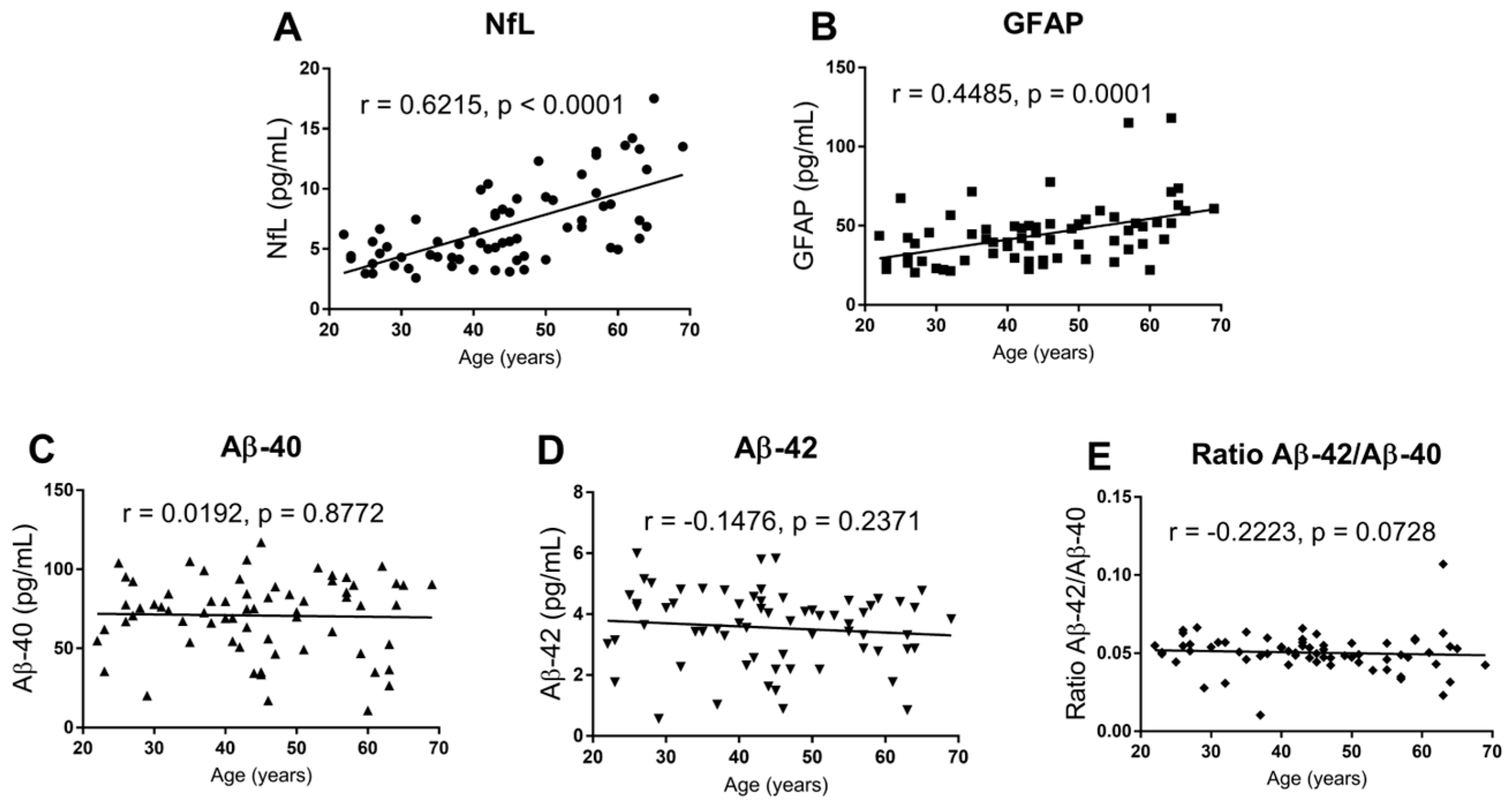
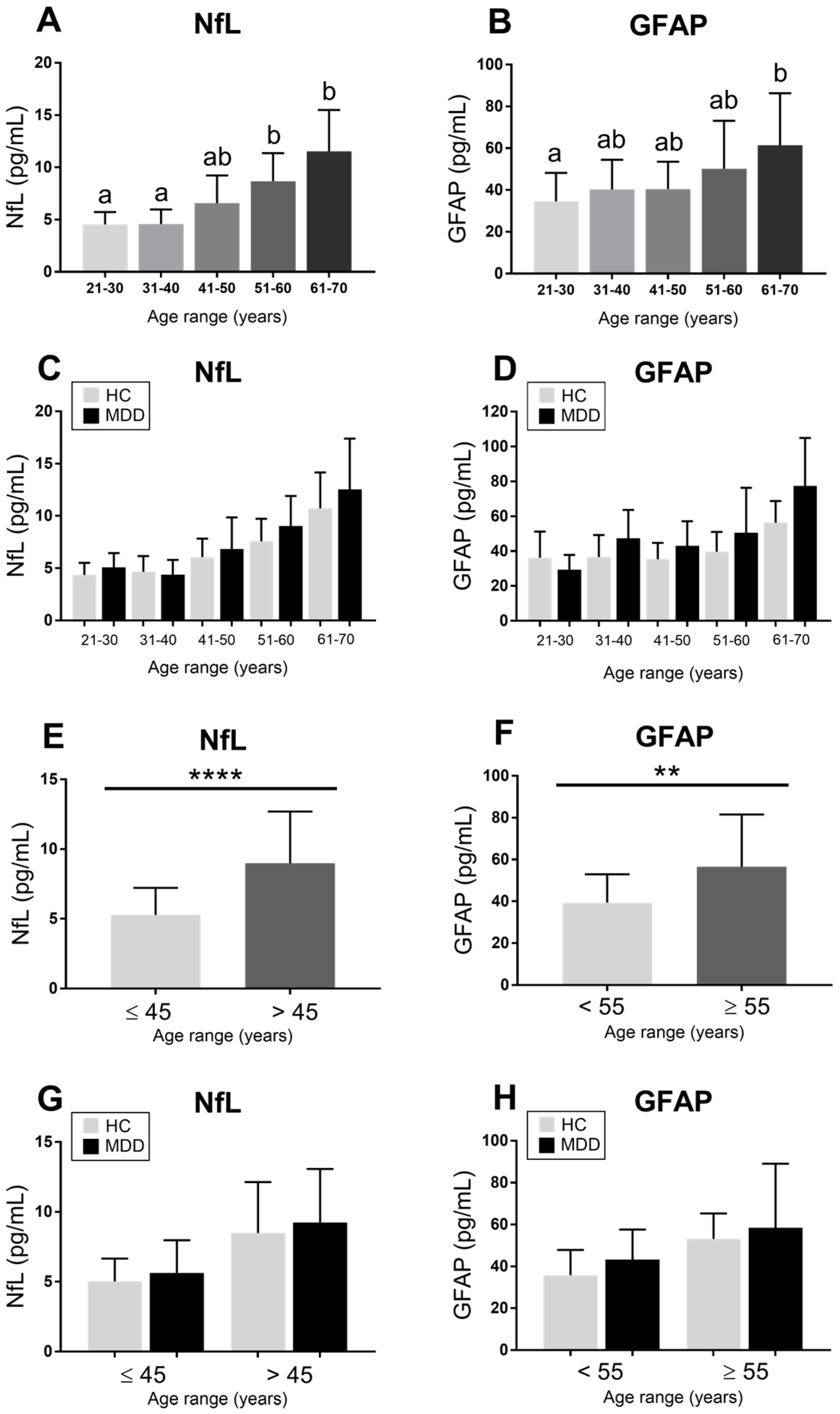
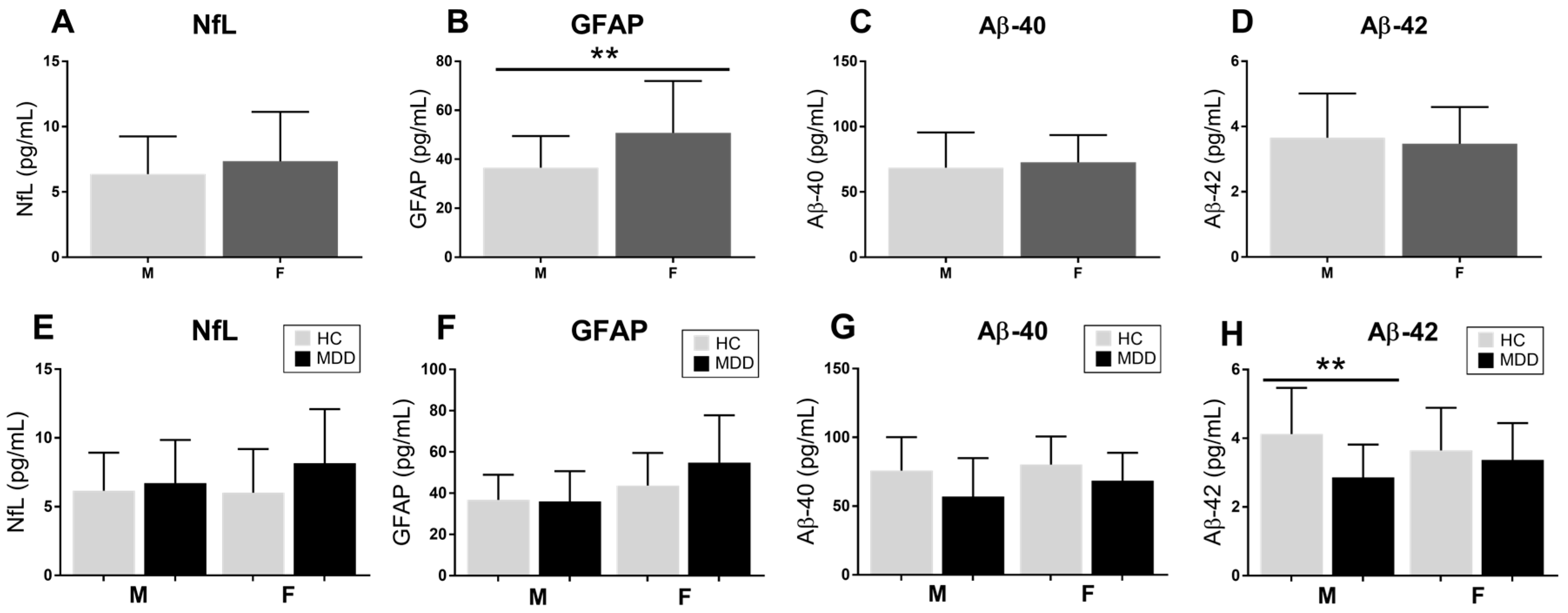
2.2. Age and Sex Distribution Correlations with Plasma Levels of NfL, GFAP, Aβ40, and Aβ42
2.3. Multivariable Logistic Regression Models for Age and Sex Distribution
2.4. Correlation Between Plasma Levels of Aβ40 and Aβ42 with Blood Parameters in MDD Patients
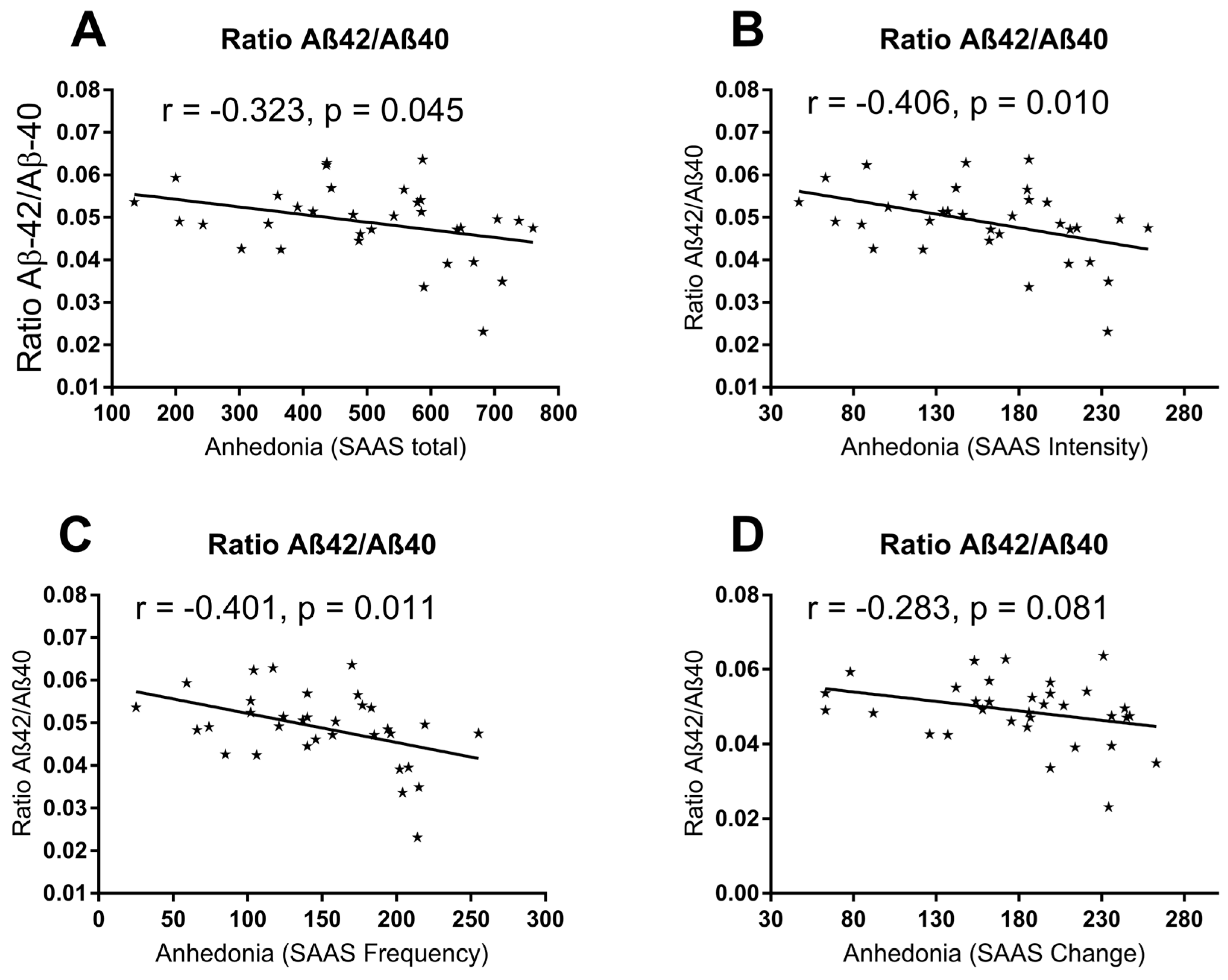
2.5. Correlation Between Psychometric and Cognitive Scales and Plasma Levels of NfL, GFAP, and Aβ40 and Aβ42 in MDD Patients
3. Discussion
4. Materials and Methods
4.1. MDD Patients and HC Controls
4.2. Blood Sample Extraction
4.3. Blood Measure Parameters
4.4. Ultrasensitive Protein Measurement
4.5. Psychometric and Cognitive Scales
4.6. Statistical Analysis
5. Conclusions
Supplementary Materials
Author Contributions
Funding
Institutional Review Board Statement
Informed Consent Statement
Data Availability Statement
Acknowledgments
Conflicts of Interest
Abbreviations
| Aβ | Amyloid-β peptides |
| AD | Alzheimer’s disease |
| CSF | Cerebrospinal fluid |
| FCSRT | Free and Cued Selective Reminding Test |
| GFAP | Glial fibrillary acidic protein |
| HDRS | Hamilton Depression Rating Scale |
| MDD | Major depressive disorder |
| MMSE | Mini-Mental State Examination |
| NfL | Neurofilament light chain |
| SAAS | Self-Assessment Anhedonia Scale |
| SIMOA | Single-molecule array |
References
- Santomauro, D.F.; Mantilla Herrera, A.M.; Shadid, J.; Zheng, P.; Ashbaugh, C.; Pigott, D.M.; Abbafati, C.; Adolph, C.; Amlag, J.O.; Aravkin, A.Y.; et al. Global prevalence and burden of depressive and anxiety disorders in 204 countries and territories in 2020 due to the COVID-19 pandemic. Lancet 2021, 398, 1700–1712. [Google Scholar] [CrossRef] [Scilit] [PubMed]
- Malhi, G.S.; Mann, J.J. Depression. Lancet 2018, 392, 2299–2312. [Google Scholar] [CrossRef] [Scilit]
- Ten Have, M.; Tuithof, M.; Van Dorsselaer, S.; De Beurs, D.; De Graaf, R.; Batelaan, N.M.; Penninx, B.W. How chronic are depressive and anxiety disorders? 9-year general population study using narrow and broad course outcomes. J. Affect. Disord. 2022, 317, 149–155. [Google Scholar] [CrossRef] [Scilit] [PubMed]
- Byers, A.L.; Yaffe, K. Depression and risk of developing dementia. Nat. Rev. Neurol. 2011, 7, 323–331. [Google Scholar] [CrossRef] [Scilit]
- Fernández Fernández, R.; Martín, J.I.; Antón, M.A.M. Depression as a Risk Factor for Dementia: A Meta-Analysis. J. Neuropsychiatry Clin. Neurosci. 2024, 36, 101–109. [Google Scholar] [CrossRef] [Scilit]
- Xu, E.H.; Wang, Y.; Shao, W.; Yang, J.; Wei, X.; Tong, X.; Hu, C.; Gong, E.; Feng, L.; Zhou, M.; et al. Effect of depression on risks of Alzheimer’s disease and vascular dementia: A real-world longitudinal study. Psychiatry Res. 2025, 352, 116716. [Google Scholar] [CrossRef] [Scilit]
- De Strooper, B.; Karran, E. The Cellular Phase of Alzheimer’s Disease. Cell 2016, 164, 603–615. [Google Scholar] [CrossRef] [Scilit]
- Jack, C.R.; Bennett, D.A.; Blennow, K.; Carrillo, M.C.; Dunn, B.; Haeberlein, S.B.; Holtzman, D.M.; Jagust, W.; Jessen, F.; Karlawish, J.; et al. NIA-AA Research Framework: Toward a biological definition of Alzheimer’s disease. Alzheimer’s Dement. 2018, 14, 535–562. [Google Scholar] [CrossRef] [Scilit]
- Leuzy, A.; Mattsson-Carlgren, N.; Palmqvist, S.; Janelidze, S.; Dage, J.L.; Hansson, O. Blood-based biomarkers for Alzheimer’s disease. EMBO Mol. Med. 2022, 14, e14408. [Google Scholar] [CrossRef] [Scilit] [PubMed]
- Graff-Radford, J.; Yong, K.X.X.; Apostolova, L.G.; Bouwman, F.H.; Carrillo, M.; Dickerson, B.C.; Rabinovici, G.D.; Schott, J.M.; Jones, D.T.; Murray, M.E. New insights into atypical Alzheimer’s disease in the era of biomarkers. Lancet Neurol. 2021, 20, 222–234. [Google Scholar] [CrossRef] [Scilit]
- Rajendran, K.; Krishnan, U.M. Biomarkers in Alzheimer’s disease. Clin. Chim. Acta 2024, 562, 119857. [Google Scholar] [CrossRef] [Scilit]
- Haass, C.; Selkoe, D.J. Soluble protein oligomers in neurodegeneration: Lessons from the Alzheimer’s amyloid β-peptide. Nat. Rev. Mol. Cell Biol. 2007, 8, 101–112. [Google Scholar] [CrossRef] [Scilit] [PubMed]
- Yuan, A.; Rao, M.V.; Veeranna Nixon, R.A. Neurofilaments and Neurofilament Proteins in Health and Disease. Cold Spring Harb. Perspect. Biol. 2017, 9, a018309. [Google Scholar] [CrossRef] [Scilit] [PubMed]
- Khalil, M.; Teunissen, C.E.; Otto, M.; Piehl, F.; Sormani, M.P.; Gattringer, T.; Barro, C.; Kappos, L.; Comabella, M.; Fazekas, F.; et al. Neurofilaments as biomarkers in neurological disorders. Nat. Rev. Neurol. 2018, 14, 577–589. [Google Scholar] [CrossRef] [Scilit]
- Reinés, A.; Cereseto, M.; Ferrero, A.; Bonavita, C.; Wikinski, S. Neuronal cytoskeletal alterations in an experimental model of depression. Neuroscience 2004, 129, 529–538. [Google Scholar] [CrossRef] [Scilit] [PubMed]
- Sofroniew, M.V.; Vinters, H.V. Astrocytes: Biology and pathology. Acta Neuropathol. 2010, 119, 7–35. [Google Scholar] [CrossRef] [Scilit]
- Reinés, A.; Cereseto, M.; Ferrero, A.; Sifonios, L.; Podestá, M.F.; Wikinski, S. Maintenance Treatment with Fluoxetine is Necessary to Sustain Normal Levels of Synaptic Markers in an Experimental Model of Depression: Correlation with Behavioral Response. Neuropsychopharmacology 2008, 33, 1896–1908. [Google Scholar] [CrossRef] [Scilit]
- Escartin, C.; Galea, E.; Lakatos, A.; O’Callaghan, J.P.; Petzold, G.C.; Serrano-Pozo, A.; Steinhäuser, C.; Volterra, A.; Carmignoto, G.; Agarwal, A.; et al. Reactive astrocyte nomenclature, definitions, and future directions. Nat. Neurosci. 2021, 24, 312–325. [Google Scholar] [CrossRef] [Scilit]
- Pereira, J.B.; Janelidze, S.; Smith, R.; Mattsson-Carlgren, N.; Palmqvist, S.; Teunissen, C.E.; Zetterberg, H.; Stomrud, E.; Ashton, N.J.; Blennow, K.; et al. Plasma GFAP is an early marker of amyloid-β but not tau pathology in Alzheimer’s disease. Brain 2021, 144, 3505–3516. [Google Scholar] [CrossRef] [Scilit]
- Banasr, M.; Duman, R.S. Glial Loss in the Prefrontal Cortex Is Sufficient to Induce Depressive-like Behaviors. Biol. Psychiatry 2008, 64, 863–870. [Google Scholar] [CrossRef] [Scilit]
- Miguel-Hidalgo, J.J.; Baucom, C.; Dilley, G.; Overholser, J.C.; Meltzer, H.Y.; Stockmeier, C.A.; Rajkowska, G. Glial fibrillary acidic protein immunoreactivity in the prefrontal cortex distinguishes younger from older adults in major depressive disorder. Biol. Psychiatry 2000, 48, 861–873. [Google Scholar] [CrossRef] [Scilit]
- Rajkowska, G.; Miguel-Hidalgo, J. Gliogenesis and Glial Pathology in Depression. CNS Neurol. Disord.-Drug Targets 2007, 6, 219–233. [Google Scholar] [CrossRef] [Scilit]
- Gudmundsson, P.; Skoog, I.; Waern, M.; Blennow, K.; Zetterberg, H.; Rosengren, L.; Gustafson, D. Is there a CSF biomarker profile related to depression in elderly women? Psychiatry Res. 2010, 176, 174–178. [Google Scholar] [CrossRef] [Scilit]
- Eratne, D.; Loi, S.M.; Walia, N.; Farrand, S.; Li, Q.X.; Varghese, S.; Walterfang, M.; Evans, A.; Mocellin, R.; Dhiman, K.; et al. A pilot study of the utility of cerebrospinal fluid neurofilament light chain in differentiating neurodegenerative from psychiatric disorders: A ‘C-reactive protein’ for psychiatrists and neurologists? Aust. N. Z. J. Psychiatry 2020, 54, 57–67. [Google Scholar] [CrossRef] [Scilit]
- Rosengren, L.E.; Karlsson, J.; Karlsson, J.; Persson, L.I.; Wikkelsø, C. Patients with Amyotrophic Lateral Sclerosis and Other Neurodegenerative Diseases Have Increased Levels of Neurofilament Protein in CSF. J. Neurochem. 1996, 67, 2013–2018. [Google Scholar] [CrossRef] [Scilit]
- Malik, S.; Singh, R.; Arora, G.; Dangol, A.; Goyal, S. Biomarkers of Major Depressive Disorder: Knowing is Half the Battle. Clin. Psychopharmacol. Neurosci. 2021, 19, 12–25. [Google Scholar] [CrossRef] [Scilit] [PubMed]
- Hampel, H.; O’Bryant, S.E.; Molinuevo, J.L.; Zetterberg, H.; Masters, C.L.; Lista, S.; Kiddle, S.J.; Batrla, R.; Blennow, K. Blood-based biomarkers for Alzheimer disease: Mapping the road to the clinic. Nat. Rev. Neurol. 2018, 14, 639–652. [Google Scholar] [CrossRef] [Scilit] [PubMed]
- Bavato, F.; Barro, C.; Schnider, L.K.; Simrén, J.; Zetterberg, H.; Seifritz, E.; Quednow, B.B. Introducing neurofilament light chain measure in psychiatry: Current evidence, opportunities, and pitfalls. Mol. Psychiatry 2024, 29, 2543–2559. [Google Scholar] [CrossRef] [Scilit] [PubMed]
- Ashton, N.J.; Janelidze, S.; Al Khleifat, A.; Leuzy, A.; Van Der Ende, E.L.; Karikari, T.K.; Benedet, A.L.; Pascoal, T.A.; Lleó, A.; Parnetti, L.; et al. A multicentre validation study of the diagnostic value of plasma neurofilament light. Nat. Commun. 2021, 12, 3400. [Google Scholar] [CrossRef] [Scilit] [PubMed]
- Rodero-Romero, A.; Monreal, E.; Sainz-Amo, R.; García Domínguez, J.M.; Villarrubia, N.; Veiga-González, J.L.; Fernández-Velasco, J.I.; Goicochea-Briceño, H.; Rodríguez-Jorge, F.; de la Maza, S.S.; et al. Establishing Normal Serum Values of Neurofilament Light Chains and Glial Fibrillary Acidic Protein Considering the Effects of Age and Other Demographic Factors in Healthy Adults. Int. J. Mol. Sci. 2024, 25, 7808. [Google Scholar] [CrossRef] [Scilit]
- Arslan, B.; Zetterberg, H.; Ashton, N.J. Blood-based biomarkers in Alzheimer’s disease—Moving towards a new era of diagnostics. Clin. Chem. Lab. Med. 2024, 62, 1063–1069. [Google Scholar] [CrossRef] [Scilit] [PubMed]
- Cheng, Y.; Tian, D.Y.; Wang, Y.J. Peripheral clearance of brain-derived Aβ in Alzheimer’s disease: Pathophysiology and therapeutic perspectives. Transl. Neurodegener. 2020, 9, 16. [Google Scholar] [CrossRef] [Scilit] [PubMed]
- Andreasson, U.; Blennow, K.; Zetterberg, H. Update on ultrasensitive technologies to facilitate research on blood biomarkers for central nervous system disorders. Alzheimer’s Dement. Diagn. Assess. Dis. Monit. 2016, 3, 98–102. [Google Scholar] [CrossRef] [Scilit]
- Dong, R.; Yi, N.; Jiang, D. Advances in single molecule arrays (SIMOA) for ultra-sensitive detection of biomolecules. Talanta 2024, 270, 125529. [Google Scholar] [CrossRef] [Scilit] [PubMed]
- Wei, Y.C.; Kung, Y.C.; Lin, C.; Yeh, C.H.; Chen, P.Y.; Huang, W.Y.; Shyu, Y.-C.; Lin, C.-P.; Chen, C.-K. Differential neuropsychiatric associations of plasma biomarkers in older adults with major depression and subjective cognitive decline. Transl. Psychiatry 2024, 14, 333. [Google Scholar] [CrossRef] [Scilit]
- Wang, M.J.; Yi, S.; Han, J.-Y.; Park, S.Y.; Jang, J.-W.; Chun, I.K.; Kim, S.E.; Lee, B.S.; Kim, G.J.; Yu, J.S.; et al. Oligomeric forms of amyloid-β protein in plasma as a potential blood-based biomarker for Alzheimer’s disease. Alzheimer’s Res. Ther. 2017, 9, 98. [Google Scholar] [CrossRef] [Scilit]
- Agís-Balboa, R.C.; Pinheiro, P.S.; Rebola, N.; Kerimoglu, C.; Benito, E.; Gertig, M.; Bahari-Javan, S.; Jain, G.; Burkhardt, S.; Delalle, I.; et al. Formin 2 links neuropsychiatric phenotypes at young age to an increased risk for dementia. EMBO J. 2017, 36, 2815–2828. [Google Scholar] [CrossRef] [Scilit]
- Baba, H.; Nakano, Y.; Maeshima, H.; Satomura, E.; Kita, Y.; Suzuki, T.; Arai, H. Metabolism of amyloid-β protein may be affected in depression. J. Clin. Psychiatry 2012, 73, 115–120. [Google Scholar] [CrossRef] [Scilit]
- Dos Santos, H.M.; Bertollo, A.G.; Mingoti, M.E.D.; Grolli, R.E.; Kreuz, K.M.; Ignácio, Z.M. Dementia and depression: Biological connections with amyloid β protein. Basic Clin. Pharmacol. Toxicol. 2024, 134, 563–573. [Google Scholar] [CrossRef] [Scilit]
- Rapp, M.A.; Schnaider-Beeri, M.; Grossman, H.T.; Sano, M.; Perl, D.P.; Purohit, D.P.; Gorman, J.M.; Haroutunian, V. Increased hippocampal plaques and tangles in patients with Alzheimer disease with a lifetime history of major depression. Arch. Gen. Psychiatry 2006, 63, 161–167. [Google Scholar] [CrossRef] [Scilit]
- Pérez-Grijalba, V.; Romero, J.; Pesini, P.; Sarasa, L.; Monleón, I.; San-José, I.; Arbizu, J.; Martínez-Lage, P.; Munuera, J.; Ruiz, A.; et al. Plasma Aβ42/40 Ratio Detects Early Stages of Alzheimer’s Disease and Correlates with CSF and Neuroimaging Biomarkers in the AB255 Study. J. Prev. Alzheimer’s Dis. 2019, 6, 34–41. [Google Scholar] [CrossRef] [Scilit] [PubMed]
- Kubota, M.; Bun, S.; Takahata, K.; Kurose, S.; Momota, Y.; Iwabuchi, Y.; Tezuka, T.; Tabuchi, H.; Seki, M.; Yamamoto, Y.; et al. Plasma biomarkers for early detection of Alzheimer’s disease: A cross-sectional study in a Japanese cohort. Alzheimer’s Res. Ther. 2025, 17, 131. [Google Scholar] [CrossRef] [Scilit] [PubMed]
- Niimi, Y.; Janelidze, S.; Sato, K.; Tomita, N.; Tsukamoto, T.; Kato, T.; Yoshiyama, K.; Kowa, H.; Iwata, A.; Ihara, R.; et al. Combining plasma Aβ and p-tau217 improves detection of brain amyloid in non-demented elderly. Alzheimer’s Res. Ther. 2024, 16, 115. [Google Scholar] [CrossRef] [Scilit] [PubMed]
- O’Bryant, S.E.; Gupta, V.; Henriksen, K.; Edwards, M.; Jeromin, A.; Lista, S.; Bazenet, C.; Soares, H.; Lovestone, S.; Hampel, H.; et al. Guidelines for the standardization of preanalytic variables for blood-based biomarker studies in Alzheimer’s disease research. Alzheimer’s Dement. 2015, 11, 549–560. [Google Scholar] [CrossRef] [Scilit]
- Zetterberg, H.; Mörtberg, E.; Song, L.; Chang, L.; Provuncher, G.K.; Patel, P.P.; Ferrell, E.; Fournier, D.R.; Kan, C.W.; Campbell, T.G.; et al. Hypoxia Due to Cardiac Arrest Induces a Time-Dependent Increase in Serum Amyloid β Levels in Humans. PLoS ONE 2011, 6, e28263. [Google Scholar] [CrossRef] [Scilit]
- Xu, C.; Zhao, L.; Dong, C. A Review of Application of Aβ42/40 Ratio in Diagnosis and Prognosis of Alzheimer’s Disease. J. Alzheimer’s Dis. 2022, 90, 495–512. [Google Scholar] [CrossRef] [Scilit]
- Hansson, O.; Zetterberg, H.; Vanmechelen, E.; Vanderstichele, H.; Andreasson, U.; Londos, E.; Wallin, A.; Minthon, L.; Blennow, K. Evaluation of plasma Aβ40 and Aβ42 as predictors of conversion to Alzheimer’s disease in patients with mild cognitive impairment. Neurobiol. Aging 2010, 31, 357–367. [Google Scholar] [CrossRef] [Scilit]
- Sun, X.; Chiu, C.C.; Liebson, E.; Crivello, N.A.; Wang, L.; Claunch, J.; Folstein, M.; Rosenberg, I.; Mwamburi, D.M.; Peter, I.; et al. Depression and plasma amyloid beta peptides in the elderly with and without the apolipoprotein E4 allele. Alzheimer Dis. Assoc. Disord. 2009, 23, 238–244. [Google Scholar] [CrossRef] [Scilit]
- Twait, E.L.; Wu, J.H.; Kamarioti, M.; Basten, M.; van der Flier, W.M.; Gerritsen, L.; Geerlings, M.I. Association of amyloid-beta with depression or depressive symptoms in older adults without dementia: A systematic review and meta-analysis. Transl. Psychiatry 2024, 14, 25. [Google Scholar] [CrossRef] [Scilit]
- Byun, M.S.; Choe, Y.M.; Sohn, B.K.; Yi, D.; Han, J.Y.; Park, J.; Choi, H.J.; Baek, H.; Lee, J.H.; Kim, H.J.; et al. Association of Cerebral Amyloidosis, Blood Pressure, and Neuronal Injury with Late-Life Onset Depression. Front. Aging Neurosci. 2016, 8, 236. [Google Scholar] [CrossRef] [Scilit]
- Pomara, N.; Bruno, D.; Plaska, C.R.; Ramos-Cejudo, J.; Osorio, R.S.; Pillai, A.; Imbimbo, B.P.; Zetterberg, H.; Blennow, K. Plasma Amyloid-β dynamics in late-life major depression: A longitudinal study. Transl. Psychiatry 2022, 12, 301. [Google Scholar] [CrossRef] [Scilit]
- Direk, N.; Schrijvers, E.M.C.; de Bruijn, R.F.A.G.; Mirza, S.; Hofman, A.; Ikram, M.A.; Tiemeier, H. Plasma amyloid β, depression, and dementia in community-dwelling elderly. J. Psychiatr. Res. 2013, 47, 479–485. [Google Scholar] [CrossRef] [Scilit] [PubMed]
- Moon, Y.S.; Kang, S.H.; No, H.J.; Won, M.H.; Ki, S.B.; Lee, S.K.; Kim, D.H. The correlation of plasma Aβ42 levels, depressive symptoms, and cognitive function in the Korean elderly. Prog. Neuropsychopharmacol. Biol. Psychiatry 2011, 35, 1603–1606. [Google Scholar] [CrossRef] [Scilit]
- Li, Y.; Schindler, S.E.; Bollinger, J.G.; Ovod, V.; Mawuenyega, K.G.; Weiner, M.W.; Shaw, L.M.; Masters, C.L.; Fowler, C.J.; Trojanowski, J.Q.; et al. Validation of Plasma Amyloid-β 42/40 for Detecting Alzheimer Disease Amyloid Plaques. Neurology 2022, 98, e688–e699. [Google Scholar] [CrossRef] [Scilit] [PubMed]
- Schindler, S.E.; Bollinger, J.G.; Ovod, V.; Mawuenyega, K.G.; Li, Y.; Gordon, B.A.; Holtzman, D.M.; Morris, J.C.; Benzinger, T.L.; Xiong, C.; et al. High-precision plasma β-amyloid 42/40 predicts current and future brain amyloidosis. Neurology 2019, 93, e1647–e1659. [Google Scholar] [CrossRef] [Scilit] [PubMed]
- Turner, M.R.; Thompson, A.G.; Teunissen, C.E. Blood level of neurofilament light chain as a biomarker for neurological disorders. BMJ Med. 2025, 4, e000958. [Google Scholar] [CrossRef] [Scilit]
- Wang, X.; Shi, Z.; Qiu, Y.; Sun, D.; Zhou, H. Peripheral GFAP and NfL as early biomarkers for dementia: Longitudinal insights from the UK Biobank. BMC Med. 2024, 22, 192. [Google Scholar] [CrossRef] [Scilit]
- Steinacker, P.; Al Shweiki, M.R.; Oeckl, P.; Graf, H.; Ludolph, A.C.; Schönfeldt-Lecuona, C.; Otto, M. Glial fibrillary acidic protein as blood biomarker for differential diagnosis and severity of major depressive disorder. J. Psychiatr. Res. 2021, 144, 54–58. [Google Scholar] [CrossRef] [Scilit]
- Eratne, D.; Kang, M.J.Y.; Lewis, C.; Dang, C.; Malpas, C.; Ooi, S.; Brodtmann, A.; Darby, D.; Zetterberg, H.; Blennow, K.; et al. Plasma neurofilament light outperforms glial fibrillary acidic protein in differentiating behavioural variant frontotemporal dementia from primary psychiatric disorders. J. Neurol. Sci. 2024, 467, 123291. [Google Scholar] [CrossRef] [Scilit]
- Eratne, D.; Kang, M.; Malpas, C.; Simpson-Yap, S.; Lewis, C.; Dang, C.; Grewal, J.; Coe, A.; Dobson, H.; Keem, M.; et al. Plasma neurofilament light in behavioural variant frontotemporal dementia compared to mood and psychotic disorders. Aust. N. Z. J. Psychiatry 2024, 58, 70–81. [Google Scholar] [CrossRef] [Scilit]
- Hviid, C.V.B.; Benros, M.E.; Krogh, J.; Nordentoft, M.; Christensen, S.H. Serum glial fibrillary acidic protein and neurofilament light chain in treatment-naïve patients with unipolar depression. J. Affect. Disord. 2023, 338, 341–348. [Google Scholar] [CrossRef] [Scilit]
- Rabl, M.; Zullo, L.; Lewczuk, P.; Kornhuber, J.; Karikari, T.K.; Blennow, K.; Zetterberg, H.; Bavato, F.; Quednow, B.B.; Seifritz, E.; et al. Plasma neurofilament light, glial fibrillary acid protein, and phosphorylated tau 181 as biomarkers for neuropsychiatric symptoms and related clinical disease progression. Alzheimer’s Res. Ther. 2024, 16, 165. [Google Scholar] [CrossRef] [Scilit]
- Sigström, R.; Göteson, A.; Joas, E.; Pålsson, E.; Liberg, B.; Nordenskjöld, A.; Blennow, K.; Zetterberg, H.; Landén, M. Blood biomarkers of neuronal injury and astrocytic reactivity in electroconvulsive therapy. Mol. Psychiatry 2025, 30, 1601–1609. [Google Scholar] [CrossRef] [Scilit]
- Zhang, J.; Liu, D.; Xiang, J.; Yang, M. Combining Glial Fibrillary Acidic Protein and Neurofilament Light Chain for the Diagnosis of Major Depressive Disorder. Anal. Chem. 2024, 96, 1693–1699. [Google Scholar] [CrossRef] [Scilit]
- Fernández-Pereira, C.; Fernández-Ceballos Mde, L.Á.; Olivares, J.M.; Prieto-González, J.M.; Agís-Balboa, R.C. Neurofilament light chain plasma levels in major depressive disorder: A brief research report. Front. Psychiatry 2024, 15, 1476248. [Google Scholar] [CrossRef] [Scilit]
- Besse, M.; Belz, M.; Folsche, T.; Vogelgsang, J.; Methfessel, I.; Steinacker, P.; Otto, M.; Wiltfang, J.; Zilles, D. Serum neurofilament light chain (NFL) remains unchanged during electroconvulsive therapy. World J. Biol. Psychiatry 2020, 21, 148–154. [Google Scholar] [CrossRef] [Scilit]
- Huang, M.C.; Chen, C.H.; Liu, T.H.; Chung, A.N.; Liu, Y.L.; Quednow, B.B.; Bavato, F. Comorbidity of ketamine dependence with major depressive disorder increases the vulnerability to neuroaxonal pathology. J. Psychiatr. Res. 2023, 158, 360–364. [Google Scholar] [CrossRef] [Scilit] [PubMed]
- Levchuk, L.A.; Roschina, O.V.; Mikhalitskaya, E.V.; Epimakhova, E.V.; Simutkin, G.G.; Bokhan, N.A.; Ivanova, S.A. Serum Levels of S100B Protein and Myelin Basic Protein as a Potential Biomarkers of Recurrent Depressive Disorders. J. Pers. Med. 2023, 13, 1423. [Google Scholar] [CrossRef] [Scilit] [PubMed]
- Wallensten, J.; Mobarrez, F.; Åsberg, M.; Borg, K.; Beser, A.; Wilczek, A.; Nager, A. Plasma levels of S100B and neurofilament light chain protein in stress-related mental disorders. Sci. Rep. 2022, 12, 8339. [Google Scholar] [CrossRef] [Scilit] [PubMed]
- Bai, Y.M.; Liu, Y.L.; Kuo, H.W.; Tsai, S.J.; Hsu, J.W.; Huang, K.L.; Tu, P.-C.; Chen, M.-H. Procollagen type 1 N-terminal propeptide, neurofilament light chain, proinflammatory cytokines, and cognitive function in bipolar and major depressive disorders: An exploratory study of brain- bone axis and systemic inflammation. J. Psychiatr. Res. 2023, 158, 403–408. [Google Scholar] [CrossRef] [Scilit]
- Bavato, F.; Cathomas, F.; Klaus, F.; Gütter, K.; Barro, C.; Maceski, A.; Seifritz, E.; Kuhle, J.; Kaiser, S.; Quednow, B.B. Altered neuroaxonal integrity in schizophrenia and major depressive disorder assessed with neurofilament light chain in serum. J. Psychiatr. Res. 2021, 140, 141–148. [Google Scholar] [CrossRef] [Scilit]
- Chen, M.H.; Liu, Y.L.; Kuo, H.W.; Tsai, S.J.; Hsu, J.W.; Huang, K.L.; Tu, P.-C.; Bai, Y.-M. Neurofilament Light Chain Is a Novel Biomarker for Major Depression and Related Executive Dysfunction. Int. J. Neuropsychopharmacol. 2022, 25, 99–105. [Google Scholar] [CrossRef] [Scilit]
- Jiang, L.; Shen, Z.; Cheng, Y.; Lu, J.; He, B.; Xu, J.; Jiang, H.; Liu, F.; Li, N.; Lu, Y.; et al. Elevated serum neurofilament levels in young first-episode and medication-naïve major depressive disorder patients with alterative white matter integrity. Psychiatry Res. Neuroimaging 2021, 317, 111351. [Google Scholar] [CrossRef] [Scilit]
- Light, V.; Jones, S.L.; Rahme, E.; Rousseau, K.; de Boer, S.; Vermunt, L.; Soltaninejad, M.; Teunissen, C.; Pijnenburg, Y.; Ducharme, S.; et al. Clinical Accuracy of Serum Neurofilament Light to Differentiate Frontotemporal Dementia from Primary Psychiatric Disorders is Age-Dependent. Am. J. Geriatr. Psychiatry 2024, 32, 988–1001. [Google Scholar] [CrossRef] [Scilit] [PubMed]
- Ramezani, M.; Simani, L.; Fard, M.G.; Abbaszadeh, F.; Shadnia, S. Increased levels of neurofilament light chain in suicide attempters’ serum. Transl. Neurosci. 2022, 13, 218–223. [Google Scholar] [CrossRef] [Scilit] [PubMed]
- Li, K.; Wang, K.; Xu, S.X.; Xie, X.H.; Tang, Y.; Zhang, L.; Liu, Z. In vivo evidence of increased vascular endothelial growth factor in patients with major depressive disorder. J. Affect. Disord. 2025, 368, 151–159. [Google Scholar] [CrossRef] [Scilit] [PubMed]
- He, P.; Lu, X.; Zhong, M.; Weng, H.; Wang, J.; Zhang, X.; Jiang, C.; Geng, F.; Shi, Y.; Zhang, G. Plasma alpha-trypsin inhibitor heavy chain 4 as an age-specific biomarker in the diagnosis and treatment of major depressive disorder. Front. Psychiatry 2024, 15, 1449202. [Google Scholar] [CrossRef] [Scilit]
- Liu, J.; Guan, J.; Xiong, J.; Wang, F. Effects of Transcranial Magnetic Stimulation Combined with Sertraline on Cognitive Level, Inflammatory Response and Neurological Function in Depressive Disorder Patients with Non-suicidal Self-injury Behavior. Actas Esp. Psiquiatr. 2024, 52, 28–36. [Google Scholar]
- Kim, K.Y.; Shin, K.Y.; Chang, K.A. GFAP as a Potential Biomarker for Alzheimer’s Disease: A Systematic Review and Meta-Analysis. Cells 2023, 12, 1309. [Google Scholar] [CrossRef] [Scilit]
- Peretti, D.E.; Boccalini, C.; Ribaldi, F.; Scheffler, M.; Marizzoni, M.; Ashton, N.J.; Zetterberg, H.; Blennow, K.; Frisoni, G.B.; Garibotto, V. Association of glial fibrillary acid protein, Alzheimer’s disease pathology and cognitive decline. Brain 2024, 147, 4094–4104. [Google Scholar]
- Trelle, A.N.; Young, C.B.; Vossler, H.; Ramos Benitez, J.; Cody, K.A.; Mendiola, J.H.; Swarovski, M.S.; Le Guen, Y.; Feinstein, I.; Butler, R.R.; et al. Plasma Aβ42/Aβ40 is sensitive to early cerebral amyloid accumulation and predicts risk of cognitive decline across the Alzheimer’s disease spectrum. Alzheimer’s Dement. 2025, 21, e14442. [Google Scholar] [CrossRef] [Scilit]
- Zhou, S.; Li, P.; Lyu, X.; Lai, X.; Liu, Z.; Zhou, J.; Liu, F.; Tao, Y.; Zhang, M.; Yu, X.; et al. Efficacy and dose-response relationships of antidepressants in the acute treatment of major depressive disorders: A systematic review and network meta-analysis. Chin. Med. J. 2025, 138, 1433–1438. [Google Scholar] [CrossRef] [Scilit]
- Grande, G.; Vanacore, N.; Vetrano, D.L.; Cova, I.; Rizzuto, D.; Mayer, F.; Maggiore, L.; Ghiretti, R.; Cucumo, V.; Mariani, C.; et al. Free and cued selective reminding test predicts progression to Alzheimer’s disease in people with mild cognitive impairment. Neurol. Sci. 2018, 39, 1867–1875. [Google Scholar] [CrossRef] [Scilit]
- Hamilton, M. A rating scale for depression. J. Neurol. Neurosurg. Psychiatry 1960, 23, 56–62. [Google Scholar] [CrossRef] [Scilit]
- Olivares, J.M.; Berrios, G.E.; Bousoño, M. Self Assessment Anhedonia Scale (SAAS). Neurol. Psychiatry Brain Res. 2005, 12, 121–134. [Google Scholar] [CrossRef] [Scilit]
- Folstein, M.F.; Folstein, S.E.; McHugh, P.R. “Mini-mental state”. A practical method for grading the cognitive state of patients for the clinician. J. Psychiatr. Res. 1975, 12, 189–198. [Google Scholar] [CrossRef] [Scilit] [PubMed]
- Grober, E.; Buschke, H.; Crystal, H.; Bang, S.; Dresner, R. Screening for dementia by memory testing. Neurology 1988, 38, 900–903. [Google Scholar] [CrossRef] [Scilit] [PubMed]



| Variables | HC (N = 32) | MDD (N = 35) | p-Value |
|---|---|---|---|
| Sex (F/M) | 13/19 | 23/12 | 0.040 a |
| Age (years) | 40.97 ± 13.37 | 47.80 ± 11.12 | 0.026 b |
| NfL (pg/mL) | 6.10 ± 2.89 | 7.65 ± 3.69 | 0.088 c |
| GFAP (pg/mL) | 39.61 ± 13.94 | 48.44 ± 22.16 | 0.112 c |
| Aβ40 (pg/mL) | 77.61 ± 22.57 | 64.55 ± 23.52 | 0.028 c |
| Aβ42 (pg/mL) | 3.92 ± 1.31 | 3.20 ± 1.05 | 0.004 c |
| Ratio Aβ42/Aβ40 | 0.0519 ± 0.0156 | 0.0490 ± 0.0085 | 0.184 c |
| Blood Parameters | Mean ± SD | Range | Aβ40 (pg/mL) | Aβ42 (pg/mL) | ||
|---|---|---|---|---|---|---|
| r | p | r | p | |||
| Erythrocytes (106/µL) | 4.56 ± 0.60 | [4.0–5.2] | −0.416 | 0.022 | −0.533 | 0.002 |
| Monocytes (103/µL) | 0.39 ± 0.07 | [0.2–1.0] | 0.150 | 0.428 | 0.159 | 0.401 |
| Neutrophils (103/µL) | 3.75 ± 1.33 | [1.5–7.5] | −0.132 | 0.486 | −0.069 | 0.718 |
| Platelets (103/µL) | 232.67 ± 76.56 | [130.0–450.0] | 0.059 | 0.758 | 0.230 | 0.221 |
| Albumin (g/dL) | 3.98 ± 0.45 | [3.4–5.0] | −0.188 | 0.321 | −0.208 | 0.271 |
| Creatinine (mg/dL) | 0.72 ± 0.12 | [0.5–1.1] | −0.039 | 0.837 | −0.176 | 0.353 |
| AST/ALT | 0.9 ± 0.39 | [0.7–1.3] | 0.205 | 0.286 | 0.139 | 0.472 |
| Psychometric Scales | Mean ± SD | |
|---|---|---|
| HDRS | 22.94 ± 5.96 | |
| MMSE | 23.83 ± 6.87 | |
| Intensity | 160.6 ± 55.9 | |
| Frequency | 150.0 ± 54.1 | |
| SAAS | Change | 182.4 ± 53.7 |
| Total | 502.7 ± 165.1 | |
| Identification | 15.12 ± 1.09 | |
| TFR | 33.73 ± 7.22 | |
| FCSRT | TR | 38.62 ± 7.45 |
| DFR | 12.60 ± 2.61 | |
| DTR | 14.67 ± 1.58 | |
| Memory Scale | NfL | GFAP | Aβ40 | Aβ42 | |||||
|---|---|---|---|---|---|---|---|---|---|
| (pg/mL) | (pg/mL) | (pg/mL) | (pg/mL) | ||||||
| r | p | r | p | r | p | r | p | ||
| FCSRT | ID | 0.011 | 0.951 | −0.385 * | 0.012 | −0.162 | 0.306 | −0.176 | 0.271 |
| TFR | 0.159 | 0.370 | −0.275 | 0.078 | −0.251 | 0.109 | −0.114 | 0.478 | |
| TR | 0.028 | 0.874 | −0.358 * | 0.020 | −0.177 | 0.262 | −0.178 | 0.266 | |
| DFR | 0.226 | 0.200 | −0.177 | 0.262 | −0.097 | 0.543 | 0.082 | 0.610 | |
| DTR | −0.054 | 0.761 | −0.339 * | 0.028 | −0.243 | 0.121 | −0.102 | 0.524 | |
Disclaimer/Publisher’s Note: The statements, opinions and data contained in all publications are solely those of the individual author(s) and contributor(s) and not of MDPI and/or the editor(s). MDPI and/or the editor(s) disclaim responsibility for any injury to people or property resulting from any ideas, methods, instructions or products referred to in the content. |
© 2026 by the authors. Licensee MDPI, Basel, Switzerland. This article is an open access article distributed under the terms and conditions of the Creative Commons Attribution (CC BY) license.
Share and Cite
Fernández-Ceballos, M.d.l.Á.; Vidal-Nogueira, L.; Fernández-Pereira, C.; Fortes-González, P.; Salgado-Barreira, Á.; Ledo-Matos, E.; Santana-Muriel, E.; Rivera-Baltanás, T.; Olivares, J.M.; Veiga, C.; et al. Reduced Plasma Aβ Peptides but Stable NfL and GFAP in Major Depressive Disorder. Int. J. Mol. Sci. 2026, 27, 1474. https://doi.org/10.3390/ijms27031474
Fernández-Ceballos MdlÁ, Vidal-Nogueira L, Fernández-Pereira C, Fortes-González P, Salgado-Barreira Á, Ledo-Matos E, Santana-Muriel E, Rivera-Baltanás T, Olivares JM, Veiga C, et al. Reduced Plasma Aβ Peptides but Stable NfL and GFAP in Major Depressive Disorder. International Journal of Molecular Sciences. 2026; 27(3):1474. https://doi.org/10.3390/ijms27031474
Chicago/Turabian StyleFernández-Ceballos, María de los Ángeles, Lara Vidal-Nogueira, Carlos Fernández-Pereira, Pedro Fortes-González, Ángel Salgado-Barreira, Estrella Ledo-Matos, Elena Santana-Muriel, Tania Rivera-Baltanás, José Manuel Olivares, César Veiga, and et al. 2026. "Reduced Plasma Aβ Peptides but Stable NfL and GFAP in Major Depressive Disorder" International Journal of Molecular Sciences 27, no. 3: 1474. https://doi.org/10.3390/ijms27031474
APA StyleFernández-Ceballos, M. d. l. Á., Vidal-Nogueira, L., Fernández-Pereira, C., Fortes-González, P., Salgado-Barreira, Á., Ledo-Matos, E., Santana-Muriel, E., Rivera-Baltanás, T., Olivares, J. M., Veiga, C., Prieto-González, J. M., & Agís-Balboa, R. C. (2026). Reduced Plasma Aβ Peptides but Stable NfL and GFAP in Major Depressive Disorder. International Journal of Molecular Sciences, 27(3), 1474. https://doi.org/10.3390/ijms27031474