The Role of Vitamins and Micronutrients in the Prevention of Melanoma: A Review of Current Evidence

 , , , , , ,
Abstract
1. Introduction
2. Search Strategy and Aim of the Paper
- Original articles, reviews, meta-analyses, and clinical trials published in peer-reviewed journals;
- Studies addressing molecular mechanisms, clinical correlations, or public health implications;
- English-language publications.
- Non-melanoma skin cancers, unless explicitly related to shared mechanisms;
- Studies lacking relevance to the preventive or protective roles of micronutrients;
- In vitro studies without translational implications.
3. Oxidative Stress and UV-Induced DNA Damage in Melanomagenesis
4. Vitamins and Melanoma
4.1. Vitamin D
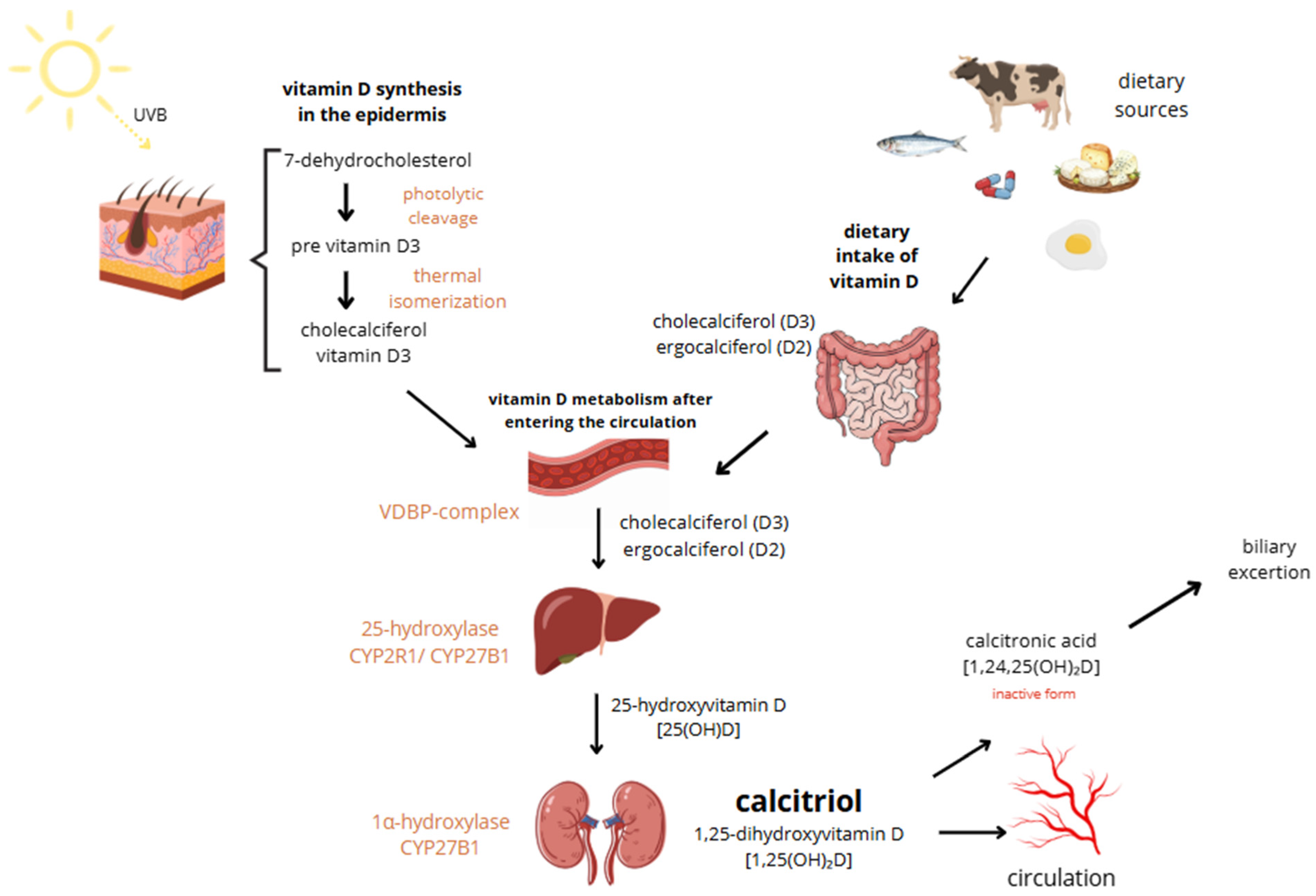
4.1.1. Sources, Skin Synthesis, and Metabolism
4.1.2. Immunomodulatory Effects
4.1.3. Evidence Linking Vitamin D Levels and Melanoma Risk
4.1.4. VDR Polymorphisms and Skin Cancer Susceptibility
4.1.5. Supplementation and Sun Exposure Balance
4.2. Vitamin A and Carotenoids
4.2.1. Cellular Mechanisms of Action
4.2.2. Role in Skin Differentiation and Immune Modulation
4.3. Vitamin C
4.3.1. Sources and Metabolism
4.3.2. Antioxidant and Immunomodulatory Potential in Melanoma
4.3.3. Synergistic Effects with Other Antioxidants
4.4. Vitamin E (Tocopherols and Tocotrienols)
4.4.1. Antioxidant Functions and Photoprotection
4.4.2. Dietary Intake and Supplementation
4.5. Other Essential Vitamins: Evidence Gaps in Melanoma
5. Trace Elements and Melanoma Risk
5.1. Selenium
5.2. Zinc
5.3. Copper
5.4. Other Trace Elements
6. Other Dietary Bioactives Relevant to Melanoma Prevention
6.1. Omega-3 Polyunsaturated Fatty Acids (PUFAs)
6.2. Polyphenols
7. Clinical and Public Health Implications
7.1. Potential for Micronutrient-Based Preventive Strategies
7.2. Considerations for High-Risk Populations
7.3. Caution in Supplementation
7.4. Integration into Broader Preventive Frameworks
8. Risk, Limitations and Future Directions
9. Summary and Conclusions
Author Contributions
Funding
Institutional Review Board Statement
Informed Consent Statement
Data Availability Statement
Conflicts of Interest
Abbreviations
| 1O2 | Singlet oxygen |
| 1,25(OH)2D | 1,25-dihydroxyvitamin D |
| 25(OH)D | 25-hydroxyvitamin D |
| 7-DHC | 7-dehydrocholesterol |
| AA | Arachidonic acid |
| AhR | Aryl hydrocarbon receptor |
| ALA | Alpha-linolenic acid |
| AP-1 | Activator protein-1 |
| APCs | Antigen-presenting cells |
| cAMP | Cyclic adenosine monophosphate |
| CDK | Cyclin-dependent kinase |
| CM | Cutaneous melanoma |
| CPDs | Cyclobutane pyrimidine dimers |
| CSC | Cancer stem cells |
| Cu | Copper |
| CYP24A1 | 24-hydroxylase |
| CYP27B1 | 1α-hydroxylase |
| DAG | Diacylglycerol |
| DHA | Docosaheksaenoic acid |
| ECM | Extracellular matrix |
| eNOS | Endothelial nitric oxide synthase |
| EPA | Eicosapentaenoic acid |
| FADS1 | Fatty acid desaturase 1 |
| Fe | Iron |
| FGF23 | Fibroblast growth factor 23 |
| GPx1 | Glutathione peroxidase 1 |
| GSH | Glutathione |
| GxE | Gene–environment interactions |
| HFSC | Hair follicle stem cell |
| HR | Hazard ratio |
| H2O2 | Hydrogen peroxide |
| IFN-γ | Interferon-gamma |
| IARC | International Agency for Research on Cancer |
| iNOS | Induced nitric oxide synthase |
| IP3 | Inositol trisphosphate |
| LL-37 | Cathelicidin |
| LXRα/β | Liver X receptors alpha/beta |
| MAPK | Mitogen-activated protein kinase |
| MHC | Major histocompatibility complex |
| miRNA | MicroRNA |
| Mn | Manganese |
| MnSOD | Manganese superoxide dismutase |
| NFκB | Nuclear factor kappa B |
| NLR | Neutrophil-to-lymphocyte ratio |
| NMSC | Non-melanoma skin cancers |
| NO | Nitric oxide |
| NER | Nucleotide excision repair |
| NK | Natural killer |
| Nrf2 | Nuclear factor erythroid 2–related factor 2 |
| O2•− | Superoxide anion |
| ORR | Objective response rate |
| PI3K/Akt | Phatidylinositol-3-kinase/protein kinase B |
| PTH | Parathyroid hormone |
| PPARγ | Peroxisome proliferator-activated receptor gamma |
| PUFAs | Polyunsaturated fatty acids |
| RA | Retinoic acid |
| RNS | Reactive nitrogen species |
| RORα/γ | Retinoic acid-related orphan receptors alpha/gamma |
| ROS | Reactive oxygen species |
| Se | Selenium |
| SOD | Superoxide dismutase |
| SPM | Specialized pro-resolving mediator |
| STAT3 | Signal transducer and activator of transcription 3 |
| SVCT | Sodium-dependent vitamin C transporter |
| TLR | Toll-like receptor |
| TTs | Tocotrienols |
| UV | Ultraviolet |
| UVB | Ultraviolet B |
| VDBP | Vitamin D-binding protein |
| VDR | Vitamin D receptor |
| VDREs | Vitamin D response elements |
| Vitamin C | Ascorbic acid |
| Vitamin D2 | Ergocalciferol |
| Vitamin D3 | Cholecalciferol |
| Vitamin E | Tocopherol |
| Zn | Zinc |
| ZnO | Zinc oxide |
| •OH | Hydroxyl radicals |
References
- Carr, S.; Smith, C.; Wernberg, J. Epidemiology and Risk Factors of Melanoma. Surg. Clin. N. Am. 2020, 100, 1–12. [Google Scholar] [CrossRef] [PubMed]
- Dzwierzynski, W.W. Melanoma risk factors and prevention. Clin. Plast. Surg. 2021, 48, 543–550. [Google Scholar] [CrossRef] [PubMed]
- Qi, P.; Chen, L.; Ma, A.; Zhang, Y.; Lin, H.; Shi, W.; Huang, Z.; Tang, Z.; Jiang, W.; Xu, M.; et al. Genetically predicted vitamins supplementation and risk of skin cancers: A Mendelian randomization study. Discov. Onc. 2025, 16, 204. [Google Scholar] [CrossRef]
- O’Neill, C.H.; Scoggins, C.R. Melanoma. J. Surg. Oncol. 2019, 120, 873–881. [Google Scholar] [CrossRef]
- Sample, A.; He, Y.-Y. Mechanisms and prevention of UV-induced melanoma. Photodermatol. Photoimmunol. Photomed. 2018, 34, 13–24. [Google Scholar] [CrossRef]
- DeWane, M.E.; Shahriari, N.; Grant-Kels, J.M. Nutrition and melanoma prevention. Clin. Dermatol. 2022, 40, 186–192. [Google Scholar] [CrossRef]
- Chen, W.; Pang, L.; Wei, X.; Lan, Y.; Su, X.; Dong, Y.; Zhu, Z.; Bai, J.; Zhou, J.; Cui, H.; et al. Micronutrients and skin cancer risk: A Mendelian randomization study. World J. Surg. Oncol. 2025, 23, 180. [Google Scholar] [CrossRef] [PubMed]
- Tasdogan, A.; Sullivan, R.J.; Katalinic, A.; Lebbe, C.; Whitaker, D.; Puig, S.; van de Poll-Franse, L.V.; Massi, D.; Schadendorf, D. Cutaneous melanoma. Nat. Rev. Dis. Primers 2025, 11, 23. [Google Scholar] [CrossRef] [PubMed]
- Gieniusz, E.; Skrzydlewska, E.; Łuczaj, W. Current insights into the role of UV radiation-induced oxidative stress in melanoma pathogenesis. Int. J. Mol. Sci. 2024, 25, 11651. [Google Scholar] [CrossRef]
- Kamiński, K.; Kazimierczak, U.; Kolenda, T. Oxidative stress in melanogenesis and melanoma development. Contemp. Oncol. 2022, 26, 1–7. [Google Scholar] [CrossRef]
- Pecorelli, A.; Valacchi, G. Oxidative-stress-sensitive microRNAs in UV-promoted development of melanoma. Cancers 2022, 14, 3224. [Google Scholar] [CrossRef] [PubMed]
- Emanuelli, M.; Sartini, D.; Molinelli, E.; Campagna, R.; Pozzi, V.; Salvolini, E.; Simonetti, O.; Campanati, A.; Offidani, A. The double-edged sword of oxidative stress in skin damage and melanoma: From physiopathology to therapeutical approaches. Antioxidants 2022, 11, 612. [Google Scholar] [CrossRef]
- Douki, T. Oxidative stress and genotoxicity in melanoma induction: Impact on repair rather than formation of DNA damage? Photochem. Photobiol. 2020, 96, 962–972. [Google Scholar] [CrossRef]
- Ryšavá, A.; Vostálová, J.; Rajnochová Svobodová, A. Effect of ultraviolet radiation on the Nrf2 signaling pathway in skin cells. Int. J. Radiat. Biol. 2021, 97, 1383–1403. [Google Scholar] [CrossRef]
- Shraim, R.; Farran, M.Z.; He, G.; Marunica Karsaj, J.; Zgaga, L.; McManus, R. Systematic review on gene-sun exposure interactions in skin cancer. Mol. Genet. Genom. Med. 2023, 11, e2259. [Google Scholar] [CrossRef]
- Nautiyal, R.; Bhatnagar, P. Deciphering the role of vitamin D on skin cancers and tumour microenvironment. Indian. J. Dermatol. Venereol. Leprol. 2024, 90, 192–201. [Google Scholar] [CrossRef]
- Dunlop, E.; Pham, N.M.; Van Hoang, D.; Mazahery, H.; Neo, B.; Shrapnel, J.; Kalmpourtzidou, A.; Chai, K.E.K.; Ng, L.; Black, L.J. A systematic review and meta-analysis of circulating 25-hydroxyvitamin D concentration and vitamin D status worldwide. J. Public Health 2025, 47, e520–e529. [Google Scholar] [CrossRef] [PubMed] [PubMed Central]
- Neville, J.J.; Palmieri, T.; Young, A.R. Physical Determinants of Vitamin D Photosynthesis: A Review. JBMR Plus 2021, 5, e10460. [Google Scholar] [CrossRef] [PubMed]
- Dominguez, L.J.; Farruggia, M.; Veronese, N.; Barbagallo, M. Vitamin D Sources, Metabolism, and Deficiency: Available Compounds and Guidelines for Its Treatment. Metabolites 2021, 11, 255. [Google Scholar] [CrossRef] [PubMed]
- Meza-Meza, M.R.; Ruiz-Ballesteros, A.I.; de la Cruz-Mosso, U. Functional effects of vitamin D: From nutrient to immunomodulator. Crit. Rev. Food Sci. Nutr. 2022, 62, 3042–3062. [Google Scholar] [CrossRef]
- Haque, M.; Sagor, M.N.M. Vitamin D: Sources, metabolism, mechanism of action, and its role in health and disease. SSRG Int. J. Nurs. Health Sci. 2025, 11, 16–23. [Google Scholar] [CrossRef]
- Al-Musharaf, S.; Al-Daghri, N.M.; Al-Othman, A.; Al-Attas, O.S.; Alokail, M.S. The interplay between vitamin D status, subclinical inflammation, and insulin resistance in prediabetes: A cross-sectional study. Heliyon 2024, 10, e11795. [Google Scholar] [CrossRef]
- Dattola, A.; Silvestri, M.; Bennardo, L.; Passante, M.; Scali, E.; Patruno, C.; Nisticò, S.P. Role of Vitamins in Skin Health: A Systematic Review. Curr. Nutr. Rep. 2020, 9, 226–235. [Google Scholar] [CrossRef] [PubMed]
- Gonçalves, A.M.; Velho, S.; Rodrigues, B.; Antunes, M.L.; Cardoso, M.; Godinho-Santos, A.; Gonçalves, J.; Marinho, A. The Immunomodulatory Activity of High Doses of Vitamin D in Critical Care Patients with Severe SARS-CoV-2 Pneumonia—A Randomized Controlled Trial. Nutrients 2025, 17, 540. [Google Scholar] [CrossRef]
- Charoenngam, N.; Holick, M.F. Immunologic Effects of Vitamin D on Human Health and Disease. Nutrients 2020, 12, 2097. [Google Scholar] [CrossRef]
- Wang, J.; Mei, L.; Hao, Y.; Xu, Y.; Yang, Q.; Dai, Z.; Yang, Y.; Wu, Z.; Ji, Y. Contemporary Perspectives on the Role of Vitamin D in Enhancing Gut Health and Its Implications for Preventing and Managing Intestinal Diseases. Nutrients 2024, 16, 2352. [Google Scholar] [CrossRef]
- Predescu, O.R.; Dinescu, S.C.; Bita, C.E.; Florescu, A.; Musetescu, A.E.; Vreju, F.; Ciurea, P.L. The immunomodulatory potential of vitamin D on Th17 lymphocytes in systemic lupus erythematosus—A literature review. Med. Pharm. Rep. 2025, 98, 13–20. [Google Scholar] [CrossRef]
- Galdo-Torres, D.; Andreu, S.; Caballero, O.; Hernández-Ruiz, I.; Ripa, I.; Bello-Morales, R.; López-Guerrero, J.A. Immune Modulatory Effects of Vitamin D on Herpesvirus Infections. Int. J. Mol. Sci. 2025, 26, 1767. [Google Scholar] [CrossRef]
- Walawska-Hrycek, A.; Hrycek, E.; Galus, W.; Jędrzejowska-Szypułka, H.; Krzystanek, E. Does Systematic Use of Small Doses of Vitamin D Have Anti-Inflammatory Effects and Effectively Correct Deficiency Among Healthy Adults? Nutrients 2025, 17, 352. [Google Scholar] [CrossRef]
- Haddad, S.; Weise, J.J.; Wagenpfeil, S.; Vogt, T.; Reichrath, J. Malignant melanoma: Vitamin D status as a risk and prognostic factor. Anticancer Res. 2025, 45, 27–34. [Google Scholar] [CrossRef]
- Ambagaspitiya, S.S.; Appuhamillage, G.A.; Dassanayake, R.S. Impact of vitamin D on ultraviolet-induced photoaging and skin diseases. Explor. Med. 2024, 5, 363–383. [Google Scholar] [CrossRef]
- Uçar, N.; Holick, M.F. Illuminating the Connection: Cutaneous Vitamin D3 Synthesis and Its Role in Skin Cancer Prevention. Nutrients 2025, 17, 386. [Google Scholar] [CrossRef] [PubMed]
- Kanasuo, E.; Siiskonen, H.; Haimakainen, S.; Komulainen, J.; Harvima, I.T. Regular use of vitamin D supplement is associated with fewer melanoma cases compared to non-use: A cross-sectional study in 498 adult subjects at risk of skin cancers. Melanoma Res. 2023, 33, 126–135. [Google Scholar] [CrossRef]
- Slominski, R.M.; Kim, T.-K.; Janjetovic, Z.; Brożyna, A.A.; Podgorska, E.; Dixon, K.M.; Mason, R.S.; Tuckey, R.C.; Sharma, R.; Crossman, D.K.; et al. Malignant Melanoma: An Overview, New Perspectives, and Vitamin D Signaling. Cancers 2024, 16, 2262. [Google Scholar] [CrossRef] [PubMed]
- Ben-Eltriki, M.; Gayle, E.J.; Paras, J.M.; Nyame-Addo, L.; Chhabra, M.; Deb, S. Vitamin D in Melanoma: Potential Role of Cytochrome P450 Enzymes. Life 2024, 14, 510. [Google Scholar] [CrossRef] [PubMed]
- Slominski, A.T.; Brożyna, A.A.; Zmijewski, M.A.; Janjetovic, Z.; Kim, T.-K.; Slominski, R.M. Consideration of possible effects of vitamin D on established cancer: A continuing dilemma. Pigment. Cell Melanoma Res. 2021, 34, 235–241. [Google Scholar]
- Piotrowska, A.; Nowak, J.I.; Wierzbicka, J.M.; Domżalski, P.; Górska-Arcisz, M.; Sądej, R.; Popiel, D.; Wieczorek, M.; Żmijewski, M.A. Fibroblast Growth Factor Receptor Inhibitors Decrease Proliferation of Melanoma Cell Lines and Their Activity Is Modulated by Vitamin D. Int. J. Mol. Sci. 2024, 25, 2505. [Google Scholar] [CrossRef]
- Johansson, H.; Spadola, G.; Tosti, G.; Mandalà, M.; Minisini, A.M.; Queirolo, P.; Aristarco, V.; Baldini, F.; Cocorocchio, E.; Albertazzi, E.; et al. Vitamin D Supplementation and Disease-Free Survival in Stage II Melanoma: A Randomized Placebo Controlled Trial. Nutrients 2021, 13, 1931. [Google Scholar] [CrossRef]
- Shariev, A.; Painter, N.; Reeve, V.E.; Haass, N.K.; Rybchyn, M.S.; Ince, F.A.; Mason, R.S.; Dixon, K.M. PTEN: A novel target for vitamin D in melanoma. J. Steroid Biochem. Mol. Biol. 2022, 218, 106059. [Google Scholar] [CrossRef]
- Brożyna, A.A.; Hoffman, R.M.; Slominski, A.T. Relevance of Vitamin D in Melanoma Development, Progression and Therapy. Anticancer. Res. 2020, 40, 473–489. [Google Scholar] [CrossRef]
- Galus, Ł.; Michalak, M.; Lorenz, M.; Stoińska-Swiniarek, R.; Małecka, D.T.; Galus, A.; Kolenda, T.; Leporowska, E.; Mackiewicz, J. Vitamin D supplementation increases objective response rate and prolongs progression-free time in patients with advanced melanoma undergoing anti–PD-1 therapy. Cancer 2023, 129, 2047–2055. [Google Scholar] [CrossRef]
- Caini, S.; Gnagnarella, P.; Stanganelli, I.; Bellerba, F.; Cocorocchio, E.; Queirolo, P.; Bendinelli, B.; Saieva, C.; Raimondi, S.; Gandini, S. Vitamin D and the Risk of Non-Melanoma Skin Cancer: A Systematic Literature Review and Meta-Analysis on Behalf of the Italian Melanoma Intergroup. Cancers 2021, 13, 4815. [Google Scholar] [CrossRef]
- Karampinis, E.; Aloizou, A.-M.; Zafiriou, E.; Bargiota, A.; Skaperda, Z.; Kouretas, D.; Roussaki-Schulze, A.-V. Non-Melanoma Skin Cancer and Vitamin D: The “Lost Sunlight” Paradox and the Oxidative Stress Explanation. Antioxidants 2023, 12, 1107. [Google Scholar] [CrossRef]
- Slominski, A.T.; Kim, T.-K.; Li, W.; Yi, A.-K.; Postlethwaite, A.; Tuckey, R.C. The role of CYP11A1 in the production of vitamin D metabolites and their role in the regulation of epidermal functions. J. Steroid Biochem. Mol. Biol. 2014, 144, 28–39. [Google Scholar] [CrossRef] [PubMed]
- Bebars, S.M.M.; Hasan, A.; Ghanam, W.; Al-Ghamdi, H.S.; Alghamdi, M.A.; Samman, A.; Noorwali, H.; Abdelwahed, M.S.; Mohammed, Y.; Salem, M.; et al. Assessment of Immunohistochemical Expression of Vitamin D Receptor in Surgically Excised Cutaneous Melanoma from Egyptian Patients. J. Microsc. Ultrastruct. 2026. [Google Scholar] [CrossRef]
- Moukayed, M.; Grant, W.B. The Roles of UVB and Vitamin D in Reducing Risk of Cancer Incidence and Mortality: A Review of the Epidemiology, Clinical Trials, and Mechanisms. Rev. Endocr. Metab. Disord. 2017, 18, 167–182. [Google Scholar] [CrossRef] [PubMed]
- McDonnell, S.L.; Baggerly, C.A.; French, C.B.; Baggerly, L.L.; Garland, C.F.; Gorham, E.D.; Hollis, B.W.; Lappe, J.M. Serum 25-Hydroxyvitamin D Concentrations ≥40 ng/mL Are Associated with >65% Lower Cancer Risk: Pooled Analysis of Randomized Trial and Prospective Cohort Study. PLoS ONE 2016, 11, e0152441. [Google Scholar]
- Vanherwegen, A.-S.; Gysemans, C.; Mathieu, C. Regulation of Immune Function by Vitamin D and Its Use in Diseases of Immunity. Endocrinol. Metab. Clin. N. Am. 2017, 46, 1061–1094. [Google Scholar] [CrossRef]
- Seité, S.; Khelifa, E.; Fourtanier, A.; Medaisko, C.; Moyal, D. Use of a broad spectrum sunscreen prevents vitamin D production in the skin after UVB exposure. Eur. J. Dermatol. 2010, 20, 59–62. [Google Scholar]
- Dixon, K.M.; Sequeira, V.B.; Camp, A.J.; Mason, R.S. Vitamin D and Skin Cancer. In Vitamin D: Volume 2: Health, Disease and Therapeutics, 4th ed.; Feldman, D., Ed.; Elsevier: Amsterdam, The Netherlands, 2018; pp. 439–460. [Google Scholar]
- Vuolo, L.; Di Somma, C.; Faggiano, A.; Colao, A. Vitamin D and Cancer. Front. Endocrinol. 2012, 3, 58. [Google Scholar] [CrossRef]
- Brożyna, A.A.; Jóźwicki, W.; Janjetovic, Z.; Slominski, A.T. Expression of vitamin D receptor inversely correlates with tumor progression and predicts better survival in melanoma patients. Int. J. Cancer 2014, 135, 2132–2143. [Google Scholar]
- Field, S.; Davies, J.S. The role of vitamin D in the prevention, diagnosis and treatment of melanoma. Postgrad. Med. J. 2022, 98, 469–474. [Google Scholar]
- Reichrath, J.; Reichrath, S. Notch signaling and vitamin D in carcinogenesis: A cross-talk influencing tumor cell proliferation and differentiation? J. Steroid Biochem. Mol. Biol. 2020, 200, 105654. [Google Scholar]
- Hunsaker, D.; Moore, J.L.; Howard, K.M.; Kingsley, K. Vitamin D Receptor and CYP450 Enzyme Dysregulation May Mediate Oral Cancer Responsiveness. Targets 2025, 3, 6. [Google Scholar] [CrossRef]
- De Smedt, J.; Van Kelst, S.; Janssen, L.; Marasigan, V.; Boecxstaens, V.; Bogaerts, K.; Belmans, A.; Vanderschueren, D.; Vandenberghe, K.; Bechter, O.; et al. High-dose vitamin D supplementation does not improve outcome in a cutaneous melanoma population: Results of a randomized double-blind placebo-controlled study (ViDMe trial). Br. J. Dermatol. 2024, 191, 886–896. [Google Scholar] [CrossRef] [PubMed]
- Shellenberger, R.A.; Gowda, S.; Kurn, H.; Albright, J.; Mayo, M.H. Vitamin D insufficiency and serum levels related to the incidence and stage of cutaneous melanoma: A systematic review and meta-analysis. Melanoma Res. 2023, 33, 265–274. [Google Scholar] [CrossRef]
- Raymond-Lezman, J.R.; Riskin, S.I. Benefits and Risks of Sun Exposure to Maintain Adequate Vitamin D Levels. Cureus 2023, 15, e38578. [Google Scholar] [CrossRef] [PubMed]
- Mendes, M.M.; Hart, K.H.; Williams, E.L.; Mendis, J.; Lanham-New, S.A.; Botelho, P.B. Vitamin D supplementation and sunlight exposure on serum vitamin D concentrations in 2 parallel, double-blind, randomized, placebo-controlled trials. J. Nutr. 2021, 151, 3137–3150. [Google Scholar] [CrossRef]
- Jastrzębska, J.; Skalska, M.; Radzimiński, Ł.; López-Sánchez, G.F.; Weiss, K.; Hill, L.; Knechtle, B. Changes of 25(OH)D concentration, bone resorption markers and physical performance as an effect of sun exposure, supplementation of vitamin D and lockdown among young soccer players during a one-year training season. Nutrients 2022, 14, 521. [Google Scholar] [CrossRef]
- Neale, R.E.; Beedle, V.; Ebeling, P.R.; Elliott, T.; Francis, D.; Girgis, C.M.; Gordon, L.; Janda, M.; Jones, G.; Lucas, R.M.; et al. Balancing the risks and benefits of sun exposure: A revised position statement for Australian adults. Aust. N. Z. J. Public Health 2024, 48, 100117. [Google Scholar] [CrossRef]
- Martin-Gorgojo, A.; Gilaberte, Y.; Nagore, E. Vitamin D and skin cancer: An epidemiological, patient-centered update and review. Nutrients 2021, 13, 4292. [Google Scholar] [CrossRef]
- Kift, R.C.; Webb, A.R. Globally Estimated UVB Exposure Times Required to Maintain Sufficiency in Vitamin D Levels. Nutrients 2024, 16, 1489. [Google Scholar] [CrossRef] [PubMed]
- Bendotti, G.; Biamonte, E.; Leporati, P.; Goglia, U.; Ruggeri, R.M.; Gallo, M. Vitamin D Supplementation: Practical Advice in Different Clinical Settings. Nutrients 2025, 17, 783. [Google Scholar] [CrossRef]
- Elliott, T.M.; Gordon, L.G.; Webb, A.; Kift, R.; Foeglein, A.; Neale, R.E. Making the sunshine vitamin—How much sun exposure is needed to maintain 25-hydroxy vitamin D concentration? Photochem. Photobiol. 2024, 100, 746–755. [Google Scholar] [CrossRef]
- VanBuren, C.A.; Everts, H.B. Vitamin A in Skin and Hair: An Update. Nutrients 2022, 14, 2952. [Google Scholar] [CrossRef]
- O’Connor, C.; Varshosaz, P.; Moise, A.R. Mechanisms of Feedback Regulation of Vitamin A Metabolism. Nutrients 2022, 14, 1312. [Google Scholar] [CrossRef]
- Ramchatesingh, B.; Martínez Villarreal, A.; Arcuri, D.; Lagacé, F.; Setah, S.A.; Touma, F.; Al-Badarin, F.; Litvinov, I.V. The Use of Retinoids for the Prevention and Treatment of Skin Cancers: An Updated Review. Int. J. Mol. Sci. 2022, 23, 12622. [Google Scholar] [CrossRef]
- Kim, J.A.; Jang, J.-H.; Lee, S.-Y. An Updated Comprehensive Review on Vitamin A and Carotenoids in Breast Cancer: Mechanisms, Genetics, Assessment, Current Evidence, and Future Clinical Implications. Nutrients 2021, 13, 3162. [Google Scholar] [CrossRef]
- Oliveira, S.; Costa, J.; Faria, I.; Guerreiro, S.G.; Fernandes, R. Vitamin A Enhances Macrophages Activity Against B16-F10 Malignant Melanocytes: A New Player for Cancer Immunotherapy? Medicina 2019, 55, 604. [Google Scholar] [CrossRef] [PubMed]
- Kashif, M.; Yao, H.; Schmidt, S.; Chen, X.; Truong, M.; Tüksammel, E.; Liu, Y.; Bergo, M.O. ROS-lowering doses of vitamins C and A accelerate malignant melanoma metastasis. Redox Biol. 2023, 60, 102619. [Google Scholar] [CrossRef] [PubMed]
- Amimo, J.O.; Michael, H.; Chepngeno, J.; Raev, S.A.; Saif, L.J.; Vlasova, A.N. Immune Impairment Associated with Vitamin A Deficiency: Insights from Clinical Studies and Animal Model Research. Nutrients 2022, 14, 5038. [Google Scholar] [CrossRef]
- Scholz, J.; Kuhrau, J.; Heinrich, F.; Heinz, G.A.; Hutloff, A.; Worm, M.; Heine, G. Vitamin A controls the allergic response through T follicular helper cell as well as plasmablast differentiation. Allergy 2021, 76, 1109–1122. [Google Scholar] [CrossRef]
- Bhoot, H.R.; Zamwar, U.M.; Chakole, S.; Anjankar, A. Dietary Sources, Bioavailability, and Functions of Ascorbic Acid (Vitamin C) and Its Role in the Common Cold, Tissue Healing, and Iron Metabolism. Cureus 2023, 15, e49308. [Google Scholar] [CrossRef] [PubMed]
- Pullar, J.M.; Carr, A.C.; Vissers, M.C.M. The Roles of Vitamin C in Skin Health. Nutrients 2017, 9, 866. [Google Scholar] [CrossRef] [PubMed]
- Spoelstra-de Man, A.M.E.; Elbers, P.W.G.; Oudemans-Van Straaten, H.M. Vitamin C: Should we supplement? Curr. Opin. Crit. Care 2018, 24, 248–255. [Google Scholar] [CrossRef]
- Gasmi, A.; Shanaida, M.; Oleshchuk, O.; Semenova, Y.; Mujawdiya, P.K.; Ivankiv, Y.; Pokryshko, O.; Noor, S.; Piscopo, S.; Adamiv, S.; et al. Natural Ingredients to Improve Immunity. Pharmaceuticals 2023, 16, 528. [Google Scholar] [CrossRef]
- Gęgotek, A.; Skrzydlewska, E. Ascorbic acid as antioxidant. Vitam. Horm. 2023, 121, 247–270. [Google Scholar] [CrossRef] [PubMed]
- Panich, U.; Tangsupa-a-nan, V.; Onkoksoong, T.; Kongtaphan, K.; Kasetsinsombat, K.; Akarasereenont, P.; Wongkajornsilp, A. Inhibition of UVA-mediated melanogenesis by ascorbic acid through modulation of antioxidant defense and nitric oxide system. Arch. Pharm. Res. 2011, 34, 811–820. [Google Scholar] [CrossRef]
- Najeeb, H.A.; Sanusi, T.; Saldanha, G.; Brown, K.; Cooke, M.S.; Jones, G.D.D. Redox modulation of oxidatively-induced DNA damage by ascorbate enhances both in vitro and ex-vivo DNA damage formation and cell death in melanoma cells. Free Radic. Biol. Med. 2024, 213, 309–321. [Google Scholar] [CrossRef]
- Agura, T.; Shin, S.; Jo, H.; Jeong, S.; Ahn, H.; Pang, S.Y.; Lee, J.; Park, J.H.; Kim, Y.; Kang, J.S. Aptamin C enhances anti-cancer activity NK cells through the activation of STAT3: A comparative study with vitamin C. Anat. Cell Biol. 2024, 57, 408–418. [Google Scholar] [CrossRef]
- Hondal, R.J. Selenium vitaminology: The connection between selenium, vitamin C, vitamin E, and ergothioneine. Curr. Opin. Chem. Biol. 2023, 75, 102328. [Google Scholar] [CrossRef]
- Beydoun, M.A.; Canas, J.A.; Fanelli-Kuczmarski, M.T.; Maldonado, A.I.; Shaked, D.; Kivimaki, M.; Evans, M.K.; Zonderman, A.B. Association of Antioxidant Vitamins A, C, E and Carotenoids with Cognitive Performance over Time: A Cohort Study of Middle-Aged Adults. Nutrients 2020, 12, 3558. [Google Scholar] [CrossRef]
- Sato, A.; Takino, Y.; Yano, T.; Fukui, K.; Ishigami, A. Determination of tissue-specific interaction between vitamin C and vitamin E in vivo using senescence marker protein-30 knockout mice as a vitamin C synthesis deficiency model. Br. J. Nutr. 2022, 128, 993–1003. [Google Scholar] [CrossRef] [PubMed]
- Januszewski, J.; Forma, A.; Zembala, J.; Flieger, M.; Tyczyńska, M.; Dring, J.C.; Dudek, I.; Świątek, K.; Baj, J. Nutritional Supplements for Skin Health—A Review of What Should Be Chosen and Why. Medicina 2023, 60, 68. [Google Scholar] [CrossRef]
- Dong, Y.; Wei, J.; Yang, F.; Qu, Y.; Huang, J.; Shi, D. Nutrient-Based Approaches for Melanoma: Prevention and Therapeutic Insights. Nutrients 2023, 15, 4483. [Google Scholar] [CrossRef] [PubMed]
- Miyazawa, T.; Burdeos, G.C.; Itaya, M.; Nakagawa, K.; Miyazawa, T. Vitamin E: Regulatory Redox Interactions. IUBMB Life 2019, 71, 430–441. [Google Scholar] [CrossRef]
- Mohd Zaffarin, A.S.; Ng, S.F.; Ng, M.H.; Hassan, H.; Alias, E. Pharmacology and Pharmacokinetics of Vitamin E: Nanoformulations to Enhance Bioavailability. Int. J. Nanomed. 2020, 15, 9961–9974. [Google Scholar] [CrossRef] [PubMed]
- Ramzan, N.; Azeem, M.; Mahmood, K.; Shah, S.; Chughtai, F.R.S.; Hanif, M.; Ameer, N.; Bashir, Z.; Siddique, F.; Qaisar, M. Cellular and Non-cellular Antioxidant Properties of Vitamin E-Loaded Metallic-Quercetin/Polycaprolactone Nanoparticles for the Treatment of Melanogenesis. AAPS PharmSciTech 2023, 24, 141. [Google Scholar] [CrossRef]
- Mason, S.A.; Trewin, A.J.; Parker, L.; Wadley, G.D. Antioxidant supplements and endurance exercise: Current evidence and mechanistic insights. Redox Biol. 2020, 35, 101471. [Google Scholar] [CrossRef]
- Kumar, V.; Tanwar, N.; Goel, M.; Khan, M.; Kumar, D.; Singh, G.; Mundlia, J.; Khatri, N.; Kumar, A. Antioxidants for Skin Health. Recent Adv. Food Nutr. Agric. 2024, 16, 250–265. [Google Scholar] [CrossRef]
- Abraham, A.; Kattoor, A.J.; Saldeen, T.; Mehta, J.L. Vitamin E and its anticancer effects. Crit. Rev. Food Sci. Nutr. 2019, 59, 2831–2838. [Google Scholar] [CrossRef] [PubMed]
- Jesus, A.; Mota, S.; Torres, A.; Cruz, M.T.; Sousa, E.; Almeida, I.F.; Cidade, H. Antioxidants in Sunscreens: Which and What For? Antioxidants 2023, 12, 138. [Google Scholar] [CrossRef]
- Montagnani Marelli, M.; Marzagalli, M.; Moretti, R.M.; Beretta, G.; Casati, L.; Comitato, R.; Gravina, G.L.; Festuccia, C.; Limonta, P. Vitamin E δ-tocotrienol triggers endoplasmic reticulum stress-mediated apoptosis in human melanoma cells. Sci. Rep. 2016, 6, 30502. [Google Scholar] [CrossRef]
- Marzagalli, M.; Moretti, R.M.; Messi, E.; Marelli, M.M.; Fontana, F.; Anastasia, A.; Bani, M.R.; Beretta, G.; Limonta, P. Targeting melanoma stem cells with the Vitamin E derivative δ-tocotrienol. Sci. Rep. 2018, 8, 587. [Google Scholar] [CrossRef]
- Keen, M.A.; Hassan, I. Vitamin E in dermatology. Indian. Dermatol. Online J. 2016, 7, 311–315. [Google Scholar] [CrossRef]
- Ungurianu, A.; Zanfirescu, A.; Nițulescu, G.; Margină, D. Vitamin E beyond its antioxidant label. Antioxidants 2021, 10, 634. [Google Scholar] [CrossRef]
- Dhana, A.; Yen, H.; Li, T.; Holmes, M.D.; Qureshi, A.A.; Cho, E. Intake of folate and other nutrients related to one-carbon metabolism and risk of cutaneous melanoma among US women and men. Cancer Epidemiol. 2018, 55, 176–183. [Google Scholar] [CrossRef]
- Chen, A.C.; Martin, A.J.; Choy, B.; Fernández-Peñas, P.; Dalziell, R.A.; McKenzie, C.A.; Scolyer, R.A.; Dhillon, H.M.; Vardy, J.L.; Kricker, A.; et al. A Phase 3 Randomized Trial of Nicotinamide for Skin-Cancer Chemoprevention. N. Engl. J. Med. 2015, 373, 1618–1626. [Google Scholar] [CrossRef]
- Allen, N.C.; Martin, A.J.; Snaidr, V.A.; Eggins, R.; Chong, A.H.; Fernandéz-Peñas, P.; Gin, D.; Sidhu, S.; Paddon, V.L.; Banney, L.A.; et al. Nicotinamide for Skin-Cancer Chemoprevention in Transplant Recipients. N. Engl. J. Med. 2023, 388, 804–812. [Google Scholar] [CrossRef] [PubMed]
- Lv, J.; Ai, P.; Lei, S.; Zhou, F.; Chen, S.; Zhang, Y. Selenium levels and skin diseases: Systematic review and meta-analysis. J. Trace Elem. Med. Biol. 2020, 62, 126548. [Google Scholar] [CrossRef] [PubMed]
- Handy, D.E.; Loscalzo, J. The role of glutathione peroxidase-1 in health and disease. Free Radic. Biol. Med. 2022, 188, 146–161. [Google Scholar] [CrossRef] [PubMed]
- Nasir, A.; Bullo, M.H.; Ahmed, Z.; Imtiaz, A.; Yaqoob, E.; Safdar, M.; Ahmed, H.; Afreen, A.; Yaqoob, S. Nutrigenomics: Epigenetics and cancer prevention: A comprehensive review. Crit. Rev. Food Sci. Nutr. 2020, 60, 1375–1387. [Google Scholar] [CrossRef]
- Vinceti, M.; Filippini, T.; Del Giovane, C.; Dennert, G.; Zwahlen, M.; Brinkman, M.; Zeegers, M.P.A.; Horneber, M.; D’Amico, R.; Crespi, C.M. Selenium for preventing cancer. Cochrane Database Syst. Rev. 2018, 2018, CD005195. [Google Scholar] [CrossRef] [PubMed]
- Rogoża-Janiszewska, E.; Malińska, K.; Baszuk, P.; Marciniak, W.; Derkacz, R.; Lener, M.; Jakubowska, A.; Cybulski, C.; Huzarski, T.; Masojć, B.; et al. Serum selenium level and 10-year survival after melanoma. Biomedicines 2021, 9, 991. [Google Scholar] [CrossRef] [PubMed]
- Li, C.-Y.; Zhong, A.; Chen, J.-J. Trace elements selenium and potassium are protective factors for cutaneous malignant melanoma: A Mendelian randomization study. Asian J. Surg. 2024. Online ahead of print. [Google Scholar] [CrossRef]
- Skrajnowska, D.; Bobrowska-Korczak, B. Role of zinc in immune system and anti-cancer defense mechanisms. Nutrients 2019, 11, 2273. [Google Scholar] [CrossRef]
- Touboul, R.; Zaravinos, A.; Bonavida, B. Defective natural killer cells in melanoma: Role of NKG2D in pathogenesis and immunotherapy. Cancers 2021, 13, 518. [Google Scholar] [CrossRef]
- Provinciali, M.; Piepraoli, E.; Bartozzi, B.; Bernardini, G. Zinc induces apoptosis of human melanoma cells, increasing reactive oxygen species, p53 and FAS ligand. Anticancer. Res. 2015, 35, 5309–5316. [Google Scholar]
- Serpone, N. Sunscreens and their usefulness: Have we made any progress in the last two decades? Photochem. Photobiol. Sci. 2021, 20, 189–244. [Google Scholar] [CrossRef]
- Lei, R.; Liu, X.; Wu, J. Nutrition and melanoma: The contribution of trace elements in onset, progression, and treatment of melanoma. Nutr. Rev. 2024, 82, 1138–1149. [Google Scholar] [CrossRef]
- Chrzan, N.; Hartman, M.L. Copper in melanoma: At the crossroad of protumorigenic and anticancer roles. Redox Biol. 2025, 81, 103581. [Google Scholar] [CrossRef]
- Wang, J.; Wang, J.; Yu, J.; Chen, D. Copper and melanoma risk: Results from NHANES 2007–2018 and Mendelian randomization analyses. Biol. Trace Elem. Res. 2024, 202, 4909–4922. [Google Scholar] [CrossRef]
- Rahman, H.H.; Toohey, W.; Munson-McGee, S.H. Exposure to arsenic, polycyclic aromatic hydrocarbons, metals, and association with skin cancers in US adults. Environ. Sci. Pollut. Res. 2023, 30, 101681–101708. [Google Scholar] [CrossRef] [PubMed]
- Rowińska, K.; Baszuk, P.; Rogoża-Janiszewska, E.; Deptuła, J.; Marciniak, W.; Derkacz, R.; Lener, M.; Cybulski, C.; Kiedrowicz, M.; Boer, M.; et al. Serum iron level and 10-year survival after melanoma. Biomedicines 2022, 10, 3018. [Google Scholar] [CrossRef] [PubMed]
- Hu, W.; Zhao, C.; Hu, H.; Yin, S. Food Sources of Selenium and Its Relationship with Chronic Diseases. Nutrients 2021, 13, 1739. [Google Scholar] [CrossRef]
- Rangan, A.M.; Samman, S. Zinc Intake and Its Dietary Sources: Results of the 2007 Australian National Children’s Nutrition and Physical Activity Survey. Nutrients 2012, 4, 611–624. [Google Scholar] [CrossRef]
- Bost, M.; Houdart, S.; Oberli, M.; Kalonji, E.; Huneau, J.F.; Margaritis, I. Dietary copper and human health: Current evidence and unresolved issues. J. Trace Elem. Med. Biol. 2016, 35, 107–115. [Google Scholar] [CrossRef]
- Vergara Nieto, Á.A.; Díaz, A.H.; Hernández Millán, M.; Sagredo, D. Molecular Features, Effective Sources, and Physiological Effects of Omega-3 Unsaturated Fatty Acids on Cardiovascular, Neurological, and Muscular Health, and Clinical Relevance for Several Conditions: A Narrative Review. Nutr. Rev. 2025, nuaf201. [Google Scholar] [CrossRef] [PubMed]
- Pilkington, S.M.; Rhodes, L.E.; Al-Aasswad, N.M.; Massey, K.A.; Nicolaou, A. Impact of EPA ingestion on COX- and LOX-mediated eicosanoid synthesis in skin with and without a pro-inflammatory UVR challenge--report of a randomised controlled study in humans. Mol. Nutr. Food Res. 2014, 58, 580–590. [Google Scholar] [CrossRef]
- Maliha, A.; Tahsin, M.; Fabia, T.Z.; Rahman, S.M.; Rahman, M.M. Pro-resolving metabolites: Future of the fish oil supplements. J. Funct. Foods 2024, 121, 106439. [Google Scholar] [CrossRef]
- Pilkington, S.M.; A Massey, K.; Bennett, S.P.; Al-Aasswad, N.M.; Roshdy, K.; Gibbs, N.K.; Friedmann, P.S.; Nicolaou, A.; E Rhodes, L. Randomized controlled trial of oral omega-3 PUFA in solar-simulated radiation-induced suppression of human cutaneous immune responses. Am. J. Clin. Nutr. 2013, 97, 646–652. [Google Scholar] [CrossRef]
- Rhodes, L.E.; Shahbakhti, H.; Azurdia, R.M.; Moison, R.M.; Steenwinkel, M.-J.S.; Homburg, M.I.; Dean, M.P.; McArdle, F.; van Henegouwen, G.M.B.; Epe, B.; et al. Effect of eicosapentaenoicacid, an omega-3 polyunsaturated fatty acid, on UVR-related cancer risk in humans. An assessment of early genotoxic markers. Carcinogenesis 2003, 24, 919–925. [Google Scholar] [CrossRef] [PubMed]
- Rodríguez-Luna, A.; Zamarrón, A.; Longo, C.; Pellacani, G.; Peris, K.; Calzavara-Pinton, P.; de Galvez, M.; Gilaberte, Y.; de Troya, M.; Juarranz, Á.; et al. Systematic Review on Dietary Supplements in the Prevention and/or Treatment of Actinic Keratosis and Field Cancerization. Actas Dermosifiliogr. 2025, 116, 589–610. [Google Scholar] [CrossRef]
- Kim, G.; Kim, B.R.; Paik, K.; Jin, S.-P.; Park, H.; Myung, W.; Lee, J.-K.; Choi, C.W.; Kim, J. Polyunsaturated Fatty Acids and Skin Cancer: Two-Sample Mendelian Randomization Study. Ann. Dermatol. 2025, 37, 363–376. [Google Scholar] [CrossRef]
- Chimento, A.; De Luca, A.; D’Amico, M.; De Amicis, F.; Pezzi, V. The Involvement of Natural Polyphenols in Molecular Mechanisms Inducing Apoptosis in Tumor Cells: A Promising Adjuvant in Cancer Therapy. Int. J. Mol. Sci. 2023, 24, 1680. [Google Scholar] [CrossRef]
- Heenatigala Palliyage, G.; Singh, S.; Ashby, C.R., Jr.; Tiwari, A.K.; Chauhan, H. Pharmaceutical Topical Delivery of Poorly Soluble Polyphenols: Potential Role in Prevention and Treatment of Melanoma. AAPS PharmSciTech 2019, 20, 250. [Google Scholar] [CrossRef]
- Shoji, T.; Masumoto, S.; Moriichi, N.; Ohtake, Y.; Kanda, T. Administration of Apple Polyphenol Supplements for Skin Conditions in Healthy Women: A Randomized, Double-Blind, Placebo-Controlled Clinical Trial. Nutrients 2020, 12, 1071. [Google Scholar] [CrossRef]
- Calzavara-Pinton, P.; Calzavara-Pinton, I.; Arisi, M.; Rossi, M.T.; Scapagnini, G.; Davinelli, S.; Venturini, M. Cutaneous Photoprotective Activity of a Short-term Ingestion of High-Flavanol Cocoa: A Nutritional Intervention Study. Photochem. Photobiol. 2019, 95, 1029–1034. [Google Scholar] [CrossRef]
- Ma, Y.; Li, C.; Su, W.; Sun, Z.; Gao, S.; Xie, W.; Zhang, B.; Sui, L. Carotenoids in Skin Photoaging: Unveiling Protective Effects, Molecular Insights, and Safety and Bioavailability Frontiers. Antioxidants 2025, 14, 577. [Google Scholar] [CrossRef] [PubMed] [PubMed Central]
- Micheletti, C.; Madeo, G.; Macchia, A.; Donato, K.; Cristoni, S.; Ceccarini, M.R.; Beccari, T.; Iaconelli, A.; Aquilanti, B.; Matera, G.; et al. Nutrigenomics: SNPs correlated to vitamins’ deficiencies. Clin. Ter. 2023, 174, 173–182. [Google Scholar] [CrossRef]
- Pawlowska, E.; Szczepanska, J.; Blasiak, J. Pro- and antioxidant effects of vitamin C in cancer in correspondence to its dietary and pharmacological concentrations. Oxid. Med. Cell. Longev. 2019, 2019, 7286737. [Google Scholar] [CrossRef] [PubMed]
- Duncan, A.; Morrison, I.; Bryson, S. Iatrogenic copper deficiency: Risks and cautions with zinc prescribing. Br. J. Clin. Pharmacol. 2023, 89, 2825–2829. [Google Scholar] [CrossRef] [PubMed]
- International Agency for Research on Cancer. Putting an End to Cancer Before it Can Begin; IARC: Lyon, France, 2024; Available online: https://www.iarc.who.int/wp-content/uploads/2024/05/brochure-IARC-2023-12pages-EN_2024.pdf (accessed on 28 May 2025).
- Watson, A.E.; Yusuf, N. The Influence of Dietary Factors on Melanoma Development and Progression: A Comprehensive Review. Nutrients 2025, 17, 1891. [Google Scholar] [CrossRef] [PubMed]
- Betz, J.M.; Rimmer, C.A.; Saldanha, L.G.; Phillips, M.M.; Andrews, K.W.; Wise, S.A.; Wood, L.J.; Kuszak, A.J.; Gusev, P.A.; Pehrsson, P.R. Challenges in Developing Analytically Validated Laboratory-Derived Dietary Supplement Databases. J. Nutr. 2018, 148, 1406S–1412S. [Google Scholar] [CrossRef] [PubMed]
- Zemp, J.; Erol, C.; Kaiser, E.; Aubert, C.E.; Rodondi, N.; Moutzouri, E. A Systematic Review of Evidence-Based Clinical Guidelines for Vitamin D Screening and Supplementation over the Last Decade. Arch. Public Health 2025, 83, 221. [Google Scholar] [CrossRef] [PubMed]
- Kubachka, K.M.; Hanley, T.; Mantha, M.; Wilson, R.A.; Falconer, T.M.; Kassa, Z.; Oliveira, A.; Landero, J.; Caruso, J. Evaluation of Selenium in Dietary Supplements Using Elemental Speciation. Food Chem. 2017, 218, 313–320. [Google Scholar] [CrossRef]
- Lentjes, M.A.H. The Balance between Food and Dietary Supplements in the General Population. Proc. Nutr. Soc. 2019, 78, 97–109. [Google Scholar] [CrossRef]



| Biological Mechanism | Healthy Skin Cells | Melanoma Cells |
|---|---|---|
| Reduction in ROS | Efficient neutralization of oxidative stress | May also protect tumor cells from ROS damage |
| Activation of antioxidant enzymes (SOD, catalase, GPx) | Upregulation of endogenous antioxidant defense | Often compromised or dysregulated in cancer cells |
| Pro-oxidant activity | Rare: Fenton-type reactions under metal excess | Frequent: promotes oxidative DNA damage and apoptosis |
| Effect on melanogenesis | Reduces melanin via NO and ROS suppression | Reduces melanin indirectly; no direct inhibition of tyrosinase |
| Immunomodulatory effect (NK cells) | Enhances NK cell activation and cytotoxicity | May promote immunosurveillance in early tumor stages |
| Trace Element | Potential Anticarcinogenic Activity | Potential Procarcinogenic Activity |
|---|---|---|
| Selenium (Se) | Antioxidant/anti-inflammatory effects via selenoproteins Involvement in DNA repair [101,103] | Increased activity of GPx1 may promote survival of melanoma cells by reducing harmful ROS in tumor cells [102] |
| Zinc (Zn) | Stabilizing the tumor suppressor protein p53 and its affinity for DNA [107] Necessary for activation of NK cells, responsible for recognizing and eliminating cancer cells [108] | Excessive doses of zinc inhibit lymphocyte function and INF-γ production, leading to immunosuppression [107] |
| Copper (Cu) | Induction of a cell death mechanism called cuproptosis [112] | Cofactor for tyrosinase (melanogenesis)—supporting melanoma cell survival Supports pro-tumorigenic signaling (BRAF/MEK/ERK) [112] |
| Micronutrients | Main Dietary Sources | References |
|---|---|---|
| Vitamin D | fish, beef liver, egg yolk, cheese | [16] |
| Vitamin A | fruits, cooked vegetables, red palm oil, olive oil | [67] |
| Vitamin C | citrus fruits, strawberries, kiwi, tomatoes, bell peppers, green leafy vegetables | [74] |
| Vitamin E | plant-based oils, nuts, seeds, fruits, vegetables | [96] |
| Selenium | fish, meat, milk and dairy products, eggs, cruciferous vegetables, onions, garlic | [116] |
| Zinc | meat, poultry, dairy products, sea food | [117] |
| Copper | milk and dairy products, meat and offal, cereal products, potatoes, carrot, broccoli, cabbage, seafood, apples, bananas | [118] |
Disclaimer/Publisher’s Note: The statements, opinions and data contained in all publications are solely those of the individual author(s) and contributor(s) and not of MDPI and/or the editor(s). MDPI and/or the editor(s) disclaim responsibility for any injury to people or property resulting from any ideas, methods, instructions or products referred to in the content. |
© 2026 by the authors. Licensee MDPI, Basel, Switzerland. This article is an open access article distributed under the terms and conditions of the Creative Commons Attribution (CC BY) license.
Share and Cite
Pec, J.; Pająk, W.; Kleinrok, J.; Rusztyn, K.; Flieger, J.; Teresińska, B.; Forma, A.; Baj, J. The Role of Vitamins and Micronutrients in the Prevention of Melanoma: A Review of Current Evidence. Int. J. Mol. Sci. 2026, 27, 1428. https://doi.org/10.3390/ijms27031428
Pec J, Pająk W, Kleinrok J, Rusztyn K, Flieger J, Teresińska B, Forma A, Baj J. The Role of Vitamins and Micronutrients in the Prevention of Melanoma: A Review of Current Evidence. International Journal of Molecular Sciences. 2026; 27(3):1428. https://doi.org/10.3390/ijms27031428
Chicago/Turabian StylePec, Joanna, Weronika Pająk, Jakub Kleinrok, Kamil Rusztyn, Jolanta Flieger, Barbara Teresińska, Alicja Forma, and Jacek Baj. 2026. "The Role of Vitamins and Micronutrients in the Prevention of Melanoma: A Review of Current Evidence" International Journal of Molecular Sciences 27, no. 3: 1428. https://doi.org/10.3390/ijms27031428
APA StylePec, J., Pająk, W., Kleinrok, J., Rusztyn, K., Flieger, J., Teresińska, B., Forma, A., & Baj, J. (2026). The Role of Vitamins and Micronutrients in the Prevention of Melanoma: A Review of Current Evidence. International Journal of Molecular Sciences, 27(3), 1428. https://doi.org/10.3390/ijms27031428