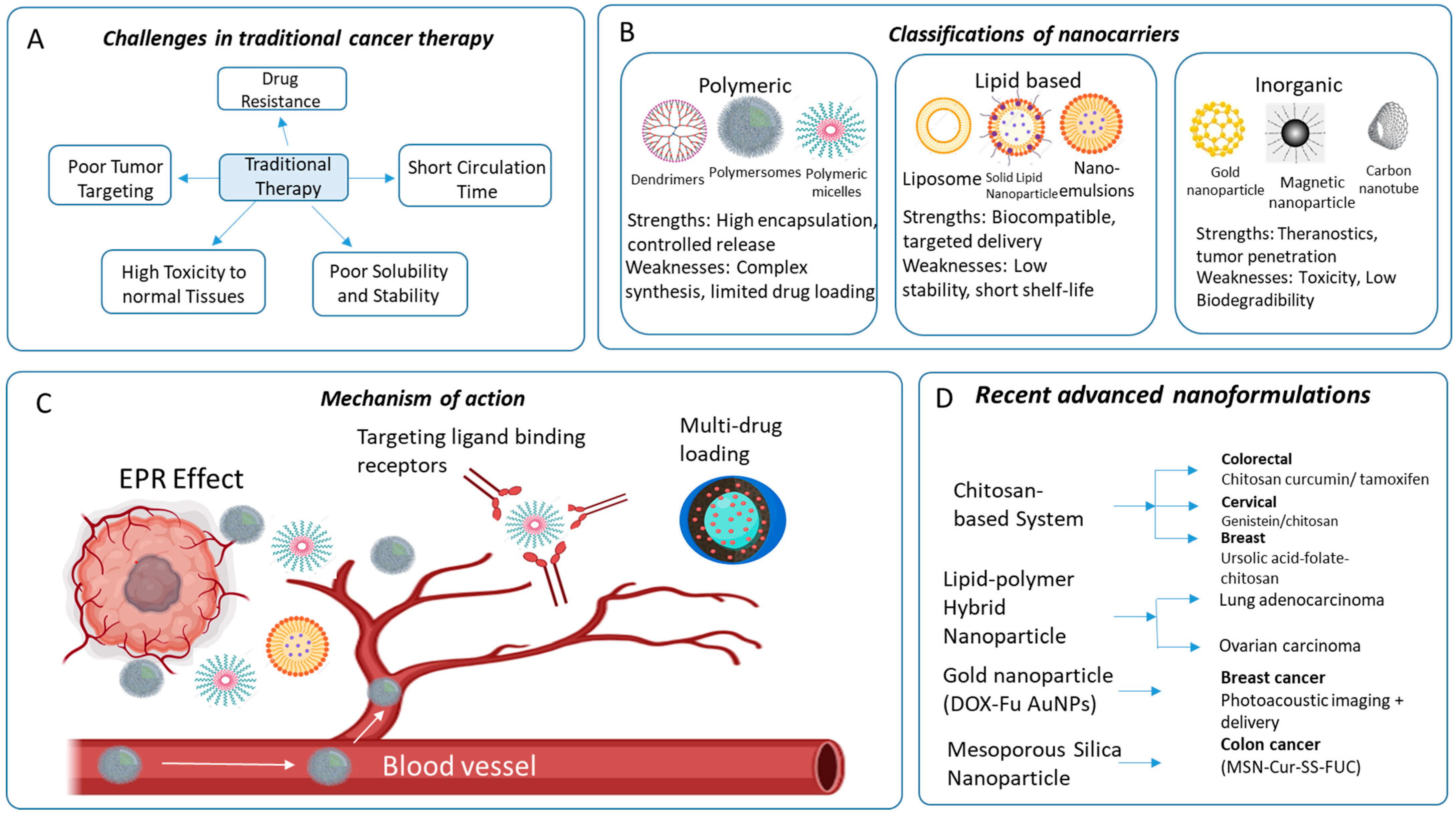
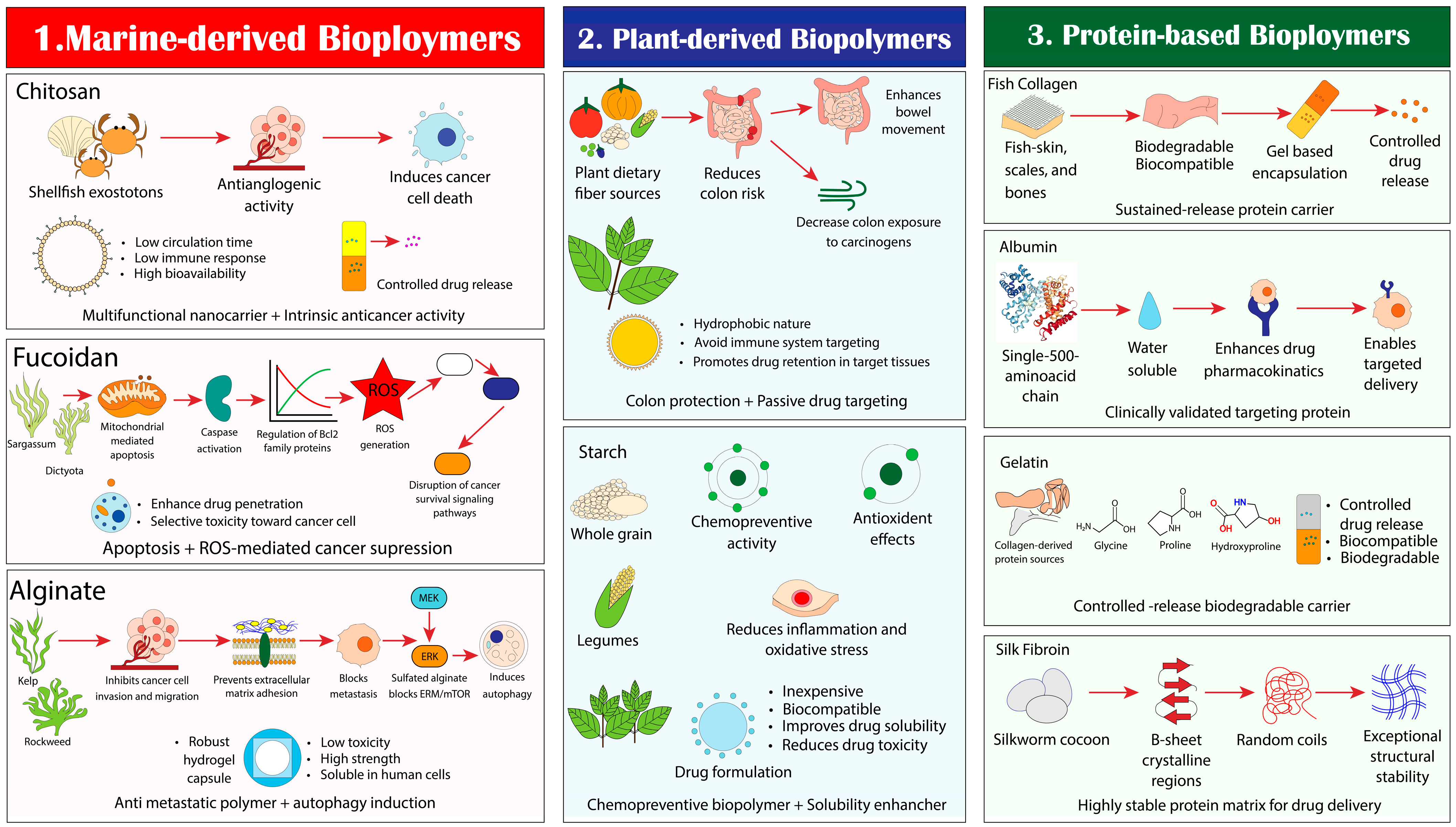
Recent Advancements in Bioactive Natural Products and Nanoparticle-Mediated Drug Delivery in Cancer Therapy

 , , , , , and
Abstract
1. Introduction
2. Bioactive Natural Products in Cancer Therapy
2.1. Overview of Natural Products
2.2. Historical Use in Cancer Treatment
2.3. Key Bioactive Natural Products
2.3.1. Alkaloids
2.3.2. Polyphenols
2.3.3. Terpenoids
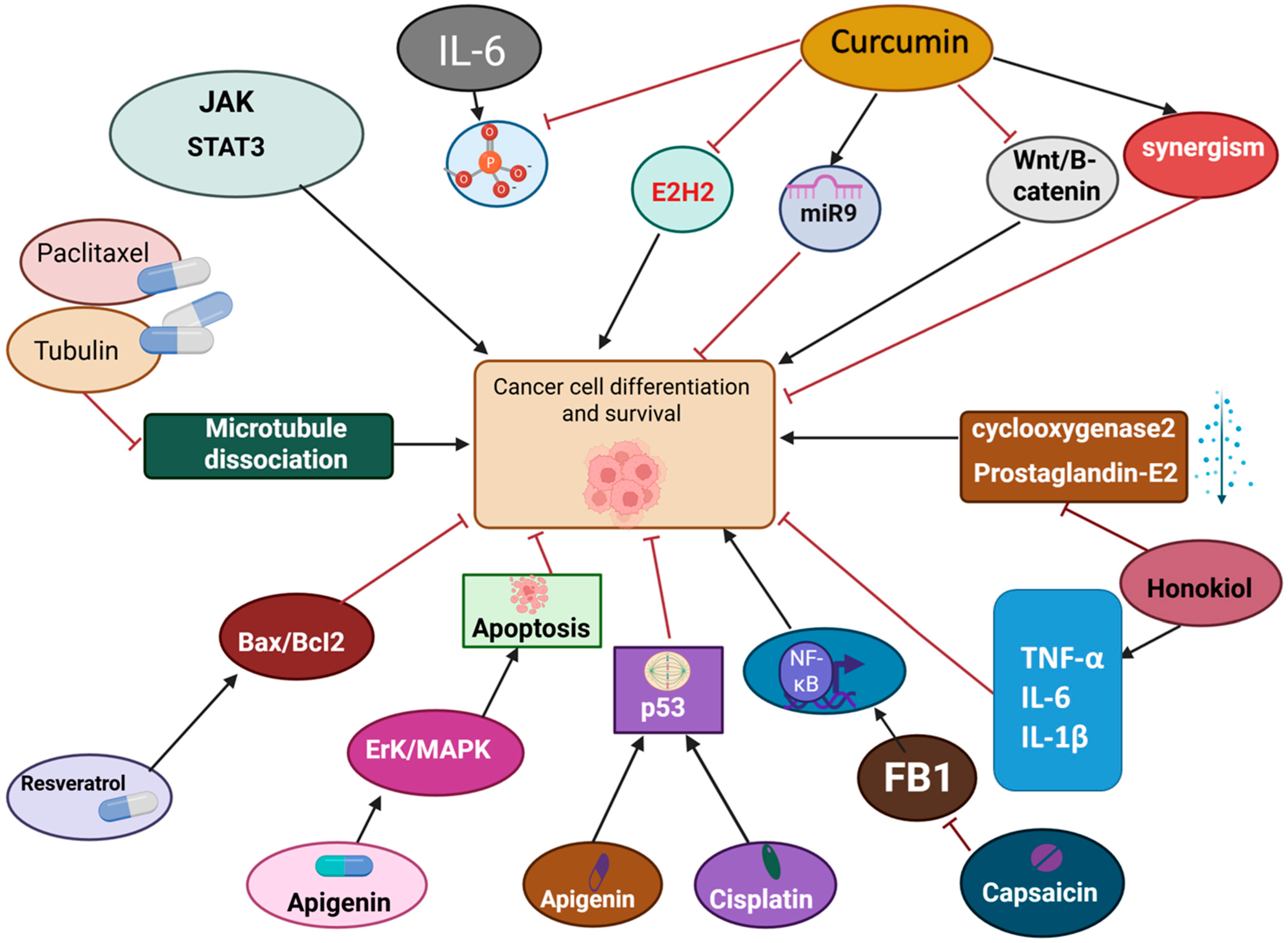
2.4. Mechanisms of Action of Key Bioactive Natural Compounds in Cancer Therapy
3. Nanoparticle Types and TME Modulation in Cancer Therapy
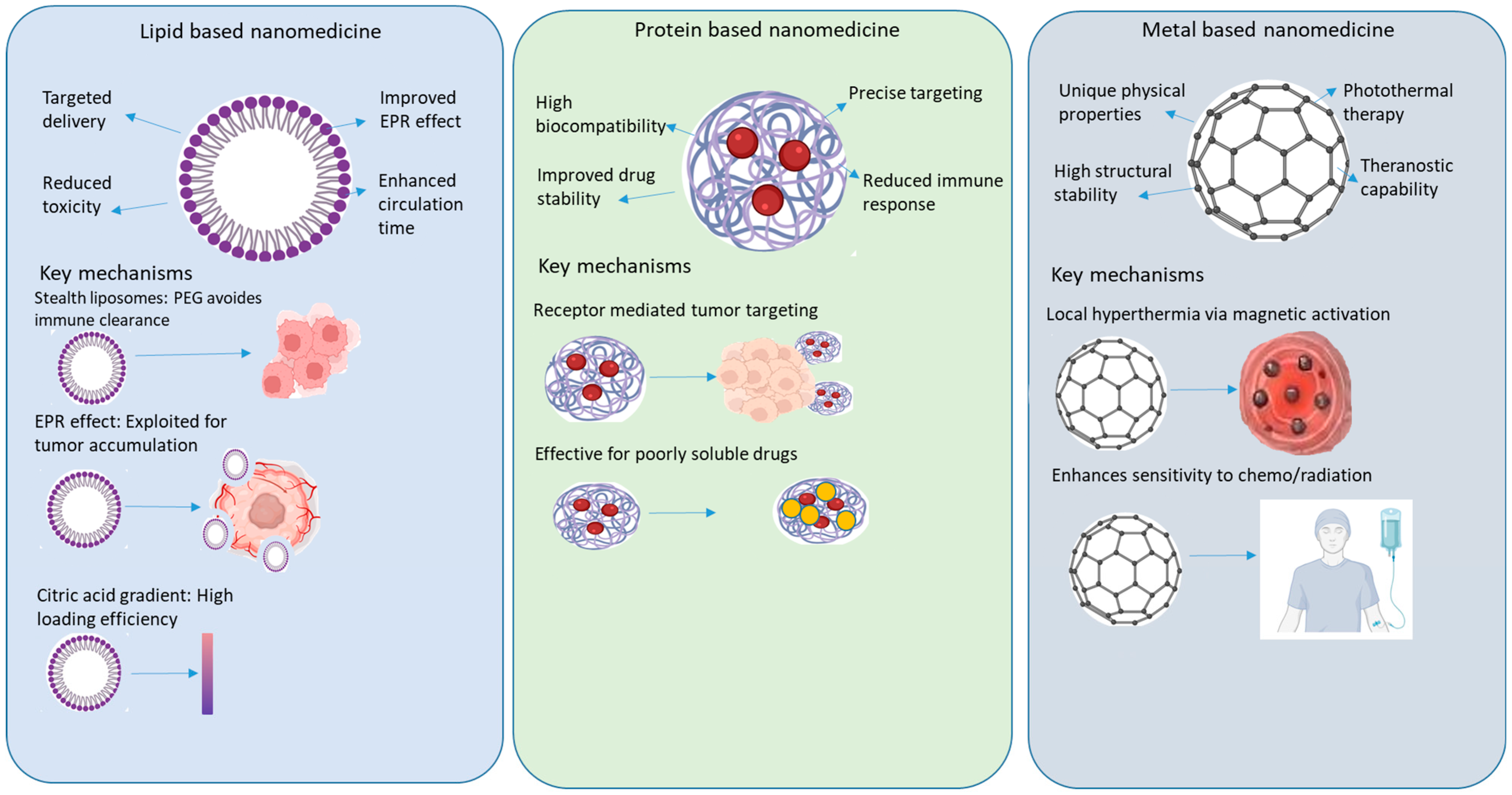
3.1. Types of Nanoparticles
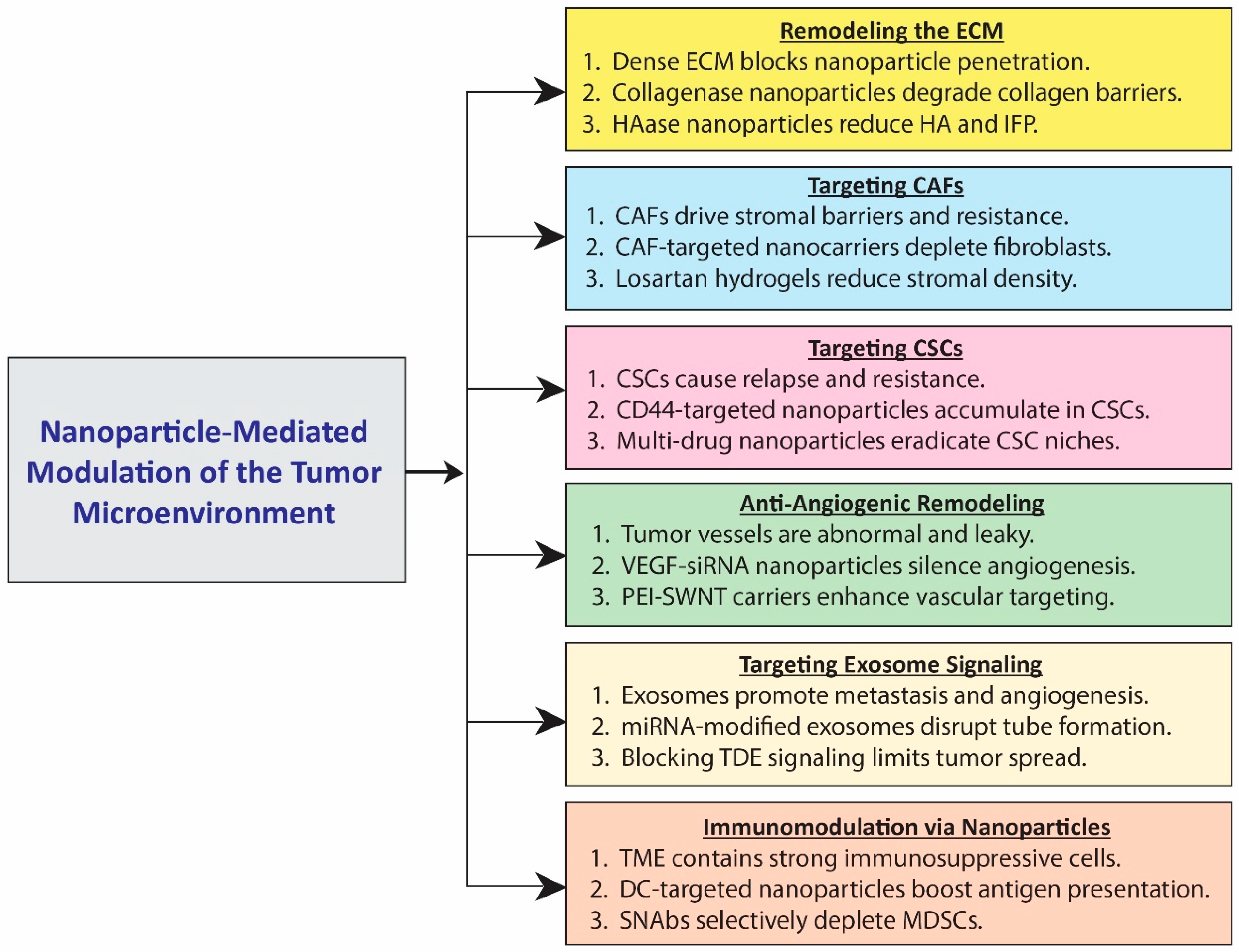
3.2. Nanoparticle-Mediated Modulation of the Tumor Microenvironment
3.2.1. Remodeling the Extracellular Matrix (ECM)
3.2.2. Targeting Cancer-Associated Fibroblasts (CAFs)
3.2.3. Targeting Cancer Stem Cells (CSCs)
3.2.4. Anti-Angiogenic Remodeling of Tumor Vasculature
3.2.5. Targeting Exosome-Mediated Communication
3.2.6. Immunoregulatory Modulation via Nanoparticles
3.3. Current Applications in Nanoparticle-Mediated Cancer Therapy
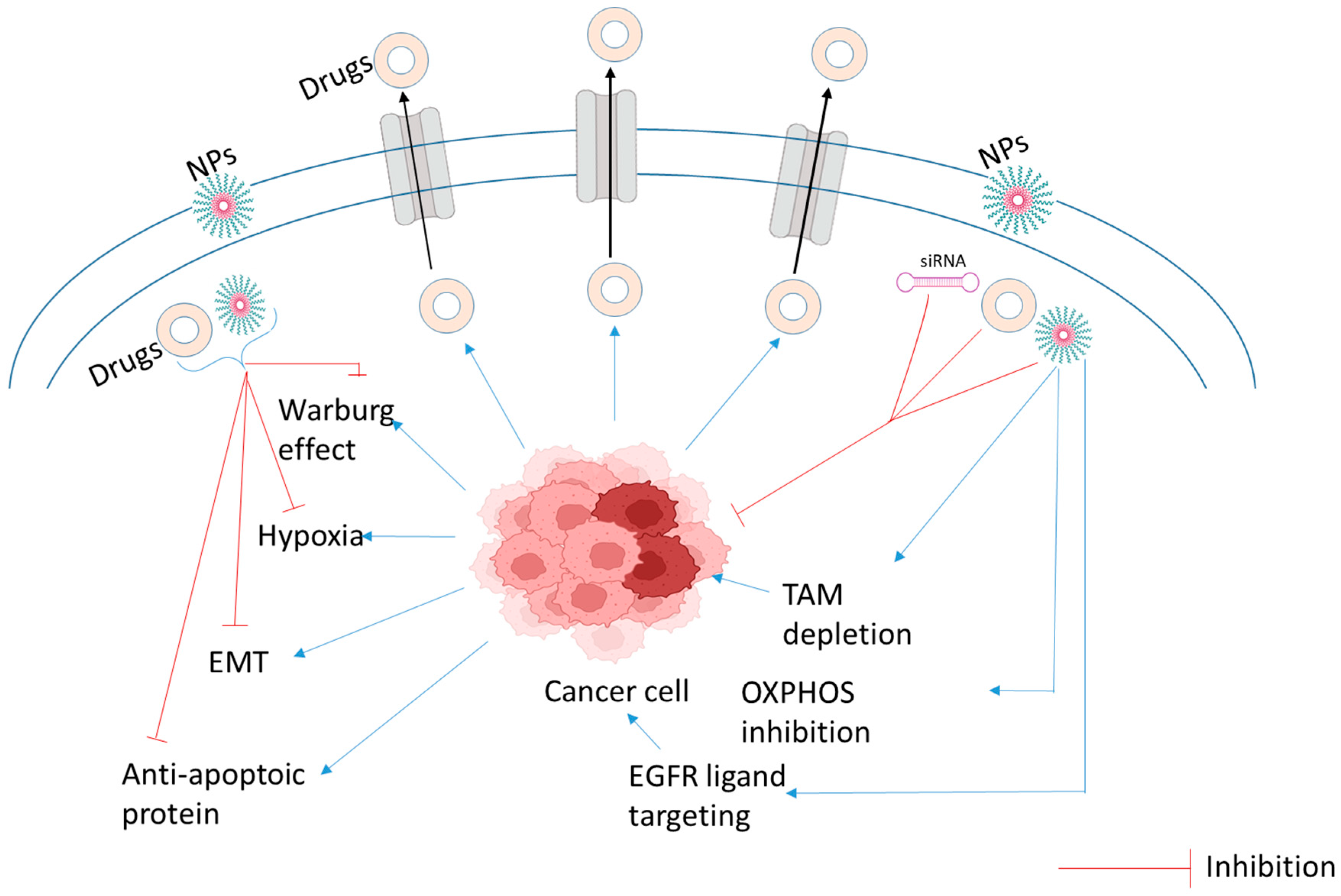
4. Multidrug Resistance and How Nanoparticle Overcome Drug Resistance
4.1. Nanocarrier-Based Drug Delivery Systems in Cancer Therapy
4.2. Anticancer Properties and Drug Delivery Potential of Marine and Plant-Derived Biopolymers
5. Recent Advances in Preclinical and Clinical Studies with Nanoparticles in Tumor Therapeutics
6. Intellectual Property Landscape: Nanomedicine and Bioactive Natural Products
7. Challenges and Emerging Trends
7.1. Toxicity
7.2. Scalability

| Nanocarrier Challenge | Typical Disadvantages in Current Systems | Possible Ways to Overcome These Disadvantages |
|---|---|---|
| Toxicity of inorganic/metal NPs (Au, silica, SPIONs, etc.) | Dose-, size- and shape-dependent cytotoxicity and genotoxicity; ROS generation; off-target accumulation in liver, spleen, kidney and even nucleus. | Biocompatible surface coatings (silica, dextran, PEG, polysaccharides) to reduce surface reactivity and oxidative stress; careful size/shape optimization to favor safe clearance and avoid nuclear entry; use of biosynthesized or biopolymer-coated NPs to lower intrinsic toxicity |
| Instability, aggregation and rapid clearance | Agglomeration of SLNs and metallic NPs; opsonization, RES uptake and short circulation, reducing tumor accumulation. | PEGylation (“stealth” coating) and cholesterol optimization; use of stabilizing surfactants/polymers; lipid–polymer hybrid NPs to combine structural robustness with biocompatibility; process optimization (homogenization, sonication, lyophilization conditions) to maintain colloidal stability at scale. |
| Limited tumor penetration and TME barriers | Dense collagen/HA-rich ECM, high interstitial pressure, CAFs, CSCs, chaotic vasculature and immunosuppressive cells restricting nanocarrier delivery. | ECM-remodeling nanocarriers (collagenase or hyaluronidase-loaded systems); CAF-targeted liposomes/hydrogels (e.g., losartan-releasing); CSC-directed NPs (CD44/riboflavin-targeted); anti-angiogenic siRNA delivery; exosome-, TAM- and MDSC-targeting platforms to normalize TME and improve penetration. |
| Multidrug resistance (MDR) | Efflux pumps (ABC transporters), enhanced DNA repair, anti-apoptotic signaling, EMT, CSC persistence, metabolic rewiring (e.g., OXPHOS). | Endocytic uptake of drugs via NPs to bypass efflux; co-delivery of chemotherapeutics with siRNA or small-molecule inhibitors against pumps, survival pathways or metabolic targets; TME- and CSC-targeted nanocarriers; use of chemosensitizers within the same platform. |
| Limited loading, targeting and standardization of polymeric/micellar systems | Limited drug incorporation, failure to reach target tissues, potential liver toxicity, complex polymer synthesis hampering scale-up. | Rational polymer design (biodegradable, low-toxicity, simpler architectures); stimuli-responsive (pH, redox, enzyme) micelles for on-site release; combining micelles with liposomes or hybrids; early CMC and scale-up optimization to ensure reproducible critical quality attributes. |
| Scalability and cost of manufacturing | Multistep processes (homogenization, milling, emulsification, solvent removal, lyophilization); batch-to-batch variability; high material and process costs. | Process-intensified, scalable unit operations (continuous emulsification, microfluidics); predefined design-space for key parameters (ratios, solvents, pH, temperature, pressure); selection of cheaper, robust excipients and simpler nanostructures; early alignment with GMP and quality-by-design principles. |
| Regulatory uncertainty and variable biodistribution | Lack of specific guidelines; complex behavior in vivo (protein corona, altered biodistribution, organ accumulation). | Thorough physicochemical characterization (size, shape, charge, dissolution, coating); standardized in vitro and in vivo toxicology panels; development of “smart” and AI-designed nanocarriers with well-defined, measurable critical quality attributes to support clearer regulatory assessment. |
7.3. Regulatory Hurdles
7.4. Emerging Trends
8. Future Research Directions
9. Conclusions
Author Contributions
Funding
Institutional Review Board Statement
Informed Consent Statement
Data Availability Statement
Conflicts of Interest
Abbreviations
| Abbreviation | Full form |
| EPR | Enhanced permeability and retention |
| TME | Tumor microenvironment |
| ECM | Extracellular matrix |
| CAF(s) | Cancer-associated fibroblast(s) |
| CSC(s) | Cancer stem cell(s) |
| DC(s) | Dendritic cell(s) |
| CTL(s) | Cytotoxic T lymphocyte(s) |
| TAM(s) | Tumor-associated macrophage(s) |
| MDSC(s) | Myeloid-derived suppressor cell(s) |
| MDR | Multidrug resistance |
| NP/NPs | Nanoparticle(s) |
| SPION(s) | Superparamagnetic iron oxide nanoparticle(s) |
| SLN(s) | Solid lipid nanoparticle(s) |
| MAPK | Mitogen-activated protein kinase |
| PAMT | PI3K/Akt/mTOR |
| PI3K | Phosphoinositide 3-kinase |
| mTOR | Mechanistic target of rapamycin |
| ROS | Reactive oxygen species |
| RNS | Reactive nitrogen species |
| BAX | BCL-2–associated X protein |
| Bcl-2 | B-cell lymphoma 2 |
| ERK | Extracellular signal-regulated kinase |
| CaMKII | Calcium/calmodulin-dependent protein kinase II |
| CDK8 | Cyclin-dependent kinase 8 |
| EMT | Epithelial–mesenchymal transition |
| OXPHOS | Oxidative phosphorylation |
| SELEX | Systematic Evolution of Ligands by Exponential enrichment |
| SNA(s) | Spherical nucleic acid(s) |
| GBM | Glioblastoma multiforme |
| PSA | Prostate-specific antigen |
| PLGA | Poly(D,L-lactide-co-glycolide) |
References
- Dwivedi, M. A perspective review on cancer–The deadliest disease. Int. J. Cancer 2020, 1, 1–12. [Google Scholar]
- Chan, S.K.J. Burden and Determinants of Cardiovascular Health and Outcomes in Patients with Cancer. Ph.D. Thesis, University of East Anglia, Norwich, UK, 2025. [Google Scholar]
- Lee, J.; Cha, B.S.; Kim, D. Beyond apoptosis: Navigating Cancer therapy with cu/Fe-ligand Nano-complexes through Cuproptosis and Ferroptosis. Coord. Chem. Rev. 2026, 548, 217164. [Google Scholar] [CrossRef]
- Kaur, R.; Bhardwaj, A.; Gupta, S. Cancer treatment therapies: Traditional to modern approaches to combat cancers. Mol. Biol. Rep. 2023, 50, 9663–9676. [Google Scholar] [CrossRef]
- Mathan, S.V.; Rajput, M.; Singh, R.P. Chemotherapy and radiation therapy for cancer. In Understanding Cancer; Elsevier: Amsterdam, The Netherlands, 2022; pp. 217–236. [Google Scholar]
- Plana, D.; Palmer, A.C.; Sorger, P.K. Independent drug action in combination therapy: Implications for precision oncology. Cancer Discov. 2022, 12, 606–624. [Google Scholar] [CrossRef]
- Ravikumar, B.; Cichońska, A.; Sahni, N.; Aittokallio, T.; Rahman, R. Advancements in Rational Multi-Targeted Drug Discovery: Improving the Efficacy-Safety Balance of Small Molecule Cancer Therapeutics. In Polypharmacology: Strategies for Multi-Target Drug Discovery; John Wiley & Sons: Hoboken, NJ, USA, 2025; pp. 109–125. [Google Scholar]
- Hossain, M.S.; Kader, M.A.; Goh, K.W.; Islam, M.; Khan, M.S.; Harun-Ar Rashid, M.; Ooi, D.J.; Melo Coutinho, H.D.; Al-Worafi, Y.M.; Moshawih, S.; et al. Herb and spices in colorectal cancer prevention and treatment: A narrative review. Front. Pharmacol. 2022, 13, 865801. [Google Scholar] [CrossRef]
- Manzari-Tavakoli, A.; Babajani, A.; Tavakoli, M.M.; Safaeinejad, F.; Jafari, A. Integrating natural compounds and nanoparticle-based drug delivery systems: A novel strategy for enhanced efficacy and selectivity in cancer therapy. Cancer Med. 2024, 13, e7010. [Google Scholar] [CrossRef]
- Mitchell, M.J.; Billingsley, M.M.; Haley, R.M.; Wechsler, M.E.; Peppas, N.A.; Langer, R. Engineering precision nanoparticles for drug delivery. Nat. Rev. Drug Discov. 2021, 20, 101–124. [Google Scholar] [CrossRef] [PubMed]
- Luo, Y.; Long, M.; Wu, X.; Zeng, L. Targeting ferroptosis: Novel therapeutic approaches and intervention strategies for kidney diseases. Front. Immunol. 2025, 16, 1700004, Correction in Front. Immunol. 2025, 16, 1765613. [Google Scholar] [PubMed]
- Pathak, K.; Pathak, M.P.; Saikia, R.; Gogoi, U.; Sahariah, J.J.; Zothantluanga, J.H.; Samanta, A.; Das, A. Cancer chemotherapy via natural bioactive compounds. Curr. Drug Discov. Technol. 2022, 19, 4–23. [Google Scholar] [CrossRef] [PubMed]
- Shirolkar, A.; Chougule, S.; Ranade, A.; Pawase, A.; Gaidhani, S.; Pawar, S. The potential applications of plant-based anti-cancer compounds and their chemical derivatives. Int. J. Pharm. Sci. Res. 2022, 13, 4794–4804. [Google Scholar]
- Mahato, R.; Behera, D.k.; Patra, B.; Das, S.; Lakra, K.; Pradhan, S.N.; Abbas, S.J.; Ali, S.I. Plant-based natural products in cancer therapeutics. J. Drug Target. 2024, 32, 365–380. [Google Scholar] [CrossRef]
- Lugo, M. Evidence for the Medicinal Uses and Long-Term Care of Neanderthals. Bachelor’s Thesis. 2024. Available online: https://repository.lib.fsu.edu/islandora/object/fsu:911246 (accessed on 20 January 2026).
- Seyed, M.A.; Ayesha, S. Marine-derived pipeline anticancer natural products: A review of their pharmacotherapeutic potential and molecular mechanisms. Future J. Pharm. Sci. 2021, 7, 203. [Google Scholar] [CrossRef]
- Fallah, S.; Karimi, A.; Panahi, G.; Nejad, S.G.; Fadaei, R.; Seifi, M. Human colon cancer HT-29 cell death responses to doxorubicin and Morus Alba leaves flavonoid extract. Cell. Mol. Biol. 2016, 62, 72–77. [Google Scholar]
- Wang, J.; Jiang, Y.-F. Natural compounds as anticancer agents: Experimental evidence. World J. Exp. Med. 2012, 2, 45–57. [Google Scholar] [CrossRef]
- Škubník, J.; Pavlíčková, V.; Ruml, T.; Rimpelová, S. Current perspectives on taxanes: Focus on their bioactivity, delivery and combination therapy. Plants 2021, 10, 569. [Google Scholar] [CrossRef] [PubMed]
- Di Marco, A.; Silvestrini, R.; Dasdia, T.; Di Marco, S. Autoradiographic study of the distribution of DNA in normal neoplastic and urethane-treated cells. Exp. Cell Res. 1964, 35, 132–141. [Google Scholar] [CrossRef] [PubMed]
- Bergmann, W.; Feeney, R.J. The isolation of a new thymine pentoside from sponges1. J. Am. Chem. Soc. 1950, 72, 2809–2810. [Google Scholar] [CrossRef]
- Simmons, T.L.; Andrianasolo, E.; McPhail, K.; Flatt, P.; Gerwick, W.H. Marine natural products as anticancer drugs. Mol. Cancer Ther. 2005, 4, 333–342. [Google Scholar] [CrossRef]
- Barzkar, N.; Sukhikh, S.; Babich, O. Study of marine microorganism metabolites: New resources for bioactive natural products. Front. Microbiol. 2024, 14, 1285902. [Google Scholar] [CrossRef]
- Zandavar, H.; Babazad, M.A. Secondary Metabolites: Alkaloids. In Herbs and Spices: New Advances; IntechOpen: London, UK, 2023; p. 79. [Google Scholar]
- Habli, Z.; Toumieh, G.; Fatfat, M.; Rahal, O.N.; Gali-Muhtasib, H. Emerging cytotoxic alkaloids in the battle against cancer: Overview of molecular mechanisms. Molecules 2017, 22, 250. [Google Scholar] [CrossRef]
- Zhu, K.; Wu, Y.; He, P.; Fan, Y.; Zhong, X.; Zheng, H.; Luo, T. PI3K/AKT/mTOR-targeted therapy for breast cancer. Cells 2022, 11, 2508. [Google Scholar] [CrossRef]
- Brglez Mojzer, E.; Knez Hrnčič, M.; Škerget, M.; Knez, Ž.; Bren, U. Polyphenols: Extraction methods, antioxidative action, bioavailability and anticarcinogenic effects. Molecules 2016, 21, 901. [Google Scholar] [CrossRef]
- Prabhu, S.; Molath, A.; Choksi, H.; Kumar, S.; Mehra, R. Classifications of polyphenols and their potential application in human health and diseases. Int. J. Physiol. Nutr. Phys. Educ. 2021, 6, 293–301. [Google Scholar] [CrossRef]
- Hazafa, A.; Rehman, K.-U.; Jahan, N.; Jabeen, Z. The role of polyphenol (flavonoids) compounds in the treatment of cancer cells. Nutr. Cancer 2020, 72, 386–397. [Google Scholar] [CrossRef] [PubMed]
- Maleki Dana, P.; Sadoughi, F.; Asemi, Z.; Yousefi, B. The role of polyphenols in overcoming cancer drug resistance: A comprehensive review. Cell. Mol. Biol. Lett. 2022, 27, 1. [Google Scholar] [CrossRef] [PubMed]
- Kruk, J.; Aboul-Enein, B.; Bernstein, J.; Marchlewicz, M. Dietary alkylresorcinols and cancer prevention: A systematic review. Eur. Food Res. Technol. 2017, 243, 1693–1710. [Google Scholar] [CrossRef]
- Chimento, A.; De Luca, A.; D’Amico, M.; De Amicis, F.; Pezzi, V. The involvement of natural polyphenols in molecular mechanisms inducing apoptosis in tumor cells: A promising adjuvant in cancer therapy. Int. J. Mol. Sci. 2023, 24, 1680. [Google Scholar] [CrossRef]
- Sadoughi, F.; Maleki Dana, P.; Asemi, Z.; Yousefi, B. Targeting microRNAs by curcumin: Implication for cancer therapy. Crit. Rev. Food Sci. Nutr. 2022, 62, 7718–7729. [Google Scholar] [CrossRef]
- Chimento, A.; D’Amico, M.; De Luca, A.; Conforti, F.L.; Pezzi, V.; De Amicis, F. Resveratrol, epigallocatechin gallate and curcumin for cancer therapy: Challenges from their pro-apoptotic properties. Life 2023, 13, 261. [Google Scholar] [CrossRef]
- Cox-Georgian, D.; Ramadoss, N.; Dona, C.; Basu, C. Therapeutic and medicinal uses of terpenes. In Medicinal Plants: From Farm to Pharmacy; Springer: Cham, Switzerland, 2019; pp. 333–359. [Google Scholar]
- Bose, S.; Banerjee, S.; Mondal, A.; Chakraborty, U.; Pumarol, J.; Croley, C.R.; Bishayee, A. Targeting the JAK/STAT signaling pathway using phytocompounds for cancer prevention and therapy. Cells 2020, 9, 1451. [Google Scholar] [CrossRef]
- Yang, Y.; Klionsky, D.J. Autophagy and disease: Unanswered questions. Cell Death Differ. 2020, 27, 858–871. [Google Scholar] [CrossRef]
- Sztiller-Sikorska, M.; Czyz, M. Parthenolide as cooperating agent for anti-cancer treatment of various malignancies. Pharmaceuticals 2020, 13, 194. [Google Scholar] [CrossRef]
- Xu, X.-Y.; Meng, X.; Li, S.; Gan, R.-Y.; Li, Y.; Li, H.-B. Bioactivity, health benefits, and related molecular mechanisms of curcumin: Current progress, challenges, and perspectives. Nutrients 2018, 10, 1553. [Google Scholar] [CrossRef]
- Wu, L.; Guo, L.; Liang, Y.; Liu, X.; Jiang, L.; Wang, L. Curcumin suppresses stem-like traits of lung cancer cells via inhibiting the JAK2/STAT3 signaling pathway. Oncol. Rep. 2015, 34, 3311–3317. [Google Scholar] [CrossRef]
- Yu, Y.; Xiao, C.H.; Tan, L.D.; Wang, Q.S.; Li, X.Q.; Feng, Y.M. Cancer-associated fibroblasts induce epithelial–mesenchymal transition of breast cancer cells through paracrine TGF-β signalling. Br. J. Cancer 2014, 110, 724–732. [Google Scholar] [CrossRef] [PubMed]
- Raja, G.; Jang, Y.-K.; Suh, J.-S.; Kim, H.-S.; Ahn, S.H.; Kim, T.-J. Microcellular environmental regulation of silver nanoparticles in cancer therapy: A critical review. Cancers 2020, 12, 664. [Google Scholar] [CrossRef] [PubMed]
- Fakhri, S.; Moradi, S.Z.; Yarmohammadi, A.; Narimani, F.; Wallace, C.E.; Bishayee, A. Modulation of TLR/NF-κB/NLRP signaling by bioactive phytocompounds: A promising strategy to augment cancer chemotherapy and immunotherapy. Front. Oncol. 2022, 12, 834072. [Google Scholar] [CrossRef] [PubMed]
- Bhaskara, V.K.; Mittal, B.; Mysorekar, V.V.; Amaresh, N.; Simal-Gandara, J. Resveratrol, cancer and cancer stem cells: A review on past to future. Curr. Res. Food Sci. 2020, 3, 284–295. [Google Scholar] [CrossRef]
- Liu, R.; Ji, P.; Liu, B.; Qiao, H.; Wang, X.; Zhou, L.; Deng, T.; Ba, Y. Apigenin enhances the cisplatin cytotoxic effect through p53-modulated apoptosis. Oncol. Lett. 2017, 13, 1024–1030. [Google Scholar] [CrossRef]
- Jaganathan, R.; Purushotham, B.; Radhakrishnan, N.; Swamy, M.K. Capsaicin and its potential anticancer mechanisms of action. In Plant-Derived Bioactives: Chemistry and Mode of Action; Springer: Singapore, 2020; pp. 301–321. [Google Scholar]
- Ong, C.P.; Lee, W.L.; Tang, Y.Q.; Yap, W.H. Honokiol: A review of its anticancer potential and mechanisms. Cancers 2019, 12, 48. [Google Scholar] [CrossRef]
- Gavas, S.; Quazi, S.; Karpiński, T.M. Nanoparticles for cancer therapy: Current progress and challenges. Nanoscale Res. Lett. 2021, 16, 173. [Google Scholar] [CrossRef]
- Le, M.H.; Lee, H.-J.; Koh, J.-A.; Min, J.-W.; Kim, M.J.; Kang, H.-C.; Kim, Y.-J. Propolis-derived vesicle-like nanoparticles: A study on their anti-inflammatory mechanisms and potential therapeutic applications. J. Funct. Foods 2025, 129, 106852. [Google Scholar] [CrossRef]
- Beshr, K.; Elhalabi, H.M.; Yehia, H. Evaluating antimicrobial, anti-biofilm, and cytotoxic effects of titanium dioxide (TiO2) nanoparticles-coated calcium hydroxide for intracanal use. Adv. Tradit. Med. 2025, 14, 1–4. [Google Scholar] [CrossRef]
- Giordano, A.; Provenza, A.C.; Reverchon, G.; Baldino, L.; Reverchon, E. Lipid-based nanocarriers: Bridging diagnosis and cancer therapy. Pharmaceutics 2024, 16, 1158. [Google Scholar] [CrossRef]
- Khan, S.; Hossain, M.K. Classification and properties of nanoparticles. In Nanoparticle-Based Polymer Composites; Elsevier: Amsterdam, The Netherlands, 2022; pp. 15–54. [Google Scholar]
- Eker, F.; Duman, H.; Akdaşçi, E.; Bolat, E.; Sarıtaş, S.; Karav, S.; Witkowska, A.M. A comprehensive review of nanoparticles: From classification to application and toxicity. Molecules 2024, 29, 3482. [Google Scholar] [CrossRef] [PubMed]
- Guo, S.; Deng, C.-X. Effect of stromal cells in tumor microenvironment on metastasis initiation. Int. J. Biol. Sci. 2018, 14, 2083–2093. [Google Scholar] [CrossRef] [PubMed]
- Eble, J.A.; Niland, S. The extracellular matrix in tumor progression and metastasis. Clin. Exp. Metastasis 2019, 36, 171–198. [Google Scholar] [CrossRef]
- Desai, N.; Sahel, D.; Kubal, B.; Postwala, H.; Shah, Y.; Chavda, V.P.; Fernandes, C.; Khatri, D.K.; Vora, L.K. Role of the extracellular matrix in cancer: Insights into tumor progression and therapy. Adv. Ther. 2025, 8, 2400370. [Google Scholar] [CrossRef]
- Tang, L.; Mei, Y.; Shen, Y.; He, S.; Xiao, Q.; Yin, Y.; Xu, Y.; Shao, J.; Wang, W.; Cai, Z. Nanoparticle-mediated targeted drug delivery to remodel tumor microenvironment for cancer therapy. Int. J. Nanomed. 2021, 16, 5811–5829. [Google Scholar] [CrossRef]
- Baronzio, G.; Parmar, G.; Baronzio, M. Overview of methods for overcoming hindrance to drug delivery to tumors, with special attention to tumor interstitial fluid. Front. Oncol. 2015, 5, 165. [Google Scholar] [CrossRef]
- Chen, S.; Lin, H.; Zhang, H.; Guo, F.; Zhu, S.; Cui, X.; Zhang, Z. Identifying functioning and nonfunctioning adrenal tumors based on blood serum surface-enhanced Raman spectroscopy. Anal. Bioanal. Chem. 2021, 413, 4289–4299. [Google Scholar] [CrossRef]
- Tang, X.; Hou, Y.; Yang, G.; Wang, X.; Tang, S.; Du, Y.E.; Yang, L.; Yu, T.; Zhang, H.; Zhou, M.; et al. Stromal miR-200s contribute to breast cancer cell invasion through CAF activation and ECM remodeling. Cell Death Differ. 2016, 23, 132–145. [Google Scholar] [CrossRef]
- Chen, B.; Dai, W.; Mei, D.; Liu, T.; Li, S.; He, B.; He, B.; Yuan, L.; Zhang, H.; Wang, X.; et al. Comprehensively priming the tumor microenvironment by cancer-associated fibroblast-targeted liposomes for combined therapy with cancer cell-targeted chemotherapeutic drug delivery system. J. Control. Release 2016, 241, 68–80. [Google Scholar] [CrossRef]
- Hu, C.; Liu, X.; Ran, W.; Meng, J.; Zhai, Y.; Zhang, P.; Yin, Q.; Yu, H.; Zhang, Z.; Li, Y. Regulating cancer associated fibroblasts with losartan-loaded injectable peptide hydrogel to potentiate chemotherapy in inhibiting growth and lung metastasis of triple negative breast cancer. Biomaterials 2017, 144, 60–72. [Google Scholar] [CrossRef]
- Huang, T.; Song, X.; Xu, D.; Tiek, D.; Goenka, A.; Wu, B.; Sastry, N.; Hu, B.; Cheng, S.-Y. Stem cell programs in cancer initiation, progression, and therapy resistance. Theranostics 2020, 10, 8721–8743. [Google Scholar] [CrossRef]
- Park, H.; Yu, S.; Koo, T. Gene editing in cancer therapy: Overcoming drug resistance and enhancing precision medicine. Cancer Gene Ther. 2025, 32, 1293–1302. [Google Scholar] [CrossRef]
- Rao, W.; Wang, H.; Han, J.; Zhao, S.; Dumbleton, J.; Agarwal, P.; Zhang, W.; Zhao, G.; Yu, J.; Zynger, D.L.; et al. Chitosan-decorated doxorubicin-encapsulated nanoparticle targets and eliminates tumor reinitiating cancer stem-like cells. ACS Nano 2015, 9, 5725–5740. [Google Scholar] [CrossRef]
- Hou, J.; Xue, Z.; Chen, Y.; Li, J.; Yue, X.; Zhang, Y.; Gao, J.; Hao, Y.; Shen, J. Development of Stimuli-Responsive Polymeric Nanomedicines in Hypoxic Tumors and Their Therapeutic Promise in Oral Cancer. Polymers 2025, 17, 1010. [Google Scholar] [CrossRef] [PubMed]
- Bhattarai, P.; Hameed, S.; Dai, Z. Recent advances in anti-angiogenic nanomedicines for cancer therapy. Nanoscale 2018, 10, 5393–5423. [Google Scholar] [CrossRef] [PubMed]
- Yang, E.; Wang, X.; Gong, Z.; Yu, M.; Wu, H.; Zhang, D. Exosome-mediated metabolic reprogramming: The emerging role in tumor microenvironment remodeling and its influence on cancer progression. Signal Transduct. Target. Ther. 2020, 5, 242. [Google Scholar] [CrossRef] [PubMed]
- Wang, Y.; Wang, L.; Chen, C.; Chu, X. New insights into the regulatory role of microRNA in tumor angiogenesis and clinical implications. Mol. Cancer 2018, 17, 22. [Google Scholar] [CrossRef]
- Gao, J.; Liang, Y.; Wang, L. Shaping polarization of tumor-associated macrophages in cancer immunotherapy. Front. Immunol. 2022, 13, 888713. [Google Scholar] [CrossRef]
- Liu, J.; Toy, R.; Vantucci, C.; Pradhan, P.; Zhang, Z.; Kuo, K.M.; Kubelick, K.P.; Huo, D.; Wen, J.; Kim, J.; et al. Bifunctional janus particles as multivalent synthetic nanoparticle antibodies (SNAbs) for selective depletion of target cells. Nano Lett. 2021, 21, 875–886. [Google Scholar] [CrossRef]
- Sun, L.; Liu, H.; Ye, Y.; Lei, Y.; Islam, R.; Tan, S.; Tong, R.; Miao, Y.-B.; Cai, L. Smart nanoparticles for cancer therapy. Signal Transduct. Target. Ther. 2023, 8, 418. [Google Scholar] [CrossRef] [PubMed]
- Pavelić, K.; Pavelić, S.K.; Bulog, A.; Agaj, A.; Rojnić, B.; Čolić, M.; Trivanović, D. Nanoparticles in medicine: Current status in cancer treatment. Int. J. Mol. Sci. 2023, 24, 12827. [Google Scholar] [CrossRef]
- Niculescu, A.-G.; Grumezescu, A.M. Novel tumor-targeting nanoparticles for cancer treatment—A review. Int. J. Mol. Sci. 2022, 23, 5253. [Google Scholar] [CrossRef]
- Neophytou, C.M.; Panagi, M.; Stylianopoulos, T.; Papageorgis, P. The role of tumor microenvironment in cancer metastasis: Molecular mechanisms and therapeutic opportunities. Cancers 2021, 13, 2053. [Google Scholar] [CrossRef] [PubMed]
- Ge, M.; Chen, X.-Y.; Huang, P.; Fleishman, J.S.; Yang, D.-H.; Wu, Z.-X.; Ke, Z.-F.; Chen, Z.-S. Understanding and overcoming multidrug resistance in cancer. Nat. Rev. Clin. Oncol. 2025, 22, 760–780. [Google Scholar] [CrossRef]
- Sabir, S.; Thani, A.S.B.; Abbas, Q. Nanotechnology in cancer treatment: Revolutionizing strategies against drug resistance. Front. Bioeng. Biotechnol. 2025, 13, 1548588. [Google Scholar] [CrossRef] [PubMed]
- Sohail, M.; Guo, W.; Li, Z.; Xu, H.; Zhao, F.; Chen, D.; Fu, F. Nanocarrier-based drug delivery system for cancer therapeutics: A review of the last decade. Curr. Med. Chem. 2021, 28, 3753–3772. [Google Scholar] [CrossRef]
- Liu, Y.; Liang, Y.; Yuhong, J.; Xin, P.; Han, J.L.; Du, Y.; Yu, X.; Zhu, R.; Zhang, M.; Chen, W.; et al. Advances in nanotechnology for enhancing the solubility and bioavailability of poorly soluble drugs. Drug Des. Dev. Ther. 2024, 18, 1469–1495. [Google Scholar] [CrossRef]
- Edis, Z.; Wang, J.; Waqas, M.K.; Ijaz, M.; Ijaz, M. Nanocarriers-mediated drug delivery systems for anticancer agents: An overview and perspectives. Int. J. Nanomed. 2021, 16, 1313–1330, Erratum in Int. J. Nanomed. 2021, 16, 5099. [Google Scholar] [CrossRef]
- Ashfaq, R.; Rasul, A.; Asghar, S.; Kovács, A.; Berkó, S.; Budai-Szűcs, M. Lipid nanoparticles: An effective tool to improve the bioavailability of nutraceuticals. Int. J. Mol. Sci. 2023, 24, 15764. [Google Scholar] [CrossRef]
- Kaurav, M.; Ruhi, S.; Al-Goshae, H.A.; Jeppu, A.K.; Ramachandran, D.; Sahu, R.K.; Sarkar, A.K.; Khan, J.; Ashif Ikbal, A.M. Dendrimer: An update on recent developments and future opportunities for the brain tumors diagnosis and treatment. Front. Pharmacol. 2023, 14, 1159131. [Google Scholar] [CrossRef]
- Qian, J.; Guo, Y.; Xu, Y.; Wang, X.; Chen, J.; Wu, X. Combination of micelles and liposomes as a promising drug delivery system: A review. Drug Deliv. Transl. Res. 2023, 13, 2767–2789, Correction in Drug Deliv. Transl. Res. 2023, 13, 2960. [Google Scholar] [CrossRef] [PubMed]
- Gajbhiye, K.R.; Salve, R.; Narwade, M.; Sheikh, A.; Kesharwani, P.; Gajbhiye, V. Lipid polymer hybrid nanoparticles: A custom-tailored next-generation approach for cancer therapeutics. Mol. Cancer 2023, 22, 160. [Google Scholar] [CrossRef]
- Sachdeva, B.; Sachdeva, P.; Negi, A.; Ghosh, S.; Han, S.; Dewanjee, S.; Jha, S.K.; Bhaskar, R.; Sinha, J.K.; Paiva-Santos, A.C.; et al. Chitosan nanoparticles-based cancer drug delivery: Application and challenges. Mar. Drugs 2023, 21, 211. [Google Scholar] [CrossRef]
- Iravani, S.; Varma, R.S. Alginate-based micro-and nanosystems for targeted cancer therapy. Mar. Drugs 2022, 20, 598. [Google Scholar] [CrossRef] [PubMed]
- Ganie, S.A.; Rather, L.J.; Li, Q. Recent innovations in the strategies for the functionalization of chitosan, pectin, alginate, hyaluronic acid, dextran and inulin biomaterials for anticancer applications-a review. J. Polym. Environ. 2023, 31, 13–35. [Google Scholar] [CrossRef]
- Gupta, P.; Neupane, Y.R.; Parvez, S.; Kohli, K.; Sultana, Y. Combinatorial chemosensitive nanomedicine approach for the treatment of breast cancer. Curr. Mol. Med. 2023, 23, 876–888. [Google Scholar] [CrossRef]
- Kameshwar Sharma, Y.V.R.; Srivastava, A.; Bansal, D.; Srivastava, A. Fish Collagen: Extraction, Properties, and Prospects. In Engineered Biomaterials: Progress and Prospects; World Scientific: Singapore, 2024; pp. 369–419. [Google Scholar]
- Aljabali, A.A.A.; Obeid, M.A.; Bashatwah, R.M.; Qnais, E.; Gammoh, O.; Alqudah, A.; Mishra, V.; Mishra, Y.; Khan, M.A.; Parvez, S.; et al. Phytochemicals in cancer therapy: A structured review of mechanisms, challenges, and progress in personalized treatment. Chem. Biodivers. 2025, 22, e202402479. [Google Scholar] [CrossRef]
- Zadorozhna, M.; Mangieri, D. Mechanisms of chemopreventive and therapeutic proprieties of ginger extracts in cancer. Int. J. Mol. Sci. 2021, 22, 6599. [Google Scholar] [CrossRef]
- Teng, G.; Zhang, M.; Pan, Y.; Karampoor, S.; Mirzaei, R. Modulating the tumor microenvironment: The role of traditional Chinese medicine in improving lung cancer treatment. Open Life Sci. 2025, 20, 20251100. [Google Scholar] [CrossRef] [PubMed]
- Yue, Y.-Z.; Xie, J.; Yan, S. Baicalin: A prominent therapeutic agent against colorectal cancer. Tradit. Med. Res 2023, 8, 62–71. [Google Scholar] [CrossRef]
- Ashaq, A.; Maqbool, M.F.; Maryam, A.; Khan, M.; Shakir, H.A.; Irfan, M.; Qazi, J.I.; Li, Y.; Ma, T. Hispidulin: A novel natural compound with therapeutic potential against human cancers. Phytother. Res. 2021, 35, 771–789. [Google Scholar] [CrossRef]
- Nazam, N.; Jabir, N.R.; Ahmad, I.; Alharthy, S.A.; Khan, M.S.; Ayub, R.; Tabrez, S. Phenolic acids-mediated regulation of molecular targets in Ovarian Cancer: Current understanding and future perspectives. Pharmaceuticals 2023, 16, 274. [Google Scholar] [CrossRef]
- Shore, N.D.; Moul, J.W.; Pienta, K.J.; Czernin, J.; King, M.T.; Freedland, S.J. Biochemical recurrence in patients with prostate cancer after primary definitive therapy: Treatment based on risk stratification. Prostate Cancer Prostatic Dis. 2024, 27, 192–201. [Google Scholar] [CrossRef]
- Jiang, X.; Jiang, Z.; Jiang, M.; Sun, Y. Berberine as a potential agent for the treatment of colorectal cancer. Front. Med. 2022, 9, 886996. [Google Scholar] [CrossRef] [PubMed]
- Markowska, A.; Antoszczak, M.; Markowska, J.; Huczyński, A. Role of Epigallocatechin Gallate in Selected Malignant Neoplasms in Women. Nutrients 2025, 17, 212. [Google Scholar] [CrossRef] [PubMed]
- Dubey, A.K.; Siva Sai, C.; Geevarghese, A.V.; Kapoor, B.; Gulati, M.; Rani, P.; Singh, G.; Chavda, V.P.; Gundamaraju, R.; Bansal, H.; et al. Exploring the pharmacokinetics, drug-likeness, and toxicological features of anticancer flavonoids: A Boulevard to explore their clinical translational potential. Front. Pharmacol. 2025, 16, 1648395. [Google Scholar] [CrossRef] [PubMed]
- Li, J.; Li, Z.; Patel, A.B. Nano-Drug Delivery Systems Entrapping Natural Bioactive. In Autophagy Modulation in Cancer Treatment Utilizing Nanomaterials and Nanocarriers; 2023; p. 25. Available online: https://books.google.com.sg/books?hl=ko&lr=&id=103IEAAAQBAJ&oi=fnd&pg=PA25&dq=Nano-Drug+Delivery+Systems+Entrapping+Natural+Bioactive&ots=oid44zoAMl&sig=0_Q0OmwjlopZ0G13Zs-pS32Cr-s#v=onepage&q&f=false (accessed on 20 January 2026).
- Sidhu, A.K.; Verma, N.; Kaushal, P. Role of biogenic capping agents in the synthesis of metallic nanoparticles and evaluation of their therapeutic potential. Front. Nanotechnol. 2022, 3, 801620. [Google Scholar] [CrossRef]
- Han, H.-Y. Sublethal pulmonary toxicity screening of silica nanoparticles in rats after direct intratracheal instillation. Toxicol. Res. 2022, 38, 523–530. [Google Scholar] [CrossRef]
- Shukla, R.K.; Badiye, A.; Vajpayee, K.; Kapoor, N. Genotoxic potential of nanoparticles: Structural and functional modifications in DNA. Front. Genet. 2021, 12, 728250. [Google Scholar] [CrossRef]
- Pereira, S.P.P.; Boyle, D.; Nogueira, A.J.A.; Handy, R.D. Comparison of toxicity of silver nanomaterials and silver nitrate on developing zebrafish embryos: Bioavailability, osmoregulatory and oxidative stress. Chemosphere 2023, 336, 139236. [Google Scholar] [CrossRef] [PubMed]
- Pakravan, A.; Salehi, R.; Mahkam, M. Comparison study on the effect of gold nanoparticles shape in the forms of star, hallow, cage, rods, and Si-Au and Fe-Au core-shell on photothermal cancer treatment. Photodiagnosis Photodyn. Ther. 2021, 33, 102144. [Google Scholar] [CrossRef] [PubMed]
- Bhardwaj, L.K.; Rath, P.; Choudhury, M. A comprehensive review on the classification, uses, sources of nanoparticles (NPs) and their toxicity on health. Aerosol Sci. Eng. 2023, 7, 69–86, Correction in Aerosol Sci. Eng. 2023, 7, 426. [Google Scholar] [CrossRef]
- Weiss, M.; Fan, J.; Claudel, M.; Sonntag, T.; Didier, P.; Ronzani, C.; Lebeau, L.; Pons, F. Density of surface charge is a more predictive factor of the toxicity of cationic carbon nanoparticles than zeta potential. J. Nanobiotechnology 2021, 19, 5. [Google Scholar] [CrossRef] [PubMed]
- Patel, D.M.; Patel, N.N.; Patel, J.K. Nanomedicine scale-up technologies: Feasibilities and challenges. In Emerging Technologies for Nanoparticle Manufacturing; Springer: Berlin/Heidelberg, Germany, 2021; pp. 511–539. [Google Scholar]
- Viswanath, H.S. Bioprocess Scale-up and Scale-down: Bulk Production. In Biotechnology: Concepts & Applications; Black Prints India Inc.: New Delhi, India, 2022; p. 67. [Google Scholar]
- Zorkina, Y.; Abramova, O.; Ushakova, V.; Morozova, A.; Zubkov, E.; Valikhov, M.; Melnikov, P.; Majouga, A.; Chekhonin, V. Nano carrier drug delivery systems for the treatment of neuropsychiatric disorders: Advantages and limitations. Molecules 2020, 25, 5294. [Google Scholar] [CrossRef]
- Drbohlavova, J.; Chomoucka, J.; Adam, V.; Ryvolova, M.; Eckschlager, T.; Hubalek, J.; Kizek, R. Nanocarriers for anticancer drugs-new trends in nanomedicine. Curr. Drug Metab. 2013, 14, 547–564. [Google Scholar] [CrossRef]
- Biharee, A.; Gupta, K.; Yadav, A.; Kumar Kori, S.; Bhartiya, S.; Sheikh, K.; Vaidya, S.; Kashaw, S.K.; Thareja, S.; Singh, M.K. United States and European Union Regulations: Approved Treatment Modalities for Managing Cancer. In Plant-Derived Anticancer Drugs; Wiley: Hoboken, NJ, USA, 2025; pp. 29–62. [Google Scholar]
- Dri, D.A.; Rinaldi, F.; Carafa, M.; Marianecci, C. Nanomedicines and nanocarriers in clinical trials: Surfing through regulatory requirements and physico-chemical critical quality attributes. Drug Deliv. Transl. Res. 2023, 13, 757–769. [Google Scholar] [CrossRef]
- Sherani, A.M.K.; Khan, M.; Qayyum, M.U.; Hussain, H.K. Synergizing AI and Healthcare: Pioneering advances in cancer medicine for personalized treatment. Int. J. Multidiscip. Sci. Arts 2024, 3, 270–277. [Google Scholar] [CrossRef]
- Wang, R.C.; Wang, Z. Precision medicine: Disease subtyping and tailored treatment. Cancers 2023, 15, 3837. [Google Scholar] [CrossRef] [PubMed]
- Prabahar, K.; Alanazi, Z.; Qushawy, M. Targeted drug delivery system: Advantages, carriers and strategies. Indian J. Pharm. Educ. Res. 2021, 55, 346–353. [Google Scholar] [CrossRef]


| Bioactive Compounds | Natural Origin of Each Compound | Activity | Reference |
|---|---|---|---|
| Flavonoids | Plant secondary metabolites widely distributed in higher plants (e.g., Morus alba) | Cell cycle arrest | [17] |
| Alkaloids | Plant secondary metabolites with nitrogen-containing heterocycles (e.g., Annona muricata) | Apoptosis by arresting the G1 phase, accumulation of ROS and mitochondrial membrane potential disruption | [18] |
| Quercetin | Polyphenolic flavonol predominantly from higher plants (e.g., Olea europaea) | Arrest cell cycle at S phase | [19] |
| Curcumin | Polyphenolic diarylheptanoid from rhizomes of Curcuma species (e.g., Curcuma longa) | Spheroid formation inhibition; scavenging of free radicals like ROS and RNS | [19] |
| Emodin | Anthraquinone derivative from medicinal plants (e.g., Rheum palmatum L.) | PI3K/AKT and MAPK signaling pathways | [19] |
| Apigenin | Flavone-type polyphenol from many herbs and vegetables (e.g., Petroselinum crispum) | Intrinsic apoptosis pathway | [20] |
| Thymol | Monoterpenoid phenol from aromatic plants (e.g., Thymus vulgaris) | Mitochondrial mediated apoptosis | [21] |
| Sulforaphane | Isothiocyanate derived from glucoraphanin in cruciferous vegetables (e.g., Brassica oleracea) | Cell cycle arrest and apoptosis; targets caspase 8 | [22] |
| Kaempferol | Flavonol-type polyphenol from various plants (e.g., Alangium salvifolium) | Inhibition of dihydrofolate activity, thereby damaging DNA of a cancerous cell | [22] |
| Lupeol | Triterpenoid present in fruits and medicinal plants (e.g., Dillenia indica) | Induces programmed cell death (PCD) | [22] |
| Luteolin | Flavone-type polyphenol found in many medicinal plants (e.g., Eclipta alba) | Downregulating NF-κB leads to DNA damage and ultimately apoptosis | [23] |
| Carthamin | Quinochalcone pigment from florets of safflower (Carthamus tinctorius) | Caspase-3, -7, and -9 upregulation and Bcl-2 downregulation | [24] |
| β-Elemene | Sesquiterpene from essential oils of Curcuma species (e.g., Curcuma wenyujin) | Conservation/conversion of LC3-I to LC3-II | [25] |
| Celastrol | Triterpenoid quinone methide from Tripterygium wilfordii | Acts upstream of miR-101 | [26] |
| EGCG | Catechin-type polyphenol from tea leaves (Camellia sinensis) | Reduces TNF-α; inhibits VCAM1, LC3A, LC3B | [27] |
| Honokiol | Biphenolic neolignan from Magnolia bark (Magnolia officinalis) | Reductions of p-PI3K, p-Akt and Ki67 | [28] |
| Magnolol | Biphenolic neolignan from Magnolia bark (Magnolia officinalis) | Reductions of p-PI3K, p-Akt and Ki67 | [28] |
| Category | Nanoparticle Type (Size) | Key Cancer-Related Properties and Applications |
|---|---|---|
| Carbon-Based Nanoparticles | Fullerenes (~1–3 nm) | Inert; semiconductor/conductor; light transmission; drug delivery, photodynamic therapy |
| Graphene (~5–100 nm) | High surface area; drug/gene loading; strong light absorption; imaging/therapy | |
| Carbon Nanotubes (CNTs, ~5–100 nm) | High tensile strength, flexible, conductive; photothermal ablation; targeted drug delivery | |
| Carbon Nanofibers (~50–200 nm) | Structural support; drug delivery scaffolds; biosensors for tumor detection | |
| Carbon Black (~50–500 nm) | High surface area; photothermal therapy; conductive carriers | |
| Metal-Based Nanoparticles | Aluminum (~10–50 nm) | Reactive; catalytic platforms for pro-drug activation in tumors |
| Iron (~10–50 nm) | Magnetic targeting; hyperthermia; MRI contrast | |
| Silver (~10–100 nm) | Antibacterial and anticancer coatings; photothermal therapy | |
| Gold (~10–100 nm) | Biocompatible; photothermal therapy, imaging, radio sensitization | |
| Cobalt (~10–50 nm) | Magnetic, microwave-absorbing; tumor hyperthermia (toxicity-controlled) | |
| Zinc (~10–50 nm) | Antibacterial/UV-filtering; tumor microenvironment modulation | |
| Paramagnetic Metal Oxide Nanoparticles | Titanium Oxide (~10–50 nm) | Magnetic, antibacterial; photocatalysis; tumor implant coatings |
| Iron Oxide (10–100 nm) | Super-paramagnetic; MRI, magnetic targeting, tumor hyperthermia | |
| Silicon Dioxide (20–200 nm) | Functionalizable; mesoporous silica for co-delivery of siRNA + chemo | |
| Zinc Oxide (~20–100 nm) | Antibacterial, UV-active; photo-therapeutics, tumor targeting | |
| Aluminum Oxide (~20–100 nm) | High surface area; carrier systems for drug delivery | |
| Polymer-Based Organic Nanoparticles | Dendrimers (<10 nm) | Highly branched, surface-modifiable; targeted drug/gene delivery; enhanced tumor accumulation |
| Polymeric NPs (10–1000 nm) | Biodegradable; high drug loading; controlled/sustained release; overcome solubility and drug resistance | |
| Polymeric Micelles (10–100 nm) | Amphiphilic block copolymer; solubilizes hydrophobic drugs; passive EPR effect; targeted delivery | |
| PEG-PAsp(DIP)-CA Micelle (10–100 nm) | Polymeric, pH-sensitive, paclitaxel-loaded; tumor targeting and imaging | |
| Lipid-Based Organic Nanoparticles | Liposomes (50–100 nm) | Biocompatible vesicles; high entrapment efficiency; genes, peptides, anticancer drugs; active/passive targeting |
| Solid Lipid Nanoparticles (<1 µm) | Solid lipid core; controlled release; improved stability of chemotherapeutics | |
| Nanostructured Lipid Carriers (~100–300 nm) | Hybrid solid–liquid core; enhanced drug loading; better release kinetics for tumors | |
| Hybrid/Inorganic Nanoparticles | Porous Silica Nanorattle (~50–200 nm) | High surface area; docetaxel-loaded; imaging; passive EPR tumor targeting |
| Gold Nanoshells (~50–100 nm) | Optical and photothermal; imaging, photothermal therapy; radiosensitization | |
| M13 Bacteriophage (~80–200 nm) | Biological/viral carrier; targeted delivery of anticancer payloads | |
| CNTs (optical imaging, ~5–100 nm) | Conductive; imaging and targeted therapy (PSMA receptor, prostate cancer) |
| Nanoparticle Type | Drug Name | Core Composition | Key Mechanism | Clinical Indications |
|---|---|---|---|---|
| Lipid-Based Nanoparticles | Doxil/Caelyx | PEGylated liposomal doxorubicin | Prolonged circulation, reduced cardiotoxicity, enhanced tumor accumulation (EPR effect) | Kaposi’s sarcoma, ovarian cancer, metastatic breast cancer, multiple myeloma |
| Myocet | Non-PEGylated liposomal doxorubicin | Lower cardiotoxicity than free doxorubicin; alternative for PEG-intolerant patients | Metastatic breast cancer | |
| Marqibo | Liposomal vincristine (sphingomyelin + cholesterol) | Extended half-life, reduced neurotoxicity, sustained release | Relapsed/refractory Philadelphia chromosome-negative ALL | |
| Onivyde | PEGylated liposomal irinotecan | Enhanced pharmacokinetics, improved therapeutic index | Metastatic pancreatic ductal adenocarcinoma (post-gemcitabine) | |
| Vyxeos | Dual-drug liposome (daunorubicin:citarabine = 1:5) | Synergistic delivery, prolonged bone marrow exposure | High-risk acute myeloid leukemia (AML) | |
| Lipusu (China) | Non-PEGylated paclitaxel liposome | Improved solubility, reduced solvent-associated toxicity | Breast, ovarian, and non-small cell lung cancer | |
| Genexol (Korea, India) | Polymeric paclitaxel micelle formulation | Enhances solubility, reduced systemic toxicity | Breast cancer, non–small cell lung cancer | |
| Nanoxel (Korea, India) | Polymer-based paclitaxel nanoparticles | Improved tumor penetration, solvent-free formulation | Metastatic breast cancer, NSCLC, Kaposi’s sarcoma | |
| Bevetex (India) | Polymer–lipid hybrid paclitaxel nanoparticle | Improved delivery efficiency, reduced toxicity | Ovarian, breast, bladder cancers, Kaposi’s sarcoma | |
| Protein-Based Nanoparticles | Oncaspar | PEGylated L-asparaginase (enzyme nanoparticle) | Depletes asparagine; PEGylation reduces immune reaction | Acute lymphoblastic leukemia (ALL) |
| Ontak | Diphtheria toxin–IL-2 fusion protein | Targeted delivery to IL-2 receptor cancer cells; inhibits protein synthesis | Cutaneous T-cell lymphoma | |
| Eligard | Nanoparticle depot of leuprorelin | Continuous hormone suppression (lowers testosterone/estrogen) | Prostate cancer, breast cancer, endometriosis | |
| Albumin-Based Nanoparticles (Nab) | Abraxane/Pazenir | Albumin-bound paclitaxel nanoparticles | gp60-mediated transcytosis + SPARC-mediated tumor uptake; solvent-free | Breast cancer, NSCLC, pancreatic cancer |
| Antibody–Drug Conjugate (ADC) | Kadcyla (T-DM1) | Trastuzumab linked to DM1 cytotoxin | HER2-targeted delivery; internalization and intracellular drug release | HER2-positive breast cancer |
| Metal-Based Nanoparticles | NanoTherm | Amino-silane–coated iron oxide nanoparticles (15 nm) | Magnetic field–induced hyperthermia; tumor-localized heating | Glioblastoma multiforme, prostate cancer |
| Patent ID | Description |
|---|---|
| Patent IN202241000705 (2022) | The patent describes novel drug compositions that may be utilized in the treatment of lung cancer, including non-small cell lung carcinoma (NSCLC), that consist of Astragalus, cisplatin, and vinorelbine. |
| Patent IN202141046188 (2021) | The study reports a novel approach of anticancer activity enhancement by quercetin-loaded TPGS nanosuspension with effective induction of apoptosis in drug-resistant MCF-7 human breast cancer cells. |
| Patent IN202021048696 (2020) | The invention reports a silver nanoparticle formulation of cytotoxic herbal extract derived from Brassica oleracea L. that targets mammary carcinoma, cervical cancer, and hepatocarcinoma cells through the induction of G2/M-phase cell cycle arrest. |
| Patent IN202041023550 (2020) | A novel, non-invasive synergistic nanoformulation of Tridax procumbens L., Curcuma longa L., and Trachyspermum ammi (L.) Sprague was developed for the prevention and treatment of human lung cancer with great efficacy, possessing anticancer, cytotoxic, and wound-healing properties. |
| Patent IN202041025649 (2020) | This polyherbal medicine, made up of nine medicinal plant components like Plumbago zeylanica L., Zingiber officinale Roscoe., and Terminalia chebula Retz., has shown excellent activity in the prevention and treatment of gastric and colon cancer. |
| Patent US20170258929 (2017) | It is a method of using a conjugate of GnRH and curcumin, by itself or in combination with 2′,2′-difluoro-2′-deoxycytidine, as an effective therapy in the treatment of pancreatic cancer. |
| Patent EP3144006 (2017) | The current invention pertains to a liposomal curcumin formulation that effectively eliminates QT prolongation and is therefore a promising combination therapy in conjunction with chemotherapeutic medications in the treatment of glioblastoma. |
| Patent US20170035701 (2017) | A novel preparation method has been developed for a stabilized high drug load nanocarrier in which curcumin, resveratrol, honokiol, and magnolol are encapsulated within a lipid shell micellar core for enhanced therapeutic activity against brain, liver, and skin cancer. |
| Patent US20170189343 (2017) | The current invention is associated with a nano drug carrier for targeted drug delivery to tumors based on a depolymerization-polymerization mechanism of human ferritin for encapsulating various anticancer bioactive compounds for the treatment of hematological cancers. |
| Patent US20170224636 (2017) | A curcumin–sophorolipid complex nano-encapsulated form has been prepared for enhancing the bioavailability of curcumin in sophorolipid acidic environment, exhibiting breast cancer therapeutic potential. |
| Patent US20160287533 (2016) | This curcumin bioavailability-enhancing composition, which is prepared using curcumin, resveratrol, and catechin derivatives, enhances the properties of curcumin and is used for treating uncontrollable cell growth, especially for cervical cancer and precancerous cervical lesions. |
| Patent US20160287706 (2016) | A new left helical 3D nanocage structure has been designed as a highly efficient drug carrier for cell delivery and is particularly suited for delivering genistein and other active herbal molecules for the treatment of various cancers. |
| Patent W02016014337 (2016) | The current invention reveals a nanoemulsion-based drug delivery system for enhancing the bioavailability and therapeutic efficacy of curcumin in the treatment of colorectal cancer. |
| Patent US20150314006 (2015) | A novel particulate drug delivery system was developed on the basis of a drug-polymer or oligomer conjugate containing genistein-like derivatives with one hydroxyl group and a thiol group, which is a promising therapeutic system against prostate cancer. |
Disclaimer/Publisher’s Note: The statements, opinions and data contained in all publications are solely those of the individual author(s) and contributor(s) and not of MDPI and/or the editor(s). MDPI and/or the editor(s) disclaim responsibility for any injury to people or property resulting from any ideas, methods, instructions or products referred to in the content. |
© 2026 by the authors. Licensee MDPI, Basel, Switzerland. This article is an open access article distributed under the terms and conditions of the Creative Commons Attribution (CC BY) license.
Share and Cite
Bhajan, S.K.; Bishwas, A.K.; Dutta, B.; Bala, A.; Aktary, N.; Park, S.; Rahman, M.; Choi, M.; Choi, J.; Akter, S.; et al. Recent Advancements in Bioactive Natural Products and Nanoparticle-Mediated Drug Delivery in Cancer Therapy. Int. J. Mol. Sci. 2026, 27, 1356. https://doi.org/10.3390/ijms27031356
Bhajan SK, Bishwas AK, Dutta B, Bala A, Aktary N, Park S, Rahman M, Choi M, Choi J, Akter S, et al. Recent Advancements in Bioactive Natural Products and Nanoparticle-Mediated Drug Delivery in Cancer Therapy. International Journal of Molecular Sciences. 2026; 27(3):1356. https://doi.org/10.3390/ijms27031356
Chicago/Turabian StyleBhajan, Sujay Kumar, Anup Kumar Bishwas, Basudeb Dutta, Ayon Bala, Nahida Aktary, Sohyun Park, Muntajin Rahman, Min Choi, Jinwon Choi, Salima Akter, and et al. 2026. "Recent Advancements in Bioactive Natural Products and Nanoparticle-Mediated Drug Delivery in Cancer Therapy" International Journal of Molecular Sciences 27, no. 3: 1356. https://doi.org/10.3390/ijms27031356
APA StyleBhajan, S. K., Bishwas, A. K., Dutta, B., Bala, A., Aktary, N., Park, S., Rahman, M., Choi, M., Choi, J., Akter, S., Rani, A., & Kim, B. (2026). Recent Advancements in Bioactive Natural Products and Nanoparticle-Mediated Drug Delivery in Cancer Therapy. International Journal of Molecular Sciences, 27(3), 1356. https://doi.org/10.3390/ijms27031356