Adipocyte Browning: A Promising Avenue in Anti-Obesity Therapy
Abstract
1. Introduction
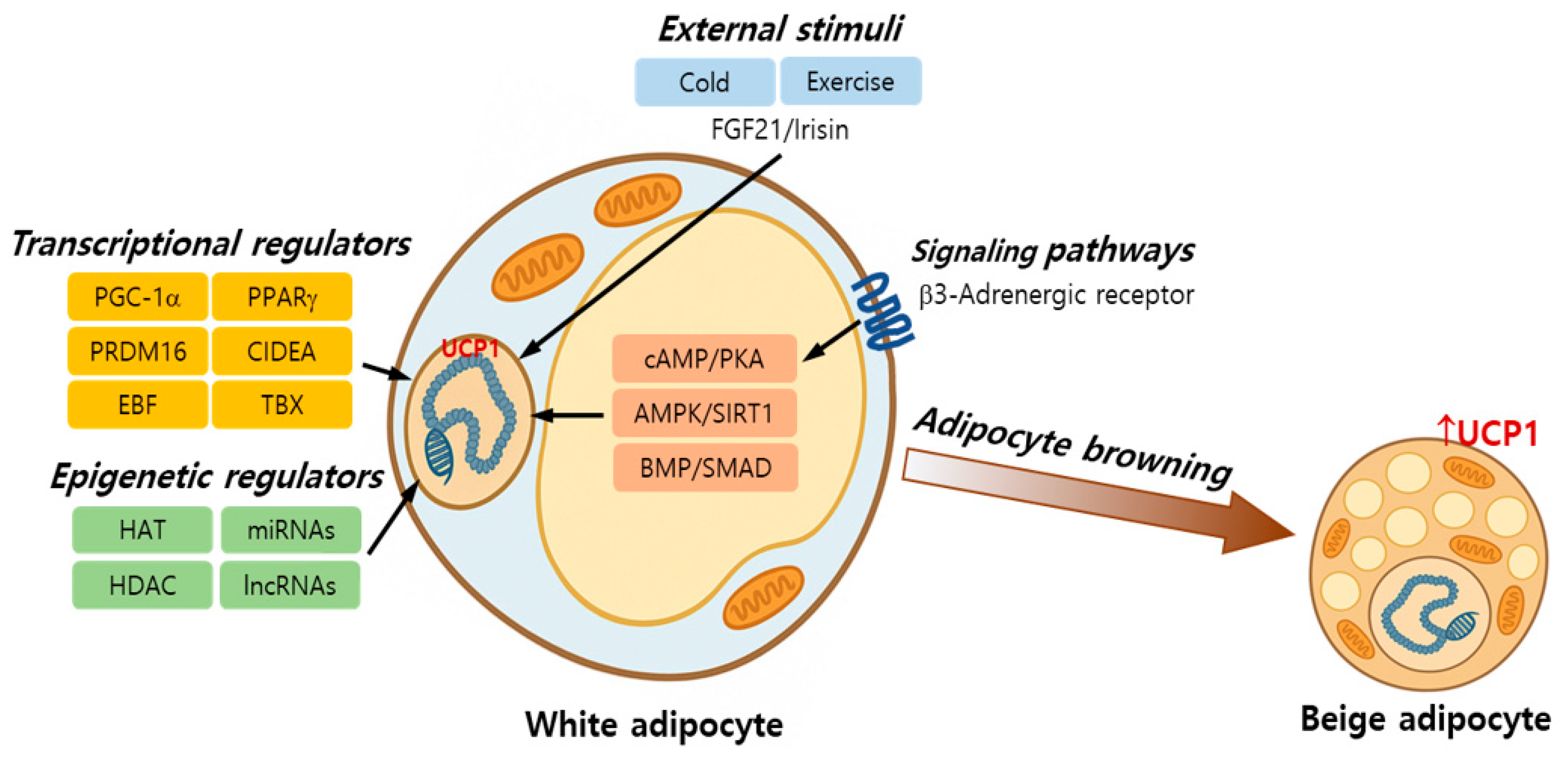
2. Mechanisms of Adipocyte Browning
2.1. Transcriptional Regulators
2.2. Signaling Pathways
2.3. Epigenetic and Environmental Factors
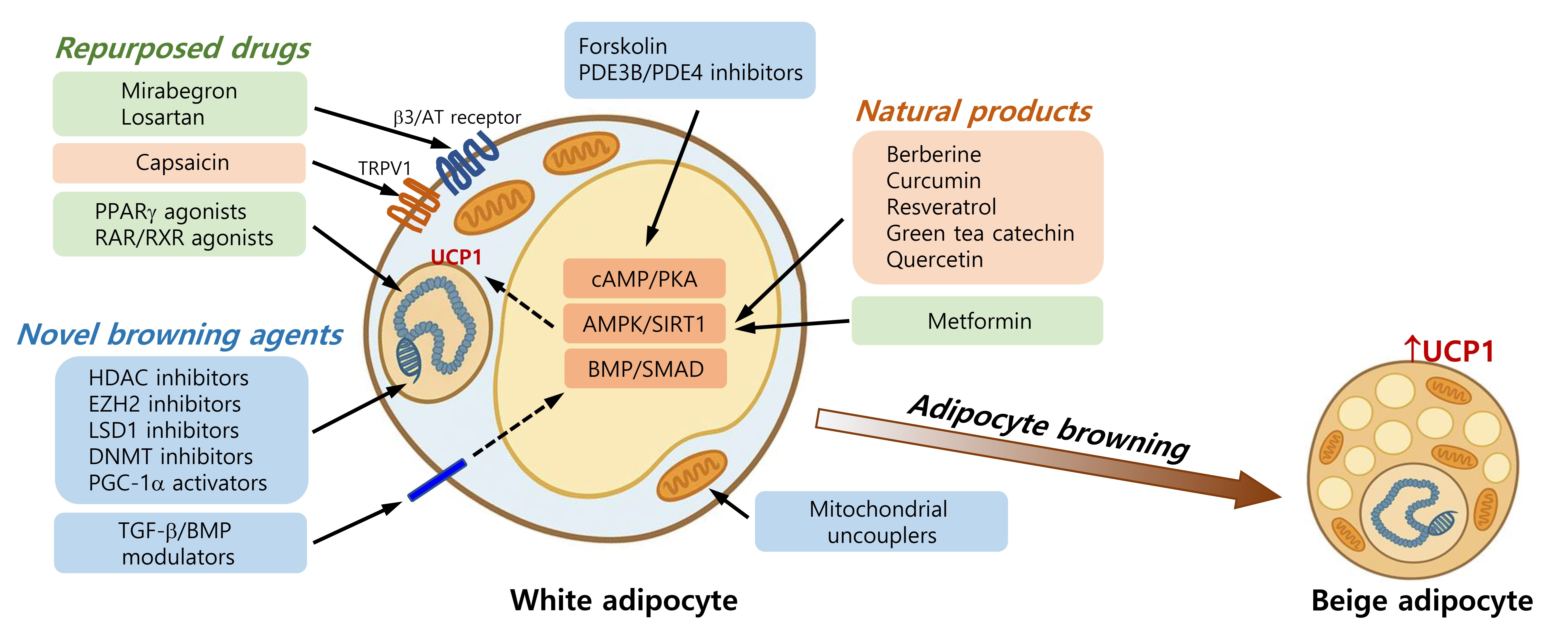
3. Pharmacological Browning Agents
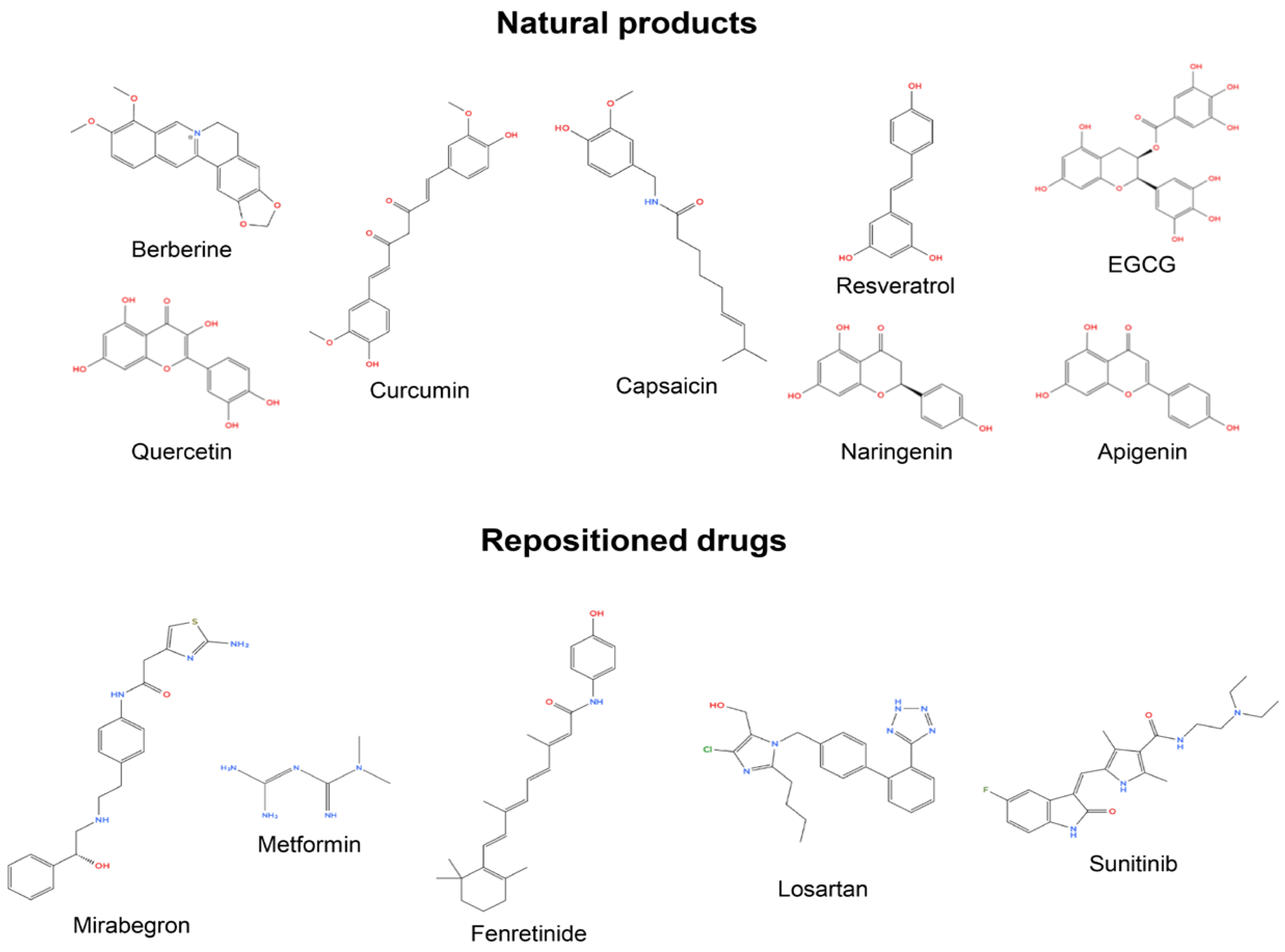
3.1. Natural Products
3.2. Drug Repositioning
3.3. Current Status of Preclinical and Clinical Studies on Browning Agents
4. Discovery of Novel Browning Agents
4.1. TGF-β and BMP Pathway Modulators
4.2. Epigenetic Regulators
4.3. Mitochondria-Targeted Agents
4.4. Transcriptional Program Modulators
4.5. Notch Pathway Inhibitors
4.6. cAMP Pathway Modulators
4.7. Other Emerging Probes
5. Challenges and Limitations
6. Future Directions
7. Conclusions
Author Contributions
Funding
Data Availability Statement
Conflicts of Interest
References
- World Health Organization. Obesity and Overweight. 2024. Available online: https://www.who.int/news-room/fact-sheets/detail/obesity-and-overweight (accessed on 3 November 2025).
- Hruby, A.; Hu, F.B. The epidemiology of obesity: A big picture. Pharmacoeconomics 2015, 33, 673–689. [Google Scholar] [CrossRef]
- Ahmed, S.K.; Mohammed, R.A. Obesity: Prevalence, causes, consequences, management, preventive strategies and future research directions. Metab. Open 2025, 27, 100375. [Google Scholar] [CrossRef]
- Hall, K.D.; Sacks, G.; Chandramohan, D.; Chow, C.C.; Wang, Y.C.; Gortmaker, S.L.; Swinburn, B.A. Quantification of the effect of energy imbalance on bodyweight. Lancet 2011, 378, 826–837. [Google Scholar] [CrossRef]
- Wilding, J.P.H.; Batterham, R.L.; Calanna, S.; Davies, M.; Van Gaal, L.F.; Lingvay, I.; McGowan, B.M.; Rosenstock, J.; Tran, M.T.D.; Wadden, T.A.; et al. Once-weekly semaglutide in adults with overweight or obesity. N. Engl. J. Med. 2021, 384, 989–1002. [Google Scholar] [CrossRef] [PubMed]
- Pi-Sunyer, X.; Astrup, A.; Fujioka, K.; Greenway, F.; Halpern, A.; Krempf, M.; Lau, D.C.W.; Le Roux, C.W.; Violante Ortiz, R.V.; Jensen, C.B.; et al. A Randomized, Controlled Trial of 3.0 mg of liraglutide in Weight Management. N. Engl. J. Med. 2015, 373, 11–22. [Google Scholar] [CrossRef] [PubMed]
- Zhang, Z.; Zhang, Q.; Tan, Y.; Chen, Y.; Zhou, X.; Liu, S.; Yu, J. GLP-1RAs caused gastrointestinal adverse reactions of drug withdrawal: A system review and network meta-analysis. Front. Endocrinol. 2023, 14, 1149328, Correction in Front. Endocrinol. 2023, 14, 1270115. [Google Scholar] [CrossRef]
- Filippatos, T.D.; Panagiotopoulou, T.V.; Elisaf, M.S. Adverse effects of GLP-1 receptor agonists. Rev. Diabet. Stud. 2015, 11, 202–230. [Google Scholar] [CrossRef] [PubMed]
- Kajimura, S.; Spiegelman, B.M.; Seale, P. Brown and beige fat: Physiological roles beyond heat generation. Cell Metab. 2015, 22, 546–559. [Google Scholar] [CrossRef]
- Cannon, B.; Nedergaard, J. Brown adipose tissue: Function and physiological significance. Physiol. Rev. 2004, 84, 277–359. [Google Scholar] [CrossRef]
- Wu, J.; Boström, P.; Sparks, L.M.; Ye, L.; Choi, J.H.; Giang, A.H.; Khandekar, M.; Virtanen, K.A.; Nuutila, P.; Schaart, G.; et al. Beige adipocytes are a distinct type of thermogenic fat cell in mouse and human. Cell 2012, 150, 366–376. [Google Scholar] [CrossRef]
- Harms, M.; Seale, P. Brown and beige fat: Development, function and therapeutic potential. Nat. Med. 2013, 19, 1252–1263. [Google Scholar] [CrossRef]
- Bartelt, A.; Heeren, J. Adipose tissue browning and metabolic health. Nat. Rev. Endocrinol. 2014, 10, 24–36. [Google Scholar] [CrossRef]
- Sakaguchi, M. Adipose tissue dynamics, thermogenesis and interorgan connections for preventing obesity and metabolic disorders. JMA J. 2024, 7, 172–177. [Google Scholar] [CrossRef]
- Schirinzi, V.; Poli, C.; Bertertti, C.; Leone, A. Browning of adipocytes: A potential therapeutic approach to obesity. Nutrients 2023, 15, 2229. [Google Scholar] [CrossRef] [PubMed]
- Rosen, E.D.; Spiegelman, B.M. What we talk about when we talk about fat. Cell 2014, 156, 20–44. [Google Scholar] [CrossRef] [PubMed]
- Villarroya, F.; Cereijo, R.; Villarroya, J.; Giralt, M. Brown adipose tissue as a secretory organ. Nat. Rev. Endocrinol. 2017, 13, 26–35. [Google Scholar] [CrossRef]
- Ricquier, D. UCP1, the mitochondrial uncoupling protein of brown adipocyte: A personal contribution and a historical perspective. Biochimie 2017, 134, 3–8. [Google Scholar] [CrossRef]
- Puigserver, P.; Wu, Z.; Park, C.W.; Graves, R.; Wright, M.; Spiegelman, B.M. A cold-inducible coactivator of nuclear receptors linked to adaptive thermogenesis. Cell 1998, 92, 829–839. [Google Scholar] [CrossRef]
- Seale, P.; Kajimura, S.; Yang, W.; Chin, S.; Rohas, L.M.; Uldry, M.; Tavernier, G.; Langin, D.; Spiegelman, B.M. Transcriptional control of brown fat determination by PRDM16. Cell Metab. 2007, 6, 38–54. [Google Scholar] [CrossRef]
- Ohno, H.; Shinoda, K.; Spiegelman, B.M.; Kajimura, S. PPARγ agonists induce a white-to-brown fat conversion through stabilization of PRDM16 protein. Cell Metab. 2012, 15, 395–404. [Google Scholar] [CrossRef] [PubMed]
- Kajimura, S.; Seale, P.; Spiegelman, B.M. Transcriptional control of brown fat development. Cell Metab. 2010, 11, 257–262. [Google Scholar] [CrossRef]
- Zhang, X.; Xiao, J.; Jiang, M.; Phillips, C.J.C.; Shi, B. Thermogenesis and energy metabolism in brown adipose tissue in animals experiencing cold stress. Int. J. Mol. Sci. 2025, 26, 3233. [Google Scholar] [CrossRef]
- Cantó, C.; Auwerx, J. PGC-1α, SIRT1 and AMPK, an energy sensing network that controls energy expenditure. Curr. Opin. Lipidol. 2009, 20, 98–105. [Google Scholar] [CrossRef]
- Fisher, F.M.; Kleiner, S.; Douris, N.; Fox, E.C.; Mepani, R.J.; Verdeguer, F.; Wu, J.; Kharitonenkov, A.; Flier, J.S.; Maratos-Flier, E.; et al. FGF21 regulates PGC-1α and browning of white adipose tissues in adaptive thermogenesis. Genes Dev. 2012, 26, 271–281. [Google Scholar] [CrossRef]
- Boström, P.; Wu, J.; Jedrychowski, M.P.; Korde, A.; Ye, L.; Lo, J.C.; Rasbach, K.A.; Boström, E.A.; Choi, J.H.; Long, J.Z.; et al. A PGC1-α-dependent myokine that drives brown-fat-like development of white fat and thermogenesis. Nature 2012, 481, 463–468. [Google Scholar] [CrossRef]
- Tseng, Y.H.; Kokkotou, E.; Schulz, T.J.; Huang, T.L.; Winnay, J.N.; Taniguchi, C.M.; Tran, T.T.; Suzuki, R.; Espinoza, D.O.; Yamamoto, Y.; et al. New role of bone morphogenetic protein 7 in brown adipogenesis and energy expenditure. Nature 2008, 454, 1000–1004, Correction in Nature 2009, 459, 122. [Google Scholar] [CrossRef] [PubMed]
- Whittle, A.J.; Carobbio, S.; Martins, L.; Slawik, M.; Hondares, E.; Vázquez, M.J.; Morgan, D.; Csikasz, R.I.; Gallego, R.; Rodriguez-Cuenca, S.; et al. BMP8B increases brown adipose tissue thermogenesis through both central and peripheral actions. Cell 2012, 149, 871–885. [Google Scholar] [CrossRef] [PubMed]
- Bordicchia, M.; Liu, D.; Amri, E.Z.; Ailhaud, G.; Dessi-Fulgheri, P.; Zhang, C.; Takahashi, N.; Sarzani, R.; Collins, S. Cardiac natriuretic peptides act via p38 MAPK to induce the brown fat thermogenic program in mouse and human adipocytes. J. Clin. Investig. 2012, 122, 1022–1036. [Google Scholar] [CrossRef]
- Naduri, R. Epigenetic regulators of white adipocyte browning. Epigenomes 2021, 5, 3. [Google Scholar] [CrossRef] [PubMed]
- Zhou, Y.; Peng, J.; Jiang, S. Role of histone acetyltransferases and histone deacetylases in adipocyte differentiation and adipogenesis. Eur. J. Cell Biol. 2014, 93, 170–177. [Google Scholar] [CrossRef]
- Zhao, X.Y.; Li, S.; Wang, G.X.; Yu, Q.; Lin, J.D. A long noncoding RNA transcriptional regulatory circuit drives thermogenic adipocyte differentiation. Mol. Cell 2014, 55, 372–382. [Google Scholar] [CrossRef]
- van der Lans, A.A.J.J.; Hoeks, J.; Brans, B.; Vijgen, G.H.E.J.; Visser, M.G.W.; Vosselman, M.J.; Hansen, J.; Jörgensen, J.A.; Wu, J.; Mottaghy, F.M.; et al. Cold acclimation recruits human brown fat and increases nonshivering thermogenesis. J. Clin. Investig. 2013, 123, 3395–3403. [Google Scholar] [CrossRef]
- van Marken Lichtenbelt, W.D.; Vanhommerig, J.W.; Smulders, N.M.; Drossaerts, J.M.A.F.L.; Kemerink, G.J.; Bouvy, N.D.; Schrauwen, P.; Teule, G.J.J. Cold-activated brown adipose tissue in healthy men. N. Engl. J. Med. 2009, 360, 1500–1508, Correction in N. Engl. J. Med. 2009, 360, 1917. [Google Scholar] [CrossRef]
- Sanchez-Delgado, G.; Martinez-Tellez, B.; Olza, J.; Aguilera, C.M.; Gil, A.; Ruiz, J.R. Role of exercise in the activation of brown adipose tissue. Ann. Nutr. Metab. 2015, 67, 21–32. [Google Scholar] [CrossRef]
- Rao, R.R.; Long, J.Z.; White, J.P.; Svensson, K.J.; Lou, J.; Lokurkar, I.; Jedrychowski, M.P.; Ruas, J.L.; Wrann, C.D.; Lo, J.C.; et al. Meteorin-like is a hormone that regulates immune–adipose interactions to increase beige fat thermogenesis. Cell 2014, 157, 1279–1291. [Google Scholar] [CrossRef]
- Vijgen, G.H.; Bouvy, N.D.; Jaap Teule, G.J.; Brans, B.; Schrauwen, P.; van Marken Lichtenbely, W.D. Brown adipose tissue in morbidly obese subjects. PLoS ONE 2011, 6, e17247. [Google Scholar] [CrossRef]
- Osorio-Conles, O.; Vidal, J.; de Hollanda, A. Impact of bariatric surgery on adipose tissue biology. J. Clin. Med. 2021, 10, 5516. [Google Scholar] [CrossRef]
- Wu, L.; Xia, M.; Duan, Y.; Zhang, L.; Jiang, H.; Hu, X.; Yan, H.; Zhang, Y.; Gu, Y.; Shi, H.; et al. Berberine promotes the recruitment and activation of brown adipose tissue in mice and humans. Cell Death Dis. 2019, 10, 468. [Google Scholar] [CrossRef] [PubMed]
- Zhang, Z.; Zhang, H.; Li, B.; Meng, X.; Wang, J.; Zhang, Y.; Yao, S.; Ma, Q.; Jin, L.; Yang, J.; et al. Berberine activates thermogenesis in white and brown adipose tissue. Nat. Commun. 2014, 5, 5493. [Google Scholar] [CrossRef] [PubMed]
- Ejaz, A.; Wu, D.; Kwan, P.; Meydani, M. Curcumin inhibits adipogenesis in 3T3-L1 adipocytes and angiogenesis and obesity in C57/BL mice. J. Nutr. 2009, 139, 919–925. [Google Scholar] [CrossRef] [PubMed]
- Panahi, Y.; Hosseini, M.S.; Khalili, N.; Naimi, E.; Simental-Mendía, L.E.; Majeed, M.; Sahebkar, A. Effects of curcumin on serum cytokine concentrations in subjects with metabolic syndrome: A post-hoc analysis of a randomized controlled trial. Biomed. Pharmacother. 2016, 82, 578–582. [Google Scholar] [CrossRef]
- Wang, S.; Liang, X.; Yang, Q.; Fu, X.; Zhu, M.; Rodgers, B.D.; Jiang, Q.; Dodson, M.V.; Du, M. Resveratrol enhances brown adipocyte formation and function by activating AMP-activated protein kinase (AMPK) α1 in mice fed high-fat diet. Mol. Nutr. Food Res. 2017, 61, 1600746. [Google Scholar] [CrossRef]
- Walle, T. Bioavailability of resveratrol. Ann. N. Y. Acad. Sci. 2011, 1215, 9–15. [Google Scholar] [CrossRef]
- Yoneshiro, T.; Matsushita, M.; Hibi, M.; Tone, H.; Takeshita, M.; Yasunaga, K.; Katsuragi, Y.; Kameya, T.; Sugie, H.; Saito, M. Tea catechin and caffeine activate brown adipose tissue and increase cold-induced thermogenic capacity in humans. Am. J. Clin. Nutr. 2017, 105, 873–881. [Google Scholar] [CrossRef]
- Shixian, Q.; VanCrey, B.; Shi, J.; Kakuda, Y.; Jiang, Y. Green tea extract thermogenesis-induced weight loss by epigallocatechin gallate inhibition of catechol-O-methyltransferase. J. Med. Food 2007, 9, 451–458. [Google Scholar] [CrossRef]
- Arias, N.; Picó, C.; Teresa Macarulla, M.; Oliver, P.; Miranda, J.; Palou, A.; Portillo, M.P. A combination of resveratrol and quercetin induces browning in white adipose tissue of rats fed an obesogenic diet. Obesity 2017, 25, 111–121. [Google Scholar] [CrossRef]
- Yoneshiro, T.; Aita, S.; Kawai, Y.; Iwanaga, T.; Saito, M. Nonpungent capsaicin analogs (capsinoids) increase energy expenditure through the activation of brown adipose tissue in humans. Am. J. Clin. Nutr. 2012, 95, 845–850. [Google Scholar] [CrossRef] [PubMed]
- Baskaran, P.; Krishnan, V.; Ren, J.; Thyagarajan, B. Capsaicin induces browning of white adipose tissue and counters obesity by activating TRPV1 channel-dependent mechanisms. Br. J. Pharmacol. 2016, 173, 2369–2389. [Google Scholar] [CrossRef] [PubMed]
- Assini, J.M.; Mulvihill, E.E.; Burke, A.C.; Sutherland, B.G.; Telford, D.E.; Chhoker, S.S.; Sawyez, C.G.; Drangova, M.; Adams, A.C.; Kharitonenkov, A.; et al. Naringenin prevents obesity, hepatic steatosis, and glucose intolerance in male mice independent of fibroblast growth factor 21. Endocrinology 2015, 156, 2087–2102. [Google Scholar] [CrossRef]
- Sun, Y.S.; Qu, W. Dietary apigenin promotes lipid catabolism, thermogenesis, and browning in adipose tissues of HFD-fed mice. Food Chem. Toxicol. 2019, 133, 110780. [Google Scholar] [CrossRef] [PubMed]
- Liu, J.; Lee, J.; Salazar Hernández, M.A.; Mazitschek, R.; Ozcan, U. Treatment of obesity with celastrol. Cell 2015, 161, 999–1011. [Google Scholar] [CrossRef]
- Zhu, W.; Peng, K.; Zhao, Y.; Xu, C.; Tao, X.; Liu, Y.; Huang, Y.; Yang, X. Sodium butyrate attenuated diet-induced obesity, insulin resistance and inflammation partly by promoting fat thermogenesis via intro-adipose sympathetic innervation. Front. Pharmacol. 2022, 13, 938760. [Google Scholar] [CrossRef]
- Kim, S.; Park, D.H.; Moon, S.; Gu, B.; Mantik, K.E.K.; Kwak, H.B.; Ryu, J.K.; Kang, J.H. Ketogenic diet with aerobic exercise can induce fat browning: Potential roles of β-hydroxybutyrate. Front. Nutr. 2024, 11, 1443483. [Google Scholar] [CrossRef] [PubMed]
- Cypess, A.M.; Weiner, L.S.; Roberts-Toler, C.; Franquet Elía, E.; Kessler, S.H.; Kahn, P.A.; English, J.; Chatman, K.; Trauger, S.A.; Doria, A.; et al. Activation of human brown adipose tissue by a β3-adrenergic receptor agonist. Cell Metab. 2015, 21, 33–38. [Google Scholar] [CrossRef] [PubMed]
- Niu, Z.; Hildebrand, S.; Kappes, S.; Ali, M.E.; Vogel, M.; Mikhael, M.; Ran, D.; Kozak, J.; Wiedner, M.; Richter, D.F.; et al. Enhanced browning of adipose tissue by mirabegron-microspheres. J. Control. Release 2024, 375, 601–613. [Google Scholar] [CrossRef] [PubMed]
- Ahmadian, M.; Suh, J.M.; Hah, N.; Liddle, C.; Atkins, A.R.; Downes, M.; Evans, R.M. PPARγ signaling and metabolism: The good, the bad and the future. Nat. Med. 2013, 19, 557–566. [Google Scholar] [CrossRef]
- Nygaard, E.B.; Vienberg, S.G.; Orskov, C.; Hansen, H.S.; Andersen, B. Metformin stimulates FGF21 expression in primary hepatocytes. Exp. Diabetes Res. 2012, 2012, 465282. [Google Scholar] [CrossRef]
- Charles, E.D.; Neuschwander-Tetri, B.A.; Pablo Frias, J.P.; Kundu, S.; Luo, Y.; Tirucherai, G.S.; Christian, R. Pegbelfermin (BMS-986036), pegylated FGF21, in patients with obesity and type 2 diabetes: Results from a randomized Phase 2 study. Obesity 2019, 27, 41–49. [Google Scholar] [CrossRef]
- Alvarez, R.; de Andrés, J.; Yubero, P.; Viñas, O.; Mampel, T.; Iglesias, R.; Giralt, M.; Villarroya, F. A Novel Regulatory Pathway of Brown Fat Thermogenesis: Retinoic acid is a transcriptional activator of the mitochondrial uncoupling protein gene. J. Biol. Chem. 1995, 270, 5666–5673. [Google Scholar] [CrossRef]
- Puigserver, P.; Vázquez, F.; Bonet, M.L.; Picó, C.; Palou, A. In vitro and in vivo induction of brown adipocyte uncoupling protein (thermogenin) by retinoic acid. Biochem. J. 1996, 317, 827–833. [Google Scholar] [CrossRef]
- McIlroy, G.D.; Tammireddy, S.R.; Maskrey, B.H.; Grant, L.; Doherty, M.K.; Watson, D.G.; Delibegović, M.; Whitfield, P.D.; Mody, N. Fenretinide mediated retinoic acid receptor signalling and inhibition of ceramide biosynthesis regulates adipogenesis, lipid accumulation, mitochondrial function and nutrient stress signalling in adipocytes and adipose tissue. Biochem. Pharmacol. 2016, 100, 86–97. [Google Scholar] [CrossRef]
- Lee, N.H.; Choi, M.J.; Yu, H.; Kim, J.I.; Cheon, H.G. Adapalene induces adipose browning through the RARβ-p38 MAPK-ATF2 pathway. Arch. Pharmacal Res. 2022, 45, 340–351. [Google Scholar] [CrossRef]
- Nie, B.; Nie, T.; Hui, X.; Gu, P.; Mao, L.; Li, K.; Yuan, R.; Zheng, J.; Wang, H.; Li, K.; et al. Brown adipogenic reprogramming induced by a small molecule. Cell Rep. 2017, 18, 624–635. [Google Scholar] [CrossRef]
- Kalupahana, N.S.; Moustaid-Moussa, N. The renin-angiotensin system: A link between obesity, inflammation and insulin resistance. Obes. Rev. 2012, 13, 136–149. [Google Scholar] [CrossRef] [PubMed]
- Than, A.; Xu, S.; Li, R.; Leow, M.K.S.; Sun, L.; Chen, P. Angiotensin type 2 receptor activation promotes browning of white adipose tissue and brown adipogenesis. Signal Transduct. Target. Ther. 2017, 2, 17022, Correction in Signal Transduct. Target. Ther. 2018, 3, 10. [Google Scholar] [CrossRef]
- Kim, D.Y.; Choi, M.J.; Ko, T.K.; Lee, N.H.; Kim, O.H.; Cheon, H.G. Angiotensin AT1 receptor antagonism by losartan stimulates adipocyte browning via induction of apelin. J. Biol. Chem. 2020, 295, 14878–14892. [Google Scholar] [CrossRef] [PubMed]
- Qiu, Y.; Sun, Y.; Xu, D.; Yang, Y.; Liu, X.; Wei, Y.; Chen, Y.; Feng, Z.; Li, S.; Reyad-Ul Ferdous, M.; et al. Screening of FDA-approved drugs identifies sutent as a modulator of UCP1 expression in brown adipose tissue. EBiomedicine 2018, 37, 344–355. [Google Scholar] [CrossRef]
- Yadav, H.; Rane, S.G. TGF-β/Smad3 signaling regulates brown adipocyte induction in white adipose tissue. Front. Endocrinol. 2012, 3, 35. [Google Scholar] [CrossRef] [PubMed]
- Tu, W.Z.; Fu, Y.B.; Xie, X. RepSox, a small molecule inhibitor of the TGFβ receptor, induces brown adipogenesis and browning of white adipocytes. Acta Pharmacol. Sin. 2019, 40, 1523–1531. [Google Scholar] [CrossRef]
- Ichida, J.K.; Blanchard, J.; Lam, K.; Son, E.Y.; Chung, J.E.; Egli, D.; Loh, K.M.; Carter, A.C.; Di Giorgio, F.P.; Koszka, K.; et al. A small-molecule inhibitor of TGF-β signaling replaces Sox2 in reprogramming by inducing Nanog. Cell Stem Cell 2009, 5, 491–503. [Google Scholar] [CrossRef]
- Galmozzi, A.; Mitro, N.; Ferrari, A.; Gers, E.; Gilardi, F.; Godio, C.; Cermenati, G.; Gualerzi, A.; Donetti, E.; Rotili, D.; et al. Inhibition of class I histone deacetylases unveils a mitochondrial signature and enhances oxidative metabolism in skeletal muscle and adipose tissue. Diabetes 2013, 62, 732–742. [Google Scholar] [CrossRef]
- Robinson, E.L.; Bagchi, R.A.; Major, J.L.; Bergman, B.C.; Matsuda, J.L.; McKinsey, T.A. HDAC11 inhibition triggers bimodal thermogenic pathways to circumvent adipocyte catecholamine resistance. J. Clin. Investig. 2023, 133, e168192. [Google Scholar] [CrossRef]
- Pan, D.; Huang, L.; Zhu, L.J.; Zou, T.; Ou, J.; Zhou, W.; Wang, Y.X. Jmjd3-mediated H3K27me3 dynamics orchestrate brown fat development and regulate white fat plasticity. Dev. Cell 2015, 35, 568–583. [Google Scholar] [CrossRef]
- Duteil, D.; Metzger, E.; Willmann, D.; Karagianni, P.; Friedrichs, N.; Greschik, H.; Günther, T.; Buettner, R.; Talianidis, I.; Metzger, D.; et al. LSD1 promotes oxidative metabolism of white adipose tissue. Nat. Commun. 2014, 5, 4093. [Google Scholar] [CrossRef] [PubMed]
- Kuroda, M.; Nomura, K.; Chamoto, R.; Izumi-Mishima, Y.; Yasui-Yamada, S.; Tsutsumi, Y.M.; Tsutsumi, R.; Sakaue, H. DNA methyltransferase inhibition by 5-azacytidine promotes thermogenic programming in beige adipocytes. Biochem. Biophys. Res. Commun. 2025, 774, 152094. [Google Scholar] [CrossRef]
- Jagtap, U.; Paul, A. UCP1 activation: Hottest target in the thermogenesis pathway to treat obesity using molecules of synthetic and natural origin. Drug Discov. Today 2023, 28, 103717. [Google Scholar] [CrossRef] [PubMed]
- Grundlingh, J.; Dargan, P.I.; El-Zanfaly, M.; Wood, D.M. 2,4-Dinitrophenol (DNP): A weight loss agent with significant acute toxicity and risk of death. J. Med. Toxicol. 2011, 7, 205–212. [Google Scholar] [CrossRef] [PubMed]
- Alexopoulos, S.J.; Chen, S.Y.; Brandon, A.E.; Salamoun, J.M.; Byrne, F.L.; Garcia, C.J.; Beretta, M.; Olzomer, E.M.; Shah, D.P.; Philp, A.M.; et al. Mitochondrial uncoupler BAM15 reverses diet-induced obesity and insulin resistance in mice. Nat. Commun. 2020, 11, 2397. [Google Scholar] [CrossRef]
- Onodera, K.; Hasegawa, Y.; Yokota, N.; Tamura, S.; Kinno, H.; Takahashi, I.; Chiba, H.; Kojima, H.; Katagiri, H.; Nata, K.; et al. A newly identified compound activating UCP1 inhibits obesity and its related metabolic disorders. Obesity 2024, 32, 324–338. [Google Scholar] [CrossRef]
- Zhang, L.N.; Zhou, H.Y.; Fu, Y.Y.; Li, Y.Y.; Wu, F.; Gu, M.; Wu, L.Y.; Xia, C.M.; Dong, T.C.; Li, J.Y.; et al. Novel small-molecule PGC-1α transcriptional regulator with beneficial effects on diabetic db/db mice. Diabetes 2013, 62, 1297–1307. [Google Scholar] [CrossRef]
- Wu, D.; Eeda, V.; Undi, R.B.; Mann, S.; Stout, M.; Lim, H.Y.; Wang, W. A novel peroxisome proliferator-activated receptor gamma ligand improves insulin sensitivity and promotes browning of white adipose tissue in obese mice. Mol. Metab. 2021, 54, 101363. [Google Scholar] [CrossRef]
- Bi, P.; Shan, T.; Liu, W.; Yue, F.; Yang, X.; Liang, X.R.; Wang, J.; Li, J.; Carlesso, N.; Liu, X.; et al. Inhibition of Notch signaling promotes browning of white adipose tissue and ameliorates obesity. Nat. Med. 2014, 20, 911–918. [Google Scholar] [CrossRef]
- Kraynik, S.M.; Miyaoka, R.S.; Beavo, J.A. PDE3 and PDE4 isozyme—Selective inhibitors are both required for synergistic activation of brown adipose tissue. Mol. Pharmacol. 2013, 83, 1155–1165. [Google Scholar] [CrossRef]
- Abbasi, M.; Zhou, F.; Ly, N.K.; Taylor, A.; Hu, Q.; Chi, J.; Gu, H.; Wang, S. Anti-obesity and metabolic effects of forskolin in obese C57BL/6J mice. Int. J. Mol. Sci. 2025, 26, 6607. [Google Scholar] [CrossRef] [PubMed]
- Mitschke, M.M.; Hoffmann, L.S.; Gnad, T.; Scholz, D.; Kruithoff, K.; Mayer, P.; Hass, B.; Sassmann, A.; Pfeifer, A.; Kilic, A. Increased cGMP promotes healthy expansion and browning of white adipose tissue. FASEB J. 2013, 27, 1621–1630. [Google Scholar] [CrossRef] [PubMed]
- Hoffmann, L.S.; Etzrodt, J.; Willkomm, L.; Sanyal, A.; Schja, L.; Fischer, A.W.X.; Stasch, J.H.; Bloch, W.; Friebe, A.; Heeren, J.; et al. Stimulation of soluble guanylyl cyclase protects against obesity by recruiting brown adipose tissue. Nat. Commun. 2015, 6, 7235. [Google Scholar] [CrossRef]
- Schwartzkopf, C.D.; Hadcock, J.R.; Liu, G.; Germano, P.; Roux, J.; Shea, C.M.; Buys, E.S.; Jones, J.E. Beneficial Metabolic Effects of Praliciguat, a Soluble Guanylate Cyclase Stimulator, in a Mouse Diet-Induced Obesity Model. Front. Pharmacol. 2022, 13, 852080. [Google Scholar] [CrossRef]
- Moro, C.; Lafontan, M. Natriuretic peptides and cGMP signaling control of energy homeostasis. Am. J. Physiol.-Heart Circ. Physiol. 2013, 304, H358–H368. [Google Scholar] [CrossRef]
- Li, S.; Li, Y.; Xiang, L.; Dong, J.; Liu, M.; Xiang, G. Sildenafil induces browning of subcutaneous white adipose tissue in overweight adults. Metabolism 2018, 78, 106–117. [Google Scholar] [CrossRef]
- Lo, K.A.; Ng, P.Y.; Kabiri, Z.; Virshup, D.; Sun, L. Wnt inhibition enhances browning of mouse primary white adipocytes. Adipocyte 2016, 5, 224–231. [Google Scholar] [CrossRef] [PubMed]
- Murholm, M.; Isidor, M.S.; Basse, A.L.; Winther, S.; Sørensen, C.; Skovgaard-Petersen, J.; Nielsen, M.M.; Hansen, A.S.; Quistorff, B.; Hansen, J.B. Retinoic acid has different effects on UCP1 expression in mouse and human adipocytes. BMC Cell Biol. 2013, 14, 41. [Google Scholar] [CrossRef]
- Cypess, A.M.; Lehman, S.; Williams, G.; Tal, I.; Rodman, D.; Goldfine, A.B.; Kuo, F.C.; Palmer, E.L.; Tseng, Y.H.; Doria, A.; et al. Identification and importance of brown adipose tissue in adult humans. N. Engl. J. Med. 2009, 360, 1509–1517. [Google Scholar] [CrossRef]
- Rosenwald, M.; Perdikari, A.; Rülicke, T.; Wolfrum, C. Bi-directional interconversion of Brite and white adipocytes. Nat. Cell Biol. 2013, 15, 659–667. [Google Scholar] [CrossRef]
- Kazak, L.; Chouchani, E.T.; Jedrychowski, M.P.; Erickson, B.K.; Shinoda, K.; Cohen, P.; Vetrivelan, R.; Lu, G.Z.; Laznik-Bogoslavski, D.; Hasenfuss, S.C.; et al. A creatine-driven substrate cycle enhances energy expenditure and thermogenesis in beige fat. Cell 2015, 163, 643–655. [Google Scholar] [CrossRef] [PubMed]
- Ikeda, K.; Kang, Q.; Yoneshiro, T.; Camporex, J.P.; Maki, H.; Homma, M.; Shinoda, K.; Chen, Y.; Lu, X.; Maretich, P.; et al. UCP1-independent signaling involving SERCA2b-mediated calcium cycling regulates beige fat thermogenesis and systemic glucose homeostasis. Nat. Med. 2017, 23, 1454–1465. [Google Scholar] [CrossRef]
- Chouchani, E.T.; Kazak, L.; Spiegelman, B.M. New advances in adaptive thermogenesis: UCP1 and beyond. Cell Metab. 2019, 29, 27–37. [Google Scholar] [CrossRef] [PubMed]
- Ikeda, K.; Yamada, T. UCP1 dependent and independent thermogenesis in brown and beige adipocytes. Front. Endocrinol. 2020, 11, 498. [Google Scholar] [CrossRef] [PubMed]



| Representative Agents | Primary Target/Pathway | Mechanism of Browning Induction | Key Metabolic Effects/ Remarks | Refs. |
|---|---|---|---|---|
| Natural products | ||||
| Berberine | AMPK → PGC-1α → UCP1, PRDM16 | Activates AMPK–PGC-1α axis; demethylates PRDM16 promoter | ↑ Mitochondrial biogenesis; ↓ DNA methylation; improved insulin sensitivity | [39,40] |
| Curcumin | AMPK activation | Stimulates mitochondrial biogenesis and UCP1 expression | ↑ BAT activity; improved lipid/glucose metabolism | [41,42] |
| Resveratrol | SIRT1–PGC-1α | Enhances mitochondrial biogenesis via SIRT1 activation | ↑ Energy expenditure; limited by low bioavailability | [43,44] |
| EGCG (green-tea catechin) | AMPK/COMT inhibition | Prolongs catecholamine signaling; enhances thermogenesis | ↑ Energy expenditure in humans | [45,46] |
| Quercetin | SIRT1 | Up-regulates UCP1 and SIRT1; modulates gut microbiota | ↓ Inflammation; ↑ thermogenesis | [47] |
| Capsaicin/Capsinoids | TRPV1 | Sympathetic activation via TRPV1 | ↑ UCP1 and PPARγ; ↑ energy expenditure | [48,49] |
| Naringenin/Apigenin | PPARα/ATGL–FOXO1–SIRT1 | Induces lipolysis-linked browning | ↓ Obesity, ↑ lipid oxidation | [50,51] |
| Celastrol/Butyrate/ β-Hydroxy butyrate | AMPK–SIRT1–PGC-1α | Leptin sensitization/HDAC9 inhibition/ ketone signaling | ↑ Thermogenic gene expression; anti-obesity effects | [52,53,54] |
| Drug repositioning | ||||
| Mirabegron | β3-Adrenergic receptor | Activates cAMP–PKA–UCP1 axis | ↑ BAT activity, ↑ energy expenditure (~150 kcal/day in humans) | [55,56] |
| TZDs | PPARγ | Induce beige adipocyte differentiation | ↑ Browning; limited by side-effects (edema, bone loss) | [57] |
| Metformin/FGF21 analogs | AMPK → FGF21 | Indirect activation of thermogenesis | ↑ Mitochondrial biogenesis, ↑ glucose tolerance | [58,59] |
| Retinoids (fenretinide, adapalene, bexarotene) | RAR/RXR | Up-regulate UCP1 via RAR–p38MAPK–ATF2 pathway | Browning in vivo; improved insulin sensitivity | [60,61,62,63,64] |
| Losartan/Ang II pathway | AT1R/AT2R– apelin | AT1R blockade or AT2R stimulation promotes browning | ↑ PRDM16, ↑ UCP1; reduced obesity in mice | [65,66,67] |
| Sutent (sunitinib) | RTK inhibitor | Directly increases UCP1 expression | ↓ Body weight; ↑ thermogenesis in HFD mice | [68] |
| Cmpd | Chemical Information | Primary Target | Mechanism | Reported Biological Effects | Refs. |
|---|---|---|---|---|---|
| RepSox | 2-[5-(6-methylpyridin-2-yl)-1H-pyrazol-4-yl]-1,5-naphthyridine | ALK5/TGFβ R1 inhibition | Reprogramming by inhibiting the pathway and inducing the transcription factor Nanog | Reprogram iPSC by inhibiting TGFβ signaling | [70,71] |
| Vorinostat | N-hydroxy-N’-phenyloctanediamide | HDAC inhibition | Increase PGC-1α and UCP1 | Improve glucose homeostasis | [72] |
| Entinostat | (Pyridin-3-yl)methyl 4-(2-aminophenylcarbamoyl)benzylcarbamate | HDAC inhibition | Increase PGC-1α and UCP1 | Improve glucose homeostasis | [72] |
| GSK126 | 1-[(2S)-butan-2-yl]-N-[(4,6-dimethyl-2-oxo-1H-pyridin-3-yl)methyl]-3-methyl-6-(6-piperazin-1-yl-3-pyridinyl)indole-4-carboxamide | EZH2 inhibition | Inhibit histone methyltransferase to improve thermogenic gene networks | Improve cold tolerance, reduce adiposity | [74] |
| GSK690 | N-(2-phenyl-cyclopropyl)-4- piperidinamine | LSD1 demethylase inhibition | Inhibition of oxidative phosphorylation | Reduce weight gain when fed a high-fat diet | [75] |
| Azacitidine | 4-amino-1-β-D-ribofuranosyl-s-triazin-2(1H)-one | DNMT inhibition | Upregulate thermogenic genes | Promote adipose browning | [76] |
| BAM15 | N5,N6-bis(2-fluorophenyl)[1,2,5]oxadiazolo[3,4-b]pyrazine-5,6-diamine | Mitochondrial proton gradient (uncoupler) | Increases proton leak across mitochondrial membrane | Enhances energy expenditure, reduces fat mass, improves insulin sensitivity in mice without hyperthermia | [79] |
| ZLN005 | 2-(4-tert-butylphenyl)-1H-benzimidazole | PGC-1α activation | Enhances PGC-1α transcriptional activity/increases mitochondrial respiration | Improve glucose tolerance | [81] |
| WO95E | 4′-((5-((3-hydroxybenzyl)carbamoyl)-2,3-dimethyl-1H-indol-1-yl)methyl)-[1,1′-biphenyl]-2-carboxylic acid | PPARγ partial agonism | Block PPAR serine 273 phosphorylation | Increase energy expenditure | [82] |
| DAPT | N-[N-(3,5-difluorophenacetyl)-L-alanyl]-S-phenylglycine t-butyl ester | γ-Secretase/Notch signaling | Blocks Notch, derepresses PPARγ, and thermogenic gene expression | Promotes beige adipogenesis, improves insulin sensitivity, reduces hepatic steatosis | [83] |
| Rolipram | 4-(3-cyclopentyloxy-4-methoxyphenyl)pyrrolidin-2-one | PDE4 inhibition | Inhibits PDE4 → ↑cAMP–PKA signaling | Induces UCP1, browning of WAT, improves metabolic health in obese mice | [84] |
| Cilostazol | 6-[4-(1-cyclohexyl-1H-tetrazol-5-yl)butoxy]-3,4- dihydro-2(1H)-quinolinone | PDE3B inhibition | Enhances β-adrenergic cAMP signaling | Potentiates thermogenesis, increases lipolysis | [84] |
| Forskolin | (3R,4aR,5S,6S,8aS)-5-(acetyloxy)-3-ethenyl-4a,7-dihydroxy-8,8-dimethyl-1,6,7,8atetrahydrocyclopenta[c]chromen-9-one | Adenylyl cyclase activation | Direct cAMP elevation, PKA activation | Promotes beige adipogenesis, increases UCP1 | [85] |
| Praliciguat | (1R,2S,4S)-4-{[(4,5-dihydro-1H-imidazol-2-yl)amino]methyl}-2-(6-fluoro-1H-indol-3-yl)cyclopropane-1-carboxamide | Guanylyl cyclase activation | Direct cGMP elevation, PI3K activation | Increase energy utilization | [88] |
| Sildenafil | 1-[[3-(6,7-dihydro-1-methyl-7-oxo-3-propyl-1H-pyrazolo[4,3-d]pyrimidin-5-yl)-4-ethoxyphenyl]sulfonyl]-4-methylpiperazine | PDE5 inhibition | Direct cGMP elevation Catecholamine increase | Induces browning of WAT in human adults | [90] |
| IWP2 | N-(6-methyl-2-benzothiazolyl)-2-[(3,4,6,7-tetrahydro-4-oxo-3-phenylthieno [2-d]pyrimidin-2-yl)thio]-acetamide N-(6-methyl-2-benzothiazolyl)-2-[(3,4,6,7-tetrahydro-4-oxo-3-phenylthieno [2-d]pyrimidin-2-yl)thio]-acetamide | Wnt inhibitor | Target adipocyte precursors-Enhance thermogenic properties | Induce epididymal adipocyte browning | [91] |
Disclaimer/Publisher’s Note: The statements, opinions and data contained in all publications are solely those of the individual author(s) and contributor(s) and not of MDPI and/or the editor(s). MDPI and/or the editor(s) disclaim responsibility for any injury to people or property resulting from any ideas, methods, instructions or products referred to in the content. |
© 2026 by the authors. Licensee MDPI, Basel, Switzerland. This article is an open access article distributed under the terms and conditions of the Creative Commons Attribution (CC BY) license.
Share and Cite
Bae, Y.-A.; Cheon, H.G. Adipocyte Browning: A Promising Avenue in Anti-Obesity Therapy. Int. J. Mol. Sci. 2026, 27, 1321. https://doi.org/10.3390/ijms27031321
Bae Y-A, Cheon HG. Adipocyte Browning: A Promising Avenue in Anti-Obesity Therapy. International Journal of Molecular Sciences. 2026; 27(3):1321. https://doi.org/10.3390/ijms27031321
Chicago/Turabian StyleBae, Young-An, and Hyae Gyeong Cheon. 2026. "Adipocyte Browning: A Promising Avenue in Anti-Obesity Therapy" International Journal of Molecular Sciences 27, no. 3: 1321. https://doi.org/10.3390/ijms27031321
APA StyleBae, Y.-A., & Cheon, H. G. (2026). Adipocyte Browning: A Promising Avenue in Anti-Obesity Therapy. International Journal of Molecular Sciences, 27(3), 1321. https://doi.org/10.3390/ijms27031321