Total Saponins from Rhizoma Panacis Majoris Promote Wound Healing in Diabetic Rats by Regulating Inflammatory Dysregulation
Abstract
1. Introduction
2. Results
2.1. Chemical Composition of SRPM
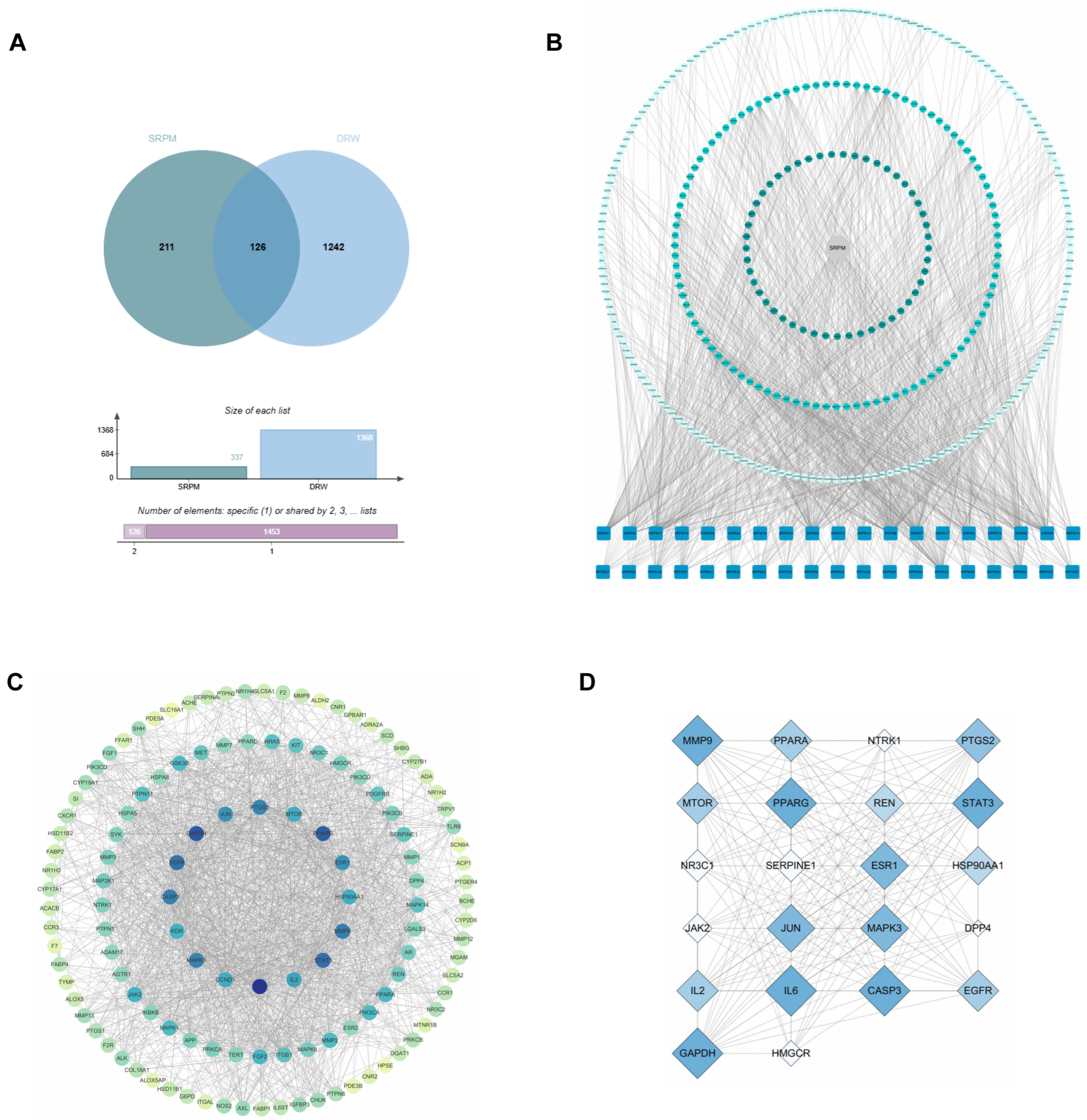
2.2. Target Molecules for SRPM Treatment of Diabetic Wounds
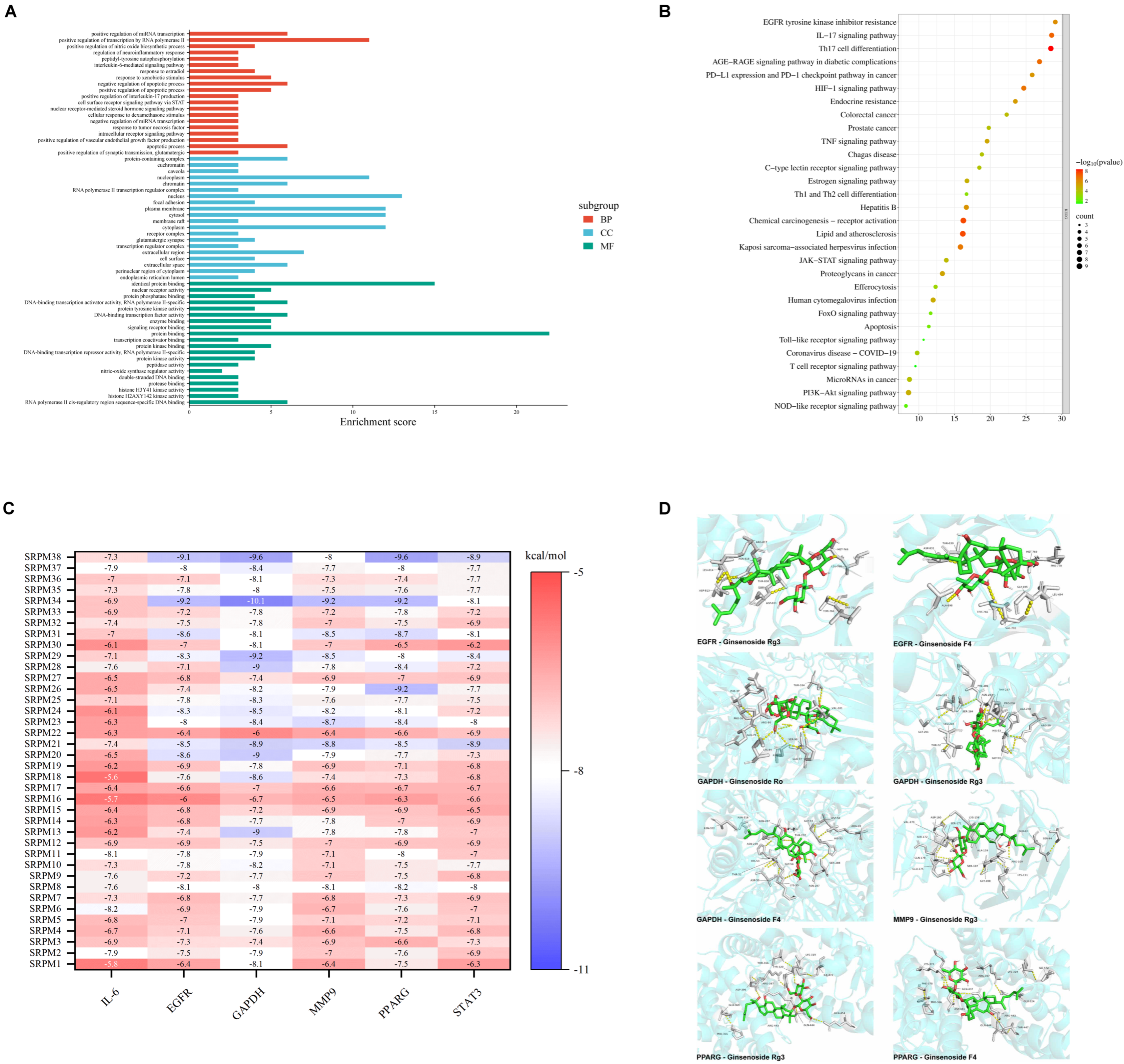
2.3. GO and KEGG Enrichment Analysis
2.4. Molecular Docking
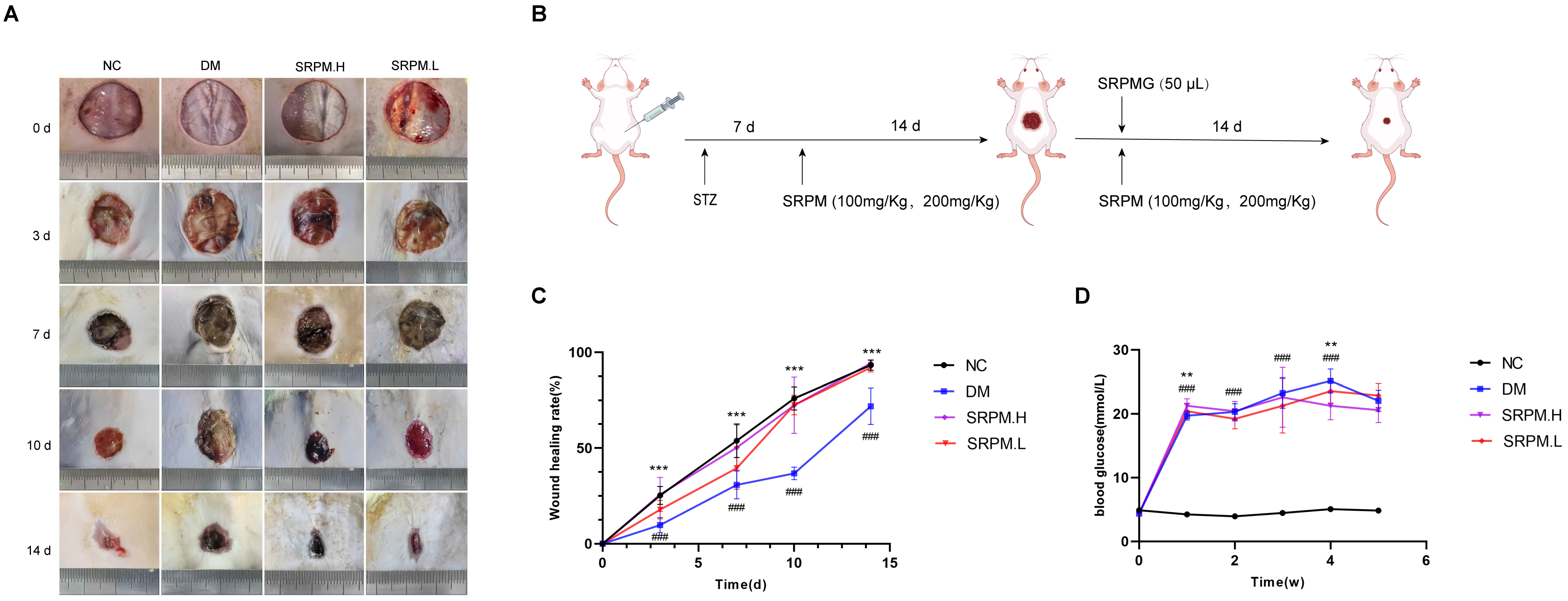
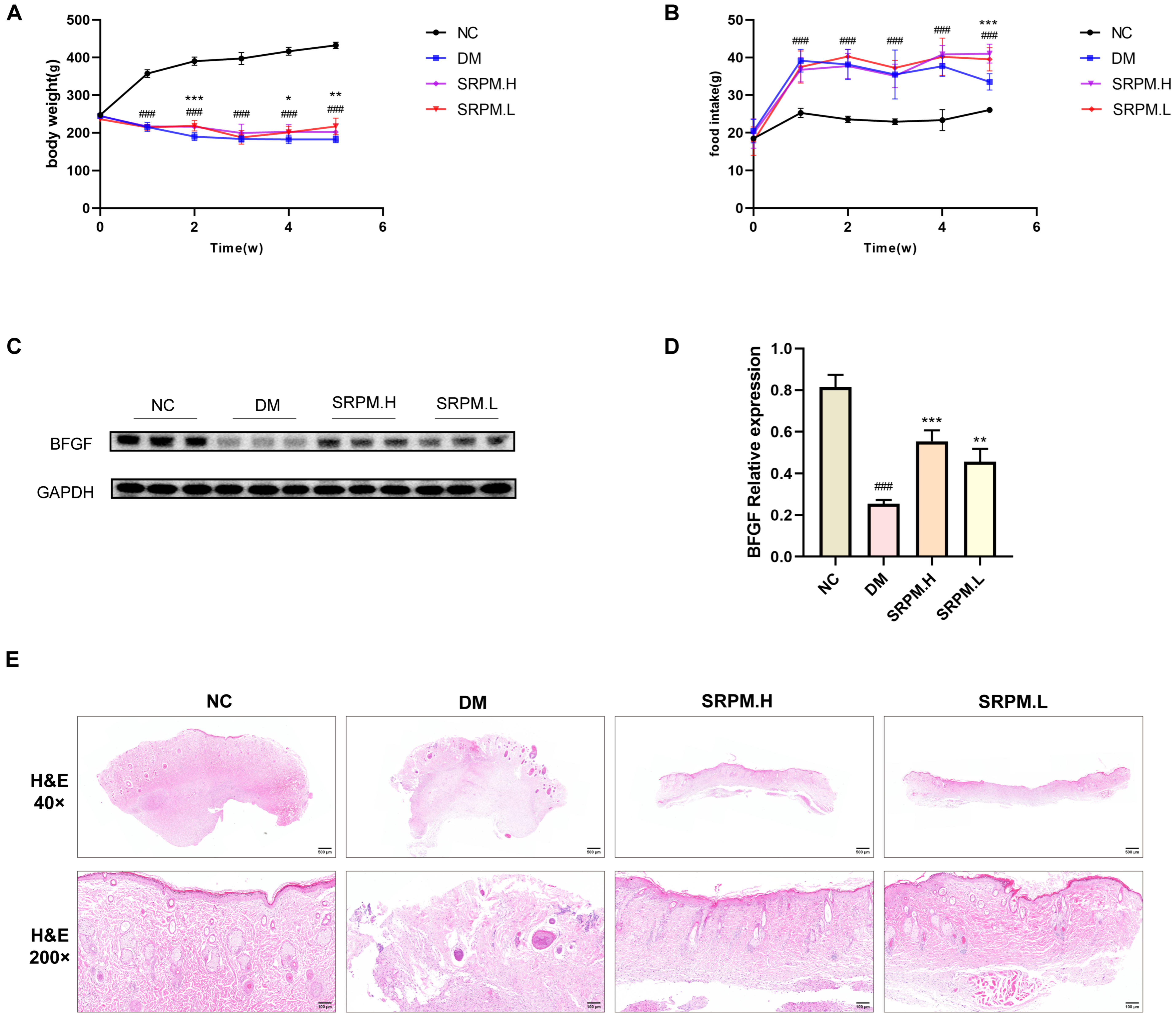
2.5. SRPM Promotes Wound Healing in Diabetic Rats

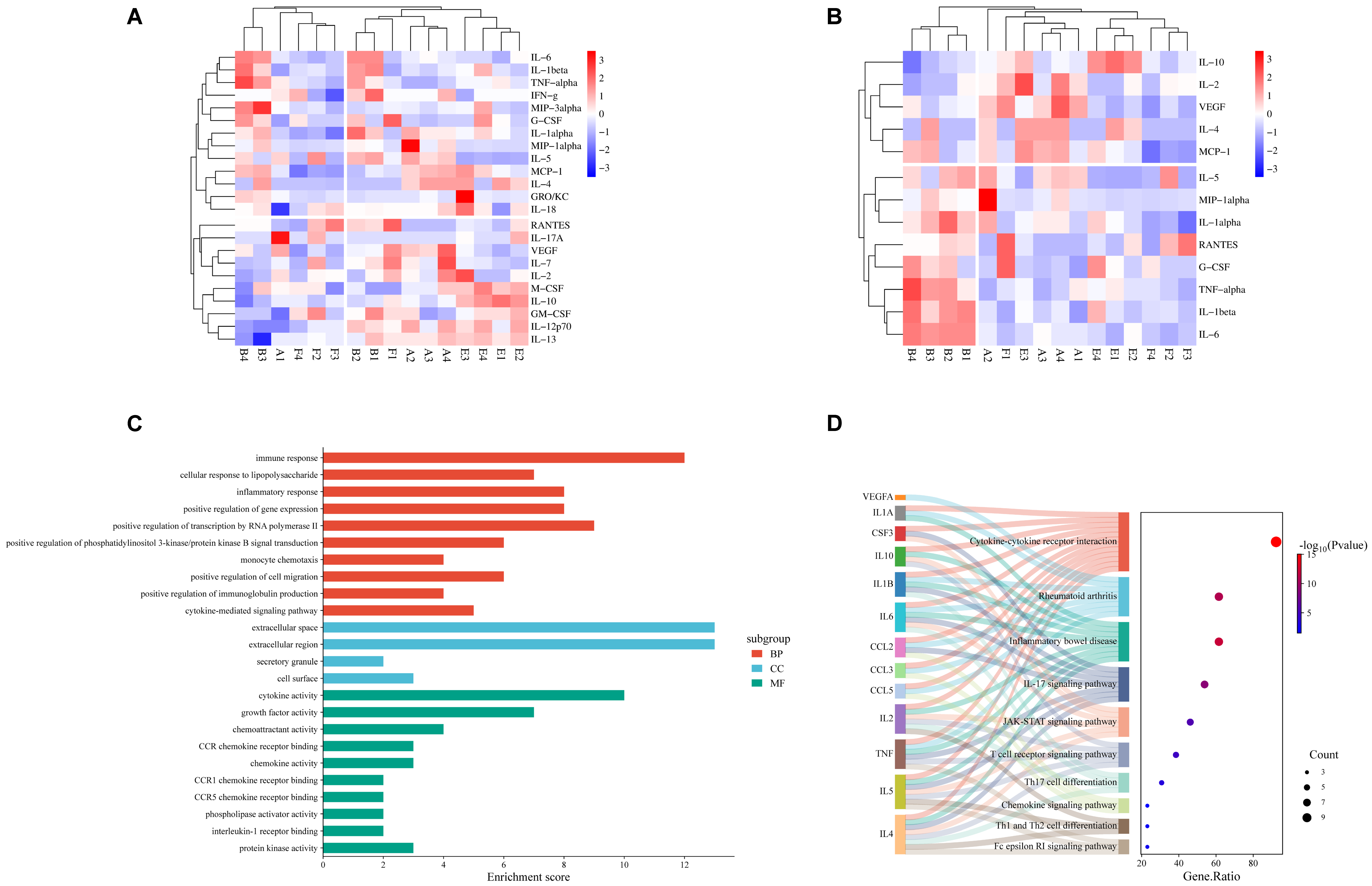
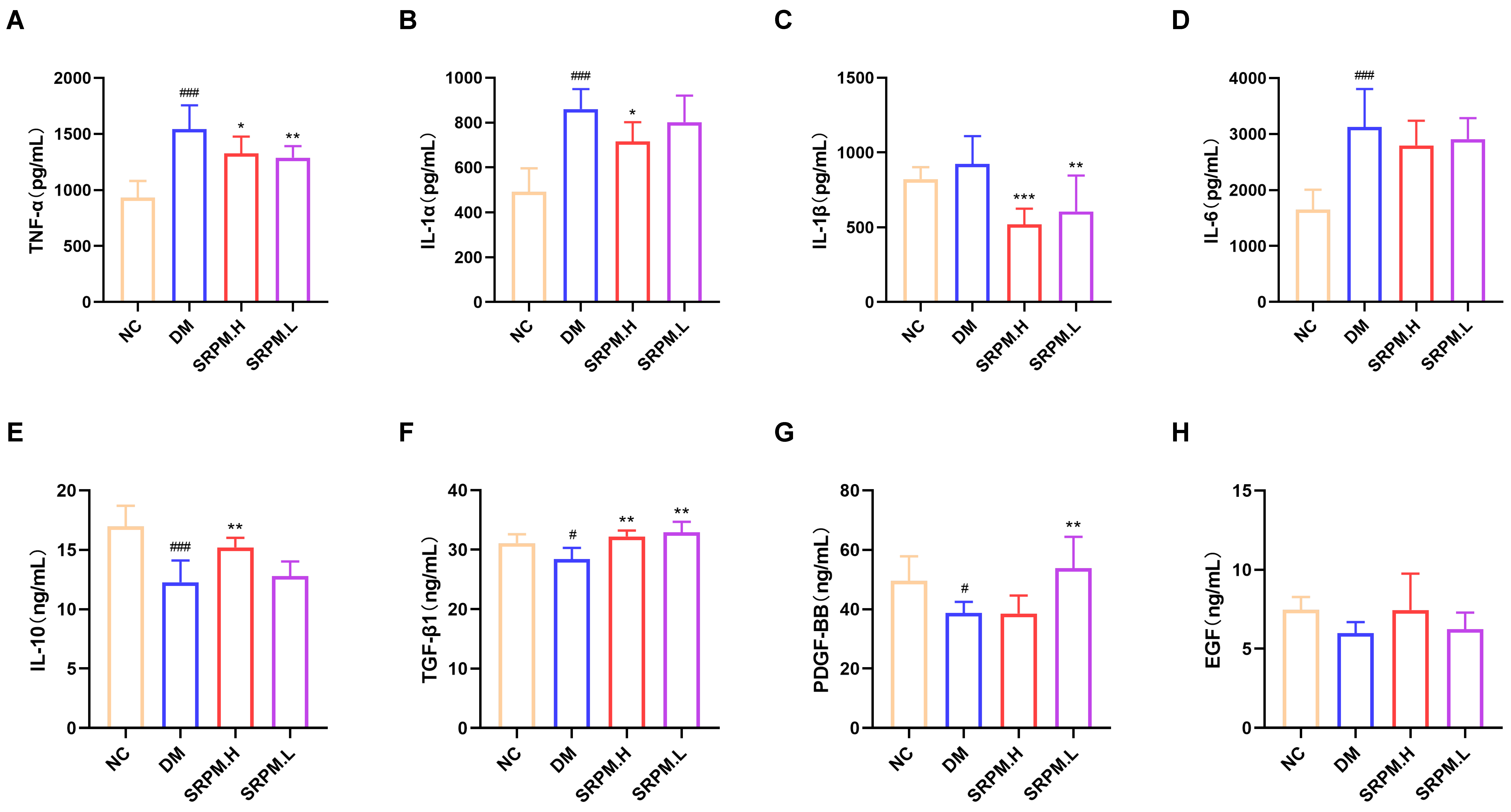
2.6. SRPM Modulates Cytokine Levels to Alleviate Wound Inflammation
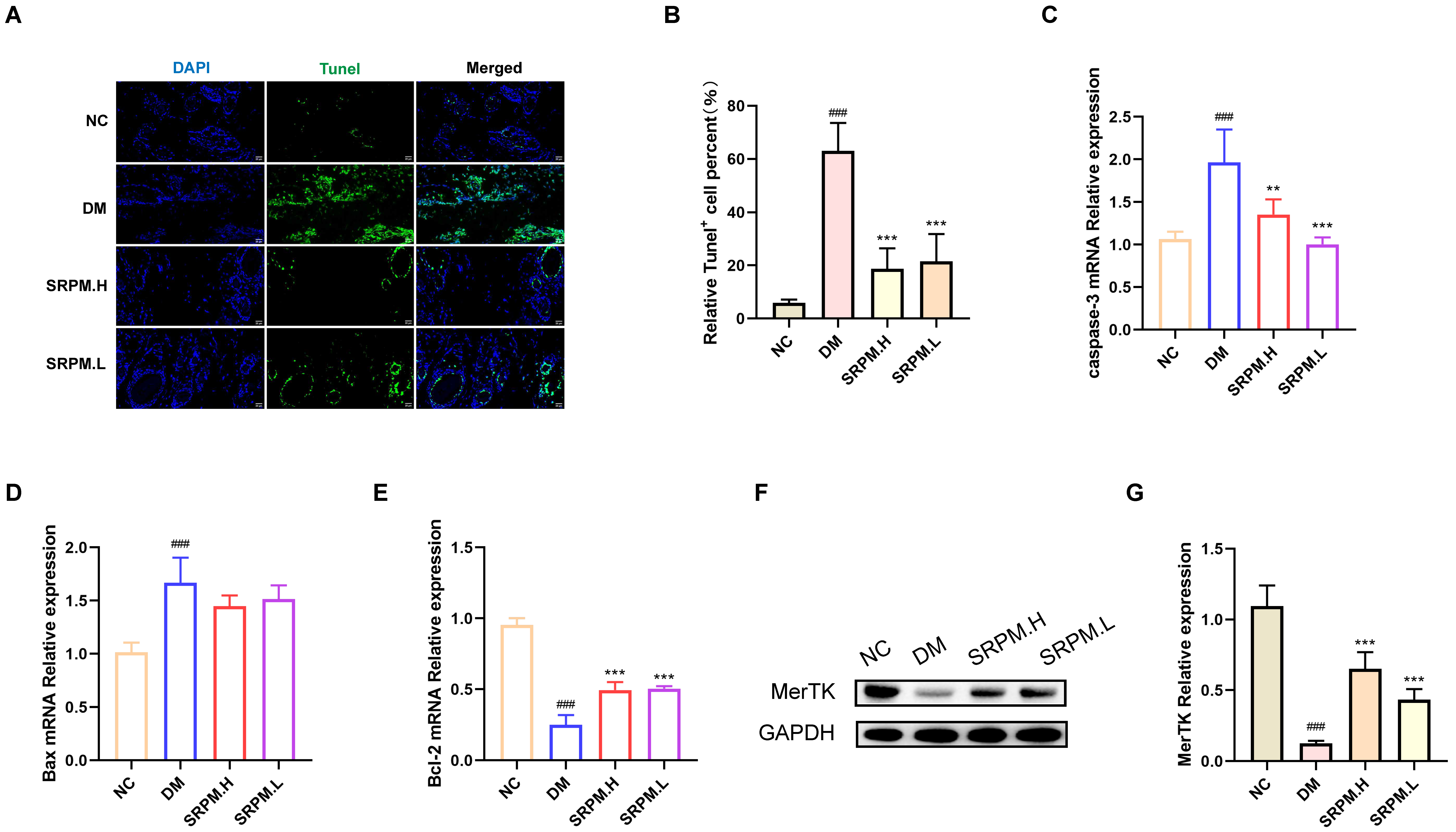
2.7. SRPM Effectively Reduces Abnormal Accumulation of Apoptotic Cells
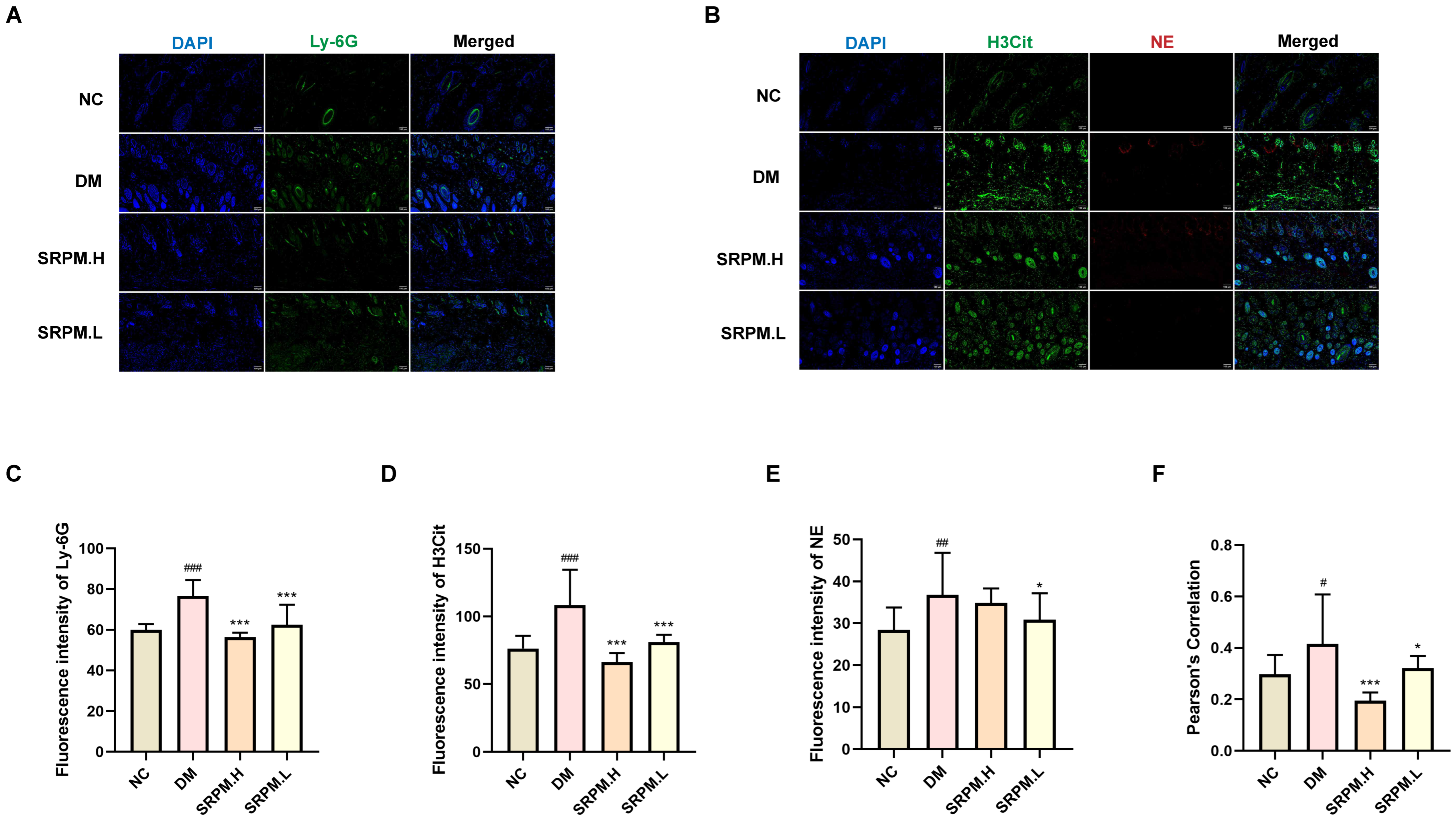
2.8. SRPM Inhibits Neutrophil Recruitment and Excessive NET Release
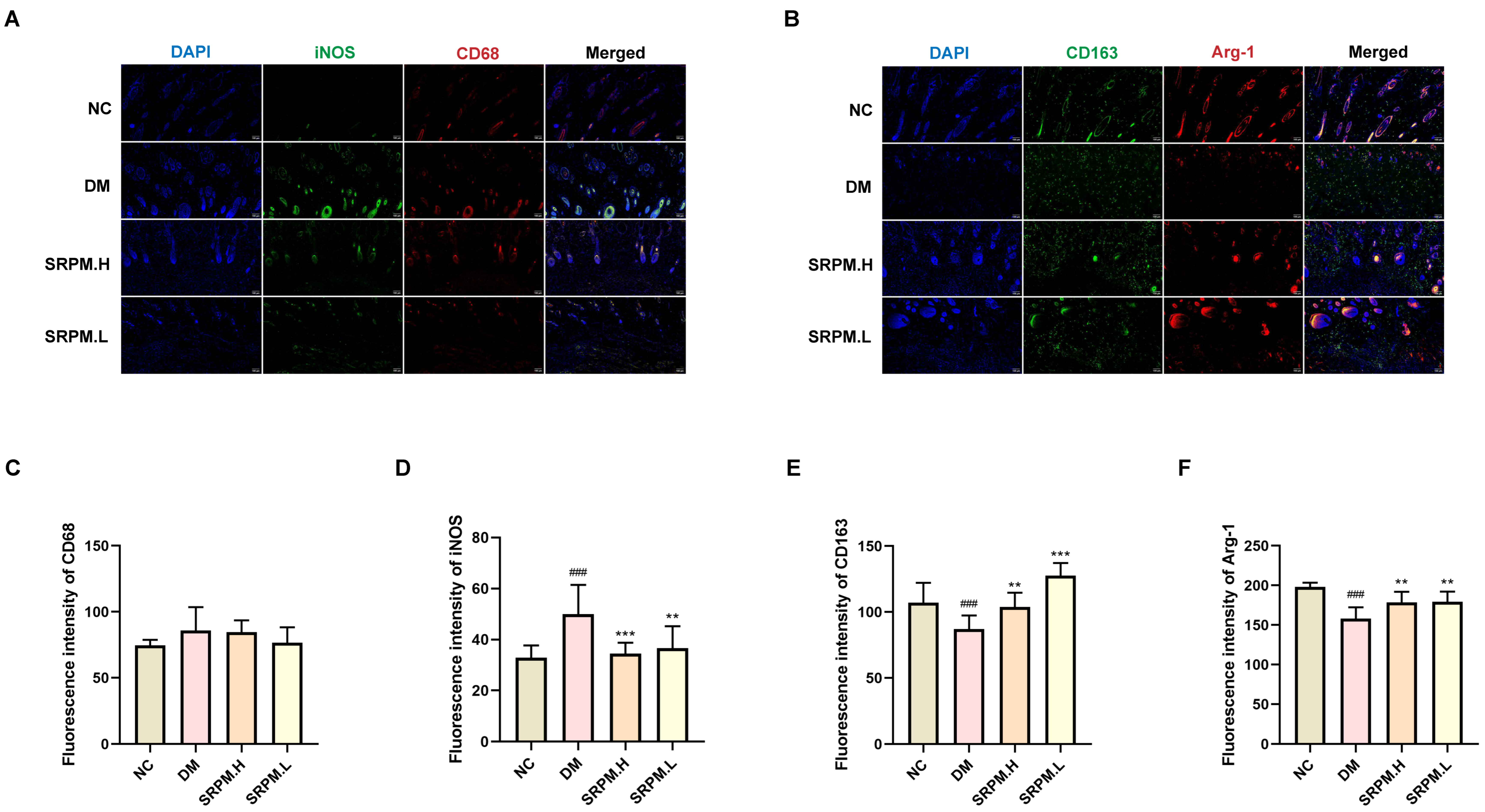
2.9. SRPM Promotes the Conversion of Macrophages from M1 to M2 Type
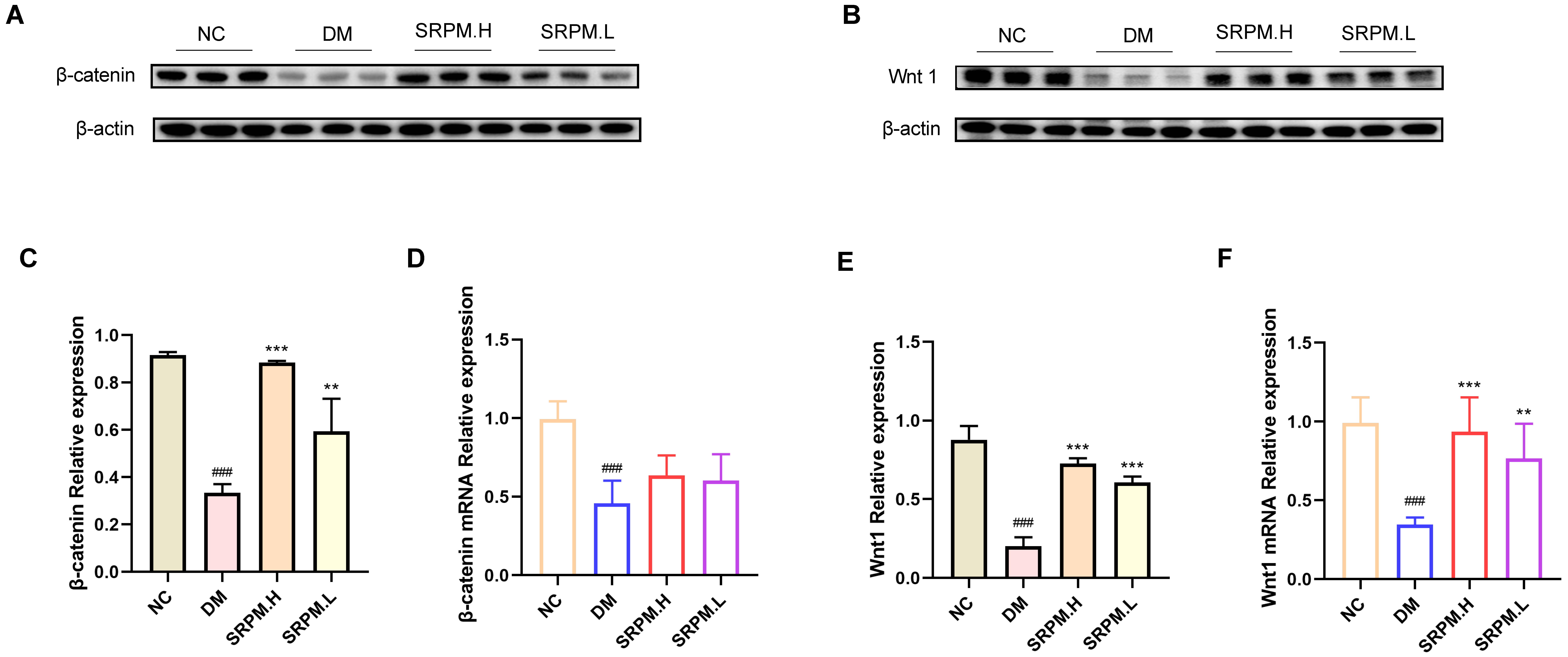
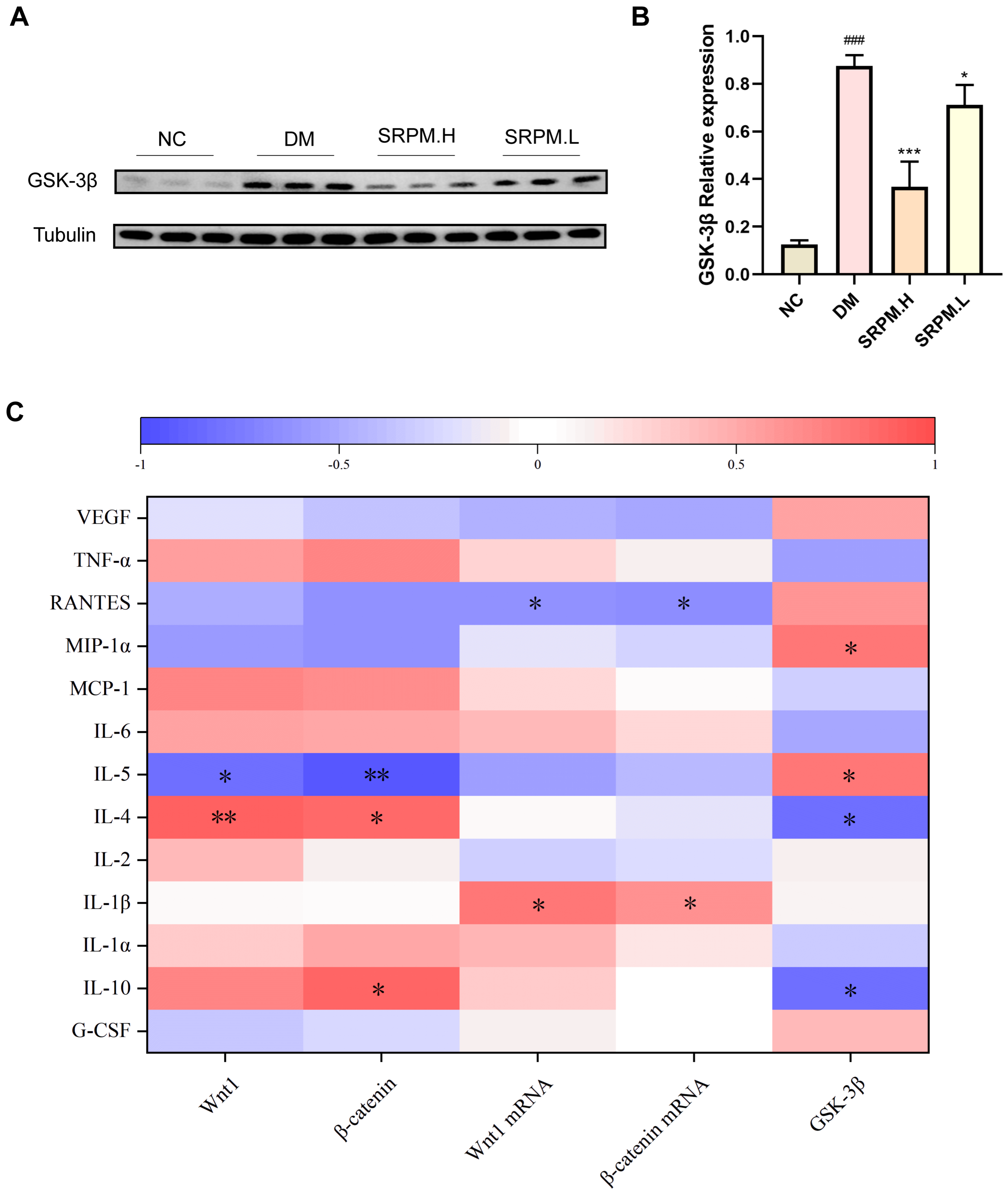
2.10. SRPM Activates the Wnt/β-Catenin Pathway to Modulate Inflammation and Immune Dysregulation
3. Discussion
4. Materials and Methods
4.1. Reagents
4.2. Preparation of SRPM and SRPMG
4.3. SRPM Component Characterisation
4.4. Network Pharmacology Analysis
4.4.1. SRPM Target Prediction
4.4.2. Bioinformatics Analysis
4.4.3. Molecular Docking Validation
4.5. Experimental Animals
4.6. Model Establishment and Treatment
4.7. Haematoxylin and Eosin Staining
4.8. Luminex Liquid-Phase Suspension Chip
4.9. Enzyme-Linked Immunosorbent Assay (ELISA)
4.10. TUNEL Staining
4.11. Immunofluorescence
4.12. Western Blot
4.13. RT-qPCR
4.14. Statistical Analysis
5. Conclusions
6. Patents
Supplementary Materials
Author Contributions
Funding
Institutional Review Board Statement
Informed Consent Statement
Data Availability Statement
Conflicts of Interest
Abbreviations
| SRPM | Total Saponin from Rhizoma Panacis majoris |
| SRPMG | Gel preparation from Total Saponin extracted from Rhizoma Panacis majoris |
| DM | Diabetes Mellitus |
| GO | Gene Ontology |
| BP | Biological Process |
| CC | Cellular Component |
| MF | Molecular Function |
| KEGG | Kyoto Encyclopaedia of Genes and Genomes |
| PPI | Protein–Protein Interaction |
References
- Cloete, L. Diabetes mellitus: An overview of the types, symptoms, complications and management. Nurs. Stand. 2022, 37, 61–66. [Google Scholar] [CrossRef] [PubMed]
- Genitsaridi, I.; Salpea, P.; Salim, A.; Sajjadi, S.F.; Tomic, D.; James, S.; Thirunavukkarasu, S.; Issaka, A.; Chen, L.; Basit, A.; et al. 11th edition of the IDF Diabetes Atlas: Global, regional, and national diabetes prevalence estimates for 2024 and projections for 2050. Lancet Diabetes Endocrinol. 2026, 14, 149–156. [Google Scholar] [CrossRef] [PubMed]
- Chauhan, S.; Gulia, M.; Singh, R.P.; Jhawat, V. Diabetic Wound: Pathophysiology, Complications and Treatment Strategies. Curr. Protein Pept. Sci. 2024, 25, 200–205. [Google Scholar] [CrossRef] [PubMed]
- Sabbatini, M.; Magnelli, V.; Renò, F. NETosis in Wound Healing: When Enough Is Enough. Cells 2021, 10, 494. [Google Scholar] [CrossRef]
- Zhu, Y.; Xia, X.; He, Q.; Xiao, Q.A.; Wang, D.; Huang, M.; Zhang, X. Diabetes-associated neutrophil NETosis: Pathogenesis and interventional target of diabetic complications. Front. Endocrinol. 2023, 14, 1202463. [Google Scholar] [CrossRef]
- Louiselle, A.E.; Niemiec, S.M.; Zgheib, C.; Liechty, K.W. Macrophage polarization and diabetic wound healing. Transl. Res. 2021, 236, 109–116. [Google Scholar] [CrossRef]
- Roth Flach, R.J.; Czech, M.P. NETs and traps delay wound healing in diabetes. Trends Endocrinol. Metab. 2015, 26, 451–452. [Google Scholar] [CrossRef]
- Zhou, Z.; Deng, T.; Tao, M.; Lin, L.; Sun, L.; Song, X.; Gao, D.; Li, J.; Wang, Z.; Wang, X.; et al. Snail-inspired AFG/GelMA hydrogel accelerates diabetic wound healing via inflammatory cytokines suppression and macrophage polarization. Biomaterials 2023, 299, 122141. [Google Scholar] [CrossRef]
- Pandey, S.; Anshu, T.; Maharana, K.C.; Sinha, S. Molecular insights into diabetic wound healing: Focus on Wnt/β-catenin and MAPK/ERK signaling pathways. Cytokine 2025, 191, 156957. [Google Scholar] [CrossRef]
- Choi, S.; Yoon, M.; Choi, K.Y. Approaches for Regenerative Healing of Cutaneous Wound with an Emphasis on Strategies Activating the Wnt/β-Catenin Pathway. Adv. Wound Care 2022, 11, 70–86. [Google Scholar] [CrossRef]
- Dong, S.H.; Yang, D.Q.; Zheng, J.Y.; Li, Y.F.; Zhang, D.C.; Luo, T.Y.; Zhu, X.Y. Herbal Textual Research and National Conventionally Used of Panacis Majoris Rhizoma. Asia Pac. Tradit. Med. 2024, 20, 186–191. [Google Scholar]
- Yang, Y.; Zhang, X.; Jiang, S.; Ge, F.; Li, X.J. Research Progress on Saponins and Pharmacological Activities of Panax japonicus. Sci. Technol. Food Ind. 2019, 2, 10. [Google Scholar]
- Li, X.; Wei, S.; Niu, S.; Ma, X.; Li, H.; Jing, M.; Zhao, Y. Network pharmacology prediction and molecular docking-based strategy to explore the potential mechanism of Huanglian Jiedu Decoction against sepsis. Comput. Biol. Med. 2022, 144, 105389. [Google Scholar] [CrossRef] [PubMed]
- Sun, C.; Huang, Y.; Wang, L.; Deng, J.; Qing, R.; Ge, X.; Han, X.; Zha, G.; Pu, W.; Wang, B.; et al. Engineered keratin/bFGF hydrogel to promote diabetic wound healing in rats. Int. J. Biol. Macromol. 2024, 261, 129725. [Google Scholar] [CrossRef] [PubMed]
- Rodríguez-Rodríguez, N.; Martínez-Jiménez, I.; García-Ojalvo, A.; Mendoza-Mari, Y.; Guillén-Nieto, G.; Armstrong, D.G.; Berlanga-Acosta, J. Wound Chronicity, Impaired Immunity and Infection in Diabetic Patients. MEDICC Rev. 2022, 24, 44–58. [Google Scholar] [CrossRef]
- Wang, L.; Su, T.; Hou, A.G. Research Progress on chemical constituents and pharmacological effects of Panax japonicus. J. Basic Chin. Med. 2020, 26, 4. [Google Scholar]
- Gao, W.; Yin, Q.; Wang, X.; Teng, X.; Jin, R.; Liu, N.; Ren, H. UHPLC-Q-Exactive Orbitrap mass spectrometry reveals the lipidomics of bovine milk and yogurt. Food Chem. 2022, 392, 133267. [Google Scholar] [CrossRef]
- Li, R.; Ye, J.J.; Gan, L.; Zhang, M.; Sun, D.; Li, Y.; Wang, T.; Chang, P. Traumatic inflammatory response: Pathophysiological role and clinical value of cytokines. Eur. J. Trauma Emerg. Surg. 2024, 50, 1313–1330. [Google Scholar] [CrossRef]
- Kamal, R.; Awasthi, A.; Pundir, M.; Thakur, S. Healing the diabetic wound: Unlocking the secrets of genes and pathways. Eur. J. Pharmacol. 2024, 975, 176645. [Google Scholar] [CrossRef]
- Ren, M.; Ma, K.; Pang, X.; Liu, Y.; Song, Z.; Zhou, R.; Tang, Z. Anti-rheumatoid arthritis effects of total saponins from Rhizoma Panacis Majoris on adjuvant-induced arthritis in rats and rheumatoid arthritis fibroblast-like synoviocytes. Phytomedicine 2023, 119, 155021. [Google Scholar] [CrossRef]
- Justynski, O.; Bridges, K.; Krause, W.; Forni, M.F.; Phan, Q.M.; Sandoval-Schaefer, T.; Carter, K.; King, D.E.; Hsia, H.C.; Gazes, M.I.; et al. Apoptosis recognition receptors regulate skin tissue repair in mice. Elife 2023, 12, e86269. [Google Scholar] [CrossRef] [PubMed]
- Mu, X.; Wu, X.; He, W.; Liu, Y.; Wu, F.; Nie, X. Pyroptosis and inflammasomes in diabetic wound healing. Front. Endocrinol. 2022, 13, 950798. [Google Scholar] [CrossRef] [PubMed]
- De Cleene, H.K.L.; Keçeli, B.N.; Maschalidi, S. Apoptosis and Cell Clearance in Skin Wound Healing. Adv. Exp. Med. Biol. 2025, 1481, 121–151. [Google Scholar] [PubMed]
- Ou, J.; Li, K.; Yuan, H.; Du, S.; Wang, T.; Deng, Q.; Wu, H.; Zeng, W.; Cheng, K.; Nandakumar, K.S. Staphylococcus aureus vesicles impair cutaneous wound healing through p38 MAPK-MerTK cleavage-mediated inhibition of macrophage efferocytosis. Cell Commun. Signal. 2025, 23, 14, Erratum in Cell Commun. Signal. 2025, 23, 33. https://doi.org/10.1186/s12964-025-02036-y. [Google Scholar]
- Pang, X.; Song, R.; Li, Z.; Shi, X.; Zhang, Z.; Liu, Y.; Xu, H.; Song, Z.; Zhou, R.; Tang, Z. Rhizoma Panacis Majoris ameliorates rheumatoid arthritis by restoring apoptosis and autophagy dysregulation through reducing HMGB1 expression. Phytomedicine 2025, 145, 156943. [Google Scholar] [CrossRef]
- Wang, W.K.; Lu, Q.H.; Zhang, J.N.; Wang, B.; Liu, X.J.; An, F.S.; Qin, W.D.; Chen, X.Y.; Dong, W.Q.; Zhang, C.; et al. HMGB1 mediates hyperglycaemia-induced cardiomyocyte apoptosis via ERK/Ets-1 signalling pathway. J. Cell Mol. Med. 2014, 18, 2311–2320. [Google Scholar] [CrossRef]
- Zhu, S.; Yu, Y.; Ren, Y.; Xu, L.; Wang, H.; Ling, X.; Jin, L.; Hu, Y.; Zhang, H.; Miao, C.; et al. The emerging roles of neutrophil extracellular traps in wound healing. Cell Death Dis. 2021, 12, 984. [Google Scholar] [CrossRef]
- Wu, X.; He, W.; Mu, X.; Liu, Y.; Deng, J.; Liu, Y.; Nie, X. Macrophage polarization in diabetic wound healing. Burns Trauma 2022, 10, tkac051. [Google Scholar] [CrossRef]
- Raja Asunama, A.S.; Nambi, N.; Radhakrishnan, L.; Prasad, M.K.; Ramkumar, K.M. Neutrophil Migration is a Crucial Factor in Wound Healing and the Pathogenesis of Diabetic Foot Ulcers: Insights into Pharmacological Interventions. Curr. Vasc. Pharmacol. 2024, 23, 98–112. [Google Scholar] [CrossRef]
- Shi, M.Q.; Zhang, J.H.; Zhou, G.; Guo, W.; Liu, Y.; Bao, Z.W.; Chen, M.H.; Tan, F.M.; Hu, H.Q.; Wang, J.Z.; et al. Mechanism of total saponins of Panax japonicus against liver injury induced by acetaminophen in mice based on ERK/NF-κB/COX-2 signaling pathway. China J. Chin. Mater. Medica 2024, 49, 2585–2596. [Google Scholar]
- Jere, S.W.; Houreld, N.N. Regulatory Processes of the Canonical Wnt/β-Catenin Pathway and Photobiomodulation in Diabetic Wound Repair. Int. J. Mol. Sci. 2022, 23, 4210. [Google Scholar] [CrossRef] [PubMed]
- Zhang, H.; Nie, X.; Shi, X.; Zhao, J.; Chen, Y.; Yao, Q.; Sun, C.; Yang, J. Regulatory Mechanisms of the Wnt/β-Catenin Pathway in Diabetic Cutaneous Ulcers. Front. Pharmacol. 2018, 9, 1114. [Google Scholar] [CrossRef] [PubMed]
- Xue, C.; Chu, Q.; Shi, Q.; Zeng, Y.; Lu, J.; Li, L. Wnt signaling pathways in biology and disease: Mechanisms and therapeutic advances. Signal Transduct. Target. Ther. 2025, 10, 106. [Google Scholar] [CrossRef] [PubMed]
- Yang, Y.; Ye, Y.C.; Chen, Y.; Zhao, J.L.; Gao, C.C.; Han, H.; Liu, W.C.; Qin, H.Y. Crosstalk between hepatic tumor cells and macrophages via Wnt/β-catenin signaling promotes M2-like macrophage polarization and reinforces tumor malignant behaviors. Cell Death Dis. 2018, 9, 793. [Google Scholar] [CrossRef]
- Schommer, N.; Gendron, N.; Krauel, K.; Van Bruggen, S.; Jarrot, P.A.; Maier, A.; Chan, W.; Langer, H.F.; Duerschmied, D.; Westermann, D.; et al. Neutrophil extracellular traps and peptidylarginine deiminase 4-mediated inflammasome activation link diabetes to cardiorenal injury and heart failure. Eur. Heart J. 2025, ehaf963. [Google Scholar] [CrossRef]
- Yue, J.; Mo, L.; Zeng, G.; Ma, P.; Zhang, X.; Peng, Y.; Zhang, X.; Zhou, Y.; Jiang, Y.; Huang, N.; et al. Inhibition of neutrophil extracellular traps alleviates blood-brain barrier disruption and cognitive dysfunction via Wnt3/β-catenin/TCF4 signaling in sepsis-associated encephalopathy. J. Neuroinflamm. 2025, 22, 87. [Google Scholar] [CrossRef]
- Zhang, G.; Song, K.; Yan, H. MicroRNA-124 represses wound healing by targeting SERP1 and inhibiting the Wnt/β-catenin pathway. Adv. Clin. Exp. Med. 2019, 28, 711–718. [Google Scholar] [CrossRef]
- State Pharmacopoeia Commission. Pharmacopoeia of the People’s Republic of China, 1st ed.; China Pharmaceutical Science and Technology Press: Beijing China, 2020; p. 283. [Google Scholar]
- Pang, X.Y.; Zhou, R.; Song, R.T.; Li, N.; Wang, Y.Q.; Song, Z.X.; Liu, Y.R.; Tang, Z.S. Effect of total saponins from Panacis Majoris Rhizoma on proliferation, apoptosis and autophagy of human cervical carcinoma HeLa cells. Zhongguo Zhong Yao Za Zhi 2024, 49, 3848–3856. [Google Scholar]
- Zhang, Y.J.; Yang, J.X.; Hu, X.Y.; Huang, J.C.; Wang, W.; Liu, L.P.; Yan, J.Y. Chemical composition analysis and multi-index content determination of saponins in Panacis Majoris Rhizoma based on UPLC-Q-TOF-MS/MS combined with UNIFI. Nat. Prod. Res. Dev. 2025, 5, 904–917. [Google Scholar]
- Han, J.; Hou, J.; Liu, Y.; Liu, P.; Zhao, T.; Wang, X. Using Network Pharmacology to Explore the Mechanism of Panax notoginseng in the Treatment of Myocardial Fibrosis. J. Diabetes Res. 2022, 2022, 8895950. [Google Scholar] [CrossRef]



| NO. | Compound | Formula | Retention Time | Mode | Adducts | m/z | Error |
|---|---|---|---|---|---|---|---|
| SRPM1 | Gentiopicrin | C16H20O9 | 3.63 | pos | [M+H] | 357.1151 | −8.19 |
| SRPM2 | Soyasapogenol C | C30H48O2 | 5.44 | pos | [M+H] | 441.3721 | −1.45 |
| SRPM3 | Ginsenoside F1 | C36H62O9 | 5.87 | pos | [M+H-2H2O] | 603.4247 | −1.26 |
| SRPM4 | Epibetulinic acid | C30H48O3 | 6.21 | pos | [M+H] | 457.3667 | −2 |
| SRPM5 | 2alpha,3beta,23-Trihydroxyolean-12-en-28-oic acid beta-D-glucopyranosyl ester | C36H58O10 | 6.65 | pos | [M+H] | 651.4152 | 7.63 |
| SRPM6 | Maslinic acid | C30H48O4 | 6.74 | pos | [M+H-2H2O] | 437.3407 | −1.5 |
| SRPM7 | Corosolic acid | C30H48O4 | 7.13 | pos | [M+H-2H2O] | 437.3407 | −1.48 |
| SRPM8 | Panaxatriol | C30H52O4 | 7.18 | pos | [M+H-2H2O] | 441.3725 | −0.52 |
| SRPM9 | Hederagenin | C30H48O4 | 7.75 | pos | [M+H-2H2O] | 437.3408 | −1.36 |
| SRPM10 | Pseudoginsenoside RT1 | C47H74O18 | 9.84 | pos | [M+NH4] | 944.5197 | −1.72 |
| SRPM11 | Oleanolic acid | C30H48O3 | 10.12 | pos | [M+H-H2O] | 439.3563 | −1.68 |
| SRPM12 | Ginsenoside Rd | C48H82O18 | 10.83 | pos | [M+Na] | 969.5376 | −1.83 |
| SRPM13 | Pseudoginsenoside Rc1 | C50H84O19 | 11.28 | pos | [M+Na] | 1011.5484 | −1.52 |
| SRPM14 | Ginsenoside CK | C36H62O8 | 12.2 | pos | [M+H-2H2O] | 587.4297 | −1.53 |
| SRPM15 | Ginsenoside F2 | C42H72O13 | 12.3 | pos | [M+Na] | 807.4849 | −2.08 |
| SRPM16 | Zizybeoside I | C19H28O11 | 3.47 | neg | [M-H] | 431.1557 | −0.4 |
| SRPM17 | Atractyloside G | C21H36O8 | 4.55 | neg | [M+FA-H] | 461.2395 | 0.61 |
| SRPM18 | Notoginsenoside R1 | C47H80O18 | 5.25 | neg | [M+FA-H] | 977.5326 | −0.12 |
| SRPM19 | Gypenoside XLVI | C48H82O19 | 5.45 | neg | [M-H] | 961.5374 | −0.37 |
| SRPM20 | Ginsenoside Rg1 | C42H72O14 | 5.53 | neg | [M+FA-H] | 845.4904 | 0.04 |
| SRPM21 | Majonoside R1 | C42H72O15 | 5.75 | neg | [M+FA-H] | 861.4852 | −0.17 |
| SRPM22 | Atractyloside A | C21H36O10 | 5.87 | neg | [M-H] | 447.2238 | 0.5 |
| SRPM23 | Majonoside R2 | C41H70O14 | 6.23 | neg | [M+FA-H] | 831.475 | 0.31 |
| SRPM24 | Notoginsenoside R2 | C41H70O13 | 7.88 | neg | [M+FA-H] | 815.4798 | −0.08 |
| SRPM25 | Mogroside IIA | C42H72O14 | 8.02 | neg | [M-H] | 799.485 | 0.09 |
| SRPM26 | Ginsenoside Rf | C42H72O14 | 8.03 | neg | [M+FA-H] | 845.4907 | 0.37 |
| SRPM27 | Atractyloside D | C27H46O12 | 8.04 | neg | [M+FA-H] | 607.2976 | 0.8 |
| SRPM28 | Mogroside IIA1 | C42H72O14 | 8.54 | neg | [M-H] | 799.4848 | −0.12 |
| SRPM29 | Ginsenoside Ro | C48H76O19 | 9.17 | neg | [M-H] | 955.4905 | −0.37 |
| SRPM30 | Ginsenoside Re | C48H82O18 | 9.83 | neg | [M-H] | 945.5415 | −1.39 |
| SRPM31 | Chikusetsu saponin IVa | C42H66O14 | 9.94 | neg | [M-H] | 793.4376 | −0.48 |
| SRPM32 | Ursolic acid | C30H48O3 | 10.57 | neg | [M-H] | 455.3531 | 0.02 |
| SRPM33 | Saikosaponin F | C48H80O17 | 10.83 | neg | [M+FA-H] | 987.5536 | 0.13 |
| SRPM34 | Ginsenoside Rg3 | C42H72O13 | 12.22 | neg | [M+FA-H] | 829.4944 | −1.38 |
| SRPM35 | Momordin IC | C41H64O13 | 12.57 | neg | [M-H] | 763.4275 | 0.08 |
| SRPM36 | Calenduloside E | C36H56O9 | 12.62 | neg | [M-H] | 631.3851 | −0.05 |
| SRPM37 | Momordin Ib | C36H56O9 | 12.88 | neg | [M-H] | 631.3851 | −0.14 |
| SRPM38 | Ginsenoside F4 | C42H70O12 | 13.35 | neg | [M+FA-H] | 811.4847 | −0.32 |
| Antibody | Target Cell/Protein | Sample |
|---|---|---|
| Rabbit Anti-Ly6g Antibody | Neutrophils | skin tissue |
| Neutrophil Elastase Rabbit pAb (NE) | Neu extracellular trap | skin tissue |
| Histone H3 Recombinant Rabbit Monoclonal Antibody (H3) | ||
| Rabbit Anti-CD68 Antibody (CD68) | Total macrophages | skin tissue |
| Rabbit Anti-iNOS Antibody (iNOS) | M1-type macrophages (co-labelled with CD68) | skin tissue |
| Rabbit Anti-Arginase 1 Antibody (Arg-1) | M2-type macrophages | skin tissue |
| Rabbit Anti-CD163 Antibody (CD163) |
| Gene | Primers | Sequence (5′ → 3′) | Length | Tm | GC% |
|---|---|---|---|---|---|
| Wnt1 | Forward | TGGGGCATCGTGAACATAGC | 20 | 60.46 | 55 |
| Reverse | GGTTCTGTCGGATCAGTCGT | 20 | 59.47 | 55 | |
| β-catenin | Forward | GCTGAACCGTCACAGATGCT | 20 | 56.35 | 55 |
| Reverse | GTCAGCTCAGGAATTGCACG | 20 | 55.31 | 55 | |
| Bax | Forward | GAGACACCTGAGCTGACCTTG | 21 | 59.5 | 57 |
| Reverse | GCTCCATGTTGTTGTCCAGTTC | 22 | 57.7 | 50 | |
| Caspase-3 | Forward | TTACCCTGAAATGGGCTTGTGT | 22 | 60.16 | 45.45 |
| Reverse | TGAGGTTAGCTGCATCGACAT | 21 | 59.52 | 47.62 | |
| Bcl2 | Forward | AGAACTGCAGGTGCTGGATTTA | 22 | 55.8 | 45 |
| Reverse | TAGATTTGTCTCCACAGCCACC | 22 | 57.7 | 50 | |
| GAPDH | Forward | CTGGGCTACACTGAGCACC | 19 | 55.46 | 63 |
| Reverse | AAGTGGTCGTTGAGGGCAATG | 21 | 57.03 | 52 |
Disclaimer/Publisher’s Note: The statements, opinions and data contained in all publications are solely those of the individual author(s) and contributor(s) and not of MDPI and/or the editor(s). MDPI and/or the editor(s) disclaim responsibility for any injury to people or property resulting from any ideas, methods, instructions or products referred to in the content. |
© 2026 by the authors. Licensee MDPI, Basel, Switzerland. This article is an open access article distributed under the terms and conditions of the Creative Commons Attribution (CC BY) license.
Share and Cite
Xu, X.; Wang, M.-X.; Zhu, Y.-N.; Zuo, X.-D.; Hu, D.; Li, J.-P. Total Saponins from Rhizoma Panacis Majoris Promote Wound Healing in Diabetic Rats by Regulating Inflammatory Dysregulation. Int. J. Mol. Sci. 2026, 27, 955. https://doi.org/10.3390/ijms27020955
Xu X, Wang M-X, Zhu Y-N, Zuo X-D, Hu D, Li J-P. Total Saponins from Rhizoma Panacis Majoris Promote Wound Healing in Diabetic Rats by Regulating Inflammatory Dysregulation. International Journal of Molecular Sciences. 2026; 27(2):955. https://doi.org/10.3390/ijms27020955
Chicago/Turabian StyleXu, Xiang, Mei-Xia Wang, Ya-Ning Zhu, Xiang-Duo Zuo, Di Hu, and Jing-Ping Li. 2026. "Total Saponins from Rhizoma Panacis Majoris Promote Wound Healing in Diabetic Rats by Regulating Inflammatory Dysregulation" International Journal of Molecular Sciences 27, no. 2: 955. https://doi.org/10.3390/ijms27020955
APA StyleXu, X., Wang, M.-X., Zhu, Y.-N., Zuo, X.-D., Hu, D., & Li, J.-P. (2026). Total Saponins from Rhizoma Panacis Majoris Promote Wound Healing in Diabetic Rats by Regulating Inflammatory Dysregulation. International Journal of Molecular Sciences, 27(2), 955. https://doi.org/10.3390/ijms27020955