Nucleolar Cdc14 Splitting Reflects Recombination Context and Meiotic Chromosome Dynamics

 , , and
Abstract
1. Introduction
2. Results
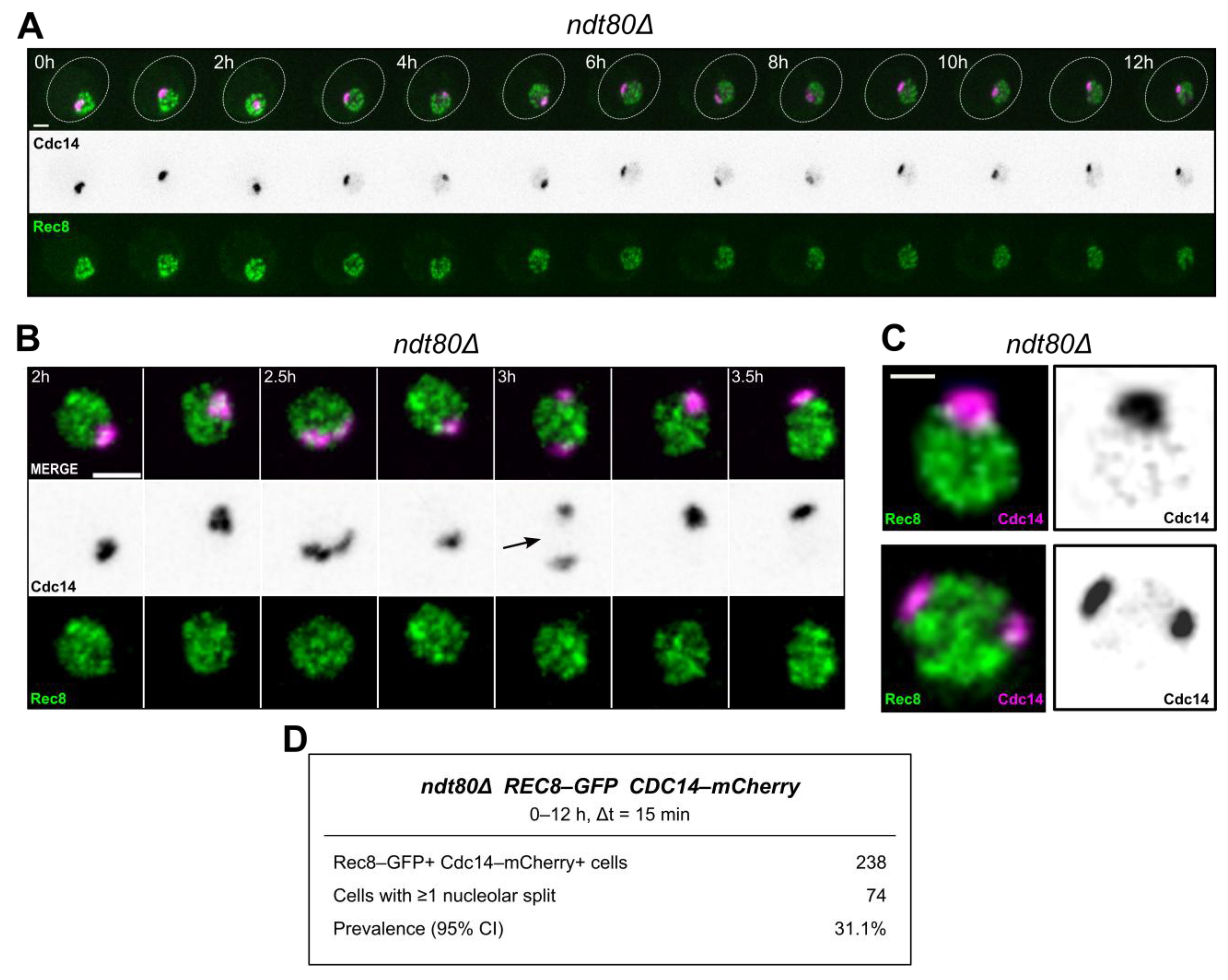
2.1. A Recombination-Competent Prophase I Reference Uncovers Nucleolar Cdc14 Dynamics
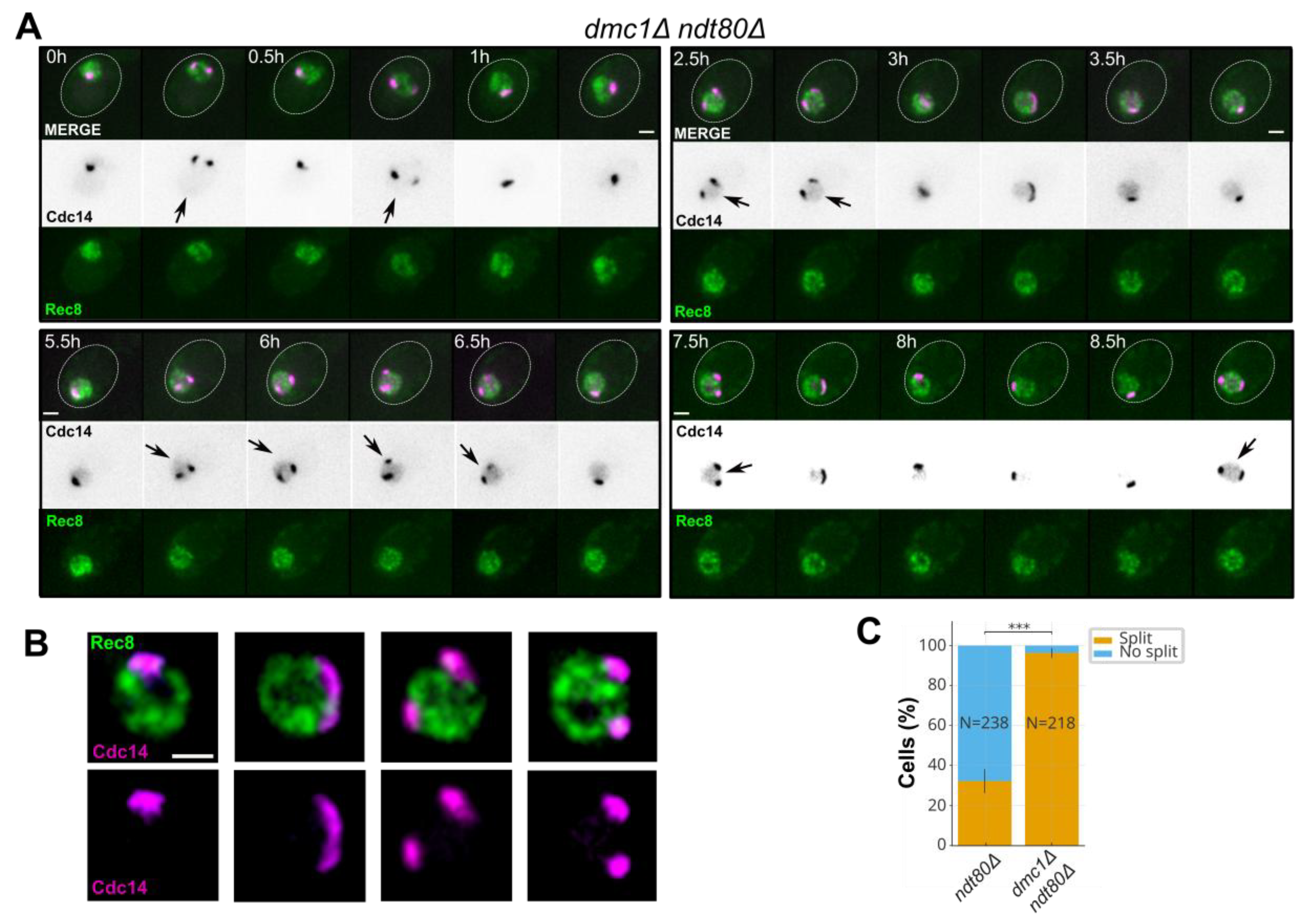
2.2. Recombination Failure Increases the Two-Focus Cdc14 Behaviour
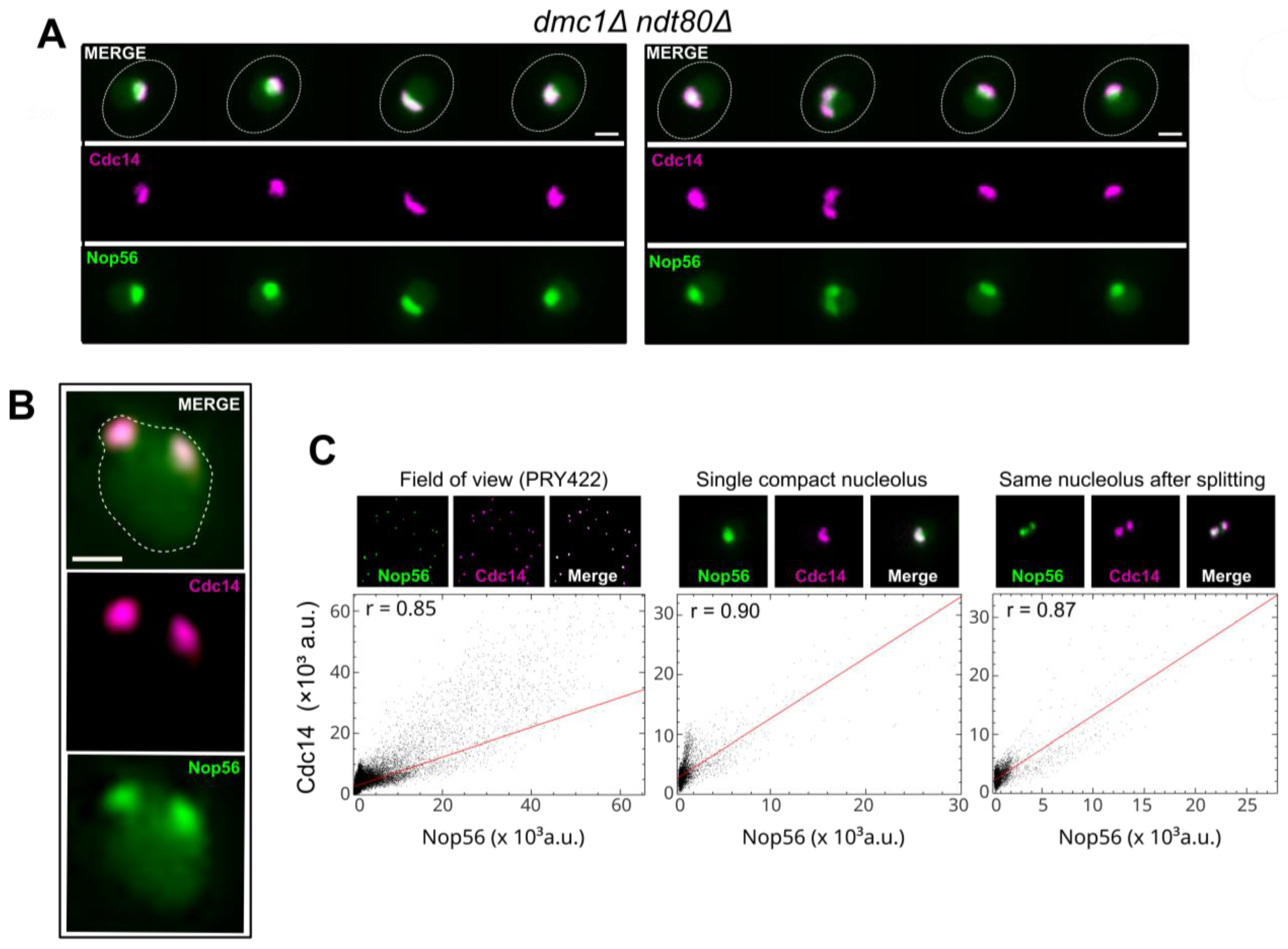
2.3. Nucleolar Splitting of Cdc14 Reveals a Dynamic Nucleolar Territory
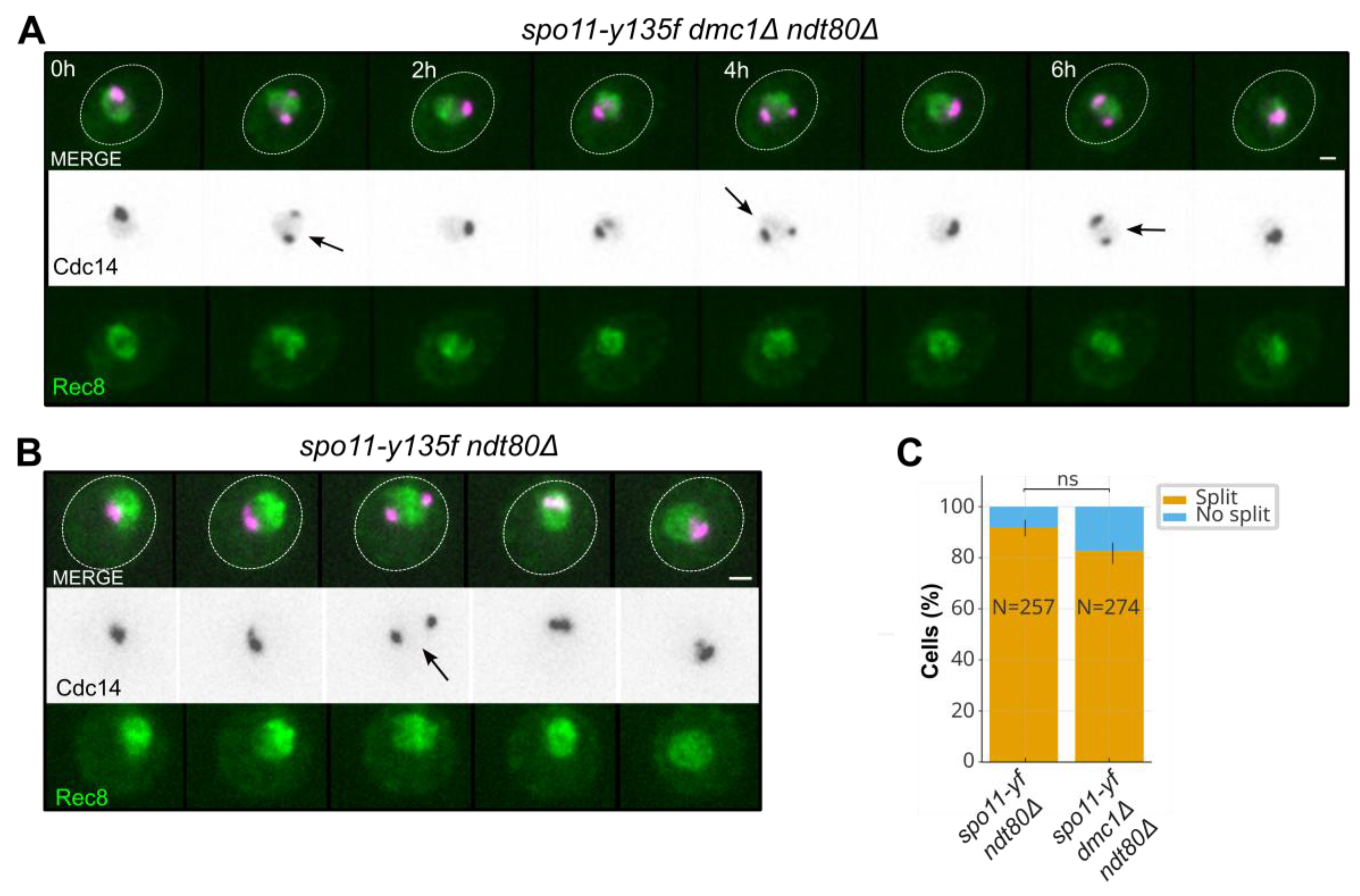
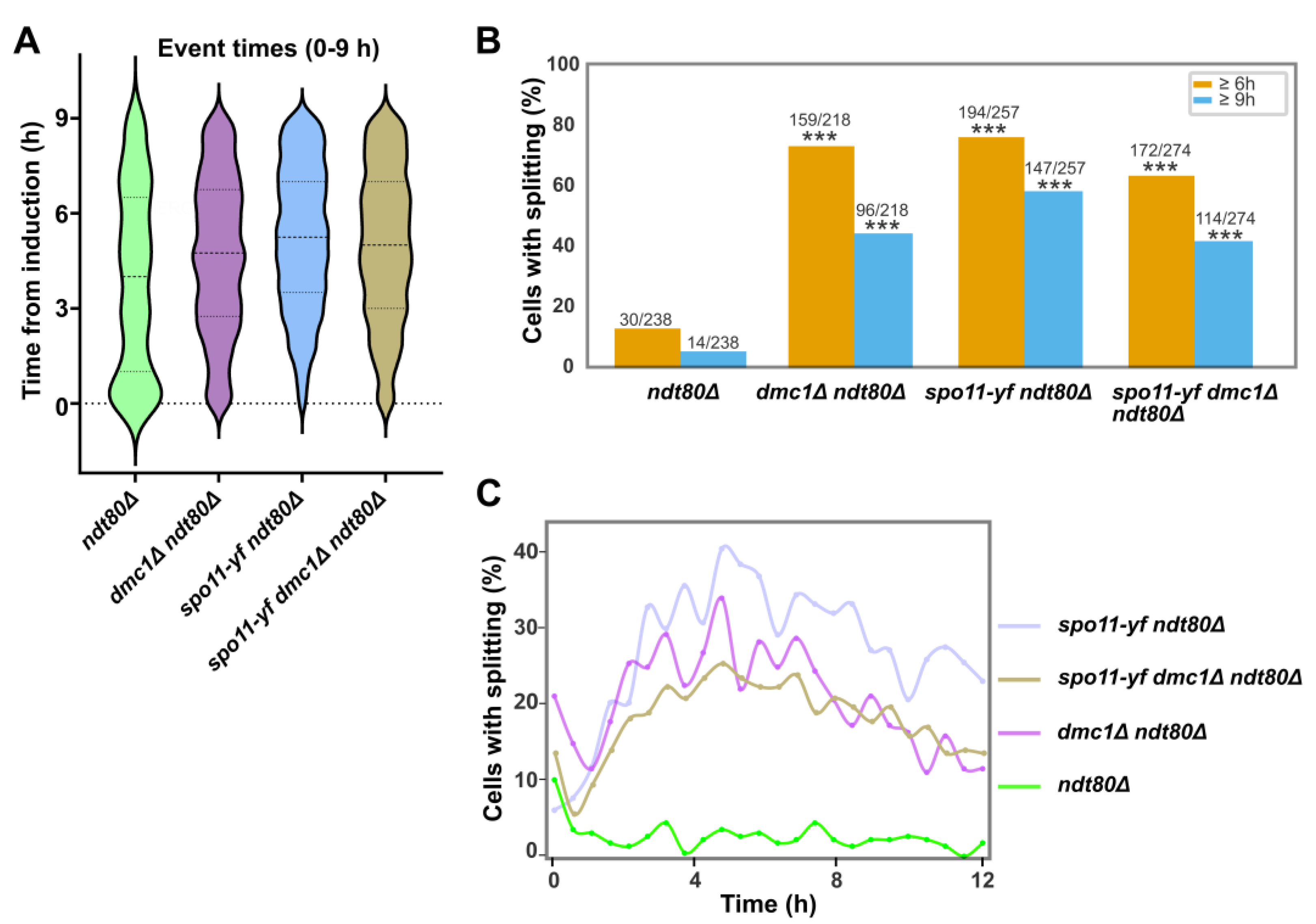
2.4. Elevated Nucleolar Splitting Persists Without Meiotic DSB Formation
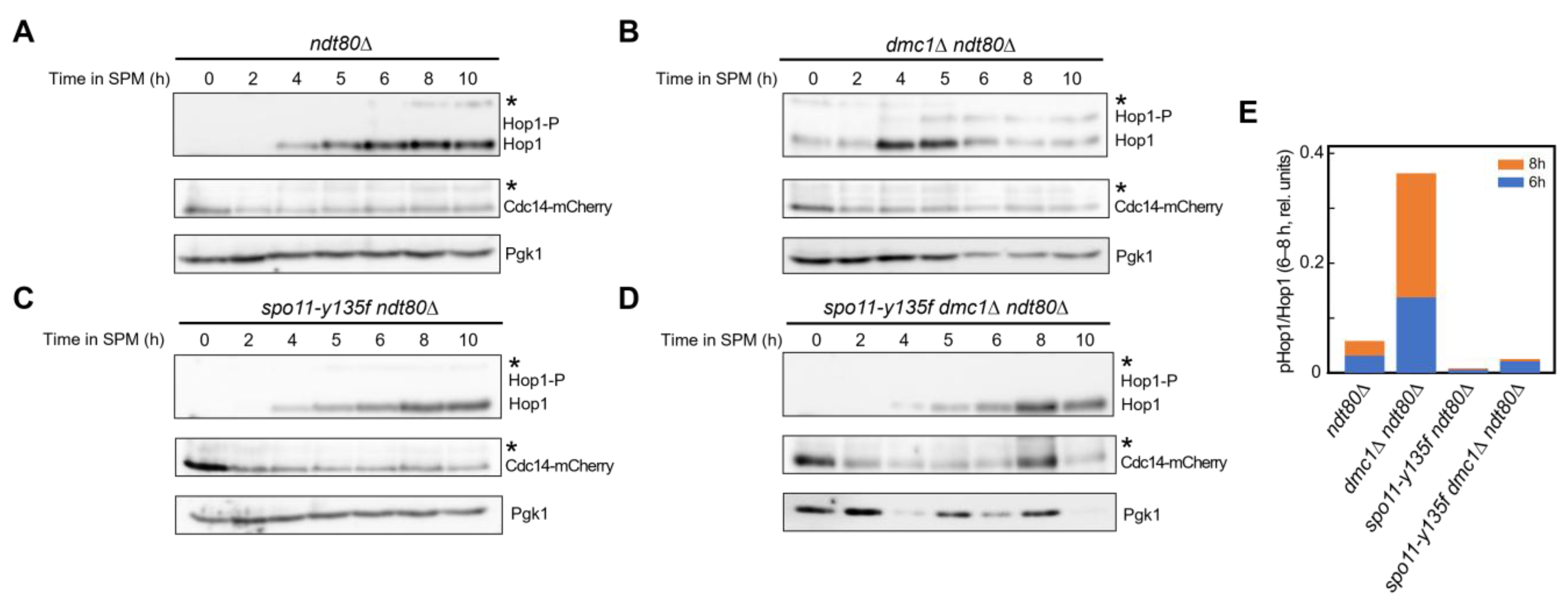
2.5. Nucleolar Splitting Is Decoupled from the Activity State of the Meiotic Recombination Checkpoint
2.6. Timing and Persistence of Nucleolar Splitting Across Recombination Contexts
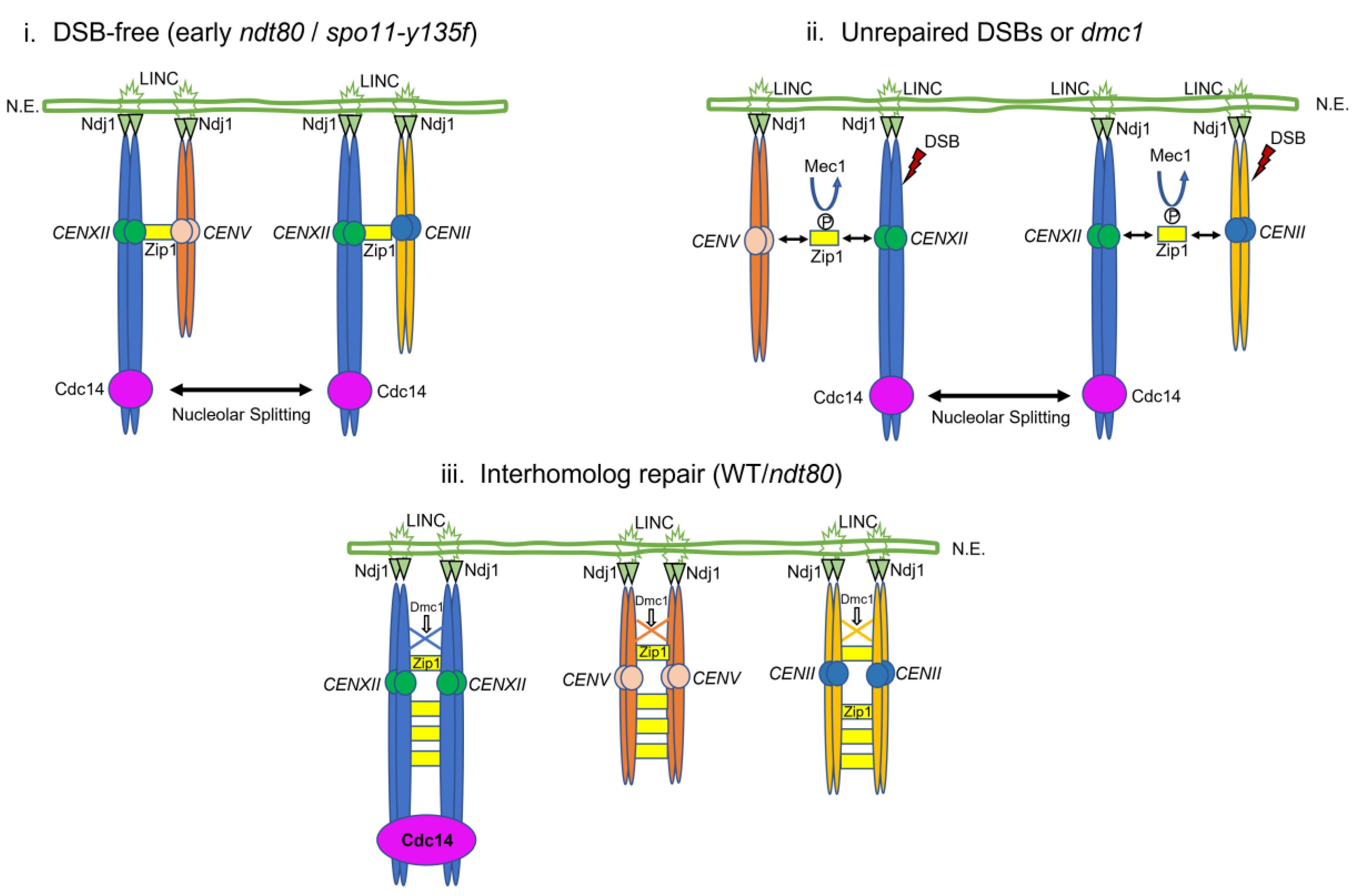
3. Discussion
4. Materials and Methods
4.1. Yeast Strains and Media
4.2. Meiosis Induction and Time Courses
4.3. Live-Cell Microscopy and Acquisition Parameters
4.4. Image Processing, Gating and Event Definition
4.5. Immunoblotting
4.6. Quantification and Statistics
4.7. Reporting and Data Availability
Supplementary Materials
Author Contributions
Funding
Institutional Review Board Statement
Informed Consent Statement
Data Availability Statement
Acknowledgments
Conflicts of Interest
Abbreviations
| DSB | Double-strand break |
| SC | Synaptonemal complex |
| RPM | Rapid prophase movements |
| LLPS | Liquid–liquid phase separation |
| PPPS | Polymer-polymer phase separation |
| TLAST | Last observed nucleolar splitting event time per cell |
| RMM | Rec114-Mei4-Mer2 module |
| NE | Nuclear Envelope |
References
- Zickler, D.; Kleckner, N. Recombination, Pairing, and Synapsis of Homologs during Meiosis. Cold Spring Harb. Perspect. Biol. 2015, 7, a016626. [Google Scholar] [CrossRef]
- Keeney, S.; Giroux, C.N.; Kleckner, N. Meiosis-specific DNA double-strand breaks are catalyzed by Spo11, a member of a widely conserved protein family. Cell 1997, 88, 375–384. [Google Scholar] [CrossRef]
- Shinohara, M.; Oh, S.D.; Hunter, N.; Shinohara, A. Crossover assurance and crossover interference are distinctly regulated by the ZMM proteins during yeast meiosis. Nat. Genet. 2008, 40, 299–309. [Google Scholar] [CrossRef] [PubMed]
- Zhang, L.; Stauffer, W.; Liu, C.; Shao, H.; Abuzahriyeh, N.; Jiang, R.; Zwicker, D.; Liu, X.; Yao, X.; Dernburg, A.F. Crossover patterning through condensation and coarsening of pro-crossover factors. Nat. Cell Biol. 2025, 27, 1161–1174. [Google Scholar] [CrossRef] [PubMed]
- Rog, O.; Köhler, S.; Dernburg, A.F. The synaptonemal complex has liquid crystalline properties and spatially regulates meiotic recombination factors. eLife 2017, 6, e21455. [Google Scholar] [CrossRef]
- Morgan, C.; Fozard, J.A.; Hartley, M.; Henderson, I.R.; Bomblies, K.; Howard, M. Diffusion-mediated HEI10 coarsening can explain meiotic crossover positioning in Arabidopsis. Nat. Commun. 2021, 12, 4674. [Google Scholar] [CrossRef] [PubMed]
- Newman, T.A.C.; Beltran, B.; McGehee, J.M.; Elnatan, D.; Cahoon, C.K.; Paddy, M.R.; Chu, D.B.; Spakowitz, A.J.; Burgess, S.M. Diffusion and distal linkages govern interchromosomal dynamics during meiotic prophase. Proc. Natl. Acad. Sci. USA 2022, 119, e2115883119. [Google Scholar] [CrossRef]
- Gordon, S.G.; Rodriguez, A.A.; Gu, Y.; Corbett, K.D.; Lee, C.F.; Rog, O. The synaptonemal complex aligns meiotic chromosomes by wetting. Sci. Adv. 2025, 11, eadt5675. [Google Scholar] [CrossRef]
- Claeys Bouuaert, C.; Pu, S.; Wang, J.; Oger, C.; Daccache, D.; Xie, W.; Patel, D.J.; Keeney, S. DNA-driven condensation assembles the meiotic DNA break machinery. Nature 2021, 592, 144–149. [Google Scholar] [CrossRef]
- Carballo, J.A.; Cha, R.S. Meiotic roles of Mec1, a budding yeast homolog of mammalian ATR/ATM. Chromosome Res. 2007, 15, 539–550. [Google Scholar] [CrossRef][Green Version]
- Carballo, J.A.; Johnson, A.L.; Sedgwick, S.G.; Cha, R.S. Phosphorylation of the axial element protein Hop1 by Mec1/Tel1 ensures meiotic interhomolog recombination. Cell 2008, 132, 758–770. [Google Scholar] [CrossRef] [PubMed]
- Falk, J.E.; Chan, A.C.; Hoffmann, E.; Hochwagen, A. A Mec1- and PP4-dependent checkpoint couples centromere pairing to meiotic recombination. Dev. Cell 2010, 19, 599–611. [Google Scholar] [CrossRef] [PubMed]
- Bishop, D.K.; Park, D.; Xu, L.; Kleckner, N. DMC1: A meiosis-specific yeast homolog of E. coli recA required for recombination, synaptonemal complex formation, and cell cycle progression. Cell 1992, 69, 439–456. [Google Scholar] [CrossRef] [PubMed]
- Shinohara, A.; Gasior, S.; Ogawa, T.; Kleckner, N.; Bishop, D.K. Saccharomyces cerevisiae recA homologues RAD51 and DMC1 have both distinct and overlapping roles in meiotic recombination. Genes Cells 1997, 2, 615–629. [Google Scholar] [CrossRef]
- Carballo, J.A.; Panizza, S.; Serrentino, M.E.; Johnson, A.L.; Geymonat, M.; Borde, V.; Klein, F.; Cha, R.S. Budding yeast ATM/ATR control meiotic double-strand break (DSB) levels by down-regulating Rec114, an essential component of the DSB-machinery. PLoS Genet. 2013, 9, e1003545. [Google Scholar] [CrossRef]
- Alonso-Ramos, P.; Álvarez-Melo, D.; Strouhalova, K.; Pascual-Silva, C.; Garside, G.B.; Arter, M.; Bermejo, T.; Grigaitis, R.; Wettstein, R.; Fernández-Díaz, M.; et al. The Cdc14 Phosphatase Controls Resolution of Recombination Intermediates and Crossover Formation during Meiosis. Int. J. Mol. Sci. 2021, 22, 9811. [Google Scholar] [CrossRef]
- Conrad, M.N.; Lee, C.Y.; Chao, G.; Shinohara, M.; Kosaka, H.; Shinohara, A.; Conchello, J.A.; Dresser, M.E. Rapid telomere movement in meiotic prophase is promoted by NDJ1, MPS3, and CSM4 and is modulated by recombination. Cell 2008, 133, 1175–1187. [Google Scholar] [CrossRef]
- Conrad, M.N.; Lee, C.Y.; Wilkerson, J.L.; Dresser, M.E. MPS3 mediates meiotic bouquet formation in Saccharomyces cerevisiae. Proc. Natl. Acad. Sci. USA 2007, 104, 8863–8868. [Google Scholar] [CrossRef]
- Lee, C.Y.; Bisig, C.G.; Conrad, M.M.; Ditamo, Y.; Previato de Almeida, L.; Dresser, M.E.; Pezza, R.J. Extranuclear Structural Components that Mediate Dynamic Chromosome Movements in Yeast Meiosis. Curr. Biol. 2020, 30, 1207–1216.e1204. [Google Scholar] [CrossRef]
- Tsubouchi, T.; Roeder, G.S. A synaptonemal complex protein promotes homology-independent centromere coupling. Science 2005, 308, 870–873. [Google Scholar] [CrossRef]
- Stewart, M.N.; Dawson, D.S. Changing partners: Moving from non-homologous to homologous centromere pairing in meiosis. Trends Genet. 2008, 24, 564–573. [Google Scholar] [CrossRef] [PubMed]
- Macqueen, A.J.; Roeder, G.S. Fpr3 and Zip3 ensure that initiation of meiotic recombination precedes chromosome synapsis in budding yeast. Curr. Biol. 2009, 19, 1519–1526. [Google Scholar] [CrossRef] [PubMed]
- Thiry, M.; Lafontaine, D.L. Birth of a nucleolus: The evolution of nucleolar compartments. Trends Cell Biol. 2005, 15, 194–199. [Google Scholar] [CrossRef] [PubMed]
- Lafontaine, D.L.J.; Riback, J.A.; Bascetin, R.; Brangwynne, C.P. The nucleolus as a multiphase liquid condensate. Nat. Rev. Mol. Cell Biol. 2021, 22, 165–182. [Google Scholar] [CrossRef]
- Lawrimore, J.; Kolbin, D.; Stanton, J.; Khan, M.; de Larminat, S.C.; Lawrimore, C.; Yeh, E.; Bloom, K. The rDNA is biomolecular condensate formed by polymer-polymer phase separation and is sequestered in the nucleolus by transcription and R-loops. Nucleic Acids Res. 2021, 49, 4586–4598. [Google Scholar] [CrossRef]
- Alonso-Ramos, P.; Carballo, J.A. Decoding the Nucleolar Role in Meiotic Recombination and Cell Cycle Control: Insights into Cdc14 Function. Int. J. Mol. Sci. 2024, 25, 12861. [Google Scholar] [CrossRef]
- Byers, B.; Goetsch, L. Electron microscopic observations on the meiotic karyotype of diploid and tetraploid Saccharomyces cerevisiae. Proc. Natl. Acad. Sci. USA 1975, 72, 5056–5060. [Google Scholar] [CrossRef]
- Moens, P.B.; Ashton, M.L. Synaptonemal complexes of normal and mutant yeast chromosomes (Saccharomyces cerevisiae). Chromosoma 1985, 91, 113–120. [Google Scholar] [CrossRef]
- Dresser, M.E.; Giroux, C.N. Meiotic chromosome behavior in spread preparations of yeast. J. Cell Biol. 1988, 106, 567–573. [Google Scholar] [CrossRef]
- Sym, M.; Engebrecht, J.A.; Roeder, G.S. ZIP1 is a synaptonemal complex protein required for meiotic chromosome synapsis. Cell 1993, 72, 365–378. [Google Scholar] [CrossRef]
- Visintin, R.; Craig, K.; Hwang, E.S.; Prinz, S.; Tyers, M.; Amon, A. The phosphatase Cdc14 triggers mitotic exit by reversal of Cdk-dependent phosphorylation. Mol. Cell 1998, 2, 709–718. [Google Scholar] [CrossRef] [PubMed]
- Jaspersen, S.L.; Charles, J.F.; Tinker-Kulberg, R.L.; Morgan, D.O. A late mitotic regulatory network controlling cyclin destruction in Saccharomyces cerevisiae. Mol. Biol. Cell 1998, 9, 2803–2817. [Google Scholar] [CrossRef] [PubMed]
- Shou, W.; Seol, J.H.; Shevchenko, A.; Baskerville, C.; Moazed, D.; Chen, Z.W.; Jang, J.; Shevchenko, A.; Charbonneau, H.; Deshaies, R.J. Exit from mitosis is triggered by Tem1-dependent release of the protein phosphatase Cdc14 from nucleolar RENT complex. Cell 1999, 97, 233–244. [Google Scholar] [CrossRef] [PubMed]
- Visintin, R.; Hwang, E.S.; Amon, A. Cfi1 prevents premature exit from mitosis by anchoring Cdc14 phosphatase in the nucleolus. Nature 1999, 398, 818–823. [Google Scholar] [CrossRef]
- Geymonat, M.; Jensen, S.; Johnston, L.H. Mitotic exit: The Cdc14 double cross. Curr. Biol. 2002, 12, R482–R484. [Google Scholar] [CrossRef]
- Buonomo, S.B.; Rabitsch, K.P.; Fuchs, J.; Gruber, S.; Sullivan, M.; Uhlmann, F.; Petronczki, M.; Toth, A.; Nasmyth, K. Division of the nucleolus and its release of CDC14 during anaphase of meiosis I depends on separase, SPO12, and SLK19. Dev. Cell 2003, 4, 727–739. [Google Scholar] [CrossRef]
- Marston, A.L.; Lee, B.H.; Amon, A. The Cdc14 phosphatase and the FEAR network control meiotic spindle disassembly and chromosome segregation. Dev. Cell 2003, 4, 711–726. [Google Scholar] [CrossRef]
- Molnar, M.; Bahler, J.; Sipiczki, M.; Kohli, J. The rec8 gene of Schizosaccharomyces pombe is involved in linear element formation, chromosome pairing and sister-chromatid cohesion during meiosis. Genetics 1995, 141, 61–73. [Google Scholar] [CrossRef]
- Watanabe, Y.; Nurse, P. Cohesin Rec8 is required for reductional chromosome segregation at meiosis. Nature 1999, 400, 461–464. [Google Scholar] [CrossRef]
- Klein, F.; Mahr, P.; Galova, M.; Buonomo, S.B.; Michaelis, C.; Nairz, K.; Nasmyth, K. A central role for cohesins in sister chromatid cohesion, formation of axial elements, and recombination during yeast meiosis. Cell 1999, 98, 91–103. [Google Scholar] [CrossRef]
- Alberti, S.; Gladfelter, A.; Mittag, T. Considerations and Challenges in Studying Liquid-Liquid Phase Separation and Biomolecular Condensates. Cell 2019, 176, 419–434. [Google Scholar] [CrossRef] [PubMed]
- McSwiggen, D.T.; Mir, M.; Darzacq, X.; Tjian, R. Evaluating phase separation in live cells: Diagnosis, caveats, and functional consequences. Genes Dev. 2019, 33, 1619–1634. [Google Scholar] [CrossRef] [PubMed]
- Hult, C.; Adalsteinsson, D.; Vasquez, P.A.; Lawrimore, J.; Bennett, M.; York, A.; Cook, D.; Yeh, E.; Forest, M.G.; Bloom, K. Enrichment of dynamic chromosomal crosslinks drive phase separation of the nucleolus. Nucleic Acids Res. 2017, 45, 11159–11173. [Google Scholar] [CrossRef] [PubMed]
- Weinert, T.; Hartwell, L. Control of G2 delay by the rad9 gene of Saccharomyces cerevisiae. J. Cell Sci. Suppl. 1989, 12, 145–148. [Google Scholar] [CrossRef]
- Penedos, A.; Johnson, A.L.; Strong, E.; Goldman, A.S.; Carballo, J.A.; Cha, R.S. Essential and Checkpoint Functions of Budding Yeast ATM and ATR during Meiotic Prophase Are Facilitated by Differential Phosphorylation of a Meiotic Adaptor Protein, Hop1. PLoS ONE 2015, 10, e0134297, Erratum in PLoS ONE 2016, 11, e0154170. [Google Scholar] [CrossRef][Green Version]
- Kurdzo, E.L.; Obeso, D.; Chuong, H.; Dawson, D.S. Meiotic Centromere Coupling and Pairing Function by Two Separate Mechanisms in Saccharomyces cerevisiae. Genetics 2017, 205, 657–671. [Google Scholar] [CrossRef][Green Version]
- Fuchs, J.; Loidl, J. Behaviour of nucleolus organizing regions (NORs) and nucleoli during mitotic and meiotic divisions in budding yeast. Chromosome Res. 2004, 12, 427–438. [Google Scholar] [CrossRef]
- Wanat, J.J.; Kim, K.P.; Koszul, R.; Zanders, S.; Weiner, B.; Kleckner, N.; Alani, E. Csm4, in collaboration with Ndj1, mediates telomere-led chromosome dynamics and recombination during yeast meiosis. PLoS Genet. 2008, 4, e1000188. [Google Scholar] [CrossRef]
- Koszul, R.; Kim, K.P.; Prentiss, M.; Kleckner, N.; Kameoka, S. Meiotic chromosomes move by linkage to dynamic actin cables with transduction of force through the nuclear envelope. Cell 2008, 133, 1188–1201. [Google Scholar] [CrossRef]
- Börner, G.V.; Hochwagen, A.; MacQueen, A.J. Meiosis in budding yeast. Genetics 2023, 225, iyad125. [Google Scholar] [CrossRef]
- Zickler, D.; Olson, L.W. The synaptonemal complex and the spindle plaque during meiosis in yeast. Chromosoma 1975, 50, 1–23. [Google Scholar] [CrossRef] [PubMed]
- Trelles-Sticken, E.; Dresser, M.E.; Scherthan, H. Meiotic telomere protein Ndj1p is required for meiosis-specific telomere distribution, bouquet formation and efficient homologue pairing. J. Cell Biol. 2000, 151, 95–106. [Google Scholar] [CrossRef]
- Dong, H.; Roeder, G.S. Organization of the yeast Zip1 protein within the central region of the synaptonemal complex. J. Cell Biol. 2000, 148, 417–426. [Google Scholar] [CrossRef]
- González-Arranz, S.; Gardner, J.M.; Yu, Z.; Patel, N.J.; Heldrich, J.; Santos, B.; Carballo, J.A.; Jaspersen, S.L.; Hochwagen, A.; San-Segundo, P.A. SWR1-Independent Association of H2A.Z to the LINC Complex Promotes Meiotic Chromosome Motion. Front. Cell Dev. Biol. 2020, 8, 594092. [Google Scholar] [CrossRef]
- Jordan, P.; Copsey, A.; Newnham, L.; Kolar, E.; Lichten, M.; Hoffmann, E. Ipl1/Aurora B kinase coordinates synaptonemal complex disassembly with cell cycle progression and crossover formation in budding yeast meiosis. Genes Dev. 2009, 23, 2237–2251. [Google Scholar] [CrossRef]
- Newnham, L.; Jordan, P.W.; Carballo, J.A.; Newcombe, S.; Hoffmann, E. Ipl1/Aurora Kinase Suppresses S-CDK-Driven Spindle Formation during Prophase I to Ensure Chromosome Integrity during Meiosis. PLoS ONE 2013, 8, e83982. [Google Scholar] [CrossRef]
- Giménez-Abián, M.I.; Rozalén, A.E.; Carballo, J.A.; Botella, L.M.; Pincheira, J.; López-Sáez, J.F.; de la Torre, C. HSP90 and checkpoint-dependent lengthening of the G2 phase observed in plant cells under hypoxia and cold. Protoplasma 2004, 223, 191–196. [Google Scholar] [CrossRef]



| Genotype | Total Cells (N) | Cells with ≥1 Splitting Event (n) | Prevalence (%) |
|---|---|---|---|
| ndt80Δ | 238 | 74 | 31.1 |
| dmc1Δ ndt80Δ | 218 | 209 | 95.9 |
| spo11-y135F ndt80Δ | 257 | 236 | 91.8 |
| dmc1Δ spo11-y135f ndt80Δ | 274 | 225 | 82.1 |
| Strain | Genotype |
|---|---|
| PRY414 | MAT a/α ho::LYS2/hisG, ndt80::hphMX6/″, CDC14-mCherry–ClonNat/″, REC8–GFP::LEU2::KanMX4/″, trp1/TRP1, his4X::LEU2 (NgoMIV; ori)–URA3/HIS4 |
| PRY221 | MAT a/α ho::LYS2/ho::hisG, ndt80::hphMX6/″, CDC14-mCherry–ClonNat/″, REC8–GFP::LEU2::KanMX4/″, his4/″, dmc1Δ::KanMX4/″, ura3/″ |
| PRY416 | MAT a/α ho::hisG/″, ndt80::hphMX6/″, CDC14-mCherry–ClonNat/″, REC8–GFP::LEU2::KanMX4/″, trp1/″, his4X::LEU2 (NgoMIV; ori)–URA3/″, arg4/″, spo11–Y135F–HA–URA3/″, dmc1Δ::KanMX4/DMC1 |
| PRY346 | MAT a/α, ho::LYS2, lys2, ndt80::hphMX6/″, CDC14-mCherry–ClonNat/″, REC8–GFP::LEU2::KanMX4/″, dmc1Δ::KanMX4/″, spo11–Y135F–HA–URA3/″, arg4/″, HIS4/his4 |
| PRY420 | MAT a/α NOP56–GFP::URA3, CDC14–mCherry::ClonNat, ndt80::hphMX6, leu2/″, lys2/″, his4/″, trp1/″ |
| PRY422 | MAT a/α NOP56–GFP::URA3, CDC14–mCherry::ClonNat, ndt80::hphMX6, dmc1Δ::KanMX4, leu2/″, lys2/″, his4/″, trp1/″ |
| PRY331 | MAT a/α ho::LYS2/”, his4X::LEU2(NgomIV;ori)-URA3/”, GFP(S65)-TUB1-URA3/”, CDC14-mcherry-ClonNat/”, ZIP1-GFP (at AA700)/”, arg4/ARG4 |
| Channel | Z-Stack | Exposure Time (ms) | Camera Readout (MHz) | Laser Power (% of max) | Analog Gain (×) | EM Gain |
|---|---|---|---|---|---|---|
| TRANS | No | – | 5 | – | 3 (4×) | 800 |
| GFP | Yes (11 × 0.4 µm) | 100 | 5 | 18 | 3 (4×) | 800 |
| mCherry | Yes (11 × 0.4 µm) | 200 | 5 | 8 | 3 (4×) | 800 |
| Target | Antibody Description | Supplier | Dilution (WB) |
|---|---|---|---|
| Hop1 | Mouse monoclonal anti-Hop1 | Genescript (Piscataway, NJ, USA) | 1:1000 |
| RFP (Cdc14–mCherry) | Rat monoclonal anti-RFP (clone 5F8) | ChromoTek (Planegg-Martinsried, Germany) | 1:2000 |
| PGK1 | Mouse monoclonal anti-PGK1 (clone 22C5) | Invitrogen (Carlsbad, CA, USA) | 1:10,000 |
| Mouse IgG (secondary) | Polyclonal anti-mouse IgG–HRP | Thermo Fisher Scientific (Waltham, MA, USA) | 1:5000 |
| Rat IgG (secondary) | Polyclonal anti-rat IgG–HRP | Thermo Fisher Scientific (Waltham, MA, USA) | 1:5000 |
Disclaimer/Publisher’s Note: The statements, opinions and data contained in all publications are solely those of the individual author(s) and contributor(s) and not of MDPI and/or the editor(s). MDPI and/or the editor(s) disclaim responsibility for any injury to people or property resulting from any ideas, methods, instructions or products referred to in the content. |
© 2026 by the authors. Licensee MDPI, Basel, Switzerland. This article is an open access article distributed under the terms and conditions of the Creative Commons Attribution (CC BY) license.
Share and Cite
Rodríguez-Jiménez, P.; Alonso-Ramos, P.; Acosta, I.; Álvarez-Melo, D.; Carballo, J.A. Nucleolar Cdc14 Splitting Reflects Recombination Context and Meiotic Chromosome Dynamics. Int. J. Mol. Sci. 2026, 27, 888. https://doi.org/10.3390/ijms27020888
Rodríguez-Jiménez P, Alonso-Ramos P, Acosta I, Álvarez-Melo D, Carballo JA. Nucleolar Cdc14 Splitting Reflects Recombination Context and Meiotic Chromosome Dynamics. International Journal of Molecular Sciences. 2026; 27(2):888. https://doi.org/10.3390/ijms27020888
Chicago/Turabian StyleRodríguez-Jiménez, Patricia, Paula Alonso-Ramos, Isabel Acosta, David Álvarez-Melo, and Jesús A. Carballo. 2026. "Nucleolar Cdc14 Splitting Reflects Recombination Context and Meiotic Chromosome Dynamics" International Journal of Molecular Sciences 27, no. 2: 888. https://doi.org/10.3390/ijms27020888
APA StyleRodríguez-Jiménez, P., Alonso-Ramos, P., Acosta, I., Álvarez-Melo, D., & Carballo, J. A. (2026). Nucleolar Cdc14 Splitting Reflects Recombination Context and Meiotic Chromosome Dynamics. International Journal of Molecular Sciences, 27(2), 888. https://doi.org/10.3390/ijms27020888