The Putative RNA Methyltransferase Modulates T3SS Expression and Host NF-κB Activation via T6SS-Mediated Translocation in Pseudomonas aeruginosa


Abstract
1. Introduction
2. Results
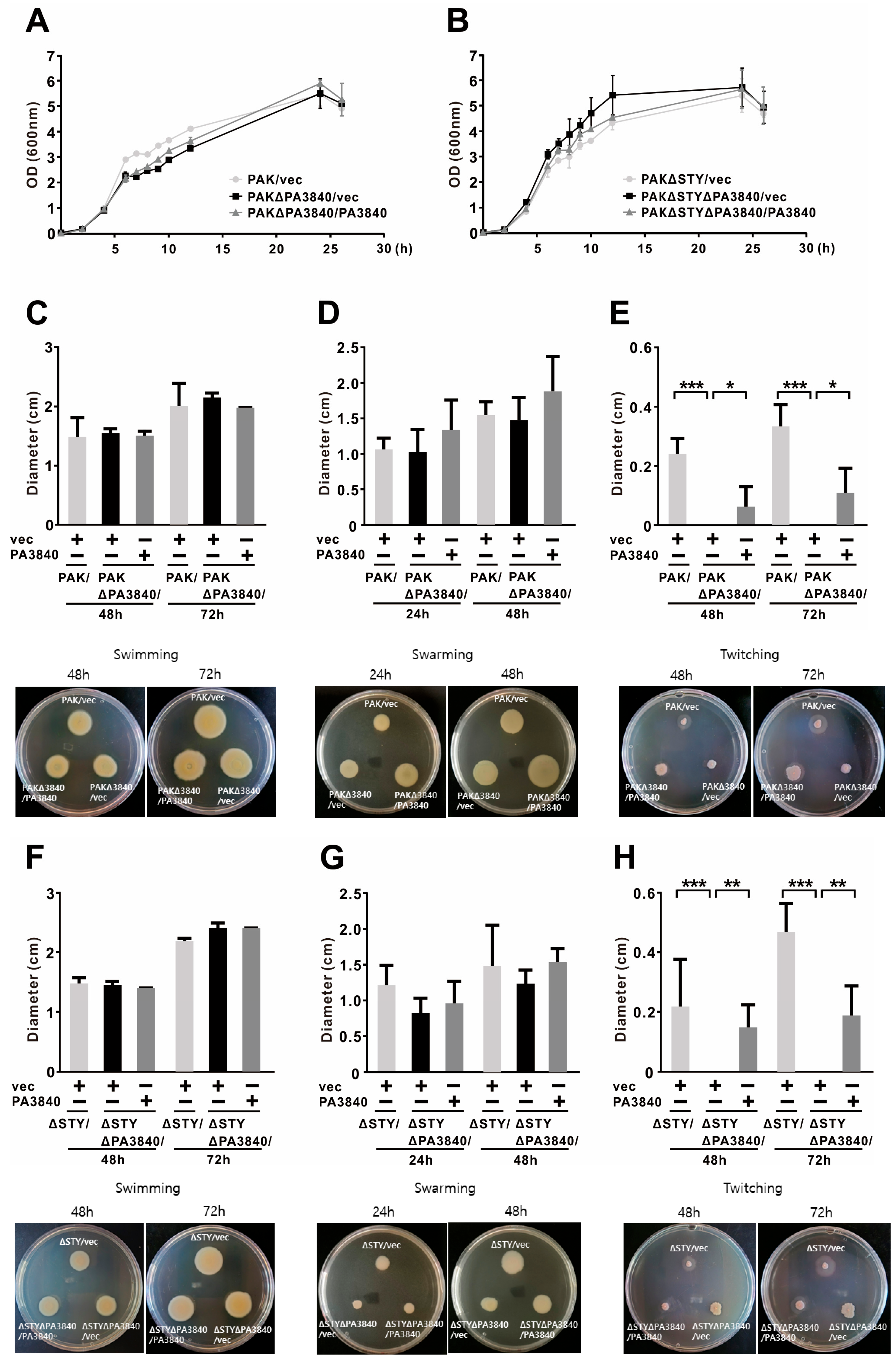
2.1. Differential Effects of PA3840 on Bacterial Growth and Motility
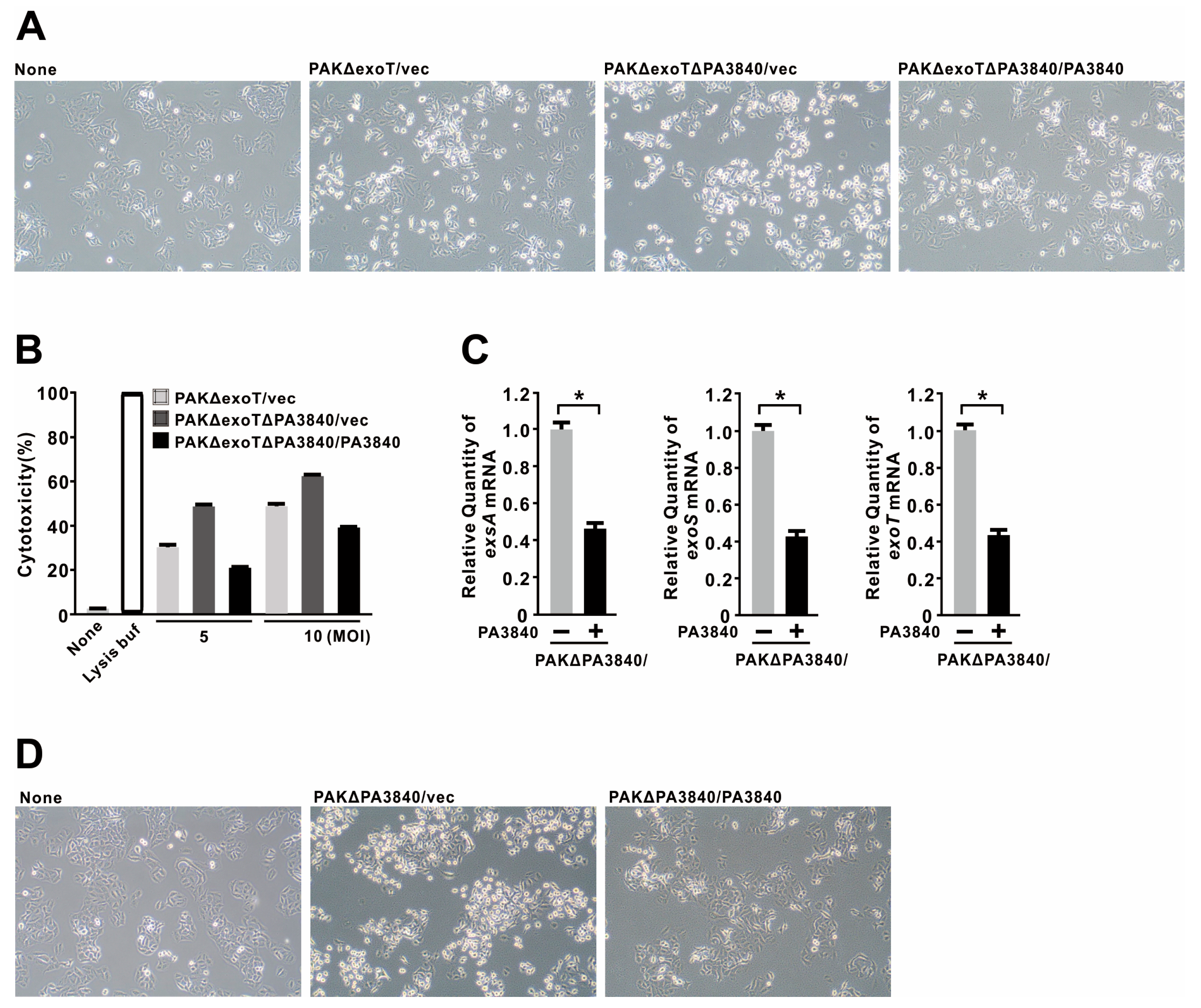
2.2. PA3840 Suppresses T3SS Effector Gene Expression
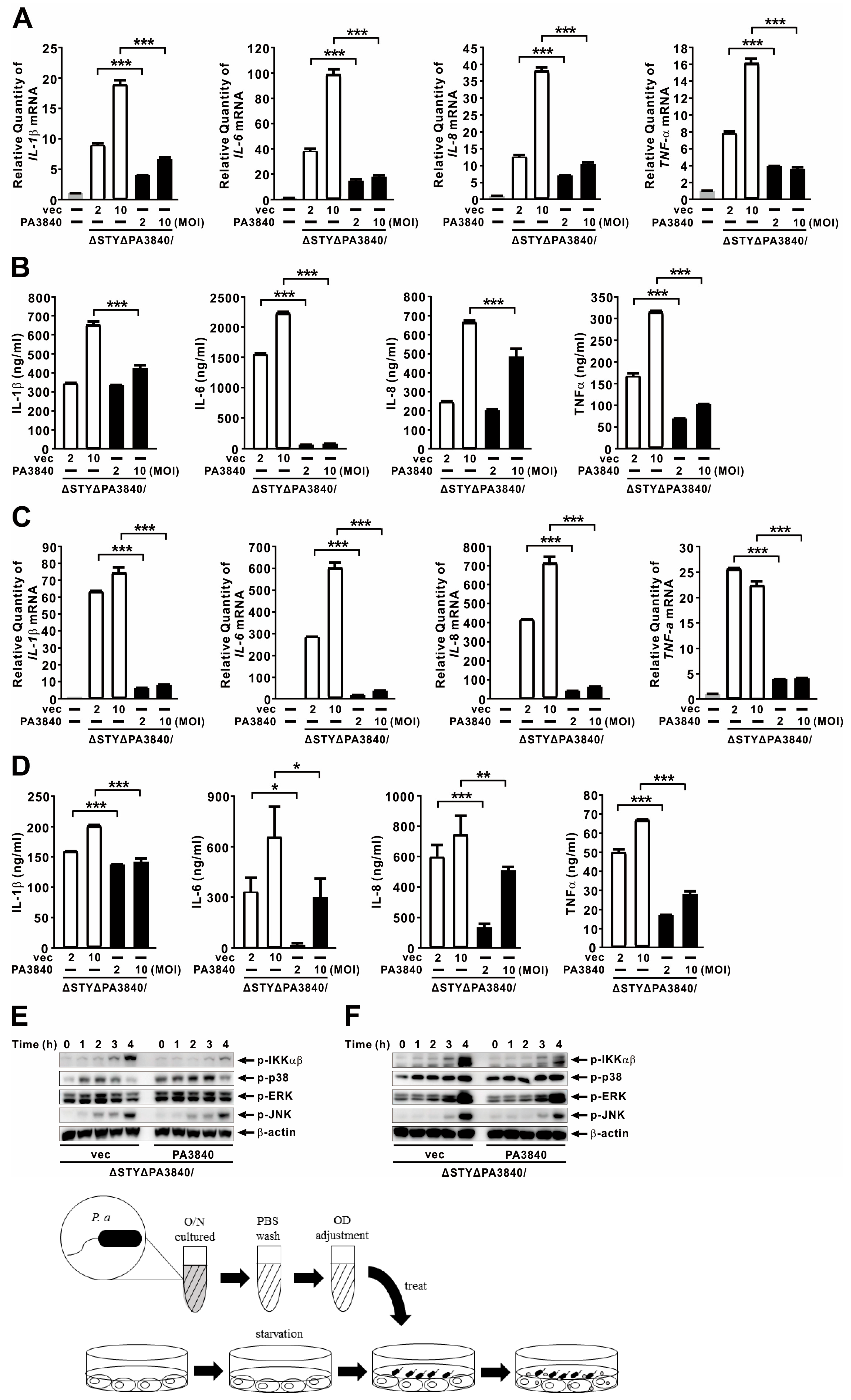
2.3. PA3840 Attenuates Host Inflammatory Responses via NF-κB Inhibition
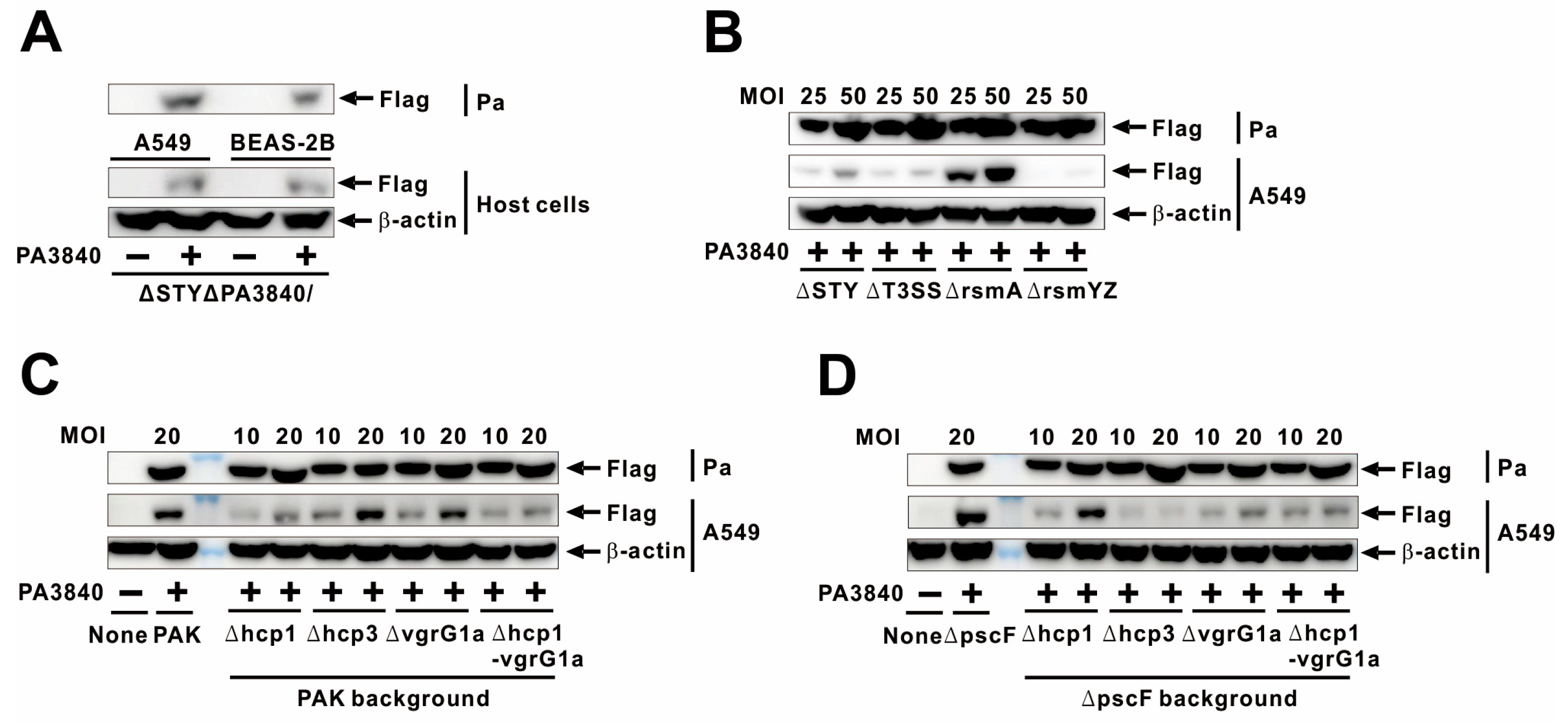
2.4. PA3840 Is Translocated into Host Cells via T6SS
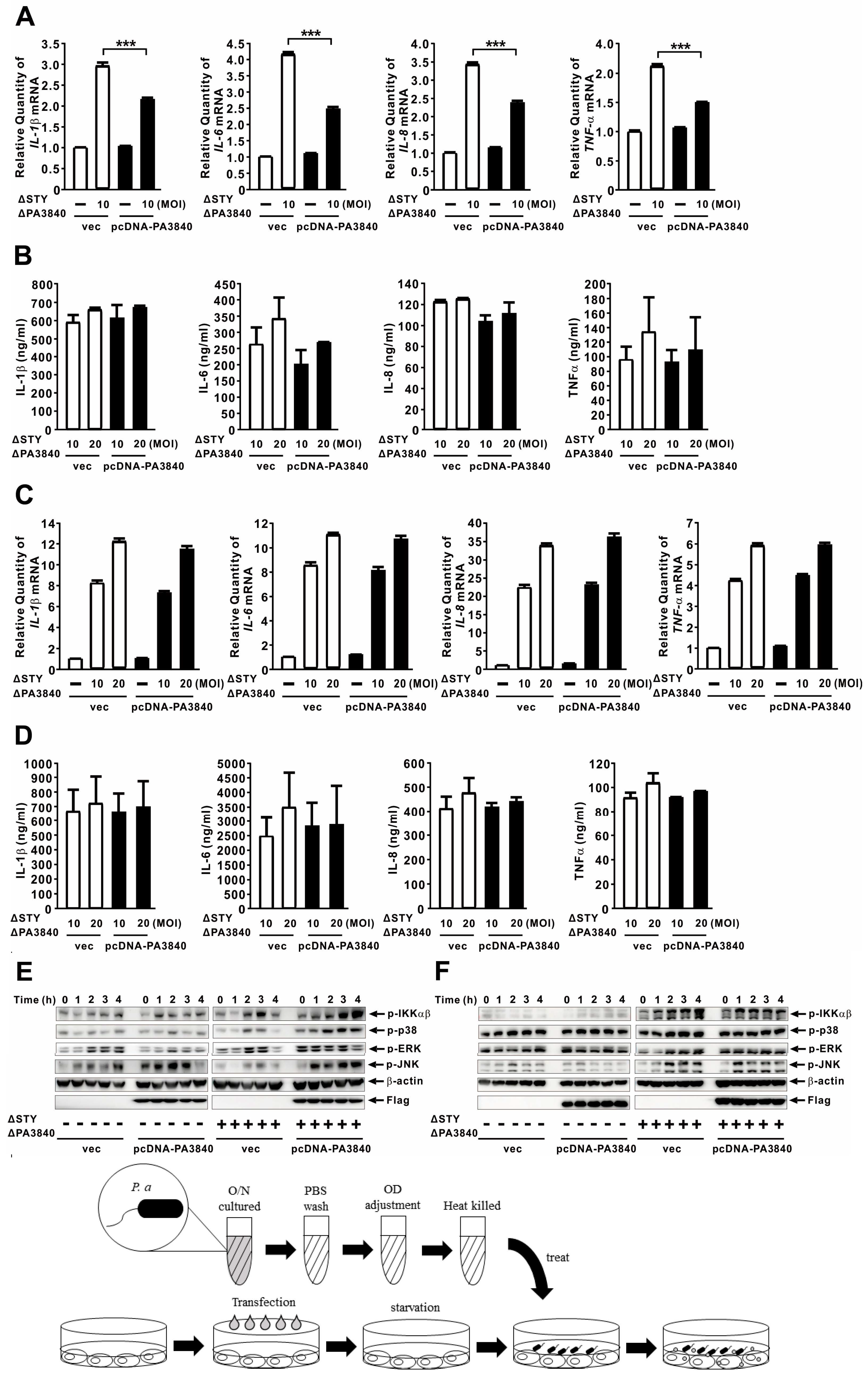
2.5. PA3840 Does Not Directly Modulate Cytokine Expression in Host Cells
3. Discussion
4. Materials and Methods
4.1. Bacterial Strains and Culture Conditions

| Strains or Plasmids | Description | Source |
|---|---|---|
| P. aeruginosa | ||
| PAK | P. aeruginosa, wild type | David Bradley |
| PAKΔPA3840 | PAK derivative with chromosomal deletion of PA3840 | This study |
| PAKΔrsmA | PAK derivative with chromosomal deletion of rsmA | [51] |
| PAKΔrsmYZ | PAK derivative with chromosomal deletion of rmsY and rsmZ | [51] |
| PAKΔSTY | PAK derivative with chromosomal deletion of exoS, exoT, and exoY | [52] |
| PAKΔSTYΔPA3840 | PAKΔSTY derivative with chromosomal deletion of PA3840 | This study |
| PAKΔexoT | PAK derivative with chromosomal deletion of exoT | [12] |
| PAKΔexoTΔPA3840 | PAKΔexoT derivative with chromosomal deletion of PA3840 | This study |
| PAKΔT3SS | PAK derivative with deletion of the whole T3SS region | Shouguang Jin |
| PAKΔpscF | PAK derivative with chromosomal deletion of pscF | [12] |
| PAKΔpscFΔhcp1 | PAKΔpscF derivative with chromosomal deletion of hcp1 | This study |
| PAKΔpscFΔhcp3 | PAKΔpscF derivative with chromosomal deletion of hcp3 | This study |
| PAKΔpscFΔvgrG1a | PAKΔpscF derivative with chromosomal deletion of vgrG1a | This study |
| PAKΔpscFΔhcp1ΔvgrG1a | PAKΔpscF derivative with chromosomal deletion of hcp1 and vgrG1a | This study |
| PAKΔhcp1 | PAK derivative with chromosomal deletion of hcp1 | [53] |
| PAKΔhcp3 | PAK derivative with chromosomal deletion of hcp3 | This study |
| PAKΔvgrG1a | PAK derivative with chromosomal deletion of vgrG1a | [53] |
| PAKΔhcp1ΔvgrG1a | PAK derivative with chromosomal deletion of hcp1 and vgrG1a | This study |
| Plasmids | ||
| pEX18Tc | Broad-host-range gene replacement vector; Tcr | [50] |
| pUCP20 | Escherichia-Pseudomonas shuttle vector; Apr | [54] |
| PA3840 | pUCP20 carrying 1.0 kb PA3840-flag; Apr | This study |
| pcDNA3.1(+) | Eukaryotic expression vector containing CMV promoter; Apr | Invitrogen |
| pcDNA-PA3840 | pcDNA3.1(+) carrying 1.0 kb PA3840-flag; Apr | This study |
| Primers | Sequence (5′-3′) |
|---|---|
| PA3840-flag F | GGAATTCACGGAAACCGAGAACATG |
| PA3840-flag R | AACTGCAGTCACTTGTCGTCATCGTCCTTGTAGTCTTCGCCCAGTGGTTCCAGGAGGGC |
| PA3840 dmt-A-F | GGAATTCCATC |
| PA3840 dmt-A-R | GCTCTAGAGAAGTCGATGCTCTGCCTG |
| PA3840 dmt-B-F | GCTCTAGACAGGGACAGAAGCAGAGCC |
| PA3840 dmt-B-R | CCCAAGCTTCAGAGTCCGTCTTTCG |
| hcp1 dmt-A-F | GGAATTCCGACGCGATCAAGTC |
| hcp1 dmt-A-R | GCTCTAGATTCCTCGGCATGAGTC |
| hcp1 dmt-B-F | GCTCTAGAGTCGACTACCAGCC |
| hcp1 dmt-B-R | CCCAAGCTTGTTGTGGTCCATCTC |
| hcp3 dmt-A-F | CGGGATCCCTCGACGAGATCATCG |
| hcp3 dmt-A-R | GCTCTAGAGTTTTCGTAGCCGACG |
| hcp3 dmt-B-F | GCTCTAGACGCAGAAGGACGACGGC |
| hcp3 dmt-B-R | CCCAAGCTTCACGCTGTTCTCGCG |
| vgrG1a dmt-A-F | CGAATTCGGTGAGCCTGCTGGATACC |
| vgrG1a dmt-A-R | CGGGATCCTAGGCGAACAACCGTC |
| vgrG1a dmt-B-F | CGGGATCCTTCAACCTCTACGCC |
| vgrG1a dmt-B-R | CCAAGCTTCTGAACCATCCGCTGTG |
4.2. Plasmids and Transfection
4.3. Mammalian Cell Culture
4.4. Growth Assay
4.5. Motility Assay
4.6. Cell Viability and Morphology
4.7. Real-Time Quantitative PCR (qRT-PCR)
4.8. Immunoblot Analysis
4.9. Enzyme-Linked Immunosorbent Assay (ELISA)
4.10. Statistics
5. Conclusions
Author Contributions
Funding
Institutional Review Board Statement
Informed Consent Statement
Data Availability Statement
Acknowledgments
Conflicts of Interest
References
- Qin, S.; Xiao, W.; Zhou, C.; Pu, Q.; Deng, X.; Lan, L.; Liang, H.; Song, X.; Wu, M. Pseudomonas aeruginosa: Pathogenesis, virulence factors, antibiotic resistance, interaction with host, technology advances and emerging therapeutics. Signal Transduct. Target. Ther. 2022, 7, 199. [Google Scholar] [CrossRef]
- Zhang, X.; Zhang, D.; Zhou, D.; Zheng, S.; Li, S.; Hou, Q.; Li, G.; Han, H. A comprehensive review of the pathogenic mechanisms of Pseudomonas aeruginosa: Synergistic effects of virulence factors, quorum sensing, and biofilm formation. Front. Microbiol. 2025, 16, 1619626. [Google Scholar] [CrossRef]
- Migiyama, Y.; Yanagihara, K.; Kaku, N.; Harada, Y.; Yamada, K.; Nagaoka, K.; Morinaga, Y.; Akamatsu, N.; Matsuda, J.; Izumikawa, K.; et al. Pseudomonas aeruginosa Bacteremia among Immunocompetent and Immunocompromised Patients: Relation to Initial Antibiotic Therapy and Survival. Jpn. J. Infect. Dis. 2016, 69, 91–96. [Google Scholar] [CrossRef]
- Stefani, S.; Campana, S.; Cariani, L.; Carnovale, V.; Colombo, C.; Lleo, M.M.; Iula, V.D.; Minicucci, L.; Morelli, P.; Pizzamiglio, G.; et al. Relevance of multidrug-resistant Pseudomonas aeruginosa infections in cystic fibrosis. Int. J. Med. Microbiol. 2017, 307, 353–362. [Google Scholar] [CrossRef]
- Ahmad, M.; Aduru, S.V.; Smith, R.P.; Zhao, Z.; Lopatkin, A.J. The role of bacterial metabolism in antimicrobial resistance. Nat. Rev. Microbiol. 2025, 23, 439–454. [Google Scholar] [CrossRef]
- World Health Organization. WHO Bacterial Priority Pathogens List, 2024: Bacterial Pathogens of Public Health Importance to Guide Research, Development and Strategies to Prevent and Control Antimicrobial Resistance; World Health Organization: Geneva, Switzerland, 2024; ISBN 978-92-4-009346-1. [Google Scholar]
- Gellatly, S.L.; Hancock, R.E. Pseudomonas aeruginosa: New insights into pathogenesis and host defenses. Pathog. Dis. 2013, 67, 159–173. [Google Scholar] [CrossRef]
- Coggan, K.A.; Wolfgang, M.C. Global regulatory pathways and cross-talk control Pseudomonas aeruginosa environmental lifestyle and virulence phenotype. Curr. Issues Mol. Biol. 2012, 14, 47–70. [Google Scholar] [CrossRef] [PubMed]
- Klockgether, J.; Tummler, B. Recent advances in understanding Pseudomonas aeruginosa as a pathogen. F1000Research 2017, 6, 1261. [Google Scholar] [CrossRef] [PubMed]
- Su, T.; Zhang, L.; Shen, J.; Qian, D.; Guo, Y.; Li, Z. Beyond pathogenicity: Applications of the type III secretion system (T3SS) of Pseudomonas aeruginosa. Front. Microbiol. 2025, 16, 1663945. [Google Scholar] [CrossRef]
- Williams McMackin, E.A.; Djapgne, L.; Corley, J.M.; Yahr, T.L. Fitting Pieces into the Puzzle of Pseudomonas aeruginosa Type III Secretion System Gene Expression. J. Bacteriol. 2019, 201, e00209-19. [Google Scholar] [CrossRef]
- Neeld, D.; Jin, Y.; Bichsel, C.; Jia, J.; Guo, J.; Bai, F.; Wu, W.; Ha, U.H.; Terada, N.; Jin, S. Pseudomonas aeruginosa injects NDK into host cells through a type III secretion system. Microbiology 2014, 160, 1417–1426. [Google Scholar] [CrossRef]
- Robinson, L.A.; Collins, A.C.Z.; Murphy, R.A.; Davies, J.C.; Allsopp, L.P. Diversity and prevalence of type VI secretion system effectors in clinical Pseudomonas aeruginosa isolates. Front. Microbiol. 2022, 13, 1042505. [Google Scholar] [CrossRef]
- Wu, Y.; Huang, S.; Zhang, K.; Shen, Y.; Zhang, S.; Xia, H.; Pu, J.; Shen, C.; Chen, C.; Zeng, J. Transcriptomic profiling reveals RetS-mediated regulation of type VI secretion system and host cell responses in Pseudomonas aeruginosa infections. Front. Cell. Infect. Microbiol. 2025, 15, 1582339. [Google Scholar] [CrossRef] [PubMed]
- Habich, A.; Chaves Vargas, V.; Robinson, L.A.; Allsopp, L.P.; Unterweger, D. Distribution of the four type VI secretion systems in Pseudomonas aeruginosa and classification of their core and accessory effectors. Nat. Commun. 2025, 16, 888. [Google Scholar] [CrossRef]
- Sana, T.G.; Berni, B.; Bleves, S. The T6SSs of Pseudomonas aeruginosa Strain PAO1 and Their Effectors: Beyond Bacterial-Cell Targeting. Front. Cell. Infect. Microbiol. 2016, 6, 61. [Google Scholar] [CrossRef] [PubMed]
- Hachani, A.; Allsopp, L.P.; Oduko, Y.; Filloux, A. The VgrG proteins are “a la carte” delivery systems for bacterial type VI effectors. J. Biol. Chem. 2014, 289, 17872–17884. [Google Scholar] [CrossRef]
- Ahmad, S.; Tsang, K.K.; Sachar, K.; Quentin, D.; Tashin, T.M.; Bullen, N.P.; Raunser, S.; McArthur, A.G.; Prehna, G.; Whitney, J.C. Structural basis for effector transmembrane domain recognition by type VI secretion system chaperones. eLife 2020, 9, e62816. [Google Scholar] [CrossRef]
- Renault, M.G.; Zamarreno Beas, J.; Douzi, B.; Chabalier, M.; Zoued, A.; Brunet, Y.R.; Cambillau, C.; Journet, L.; Cascales, E. The gp27-like Hub of VgrG Serves as Adaptor to Promote Hcp Tube Assembly. J. Mol. Biol. 2018, 430, 3143–3156. [Google Scholar] [CrossRef]
- Chadha, J.; Harjai, K.; Chhibber, S. Revisiting the virulence hallmarks of Pseudomonas aeruginosa: A chronicle through the perspective of quorum sensing. Environ. Microbiol. 2022, 24, 2630–2656. [Google Scholar] [CrossRef]
- Pier, G.B. Pseudomonas aeruginosa lipopolysaccharide: A major virulence factor, initiator of inflammation and target for effective immunity. Int. J. Med. Microbiol. IJMM 2007, 297, 277–295, Erratum in Int. J. Med. Microbiol. 2007, 297, 641.. [Google Scholar] [CrossRef]
- Miranda, S.W.; Asfahl, K.L.; Dandekar, A.A.; Greenberg, E.P. Pseudomonas aeruginosa Quorum Sensing. Adv. Exp. Med. Biol. 2022, 1386, 95–115. [Google Scholar] [CrossRef]
- Rahman, M.M.; McFadden, G. Modulation of NF-kappaB signalling by microbial pathogens. Nat. Rev. Microbiol. 2011, 9, 291–306. [Google Scholar] [CrossRef] [PubMed]
- Luecke, S.; Guo, X.; Sheu, K.M.; Singh, A.; Lowe, S.C.; Han, M.; Diaz, J.; Lopes, F.; Wollman, R.; Hoffmann, A. Dynamical and combinatorial coding by MAPK p38 and NFkappaB in the inflammatory response of macrophages. Mol. Syst. Biol. 2024, 20, 898–932. [Google Scholar] [CrossRef] [PubMed]
- Yang, J.; Yang, L.; Wang, Y.; Huai, L.; Shi, B.; Zhang, D.; Xu, W.; Cui, D. Interleukin-6 related signaling pathways as the intersection between chronic diseases and sepsis. Mol. Med. 2025, 31, 34. [Google Scholar] [CrossRef]
- Kim, Y.M.; Reed, W.; Wu, W.; Bromberg, P.A.; Graves, L.M.; Samet, J.M. Zn2+-induced IL-8 expression involves AP-1, JNK, and ERK activities in human airway epithelial cells. Am. J. Physiol. Lung Cell Mol. Physiol. 2006, 290, L1028–L1035. [Google Scholar] [CrossRef]
- Curran, C.S.; Bolig, T.; Torabi-Parizi, P. Mechanisms and Targeted Therapies for Pseudomonas aeruginosa Lung Infection. Am. J. Respir. Crit. Care Med. 2018, 197, 708–727. [Google Scholar] [CrossRef]
- Pustelny, C.; Brouwer, S.; Musken, M.; Bielecka, A.; Dotsch, A.; Nimtz, M.; Haussler, S. The peptide chain release factor methyltransferase PrmC is essential for pathogenicity and environmental adaptation of Pseudomonas aeruginosa PA14. Environ. Microbiol. 2013, 15, 597–609. [Google Scholar] [CrossRef]
- Ha, U.H.; Kim, J.; Badrane, H.; Jia, J.; Baker, H.V.; Wu, D.; Jin, S. An in vivo inducible gene of Pseudomonas aeruginosa encodes an anti-ExsA to suppress the type III secretion system. Mol. Microbiol. 2004, 54, 307–320. [Google Scholar] [CrossRef]
- Jurado-Martin, I.; Sainz-Mejias, M.; McClean, S. Pseudomonas aeruginosa: An Audacious Pathogen with an Adaptable Arsenal of Virulence Factors. Int. J. Mol. Sci. 2021, 22, 3128. [Google Scholar] [CrossRef]
- Kazmierczak, B.I.; Schniederberend, M.; Jain, R. Cross-regulation of Pseudomonas motility systems: The intimate relationship between flagella, pili and virulence. Curr. Opin. Microbiol. 2015, 28, 78–82. [Google Scholar] [CrossRef]
- Zhang, J.; Wu, X.Y.; Yu, F.S. Inflammatory responses of corneal epithelial cells to Pseudomonas aeruginosa infection. Curr. Eye Res. 2005, 30, 527–534. [Google Scholar] [CrossRef]
- Huang, H.; Shao, X.; Xie, Y.; Wang, T.; Zhang, Y.; Wang, X.; Deng, X. An integrated genomic regulatory network of virulence-related transcriptional factors in Pseudomonas aeruginosa. Nat. Commun. 2019, 10, 2931. [Google Scholar] [CrossRef]
- Arora, S.K.; Neely, A.N.; Blair, B.; Lory, S.; Ramphal, R. Role of motility and flagellin glycosylation in the pathogenesis of Pseudomonas aeruginosa burn wound infections. Infect. Immun. 2005, 73, 4395–4398. [Google Scholar] [CrossRef]
- Comolli, J.C.; Hauser, A.R.; Waite, L.; Whitchurch, C.B.; Mattick, J.S.; Engel, J.N. Pseudomonas aeruginosa gene products PilT and PilU are required for cytotoxicity in vitro and virulence in a mouse model of acute pneumonia. Infect. Immun. 1999, 67, 3625–3630. [Google Scholar] [CrossRef] [PubMed]
- Klausen, M.; Heydorn, A.; Ragas, P.; Lambertsen, L.; Aaes-Jorgensen, A.; Molin, S.; Tolker-Nielsen, T. Biofilm formation by Pseudomonas aeruginosa wild type, flagella and type IV pili mutants. Mol. Microbiol. 2003, 48, 1511–1524. [Google Scholar] [CrossRef] [PubMed]
- Beckmann, C.; Brittnacher, M.; Ernst, R.; Mayer-Hamblett, N.; Miller, S.I.; Burns, J.L. Use of phage display to identify potential Pseudomonas aeruginosa gene products relevant to early cystic fibrosis airway infections. Infect. Immun. 2005, 73, 444–452. [Google Scholar] [CrossRef]
- Gong, C.; Chakraborty, D.; Koudelka, G.B. A prophage encoded ribosomal RNA methyltransferase regulates the virulence of Shiga-toxin-producing Escherichia coli (STEC). Nucleic Acids Res. 2024, 52, 856–871. [Google Scholar] [CrossRef]
- Tian, Y.; Wang, X. RNA modification is the mark and strategy for host-microbe interactions. Cell. Mol. Life Sci. 2025, 82, 306. [Google Scholar] [CrossRef]
- Shrestha, M.; Bernhards, R.C.; Fu, Y.; Ryan, K.; Schubot, F.D. Backbone Interactions Between Transcriptional Activator ExsA and Anti-Activator ExsD Facilitate Regulation of the Type III Secretion System in Pseudomonas aeruginosa. Sci. Rep. 2020, 10, 9881. [Google Scholar] [CrossRef]
- Brencic, A.; Lory, S. Determination of the regulon and identification of novel mRNA targets of Pseudomonas aeruginosa RsmA. Mol. Microbiol. 2009, 72, 612–632. [Google Scholar] [CrossRef]
- Hauser, A.R. The type III secretion system of Pseudomonas aeruginosa: Infection by injection. Nat. Rev. Microbiol. 2009, 7, 654–665. [Google Scholar] [CrossRef] [PubMed]
- Luo, Y.; Chen, Z.; Lian, S.; Ji, X.; Zhu, C.; Zhu, G.; Xia, P. The Love and Hate Relationship between T5SS and Other Secretion Systems in Bacteria. Int. J. Mol. Sci. 2023, 25, 281. [Google Scholar] [CrossRef] [PubMed]
- Chen, H.; Malengo, G.; Wang, L.; Vogler, O.; Renner, M.; Glatter, T.; Paczia, N.; Unterweger, D.; Sourjik, V.; Diepold, A. Coordination of virulence factors and lifestyle transition in Pseudomonas aeruginosa through single-cell analysis. Commun. Biol. 2025, 8, 1236. [Google Scholar] [CrossRef]
- Pedersen, B.H.; Simoes, F.B.; Pogrebnyakov, I.; Welch, M.; Johansen, H.K.; Molin, S.; La Rosa, R. Metabolic specialization drives reduced pathogenicity in Pseudomonas aeruginosa isolates from cystic fibrosis patients. PLoS Biol. 2024, 22, e3002781. [Google Scholar] [CrossRef]
- Li, Y.; Chen, L.; Zhang, P.; Bhagirath, A.Y.; Duan, K. ClpV3 of the H3-Type VI Secretion System (H3-T6SS) Affects Multiple Virulence Factors in Pseudomonas aeruginosa. Front. Microbiol. 2020, 11, 1096. [Google Scholar] [CrossRef]
- Jedel, E.; Schator, D.; Kumar, N.G.; Sullivan, A.B.; Rietsch, A.; Evans, D.J.; Fleiszig, S.M.J. The Pseudomonas aeruginosa T3SS can contribute to traversal of an in situ epithelial multilayer independently of the T3SS needle. mBio 2025, 16, e0026625. [Google Scholar] [CrossRef]
- Reuven, A.D.; Katzenell, S.; Mwaura, B.W.; Bliska, J.B. ExoS effector in Pseudomonas aeruginosa Hyperactive Type III secretion system mutant promotes enhanced Plasma Membrane Rupture in Neutrophils. PLoS Pathog. 2025, 21, e1013021. [Google Scholar] [CrossRef]
- Hillyer, P.; Shepard, R.; Uehling, M.; Krenz, M.; Sheikh, F.; Thayer, K.R.; Huang, L.; Yan, L.; Panda, D.; Luongo, C.; et al. Differential Responses by Human Respiratory Epithelial Cell Lines to Respiratory Syncytial Virus Reflect Distinct Patterns of Infection Control. J. Virol. 2018, 92, e02202-17. [Google Scholar] [CrossRef]
- Hoang, T.T.; Karkhoff-Schweizer, R.R.; Kutchma, A.J.; Schweizer, H.P. A broad-host-range Flp-FRT recombination system for site-specific excision of chromosomally-located DNA sequences: Application for isolation of unmarked Pseudomonas aeruginosa mutants. Gene 1998, 212, 77–86. [Google Scholar] [CrossRef] [PubMed]
- Zhang, X.; Yin, L.; Liu, Q.; Wang, D.; Xu, C.; Pan, X.; Bai, F.; Cheng, Z.; Wu, W.; Jin, Y. NrtR Mediated Regulation of H1-T6SS in Pseudomonas aeruginosa. Microbiol. Spectr. 2022, 10, e0185821. [Google Scholar] [CrossRef]
- Bichsel, C.; Neeld, D.K.; Hamazaki, T.; Wu, D.; Chang, L.J.; Yang, L.; Terada, N.; Jin, S. Bacterial delivery of nuclear proteins into pluripotent and differentiated cells. PLoS ONE 2011, 6, e16465. [Google Scholar] [CrossRef]
- Lee, Y.; Jin, Y.; Wu, W.; Ha, U.H. Elongation factor-G1A identified as a novel effector protein translocated into cells and a key modulator of Pseudomonas aeruginosa physiology and host cellular responses. Microb. Pathog. 2025, 205, 107720. [Google Scholar] [CrossRef] [PubMed]
- West, S.E.; Schweizer, H.P.; Dall, C.; Sample, A.K.; Runyen-Janecky, L.J. Construction of improved Escherichia-Pseudomonas shuttle vectors derived from pUC18/19 and sequence of the region required for their replication in Pseudomonas aeruginosa. Gene 1994, 148, 81–86. [Google Scholar] [CrossRef] [PubMed]
- Jeon, J.; Kim, Y.J.; Shin, H.; Ha, U.H. T3SS effector ExoY reduces inflammasome-related responses by suppressing bacterial motility and delaying activation of NF-kappaB and caspase-1. FEBS J. 2017, 284, 3392–3403. [Google Scholar] [CrossRef] [PubMed]
- O’May, C.; Tufenkji, N. The swarming motility of Pseudomonas aeruginosa is blocked by cranberry proanthocyanidins and other tannin-containing materials. Appl. Environ. Microbiol. 2011, 77, 3061–3067. [Google Scholar] [CrossRef]
- Ha, U.H.; Wang, Y.; Jin, S. DsbA of Pseudomonas aeruginosa Is Essential for Multiple Virulence Factors. Infect. Immun. 2003, 71, 1590–1595. [Google Scholar] [CrossRef]


| Primers | Sequence (5′-3′) |
|---|---|
| exoS F | CTCTACACCGGCATTCACTAC |
| exoS R | CATACCTTGGTCGATCAGCTT |
| exoT F | CTTCGAGGCGGTGAAAGAG |
| exoT R | GCCGAACAGGGTGGTTATC |
| exsA F | AAGGAGCCAAATCTCTTG |
| exsA R | CTTGTTTACCCTGTATTCG |
| P. aeruginosa 16S rRNA F | CAAAACTACTGAGCTAGAGTACG |
| P. aeruginosa 16S rRNA R | GCCACTGGTGTTCCTTCCTA |
| human IL-1β F | AAACAGATGAAGTGCTCCTTCCAG |
| human IL-1β R | TGGAGAACACCACTTGTTGCTCCA |
| human IL-6 F | AACCTGAACCTTCCAAAGATGG |
| human IL-6 R | TCTGGCTTGTTCCTCACTACT |
| human IL-8 F | CTTGGCAGCCTTCCTGATTT |
| human IL-8 R | GGGTGGAAAGGTTTGGAG |
| human TNF-α F | CAGAGGGAAGAGTTCCCCAG |
| human TNF-α R | CCTTGGTCTGGTAGGAGACG |
| human GAPDH F | CCCTCCAAAATCAAGTGG |
| human GAPDH R | CCATCCACAGTCTTCTGG |
Disclaimer/Publisher’s Note: The statements, opinions and data contained in all publications are solely those of the individual author(s) and contributor(s) and not of MDPI and/or the editor(s). MDPI and/or the editor(s) disclaim responsibility for any injury to people or property resulting from any ideas, methods, instructions or products referred to in the content. |
© 2026 by the authors. Licensee MDPI, Basel, Switzerland. This article is an open access article distributed under the terms and conditions of the Creative Commons Attribution (CC BY) license.
Share and Cite
An, Y.; Lee, Y.; Jin, Y.; Wu, W.; Ha, U.-H. The Putative RNA Methyltransferase Modulates T3SS Expression and Host NF-κB Activation via T6SS-Mediated Translocation in Pseudomonas aeruginosa. Int. J. Mol. Sci. 2026, 27, 818. https://doi.org/10.3390/ijms27020818
An Y, Lee Y, Jin Y, Wu W, Ha U-H. The Putative RNA Methyltransferase Modulates T3SS Expression and Host NF-κB Activation via T6SS-Mediated Translocation in Pseudomonas aeruginosa. International Journal of Molecular Sciences. 2026; 27(2):818. https://doi.org/10.3390/ijms27020818
Chicago/Turabian StyleAn, YuRim, Yeji Lee, Yongxin Jin, Weihui Wu, and Un-Hwan Ha. 2026. "The Putative RNA Methyltransferase Modulates T3SS Expression and Host NF-κB Activation via T6SS-Mediated Translocation in Pseudomonas aeruginosa" International Journal of Molecular Sciences 27, no. 2: 818. https://doi.org/10.3390/ijms27020818
APA StyleAn, Y., Lee, Y., Jin, Y., Wu, W., & Ha, U.-H. (2026). The Putative RNA Methyltransferase Modulates T3SS Expression and Host NF-κB Activation via T6SS-Mediated Translocation in Pseudomonas aeruginosa. International Journal of Molecular Sciences, 27(2), 818. https://doi.org/10.3390/ijms27020818