

The Role of Lipid Alteration in Multiple Sclerosis


Abstract
1. Introduction
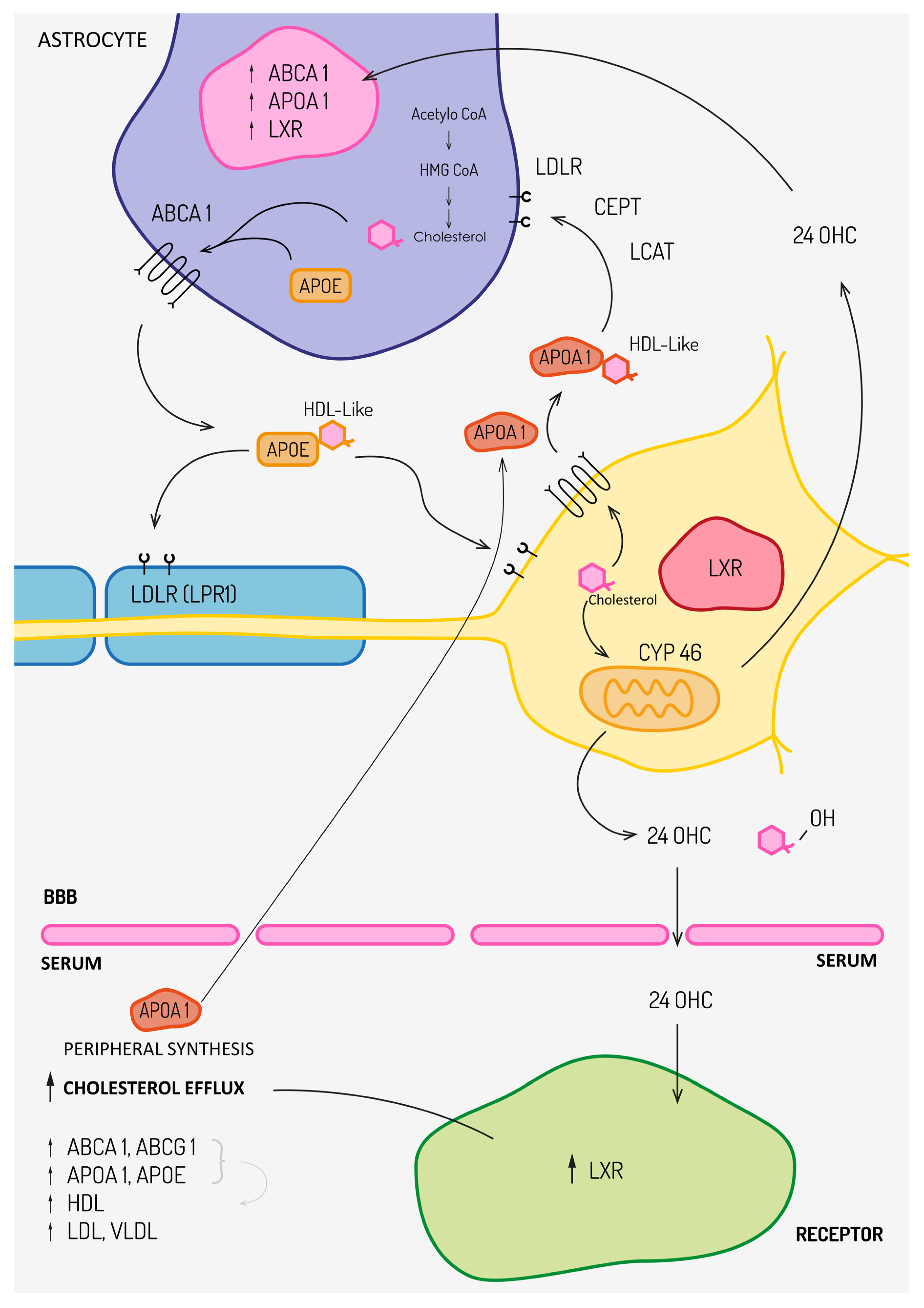
2. Cholesterol Metabolism in CNS
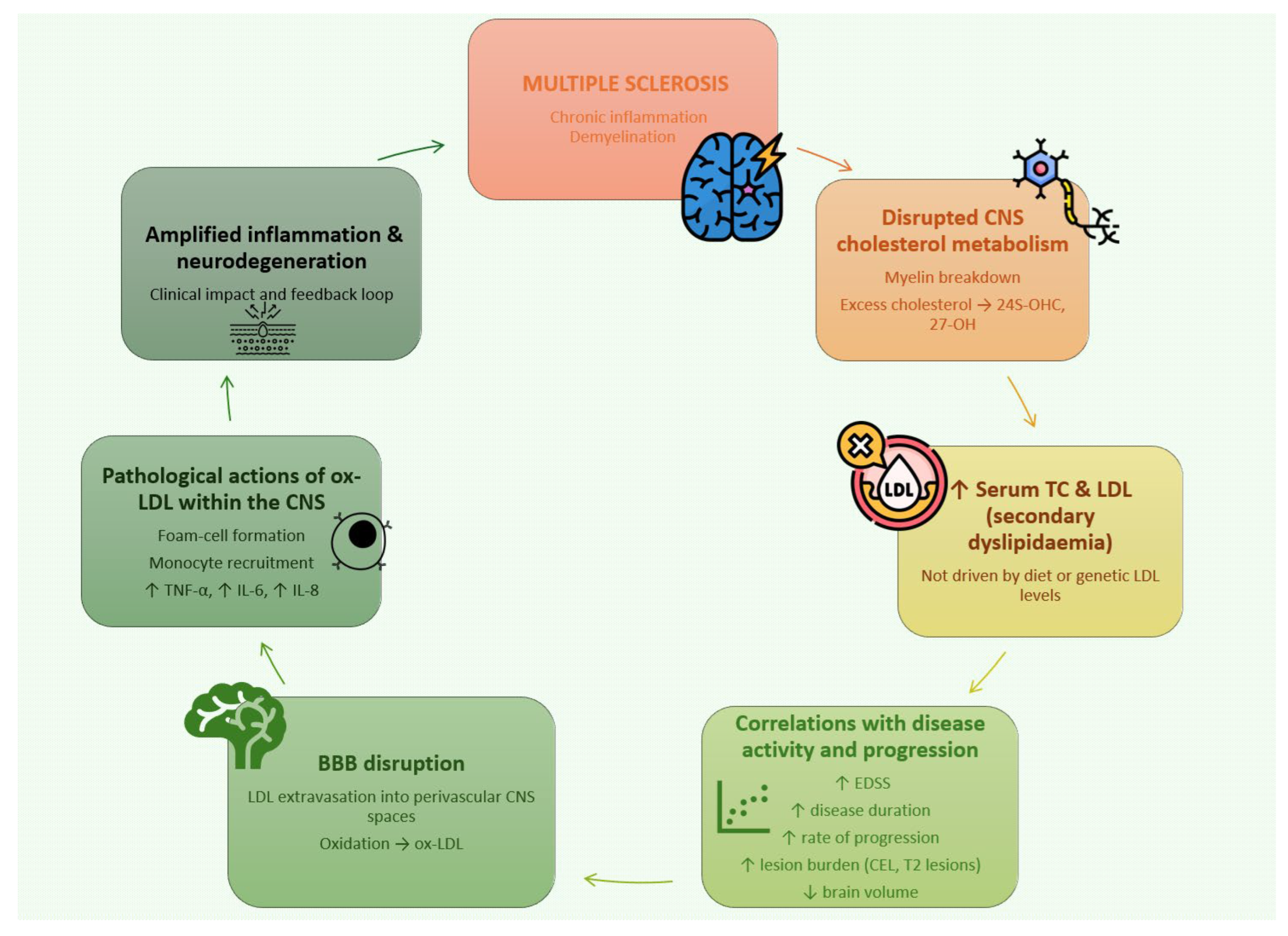
3. Lipid Metabolism in MS
4. Peripheral Lipid Alterations in MS and Their Clinical Correlates
4.1. Cholesterol, LDL and Clinical Measures of Severity and Progression
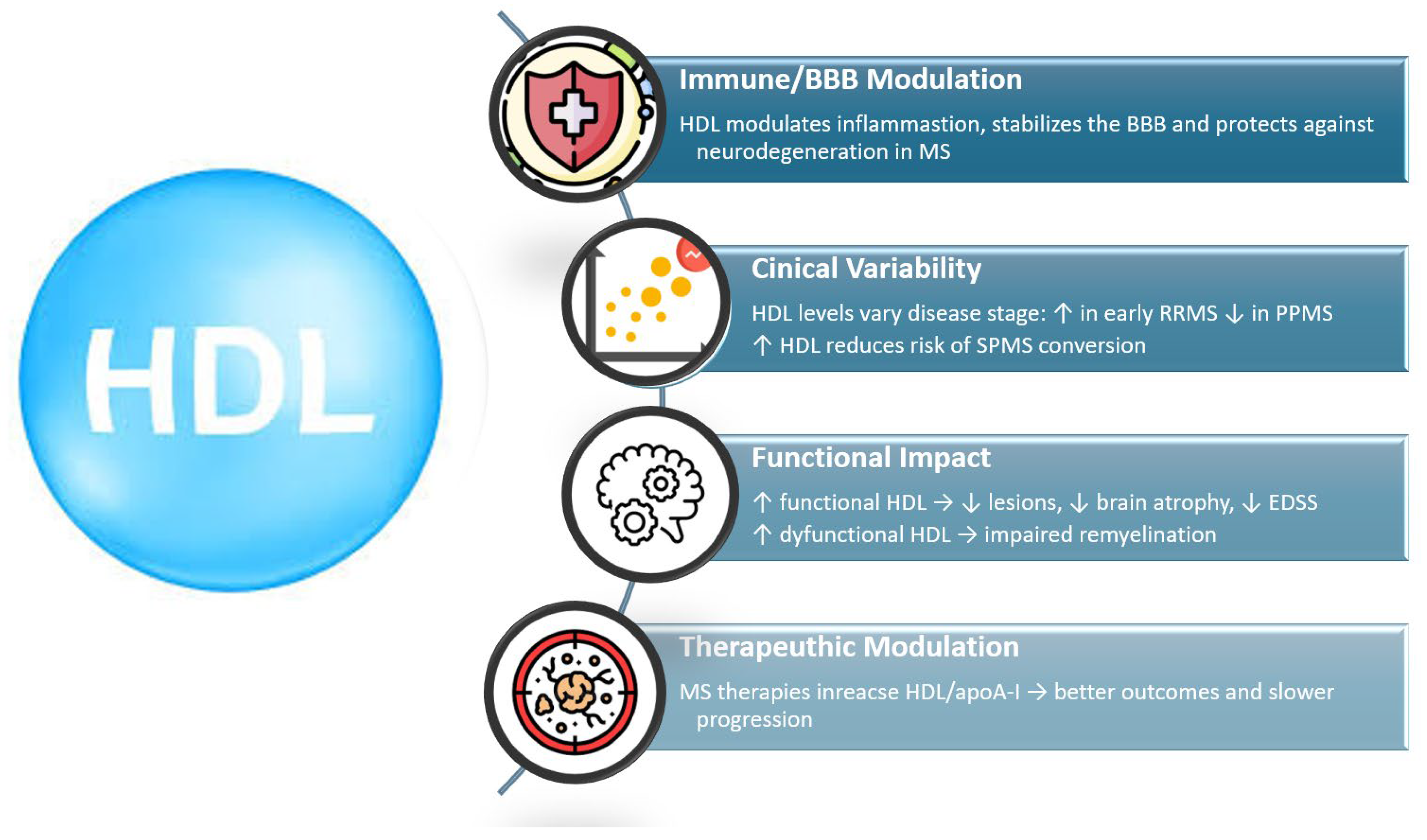
4.2. HDL in MS
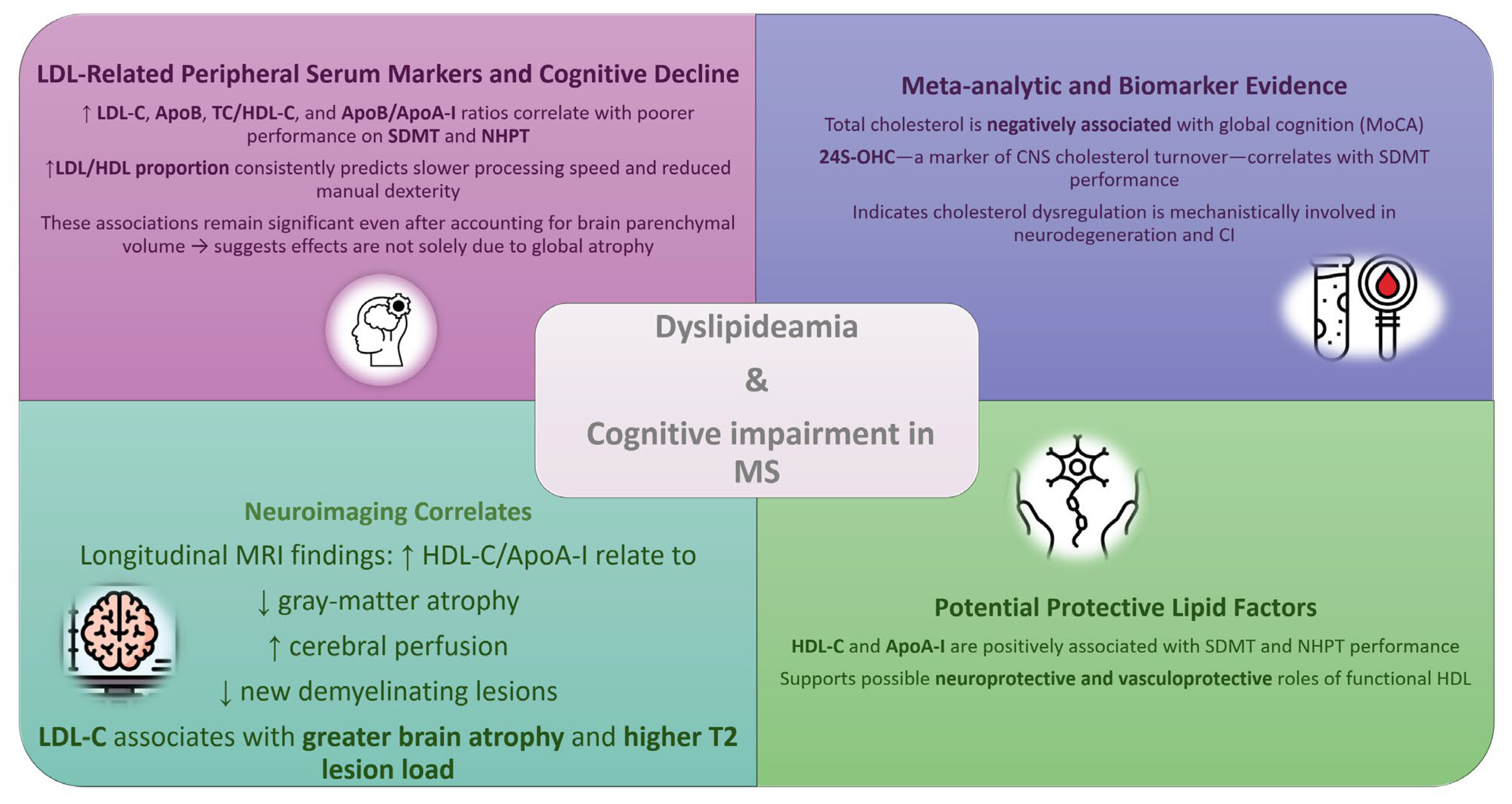
4.3. Lipid Dysregulation and Cognitive Impairment in MS
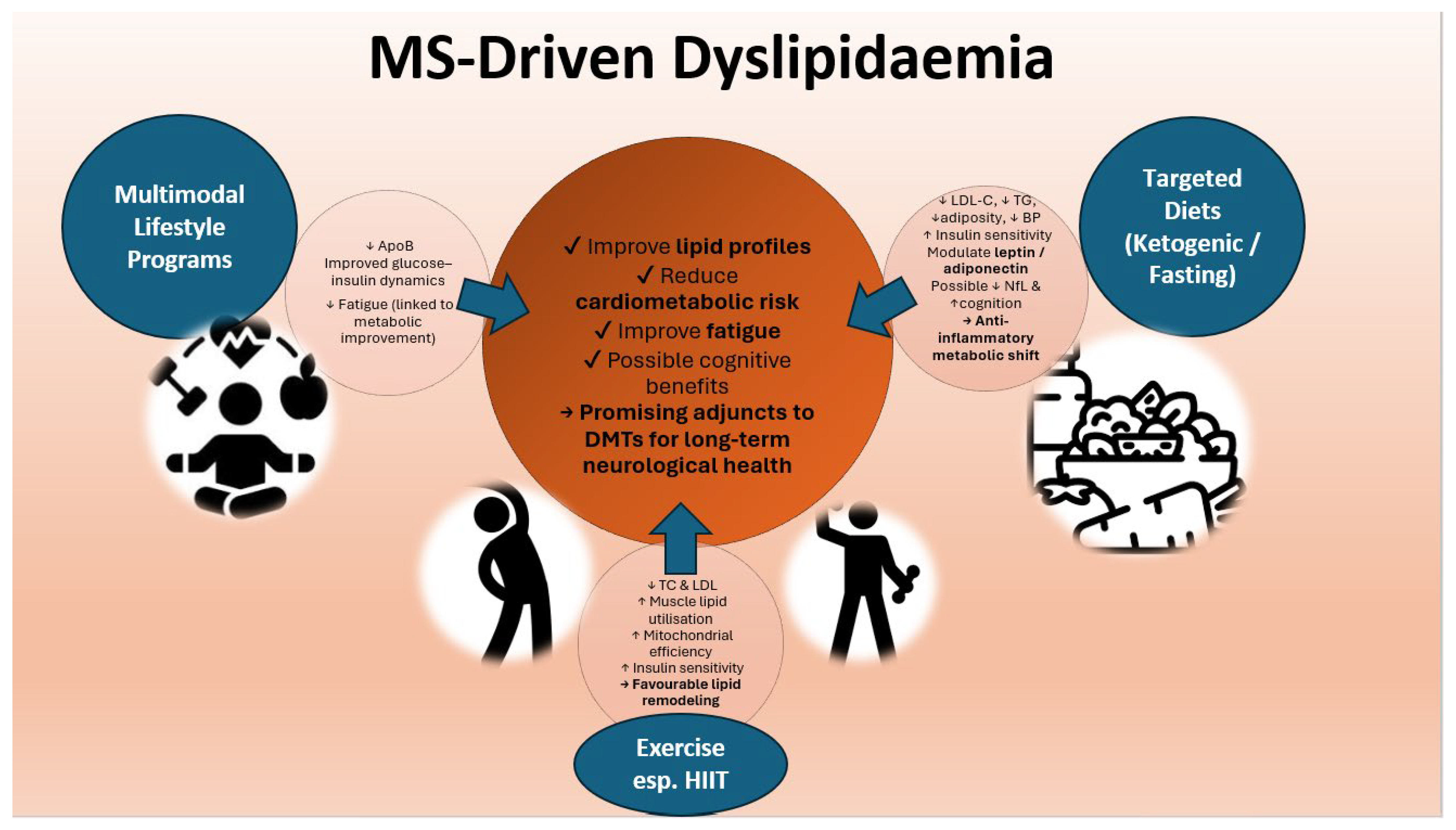
4.4. Impact of Lifestyle on Lipid Alteration in MS
4.5. Statins in MS
5. Materials and Methods
6. Conclusions
7. Highlights
- Lipid abnormalities in multiple sclerosis are secondary to demyelinating processes rather than an independent comorbid condition.
- Elevated LDL and total cholesterol levels correlate with greater disability and faster disease progression.
- HDL exerts neuroprotective effects.
- Improved physical activity and dietary habits enhance lipid profiles and reduce disability severity.
Author Contributions
Funding
Institutional Review Board Statement
Informed Consent Statement
Data Availability Statement
Conflicts of Interest
References
- Compston, A.; Coles, A. Multiple sclerosis. Lancet 2008, 372, 1502–1517. [Google Scholar] [CrossRef]
- Montalban, X.; Lebrun-Frénay, C.; Oh, J.; Arrambide, G.; Moccia, M.; Pia Amato, M.; Amezcua, L.; Banwell, B.; Bar-Or, A.; Barkhof, F.; et al. Diagnosis of multiple sclerosis: 2024 revisions of the McDonald criteria. Lancet Neurol. 2025, 24, 850–865, Erratum in Lancet Neurol. 2025, 24, e13. https://doi.org/10.1016/S1474-4422(25)00355-2. [Google Scholar] [CrossRef] [PubMed]
- Weinstock-Guttman, B.; Zivadinov, R.; Mahfooz, N.; Carl, E.; Drake, A.; Schneider, J.; Teter, B.; Hussein, S.; Mehta, B.; Weiskopf, M.; et al. Serum lipid profiles are associated with disability and MRI outcomes in multiple sclerosis. J. Neuroinflamm. 2011, 8, 127. [Google Scholar] [CrossRef] [PubMed]
- Podbielska, M.; O’Keeffe, J.; Pokryszko-Dragan, A. New Insights into Multiple Sclerosis Mechanisms: Lipids on the Track to Control Inflammation and Neurodegeneration. Int. J. Mol. Sci. 2021, 22, 7319. [Google Scholar] [CrossRef] [PubMed]
- Kuhlmann, T.; Moccia, M.; Coetzee, T.; A Cohen, J.; Correale, J.; Graves, J.; Marrie, R.A.; Montalban, X.; Yong, V.W.; Thompson, A.J.; et al. Multiple sclerosis progression: Time for a new mechanism-driven framework. Lancet Neurol. 2023, 22, 78–88. [Google Scholar] [CrossRef]
- Bar-Or, A.; Darlington, P.J. The immunology of multiple sclerosis. In Multiple Sclerosis Therapeutics, 4th ed.; Cambridge University Press: Cambridge, UK, 2011. [Google Scholar]
- Jurewicz, A.; Domowicz, M.; Galazka, G.; Raine, C.S.; Selmaj, K. Multiple sclerosis: Presence of serum antibodies to lipids and predominance of cholesterol recognition. J. Neurosci. Res. 2017, 95, 1984–1992. [Google Scholar] [CrossRef]
- Krumbholz, M.; Derfuss, T.; Hohlfeld, R.; Meinl, E. B cells and antibodies in multiple sclerosis pathogenesis and therapy. Nat. Rev. Neurol. 2012, 8, 613–623. [Google Scholar] [CrossRef]
- Liebner, S.; Dijkhuizen, R.M.; Reiss, Y.; Plate, K.H.; Agalliu, D.; Constantin, G. Functional morphology of the blood–brain barrier in health and disease. Acta Neuropathol. 2018, 135, 311–336. [Google Scholar] [CrossRef]
- Thompson, A.J.; Baranzini, S.E.; Geurts, J.; Hemmer, B.; Ciccarelli, O. Multiple sclerosis. Lancet 2018, 391, 1622–1636. [Google Scholar] [CrossRef]
- Kadry, H.; Noorani, B.; Cucullo, L. A blood–brain barrier overview on structure, function, impairment, and biomarkers of integrity. Fluids Barriers CNS 2020, 17, 69. [Google Scholar] [CrossRef]
- Ho, W.Y.; Hartmann, H.; Ling, S. Central nervous system cholesterol metabolism in health and disease. IUBMB Life 2022, 74, 826–841. [Google Scholar] [CrossRef] [PubMed]
- Raulin, A.-C.; Martens, Y.A.; Bu, G. Lipoproteins in the Central Nervous System: From Biology to Pathobiology. Annu. Rev. Biochem. 2022, 91, 731–759. [Google Scholar] [CrossRef] [PubMed]
- Zhu, R.; Ou, Z.; Ruan, X.; Gong, J. Role of liver X receptors in cholesterol efflux and inflammatory signaling. Mol. Med. Rep. 2012, 5, 895–900. [Google Scholar] [CrossRef] [PubMed]
- Lorincz, B.; Jury, E.C.; Vrablik, M.; Ramanathan, M.; Uher, T. The role of cholesterol metabolism in multiple sclerosis: From molecular pathophysiology to radiological and clinical disease activity. Autoimmun. Rev. 2022, 21, 103088. [Google Scholar] [CrossRef]
- Wicks, T.R.; Nehzat, N.; Wolska, A.; Shalaurova, I.; Browne, R.W.; Weinstock-Guttman, B.; Jakimovski, D.; Zivadinov, R.; Remaley, A.T.; Otvos, J.; et al. Dyslipidemias in multiple sclerosis. Mult. Scler. Relat. Disord. 2024, 91, 105841. [Google Scholar] [CrossRef]
- Tettey, P.; Simpson, S.; Taylor, B.; Blizzard, L.; Ponsonby, A.-L.; Dwyer, T.; Kostner, K.; van der Mei, I. An adverse lipid profile is associated with disability and progression in disability, in people with MS. Mult. Scler. J. 2014, 20, 1737–1744. [Google Scholar] [CrossRef]
- Weinstock-Guttman, B.; Zivadinov, R.; Horakova, D.; Havrdova, E.; Qu, J.; Shyh, G.; Lakota, E.; O’Connor, K.; Badgett, D.; Tamaño-Blanco, M.; et al. Lipid profiles are associated with lesion formation over 24 months in interferon-β treated patients following the first demyelinating event. J. Neurol. Neurosurg. Psychiatry 2013, 84, 1186–1191. [Google Scholar] [CrossRef]
- Siddiqui, K.; Browne, R.W.; Benedict, R.H.; Jakimovski, D.; Weinstock-Guttman, B.; Zivadinov, R.; Ramanathan, M. Cholesterol pathway biomarkers are associated with neuropsychological measures in multiple sclerosis. Mult. Scler. Relat. Disord. 2023, 69, 104374. [Google Scholar] [CrossRef]
- Almramhi, M.M.; Finan, C.; Storm, C.S.; Schmidt, A.F.; Kia, D.A.; Coneys, R.; Chopade, S.; Hingorani, A.D.; Wood, N.W. Exploring the Role of Plasma Lipids and Statin Interventions on Multiple Sclerosis Risk and Severity: A Mendelian Randomization Study. Neurology 2023, 101, e1729–e1740. [Google Scholar] [CrossRef]
- Ďurfinová, M.; Procházková, Ľ.; Petrleničová, D.; Bystrická, Z.; Orešanská, K.; Kuračka, Ľ.; Líška, B. Cholesterol level correlate with disability score in patients with relapsing-remitting form of multiple sclerosis. Neurosci. Lett. 2018, 687, 304–307. [Google Scholar] [CrossRef]
- Jorissen, W.; Wouters, E.; Bogie, J.F.; Vanmierlo, T.; Noben, J.-P.; Sviridov, D.; Hellings, N.; Somers, V.; Valcke, R.; Vanwijmeersch, B.; et al. Relapsing-remitting multiple sclerosis patients display an altered lipoprotein profile with dysfunctional HDL. Sci. Rep. 2017, 7, srep43410. [Google Scholar] [CrossRef] [PubMed]
- Saher, G.; Stumpf, S.K. Cholesterol in myelin biogenesis and hypomyelinating disorders. Biochim. Biophys. Acta (BBA)—Mol. Cell Biol. Lipids 2015, 1851, 1083–1094. [Google Scholar] [CrossRef] [PubMed]
- Camargo, N.; Goudriaan, A.; Van Deijk, A.-L.F.; Otte, W.M.; Brouwers, J.F.; Lodder, H.; Gutmann, D.H.; Nave, K.-A.; Dijkhuizen, R.M.; Mansvelder, H.D.; et al. Oligodendroglial myelination requires astrocyte-derived lipids. PLoS Biol. 2017, 15, e1002605. [Google Scholar] [CrossRef] [PubMed]
- Mohotti, N.D.S.; Williams, J.M.; Binjawadagi, R.; Kobayashi, H.; Dedunupitiya, D.; Petersen, J.M.; Garcia, A.; Hartley, M.D. Temporal dynamics of CNS cholesterol esters correlate with demyelination and remyelination. ACS Chem. Neurosci. 2025, 17, 160–172. [Google Scholar] [CrossRef]
- Stadelmann, C.; Timmler, S.; Barrantes-Freer, A.; Simons, M. Myelin in the Central Nervous System: Structure, Function, and Pathology. Physiol. Rev. 2019, 99, 1381–1431. [Google Scholar] [CrossRef]
- Koch, S.; Donarski, N.; Goetze, K.; Kreckel, M.; Stuerenburg, H.-J.; Buhmann, C.; Beisiegel, U. Characterization of four lipoprotein classes in human cerebrospinal fluid. J. Lipid Res. 2001, 42, 1143–1151. [Google Scholar] [CrossRef]
- E Pitas, R.; Boyles, J.K.; Lee, S.H.; Hui, D.; Weisgraber, K.H. Lipoproteins and their receptors in the central nervous system. Characterization of the lipoproteins in cerebrospinal fluid and identification of apolipoprotein B,E(LDL) receptors in the brain. J. Biol. Chem. 1987, 262, 14352–14360. [Google Scholar] [CrossRef]
- Rajha, H.E.; Hassanein, A.; Mesilhy, R.; Nurulhaque, Z.; Elghoul, N.; Burgon, P.G.; Al Saady, R.M.; Pedersen, S. Apolipoprotein A (ApoA) in Neurological Disorders: Connections and Insights. Int. J. Mol. Sci. 2025, 26, 7908. [Google Scholar] [CrossRef]
- Zhou, A.L.; Swaminathan, S.K.; Curran, G.L.; Poduslo, J.F.; Lowe, V.J.; Li, L.; Kandimalla, K.K. Apolipoprotein A-I Crosses the Blood-Brain Barrier through Clathrin-Independent and Cholesterol-Mediated Endocytosis. J. Pharmacol. Exp. Ther. 2019, 369, 481–488. [Google Scholar] [CrossRef]
- Zhang, J.; Liu, Q. Cholesterol metabolism and homeostasis in the brain. Protein Cell 2015, 6, 254–264. [Google Scholar] [CrossRef]
- Leoni, V.; Masterman, T.; Diczfalusy, U.; De Luca, G.; Hillert, J.; Björkhem, I. Changes in human plasma levels of the brain specific oxysterol 24S-hydroxycholesterol during progression of multiple sclerosis. Neurosci. Lett. 2002, 331, 163–166. [Google Scholar] [CrossRef]
- Loving, B.A.; Bruce, K.D. Lipid and Lipoprotein Metabolism in Microglia. Front. Physiol. 2020, 11, 393. [Google Scholar] [CrossRef] [PubMed]
- Tabas, I.; Williams, K.J.; Borén, J. Subendothelial Lipoprotein Retention as the Initiating Process in Atherosclerosis. Circulation 2007, 116, 1832–1844. [Google Scholar] [CrossRef]
- Puglielli, L.; Tanzi, R.E.; Kovacs, D.M. Alzheimer’s disease: The cholesterol connection. Nat. Neurosci. 2003, 6, 345–351. [Google Scholar] [CrossRef] [PubMed]
- Gylling, H.; Simonen, P. Phytosterols, Phytostanols, and Lipoprotein Metabolism. Nutrients 2015, 7, 7965–7977. [Google Scholar] [CrossRef] [PubMed]
- Nunes, V.S.; da Silva, E.J.; Ferreira Gda, S.; de Assis, S.I.S.; Cazita, P.M.; Nakandakare, E.R.; de Souza Zago, V.H.; de Faria, E.C.; Quintão, E.C.R. The Plasma Distribution of Non-cholesterol Sterol Precursors and Products of Cholesterol Synthesis and Phytosterols Depend on HDL Concentration. Front. Nutr. 2022, 9, 723555. [Google Scholar] [CrossRef] [PubMed]
- Leoni, V.; Caccia, C. 24S-hydroxycholesterol in plasma: A marker of cholesterol turnover in neurodegenerative diseases. Biochimie 2013, 95, 595–612. [Google Scholar] [CrossRef] [PubMed]
- van de Kraats, C.; Killestein, J.; Popescu, V.; Rijkers, E.; Vrenken, H.; Lütjohann, D.; Barkhof, F.; Polman, C.; Teunissen, C. Oxysterols and cholesterol precursors correlate to magnetic resonance imaging measures of neurodegeneration in multiple sclerosis. Mult. Scler. J. 2014, 20, 412–417. [Google Scholar] [CrossRef]
- Pineda-Torra, I.; Siddique, S.; Waddington, K.E.; Farrell, R.; Jury, E.C. Disrupted Lipid Metabolism in Multiple Sclerosis: A Role for Liver X Receptors? Front. Endocrinol. 2021, 12, 639757. [Google Scholar] [CrossRef]
- Ma, X.; Bi, E.; Huang, C.; Lu, Y.; Xue, G.; Guo, X.; Wang, A.; Yang, M.; Qian, J.; Dong, C.; et al. Cholesterol negatively regulates IL-9–producing CD8+ T cell differentiation and antitumor activity. J. Exp. Med. 2018, 215, 1555–1569. [Google Scholar] [CrossRef]
- Lindert, R.-B.; Haase, C.G.; Brehm, U.; Linington, C.; Wekerle, H.; Hohlfeld, R. Multiple sclerosis: B- and T-cell responses to the ex-tracellular domain of the myelin oligodendrocyte glycoprotein. Brain 1999, 122, 2089–2100. [Google Scholar] [CrossRef] [PubMed]
- Liu, R.; Du, S.; Zhao, L.; Jain, S.; Sahay, K.; Rizvanov, A.; Lezhnyova, V.; Khaibullin, T.; Martynova, E.; Khaiboullina, S.; et al. Autoreactive lymphocytes in multiple sclerosis: Pathogenesis and treatment target. Front. Immunol. 2022, 13, 996469. [Google Scholar] [CrossRef] [PubMed]
- Owens, G.P.; Fellin, T.J.; Matschulat, A.; Salas, V.; Schaller, K.L.; Given, K.S.; Ritchie, A.M.; Navarro, A.; Blauth, K.; Hughes, E.G.; et al. Pathogenic myelin-specific antibodies in multiple sclerosis target conformational proteolipid protein 1–anchored membrane domains. J. Clin. Investig. 2023, 133, e162731. [Google Scholar] [CrossRef] [PubMed]
- Merashli, M.; Alves, J.D.; Gentile, F.; Ames, P.R. Relevance of antiphospholipid antibodies in multiple sclerosis: A systematic review and meta analysis. Semin. Arthritis Rheum. 2017, 46, 810–818. [Google Scholar] [CrossRef]
- Menge, T.; Lalive, P.H.; von Büdingen, H.-C.; Cree, B.; Hauser, S.L.; Genain, C.P. Antibody responses against galactocerebroside are potential stage-specific biomarkers in multiple sclerosis. J. Allergy Clin. Immunol. 2005, 116, 453–459. [Google Scholar] [CrossRef]
- Zaprianova, E.; Majtényi, K.; Deleva, D.; Mikova, O.; Filchev, A.; Sultanov, B.; Kolyovska, V.; Sultanov, E.; Christova, L.; Kmetska, X.; et al. Serum IgG and IgM ganglioside GM1 antibodies in patients with multiple sclerosis. Ideggyogy. Sz. 2004, 57, 94–99. [Google Scholar]
- Ilyas, A. Antibodies to sulfatide in cerebrospinal fluid of patients with multiple sclerosis. J. Neuroimmunol. 2003, 139, 76–80. [Google Scholar] [CrossRef]
- Podbielska, M.; Ariga, T.; Pokryszko-Dragan, A. Sphingolipid Players in Multiple Sclerosis: Their Influence on the Initiation and Course of the Disease. Int. J. Mol. Sci. 2022, 23, 5330. [Google Scholar] [CrossRef]
- van Kruining, D.; Luo, Q.; van Echten-Deckert, G.; Mielke, M.M.; Bowman, A.; Ellis, S.; Oliveira, T.G.; Martinez-Martinez, P. Sphingolipids as prognostic biomarkers of neurodegeneration, neuroinflammation, and psychiatric diseases and their emerging role in lipidomic investigation methods. Adv. Drug Deliv. Rev. 2020, 159, 232–244. [Google Scholar] [CrossRef]
- McGinley, M.P.; A Cohen, J. Sphingosine 1-phosphate receptor modulators in multiple sclerosis and other conditions. Lancet 2021, 398, 1184–1194, Erratum in Lancet 2021, 398, 1132. https://doi:10.1016/S0140-6736(21)02050-X. [Google Scholar] [CrossRef]
- Roy, R.; Alotaibi, A.A.; Freedman, M.S. Sphingosine 1-Phosphate Receptor Modulators for Multiple Sclerosis. CNS Drugs 2021, 35, 385–402. [Google Scholar] [CrossRef] [PubMed]
- Cree, B.A.; Selmaj, K.W.; Steinman, L.; Comi, G.; Bar-Or, A.; Arnold, D.L.; Hartung, H.-P.; Montalbán, X.; Havrdová, E.K.; Sheffield, J.K.; et al. Long-term safety and efficacy of ozanimod in relapsing multiple sclerosis: Up to 5 years of follow-up in the DAYBREAK open-label extension trial. Mult. Scler. J. 2022, 31, 1557–1571, Erratum in Mult. Scler. J. 2022, 28, 1944–1962. https://doi.org/10.1177/13524585221102584. [Google Scholar] [CrossRef] [PubMed]
- Sánchez-Sanz, A.; Posada-Ayala, M.; Sabín-Muñoz, J.; Fernández-Miranda, I.; Aladro-Benito, Y.; Álvarez-Lafuente, R.; Royuela, A.; García-Hernández, R.; la Fuente, O.R.-D.; Romero, J.; et al. Endo-cannabinoid levels in peripheral blood mononuclear cells of multiple sclerosis patients treated with dimethyl fumarate. Sci. Rep. 2022, 12, 20300. [Google Scholar] [CrossRef]
- Makris, A.; Palli, N.; Liontos, A.; Rizos, E.C.; Tsioutis, C.; Papadopoulos, D.; Agouridis, A.P. High-density lipoprotein cholesterol and multiple sclerosis: A systematic review and meta-analysis. Arch. Med. Sci.—Atheroscler. Dis. 2025, 10, 69–77. [Google Scholar] [CrossRef] [PubMed]
- Murali, N.; Browne, R.W.; Fellows Maxwell, K.; Bodziak, M.L.; Jakimovski, D.; Hagemeier, J.; Bergsland, N.; Weinstock-Guttman, B.; Zivadinov, R.; Ramanathan, M. Cholesterol and neurodegeneration: Longitudinal changes in serum cholesterol biomarkers are associated with new lesions and gray matter atrophy in multiple sclerosis over 5 years of follow-up. Eur. J. Neurol. 2020, 27, 188-e4. [Google Scholar] [CrossRef]
- Kan, S.B.; Staun-Ram, E.; Golan, D.; Miller, A. HDL-cholesterol elevation associated with fingolimod and dimethyl fumarate therapies in multiple sclerosis. Mult. Scler. J.—Exp. Transl. Clin. 2019, 5, 205521731988272. [Google Scholar] [CrossRef]
- Fellows, K.; Uher, T.; Browne, R.W.; Weinstock-Guttman, B.; Horakova, D.; Posova, H.; Vaneckova, M.; Seidl, Z.; Krasensky, J.; Tyblova, M.; et al. Protective associations of HDL with blood-brain barrier injury in multiple sclerosis patients. J. Lipid Res. 2015, 56, 2010–2018. [Google Scholar] [CrossRef]
- Vural, G.; Gumusyayla, S.; Eren, F.K.; Barakli, S.; Unal, E.D.; Neselioglu, S.; Erel, O. Relationship between pattern re-versal visual evoked potential P100 wave latency and dysfunctional HDL in patients with multiple sclerosis subjected to an optic neuritis attack: A case-control study. Medicine 2024, 103, e37115. [Google Scholar] [CrossRef]
- Jakimovski, D.; Zivadinov, R.; Dwyer, M.G.; Bergsland, N.; Ramasamy, D.P.; Browne, R.W.; Weinstock-Guttman, B.; Ramanathan, M. High density lipoprotein cholesterol and apolipoprotein A-I are associated with greater cerebral perfusion in multiple sclerosis. J. Neurol. Sci. 2020, 418, 117120. [Google Scholar] [CrossRef]
- Uher, T.; Fellows, K.; Horakova, D.; Zivadinov, R.; Vaneckova, M.; Sobisek, L.; Tyblova, M.; Seidl, Z.; Krasensky, J.; Bergsland, N.; et al. Serum lipid profile changes predict neuro-degeneration in interferon-β1a-treated multiple sclerosis patients. J. Lipid Res. 2017, 58, 403–411. [Google Scholar] [CrossRef]
- Browne, R.W.; Weinstock-Guttman, B.; Horakova, D.; Zivadinov, R.; Bodziak, M.L.; Tamaño-Blanco, M.; Badgett, D.; Tyblova, M.; Vaneckova, M.; Seidl, Z.; et al. Apolipoproteins are associated with new MRI lesions and deep grey matter atrophy in clinically isolated syndromes. J. Neurol. Neurosurg. Psychiatry 2014, 85, 859–864. [Google Scholar] [CrossRef] [PubMed]
- Vejux, A.; Ghzaiel, I.; Nury, T.; Schneider, V.; Charrière, K.; Sghaier, R.; Zarrouk, A.; Leoni, V.; Moreau, T.; Lizard, G. Oxysterols and multiple sclerosis: Physiopathology, evolutive biomarkers and therapeutic strategy. J. Steroid Biochem. Mol. Biol. 2021, 210, 105870. [Google Scholar] [CrossRef]
- Jana, A.; Pahan, K. Sphingolipids in Multiple Sclerosis. Neuromol. Med. 2010, 12, 351–361. [Google Scholar] [CrossRef] [PubMed]
- Paraschiv, A.-C.; Văcăraș, C.; Marge, C.; Văcăraș, V. Dysregulation of the endocannabinoid system—A key factor in the progression of multiple sclerosis? J. Med. Life 2025, 18, 863–868. [Google Scholar] [CrossRef] [PubMed]
- Smusz, J.; Mojsak, P.; Matys, P.; Mirończuk, A.; Tarasiuk, J.; Grubczak, K.; Starosz, A.; Kochanowicz, J.; Kułakowska, A.; Ruszczyńska, K.; et al. Metabolomics in Multiple Sclerosis: Advances, Challenges, and Clinical Perspectives—A Systematic Review. Int. J. Mol. Sci. 2025, 26, 9207. [Google Scholar] [CrossRef]
- Clayton, P.; Hill, M.; Bogoda, N.; Subah, S.; Venkatesh, R. Palmitoylethanolamide: A natural compound for health management. Int. J. Mol. Sci. 2021, 22, 5305. [Google Scholar] [CrossRef]
- Mandoj, C.; Renna, R.; Plantone, D.; Sperduti, I.; Cigliana, G.; Conti, L.; Koudriavtseva, T. Anti-annexin antibodies, cholesterol levels and disability in multiple sclerosis. Neurosci. Lett. 2015, 606, 156–160. [Google Scholar] [CrossRef]
- Zhang, S.M.; Willett, W.C.; Hernán, M.A.; Olek, M.J.; Ascherio, A. Dietary Fat in Relation to Risk of Multiple Sclerosis among Two Large Cohorts of Women. Am. J. Epidemiol. 2000, 152, 1056–1064. [Google Scholar] [CrossRef]
- Ortí, J.E.d.l.R.; Armero, J.L.P.; Cuerda-Ballester, M.; Sanchis-Sanchis, C.E.; Navarro-Illana, E.; Lajara-Romance, J.M.; Benlloch, M.; Ceron, J.J.; Tvarijonaviciute, A.; Proaño, B. Lipid Profile in Multiple Sclerosis: Functional Capacity and Therapeutic Potential of Its Regulation after Intervention with Epigallocatechin Gallate and Coconut Oil. Foods 2023, 12, 3730. [Google Scholar] [CrossRef]
- Yuan, S.; Xiong, Y.; Larsson, S.C. An atlas on risk factors for multiple sclerosis: A Mendelian randomization study. J. Neurol. 2021, 268, 114–124. [Google Scholar] [CrossRef]
- Mahley, R.W. Central nervous system lipoproteins: ApoE and regulation of cholesterol metabolism. Arter. Thromb. Vasc. Biol. 2016, 36, 1305–1315. [Google Scholar] [CrossRef]
- Bhale, A.S.; Venkataraman, K. Leveraging knowledge of HDLs major protein ApoA1: Structure, function, mutations, and potential therapeutics. Biomed. Pharmacother. 2022, 154, 113634. [Google Scholar] [CrossRef] [PubMed]
- Zhao, N.; Liu, C.C.; Qiao, W.; Bu, G. Apolipoprotein E, Receptors, and Modulation of Alzheimer’s Disease. Biol. Psychiatry 2018, 83, 347–357. [Google Scholar] [CrossRef] [PubMed]
- Giubilei, F.; Antonini, G.; Di Legge, S.; Sormani, M.P.; Pantano, P.; Antonini, R.; Sepe-Monti, M.; Caramia, F.; Pozzilli, C. Blood cholesterol and MRI activity in first clinical episode suggestive of multiple sclerosis. Acta Neurol. Scand. 2002, 106, 109–112. [Google Scholar] [CrossRef] [PubMed]
- Lorincz, B.; Vrablik, M.; Murali, R.; Havrdova, E.K.; Horakova, D.; Krasensky, J.; Vaneckova, M.; Uher, T. Lipid and brain volumetric measures in multiple sclerosis patients: Findings from a large observational study. Acta Neurol. Belg. 2024, 124, 1981–1988. [Google Scholar] [CrossRef]
- Newcombe, J.; Li, H.; Cuzner, M.L. Low density lipoprotein uptake by macrophages in multiple sclerosis plaques: Implications for pathogenesis. Neuropathol. Appl. Neurobiol. 1994, 20, 152–162. [Google Scholar] [CrossRef]
- Rhoads, J.P.; Major, A.S. How Oxidized Low-Density Lipoprotein Activates Inflammatory Responses. Crit. Rev. Immunol. 2018, 38, 333–342. [Google Scholar] [CrossRef]
- Palavra, F.; Marado, D.; Mascarenhas-Melo, F.; Sereno, J.; Teixeira-Lemos, E.; Nunes, C.C.; Gonçalves, G.; Teixeira, F.; Reis, F. New markers of early cardiovascular risk in multiple sclerosis patients: Oxidized-LDL correlates with clinical staging. Dis. Markers 2013, 34, 341–348. [Google Scholar] [CrossRef]
- Albuquerque Lda, S.; Damasceno, N.R.T.; Maia, F.N.; de Carvalho, B.M.; Maia, C.S.C.; D’Almeida, J.A.C.; de Melo, M.L.P. Cardiovascular risk estimated in individuals with multiple sclerosis: A case-control study. Mult. Scler. Relat. Disord. 2021, 54, 103133. [Google Scholar] [CrossRef]
- Ge, Z.; Hu, Y.; Kan, W.; Li, L.; Xu, J.; Zhang, Y.; Zheng, N.; Wang, G.; Du, J. Lipid metabolic dysregulation-induced neuroinflammation in the pathophysiology of major depressive disorder. Front. Immunol. 2025, 16, 1625087. [Google Scholar] [CrossRef]
- Meyers, L.; Groover, C.J.; Douglas, J.; Lee, S.; Brand, D.; Levin, M.C.; Gardner, L.A. A role for Apolipoprotein A-I in the pathogenesis of multiple sclerosis. J. Neuroimmunol. 2014, 277, 176–185. [Google Scholar] [CrossRef] [PubMed]
- Gardner, L.A.; Levin, M.C. Importance of Apolipoprotein A-I in Multiple Sclerosis. Front. Pharmacol. 2015, 6, 278. [Google Scholar] [CrossRef] [PubMed]
- McComb, M.; Parambi, R.; Browne, R.W.; Bodziak, M.L.; Jakimovski, D.; Bergsland, N.; Maceski, A.; Weinstock-Guttman, B.; Kuhle, J.; Zivadinov, R.; et al. Apolipoproteins AI and E are associated with neuroaxonal injury to gray matter in multiple sclerosis. Mult. Scler. Relat. Disord. 2020, 45, 102389. [Google Scholar] [CrossRef] [PubMed]
- Bowman, G.L.; Kaye, J.A.; Quinn, J.F. Dyslipidemia and Blood-Brain Barrier Integrity in Alzheimer’s Disease. Curr. Gerontol. Geriatr. Res. 2012, 2012, 184042. [Google Scholar] [CrossRef]
- Rauma, I.; Huhtala, H.; Soilu-Hänninen, M.; Kuusisto, H. Lipid Profile Alterations during Fingolimod Treatment in Multiple Sclerosis Patients. J. Neuroimmune Pharmacol. 2020, 15, 567–569. [Google Scholar] [CrossRef]
- Sanaie, S.; Koohi, N.; Mosaddeghi-Heris, R.; Rezai, S.; Movagharnia, E.; Karimi, H.; Moghaddamziabari, S.; Hamzehzadeh, S.; Gholipour-Khalili, E.; Talebi, M.; et al. Serum lipids and cognitive outcomes in multiple sclerosis; a systematic review and meta-analysis. Mult. Scler. Relat. Disord. 2024, 85, 105530. [Google Scholar] [CrossRef]
- Bahr, L.S.; Bellmann-Strobl, J.; Koppold, D.A.; Rust, R.; Schmitz-Hübsch, T.; Olszewska, M.; Stadlbauer, J.; Bock, M.; Scheel, M.; Chien, C.; et al. Fasting, ketogenic, and anti-inflammatory diets in multiple sclerosis: A randomized controlled trial with 18-month follow-up. BMC Nutr. 2025, 11, 167. [Google Scholar] [CrossRef]
- Martinez, A.S.; Bastian, A.J.; Shemirani, F.; Titcomb, T.J.; Bisht, B.; Darling, W.G.; Ramanathan, M.; Shittu, M.; Gill, C.M.; Snetselaar, L.G.; et al. Effects of a Multimodal Lifestyle Intervention on Cardiometabolic Markers in People with Progressive Multiple Sclerosis: A Secondary Analysis of a Pilot Study. Nutrients 2025, 17, 1163. [Google Scholar] [CrossRef]
- Amato, A.; Proia, P.; Alioto, A.; Rossi, C.; Pagliaro, A.; Ragonese, P.; Schirò, G.; Salemi, G.; Caldarella, R.; Vasto, S.; et al. High-intensity interval training improves bone remodeling, lipid profile, and physical function in multiple sclerosis patients. Sci. Rep. 2024, 14, 16195. [Google Scholar] [CrossRef]
- A Abdalla, M.; Zakhary, C.M.; Rushdi, H.; A Hamdan, J.; Youssef, K.N.; Khan, A.; Khan, S. The Effectiveness of Statins as Potential Therapy for Multiple Sclerosis: A Systematic Review of Randomized Controlled trials. Cureus 2021, 13, e18092. [Google Scholar] [CrossRef]
- Ciurleo, R.; Bramanti, P.; Marino, S. Role of statins in the treatment of multiple sclerosis. Pharmacol. Res. 2014, 87, 133–143. [Google Scholar] [CrossRef]
- Pihl-Jensen, G.; Tsakiri, A.; Frederiksen, J.L. Statin Treatment in Multiple Sclerosis: A Systematic Review and Meta-Analysis. CNS Drugs 2015, 29, 277–291. [Google Scholar] [CrossRef] [PubMed]
- Sorensen, P.S.; Lycke, J.; Erälinna, J.-P.; Edland, A.; Wu, X.; Frederiksen, J.L.; Oturai, A.; Malmeström, C.; Stenager, E.; Sellebjerg, F.; et al. Simvastatin as add-on therapy to interferon beta-1a for relapsing-remitting multiple sclerosis (SIMCOMBIN study): A placebo-controlled randomised phase 4 trial. Lancet Neurol. 2011, 10, 691–701. [Google Scholar] [CrossRef] [PubMed]
- Chataway, J.; Schuerer, N.; Alsanousi, A.; Chan, D.; MacManus, D.; Hunter, K.; Anderson, V.; Bangham, C.R.M.; Clegg, S.; Nielsen, C.; et al. Effect of high-dose simvastatin on brain atrophy and disability in secondary progressive multiple sclerosis (MS-STAT): A randomised, placebo-controlled, phase 2 trial. Lancet 2014, 383, 2213–2221. [Google Scholar] [CrossRef] [PubMed]
- Feng, X.; Han, D.; Kilaru, B.K.; Franek, B.S.; Niewold, T.B.; Reder, A.T. Inhibition of Interferon-beta Responses in Multiple Sclerosis Immune Cells Associated With High-Dose Statins. Arch. Neurol. 2012, 69, 1303–1309. [Google Scholar] [CrossRef]
- Williams, T.E.; Holdsworth, K.P.; Nicholas, J.M.; Eshaghi, A.; Katsanouli, T.; Wellington, H.; Heslegrave, A.; Zetterberg, H.; Frost, C.; Chataway, J. Assessing Neurofilaments as Biomarkers of Neuroprotection in Progressive Multiple Sclerosis. Neurol.—Neuroimmunol. Neuroinflamm. 2022, 9, e1130. [Google Scholar] [CrossRef]
- Abulaban, A.A.; Al-Kuraishy, H.M.; Al-Gareeb, A.I.; Elekhnawy, E.; Alanazi, A.; Alexiou, A.; Papadakis, M.; Batiha, G.E.-S. Role of fenofibrate in multiple sclerosis. Eur. J. Med. Res. 2024, 29, 113. [Google Scholar] [CrossRef]
- Migliore, M.; Pontis, S.; Fuentes de Arriba, A.L.; Realini, N.; Torrente, E.; Armirotti, A.; Romeo, E.; Di Martino, S.; Russo, D.; Pizzirani, D.; et al. Second-Generation Non-Covalent NAAA Inhibitors are Protective in a Model of Multiple Sclerosis. Angew. Chem.-Int. Ed. 2016, 55, 11193–11197. [Google Scholar] [CrossRef]




| Lipid Class | Main Lipid Species/Markers | Direction of Change in MS | Biological Relevance in MS | Key References |
|---|---|---|---|---|
| Total cholesterol & LDL-related lipids | Total cholesterol (TC), LDL-C, apoB, apoB/apoA-I ratio | ↑ (especially with disease duration, disability, and progression) | Secondary dyslipidaemia associated with demyelination and disturbed CNS cholesterol turnover; correlated with EDSS, disease duration, and cognitive and motor impairment | [3,15,16,18,19,20,21,55,56] |
| HDL-related lipids | HDL-C, apoA-I, HDL particle number/function | ↓ or functionally impaired (stage- and phenotype-dependent) | HDL quantity and functionality influence inflammation, BBB integrity, cholesterol efflux, and neuroprotection; dysfunctional HDL reported in MS | [3,16,17,19,22,57,58,59,60,61,62] |
| Oxysterols | 24S-hydroxycholesterol (24S-OHC), 27-hydroxycholesterol | ↑ during acute demyelination and relapses; ↓ in chronic neurodegeneration | Reflect CNS cholesterol turnover and myelin injury; potential markers of disease activity and neurodegeneration | [16,32,39,63] |
| Cholesterol esters | Cholesteryl esters (CE) | ↑ (mainly experimental evidence) | Excess myelin-derived cholesterol is esterified in glial cells during demyelination, indicating altered intracellular lipid handling and inflammatory responses | [25,34] |
| Phospholipids | Phosphatidylcholine, phosphatidylethanolamine, phosphatidylserine | Altered composition | Reflect membrane remodeling, myelin breakdown, and neurodegeneration | [4,49,50,51,52,64] |
| Endocannabinoids & related lipids | Palmitoylethanolamide (PEA), N-acylethanolamines | Dysregulated | Lipid signaling mediators modulating neuroinflammation, oxidative stress, and BBB stability | [54,65,66,67] |
| Triglycerides & TG-rich lipoproteins | Triglycerides, VLDL, TG-rich particles | ↑ (subset of patients) | Reflect metabolic dysregulation and may contribute to vascular and inflammatory burden in MS | [3,16,17,21,22,55] |
Disclaimer/Publisher’s Note: The statements, opinions and data contained in all publications are solely those of the individual author(s) and contributor(s) and not of MDPI and/or the editor(s). MDPI and/or the editor(s) disclaim responsibility for any injury to people or property resulting from any ideas, methods, instructions or products referred to in the content. |
© 2026 by the authors. Licensee MDPI, Basel, Switzerland. This article is an open access article distributed under the terms and conditions of the Creative Commons Attribution (CC BY) license.
Share and Cite
Damiza-Detmer, A.; Pawełczyk, M.; Głąbiński, A. The Role of Lipid Alteration in Multiple Sclerosis. Int. J. Mol. Sci. 2026, 27, 812. https://doi.org/10.3390/ijms27020812
Damiza-Detmer A, Pawełczyk M, Głąbiński A. The Role of Lipid Alteration in Multiple Sclerosis. International Journal of Molecular Sciences. 2026; 27(2):812. https://doi.org/10.3390/ijms27020812
Chicago/Turabian StyleDamiza-Detmer, Agnieszka, Małgorzata Pawełczyk, and Andrzej Głąbiński. 2026. "The Role of Lipid Alteration in Multiple Sclerosis" International Journal of Molecular Sciences 27, no. 2: 812. https://doi.org/10.3390/ijms27020812
APA StyleDamiza-Detmer, A., Pawełczyk, M., & Głąbiński, A. (2026). The Role of Lipid Alteration in Multiple Sclerosis. International Journal of Molecular Sciences, 27(2), 812. https://doi.org/10.3390/ijms27020812