Artificial Intelligence-Driven Transformation of Pediatric Diabetes Care: A Systematic Review and Epistemic Meta-Analysis of Diagnostic, Therapeutic, and Self-Management Applications
 , and
, and
Abstract
1. Introduction
2. Materials and Methods
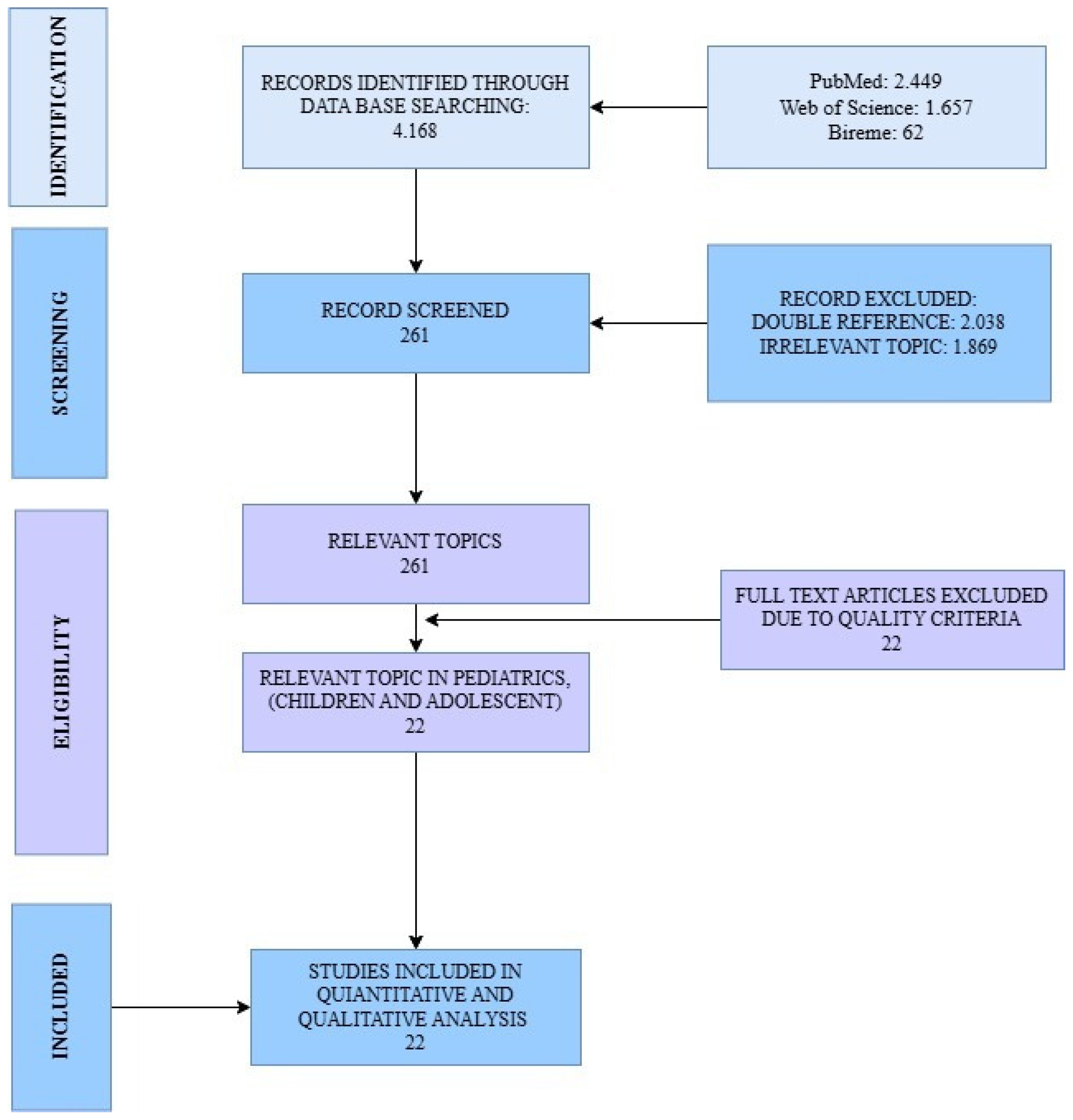
2.1. PIO and PRISMA Strategy
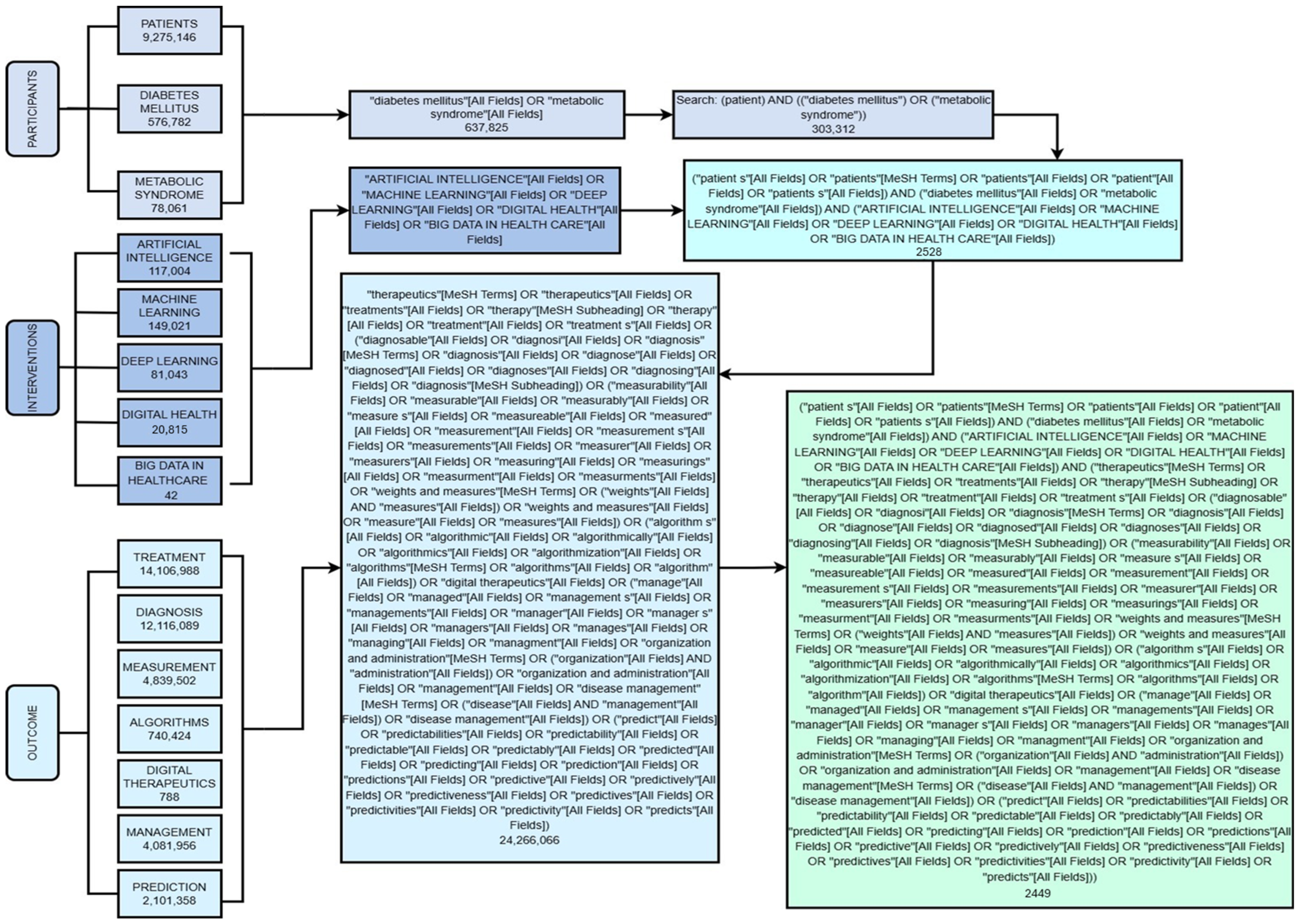
2.2. PIO Strategy
2.3. Search Strategy
Temporal Scope and Historical Context of the Search Strategy
2.4. Study Selection
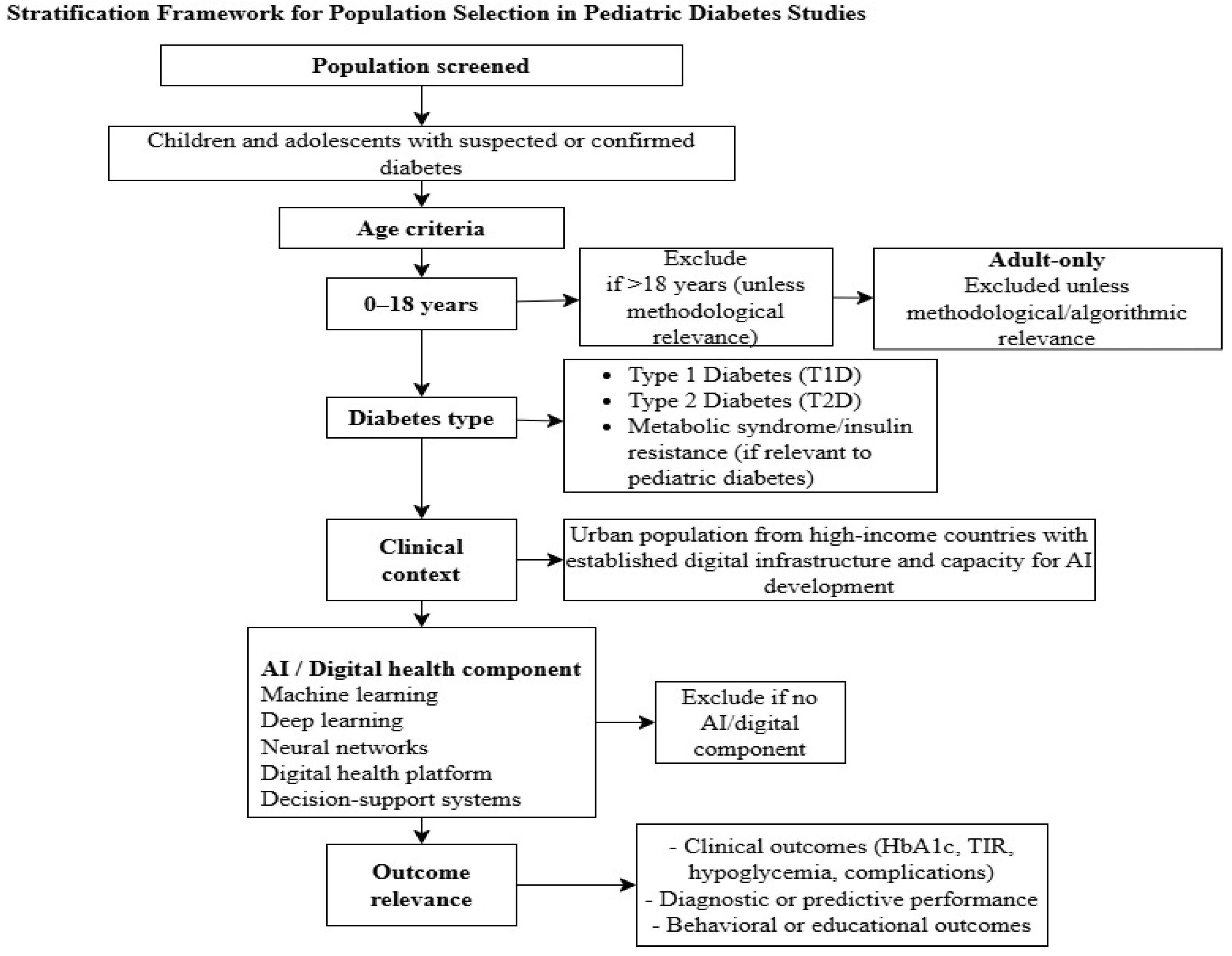
Population Stratification and Inclusion Criteria
2.5. Quality Appraisal
2.6. Data Extraction and Synthesis
2.7. Classification of Artificial Intelligence Models Used in the Included Studies
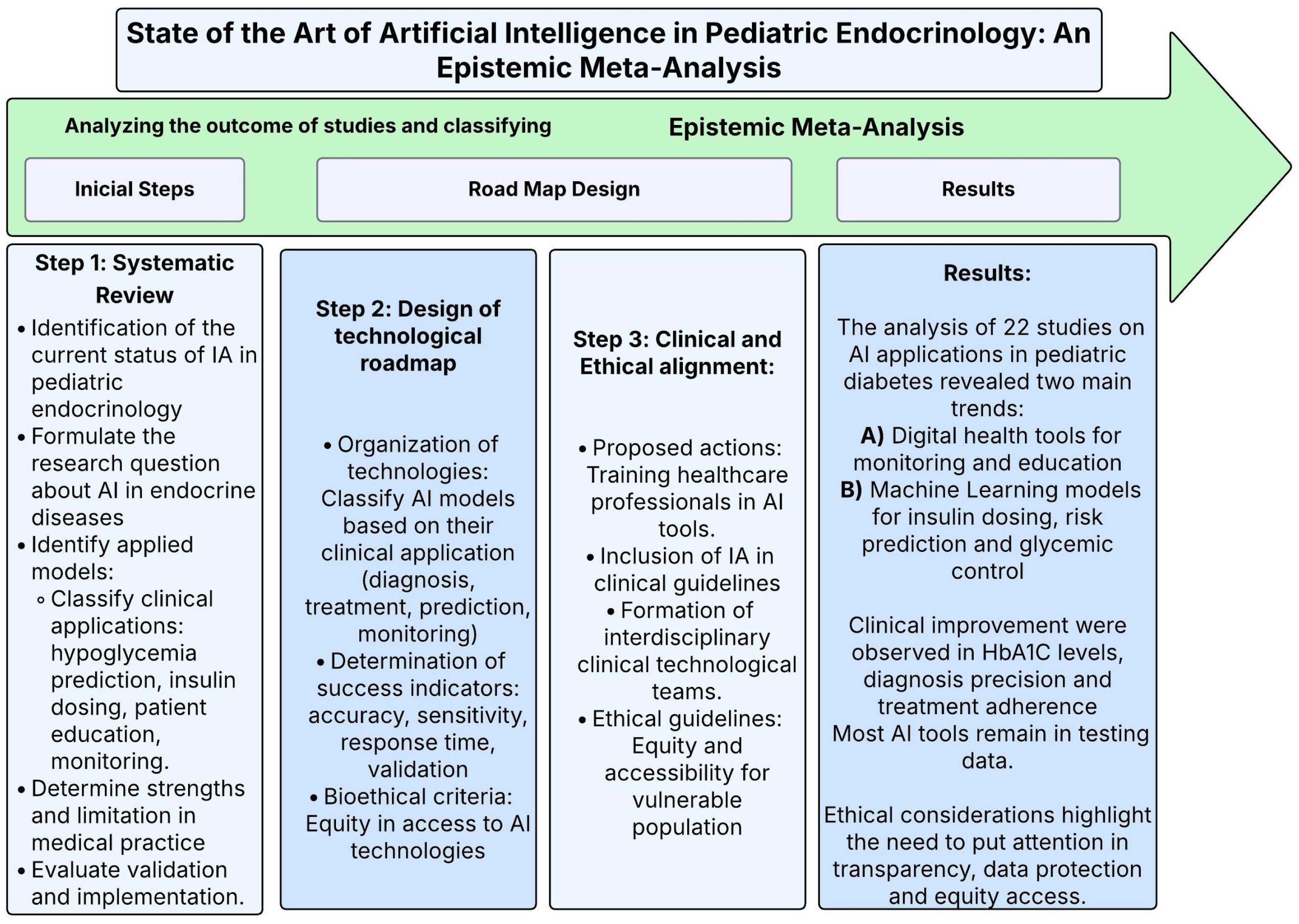
2.8. Integral Epistemic Meta-Analysis: Exploring the Application of AI in Management of Pediatric Diabetes
3. Results
3.1. Results
3.1.1. State of the Art of Diabetes and Artificial Intelligence
3.1.2. Geographical Distribution and Digital Infrastructure
3.1.3. Epistemic Meta-Analysis Outcomes
- Identification of relevant papers that address the research question (Table 1)
- Identification of existing knowledge gaps. See limitation of the evidence in Section 4.1
Study Architecture and Sample Range
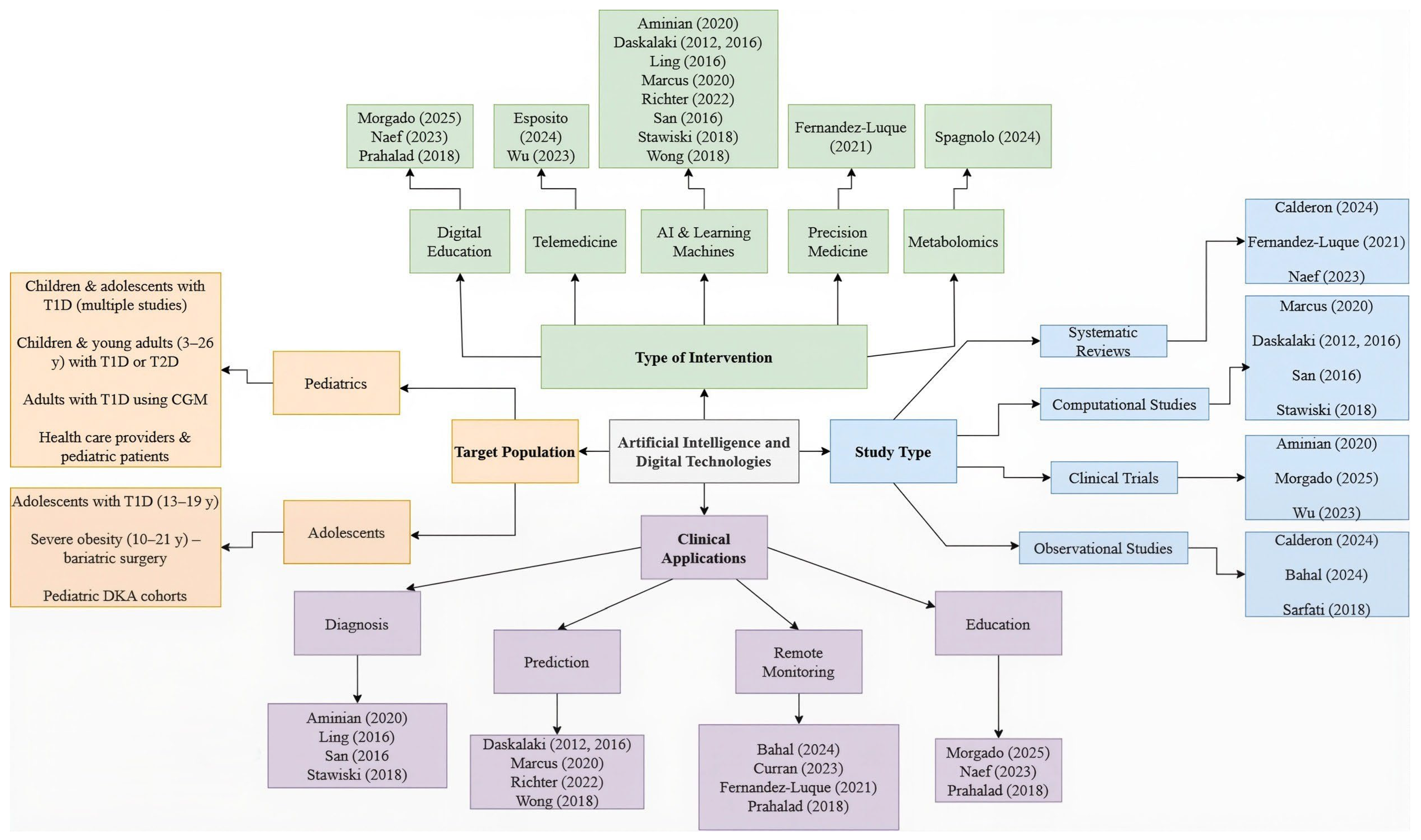
Intervention Typology
- Monitoring and treatment devices: These included continuous glucose monitoring (CGM), insulin pumps, and hybrid closed-loop (“artificial pancreas”) systems [1,2,10,12,24,26]. The implementation of such devices produced notable improvements in glycemic control, with reduced variability and increased proportions of time within target HbA1c ranges compared with conventional approaches [15,24,26].
- Metabolomic diagnostics: Mass-spectrometry–based approaches identified discriminatory metabolite profiles associated with diabetic ketoacidosis [22], marking an emerging frontier in personalized metabolic medicine.
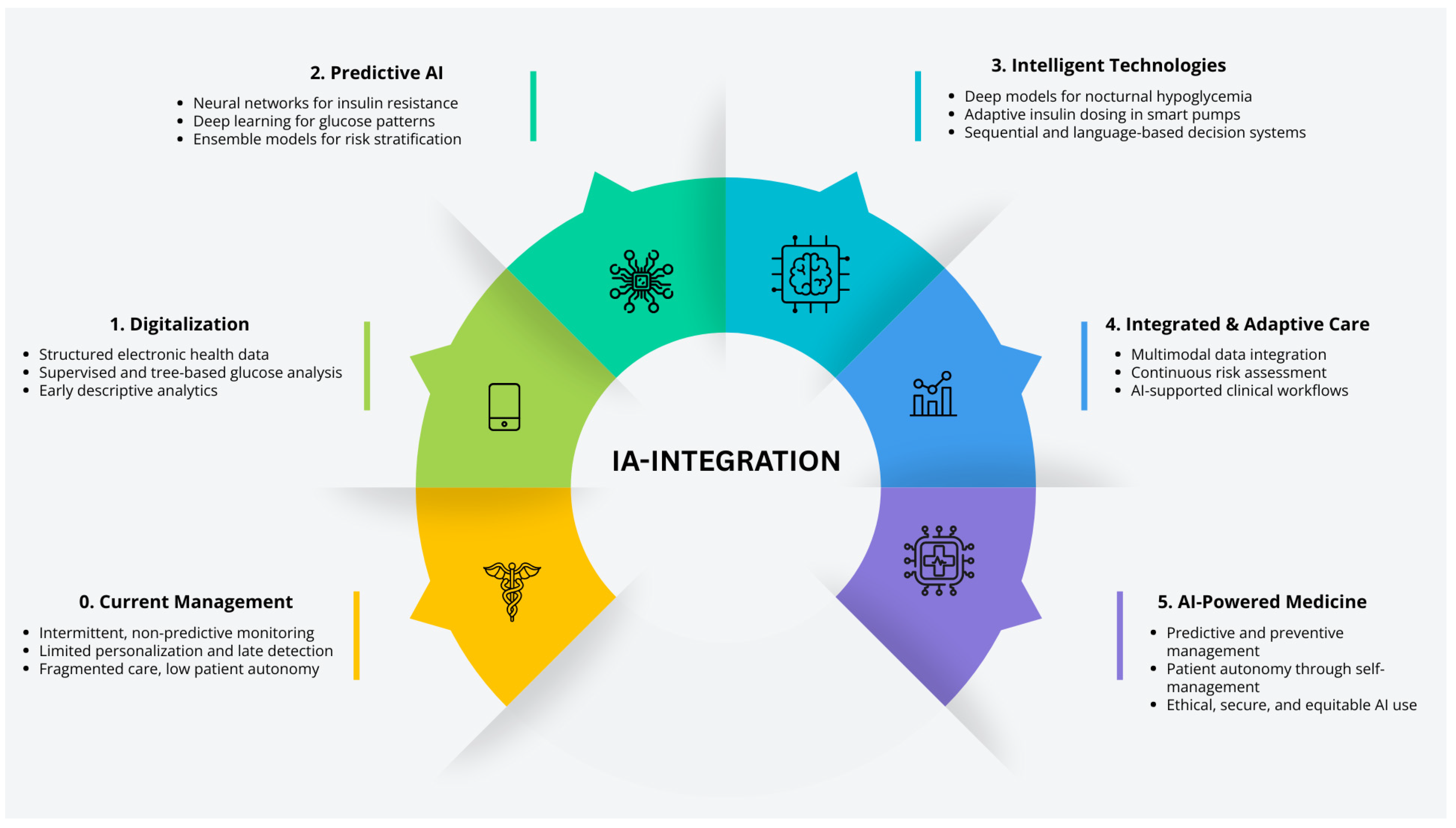
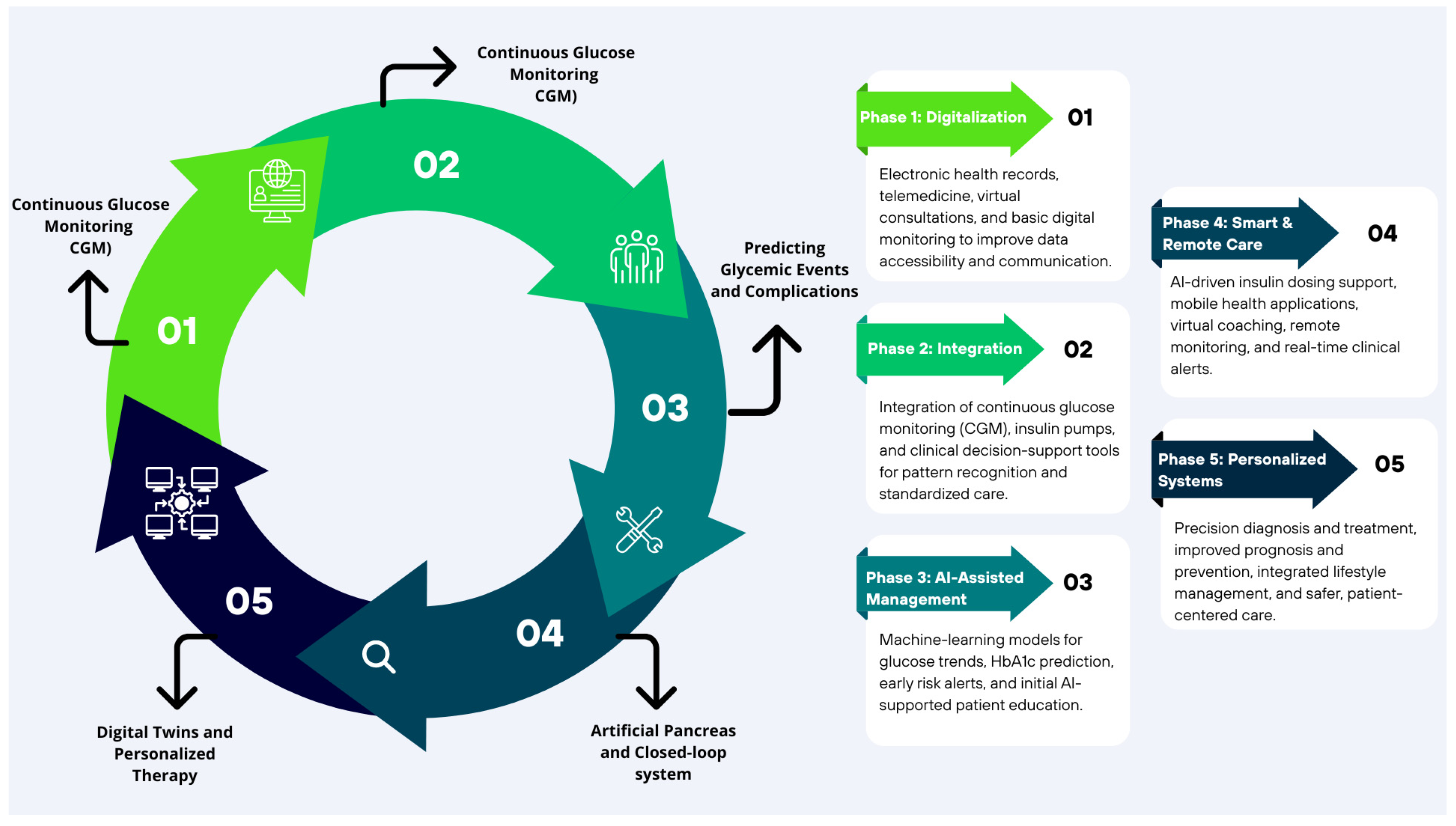
The Digital Shift in Pediatric Endocrinology: Results Across 22 Studies
Two Paradigms of Digital Care: Platforms vs. Predictive Engines
Methodological Landscape of AI-Driven Diabetes Tools
The AI Care Pipeline: Linking Base Data to AI Outputs
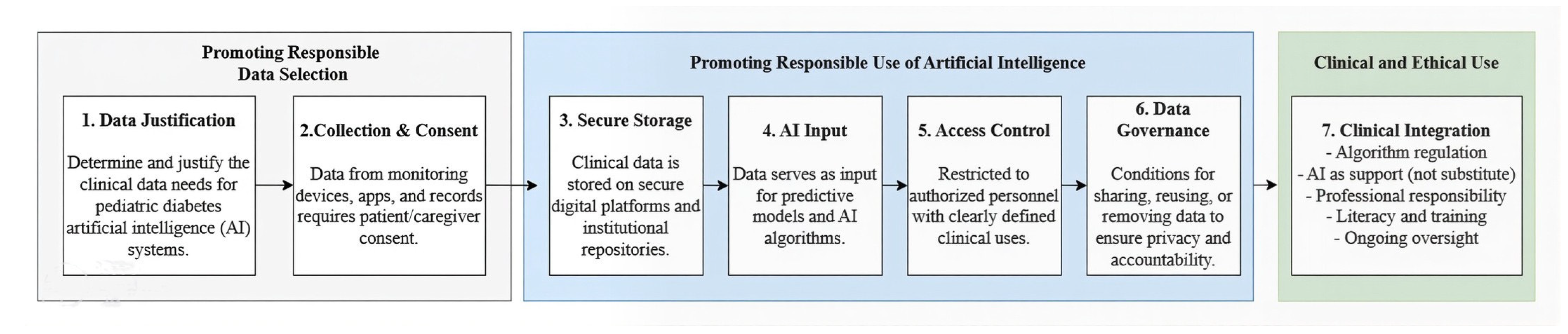
Digital Equity and Ethical Considerations in AI Implementation
The Endocrinology and AI Binomial: Driving Innovation in Modern Medicine
Artificial Intelligence and Education: Harnessing Metabolic Memory to Redefine Diabetes Management in New Generations
Data Privacy, Integration, and User-Centered Outcomes in AI-Enabled Diabetes Care
Ethical Foundations and Bioethics Governance in the Care of Pediatric Diabetes with Artificial Intelligence (AI)
Artificial Intelligence, Clinical Judgment, and Doctor-Patient Relationship
Impact of Artificial Intelligence in the Management of Type 1 and Type 2 Diabetes in the Pediatric Population
4. Discussion
4.1. Limitations of the Evidence
4.2. Future Directions and Clinical Readiness of Artificial Intelligence in Diabetes Care
5. Conclusions
Supplementary Materials
Author Contributions
Funding
Institutional Review Board Statement
Informed Consent Statement
Data Availability Statement
Acknowledgments
Conflicts of Interest
Abbreviations
| ACA | Actor-Critic Algorithm |
| AI | Artificial Intelligence |
| AI-HEALS | Artificial Intelligence–Health Evaluation and Learning System |
| ANNs | Artificial Neural Networks |
| AOC | Area of Concentration |
| AP | Artificial Pancreas |
| AHP | Adhera Health Platform |
| AR | Autoregressive Model |
| ARX | Autoregressive with Exogenous Inputs |
| BDA | Big Data Analytics |
| BCF | Beta Cell Function |
| BMF | BetaMe Platform |
| BMI | Body Mass Index |
| CGM | Continuous Glucose Monitoring |
| CI | Confidence Interval |
| CDSS | Clinical Decision Support Systems |
| DKA | Diabetic Ketoacidosis |
| DH | Digital Health |
| DT | Digital Twin |
| EHR | Electronic Health Records |
| FDA | Food and Drug Administration |
| GB | Gradient Boosting |
| GPM | Glycemic Prediction Model |
| GC | Glycemic Control |
| HbA1c | Hemoglobin A1c |
| IPT | Insulin Pump Therapy |
| LSTM | Long Short-Term Memory |
| MAE | Mean Absolute Error |
| MDL | Multimodal Deep Learning |
| ML | Machine Learning |
| NLP | Natural Language Processing |
| NIRCa | Non-Invasive Recording Calculator |
| PAI | Predictive Artificial Intelligence |
| PRISMA | Preferred Reporting Items for Systematic Reviews and Meta-Analyses |
| RF | Random Forest |
| ROC | Receiver Operating Characteristic |
| RMSE | Root Mean Square Error |
| RNNs | Recurrent Neural Networks |
| SD | Standard Deviation |
| SVM | Support Vector Machines |
| T1DM | Type 1 Diabetes Mellitus |
| T2DM | Type 2 Diabetes Mellitus |
| TIR | Time in Range |
| USA | United States of America |
| UK | United Kingdom |
| PHR | Personal Health Record |
References
- Wong, J.C.; Izadi, Z.; Schroeder, S.; Nader, M.; Min, J.; Neinstein, A.B.; Adi, S. A Pilot Study of Use of a Software Platform for the Collection, Integration, and Visualization of Diabetes Device Data by Health Care Providers in a Multidisciplinary Pediatric Setting. Diabetes Technol. Ther. 2018, 20, 806–816. [Google Scholar] [CrossRef]
- Bahal, M.; Pande, V.; Dua, J.; Mane, S. Advances in Type 1 Diabetes Mellitus Management in Children. Cureus 2024, 16, e67377. [Google Scholar] [CrossRef] [PubMed]
- Sarfati, D.; McLeod, M.; Stanley, J.; Signal, V.; Stairmand, J.; Krebs, J.; Dowell, A.; Leung, W.; Davies, C.; Grainger, R. BetaMe: Impact of a Comprehensive Digital Health Programme on HbA1c and Weight at 12 Months for People with Diabetes and Pre-Diabetes: Study Protocol for a Randomised Controlled Trial. Trials 2018, 19, 161. [Google Scholar] [CrossRef] [PubMed]
- Curran, K.; Whitestone, N.; Zabeen, B.; Ahmed, M.; Husain, L.; Alauddin, M.; Hossain, M.A.; Patnaik, J.L.; Lanoutee, G.; Cherwek, D.H.; et al. CHILDSTAR: CHIldren Living with Diabetes See and Thrive with AI Review. Clin. Med. Insights Endocrinol. Diabetes 2023, 16, 11795514231203868. [Google Scholar] [CrossRef]
- The Diabetes Control and Complications Trial Research Group. The Effect of Intensive Treatment of Diabetes on the Development and Progression of Long-Term Complications in Insulin-Dependent Diabetes Mellitus. N. Engl. J. Med. 1993, 329, 977–986. [CrossRef]
- Gubitosi-Klug, R.A.; Braffett, B.H.; Bebu, I. Intensive Diabetes Treatment and Cardiovascular Outcomes in Type 1 Diabetes: The DCCT/EDIC Study 30-Year Follow-Up. Diabetes Care 2016, 39, 686–693. [Google Scholar] [CrossRef] [PubMed]
- Nathan, D.M. The Diabetes Control and Complications Trial/Epidemiology of Diabetes Interventions and Complications Study at 30 Years: Overview. Diabetes Care 2014, 37, 9–16. [Google Scholar] [CrossRef]
- Robledo, Z. How Much Does Diabetes Cost? What Did We Do? Available online: https://www.gob.mx/imss/articulos/cuanto-cuesta-la-diabetes-que-hicimos-zoe-robledo (accessed on 23 November 2025).
- Parker, E.D.; Lin, J.; Mahoney, T.; Ume, N.; Yang, G.; Gabbay, R.A.; ElSayed, N.A.; Bannuru, R.R. Economic Costs of Diabetes in the U.S. in 2022. Diabetes Care 2024, 47, 26–43. [Google Scholar] [CrossRef]
- San, P.P.; Ling, S.H.; Nguyen, H.T. Deep Learning Framework for Detection of Hypoglycemic Episodes in Children with Type 1 Diabetes. In Proceedings of the 38th Annual International Conference of the IEEE Engineering in Medicine and Biology Society (EMBC), Orlando, FL, USA, 16–20 August 2016; pp. 3503–3506. [Google Scholar] [CrossRef]
- Prahalad, P.; Tanenbaum, M.; Hood, K.; Maahs, D.M. Diabetes Technology: Improving Care, Improving Patient-Reported Outcomes and Preventing Complications in Young People with Type 1 Diabetes. Diabet. Med. 2018, 35, 419–429. [Google Scholar] [CrossRef]
- Fernandez-Luque, L.; Al Herbish, A.; Al Shammari, R.; Argente, J.; Bin-Abbas, B.; Deeb, A.; Dixon, D.; Zary, N.; Koledova, E.; Savage, M.O. Digital Health for Supporting Precision Medicine in Pediatric Endocrine Disorders: Opportunities for Improved Patient Care. Front. Pediatr. 2021, 9, 715705. [Google Scholar] [CrossRef]
- Nkhoma, D.E.; Soko, C.J.; Bowrin, P.; Manga, Y.B.; Greenfield, D.; Househ, M.; Li Jack, Y.-C.; Iqbal, U. Digital Interventions Self-Management Education for Type 1 and 2 Diabetes: A Systematic Review and Meta-Analysis. Comput. Methods Programs Biomed. 2021, 210, 106370. [Google Scholar] [CrossRef]
- Richter, L.R.; Albert, B.I.; Zhang, L.; Ostropolets, A.; Zitsman, J.L.; Fennoy, I.; Albers, D.J.; Hripcsak, G. Data Assimilation on Mechanistic Models of Glucose Metabolism Predicts Glycemic States in Adolescents Following Bariatric Surgery. Front. Physiol. 2022, 13, 923704. [Google Scholar] [CrossRef] [PubMed]
- Morgado, P.C.; da Silva, L.F.; de Aguiar, R.C.B.; de Moraes, J.R.M.M.; de Souza Luquez, T.M.; da Silva Brandão, E.; Nunes, M.D.R.; de Freitas Lopes, I.; Campos, D.C. de Educational Technologies for Families and Children with Type 1 Diabetes: A Scoping Review. Rev. Esc. Enferm. USP 2025, 58, e20240134. [Google Scholar] [CrossRef] [PubMed]
- Wu, Y.; Min, H.; Li, M.; Shi, Y.; Ma, A.; Han, Y.; Gan, Y.; Guo, X.; Sun, X. Effect of Artificial Intelligence-Based Health Education Accurately Linking System (AI-HEALS) for Type 2 Diabetes Self-Management: Protocol for a Mixed-Methods Study. BMC Public Health 2023, 23, 1325. [Google Scholar] [CrossRef] [PubMed]
- Ayala, E.O.; Altamirano-Bustamante, M.M.; de Hoyos-Bermea, A. Axiology and Dynamics of Contemporary Research Groups: A Systematic Review and Hermeneutic Meta-Analysis of Knowledge, Values, and Social Elements. Front. Res. Metr. Anal. 2025, 10, 1525587. [Google Scholar] [CrossRef]
- Naef, A.N.; Wilhelm, C.; Tezcan-Güntekin, H.; Amelung, V.E. Impact of Digital Health Interventions for Adolescents with Type 1 Diabetes Mellitus on Health Literacy: A Systematic Review. BMC Endocr. Disord. 2023, 23, 70. [Google Scholar] [CrossRef]
- Marcus, Y.; Eldor, R.; Yaron, M.; Shaklai, S.; Ish-Shalom, M.; Shefer, G.; Stern, N.; Golan, N.; Dvir, A.Z.; Pele, O.; et al. Improving Blood Glucose Level Predictability Using Machine Learning. Diabetes Metab. Res. Rev. 2020, 36, e3348. [Google Scholar] [CrossRef]
- Calderon Martinez, E.; Castillo, J.L.; Zachariah Saji, S.; Stein, D.; Khan, T.J.; Guardado Williams, R.F.; Munguía, I.D.; Arruarana, V.S.; Velasquez, K. Insulin Pump Therapy vs. Multiple Daily Insulin Injections for Glycemic Control in Children with Type 1 Diabetes: A Systematic Review and Meta-Analysis. Cureus 2024, 16, e52054. [Google Scholar] [CrossRef]
- Spagnolo, P.; Tweddell, D.; Cela, E.; Daley, M.; Clarson, C.; Rupar, C.A.; Stranges, S.; Bravo, M.; Cepinskas, G.; Fraser, D.D. Metabolomic Signature of Pediatric Diabetic Ketoacidosis: Key Metabolites, Pathways, and Panels Linked to Clinical Variables. Mol. Med. 2024, 30, 250. [Google Scholar] [CrossRef]
- Daskalaki, E.; Diem, P.; Mougiakakou, S.G. Model-Free Machine Learning in Biomedicine: Feasibility Study in Type 1 Diabetes. PLoS ONE 2016, 11, e0158722. [Google Scholar] [CrossRef]
- Stawiski, K.; Pietrzak, I.; Młynarski, W.; Fendler, W.; Szadkowska, A. NIRCa: An Artificial Neural Network-Based Insulin Resistance Calculator. Pediatr. Diabetes 2018, 19, 231–235. [Google Scholar] [CrossRef]
- Ling, S.H.; San, P.P.; Nguyen, H.T. Non-Invasive Hypoglycemia Monitoring System Using Extreme Learning Machine for Type 1 Diabetes. ISA Trans. 2016, 64, 440–446. [Google Scholar] [CrossRef] [PubMed]
- Aminian, A.; Zajichek, A.; Arterburn, D.E.; Wolski, K.E.; Brethauer, S.A.; Schauer, P.R.; Nissen, S.E.; Kattan, M.W. Predicting 10-Year Risk of End-Organ Complications of Type 2 Diabetes with and Without Metabolic Surgery: A Machine Learning Approach. Diabetes Care 2020, 43, 852–859, Correction in Diabetes Care 2020, 43, 1367, https://doi.org/10.2337/dc20-er06a.. [Google Scholar] [CrossRef] [PubMed]
- Daskalaki, E.; Prountzou, A.; Diem, P.; Mougiakakou, S.G. Real-Time Adaptive Models for the Personalized Prediction of Glycemic Profile in Type 1 Diabetes Patients. Diabetes Technol. Ther. 2012, 14, 168–174. [Google Scholar] [CrossRef] [PubMed]
- Esposito, S.; Sambati, V.; Fogliazza, F.; Street, M.E.; Principi, N. The Impact of Telemedicine on Pediatric Type 1 Diabetes Management: Benefits, Challenges, and Future Directions. Front. Endocrinol. 2024, 15, 1513166. [Google Scholar] [CrossRef]
- Laron, Z.; Flexer, Z.; Albag, Y.; Ofan, R. The Use of Computers in the Control of Diabetes in Children and Adolescents. J. Endocrinol. Investig. 1989, 12, 113–120. [Google Scholar]
- Gubitosi-Klug, R.A.; Braffett, B.H.; Bebu, I.; Johnson, M.L.; Farrell, K.; Kenny, D.; Trapani, V.R.; Meadema-Mayer, L.; Soliman, E.Z.; Pop-Busui, R.; et al. Continuous Glucose Monitoring in Adults with Type 1 Diabetes with 35 Years Duration From the DCCT/EDIC Study. Diabetes Care 2022, 45, 659–665. [Google Scholar] [CrossRef]




| Study Reference (Author, Year, Country) | Clear Objectives | Research Question | Methodology | Outcome Parameters | Reported Results | Quality Score |
|---|---|---|---|---|---|---|
| (Wong et al., 2018, USA) [1] | Evaluate a software platform to integrate data from diabetes devices. 20% | Does the software improve data integration and accessibility for diabetes management? 20% | Pilot study of 15 healthcare with the usage of a platform. 20% | Frequency of data references, user, and patient satisfaction. 15% | No increase in data load time or consultation. 20% | 95% |
| (Bahal et al., 2024, USA) [2] | Evaluate advances in diabetes management with new technological developments. 20% | What are the recent advances in managing type 1 diabetes in children and adolescents? 20% | Literature reviews of recent advancements in diabetes. 20% | Effectiveness of glucose control tools such as insulin pumps and continuous glucose monitors. 20% | Improved blood glucose control. 20% | 100% |
| (Sarfati et al., 2018, New Zealand) [3] | Evaluate the impacts of BetaMe on diabetes control. 20% | Can digital intervention improve glucose control in children and adults with diabetes? 20% | Randomized trial for 6 months with a control group. 15% | HbA1c levels, patient weight, and adherence to treatment regimens. 20% | Significant reduction in HbA1c levels and improved patient health outcomes. 20% | 95% |
| (Curran et al., 2023, Canada) [4] | Evaluate the impact of a telemedicine platform for remote monitoring in pediatric diabetes care. 15% | Can artificial intelligence improve monitoring and treatment for pediatric diabetes? 20% | Longitudinal observational study on the effectiveness of a telemedicine platform. 20% | Reduction of HbA1c levels, enhanced patient engagement, and remote monitoring effectiveness. 15% | Reduced blood glucose and improved patient satisfaction. 15% | 85% |
| (Richter et al., 2022, USA) [14] | Develop methods to predict surgical outcomes for bariatric surgery. 20% | How can data assimilation models improve prediction accuracy for bariatric surgery outcomes? 20% | Use of mechanistic models to predict surgical outcomes. 20% | Prediction accuracy of bariatric surgery outcomes. 20% | The model predicted post-surgical glucose levels with high accuracy. 15% | 95% |
| (San et al., 2016, Australia) [10] | Develop a deep learning framework for hypoglycemia detection in children with type 1 diabetes. 20% | Can deep learning models improve hypoglycemia detection for type 1 diabetes? 20% | New deep learning models using patient data to predict hypoglycemia. 20% | Model performance in predicting hypoglycemic events. 20% | Hypoglycemia detection accuracy improved significantly using deep learning models. 20% | 100% |
| (Prahalad et al., 2018, USA) [11] | Analyze the impact of diabetes technologies on supporting care. 10% | How can digital technology improve patient education for diabetes care? 20% | Quantitative analysis of digital technology impact on patient care. 20% | Patient engagement, education completion rates, and glucose control metrics. 15% | Positive patient outcomes with digital educational tools. 20% | 85% |
| (Fernandez-Luque et al., 2021, Germany) [12] | Explore the health impact of digital interventions for diabetes education. 20% | How can digital platforms improve the health of people with diabetes? 20% | Quantitative and qualitative study of digital education platforms. 15% | Blood glucose levels and quality of life after using educational tools. 20% | HbA1c levels improved significantly in intervention groups. 20% | 95% |
| (Nkhoma et al., 2021, Taiwan) [13] | Effectiveness of digital interventions for improving diabetes education in type 1 and 2 diabetes patients. 20% | How do digital interventions impact diabetes education and self-management? 20% | Systematic review of digital educational interventions for diabetes self-management. 20% | Impact on patient education outcomes, including adherence to lifestyle changes. 20% | Digital education reduced HbA1c and improved self-management skills. 20% | 100% |
| (Morgado et al., 2025, Brazil) [15] | Map the scientific evidence supporting educational technologies developed for families and children with type 1 diabetes. 15% | What are the feasible educational technologies for children and their families with type 1 diabetes? 20% | Systematic review of data from JBI database guidelines. 15% | Efficiency of educational technologies in patient education. 15% | Educational technologies are identified as effective but lack long-term evaluation. 15% | 80% |
| (Wu et al., 2023, China) [16] | Evaluate the impact of the AI-HEALS system on glucose self-management and control in type 2 diabetes patients. 20% | Does AI-HEALS improve glucose control in type 2 diabetes patients? 20% | Mixed-methods study with randomized controlled trial and qualitative interviews. 10% | HbA1c, treatment adherence, and lifestyle changes. 20% | Improved glucose control in the intervention group. 20% | 90% |
| (Naef et al., 2023, Germany) [18] | Evaluate the impact of digital health interventions on adolescents with type 1 diabetes. 20% | Can digital interventions improve the health of adolescents with type 1 diabetes? 20% | Systematic review following PRISMA guidelines. 20% | Use of social networks, communication with health professionals, and self-management. 15% | Use of social networks improved communication with health professionals by 10%. | 85% |
| (Marcus et al., 2020, Israel) [19] | Develop a machine learning model for predicting blood glucose levels in type 1 diabetes. 20% | Can machine learning models improve blood glucose predictions in type 1 diabetes? 20% | Analysis of continuous glucose monitor data using four machine learning models. 15% | Model accuracy, false-positive and false-negative rates. 20% | Precise model prediction with reduced false-positive rates. 15% | 90% |
| Calderon Martinez et al., 2024, México) [20] | Compare the efficacy of insulin pumps in managing daily glucose fluctuations in children with type 1 diabetes. 20% | Do insulin pumps show advantages over injections in managing diabetes in children? 20% | Systematic review and meta-analysis of comparative studies. 20% | HbA1c, hypoglycemia episodes, quality of life. 20% | Insulin pumps showed advantages in glucose control and hypoglycemia episodes. 15% | 95% |
| (Spagnolo et al., 2024, Canada) [21] | Identify metabolic patterns related to diabetic ketoacidosis in children. 20% | What metabolic patterns are associated with pediatric diabetic ketoacidosis? 20% | Metabolomics analysis of plasma samples from pediatric patients. 20% | Metabolite levels, clinical incidence of ketoacidosis. 15% | 65 metabolites were significantly altered in ketoacidosis patients. 20% | 85% |
| (Daskalaki et al., 2016, Switzerland) [22] | Explore the feasibility of a model-free learning approach for controlling insulin in type 1 diabetes. 10% | Can a machine learning model improve insulin administration accuracy for type 1 diabetes? 20% | Development of a reinforcement learning algorithm evaluated in an FDA-approved simulator. 20% | Time in range, hypoglycemia reduction, and FDA-approved simulator performance. 20% | The algorithm maintained normoglycemia 95% of the time with minimal hypoglycemia. 20% | 90% |
| (Stawiski et al., 2018, Poland) [23] | Develop an artificial neural network model to estimate insulin resistance in children with type 1 diabetes. 20% | Can an artificial neural network model predict insulin resistance in children with type 1 diabetes? 20% | Clinical data analysis and modeling using artificial neural networks and multivariable regression. 20% | Insulin resistance, glucose levels, clinical data. 15% | The model showed high precision in predicting insulin resistance, improving traditional methods. 20% | 95% |
| (Ling et al., 2016, Australia) [24] | Develop a non-invasive monitoring system for hypoglycemia in children with type 1 diabetes using machine learning. 20% | Can a machine learning-based non-invasive monitoring system detect hypoglycemic episodes in children? 20% | Machine learning analysis and ECG-based physiological signal analysis in children with type 1 diabetes. 20% | Heart rate, interaction of ECG, QT intervals, and blood glucose. 20% | The machine learning-based system successfully detected hypoglycemic episodes with high precision. 20% | 100% |
| (Aminian et al., 2020, USA) [25] | Develop predictive models to estimate the long-term risk of organ complications in type 2 diabetes. 20% | Can predictive models estimate long-term complications risk in type 2 diabetes. 20% | Data analysis from patients with bariatric surgery and conventional treatment using machine learning. 15% | Mortality, cardiovascular disease, kidney failure, and metabolic complications. 20% | The model predicted complications risk with high accuracy, aiding decision-making. 20% | 85% |
| (Daskalaki et al., 2012, Switzerland) [26] | Develop adaptive models in real-time for predicting glucose profiles in type 1 diabetes patients. 20% | Can real-time adaptive models predict glucose levels in type 1 diabetes? 20% | Comparison of autoregressive models and neural networks for glucose prediction. 20% | Model precision, sensitivity, and individual response time. 10% | Neural networks outperformed traditional models in glucose prediction accuracy. 20% | 90% |
| (Esposito et al., 2024, Italy) [27] | Evaluate the impact of telemedicine on managing pediatric type 1 diabetes, exploring its benefits and challenges. 20% | Can telemedicine improve diabetes management in children with type 1 diabetes? 20% | Systematic review of studies on telemedicine’s impact on pediatric diabetes management. 20% | HbA1c, frequency of consultations, patient, and provider satisfaction. 15% | Telemedicine showed benefits in accessibility and monitoring but mixed results in glucose control. 20% | 95% |
| Author, Year | AI Model | Classes of Machine Learning | Methods | Algorithms | Target Disease | Characteristics | Limitations | Validation | Model Application | Model Validation | Big Scale Implementation | Software/Server |
|---|---|---|---|---|---|---|---|---|---|---|---|---|
| (Wong et al., 2018, USA) [1] | Digital Health | N/A | Data visualization and integration | N/A | Type 1 diabetes (T1D) | Data from insulin pumps, CGM, and other devices | Small sample size, pilot phase | Pilot study with 15 healthcare professionals | Integration and visualization of data from glucose meters, insulin pumps, and CGMs for managing T1D in children. | The study involved 15 healthcare professionals managing T1D children over 6 months. | Limited use with potential for expansion | Web platform Tidepool. URL: https://www.tidepool.org/ (accessed on 15 February 2025). |
| (Bahal et al., 2024, USA) [2] | Digital Health | N/A | Insulin delivery and CGM monitoring | Closed-loop insulin pump systems | T1D in children | Clinical glucose data, insulin dosage | Access to technology in low-resource settings | Narrative review of technological advances | CGM systems and hybrid insulin pumps | Narrative review of current innovations | In clinical use; pending wider availability in low-resource countries | CGM, insulin pumps, and hybrid insulin delivery systems. MySug—N/A Glooko—N/A Dexcom G6 App—N/A |
| (Sarfati et al., 2018, New Zealand) [3] | Digital Health | N/A | Web/mobile behavior change support | N/A | T2D, Prediabetes | Self-reported behavior and health indicators | Long-term impact not yet assessed | Randomized controlled trial | Self-management and management of T2D and prediabetes via web and mobile platforms. | Randomized clinical trial with 430 participants | Not yet implemented; potential for primary care | BetaMe platform. License: Creative Commons Attribution 4.0 URL: http://www.melonhealth.com/ (accessed on 15 February 2025). |
| (Curran et al., 2023, Canada) [4] | Digital Health | N/A | Policy analysis and global health overview | N/A | Type 1 Diabetes (T1D) | Global access to care, insulin availability | Descriptive analysis, not data-driven | Literature and IDF-based review | Study on the incidence and increase of T1D in children and adolescents, focusing on low-resource populations | The narrative review focused on global health, including IDF (International Diabetes Federation) data | Provides recommendations to improve LMICs (low- and middle-income countries); not yet implemented at large scale | Orbis International Cybersight. https://cybersight.org/ (accessed on 15 February 2025) License: CC BY 4.0 |
| (Richter et al., 2022, USA) [14] | Machine Learning | Supervised Learning | Glycemic prediction with data assimilation | Mechanistic modeling + machine learning integration | T2D post-bariatric surgery in adolescents | Clinical variables and metabolic data | Small cohort, not validated externally | Retrospective analysis of adolescent cohort | Predicting glycemic levels in adolescents with T2D who are undergoing bariatric surgery. | Use clinical data from adolescents with severe obesity and T2D through retrospective analysis. | Not implemented yet, under evaluation | No specific software platform, server, or version was reported. |
| (San et al., 2016, Australia) [10] | Deep Learning | Deep Learning | ECG signal classification | Deep Belief Network (DBN) | T1D–Hypoglycemia detection | ECG signal features: HR, QTc | Small sample size (15 children), experimental | Clinical study with 15 pediatric participants | Hypoglycemic states in children with T1D are detected using ECG (HR and QTc). | Validation with 15 children through nocturnal monitoring | Not yet implemented at scale | No specific software platform, server, or version was reported. |
| (Prahalad et al., 2018, USA) [11] | Digital Health + Big Data Analytics | N/A | Review of digital health outcomes | N/A | Type 1 Diabetes (T1D) | Patient-reported outcomes, clinical data | Heterogeneous sources, not a meta-analysis | Narrative review of clinical studies | Clinical and psychosocial support in adolescents with T1D, improving glycemic control and quality of life | Narrative review of clinical evidence and device use experiences | Mentions use of some technologies, though access gaps remain | No specific software platform, server, or version was reported. |
| (Fernandez-Luque et al., 2021, Germany) [12] | Digital Health + AI | AI and Digital Health | Precision medicine approach | Personalized feedback algorithms | Pediatric endocrine disorders (incl. T1D) | User interaction data, digital health metrics | Implementation barriers in clinical settings | Narrative review with proposed models | Diabetes prediction in pediatric endocrinology | Narrative review with integrative proposals | In the development phase, it requires more digital infrastructure | Adhera Health platform easypod™ connect (web-based adherence monitoring platform) URL: https://www.easypodconnect.com/ (accessed on 15 February 2025) |
| (Nkhoma et al., 2021, Taiwan) [13] | Digital Health | N/A | Digital education platform review | Multiple (platform-dependent) | T1D and T2D | Educational content, user engagement metrics | Methodological diversity in studies | Systematic review and meta-analysis | Digital education to improve self-management of T1D and T2D | Systematic review and meta-analysis of digital interventions | Tools are limited due to heterogeneity | N/A |
| (Morgado et al., 2025, Brazil) [15] | Digital Health | N/A | Content development and validation | N/A | Type 1 Diabetes (T1D) in children | Educational materials, expert input | Localized study, no predictive modeling | Content validation with professionals and families | Education for families of children with T1D for disease management | Methodological study validated by professionals and users | Used in Brazilian primary care institutions | N/A |
| (Wu et al., 2023, China) [16] | Artificial Intelligence | Artificial Intelligence | AI-guided health education | AI-HEALS platform | Type 2 Diabetes (T2D) | User interaction and behavioral data | Protocol stage; not yet validated | Planned mixed-methods study | Personalized education for T2D self-management (AI-HEALS) | Quantitative study and qualitative interviews | Not yet implemented | AI-HEALS Platform: WeChat service platform–“PKU Diabetes Butler” URL: https://www.wechat.com/ (accessed on 15 February 2025). |
| (Naef et al., 2023, Germany) [18] | Digital Health | N/A | Digital intervention review | Multiple platforms | Type 1 Diabetes (T1D) in adolescents | Health literacy and engagement indicators | Heterogeneity in design and outcome measures | Systematic review | Digital interventions to improve health literacy in adolescents with T1D | Systematic review of studies in adolescent populations | Not yet implemented, high potential | N/A |
| (Marcus et al., 2020, Israel) [19] | Machine Learning | Supervised Learning | Glucose prediction | N/A | Type 1 Diabetes (T1D) | Clinical glucose data from hospital patients | Model not yet deployed in clinical practice | Retrospective clinical data | Blood glucose level prediction | Clinical data from Sourasky Medical Center | Not implemented | N/A |
| Calderon Martinez et al., 2024, México) [20] | Digital Health | N/A | Comparative effectiveness analysis | N/A | Type 1 Diabetes (T1D) | Outcomes from pump vs. multiple daily injections | Access and variability in study populations | Systematic review and meta-analysis | Comparison of glycemic control between insulin pumps and daily injections in children with T1D | Systematic review and meta-analysis in the pediatric population | Access to pumps varies by country | Continuous insulin infusion technology |
| (Spagnolo et al., 2024, Canada) [21] | Machine Learning | Supervised Learning | Classification | Support Vector Machine (SVM), clustering | DKA in pediatric patients | Metabolomic profile via NMR/mass spec | Small sample, exploratory study | Case-control study (n = 34) | Identification of metabolic patterns in pediatric patients with diabetic ketoacidosis | Case-control study with 34 pediatric patients | Not clinically implemented | Mass spectrometry (Molecular Medicine—open access) |
| (Daskalaki et al., 2016, Switzerland) [22] | Machine Learning | Reinforcement Learning | Control optimization | Actor-Critic algorithm | Type 1 Diabetes (T1D) | Simulated patient data from the FDA simulator | Simulation only; needs real-world validation | FDA-approved T1D simulator | Personalized optimization of insulin infusion in T1D patients | Validation with an FDA-approved T1D simulator | Not clinically implemented; experimental phase with potential for artificial pancreas | T1D Simulator (FDA-approved) |
| (Stawiski et al., 2018, Poland) [23] | Artificial Neural Network (ANN) | Supervised Learning | Regression estimation | Artificial Neural Network (ANN), MARS | T1D—Insulin resistance | Clamp test data, 315 children | Model in development phase | Train/test split on collected clinical data | Estimation of insulin resistance in children with T1D | Clinical data from a pediatric population of 315 children | Still in the research phase with possible clinical use | NIRCa calculator based on ANN |
| (Ling et al., 2016, Australia) [24] | Machine Learning | Supervised Learning | Classification | Extreme Learning Machine (ELM) | Type 1 Diabetes (T1D)—Hypoglycemia | ECG signals during nighttime monitoring | Small dataset (16 children), not deployed | Clinical signal dataset | Non-invasive monitoring for hypoglycemia using ECG signals | Pediatric evaluation in 16 children with nocturnal physiological signals | Not yet commercially available; experimental model | ELM-based system using ECG. License: Rights reserved by Elsevier. URL: https://apps.konsta.com.pl/app/gdr/ (accessed on 15 February 2025) |
| (Aminian et al., 2020, USA) [25] | Machine Learning | Supervised Learning | Risk prediction | Random Forest | Type 2 Diabetes (T2D) with/without surgery | Clinical history, BMI, outcomes over 10 years | Internal validation only; needs external validation | Large retrospective cohort (n > 13,000) | 10-year risk prediction of complications in T2D patients with or without metabolic surgery | Internal validation with 5-fold cross-validation in over 13,000 patients | Web and mobile application developed for IDC Risk Scores | Clinical platform for web and smartphones. License: Diabetes Care (restricted access) |
| (Daskalaki et al., 2012, Switzerland) [26] | Artificial Neural Network (ANN) | Supervised Learning | Time series prediction | AR, ARX, ANN | Type 1 Diabetes (T1D) | Glucose + insulin time-series data | Early-stage model, lab-based validation | In silico evaluation with patient data | Personalized prediction of glycemic profiles and hypoglycemic episodes | Validation with real-world data | Not clinically implemented | N/A |
| (Esposito et al., 2024, Italy) [27] | Digital Health | N/A | Narrative synthesis of telemedicine outcomes | N/A | Type 1 Diabetes (T1D) | Studies on pediatric care during COVID-19 | Narrative format, lack of quantitative metrics | Multiple pediatric study reviews | Monitoring and management of pediatric T1D patients via telemedicine | Narrative review of multiple studies, including pediatric trials during COVID-19 | Implemented during the pandemic; growing use, long-term studies needed | N/A |
| Aspect Compared | Type 1 Diabetes (T1D) | Type 2 Diabetes (T2D) | Shared Features (T1D & T2D) | Key Differences in Clinical Needs |
|---|---|---|---|---|
| Primary clinical objective | Real-time glycemic control and insulin automation | Risk prediction and metabolic prevention | Optimization of diabetes management through data-driven support | T1D focuses on acute glycemic stability; T2D focuses on long-term risk reduction |
| Main role of AI | Continuous monitoring, insulin dose adjustment, closed-loop support | Longitudinal risk stratification and lifestyle support | Clinical decision support and patient engagement | T1D requires rapid-response systems; T2D requires predictive and preventive models |
| Acute complications addressed | Hypoglycemia and diabetic ketoacidosis prevention | Acute complications are less frequent | Early detection of metabolic deterioration | T1D has a higher risk of ketoacidosis; T2D rarely presents acute metabolic crises |
| Chronic complications focus | Secondary focus in pediatric age | Central focus (cardiovascular and metabolic risk) | Prevention of long-term complications | T2D emphasizes cardiovascular risk; T1D emphasizes glycemic variability |
| Data sources commonly used | Continuous glucose monitors, insulin pumps, wearables | Electronic health records, anthropometric and lifestyle data | Digital health platforms and clinical records | T1D relies on real-time sensor data; T2D relies on longitudinal clinical data |
| Outcome measures reported | HbA1c reduction, increased time in range, hypoglycemia reduction | Metabolic trends, weight-related outcomes, risk scores | Improvement in clinical decision-making | T1D outcomes are immediate and measurable; T2D outcomes are indirect and heterogeneous |
| Role of lifestyle interventions | Supportive role | Central role | Education and behavior modification | Lifestyle change is essential in T2D; supportive in T1D |
| Patient autonomy and self-management | Enhanced through automation and real-time feedback | Enhanced through education and risk awareness | Patient and family empowerment | Autonomy in T1D is technology-driven; in T2D it is behavior-driven |
| Level of clinical maturity | More advanced and closer to routine use | Less mature and more heterogeneous | Growing evidence base | T1D applications are more clinically integrated than T2D in pediatrics |
| Main limitations identified | Small cohorts and limited long-term follow-up | Limited pediatric-specific data | Need for prospective pediatric studies | Evidence is stronger for T1D than for pediatric T2D |
| Author, Year | Population | AI/Digital Method | Key Clinical Outcomes | Performance Metrics | Main Limitations |
|---|---|---|---|---|---|
| (Wong et al., 2018, USA) [1] | Pediatric (T1D) | Data aggregation and visualization platform | Improved clinical workflow and data integration | Mean HbA1c change | No predictive modeling; no direct glycemic outcomes |
| (Bahal et al., 2024, USA) [2] | Pediatric (T1D) | Narrative synthesis of technological innovation | Improved understanding of contemporary diabetes management | Feasibility metrics | No primary clinical data |
| (Sarfati et al., 2018, New Zealand) [3] | Mixed (adult T1D/T2D) | Digital behavioral intervention platform | HbA1c and weight improvement | Not reported | Adult-only population; no AI-based prediction |
| (Curran et al., 2023, Canada) [4] | Pediatric (T1D) | Historical clinical framework | Long-term outcome contextualization | Sensitivity, specificity | No digital or AI component |
| (Richter et al., 2022, USA) [14] | Mixed (adolescents/adults, T2D) | Mechanistic model with data assimilation | Glycemic state prediction following surgery | Mean HbA1c change | Mixed-age cohort; post-surgical context |
| (San et al., 2016, Australia) [10] | Pediatric (T1D) | Deep learning (ANN) | Hypoglycemia detection | Not reported | Small sample size; retrospective validation |
| (Prahalad et al., 2018, USA) [11] | Pediatric (T1D) | Diabetes technologies (CGM, insulin pumps) | Improved HbA1c and patient-reported outcomes | Mean HbA1c change; Hedges’ g | Technology-focused; no standalone AI model |
| (Fernandez-Luque et al., 2021, Germany) [12] | Pediatric/Mixed | Digital precision medicine platforms | Care optimization and clinical decision support | Not reported | Narrative scope; no quantitative performance metrics |
| (Nkhoma et al., 2021, Taiwan) [13] | Mixed (T1D/T2D) | Digital education interventions (meta-analysis) | Modest HbA1c and adherence improvement | HbA1c; health literacy scores | Heterogeneous interventions |
| (Morgado et al., 2025, Brazil) [15] | Pediatric (T1D) | Educational digital technologies | Improved self-management and engagement | Literacy score change | Qualitative outcomes; no AI algorithms |
| (Wu et al., 2023, China) [16] | Adults (T2D) | AI-assisted education system | Self-management feasibility | AUROC, RMSE | Protocol study; no outcome data |
| (Naef et al., 2023, Germany) [18] | Pediatric (T1D) | Digital health literacy interventions | Improved health literacy | Mean HbA1c change | Indirect clinical outcomes |
| (Marcus et al., 2020, Israel) [19] | Mixed (T1D/T2D) | Supervised machine learning | Short-term glucose prediction | Accuracy 100% | Adult-dominant dataset |
| Calderon Martinez et al., 2024, México) [20] | Pediatric (T1D) | Insulin pump vs. MDI (technology-assisted) | Improved glycemic control | TIR, hypoglycemia rates | No AI-based model |
| (Spagnolo et al., 2024, Canada) [21] | Pediatric (T1D) | Metabolomic profiling | Identification of DKA biomarkers | R2, correlation | Diagnostic focus; no AI classifier |
| (Daskalaki et al., 2016, Switzerland) [22] | Pediatric (T1D) | Model-free machine learning | Personalized glucose prediction | Sensitivity 78%, specificity 60% | Small cohort |
| (Stawiski et al., 2018, Poland) [23] | Pediatric (T1D) | ANN (NIRCa) | Insulin resistance estimation | AUROC | Feasibility study |
| (Ling et al., 2016, Australia) [24] | Pediatric (T1D) | Extreme Learning Machine (ELM) | Hypoglycemia detection | RMSE, correlation | Limited external validation |
| (Aminian et al., 2020, USA) [25] | Adults (T2D) | Machine learning risk prediction model | Prediction of long-term complications | Mean HbA1c change | Adult-only population |
| (Daskalaki et al., 2012, Switzerland) [26] | Pediatric (T1D) | Adaptive real-time ML models | Personalized glycemic control | Prediction accuracy | Simulator-based testing |
| (Esposito et al., 2024, Italy) [27] | Pediatric (T1D) | Telemedicine platforms | Improved access and mixed HbA1c effects | Mean HbA1c change | Variable outcome reporting |
Disclaimer/Publisher’s Note: The statements, opinions and data contained in all publications are solely those of the individual author(s) and contributor(s) and not of MDPI and/or the editor(s). MDPI and/or the editor(s) disclaim responsibility for any injury to people or property resulting from any ideas, methods, instructions or products referred to in the content. |
© 2026 by the authors. Licensee MDPI, Basel, Switzerland. This article is an open access article distributed under the terms and conditions of the Creative Commons Attribution (CC BY) license.
Share and Cite
Valdespino-Saldaña, E.; Altamirano-Bustamante, N.F.; Calzada-León, R.; Revilla-Monsalve, C.; Altamirano-Bustamante, M.M. Artificial Intelligence-Driven Transformation of Pediatric Diabetes Care: A Systematic Review and Epistemic Meta-Analysis of Diagnostic, Therapeutic, and Self-Management Applications. Int. J. Mol. Sci. 2026, 27, 802. https://doi.org/10.3390/ijms27020802
Valdespino-Saldaña E, Altamirano-Bustamante NF, Calzada-León R, Revilla-Monsalve C, Altamirano-Bustamante MM. Artificial Intelligence-Driven Transformation of Pediatric Diabetes Care: A Systematic Review and Epistemic Meta-Analysis of Diagnostic, Therapeutic, and Self-Management Applications. International Journal of Molecular Sciences. 2026; 27(2):802. https://doi.org/10.3390/ijms27020802
Chicago/Turabian StyleValdespino-Saldaña, Estefania, Nelly F. Altamirano-Bustamante, Raúl Calzada-León, Cristina Revilla-Monsalve, and Myriam M. Altamirano-Bustamante. 2026. "Artificial Intelligence-Driven Transformation of Pediatric Diabetes Care: A Systematic Review and Epistemic Meta-Analysis of Diagnostic, Therapeutic, and Self-Management Applications" International Journal of Molecular Sciences 27, no. 2: 802. https://doi.org/10.3390/ijms27020802
APA StyleValdespino-Saldaña, E., Altamirano-Bustamante, N. F., Calzada-León, R., Revilla-Monsalve, C., & Altamirano-Bustamante, M. M. (2026). Artificial Intelligence-Driven Transformation of Pediatric Diabetes Care: A Systematic Review and Epistemic Meta-Analysis of Diagnostic, Therapeutic, and Self-Management Applications. International Journal of Molecular Sciences, 27(2), 802. https://doi.org/10.3390/ijms27020802