Potential of Fermented Food-Derived Lactiplantibacillus Cell-Free Supernatants to Control Staphylococcus aureus Growth and Biofilm Development
 ,
,  , , , ,
  , ,
, ,  , ,
, ,  ,
,
Abstract
1. Introduction
2. Results and Discussion
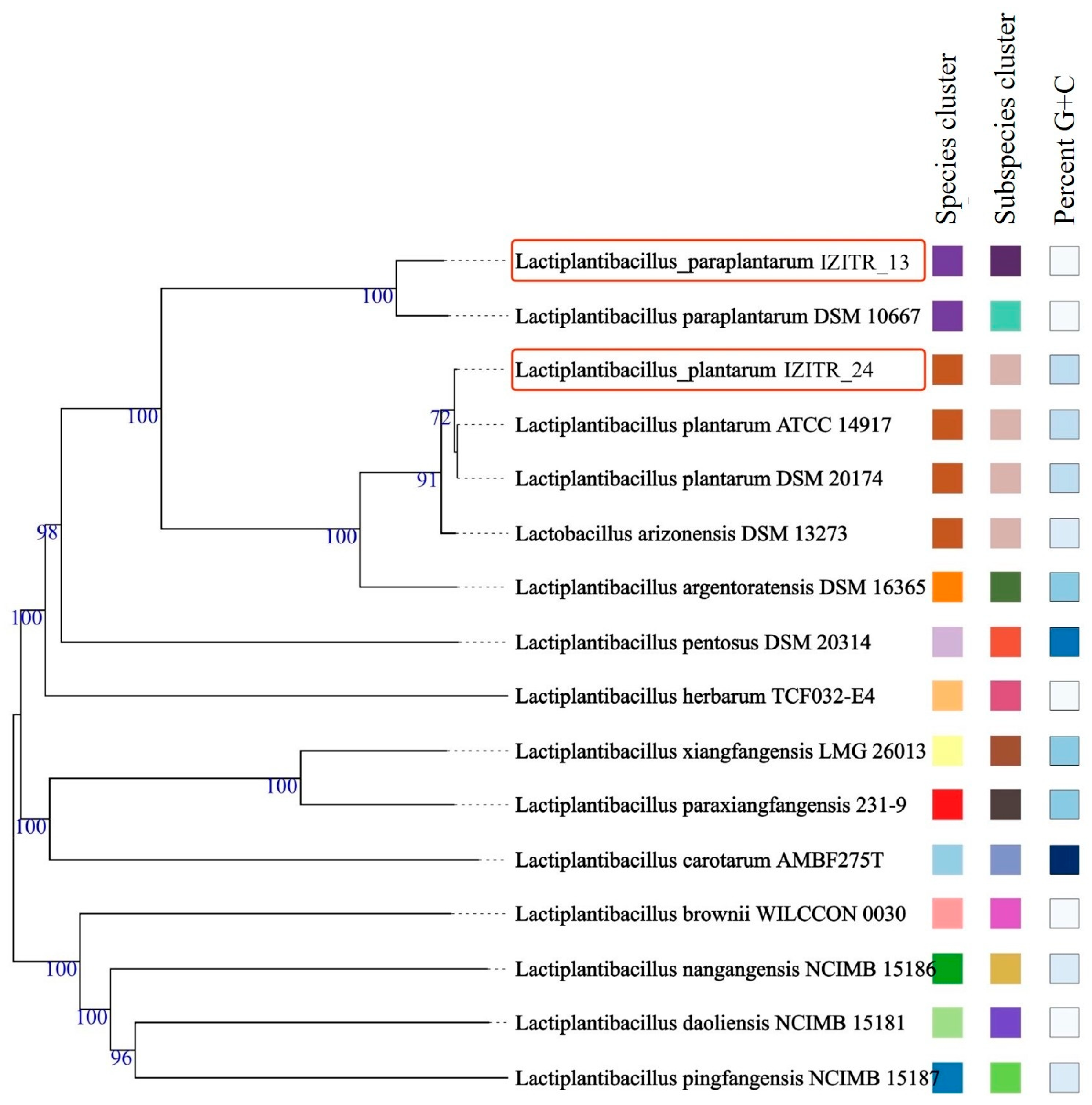
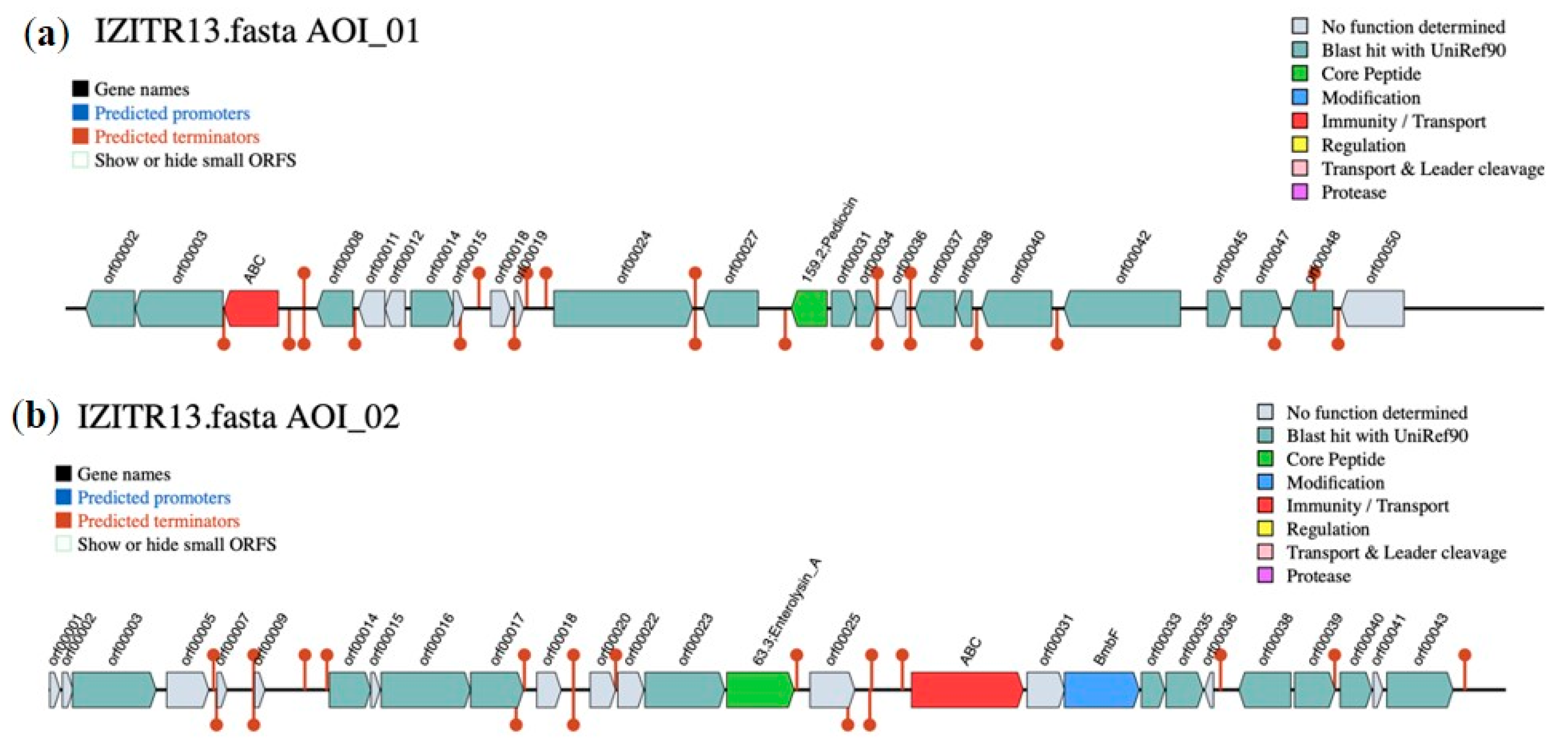
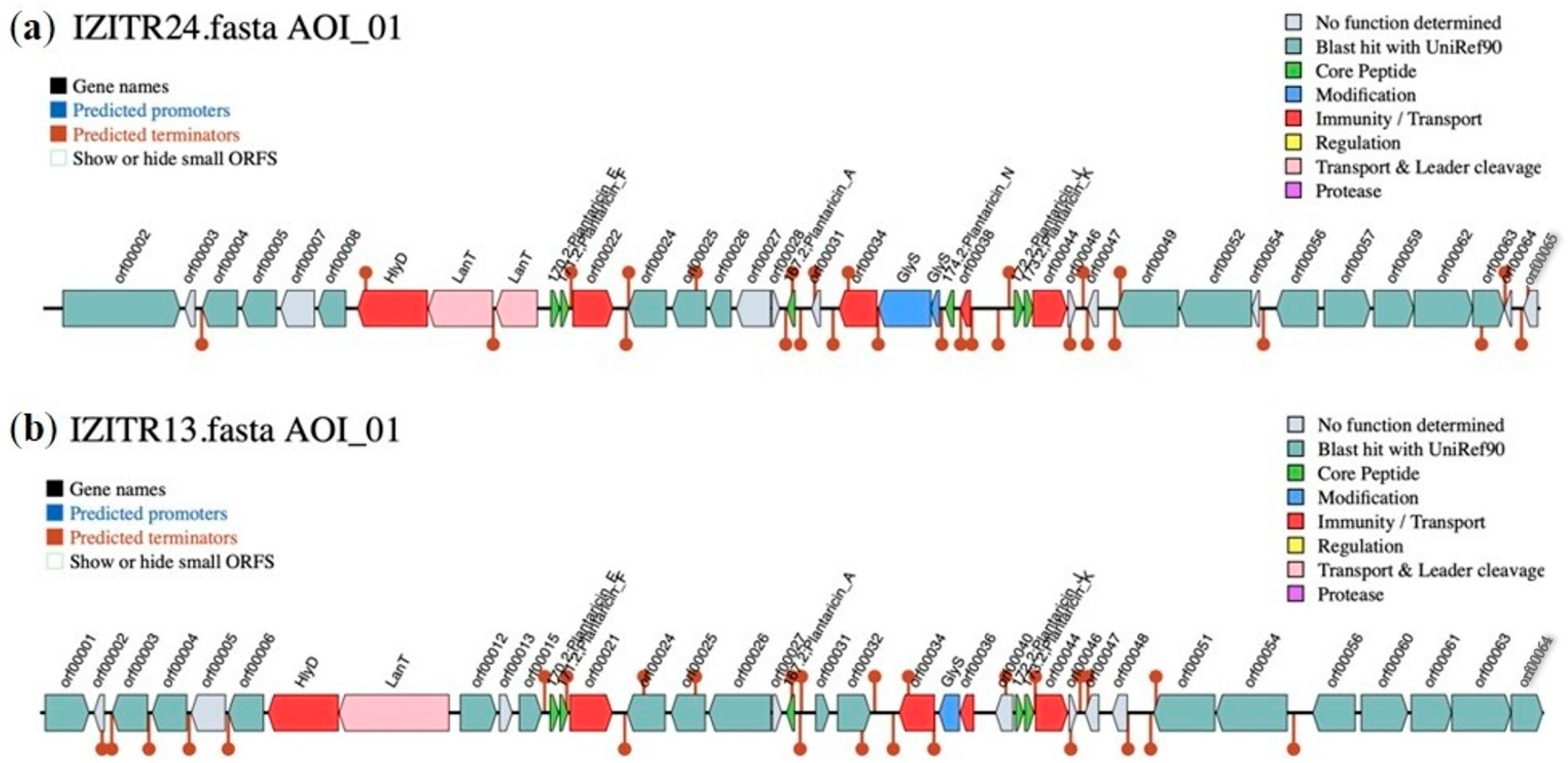
2.1. Genomic Exploration of L. plantarum IZITR_24 and L. paraplantarum IZITR_13 Through Whole Genome Sequencing
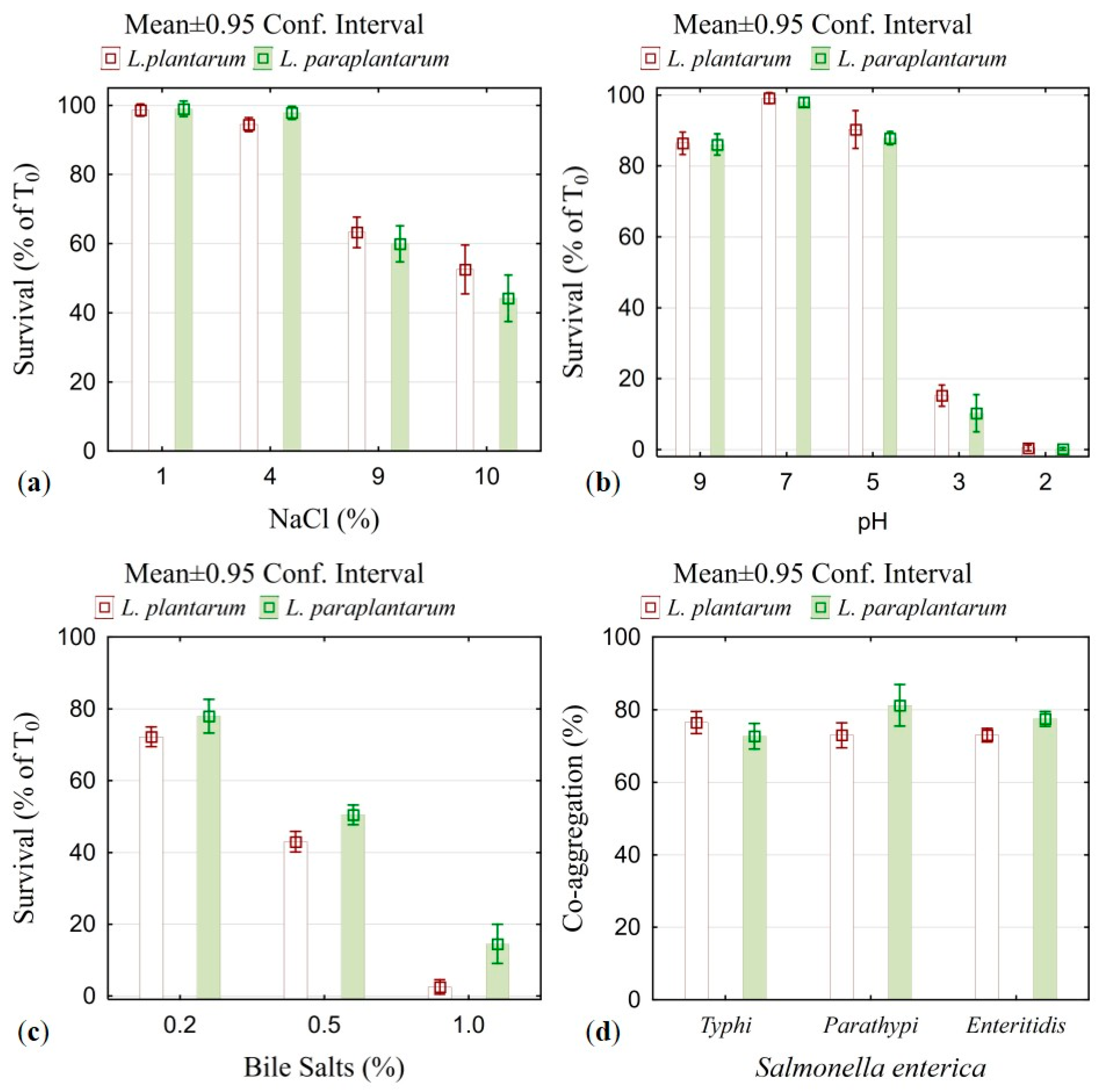
2.2. In Vitro Assessment of the Probiotic Potential
2.3. Antimicrobial Activity of L. plantarum IZITR_24 and L. paraplantarum IZITR_13
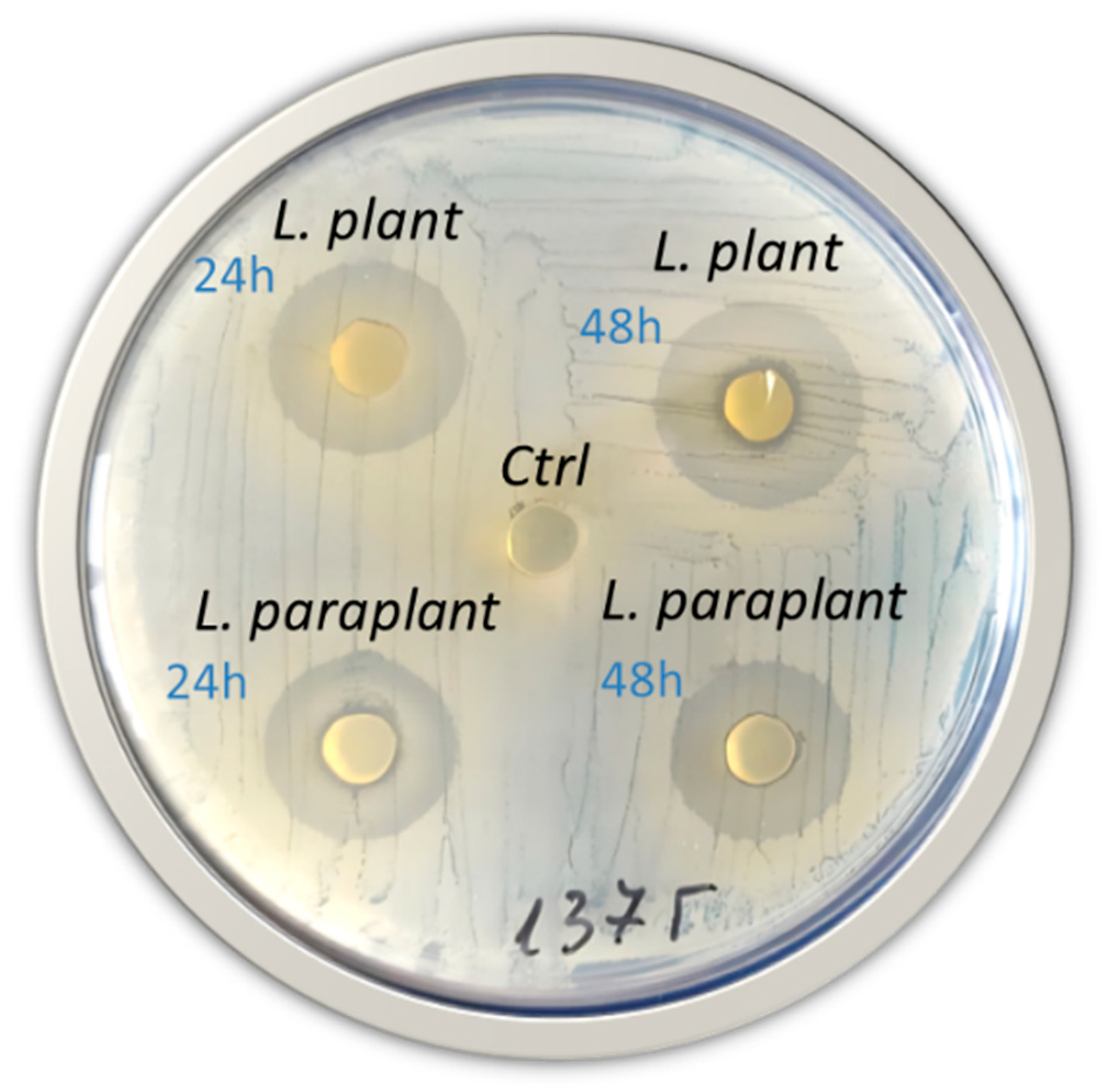
2.3.1. Antagonistic Effect of L. plantarum_IZITR_24 and L. paraplantarum_IZITR_13 Using Plug Diffusion
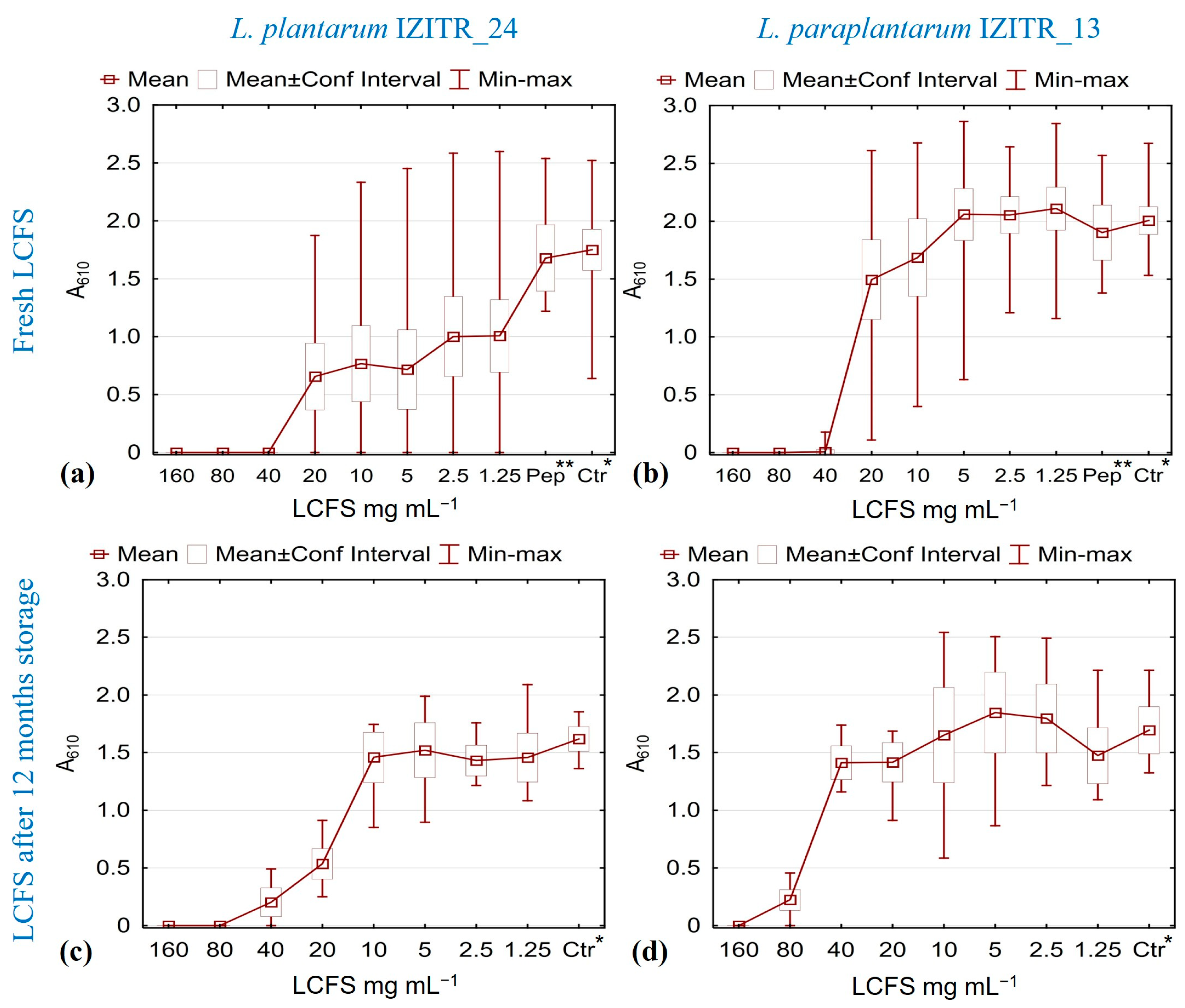
2.3.2. Biofilm and Cell Growth Inhibition by LCFS from L. plantarum IZITR_24 and L. paraplantarum IZITR_13
2.4. Biofilm Visualization
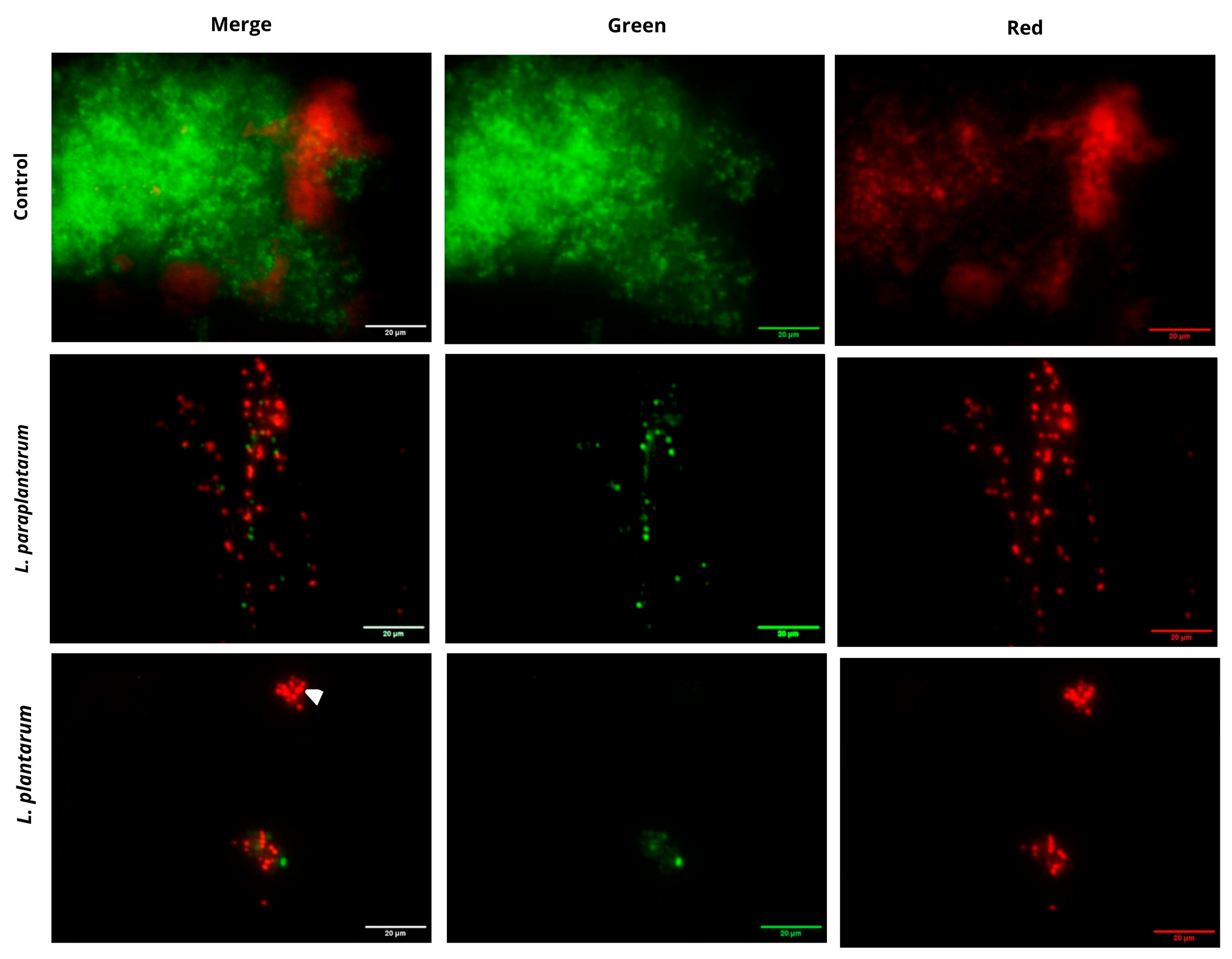
2.4.1. Confocal Laser Scanning Microscopy (CLSM)
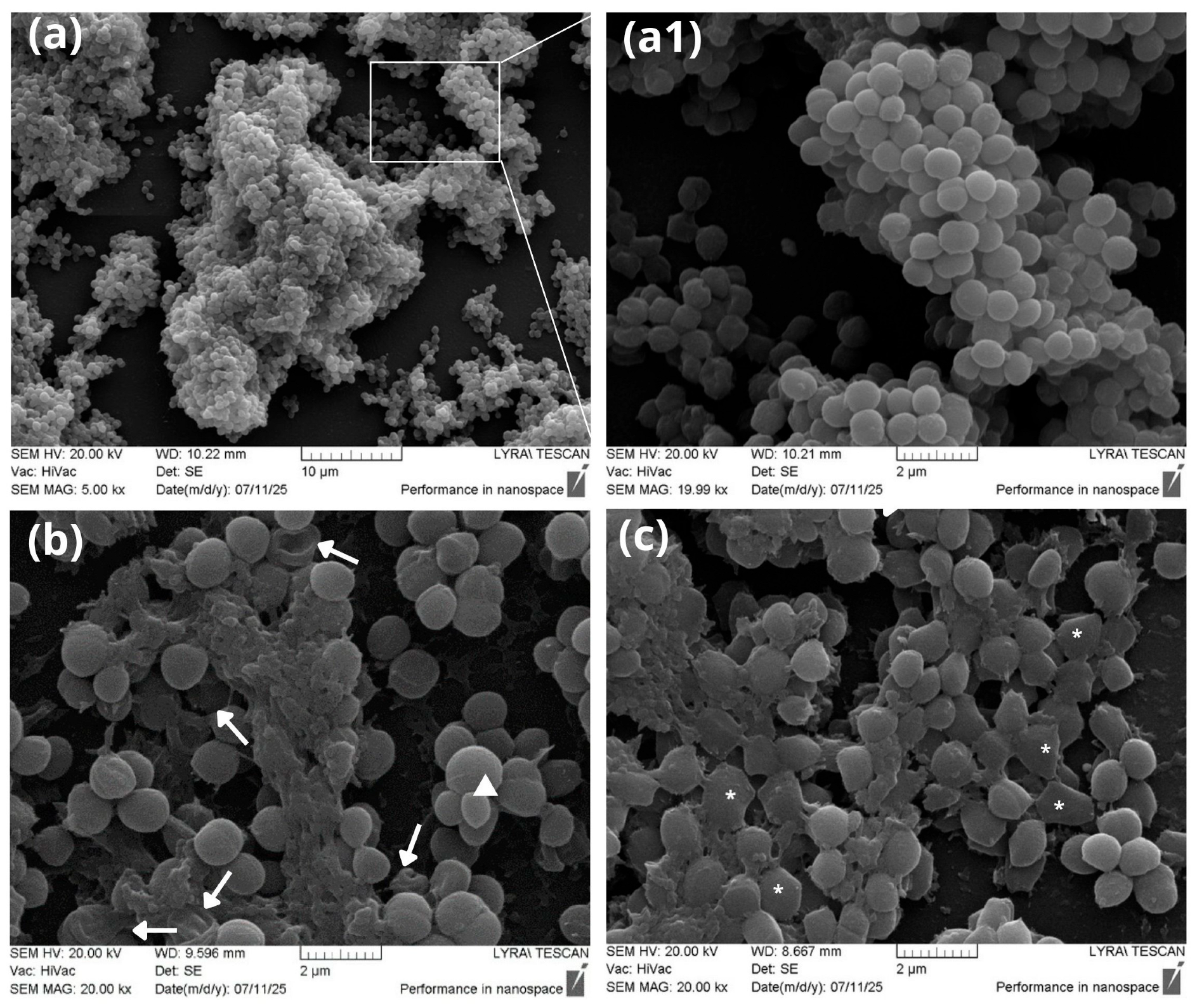
2.4.2. Scanning Electron Microscopy (SEM)
3. Materials and Methods
3.1. Bacterial Strains and Culture Conditions
3.1.1. Producer Strains: Origin, Identification, and Maintenance
3.1.2. Staphylococcus aureus
3.2. DNA Extraction, Sequencing, and Assembly
3.3. Genome-Based Identification and Multilocus Sequence Typing (MLST)
3.4. Genome Annotation
3.5. Probiotic Potential Assessment
3.5.1. Cultures and Inoculum Standardization
3.5.2. Osmotic Stress (NaCl)
3.5.3. Acid Tolerance (pH)
3.5.4. Bile Salt Tolerance
3.5.5. Co-Aggregation with Pathogens
3.6. Preparation of Cell-Free Culture Supernatants (CFSs) and Lyophilized CFSs (LCFSs)
3.7. Determination of the Fatty Acid Composition of the Lipid Fraction Isolated from Lyophilized Supernatant
3.8. Antagonistic Activity Screening
3.9. Minimum Inhibitory Concentration (MIC) Against Planktonic Growth
3.10. Minimal Biofilm Inhibitory Concentration (MBIC)
3.11. Biofilm Visualization
3.11.1. Confocal Laser Scanning Microscopy (CLSM) of Biofilm Viability
3.11.2. Scanning Electron Microscopy (SEM) of Biofilm Architecture
3.12. Statistics
4. Conclusions
Supplementary Materials
Author Contributions
Funding
Institutional Review Board Statement
Informed Consent Statement
Data Availability Statement
Conflicts of Interest
Abbreviations
| CFS | Cell-free supernatant |
| LCFS | Lyophilized cell-free supernatant |
| MSSA | Methicillin-sensitive Staphylococcus aureus |
| MRSA | Methicillin-resistant Staphylococcus aureus |
References
- Brandquist, N.D.; Kielian, T. Immune dysfunction during S. aureus biofilm-associated implant infections: Opportunities for novel therapeutic strategies. npj Biofilms Microbiomes 2025, 11, 144. [Google Scholar] [CrossRef]
- Peng, Q.; Tang, X.; Dong, W.; Sun, N.; Yuan, W. A review of biofilm formation of Staphylococcus aureus and its regulation mechanism. Antibiotics 2023, 12, 12. [Google Scholar] [CrossRef]
- GBD 2021 Antimicrobial Resistance Collaborators. Global burden of bacterial antimicrobial resistance 1990–2021: A systematic analysis with forecasts to 2050. Lancet 2024, 404, 1199–1226. [Google Scholar] [CrossRef]
- Gobezie, M.Y.; Hassen, M.; Solomon, T.; Demessie, M.B.; Worku, G.; Toleha, H.N.; Tesfaye, N.A. Carriage rates and antimicrobial resistance of Staphylococcus aureus and methicillin-resistant S. aureus in Ethiopia: A systematic review and meta-analysis. PLoS ONE 2025, 20, e0333054. [Google Scholar] [CrossRef]
- Touaitia, R.; Mairi, A.; Ibrahim, N.A.; Basher, N.S.; Idres, T.; Touati, A. Staphylococcus aureus: A review of the pathogenesis and virulence mechanisms. Antibiotics 2025, 14, 470. [Google Scholar] [CrossRef] [PubMed]
- Podkowik, M.; Perault, A.I.; Putzel, G.; Pountain, A.; Kim, J.; DuMont, A.L.; Zwack, E.E.; Ulrich, R.J.; Karagounis, T.K.; Zhou, C.; et al. Quorum-sensing agr system of Staphylococcus aureus primes gene expression for protection from lethal oxidative stress. eLife 2024, 12, RP89098. [Google Scholar] [CrossRef]
- Yamazaki, Y.; Ito, T.; Tamai, M.; Nakagawa, S.; Nakamura, Y. The role of Staphylococcus aureus quorum sensing in cutaneous and systemic infections. Inflamm. Regen. 2024, 44, 9. [Google Scholar] [CrossRef] [PubMed]
- Gheitasi, R.; Weiss, D.; Müller, M.M.; Sommer, K.; Röll, D.; Mosig, A.; Pletz, M.W.; Makarewicz, O. Staphylococcus aureus biofilm-associated component PNAG stimulates the secretion of the immunomodulatory chemokine CXCL10 via Dectin-1 signaling. Commun. Biol. 2025, 8, 1136. [Google Scholar] [CrossRef]
- Salminen, S.; Collado, M.C.; Endo, A.; Hill, C.; Lebeer, S.; Quigley, E.M.M.; Sanders, M.E.; Shamir, R.; Swann, J.R.; Szajewska, H.; et al. The International Scientific Association of Probiotics and Prebiotics (ISAPP) consensus statement on the definition and scope of postbiotics. Nat. Rev. Gastroenterol. Hepatol. 2021, 18, 649–667, Erratum in Nat. Rev. Gastroenterol. Hepatol. 2022, 19, 551. [Google Scholar] [CrossRef] [PubMed]
- Che, J.; Shi, J.; Fang, C.; Zeng, X.; Wu, Z.; Du, Q.; Tu, M.; Pan, D. Elimination of pathogen biofilms via postbiotics from lactic acid bacteria: A promising method in food and biomedicine. Microorganisms 2024, 12, 704. [Google Scholar] [CrossRef]
- Nowak-Lange, M.; Niedziałkowska, K.; Tończyk, A.; Parolin, C.; Vitali, B.; Lisowska, K. Antibacterial and antibiofilm properties of postbiotics derived from Lactiplantibacillus pentosus B1. Int. J. Mol. Sci. 2025, 26, 8169. [Google Scholar] [CrossRef] [PubMed]
- Tomičić, Z.; Šarić, L.; Tomičić, R. Potential Future Applications of Postbiotics in the Context of Ensuring Food Safety and Human Health Improvement. Antibiotics 2025, 14, 674. [Google Scholar] [CrossRef]
- Mao, Y.; Wang, Y.; Luo, X.; Chen, X.; Wang, G. Impact of cell-free supernatant of lactic acid bacteria on Staphylococcus aureus biofilm and its metabolites. Front. Vet. Sci. 2023, 10, 1184989. [Google Scholar] [CrossRef]
- Kaya, E.; Bianchi, M.; Maisetta, G.; Esin, S.; Batoni, G. Strong activity and no resistance induction exerted by cell-free supernatants from Lacticaseibacillus rhamnosus against mono-species and dual-species biofilms of wound pathogens in in vivo-like conditions. Int. J. Mol. Sci. 2024, 25, 2087. [Google Scholar] [CrossRef]
- Butorac, K.; Novak, J.; Banić, M.; Leboš Pavunc, A.; Čuljak, N.; Oršolić, N.; Odeh, D.; Perica, J.; Šušković, J.; Kos, B. Modulation of the gut microbiota by the plantaricin-producing Lactiplantibacillus plantarum D13, analysed in the DSS-induced colitis mouse model. Int. J. Mol. Sci. 2023, 24, 15322. [Google Scholar] [CrossRef] [PubMed]
- Azzahra, R.N.; Putri, F.D.; Wulandari, A.P.; Lei, J.; Syaputri, Y. Plantaricin: Production dynamics, functional applications, and challenges in food biopreservation. J. Food Process. Preserv. 2025, 2025, 6215738. [Google Scholar] [CrossRef]
- Ye, Z.; Shentu, H.; Zhou, Q.; Wu, D.; Li, P.; Gu, Q. A novel bacteriocin against methicillin-resistant Staphylococcus aureus, purified from Lactiplantibacillus plantarum ZFM9. Food Chem. 2024, 451, 139344. [Google Scholar] [CrossRef]
- Melo, T.A.; dos Santos, T.F.; de Almeida, M.E.; Junior, L.A.G.F.; Andrade, E.F.; Rezende, R.P.; Marques, L.M.; Romano, C.C. Inhibition of Staphylococcus aureus biofilm by Lactobacillus isolated from fine cocoa. BMC Microbiol. 2016, 16, 250. [Google Scholar] [CrossRef]
- Frickmann, H.; Klenk, C.; Warnke, P.; Redanz, S.; Podbielski, A. Influence of probiotic culture supernatants on in vitro biofilm formation of staphylococci. Eur. J. Microbiol. Immunol. 2018, 8, 119–127. [Google Scholar] [CrossRef]
- Kalaycı Yüksek, F.; Gümüş, D.; Gündoğan, G.İ.; Anğ Küçüker, M. Cell-free Lactobacillus sp supernatants modulate Staphylococcus aureus growth, adhesion and invasion to human osteoblast (HOB) cells. Curr. Microbiol. 2021, 78, 125–132. [Google Scholar] [CrossRef]
- Huidrom, S.; Ngashangva, N.; Khumlianlal, J.; Sharma, K.C.; Mukherjee, P.K.; Devi, S.I. Genomic insights from Lactiplantibacillus plantarum BRD3A isolated from Atingba, a traditional fermented rice-based beverage, and analysis of its potential for probiotic and antimicrobial activity against methicillin-resistant Staphylococcus aureus. Front. Microbiol. 2024, 15, 1357818. [Google Scholar] [CrossRef]
- Ramezani, M.; Zainodini, N.; Hakimi, H.; Zarandi, E.R.; Bagheri, V.; Bahramabadi, R.; Zare-Bidaki, M. Cell-free culture supernatants of lactobacilli modify the expression of virulence-factor genes in Staphylococcus aureus. Jundishapur J. Microbiol. 2020, 12, e96806. [Google Scholar] [CrossRef]
- Xu, H.; Liu, W.; Zhang, W.; Yu, J.; Song, Y.; Menhe, B.; Zhang, H.; Sun, Z. Use of multilocus sequence typing to infer genetic diversity and population structure of Lactobacillus plantarum isolates from different sources. BMC Microbiol. 2015, 15, 241. [Google Scholar] [CrossRef] [PubMed]
- Prete, R.; Long, S.L.; Joyce, S.A.; Corsetti, A. Genotypic and phenotypic characterization of food-associated Lactobacillus plantarum isolates for potential probiotic activities. FEMS Microbiol. Lett. 2021, 367, fnaa076. [Google Scholar] [CrossRef]
- García-González, N.; Bottacini, F.; van Sinderen, D.; Gahan, C.G.M.; Corsetti, A. Comparative genomics of Lactiplantibacillus plantarum: Insights into probiotic markers in strains isolated from the human gastrointestinal tract and fermented foods. Front. Microbiol. 2022, 13, 854266. [Google Scholar] [CrossRef]
- Tenea, G.N. Decoding the gene variants of two native probiotic Lactiplantibacillus plantarum strains through whole-genome resequencing: Insights into bacterial adaptability to stressors and antimicrobial strength. Genes 2022, 13, 443. [Google Scholar] [CrossRef]
- Gizachew, S.; Engidawork, E. Genomic characterization of Lactiplantibacillus plantarum strains: Potential probiotics from Ethiopian traditional fermented cottage cheese. Genes 2024, 15, 1389. [Google Scholar] [CrossRef]
- Benk, R.; Ortakcı, F. Comparative genome analysis of Lactiplantibacillus paraplantarum. Bitlis Eren Univ. J. Sci. 2024, 13, 366–375. [Google Scholar] [CrossRef]
- Lee, M.-G.; Kang, M.J.; Cha, S.; Kim, T.-R.; Park, Y.-S. Acid tolerance responses and their mechanisms in Lactiplantibacillus plantarum LM1001. Food Sci. Biotechnol. 2024, 33, 2213–2222. [Google Scholar] [CrossRef] [PubMed]
- Diep, D.B.; Straume, D.; Kjos, M.; Torres, C.; Nes, I.F. An overview of the mosaic bacteriocin pln loci from Lactobacillus plantarum. Peptides 2009, 30, 1562–1574. [Google Scholar] [CrossRef]
- Tai, H.F.; Foo, H.L.; Rahim, R.A.; Loh, T.C.; Abdullah, M.P.; Yoshinobu, K. Molecular characterisation of new organisation of plnEF and plw loci of bacteriocin genes harbour concomitantly in Lactobacillus plantarum I-UL4. Microb. Cell Fact. 2015, 14, 89. [Google Scholar] [CrossRef]
- Fimland, N.; Rogne, P.; Fimland, G.; Nissen-Meyer, J.; Kristiansen, P.E. Three-dimensional structure of the two peptides that constitute the two-peptide bacteriocin plantaricin EF. Biochim. Biophys. Acta Proteins Proteom. 2008, 1784, 1711–1719. [Google Scholar] [CrossRef]
- Rogne, P.; Haugen, C.; Fimland, G.; Nissen-Meyer, J.; Kristiansen, P.E. Three-dimensional structure of the two-peptide bacteriocin plantaricin JK. Peptides 2009, 30, 1613–1621. [Google Scholar] [CrossRef]
- Heeney, D.D.; Yarov-Yarovoy, V.; Marco, M.L. Sensitivity to the two peptide bacteriocin plantaricin EF is dependent on CorC, a membrane-bound, magnesium/cobalt efflux protein. Microbiol. Open 2019, 8, e00827. [Google Scholar] [CrossRef]
- Oppegård, C.; Kjos, M.; Veening, J.-W.; Nissen-Meyer, J.; Kristensen, T. A putative amino acid transporter determines sensitivity to the two-peptide bacteriocin plantaricin JK. Microbiol. Open 2016, 5, 700–708. [Google Scholar] [CrossRef]
- Kjos, M.; Oppegård, C.; Diep, D.B.; Nes, I.F.; Veening, J.-W.; Nissen-Meyer, J.; Kristensen, T. Sensitivity to the two-peptide bacteriocin Lactococcin G is dependent on UppP, an enzyme involved in cell-wall synthesis. Mol. Microbiol. 2014, 92, 1177–1187. [Google Scholar] [CrossRef] [PubMed]
- Rodríguez, J.M.; Martínez, M.I.; Kok, J. Pediocin PA-1, a wide-spectrum bacteriocin from lactic acid bacteria. Crit. Rev. Food Sci. Nutr. 2002, 42, 91–121. [Google Scholar] [CrossRef] [PubMed]
- Nilsen, T.; Nes, I.F.; Holo, H. Enterolysin A, a cell wall-degrading bacteriocin from Enterococcus faecalis LMG 2333. Appl. Environ. Microbiol. 2003, 69, 2975–2984. [Google Scholar] [CrossRef] [PubMed]
- Khan, H.; Flint, S.H.; Yu, P.-L. Determination of the mode of action of Enterolysin A, produced by Enterococcus faecalis B9510. J. Appl. Microbiol. 2013, 115, 484–494. [Google Scholar] [CrossRef] [PubMed]
- Nissen-Meyer, J.; Oppegård, C.; Rogne, P.; Haugen, H.S.; Kristiansen, P.E. Structure and mode-of-action of the two-peptide (class-IIb) bacteriocins. Probiotics Antimicrob. Proteins 2010, 2, 52–60. [Google Scholar] [CrossRef]
- Hammami, R.; Fernandez, B.; Lacroix, C.; Fliss, I. Anti-infective properties of bacteriocins: An update. Cell. Mol. Life Sci. 2013, 70, 2947–2967. [Google Scholar] [CrossRef] [PubMed]
- FAO; WHO. Report of a Joint FAO/WHO Expert Consultation on Evaluation of Health and Nutritional Properties of Probiotics in Food Including Powder Milk with Live Lactic Acid Bacteria—Report of a Joint FAO/WHO Working Group on Drafting Guidelines for the Evaluation of Probiotics in Food; FAO: Rome, Italy, 2001. [Google Scholar]
- Hill, C.; Guarner, F.; Reid, G.; Gibson, G.R.; Merenstein, D.J.; Pot, B.; Morelli, L.; Canani, R.B.; Flint, H.J.; Salminen, S.; et al. Expert consensus document: The International Scientific Association for Probiotics and Prebiotics consensus statement on the scope and appropriate use of the term probiotic. Nat. Rev. Gastroenterol. Hepatol. 2014, 11, 506–514. [Google Scholar] [CrossRef]
- Yao, W.; Yang, L.; Shao, Z.; Xie, L.; Chen, L. Identification of salt tolerance-related genes of Lactobacillus plantarum D31 and T9 strains by genomic analysis. Ann. Microbiol. 2020, 70, 10. [Google Scholar] [CrossRef]
- Nguyen, P.T.; Nguyen, T.T.; Vo, T.N.T.; Nguyen, T.-T.; Hoang, Q.-K.; Nguyen, H.-T. Response of Lactobacillus plantarum VAL6 to challenges of pH and sodium chloride stresses. Sci. Rep. 2021, 11, 1301. [Google Scholar] [CrossRef] [PubMed]
- Bisson, G.; Maifreni, M.; Innocente, N.; Marino, M. Application of pre-adaptation strategies to improve the growth of probiotic lactobacilli under food-relevant stressful conditions. Food Funct. 2023, 14, 2128–2137. [Google Scholar] [CrossRef] [PubMed]
- Nishida, S.; Ishii, M.; Nishiyama, Y.; Abe, S.; Ono, Y.; Sekimizu, K. Lactobacillus paraplantarum 11-1 isolated from rice bran pickles activated innate immunity and improved survival in a silkworm bacterial infection model. Front. Microbiol. 2017, 8, 436. [Google Scholar] [CrossRef]
- Guo, Y.; Tian, X.; Huang, R.; Tao, X.; Shah, N.P.; Wei, H.; Wan, C. A physiological comparative study of acid tolerance of Lactobacillus plantarum ZDY 2013 and L. plantarum ATCC 8014 at membrane and cytoplasm levels. Ann. Microbiol. 2017, 67, 669–677. [Google Scholar] [CrossRef]
- Singhal, N.; Singh, N.S.; Mohanty, S.; Kumar, M.; Virdi, J.S. Rhizospheric Lactobacillus plantarum (Lactiplantibacillus plantarum) strains exhibit bile salt hydrolysis, hypocholestrolemic and probiotic capabilities in vitro. Sci. Rep. 2021, 11, 15288. [Google Scholar] [CrossRef]
- Tuerhong, N.; Wang, L.; Cui, J.; Shataer, D.; Yan, H.; Dong, X.; Gao, Z.; Zhang, M.; Qin, Y.; Lu, J. Targeted screening of Lactiplantibacillus plantarum strains isolated from tomatoes and its application in tomato fermented juice. Foods 2024, 13, 3569. [Google Scholar] [CrossRef]
- Castro-Seriche, S.; Alvarez-Norambuena, J.; Lincoñir-Campos, P.; Gutiérrez-Zamorano, C.; Ruiz-Garrido, A.; Jerez-Angulo, B.; García-Cancino, A.; Jerez-Morales, A. Characterization of Lactiplantibacillus paraplantarum HK-1 and GABA synthesis under simulated gastrointestinal conditions. Foods 2025, 14, 3345. [Google Scholar] [CrossRef]
- Tulini, F.L.; Winkelströter, L.K.; De Martinis, E.C.P. Identification and evaluation of the probiotic potential of Lactobacillus paraplantarum FT259, a bacteriocinogenic strain isolated from Brazilian semi-hard artisanal cheese. Anaerobe 2013, 22, 57–63. [Google Scholar] [CrossRef] [PubMed]
- Sun, J.-L.; Zhang, S.-K.; Chen, X.-X.; Chen, J.-Y.; Han, B.-Z. Growth properties of Staphylococcus aureus in biofilm formed on polystyrene plate. Afr. J. Microbiol. Res. 2012, 6, 3284–3291. [Google Scholar] [CrossRef]
- Papadimitriou, K.; Alegría, Á.; Bron, P.A.; De Angelis, M.; Gobbetti, M.; Kleerebezem, M.; Lemos, J.A.; Linares, D.M.; Ross, P.; Stanton, C.; et al. Stress physiology of lactic acid bacteria. Microbiol. Mol. Biol. Rev. 2016, 80, 837–890. [Google Scholar] [CrossRef] [PubMed]
- Jeong, C.-H.; Sohn, H.; Hwang, H.; Lee, H.-J.; Kim, T.-W.; Kim, D.-S.; Kim, C.-S.; Han, S.-G.; Hong, S.-W. Comparison of the probiotic potential between Lactiplantibacillus plantarum isolated from kimchi and standard probiotic strains isolated from different sources. Foods 2021, 10, 2125. [Google Scholar] [CrossRef]
- Hamon, E.; Horvatovich, P.; Izquierdo, E.; Bringel, F.; Marchioni, E.; Aoudé-Werner, D.; Ennahar, S. Comparative proteomic analysis of Lactobacillus plantarum for the identification of key proteins in bile tolerance. BMC Microbiol. 2011, 11, 63. [Google Scholar] [CrossRef] [PubMed]
- Kalhoro, M.S.; Visessanguan, W.; Nguyen, L.T.; Anal, A.K. Probiotic potential of Lactobacillus paraplantarum BT-11 isolated from raw buffalo (Bubalus bubalis) milk and characterization of bacteriocin-like inhibitory substance produced. J. Food Process. Preserv. 2019, 43, e14015. [Google Scholar] [CrossRef]
- Zareie, Z.; Moayedi, A.; Garavand, F.; Tabar-Heydar, K.; Khomeiri, M.; Maghsoudlou, Y. Probiotic properties, safety assessment, and aroma-generating attributes of some lactic acid bacteria isolated from Iranian traditional cheese. Fermentation 2023, 9, 338. [Google Scholar] [CrossRef]
- Ruiz, L.; Margolles, A.; Sánchez, B. Bile resistance mechanisms in Lactobacillus and Bifidobacterium. Front. Microbiol. 2013, 4, 396. [Google Scholar] [CrossRef]
- Feng, Y.; Qiao, L.; Liu, R.; Yao, H.; Gao, C. Potential probiotic properties of lactic acid bacteria isolated from the intestinal mucosa of healthy piglets. Ann. Microbiol. 2017, 67, 239–253. [Google Scholar] [CrossRef]
- Zhang, B.; Wang, Y.; Tan, Z.; Li, Z.; Jiao, Z.; Huang, Q. Screening of probiotic activities of Lactobacilli strains isolated from traditional Tibetan Qula, a raw yak milk cheese. Asian-Australas. J. Anim. Sci. 2016, 29, 1490–1499. [Google Scholar] [CrossRef]
- Tuo, Y.; Yu, H.; Ai, L.; Wu, Z.; Guo, B.; Chen, W. Aggregation and adhesion properties of 22 Lactobacillus strains. J. Dairy Sci. 2013, 96, 4252–4257. [Google Scholar] [CrossRef] [PubMed]
- Zawistowska-Rojek, A.; Kośmider, A.; Stępień, K.; Tyski, S. Adhesion and aggregation properties of Lactobacillaceae strains as protection ways against enteropathogenic bacteria. Arch. Microbiol. 2022, 204, 285. [Google Scholar] [CrossRef] [PubMed]
- Kouadio, N.J.; Zady, A.L.O.; Kra, K.A.S.; Diguță, F.C.; Niamke, S.; Matei, F. In vitro probiotic characterization of Lactiplantibacillus plantarum strains isolated from traditional fermented Dockounou paste. Fermentation 2024, 10, 264. [Google Scholar] [CrossRef]
- Merino, L.; Trejo, F.M.; De Antoni, G.; Golowczyc, M.A. Lactobacillus strains inhibit biofilm formation of Salmonella sp. isolates from poultry. Food Res. Int. 2019, 123, 258–265. [Google Scholar] [CrossRef]
- Collado, M.C.; Meriluoto, J.; Salminen, S. Measurement of aggregation properties between probiotics and pathogens: In vitro evaluation of different methods. J. Microbiol. Methods 2007, 71, 71–74. [Google Scholar] [CrossRef]
- Rasheed, S.; Luti, K.J.K.; Alaubydi, M.A. A probiotic application of Lactobacillus acidophilus HT1 for the treatment of some skin pathogens. Iraqi J. Agric. Sci. 2020, 51, 1559–1571. [Google Scholar] [CrossRef]
- Al-Asadi, H.M.; Luti, K.J.K. Antibacterial activity of live cells of Lactobacillus plantarum L40 as a probiotic against pathogens associated with diabetic foot infections. Iraqi J. Sci. 2023, 64, 5624–5639. [Google Scholar] [CrossRef]
- Hussein, N.A.; Luti, K.J.K. In vitro antimicrobial activity of Lactobacillus parabuchneri NU14 as a probiotic. Iraqi J. Agric. Sci. 2023, 54, 1647–1658. [Google Scholar] [CrossRef]
- Abdel Tawab, F.I.; Abd Elkadr, M.H.; Sultan, A.M.; Hamed, E.O.; El-Zayat, A.S.; Ahmed, M.N. Probiotic potentials of lactic acid bacteria isolated from Egyptian fermented food. Sci. Rep. 2023, 13, 16601. [Google Scholar] [CrossRef]
- Hori, M.; Kawai, Y.; Noguchi, K.; Nakamura, K.; Shimada, M.; Iwahashi, H.; Nakagawa, T. Antimicrobial activity and productivity of γ-aminobutyric acid in lactic acid bacteria isolated from traditional Gifu ayu-narezushi. Food Sci. Technol. Res. 2024, 30, 247–252. [Google Scholar] [CrossRef]
- Iliev, I.; Yahubyan, G.; Apostolova-Kuzova, E.; Gozmanova, M.; Mollova, D.; Iliev, I.; Ilieva, L.; Marhova, M.; Gochev, V.; Baev, V. Characterization and probiotic potential of Levilactobacillus brevis DPL5: A novel strain isolated from human breast milk with antimicrobial properties against biofilm-forming Staphylococcus aureus. Microorganisms 2025, 13, 160. [Google Scholar] [CrossRef] [PubMed]
- Goel, A.; Halami, P.M. Structural and biosynthetic diversity of plantaricins from Lactiplantibacillus. Appl. Microbiol. Biotechnol. 2023, 107, 5635–5649. [Google Scholar] [CrossRef] [PubMed]
- Yadav, M.K.; Baldia, A.; Tiwari, S.K. Plantaricin LD1 inhibits the growth and biofilm formation of Staphylococcus aureus in milk. J. Explor. Res. Pharmacol. 2024, 9, 1–7. [Google Scholar] [CrossRef]
- Hu, C.H.; Ren, L.Q.; Zhou, Y.; Ye, B.C. Characterization of antimicrobial activity of three Lactobacillus plantarum strains isolated from Chinese traditional dairy food. Food Sci. Nutr. 2019, 7, 1997–2005. [Google Scholar] [CrossRef]
- Koohestani, M.; Moradi, M.; Tajik, H.; Badali, A. Effects of cell-free supernatant of Lactobacillus acidophilus LA5 and Lactobacillus casei 431 against planktonic form and biofilm of Staphylococcus aureus. Vet. Res. Forum 2018, 9, 301–306. [Google Scholar] [CrossRef]
- Wang, G.; Zeng, H. Antibacterial effect of cell-free supernatant from Lactobacillus pentosus L-36 against Staphylococcus aureus from bovine mastitis. Molecules 2022, 27, 7627. [Google Scholar] [CrossRef] [PubMed]
- Mohapatra, A.R.; Harikrishnan, A.; Lakshmanan, D.; Jeevaratnam, K. Targeting Staphylococcus aureus and its biofilms with novel antibacterial compounds produced by Lactiplantibacillus plantarum SJ33. Arch. Microbiol. 2022, 204, 20. [Google Scholar] [CrossRef]
- Singh, I.; Roshan, M.; Vats, A.; Behera, M.; Gautam, D.; Rajput, S.; Rana, C.; De, S. Evaluation of virulence, antimicrobial resistance and biofilm forming potential of methicillin-resistant Staphylococcus aureus (MRSA) isolates from bovine suspected with mastitis. Curr. Microbiol. 2023, 80, 198. [Google Scholar] [CrossRef]
- Valliammai, A.; Sethupathy, S.; Priya, A.; Selvaraj, A.; Bhaskar, J.P.; Krishnan, V.; Pandian, S.K. 5-Dodecanolide interferes with biofilm formation and reduces the virulence of methicillin-resistant Staphylococcus aureus (MRSA) through upregulation of agr system. Sci. Rep. 2019, 9, 13744. [Google Scholar] [CrossRef]
- Konduri, R.; Saiabhilash, C.R.; Shivaji, S. Biofilm-forming potential of ocular fluid Staphylococcus aureus and Staphylococcus epidermidis on ex vivo human corneas from attachment to dispersal phase. Microorganisms 2021, 9, 1124. [Google Scholar] [CrossRef]
- Zhang, X.; Sun, X.; Wu, J.; Wu, Y.; Wang, Y.; Hu, X.; Wang, X. Berberine damages the cell surface of methicillin-resistant Staphylococcus aureus. Front. Microbiol. 2020, 11, 621. [Google Scholar] [CrossRef]
- Decker, T.; Rautenbach, M.; Khan, S.; Khan, W. Antibacterial efficacy and membrane mechanism of action of the Serratia-derived non-ionic lipopeptide, serrawettin W2-FL10. Microbiol. Spectr. 2024, 12, e02952-23. [Google Scholar] [CrossRef]
- Yang, S.; Liu, L.; Wang, J.; Guo, S.; Liu, G.; Chen, X.; Deng, X.; Tu, M.; Tao, Y.; Rao, Y. Antimicrobial activity against Staphylococcus aureus and genome features of Lactiplantibacillus plantarum LR-14 from Sichuan pickles. Arch. Microbiol. 2022, 204, 637. [Google Scholar] [CrossRef]
- Li, H.-W.; Xiang, Y.-Z.; Zhang, M.; Jiang, Y.-H.; Zhang, Y.; Liu, Y.-Y.; Lin, L.-B.; Zhang, Q.-L. A novel bacteriocin from Lactobacillus salivarius against Staphylococcus aureus: Isolation, purification, identification, antibacterial and antibiofilm activity. LWT 2021, 140, 110826. [Google Scholar] [CrossRef]
- Milosavljevic, V.; Kosaristanova, L.; Dolezelikova, K.; Adam, V.; Pumera, M. Microrobots with antimicrobial peptide nanoarchitectonics for the eradication of antibiotic-resistant biofilms. Adv. Funct. Mater. 2022, 32, 2112935. [Google Scholar] [CrossRef]
- Nitschke, S.O.; Awad, M.; Elliott, A.G.; Lowe, G.; Leigh, C.; Neubauer, K.; Thomas, N.; Hickey, S.M.; Plush, S.E. Eradication of MRSA biofilms using amphiphilic cationic coumarin derivatives. RSC Adv. 2025, 15, 25510–25513. [Google Scholar] [CrossRef]
- Yuan, L.; Yuan, J.; Gao, C.; Zhao, H.; Wu, C.; Yang, Z.-H. Lactiplantibacillus plantarum S1 as a Novel Dual-Functional Probiotic Strain for High-Efficiency Organoselenium Biotransformation in Functional Food Development. Foods 2025, 14, 1851. [Google Scholar] [CrossRef] [PubMed]
- Bergey, D.H. Vol 3: The Firmicutes. In Bergey’s Manual of Systematic Bacteriology; Lippincott Williams & Wilkins: Philadelphia, PA, USA, 2009. [Google Scholar]
- Tong, S.Y.; Davis, J.S.; Eichenberger, E.; Holland, T.L.; Fowler, V.G., Jr. Staphylococcus aureus infections: Epidemiology, pathophysiology, clinical manifestations, and management. Clin. Microbiol. Rev. 2015, 28, 603–661. [Google Scholar] [CrossRef] [PubMed]
- ISO 15214:1998; Microbiology of Food and Animal Feeding Stuffs—Horizontal Method for the Enumeration of Mesophilic Lactic Acid Bacteria—Colony-Count Technique at 30 °C. ISO: Geneva, Switzerland, 1998; confirmed 2021. Available online: https://www.iso.org/standard/26853.html (accessed on 22 May 2023).
- Liong, M.T.; Shah, N.P. Acid and bile tolerance and cholesterol removal ability of Lactobacilli strains. J. Dairy Sci. 2005, 88, 55–66. [Google Scholar] [CrossRef] [PubMed]
- Matejčeková, Z.; Spodniaková, S.; Dujmić, E.; Liptáková, D.; Valík, Ľ. Modelling growth of Lactobacillus plantarum as a function of temperature: Effects of media. J. Food Nutr. Res. 2019, 58, 125–134. [Google Scholar]
- Christie, W.W. Lipid Analysis, 3rd ed.; The OilyPress, PJ Barnes & Associates: Bridgewater, UK, 2003; pp. 207–209. [Google Scholar]
- CLSI Document M07-A9; Methods for Dilution Antimicrobial Susceptibility Tests for Bacteria That Grow Aerobically. Approved Standard, 9th ed.; Clinical Laboratory Standards Institute: Wayne, PA, USA, 2012.
- Stepanović, S.; Vuković, D.; Hola, V.; Di Bonaventura, G.; Djukić, S.; Cirković, I.; Ruzicka, F. Quantification of biofilm in microtiter plates: Overview of testing conditions and practical recommendations for assessment of biofilm production by staphylococci. APMIS 2007, 115, 891–899. [Google Scholar] [CrossRef] [PubMed]






| L. plantarum IZITR_24 | L. paraplantarum IZITR_13 | |||||||
|---|---|---|---|---|---|---|---|---|
| MBIC (mg mL−1) | MIC (mg mL−1) | MBIC (mg mL−1) | MIC (mg mL−1) | |||||
| LD50 | LD99 | LD50 | LD99 | LD50 | LD99 | LD50 | LD99 | |
| Estimate probability | 11.590 | 45.520 | 57.60 | 132.00 | 24.420 | 53.850 | 93.47 | 233.00 |
| Lower bound | 7.080 | 36.610 | 45.66 | 95.85 | 19.380 | 38.540 | 83.29 | 187.20 |
| Upper bound | 19.460 | 64.240 | 76.85 | 313.38 | 31.830 | 139.380 | 105.11 | 333.86 |
Disclaimer/Publisher’s Note: The statements, opinions and data contained in all publications are solely those of the individual author(s) and contributor(s) and not of MDPI and/or the editor(s). MDPI and/or the editor(s) disclaim responsibility for any injury to people or property resulting from any ideas, methods, instructions or products referred to in the content. |
© 2026 by the authors. Licensee MDPI, Basel, Switzerland. This article is an open access article distributed under the terms and conditions of the Creative Commons Attribution (CC BY) license.
Share and Cite
Ilieva, L.; Baev, V.; Marhova, M.; Yahubyan, G.; Apostolova, E.; Gozmanova, M.; Gochev, V.; Paunova-Krasteva, T.; Damyanova, T.; Kostadinova, S.; et al. Potential of Fermented Food-Derived Lactiplantibacillus Cell-Free Supernatants to Control Staphylococcus aureus Growth and Biofilm Development. Int. J. Mol. Sci. 2026, 27, 760. https://doi.org/10.3390/ijms27020760
Ilieva L, Baev V, Marhova M, Yahubyan G, Apostolova E, Gozmanova M, Gochev V, Paunova-Krasteva T, Damyanova T, Kostadinova S, et al. Potential of Fermented Food-Derived Lactiplantibacillus Cell-Free Supernatants to Control Staphylococcus aureus Growth and Biofilm Development. International Journal of Molecular Sciences. 2026; 27(2):760. https://doi.org/10.3390/ijms27020760
Chicago/Turabian StyleIlieva, Lena, Vesselin Baev, Mariana Marhova, Galina Yahubyan, Elena Apostolova, Mariyana Gozmanova, Velizar Gochev, Tsvetelina Paunova-Krasteva, Tsvetozara Damyanova, Sonya Kostadinova, and et al. 2026. "Potential of Fermented Food-Derived Lactiplantibacillus Cell-Free Supernatants to Control Staphylococcus aureus Growth and Biofilm Development" International Journal of Molecular Sciences 27, no. 2: 760. https://doi.org/10.3390/ijms27020760
APA StyleIlieva, L., Baev, V., Marhova, M., Yahubyan, G., Apostolova, E., Gozmanova, M., Gochev, V., Paunova-Krasteva, T., Damyanova, T., Kostadinova, S., Gocheva, M., & Iliev, I. (2026). Potential of Fermented Food-Derived Lactiplantibacillus Cell-Free Supernatants to Control Staphylococcus aureus Growth and Biofilm Development. International Journal of Molecular Sciences, 27(2), 760. https://doi.org/10.3390/ijms27020760