Twisting Paths: The Paradox of Fiber Branching in Muscle Regeneration

Abstract
1. Introduction
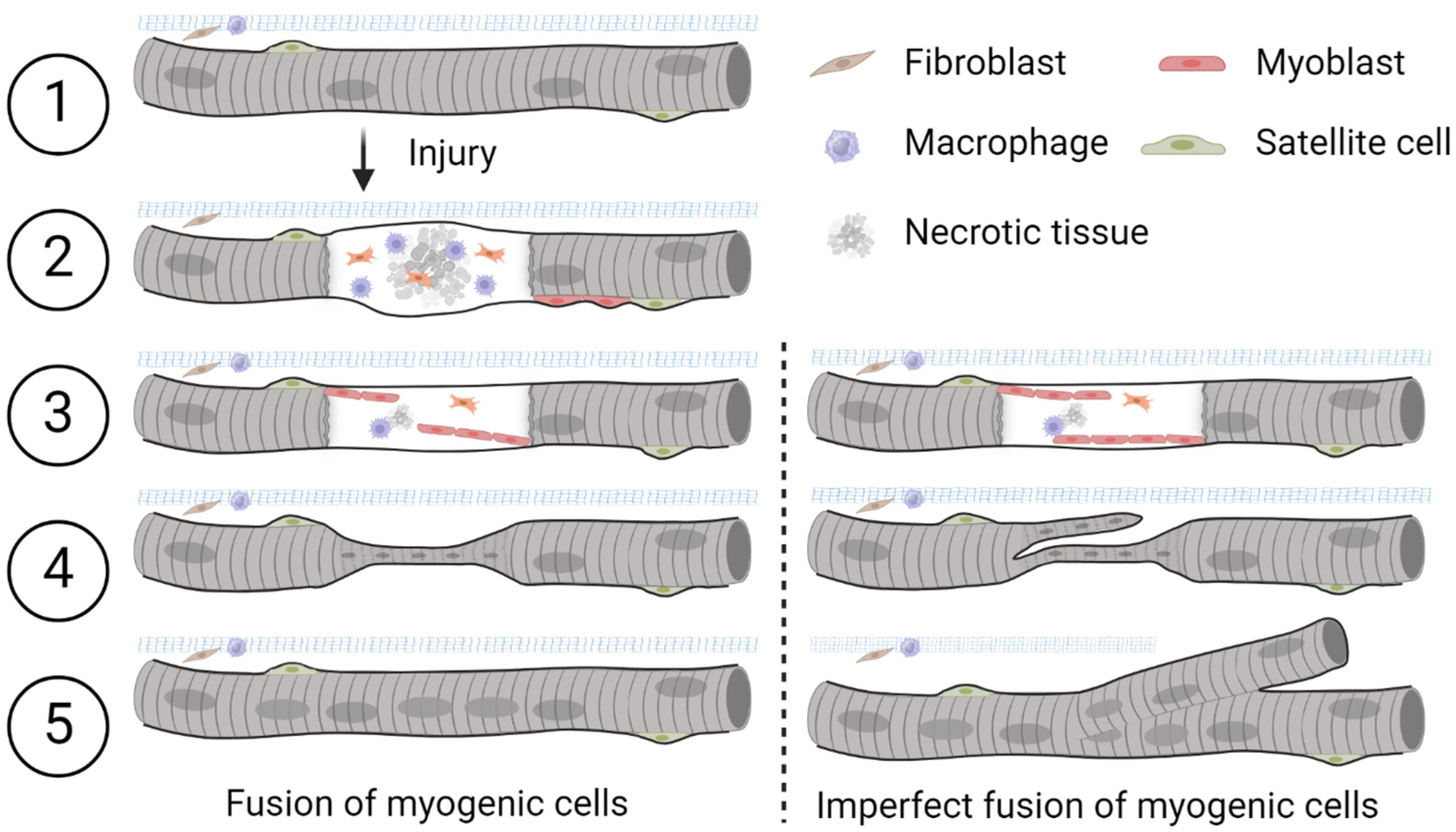
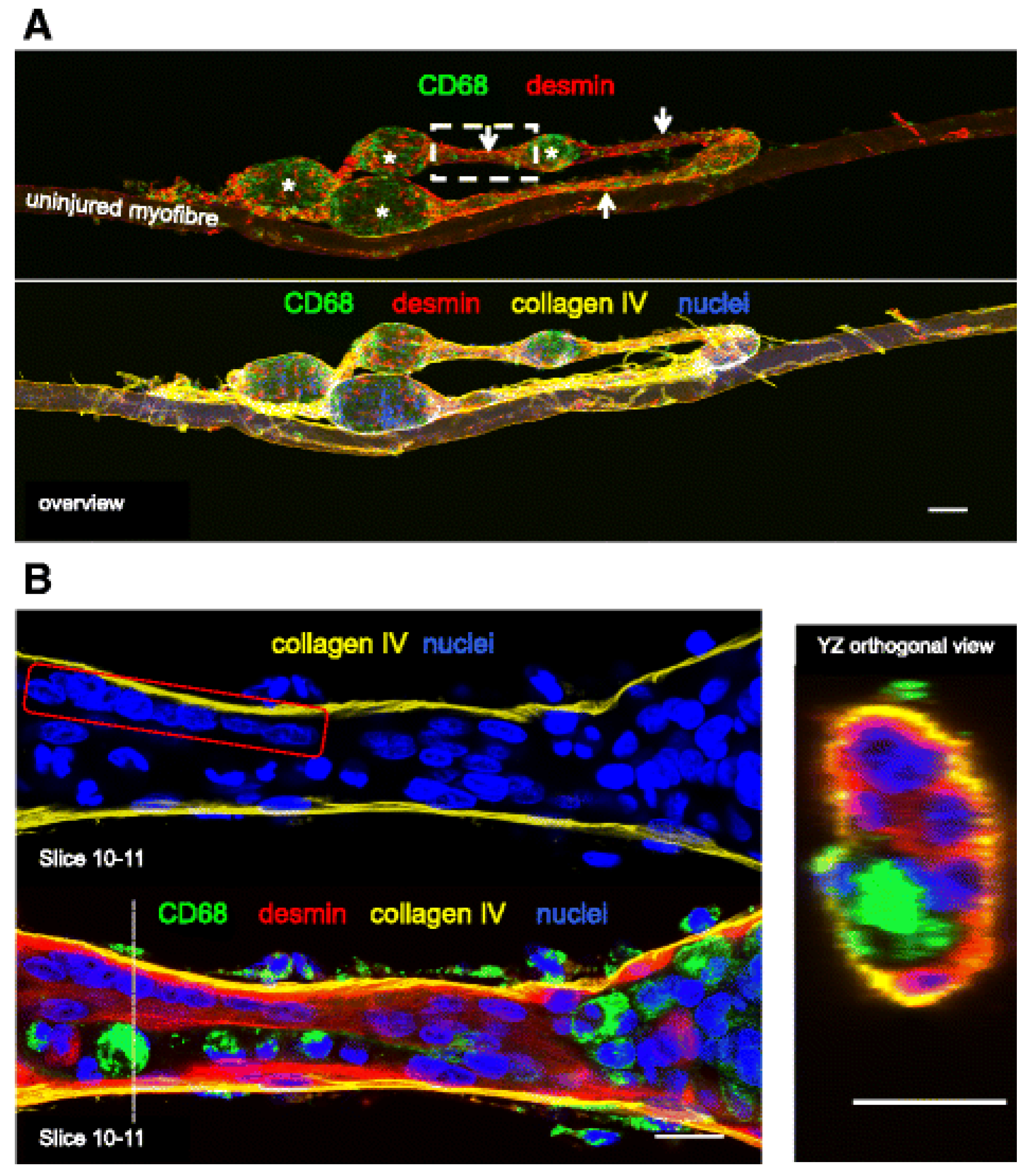
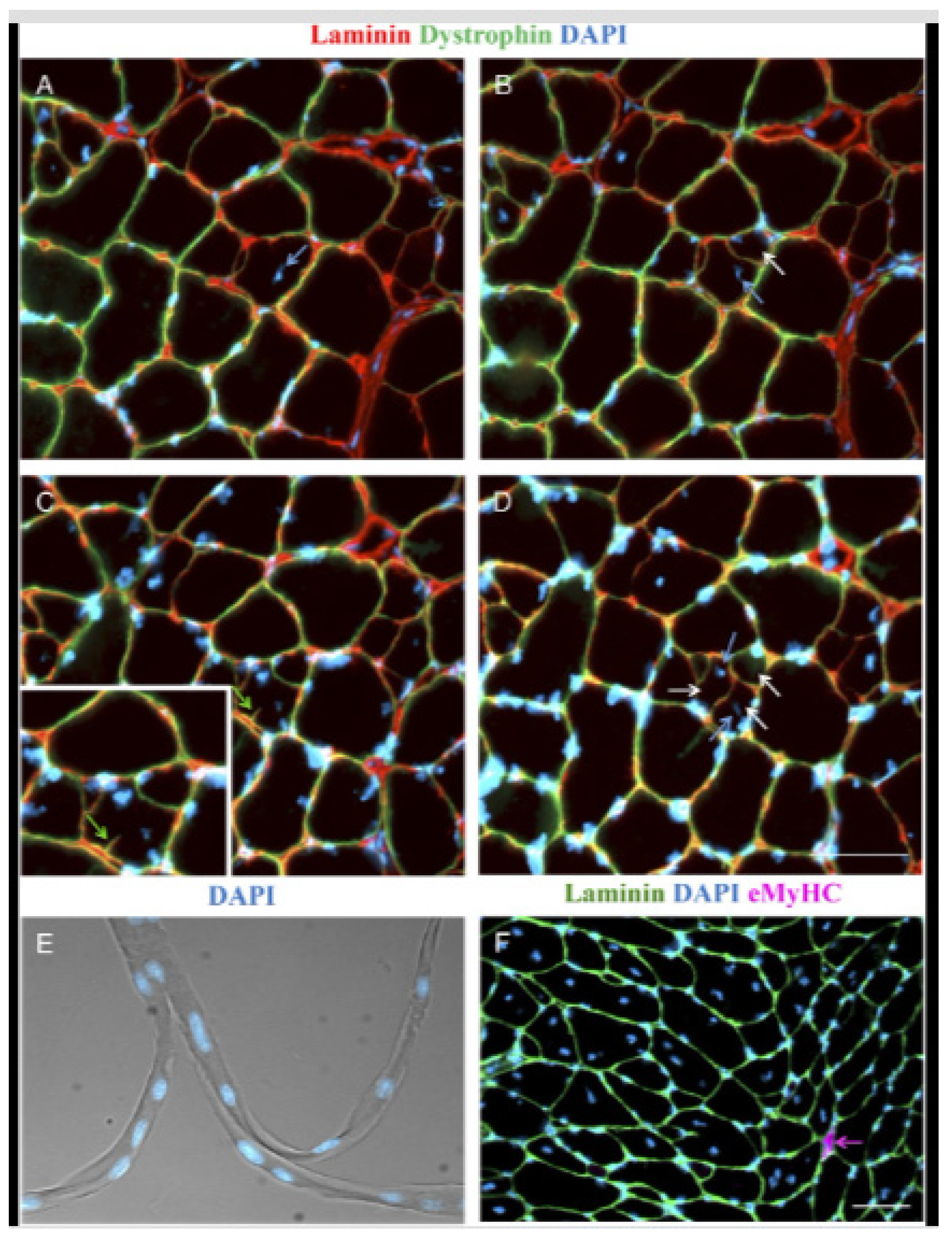
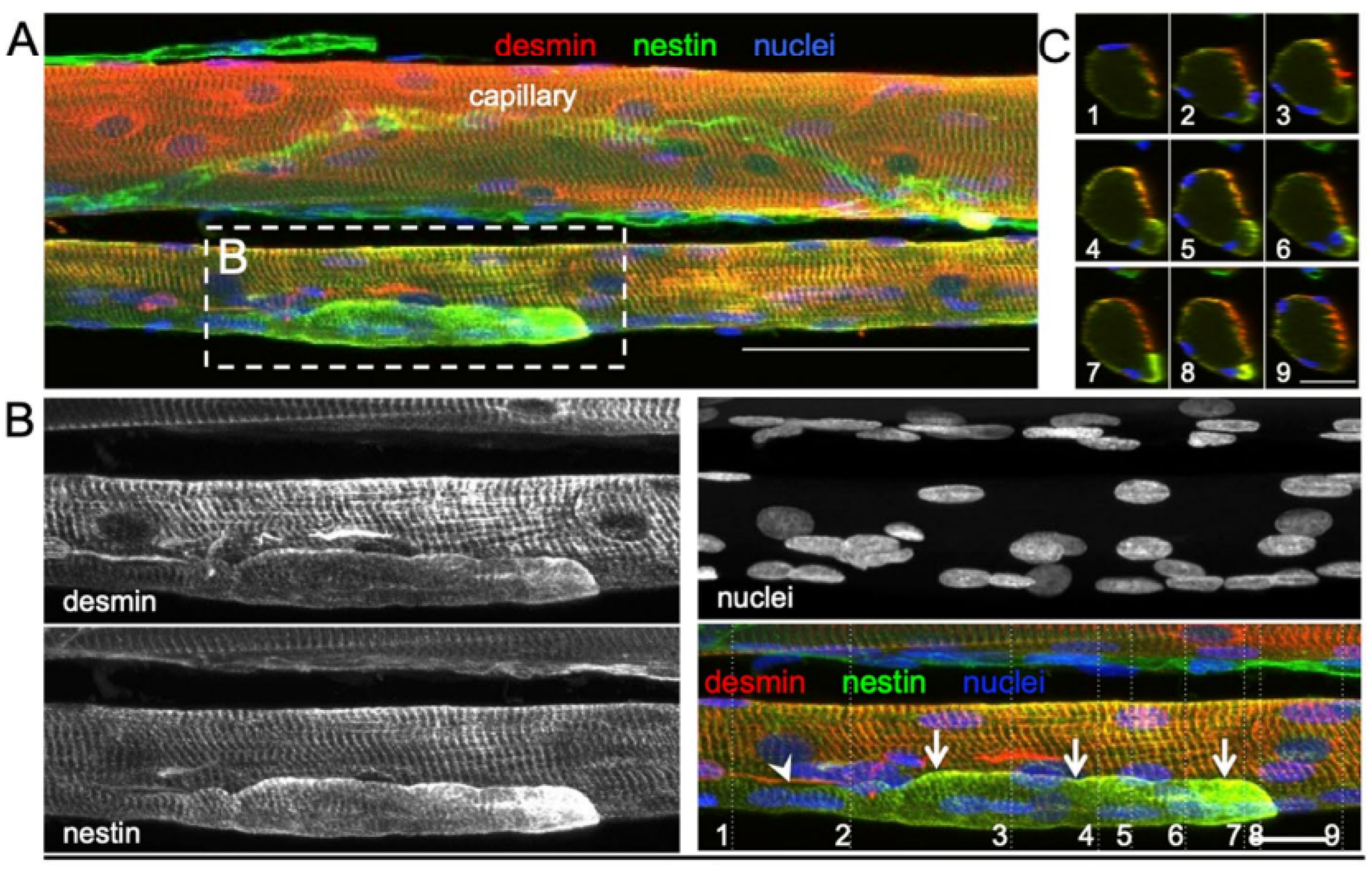
Fiber Regeneration in Response to Injury and the Imperfect Fusion of Myogenic Cells
2. Muscle Fiber Branching in Healthy Muscle
2.1. Response to Extreme Mechanical Loading
2.2. Distinctions and Misinterpretations in Hypertrophy and Hyperplasia
2.3. Synergistic Ablation and Electrical Stimulation-Induced Injury
2.4. Cardiotoxin- and Myotoxin-Induced Injury in Healthy Muscle
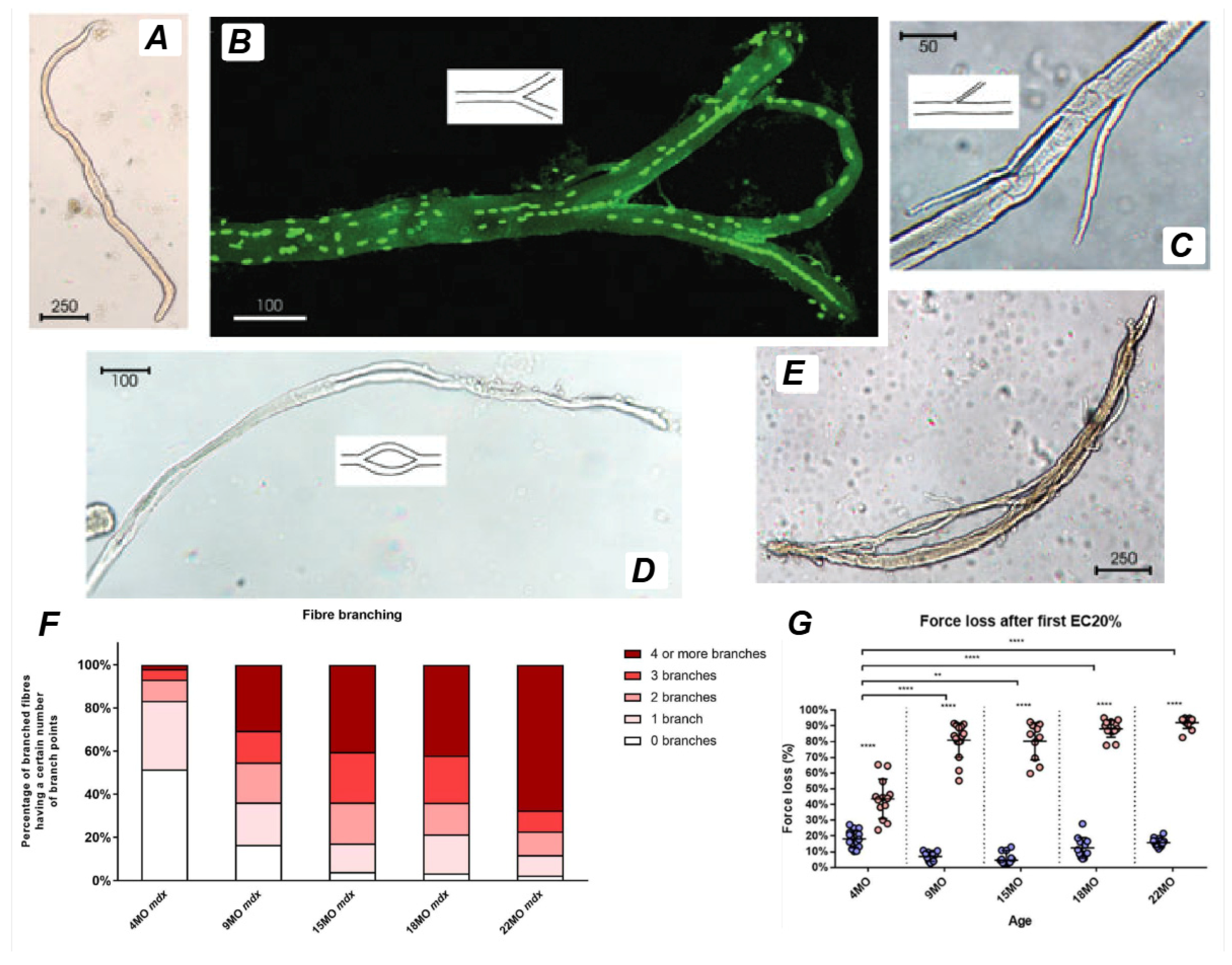
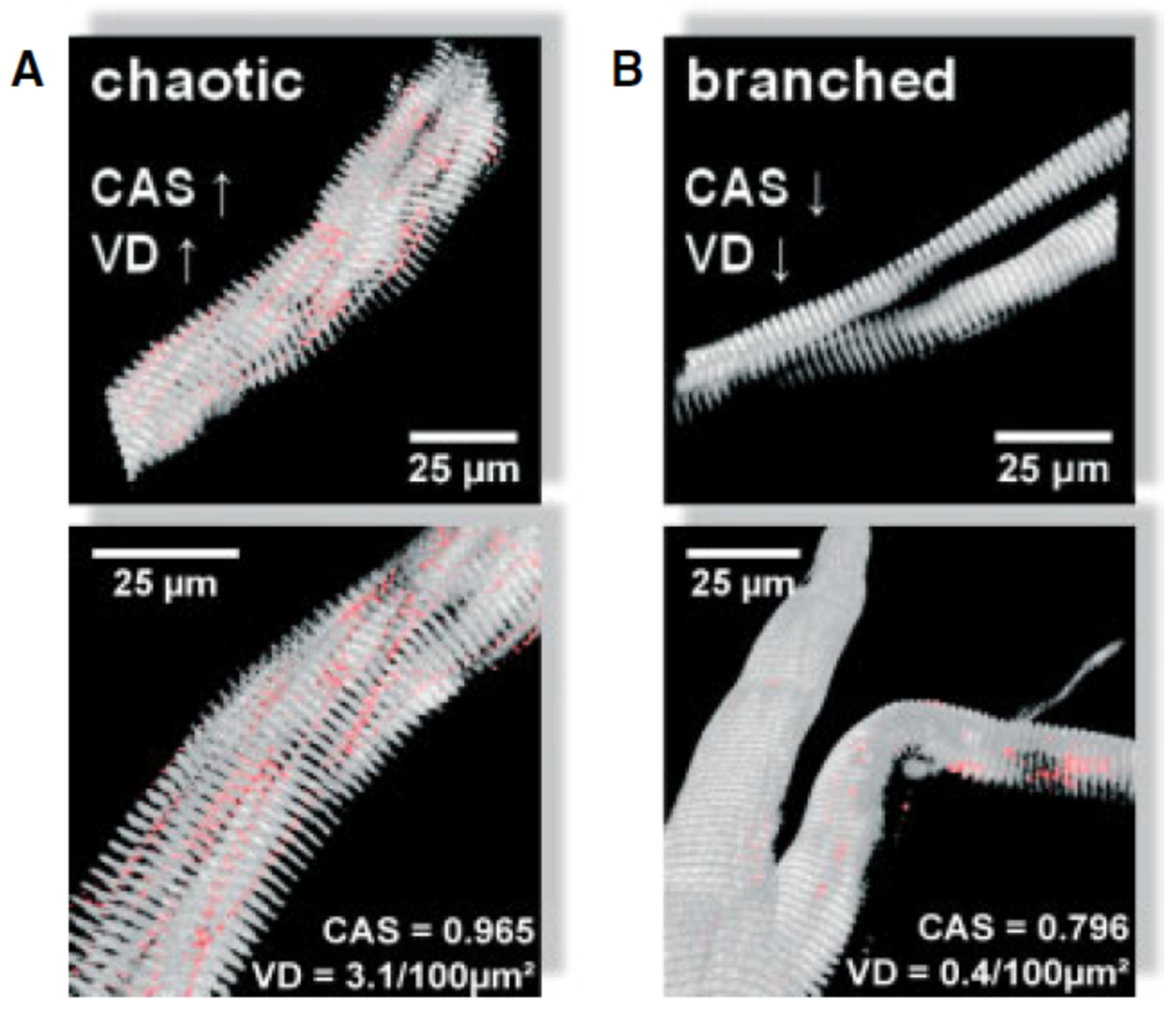
3. Muscle Fiber Branching in Duchenne Muscular Dystrophy

4. Consequences of Muscle Fiber Branching
4.1. Branched Fibers Are Shorter and Stiffer as a Compensatory Adaptation
4.2. Hypertrophy and Low Specific Force in Mdx Muscles
4.3. Does Fiber Branching Contribute to the Susceptibility of Dystrophic Muscles to Eccentric-Induced Damage?
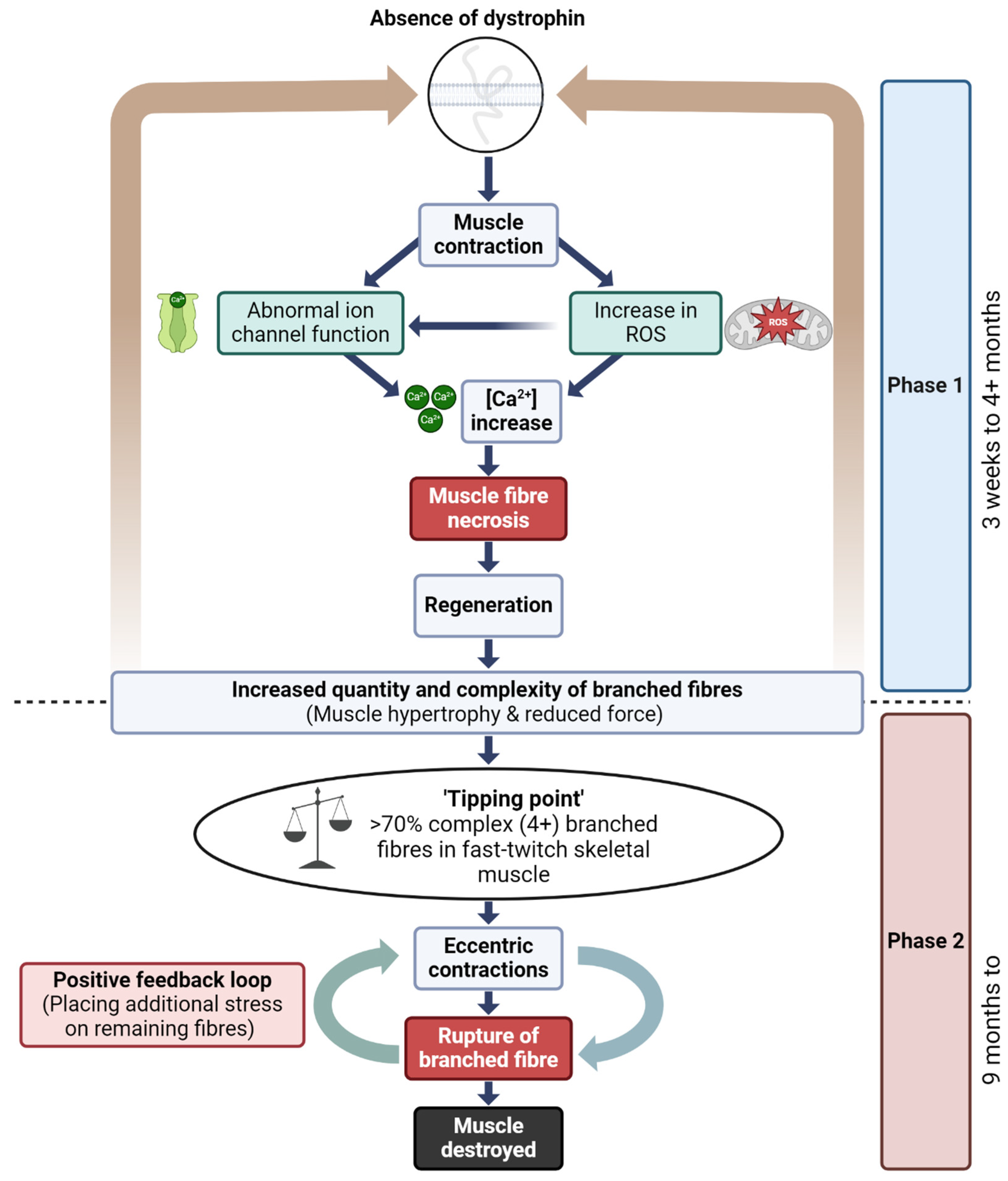
4.4. A Model to Link Fiber Branching and Progressive Dysfunction in Dystrophic Mice Muscle
4.5. Reversible and Irreversible Recovery of Force Post Eccentric Contraction
5. Future Directions—Targeting Fiber Branching as a Therapeutic Intervention
6. Conclusions and Perspectives
Author Contributions
Funding
Data Availability Statement
Conflicts of Interest
Abbreviations
| DMD | Duchenne Muscular Dystrophy |
| mdx | Dystrophin-deficient mouse |
| EDL | Extensor Digitorum Longus |
| SR | Sarcoplasmic Reticulum |
| ROS | Reactive oxygen species |
| NO | Nitric oxide |
| [Ca2+]in | Intracellular calcium concentration |
| CD68 | Cluster of differentiation 68 (macrophage marker) |
| eMyHC | Embryonic myosin heavy chain |
| SHG | Second harmonic generation microscopy |
| VD | Vernier density |
| CAS | Cosine angle sum |
| mOR23 | Murine olfactory receptor 23 |
| MRFs | Myogenic regulatory factors |
| IGFs | Insulin-like growth factors |
| PGC1a | Peroxisome proliferator-activated receptor gamma coactivator 1-alpha |
| EDG-5506 | Small molecule fast skeletal myosin inhibitor |
References
- Ciciliot, S.; Schiaffino, S. Regeneration of mammalian skeletal muscle. Basic mechanisms and clinical implications. Curr. Pharm. Des. 2010, 16, 906–914, Correction in Curr. Pharm. Des. 2015, 21, 4657. [Google Scholar] [CrossRef]
- Grounds, M.D. The need to more precisely define aspects of skeletal muscle regeneration. Int. J. Biochem. Cell Biol. 2014, 56, 56–65. [Google Scholar] [CrossRef]
- Ontell, M.; Hughes, D.; Bourke, D. Secondary myogenesis of normal muscle produces abnormal myotubes. Anat. Rec. 1982, 204, 199–207. [Google Scholar] [CrossRef]
- Pichavant, C.; Pavlath, G.K. Incidence and severity of myofiber branching with regeneration and aging. Skelet. Muscle 2014, 4, 9. [Google Scholar] [CrossRef]
- Chan, S.; Head, S.I. The role of branched fibres in the pathogenesis of Duchenne muscular dystrophy. Exp. Physiol. 2011, 96, 564–571. [Google Scholar] [CrossRef]
- Schmalbruch, H. Regenerated muscle fibers in Duchenne muscular dystrophy: A serial section study. Neurology 1984, 34, 60–65. [Google Scholar] [CrossRef]
- Dueweke, J.J.; Awan, T.M.; Mendias, C.L. Regeneration of Skeletal Muscle After Eccentric Injury. J. Sport Rehab. 2017, 26, 171–179. [Google Scholar] [CrossRef]
- Murach, K.A.; White, S.H.; Wen, Y.; Ho, A.; Dupont-Versteegden, E.E.; McCarthy, J.J.; Peterson, C.A. Differential requirement for satellite cells during overload-induced muscle hypertrophy in growing versus mature mice. Skelet. Muscle 2017, 7, 14. [Google Scholar] [CrossRef]
- Martin, R.A.; Buckley, K.H.; Mankowski, D.C.; Riley, B.M.; Sidwell, A.N.; Douglas, S.L.; Worth, R.G.; Pizza, F.X. Myogenic Cell Expression of Intercellular Adhesion Molecule-1 Contributes to Muscle Regeneration after Injury. Am. J. Pathol. 2020, 190, 2039–2055, Correction in Am. J. Pathol. 2021, 191, 415. [Google Scholar] [CrossRef]
- Bell, C.D.; Conen, P.E. Histopathological changes in Duchenne muscular dystrophy. J. Neurol. Sci. 1968, 7, 529–544. [Google Scholar] [CrossRef]
- Ontell, M.; Feng, K.C. The three-dimensional cytoarchitecture and pattern of motor innervation of branched striated myotubes. Anat. Rec. 1981, 200, 11–31. [Google Scholar] [CrossRef]
- Head, S.I. A Two Stage Model of Skeletal Muscle Necrosis in Muscular Dystrophy—The Role of Fiber Branching in the Terminal Stage. In Muscular Dystrophy; Hegde, M., Ed.; IntechOpen: London, UK, 2012; pp. 475–498. [Google Scholar]
- Schmalbruch, H. The morphology of regeneration of skeletal muscles in the rat. Tissue Cell 1976, 8, 673–692. [Google Scholar] [CrossRef]
- Mackey, A.L.; Kjaer, M. The breaking and making of healthy adult human skeletal muscle in vivo. Skelet. Muscle 2017, 7, 24. [Google Scholar] [CrossRef]
- Kiriaev, L.; Baumann, C.W.; Lindsay, A. Eccentric contraction-induced strength loss in dystrophin-deficient muscle: Preparations, protocols, and mechanisms. J. Gen. Physiol. 2023, 155, e202213208. [Google Scholar] [CrossRef]
- Gutiérrez, J.M.; Núñez, J.; Díaz, C.; Cintra, A.C.; Homsi-Brandeburgo, M.I.; Giglio, J.R. Skeletal muscle degeneration and regeneration after injection of bothropstoxin-II, a phospholipase A2 isolated from the venom of the snake Bothrops jararacussu. Exp. Mol. Pathol. 1991, 55, 217–229. [Google Scholar] [CrossRef]
- Sadeh, M.; Czyewski, K.; Stern, L.Z. Chronic myopathy induced by repeated bupivacaine injections. J. Neurol. Sci. 1985, 67, 229–238. [Google Scholar] [CrossRef] [PubMed]
- Eriksson, A.; Lindström, M.; Carlsson, L.; Thornell, L.-E. Hypertrophic muscle fibers with fissures in power-lifters; fiber splitting or defect regeneration? Histochem. Cell Biol. 2006, 126, 409–417. [Google Scholar] [CrossRef] [PubMed]
- Hall-Craggs, E.C.B. The significance of longitudinal fibre division in skeletal muscle. J. Neurol. Sci. 1972, 15, 27–33. [Google Scholar] [CrossRef] [PubMed]
- Swash, M.; Schwartz, M.S. Implications of longitudinal muscle fibre splitting in neurogenic and myopathic disorders. J. Neurol. Neurosurg. Psychiatry 1977, 40, 1152–1159. [Google Scholar] [CrossRef]
- Head, S.I.; Williams, D.A.; Stephenson, D.G. Abnormalities in structure and function of limb skeletal muscle fibres of dystrophic mdx mice. Proc. Biol. Sci. 1992, 248, 163–169. [Google Scholar] [CrossRef]
- Blaivas, M.; Carlson, B.M. Muscle fiber branching—Difference between grafts in old and young rats. Mech. Ageing Dev. 1991, 60, 43–53. [Google Scholar] [CrossRef] [PubMed]
- Bourke, D.L.; Ontell, M. Modification of the phenotypic expression of murine dystrophy: A morphological study. Anat. Rec. 1986, 214, 17–24. [Google Scholar] [CrossRef]
- Tamaki, T.; Akatsuka, A.; Uchiyama, S.; Uchiyama, Y.; Shiraishi, T. Appearance of complex branched muscle fibers is associated with a shift to slow muscle characteristics. Acta Anat. 1997, 159, 108–113. [Google Scholar] [CrossRef] [PubMed]
- Zádor, E.; Mendler, L.; Takács, V.; de Bleecker, J.; Wuytack, F. Regenerating soleus and extensor digitorum longus muscles of the rat show elevated levels of TNF-alpha and its receptors, TNFR-60 and TNFR-80. Muscle Nerve 2001, 24, 1058–1067. [Google Scholar] [CrossRef]
- Murach, K.A.; Dungan, C.M.; Peterson, C.A.; McCarthy, J.J. Muscle Fiber Splitting Is a Physiological Response to Extreme Loading in Animals. Exerc. Sport Sci. Rev. 2019, 47, 108–115. [Google Scholar] [CrossRef]
- Antonio, J.; Gonyea, W.J. Progressive stretch overload of skeletal muscle results in hypertrophy before hyperplasia. J. Appl. Physiol. 1993, 75, 1263–1271. [Google Scholar] [CrossRef]
- Antonio, J.; Gonyea, W.J. Muscle fiber splitting in stretch-enlarged avian muscle. Med. Sci. Sports Exerc. 1994, 26, 973–977. [Google Scholar] [CrossRef] [PubMed]
- Ho, K.W.; Roy, R.R.; Tweedle, C.D.; Heusner, W.W.; Van Huss, W.D.; Carrow, R.E. Skeletal muscle fiber splitting with weight-lifting exercise in rats. Am. J. Anat. 1980, 157, 433–440. [Google Scholar] [CrossRef]
- Tamaki, T.; Uchiyama, S.; Nakano, S. A weight-lifting exercise model for inducing hypertrophy in the hindlimb muscles of rats. Med. Sci. Sports Exerc. 1992, 24, 881–886. [Google Scholar] [CrossRef]
- Gonyea, W.; Ericson, G.C.; Bonde-Petersen, F. Skeletal muscle fiber splitting induced by weight-lifting exercise in cats. Acta Physiol. Scand. 1977, 99, 105–109. [Google Scholar] [CrossRef]
- Gonyea, W.J.; Sale, D.G.; Gonyea, F.B.; Mikesky, A. Exercise induced increases in muscle fiber number. Eur. J. Appl. Physiol. Occup. Physiol. 1986, 55, 137–141. [Google Scholar] [CrossRef]
- Faber, R.M.; Hall, J.K.; Chamberlain, J.S.; Banks, G.B. Myofiber branching rather than myofiber hyperplasia contributes to muscle hypertrophy in mdx mice. Skelet. Muscle 2014, 4, 10. [Google Scholar] [CrossRef]
- Partridge, T.A. Enhancing Interrogation of Skeletal Muscle Samples for Informative Quantitative Data. J. Neuromuscul. Dis. 2021, 8, S257–S269. [Google Scholar] [CrossRef]
- Goldberg, A. Work-induced growth of skeletal muscle in normal and hypophysectomized rats. Am. J. Physiol.-Leg. Content 1967, 213, 1193–1198. [Google Scholar] [CrossRef] [PubMed]
- Hall-Craggs, E.C. The longitudinal division of fibres in overloaded rat skeletal muscle. J. Anat. 1970, 107, 459–470. [Google Scholar]
- Kirby, T.J.; McCarthy, J.J.; Peterson, C.A.; Fry, C.S. Synergist Ablation as a Rodent Model to Study Satellite Cell Dynamics in Adult Skeletal Muscle. Methods Mol. Biol. 2016, 1460, 43–52. [Google Scholar] [CrossRef]
- Højfeldt, G.; Sorenson, T.; Gonzales, A.; Kjaer, M.; Andersen, J.L.; Mackey, A.L. Fusion of myofibre branches is a physiological feature of healthy human skeletal muscle regeneration. Skelet. Muscle 2023, 13, 13. [Google Scholar] [CrossRef] [PubMed]
- Harris, J.B. Myotoxic phospholipases A2 and the regeneration of skeletal muscles. Toxicon 2003, 42, 933–945. [Google Scholar] [CrossRef]
- Head, S.I.; Houweling, P.J.; Chan, S.; Chen, G.; Hardeman, E.C. Properties of regenerated mouse extensor digitorum longus muscle following notexin injury. Exp. Physiol. 2014, 99, 664–674. [Google Scholar] [CrossRef]
- Dixon, R.W.; Harris, J.B. Myotoxic activity of the toxic phospholipase, notexin, from the venom of the Australian tiger snake. J. Neuropathol. Exp. Neurol. 1996, 55, 1230–1237. [Google Scholar] [CrossRef] [PubMed]
- Griffin, C.A.; Kafadar, K.A.; Pavlath, G.K. MOR23 Promotes Muscle Regeneration and Regulates Cell Adhesion and Migration. Dev. Cell 2009, 17, 649–661. [Google Scholar] [CrossRef]
- Plant, D.R.; Colarossi, F.E.; Lynch, G.S. Notexin causes greater myotoxic damage and slower functional repair in mouse skeletal muscles than bupivacaine. Muscle Nerve 2006, 34, 577–585. [Google Scholar] [CrossRef]
- Tamaki, T.; Akatsuka, A. Appearance of complex branched fibers following repetitive muscle trauma in normal rat skeletal muscle. Anat. Rec. 1994, 240, 217–224. [Google Scholar] [CrossRef]
- Buttgereit, A.; Weber, C.; Garbe, C.S.; Friedrich, O. From chaos to split-ups-SHG microscopy reveals a specific remodelling mechanism in ageing dystrophic muscle. J. Pathol. 2013, 229, 477–485. [Google Scholar] [CrossRef]
- Cooper, S.T.; Head, S.I. Membrane Injury and Repair in the Muscular Dystrophies. Neuroscientist 2014, 21, 653–668. [Google Scholar] [CrossRef] [PubMed]
- Chan, S.; Head, S.I.; Morley, J.W. Branched fibers in dystrophic mdx muscle are associated with a loss of force following lengthening contractions. Am. J. Physiol. Cell Physiol. 2007, 293, C985–C992. [Google Scholar] [CrossRef] [PubMed]
- Duddy, W.; Duguez, S.; Johnston, H.; Cohen, T.V.; Phadke, A.; Gordish-Dressman, H.; Nagaraju, K.; Gnocchi, V.; Low, S.; Partridge, T. Muscular dystrophy in the mdx mouse is a severe myopathy compounded by hypotrophy, hypertrophy and hyperplasia. Skelet. Muscle 2015, 5, 16. [Google Scholar] [CrossRef]
- Lovering, R.M.; Michaelson, L.; Ward, C.W. Malformed mdx myofibers have normal cytoskeletal architecture yet altered EC coupling and stress-induced Ca2+ signaling. Am. J. Physiol. Cell Physiol. 2009, 297, C571–C580. [Google Scholar] [CrossRef]
- Tamaki, T.; Sekine, T.; Akatsuka, A.; Uchiyama, S.; Nakano, S. Three-dimensional cytoarchitecture of complex branched fibers in soleus muscle from mdx mutant mice. Anat. Rec. 1993, 237, 338–344. [Google Scholar] [CrossRef] [PubMed]
- Henry, C.C.; Martin, K.S.; Ward, B.B.; Handsfield, G.G.; Peirce, S.M.; Blemker, S.S. Spatial and age-related changes in the microstructure of dystrophic and healthy diaphragms. PLoS ONE 2017, 12, e0183853. [Google Scholar] [CrossRef]
- Järvinen, T.A.; Järvinen, T.L.; Kääriäinen, M.; Kalimo, H.; Järvinen, M. Muscle injuries: Biology and treatment. Am. J. Sports Med. 2005, 33, 745–764. [Google Scholar] [CrossRef] [PubMed]
- Papadimitriou, J.M.; Robertson, T.A.; Mitchell, C.A.; Grounds, M.D. The process of new plasmalemma formation in focally injured skeletal muscle fibers. J. Struct. Biol. 1990, 103, 124–134. [Google Scholar] [CrossRef]
- Kiriaev, L.; Kueh, S.; Morley, J.W.; North, K.N.; Houweling, P.J.; Head, S.I. Lifespan Analysis of Dystrophic mdx Fast-Twitch Muscle Morphology and Its Impact on Contractile Function. Front. Physiol. 2021, 12, 771499. [Google Scholar] [CrossRef]
- Carlson, C.G. Does the Pathogenic Sequence of Skeletal Muscle Degeneration in Duchenne Muscular Dystrophy Begin and End with Unrestrained Satellite Cell Activation? Muscles 2022, 1, 75–81. [Google Scholar] [CrossRef]
- Allen, D.G.; Whitehead, N.P.; Froehner, S.C. Absence of Dystrophin Disrupts Skeletal Muscle Signaling: Roles of Ca2+, Reactive Oxygen Species, and Nitric Oxide in the Development of Muscular Dystrophy. Physiol. Rev. 2016, 96, 253–305. [Google Scholar] [CrossRef]
- Siegel, A.S.; Henley, S.; Zimmerman, A.; Miles, M.; Plummer, R.; Kurz, J.; Balch, F.; Rhodes, J.A.; Shinn, G.L.; Carlson, C.G. The influence of passive stretch and NF-κB inhibitors on the morphology of dystrophic muscle fibers. Anat. Rec. 2011, 294, 132–144. [Google Scholar] [CrossRef] [PubMed][Green Version]
- Nielsen, C.; Potter, R.M.; Borowy, C.; Jacinto, K.; Kumar, R.; Carlson, C.G. Postnatal Hyperplasic Effects of ActRIIB Blockade in a Severely Dystrophic Muscle. J. Cell. Physiol. 2017, 232, 1774–1793. [Google Scholar] [CrossRef] [PubMed]
- Bockhold, K.J.; David Rosenblatt, J.; Partridge, T.A. Aging normal and dystrophic mouse muscle: Analysis of myogenicity in cultures of living single fibers. Muscle Nerve 1998, 21, 173–183. [Google Scholar] [CrossRef]
- Kiriaev, L.; Kueh, S.; Morley, J.W.; North, K.N.; Houweling, P.J.; Head, S.I. Branched fibers from old fast-twitch dystrophic muscles are the sites of terminal damage in muscular dystrophy. Am. J. Physiol. Cell Physiol. 2018, 314, C662–C674. [Google Scholar] [CrossRef]
- Pavlath, G.K. A new function for odorant receptors. Cell Adh. Migr. 2010, 4, 502–506. [Google Scholar] [CrossRef][Green Version]
- Patel, T.J.; Lieber, R.L. Force transmission in skeletal muscle: From actomyosin to external tendons. Exerc. Sport Sci. Rev. 1997, 25, 321–363. [Google Scholar] [CrossRef]
- Loeb, G.E.; Pratt, C.A.; Chanaud, C.M.; Richmond, F.J.R. Distribution and innervation of short, interdigitated muscle fibers in parallel-fibered muscles of the cat hindlimb. J. Morphol. 1987, 191, 1–15. [Google Scholar] [CrossRef]
- Ounjian, M.; Roy, R.R.; Eldred, E.; Garfinkel, A.; Payne, J.R.; Armstrong, A.; Toga, A.W.; Edgerton, V.R. Physiological and developmental implications of motor unit anatomy. J. Neurobiol. 1991, 22, 547–559. [Google Scholar] [CrossRef]
- Lynch, G.S.; Hinkle, R.T.; Chamberlain, J.S.; Brooks, S.V.; Faulkner, J.A. Force and power output of fast and slow skeletal muscles from mdx mice 6-28 months old. J. Physiol. 2001, 535, 591–600. [Google Scholar] [CrossRef]
- Massopust, R.T.; Lee, Y.I.; Pritchard, A.L.; Nguyen, V.M.; McCreedy, D.A.; Thompson, W.J. Lifetime analysis of mdx skeletal muscle reveals a progressive pathology that leads to myofiber loss. Sci. Rep. 2020, 10, 17248. [Google Scholar] [CrossRef]
- Young, M.; Paul, A.; Rodda, J.; Duxson, M.; Sheard, P. Examination of intrafascicular muscle fiber terminations: Implications for tension delivery in series-fibered muscles. J. Morphol. 2000, 245, 130–145. [Google Scholar] [CrossRef] [PubMed]
- Karpati, G.; Carpenter, S.; Prescott, S. Small-caliber skeletal muscle fibers do not suffer necrosis in mdx mouse dystrophy. Muscle Nerve 1988, 11, 795–803. [Google Scholar] [CrossRef]
- Petrof, B.J.; Shrager, J.B.; Stedman, H.H.; Kelly, A.M.; Sweeney, H.L. Dystrophin protects the sarcolemma from stresses developed during muscle contraction. Proc. Natl. Acad. Sci. USA 1993, 90, 3710–3714. [Google Scholar] [CrossRef]
- Petrof, B.J. Molecular pathophysiology of myofiber injury in deficiencies of the dystrophin-glycoprotein complex. Am. J. Phys. Med. Rehabil. 2002, 81, S162–S174. [Google Scholar] [CrossRef] [PubMed]
- Lindsay, A.; Baumann, C.W.; Rebbeck, R.T.; Yuen, S.L.; Southern, W.M.; Hodges, J.S.; Cornea, R.L.; Thomas, D.D.; Ervasti, J.M.; Lowe, D.A. Mechanical factors tune the sensitivity of mdx muscle to eccentric strength loss and its protection by antioxidant and calcium modulators. Skelet. Muscle 2020, 10, 3. [Google Scholar] [CrossRef] [PubMed]
- Brooks, S.V.; Zerba, E.; Faulkner, J.A. Injury to muscle fibres after single stretches of passive and maximally stimulated muscles in mice. J. Physiol. 1995, 488, 459–469. [Google Scholar] [CrossRef]
- Coulton, G.R.; Curtin, N.A.; Morgan, J.E.; Partridge, T.A. The mdx mouse skeletal muscle myopathy: II. contractile properties. Neuropathol. Appl. Neurobiol. 1988, 14, 299–314. [Google Scholar] [CrossRef]
- Dellorusso, C.; Crawford, R.W.; Chamberlain, J.S.; Brooks, S.V. Tibialis anterior muscles in mdx mice are highly susceptible to contraction-induced injury. J. Muscle Res. Cell Motil. 2001, 22, 467–475. [Google Scholar] [CrossRef]
- Froehner, S.C.; Reed, S.M.; Anderson, K.N.; Huang, P.L.; Percival, J.M. Loss of nNOS inhibits compensatory muscle hypertrophy and exacerbates inflammation and eccentric contraction-induced damage in mdx mice. Hum. Mol. Genet. 2014, 24, 492–505. [Google Scholar] [CrossRef] [PubMed]
- Hakim, C.H.; Duan, D. Gender differences in contractile and passive properties of mdx extensor digitorum longus muscle. Muscle Nerve 2012, 45, 250–256. [Google Scholar] [CrossRef] [PubMed]
- Hakim, C.H.; Grange, R.W.; Duan, D. The passive mechanical properties of the extensor digitorum longus muscle are compromised in 2- to 20-mo-old mdx mice. J. Appl. Physiol. (1985) 2011, 110, 1656–1663. [Google Scholar] [CrossRef] [PubMed]
- Pastoret, C.; Sebille, A. Time course study of the isometric contractile properties of mdx mouse striated muscles. J. Muscle Res. Cell Motil. 1993, 14, 423–431. [Google Scholar] [CrossRef]
- Pastoret, C.; Sebille, A. Mdx mice show progressive weakness and muscle deterioration with age. J. Neurol. Sci. 1995, 129, 97–105. [Google Scholar] [CrossRef]
- Quinlan, J.G.; Johnson, S.R.; McKee, M.K.; Lyden, S.P. Twitch and tetanus in mdx mouse muscle. Muscle Nerve 1992, 15, 837–842. [Google Scholar] [CrossRef]
- Wernig, A.; Irintchev, A.; Weisshaupt, P. Muscle injury, cross-sectional area and fibre type distribution in mouse soleus after intermittent wheel-running. J. Physiol. 1990, 428, 639–652. [Google Scholar] [CrossRef]
- Brooks, S.V. Rapid recovery following contraction-induced injury to in situ skeletal muscles in mdx mice. J. Muscle Res. Cell Motil. 1998, 19, 179–187. [Google Scholar] [CrossRef] [PubMed]
- Faulkner, J.A.; Brooks, S.V.; Dennis, R.G.; Lynch, G.S. The functional status of dystrophic muscles and functional recovery by skeletal muscles following myoblast transfer. BAM-PADOVA- 1997, 7, 257–264. [Google Scholar]
- Han, R.; Rader, E.P.; Levy, J.R.; Bansal, D.; Campbell, K.P. Dystrophin deficiency exacerbates skeletal muscle pathology in dysferlin-null mice. Skelet. Muscle 2011, 1, 35. [Google Scholar] [CrossRef]
- Lindsay, A.; Schmiechen, A.; Chamberlain, C.M.; Ervasti, J.M.; Lowe, D.A. Neopterin/7,8-dihydroneopterin is elevated in Duchenne muscular dystrophy patients and protects mdx skeletal muscle function. Exp. Physiol. 2018, 103, 995–1009. [Google Scholar] [CrossRef] [PubMed]
- Williams, D.A.; Head, S.I.; Lynch, G.S.; Stephenson, D.G. Contractile properties of skinned muscle fibres from young and adult normal and dystrophic (mdx) mice. J. Physiol. 1993, 460, 51–67. [Google Scholar] [CrossRef]
- Friedrich, O.; Both, M.; Weber, C.; Schurmann, S.; Teichmann, M.D.; von Wegner, F.; Fink, R.H.; Vogel, M.; Chamberlain, J.S.; Garbe, C. Microarchitecture is severely compromised but motor protein function is preserved in dystrophic mdx skeletal muscle. Biophys. J. 2010, 98, 606–616. [Google Scholar] [CrossRef][Green Version]
- Head, S.I. Branched fibres in old dystrophic mdx muscle are associated with mechanical weakening of the sarcolemma, abnormal Ca2+ transients and a breakdown of Ca2+ homeostasis during fatigue. Exp. Physiol. 2010, 95, 641–656. [Google Scholar] [CrossRef]
- Brown, L.M.; Lopez, J.R.; Olsen, J.A.; Rüdel, R.; Simmons, R.M.; Taylor, S.R.; Wanek, L.A. Branched skeletal muscle fibers not associated with dysfunction. Muscle Nerve 1982, 5, 645–653. [Google Scholar] [CrossRef]
- Goldstein, S.S.; Rall, W. Changes of action potential shape and velocity for changing core conductor geometry. Biophys. J. 1974, 14, 731–757. [Google Scholar] [CrossRef]
- Joyner, R.W.; Westerfield, M.; Moore, J.W. Effects of cellular geometry on current flow during a propagated action potential. Biophys. J. 1980, 31, 183–194. [Google Scholar] [CrossRef]
- Iyer, S.R.; Shah, S.B.; Valencia, A.P.; Schneider, M.F.; Hernandez-Ochoa, E.O.; Stains, J.P.; Blemker, S.S.; Lovering, R.M. Altered nuclear dynamics in MDX myofibers. J. Appl. Physiol. (1985) 2017, 122, 470–481. [Google Scholar] [CrossRef] [PubMed]
- Goodall, M.H.; Ward, C.W.; Pratt, S.J.P.; Bloch, R.J.; Lovering, R.M. Structural and functional evaluation of branched myofibers lacking intermediate filaments. Am. J. physiology. Cell Physiol. 2012, 303, C224–C232. [Google Scholar] [CrossRef] [PubMed]
- Hernández-Ochoa, E.O.; Pratt, S.J.P.; Garcia-Pelagio, K.P.; Schneider, M.F.; Lovering, R.M. Disruption of action potential and calcium signaling properties in malformed myofibers from dystrophin-deficient mice. Physiol. Rep. 2015, 3, e12366. [Google Scholar] [CrossRef]
- Lieber, R. Skeletal Muscle Structure, Function, and Plasticity; Lippincott Williams & Wilkins: Philadelphia, PA, USA, 2011; pp. 1–304. [Google Scholar]
- Lieber, R.L.; Woodburn, T.M.; Friden, J. Muscle damage induced by eccentric contractions of 25% strain. J. Appl. Physiol. 1991, 70, 2498–2507. [Google Scholar] [CrossRef]
- Morgan, J.; Partridge, T. Skeletal muscle in health and disease. Dis. Model. Mech. 2020, 13, dmm042192. [Google Scholar] [CrossRef]
- Zhang, B.-T.; Whitehead, N.P.; Gervasio, O.L.; Reardon, T.F.; Vale, M.; Fatkin, D.; Dietrich, A.; Yeung, E.W.; Allen, D.G. Pathways of Ca2+ entry and cytoskeletal damage following eccentric contractions in mouse skeletal muscle. J. Appl. Physiol. 2012, 112, 2077–2086. [Google Scholar] [CrossRef] [PubMed]
- Janghra, N.; Morgan, J.E.; Sewry, C.A.; Wilson, F.X.; Davies, K.E.; Muntoni, F.; Tinsley, J. Correlation of Utrophin Levels with the Dystrophin Protein Complex and Muscle Fibre Regeneration in Duchenne and Becker Muscular Dystrophy Muscle Biopsies. PLoS ONE 2016, 11, e0150818. [Google Scholar] [CrossRef]
- Evans, W.J.; Hellerstein, M.; Butterfield, R.J.; Smith, E.; Guglieri, M.; Katz, N.; Nave, B.; Branigan, L.; Thera, S.; Vordos, K.L.; et al. Reductions in functional muscle mass and ability to ambulate in Duchenne muscular dystrophy from ages 4 to 24 years. J. Physiol. 2024, 602, 4929–4939. [Google Scholar] [CrossRef]
- Stedman, H.H.; Sweeney, H.L.; Shrager, J.B.; Maguire, H.C.; Panettieri, R.A.; Petrof, B.; Narusawa, M.; Leferovich, J.M.; Sladky, J.T.; Kelly, A.M. The mdx mouse diaphragm reproduces the degenerative changes of Duchenne muscular dystrophy. Nature 1991, 352, 536–539. [Google Scholar] [CrossRef]
- Yeung, E.W.; Head, S.I.; Allen, D.G. Gadolinium reduces short-term stretch-induced muscle damage in isolated mdx mouse muscle fibres. J. Physiol. 2003, 552, 449–458. [Google Scholar] [CrossRef]
- Yeung, E.W.; Whitehead, N.P.; Suchyna, T.M.; Gottlieb, P.A.; Sachs, F.; Allen, D.G. Effects of stretch-activated channel blockers on [Ca2+]i and muscle damage in the mdx mouse. J. Physiol. 2005, 562, 367–380. [Google Scholar] [CrossRef]
- Khairallah, R.J.; Shi, G.; Sbrana, F.; Prosser, B.L.; Borroto, C.; Mazaitis, M.J.; Hoffman, E.P.; Mahurkar, A.; Sachs, F.; Sun, Y.; et al. Microtubules Underlie Dysfunction in Duchenne Muscular Dystrophy. Sci. Signal. 2012, 5, ra56. [Google Scholar] [CrossRef] [PubMed]
- Olthoff, J.T.; Lindsay, A.; Abo-Zahrah, R.; Baltgalvis, K.A.; Patrinostro, X.; Belanto, J.J.; Yu, D.Y.; Perrin, B.J.; Garry, D.J.; Rodney, G.G.; et al. Loss of peroxiredoxin-2 exacerbates eccentric contraction-induced force loss in dystrophin-deficient muscle. Nat. Commun. 2018, 9, 5104. [Google Scholar] [CrossRef]
- Call, J.A.; Warren, G.L.; Verma, M.; Lowe, D.A. Acute failure of action potential conduction in mdx muscle reveals new mechanism of contraction-induced force loss. J. Physiol. 2013, 591, 3765–3776. [Google Scholar] [CrossRef] [PubMed]
- Roy, P.; Rau, F.; Ochala, J.; Messéant, J.; Fraysse, B.; Lainé, J.; Agbulut, O.; Butler-Browne, G.; Furling, D.; Ferry, A. Dystrophin restoration therapy improves both the reduced excitability and the force drop induced by lengthening contractions in dystrophic mdx skeletal muscle. Skelet. Muscle 2016, 6, 23. [Google Scholar] [CrossRef]
- Capogrosso, R.F.; Mantuano, P.; Cozzoli, A.; Sanarica, F.; Massari, A.M.; Conte, E.; Fonzino, A.; Giustino, A.; Rolland, J.F.; Quaranta, A.; et al. Contractile efficiency of dystrophic mdx mouse muscle: In vivo and ex vivo assessment of adaptation to exercise of functional end points. J. Appl. Physiol. (1985) 2017, 122, 828–843. [Google Scholar] [CrossRef]
- Moens, P.; Baatsen, P.H.W.W.; Marechal, G. Increased susceptibility of EDL muscles from mdx mice to damage induced by contractions with stretch. J. Muscle Res. Cell Motil. 1993, 14, 446–451. [Google Scholar] [CrossRef]
- Pichavant, C.; Burkholder, T.J.; Pavlath, G.K. Decrease of myofiber branching via muscle-specific expression of the olfactory receptor mOR23 in dystrophic muscle leads to protection against mechanical stress. Skelet. Muscle 2015, 6, 2. [Google Scholar] [CrossRef]
- Zanou, N.; Gailly, P. Skeletal muscle hypertrophy and regeneration: Interplay between the myogenic regulatory factors (MRFs) and insulin-like growth factors (IGFs) pathways. Cell. Mol. Life Sci. 2013, 70, 4117–4130. [Google Scholar] [CrossRef]
- Di Filippo, E.S.; Mancinelli, R.; Marrone, M.; Doria, C.; Verratti, V.; Toniolo, L.; Dantas, J.L.; Fulle, S.; Pietrangelo, T. Neuromuscular electrical stimulation improves skeletal muscle regeneration through satellite cell fusion with myofibers in healthy elderly subjects. J. Appl. Physiol. (1985) 2017, 123, 501–512. [Google Scholar] [CrossRef] [PubMed]
- Selsby, J.T.; Morine, K.J.; Pendrak, K.; Barton, E.R.; Sweeney, H.L. Rescue of dystrophic skeletal muscle by PGC-1alpha involves a fast to slow fiber type shift in the mdx mouse. PLoS ONE 2012, 7, e30063. [Google Scholar] [CrossRef]
- Russell, A.J.; DuVall, M.; Barthel, B.; Qian, Y.; Peter, A.K.; Newell-Stamper, B.L.; Hunt, K.; Lehman, S.; Madden, M.; Schlachter, S.; et al. Modulating fast skeletal muscle contraction protects skeletal muscle in animal models of Duchenne muscular dystrophy. J. Clin. Investig. 2023, 133, e153837. [Google Scholar] [CrossRef] [PubMed]
- Lindsay, A.; Southern, W.M.; McCourt, P.M.; Larson, A.A.; Hodges, J.S.; Lowe, D.A.; Ervasti, J.M. Variable cytoplasmic actin expression impacts the sensitivity of different dystrophin-deficient mdx skeletal muscles to eccentric contraction. FEBS J. 2019, 286, 2562–2576. [Google Scholar] [CrossRef] [PubMed]
- Kiriaev, L.; Kueh, S.; Morley, J.W.; Houweling, P.J.; Chan, S.; North, K.N.; Head, S.I. Dystrophin-negative slow-twitch soleus muscles are not susceptible to eccentric contraction induced injury over the lifespan of the mdx mouse. Am. J. Physiol. Cell Physiol. 2021, 321, C704–C720. [Google Scholar] [CrossRef] [PubMed]


Disclaimer/Publisher’s Note: The statements, opinions and data contained in all publications are solely those of the individual author(s) and contributor(s) and not of MDPI and/or the editor(s). MDPI and/or the editor(s) disclaim responsibility for any injury to people or property resulting from any ideas, methods, instructions or products referred to in the content. |
© 2026 by the authors. Licensee MDPI, Basel, Switzerland. This article is an open access article distributed under the terms and conditions of the Creative Commons Attribution (CC BY) license.
Share and Cite
Kiriaev, L.; North, K.N.; Head, S.I.; Houweling, P.J. Twisting Paths: The Paradox of Fiber Branching in Muscle Regeneration. Int. J. Mol. Sci. 2026, 27, 684. https://doi.org/10.3390/ijms27020684
Kiriaev L, North KN, Head SI, Houweling PJ. Twisting Paths: The Paradox of Fiber Branching in Muscle Regeneration. International Journal of Molecular Sciences. 2026; 27(2):684. https://doi.org/10.3390/ijms27020684
Chicago/Turabian StyleKiriaev, Leonit, Kathryn N. North, Stewart I. Head, and Peter J. Houweling. 2026. "Twisting Paths: The Paradox of Fiber Branching in Muscle Regeneration" International Journal of Molecular Sciences 27, no. 2: 684. https://doi.org/10.3390/ijms27020684
APA StyleKiriaev, L., North, K. N., Head, S. I., & Houweling, P. J. (2026). Twisting Paths: The Paradox of Fiber Branching in Muscle Regeneration. International Journal of Molecular Sciences, 27(2), 684. https://doi.org/10.3390/ijms27020684