

Molecular Hydrogen Attenuates Chronic Inflammation and Delays the Onset of Ultraviolet B-Induced Skin Carcinogenesis in Mice
 and
and
Abstract
1. Introduction
2. Results
2.1. H2 Attenuates Acute Cutaneous Responses Induced by Short-Term UVB Irradiation
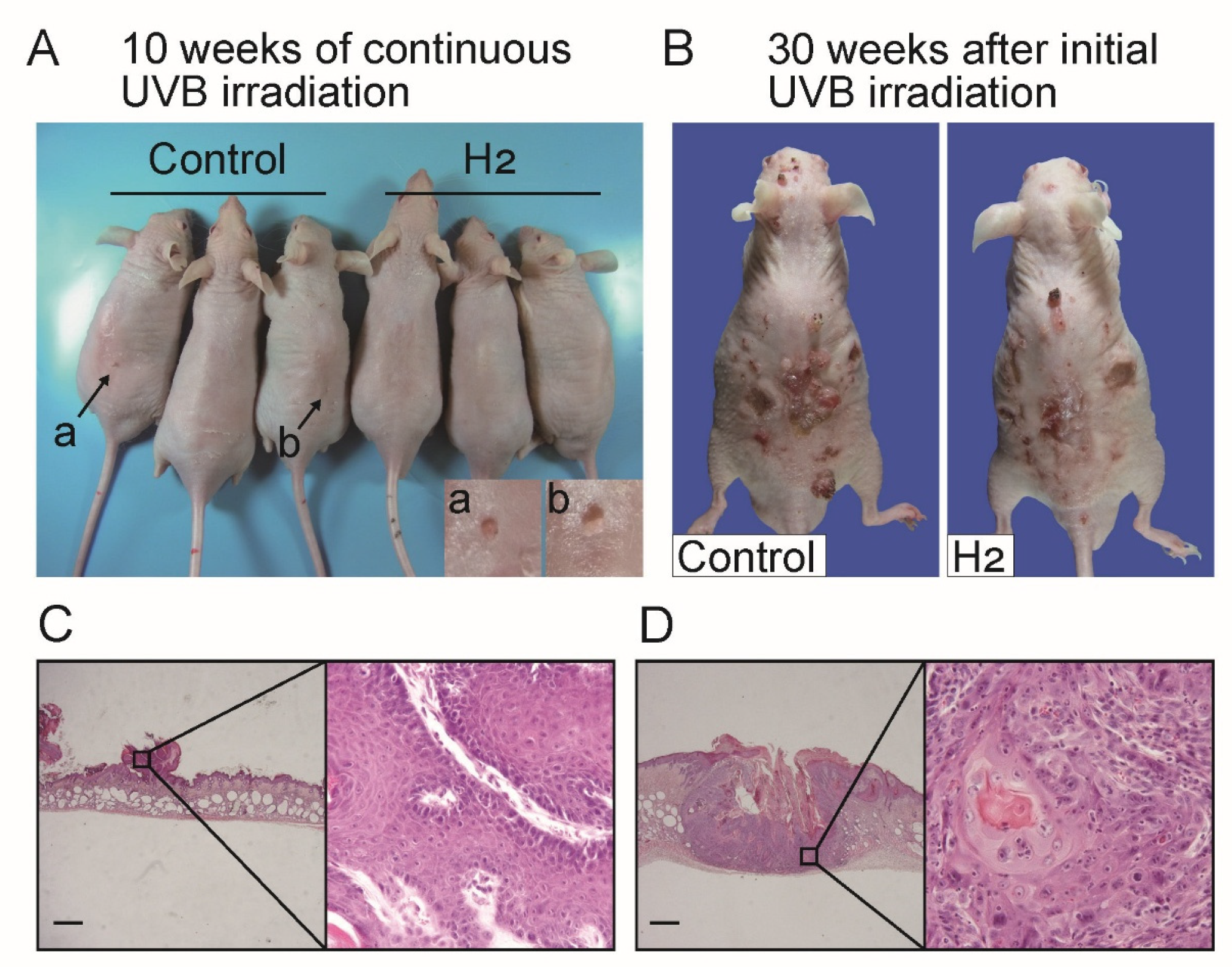
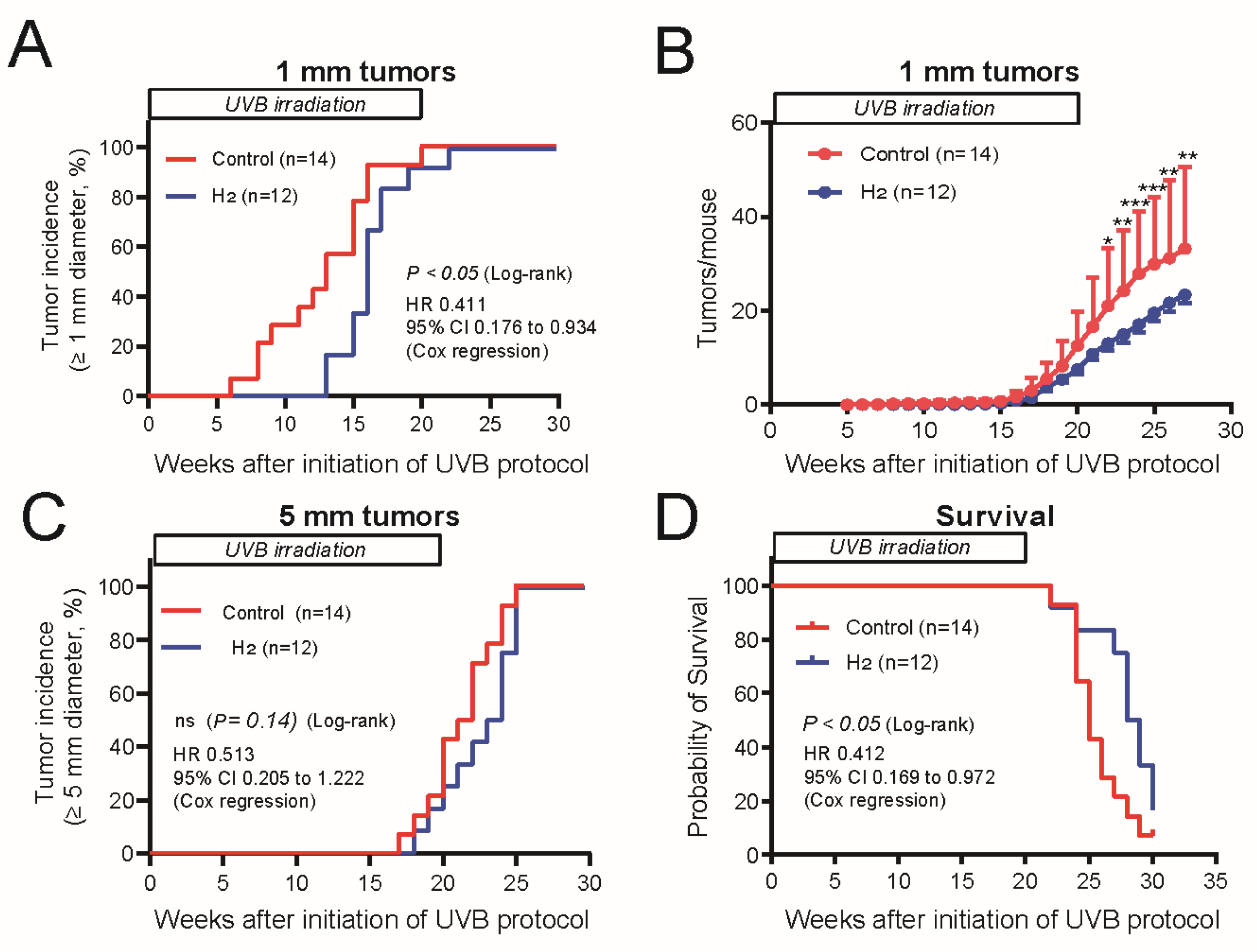
2.2. H2 Delays Early Lesion Formation in Tumorigenesis Induced by Chronic UVB Exposure and Shows Trends Toward Postponed SCC Onset with Prolonged Survival
2.3. H2 Does Not Suppress the Formation of UVB-Induced Pyrimidine Dimers in the Skin
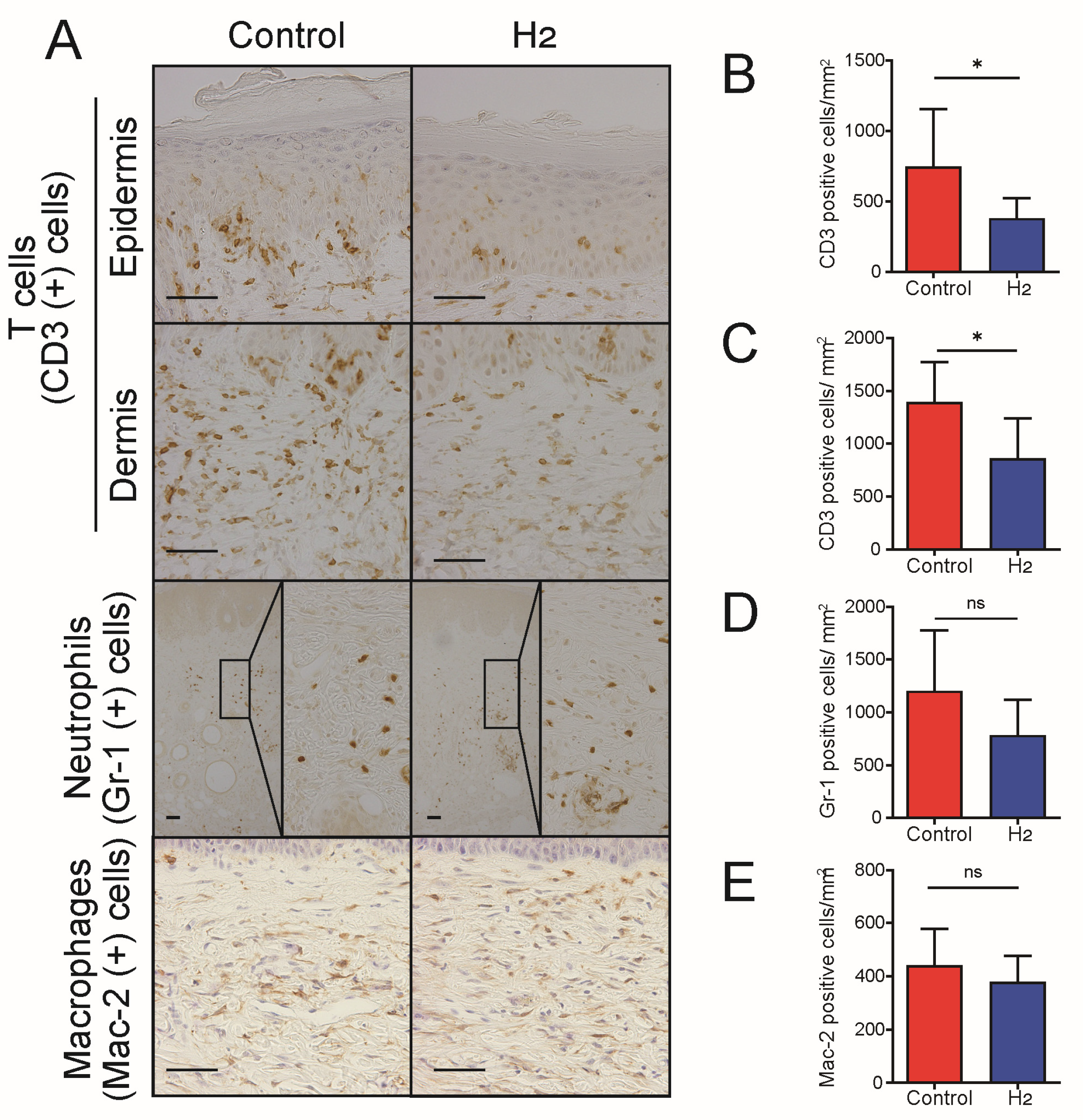
2.4. H2 Attenuates UVB-Induced Inflammation in the Skin
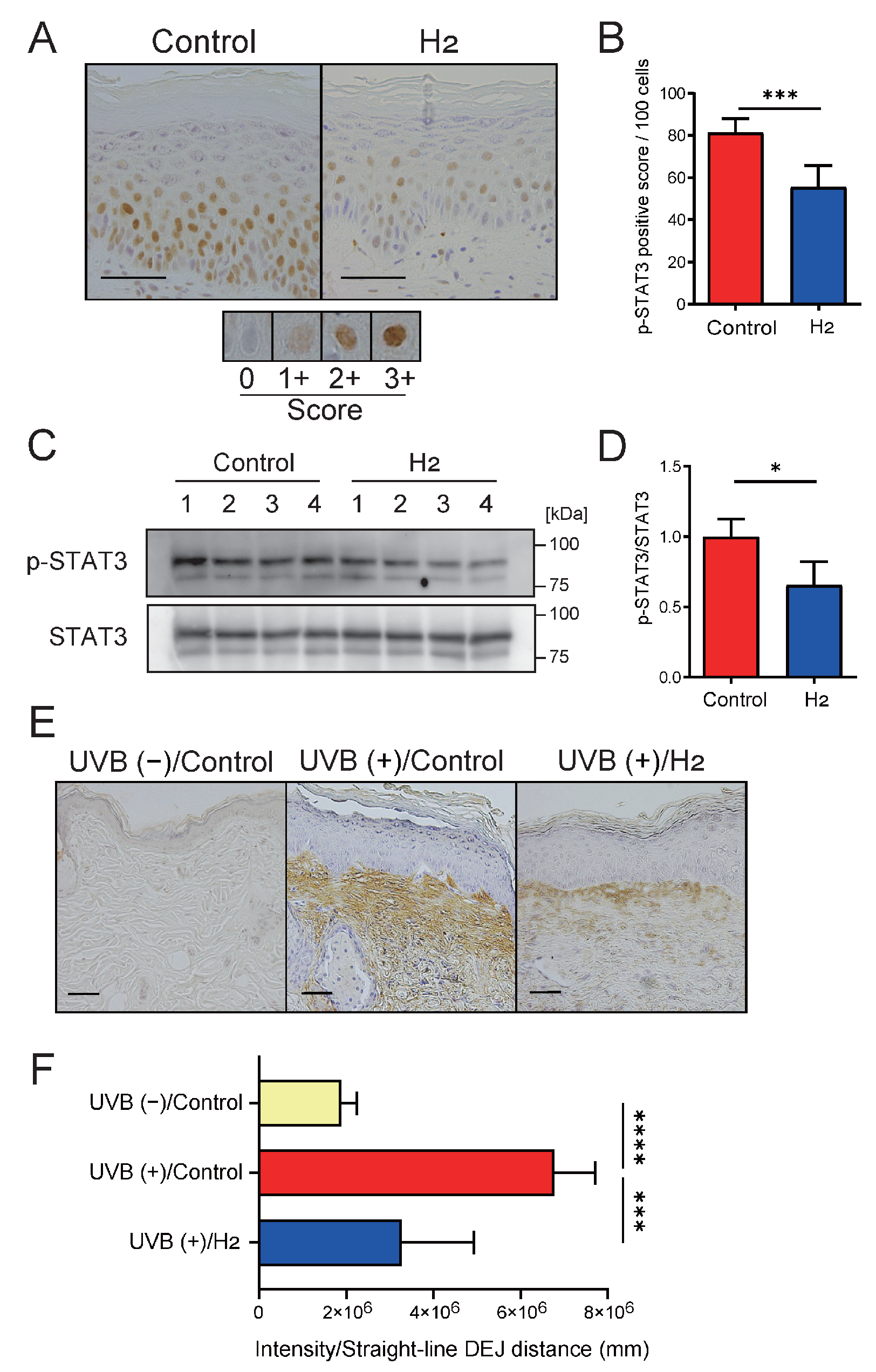
2.5. H2 Attenuates STAT3 Activation and IL-6 Production in Long-Term UVB-Irradiated Skin
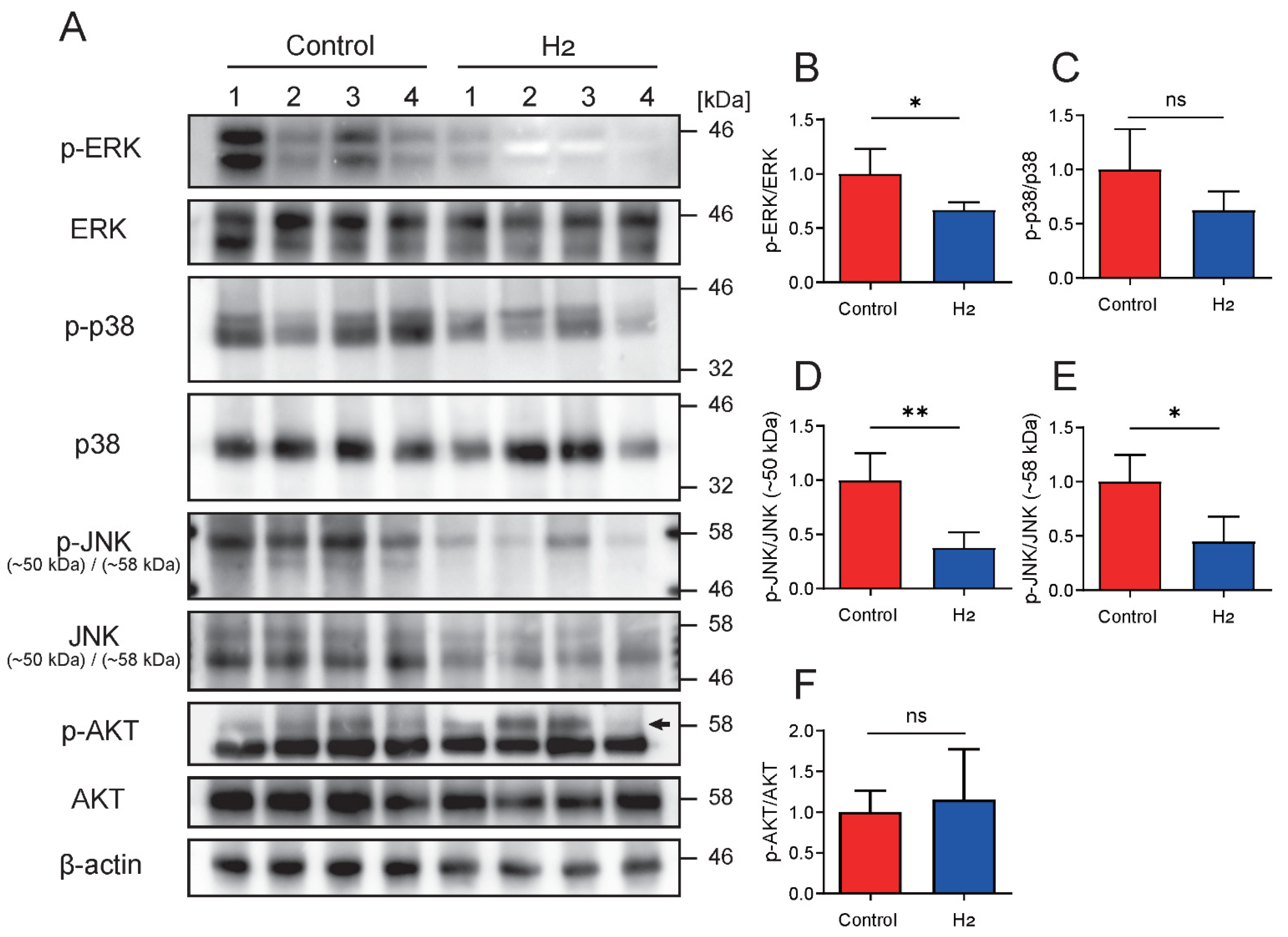
2.6. H2 Attenuates Extracellular Signal-Regulated Kinase (ERK) and c-Jun N-Terminal Kinase (JNK) Signaling in Long-Term UVB-Irradiated Skin
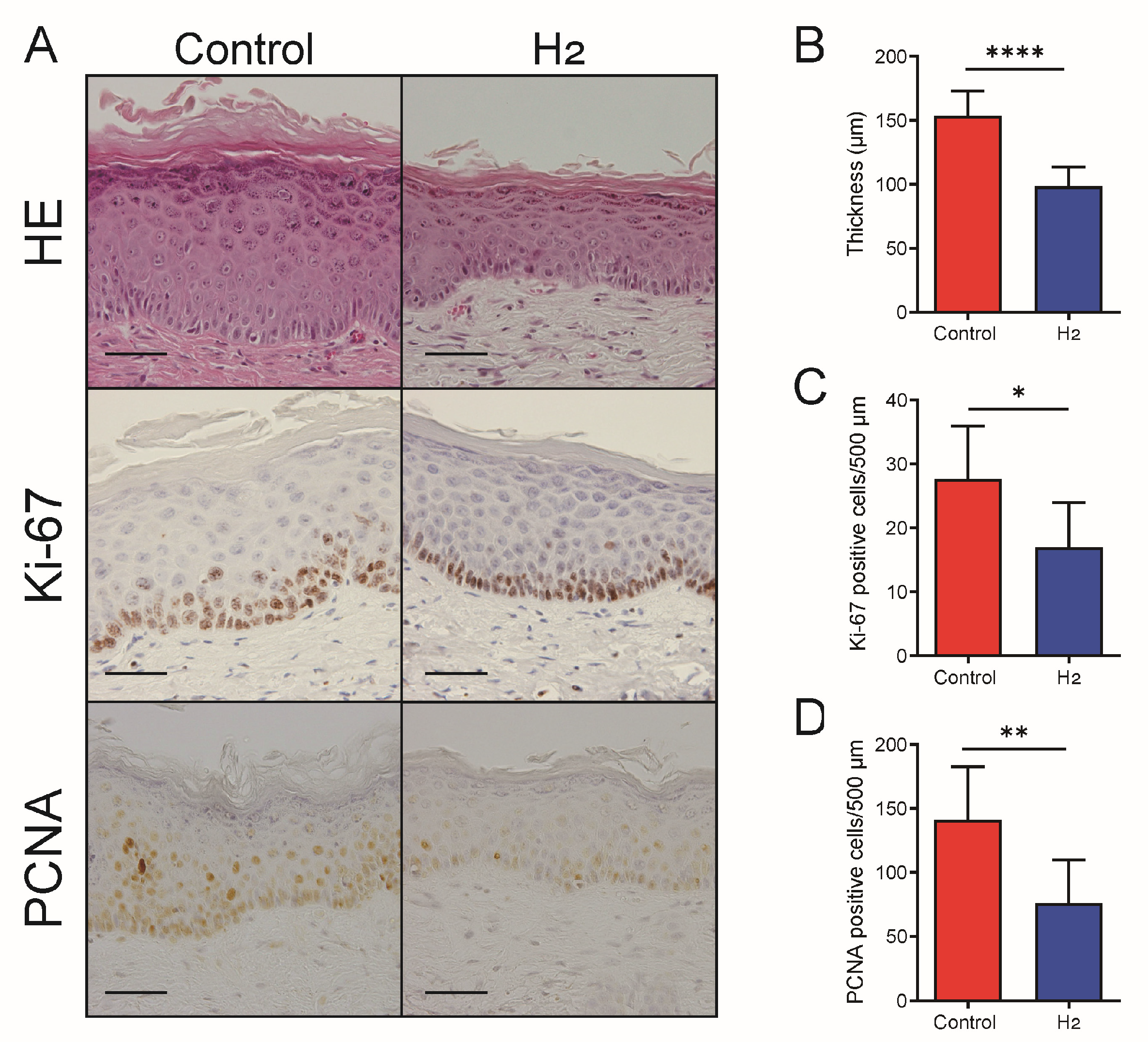
2.7. H2 Alleviates Skin Thickening and Inhibits Cellular Proliferation in Chronically UVB-Irradiated Skin
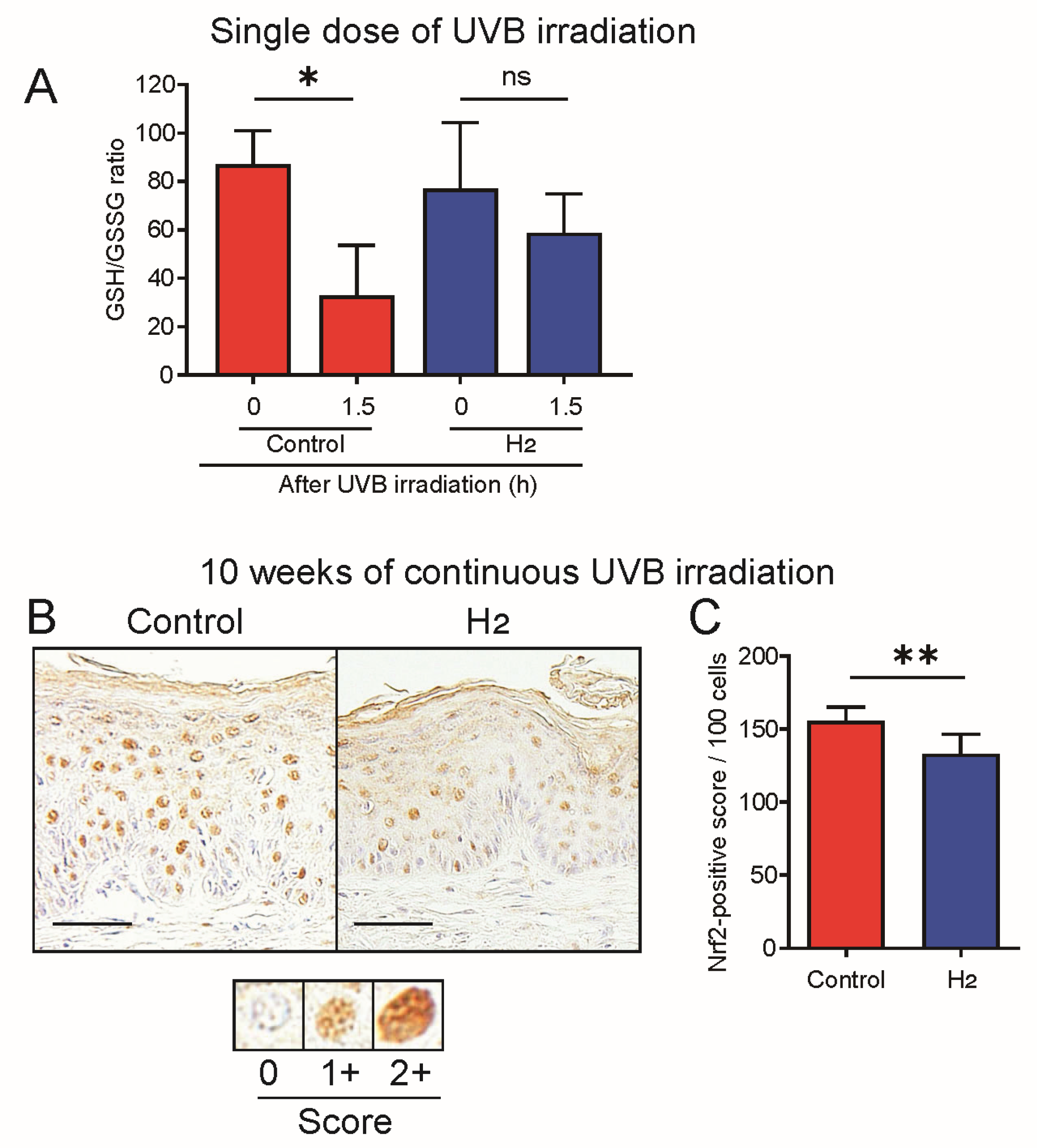
2.8. H2 Suppresses ROS Production Following Both Acute and Chronic UVB Exposure
3. Discussion
4. Materials and Methods
4.1. Mice
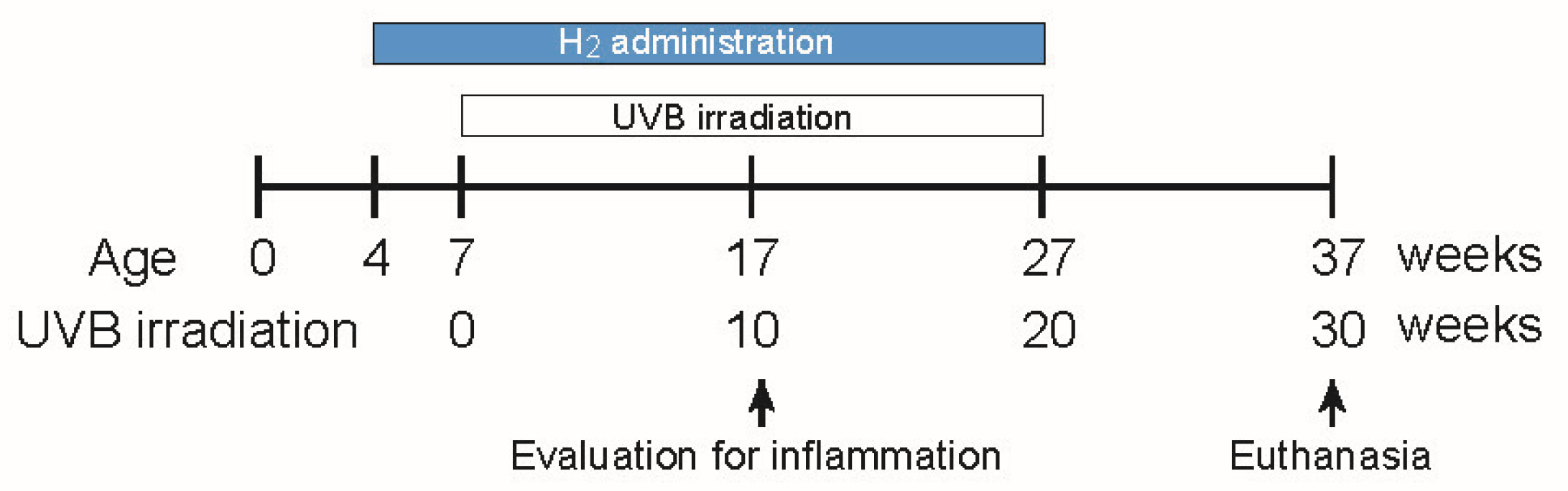
4.2. Administration of H2 and UVB Irradiation
4.3. Measurement of CPDs
4.4. Histological and Immunohistochemical Analysis
4.5. RNA Isolation and Reverse Transcription Quantitative PCR (RT-qPCR)
4.6. Immunoblot Analysis
4.7. Quantification of GSH and GSSG in Skin
4.8. Statistical Analysis
5. Conclusions
Supplementary Materials
Author Contributions
Funding
Institutional Review Board Statement
Informed Consent Statement
Data Availability Statement
Acknowledgments
Conflicts of Interest
References
- Scolyer, R.A.; Messina, J. Squamous Cell Carcinomas, Skin Tumors WHO Classification of Tumours Editorial Board. Skin Tumours (5th ed.) [Internet; Beta Version Ahead of Print]. Available online: https://tumourclassification.iarc.who.int/chapters/64/35 (accessed on 15 August 2025).
- The Editorial Board of the Cancer Statistics in Japan. Cancer Statistics in Japan 2025; Foundation for Promotion of Cancer Research: Tokyo, Japan, 2025. [Google Scholar]
- Burns, C.; Kubicki, S.; Nguyen, Q.B.; Aboul-Fettouh, N.; Wilmas, K.M.; Chen, O.M.; Doan, H.Q.; Silapunt, S.; Migden, M.R. Advances in Cutaneous Squamous Cell Carcinoma Management. Cancers 2022, 14, 3653. [Google Scholar] [CrossRef] [PubMed]
- Tang, X.; Yang, T.; Yu, D.; Xiong, H.; Zhang, S. Current insights and future perspectives of ultraviolet radiation (UV) exposure: Friends and foes to the skin and beyond the skin. Environ. Int. 2024, 185, 108535. [Google Scholar] [CrossRef] [PubMed]
- Ciazynska, M.; Olejniczak-Staruch, I.; Sobolewska-Sztychny, D.; Narbutt, J.; Skibinska, M.; Lesiak, A. Ultraviolet Radiation and Chronic Inflammation-Molecules and Mechanisms Involved in Skin Carcinogenesis: A Narrative Review. Life 2021, 11, 326. [Google Scholar] [CrossRef]
- Zhao, H.; Wu, L.; Yan, G.; Chen, Y.; Zhou, M.; Wu, Y.; Li, Y. Inflammation and tumor progression: Signaling pathways and targeted intervention. Signal Transduct. Target. Ther. 2021, 6, 263. [Google Scholar] [CrossRef]
- Huynh, J.; Chand, A.; Gough, D.; Ernst, M. Therapeutically exploiting STAT3 activity in cancer-using tissue repair as a road map. Nat. Rev. Cancer 2019, 19, 82–96. [Google Scholar] [CrossRef]
- Suiqing, C.; Min, Z.; Lirong, C. Overexpression of phosphorylated-STAT3 correlated with the invasion and metastasis of cutaneous squamous cell carcinoma. J. Dermatol. 2005, 32, 354–360. [Google Scholar] [CrossRef]
- Wu, J.; Lu, W.Y.; Cui, L.L. Clinical significance of STAT3 and MAPK phosphorylation, and the protein expression of cyclin D1 in skin squamous cell carcinoma tissues. Mol. Med. Rep. 2015, 12, 8129–8134. [Google Scholar] [CrossRef]
- Ohsawa, I.; Ishikawa, M.; Takahashi, K.; Watanabe, M.; Nishimaki, K.; Yamagata, K.; Katsura, K.; Katayama, Y.; Asoh, S.; Ohta, S. Hydrogen acts as a therapeutic antioxidant by selectively reducing cytotoxic oxygen radicals. Nat. Med. 2007, 13, 688–694. [Google Scholar] [CrossRef]
- Ichihara, M.; Sobue, S.; Ito, M.; Ito, M.; Hirayama, M.; Ohno, K. Beneficial biological effects and the underlying mechanisms of molecular hydrogen-comprehensive review of 321 original articles. Med. Gas Res. 2015, 5, 12. [Google Scholar] [CrossRef]
- Jin, J.; Yue, L.; Du, M.; Geng, F.; Gao, X.; Zhou, Y.; Lu, Q.; Pan, X. Molecular Hydrogen Therapy: Mechanisms, Delivery Methods, Preventive, and Therapeutic Application. MedComm 2025, 6, e70194. [Google Scholar] [CrossRef]
- Guo, Z.; Zhou, B.; Li, W.; Sun, X.; Luo, D. Hydrogen-rich saline protects against ultraviolet B radiation injury in rats. J. Biomed. Res. 2012, 26, 365–371. [Google Scholar] [CrossRef]
- Zhang, B.; Zhao, Z.; Meng, X.; Chen, H.; Fu, G.; Xie, K. Hydrogen ameliorates oxidative stress via PI3K-Akt signaling pathway in UVB-induced HaCaT cells. Int. J. Mol. Med. 2018, 41, 3653–3661. [Google Scholar] [CrossRef]
- Kishimoto, Y.; Kato, T.; Ito, M.; Azuma, Y.; Fukasawa, Y.; Ohno, K.; Kojima, S. Hydrogen ameliorates pulmonary hypertension in rats by anti-inflammatory and antioxidant effects. J. Thorac. Cardiovasc. Surg. 2015, 150, 645–654.e3. [Google Scholar] [CrossRef]
- Chen, K.; Sun, Y.; Diao, Y.; Zhang, T.; Dong, W. Hydrogen-rich solution attenuates myocardial injury caused by cardiopulmonary bypass in rats via the Janus-activated kinase 2/signal transducer and activator of transcription 3 signaling pathway. Oncol. Lett. 2018, 16, 167–178. [Google Scholar] [CrossRef]
- Liu, L.; Yan, Z.; Wang, Y.; Meng, J.; Chen, G. Suppression of autophagy facilitates hydrogen gas-mediated lung cancer cell apoptosis. Oncol. Lett. 2020, 20, 112. [Google Scholar] [CrossRef]
- Shin, M.H.; Park, R.; Nojima, H.; Kim, H.C.; Kim, Y.K.; Chung, J.H. Atomic hydrogen surrounded by water molecules, H(H2O)m, modulates basal and UV-induced gene expressions in human skin in vivo. PLoS ONE 2013, 8, e61696. [Google Scholar] [CrossRef]
- Kligman, L.H.; Kligman, A.M. Histogenesis and progression in ultraviolet light-induced tumors in hairless mice. J. Natl. Cancer Inst. 1981, 67, 1289–1293. [Google Scholar] [PubMed]
- Tian, Y.; Zhang, Y.; Wang, Y.; Chen, Y.; Fan, W.; Zhou, J.; Qiao, J.; Wei, Y. Hydrogen, a Novel Therapeutic Molecule, Regulates Oxidative Stress, Inflammation, and Apoptosis. Front. Physiol. 2021, 12, 789507. [Google Scholar] [CrossRef]
- Maru, G.B.; Gandhi, K.; Ramchandani, A.; Kumar, G. The role of inflammation in skin cancer. Adv. Exp. Med. Biol. 2014, 816, 437–469. [Google Scholar] [CrossRef] [PubMed]
- Netea, M.G.; Dominguez-Andres, J.; Barreiro, L.B.; Chavakis, T.; Divangahi, M.; Fuchs, E.; Joosten, L.A.B.; van der Meer, J.W.M.; Mhlanga, M.M.; Mulder, W.J.M.; et al. Defining trained immunity and its role in health and disease. Nat. Rev. Immunol. 2020, 20, 375–388. [Google Scholar] [CrossRef]
- Mantovani, A. Redundancy and robustness versus division of labour and specialization in innate immunity. Semin. Immunol. 2018, 36, 28–30. [Google Scholar] [CrossRef]
- Kim, D.J.; Chan, K.S.; Sano, S.; Digiovanni, J. Signal transducer and activator of transcription 3 (Stat3) in epithelial carcinogenesis. Mol. Carcinog. 2007, 46, 725–731. [Google Scholar] [CrossRef]
- Castelino, F.V.; Bain, G.; Pace, V.A.; Black, K.E.; George, L.; Probst, C.K.; Goulet, L.; Lafyatis, R.; Tager, A.M. An Autotaxin/Lysophosphatidic Acid/Interleukin-6 Amplification Loop Drives Scleroderma Fibrosis. Arthritis Rheumatol. 2016, 68, 2964–2974. [Google Scholar] [CrossRef]
- Ge, L.; Yang, M.; Yang, N.N.; Yin, X.X.; Song, W.G. Molecular hydrogen: A preventive and therapeutic medical gas for various diseases. Oncotarget 2017, 8, 102653–102673. [Google Scholar] [CrossRef]
- Tao, G.; Song, G.; Qin, S. Molecular hydrogen: Current knowledge on mechanism in alleviating free radical damage and diseases. Acta Biochim. Biophys. Sin. 2019, 51, 1189–1197. [Google Scholar] [CrossRef] [PubMed]
- Goldring, C.E.; Kitteringham, N.R.; Elsby, R.; Randle, L.E.; Clement, Y.N.; Williams, D.P.; McMahon, M.; Hayes, J.D.; Itoh, K.; Yamamoto, M.; et al. Activation of hepatic Nrf2 in vivo by acetaminophen in CD-1 mice. Hepatology 2004, 39, 1267–1276. [Google Scholar] [CrossRef] [PubMed]
- Kim, H.K.; Jeong, H.; Jeong, M.G.; Won, H.Y.; Lee, G.; Bae, S.H.; Nam, M.; Lee, S.H.; Hwang, G.S.; Hwang, E.S. TAZ deficiency impairs the autophagy-lysosomal pathway through NRF2 dysregulation and lysosomal dysfunction. Int. J. Biol. Sci. 2024, 20, 2592–2606. [Google Scholar] [CrossRef]
- Yoon, K.S.; Huang, X.Z.; Yoon, Y.S.; Kim, S.K.; Song, S.B.; Chang, B.S.; Kim, D.H.; Lee, K.J. Histological study on the effect of electrolyzed reduced water-bathing on UVB radiation-induced skin injury in hairless mice. Biol. Pharm. Bull. 2011, 34, 1671–1677. [Google Scholar] [CrossRef]
- Ignacio, R.M.; Yoon, Y.-S.; Sajo, M.E.J.; Kim, C.-S.; Kim, D.-H.; Kim, S.-K.; Lee, K.-J. The balneotherapy effect of hydrogen reduced water on UVB-mediated skin injury in hairless mice. Mol. Cell Toxicol. 2013, 9, 15–21. [Google Scholar] [CrossRef]
- Lin, X.; Jia, Q.; Lin, X.; Shi, J.; Gong, W.; Shen, K.; Liu, B.; Sun, L.; Fan, Z. Galvanic Cell Bipolar Microneedle Patches for Reversing Photoaging Wrinkles. Adv. Mater. 2025, 37, e2500552. [Google Scholar] [CrossRef] [PubMed]
- Kiyoi, T.; Liu, S.; Takemasa, E.; Hato, N.; Mogi, M. Intermittent environmental exposure to hydrogen prevents skin photoaging through reduction of oxidative stress. Geriatr. Gerontol. Int. 2023, 23, 304–312. [Google Scholar] [CrossRef]
- Kato, S.; Saitoh, Y.; Iwai, K.; Miwa, N. Hydrogen-rich electrolyzed warm water represses wrinkle formation against UVA ray together with type-I collagen production and oxidative-stress diminishment in fibroblasts and cell-injury prevention in keratinocytes. J. Photochem. Photobiol. B Biol. 2012, 106, 24–33. [Google Scholar] [CrossRef] [PubMed]
- Fang, W.; Tang, L.; Wang, G.; Lin, J.; Liao, W.; Pan, W.; Xu, J. Molecular Hydrogen Protects Human Melanocytes from Oxidative Stress by Activating Nrf2 Signaling. J. Investig. Dermatol. 2020, 140, 2230–2241 e2239. [Google Scholar] [CrossRef]
- Debkowska, N.; Niczyporuk, M.; Surazynski, A.; Wolosik, K. Topically Applied Molecular Hydrogen Normalizes Skin Parameters Associated with Oxidative Stress: A Pilot Study. Antioxidants 2025, 14, 729. [Google Scholar] [CrossRef]
- Kawai, D.; Takaki, A.; Nakatsuka, A.; Wada, J.; Tamaki, N.; Yasunaka, T.; Koike, K.; Tsuzaki, R.; Matsumoto, K.; Miyake, Y.; et al. Hydrogen-rich water prevents progression of nonalcoholic steatohepatitis and accompanying hepatocarcinogenesis in mice. Hepatology 2012, 56, 912–921. [Google Scholar] [CrossRef] [PubMed]
- Li, F.Y.; Zhu, S.X.; Wang, Z.P.; Wang, H.; Zhao, Y.; Chen, G.P. Consumption of hydrogen-rich water protects against ferric nitrilotriacetate-induced nephrotoxicity and early tumor promotional events in rats. Food Chem. Toxicol. 2013, 61, 248–254. [Google Scholar] [CrossRef] [PubMed]
- Zhao, L.; Zhou, C.; Zhang, J.; Gao, F.; Li, B.; Chuai, Y.; Liu, C.; Cai, J. Hydrogen protects mice from radiation induced thymic lymphoma in BALB/c mice. Int. J. Biol. Sci. 2011, 7, 297–300. [Google Scholar] [CrossRef]
- Valavanidis, A.; Vlachogianni, T.; Fiotakis, C. 8-hydroxy-2′ -deoxyguanosine (8-OHdG): A critical biomarker of oxidative stress and carcinogenesis. J. Environ. Sci. Health Part C Environ. Carcinog. Ecotoxicol. Rev. 2009, 27, 120–139. [Google Scholar] [CrossRef]
- Ito, M.; Hirayama, M.; Yamai, K.; Goto, S.; Ito, M.; Ichihara, M.; Ohno, K. Drinking hydrogen water and intermittent hydrogen gas exposure, but not lactulose or continuous hydrogen gas exposure, prevent 6-hydroxydopamine-induced Parkinson’s disease in rats. Med. Gas Res. 2012, 2, 15. [Google Scholar] [CrossRef]
- Shimouchi, A.; Nose, K.; Shirai, M.; Kondo, T. Estimation of molecular hydrogen consumption in the human whole body after the ingestion of hydrogen-rich water. Adv. Exp. Med. Biol. 2012, 737, 245–250. [Google Scholar] [CrossRef]
- Shimouchi, A.; Nose, K.; Mizukami, T.; Che, D.C.; Shirai, M. Molecular hydrogen consumption in the human body during the inhalation of hydrogen gas. Adv. Exp. Med. Biol. 2013, 789, 315–321. [Google Scholar] [CrossRef]
- Sobue, S.; Yamai, K.; Ito, M.; Ohno, K.; Ito, M.; Iwamoto, T.; Qiao, S.; Ohkuwa, T.; Ichihara, M. Simultaneous oral and inhalational intake of molecular hydrogen additively suppresses signaling pathways in rodents. Mol. Cell. Biochem. 2015, 403, 231–241. [Google Scholar] [CrossRef] [PubMed]
- Ichihara, G.; Katsumata, Y.; Moriyama, H.; Kitakata, H.; Hirai, A.; Momoi, M.; Ko, S.; Shinya, Y.; Kinouchi, K.; Kobayashi, E.; et al. Pharmacokinetics of hydrogen after ingesting a hydrogen-rich solution: A study in pigs. Heliyon 2021, 7, e08359. [Google Scholar] [CrossRef]
- Kamimura, N.; Nishimaki, K.; Ohsawa, I.; Ohta, S. Molecular hydrogen improves obesity and diabetes by inducing hepatic FGF21 and stimulating energy metabolism in db/db mice. Obesity 2011, 19, 1396–1403. [Google Scholar] [CrossRef]
- Murakami, Y.; Ito, M.; Ohsawa, I. Molecular hydrogen protects against oxidative stress-induced SH-SY5Y neuroblastoma cell death through the process of mitohormesis. PLoS ONE 2017, 12, e0176992. [Google Scholar] [CrossRef]
- Kawamura, T.; Wakabayashi, N.; Shigemura, N.; Huang, C.S.; Masutani, K.; Tanaka, Y.; Noda, K.; Peng, X.; Takahashi, T.; Billiar, T.R.; et al. Hydrogen gas reduces hyperoxic lung injury via the Nrf2 pathway in vivo. Am. J. Physiol. Lung Cell. Mol. Physiol. 2013, 304, L646–L656. [Google Scholar] [CrossRef] [PubMed]
- Cheng, D.; Long, J.; Zhao, L.; Liu, J. Hydrogen: A Rising Star in Gas Medicine as a Mitochondria-Targeting Nutrient via Activating Keap1-Nrf2 Antioxidant System. Antioxidants 2023, 12, 2062. [Google Scholar] [CrossRef] [PubMed]
- Jin, Z.; Zhao, P.; Gong, W.; Ding, W.; He, Q. Fe-porphyrin: A redox-related biosensor of hydrogen molecule. Nano Res. 2023, 16, 2020–2025. [Google Scholar] [CrossRef]
- Ohta, S. Molecular hydrogen may activate the transcription factor Nrf2 to alleviate oxidative stress through the hydrogen-targeted porphyrin. Aging Pathobiol. Ther. 2023, 5, 25–32. [Google Scholar] [CrossRef]
- Negishi, S.; Ito, M.; Hasegawa, T.; Otake, H.; Ohkawara, B.; Masuda, A.; Mino, H.; LeBaron, T.W.; Ohno, K. The Rieske iron-sulfur protein is a primary target of molecular hydrogen. Redox Biol. 2025, 88, 103952. [Google Scholar] [CrossRef]
- Tumurbaatar, B.; Ogawa, S.; Nakamura, N.; Yamada, T.; Minato, T.; Mori, Y.; Saiki, T.; Matsubara, T.; Naruse, K.; Suda, H. The effect of hydrogen gas on the oxidative stress response in adipose tissue. Sci. Rep. 2024, 14, 21425. [Google Scholar] [CrossRef]
- Divya, S.P.; Wang, X.; Pratheeshkumar, P.; Son, Y.O.; Roy, R.V.; Kim, D.; Dai, J.; Hitron, J.A.; Wang, L.; Asha, P.; et al. Blackberry extract inhibits UVB-induced oxidative damage and inflammation through MAP kinases and NF-kappaB signaling pathways in SKH-1 mice skin. Toxicol. Appl. Pharmacol. 2015, 284, 92–99. [Google Scholar] [CrossRef] [PubMed]
- Lin, C.M.; Huang, T.H.; Chi, M.C.; Guo, S.E.; Lee, C.W.; Hwang, S.L.; Shi, C.S. N-acetylcysteine alleviates fine particulate matter (PM2.5)-induced lung injury by attenuation of ROS-mediated recruitment of neutrophils and Ly6C(high) monocytes and lung inflammation. Ecotoxicol. Environ. Saf. 2022, 239, 113632. [Google Scholar] [CrossRef]
- Ansary, T.M.; Hossain, M.R.; Kamiya, K.; Komine, M.; Ohtsuki, M. Inflammatory Molecules Associated with Ultraviolet Radiation-Mediated Skin Aging. Int. J. Mol. Sci. 2021, 22, 3974. [Google Scholar] [CrossRef] [PubMed]
- Xu, Y.; Voorhees, J.J.; Fisher, G.J. Epidermal growth factor receptor is a critical mediator of ultraviolet B irradiation-induced signal transduction in immortalized human keratinocyte HaCaT cells. Am. J. Pathol. 2006, 169, 823–830. [Google Scholar] [CrossRef]
- Son, Y.; Cheong, Y.K.; Kim, N.H.; Chung, H.T.; Kang, D.G.; Pae, H.O. Mitogen-Activated Protein Kinases and Reactive Oxygen Species: How Can ROS Activate MAPK Pathways? J. Signal Transduct. 2011, 2011, 792639. [Google Scholar] [CrossRef]
- Swanson, K.V.; Deng, M.; Ting, J.P. The NLRP3 inflammasome: Molecular activation and regulation to therapeutics. Nat. Rev. Immunol. 2019, 19, 477–489. [Google Scholar] [CrossRef]
- He, Z.; Song, B.; Zhu, M.; Liu, J. Comprehensive pan-cancer analysis of STAT3 as a prognostic and immunological biomarker. Sci. Rep. 2023, 13, 5069. [Google Scholar] [CrossRef] [PubMed]
- Zhao, P.; Cai, Z.; Zhang, X.; Liu, M.; Xie, F.; Liu, Z.; Lu, S.; Ma, X. Hydrogen Attenuates Inflammation by Inducing Early M2 Macrophage Polarization in Skin Wound Healing. Pharmaceuticals 2023, 16, 885. [Google Scholar] [CrossRef]
- Qiu, Z.; Huang, A.; Li, Z.; Qin, S.; Chen, J.; Li, B.; Liu, B.; He, L. Hydrogen-rich water ameliorates imiquimod-induced psoriasis-like skin lesions and regulates macrophage polarization in dyslipidemic ApoE-deficient mice. Eur. J. Pharmacol. 2025, 992, 177363. [Google Scholar] [CrossRef]
- Flurkey, K.; Currer, J.M.; Harrison, D.E. The Mouse in biomedical research. In The Mouse in Aging Research, 2nd ed.; Fox, J.G., Ed.; Academic Press: Amsterdam, The Netherlands, 2007. [Google Scholar]
- Athar, M.; Agarwal, R.; Wang, Z.Y.; Lloyd, J.R.; Bickers, D.R.; Mukhtar, H. All-trans retinoic acid protects against conversion of chemically induced and ultraviolet B radiation-induced skin papillomas to carcinomas. Carcinogenesis 1991, 12, 2325–2329. [Google Scholar] [CrossRef] [PubMed]
- Scolyer, R.A.; Messina, J. Actinic Keratosis, Skin Tumors WHO Classification of Tumours Editorial Board. Skin Tumours (5th ed.) [Internet; Beta Version Ahead of Print]. Available online: https://tumourclassification.iarc.who.int/chapters/64/6 (accessed on 15 August 2025).
- Messina, J.; Scolyer, R.A. Squamous Cell Carcinoma in Situ (Bowen Disease), Skin Tumors WHO Classification of Tumours Editorial Board. Skin Tumours (5th ed.) [Internet; Beta Version Ahead of Print]. Available online: https://tumourclassification.iarc.who.int/chapters/64/34 (accessed on 15 August 2025).
- Park, S. Building vs. Rebuilding Epidermis: Comparison Embryonic Development and Adult Wound Repair. Front. Cell Dev. Biol. 2021, 9, 796080. [Google Scholar] [CrossRef]
- White, A.C.; Tran, K.; Khuu, J.; Dang, C.; Cui, Y.; Binder, S.W.; Lowry, W.E. Defining the origins of Ras/p53-mediated squamous cell carcinoma. Proc. Natl. Acad. Sci. USA 2011, 108, 7425–7430. [Google Scholar] [CrossRef]
- Kim, Y.S.; Shin, S.; Jung, S.H.; Park, Y.M.; Park, G.S.; Lee, S.H.; Chung, Y.J. Genomic Progression of Precancerous Actinic Keratosis to Squamous Cell Carcinoma. J. Investig. Dermatol. 2022, 142, 528–538 e528. [Google Scholar] [CrossRef]
- IARC Working Group on the Evaluation of Carcinogenic Risks to Humans. Solar and Ultraviolet Radiation. Radiation, IARC Monographs on the Evaluation of Carcinogenic Risks to Humans, No. 100D. Available online: https://www.ncbi.nlm.nih.gov/books/NBK304366/ (accessed on 26 August 2025).
- Benavides, F.; Oberyszyn, T.M.; VanBuskirk, A.M.; Reeve, V.E.; Kusewitt, D.F. The hairless mouse in skin research. J. Dermatol. Sci. 2009, 53, 10–18. [Google Scholar] [CrossRef]
- Thomson, J.; Bewicke-Copley, F.; Anene, C.A.; Gulati, A.; Nagano, A.; Purdie, K.; Inman, G.J.; Proby, C.M.; Leigh, I.M.; Harwood, C.A.; et al. The Genomic Landscape of Actinic Keratosis. J. Investig. Dermatol. 2021, 141, 1664–1674 e1667. [Google Scholar] [CrossRef]
- Kumar, R.; Deep, G.; Agarwal, R. An Overview of Ultraviolet B Radiation-Induced Skin Cancer Chemoprevention by Silibinin. Curr. Pharmacol. Rep. 2015, 1, 206–215. [Google Scholar] [CrossRef]
- Ono, H.; Nishijima, Y.; Adachi, N.; Sakamoto, M.; Kudo, Y.; Kaneko, K.; Nakao, A.; Imaoka, T. A basic study on molecular hydrogen (H2) inhalation in acute cerebral ischemia patients for safety check with physiological parameters and measurement of blood H2 level. Med. Gas Res. 2012, 2, 21. [Google Scholar] [CrossRef]
- Hasegawa, T.; Ito, M.; Hasegawa, S.; Teranishi, M.; Takeda, K.; Negishi, S.; Nishiwaki, H.; Takeda, J.I.; LeBaron, T.W.; Ohno, K. Molecular Hydrogen Enhances Proliferation of Cancer Cells That Exhibit Potent Mitochondrial Unfolded Protein Response. Int. J. Mol. Sci. 2022, 23, 2888. [Google Scholar] [CrossRef] [PubMed]
- D’Orazio, J.; Jarrett, S.; Amaro-Ortiz, A.; Scott, T. UV radiation and the skin. Int. J. Mol. Sci. 2013, 14, 12222–12248. [Google Scholar] [CrossRef] [PubMed]
- Epstein, J.H. Photocarcinogenesis promotion studies with benzoyl peroxide (BPO) and croton oil. J. Investig. Dermatol. 1988, 91, 114–116. [Google Scholar] [CrossRef]
- Ullrich, S.E. Sunlight and skin cancer: Lessons from the immune system. Mol. Carcinog. 2007, 46, 629–633. [Google Scholar] [CrossRef]
- Ravindran, A.; Mohammed, J.; Gunderson, A.J.; Cui, X.; Glick, A.B. Tumor-promoting role of TGFbeta1 signaling in ultraviolet B-induced skin carcinogenesis is associated with cutaneous inflammation and lymph node migration of dermal dendritic cells. Carcinogenesis 2014, 35, 959–966. [Google Scholar] [CrossRef] [PubMed]
- Hattori, Y.; Nishigori, C.; Tanaka, T.; Uchida, K.; Nikaido, O.; Osawa, T.; Hiai, H.; Imamura, S.; Toyokuni, S. 8-hydroxy-2′-deoxyguanosine is increased in epidermal cells of hairless mice after chronic ultraviolet B exposure. J. Investig. Dermatol. 1996, 107, 733–737, Correction in J. Investig. Dermatol. 1997, 108, 237. [Google Scholar] [CrossRef] [PubMed]
- Minami, M.; Sobue, S.; Ichihara, M.; Hasegawa, T. Analysis of the pathological lesions of the lung in a mouse model of cutaneous infection with Streptococcus pyogenes. Pathol. Int. 2012, 62, 99–104. [Google Scholar] [CrossRef] [PubMed]



| H2 Treatment | (−) | (+) | p Value | ||
|---|---|---|---|---|---|
| Number of mice | 14 | 12 | |||
| Total number of tumors | 135 | 161 | 0.42 | ||
| Histological types of tumors | |||||
| Benign | Papilloma | 44 (32.6%) | 46 (28.6%) | ||
| Precancerous/carcinoma in situ | Actinic keratosis-like lesion | 4 (3.0%) | 5 (3.1%) | ||
| Carcinoma in situ | 4 (3.0%) | 6 (3.7%) | |||
| Invasive carcinoma | Conventional SCCs | 77 (57.0%) | 98 (60.9%) | ||
| Spindle cell carcinoma | 6 (4.4%) | 6 (3.7%) | 0.94 | ||
| Differentiation | |||||
| Conventional SCCs | Well differentiated | 57 (68.7%) | 78 (75.0%) | ||
| Moderately differentiated | 18 (21.7%) | 14 (13.4%) | |||
| Poorly differentiated | 2 (2.4%) | 6 (5.8%) | |||
| Spindle cell carcinoma | 6 (7.2%) | 6 (5.8%) | 0.33 | ||
| Invasion depth | |||||
| Dermis | 43 (51.8%) | 52 (50.0%) | |||
| Hypodermis | 11 (13.3%) | 12 (11.5%) | |||
| Muscle | 29 (34.9%) | 40 (38.5%) | 0.86 |
Disclaimer/Publisher’s Note: The statements, opinions and data contained in all publications are solely those of the individual author(s) and contributor(s) and not of MDPI and/or the editor(s). MDPI and/or the editor(s) disclaim responsibility for any injury to people or property resulting from any ideas, methods, instructions or products referred to in the content. |
© 2026 by the authors. Licensee MDPI, Basel, Switzerland. This article is an open access article distributed under the terms and conditions of the Creative Commons Attribution (CC BY) license.
Share and Cite
Hori, F.; Sobue, S.; Inoue, C.; Murakumo, Y.; Ichihara, M. Molecular Hydrogen Attenuates Chronic Inflammation and Delays the Onset of Ultraviolet B-Induced Skin Carcinogenesis in Mice. Int. J. Mol. Sci. 2026, 27, 635. https://doi.org/10.3390/ijms27020635
Hori F, Sobue S, Inoue C, Murakumo Y, Ichihara M. Molecular Hydrogen Attenuates Chronic Inflammation and Delays the Onset of Ultraviolet B-Induced Skin Carcinogenesis in Mice. International Journal of Molecular Sciences. 2026; 27(2):635. https://doi.org/10.3390/ijms27020635
Chicago/Turabian StyleHori, Fumiko, Sayaka Sobue, Chisato Inoue, Yoshiki Murakumo, and Masatoshi Ichihara. 2026. "Molecular Hydrogen Attenuates Chronic Inflammation and Delays the Onset of Ultraviolet B-Induced Skin Carcinogenesis in Mice" International Journal of Molecular Sciences 27, no. 2: 635. https://doi.org/10.3390/ijms27020635
APA StyleHori, F., Sobue, S., Inoue, C., Murakumo, Y., & Ichihara, M. (2026). Molecular Hydrogen Attenuates Chronic Inflammation and Delays the Onset of Ultraviolet B-Induced Skin Carcinogenesis in Mice. International Journal of Molecular Sciences, 27(2), 635. https://doi.org/10.3390/ijms27020635