Next Article in Journal
Catechin Augments the Antifungal Efficacy of Fluconazole Against Candida parapsilosis
Previous Article in Journal
Mesenchymal Stromal/Stem Cell-Based Therapies for Liver Regeneration: Current Status and Future Directions
error_outline You can access the new MDPI.com website here. Explore and share your feedback with us.
 
 
Article

Vitamin E Modulates Hepatic Extracellular Adenosine Signaling to Attenuate Metabolic Dysfunction-Associated Steatotic Liver Disease (MASLD)

1
Department of Physiology, Faculty of Medicine, Oita University, Yufu 879-5593, Oita, Japan
2
Division of Gastroenterology, Department of Internal Medicine, Faculty of Medicine, Oita University, Yufu 879-5593, Oita, Japan
3
Department of Biochemistry and Molecular Genetics, Faculty of Medicine, Oita University, Yufu 879-5593, Oita, Japan
4
Laboratory for Advanced Brain Functions, Institute for Protein Research, Osaka University, Suita 565-0871, Osaka, Japan
5
State Key Laboratory of Membrane Biology, School of Life Sciences, Peking University, Beijing 100871, China
*
Author to whom correspondence should be addressed.
Int. J. Mol. Sci. 2026, 27(2), 614; https://doi.org/10.3390/ijms27020614
Submission received: 28 November 2025 / Revised: 2 January 2026 / Accepted: 4 January 2026 / Published: 7 January 2026

Abstract

Metabolic dysfunction-associated steatotic liver disease (MASLD) involves early disturbances such as excessive lipid accumulation, sterile inflammation, and hepatocellular stress. The results of recent studies have highlighted extracellular ATP and its metabolite adenosine (Ado) as damage-associated molecular patterns (DAMPs) that drive inflammation, endoplasmic reticulum (ER) stress, and steatosis, contributing to MASLD progression. Although vitamin E is clinically used for its antioxidant and anti-inflammatory properties, it remains unclear whether its therapeutic effects involve modulation of DAMP-associated signaling. To address this gap, we used transgenic zebrafish expressing a liver-specific G-protein-coupled receptor activation-based adenosine sensor (GRABAdo). We found that a high-cholesterol diet markedly increased hepatic extracellular Ado levels, combined with inflammatory and ER stress-associated gene expression. Vitamin E significantly reduced extracellular Ado levels and hepatic lipid accumulation. Based on RNA sequencing results, vitamin E restored the expression of genes encoding calcium-handling proteins, including atp2a1 and atp1b1b. These genes encode components of the sarco/ER Ca2+-ATPase (SERCA) machinery, which is essential for maintaining ER Ca2+ homeostasis and preventing stress-induced hepatic injury. CDN1163-mediated SERCA activation phenocopied the protective effect of vitamin E, supporting a Ca2+-dependent mechanism. Together, these findings highlight extracellular Ado signaling and impaired SERCA-mediated Ca2+ regulation as early drivers of MASLD and demonstrate that vitamin E ameliorates steatosis by targeting both pathways.

1. Introduction

Metabolic dysfunction-associated steatotic liver disease (MASLD) is one of the most prevalent metabolic disorders worldwide and imposes a substantial socioeconomic burden [1,2]. MASLD corresponds to the metabolic steatotic stage and is the basis for the development of metabolic dysfunction-associated steatohepatitis (MASH), which can subsequently progress to fibrosis, cirrhosis, and hepatocellular carcinoma [3]. Because MASLD, defined by hepatic steatosis, constitutes the earliest and fully reversible phase of this disease spectrum, timely intervention is essential to prevent its progression. When the condition advances to MASH, only partial reversibility is possible, and persistent injury can drive the further transition to fibrosis, cirrhosis, and ultimately hepatocellular carcinoma, stages that are largely irreversible. Therefore, clarifying the molecular mechanisms underlying MASLD initiation, particularly those operating at the steatotic stage, is vital for preventing subsequent, more severe hepatic complications. Although the pathogenesis of MASLD has been widely investigated, the contribution of sterile inflammation to early steatosis remains insufficiently understood.
Growing evidence indicates that sterile inflammation plays a central role in the initiation of MASLD. Damage-associated molecular patterns (DAMPs), released from metabolically stressed or dying hepatocytes, including extracellular ATP (eATP) and its metabolite, extracellular adenosine (eAdo), activate purinergic receptors and amplify inflammatory and metabolic stress responses in both autocrine and paracrine manners [4,5,6]. These extracellular nucleotides are increasingly recognized as critical molecular links between metabolic dysregulation and hepatic inflammation. Nevertheless, despite this recognition, the specific contribution of the hepatic eATP/eAdo axis during the earliest phase of steatosis—and whether this pathway may serve as a viable therapeutic target—remains incompletely defined.
Vitamin E, a potent lipophilic antioxidant, has drawn considerable attention for its ability to suppress oxidative stress and inflammation [7,8]. The results of multiple clinical and experimental studies have demonstrated that it can improve hepatic steatosis and ameliorate liver injury in MASLD [9,10,11,12,13]. Nevertheless, the authors of these studies primarily examined advanced disease stages, and the mechanisms by which vitamin E exerts its hepatoprotective effects, particularly whether it modulates DAMP-associated eAdo signaling, remain unclear.
To address this gap, we used transgenic zebrafish expressing a liver-specific G-protein-coupled receptor activation-based adenosine (GRABAdo) sensor [4,14] to monitor hepatic eAdo dynamics in vivo during high-cholesterol diet (HCD)-induced steatosis. We observed that vitamin E reduced hepatic eAdo accumulation and alleviated steatosis. To further elucidate the mechanisms underlying this effect, we performed RNA sequencing using the livers of vitamin E-treated zebrafish. This analysis revealed that vitamin E could restore the expression of genes encoding intracellular Ca2+-handling proteins, including atp2a1 and atp1b1b, which encode components of the sarco/endoplasmic reticulum (ER) Ca2+-ATPase (SERCA) machinery, essential for maintaining the ER Ca2+ balance and preventing stress-induced hepatocellular dysfunction. The pharmacological enhancement of SERCA activity using CDN1163 phenocopied the protective effects of vitamin E, suggesting that the normalization of Ca2+ homeostasis functions downstream of, or in parallel with, eAdo regulation. Together, these findings highlight a previously unrecognized mechanistic association between eAdo signaling and intracellular Ca2+ regulation in the context of vitamin E-mediated hepatoprotection, offering new insight into therapeutic strategies aimed at the earliest molecular events driving MASLD.

2. Results

2.1. Establishment of an HCD-Induced MASLD Model Using Zebrafish and Evaluation of Hepatic Extracellular Adenosine Dynamics

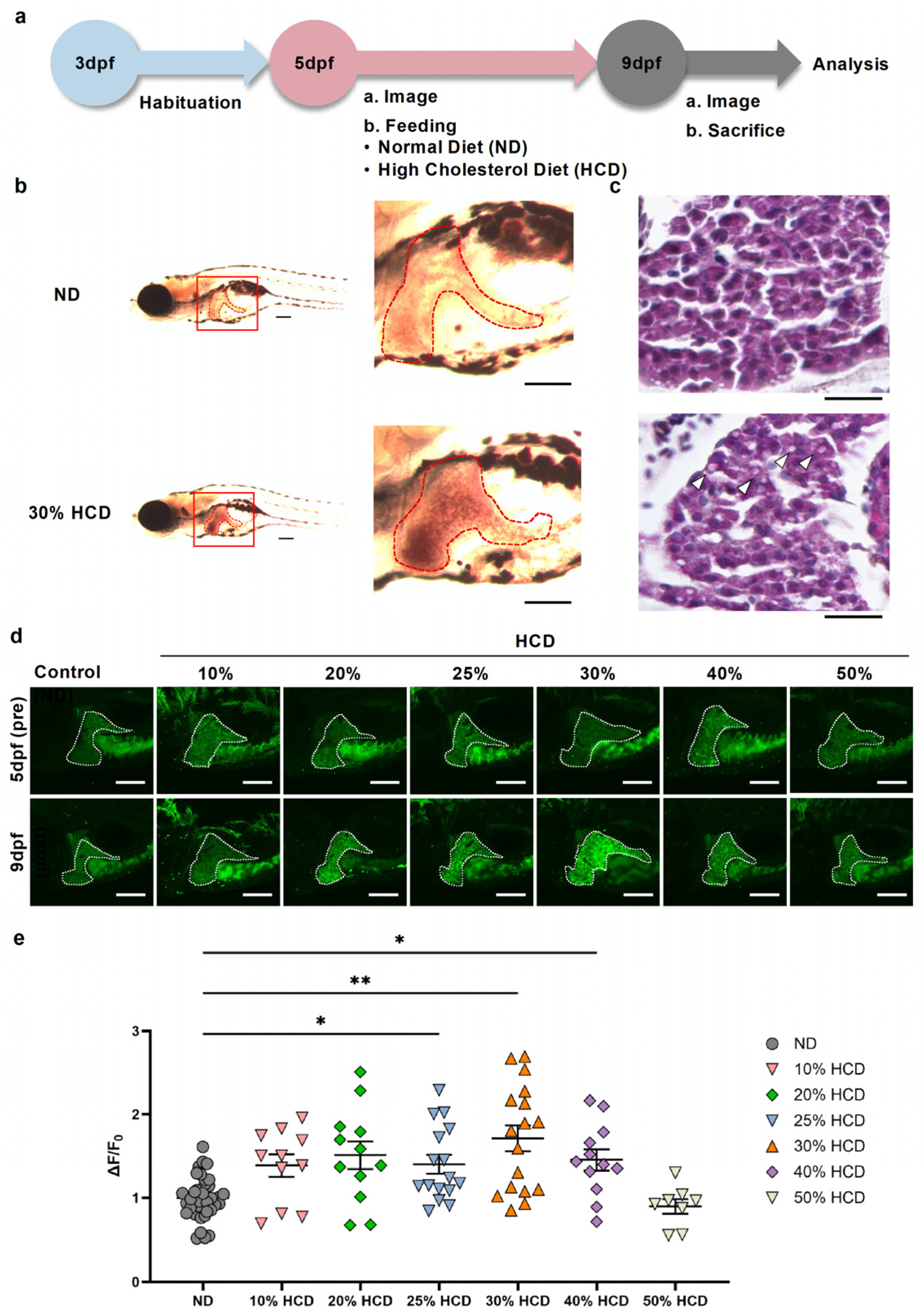
To investigate the relationship between eAdo dynamics and the development of MASLD, zebrafish larvae were fed either a normal diet (ND) or an HCD based on the timeline shown in Figure 1a. A morphological evaluation using Oil Red O and H&E staining revealed that larvae fed a 30% HCD had enlarged livers with markedly increased lipid accumulation compared with those of ND-treated controls (Figure 1b,c). These findings confirmed that a 30% HCD could robustly induce hepatic steatosis, recapitulating early MASLD-like phenotypes, in zebrafish. To assess hepatic eAdo dynamics with varying dietary cholesterol concentrations, we utilized transgenic zebrafish expressing the liver-specific GRABAdo sensor (Figure 1d). Larvae were exposed to diets containing 10%, 20%, 25%, 30%, 40%, or 50% cholesterol. The GRABAdo fluorescence intensity was significantly elevated in larvae fed a 25–40% HCD, particularly in the 30% and 40% HCD groups, compared with the ND control groups (Figure 1d,e). Moreover, the hepatic GFP intensity showed a concentration-dependent increase in response to higher cholesterol contents (Figure 1e). Based on both the morphological and GRABAdo fluorescence responses, a 30% HCD was selected for subsequent experiments, as it consistently induced significant hepatic steatosis, while larval viability and reproducibility were maintained.

2.2. HCD Induces Inflammatory, Inflammasome-Related, and ER-Stress Gene Expression in the Zebrafish Liver

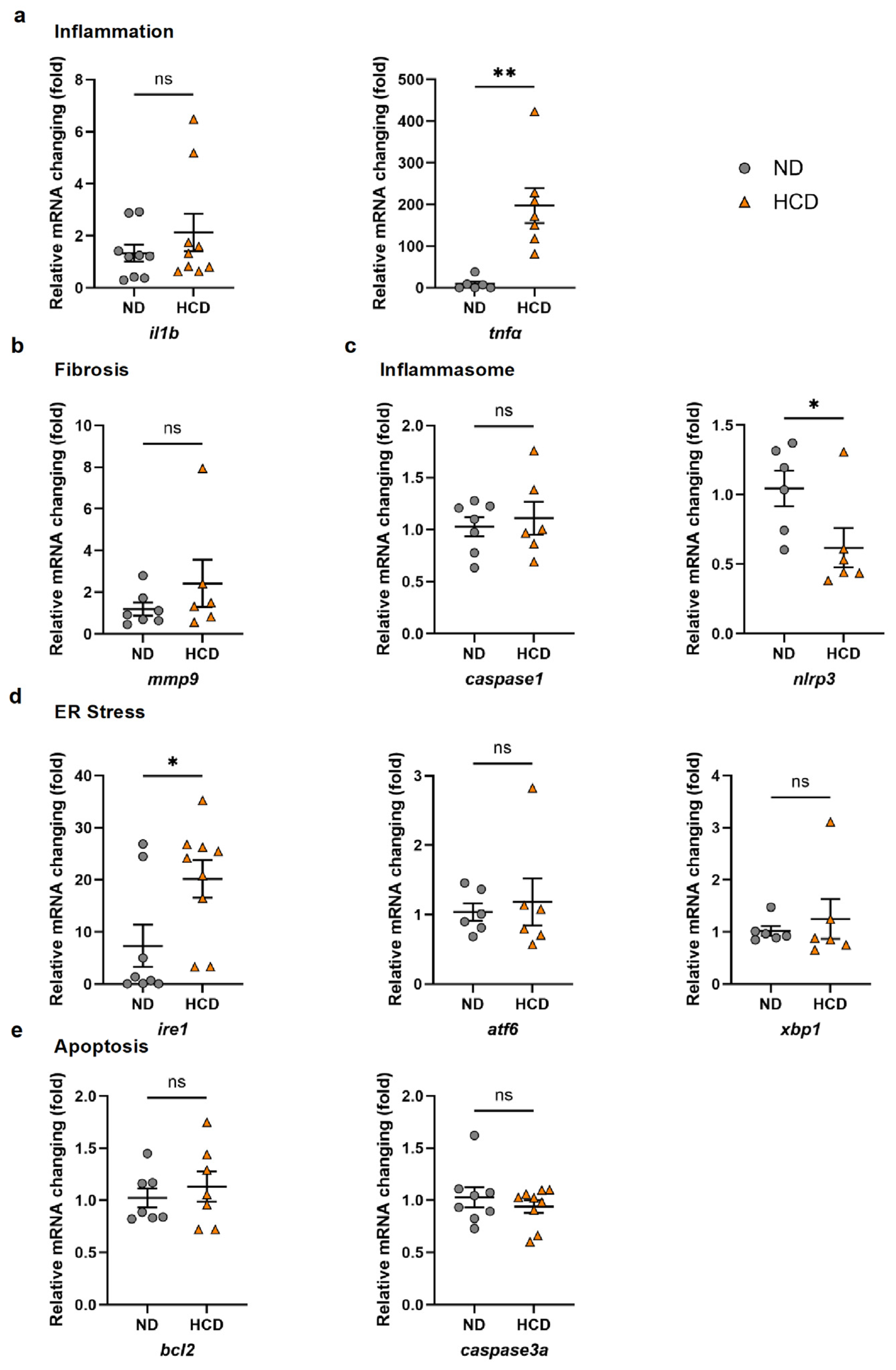
To further characterize the molecular alterations associated with HCD-induced steatosis, we quantified hepatic mRNA levels of inflammation-, fibrosis-, inflammasome-, ER stress-, and apoptosis-related genes in zebrafish larvae. The expression of tnfα, encoding a proinflammatory cytokine, was significantly increased in HCD-treated larvae compared with that in the ND group (Figure 2a). Among fibrosis-related genes, mmp9 showed an increasing trend after HCD administration, though no significant difference was observed. (Figure 2b). We next examined genes encoding components of the inflammasome pathway. Whereas caspase1 expression showed a slight upward trend, nlrp3 expression was unexpectedly reduced in HCD-treated larvae relative to the controls (Figure 2c), suggesting the complex or stage-dependent regulation of inflammasome signaling under steatotic conditions. An analysis of ER-stress markers revealed a significant upregulation of the expression of ire1, whereas atf6 and xbp1 mRNA levels showed minor increases, without reaching statistical significance (Figure 2d). These findings indicate that HCD feeding induces selective activation of the IRE1-mediated unfolded protein response in the zebrafish liver. In contrast, the expression of apoptosis-related genes (bcl2a and caspase3a) did not exhibit pronounced changes between groups (Figure 2e). Collectively, these results demonstrate that a 30% HCD triggers hepatic steatosis accompanied by enhanced inflammatory and ER-stress responses, establishing a MASLD-like molecular phenotype in zebrafish larvae.

2.3. Vitamin E Alleviates Hepatic Steatosis by Reducing eAdo Levels

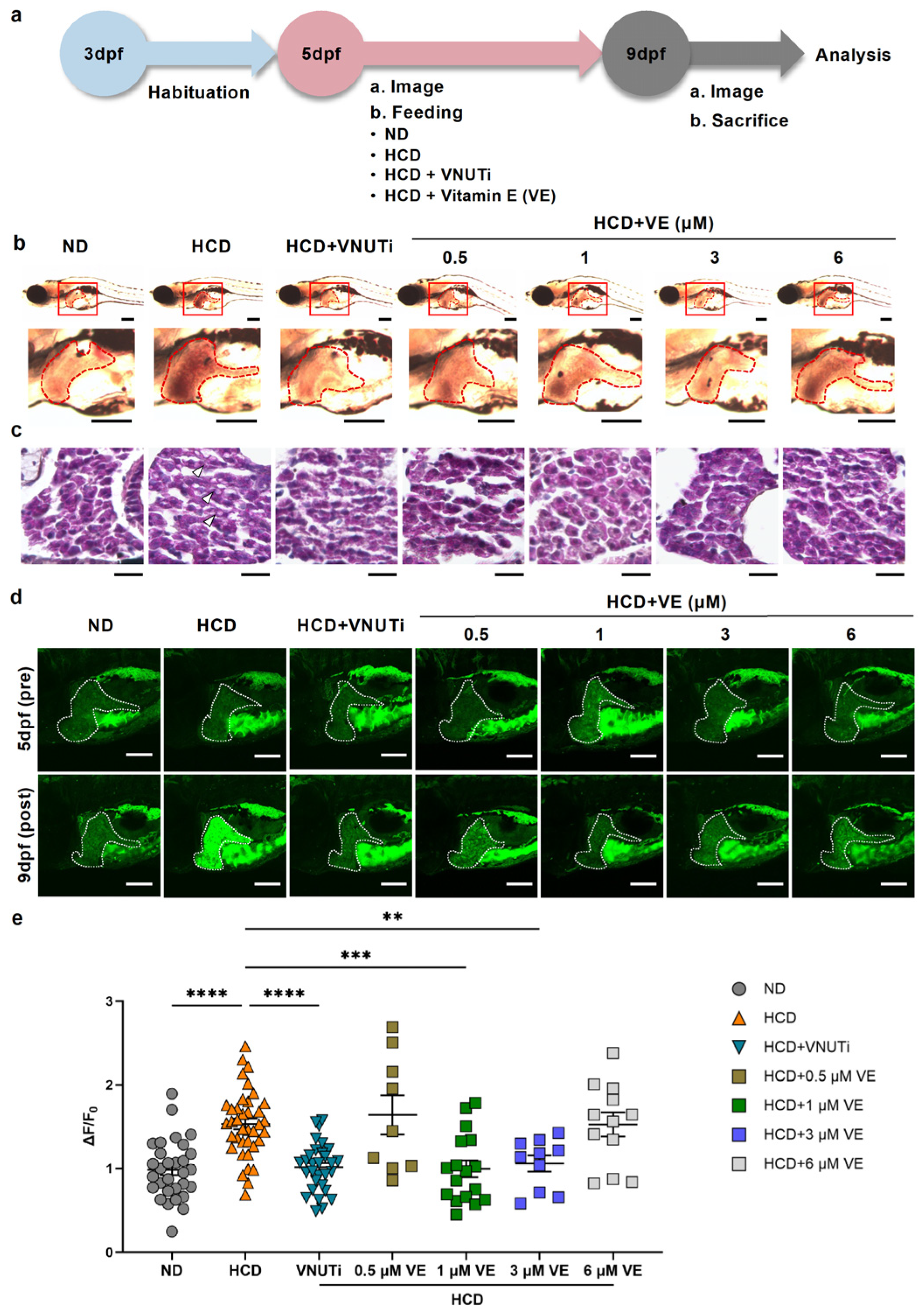
Excessive cholesterol accumulation in hepatocytes promotes ER stress, cell damage, and ferroptosis [15], all of which contribute to the progression of MASLD/MASH. Although vitamin E is widely recognized for its antioxidant and anti-inflammatory properties [16], its impact on eAdo dynamics in vivo has not been clearly demonstrated. To investigate whether vitamin E modulates hepatic eAdo signaling during steatosis, we treated GRABAdo-expressiong zebrafish larvae exhibiting HCD-induced liver steatosis with vitamin E (1–10 μM). In parallel, we administered a vesicular nucleotide transporter inhibitor (VNUTi), which reduces vesicular ATP release and thereby decreases eAdo production, as a positive control for both eAdo reduction and steatosis improvement (Figure 3a) [4]. Oil Red O and H&E staining revealed that both VNUTi and vitamin E (1 and 3 μM) markedly attenuated hepatic lipid accumulation in HCD-fed larvae (Figure 3b,c). However, higher concentrations of vitamin E did not further improve steatosis. We next evaluated hepatic eAdo dynamics in GRABAdo-expressing zebrafish. Consistent with their morphological effects, VNUTi and vitamin E, at 1 and 3 μM, significantly reduced liver GFP fluorescence compared with that in untreated HCD-fed controls (Figure 3d,e). In contrast, other vitamin E concentrations did not alter the GRABAdo fluorescence intensity. Because eAdo levels reflect extracellular ATP release—with elevated ATP/Ado promoting sterile inflammation in MASLD [5]—the observed reduction in GRABAdo fluorescence indicates that vitamin E suppresses pathological eAdo signaling during steatosis. Together, these results demonstrate that vitamin E ameliorates early-stage MASLD-like hepatic steatosis in vivo, at least in part through a reduction in eAdo levels.

2.4. Vitamin E Modulates Intracellular Calcium-Related Gene Expression in HCD-Induced MASLD

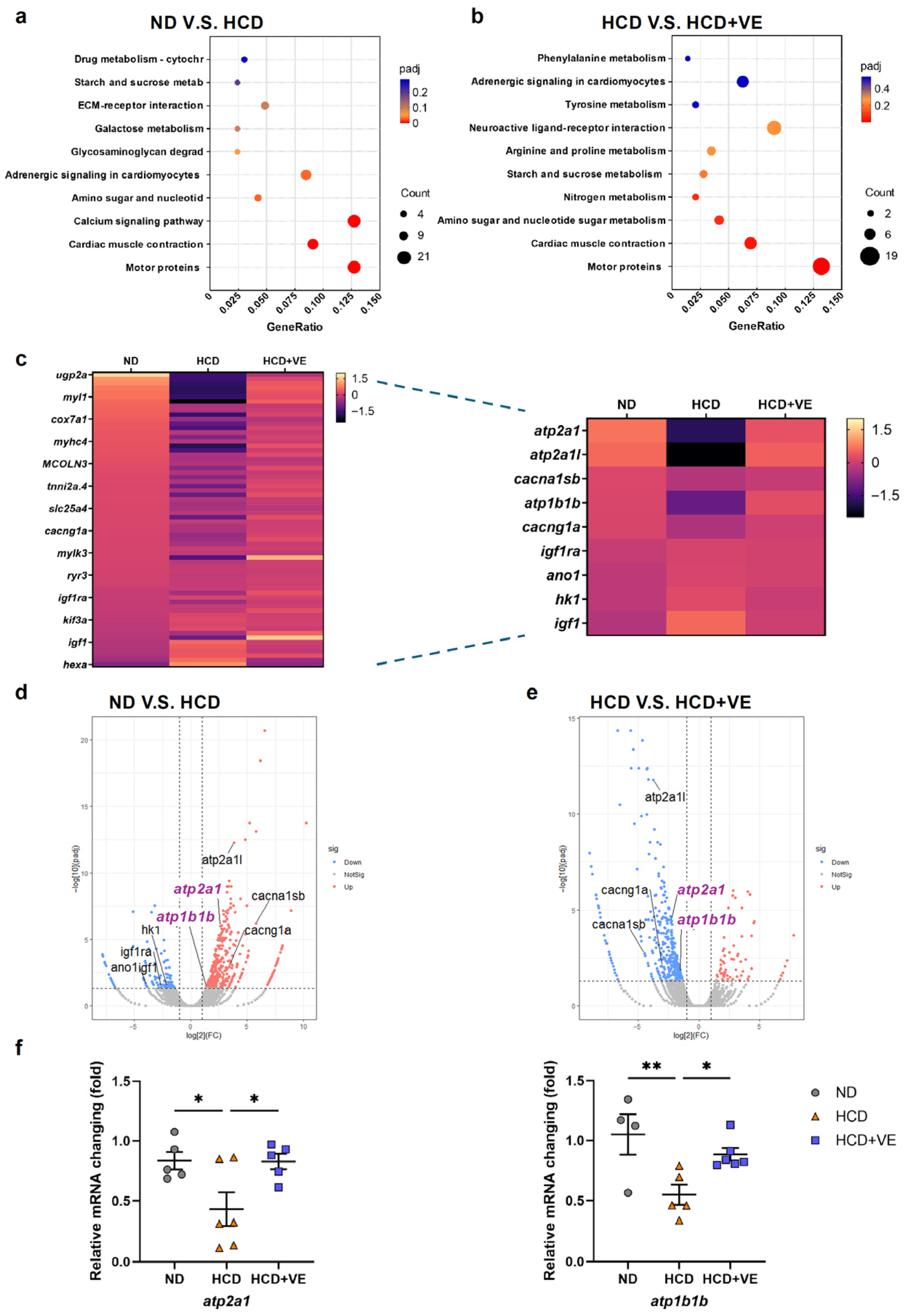
To further elucidate the molecular mechanisms through which vitamin E alleviates the MASLD-like pathology, we performed RNA sequencing using livers collected from zebrafish larvae, 9 days post fertilization (dpf), fed an ND, HCD, or HCD supplemented with vitamin E (3 μM). Among these three groups, 9134 differentially expressed genes (DEGs) were identified. To determine the biological significance of these DEGs, we performed KEGG pathway enrichment analysis. Pathways associated with cardiac muscle contraction and motor protein function were among the top 10 significantly enriched pathways (Figure 4a,b). Although classical “calcium signaling pathways” were not included in the top 10 terms, the expression of several genes within these enriched pathways—including atp2a1 and atp1b1b, which encode components of SERCA-mediated Ca2+ handling—showed marked alterations, suggesting that the intracellular Ca2+ regulatory machinery is affected downstream of vitamin E treatment. Hierarchical clustering via heatmap visualization further demonstrated distinct expression patterns among the groups (Figure 4c). Moreover, a volcano plot analysis revealed that, relative to levels in the HCD group, the ND group contained 411 upregulated and 113 downregulated genes, whereas vitamin E treatment resulted in upregulation of 405 and downregulation of 71 genes compared to the levels of HCD-fed larvae (Figure 4d,e). From these datasets, we identified nine genes associated with glucose metabolism, carbohydrate metabolism, or intracellular Ca2+ homeostasis (atp1b1b, cacna1sb, cacng1a, atp2a1/serca, atp2a1l, ano1, igf1ra, hk1, and igf1) that were consistently modulated by vitamin E (Figure 4c).
Among these genes, atp2a1 (SERCA1) and atp1b1b, both encoding key regulators of intracellular Ca2+ transport, were selected for validation via qPCR. HCD feeding significantly reduced the expression of both genes; in comparison, vitamin E treatment restored their expression to levels comparable to or higher than those in ND controls (Figure 4f). These findings indicate that vitamin E counteracts the HCD-induced MASLD-like pathology, at least in part, by modulating genes that are essential for intracellular Ca2+ homeostasis, implicating SERCA-related pathways as downstream targets of vitamin E.

2.5. SERCA Activation Ameliorates MASLD-like Steatosis by Reducing Hepatic eAdo Levels

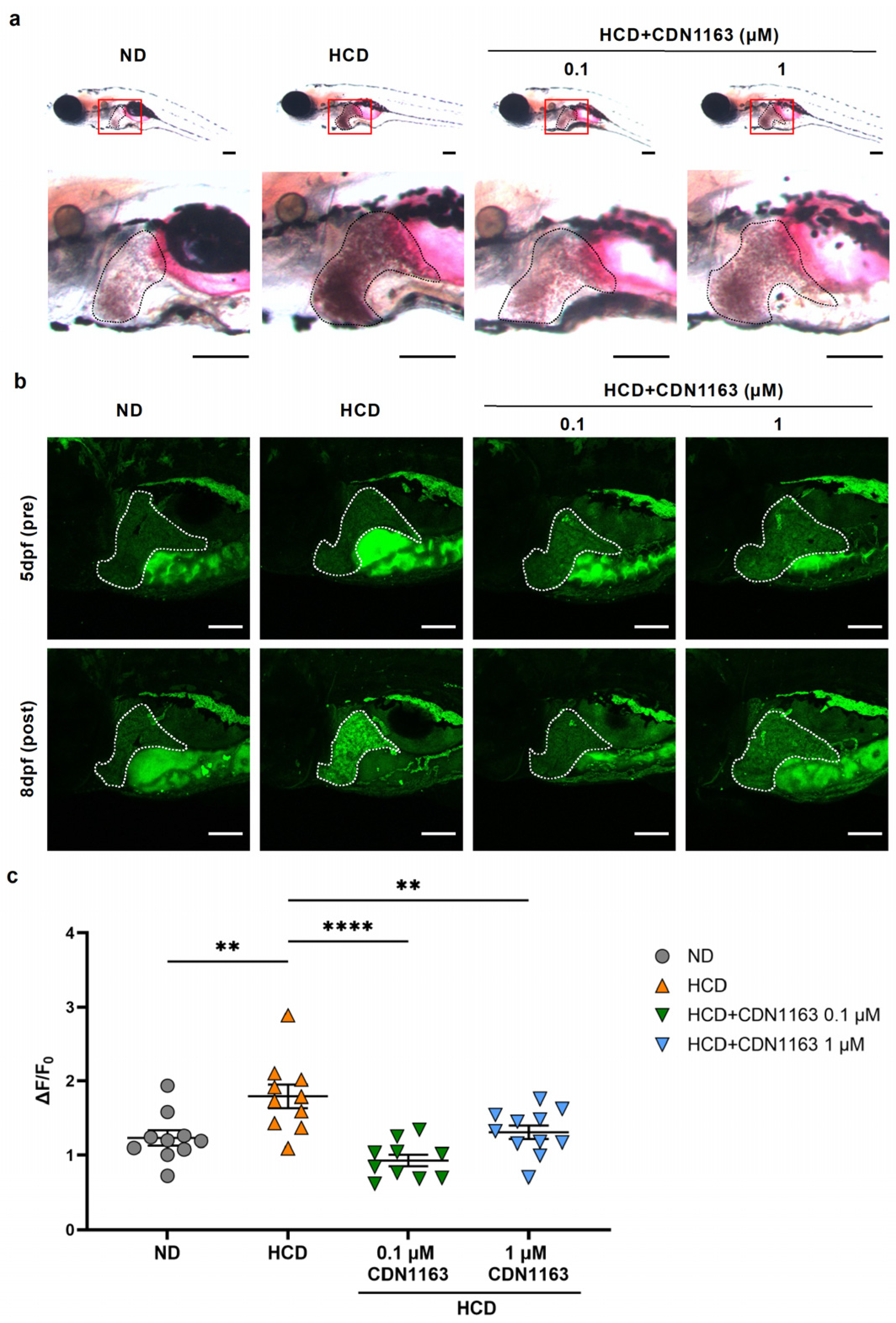
SERCA is the principal pump responsible for transporting Ca2+ from the cytosol to into the ER, thereby maintaining intracellular Ca2+ homeostasis. Our RNA-seq analysis results indicated that atp2a1 (SERCA) expression was significantly downregulated in zebrafish with an HCD-induced MASLD-like pathology, consistent with previous reports demonstrating that impaired SERCA activity contributes to steatosis and ER stress in metabolic liver disease models [17]. Although pharmacological SERCA activation has been shown to restore the ER Ca2+ balance and attenuate hepatic lipid accumulation in mammalian models, whether SERCA influences eAdo dynamics in vivo remains unknown. To assess this factor, we administered the SERCA allosteric activator CDN1163 to wild-type or GRABAdo-expressiong zebrafish larvae exhibiting HCD-induced hepatic steatosis. CDN1163 treatment markedly reduced hepatic lipid deposition, as demonstrated by a decrease in Oil Red O-positive lipid accumulation compared to that in the untreated MASLD-like larvae (Figure 5a). We next evaluated hepatic eAdo levels based on GRABAdo fluorescence. CDN1163 significantly decreased the GFP fluorescence intensity in the liver, with the strongest effect observed with 0.1 μM (Figure 5b,c). This reduction in eAdo occurred concomitantly with the improvement in steatosis. Collectively, these findings demonstrate that SERCA activation is sufficient to attenuate the MASLD-like pathology in vivo, at least in part by lowering extracellular Ado levels, supporting a mechanistic link between ER Ca2+ regulation and purinergic signaling during early steatotic liver injury.

3. Discussion

In this study, we investigated the hepatoprotective mechanisms underlying the effects of vitamin E on HCD-induced MASLD using a transgenic zebrafish model expressing the liver-specific GRABAdo sensor, which enables the real-time visualization of hepatic eAdo dynamics in vivo [4,14]. We demonstrated that HCD feeding increased hepatic eAdo levels in a dose-dependent manner and induced steatosis, whereas vitamin E significantly reduced eAdo accumulation and ameliorated lipid deposition. VNUT inhibition, used as a positive control owing to its established ability to suppress ATP-derived eAdo release [4], resulted in similar improvements, supporting the relevance of purinergic signaling in MASLD progression. Mechanistically, although changes in inflammatory and apoptotic markers were modest, the transcriptomic analysis revealed restoration of the expression of calcium transport-related genes, particularly atp2a1 (SERCA) and atp1b1b, suggesting the potential involvement of calcium homeostasis in the hepatoprotective effect of vitamin E. Furthermore, SERCA activation, mediated by the allosteric modulator CDN1163, reproduced the hepatoprotective effects of vitamin E, indicating that restoring Ca2+ homeostasis may function downstream of, or in parallel to, the regulation of extracellular adenosine.
The results of previous studies have shown that excessive dietary cholesterol induces hepatocellular stress, promotes DAMP release, and drives sterile inflammation, thereby contributing to MASLD and MASH progression [18,19]. Tokumaru et al. further demonstrated that VNUT-dependent ATP exocytosis is a major source of hepatic eAdo and plays a critical role in steatosis development [4]. Consistent with these findings, our results confirmed that an HCD increases hepatic eAdo in a dose-dependent manner. Importantly, we provide the first in vivo evidence that vitamin E reduces hepatic eAdo levels and alleviates steatosis to an extent comparable to that observed with VNUT inhibition. Notably, the effects of water-soluble vitamin E (tocofersolan) exhibited a plateau at 3 μM, with no further improvement observed at 6 μM. This dose–response pattern may reflect saturation of cellular uptake mechanisms or intracellular handling of vitamin E, as has been reported for vitamin E derivatives [20]. Although no overt toxicity was detected at the higher concentration in our experimental setting, it is possible that excess vitamin E does not confer additional benefit once ER Ca2+ homeostasis and associated stress pathways are sufficiently stabilized. Thus, the observed plateau likely reflects a limitation in bioavailability or functional efficacy rather than a simple linear dose-dependent effect. Together, these findings indicate that the hepatoprotective effects of vitamin E extend beyond its classical antioxidant and anti-inflammatory properties and involve modulation of purinergic signaling at an early stage of MASLD. To our knowledge, hepatoprotection mediated by vitamin E through regulation of extracellular adenosine has not been well characterized.
Recent evidence indicates that elevated eAdo perturbs intracellular calcium homeostasis through adenosine receptor-mediated signaling, leading to ER stress and lipid dysregulation [21,22,23]. In our study, transcriptomic profiling further revealed that vitamin E restores the expression of genes encoding calcium-handling proteins, including atp2a1 (SERCA) and atp1b1b, which were downregulated with HCD-induced steatosis [24,25]. SERCA is essential for ER Ca2+ storage and for preventing ER stress, a key driver of lipid dysregulation and hepatocyte injury [24,25]. In the mammalian liver, ER Ca2+ homeostasis is predominantly maintained by SERCA2b (ATP2A2). In contrast, our RNA-seq analysis results revealed that ATP2A1 (SERCA1) is the major SERCA isoform expressed in the zebrafish liver. Moreover, atp2a2 expression was weak, and no changes were observed in any treatment group. Moreover, atp2a1 expression was reduced by HCD feeding and restored following vitamin E treatment, indicating that this isoform is responsive to metabolic stress and therapeutic intervention in this model. This apparent discrepancy likely reflects species-specific differences in SERCA isoform utilization in teleosts. Supporting this interpretation, public expression databases, including ZFIN (https://zfin.org/ [accessed on 2 January 2026]) and the EMBL-EBI Expression Atlas (https://www.ebi.ac.uk/gxa/home [accessed on 2 January 2026]), indicate that atp2a1 is expressed in the zebrafish liver, whereas atp2a2 expression is enriched in cardiac and neural tissues and remains low in the liver. Consistently, single-cell RNA-seq analyses of the zebrafish liver have revealed atp2a1 expression in hepatocyte clusters, whereas atp2a2 is weakly expressed or undetectable [26]. Together, these findings suggest that ATP2A1 represents the functionally dominant SERCA isoform governing ER Ca2+ homeostasis in zebrafish hepatocytes.
Impaired SERCA activity has been implicated in the pathogenesis of MASLD through ER Ca2+ depletion, activation of the unfolded protein response, and dysregulation of lipid metabolism [24,25]. Although intracellular Ca2+ dynamics were not directly measured in the present study, the results of previous studies indicate that HCD feeding and associated ER stress are expected to promote ER Ca2+ depletion and a concomitant increase in cytosolic Ca2+ levels [24,25]. Consistent with this framework, the recovery of SERCA-related gene expression observed in our model suggests that vitamin E may preserve ER Ca2+ storage capacity and mitigate ER stress, thereby interrupting the pathological cascade linking HCD-induced metabolic stress to intracellular Ca2+ dysregulation. Our data further suggests a bidirectional relationship between SERCA activity and eAdo signaling. Vitamin E treatment was associated with reduced eAdo levels and restoration of SERCA expression; in comparison, pharmacological activation of SERCA with the small-molecule activator CDN1163 likewise resulted in a reduction in eAdo. These findings support a model in which SERCA dysfunction and purinergic signaling form a pathological feedback loop during HCD-induced hepatic stress. Reduced SERCA activity may exacerbate ER stress and promote ATP release, leading to increased eAdo accumulation, while restoration or activation of SERCA function—either by vitamin E or by CDN1163—may stabilize ER Ca2+ homeostasis and attenuate stress-induced ATP/adenosine release. In this context, the ability of CDN1163 to phenocopy the protective effects of vitamin E highlights intracellular Ca2+ homeostasis as a critical regulatory node in eAdo-associated steatosis. Thus, vitamin E may exert hepatoprotective effects partly through modulation of the eAdo–Ca2+ axis, extending beyond its classical antioxidant and anti-inflammatory properties [27,28]. To date, no evidence suggests that vitamin E directly modulates purinergic receptor expression or signaling sensitivity, and this possibility was not addressed experimentally in the present study. Further studies will be required to elucidate the precise molecular mechanisms by which vitamin E modulates SERCA activity, intracellular Ca2+ homeostasis, and purinergic signaling.
Several limitations of this study should be acknowledged. First, intracellular Ca2+ dynamics were not directly assessed, and future studies employing live-cell Ca2+ imaging will be required to define the precise temporal relationship between SERCA activity, cytosolic Ca2+ levels, and eAdo accumulation. Second, the vitamin E formulation used in this study (tocofersolan) is hydrolyzed to α-tocopherol in vivo; however, its actual hepatic concentration in zebrafish larvae remains undetermined. Lastly, while zebrafish provide a powerful platform for visualizing purinergic signaling, additional validation using mammalian MASLD models will be necessary to confirm the generalizability of the eAdo–Ca2+ regulatory mechanism.
In conclusion, we have demonstrated that vitamin E mitigates early-stage MASLD in zebrafish by decreasing hepatic eAdo and alleviating steatosis. Transcriptomic and pharmacological evidence further suggests that the restoration of SERCA-dependent Ca2+ homeostasis represents a downstream or complementary mechanism of this protective effect. Although further work is required to define the precise molecular interactions, our findings reveal a previously unrecognized mechanistic link among vitamin E, eAdo signaling, and intracellular calcium regulation in MASLD pathogenesis. Combined with the utility of our hepatic GRABAdo-expressing zebrafish line, this study provides a valuable platform for dissecting purinergic and Ca2+-dependent pathways and supports the potential of vitamin E as a therapeutic candidate targeting the earliest molecular disturbances in MASLD.

4. Materials and Methods

4.1. Zebrafish Maintenance

All zebrafish experiments were conducted in accordance with institutional and national ethical guidelines and complied with the ARRIVE guidelines. Experimental protocols were approved by the Institutional Review Board of Oita University (approval numbers: 240301, 4-34). Adult zebrafish (AB strain; ZFIN, Eugene, OR, USA) were maintained with a 14 h light/10 h dark cycle at 28–29 °C. Embryos were collected and kept in egg water at 28.5 °C until use. For all experiments, healthy larvae at 5 dpf were randomly allocated to experimental groups. A transgenic line expressing a liver-specific GRABAdo sensor, Tg (fabp10:GRABAdo), was used as previously described [4]. Control larvae were fed a standard diet (Hikari Labo 130; Kyorin, 0.3 mg/larva). For MASLD induction, larvae were fed an HCD consisting of a control diet supplemented with 10–50% (w/w) cholesterol powder (FUJIFILM Wako Pure Chemical Corporation, Osaka, Japan). Larvae were fed from 5 to 9 dpf, and the food was renewed daily. For vitamin E experiments, wild-type larvae fed with 30% HCD were simultaneously exposed to water-soluble vitamin E (tocofersolan; MedChemExpress, Monmouth Junction, NJ, USA) at 0, 0.5, 1, 3, or 6 µM from 5 to 9 dpf. Egg water (with or without vitamin E) was refreshed daily after feeding. To suppress ATP-derived eAdo release, HCD-fed larvae were treated with 125 µg/mL of the VNUT inhibitor (Tokyo Chemical Industry, Tokyo, Japan) or vehicle from 5 to 9 dpf. The medium was renewed daily after feeding. For SERCA activation experiments, HCD-fed larvae were exposed to CDN1163 (0.1 or 1 µM; Sigma-Aldrich, St. Louis, MO, USA) from 5 to 8 dpf, with daily medium replacement after feeding.

4.2. Live Imaging and GFP Detection in GRABAdo-Expressing Zebrafish

GRABAdo-expressing larvae at 9 dpf were anesthetized, placed on glass-bottom dishes, and embedded in 1.5% low-melting-point agarose for live imaging. Time-lapse fluorescence images were acquired using a confocal microscope (FluoView FV3000; Olympus, Tokyo, Japan) equipped with 10× (NA 0.3) or 20× (NA 0.5) water-immersion objectives. Sequential line scanning was performed to capture fluorescence and differential interference contrast (DIC) channels. Z-series were collected with a 208 μm pinhole and 3–4 μm step sizes and then stacked using FluoView FV3000 software (Olympus). Fluorescence/ratiometric images were overlaid onto single-plane DIC images. GFP fluorescence in four anatomical regions was quantified via ROI analysis using cellSens (Olympus).

4.3. Histological Analysis

The larvae were fixed in 4% paraformaldehyde (4 °C, 24 h), embedded in paraffin, and processed using standard histological workflows. Consecutive 5 μm sections were H&E-stained. All images were obtained using the colored brightfield of a Keyence fluorescence microscope (Keyence, Osaka, Japan).

4.4. Oil Red O Staining

The zebrafish larvae were fixed overnight in 4% paraformaldehyde (4 °C), washed twice with PBS, and stained with 0.3% Oil Red O under gentle agitation (45 min). This procedure was followed by washing the sample with PBS-T and 60% isopropanol. Thereafter, the samples were placed in 50% glycerol. Lastly, the samples were placed in 3% methylcellulose and were imaged using a Leica M205 FA fluorescent stereo microscope (Leica Microsystems, Wetzlar, Germany).

4.5. mRNA Sequencing

The livers were dissected from 9 dpf-old zebrafish larvae. Total RNA was extracted from pooled liver samples (n > 150) using a PureLink™ RNA Mini Kit (Thermo Fisher Scientific, Waltham, MA, USA). Libraries for RNA-seq analysis were prepared using poly-T oligo-attached magnetic beads and sequenced using a NovaSeq X Plus (Illumina, San Diego, CA, USA). RNA sequencing reads were aligned to the zebrafish genome (GRCz11) and ENSEMBL v109 annotations with HISAT2 (version 2.2.1). Analysis of DEGs was conducted with DESeq2 (v1.28.1). KEGG (http://www.genome.jp/kegg/ [accessed on 16 June 2025]) set overrepresentation analysis was performed with ClusterProfiler (v4.8.1).

4.6. RT-PCR Analysis

Total RNA was extracted from pooled liver samples (n = 102–180) using a PureLink™ RNA Mini Kit (Thermo Fisher Scientific) and reverse-transcribed with the High-Capacity cDNA Reverse Transcription Kit (Thermo Fisher Scientific). Quantitative PCR was performed on a LightCycler 96 System (Roche Diagnostics, Rotkreuz, Switzerland) using KAPA SYBR® Fast Master Mix (Kapa Biosystems, Wilmington, MA, USA) under the following conditions: 95 °C for 3 min; 45 cycles of 95 °C for 10 s, 63 °C for 30 s, and 72 °C for 10 s. Target gene expression was normalized to gapdh expression using the 2−ΔΔCt method. Primer sequences are provided in Table 1.

4.7. Statistical Analysis

Results are presented as the mean ± standard error of the mean (SEM). All statistical procedures were performed using GraphPad Prism software (v9.5.0; GraphPad Software, San Diego, CA, USA). ANOVA with post hoc Bonferroni correction or Kruskal–Wallis test was used to determine statistical significance among three or more groups. Unpaired Student’s t-tests or Mann–Whitney U tests were used to compare statistical significance between two groups; p-values < 0.05 were considered significant.

Author Contributions

M.S. conducted most of the experiments, analyzed the data, and wrote the original draft together with R.H., M.E.C.A., T.T. and T.K. established the high-cholesterol diet-induced MASLD zebrafish model and evaluated liver function together with M.S., M.S., A.K., H.T. and S.K. performed morphological analyses and immunohistochemical experiments. M.S., P.P. and K.S. performed RNA-seq experiments and analyzed the resulting data. M.S. and A.K. carried out the SERCA activator (CDN1163) treatment study and analyzed the data. M.S., T.T., N.S. and Y.L. established and maintained the GRABAdo transgenic fish line. T.H. (Takatoshi Hikida) and T.H. (Toshikatsu Hanada) contributed to data interpretation and critically reviewed the manuscript. R.H. conceptualized the experiments, edited the manuscript, and supervised the entire project. All authors have read and agreed to the published version of the manuscript.

Funding

This work was supported by the Japan Society for the Promotion of Science (JSPS) KAKENHI Grant-in-Aid for Scientific Research (B) [21H03376], Grant-in-Aid for JSPS Fellows [24KF0066], the Naito Foundation, and the Takeda Science Foundation (to R.H.). Behavioral experiments were partly conducted through the Cooperative Research Project Program of the Institute for Protein Research at Osaka University [CR-25-03] (R.H. with T.Hi.).

Institutional Review Board Statement

The animal study protocol was approved by the Institutional Review Board of Oita University, approval numbers: 240301 (date 26 January 2024) and numbers 4-34 (date 9 March 2023).

Informed Consent Statement

Not applicable.

Data availability Statement

The datasets generated in this study are available from the corresponding author upon request.

Acknowledgments

The authors thank H. Kato for their technical assistance.

Conflicts of Interest

The original contributions presented in this study are included in the article. Further inquiries can be directed to the corresponding author.

References

  1. Rinella, M.E.; Lazarus, J.V.; Ratziu, V.; Francque, S.M.; Sanyal, A.J.; Kanwal, F.; Romero, D.; Abdelmalek, M.F.; Anstee, Q.M.; Arab, J.P.; et al. A multisociety Delphi consensus statement on new fatty liver disease nomenclature. Hepatology 2023, 78, 1966–1986. [Google Scholar] [CrossRef] [PubMed]
  2. Riazi, K.; Azhari, H.; Charette, J.H.; Underwood, F.E.; King, J.A.; Afshar, E.E.; Swain, M.G.; Congly, S.E.; Kaplan, G.G.; Shaheen, A.A. The prevalence and incidence of NAFLD worldwide: A systematic review and meta-analysis. Lancet Gastroenterol. Hepatol. 2022, 7, 851–861. [Google Scholar] [CrossRef] [PubMed]
  3. Hutchison, A.L.; Tavaglione, F.; Romeo, S.; Charlton, M. Endocrine aspects of metabolic dysfunction-associated steatotic liver disease (MASLD): Beyond insulin resistance. J. Hepatol. 2023, 79, 1524–1541. [Google Scholar] [CrossRef] [PubMed]
  4. Tokumaru, T.; Apolinario, M.E.C.; Shimizu, N.; Umeda, R.; Honda, K.; Shikano, K.; Teranishi, H.; Hikida, T.; Hanada, T.; Ohta, K.; et al. Hepatic extracellular ATP/adenosine dynamics in zebrafish models of alcoholic and metabolic steatotic liver disease. Sci. Rep. 2024, 14, 7813. [Google Scholar] [CrossRef]
  5. Shaker, M.E. The contribution of sterile inflammation to the fatty liver disease and the potential therapies. Biomed. Pharmacother. 2022, 148, 112789. [Google Scholar] [CrossRef]
  6. Mederacke, I.; Filliol, A.; Affo, S.; Nair, A.; Hernandez, C.; Sun, Q.; Hamberger, F.; Brundu, F.; Chen, Y.; Ravichandra, A.; et al. The purinergic P2Y14 receptor links hepatocyte death to hepatic stellate cell activation and fibrogenesis in the liver. Sci. Transl. Med. 2022, 14, eabe5795. [Google Scholar] [CrossRef]
  7. Blaner, W.S.; Shmarakov, I.O.; Traber, M.G. Vitamin A and Vitamin E: Will the Real Antioxidant Please Stand Up? Annu. Rev. Nutr. 2021, 41, 105–131. [Google Scholar] [CrossRef]
  8. Pein, H.; Ville, A.; Pace, S.; Temml, V.; Garscha, U.; Raasch, M.; Alsabil, K.; Viault, G.; Dinh, C.P.; Guilet, D.; et al. Endogenous metabolites of vitamin E limit inflammation by targeting 5-lipoxygenase. Nat. Commun. 2018, 9, 3834. [Google Scholar] [CrossRef]
  9. Violet, P.C.; Ebenuwa, I.C.; Wang, Y.; Niyyati, M.; Padayatty, S.J.; Head, B.; Wilkins, K.; Chung, S.; Thakur, V.; Ulatowski, L.; et al. Vitamin E sequestration by liver fat in humans. JCI Insight 2020, 5, e133309. [Google Scholar] [CrossRef]
  10. Vilar-Gomez, E.; Vuppalanchi, R.; Gawrieh, S.; Ghabril, M.; Saxena, R.; Cummings, O.W.; Chalasani, N. Vitamin E Improves Transplant-Free Survival and Hepatic Decompensation Among Patients With Nonalcoholic Steatohepatitis and Advanced Fibrosis. Hepatology 2020, 71, 495–509. [Google Scholar] [CrossRef]
  11. Lavine, J.E.; Schwimmer, J.B.; Van Natta, M.L.; Molleston, J.P.; Murray, K.F.; Rosenthal, P.; Abrams, S.H.; Scheimann, A.O.; Sanyal, A.J.; Chalasani, N.; et al. Effect of vitamin E or metformin for treatment of nonalcoholic fatty liver disease in children and adolescents: The TONIC randomized controlled trial. JAMA 2011, 305, 1659–1668. [Google Scholar] [CrossRef]
  12. Violi, F.; Cangemi, R. Pioglitazone, vitamin E, or placebo for nonalcoholic steatohepatitis. N. Engl. J. Med. 2010, 363, 1185–1186. [Google Scholar] [PubMed]
  13. Hasegawa, T.; Yoneda, M.; Nakamura, K.; Makino, I.; Terano, A. Plasma transforming growth factor-beta1 level and efficacy of alpha-tocopherol in patients with non-alcoholic steatohepatitis: A pilot study. Aliment. Pharmacol. Ther. 2001, 15, 1667–1672. [Google Scholar] [CrossRef] [PubMed]
  14. Wu, Z.; He, K.; Chen, Y.; Li, H.; Pan, S.; Li, B.; Liu, T.; Xi, F.; Deng, F.; Wang, H.; et al. A sensitive GRAB sensor for detecting extracellular ATP in vitro and in vivo. Neuron 2022, 110, 770–782.e5. [Google Scholar] [CrossRef] [PubMed]
  15. Lee-Rueckert, M.; Jauhiainen, M.; Kovanen, P.T.; Escolà-Gil, J.C. Lipids and lipoproteins in the interstitial tissue fluid regulate the formation of dysfunctional tissue-resident macrophages: Implications for atherogenic, tumorigenic, and obesogenic processes. Semin. Cancer Biol. 2025, 114, 104–127. [Google Scholar] [CrossRef]
  16. Jiang, Q. Different Roles of Tocopherols and Tocotrienols in Chemoprevention and Treatment of Prostate Cancer. Adv. Nutr. 2024, 15, 100240. [Google Scholar] [CrossRef]
  17. Bednarski, T.K.; Rahim, M.; Hasenour, C.M.; Banerjee, D.R.; Trenary, I.A.; Wasserman, D.H.; Young, J.D. Pharmacological SERCA activation limits diet-induced steatohepatitis and restores liver metabolic function in mice. J. Lipid Res. 2024, 65, 100558. [Google Scholar] [CrossRef]
  18. Zhang, X.; Coker, O.O.; Chu, E.S.; Fu, K.; Lau, H.C.H.; Wang, Y.X.; Chan, A.W.H.; Wei, H.; Yang, X.; Sung, J.J.Y.; et al. Dietary cholesterol drives fatty liver-associated liver cancer by modulating gut microbiota and metabolites. Gut 2021, 70, 761–774. [Google Scholar] [CrossRef]
  19. Gan, L.T.; Van Rooyen, D.M.; Koina, M.E.; McCuskey, R.S.; Teoh, N.C.; Farrell, G.C. Hepatocyte free cholesterol lipotoxicity results from JNK1-mediated mitochondrial injury and is HMGB1 and TLR4-dependent. J. Hepatol. 2014, 61, 1376–1384. [Google Scholar] [CrossRef]
  20. Jiang, Q. Natural forms of vitamin E: Metabolism, antioxidant, and anti-inflammatory activities and their role in disease prevention and therapy. Free Radic. Biol. Med. 2014, 72, 76–90. [Google Scholar] [CrossRef]
  21. North, R.A. P2X receptors. Philos. Trans. R. Soc. Lond. B Biol. Sci. 2016, 371, 20150427. [Google Scholar] [CrossRef]
  22. Hayashi, T.; Su, T.P. Sigma-1 receptor chaperones at the ER-mitochondrion interface regulate Ca(2+) signaling and cell survival. Cell 2007, 131, 596–610. [Google Scholar] [CrossRef] [PubMed]
  23. Isshiki, M.; Ando, J.; Korenaga, R.; Kogo, H.; Fujimoto, T.; Fujita, T.; Kamiya, A. Endothelial Ca2+ waves preferentially originate at specific loci in caveolin-rich cell edges. Proc. Natl. Acad. Sci. USA 1998, 95, 5009–5014. [Google Scholar] [CrossRef] [PubMed]
  24. Oh, B.C. Phosphoinositides and intracellular calcium signaling: Novel insights into phosphoinositides and calcium coupling as negative regulators of cellular signaling. Exp. Mol. Med. 2023, 55, 1702–1712. [Google Scholar] [CrossRef] [PubMed]
  25. Arruda, A.P.; Hotamisligil, G.S. Calcium Homeostasis and Organelle Function in the Pathogenesis of Obesity and Diabetes. Cell Metab. 2015, 22, 381–397. [Google Scholar] [CrossRef]
  26. Huang, Y.; Liu, X.; Wang, H.Y.; Chen, J.Y.; Zhang, X.; Li, Y.; Lu, Y.; Dong, Z.; Liu, K.; Wang, Z.; et al. Single-cell transcriptome landscape of zebrafish liver reveals hepatocytes and immune cell interactions in understanding nonalcoholic fatty liver disease. Fish Shellfish Immunol. 2024, 146, 109428. [Google Scholar] [CrossRef]
  27. Zingg, J.M. Finding vitamin Ex(‡). Free Radic. Biol. Med. 2024, 211, 171–173. [Google Scholar] [CrossRef]
  28. Azzi, A. Reflections on a century of vitamin E research: Looking at the past with an eye on the future. Free Radic. Biol. Med. 2021, 175, 155–160. [Google Scholar] [CrossRef]
Figure 1. A high-cholesterol diet (HCD) promotes hepatic steatosis and increases extracellular adenosine (eAdo) levels. (a) Experimental protocol. Zebrafish larvae were habituated until 3 days post fertilization (dpf), followed by feeding with either a normal diet (ND) or a high-cholesterol diet (HCD) from 5 to 9 dpf. At 9 dpf, larvae were subjected to imaging and tissue analysis. (b) Representative images of Oil Red O staining of liver tissue (outlined in red) in wild-type larvae at 9 dpf, maintained on an ND or a 30% HCD. Sagittal sections are shown at lower and higher magnification. Scale bar = 200 µm. (c) Hematoxylin and eosin (H&E)-stained liver sections of ND and 30% HCD group larvae. Hepatic lipid droplets are observed in HCD-fed larvae (white arrowheads). Scale bar = 40 μm. (d) Representative images of liver GFP fluorescence in G-protein-coupled receptor activation-based adenosine sensor (GRABAdo)-expressing zebrafish larvae at 9 dpf fed an ND or varying concentrations of an HCD (10–50%). The liver area is outlined by a white dashed line. Scale bar = 100 μm. (e) Quantification of the change in the GFP fluorescence intensity in the livers of GRABAdo-expressing larvae fed an ND or HCD (10–50%). Data represent the ΔF/F0 from 8 to 38 larvae per group (ND, n = 38; 10% HCD, n = 11; 20% HCD, n = 12; 25% HCD, n = 16; 30% HCD, n = 17; 40% HCD, n = 12; 50% HCD, n = 8). Data are shown as the mean  ±  SEM. * p  <  0.05; ** p  <  0.01 vs. ND.
Ijms 27 00614 g001
Figure 2. A high-cholesterol diet (HCD) selectively modulates inflammatory, inflammasome-related, and stress-response gene expression in zebrafish larvae. (a) Relative mRNA expression of proinflammatory cytokine-encoding genes (il1b and tnfa) in zebrafish larvae fed a normal diet (ND) or a 30% HCD (ND, n = 6–9; 30% HCD, n = 7–9). HCD feeding significantly increased tnfa expression; in comparison, il1b remained unchanged. (b) Fibrosis-related gene expression (mmp9) in the ND and HCD groups (ND, n = 7; 30% HCD, n = 6). No significant difference was observed. (c) Expression of inflammasome-associated genes (caspase1 and nlrp3) in the ND and HCD groups (ND, n = 6–7; 30% HCD, n = 6). Whereas caspase1 expression showed no significant change, nlrp3 expression was significantly downregulated in HCD-exposed larvae. (d) Expression of endoplasmic reticulum (ER) stress markers (atf6 and xbp1) in the ND and HCD groups (ND, n = 6; 30% HCD, n = 6). Levels of both genes showed slight, non-significant increases following HCD treatment. (e) Apoptosis-related gene expression (bcl2 and caspase3a) exhibited no significant differences between ND- and HCD-fed larvae (ND, n = 7–8; 30% HCD, n = 7–9). Each dot represents 20–25 zebrafish larvae. Data represent the mean ± SEM. * p  <  0.05; ** p  <  0.01 vs. ND; n.s., non-significant.
Ijms 27 00614 g002
Figure 3. Vitamin E attenuates high-cholesterol diet (HCD)-induced hepatic steatosis and reduces extracellular adenosine (eAdo) levels in zebrafish larvae. (a) Schematic overview of the treatment protocol. Zebrafish larvae were habituated until 3 days post fertilization (dpf) and subsequently fed with a normal diet (ND), HCD, HCD + VNUT inhibitor (VNUTi), or HCD supplemented with vitamin E (0.5–6 µM) from 5 to 9 dpf. Larvae were collected for imaging or tissue analysis at 9 dpf. (b) Representative images of Oil Red O staining of liver tissues (outlined in red) in ND-, HCD-, HCD + VNUTi-, and HCD + vitamin E-treated larvae at 9 dpf. Sagittal sections are shown at lower and higher magnification. Scale bar = 200 µm. Red boxed regions indicate the liver area, which appears to be enlarged and lipid-laden in HCD-fed larvae compared with the phenotype of ND controls. (c) Hematoxylin and eosin (H&E)-stained liver sections from ND, HCD, HCD + VNUTi, and HCD + vitamin E groups. Lipid droplets are evident in HCD-fed larvae (white arrowheads), whereas VNUT inhibition and vitamin E treatment reduced intracellular lipid accumulation. Scale bar = 40 µm. (d) Representative GFP fluorescence images of GRABAdo-expressing zebrafish larvae. The liver-specific eAdo level (ΔF/F0) was markedly increased by HCD feeding and was attenuated by VNUTi and vitamin E in a dose-dependent manner. The liver region is outlined with a white dotted line. Scale bar = 100 µm. (e) Quantification of liver GFP fluorescence intensity (ΔF/F0) in GRABAdo-expressing larvae across all treatment groups. Data represent the ΔF/F0 from 9 to 38 larvae per group (ND, n = 30; HCD, n = 38; HCD + VNUTi, n = 30; HCD + 0.5µM VE, n = 9; HCD + 1µM VE, n = 17; HCD + 3µM VE, n = 10; HCD + 6µM VE, n = 12). Data are presented as the mean  ±  SEM. ** p  <  0.01; *** p  <  0.001; **** p  <  0.0001 vs. ND; n.s., non-significant.
Ijms 27 00614 g003
Figure 4. Transcriptomic profiling reveals high-cholesterol diet (HCD)-induced alterations in hepatic gene expression and their partial normalization after vitamin E treatment. (a) Dot-plot of enriched KEGG pathways comparing normal diet (ND) and 30% HCD groups, showing the enrichment of pathways associated with inflammation, metabolic dysregulation, calcium signaling, and endoplasmic reticulum (ER) stress in HCD-fed larvae. (b) Dot-plot of enriched KEGG pathways comparing HCD and HCD + vitamin E (VE) groups. Vitamin E treatment attenuated multiple HCD-enriched pathways, including inflammatory and metabolic signaling cascades. (c) Heatmap of differentially expressed genes (DEGs) among ND, HCD, and HCD + VE groups. The expression of a subset of genes altered by the HCD (atp2a1, atp1b1b, atp2a1l, igf1, and igf1ra) showed the partial or complete restoration toward ND levels following VE treatment. (d) Volcano plot comparing ND versus HCD groups. Genes for which expression was significantly upregulated or downregulated by HCD are highlighted, including those encoding calcium pump regulators, such as atp2a1. (e) Volcano plot comparing HCD versus HCD + VE groups. VE supplementation reversed the expression trends of specific HCD-responsive genes, including atp1b1b. (f) qRT-PCR-based validation of selected DEGs (atp2a1 and atp1b1b) across the ND, HCD, and HCD + VE groups, confirming the transcriptomic trends identified via RNA-seq (ND, n = 4–5; HCD, n = 5–6; HCD + VE, n = 5–6). Each dot represents 102–180 livers of zebrafish larvae. Data represent the mean ± SEM. * p < 0.05; ** p < 0.01 vs. ND or HCD.
Ijms 27 00614 g004
Figure 5. Activation of SERCA by CDN1163 ameliorates high-cholesterol diet (HCD)-induced hepatic steatosis and reduces extracellular adenosine (eAdo) levels in zebrafish larvae. (a) Representative images of Oil Red O staining of liver tissue (outlined in black) in groups administered a normal diet (ND), HCD, or HCD supplemented with the SERCA activator CDN1163 (0.1 or 1 µM) from 5 to 8 days post fertilization (dpf). Red boxed regions indicate the liver area. HCD-fed larvae exhibited pronounced hepatic enlargement and lipid accumulation, which were suppressed by CDN1163 treatment in a dose-dependent manner. Sagittal sections are shown at lower and higher magnification. Scale bar = 200 µm. (b) Representative GFP fluorescence images of GRABAdo-expressing zebrafish larvae showing eAdo levels in the liver. HCD feeding markedly increased the ΔF/F0 intensity, indicating increased eAdo levels; in comparison, CDN1163 administration attenuated this elevation. Liver regions are outlined with a white dotted line. Scale bar = 100 µm. (c) Quantification of liver GFP fluorescence intensity (ΔF/F0) across ND, HCD, and CDN1163-treated groups. CDN1163 significantly suppressed the HCD-induced increase in the ΔF/F0. Data represent the ΔF/F0 from 10 to 11 larvae per group (ND, n = 10; HCD, n = 10; HCD + 0.1µM CDN1163, n = 10; HCD + 1µM CDN1163, n = 11). Data are presented as the mean ± SEM. ** p < 0.01; **** p < 0.0001 vs. ND or HCD.
Ijms 27 00614 g005
Table 1. Primers used for RT-qPCR of the zebrafish gene.
GeneForward Primer (5’–3’)Reverse Primer (5’–3’)
atf6CAGCACAGAGGCAGAACCTTGTTCACTGCCGGGATTCTTTTC
bcl2aGGGCCACTGGAAAACTGGATCCAAGCCGAGCACTTTTGTT
caspase1TTCTCTGATGTCGTGCACCCATGTGATCCTCATGTGCGCA
caspase3aTTTGATCGCAGGACAGGCATGCGCAACTGTCTGGTCATTG
gapdhCTGGTGACCCGTGCTGCTTTGTTTGCCGCCTTCTGCCTTA
il1bACTGTTCAGATCCGCTTGCATCAGGGCGATGATGACGTTC
ire1GAAGGGTTGACGAAACTGCCATTCTGTGCGGCCAAGGTAA
mmp9CTCGTTGAGAGCCTGGTGTTCGCTTCAGATACTCATCCGCT
nlrp3TCAGCTCTGAGTTCAAACCCCCACCCATAGGATCAGTTTTGAGTG
tnfαGCTTATGAGCCATGCAGTGATGCCCAGTCTGTCTCCTTCT
xbp1GGAGTTGGAGCTGGAGAATCATCCAACCCCAGTCTCTGTCT
atp2a1GTTGTCTCCCCTTTGAGCAGTCCCAGATGCTCTTACCTTCTTC
atp1b1bGAACTTCAGACCTAAGCCACCCCTCACCTCACCCAGCTTAC
Disclaimer/Publisher’s Note: The statements, opinions and data contained in all publications are solely those of the individual author(s) and contributor(s) and not of MDPI and/or the editor(s). MDPI and/or the editor(s) disclaim responsibility for any injury to people or property resulting from any ideas, methods, instructions or products referred to in the content.