Review

Association of Mutations in the Melanocortin-2 Receptor Accessory Protein 2 Gene (MRAP2) and Obesity: A Systematic Review and Meta-Analysis


1
Department of Anatomy, Physiology and Pharmacology, College of Veterinary Medicine, Auburn University, Auburn, AL 36849, USA
2
School of Fisheries, Aquaculture, and Aquatic Sciences, Auburn University, Auburn, AL 36849, USA
*
Author to whom correspondence should be addressed.
Int. J. Mol. Sci. 2026, 27(2), 1051; https://doi.org/10.3390/ijms27021051
Submission received: 1 December 2025 / Revised: 13 January 2026 / Accepted: 16 January 2026 / Published: 21 January 2026
(This article belongs to the Special Issue Molecular Defects of Naturally Occurring Mutations)

Abstract

Melanocortin-2 receptor accessory protein 2 (MRAP2) is essential for the intricate regulation of energy balance. Although rare MRAP2 variants have been reported in obese individuals, their overall impact on human obesity risk remains uncertain because previous studies were small, heterogeneous, and often lacked systematic functional characterization. To address this gap, we conducted a comprehensive systematic review and cohort-level meta-analysis to quantify the association between rare coding variants in MRAP2 and obesity. We systematically searched five major databases (Embase, PubMed, Scopus, Google Scholar, and Web of Science) and identified five eligible publications comprising seven independent cohorts. In total, 27 rare coding MRAP2 variants were observed in 46 (1.01%) individuals with obesity and 18 (0.34%) individuals with normal weight, among 9771 individuals (5223 with normal weight and 4548 with obesity). Using inverse-variance–weighted random-effects models fitted with restricted maximum likelihood, carriers of rare coding MRAP2 variants had higher odds of obesity (OR = 2.61; 95% CI, 1.49–4.58; p = 8.0 × 10⁻⁴). Taken together, these findings, derived predominantly from European-ancestry cohorts, support MRAP2 as a biologically plausible susceptibility gene for human obesity and indicate that rare coding MRAP2 variants are associated with higher odds of obesity, providing a quantitative framework to guide future large-scale genetic and functional studies.

1. Introduction

Obesity, an excess of fat accumulation, is a metabolic disorder resulting from the imbalance of food intake and expenditure. Obesity has become a global epidemic, with the World Health Organization reporting that 1.46 billion adults are overweight [1]. In the United States, the National Health and Nutrition Examination Survey indicates that 34.9% of adults are classified as obese and 68.5% are overweight [2]. The increasing prevalence of obesity poses significant public health challenges due to its strong correlation with various chronic diseases, including chronic kidney disease, type 2 diabetes mellitus, metabolic syndrome, nonalcoholic fatty liver disease, cardiovascular disease, and certain cancers [3]. Additionally, the economic burden of obesity is substantial, with national medical costs in the U.S. exceeding $275 billion in 2016 [4]. Despite considerable attention in recent decades, effective therapeutic options for obesity remain limited.
Genetic factors play a crucial role in obesity, with rare variants in over 15 genes identified as causative in monogenic obesity [5,6]. Understanding the genetic underpinnings of obesity is essential for developing new, efficient, and cost-effective methods to address this epidemic. One gene of particular interest is the melanocortin-2 receptor accessory protein 2 (MRAP2), coding a small single transmembrane protein highly expressed in the central nervous system, which modulates energy homeostasis [7,8,9,10]. Targeted deletion of Mrap2 leads to early-onset severe obesity in mice [11]. MRAP2 interacts with several G protein-coupled receptors (GPCRs), including melanocortin receptors (MCRs) [7], ghrelin receptor (GHSR-1a) [12], orexin receptor 1 (ORX1) [13], prokineticin receptor 1 (PKR1) [14], and several others [15] (reviewed in Ref. [16]). MRAP2 can modulate trafficking, ligand binding and selectivity as well as basal and ligand-stimulated signaling of these receptors [17]. Some of these receptors, especially the melanocortin-4 receptor (MC4R), are involved in modulating food intake and energy balance [18,19,20,21].
Recent studies have identified MRAP2 variants in both obese and lean individuals, classifying these mutations as pathological, benign, or of unclear effect based on limited clinical and functional evidence [11,22,23,24,25,26,27,28,29,30]. Linking these variants to human obesity has produced inconsistent results, reflecting small sample sizes, heterogeneous ascertainment strategies (severe early-onset versus population-based cohorts), differences in ancestry and obesity definitions, and the modifying effects of incomplete penetrance, gene–gene and gene–environment interactions, sex, age, and genetic heterogeneity.
Meta-analysis, a valuable statistical tool for combining data from individual studies, can address these challenges by enhancing statistical power and the precision of effect size estimates. It has been widely used to assess numerous genes associated with obesity, such as MC4R [31], MC3R [32], neuropeptide Y [33], leptin and its receptor [34]. However, no large-scale research has focused on MRAP2 and obesity through meta-analysis to reliably assess gene-disease associations. Therefore, this systematic review and meta-analysis aim to comprehensively evaluate the relationship between genetic variants in the coding region of MRAP2 and the risk of obesity across multiple population-based studies.

2. Materials and Methods

2.1. Eligibility Criteria

Any observational studies investigating the association between coding variants in MRAP2 and obesity were included, with eligibility limited to those published in English (from 2000–2024). Studies were included without restrictions on ethnicity of participants, gender, or age. Using WHO criteria, overweight was defined as body mass index (BMI) at 25–29.9, obesity as BMI ≥ 30, with normal weight defined as BMI 18.5–24.9. For children and adolescents, BMI percentiles were applied: normal weight (5th–85th percentile), overweight (85th–97th percentile), and obesity (≥97th percentile).
The primary meta-analytic outcome was the association between rare coding MRAP2 variants and obesity (obese vs. normal weight). We pre-specified three additional analytic sets: (i) all individuals with overweight or obesity combined versus normal weight; (ii) children and adolescents only; and (iii) carriers of the recurrent R125C variant versus non-carriers. These secondary and subgroup analyses were treated as hypothesis-generating. Review articles, case reports, in vitro studies only, family-based linkage/segregation studies, and cohorts restricted to severe obesity without an internal control group were excluded. When multiple publications reported data from the same underlying cohort, we included only one publication for descriptive purposes but used cohort-level data as separate observations in the meta-analysis. The protocol for this study was registered beforehand with PROSPERO (Registration Number: CRD42025640633).

2.2. Search Strategy

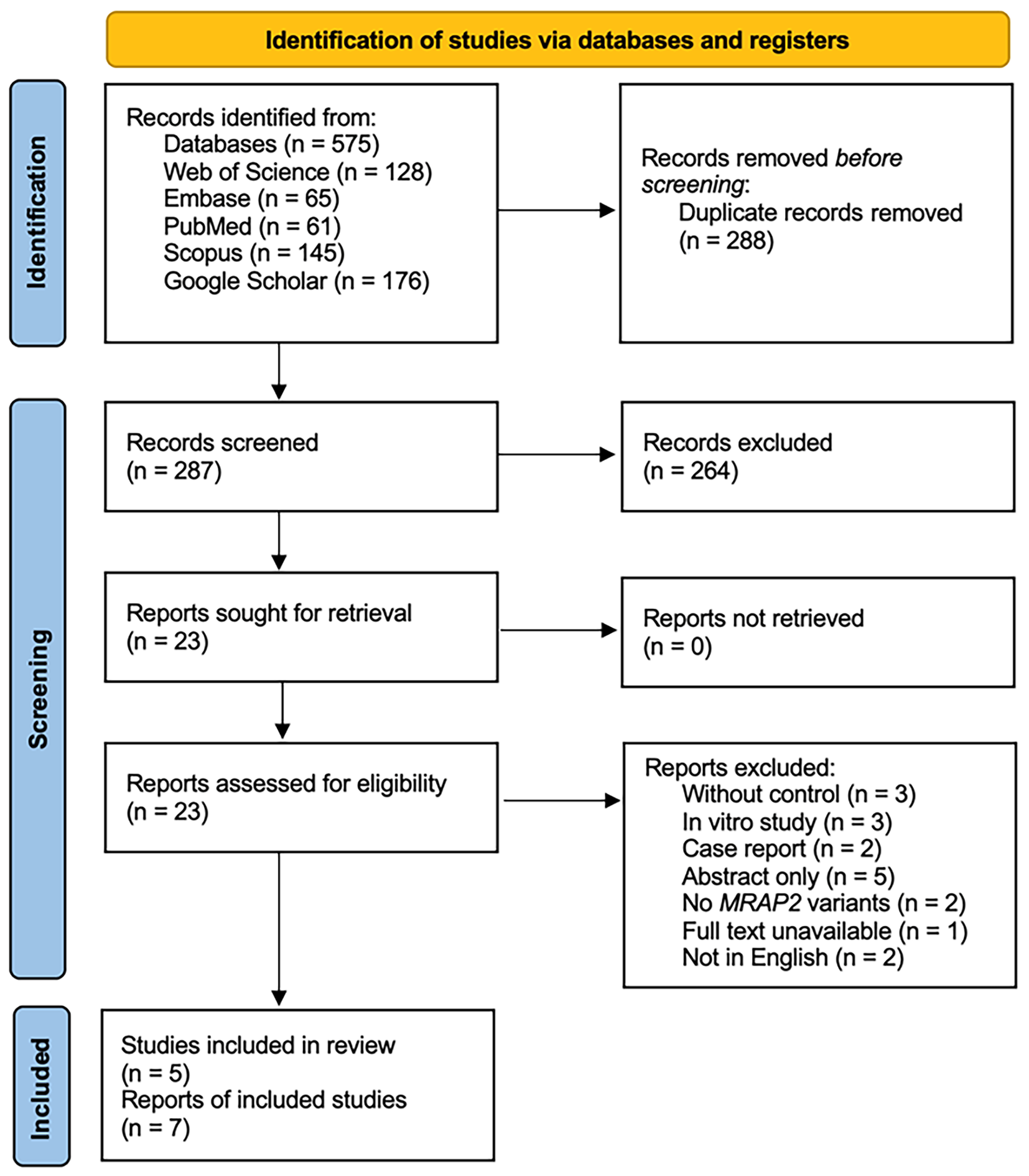
A meticulously designed search strategy was developed with the field expert (Tao YX) and a librarian, incorporating a comprehensive set of keywords and controlled vocabulary from pertinent databases. Four databases, including Scopus, PubMed, Embase, and Web of Science, were systematically searched to identify relevant publications. Additionally, Google Scholar was queried to locate any grey literature sources pertaining to the topic (Figure 1). The search was restricted by language and was limited to human studies. Databases were searched from 20 January 2025 to 22 January 2025. Keywords used in the search strategy included combinations of terms, such as melanocortin-2 receptor accessory protein 2 or MRAP2, along with variant, mutation, mutant, and loss-of-function, or obesity, overweight, and obese (Supplementary Table S1).

2.3. Study Selection

Titles and abstracts were first assessed for eligibility after removing duplicate records using EndNote 20 software (Clarivate, Philadelphia, PA, USA) by two reviewers, individually (Ji RL and Zheng HF). Articles that met the inclusion criteria were chosen for full-text evaluation (Figure 1). Any disagreements during the process were addressed through consensus or by consulting a third reviewer (Tao YX).

2.4. Data Extraction

Data were extracted from studies that fulfilled the inclusion criteria using a standardized extraction form (Ji RL and Zheng HF). The following information was recorded from each publication when available: first author, publication year, study design, ethnicity and geographical origin, mean age or age range, mean BMI or BMI range, and ascertainment strategy. For each independent cohort within a publication, we abstracted the numbers of individuals carrying rare coding MRAP2 variants and non-carriers among obese, overweight, and normal-weight participants. Where reported, age-stratified data (children/adolescents vs. adults) and variant-specific counts (e.g., R125C) were also extracted.
From these 2 × 2 tables, we derived cohort-specific odds ratios (ORs) and corresponding standard errors comparing carriers versus non-carriers for each pre-specified analytic set (all obesity/overweight vs. normal weight; obesity only vs. normal weight; children/adolescents only; and R125C carriers vs. non-carriers). Two authors (Ji RL and Zheng HF) independently performed data extraction and checked all entries; disagreements were resolved through discussion or by consulting a third reviewer (Tao YX).

2.5. Meta-Analytic Procedure

Meta-analyses were conducted in R (version 4.0.4, Boston, MA, USA) using the metafor package. The effect measure was the OR for obesity (or obesity/overweight in secondary analyses) comparing carriers versus non-carriers of rare coding MRAP2 variants within each independent cohort. ORs were log-transformed, and corresponding sampling variances were derived from the extracted 2 × 2 tables using standard formulae. Analyses were performed at the cohort level, so cohorts reported within the same publication contributed separate effect estimates.
We fitted inverse-variance–weighted random-effects models using restricted maximum likelihood (REML) to estimate pooled log ORs. REML was chosen because it provides less biased estimates of the between-study variance (τ2) than several alternative estimators, particularly when the number of studies is small and sample sizes are unbalanced, thereby yielding more reliable pooled effects. Study weights were defined as the inverse of the sum of the within-study variance and τ2, so that larger and more precise cohorts contributed proportionally more to the pooled estimate.
Pre-specified models were fitted for four analytic sets: (i) obesity only (excluding overweight individuals); (ii) all cohorts including both overweight and obesity; (iii) children and adolescents only; and (iv) carriers of the recurrent R125C variant. Between-study heterogeneity was quantified using τ2 and I2. To evaluate robustness, we conducted leave-one-out sensitivity analyses for each analytic set by refitting the REML model after omitting each cohort in turn and comparing the resulting pooled log ORs and 95% CIs with the main estimates. Potential small-study effects and publication bias were explored using funnel plots of cohort-level log ORs against their standard errors. Given that only seven cohorts were available, these plots were interpreted descriptively rather than as formal tests of publication bias. All meta-analytic procedures were performed under the guidance of a meta-analysis expert (Wilson AE) to ensure methodological rigor.

3. Results

3.1. Literature Search

A total of 575 articles were identified from the systematic online search (Figure 1). After removing 288 duplicates, 287 articles remained for title and abstract screening to determine eligibility. Twenty-three articles deemed relevant based on the inclusion criteria were selected for full-text evaluation, and eighteen of those studies were excluded with reasons: Studies without control (n = 3), In vitro study (n = 3), Case report (n = 2), Abstract only (n = 5), No MRAP2 variants (n = 2), Full text unavailable (n = 1), or Not in English (n = 2) (Figure 1). Five independent publications were selected for the meta-analysis [11,23,25,26,35]. The entire process was documented using the PRISMA 2020 Flow Diagram (Figure 1).

3.2. Study Characteristics

The details of the five eligible publications were shown in Table 1 and Supplementary Table S2, encompassing a total of 12,236 participants (5223 with normal weight and 7013 with obesity or overweight). Two publications reported data from two independent cohorts each [11,23], yielding seven cohorts in total. These cohorts span different geographic regions, with four focusing on children and adolescents and three on adults and show variation in sex distribution. In all studies, the coding region of MRAP2 was sequenced to detect variants in both obese and control subjects (Table 1 and Table 2, and Supplementary Table S2).

3.3. Relationship Between Coding Variants in MRAP2 and Obesity

MRAP2 coding variants were identified in 64 (0.91%) subjects with obesity or overweight and 18 (0.34%) individuals with normal weight. Fourteen variants were exclusively found in obese individuals (A3S, E24X, G31V, S15L, N77S, N88Y, E99Q, R113G, S114A, N121S, Q174R, I184T, T193A, and P195L), five were exclusive to normal weight individuals (Q13E, P32L, V91A, H133Y, and D203Y), and four were found in both groups (L115V, R125C, R125H, A137T, and M162T). Additionally, four variants were found in overweight individuals (A3T, F62C, K102X, and P195L) (Supplementary Table S2).
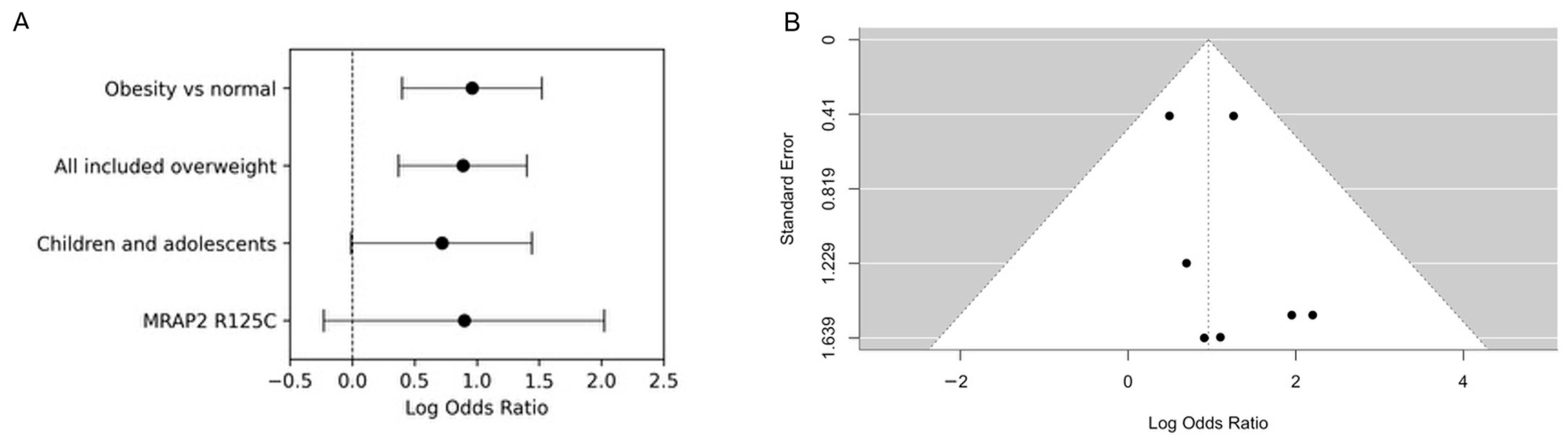
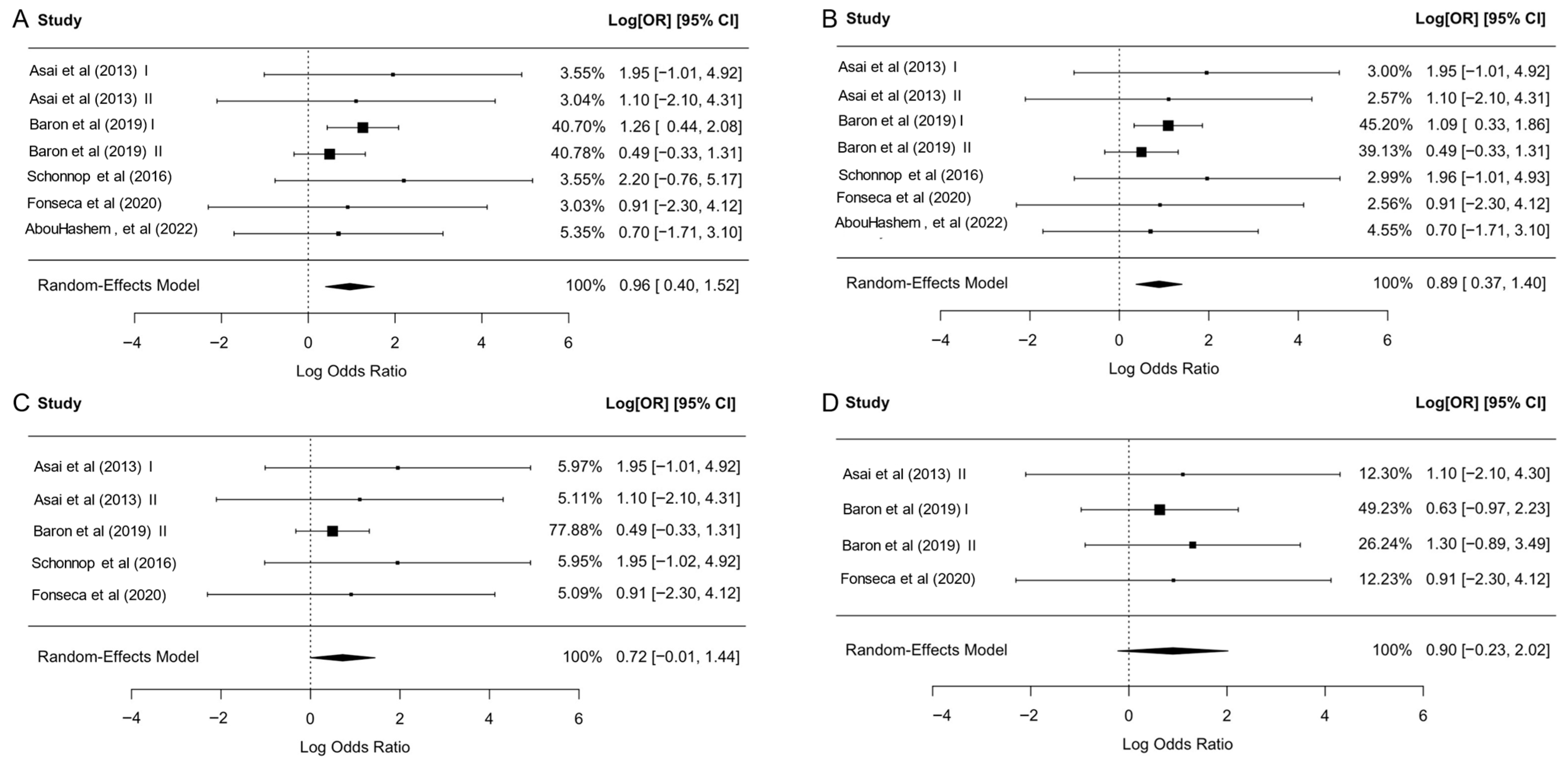
Pooling all reported rare coding MRAP2 variants in 7013 obese or overweight subjects and 5223 normal-weight subjects revealed a significant positive association between these variants and adiposity (OR = 2.43; 95% CI, 1.45–4.06; p = 7.0 × 10⁻⁴; I2 = 0%; τ2 = 0) (Table 3, Figure 2A and Figure 3). When the analysis was restricted to individuals with obesity versus normal weight, the association was slightly stronger (OR = 2.61; 95% CI, 1.49–4.58; p = 8.0 × 10⁻⁴), with low heterogeneity (I2 = 3.68%; τ2 = 0.03) (Table 3, Figure 2A and Figure 3).
Given the tendency of monogenic obesity to present early [39], typically during childhood, we narrowed our scope to include only children and adolescents. One study included adults who developed obesity in childhood [25]; therefore it was included in the children and adolescent group. In this subgroup, MRAP2 variants were identified in 24 (1.04%) obese and 9 (0.41%) normal weight subjects, yielding a pooled OR of 2.05 (95% CI, 0.99–4.24; p = 0.05; I2 = 0%; τ2 = 0) in 2310 obese and 2190 normal-weight children and adolescents. This borderline association, with a confidence interval that includes the null, should be interpreted cautiously (Table 3, Figure 2A and Figure 3).
Since the MRAP2 R125C variant was reported in four studies, we further analyzed the relationship between this mutation and obesity (Supplementary Table S2). R125C was identified in 12 (0.19%) obese and 3 (0.07%) normal weight subjects. The pooled OR was 2.45 (95% CI, 0.80–7.45; p = 0.12; I2 = 0%; τ2 = 0), indicating a positive but statistically non-significant association with wide CIs that reflect limited precision (Table 3, Figure 2A and Figure 3) and suggesting that the current data are compatible with both a moderate increase in risk and no effect.
The funnel plot of cohort-level log ORs (Figure 2B and Supplementary Figure S1) showed no obvious outliers or strong asymmetry; however, with only seven cohorts, this plot is descriptive and underpowered for a formal assessment of publication bias.
Leave-one-out sensitivity analyses supported the robustness of the primary findings (Supplementary Tables S3–S6). For the “all cohorts including overweight” model, omitting each cohort in turn yielded pooled log ORs between 0.72 and 1.14, with all 95% CIs remaining above 0 and p-values ≤ 0.042. For the “obesity vs. normal weight” model, leave-one-out log ORs ranged from 0.73 to 1.28, again with all 95% CIs excluding the null and p-values ≤ 0.039. Similar ranges were obtained when each of the two Baron et al. cohorts [23] was excluded individually, indicating that the overall association is not driven by a single study despite the substantial contribution of these cohorts to the total number of mutation carriers. In contrast, leave-one-out analyses for the children/adolescents-only and R125C models yielded consistently positive but non-significant pooled log ORs with wide CIs crossing the null, underscoring the exploratory and imprecise nature of these subgroup estimates.
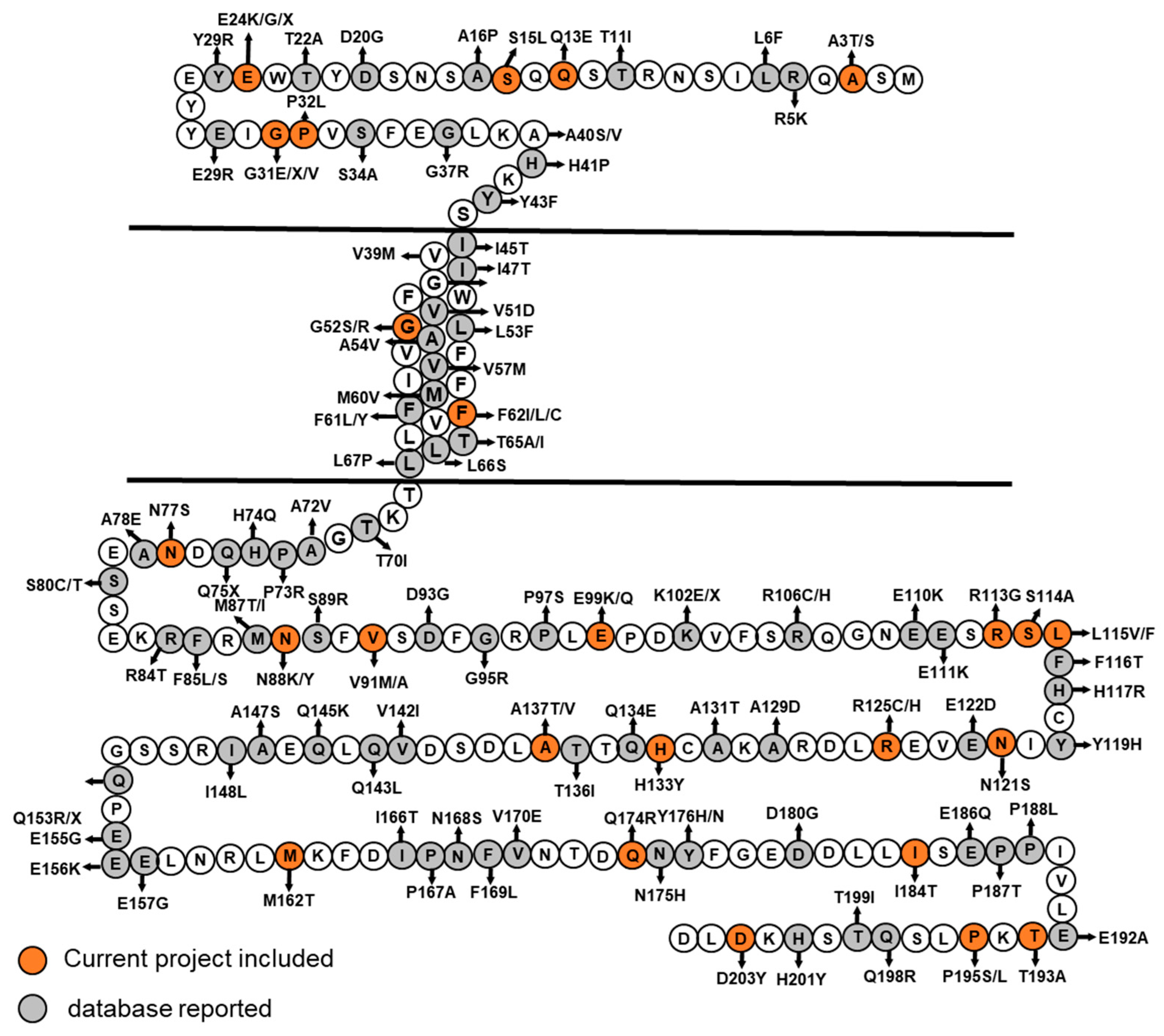
Various MRAP2 variants are documented in the gnomAD v4.1.0 database (https://gnomad.broadinstitute.org/, accessed on 26 January 2025) [40]. Most variants identified in this study were found in gnomAD v4.1.0 with allele frequencies ≤ 0.1% (Table 2). We illustrated the combined MRAP2 mutations identified in this study along with those reported in databases in Figure 4.
We further classified these variants based on their functional characteristics and/or analysis using AlphaMissense (https://alphafold.ebi.ac.uk/entry/Q96G30, accessed on 26 January 2025) [38]. Where available, published in vitro data on the impact of individual MRAP2 variants on MC4R trafficking and signaling were also taken into account (Table 2). Eleven variants were categorized as likely pathogenic, including E24X, P32L, F62C, N77S, N88Y, K102X, R113G, N121S, R125C, Q174R and P195L (Table 2). Four variants with conflicting evidence (A3T, G31V, T193A, and L115V) were classified as variants of uncertain significance. The remaining variants were categorized as likely benign or benign (Table 2). Variants with marked or partial impairment of MC4R signaling tended to be reported in obese probands, whereas variants with preserved MC4R function were observed in both obese and normal-weight subjects (Table 2).

4. Discussion

Our meta-analysis indicates that rare coding variants in MRAP2 were associated with higher odds of obesity, consistent with findings in a mouse model where Mrap2−/− mice exhibit early-onset severe obesity [11]. This is the first meta-analysis to investigate the association between MRAP2 variants and obesity across various ethnic populations. This underscores the need for large-scale research to reliably assess gene-disease associations.
Obesity is a multifactorial disorder, but more than 15 gene mutations can result in monogenic obesity in humans, such as MC4R [5,18,20,41]. Our study highlights the significance of examining relevant candidate genes in large-scale case–control studies to uncover rare variants with monogenic effects [31,32,42]. Identifying these mutations is crucial for explaining the missing heritability of obesity and developing personalized prevention and treatment strategies for high-risk individuals [43,44].
Our study found a significant association in the overall obesity vs. normal weight analysis (OR = 2.61; 95% CI, 1.49–4.58; p = 8.0 × 10⁻⁴) and a borderline, suggestive association in children or adolescents alone (OR = 2.05; 95% CI, 0.99–4.24; p = 0.05), with the latter result requiring cautious interpretation given that the 95% CI includes 1.0. This aligns with previous study showing that rare MRAP2 variants are associated with higher BMI and obesity risk in both adults and children [23]. Utilizing exome sequencing data from large database (the Accelerating Medicine Partnership Type 2 Diabetes Knowledge Portal), it was shown that missense or protein-truncating MRAP2 mutations (with MAF < 1%) are significantly associated with higher BMI (p = 3.49 × 10⁻⁴ with b = 0.0364 kg m−2, 95% CI: 0.0165–0.0564 kg m−2) and have a stronger association (p = 2.36 × 10⁻⁵ with b = 0.154 kg m−2, 95% CI: 0.0828–0.226 kg m−2) in deleterious missense or protein-truncating MRAP2 mutations [23].
Large-scale research has also found positive associations between obesity and other gene mutations, such as MC3R and MC4R. A meta-analysis of MC3R showed a strong link between rare coding variants that cause partial/complete loss-of-function and obesity (OR = 3.07; 95% CI, 1.48–7.00; p = 4.2 × 10⁻³) [32]. The MC4R variant rs17782313 is significantly associated with obesity under both the allele contrast model and the dominant model [45]. Furthermore, meta-analysis confirm that loss-of-function variants in MC4R do not show a connection with binge eating disorder [46,47], different from conclusion in a controversial study [48]; however, gain-of-function variants in MC4R are linked to binge eating disorder [31,49].
In vitro functional assays on MRAP2 variants support its involvement in obesity pathogenesis [11,23,28,37]. MRAP2 variants disrupt MC4R and MC3R signaling. Variants such as G31V, G52R, F62C, N77S, N88Y, R125C, K102X, and P195L in MRAP2 have been shown to reduce ligand (α-MSH and/or ACTH)-induced cAMP signaling on MC4R [23,28]. Several MRAP2 mutants, including G31V, F62C, N88Y, R113G, S114A, L115V, N121S, R125C, T193A, have been shown to exhibit distinct defects in [Nle4,D-Phe7]-MSH-induced cAMP and/or inositol phosphate signaling pathways [36]. Two mutants in MRAP2 (N88Y and R125C) impair α-MSH-induced cAMP signaling on MC3R [37]. Moreover, MRAP2 mutants may affect pathways outside of MCR signaling, such as ghrelin receptor, orexin receptor, and PKR1 signaling [7,12,13,14]. Loss-of-function MRAP2 variants are also implicated in hypertension and hyperglycemia [23]. Taken together, these data reinforce the biological plausibility that disruption of MRAP2-mediated GPCR signaling contributes to obesity and related metabolic disturbances, but the current functional evidence is incomplete and should be regarded as hypothesis-generating.
The R125 residue in MRAP2 has been identified as crucial for its function [50]. Two common MRAP2 variants, R125C and R125H, have been identified in both obese and normal weight individuals (Supplementary Table S2). R125C has been shown to impairs signaling of MC3R, MC4R, and PKR1 [37,50], indicating the R125C variant as “likely pathogenic”. Our results also indicated a positive association between the MRAP2 R125C and obesity, with an OR of 2.45 and a non-significant p-value of 0.12 and a wide 95% CI (0.80–7.45) (Table 3), suggesting that this estimate is compatible with both a moderate effect and no effect. Different genetic backgrounds and lifestyle modifications may contribute to the varying phenotypes observed in individuals harboring MRAP2 variants. Similar phenomena have been reported in MC4R variants [47,48,51,52]. These findings highlight the need for further research.
The strengths of this study lie in the originality and overall statistical power of our meta-analytic approach. Potential bias was mitigated by independent dual screening and data extraction. Nevertheless, several limitations should be acknowledged. First, most participants are of European ancestry and allele frequencies differ across populations; consequently, the pooled estimates largely reflect European cohorts and may not generalize to under-represented groups, limiting ancestry-specific inference. Second, functional annotation is incomplete for many MRAP2 variants, which constrains our ability to perform stratified meta-analyses by functional impact and to draw firm mechanistic conclusions. Third, although between-study heterogeneity was low (I2 ≤ 3.7% across all models), many odds ratio estimates have wide 95% CIs, especially for rare variants, indicating limited precision and the possibility that some effect sizes are inflated. The pooled result is also heavily influenced by the largest European cohort [23], so the robustness of the association remains partly dependent on a single study. However, leave-one-out sensitivity analyses showed that the primary pooled association for obesity versus normal weight remained of similar magnitude and statistically significant when each cohort, including the two Baron et al. cohorts [23], was omitted in turn, suggesting that our main findings are not solely driven by a single cohort, although they should still be interpreted in the context of predominantly European-ancestry data. The significant pooled association in our primary analysis therefore reflects the aggregated, gene-level effect of multiple rare coding variants, whereas the number of carriers for any individual variant is small and variant-specific odds ratios remain imprecise and hypothesis-generating.
Finally, we were unable to incorporate disease-related mechanistic and clinical covariates—such as comorbidities, lifestyle factors, glycemic and blood-pressure traits, or detailed endocrine and receptor-signaling measures—because these variables were not consistently reported across studies. Residual confounding by these unmeasured factors is therefore likely and may contribute to the observed associations. Future validation in large, ancestrally diverse cohorts with harmonized phenotyping, such as the UK Biobank and other population-based resources, will be essential to refine effect-size estimates, assess reproducibility, and link MRAP2 variants more directly to pathophysiological pathways.

5. Conclusions

In summary, this systematic review and meta-analysis indicates that rare coding variants in MRAP2 are associated with higher odds of obesity in the currently available observational studies. Because these variants are rare and effect estimates remain imprecise, our findings should be viewed as hypothesis-generating rather than definitive evidence of causality or immediate clinical utility. Nonetheless, the results support MRAP2 as a biologically plausible candidate gene for monogenic and oligogenic forms of obesity and provide a quantitative framework for future work. Large, ancestrally diverse cohorts that integrate detailed mechanistic phenotyping and functional characterization of MRAP2 variants will be required to clarify causality, delineate underlying pathways, and evaluate any potential role in genetic risk stratification or targeted interventions.

Supplementary Materials

The following supporting information can be downloaded at https://www.mdpi.com/article/10.3390/ijms27021051/s1.

Author Contributions

R.-L.J.: methodology, investigation, software, formal analysis, validation, visualization, funding acquisition, manuscript writing and editing; H.S.Z.: methodology, software, visualization, investigation, formal analysis, and validation; A.E.W.: methodology, software, visualization, formal analysis, and manuscript editing; Y.-X.T.: Conceptualization, data curation, supervision, manuscript revision and editing. All authors have read and agreed to the published version of the manuscript.

Funding

Ren-Lei Ji received fellowship from China Scholarship Council, People’s Republic of China.

Institutional Review Board Statement

Not applicable.

Informed Consent Statement

Not applicable.

Data Availability Statement

The raw data supporting the conclusions of this article will be made available by the authors upon request, without undue reservation.

Conflicts of Interest

The authors declare that there is no conflict of interest that would prejudice the impartiality of this study.

Abbreviations

The following abbreviations are used in this manuscript:
MRAP2Melanocortin-2 receptor accessory protein 2
GPCRG protein-coupled receptor
MCRMelanocortin receptor
MC4Rmelanocortin-4 receptor
MC3Rmelanocortin-3 receptor
GHSR-1aGhrelin receptor
ORX1Orexin receptor 1
PKR1Prokineticin receptor 1
BMIBody mass index
OROdds ratio
CIConfidence interval
REMLRestricted Maximum Likelihood
WTWild type
ACTHAdrenocorticotropic hormone
α-MSHα-Melanocyte-stimulating hormone

References

  1. Finucane, M.M.; Stevens, G.A.; Cowan, M.J.; Danaei, G.; Lin, J.K.; Paciorek, C.J.; Singh, G.M.; Gutierrez, H.R.; Lu, Y.; Bahalim, A.N.; et al. National, regional, and global trends in body-mass index since 1980: Systematic analysis of health examination surveys and epidemiological studies with 960 country-years and 9.1 million participants. Lancet 2011, 377, 557–567. [Google Scholar] [CrossRef]
  2. Ogden, C.L.; Carroll, M.D.; Kit, B.K.; Flegal, K.M. Prevalence of childhood and adult obesity in the United States, 2011–2012. JAMA 2014, 311, 806–814. [Google Scholar] [CrossRef]
  3. Kushner, R.F.; Kahan, S. Introduction: The state of obesity in 2017. Med. Clin. N. Am. 2018, 102, 1–11. [Google Scholar] [CrossRef]
  4. Spieker, E.A.; Pyzocha, N. Economic impact of obesity. Prim. Care 2016, 43, 83–95. [Google Scholar] [CrossRef] [PubMed]
  5. El-Sayed Moustafa, J.S.; Froguel, P. From obesity genetics to the future of personalized obesity therapy. Nat. Rev. Endocrinol. 2013, 9, 402–413, Erratum in Nat. Rev. Endocrinol. 2014, 10, 4. [Google Scholar] [CrossRef]
  6. Loos, R.J.F.; Yeo, G.S.H. The genetics of obesity: From discovery to biology. Nat. Rev. Genet. 2022, 23, 120–133. [Google Scholar] [CrossRef]
  7. Chan, L.F.; Webb, T.R.; Chung, T.T.; Meimaridou, E.; Cooray, S.N.; Guasti, L.; Chapple, J.P.; Egertová, M.; Elphick, M.R.; Cheetham, M.E.; et al. MRAP and MRAP2 are bidirectional regulators of the melanocortin receptor family. Proc. Natl. Acad. Sci. USA 2009, 106, 6146–6151. [Google Scholar] [CrossRef]
  8. Sebag, J.A.; Hinkle, P.M. Melanocortin-2 receptor accessory protein MRAP forms antiparallel homodimers. Proc. Natl. Acad. Sci. USA 2007, 104, 20244–20249. [Google Scholar] [CrossRef]
  9. Sebag, J.A.; Zhang, C.; Hinkle, P.M.; Bradshaw, A.M.; Cone, R.D. Developmental control of the melanocortin-4 receptor by MRAP2 proteins in zebrafish. Science 2013, 341, 278–281. [Google Scholar] [CrossRef]
  10. Rouault, A.A.J.; Srinivasan, D.K.; Yin, T.C.; Lee, A.A.; Sebag, J.A. Melanocortin receptor accessory proteins (MRAPs): Functions in the melanocortin system and beyond. Biochim. Biophys. Acta 2017, 1864, 2322–2329. [Google Scholar] [CrossRef] [PubMed]
  11. Asai, M.; Ramachandrappa, S.; Joachim, M.; Shen, Y.; Zhang, R.; Nuthalapati, N.; Ramanathan, V.; Strochlic, D.E.; Ferket, P.; Linhart, K.; et al. Loss of function of the melanocortin 2 receptor accessory protein 2 is associated with mammalian obesity. Science 2013, 341, 275–278. [Google Scholar] [CrossRef]
  12. Srisai, D.; Yin, T.C.; Lee, A.A.; Rouault, A.A.J.; Pearson, N.A.; Grobe, J.L.; Sebag, J.A. MRAP2 regulates ghrelin receptor signaling and hunger sensing. Nat. Commun. 2017, 8, 713. [Google Scholar] [CrossRef]
  13. Rouault, A.A.J.; Lee, A.A.; Sebag, J.A. Regions of MRAP2 required for the inhibition of orexin and prokineticin receptor signaling. Biochim. Biophys. Acta Mol. Cell Res. 2017, 1864, 2322–2329. [Google Scholar] [CrossRef]
  14. Chaly, A.L.; Srisai, D.; Gardner, E.E.; Sebag, J.A. The melanocortin receptor accessory protein 2 promotes food intake through inhibition of the prokineticin receptor-1. eLife 2016, 5, e12397. [Google Scholar] [CrossRef] [PubMed]
  15. Wang, M.; Wang, X.; Jiang, B.; Zhai, Y.; Zheng, J.; Yang, L.; Tai, X.; Li, Y.; Fu, S.; Xu, J.; et al. Identification of MRAP protein family as broad-spectrum GPCR modulators. Clin. Transl. Med. 2022, 12, e1091. [Google Scholar] [CrossRef]
  16. Wang, M.; Lyu, J.; Zhang, C. Single transmembrane GPCR modulating proteins: Neither single nor simple. Protein Cell 2024, 15, 395–402. [Google Scholar] [CrossRef] [PubMed]
  17. Tao, Y.X. Molecular chaperones and G protein-coupled receptor maturation and pharmacology. Mol. Cell. Endocrinol. 2020, 511, 110862. [Google Scholar] [CrossRef]
  18. Tao, Y.X. The melanocortin-4 receptor: Physiology, pharmacology, and pathophysiology. Endocr. Rev. 2010, 31, 506–543. [Google Scholar] [CrossRef]
  19. Riddy, D.M.; Delerive, P.; Summers, R.J.; Sexton, P.M.; Langmead, C.J. G protein-coupled receptors targeting insulin resistance, obesity, and type 2 diabetes mellitus. Pharmacol. Rev. 2018, 70, 39–67. [Google Scholar] [CrossRef] [PubMed]
  20. Liu, T.; Ji, R.L.; Tao, Y.X. Naturally occurring mutations in G protein-coupled receptors associated with obesity and type 2 diabetes mellitus. Pharmacol. Ther. 2022, 234, 108044. [Google Scholar] [CrossRef]
  21. Ji, R.L.; Tao, Y.X. Regulation of melanocortin-3 and -4 receptors by isoforms of melanocortin-2 receptor accessory protein 1 and 2. Biomolecules 2022, 12, 244. [Google Scholar] [CrossRef] [PubMed]
  22. Geets, E.; Zegers, D.; Beckers, S.; Verrijken, A.; Massa, G.; Van Hoorenbeeck, K.; Verhulst, S.; Van Gaal, L.; Van Hul, W. Copy number variation (CNV) analysis and mutation analysis of the 6q14.1-6q16.3 genes SIM1 and MRAP2 in Prader Willi like patients. Mol. Genet. Metab. 2016, 117, 383–388. [Google Scholar] [CrossRef] [PubMed]
  23. Baron, M.; Maillet, J.; Huyvaert, M.; Dechaume, A.; Boutry, R.; Loiselle, H.; Durand, E.; Toussaint, B.; Vaillant, E.; Philippe, J.; et al. Loss-of-function mutations in MRAP2 are pathogenic in hyperphagic obesity with hyperglycemia and hypertension. Nat. Med. 2019, 25, 1733–1738. [Google Scholar] [CrossRef] [PubMed]
  24. Wang, D.X.; Kaur, Y.; Alyass, A.; Meyre, D. A candidate-gene approach identifies novel associations between common variants in/near syndromic obesity genes and BMI in pediatric and adult European populations. Diabetes 2019, 68, 724–732. [Google Scholar] [CrossRef]
  25. da Fonseca, A.C.P.; Abreu, G.M.; Zembrzuski, V.M.; Campos Junior, M.; Carneiro, J.R.I.; Nogueira Neto, J.F.; Magno, F.C.C.M.; Rosado, E.L.; Bozza, P.T.; de Cabello, G.M.K.; et al. Study of LEP, MRAP2 and POMC genes as potential causes of severe obesity in Brazilian patients. Eat. Weight Disord. 2021, 26, 1399–1408. [Google Scholar] [CrossRef]
  26. AbouHashem, N.; Zaied, R.E.; Al-Shafai, K.; Nofal, M.; Syed, N.; Al-Shafai, M. The spectrum of genetic variants associated with the development of monogenic obesity in Qatar. Obes. Facts. 2022, 15, 357–365. [Google Scholar] [CrossRef]
  27. Chamoso-Sanchez, D.; Rabadan Perez, F.; Argente, J.; Barbas, C.; Martos-Moreno, G.A.; Ruperez, F.J. Identifying subgroups of childhood obesity by using multiplatform metabotyping. Front. Mol. Biosci. 2023, 10, 1301996. [Google Scholar] [CrossRef]
  28. Gatta-Cherifi, B.; Laboye, A.; Gronnier, C.; Monsaingeon-Henry, M.; Meulebrouck, S.; Baron, M.; Bertin, F.; Pupier, E.; Cambos, S.; Poitou, C.; et al. A novel pathogenic variant in MRAP2 in an obese patient with successful outcome of bariatric surgery. Eur. J. Endocrinol. 2023, 189, K15–K18. [Google Scholar] [CrossRef]
  29. Mohammed, I.; Haris, B.; Al-Barazenji, T.; Vasudeva, D.; Tomei, S.; Al Azwani, I.; Dauleh, H.; Shehzad, S.; Chirayath, S.; Mohamadsalih, G.; et al. Understanding the genetics of early-onset obesity in a cohort of children from Qatar. J. Clin. Endocrinol. Metab. 2023, 108, 3201–3213. [Google Scholar] [CrossRef]
  30. Ferreira, F.R.; Silva Rangel, R.S.; Baratela, W.; Longui, C.A.; Monte, O.; Kochi, C. A Novel Variant in MRAP2 Associated with Severe Early-Onset Obesity: A Case Report. In Horm Res Paediat; Karger: Basel, Switzerland, 2023; p. 90. [Google Scholar]
  31. Qasim, A.; Mayhew, A.J.; Ehtesham, S.; Alyass, A.; Volckmar, A.L.; Herpertz, S.; Hinney, A.; Hebebrand, J.; Meyre, D. Gain-of-function variants in the melanocortin 4 receptor gene confer susceptibility to binge eating disorder in subjects with obesity: A systematic review and meta-analysis. Obes. Rev. 2019, 20, 13–21. [Google Scholar] [CrossRef]
  32. Ehtesham, S.; Qasim, A.; Meyre, D. Loss-of-function mutations in the melanocortin-3 receptor gene confer risk for human obesity: A systematic review and meta-analysis. Obes. Rev. 2019, 20, 1085–1092. [Google Scholar] [CrossRef]
  33. Zain, S.M.; Mohamed, Z.; Jalaludin, M.Y.; Fauzi, F.; Hamidi, A.; Zaharan, N.L. Comprehensive evaluation of the neuropeptide-Y gene variants in the risk of obesity: A case-control study and meta-analysis. Pharmacogenet Genom. 2015, 25, 501–510. [Google Scholar] [CrossRef]
  34. Yu, Z.; Han, S.; Cao, X.; Zhu, C.; Wang, X.; Guo, X. Genetic polymorphisms in adipokine genes and the risk of obesity: A systematic review and meta-analysis. Obesity 2012, 20, 396–406. [Google Scholar] [CrossRef] [PubMed]
  35. Schonnop, L.; Kleinau, G.; Herrfurth, N.; Volckmar, A.L.; Cetindag, C.; Müller, A.; Peters, T.; Herpertz, S.; Antel, J.; Hebebrand, J.; et al. Decreased melanocortin-4 receptor function conferred by an infrequent variant at the human melanocortin receptor accessory protein 2 gene. Obesity 2016, 24, 1976–1982. [Google Scholar] [CrossRef]
  36. Wyatt, R.A.; Jamaluddin, A.; Mistry, V.; Quinn, C.; Gorvin, C.M. Obesity-associated MRAP2 variants impair multiple MC4R-mediated signaling pathways. Hum. Mol. Genet. 2025, 34, 533–546. [Google Scholar] [CrossRef] [PubMed]
  37. Liang, J.; Li, L.; Jin, X.; Xu, B.; Pi, L.; Liu, S.; Zhu, W.; Zhang, C.; Luan, B.; Gong, L.; et al. Pharmacological effect of human melanocortin-2 receptor accessory protein 2 variants on hypothalamic melanocortin receptors. Endocrine 2018, 61, 94–104. [Google Scholar] [CrossRef]
  38. Cheng, J.; Novati, G.; Pan, J.; Bycroft, C.; Zemgulyte, A.; Applebaum, T.; Zhu, W.; Zhang, C.; Luan, B.; Gong, L.; et al. Accurate proteome-wide missense variant effect prediction with AlphaMissense. Science 2023, 381, eadg7492. [Google Scholar] [CrossRef]
  39. O’Rahilly, S. “Treasure Your Exceptions”—Studying human extreme phenotypes to illuminate metabolic health and disease: The 2019 Banting Medal for Scientific Achievement Lecture. Diabetes 2021, 70, 29–38. [Google Scholar] [CrossRef] [PubMed]
  40. Lek, M.; Karczewski, K.J.; Minikel, E.V.; Samocha, K.E.; Banks, E.; Fennell, T.; O’Donnell-Luria, A.H.; Ware, J.S.; Hill, A.J.; Cummings, B.B.; et al. Analysis of protein-coding genetic variation in 60,706 humans. Nature 2016, 536, 285–297. [Google Scholar] [CrossRef]
  41. Tao, Y.X. Mutations in the melanocortin-3 receptor (MC3R) gene: Impact on human obesity or adiposity. Curr. Opin. Investig. Drugs 2010, 11, 1092–1096. [Google Scholar]
  42. Stutzmann, F.; Vatin, V.; Cauchi, S.; Morandi, A.; Jouret, B.; Landt, O.; Tounian, P.; Levy-Marchal, C.; Buzzetti, R.; Pinelli, L.; et al. Non-synonymous polymorphisms in melanocortin-4 receptor protect against obesity: The two facets of a Janus obesity gene. Hum. Mol. Genet. 2007, 16, 1837–1844. [Google Scholar] [CrossRef]
  43. Pigeyre, M.; Yazdi, F.T.; Kaur, Y.; Meyre, D. Recent progress in genetics, epigenetics and metagenomics unveils the pathophysiology of human obesity. Clin. Sci. 2016, 130, 943–986. [Google Scholar] [CrossRef]
  44. Manolio, T.A.; Collins, F.S.; Cox, N.J.; Goldstein, D.B.; Hindorff, L.A.; Hunter, D.J.; McCarthy, M.I.; Ramos, E.M.; Cardon, L.R.; Chakravarti, A.; et al. Finding the missing heritability of complex diseases. Nature 2009, 461, 747–753. [Google Scholar] [CrossRef] [PubMed]
  45. Yu, K.; Li, L.; Zhang, L.; Guo, L.; Wang, C. Association between MC4R rs17782313 genotype and obesity: A meta-analysis. Gene 2020, 733, 144372. [Google Scholar] [CrossRef]
  46. Hebebrand, J.; Geller, F.; Dempfle, A.; Heinzel-Gutenbrunner, M.; Raab, M.; Gerber, G.; Wermter, A.-K.; Horro, F.F.; Blundell, J.; Schäfer, H.; et al. Binge-eating episodes are not characteristic of carriers of melanocortin-4 receptor gene mutations. Mol. Psychiatry 2004, 9, 796–800. [Google Scholar] [CrossRef] [PubMed]
  47. Tao, Y.X.; Segaloff, D.L. Functional analyses of melanocortin-4 receptor mutations identified from patients with binge eating disorder and nonobese or obese subjects. J. Clin. Endocrinol. Metab. 2005, 90, 5632–5638. [Google Scholar] [CrossRef]
  48. Branson, R.; Potoczna, N.; Kral, J.G.; Lentes, K.U.; Hoehe, M.R.; Horber, F.F. Binge eating as a major phenotype of melanocortin 4 receptor gene mutations. N. Engl. J. Med. 2003, 348, 1096–1103. [Google Scholar] [CrossRef]
  49. Bonnefond, A.; Keller, R.; Meyre, D.; Stutzmann, F.; Thuillier, D.; Stefanov, D.G.; Froguel, P.; Horber, F.F.; Kral, J.G. Eating behavior, low-frequency functional mutations in the melanocortin-4 receptor (MC4R) gene, and outcomes of bariatric operations: A 6-year prospective study. Diabetes Care 2016, 39, 1384–1392. [Google Scholar] [CrossRef]
  50. Fullone, M.R.; Maftei, D.; Vincenzi, M.; Lattanzi, R.; Miele, R. Identification of regions involved in the physical interaction between melanocortin receptor accessory protein 2 and prokineticin receptor 2. Biomolecules 2022, 12, 474. [Google Scholar] [CrossRef]
  51. Reinehr, T.; Hebebrand, J.; Friedel, S.; Toschke, A.M.; Brumm, H.; Biebermann, H.; Hinney, A. Lifestyle intervention in obese children with variations in the melanocortin 4 receptor gene. Obesity 2009, 17, 382–389. [Google Scholar] [CrossRef]
  52. Collet, T.H.; Dubern, B.; Mokrosinski, J.; Connors, H.; Keogh, J.M.; de Oliveira, E.M.; Henning, E.; Poitou-Bernert, C.; Oppert, J.M.; Tounian, P.; et al. Evaluation of a melanocortin-4 receptor (MC4R) agonist (Setmelanotide) in MC4R deficiency. Mol. Metab. 2017, 6, 1321–1329. [Google Scholar] [CrossRef] [PubMed]
Figure 1. PRISMA flow diagram of study selection. RISMA 2020 flow diagram summarizing identification, screening, eligibility assessment, and inclusion of studies evaluating associations between rare coding MRAP2 variants and obesity.
Ijms 27 01051 g001
Figure 2. Pooled association between MRAP2 coding variants and obesity. (A) Forest plot of log odds ratios (log ORs) and 95% confidence intervals (CIs) for four pre-specified analytic sets: obesity vs. normal weight, all cohorts including overweight, children/adolescents only, and carriers of the recurrent R125C variant. Effect sizes were estimated using inverse-variance–weighted random-effects models fitted with restricted maximum likelihood (REML); point size is proportional to cohort weight. (B) Funnel plot of cohort-level log ORs versus their standard errors for the primary analysis (obesity vs. normal weight) across seven independent cohorts. The vertical dashed line indicates the pooled log OR. With only seven cohorts, the plot is interpreted descriptively and is not used as a formal test of publication bias.
Ijms 27 01051 g002
Figure 3. Study-specific associations between MRAP2 variants and obesity in different analytic sets. Forest plots showing cohort-level log ORs and 95% CIs, together with REML random-effects pooled estimates, for: (A) all studies after excluding overweight individuals, (B) all cohorts including overweight, (C) children and adolescents only, and (D) carriers of the R125C variant. Squares represent cohort log ORs (area proportional to inverse-variance weight); horizontal lines represent 95% CIs; diamonds represent pooled estimates. Asai et al. (2013) I and II [11]. Baron et al. (2019) I and II [23]. Schonnop et al. (2016) [35]. Fonseca et al. (2020) [25]. AbouHashem et al. (2022) [26].
Ijms 27 01051 g003
Figure 4. Naturally occurring MRAP2 coding variants. Schematic representation of the MRAP2 protein showing the positions of rare coding variants. Orange circles denoted variants identified in the current meta-analysis; grey circles denoted additional variants reported in the gnomAD v4.1.0 database (accessed on 26 January 2025). Variants with functional data or predicted pathogenicity were listed in Table 2.
Ijms 27 01051 g004
Table 1. Characteristics of studies included in the meta-analysis.
First Author (Year) Geographic OriginSex Ratio
(M/F)
AgeBMI or PercentageCarriers/Total
Asai et al. [11]
Cohort INormalSwedishNR15–2020–250/376
ObeseNR6–21>30 (3)1/376
Cohort 2NormalUKNR<165–85th0/488
ObeseNR<16≥97th3/488
Baron et al. [23]
Cohort INormalEurope1177/160647.2 (11.7)22.3 (1.83)8/2783
Obese618/137349.0 (12.7)40.2 (8.76)20/1991
Overweight1577/90852.4 (12.0)27.2 (1.39)18/2465
Cohort 2Normal540/50217.5 (3.30)20.2 (2.32)9/1042
Obese539/59812.3 (2.35)31.0 (5.56)16/1137
Schonnop et al. [35]
NormalGermany88/96children and adolescents5–85th0/184
Obese86/98≥97th3/184
da Fonseca et al. [25]
NormalBrazilNRNR18.5 ≤ BMI ≤ 24.90/100
Obesity25/9737.0 (28; 45)47.0 (42.8; 52.6)1/122
AbouHashem et al. [26]NormalQatar160/34040.5 (12.1)22.6 ± 1.71/250
Obesity40.3 ± 3.72/250
Table 2. Pathogenicity prediction for the human MRAP2 variants.
VariantsReference
Identifying Variants
Function Characterization for MC4R SignalingAllele Frequency (gnomAD)Pathogenicity (Based on Functional Assay)Pathogenicity (Based on AlphaMissense)
A3T[23]Reduced [23]1.3 × 10⁻⁵Uncertain SignificanceLikely benign
A3S[23]WT-like [23]6.2 × 10⁻⁷BenignLikely benign
Q13E[23]Increased [23]6.2 × 10⁻⁷BenignLikely benign
S15L[26]NA2.8 × 10−5NALikely benign
E24X[11]NA4.9 × 10−6NALikely Pathogenic
G31V[23]Reduced [23]; Increased [36]NAUncertain SignificanceUncertain
P32L[23]Reduced [23]; WT-like [36]1.8 × 10⁻⁶Uncertain SignificanceLikely Pathogenic
F62C[23]Reduced [23,36]NALikely PathogenicLikely Pathogenic
N77S[23]Reduced [23]2.1 × 10⁻⁵Likely PathogenicLikely benign
N88Y[11]Reduced [36,37]1.8 × 10⁻⁵Likely PathogenicLikely benign
V91A[23]Increased [23]; WT-like [36]3.1 × 10⁻⁶BenignLikely benign
E99Q[23]WT-like [23]6.2 × 10⁻⁶BenignLikely benign
K102X[23]Reduced [23]6.1 × 10⁻⁷Likely PathogenicLikely Pathogenic
R113G[23]Reduced [23,36]9.2 × 10⁻⁶Likely PathogenicLikely benign
S114A[23]Increased [23]NABenignLikely benign
L115V[11,26]Reduced [36]; WT-like [37]4.3 × 10⁻⁵Uncertain SignificanceLikely benign
N121S[23]Reduced [23,36]6.2 × 10⁻⁷Likely PathogenicLikely benign
R125C[11,23,25]Reduced [23,36,37]4.2 × 10⁻⁴Likely PathogenicLikely benign
R125H[23,35]Increased [23] or WT-like [35]1.0 × 10⁻³BenignLikely benign
H133Y[23]Increased [23] or WT-like [36]1.8 × 10⁻⁶BenignLikely benign
A137T[23,35]WT-like [35]; Increased [23]7.4 × 10⁻⁶BenignLikely benign
M162T[23]Increased [23]1.7 × 10⁻⁵BenignLikely benign
Q174R[35]Reduced [35]6.3 × 10⁻⁵Likely PathogenicLikely benign
I184T[26]NANANALikely Pathogenic
T193A[23]Increased [23]; Reduced [36]1.2 × 10⁻⁶Uncertain SignificanceLikely benign
P195L[23]Reduced [23]2.4 × 10⁻⁶Likely PathogenicLikely benign
D203Y[23]Increased [23]1.4 × 10⁻⁵BenignLikely benign
Pathogenicity classification based on functional assays categorizes variants as follows: Likely Pathogenic: Meets strong evidence criteria with additional supporting data. Uncertain Significance: Lacks sufficient evidence or presents conflicting data. Benign: Requires strong and consistent evidence to confirm benignity. Pathogenicity classification based on AlphaMissense categorizes variants as ‘likely pathogenic,’ ‘likely benign,’ or ‘uncertain’ based on amino acid sequence predictions. This approach leverages models developed from AlphaFold2 (https://alphafold.ebi.ac.uk/entry/Q96G30) [38] (accessed on 25 January 2025). WT, wild type; NA, not available.
Table 3. Odds ratios of obesity among carriers of MRAP2 coding variants, pooling results based on all eligible studies.
Obesity vs. NormalObesityNormal WeightOR (95% CI)p ValueI2τ2
Carriers of coding variants46 (1.01%)18 (0.34%)2.61 (1.49–4.58)8.0 × 10−43.68%0.03
Non-carriers of coding variants4502 (98.99%)5205 (99.66%)
All included overweight
Carriers of coding variants64 (0.91%)18 (0.34%)2.43 (1.45–4.06)7.0 × 10−40.00%0
Non-carriers of coding variants6949 (99.09%)5205 (99.66%)
Children
Carriers of coding variants24 (1.04%)9 (0.41%)2.05 (0.99–4.24)0.050.00%0
Non-carriers of coding variants2286 (98.96%)2181 (99.59%)
R125C
Carriers of coding variants12 (0.19%)3 (0.07%)2.45 (0.80–7.45)0.120.00%0
Non-carriers of coding variants6191 (99.81%)4410 (99.93%)
Disclaimer/Publisher’s Note: The statements, opinions and data contained in all publications are solely those of the individual author(s) and contributor(s) and not of MDPI and/or the editor(s). MDPI and/or the editor(s) disclaim responsibility for any injury to people or property resulting from any ideas, methods, instructions or products referred to in the content.