An Unbiased Drug Screen in a Drosophila Model of LMNA-Muscular Dystrophy Identifies Calcium Channel Blockers as Potential Treatments
 , , , , ,
Abstract
1. Introduction
2. Results
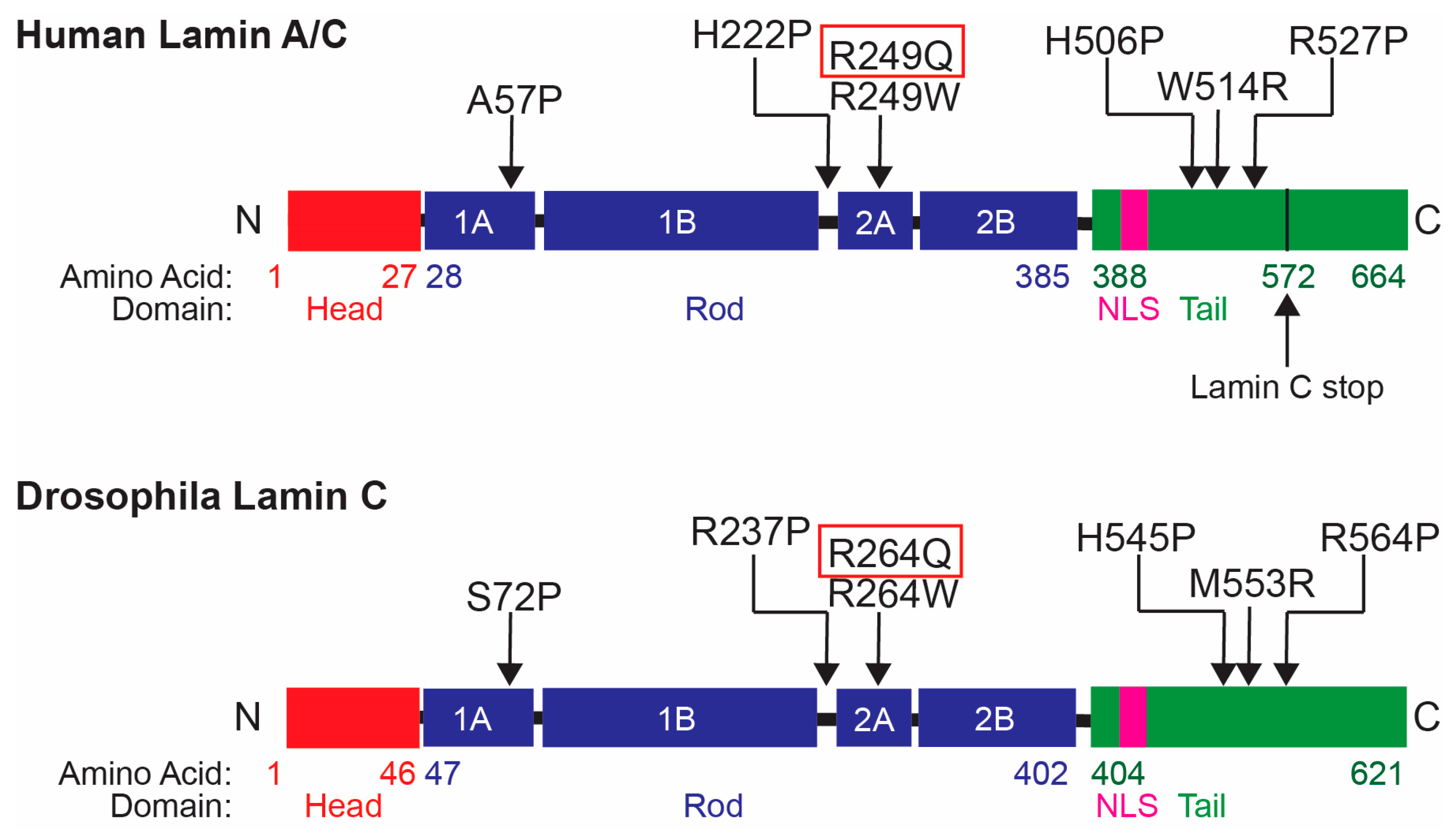
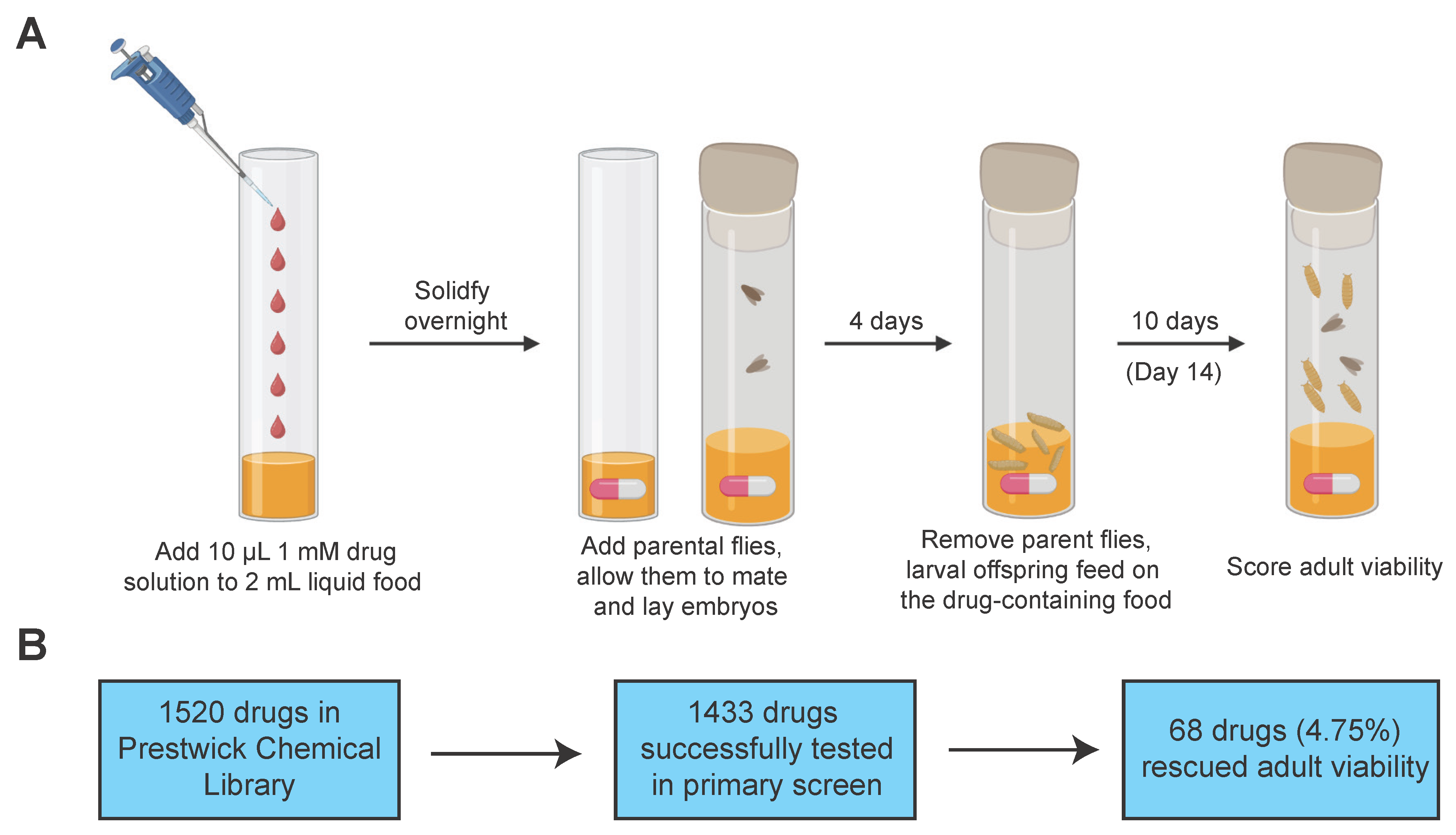
2.1. A Drug Screen Was Performed for Rescue of Lethality Caused by LamC R264Q
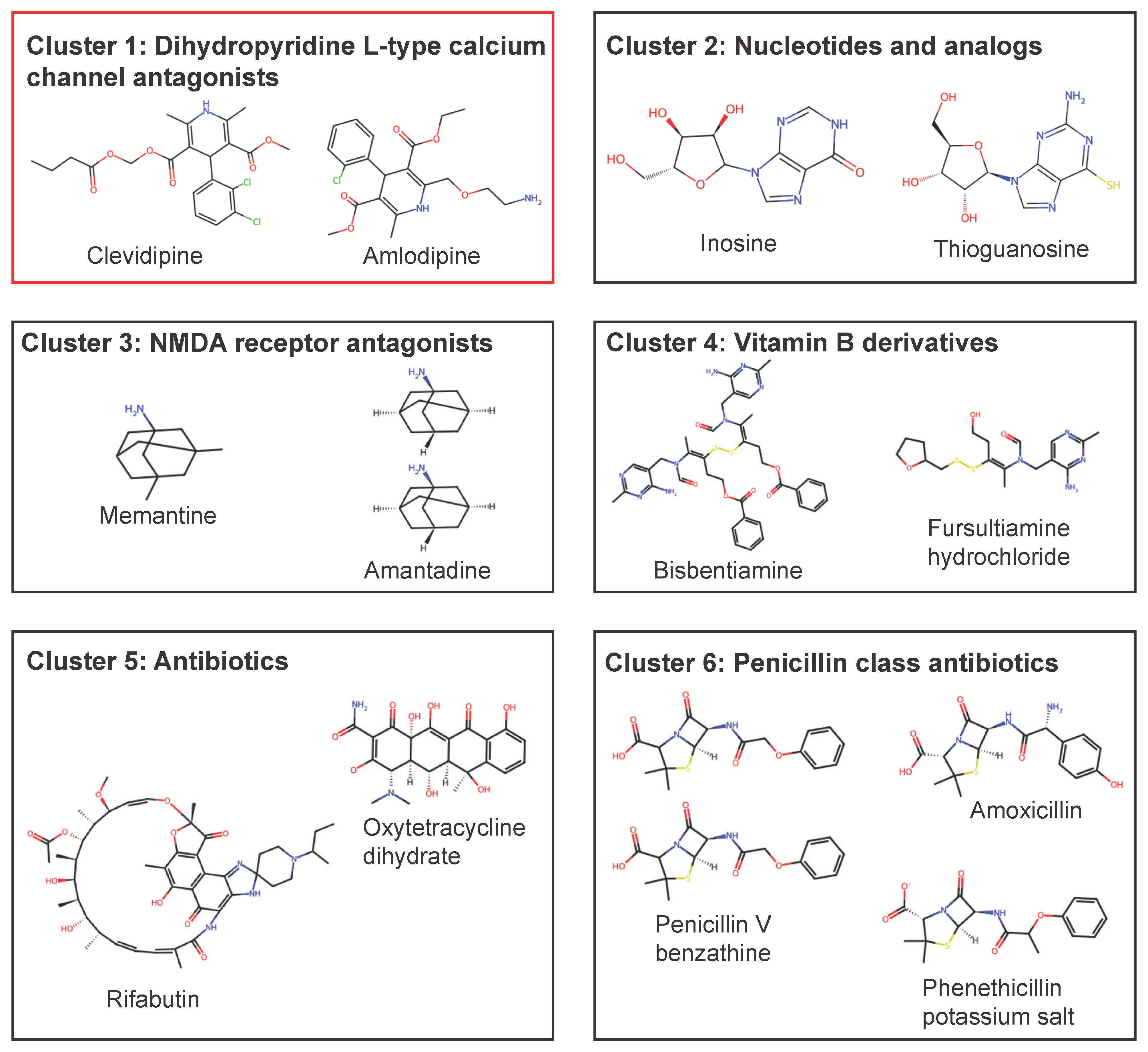
2.2. Structural Clustering of Positive Hit Compounds Identified Dihydropyridine L-Type Voltage-Gated Calcium Channel Antagonists Among the Drugs That Rescued Lethality
2.3. Secondary Testing Verified DHP Calcium Channel Blockers as Positive Hits in the LamC R264Q Model
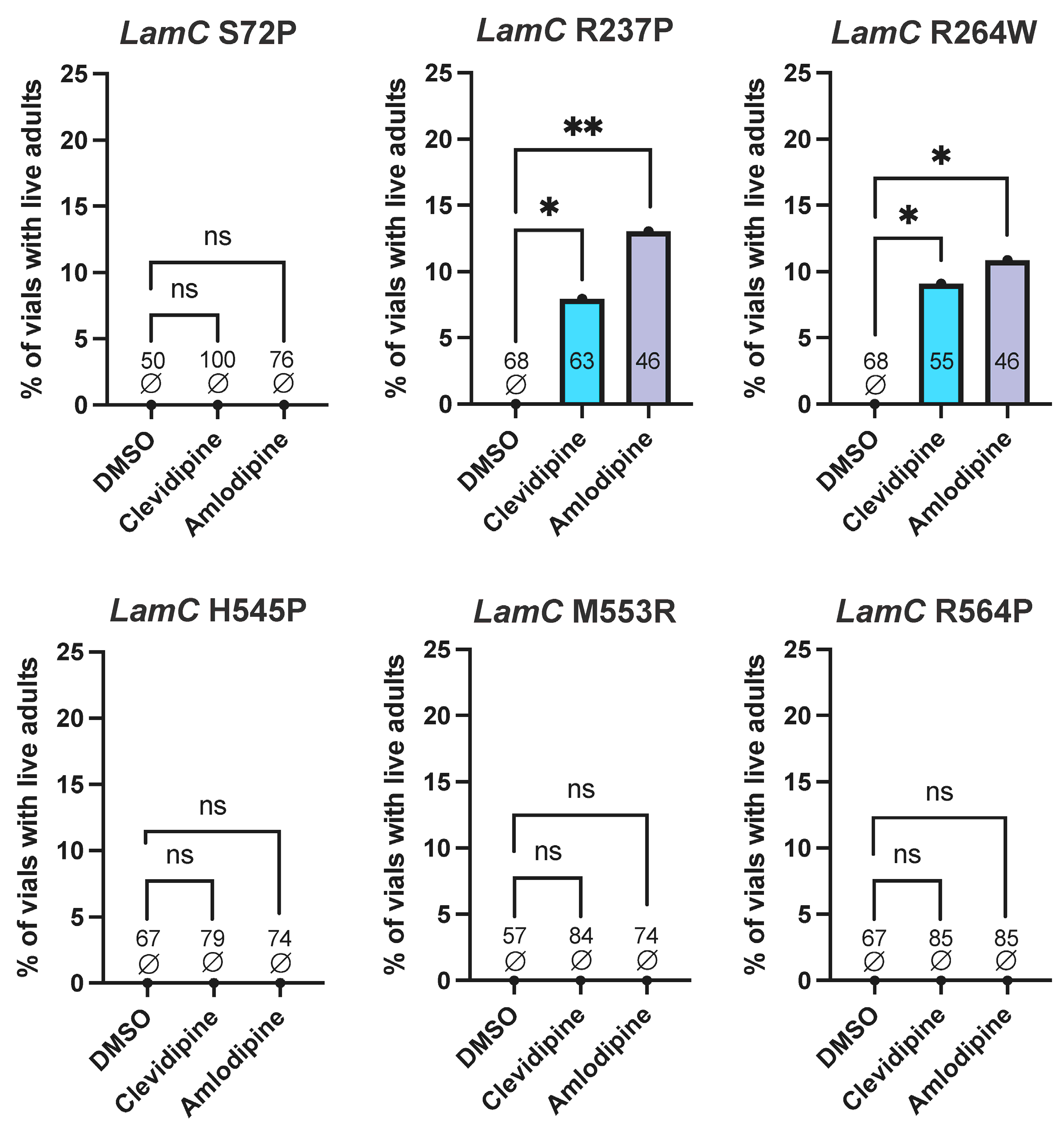
2.4. DHP Calcium Channel Blockers Selectively Rescue Lethality Caused by LamC R264Q, R264W, and R237P
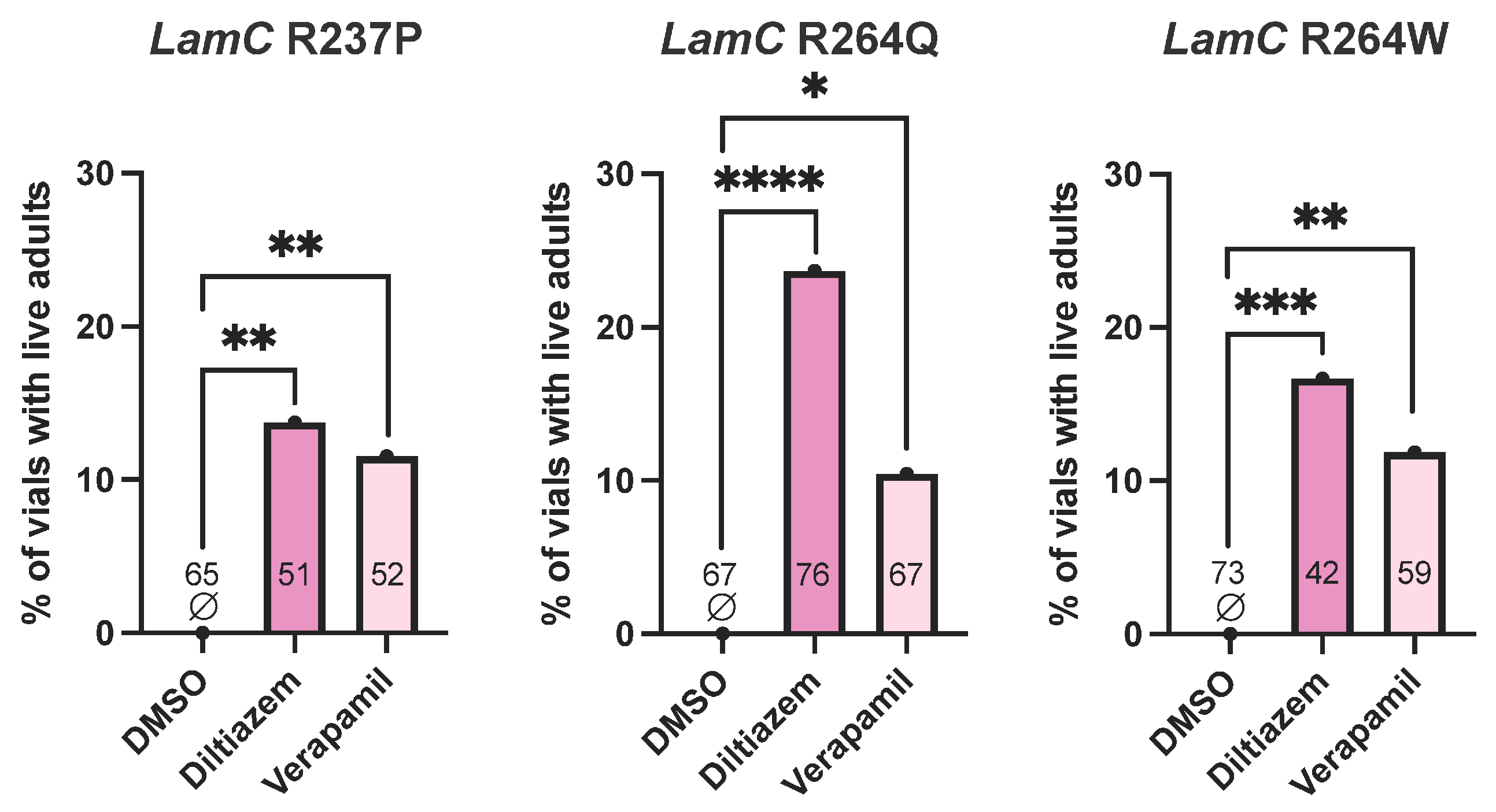
2.5. Non-DHP Calcium Channel Blockers Rescue Lethality Caused by LamC R264Q, R264W, and R237P
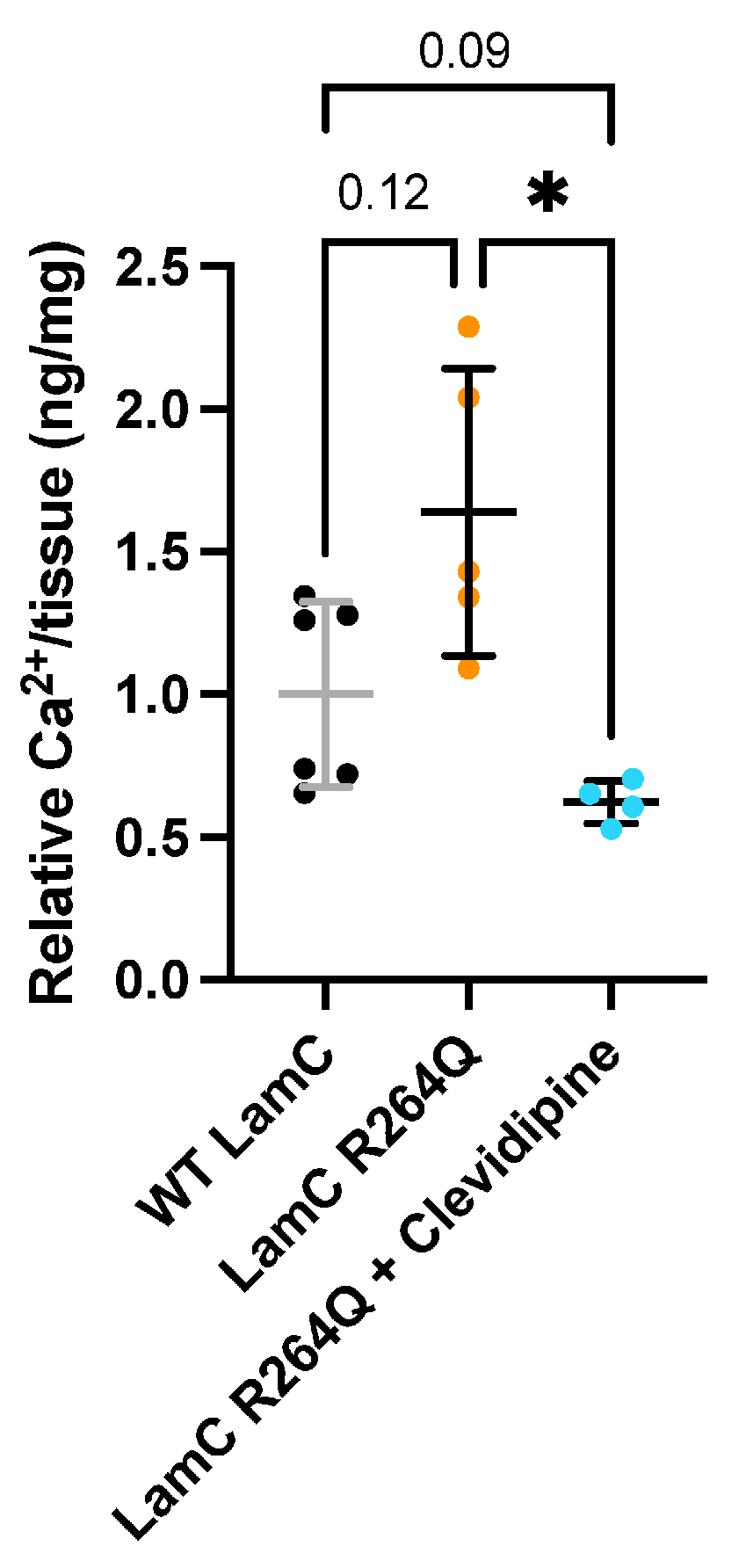
2.6. Calcium Channel Blocker Treatment Reduces Intracellular Calcium in Muscles of Larvae Expressing LamC R264Q
3. Discussion
4. Materials and Methods
4.1. Drosophila Culture
4.2. Primary Drug Screen
4.3. Molecular Fingerprinting and Structural Clustering
4.4. Secondary Screen and the Assessment of Broad Efficacy
4.5. Quantification of Adult Viability
4.6. Measurements of Intramuscular Calcium
4.7. Morphometric Analysis of Muscle Fibers
Supplementary Materials
Author Contributions
Funding
Institutional Review Board Statement
Informed Consent Statement
Data Availability Statement
Acknowledgments
Conflicts of Interest
References
- Sobo, J.M.; Alagna, N.S.; Sun, S.X.; Wilson, K.L.; Reddy, K.L. Lamins: The backbone of the nucleocytoskeleton interface. Curr. Opin. Cell Biol. 2024, 86, 102313. [Google Scholar] [CrossRef] [Scilit] [PubMed]
- Hetzer, M.W. The nuclear envelope. Cold Spring Harb. Perspect. Biol. 2010, 2, a000539. [Google Scholar] [CrossRef] [Scilit] [PubMed]
- Nmezi, B.; Xu, J.; Fu, R.; Armiger, T.J.; Rodriguez-Bey, G.; Powell, J.S.; Ma, H.; Sullivan, M.; Tu, Y.; Chen, N.Y.; et al. Concentric organization of A- and B-type lamins predicts their distinct roles in the spatial organization and stability of the nuclear lamina. Proc. Natl. Acad. Sci. USA 2019, 116, 4307–4315. [Google Scholar] [CrossRef] [Scilit] [PubMed]
- Padiath, Q.S.; Saigoh, K.; Schiffmann, R.; Asahara, H.; Yamada, T.; Koeppen, A.; Hogan, K.; Ptacek, L.J.; Fu, Y.H. Lamin B1 duplications cause autosomal dominant leukodystrophy. Nat. Genet. 2006, 38, 1114–1123, Correction in Nat. Genet. 2007, 39, 276. [Google Scholar] [CrossRef] [Scilit] [PubMed]
- Hegele, R.A.; Cao, H.; Liu, D.M.; Costain, G.A.; Charlton-Menys, V.; Rodger, N.W.; Durrington, P.N. Sequencing of the reannotated LMNB2 gene reveals novel mutations in patients with acquired partial lipodystrophy. Am. J. Hum. Genet. 2006, 79, 383–389. [Google Scholar] [CrossRef] [Scilit] [PubMed]
- Worman, H.J.; Ostlund, C.; Wang, Y. Diseases of the nuclear envelope. Cold Spring Harb. Perspect. Biol. 2010, 2, a000760. [Google Scholar] [CrossRef] [Scilit] [PubMed]
- Worman, H.J.; Bonne, G. “Laminopathies”: A wide spectrum of human diseases. Exp. Cell Res. 2007, 313, 2121–2133. [Google Scholar] [CrossRef] [Scilit] [PubMed]
- Worman, H.J.; Courvalin, J.C. How do mutations in lamins A and C cause disease? J. Clin. Investig. 2004, 113, 349–351. [Google Scholar] [CrossRef] [PubMed]
- Worman, H.J. Nuclear lamins and laminopathies. J. Pathol. 2012, 226, 316–325. [Google Scholar] [CrossRef] [Scilit] [PubMed]
- Anderson, C.L.; Langer, E.R.; Routes, T.C.; McWilliams, S.F.; Bereslavskyy, I.; Kamp, T.J.; Eckhardt, L.L. Most myopathic lamin variants aggregate: A functional genomics approach for assessing variants of uncertain significance. npj Genom. Med. 2021, 6, 103. [Google Scholar] [CrossRef] [Scilit] [PubMed]
- Storey, E.C.; Fuller, H.R. Genotype-Phenotype Correlations in Human Diseases Caused by Mutations of LINC Complex-Associated Genes: A Systematic Review and Meta-Summary. Cells 2022, 11, 4065. [Google Scholar] [CrossRef] [Scilit] [PubMed]
- Crasto, S.; My, I.; Di Pasquale, E. The Broad Spectrum of LMNA Cardiac Diseases: From Molecular Mechanisms to Clinical Phenotype. Front. Physiol. 2020, 11, 761. [Google Scholar] [CrossRef] [Scilit] [PubMed]
- Bertrand, A.T.; Ben Yaou, R.; Bonne, G. Chapter 72—Diseases of the Nucleoskeleton. In Muscle; Hill, J.A., Olson, E.N., Eds.; Academic Press: Boston, MA, USA; Waltham, MA, USA, 2012; pp. 1003–1012. [Google Scholar]
- Nicolas, H.A.; Akimenko, M.A.; Tesson, F. Cellular and Animal Models of Striated Muscle Laminopathies. Cells 2019, 8, 291. [Google Scholar] [CrossRef] [Scilit] [PubMed]
- Quijano-Roy, S.; Mbieleu, B.; Bonnemann, C.G.; Jeannet, P.Y.; Colomer, J.; Clarke, N.F.; Cuisset, J.M.; Roper, H.; De Meirleir, L.; D’Amico, A.; et al. De novo LMNA mutations cause a new form of congenital muscular dystrophy. Ann. Neurol. 2008, 64, 177–186. [Google Scholar] [CrossRef] [Scilit] [PubMed]
- Bonne, G.; Di Barletta, M.R.; Varnous, S.; Becane, H.M.; Hammouda, E.H.; Merlini, L.; Muntoni, F.; Greenberg, C.R.; Gary, F.; Urtizberea, J.A.; et al. Mutations in the gene encoding lamin A/C cause autosomal dominant Emery-Dreifuss muscular dystrophy. Nat. Genet. 1999, 21, 285–288. [Google Scholar] [CrossRef] [Scilit] [PubMed]
- Muchir, A.; Bonne, G.; van der Kooi, A.J.; van Meegen, M.; Baas, F.; Bolhuis, P.A.; de Visser, M.; Schwartz, K. Identification of mutations in the gene encoding lamins A/C in autosomal dominant limb girdle muscular dystrophy with atrioventricular conduction disturbances (LGMD1B). Hum. Mol. Genet. 2000, 9, 1453–1459. [Google Scholar] [CrossRef] [Scilit] [PubMed]
- Fatkin, D.; MacRae, C.; Sasaki, T.; Wolff, M.R.; Porcu, M.; Frenneaux, M.; Atherton, J.; Vidaillet, H.J., Jr.; Spudich, S.; De Girolami, U.; et al. Missense mutations in the rod domain of the lamin A/C gene as causes of dilated cardiomyopathy and conduction-system disease. N. Engl. J. Med. 1999, 341, 1715–1724. [Google Scholar] [CrossRef] [Scilit] [PubMed]
- Worman, H.J. Human Diseases Related to Nuclear Envelope Proteins. In The Functional Nucleus; Bazett-Jones, D.P., Dellaire, G., Eds.; Springer International Publishing: Cham, Switzerland, 2016; pp. 3–25. [Google Scholar]
- Hinz, B.E.; Walker, S.G.; Xiong, A.; Gogal, R.A.; Schnieders, M.J.; Wallrath, L.L. In Silico and In Vivo Analysis of Amino Acid Substitutions That Cause Laminopathies. Int. J. Mol. Sci. 2021, 22, 11226. [Google Scholar] [CrossRef] [Scilit] [PubMed]
- Ben Yaou, R.; Yun, P.; Dabaj, I.; Norato, G.; Donkervoort, S.; Xiong, H.; Nascimento, A.; Maggi, L.; Sarkozy, A.; Monges, S.; et al. International retrospective natural history study of LMNA-related congenital muscular dystrophy. Brain Commun. 2021, 3, fcab075. [Google Scholar] [CrossRef] [Scilit] [PubMed]
- Arimura, T.; Helbling-Leclerc, A.; Massart, C.; Varnous, S.; Niel, F.; Lacene, E.; Fromes, Y.; Toussaint, M.; Mura, A.M.; Keller, D.I.; et al. Mouse model carrying H222P-Lmna mutation develops muscular dystrophy and dilated cardiomyopathy similar to human striated muscle laminopathies. Hum. Mol. Genet. 2005, 14, 155–169. [Google Scholar] [CrossRef] [Scilit] [PubMed]
- Bonne, G.; Mercuri, E.; Muchir, A.; Urtizberea, A.; Becane, H.M.; Recan, D.; Merlini, L.; Wehnert, M.; Boor, R.; Reuner, U.; et al. Clinical and molecular genetic spectrum of autosomal dominant Emery-Dreifuss muscular dystrophy due to mutations of the lamin A/C gene. Ann. Neurol. 2000, 48, 170–180. [Google Scholar] [CrossRef] [Scilit]
- Cesar, S.; Coll, M.; Fiol, V.; Fernandez-Falgueras, A.; Cruzalegui, J.; Iglesias, A.; Moll, I.; Perez-Serra, A.; Martinez-Barrios, E.; Ferrer-Costa, C.; et al. LMNA-related muscular dystrophy: Identification of variants in alternative genes and personalized clinical translation. Front. Genet. 2023, 14, 1135438. [Google Scholar] [CrossRef] [Scilit] [PubMed]
- Ng, S.R.; Wang, A.; Tukijan, F.; Murugiah, A.; Tan, L.T.; Teo, A.; Lee, Q.Y.; Tan, H.; Choy, A.; Ong, M.; et al. Abstract: 4359043: NVC-001-An AAV gene therapy functional cure for LMNA dilated cardiomyopathy. Circulation 2025, 152, A4359043. [Google Scholar] [CrossRef] [Scilit]
- Czifrus, E.; Berlau, D.J. Corticosteroids for the treatment of Duchenne muscular dystrophy: A safety review. Expert Opin. Drug Saf. 2024, 23, 1237–1247. [Google Scholar] [CrossRef] [Scilit] [PubMed]
- Zulfiqar, E.; Hurjkaliani, S.; Umar, S.A.; Shahzad, M.; Ahsan, M.; Tahir, Q.; Nizami, U.; Rizvi, B.; Khan, A.A.; Baloch, A.; et al. Comparing intermittent and daily prednisone in duchenne muscular dystrophy: A systematic review and meta-analysis. Ann. Med. Surg. 2025, 87, 1637–1645. [Google Scholar] [CrossRef] [Scilit] [PubMed]
- Komaki, H.; Hayashi, Y.K.; Tsuburaya, R.; Sugie, K.; Kato, M.; Nagai, T.; Imataka, G.; Suzuki, S.; Saitoh, S.; Asahina, N.; et al. Inflammatory changes in infantile-onset LMNA-associated myopathy. Neuromuscul. Disord. 2011, 21, 563–568. [Google Scholar] [CrossRef] [Scilit] [PubMed]
- Fan, Y.; Tan, D.; Song, D.; Zhang, X.; Chang, X.; Wang, Z.; Zhang, C.; Chan, S.H.; Wu, Q.; Wu, L.; et al. Clinical spectrum and genetic variations of LMNA-related muscular dystrophies in a large cohort of Chinese patients. J. Med. Genet. 2021, 58, 326–333. [Google Scholar] [CrossRef] [PubMed]
- Atalaia, A.; Ben Yaou, R.; Wahbi, K.; De Sandre-Giovannoli, A.; Vigouroux, C.; Bonne, G. Laminopathies’ Treatments Systematic Review: A Contribution Towards a ‘Treatabolome’. J. Neuromuscul. Dis. 2021, 8, 419–439. [Google Scholar] [CrossRef] [Scilit] [PubMed]
- Sheikh, O.; Yokota, T. Restoring Protein Expression in Neuromuscular Conditions: A Review Assessing the Current State of Exon Skipping/Inclusion and Gene Therapies for Duchenne Muscular Dystrophy and Spinal Muscular Atrophy. BioDrugs 2021, 35, 389–399. [Google Scholar] [CrossRef] [Scilit] [PubMed]
- Leckie, J.; Zia, A.; Yokota, T. An Updated Analysis of Exon-Skipping Applicability for Duchenne Muscular Dystrophy Using the UMD-DMD Database. Genes 2024, 15, 1489. [Google Scholar] [CrossRef] [Scilit] [PubMed]
- Chwalenia, K.; Feng, V.Y.; Hemmer, N.; Friedrichsen, H.J.; Vorobieva, I.; Wood, M.J.A.; Roberts, T.C. AAV microdystrophin gene replacement therapy for Duchenne muscular dystrophy: Progress and prospects. Gene Ther. 2025, 32, 447–461. [Google Scholar] [CrossRef] [Scilit] [PubMed]
- Querin, G.; Colella, M. Gene therapy for primary myopathies: Literature review and prospects. Arch. Pediatr. 2023, 30, 8S18–18S23. [Google Scholar] [CrossRef] [Scilit] [PubMed]
- Mendell, J.R.; Pozsgai, E.R.; Lewis, S.; Griffin, D.A.; Lowes, L.P.; Alfano, L.N.; Lehman, K.J.; Church, K.; Reash, N.F.; Iammarino, M.A.; et al. Gene therapy with bidridistrogene xeboparvovec for limb-girdle muscular dystrophy type 2E/R4: Phase 1/2 trial results. Nat. Med. 2024, 30, 199–206. [Google Scholar] [CrossRef] [Scilit] [PubMed]
- Scharner, J.; Figeac, N.; Ellis, J.A.; Zammit, P.S. Ameliorating pathogenesis by removing an exon containing a missense mutation: A potential exon-skipping therapy for laminopathies. Gene Ther. 2015, 22, 503–515. [Google Scholar] [CrossRef] [Scilit] [PubMed]
- Mercuri, E.; Poppe, M.; Quinlivan, R.; Messina, S.; Kinali, M.; Demay, L.; Bourke, J.; Richard, P.; Sewry, C.; Pike, M.; et al. Extreme variability of phenotype in patients with an identical missense mutation in the lamin A/C gene: From congenital onset with severe phenotype to milder classic Emery-Dreifuss variant. Arch. Neurol. 2004, 61, 690–694. [Google Scholar] [CrossRef] [Scilit] [PubMed]
- Bertrand, A.T.; Chikhaoui, K.; Yaou, R.B.; Bonne, G. Clinical and genetic heterogeneity in laminopathies. Biochem. Soc. Trans. 2011, 39, 1687–1692. [Google Scholar] [CrossRef] [Scilit] [PubMed]
- Byrne, B.J.; Corti, M.; Muntoni, F. Considerations for Systemic Use of Gene Therapy. Mol. Ther. 2021, 29, 422–423. [Google Scholar] [CrossRef] [Scilit] [PubMed]
- McNally, E.M. Improving the safety of systemic viral gene therapy. J. Clin. Investig. 2024, 134, e177078. [Google Scholar] [CrossRef] [Scilit] [PubMed]
- Phares, S.; Trusheim, M.; Emond, S.K.; Pearson, S.D. Managing the challenges of paying for gene therapy: Strategies for market action and policy reform in the United States. J. Comp. Eff. Res. 2024, 13, e240118. [Google Scholar] [CrossRef] [Scilit] [PubMed]
- Zhao, Y.; Wang, Y.; Tulehalede, A.; Meng, Z.; Xu, L.; Bai, H.; Sha, J.; Xie, W.; Geng, J. Drosophila melanogaster: A Model Organism in Muscular Dystrophy Studies. Int. J. Mol. Sci. 2025, 26, 1459. [Google Scholar] [CrossRef] [Scilit] [PubMed]
- Potikanond, S.; Nimlamool, W.; Noordermeer, J.; Fradkin, L.G. Muscular Dystrophy Model. Adv. Exp. Med. Biol. 2018, 1076, 147–172. [Google Scholar] [CrossRef] [Scilit] [PubMed]
- van der Plas, M.C.; Pilgram, G.S.; de Jong, A.W.; Bansraj, M.R.; Fradkin, L.G.; Noordermeer, J.N. Drosophila Dystrophin is required for integrity of the musculature. Mech. Dev. 2007, 124, 617–630. [Google Scholar] [CrossRef] [Scilit] [PubMed]
- Taghli-Lamallem, O.; Akasaka, T.; Hogg, G.; Nudel, U.; Yaffe, D.; Chamberlain, J.S.; Ocorr, K.; Bodmer, R. Dystrophin deficiency in Drosophila reduces lifespan and causes a dilated cardiomyopathy phenotype. Aging Cell 2008, 7, 237–249. [Google Scholar] [CrossRef] [Scilit] [PubMed]
- Allikian, M.J.; Bhabha, G.; Dospoy, P.; Heydemann, A.; Ryder, P.; Earley, J.U.; Wolf, M.J.; Rockman, H.A.; McNally, E.M. Reduced life span with heart and muscle dysfunction in Drosophila sarcoglycan mutants. Hum. Mol. Genet. 2007, 16, 2933–2943. [Google Scholar] [CrossRef] [Scilit] [PubMed]
- Nakamura, N.; Stalnaker, S.H.; Lyalin, D.; Lavrova, O.; Wells, L.; Panin, V.M. Drosophila Dystroglycan is a target of O-mannosyltransferase activity of two protein O-mannosyltransferases, Rotated Abdomen and Twisted. Glycobiology 2010, 20, 381–394. [Google Scholar] [CrossRef] [Scilit] [PubMed]
- Haines, N.; Seabrooke, S.; Stewart, B.A. Dystroglycan and protein O-mannosyltransferases 1 and 2 are required to maintain integrity of Drosophila larval muscles. Mol. Biol. Cell 2007, 18, 4721–4730. [Google Scholar] [CrossRef] [Scilit] [PubMed]
- Ueyama, M.; Akimoto, Y.; Ichimiya, T.; Ueda, R.; Kawakami, H.; Aigaki, T.; Nishihara, S. Increased apoptosis of myoblasts in Drosophila model for the Walker-Warburg syndrome. PLoS ONE 2010, 5, e11557. [Google Scholar] [CrossRef] [Scilit] [PubMed]
- Bhide, S.; Trujillo, A.S.; O’Connor, M.T.; Young, G.H.; Cryderman, D.E.; Chandran, S.; Nikravesh, M.; Wallrath, L.L.; Melkani, G.C. Increasing autophagy and blocking Nrf2 suppress laminopathy-induced age-dependent cardiac dysfunction and shortened lifespan. Aging Cell 2018, 17, e12747. [Google Scholar] [CrossRef] [Scilit] [PubMed]
- Coombs, G.S.; Rios-Monterrosa, J.L.; Lai, S.; Dai, Q.; Goll, A.C.; Ketterer, M.R.; Valdes, M.F.; Uche, N.; Benjamin, I.J.; Wallrath, L.L. Modulation of muscle redox and protein aggregation rescues lethality caused by mutant lamins. Redox Biol. 2021, 48, 102196. [Google Scholar] [CrossRef] [Scilit] [PubMed]
- Dialynas, G.; Flannery, K.M.; Zirbel, L.N.; Nagy, P.L.; Mathews, K.D.; Moore, S.A.; Wallrath, L.L. LMNA variants cause cytoplasmic distribution of nuclear pore proteins in Drosophila and human muscle. Hum. Mol. Genet. 2012, 21, 1544–1556. [Google Scholar] [CrossRef] [Scilit] [PubMed]
- Dialynas, G.; Shrestha, O.K.; Ponce, J.M.; Zwerger, M.; Thiemann, D.A.; Young, G.H.; Moore, S.A.; Yu, L.; Lammerding, J.; Wallrath, L.L. Myopathic lamin mutations cause reductive stress and activate the nrf2/keap-1 pathway. PLoS Genet. 2015, 11, e1005231. [Google Scholar] [CrossRef] [Scilit] [PubMed]
- Shaw, N.M.; Rios-Monterrosa, J.L.; Fedorchak, G.R.; Ketterer, M.R.; Coombs, G.S.; Lammerding, J.; Wallrath, L.L. Effects of mutant lamins on nucleo-cytoskeletal coupling in Drosophila models of LMNA muscular dystrophy. Front. Cell Dev. Biol. 2022, 10, 934586. [Google Scholar] [CrossRef] [Scilit] [PubMed]
- Earle, A.J.; Kirby, T.J.; Fedorchak, G.R.; Isermann, P.; Patel, J.; Iruvanti, S.; Moore, S.A.; Bonne, G.; Wallrath, L.L.; Lammerding, J. Mutant lamins cause nuclear envelope rupture and DNA damage in skeletal muscle cells. Nat. Mater. 2020, 19, 464–473. [Google Scholar] [CrossRef] [Scilit] [PubMed]
- Walker, S.G.; Langland, C.J.; Viles, J.; Hecker, L.A.; Wallrath, L.L. Drosophila Models Reveal Properties of Mutant Lamins That Give Rise to Distinct Diseases. Cells 2023, 12, 1142. [Google Scholar] [CrossRef] [Scilit] [PubMed]
- Chandran, S.; Suggs, J.A.; Wang, B.J.; Han, A.; Bhide, S.; Cryderman, D.E.; Moore, S.A.; Bernstein, S.I.; Wallrath, L.L.; Melkani, G.C. Suppression of myopathic lamin mutations by muscle-specific activation of AMPK and modulation of downstream signaling. Hum. Mol. Genet. 2019, 28, 351–371. [Google Scholar] [CrossRef] [Scilit] [PubMed]
- Zwerger, M.; Jaalouk, D.E.; Lombardi, M.L.; Isermann, P.; Mauermann, M.; Dialynas, G.; Herrmann, H.; Wallrath, L.L.; Lammerding, J. Myopathic lamin mutations impair nuclear stability in cells and tissue and disrupt nucleo-cytoskeletal coupling. Hum. Mol. Genet. 2013, 22, 2335–2349. [Google Scholar] [CrossRef] [Scilit] [PubMed]
- Morel, V.; Lepicard, S.; Rey, A.N.; Parmentier, M.L.; Schaeffer, L. Drosophila Nesprin-1 controls glutamate receptor density at neuromuscular junctions. Cell. Mol. Life Sci. 2014, 71, 3363–3379. [Google Scholar] [CrossRef] [Scilit] [PubMed]
- Collins, M.A.; Mandigo, T.R.; Camuglia, J.M.; Vazquez, G.A.; Anderson, A.J.; Hudson, C.H.; Hanron, J.L.; Folker, E.S. Emery-Dreifuss muscular dystrophy-linked genes and centronuclear myopathy-linked genes regulate myonuclear movement by distinct mechanisms. Mol. Biol. Cell 2017, 28, 2303–2317. [Google Scholar] [CrossRef] [Scilit] [PubMed]
- Mandigo, T.R.; Turcich, B.D.; Anderson, A.J.; Hussey, M.R.; Folker, E.S. Drosophila emerins control LINC complex localization and transcription to regulate myonuclear position. J. Cell Sci. 2019, 132, jcs235580. [Google Scholar] [CrossRef] [Scilit] [PubMed]
- Dar, A.C.; Das, T.K.; Shokat, K.M.; Cagan, R.L. Chemical genetic discovery of targets and anti-targets for cancer polypharmacology. Nature 2012, 486, 80–84. [Google Scholar] [CrossRef] [Scilit] [PubMed]
- Levine, B.D.; Cagan, R.L. Drosophila Lung Cancer Models Identify Trametinib plus Statin as Candidate Therapeutic. Cell Rep. 2016, 14, 1477–1487. [Google Scholar] [CrossRef] [Scilit] [PubMed]
- Bangi, E.; Murgia, C.; Teague, A.G.; Sansom, O.J.; Cagan, R.L. Functional exploration of colorectal cancer genomes using Drosophila. Nat. Commun. 2016, 7, 13615. [Google Scholar] [CrossRef] [Scilit] [PubMed]
- Bangi, E.; Ang, C.; Smibert, P.; Uzilov, A.V.; Teague, A.G.; Antipin, Y.; Chen, R.; Hecht, C.; Gruszczynski, N.; Yon, W.J.; et al. A personalized platform identifies trametinib plus zoledronate for a patient with KRAS-mutant metastatic colorectal cancer. Sci. Adv. 2019, 5, eaav6528. [Google Scholar] [CrossRef] [Scilit] [PubMed]
- Bangi, E.; Smibert, P.; Uzilov, A.V.; Teague, A.G.; Gopinath, S.; Antipin, Y.; Chen, R.; Hecht, C.; Gruszczynski, N.; Yon, W.J.; et al. A Drosophila platform identifies a novel, personalized therapy for a patient with adenoid cystic carcinoma. iScience 2021, 24, 102212. [Google Scholar] [CrossRef] [Scilit] [PubMed]
- Sonoshita, M.; Scopton, A.P.; Ung, P.M.U.; Murray, M.A.; Silber, L.; Maldonado, A.Y.; Real, A.; Schlessinger, A.; Cagan, R.L.; Dar, A.C. A whole-animal platform to advance a clinical kinase inhibitor into new disease space. Nat. Chem. Biol. 2018, 14, 291–298. [Google Scholar] [CrossRef] [Scilit] [PubMed]
- Hope, K.A.; Berman, A.R.; Peterson, R.T.; Chow, C.Y. An in vivo drug repurposing screen and transcriptional analyses reveals the serotonin pathway and GSK3 as major therapeutic targets for NGLY1 deficiency. PLoS Genet. 2022, 18, e1010228. [Google Scholar] [CrossRef] [Scilit] [PubMed]
- Dalton, H.M.; Young, N.J.; Berman, A.R.; Evans, H.D.; Peterson, S.J.; Patterson, K.A.; Chow, C.Y. A drug repurposing screen reveals dopamine signaling as a critical pathway underlying potential therapeutics for the rare disease DPAGT1-CDG. PLoS Genet. 2024, 20, e1011458. [Google Scholar] [CrossRef] [Scilit] [PubMed]
- Dridi, H.; Wu, W.; Reiken, S.R.; Ofer, R.M.; Liu, Y.; Yuan, Q.; Sittenfeld, L.; Kushner, J.; Muchir, A.; Worman, H.J.; et al. Ryanodine receptor remodeling in cardiomyopathy and muscular dystrophy caused by lamin A/C gene mutation. Hum. Mol. Genet. 2021, 29, 3919–3934, Correction in Hum. Mol. Genet. 2024, 33, 1273–1276. [Google Scholar] [CrossRef] [Scilit] [PubMed]
- Gaglianone, R.B.; Lamboley, C.R.; Dick, T.; Meizoso-Huesca, A.; Singh, D.P.; Launikonis, B.S. Ryanodine Receptor Ca2+ Leak-Induced Redistribution of Ca2+ in Dystrophic mdx Mouse Muscle. Acta Physiol. 2026, 242, e70251. [Google Scholar] [CrossRef] [Scilit] [PubMed]
- Sauer, J.; Marksteiner, J.; Lilliu, E.; Dostal, C.; Antunes Goncalves, A.I.; Kiss, A.; Podesser, B.K.; Kubista, H.; Todt, H.; Koenig, X.; et al. Calcium handling properties and arrhythmia vulnerability of cardiomyocytes from dystrophin-deficient mdx mice. Cell Calcium 2026, 136, 103162. [Google Scholar] [CrossRef] [Scilit] [PubMed]
- Seguret, M.; Jouve, C.; Ruiz-Velasco, A.; Deshayes, L.; Guesmia, Z.; Pereira, C.; Ragot, V.; Castelli, C.; Wahbi, K.; Fauconnier, J.; et al. LMNA p.H222P mutation causes contractile dysfunction via impaired mitochondrial calcium uptake in human cardiac laminopathy. Cardiovasc. Res. 2026, cvag163. [Google Scholar] [CrossRef] [Scilit] [PubMed]
- Dialynas, G.; Speese, S.; Budnik, V.; Geyer, P.K.; Wallrath, L.L. The role of Drosophila Lamin C in muscle function and gene expression. Development 2010, 137, 3067–3077. [Google Scholar] [CrossRef] [Scilit] [PubMed]
- Koh, Y.H.; Popova, E.; Thomas, U.; Griffith, L.C.; Budnik, V. Regulation of DLG localization at synapses by CaMKII-dependent phosphorylation. Cell 1999, 98, 353–363. [Google Scholar] [CrossRef] [Scilit] [PubMed]
- Ambure, P.; Aher, R.B.; Roy, K. Recent Advances in the Open Access Cheminformatics Toolkits, Software Tools, Workflow Environments, and Databases. In Computer-Aided Drug Discovery; Zhang, W., Ed.; Springer: New York, NY, USA, 2016; pp. 257–296. [Google Scholar]
- Landrum, G. RDKit: Cheminformatics and Machine Learning Software. RDKit.org. 2013. Available online: https://www.rdkit.org (accessed on 15 September 2025).
- Ryzhkov, F.V.; Ryzhkova, Y.E.; Elinson, M.N. Python tools for structural tasks in chemistry. Mol. Divers. 2025, 29, 3733–3752. [Google Scholar] [CrossRef] [Scilit] [PubMed]
- Kristensen, T.G.; Nielsen, J.; Pedersen, C.N. A tree-based method for the rapid screening of chemical fingerprints. Algorithms Mol. Biol. 2010, 5, 9. [Google Scholar] [CrossRef] [Scilit] [PubMed]
- Huang, L.; Luo, H.; Li, S.; Wu, F.X.; Wang, J. Drug-drug similarity measure and its applications. Brief. Bioinform. 2021, 22, bbaa265. [Google Scholar] [CrossRef] [Scilit] [PubMed]
- Butina, D. Unsupervised Data Base Clustering Based on Daylight’s Fingerprint and Tanimoto Similarity: A Fast and Automated Way To Cluster Small and Large Data Sets. J. Chem. Inf. Comput. Sci. 1999, 39, 747–750. [Google Scholar] [CrossRef] [Scilit]
- Burr, A.R.; Molkentin, J.D. Genetic evidence in the mouse solidifies the calcium hypothesis of myofiber death in muscular dystrophy. Cell Death Differ. 2015, 22, 1402–1412. [Google Scholar] [CrossRef] [Scilit] [PubMed]
- Jones, K.E.; Hayden, S.L.; Meyer, H.R.; Sandoz, J.L.; Arata, W.H.; Dufrene, K.; Ballaera, C.; Lopez Torres, Y.; Griffin, P.; Kaye, A.M.; et al. The Evolving Role of Calcium Channel Blockers in Hypertension Management: Pharmacological and Clinical Considerations. Curr. Issues Mol. Biol. 2024, 46, 6315–6327. [Google Scholar] [CrossRef] [Scilit] [PubMed]
- McKeever, R.G.; Patel, P.; Hamilton, R.J. Calcium Channel Blockers. In StatPearls [Internet]; StatPearls: Treasure Island, FL, USA, 2024. [Google Scholar]
- Wang, Y.; Rosenberg, R.L. Ethaverine, a derivative of papaverine, inhibits cardiac L-type calcium channels. Mol. Pharmacol. 1991, 40, 750–755. [Google Scholar] [CrossRef] [Scilit]
- Frishman, W.H. Calcium channel blockers: Differences between subclasses. Am. J. Cardiovasc. Drugs 2007, 7, 17–23. [Google Scholar] [CrossRef] [Scilit] [PubMed]
- Guillin-Amarelle, C.; Fernandez-Pombo, A.; Sanchez-Iglesias, S.; Araujo-Vilar, D. Lipodystrophic laminopathies: Diagnostic clues. Nucleus 2018, 9, 249–260. [Google Scholar] [CrossRef] [Scilit] [PubMed]
- Angori, S.; Capanni, C.; Faulkner, G.; Bean, C.; Boriani, G.; Lattanzi, G.; Cenni, V. Emery-Dreifuss Muscular Dystrophy-Associated Mutant Forms of Lamin A Recruit the Stress Responsive Protein Ankrd2 into the Nucleus, Affecting the Cellular Response to Oxidative Stress. Cell Physiol. Biochem. 2017, 42, 169–184. [Google Scholar] [CrossRef] [Scilit] [PubMed]
- Balakrishnan, M.; Sisso, W.J.; Baylies, M.K. Analyzing muscle structure and function throughout the larval instars in live Drosophila. STAR Protoc. 2021, 2, 100291. [Google Scholar] [CrossRef] [Scilit] [PubMed]
- Bothe, I.; Baylies, M.K. Drosophila myogenesis. Curr. Biol. 2016, 26, R786–R791. [Google Scholar] [CrossRef] [Scilit] [PubMed]
- Eberl, D.F.; Ren, D.; Feng, G.; Lorenz, L.J.; Van Vactor, D.; Hall, L.M. Genetic and developmental characterization of Dmca1D, a calcium channel alpha1 subunit gene in Drosophila melanogaster. Genetics 1998, 148, 1159–1169. [Google Scholar] [CrossRef] [Scilit] [PubMed]
- Ren, D.; Xu, H.; Eberl, D.F.; Chopra, M.; Hall, L.M. A mutation affecting dihydropyridine-sensitive current levels and activation kinetics in Drosophila muscle and mammalian heart calcium channels. J. Neurosci. 1998, 18, 2335–2341. [Google Scholar] [CrossRef] [Scilit] [PubMed]
- Napolitano, C.; Antzelevitch, C. Phenotypical manifestations of mutations in the genes encoding subunits of the cardiac voltage-dependent L-type calcium channel. Circ. Res. 2011, 108, 607–618. [Google Scholar] [CrossRef] [Scilit] [PubMed]
- Calderon, J.C.; Bolanos, P.; Caputo, C. The excitation-contraction coupling mechanism in skeletal muscle. Biophys. Rev. 2014, 6, 133–160. [Google Scholar] [CrossRef] [Scilit] [PubMed]
- Eisner, D.A.; Caldwell, J.L.; Kistamas, K.; Trafford, A.W. Calcium and Excitation-Contraction Coupling in the Heart. Circ. Res. 2017, 121, 181–195. [Google Scholar] [CrossRef] [Scilit] [PubMed]
- Whitehead, N.P.; Yeung, E.W.; Allen, D.G. Muscle damage in mdx (dystrophic) mice: Role of calcium and reactive oxygen species. Clin. Exp. Pharmacol. Physiol. 2006, 33, 657–662. [Google Scholar] [CrossRef] [Scilit] [PubMed]
- Spencer, M.J.; Croall, D.E.; Tidball, J.G. Calpains are activated in necrotic fibers from mdx dystrophic mice. J. Biol. Chem. 1995, 270, 10909–10914. [Google Scholar] [CrossRef] [Scilit] [PubMed]
- Goonasekera, S.A.; Lam, C.K.; Millay, D.P.; Sargent, M.A.; Hajjar, R.J.; Kranias, E.G.; Molkentin, J.D. Mitigation of muscular dystrophy in mice by SERCA overexpression in skeletal muscle. J. Clin. Investig. 2011, 121, 1044–1052. [Google Scholar] [CrossRef] [Scilit] [PubMed]
- Wang, X.; Weisleder, N.; Collet, C.; Zhou, J.; Chu, Y.; Hirata, Y.; Zhao, X.; Pan, Z.; Brotto, M.; Cheng, H.; et al. Uncontrolled calcium sparks act as a dystrophic signal for mammalian skeletal muscle. Nat. Cell Biol. 2005, 7, 525–530. [Google Scholar] [CrossRef] [Scilit] [PubMed]
- Bellinger, A.M.; Reiken, S.; Carlson, C.; Mongillo, M.; Liu, X.; Rothman, L.; Matecki, S.; Lacampagne, A.; Marks, A.R. Hypernitrosylated ryanodine receptor calcium release channels are leaky in dystrophic muscle. Nat. Med. 2009, 15, 325–330. [Google Scholar] [CrossRef] [Scilit] [PubMed]
- Andersson, D.C.; Meli, A.C.; Reiken, S.; Betzenhauser, M.J.; Umanskaya, A.; Shiomi, T.; D’Armiento, J.; Marks, A.R. Leaky ryanodine receptors in beta-sarcoglycan deficient mice: A potential common defect in muscular dystrophy. Skelet. Muscle 2012, 2, 9. [Google Scholar] [CrossRef] [Scilit] [PubMed]
- Vandebrouck, C.; Martin, D.; Colson-Van Schoor, M.; Debaix, H.; Gailly, P. Involvement of TRPC in the abnormal calcium influx observed in dystrophic (mdx) mouse skeletal muscle fibers. J. Cell Biol. 2002, 158, 1089–1096. [Google Scholar] [CrossRef] [Scilit] [PubMed]
- Millay, D.P.; Goonasekera, S.A.; Sargent, M.A.; Maillet, M.; Aronow, B.J.; Molkentin, J.D. Calcium influx is sufficient to induce muscular dystrophy through a TRPC-dependent mechanism. Proc. Natl. Acad. Sci. USA 2009, 106, 19023–19028. [Google Scholar] [CrossRef] [Scilit] [PubMed]
- Zamponi, G.W.; Striessnig, J.; Koschak, A.; Dolphin, A.C. The Physiology, Pathology, and Pharmacology of Voltage-Gated Calcium Channels and Their Future Therapeutic Potential. Pharmacol. Rev. 2015, 67, 821–870. [Google Scholar] [CrossRef] [Scilit] [PubMed]
- Dolphin, A.C. Voltage-gated calcium channels and their auxiliary subunits: Physiology and pathophysiology and pharmacology. J. Physiol. 2016, 594, 5369–5390. [Google Scholar] [CrossRef] [Scilit] [PubMed]
- Dolphin, A.C. Calcium channel diversity: Multiple roles of calcium channel subunits. Curr. Opin. Neurobiol. 2009, 19, 237–244. [Google Scholar] [CrossRef] [Scilit] [PubMed]
- Tang, L.; Gamal El-Din, T.M.; Lenaeus, M.J.; Zheng, N.; Catterall, W.A. Structural Basis for Diltiazem Block of a Voltage-Gated Ca2+ Channel. Mol. Pharmacol. 2019, 96, 485–492. [Google Scholar] [CrossRef] [Scilit] [PubMed]
- Tang, L.; Gamal El-Din, T.M.; Swanson, T.M.; Pryde, D.C.; Scheuer, T.; Zheng, N.; Catterall, W.A. Structural basis for inhibition of a voltage-gated Ca2+ channel by Ca2+ antagonist drugs. Nature 2016, 537, 117–121. [Google Scholar] [CrossRef] [Scilit] [PubMed]
- Taira, N. Differences in cardiovascular profile among calcium antagonists. Am. J. Cardiol. 1987, 59, 24B–29B. [Google Scholar] [CrossRef] [Scilit] [PubMed]
- Takahashi, M.; Seagar, M.J.; Jones, J.F.; Reber, B.F.; Catterall, W.A. Subunit structure of dihydropyridine-sensitive calcium channels from skeletal muscle. Proc. Natl. Acad. Sci. USA 1987, 84, 5478–5482. [Google Scholar] [CrossRef] [Scilit] [PubMed]
- Glossmann, H.; Striessnig, J. Molecular properties of calcium channels. In Reviews of Physiology, Biochemistry and Pharmacology; Springer: Berlin/Heidelberg, Germany, 1990; Volume 114, pp. 1–105. [Google Scholar] [CrossRef] [Scilit] [PubMed]
- Mareedu, S.; Million, E.D.; Duan, D.; Babu, G.J. Abnormal Calcium Handling in Duchenne Muscular Dystrophy: Mechanisms and Potential Therapies. Front. Physiol. 2021, 12, 647010. [Google Scholar] [CrossRef] [Scilit] [PubMed]
- Matsumura, C.Y.; Pertille, A.; Albuquerque, T.C.; Santo Neto, H.; Marques, M.J. Diltiazem and verapamil protect dystrophin-deficient muscle fibers of MDX mice from degeneration: A potential role in calcium buffering and sarcolemmal stability. Muscle Nerve 2009, 39, 167–176. [Google Scholar] [CrossRef] [Scilit] [PubMed]
- Altamirano, F.; Valladares, D.; Henriquez-Olguin, C.; Casas, M.; Lopez, J.R.; Allen, P.D.; Jaimovich, E. Nifedipine treatment reduces resting calcium concentration, oxidative and apoptotic gene expression, and improves muscle function in dystrophic mdx mice. PLoS ONE 2013, 8, e81222. [Google Scholar] [CrossRef] [Scilit] [PubMed]
- Lukyanenko, V.; Muriel, J.M.; Bloch, R.J. Coupling of excitation to Ca2+ release is modulated by dysferlin. J. Physiol. 2017, 595, 5191–5207. [Google Scholar] [CrossRef] [Scilit] [PubMed]
- Meizoso-Huesca, A.; Lamboley, C.R.; Krycer, J.R.; Hodson, M.P.; Hudson, J.E.; Launikonis, B.S. Muscle-specific Ryanodine receptor 1 properties underlie limb-girdle muscular dystrophy 2B/R2 progression. Nat. Commun. 2025, 16, 3056. [Google Scholar] [CrossRef] [Scilit] [PubMed]
- Bloch, R.J.; Muriel, J.; Lukyanenko, V. Dysferlin and the Regulation of Ca2+ Release in Skeletal Muscle. Cells 2025, 14, 1724. [Google Scholar] [CrossRef] [Scilit] [PubMed]
- Kerr, J.P.; Ziman, A.P.; Mueller, A.L.; Muriel, J.M.; Kleinhans-Welte, E.; Gumerson, J.D.; Vogel, S.S.; Ward, C.W.; Roche, J.A.; Bloch, R.J. Dysferlin stabilizes stress-induced Ca2+ signaling in the transverse tubule membrane. Proc. Natl. Acad. Sci. USA 2013, 110, 20831–20836. [Google Scholar] [CrossRef] [Scilit] [PubMed]
- Tang, Z.Z.; Yarotskyy, V.; Wei, L.; Sobczak, K.; Nakamori, M.; Eichinger, K.; Moxley, R.T.; Dirksen, R.T.; Thornton, C.A. Muscle weakness in myotonic dystrophy associated with misregulated splicing and altered gating of CaV1.1 calcium channel. Hum. Mol. Genet. 2012, 21, 1312–1324. [Google Scholar] [CrossRef] [Scilit] [PubMed]
- Cisco, L.A.; Sipple, M.T.; Edwards, K.M.; Thornton, C.A.; Lueck, J.D. Verapamil mitigates chloride and calcium bi-channelopathy in a myotonic dystrophy mouse model. J. Clin. Investig. 2024, 134, e173576. [Google Scholar] [CrossRef] [Scilit] [PubMed]
- Zheng, W.; Feng, G.; Ren, D.; Eberl, D.F.; Hannan, F.; Dubald, M.; Hall, L.M. Cloning and characterization of a calcium channel alpha 1 subunit from Drosophila melanogaster with similarity to the rat brain type D isoform. J. Neurosci. 1995, 15, 1132–1143. [Google Scholar] [CrossRef] [Scilit] [PubMed]
- Limpitikul, W.B.; Viswanathan, M.C.; O’Rourke, B.; Yue, D.T.; Cammarato, A. Conservation of cardiac L-type Ca2+ channels and their regulation in Drosophila: A novel genetically-pliable channelopathic model. J. Mol. Cell Cardiol. 2018, 119, 64–74. [Google Scholar] [CrossRef] [Scilit] [PubMed]
- Chorna, T.; Hasan, G. The genetics of calcium signaling in Drosophila melanogaster. Biochim. Biophys. Acta 2012, 1820, 1269–1282. [Google Scholar] [CrossRef] [Scilit] [PubMed]
- Emery, A.E.; Skinner, R.; Howden, L.C.; Matthews, M.B. Verapamil in Duchenne muscular dystrophy. Lancet 1982, 1, 559. [Google Scholar] [CrossRef] [Scilit] [PubMed]
- Bertorini, T.E.; Palmieri, G.M.; Griffin, J.W.; Igarashi, M.; McGee, J.; Brown, R.; Nutting, D.F.; Hinton, A.B.; Karas, J.G. Effect of chronic treatment with the calcium antagonist diltiazem in Duchenne muscular dystrophy. Neurology 1988, 38, 609–613. [Google Scholar] [CrossRef] [Scilit] [PubMed]
- Pernice, W.; Beckmann, R.; Ketelsen, U.P.; Frey, M.; Schmidt-Redemann, B.; Haap, K.P.; Roehren, R.; Sauer, M. A double-blind placebo controlled trial of diltiazem in Duchenne dystrophy. Klin. Wochenschr. 1988, 66, 565–570. [Google Scholar] [CrossRef] [Scilit] [PubMed]
- Moxley, R.T., 3rd; Brooke, M.H.; Fenichel, G.M.; Mendell, J.R.; Griggs, R.C.; Miller, J.P.; Province, M.A.; Patterson, V. Clinical investigation in Duchenne dystrophy. VI. Double-blind controlled trial of nifedipine. Muscle Nerve 1987, 10, 22–33. [Google Scholar] [CrossRef] [Scilit] [PubMed]
- Lombardi, M.L.; Lammerding, J. Keeping the LINC: The importance of nucleocytoskeletal coupling in intracellular force transmission and cellular function. Biochem. Soc. Trans. 2011, 39, 1729–1734. [Google Scholar] [CrossRef] [Scilit] [PubMed]
- Durbeej, M.; Campbell, K.P. Muscular dystrophies involving the dystrophin-glycoprotein complex: An overview of current mouse models. Curr. Opin. Genet. Dev. 2002, 12, 349–361. [Google Scholar] [CrossRef] [Scilit] [PubMed]
- Ben Yaou, R.; Leturcq, F.; Bonne, G. Emery-Dreifuss Muscular Dystrophy. In GeneReviews ((R)); Adam, M.P., Bick, S., Mirzaa, G.M., Pagon, R.A., Wallace, S.E., Amemiya, A., Eds.; University of Washington: Seattle, WA, USA, 1993. [Google Scholar]
- Barton, L.J.; Soshnev, A.A.; Geyer, P.K. Networking in the nucleus: A spotlight on LEM-domain proteins. Curr. Opin. Cell Biol. 2015, 34, 1–8. [Google Scholar] [CrossRef] [Scilit] [PubMed]
- Wilson, K.L.; Foisner, R. Lamin-binding Proteins. Cold Spring Harb. Perspect. Biol. 2010, 2, a000554. [Google Scholar] [CrossRef] [Scilit] [PubMed]
- Schindelin, J.; Arganda-Carreras, I.; Frise, E.; Kaynig, V.; Longair, M.; Pietzsch, T.; Preibisch, S.; Rueden, C.; Saalfeld, S.; Schmid, B.; et al. Fiji: An open-source platform for biological-image analysis. Nat. Methods 2012, 9, 676–682. [Google Scholar] [CrossRef] [Scilit]



| Chemical Name | CAS Number | Human Therapeutic Effect | Molecular Target or Process | Target Mechanism | Ortholog of Target Expressed in Larvae/Pupae |
|---|---|---|---|---|---|
| Xylazine | 7361-61-7 | Analgesic | Adrenergic Alpha 2 receptor | agonist | Yes |
| Ufenamate | 67330-25-0 | Analgesic | Cyclooxygenase-1, 2 | inhibitor | Yes |
| Mefenamic acid | 61-68-7 | Analgesic | Cyclooxygenase-2 | inhibitor | Yes |
| Niridazole | 61-57-4 | Anthelmintic | DNA biosynthetic process | inhibitor | - |
| Hycanthone | 3105-97-3 | Anthelmintic | DNA-(apurinic or apyrimidinic site) lyase | inhibitor | Yes |
| Memantine hydrochloride | 41100-52-1 | Anti-Alzheimer | Glutamate receptor | antagonist | Yes |
| Inosine | 58-63-9 | Anti-Alzheimer | reactive oxygen species biosynthetic process | inhibitor | Yes |
| Fursultiamine hydrochloride | 2105-43-3 | Anti-Alzheimer | Vitamin B1 | N/A | No |
| Nalmefene hydrochloride | 58895-64-0 | Anti-opioid | Opioid receptors mu/kappa/delta | antagonist | Yes |
| N-Acetylaspartylglutamic acid | 3106-85-2 | Antiallergic | Metabotropic glutamate receptor 3 | agonist | Yes |
| Bisbentiamine | 2667-89-2 | Antianemic | Not known | N/A | - |
| Acebutolol hydrochloride | 34381-68-5 | Antianginal | Adrenergic beta-1 receptor | antagonist | Yes |
| Benzbromarone | 3562-84-3 | Antianginal | Uric acid uptake | inhibitor | Yes |
| Terbutaline hemisulfate | 23031-32-5 | Antiasthmatic | Adrenergic beta-2 receptor | agonist | Yes |
| Cromolyn disodium salt | 15826-37-6 | Antiasthmatic | G-protein coupled receptor 35 | agonist | No |
| Repirinast | 73080-51-0 | Antiasthmatic | Histamine release | inhibitor | - |
| Seratrodast | 112665-43-7 | Antiasthmatic | Thromboxane A2 receptor | antagonist | No |
| Oxytetracycline dihydrate | 6153-64-6 | Antibacterial | 30S unit | inhibitor | No |
| Sulfaquinoxaline sodium salt | 967-80-6 | Antibacterial | Bacterial dihydrofolate synthetase | inhibitor | No |
| Amoxicillin | 26787-78-0 | Antibacterial | Bacterial transpeptidase | inhibitor | No |
| Dicloxacillin sodium salt hydrate | 13412-64-1 | Antibacterial | Bacterial transpeptidase | inhibitor | No |
| Cefuroxime sodium salt | 56238-63-2 | Antibacterial | Bacterial transpeptidase | inhibitor | No |
| Phenethicillin potassium salt | 132-93-4 | Antibacterial | Bacterial transpeptidase | inhibitor | No |
| Rifabutin | 72559-06-9 | Antibacterial | DNA-directed RNA polymerase subunit beta | inhibitor | Yes |
| Colistin sulfate | 1264-72-8 | Antibacterial | Not known | - | - |
| Penicillin V benzathine | 5928-84-7 | Antibacterial | Peptidoglycan synthesis | inhibitor | No |
| Oxolinic acid | 14698-29-4 | Antibacterial | Topoisomerase II | inhibitor | Yes |
| Ticlopidine hydrochloride | 53885-35-1 | Anticoagulant | Purinergic P2Y12 receptor | antagonist | Yes |
| Levetiracetam | 102767-28-2 | Anticonvulsant | Synaptic vesicle glycoprotein 2A | agonist | Yes |
| Isocarboxazid | 59-63-2 | Antidepressant | Monoamine oxidase | inhibitor | Yes |
| Venlafaxine | 93413-69-5 | Antidepressant | Serotonin transporter, NE transporter | inhibitor | Yes |
| Milnacipran hydrochloride | 101152-94-7 | Antidepressant | Serotonin transporter, NE transporter | inhibitor | Yes |
| Dosulepin hydrochloride | 897-15-4 | Antidepressant | Tumor protein p53 | agonist | Yes |
| Palonosetron hydrochloride | 135729-62-3 | Antiemetic | Serotoninergic 5-HT3 receptor | antagonist | Yes |
| Butoconazole nitrate | 64872-77-1 | Antifungal | Cytochrome P450 51 | inhibitor | Yes |
| Posaconazole | 171228-49-2 | Antifungal | Cytochrome P450 51 | inhibitor | Yes |
| Butylparaben | 94-26-8 | Antifungal | Not known | - | - |
| Tolnaftate | 2398-96-1 | Antifungal | Squalene monooxygenase | inhibitor | No |
| Chlormidazole | 3689-76-7 | Antifungal | synthesis of ergosterol | inhibitor | - |
| Pheniramine maleate | 132-20-7 | Antihistaminic | Histaminergic H1 receptor (Histamine?) | antagonist | Yes |
| Astemizole | 68844-77-9 | Antihistaminic | Histaminergic H1 receptor (Histamine?) | antagonist | Yes |
| Clevidipine | 167221-71-8 | Antihypertensive | dihydropyridine calcium channel | antagonist | Yes |
| Amlodipine | 88150-42-9 | Antihypertensive | Voltage-gated L-type Ca2+ channel | antagonist | Yes |
| Carbimazole | 22232-54-8 | Antihyperthyroid | Thyroid peroxidase | inhibitor | Yes |
| Propylthiouracil | 51-52-5 | Antihyperthyroid | Thyroid peroxidase | inhibitor | Yes |
| Cholecalciferol | 67-97-0 | Antihypoparathyroid | Vitamin D3 | N/A | No |
| Halofantrine hydrochloride | 36167-63-2 | Antimalarial | Ferriprotoporphyrin IX | antagonist | Yes |
| Anastrozole | 120511-73-1 | Antineoplastic | Cytochrome P450 19A1 | inhibitor | Yes |
| Procarbazine hydrochloride | 366-70-1 | Antineoplastic | DNA alkylating | activator | - |
| Etoposide | 33419-42-0 | Antineoplastic | DNA topoisomerase II | inhibitor | Yes |
| Thioguanosine | 85-31-4 | Antineoplastic | Hypoxanthine-guanine phosphoribosyl transferase | inhibitor | No |
| Ropinirole hydrochloride | 91374-20-8 | Antiparkinsonian | Dopamine D2 receptor | agonist | Yes |
| Prasugrel | 150322-43-3 | Antiplatelet | Purinergic receptor P2Y12 | antagonist | Yes |
| Piperidolate hydrochloride | 129-77-1 | Antispastic | Cholinergic receptors | antagonist | Yes |
| Ethaverine hydrochloride | 985-13-7 | Antispastic | Voltage-gated L-type calcium channel | blocker | Yes |
| Fenspiride hydrochloride | 5053-08-7 | Antitussive | Bradykinin receptor | antagonist | No |
| Famotidine | 76824-35-6 | Antiulcer | Histamine H2 receptor | antagonist | Yes |
| Amantadine | 768-94-5 | Antiviral | Glutamate [NMDA] receptor | antagonist | Yes |
| Aminophylline | 317-34-0 | Bronchodilator | Phosphodiesterase 3, 4 | inhibitor | Yes |
| Zardaverine | 101975-10-4 | Bronchodilator | Phosphodiesterase 3, 4D | inhibitor | Yes |
| Dexrazoxane | 24584-09-6 | Chemoprotectant | DNA topoisomerase II | inhibitor | Yes |
| Iodipamide | 606-17-7 | Contrastant | Cholesteryl ester transfer protein | inhibitor | No |
| Tripamide | 73803-48-2 | Diuretic | Sodium-(potassium)-chloride cotransporter | inhibitor | Yes |
| Ciprofibrate | 52214-84-3 | Hypocholesterolemic | Peroxisome proliferator-activated alpha receptor | agonist | Yes |
| Teriflunomide | 163451-81-8 | Immunomodulator | Dihydroorotate dehydrogenase | inhibitor | Yes |
| Bethanechol chloride | 590-63-6 | Muscle relaxant | Muscarinic acetylcholine receptor M1, M2, M3, M4 | agonist | Yes |
| Ifenprodil tartrate | 23210-58-4 | Vasodilator | Adrenergic receptor Alpha-1 | antagonist | Yes |
| Betahistine mesylate | 54856-23-4 | Vasodilator | Histamine H3 receptor | agonist | Yes |
Disclaimer/Publisher’s Note: The statements, opinions and data contained in all publications are solely those of the individual author(s) and contributor(s) and not of MDPI and/or the editor(s). MDPI and/or the editor(s) disclaim responsibility for any injury to people or property resulting from any ideas, methods, instructions or products referred to in the content. |
© 2026 by the authors. Licensee MDPI, Basel, Switzerland. This article is an open access article distributed under the terms and conditions of the Creative Commons Attribution (CC BY) license.
Share and Cite
Mohar, N.P.; Powers, B.A.; Hinz, B.E.; Bock, A.R.; McCoy-Munger, H.; Darr, Z.; Shumaker, M.W.; Wemmie, A.T.; Saxena, A.; Wallrath, L.L. An Unbiased Drug Screen in a Drosophila Model of LMNA-Muscular Dystrophy Identifies Calcium Channel Blockers as Potential Treatments. Int. J. Mol. Sci. 2026, 27, 8367. https://doi.org/10.3390/ijms27188367
Mohar NP, Powers BA, Hinz BE, Bock AR, McCoy-Munger H, Darr Z, Shumaker MW, Wemmie AT, Saxena A, Wallrath LL. An Unbiased Drug Screen in a Drosophila Model of LMNA-Muscular Dystrophy Identifies Calcium Channel Blockers as Potential Treatments. International Journal of Molecular Sciences. 2026; 27(18):8367. https://doi.org/10.3390/ijms27188367
Chicago/Turabian StyleMohar, Nathaniel P., Brenna A. Powers, Benjamin E. Hinz, Alex R. Bock, Hailey McCoy-Munger, Zachary Darr, Maxwell W. Shumaker, Alexander T. Wemmie, Amya Saxena, and Lori L. Wallrath. 2026. "An Unbiased Drug Screen in a Drosophila Model of LMNA-Muscular Dystrophy Identifies Calcium Channel Blockers as Potential Treatments" International Journal of Molecular Sciences 27, no. 18: 8367. https://doi.org/10.3390/ijms27188367
APA StyleMohar, N. P., Powers, B. A., Hinz, B. E., Bock, A. R., McCoy-Munger, H., Darr, Z., Shumaker, M. W., Wemmie, A. T., Saxena, A., & Wallrath, L. L. (2026). An Unbiased Drug Screen in a Drosophila Model of LMNA-Muscular Dystrophy Identifies Calcium Channel Blockers as Potential Treatments. International Journal of Molecular Sciences, 27(18), 8367. https://doi.org/10.3390/ijms27188367