Trajectory-Oriented Brain Vulnerability Framework for Cognitive Decline in Type 2 Diabetes

Abstract
1. Introduction
2. Review Approach and Conceptual Scope
2.1. Literature Search
2.2. Eligibility Criteria
2.3. Evidence Selection and Interpretation
3. Clinical Expression and Heterogeneity of Cognitive Change
3.1. Cognitive Domains and Mixed Phenotypes
3.2. Timing, Diabetes Duration, and Age at Onset
3.3. Cognition and Diabetes Self-Management: A Two-Way Relationship
3.4. Choosing Cognitive Outcomes
4. Molecular and Neurovascular Routes to Brain Vulnerability
4.1. Hyperglycaemic Flux and Oxidative Stress
4.2. Glycaemic Variability, Energetic Stress, and Mitochondria
4.3. Insulin Signalling and Synaptic Plasticity
4.4. Cerebral Microvascular Disease and Blood–Brain Barrier Dysfunction
4.5. Vascular Injury and Neuroglial Responses
4.6. Mitochondrial Quality Control, Autophagy, and Cell-Fate Signalling
4.7. Visceral Adiposity, Skeletal Muscle, and Frailty
4.8. Neurodegenerative Pathology and Mixed Disease
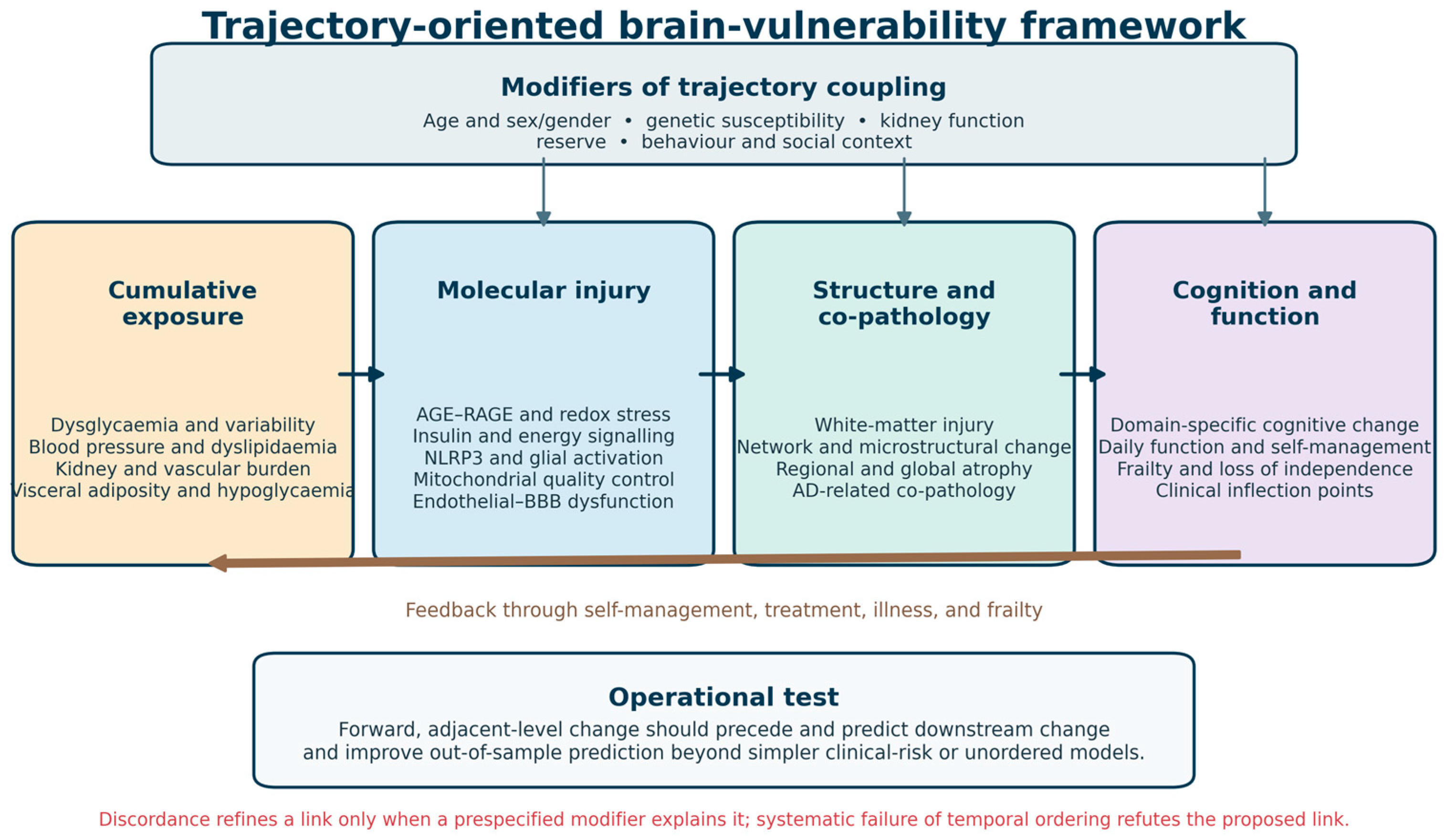
4.9. From Molecular Pathways to Dynamic Coupling
5. Application of Molecular Biomarkers and Neuroimaging Within the Trajectory Framework
5.1. Neurofilament Light Chain and Glial Fibrillary Acidic Protein: Complementary but Nonspecific Injury Signals
5.2. Alzheimer’s Disease-Related Blood Biomarkers
5.3. Magnetic Resonance Imaging as a Structural Anchor
5.4. Aligning Continuous Glucose Monitoring, Blood Biomarkers, Imaging, and Cognition
5.5. Biomarker Application Across Prevention, Diagnosis, and Progression
5.6. Thresholds and Analytical Variation
6. Genetic, Epigenetic, and Reserve-Related Susceptibility
6.1. APOE ε4 as a Context-Dependent Amplifier
6.2. Polygenic Liability and Shared Genetic Architecture
6.3. Epigenetic and Transcriptional Responses to Metabolic Exposure
7. Modifiable Context: Behaviour, Mood, Sleep, and Reserve
7.1. Physical Activity, Body Composition, Frailty, and Cognitive Reserve
7.2. Sleep, Circadian Disruption, Depression, and Stress
7.3. Self-Management, Social Context, and Sensory Function
8. Prevention and Therapeutic Translation
8.1. Multifactorial Risk Reduction
8.2. Glucose-Lowering Therapies as Mechanistic Probes
8.3. SGLT2 Inhibitors and GLP-1 Receptor Agonists as Complementary Probes
8.4. Comparative Interpretation of Randomised and Observational Evidence
9. Discussion
9.1. Relation to Existing Models and Frameworks
9.2. Clinical Implications and Current Boundaries
9.3. Limitations
10. Conclusions
11. Future Directions
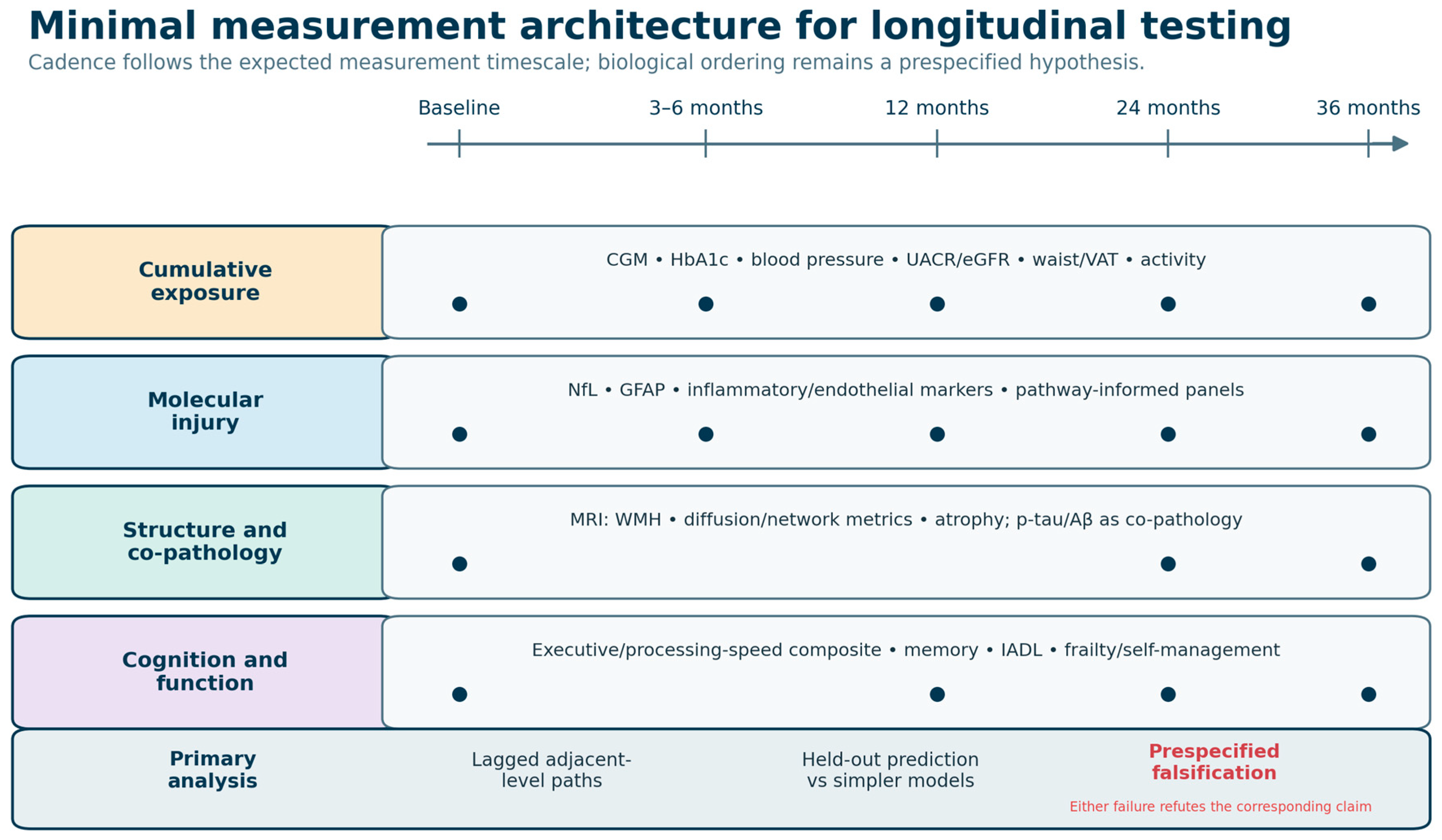
11.1. Worked Longitudinal Validation Design
11.2. Interpretation and Refutation
Supplementary Materials
Author Contributions
Funding
Institutional Review Board Statement
Informed Consent Statement
Data Availability Statement
Acknowledgments
Conflicts of Interest
Abbreviations
| Abbreviation | Definition |
| AD | Alzheimer’s disease |
| AGE | advanced glycation end product |
| Akt | protein kinase B |
| AMPK | AMP-activated protein kinase |
| APOE | Apolipoprotein E |
| Aβ | amyloid-β |
| BBB | blood–brain barrier |
| BDNF | brain-derived neurotrophic factor |
| BMI | body mass index |
| CGM | continuous glucose monitoring |
| CKD | chronic kidney disease |
| CSF | cerebrospinal fluid |
| CSVD | cerebral small-vessel disease |
| CV | coefficient of variation |
| DNA | deoxyribonucleic acid |
| DPP-4 | dipeptidyl peptidase-4 |
| DSB | Digit Span Backward |
| DSST | Digit Symbol Substitution Test |
| eGFR | estimated glomerular filtration rate |
| ELAD | Evaluating Liraglutide in Alzheimer’s Disease |
| eNOS | endothelial nitric oxide synthase |
| FINGER | Finnish Geriatric Intervention Study to Prevent Cognitive Impairment and Disability |
| fMRI | functional magnetic resonance imaging |
| fNIRS | functional near-infrared spectroscopy |
| GFAP | glial fibrillary acidic protein |
| GLP-1 RA | glucagon-like peptide-1 receptor agonist |
| GRADE | Glycemia Reduction Approaches in Diabetes: A Comparative Effectiveness Study |
| GSK-3β | glycogen synthase kinase-3β |
| HbA1c | glycated haemoglobin |
| hsCRP | high-sensitivity C-reactive protein |
| IADL | instrumental activities of daily living |
| ICAM-1 | intercellular adhesion molecule-1 |
| IL | interleukin |
| IL-18 | interleukin-18 |
| IL-1β | interleukin-1β |
| IL-6 | interleukin-6 |
| IR | insulin receptor |
| Look AHEAD | Action for Health in Diabetes |
| MAGE | mean amplitude of glycaemic excursions |
| MCI | mild cognitive impairment |
| MMSE | Mini-Mental State Examination |
| MoCA | Montreal Cognitive Assessment |
| MRI | magnetic resonance imaging |
| mTOR | mechanistic target of rapamycin |
| NADPH | nicotinamide adenine dinucleotide phosphate |
| NF-κB | nuclear factor kappa B |
| NfL | neurofilament light chain |
| NLRP3 | NLR family pyrin domain-containing 3 |
| NO | nitric oxide |
| p-tau | phosphorylated tau |
| p-tau217 | tau phosphorylated at threonine 217 |
| p-tau231 | tau phosphorylated at threonine 231 |
| PET | positron emission tomography |
| PGC-1α | peroxisome proliferator-activated receptor-γ coactivator-1α |
| PI3K | phosphoinositide 3-kinase |
| PKC | protein kinase C |
| PRISMA | Preferred Reporting Items for Systematic Reviews and Meta-Analyses |
| RAGE | receptor for advanced glycation end products |
| REWIND | Researching Cardiovascular Events with a Weekly Incretin in Diabetes |
| RMSE | root-mean-square error |
| RNA | ribonucleic acid |
| ROS | reactive oxygen species |
| SANRA | Scale for the Assessment of Narrative Review Articles |
| SD | standard deviation |
| SGLT2 | sodium–glucose cotransporter 2 |
| SIRT1 | sirtuin 1 |
| SPRINT | Systolic Blood Pressure Intervention Trial |
| T2DM | type 2 diabetes mellitus |
| TAR | time above range |
| TBR | time below range |
| TIR | time in range |
| TMT-A | Trail Making Test Part A |
| TMT-B | Trail Making Test Part B |
| TNF-α | tumour necrosis factor-α |
| UACR | urinary albumin-to-creatinine ratio |
| VAT | visceral adipose tissue |
| VCAM-1 | vascular cell adhesion molecule-1 |
| WMH | white matter hyperintensities |
References
- Zhao, Y.; Wang, H.; Tang, G.; Wang, L.; Tian, X.; Li, R. Risk Factors for Mild Cognitive Impairment in Type 2 Diabetes: A Systematic Review and Meta-Analysis. Front. Endocrinol. 2025, 16, 1617248. [Google Scholar] [CrossRef] [Scilit] [PubMed]
- You, Y.; Liu, Z.; Chen, Y.; Xu, Y.; Qin, J.; Guo, S.; Huang, J.; Tao, J. The Prevalence of Mild Cognitive Impairment in Type 2 Diabetes Mellitus Patients: A Systematic Review and Meta-Analysis. Acta Diabetol. 2021, 58, 671–685. [Google Scholar] [CrossRef] [Scilit] [PubMed]
- Biessels, G.J.; Nobili, F.; Teunissen, C.E.; Simó, R.; Scheltens, P. Understanding Multifactorial Brain Changes in Type 2 Diabetes: A Biomarker Perspective. Lancet Neurol. 2020, 19, 699–710. [Google Scholar] [CrossRef] [Scilit] [PubMed]
- Ehtewish, H.; Arredouani, A.; El-Agnaf, O. Diagnostic, Prognostic, and Mechanistic Biomarkers of Diabetes Mellitus-Associated Cognitive Decline. Int. J. Mol. Sci. 2022, 23, 6144. [Google Scholar] [CrossRef] [Scilit] [PubMed]
- van Sloten, T.T.; Sedaghat, S.; Carnethon, M.R.; Launer, L.J.; Stehouwer, C.D.A. Cerebral Microvascular Complications of Type 2 Diabetes: Stroke, Cognitive Dysfunction, and Depression. Lancet Diabetes Endocrinol. 2020, 8, 325–336. [Google Scholar] [CrossRef] [Scilit] [PubMed]
- Grillo, C.A.; Woodruff, J.L.; Macht, V.A.; Reagan, L.P. Insulin Resistance and Hippocampal Dysfunction: Disentangling Peripheral and Brain Causes from Consequences. Exp. Neurol. 2019, 318, 71–77. [Google Scholar] [CrossRef] [Scilit] [PubMed]
- Dutta, B.J.; Singh, S.; Seksaria, S.; Das Gupta, G.; Singh, A. Inside the Diabetic Brain: Insulin Resistance and Molecular Mechanism Associated with Cognitive Impairment and Its Possible Therapeutic Strategies. Pharmacol. Res. 2022, 182, 106358. [Google Scholar] [CrossRef] [Scilit] [PubMed]
- Wątroba, M.; Grabowska, A.D.; Szukiewicz, D. Effects of Diabetes Mellitus-Related Dysglycemia on the Functions of Blood–Brain Barrier and the Risk of Dementia. Int. J. Mol. Sci. 2023, 24, 10069. [Google Scholar] [CrossRef] [Scilit] [PubMed]
- Kan, W.; Qu, M.; Wang, Y.; Zhang, X.; Xu, L. A Review of Type 2 Diabetes Mellitus and Cognitive Impairment. Front. Endocrinol. 2025, 16, 1624472. [Google Scholar] [CrossRef] [Scilit] [PubMed]
- Liao, X.; Zhang, Y.; Xu, J.; Yin, J.; Li, S.; Dong, K.; Shi, X.; Xu, W.; Ma, D.; Chen, X.; et al. Narrative Review on Cognitive Impairment in Type 2 Diabetes: Global Trends and Diagnostic Approaches. Biomedicines 2025, 13, 473. [Google Scholar] [CrossRef] [Scilit] [PubMed]
- Mei, J.; Li, Y.; Niu, L.; Liang, R.; Tang, M.; Cai, Q.; Xu, J.; Zhang, D.; Yin, X.; Liu, X.; et al. SGLT2 Inhibitors: A Novel Therapy for Cognitive Impairment via Multifaceted Effects on the Nervous System. Transl. Neurodegener. 2024, 13, 41. [Google Scholar] [CrossRef] [Scilit] [PubMed]
- Alford, S.; Johannsen, P.; Bentsen, M.; Rausch, D.B.; Carstensen, L.; Jeppesen, R.; Martino, G.; Jiménez-Mausbach, M.; Knudsen, L. Semaglutide Concentration in Cerebrospinal Fluid from Patients with Early Alzheimer’s Disease After 12 Weeks of Subcutaneous Treatment. Presented at the American Academy of Neurology Annual Meeting, Chicago, IL, USA, 18–22 April 2026; Available online: https://sciencehub.novonordisk.com/congresses/aan2026/johannsen0.html (accessed on 12 September 2026).
- Baethge, C.; Goldbeck-Wood, S.; Mertens, S. SANRA—A Scale for the Quality Assessment of Narrative Review Articles. Res. Integr. Peer Rev. 2019, 4, 5. [Google Scholar] [CrossRef] [Scilit] [PubMed]
- Barbiellini Amidei, C.; Fayosse, A.; Dumurgier, J.; Machado-Fragua, M.D.; Tabak, A.G.; van Sloten, T.; Kivimäki, M.; Dugravot, A.; Sabia, S.; Singh-Manoux, A. Association Between Age at Diabetes Onset and Subsequent Risk of Dementia. JAMA 2021, 325, 1640–1649. [Google Scholar] [CrossRef] [Scilit] [PubMed]
- LeRoith, D.; Biessels, G.J.; Braithwaite, S.S.; Casanueva, F.F.; Draznin, B.; Halter, J.B.; Hirsch, I.B.; McDonnell, M.E.; Molitch, M.E.; Murad, M.H.; et al. Treatment of Diabetes in Older Adults: An Endocrine Society* Clinical Practice Guideline. J. Clin. Endocrinol. Metab. 2019, 104, 1520–1574. [Google Scholar] [CrossRef] [Scilit] [PubMed]
- Rom, S.; Heldt, N.A.; Gajghate, S.; Seliga, A.; Reichenbach, N.L.; Persidsky, Y. Hyperglycemia and Advanced Glycation End Products Disrupt BBB and Promote Occludin and Claudin-5 Protein Secretion on Extracellular Microvesicles. Sci. Rep. 2020, 10, 7274, Correction in Sci. Rep. 2020, 10, 18828. [Google Scholar] [CrossRef] [Scilit] [PubMed]
- Xie, Z.; Wang, X.; Luo, X.; Yan, J.; Zhang, J.; Sun, R.; Luo, A.; Li, S. Activated AMPK Mitigates Diabetes-Related Cognitive Dysfunction by Inhibiting Hippocampal Ferroptosis. Biochem. Pharmacol. 2023, 207, 115374. [Google Scholar] [CrossRef] [Scilit] [PubMed]
- Li, X.; Preckel, B.; Hermanides, J.; Hollmann, M.W.; Zuurbier, C.J.; Weber, N.C. Amelioration of Endothelial Dysfunction by Sodium Glucose Co-Transporter 2 Inhibitors: Pieces of the Puzzle Explaining Their Cardiovascular Protection. Br. J. Pharmacol. 2022, 179, 4047–4062. [Google Scholar] [CrossRef] [Scilit] [PubMed]
- Chi, H.; Song, M.; Zhang, J.; Zhou, J.; Liu, D. Relationship between Acute Glucose Variability and Cognitive Decline in Type 2 Diabetes: A Systematic Review and Meta-Analysis. PLoS ONE 2023, 18, e0289782. [Google Scholar] [CrossRef] [Scilit] [PubMed]
- Ding, J.; Shi, Q.; Tao, Q.; Su, H.; Du, Y.; Pan, T.; Zhong, X. Correlation between Long-Term Glycemic Variability and Cognitive Function in Middle-Aged and Elderly Patients with Type 2 Diabetes Mellitus: A Retrospective Study. PeerJ 2023, 11, e16698. [Google Scholar] [CrossRef] [Scilit] [PubMed]
- Cui, X.; Abduljalil, A.; Manor, B.D.; Peng, C.-K.; Novak, V. Multi-Scale Glycemic Variability: A Link to Gray Matter Atrophy and Cognitive Decline in Type 2 Diabetes. PLoS ONE 2014, 9, e86284. [Google Scholar] [CrossRef] [Scilit] [PubMed]
- Xia, W.; Luo, Y.; Chen, Y.-C.; Chen, H.; Ma, J.; Yin, X. Glucose Fluctuations Are Linked to Disrupted Brain Functional Architecture and Cognitive Impairment. J. Alzheimer’s Dis. 2020, 74, 603–613. [Google Scholar] [CrossRef] [Scilit] [PubMed]
- Wang, D.-Q.; Wang, L.; Wei, M.-M.; Xia, X.-S.; Tian, X.-L.; Cui, X.-H.; Li, X. Relationship Between Type 2 Diabetes and White Matter Hyperintensity: A Systematic Review. Front. Endocrinol. 2020, 11, 595962. [Google Scholar] [CrossRef] [Scilit] [PubMed]
- Qiao, L.; Tang, X.; Peng, J.; Xie, Q.; Wu, M.; Tang, Z. Blood and Imaging Biomarkers of Blood-Brain Barrier Disruption in Diabetic Individuals with Cognitive Impairment. Aging Clin. Exp. Res. 2026, 38, 121. [Google Scholar] [CrossRef] [Scilit] [PubMed]
- Tian, Y.; Jing, G.; Ma, M.; Yin, R.; Zhang, M. Microglial Activation and Polarization in Type 2 Diabetes-Related Cognitive Impairment: A Focused Review of Pathogenesis. Neurosci. Biobehav. Rev. 2024, 165, 105848. [Google Scholar] [CrossRef] [Scilit] [PubMed]
- Luo, Y.; Zhu, J.; Hu, Z.; Luo, W.; Du, X.; Hu, H.; Peng, S. Progress in the Pathogenesis of Diabetic Encephalopathy: The Key Role of Neuroinflammation. Diabetes Metab. Res. Rev. 2024, 40, e3841. [Google Scholar] [CrossRef] [Scilit] [PubMed]
- Zhu, W.; Zhang, H.; Niu, T.; Liu, K.; Fareeduddin Mohammed Farooqui, H.; Sun, R.; Chen, X.; Yuan, Y.; Wang, S. Microglial SCAP Deficiency Protects against Diabetes-Associated Cognitive Impairment through Inhibiting NLRP3 Inflammasome-Mediated Neuroinflammation. Brain Behav. Immun. 2024, 119, 154–170. [Google Scholar] [CrossRef] [Scilit] [PubMed]
- Lin, L.; Wu, Y.; Chen, Z.; Huang, L.; Wang, L.; Liu, L. Severe Hypoglycemia Contributing to Cognitive Dysfunction in Diabetic Mice Is Associated with Pericyte and Blood–Brain Barrier Dysfunction. Front. Aging Neurosci. 2021, 13, 775244. [Google Scholar] [CrossRef] [Scilit] [PubMed]
- Arslan, B.; Brum, W.S.; Pola, I.; Therriault, J.; Rahmouni, N.; Stevenson, J.; Servaes, S.; Tan, K.; Vitali, P.; Montembeault, M.; et al. The Impact of Kidney Function on Alzheimer’s Disease Blood Biomarkers: Implications for Predicting Amyloid-β Positivity. Alzheimer’s Res. Ther. 2025, 17, 48. [Google Scholar] [CrossRef] [Scilit] [PubMed]
- Wang, D.; Liu, J.; Zhong, L.; Li, S.; Zhou, L.; Zhang, Q.; Li, M.; Xiao, X. The Effect of Sodium-Glucose Cotransporter 2 Inhibitors on Biomarkers of Inflammation: A Systematic Review and Meta-Analysis of Randomized Controlled Trials. Front. Pharmacol. 2022, 13, 1045235. [Google Scholar] [CrossRef] [Scilit] [PubMed]
- Hsiao, C.-P.; Hoppel, C.L. Analyzing Mitochondrial Function in Human Peripheral Blood Mononuclear Cells. Anal. Biochem. 2018, 549, 12–20. [Google Scholar] [CrossRef] [Scilit] [PubMed]
- Pachter, D.; Klein, H.; Kamer, O.; Goldberg Toren, D.T.; Alufer, L.; Ebstein Karamani, N.; Atlas, T.; Yaary, A.; Hagbi, I.; Chassidim, Y.; et al. Sustained Visceral Fat Loss Is Associated with Attenuated Brain Atrophy and Improved Cognition in Late Midlife. Nat. Commun. 2026, 17, 4434. [Google Scholar] [CrossRef] [Scilit] [PubMed]
- Sun, M.; Lu, Z.; Chen, W.-M.; Wu, S.-Y.; Zhang, J. Sarcopenia and Diabetes-Induced Dementia Risk. Brain Commun. 2024, 6, fcad347. [Google Scholar] [CrossRef] [Scilit] [PubMed]
- Sha, T.; Zhang, Y.; Wei, J.; Li, C.; Zeng, C.; Lei, G.; Wang, Y. Sarcopenia and Risk of Cognitive Impairment: Cohort and Mendelian Randomization Analyses. JMIR Aging 2025, 8, e66031. [Google Scholar] [CrossRef] [Scilit] [PubMed]
- Wu, K.; Huang, C.; Zheng, W.; Wu, Y.; Huang, Q.; Lin, M.; Gao, R.; Qi, L.; He, G.; Liu, X.; et al. Activation of Mitophagy Improves Cognitive Dysfunction in Diabetic Mice with Recurrent Non-Severe Hypoglycemia. Mol. Cell. Endocrinol. 2024, 580, 112109. [Google Scholar] [CrossRef] [Scilit] [PubMed]
- Ciardullo, S.; Muraca, E.; Bianconi, E.; Cannistraci, R.; Perra, S.; Zerbini, F.; Perseghin, G. Diabetes Mellitus Is Associated with Higher Serum Neurofilament Light Chain Levels in the General US Population. J. Clin. Endocrinol. Metab. 2023, 108, 361–367. [Google Scholar] [CrossRef] [Scilit] [PubMed]
- Li, L.; Li, C.; Zhu, L.; Zhu, J. Association between Serum NfL and Cognitive Functioning in Older Adults with Diagnosed Diabetes: A Cross-Sectional Study from NHANES. Medicine 2025, 104, e45602. [Google Scholar] [CrossRef] [Scilit] [PubMed]
- Thota, R.N.; Chatterjee, P.; Pedrini, S.; Hone, E.; Ferguson, J.J.A.; Garg, M.L.; Martins, R.N. Association of Plasma Neurofilament Light Chain with Glycaemic Control and Insulin Resistance in Middle-Aged Adults. Front. Endocrinol. 2022, 13, 915449. [Google Scholar] [CrossRef] [Scilit] [PubMed]
- Rajan, K.B.; Aggarwal, N.T.; McAninch, E.A.; Weuve, J.; Barnes, L.L.; Wilson, R.S.; De Carli, C.; Evans, D.A. Remote Blood Biomarkers of Longitudinal Cognitive Outcomes in a Population Study. Ann. Neurol. 2020, 88, 1065–1076. [Google Scholar] [CrossRef] [Scilit] [PubMed]
- Axelsson, T.; Zetterberg, H.; Blennow, K.; Arslan, B.; Ashton, N.J.; Axelsson, M.; Svensson, M.K.; Saeed, A.; Guron, G. Plasma Concentrations of Neurofilament Light, p-Tau231 and Glial Fibrillary Acidic Protein Are Elevated in Patients with Chronic Kidney Disease and Correlate with Measured Glomerular Filtration Rate. BMC Nephrol. 2025, 26, 231. [Google Scholar] [CrossRef] [Scilit] [PubMed]
- Mielke, M.M.; Evans, J.K.; Neiberg, R.H.; Molina-Henry, D.P.; Marcovina, S.M.; Johnson, K.C.; Carmichael, O.T.; Rapp, S.R.; Sachs, B.C.; Ding, J.; et al. Alzheimer Disease Blood Biomarkers and Cognition Among Individuals with Diabetes and Overweight or Obesity. JAMA Netw. Open 2025, 8, e2458149. [Google Scholar] [CrossRef] [Scilit] [PubMed]
- Raghavan, S.; Graff-Radford, J.; Hofrenning, E.; Fought, A.J.; Reid, R.I.; Kamykowski, M.G.; Algeciras-Schimnich, A.; Windham, B.G.; Knopman, D.S.; Lowe, V.J.; et al. Plasma NfL and GFAP for Predicting VCI and Related Brain Changes in Community and Clinical Cohorts. Alzheimer’s Dement. 2025, 21, e70381. [Google Scholar] [CrossRef] [Scilit] [PubMed]
- Ayala-Guerrero, L.; García-delaTorre, P.; Sánchez-García, S.; Guzmán-Ramos, K. Serum Levels of Glial Fibrillary Acidic Protein Association with Cognitive Impairment and Type 2 Diabetes. Arch. Med. Res. 2022, 53, 501–507. [Google Scholar] [CrossRef] [Scilit] [PubMed]
- Gonzales, M.M.; Vela, G.; Philip, V.; Trevino, H.; LaRoche, A.; Wang, C.-P.; Parent, D.M.; Kautz, T.; Satizabal, C.L.; Tanner, J.; et al. Demographic and Clinical Characteristics Associated with Serum GFAP Levels in an Ethnically Diverse Cohort. Neurology 2023, 101, e1531–e1541. [Google Scholar] [CrossRef] [Scilit] [PubMed]
- Meng, F.; Fu, J.; Zhang, L.; Guo, M.; Zhuang, P.; Yin, Q.; Zhang, Y. Function and Therapeutic Value of Astrocytes in Diabetic Cognitive Impairment. Neurochem. Int. 2023, 169, 105591. [Google Scholar] [CrossRef] [Scilit] [PubMed]
- Palmqvist, S.; Warmenhoven, N.; Anastasi, F.; Pilotto, A.; Janelidze, S.; Tideman, P.; Stomrud, E.; Mattsson-Carlgren, N.; Smith, R.; Ossenkoppele, R.; et al. Plasma Phospho-Tau217 for Alzheimer’s Disease Diagnosis in Primary and Secondary Care Using a Fully Automated Platform. Nat. Med. 2025, 31, 2036–2043. [Google Scholar] [CrossRef] [Scilit] [PubMed]
- Bolton, C.J.; Khan, O.A.; Liu, D.; Pechman, K.R.; Gifford, K.A.; Hohman, T.J.; Blennow, K.; Zetterberg, H.; Jefferson, A.L. Combining Plasma P-tau231 and Glial Fibrillary Acidic Protein Produces Higher Discriminative Accuracy for Amyloid Positivity than Other Blood-based Biomarker Combinations. Alzheimer’s Dement. 2025, 21, e70796. [Google Scholar] [CrossRef] [Scilit] [PubMed]
- Palmqvist, S.; Whitson, H.E.; Allen, L.A.; Suarez-Calvet, M.; Galasko, D.; Karikari, T.K.; Okrahvi, H.R.; Paczynski, M.; Schindler, S.E.; Teunissen, C.E.; et al. Alzheimer’s Association Clinical Practice Guideline on the Use of Blood-Based Biomarkers in the Diagnostic Workup of Suspected Alzheimer’s Disease within Specialized Care Settings. Alzheimer’s Dement. 2025, 21, e70535. [Google Scholar] [CrossRef] [Scilit] [PubMed]
- Cheng, Y.; Wei, L.; Chen, Y.-H.; Fan, Y.-T.; Lin, Y.-N.; Martinez, R.M.; Goh, K.K.; Chen, Y.-C.; Jian, H.-Y.; Chen, C. A Neuroimaging Functional Connectivity Signature of Emotional Conflict Monitoring Predicting Cognitive Decline in Type 2 Diabetes. Sci. Rep. 2026, 16, 10436. [Google Scholar] [CrossRef] [Scilit] [PubMed]
- Roy, B.; Choi, S.E.; Freeby, M.J.; Kumar, R. Microstructural Brain Tissue Changes Contribute to Cognitive and Mood Deficits in Adults with Type 2 Diabetes Mellitus. Sci. Rep. 2023, 13, 9636. [Google Scholar] [CrossRef] [Scilit] [PubMed]
- Moran, C.; Beare, R.; Phan, T.G.; Bruce, D.G.; Callisaya, M.L.; Srikanth, V.; On behalf of the Alzheimer’s Disease Neuroimaging Initiative (ADNI). Type 2 Diabetes Mellitus and Biomarkers of Neurodegeneration. Neurology 2015, 85, 1123–1130. [Google Scholar] [CrossRef] [Scilit] [PubMed]
- Johnson, L.A.; Torres, E.R.S.; Impey, S.; Stevens, J.F.; Raber, J. Apolipoprotein E4 and Insulin Resistance Interact to Impair Cognition and Alter the Epigenome and Metabolome. Sci. Rep. 2017, 7, 43701. [Google Scholar] [CrossRef] [Scilit] [PubMed]
- Wang, Y.; Gao, Y.; Wang, Y.; Zhang, F.; Sun, F.; Wang, X.; Xie, J.; Xu, Z.; Zhang, J.; Xu, H.; et al. ApoE4 Upregulates GSK-3β to Aggravate Alzheimer-Like Pathologies and Cognitive Impairment in Type 2 Diabetic Mice. CNS Neurosci. Ther. 2025, 31, e70575. [Google Scholar] [CrossRef] [Scilit] [PubMed]
- Litkowski, E.M.; Logue, M.W.; Zhang, R.; Charest, B.R.; Lange, E.M.; Hokanson, J.E.; Lynch, J.A.; Vujkovic, M.; Phillips, L.S.; Lange, L.A.; et al. A Diabetes Genetic Risk Score Is Associated with All-Cause Dementia and Clinically Diagnosed Vascular Dementia in the Million Veteran Program. Diabetes Care 2022, 45, 2544–2552. [Google Scholar] [CrossRef] [Scilit] [PubMed]
- Mollon, J.; Curran, J.E.; Mathias, S.R.; Knowles, E.E.M.; Carlisle, P.; Fox, P.T.; Olvera, R.L.; Göring, H.H.H.; Rodrigue, A.; Almasy, L.; et al. Neurocognitive Impairment in Type 2 Diabetes: Evidence for Shared Genetic Aetiology. Diabetologia 2020, 63, 977–986. [Google Scholar] [CrossRef] [Scilit] [PubMed]
- Luo, M.; Sun, M.; Wang, T.; Wei, J.; Ruan, X.; Chen, K.; Ou, J.; Chen, Y.; Qin, J. Type 2 Diabetes, Glycaemic Traits, Structural Brain Capacity and Cognitive Function: A Mendelian Randomization Analysis. Diabetes Obes. Metab. 2024, 26, 3618–3632. [Google Scholar] [CrossRef] [Scilit] [PubMed]
- Zhao, R.R.; O’Sullivan, A.J.; Fiatarone Singh, M.A. Exercise or Physical Activity and Cognitive Function in Adults with Type 2 Diabetes, Insulin Resistance or Impaired Glucose Tolerance: A Systematic Review. Eur. Rev. Aging Phys. Act. 2018, 15, 1. [Google Scholar] [CrossRef] [Scilit] [PubMed]
- Livingston, G.; Huntley, J.; Liu, K.Y.; Costafreda, S.G.; Selbæk, G.; Alladi, S.; Ames, D.; Banerjee, S.; Burns, A.; Brayne, C.; et al. Dementia Prevention, Intervention, and Care: 2024 Report of the Lancet Standing Commission. Lancet 2024, 404, 572–628. [Google Scholar] [CrossRef] [Scilit] [PubMed]
- Stern, Y.; Arenaza-Urquijo, E.M.; Bartrés-Faz, D.; Belleville, S.; Cantilon, M.; Chetelat, G.; Ewers, M.; Franzmeier, N.; Kempermann, G.; Kremen, W.S.; et al. Whitepaper: Defining and Investigating Cognitive Reserve, Brain Reserve, and Brain Maintenance. Alzheimer’s Dement. 2020, 16, 1305–1311. [Google Scholar] [CrossRef] [Scilit] [PubMed]
- Palmer Allred, N.D.; Raffield, L.M.; Hardy, J.C.; Hsu, F.-C.; Divers, J.; Xu, J.; Smith, S.C.; Hugenschmidt, C.E.; Wagner, B.C.; Whitlow, C.T.; et al. APOE Genotypes Associate with Cognitive Performance but Not Cerebral Structure: Diabetes Heart Study MIND. Diabetes Care 2016, 39, 2225–2231. [Google Scholar] [CrossRef] [Scilit] [PubMed]
- Lee, B.C.; Choe, Y.M.; Suh, G.-H.; Choi, I.-G.; Lee, J.H.; Kim, H.S.; Hwang, J.; Yi, D.; Kim, J.W. A Combination of Midlife Diabetes Mellitus and the Apolipoprotein E Ε4 Allele Increase Risk for Cognitive Decline. Front. Aging Neurosci. 2022, 14, 1065117. [Google Scholar] [CrossRef] [Scilit] [PubMed]
- Dore, G.A.; Elias, M.F.; Robbins, M.A.; Elias, P.K.; Nagy, Z. Presence of the APOE Ε4 Allele Modifies the Relationship between Type 2 Diabetes and Cognitive Performance: The Maine–Syracuse Study. Diabetologia 2009, 52, 2551–2560, Erratum in Diabetologia 2009, 52, 2670. [Google Scholar] [CrossRef] [Scilit] [PubMed]
- Ware, E.B.; Morataya, C.; Fu, M.; Bakulski, K.M. Type 2 Diabetes and Cognitive Status in the Health and Retirement Study: A Mendelian Randomization Approach. Front. Genet. 2021, 12, 634767. [Google Scholar] [CrossRef] [Scilit] [PubMed]
- Fachim, H.A.; Malipatil, N.; Siddals, K.; Donn, R.; Cortés, G.Y.; Dalton, C.F.; Gibson, J.M.; Heald, A.H. Methylation Status of Exon IV of the Brain-Derived Neurotrophic Factor (BDNF)-Encoding Gene in Patients with Non-Diabetic Hyperglycaemia (NDH) before and after a Lifestyle Intervention. Epigenomes 2022, 6, 7. [Google Scholar] [CrossRef] [Scilit] [PubMed]
- Wang, J.; Wang, S.; Wang, J.; Xiao, M.; Guo, Y.; Tang, Y.; Zhang, J.; Gu, J. Epigenetic Regulation Associated with Sirtuin 1 in Complications of Diabetes Mellitus. Front. Endocrinol. 2021, 11, 598012. [Google Scholar] [CrossRef] [Scilit] [PubMed]
- He, W.; Chang, F.; Wang, T.; Sun, B.; Chen, R.; Zhao, L. Serum Brain-Derived Neurotrophic Factor Levels in Type 2 Diabetes Mellitus Patients and Its Association with Cognitive Impairment: A Meta-Analysis. PLoS ONE 2024, 19, e0297785. [Google Scholar] [CrossRef] [Scilit] [PubMed]
- SPRINT MIND Investigators for the SPRINT Research Group; Williamson, J.D.; Pajewski, N.M.; Auchus, A.P.; Bryan, R.N.; Chelune, G.; Cheung, A.K.; Cleveland, M.L.; Coker, L.H.; Crowe, M.G.; et al. Effect of Intensive vs Standard Blood Pressure Control on Probable Dementia: A Randomized Clinical Trial. JAMA 2019, 321, 553–561. [Google Scholar] [CrossRef] [Scilit] [PubMed]
- Ngandu, T.; Lehtisalo, J.; Solomon, A.; Levälahti, E.; Ahtiluoto, S.; Antikainen, R.; Bäckman, L.; Hänninen, T.; Jula, A.; Laatikainen, T.; et al. A 2 Year Multidomain Intervention of Diet, Exercise, Cognitive Training, and Vascular Risk Monitoring versus Control to Prevent Cognitive Decline in at-Risk Elderly People (FINGER): A Randomised Controlled Trial. Lancet 2015, 385, 2255–2263. [Google Scholar] [CrossRef] [Scilit] [PubMed]
- Patel, S.M.; Kang, Y.M.; Im, K.; Neuen, B.L.; Anker, S.D.; Bhatt, D.L.; Butler, J.; Cherney, D.Z.I.; Claggett, B.L.; Fletcher, R.A.; et al. Sodium-Glucose Cotransporter-2 Inhibitors and Major Adverse Cardiovascular Outcomes: A SMART-C Collaborative Meta-Analysis. Circulation 2024, 149, 1789–1801. [Google Scholar] [CrossRef] [Scilit] [PubMed]
- Vaduganathan, M.; Docherty, K.F.; Claggett, B.L.; Jhund, P.S.; de Boer, R.A.; Hernandez, A.F.; Inzucchi, S.E.; Kosiborod, M.N.; Lam, C.S.P.; Martinez, F.; et al. SGLT2 Inhibitors in Patients with Heart Failure: A Comprehensive Meta-Analysis of Five Randomised Controlled Trials. Lancet 2022, 400, 757–767, Erratum in Lancet 2023, 401, 104. [Google Scholar] [CrossRef] [Scilit] [PubMed]
- Lee, H.; Park, S.-E.; Kim, E.-Y. Glycemic Variability Impacted by SGLT2 Inhibitors and GLP 1 Agonists in Patients with Diabetes Mellitus: A Systematic Review and Meta-Analysis. J. Clin. Med. 2021, 10, 4078. [Google Scholar] [CrossRef] [Scilit] [PubMed]
- Kim, H.K.; Biessels, G.J.; Yu, M.H.; Hong, N.; Lee, Y.; Lee, B.-W.; Kang, E.S.; Cha, B.-S.; Lee, E.J.; Lee, M. SGLT2 Inhibitor Use and Risk of Dementia and Parkinson Disease Among Patients with Type 2 Diabetes. Neurology 2024, 103, e209805. [Google Scholar] [CrossRef] [Scilit] [PubMed]
- Wu, C.-Y.; Iskander, C.; Wang, C.; Xiong, L.Y.; Shah, B.R.; Edwards, J.D.; Kapral, M.K.; Herrmann, N.; Lanctôt, K.L.; Masellis, M.; et al. Association of Sodium–Glucose Cotransporter 2 Inhibitors with Time to Dementia: A Population-Based Cohort Study. Diabetes Care 2023, 46, 297–304. [Google Scholar] [CrossRef] [Scilit] [PubMed]
- Tang, H.; Shao, H.; Shaaban, C.E.; Yang, K.; Brown, J.; Anton, S.; Wu, Y.; Bress, A.; Donahoo, W.T.; DeKosky, S.T.; et al. Newer Glucose-Lowering Drugs and Risk of Dementia: A Systematic Review and Meta-Analysis of Observational Studies. J. Am. Geriatr. Soc. 2023, 71, 2096–2106. [Google Scholar] [CrossRef] [Scilit] [PubMed]
- Shin, A.; Koo, B.K.; Lee, J.Y.; Kang, E.H. Risk of Dementia after Initiation of Sodium-Glucose Cotransporter-2 Inhibitors versus Dipeptidyl Peptidase-4 Inhibitors in Adults Aged 40–69 Years with Type 2 Diabetes: Population Based Cohort Study. BMJ 2024, 386, e079475, Erratum in BMJ 2024, 386, q1911. [Google Scholar] [CrossRef] [Scilit] [PubMed]
- Tang, H.; Donahoo, W.T.; DeKosky, S.T.; Lee, Y.A.; Kotecha, P.; Svensson, M.; Bian, J.; Guo, J. GLP-1RA and SGLT2i Medications for Type 2 Diabetes and Alzheimer Disease and Related Dementias. JAMA Neurol. 2025, 82, 439–449. [Google Scholar] [CrossRef] [Scilit] [PubMed]
- Luchsinger, J.A.; Rosin, S.P.; Kazemi, E.J.; Younes, N.; Suratt, C.E.; Fattaleh, B.N.; Florez, H.J.; Gonzalez, J.S.; Hollander, P.; Hox, S.H.; et al. Glucose-Lowering Medications, Glycemia, and Cognitive Outcomes: The GRADE Randomized Clinical Trial. JAMA Intern. Med. 2025, 185, 778–787. [Google Scholar] [CrossRef] [Scilit] [PubMed]
- Youn, Y.J.; Kim, S.; Jeong, H.-J.; Ah, Y.-M.; Yu, Y.M. Sodium-Glucose Cotransporter-2 Inhibitors and Their Potential Role in Dementia Onset and Cognitive Function in Patients with Diabetes Mellitus: A Systematic Review and Meta-Analysis. Front. Neuroendocrinol. 2024, 73, 101131. [Google Scholar] [CrossRef] [Scilit] [PubMed]
- The EMPA-KIDNEY Collaborative Group. Empagliflozin in Patients with Chronic Kidney Disease. N. Engl. J. Med. 2023, 388, 117–127. [Google Scholar] [CrossRef] [Scilit] [PubMed]
- Song, K.; Choi, J.; Jeong, D.; Shin, D.; Ah, Y.-M.; Lee, K.Y.; Choi, K.H. Comparative Effects of SGLT2 Inhibitors and Incretin-Based Therapies on Dementia Risk in Type 2 Diabetes: A Systematic Review and Meta-Analysis. Front. Endocrinol. 2025, 16, 1695075. [Google Scholar] [CrossRef] [Scilit] [PubMed]
- Park, S.J.; Kim, H.J.; Seo, M.; Byun, D.W.; Suh, K.; Yoo, M.H.; Yang, H.; Lee, I.; Kwon, S.H.; Kim, M.; et al. Comparative Risk of the Neurodegenerative Outcomes between Sodium-Glucose Co-Transporter 2 (SGLT2) Inhibitors and Thiazolidinediones in Type 2 Diabetes: A Multicentre Cohort Study Using the Korean Healthcare Database (2014–2025). BMJ Open 2026, 16, e105271. [Google Scholar] [CrossRef] [Scilit] [PubMed]
- van Ruiten, C.C.; Veltman, D.J.; Schrantee, A.; van Bloemendaal, L.; Barkhof, F.; Kramer, M.H.H.; Nieuwdorp, M.; IJzerman, R.G. Effects of Dapagliflozin and Combination Therapy with Exenatide on Food-Cue Induced Brain Activation in Patients with Type 2 Diabetes. J. Clin. Endocrinol. Metab. 2022, 107, e2590–e2599. [Google Scholar] [CrossRef] [Scilit] [PubMed]
- Watt, C.; Sanchez-Rangel, E.; Hwang, J.J. Glycemic Variability and CNS Inflammation: Reviewing the Connection. Nutrients 2020, 12, 3906. [Google Scholar] [CrossRef] [Scilit] [PubMed]
- Ferrannini, E.; Baldi, S.; Frascerra, S.; Astiarraga, B.; Heise, T.; Bizzotto, R.; Mari, A.; Pieber, T.R.; Muscelli, E. Shift to Fatty Substrate Utilization in Response to Sodium–Glucose Cotransporter 2 Inhibition in Subjects Without Diabetes and Patients with Type 2 Diabetes. Diabetes 2016, 65, 1190–1195. [Google Scholar] [CrossRef] [Scilit] [PubMed]
- Alami, M.; Zerif, E.; Khalil, A.; Hajji, N.; Ramassamy, C.; Lacombe, G.; Laurent, B.; Cohen, A.A.; Wikowski, J.M.; Gris, D.; et al. Neuroprotective Effects of SGLT2 Inhibitors Empagliflozin and Dapagliflozin on Aβ1–42-Induced Neurotoxicity and Neuroinflammation in Cellular Models of Alzheimer’s Disease. J. Alzheimer’s Dis. 2025, 105, 464–480. [Google Scholar] [CrossRef] [Scilit] [PubMed]
- Vadini, F.; Simeone, P.G.; Boccatonda, A.; Guagnano, M.T.; Liani, R.; Tripaldi, R.; Di Castelnuovo, A.; Cipollone, F.; Consoli, A.; Santilli, F. Liraglutide Improves Memory in Obese Patients with Prediabetes or Early Type 2 Diabetes: A Randomized, Controlled Study. Int. J. Obes. 2020, 44, 1254–1263. [Google Scholar] [CrossRef] [Scilit] [PubMed]
- Li, Q.; Jia, M.; Yan, Z.; Li, Q.; Sun, F.; He, C.; Li, Y.; Zhou, X.; Zhang, H.; Liu, X.; et al. Activation of Glucagon-Like Peptide-1 Receptor Ameliorates Cognitive Decline in Type 2 Diabetes Mellitus Through a Metabolism-Independent Pathway. J. Am. Heart Assoc. 2021, 10, e020734. [Google Scholar] [CrossRef] [Scilit] [PubMed]
- Cheng, H.; Zhang, Z.; Zhang, B.; Zhang, W.; Wang, J.; Ni, W.; Miao, Y.; Liu, J.; Bi, Y. Enhancement of Impaired Olfactory Neural Activation and Cognitive Capacity by Liraglutide, but Not Dapagliflozin or Acarbose, in Patients with Type 2 Diabetes: A 16-Week Randomized Parallel Comparative Study. Diabetes Care 2022, 45, 1201–1210. [Google Scholar] [CrossRef] [Scilit] [PubMed]
- Cukierman-Yaffe, T.; Gerstein, H.C.; Colhoun, H.M.; Diaz, R.; García-Pérez, L.-E.; Lakshmanan, M.; Bethel, A.; Xavier, D.; Probstfield, J.; Riddle, M.C.; et al. Effect of Dulaglutide on Cognitive Impairment in Type 2 Diabetes: An Exploratory Analysis of the REWIND Trial. Lancet Neurol. 2020, 19, 582–590, Erratum in Lancet Neurol. 2020, 19, e9. [Google Scholar] [CrossRef] [Scilit] [PubMed]
- Nørgaard, C.H.; Friedrich, S.; Hansen, C.T.; Gerds, T.; Ballard, C.; Møller, D.V.; Knudsen, L.B.; Kvist, K.; Zinman, B.; Holm, E.; et al. Treatment with Glucagon-Like Peptide-1 Receptor Agonists and Incidence of Dementia: Data from Pooled Double-Blind Randomized Controlled Trials and Nationwide Disease and Prescription Registers. Alzheimer’s Dement. 2022, 8, e12268. [Google Scholar] [CrossRef] [Scilit] [PubMed]
- Wilson, J.M.; Dage, J.L.; Qian, H.-R.; Irelan, C.L.; Crowder, H.S.; Duffin, K.L.; Mintun, M.; Brooks, D.A.; Gerstein, H.C.; Bethel, M.A. Dulaglutide and Neurodegeneration Biomarkers: REWIND Post Hoc Analysis. Alzheimer’s Dement. 2026, 22, e71391. [Google Scholar] [CrossRef] [Scilit] [PubMed]
- Cassataro, G.; Scriffignano, S.; Geraci, G.; Augello, G.; Grasso, M.A.; D’Ippolito, M.E.; Puleo, M.G.; Cadelo, M.; Renda, M.; Tuttolomondo, A. Impact of Semaglutide on Cognitive Function in Patients with Type 2 Diabetes and Mild Cognitive Impairment: A 24-Month Observational Study. Intern. Emerg. Med. 2026. online ahead of print. [Google Scholar] [CrossRef] [Scilit] [PubMed]
- Wang, W.; Wang, Q.; Qi, X.; Gurney, M.; Perry, G.; Volkow, N.D.; Davis, P.B.; Kaelber, D.C.; Xu, R. Associations of Semaglutide with First-Time Diagnosis of Alzheimer’s Disease in Patients with Type 2 Diabetes: Target Trial Emulation Using Nationwide Real-World Data in the US. Alzheimer’s Dement. 2024, 20, 8661–8672. [Google Scholar] [CrossRef] [Scilit] [PubMed]
- Inoue, K.; Saliba, D.; Gotanda, H.; Moin, T.; Mangione, C.M.; Klomhaus, A.M.; Tsugawa, Y. Glucagon-Like Peptide-1 Receptor Agonists and Incidence of Dementia among Older Adults with Type 2 Diabetes: A Target Trial Emulation. Ann. Intern. Med. 2025, 178, 1258–1267. [Google Scholar] [CrossRef] [Scilit] [PubMed]
- Edison, P.; Femminella, G.D.; Ritchie, C.; Nowell, J.; Holmes, C.; Walker, Z.; Ridha, B.; Raza, S.; Livingston, N.R.; Frangou, E.; et al. Liraglutide in Mild to Moderate Alzheimer’s Disease: A Phase 2b Clinical Trial. Nat. Med. 2026, 32, 353–361. [Google Scholar] [CrossRef] [Scilit] [PubMed]
- Cummings, J.L.; Atri, A.; Sano, M.; Zetterberg, H.; Scheltens, P.; Knop, F.K.; Johannsen, P.; Wichmann, C.A.; Abschneider, R.M.; Leon, T.; et al. Efficacy and Safety of Oral Semaglutide 14 mg (Flexible Dose) in Early-Stage Symptomatic Alzheimer’s Disease (evoke and evoke+): Two Phase 3, Randomised, Placebo-Controlled Trials. Lancet 2026, 407, 2167–2179. [Google Scholar] [CrossRef] [Scilit] [PubMed]
- Wilding, J.P.H.; Batterham, R.L.; Calanna, S.; Davies, M.; Van Gaal, L.F.; Lingvay, I.; McGowan, B.M.; Rosenstock, J.; Tran, M.T.D.; Wadden, T.A.; et al. Once-Weekly Semaglutide in Adults with Overweight or Obesity. N. Engl. J. Med. 2021, 384, 989–1002. [Google Scholar] [CrossRef] [Scilit] [PubMed]
- Jack, C.R.; Andrews, J.S.; Beach, T.G.; Buracchio, T.; Dunn, B.; Graf, A.; Hansson, O.; Ho, C.; Jagust, W.; McDade, E.; et al. Revised Criteria for Diagnosis and Staging of Alzheimer’s Disease: Alzheimer’s Association Workgroup. Alzheimer’s Dement. 2024, 20, 5143–5169. [Google Scholar] [CrossRef] [Scilit] [PubMed]
- Zlokovic, B.V. Neurovascular Pathways to Neurodegeneration in Alzheimer’s Disease and Other Disorders. Nat. Rev. Neurosci. 2011, 12, 723–738. [Google Scholar] [CrossRef] [Scilit] [PubMed]
- Ni, M.-H.; Hu, B.; Bai, X.-Y.; Tong, Y.; Ma, Z.-Y.; Xie, H.; Cao, X.-Y.; Cui, Y.-Y.; Li, S.-N.; Dai, P.; et al. Temporal Dynamic of Cognitive Decline in Type 2 Diabetes Mellitus Patients: A Multimodal Biomarker Analysis Using Event-Based Modal and Principal Component Analysis. Diabetol. Metab. Syndr. 2025, 17, 429. [Google Scholar] [CrossRef] [Scilit] [PubMed]
- Hamaker, E.L.; Kuiper, R.M.; Grasman, R.P.P.P. A Critique of the Cross-Lagged Panel Model. Psychol. Methods 2015, 20, 102–116. [Google Scholar] [CrossRef] [Scilit] [PubMed]
- Moran, C.; Beare, R.; Wang, W.; Callisaya, M.; Srikanth, V. for the Alzheimer’s Disease Neuroimaging Initiative (ADNI). Type 2 Diabetes Mellitus, Brain Atrophy, and Cognitive Decline. Neurology 2019, 92, e823–e830. [Google Scholar] [CrossRef] [Scilit] [PubMed]
- Lorenzo, T.; Ngandu, T.; Lehtisalo, J.; Antikainen, R.; Gispert, J.D.; Kemppainen, N.; Laatikainen, T.; Lindström, J.; Rinne, J.; Soininen, H.; et al. Associations of Prediabetes, Diabetes and Glucose-Related Markers with Cognition and Neuroimaging in a 2-Year Multidomain Lifestyle Randomised Controlled Trial. Diabetes Metab. Res. Rev. 2025, 41, e70053. [Google Scholar] [CrossRef] [Scilit] [PubMed]



| Key Caution | Hypothesised Order/Interval | Candidate Readout | Diabetes-Related Trigger | Molecular Node |
|---|---|---|---|---|
| Peripheral readouts; kidney function | Exposure (months–years) → pathway signal (months) → structure/cognition | AGEs; soluble RAGE; adhesion molecules | Sustained hyperglycaemia; carbonyl stress | AGE–RAGE/NF-κB |
| Human brain timing unverified | Metabolic change → inflammation (3–12 months) → glial/axonal change | IL-1β; IL-18; focused panel | Glucose/lipid excess; ROS; adipose inflammation | NLRP3–IL-1β/IL-18 |
| Optional exploratory assay; not cerebral mitophagy | Early cellular response → network/NfL change → atrophy | Peripheral blood cell respiration [31] | Variability; ROS; lipid excess | Mitochondrial quality control |
| Maturity and Consolidated Limitation | Role in the Framework | Biomarker or Readout |
|---|---|---|
| Analytically mature; nonspecific and influenced by age, kidney function, neuropathy, and co-pathology. | Neuroaxonal injury | NfL |
| Promising longitudinal marker; affected by sex, age, vascular and amyloid-related processes. | Astrocytic response | GFAP |
| Clinically advancing in symptomatic specialist populations; not validated for screening asymptomatic T2DM. | AD co-pathology | p-tau/Aβ |
| Exploratory; systemic source, obesity, infection, CKD, and multiplicity limit inference. | Hypothesis-specific molecular injury | Inflammatory/endothelial panel |
| Clinically established exposure measures; overlapping metrics require prespecification. | Time-varying glycaemic exposure | CGM/HbA1c |
| Useful longitudinally with harmonised acquisition; mixed aetiology and scanner drift. | Structural anchor | MRI WMH/diffusion/atrophy |
| Feasible but method-dependent; BMI alone cannot distinguish fat from lean mass. | Adiposity exposure and physical reserve | VAT/waist and lean mass |
| Clinically relevant; influenced by comorbidity, mood, sensory status, and reverse causality. | Functional reserve and outcome | Strength, gait, frailty, IADL |
| Framework Interpretation | GLP-1 Receptor Agonists | SGLT2 Inhibitors | Evidence Domain |
|---|---|---|---|
| Upstream probes, not cognitive claims | Strong RCT glycaemic/weight evidence; cardiovascular benefit in relevant populations | Strong RCT cardiorenal evidence | Established systemic effects |
| Engagement must precede later cognition | Preclinical mechanisms; small memory, fNIRS, and fMRI studies; CSF exposure and biological effects without proven brain receptor engagement | Preclinical neuroprotection; limited human fMRI; no direct brain target engagement | Mechanistic/imaging |
| Hypothesis-supporting; residual confounding | Lower dementia/AD diagnoses in registers and target-trial emulations | Lower dementia incidence in several active-comparator cohorts | Observational cognition/dementia |
| Neither class is established for prevention | REWIND exploratory cognitive signal; biomarker substudy overall null; small T2DM studies; ELAD; EVOKE/EVOKE+ showed no clinical slowing despite CSF biomarker changes | No definitive cognition/dementia-prevention RCT | Randomised cognition |
| Relation to the Present Framework | Strength | Primary Question | Approach |
|---|---|---|---|
| Adds diabetes exposures, mixed pathology, function, and longitudinal coupling. | Disease definition and staging [98] | Is AD biology present, and at what stage? | AD biological criteria |
| Connects neurovascular mechanisms with metabolic, adiposity, cognitive, and functional levels. | Mechanistic vascular ordering [99] | How does vascular/BBB dysfunction promote neurodegeneration? | Neurovascular models |
| Specifies measurable injury and structural links within individuals. | Prevention perspective [58] | Which modifiable risks accumulate across life? | Life-course prevention |
| Requires repeated within-person data and tests forward, reverse, and non-adjacent paths. | Data-driven staging in T2DM [100] | What cross-sectional order best explains abnormality distributions? | Event-based model |
| Assigns biomarkers to prespecified temporal roles and requires repeated measurement, lagged adjacent-level testing, falsification, and comparison with simpler predictive models. | Broad integration of metabolic, vascular, imaging, and neurodegenerative markers [3,4] | Which biomarkers are associated with brain and cognitive outcomes in T2DM? | Biomarker-focused T2DM reviews |
| Operational contribution: prespecified temporal order, lagged adjacent-level testing, modifier analysis, falsification, and held-out comparison; no claim of new biological components. | Prespecified timing, modifiers, falsification, and held-out comparison | Does ordered coupling improve prediction? | Trajectory framework |
| Refinement Versus Refutation | Primary Test | Measures and Cadence | Framework Link |
|---|---|---|---|
| Refine only with prespecified kidney/systemic modifier; refute if ordering repeatedly fails. | Forward lagged path versus reverse path | CGM/HbA1c, BP, eGFR/UACR, VAT; focused injury panel at baseline, 3–6, 12, 24, 36 months | Exposure → injury |
| Refine for co-pathology/assay effects; reject tested link if meaningful forward coupling is repeatedly excluded; direct paths may coexist. | Injury change predicts WMH/diffusion/atrophy change | NfL/GFAP/pathway panel; MRI baseline and 24/36 months | Injury → structure |
| Refine for reserve, sex/gender, frailty; refute absent reproducible coupling. | Structure change predicts domain-specific and functional change | MRI; cognition and IADL/frailty baseline, 12, 24, 36 months | Structure → cognition/function |
| Reject tested temporal links under prespecified reliability and precision criteria; reject incremental predictive utility if its threshold is not met. | Forward versus reverse/non-adjacent paths; held-out RMSE versus comparators | Study-specific threshold; worked example: ≥10% lower held-out RMSE | Whole model |
Disclaimer/Publisher’s Note: The statements, opinions and data contained in all publications are solely those of the individual author(s) and contributor(s) and not of MDPI and/or the editor(s). MDPI and/or the editor(s) disclaim responsibility for any injury to people or property resulting from any ideas, methods, instructions or products referred to in the content. |
© 2026 by the authors. Licensee MDPI, Basel, Switzerland. This article is an open access article distributed under the terms and conditions of the Creative Commons Attribution (CC BY) license.
Share and Cite
Komel, J.; Klen, J. Trajectory-Oriented Brain Vulnerability Framework for Cognitive Decline in Type 2 Diabetes. Int. J. Mol. Sci. 2026, 27, 8342. https://doi.org/10.3390/ijms27188342
Komel J, Klen J. Trajectory-Oriented Brain Vulnerability Framework for Cognitive Decline in Type 2 Diabetes. International Journal of Molecular Sciences. 2026; 27(18):8342. https://doi.org/10.3390/ijms27188342
Chicago/Turabian StyleKomel, Jana, and Jasna Klen. 2026. "Trajectory-Oriented Brain Vulnerability Framework for Cognitive Decline in Type 2 Diabetes" International Journal of Molecular Sciences 27, no. 18: 8342. https://doi.org/10.3390/ijms27188342
APA StyleKomel, J., & Klen, J. (2026). Trajectory-Oriented Brain Vulnerability Framework for Cognitive Decline in Type 2 Diabetes. International Journal of Molecular Sciences, 27(18), 8342. https://doi.org/10.3390/ijms27188342