Review

Mitochondrial Quality Control in Inherited Mitochondrial Cardiomyopathy: Convergent Pathobiology and a Testable Therapeutic Framework


1
Department of Pediatrics, MacKay Memorial Hospital, Taipei 104217, Taiwan
2
Institute of Clinical Medicine, National Yang-Ming Chiao-Tung University, Taipei 112304, Taiwan
3
International Rare Disease Centre, MacKay Memorial Hospital, Taipei 104217, Taiwan
4
Department of Medicine, MacKay Medical University, New Taipei City 252005, Taiwan
5
Department of Nursing, MacKay Junior College of Medicine, Nursing and Management, New Taipei City 252005, Taiwan
6
Division of Genetics and Metabolism, Department of Medical Research, MacKay Memorial Hospital, Taipei 104217, Taiwan
7
College of Medicine, Fu-Jen Catholic University, New Taipei City 242062, Taiwan
8
Department of Nursing, MacKay Memorial Hospital, Taipei 104217, Taiwan
9
Department of Medical Research, China Medical University Hospital, Taichung 404327, Taiwan
10
Department of Infant and Child Care, National Taipei University of Nursing and Health Sciences, Taipei 112303, Taiwan
*
Authors to whom correspondence should be addressed.
Int. J. Mol. Sci. 2026, 27(18), 8270; https://doi.org/10.3390/ijms27188270
Submission received: 5 September 2026 / Revised: 13 September 2026 / Accepted: 15 September 2026 / Published: 17 September 2026
(This article belongs to the Special Issue Novel Insights into Cardiac Diseases)

Abstract

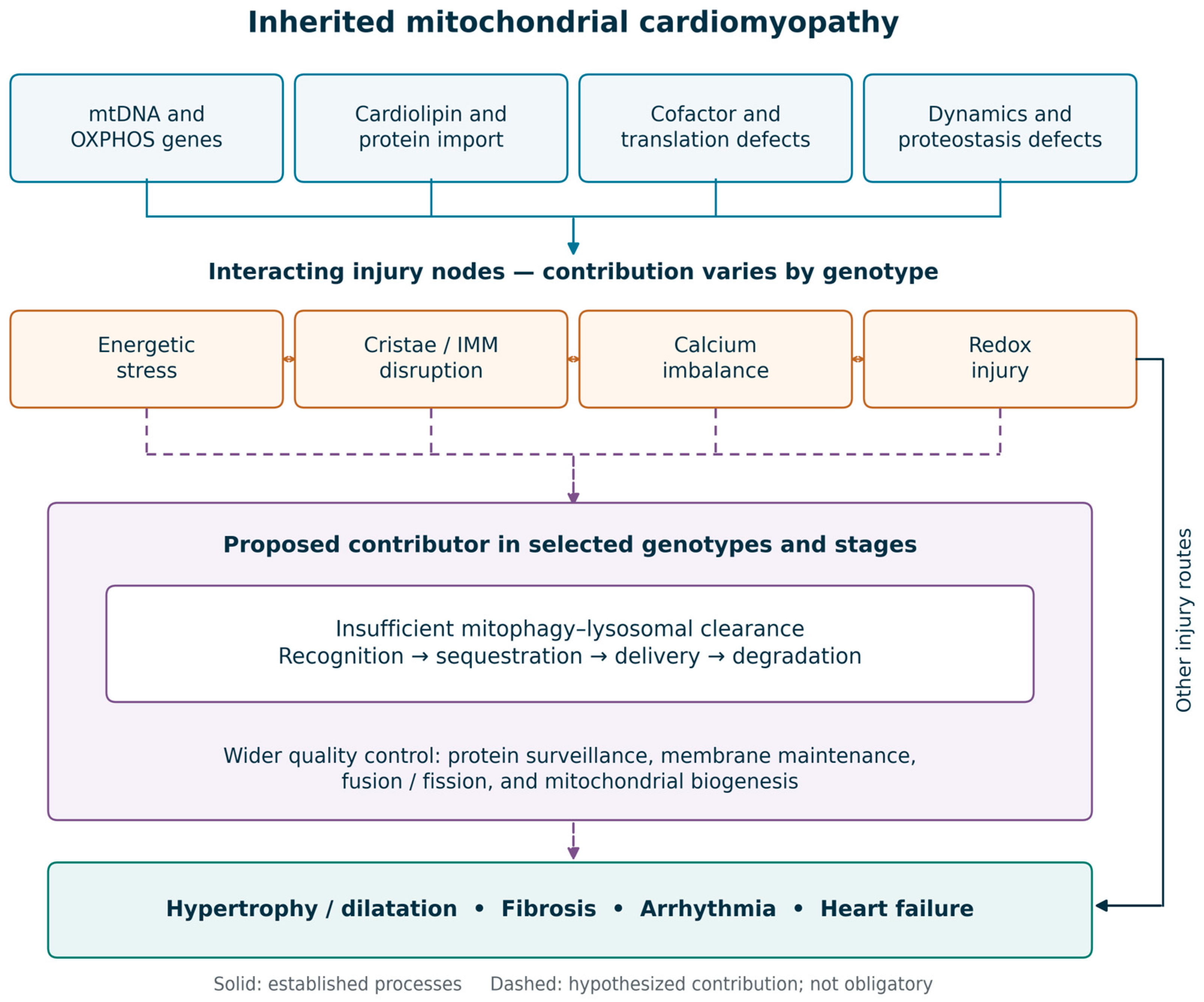
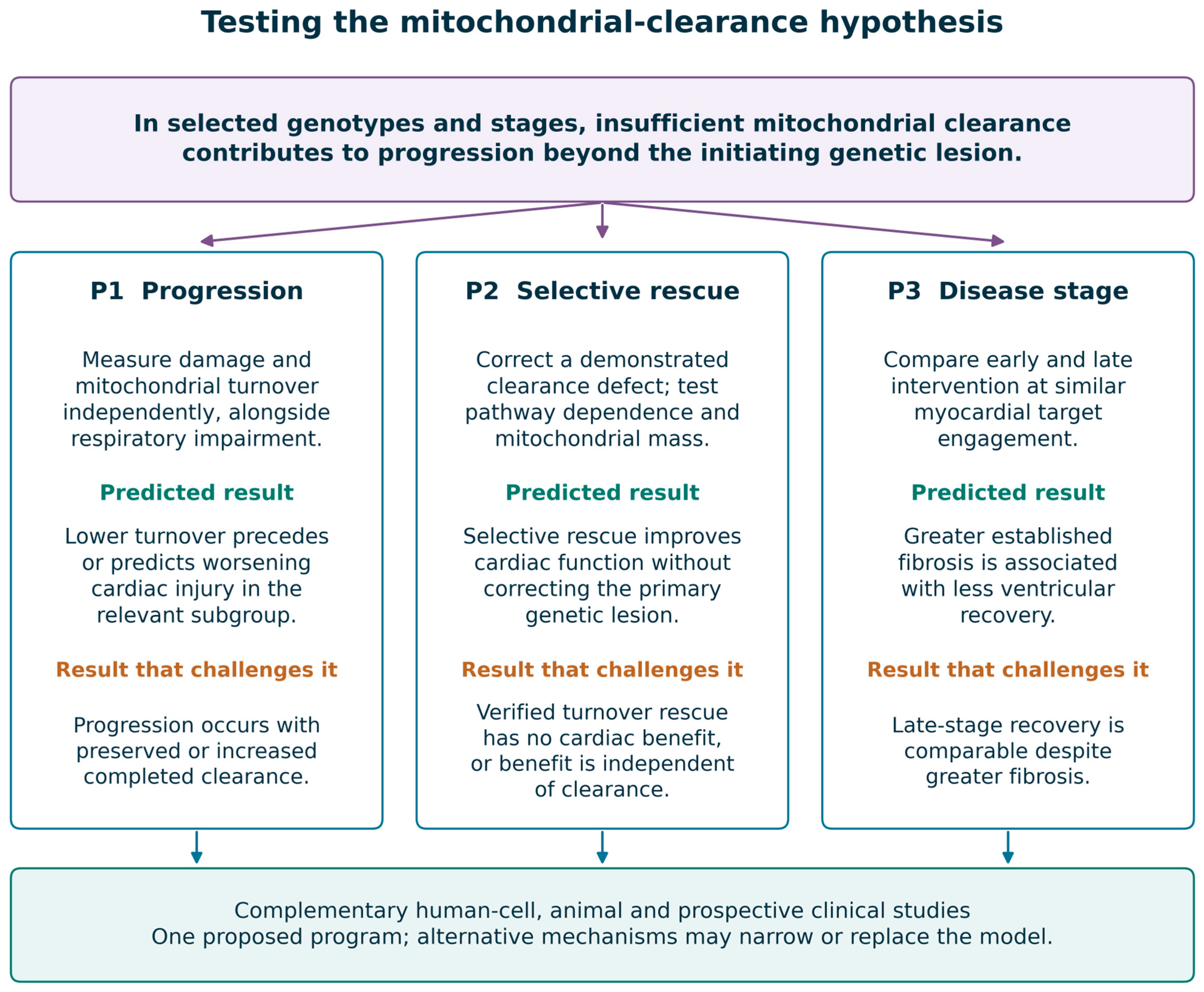
Inherited mitochondrial cardiomyopathies arise from pathogenic variants affecting oxidative phosphorylation, mitochondrial DNA maintenance, cardiolipin remodeling, protein import, cofactor metabolism, and mitochondrial dynamics or proteostasis. These disorders may be cardiac-predominant or part of multisystem disease. Their overlapping cardiac phenotypes suggest convergence on interacting pathways of energetic stress, cristae disruption, calcium imbalance, and redox injury, but do not establish a universal requirement for defective mitophagy. Mitochondrial quality control encompasses protein surveillance, membrane remodeling, dynamics, biogenesis, and organelle disposal; mitophagy is one component. We critically examine the hypothesis that inadequate clearance of damaged mitochondria contributes to progression in a subset of genotypes and disease stages. Disease-specific studies provide support in selected Barth syndrome models, whereas findings in frataxin deficiency vary with model and assay. We distinguish mitochondrial delivery to lysosomes, dynamic turnover measurements, and changes in pathway markers, and identify indirect evidence from acquired heart disease and fatty acid oxidation deficiency. Therapeutic evidence is separated into cellular, animal, and human studies and approved indications. Elamipretide has accelerated approval for muscle-strength improvement in patients with Barth syndrome weighing at least 30 kg; cardiac disease modification remains unconfirmed. Gene replacement has reached early clinical testing, including adeno-associated virus-mediated frataxin gene delivery (AAV-FXN), whereas mitochondrial genome editing and selective mitophagy modulation remain investigational. We propose testable predictions addressing progression, selective rescue, and treatment timing, together with outcomes that would challenge the hypothesis. This framework supports genotype- and stage-specific investigation without assuming that enhanced mitophagy will benefit every mitochondrial cardiomyopathy.
Keywords: mitochondrial cardiomyopathy; oxidative phosphorylation; cardiolipin; mitochondrial quality control; mitophagy; Barth syndrome; Friedreich ataxia; elamipretide; gene therapy mitochondrial cardiomyopathy; oxidative phosphorylation; cardiolipin; mitochondrial quality control; mitophagy; Barth syndrome; Friedreich ataxia; elamipretide; gene therapy