1. Introduction
The ABCA1 Cholesterol Transporter. The ATP-binding cassette transporter A1 (ABCA1) belongs to the ATP-binding cassette (ABC) superfamily, which comprises 49 transporters grouped into seven subfamilies (ABCA–ABCG) in mammals [
1]. These proteins translocate various substances (lipids, sterols, metabolites, and drugs) across cell membranes. Although they are generally located in the plasma membrane, some are expressed in intracellular organelles, such as the Golgi apparatus and the endoplasmic reticulum [
2,
3]. Given its central role in HDL biogenesis and cholesterol efflux to apolipoprotein A-I, ABCA1 is recognized as one of the best-characterized and most extensively studied transporters involved in reverse cholesterol transport (RCT) [
4,
5].
The
ABCA1 gene is located on chromosome 9q31.1 and comprises 50 exons, encoding a 2261-amino acid integral membrane protein composed of two transmembrane domains (TMD1 and TMD2), each containing six transmembrane helices, two nucleotide-binding domains (NBD1 and NBD2), two large, highly glycosylated extracellular domains (ECD1 and ECD2), and two regulatory domains (RD1 and RD2) [
6]. Severe mutations in this gene result in Tangier disease, an autosomal recessive disorder marked by near-total HDL-C deficiency and cholesterol ester accumulation in macrophages (foam cells) [
7,
8].
Cholesterol and Phospholipid Efflux Mechanism and Role of ApoA-I. According to the current model, ABCA1 generates lipid-rich membrane domains that promote membrane curvature and facilitate interaction with apolipoprotein A-I (ApoA-I) [
9,
10]. Multiple molecular mechanisms contribute to the regulation of ABCA1 activity, including JAK2-mediated signaling and the formation of the intramolecular disulfide bond between cysteines C75 and C309 within the first extracellular domain, both of which have been implicated in ApoA-I binding and cholesterol efflux [
7,
11]. Because cholesterol transport by ABCA1 depends on coordinated conformational transitions, membrane interactions, and the integrity of its internal transport pathway, alterations in protein dynamics may have important functional consequences even in the absence of major structural changes.
The
ABCA1 Gene Variants. The functional consequences of ABCA1 mutations are heterogeneous and largely determine the clinical variability observed in disorders such as Tangier disease (N875S, M1091T, C1477R, etc.) and familial hypoalphalipoproteinemia [
12,
13]. Studies have demonstrated that different missense variants differentially impair ABCA1 localization, apolipoprotein A-I (ApoA-I) binding, and the efflux of cholesterol and phospholipids, resulting in a broad spectrum of plasma HDL cholesterol levels and lipid phenotypes. These findings highlight that the severity and nature of ABCA1 dysfunction directly influence HDL biogenesis and disease presentation [
8].
The R230C variant (rs9282541) involves a non-synonymous substitution of arginine (Arg/R) with cysteine (Cys/C) at residue 230, located in the first extracellular loop. Unlike arginine, which is basic and positively charged, cysteine contains a sulfhydryl group capable of forming disulfide bonds [
14,
15]. This variant is exclusive to Native American populations and has been reported at frequencies of 10–40% in indigenous and mestizo Mexican groups [
16]. Clinical studies have associated this variant with hypoalphalipoproteinemia [
17,
18,
19], obesity [
17], and type 2 diabetes [
20]. Functionally, it has been reported to reduce cholesterol efflux by approximately 27% [
16]; however, no structural model currently explains how this amino acid substitution affects the transporter’s molecular machinery.
Molecular modeling studies of ABCA1. Recent advances in cryo-electron microscopy and molecular modeling have provided valuable insights into the nucleotide-free outward-facing conformation of ABCA1 [
10,
15,
21]. Structural analyses and molecular dynamics simulations (MDS) have shown that disease-associated variants can perturb domain interactions, alter protein flexibility, and affect the stability of functionally relevant structural elements involved in lipid transport [
14,
22]. Consequently, computational approaches have become valuable tools for predicting the structural and functional consequences of ABCA1 variants, complementing genetic, biochemical, and experimental evidence. Although the functional effects of the
ABCA1 R230C variant have been demonstrated through epidemiological and experimental studies, its structural and dynamic consequences remain incompletely understood at the molecular level. Therefore, elucidating how the R230C substitution affects the conformational landscape of ABCA1 may provide a structural basis for understanding its impaired cholesterol efflux and the increased risk of metabolic disease associated with this variant.
3. Discussion
The present MDS study demonstrates that substitution of arginine by cysteine at position 230 does not produce large-scale structural disruption or destabilization of ABCA1 protein but instead induces subtle alterations in its conformational dynamics. The replacement of a large, positively charged arginine residue with a smaller, uncharged cysteine represents a substantial physicochemical change that is expected to modify the local interaction network surrounding residue 230. Arginine is capable of establishing multiple electrostatic interactions and hydrogen bonds that contribute to structural stabilization, whereas cysteine possesses a polar thiol group with reduced hydrogen-bonding capacity and distinct chemical properties. Consistent with these differences, collectively the molecular dynamics analyses suggest that the R230C substitution reshapes the dynamic landscape of ABCA1 by modifying local flexibility around the 230 residue while simultaneously altering the conformational behavior of distal functional domains without compromising the overall structural architecture of the membrane cholesterol transporter.
In this work, our computational model was based on the high-resolution cryo-EM structure of human ABCA1 in its basal, nucleotide-free state (PDB ID: 5XJY) [
10,
15]. While this state captures the baseline physiological conformation embedded in the lipid bilayer and reveals how the R230C variant natively alters ECD1 dynamics, tunnel organization, and allosteric coupling to distal NBD/TMD domains prior to power-stroke activation, ABCA1 functionally transitions through multiple conformational states during its ATP-dependent transport cycle. Exploring ATP-bound or NBD-dimerized conformations in future simulations could provide complementary insights into how R230C influences downstream power-stroke transitions and active cholesterol translocation.
From a methodological standpoint, simulating full-length ABCA1 embedded in a multi-component lipid raft bilayer presents significant computational challenges due to the extensive conformational space inherent to large ABC transporters. In this study, to isolate the specific biophysical impact of the R230C variant, both WT and mutant systems were evaluated using a strictly standardized, comparative simulation setup originating from identical initial coordinates, membrane environments, and forcefield parameters. The multi-parameter convergence observed across independent descriptors—including free energy landscape partitioning, distal domain rigidification, and primary tunnel throughput reduction—indicates that the observed differences reflect a genuine, mutation-induced shift in protein dynamics rather than baseline stochastic drift. While this standardized approach successfully captures the baseline differential response in the nucleotide-free state, future simulations incorporating independent replicas and active, ATP-bound functional states will be valuable to further map the broader kinetic landscape and long-time conformational transitions of ABCA1 variants.
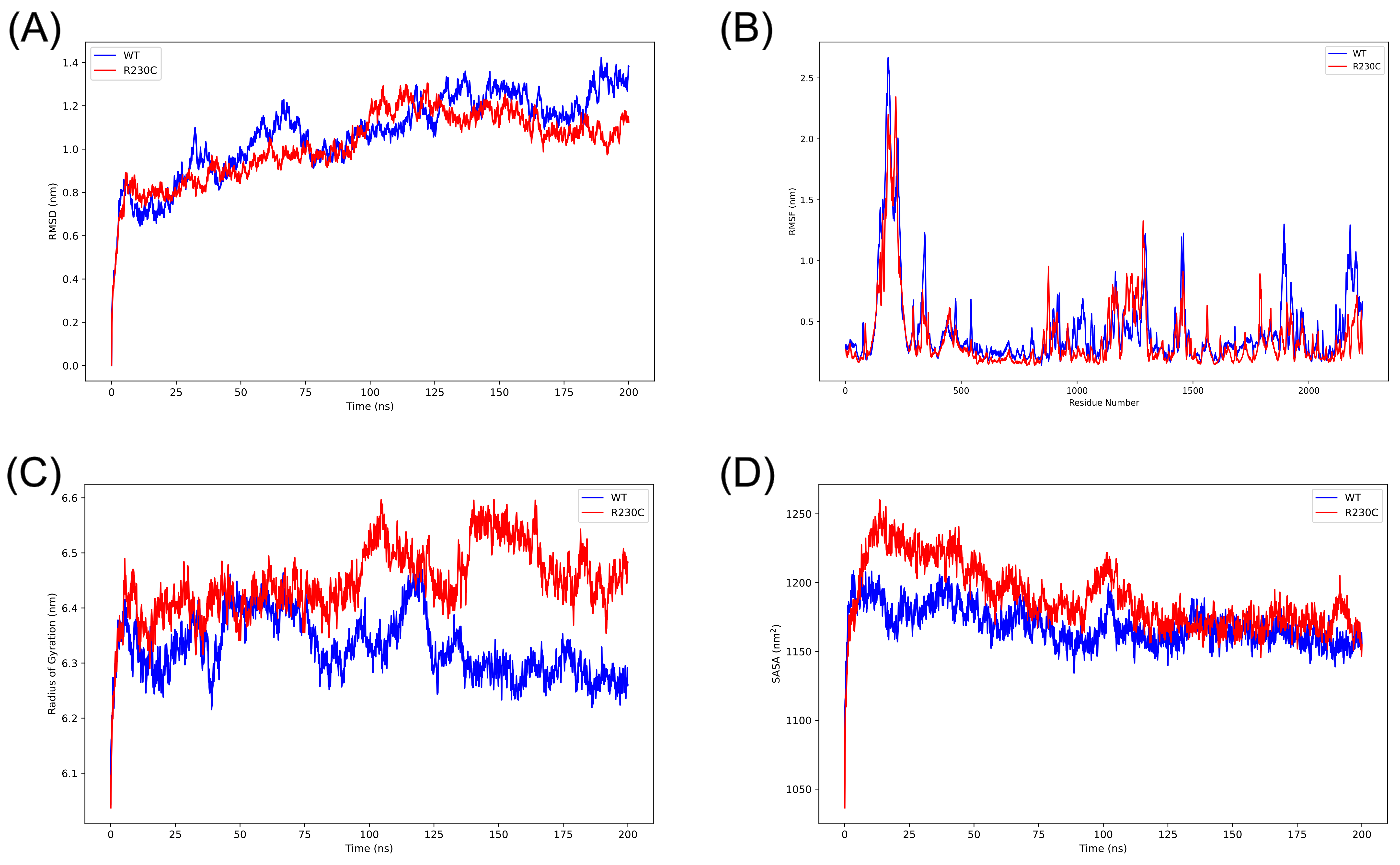
The RMSD analysis indicates that the R230C substitution modifies the conformational dynamics of ABCA1 without affecting its overall structural stability. Although both proteins reached similar equilibrium during the early stages of the simulation, the ABCA1 WT protein exhibited greater conformational diversity during the final 80 ns, whereas the R230C variant remained confined to a narrower range of conformations, defined for the lower RMSD values. These findings indicate that replacement by Cys decreased global structural stability and potentially limited the conformational structural transitions required for the cholesterol efflux at the plasma membrane. In addition, the RMSF analysis further supports this interpretation. Although the overall flexibility profiles remained highly similar between both systems, several regions exhibited reduced residue mobility in the R230C variant. The preservation of the principal flexibility hotspots indicates that the mutation does not globally perturb the intrinsic dynamics of ABCA1. Instead, the localized reduction in fluctuations across multiple regions suggests that the substitution introduces selective stabilization of specific structural segments. Such localized reduction in conformational flexibility (rigidification) is consistent with the lower RMSD observed during the later stages of the trajectory and suggests that the mutation constrains local motions rather than altering the overall fold of the transporter.
Interestingly, this apparent increase in local rigidity occurs simultaneously with an increase in the radius of gyration and solvent-accessible surface area. At first glance, these observations may appear contradictory, since lower flexibility is often associated with greater structural compactness. However, these parameters describe different aspects of protein behavior. Whereas RMSD and RMSF primarily reflect conformational fluctuations, Rg and SASA describe the global spatial organization of the protein. Accordingly, the R230C variant appears to adopt a slightly more expanded conformation while exhibiting reduced internal conformational mobility. This combination suggests that the substitution stabilizes a more open structural state rather than increasing structural disorder. The convergence of SASA values after approximately 120 ns further indicates that this expansion for solvent exposition primarily affects the early stages of conformational adaptation while the protein is still relaxing from its initial structure toward a more energetically favorable conformation. Subsequently, both proteins reach a relatively stable equilibrium, in which their structural properties undergo only minor fluctuations over time.
The functional relevance of preserving the structural integrity of the extracellular domains is supported by recent experimental evidence showing that missense variants affecting these regions significantly impair ABCA1-mediated cholesterol efflux, underscoring the critical role of extracellular domain architecture in transporter activity [
23]. These findings are consistent with a previous molecular dynamics study showing that ABCA1 is an intrinsically dynamic transporter whose extracellular domains undergo substantial conformational fluctuations that are essential for lipid transport [
15]. Since residue 230 is located within ECD1, substitution of the positively charged arginine by the smaller, neutral cysteine is likely to alter the local interaction network and modulate long-range allosteric communication throughout the protein. Consequently, the reduced conformational sampling observed for the R230C variant may impair the structural plasticity required for the coordinated ATP-dependent conformational transitions that drive free cholesterol and phospholipid efflux to apoA-I [
21], thereby reducing the efficiency of nascent HDL biogenesis and providing a plausible molecular explanation for the decreased transporter activity associated with this variant.
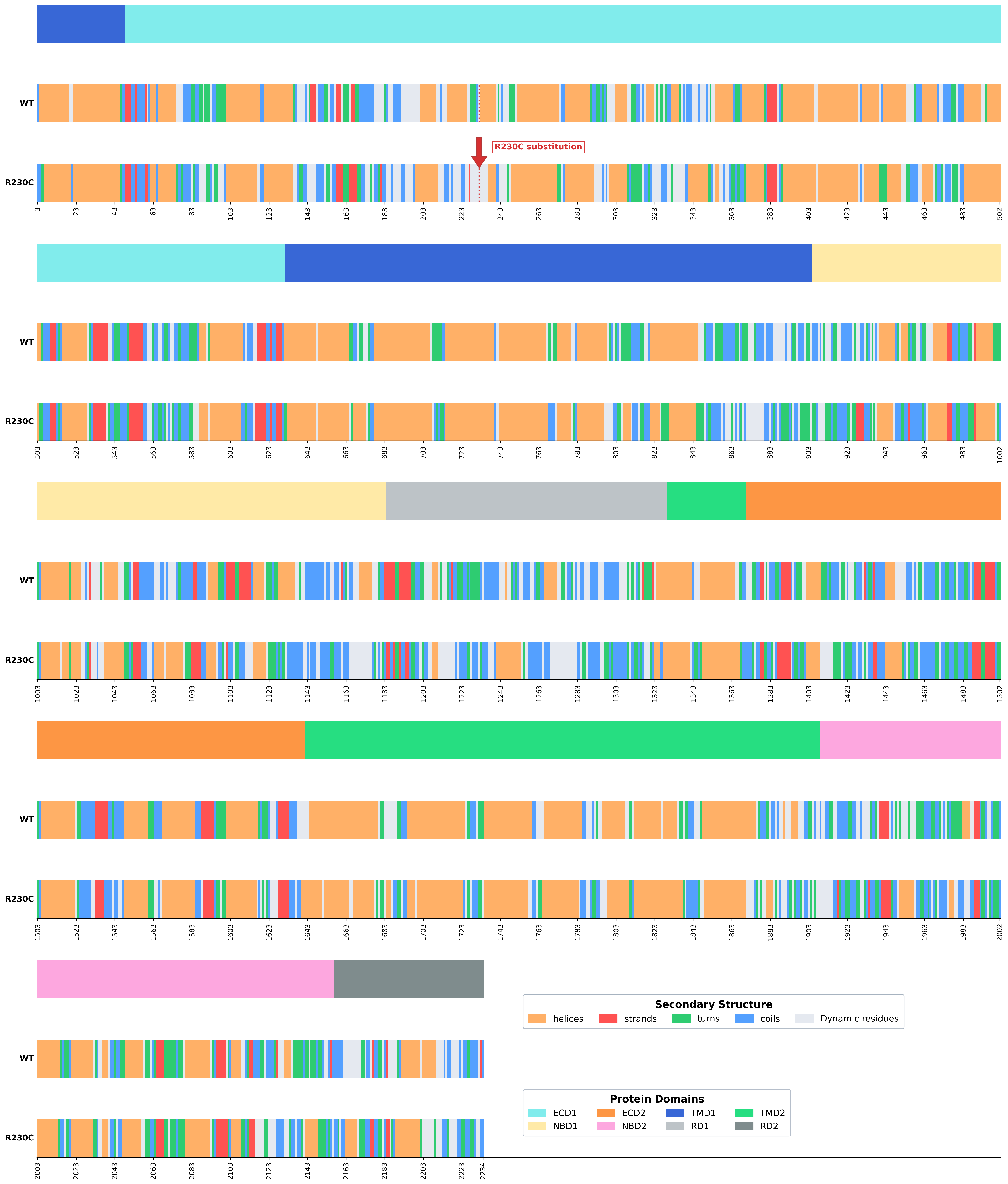
Secondary structure analysis further elucidated the structural effects of the amino acid substitution. Although the overall secondary structure of ABCA1 remained highly conserved throughout the simulations, localized changes were consistently observed around residues 220–250, precisely where Arg230 is replaced by cysteine. In the R230C variant, this region exhibited a redistribution of coil, turn, and β-sheet elements, suggesting that the loss of the positively charged arginine modifies the local structural equilibrium. Because arginine frequently contributes to stabilizing secondary structure through electrostatic interactions and hydrogen-bond networks, its substitution by cysteine likely alters local intramolecular contacts, thereby increasing the frequency of conformational transitions within ECD1. In addition, the introduction of a cysteine residue introduces the possibility of thiol-mediated interactions, including disulfide bond formation under oxidative conditions. Given that the extracellular domains of ABCA1 contain several conserved disulfide bonds that are essential for structural integrity, the presence of Cys230 may further influence the local conformational environment, and could warrant further investigation of its local extracellular environment. Although no disulfide bond formation was observed or modeled during the present simulations. Importantly, these alterations remained spatially restricted and did not propagate into major rearrangements of the transmembrane helices or nucleotide-binding domains.
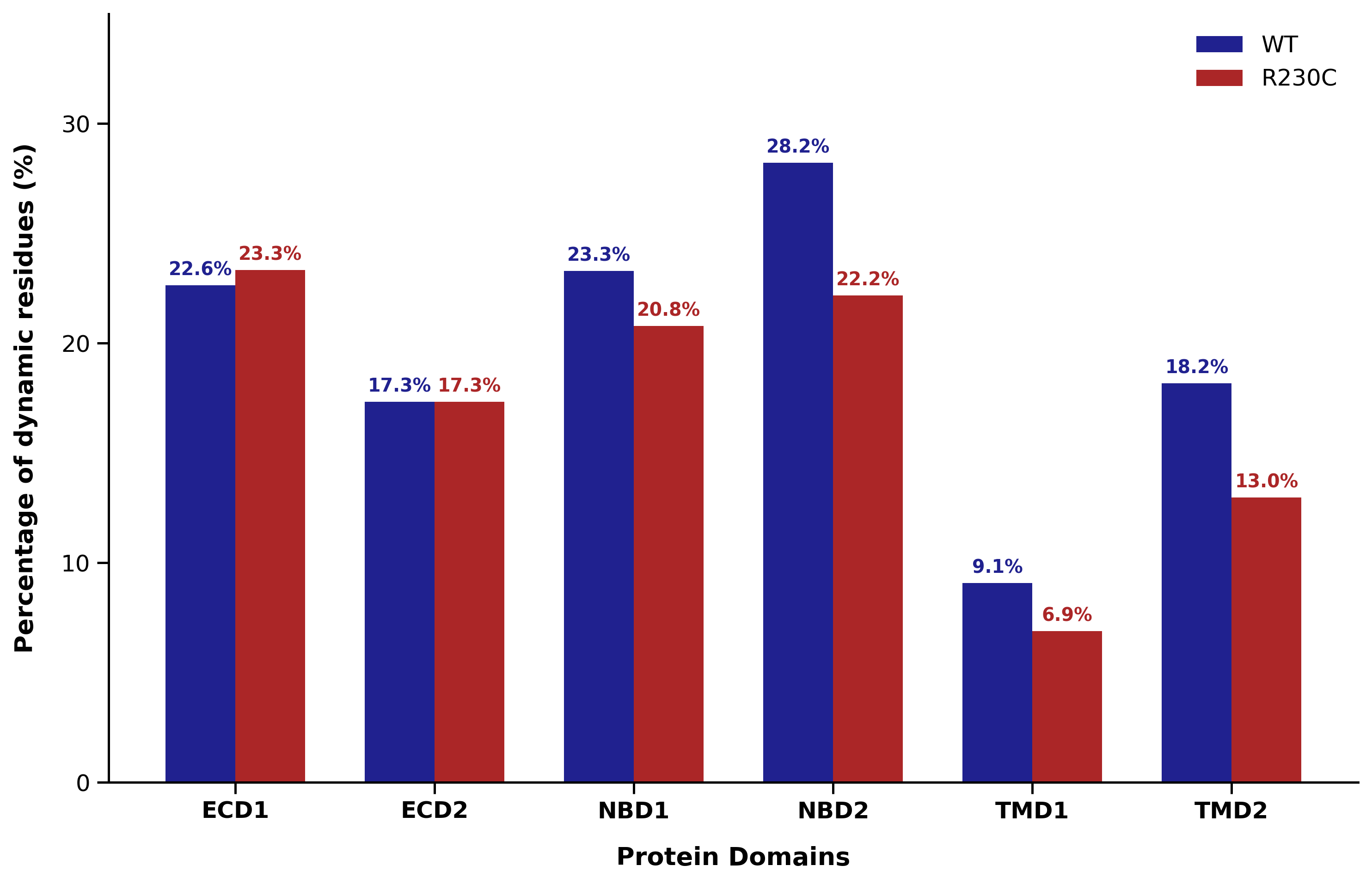
Although no major secondary-structure rearrangements were detected outside ECD1, analysis of dynamic residue distributions revealed effects extending to distal functional domains. Quantification of dynamic residues demonstrated a marked reduction in conformational heterogeneity within both nucleotide-binding domains and transmembrane domains, particularly NBD2 and TMD2. These findings suggest that replacement of Arg230 by Cys230 modifies long-range allosteric communication throughout the transporter. ABC transporters function through highly coordinated interactions between extracellular domains, transmembrane helices, and ATP-binding cassettes; therefore, even subtle perturbations introduced within ECD1 may propagate through the protein and alter the dynamic coupling required for ATP-dependent conformational cycling.
These observations are consistent with the known biological effects of the R230C polymorphism. Experimental studies have shown that carriers of the C230 alleles exhibit reduced plasma HDL cholesterol levels [
17,
18,
19] and impaired ABCA1-mediated cholesterol efflux despite relatively preserved protein expression [
16]. Our simulations provide a structural explanation for these findings by showing that the R230C substitution does not destabilize ABCA1 globally but instead shifts its conformational equilibrium through local structural perturbations. Increased flexibility around Cys230 in ECD1 was accompanied by reduced conformational heterogeneity in the nucleotide-binding and transmembrane domains, suggesting altered long-range allosteric communication. This redistribution of conformational dynamics could impair the coordinated ATP-driven conformational transitions required for efficient lipid transport, thereby reducing ABCA1 activity.
The plasma membrane is not merely a passive environment for ABC transporters but actively contributes to their structural dynamics and transport cycle. Increasing evidence indicates that protein–lipid interactions and the physical properties of the surrounding bilayer, including membrane thickness, curvature, and lipid organization, modulate the conformational transitions required for substrate translocation [
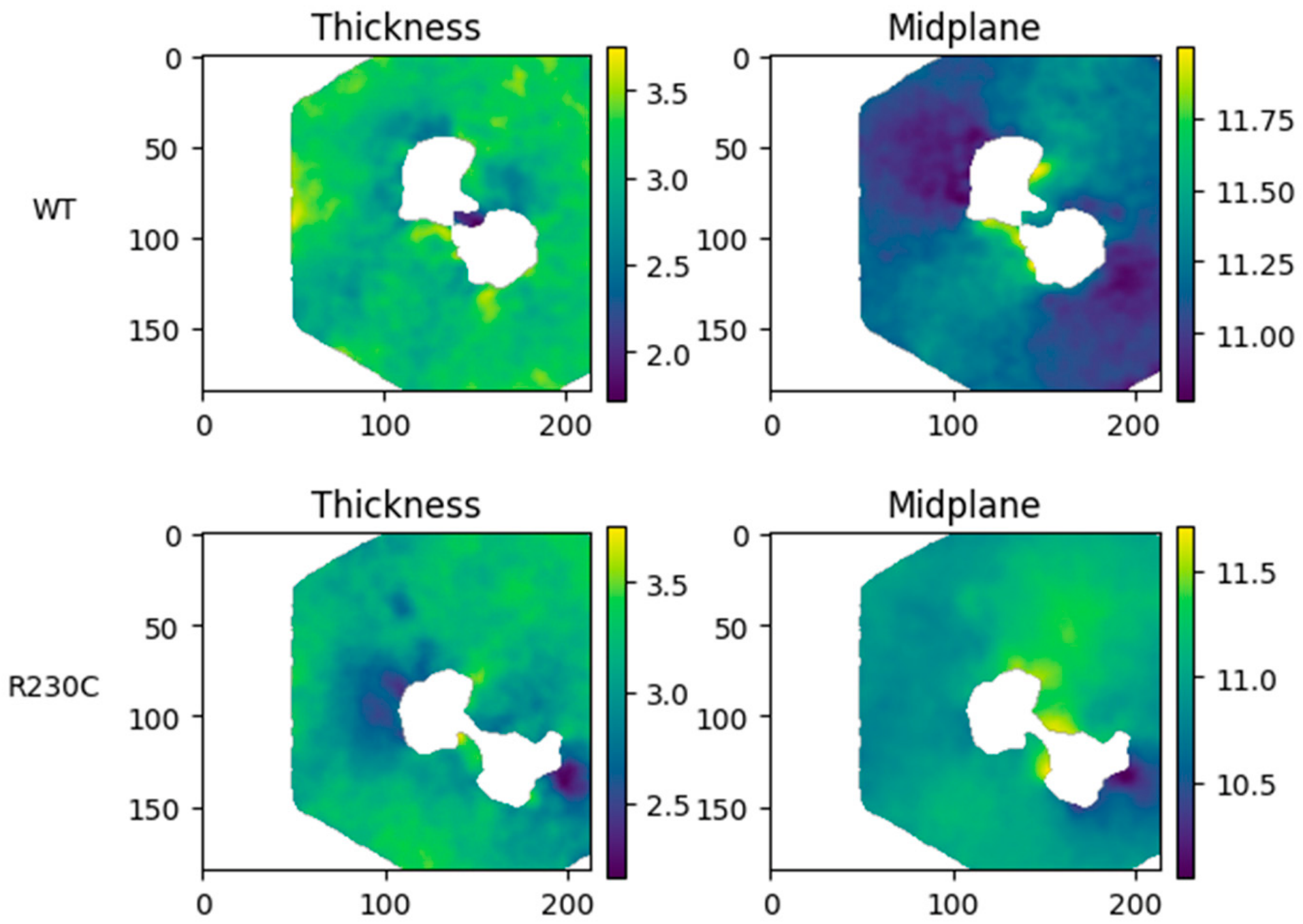
24]. Consistent with this concept, our simulations revealed that although both ABCA1 WT and the R230C variant induced localized perturbations in the surrounding lipid bilayer, the R230C substitution redistributed these perturbations without inducing global membrane remodeling.
The membrane thickness and midplane analyses demonstrated that the effects of both proteins were largely confined to the vicinity of the transmembrane domains, consistent with previous molecular dynamics studies showing that membrane deformations induced by integral membrane proteins are highly localized [
15,
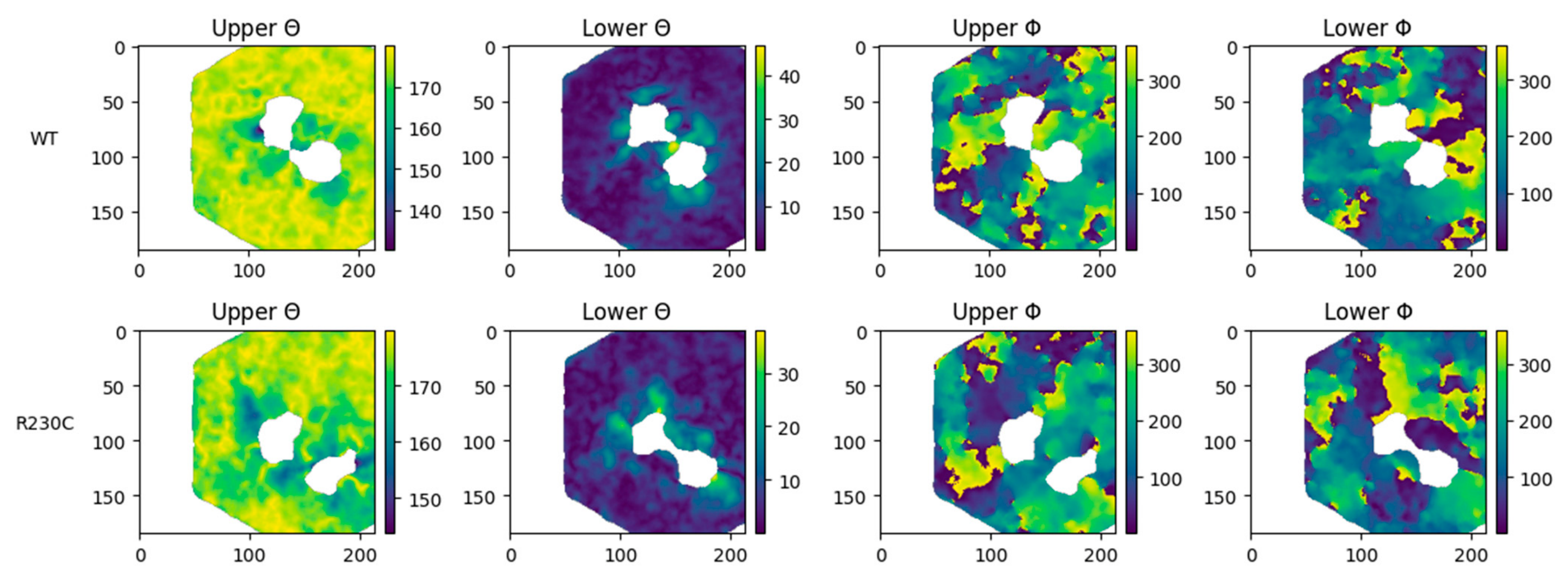
21]. However, the broader membrane thinning and altered midplane displacement observed around the R230C variant suggest that the arginine substitution for cysteine induced subtly changes the mechanical coupling between ABCA1 and the surrounding bilayer. Such local membrane remodeling may reflect changes in the interactions between the transmembrane helices and surrounding lipids, thereby influencing the conformational dynamics of ABCA1. The lipid orientation maps further support this interpretation. Although the global organization of the membrane remained largely preserved, the redistribution of Θ and, particularly, Φ orientation domains indicates that the R230C substitution alters the local orientational environment of membrane lipids; these effects were most evident in the lower leaflet, where broader and more continuous orientation domains surrounded the 230 residue. Rather than indicating increased membrane disorder, these observations suggest a reorganization of lipid packing and orientation at the protein–lipid interface, consistent with modified interactions between ABCA1 and its surrounding lipid molecules, that may contribute to the different conformational dynamics of the transporter observed in the R230C variant.
The observed membrane remodeling is mechanistically plausible considering the physicochemical properties of the substituted residue. Arginine is a positively charged amino acid capable of establishing electrostatic interactions and hydrogen bonds with phospholipid headgroups, whereas cysteine is smaller, neutral under physiological conditions, and considerably less effective at stabilizing such interactions. Although residue 230 is located outside the transmembrane region, previous structural and computational studies have demonstrated that mutations distant from membrane-embedded helices can propagate their effects through long-range allosteric communication, ultimately altering transmembrane dynamics and protein–lipid interactions [
21,
25]. Therefore, the changes observed in the local membrane environment likely arise from polymorphism-induced alterations in the conformational behavior of ABCA1 rather than from direct disruption of lipid contacts at residue 230.
The modified lipid environment observed here may therefore represent both a consequence and a contributor to these altered protein dynamics. Because membrane deformation and lipid rearrangement are closely coupled to the functional motions of ABC transporters, subtle changes in the local bilayer organization could influence the conformational transitions required for phospholipid and cholesterol translocation. Although the lipid membrane analyses are qualitative, they consistently indicate that the R230C variant remodels the membrane microenvironment surrounding ABCA1 while preserving the overall architecture of the lipid bilayer. This behavior is in agreement with the functional phenotype previously reported for the R230C polymorphism, which impairs cholesterol efflux [
16] and is associated with reduced plasma HDL-Cholesterol levels [
17,
18], despite normal membrane localization of the transporter. The present simulations therefore suggest that the functional consequences of R230C may arise not from major structural destabilization but from subtle modifications in the dynamic coupling between ABCA1 and its surrounding membrane, which could alter the efficiency of the cholesterol transport cycle.
These observations are further supported by complementary membrane analyses (
Supplementary Figures S6–S8). Lipid tail order parameter maps showed slightly broader regions of reduced lipid order surrounding the R230C protein, consistent with localized perturbations in lipid packing. In addition, cholesterol-contact analysis revealed that the R230C substitution redistributed cholesterol interaction sites along the transporter while reducing the maximum interaction frequency at individual residues. Interestingly, the interaction sites are focalized in TM1, TM10, TM11 and EH1 for WT, all of them close together forming a gate of sorts, whereas for R230C some interactions are observed away from this region in the outer surface of the TM domain (TM3); some regions that show a large number of interactions for WT show no interactions at all for R230C (F1758, V1771) and some interactions are observed well beyond the aforementioned “gate”, deep within the inner space of the TM domain (Y648 in TM2, F753 in TM5). Together, these complementary findings reinforce the notion that the Arg230Cys substitution primarily remodels the local protein–lipid environment rather than inducing large-scale changes in membrane architecture. Further quantitative analyses integrating membrane order parameters, lipid residence times, dynamic cross-correlation, residue interaction networks together with experimental validation, will be valuable to establish how these local membrane alterations influence the molecular mechanism of cholesterol export mediated by ABCA1.
The molecular mechanism of ABCA1-mediated lipid translocation relies on tightly coordinated allosteric transitions that couple ATP binding and hydrolysis to large-scale conformational changes required for cholesterol transport [
26]. Using dihedral principal component analysis (dPCA) [
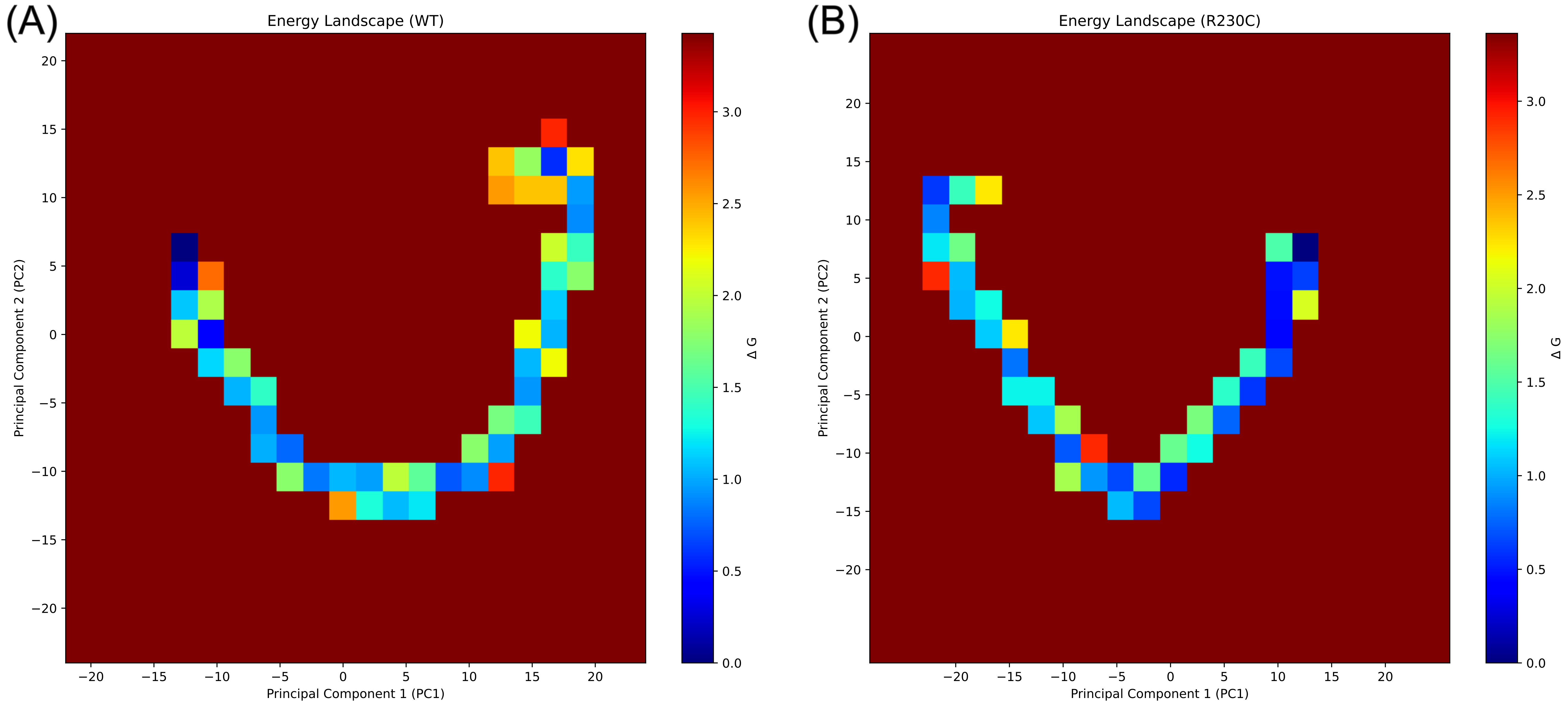
27], we mapped the free energy landscapes (FELs) of ABCA1 WT and the R230C variant (
Figure 7). The continuous, crescent-shaped free energy corridor observed for ABCA1 WT reveals a highly cooperative, low-barrier thermodynamic pathway. Two major global minima connected by an uninterrupted valley (
ΔG ≈ 1.0–2.0 kcal/mol) indicate that the native transporter retains the intrinsic flexibility required to transition efficiently between functional conformational states during lipid translocation. In contrast, the R230C substitution reshapes this cooperative landscape into a narrower, V-shaped topology and partitions the free energy landscape into three isolated low-energy conformational basins. These basins represent distinct stable conformational ensembles separated by higher-energy barriers, suggesting impaired long-range allosteric communication and restricting the transporter to more segregated conformational states. A key feature of the mutant landscape is the emergence of a localized high-energy barrier (
ΔG ≈ 3.0 kcal/mol) along the left branch (PC1 ≈ −7, PC2 ≈ −9), a kinetic obstacle absent in WT. At the molecular level, replacement of the bulky, positively charged arginine with a smaller, neutral cysteine likely disrupts local electrostatic interactions or salt bridges, limiting conformational transitions. These findings provide a mechanistic explanation for the loss-of-function phenotype associated with the R230C variant and its association with hypoalphalipoproteinemia and metabolic diseases [
18,
20]. By becoming kinetically trapped, the mutant transporter is less able to complete the conformational cycles required for cholesterol and phospholipid translocation, thereby impairing nascent HDL biogenesis.
Mechanistically, the long-range allosteric crosstalk between the ECD1 polymorphic site and distal domains is directly illustrated by the 2D backbone dihedral covariance matrices (
Supplementary Figure S5). By evaluating internal dihedral space (
ϕ,
ψ) rather than Cartesian coordinates, this analysis isolates pure internal structural coupling free from global superposition artifacts. The transition from broad, interconnected covariance blocks in WT to a fragmented, attenuated matrix in R230C (
Supplementary Figure S5B) explains how localized fluctuations near Cys230 induce downstream dynamic rigidification in NBD2 (21.4% reduction) and TMD2 (27.8% reduction;
Supplementary Table S2), ultimately altering the global free energy landscape (
Figure 7).
Rather than merely altering overall tunnel count, the R230C substitution specifically degrades the geometric integrity, continuity, and throughput capacity of the primary functional cholesterol transport pathway. In WT ABCA1, substrate translocation is facilitated by a highly persistent, high-throughput, and spatially direct hydrophobic corridor (
Supplementary Table S3). In the R230C variant, this primary conduit undergoes bottleneck narrowing, pathway extension, and intermittent closure across simulation frames (
Supplementary Table S4). Concurrently, local conformational fluctuations in ECD1 promote the transient opening of multiple long, tortuous secondary tunnels.
Quantitatively, the combined throughput priority of the primary transport conduits drops by 23.1% (with Cluster 2 showing an individual reduction of 26.6%) in R230C compared to WT (
Supplementary Tables S3 and S4). Mechanistically, these transient secondary channels act as non-productive “decoy” routes that induce spatial dispersion and elevate kinetic barriers for translocating sterols. A cholesterol molecule entering the extracellular cavity of R230C is therefore less likely to traverse a continuous, high-throughput functional conduit and more likely to become trapped in transient blind alleys. This 23.1–26.6% reduction in calculated geometric throughput capacity provides a direct biophysical basis that closely accounts for the 27% reduction in cholesterol efflux observed experimentally in clinical and functional studies of the R230C variant [
16]. These observations align with recent computational studies demonstrating that missense variants in ABCA1 can induce localized structural perturbations capable of altering interactions with ApoA-I and compromising cholesterol transport efficiency [
28].
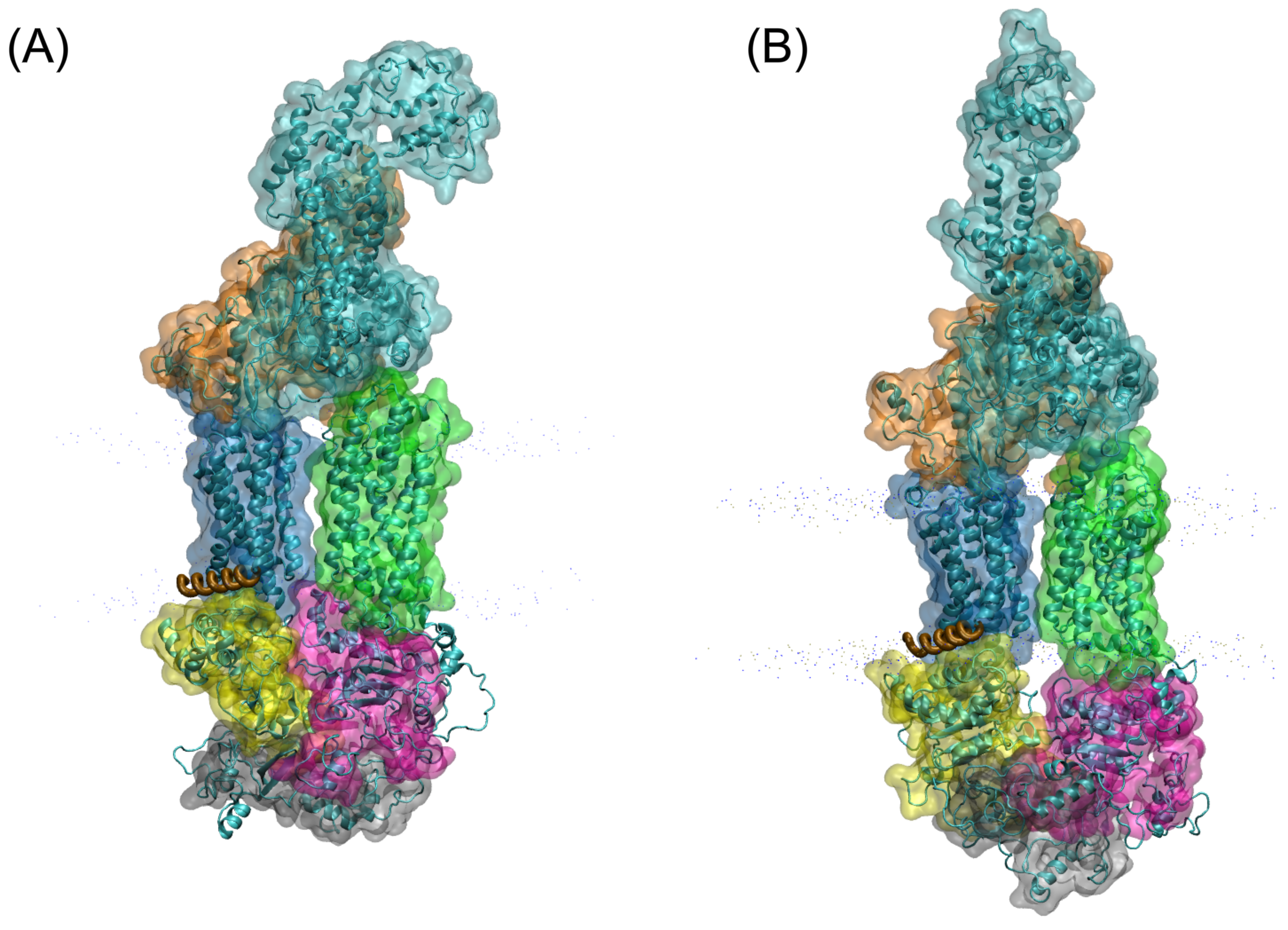
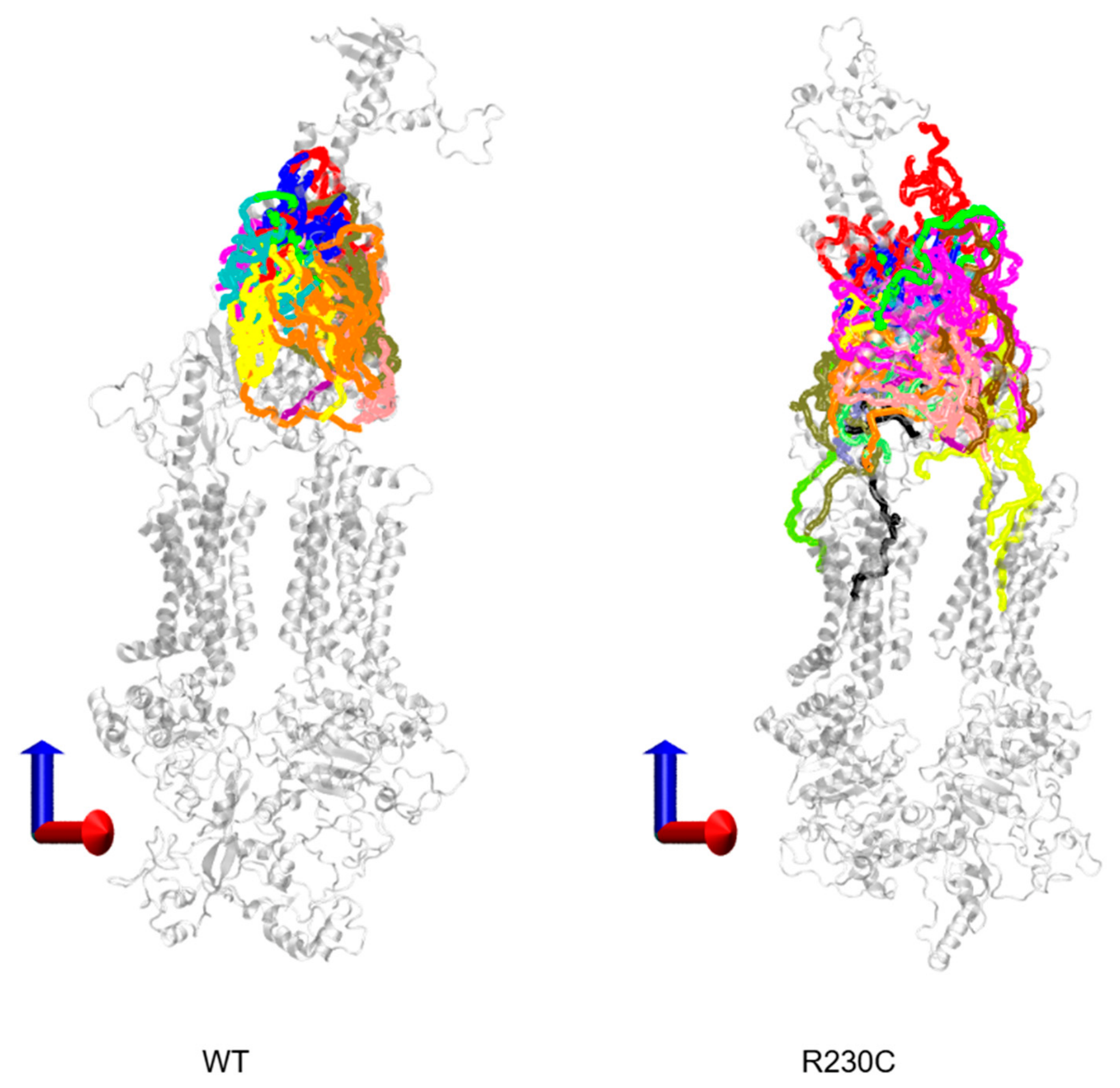
Cryo-electron microscopy studies identified a hydrophobic tunnel extending through the extracellular domains of human ABCA1, providing structural evidence for a putative pathway which has been proposed to mediate the translocation of cholesterol and phospholipids toward apolipoprotein A-I during nascent HDL formation [
10]. In the WT protein, the detected tunnel clusters remained closely associated with this hydrophobic cavity, consistent with the presence of a relatively well-defined preferential transport pathway. In contrast, the R230C variant redistributed the tunnel network into multiple alternative routes extending away from the canonical hydrophobic tunnel. Although CAVER identifies geometrically accessible pathways rather than substrate movement, this reorganization suggests that the mutation may reduce the persistence of a preferential transport route, thereby decreasing the efficiency of directional cholesterol translocation. This interpretation is consistent with experimental studies showing that the R230C polymorphism reduces ABCA1-mediated cholesterol efflux [
16] despite preserving membrane localization. Together with the observed changes in conformational dynamics and protein–lipid interactions, the altered tunnel organization provides a plausible structural mechanism linking the Arg230Cys substitution to the reduced cholesterol transport efficiency associated with this variant.
Overall, the present results support the concept that the R230C variant acts primarily as a dynamic allosteric modulator rather than a structurally disruptive mutation. The physicochemical differences between arginine and cysteine reshape the local conformational environment surrounding residue 230, while preserving the global architecture of ABCA1. These localized perturbations propagate through long-range allosteric communication, ultimately reducing conformational heterogeneity within domains that drive cholesterol transport. Together, these findings provide a plausible molecular mechanism linking the R230C variant with the functional impairment previously described for ABCA1 and highlight the importance of protein dynamics in understanding the pathogenic effects of naturally occurring missense variants. Further computational studies integrating principal component analysis, residue interaction network analysis and free-energy landscape reconstruction together with complementary experimental validation, will provide a more comprehensive understanding of how the R230C variant reshapes the conformational landscape of ABCA1 and influences the coordinated structural transitions underlying the cholesterol and phospholipids transport mediated by ABCA1 and its contribution to the pathophysiology of metabolic diseases.




 ,
,