Antiplasmodial Compounds from Eurycoma harmandiana Pierre and Eurycoma longifolia Jack Against Drug-Resistant Plasmodium falciparum: An Integrated In Vitro and In Silico Study

 ,
,  , , , ,
Abstract
1. Introduction
2. Results
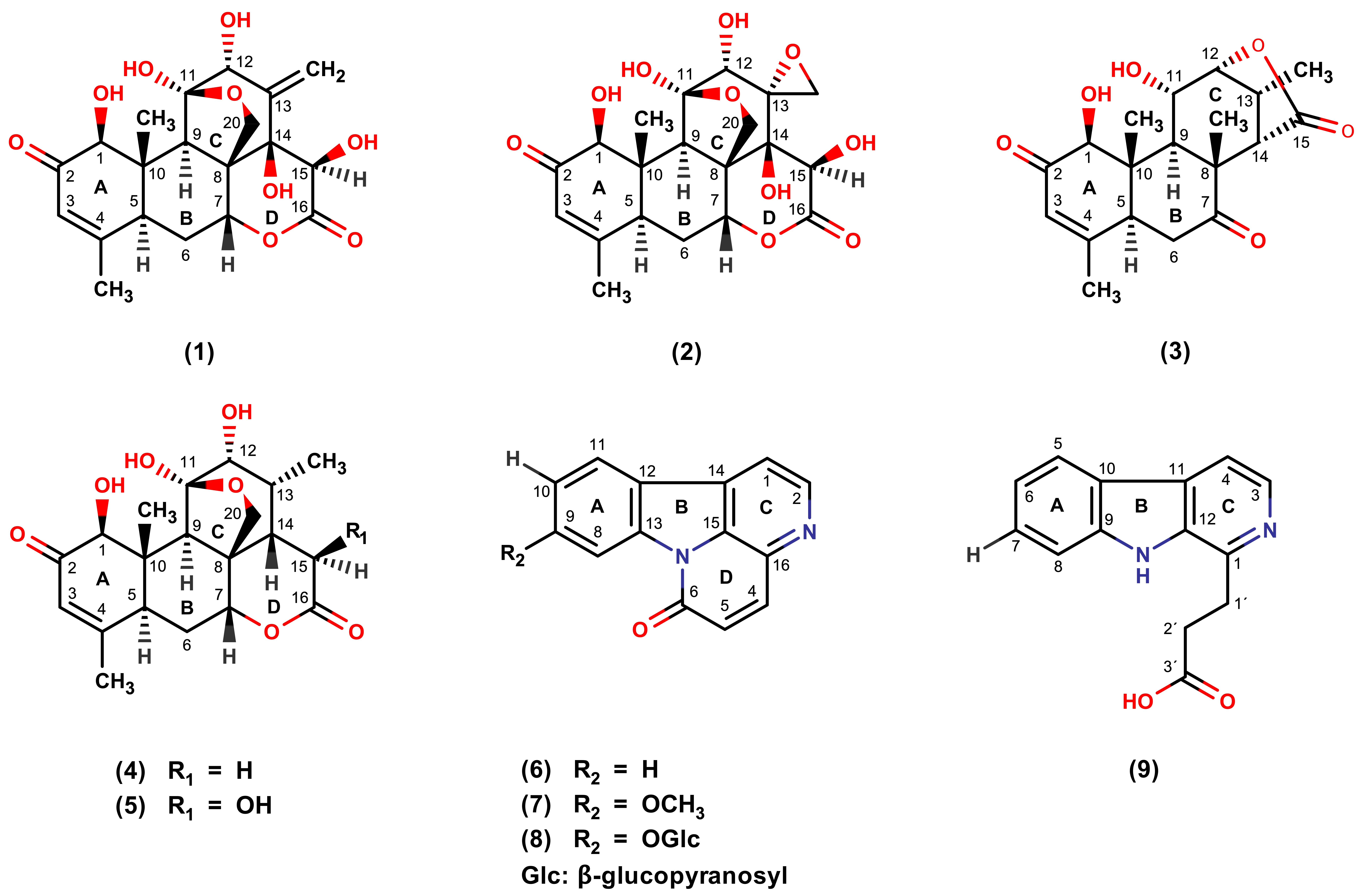
2.1. In Vitro Antiplasmodial Activity of Plant Extracts and Compounds Derived from EL and EH Roots
2.2. In Vitro Cytotoxicity and SI of Plant Extracts and Compounds Derived from EL and EH Roots
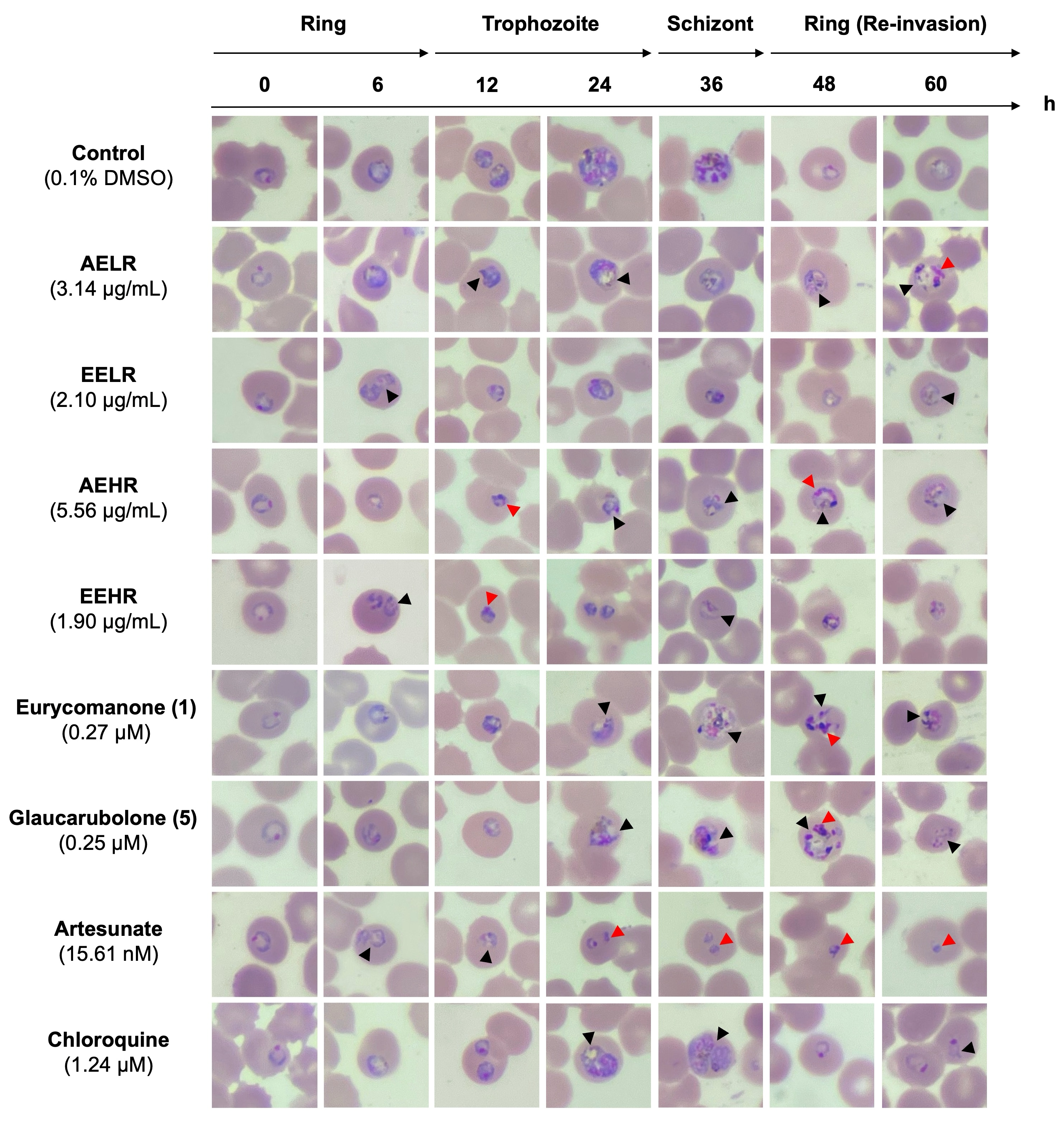
2.3. Morphological Changes in P. falciparum K1 Strain-Infected Erythrocytes Treated with Plant Extracts and Promising C-20 Quassinoid Compounds
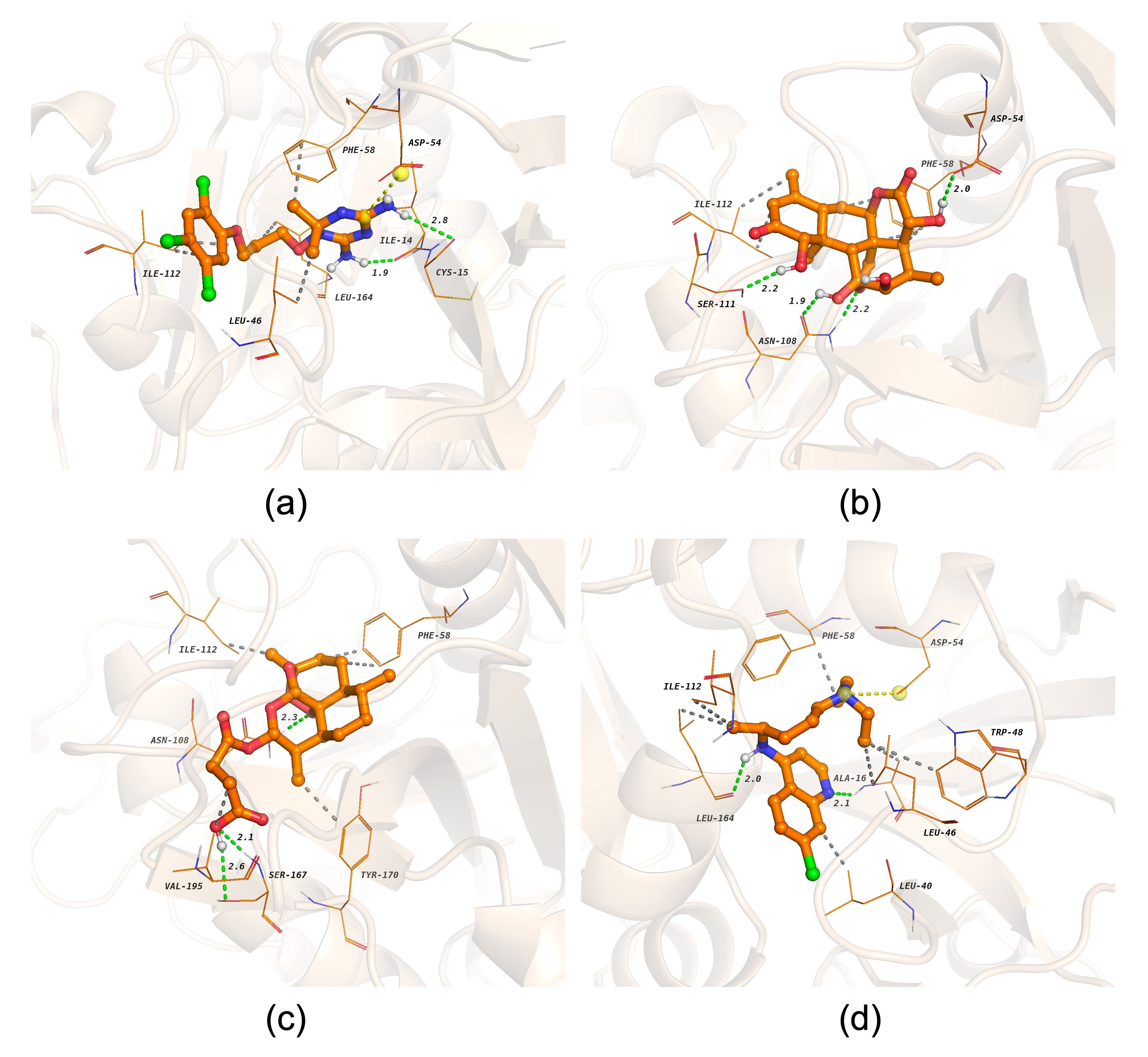
2.4. Molecular Docking Analysis of Compounds Derived from EL and EH Root Interaction with qmPfDHFR
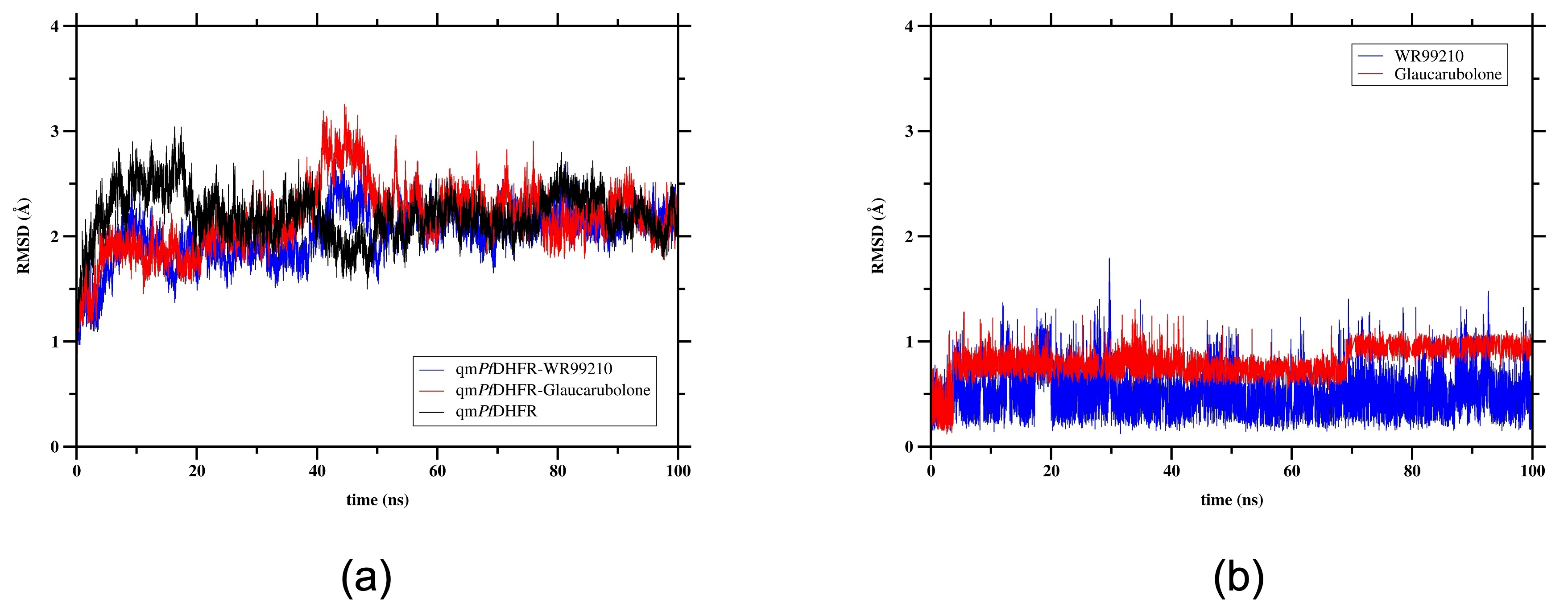
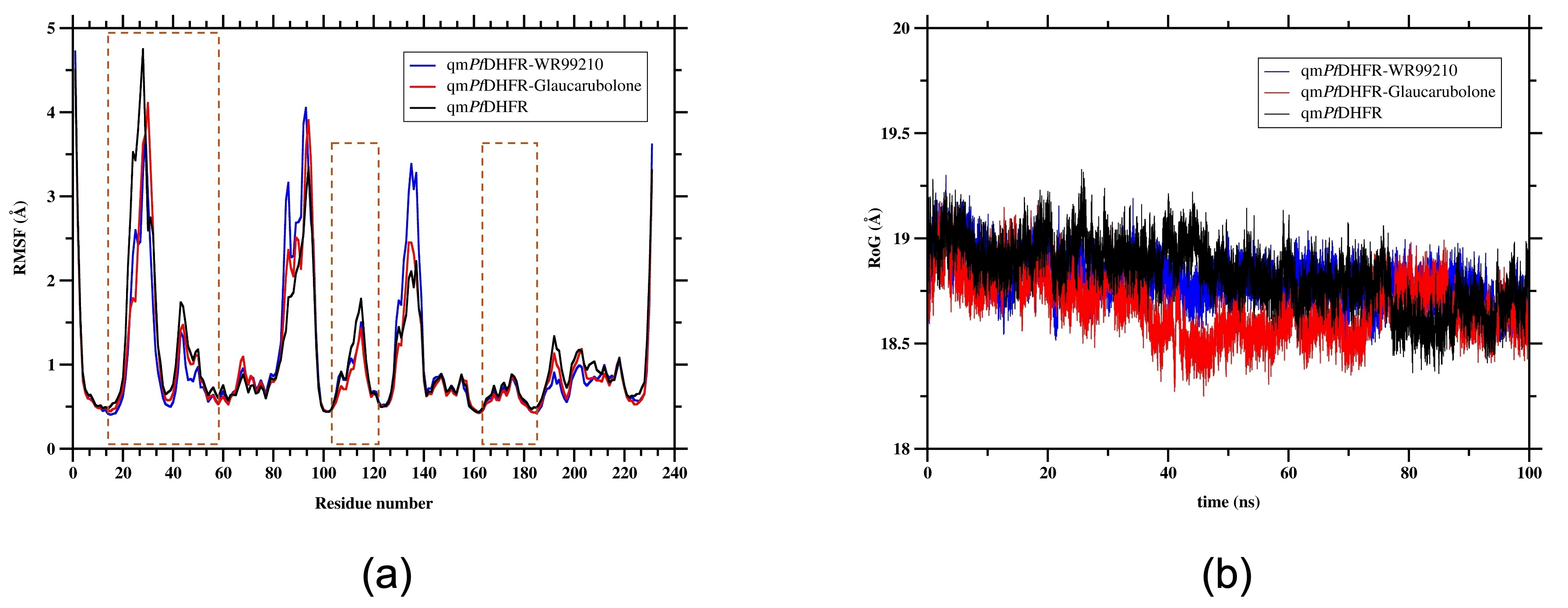
2.5. MD Simulations Analysis of Promising Compounds Derived from EL and EH Roots in Complex with qmPfDHFR
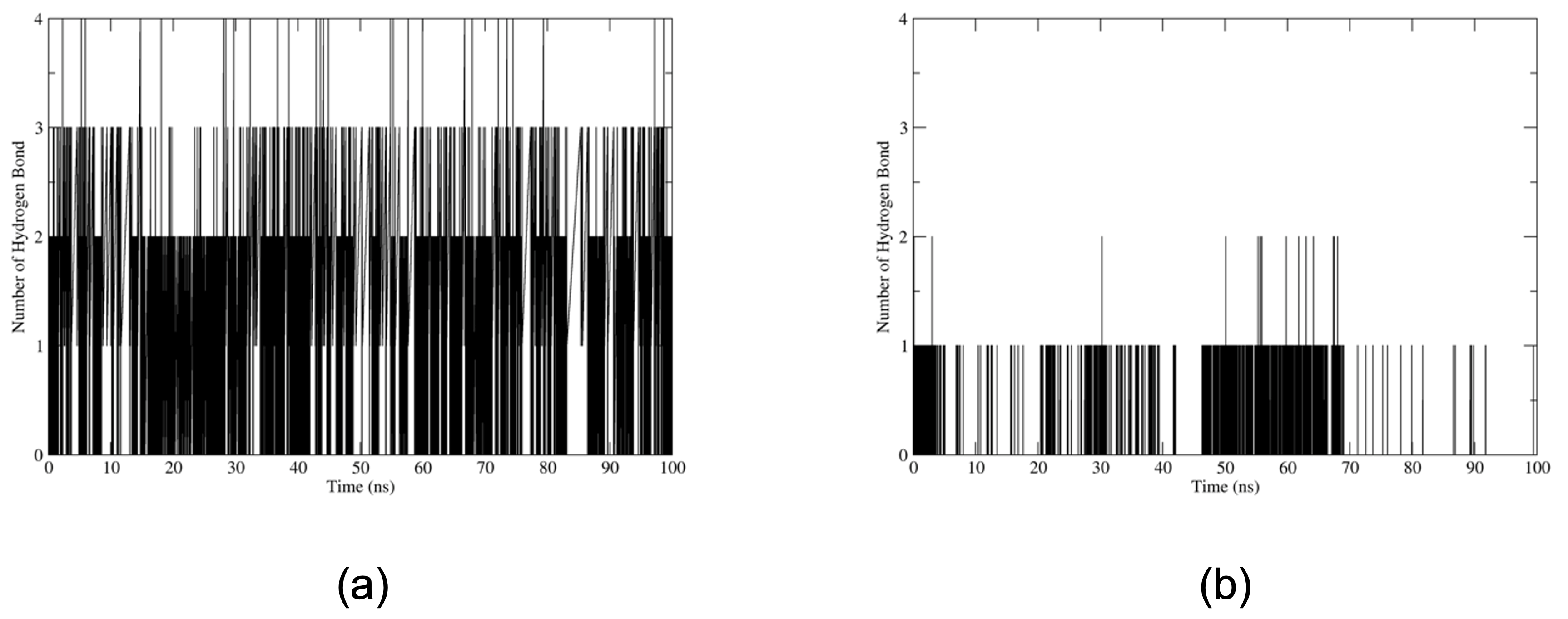
2.6. Hydrogen Bonding and MM/GBSA Analyses of a Promising Compound in Complex with qmPfDHFR
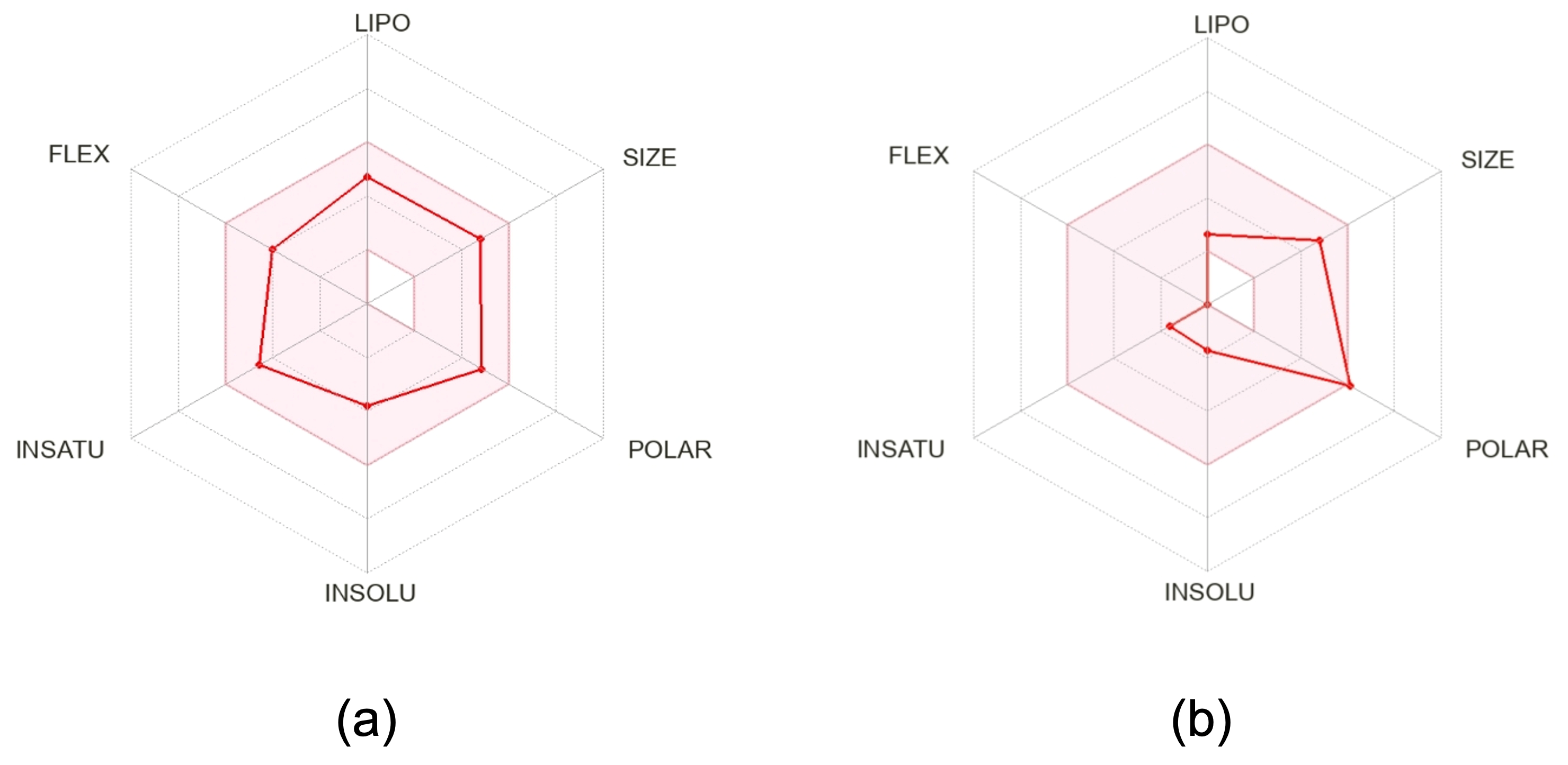
2.7. Drug-Likeness, Pharmacokinetic, and Toxicity Profiles of the Promising Compound
3. Discussion
4. Materials and Methods
4.1. Plant Samples and Preparation
4.2. Chemicals
4.3. Parasites and Cell Line
4.4. In Vitro Antiplasmodial Activity
- A = Absorbance of negative control;
- B = Absorbance of tested samples.
4.5. In Vitro Cytotoxicity
- A = Absorbance of tested samples;
- B = Absorbance of background;
- C = Absorbance of negative control.
4.6. Selectivity Index (SI) Determination
- A = The 50% cytotoxic concentration (CC50) against Vero cells;
- B = The half maximal inhibitory concentration (IC50) against the P. falciparum K1 strain.
4.7. Parasite Morphological Changes Following Exposure to Plant Extracts and Promising Compounds
4.8. Molecular Docking Simulations
4.9. Molecular Dynamics (MD) Simulations
4.10. In Silico Prediction of Drug-likeness, Pharmacokinetic, and Toxicity Profiles
4.11. Statistical Analysis
5. Conclusions
Supplementary Materials
Author Contributions
Funding
Institutional Review Board Statement
Informed Consent Statement
Data Availability Statement
Acknowledgments
Conflicts of Interest
References
- WHO. World Malaria Report 2025; World Health Organization: Geneva, Switzerland, 2025. [Google Scholar]
- Ward, K.E.; Fidock, D.A.; Bridgford, J.L. Plasmodium falciparum resistance to artemisinin-based combination therapies. Curr. Opin. Microbiol. 2022, 69, 102193. [Google Scholar] [CrossRef] [Scilit] [PubMed]
- Nguyen, T.D.; Gao, B.; Amaratunga, C.; Dhorda, M.; Tran, T.N.; White, N.J.; Dondorp, A.M.; Boni, M.F.; Aguas, R. Preventing antimalarial drug resistance with triple artemisinin-based combination therapies. Nat. Commun. 2023, 14, 4568. [Google Scholar] [CrossRef] [Scilit] [PubMed]
- Rahman, A.; Tamseel, S.; Dutta, S.; Khan, N.; Faaiz, M.; Rastogi, H.; Nath, J.R.; Haldar, K.; Chowdhury, P.; Ashish; et al. Artemisinin-resistant Plasmodium falciparum Kelch13 mutant proteins display reduced heme-binding affinity and decreased artemisinin activation. Commun. Biol. 2024, 7, 1499. [Google Scholar] [CrossRef] [Scilit] [PubMed]
- Sudathip, P.; Saejeng, A.; Khantikul, N.; Thongrad, T.; Kitchakarn, S.; Sugaram, R.; Lertpiriyasuwat, C.; Areechokchai, D.; Gopinath, D.; Sintasath, D.; et al. Progress and challenges of integrated drug efficacy surveillance for uncomplicated malaria in Thailand. Malar. J. 2021, 20, 261. [Google Scholar] [CrossRef] [Scilit] [PubMed]
- Milliken, W.; Walker, B.E.; Howes, M.-J.R.; Forest, F.; Nic Lughadha, E. Plants used traditionally as antimalarials in Latin America: Mining the tree of life for potential new medicines. J. Ethnopharmacol. 2021, 279, 114221. [Google Scholar] [CrossRef] [Scilit] [PubMed]
- Ungogo, M.A.; Ebiloma, G.U.; Ichoron, N.; Igoli, J.O.; de Koning, H.P.; Balogun, E.O. A review of the antimalarial, antitrypanosomal, and antileishmanial activities of natural compounds isolated from Nigerian flora. Front Chem. 2020, 8, 617448. [Google Scholar] [CrossRef] [Scilit] [PubMed]
- Cragg, G.M.; Grothaus, P.G.; Newman, D.J. New horizons for old drugs and drug leads. J. Nat. Prod. 2014, 77, 703–723. [Google Scholar] [CrossRef] [Scilit] [PubMed]
- Bhat, R.; Karim, A.A. Tongkat Ali (Eurycoma longifolia Jack): A review on its ethnobotany and pharmacological importance. Fitoterapia 2010, 81, 669–679. [Google Scholar] [CrossRef] [Scilit] [PubMed]
- Farag, M.A.; Ajayi, A.O.; Taleb, M.; Wang, K.; Ayoub, I.M. A multifaceted review of Eurycoma longifolia nutraceutical bioactives: Production, extraction, and analysis in drugs and biofluids. ACS Omega 2023, 8, 1838–1850. [Google Scholar] [CrossRef] [Scilit] [PubMed]
- Fan, M.Z.; An, X.L.; Cui, X.H.; Jiang, X.L.; Piao, X.C.; Jin, M.Y.; Lian, M.L. Production of eurycomanone and polysaccharides through adventitious root culture of Eurycoma longifolia in a bioreactor. Biochem Eng. J. 2021, 171, 108013. [Google Scholar] [CrossRef] [Scilit]
- Choonong, R.; Krittanai, S.; Butdapheng, K.; Juengwatanatrakul, T.; Yusakul, G.; Kanchanapoom, T.; Putalun, W. Impact of elicitors and precursor on quassinoids and canthin-6-ones production in adventitious root culture of Eurycoma harmandiana Pierre and improvement of their anti-inflammatory activity. Ind. Crops Prod. 2023, 206, 117652. [Google Scholar] [CrossRef] [Scilit]
- Chaingam, J.; Rattanathorn, C.; Thaweesak, J.; Tripetch, K.; Waraporn, P.; Yusakul, G. Evaluation of anti-inflammatory properties of Eurycoma longifolia Jack and Eurycoma harmandiana Pierre in vitro cultures and their constituents. Food Agric. Immunol. 2022, 33, 530–545. [Google Scholar]
- Juengwatanatrakul, T.; Jungmankong, Z.; Kanchanapoom, T.; Putalun, W. Effects of media and carbon sources on growth and canthin-6-ones accumulation in hairy root cultures of Eurycoma harmadiana. Planta Med. 2014, 80, 2F3. [Google Scholar] [CrossRef] [Scilit]
- Chaingam, J.; Juengwatanatrakul, T.; Yusakul, G.; Kanchanapoom, T.; Putalun, W. HPLC-UV-based simultaneous determination of canthin-6-one alkaloids, quassinoids, and scopoletin: The active ingredients in Eurycoma longifolia Jack and Eurycoma harmandiana Pierre, and their anti-inflammatory activities. J. AOAC Int. 2020, 104, 802–810. [Google Scholar] [CrossRef] [Scilit] [PubMed]
- Choonong, R.; Chaingam, J.; Chantakul, R.; Mukda, S.; Temkitthawon, P.; Ingkaninan, K.; Juengwatanatrakul, T.; Yusakul, G.; Kanchanapoom, T.; Putalun, W. Phosphodiesterase-5 inhibitory activity of canthin-6-one alkaloids and the roots of Eurycoma longifolia and Eurycoma harmandiana. Chem. Biodivers. 2022, 19, e202200121. [Google Scholar] [CrossRef] [Scilit] [PubMed]
- Thu, H.E.; Hussain, Z.; Mohamed, I.N.; Shuid, A.N. Eurycoma longifolia, a potential phytomedicine for the treatment of cancer: Evidence of p53-mediated apoptosis in cancerous cells. Curr. Drug Targets 2018, 19, 1109–1126. [Google Scholar] [CrossRef] [Scilit] [PubMed]
- Choonong, R.; Ruangdachsuwan, S.; Churod, T.; Palabodeewat, S.; Punyahathaikul, S.; Juntarapornchai, S.; Ketsuwan, K.; Komaikul, J.; Masrinoul, P.; Kitisripanya, T.; et al. Evaluating the in vitro efficacy of quassinoids from Eurycoma longifolia and Eurycoma harmandiana against common cold human coronavirus OC43 and SARS-CoV-2 using in-cell enzyme-linked immunosorbent assay. J. Nat. Prod. 2022, 85, 2779–2788. [Google Scholar] [CrossRef] [Scilit] [PubMed]
- Kanchanapoom, T.; Kasai, R.; Chumsri, P.; Yamasaki, K. Quassinoids from Eurycoma harmandiana. Phytochemistry 2001, 57, 1205–1208. [Google Scholar] [CrossRef] [Scilit] [PubMed]
- Kanchanapoom, T.; Kasai, R.; Chumsri, P.; Hiraga, Y.; Yamasaki, K. Canthin-6-one and beta-carboline alkaloids from Eurycoma harmandiana. Phytochemistry 2001, 56, 383–386. [Google Scholar] [CrossRef] [Scilit] [PubMed]
- Abbat, S.; Jaladanki, C.K.; Bharatam, P.V. Exploring PfDHFR reaction surface: A combined molecular dynamics and QM/MM analysis. J. Mol. Graph Model 2019, 87, 76–88. [Google Scholar] [CrossRef] [Scilit] [PubMed]
- Hyde, J.E. Exploring the folate pathway in Plasmodium falciparum. Acta Trop. 2005, 94, 191–206. [Google Scholar] [CrossRef] [Scilit] [PubMed]
- Posayapisit, N.; Pengon, J.; Prommana, P.; Shoram, M.; Yuthavong, Y.; Uthaipibull, C.; Kamchonwongpaisan, S.; Jupatanakul, N. Transgenic pyrimethamine-resistant Plasmodium falciparum reveals transmission-blocking potency of P218, a novel antifolate candidate drug. Int. J. Parasitol. 2021, 51, 635–642. [Google Scholar] [CrossRef] [Scilit] [PubMed]
- Yadav, M.K.; Tripathi, M.K.; Yadav, S. Discovery of novel inhibitors targeting Plasmodium knowlesi dihydrofolate reductase using molecular docking and molecular dynamics simulation. Microb. Pathog. 2021, 161, 105214. [Google Scholar] [CrossRef] [Scilit] [PubMed]
- Sinha, A.; Kar, S.; Chauhan, C.; Yadav, C.P.; Kori, L. Meta-analysis on Plasmodium falciparum sulfadoxine-pyrimethamine resistance-conferring mutations in India identifies hot spots for genetic surveillance. Int. J. Antimicrob. Agents 2024, 63, 107071. [Google Scholar] [CrossRef] [Scilit] [PubMed]
- Decharuangsilp, S.; Arwon, U.; Hoarau, M.; Vanichtanankul, J.; Saeyang, T.; Jantra, T.; Rattanajak, R.; Thiabma, R.; Sooksai, N.; Kongkasuriyachai, D.; et al. Flexible 2,4-diaminopyrimidine bearing a butyrolactone as Plasmodium falciparum dihydrofolate reductase inhibitors. Bioorg Chem. 2024, 153, 107789. [Google Scholar] [CrossRef] [Scilit] [PubMed]
- Habibi, P.; Shi, Y.; Fatima Grossi-de-Sa, M.; Khan, I. Plants as sources of natural and recombinant antimalaria agents. Mol. Biotechnol. 2022, 64, 1177–1197. [Google Scholar] [CrossRef] [Scilit] [PubMed]
- Batista, R.; Silva Ade, J., Jr.; de Oliveira, A.B. Plant-derived antimalarial agents: New leads and efficient phytomedicines. Part II. Non-alkaloidal natural products. Molecules 2009, 14, 3037–3072. [Google Scholar] [CrossRef] [Scilit] [PubMed]
- de Souza, G.E.; Bueno, R.V.; de Souza, J.O.; Zanini, C.L.; Cruz, F.C.; Oliva, G.; Guido, R.V.C.; Aguiar, A.C.C. Antiplasmodial profile of selected compounds from Malaria Box: In vitro evaluation, speed of action and drug combination studies. Malar. J. 2019, 18, 447. [Google Scholar] [CrossRef] [Scilit] [PubMed]
- Oluyemi, W.M.; Nwokebu, G.; Adewumi, A.T.; Eze, S.C.; Mbachu, C.C.; Ogueli, E.C.; Nwodo, N.; Soliman, M.E.S.; Mosebi, S. The characteristic structural and functional dynamics of P. falciparum DHFR binding with pyrimidine chemotypes implicate malaria therapy design. Chem. Phys. Impact 2024, 9, 100703. [Google Scholar] [CrossRef] [Scilit]
- Hastuti, L.P.; Hermawan, F.; Iresha, M.R.; Ernawati, T.; Firdayani, F. In-silico studies of hydroxyxanthone derivatives as potential pfDHFR and pfDHODH inhibitor by molecular docking, molecular dynamics simulation, MM-PBSA calculation and pharmacokinetics prediction. Inf. Med. Unlocked 2024, 47, 101485. [Google Scholar] [CrossRef] [Scilit]
- Adewumi, A.T.; Soremekun, O.S.; Ajadi, M.B.; Soliman, M.E.S. Thompson loop: Opportunities for antitubercular drug design by targeting the weak spot in demethylmenaquinone methyltransferase protein. RSC Adv. 2020, 10, 23466–23483. [Google Scholar] [CrossRef] [Scilit] [PubMed]
- Oluyemi, W.M.; Samuel, B.B.; Adewumi, A.T.; Adekunle, Y.A.; Soliman, M.E.S.; Krenn, L. An allosteric inhibitory potential of triterpenes from Combretum racemosum on the structural and functional dynamics of Plasmodium falciparum lactate dehydrogenase binding landscape. Chem. Biodivers. 2022, 19, e202100646. [Google Scholar] [CrossRef] [Scilit] [PubMed]
- Lipinski, C.A. Lead- and drug-like compounds: The rule-of-five revolution. Drug Discov. Today Technol. 2004, 1, 337–341. [Google Scholar] [CrossRef] [Scilit] [PubMed]
- Daina, A.; Michielin, O.; Zoete, V. SwissADME: A free web tool to evaluate pharmacokinetics, drug-likeness and medicinal chemistry friendliness of small molecules. Sci. Rep. 2017, 7, 42717. [Google Scholar] [CrossRef] [Scilit] [PubMed]
- Sriwilaijaroen, N.; Kondo, S.; Nanthasri, P.; Auparakkitanon, S.; Suzuki, Y.; Wilairat, P. Antiplasmodial effects of Brucea javanica (L.) Merr. and Eurycoma longifolia Jack extracts and their combination with chloroquine and quinine on Plasmodium falciparum in culture. Trop. Med. Health 2010, 38, 61–68. [Google Scholar] [CrossRef] [Scilit]
- Muhammad, I.; Samoylenko, V. Antimalarial quassinoids: Past, present and future. Expert Opin. Drug Discov. 2007, 2, 1065–1084. [Google Scholar] [CrossRef] [Scilit] [PubMed]
- Chan, K.L.; O’Neill, M.J.; Phillipson, J.D.; Warhurst, D.C. Plants as sources of antimalarial drugs. Part 3. Eurycoma longifolia. Planta Med. 1986, 52, 105–107. [Google Scholar] [CrossRef] [Scilit] [PubMed]
- Chan, K.-L.; Choo, C.-Y.; Abdullah, N.R.; Ismail, Z. Antiplasmodial studies of Eurycoma longifolia Jack using the lactate dehydrogenase assay of Plasmodium falciparum. J. Ethnopharmacol. 2004, 92, 223–227. [Google Scholar] [CrossRef] [Scilit]
- Jiwajinda, S.; Santisopasri, V.; Murakami, A.; Kawanaka, M.; Kawanaka, H.; Gasquet, M.; Elias, R.; Balansard, G.; Ohigashi, H. In vitro anti-tumor promoting and anti-parasitic activities of the quassinoids from Eurycoma longifolia, a medicinal plant in Southeast Asia. J. Ethnopharmacol. 2002, 82, 55–58, Erratum in J. Ethnopharmacol. 2003, 85, 173. [Google Scholar] [CrossRef] [Scilit]
- François, G.; Diakanamwa, C.; Timperman, G.; Bringmann, G.; Steenackers, T.; Atassi, G.; Van Looveren, M.; Holenz, J.; Tassin, J.P.; Assi, L.A.; et al. Antimalarial and cytotoxic potential of four quassinoids from Hannoa chlorantha and Hannoa klaineana, and their structure-activity relationships. Int. J. Parasitol. 1998, 28, 635–640. [Google Scholar] [CrossRef] [Scilit] [PubMed]
- Dou, J.; McChesney, J.D.; Sindelar, R.D.; Goins, D.K.; Walker, L.A. A new quassinoid from Castela texana. J. Nat. Prod. 1996, 59, 73–76. [Google Scholar] [CrossRef] [Scilit] [PubMed]
- Chan, K.L.; Choo, C.Y.; Abdullah, N.R. Semisynthetic 15-O-acyl- and 1,15-di-O-acyleurycomanones from Eurycoma longifolia as potential antimalarials. Planta Med. 2005, 71, 967–969. [Google Scholar] [CrossRef] [Scilit] [PubMed][Green Version]
- Gerardo, C.-T.; Spelman, K.; Leblanc, K.; Muñoz-Durango, K.; Torijano Gutiérrez, S.; Elena, F.; Rojas de Arias, A.; Figadere, B.; Fournet, A.; Maciuk, A.; et al. The antiplasmodium effects of a traditional South American remedy: Zanthoxylum chiloperone var. angustifolium against chloroquine resistant and chloroquine sensitive strains of Plasmodium falciparum. Rev. Bras. Farmacogn. 2011, 21, 652–661. [Google Scholar] [CrossRef] [Scilit][Green Version]
- Kardono, L.B.; Angerhofer, C.K.; Tsauri, S.; Padmawinata, K.; Pezzuto, J.M.; Kinghorn, A.D. Cytotoxic and antimalarial constituents of the roots of Eurycoma longifolia. J. Nat. Prod. 1991, 54, 1360–1367. [Google Scholar] [CrossRef] [Scilit] [PubMed]
- Kushwaha, P.; Kumar, V.; Saha, B. Current development of β-carboline derived potential antimalarial scaffolds. Eur. J. Med. Chem. 2023, 252, 115247. [Google Scholar] [CrossRef] [Scilit] [PubMed]
- Schmitt, E.K.; Ndayisaba, G.; Yeka, A.; Asante, K.P.; Grobusch, M.P.; Karita, E.; Mugerwa, H.; Asiimwe, S.; Oduro, A.; Fofana, B.; et al. Efficacy of cipargamin (KAE609) in a randomized, phase II dose-escalation study in adults in sub-Saharan Africa with uncomplicated Plasmodium falciparum malaria. Clin. Infect. Dis. 2022, 74, 1831–1839. [Google Scholar] [CrossRef] [Scilit] [PubMed]
- Miyake, K.; Li, F.; Tezuka, Y.; Awale, S.; Kadota, S. Cytotoxic activity of quassinoids from Eurycoma longifolia. Nat. Prod. Commun. 2010, 5, 1009–1012. [Google Scholar] [CrossRef] [Scilit]
- Malainer, C.; Schachner, D.; Sangiovanni, E.; Atanasov, A.G.; Schwaiger, S.; Stuppner, H.; Heiss, E.H.; Dirsch, V.M. Eurycomalactone inhibits expression of endothelial adhesion molecules at a post-transcriptional level. J. Nat. Prod. 2017, 80, 3186–3193. [Google Scholar] [CrossRef] [Scilit] [PubMed]
- Odira, H.O.; Mitema, S.O.; Mapenay, I.M.; Moriasi, G.A. Anti-inflammatory, analgesic, and cytotoxic effects of the phytexponent: A polyherbal formulation. J. Evid. Based Integr. Med. 2022, 27, 2515690x221082986. [Google Scholar] [CrossRef] [Scilit] [PubMed]
- Kangwanrangsan, N.; Niramolyanun, G.; Praikongkatham, C.; Chantree, P.; Martviset, P.; Pankao, V. Growth inhibition and additive effect to antimalarial drugs of Brucea javanica extracts on asexual blood-stage Plasmodium falciparum. Pathogens 2025, 14, 646. [Google Scholar] [CrossRef] [Scilit] [PubMed]
- Barbosa, C.S.; Ahmad, A.; Maluf, S.E.C.; Moura, I.M.R.; Souza, G.E.; Guerra, G.A.H.; Barros, R.R.M.; Gazarini, M.L.; Aguiar, A.C.C.; Burtoloso, A.C.B.; et al. Synthesis, structure−activity relationships, and parasitological profiling of brussonol derivatives as new Plasmodium falciparum inhibitors. Pharmaceuticals 2022, 15, 814. [Google Scholar] [CrossRef] [Scilit] [PubMed]
- Sachanonta, N.; Chotivanich, K.; Chaisri, U.; Turner, G.D.; Ferguson, D.J.; Day, N.P.; Pongponratn, E. Ultrastructural and real-time microscopic changes in P. falciparum-infected red blood cells following treatment with antimalarial drugs. Ultrastruct. Pathol. 2011, 35, 214–225. [Google Scholar] [CrossRef] [Scilit] [PubMed]
- Aguiar, A.C.C.; Murce, E.; Cortopassi, W.A.; Pimentel, A.S.; Almeida, M.; Barros, D.C.S.; Guedes, J.S.; Meneghetti, M.R.; Krettli, A.U. Chloroquine analogs as antimalarial candidates with potent in vitro and in vivo activity. Int. J. Parasitol. Drugs Drug Resist 2018, 8, 459–464. [Google Scholar] [CrossRef] [Scilit] [PubMed]
- Sholikhah, E.N.; Wijayanti, M.A.; Susidarti, R.A.; Purwantini, I.; Hestiyani, R.A.N.; Yusuf, H.; Mustofa. Stage specificity of eurycomanone isolated from Eurycoma longifolia on Plasmodium falciparum cycles. Am. J. Pharmacol. Toxicol. 2016, 11, 1–7. [Google Scholar] [CrossRef] [Scilit][Green Version]
- Kirby, G.C.; O’Neill, M.J.; Phillipson, J.D.; Warhurst, D.C. In vitro studies on the mode of action of quassinoids with activity against chloroquine-resistant Plasmodium falciparum. Biochem Pharmacol. 1989, 38, 4367–4374. [Google Scholar] [CrossRef] [Scilit] [PubMed]
- Ashok, P.; Ganguly, S.; Murugesan, S. Manzamine alkaloids: Isolation, cytotoxicity, antimalarial activity and SAR studies. Drug Discov. Today 2014, 19, 1781–1791. [Google Scholar] [CrossRef] [Scilit] [PubMed]
- Sahu, S.; Ghosh, S.K.; Kalita, J.; Dutta, M.; Bhat, H.R. Design, synthesis and antimalarial screening of some hybrid 4-aminoquinoline-triazine derivatives against pf-DHFR-TS. Exp. Parasitol. 2016, 163, 38–45. [Google Scholar] [CrossRef] [Scilit] [PubMed]
- Kyei, L.; Gasu, E.; Boadu, G.; Mensah, J.; Borquaye, L. An in silico study of the interactions of alkaloids from Cryptolepis sanguinolenta with Plasmodium falciparum dihydrofolate reductase and dihydroorotate dehydrogenase. J. Chem. 2022, 2022, 5314179. [Google Scholar] [CrossRef] [Scilit]
- Borkakoty, B.; Sarma, K.; Parida, P.; Prakash, A.; Mohapatra, P.K.; Mahanta, J. In silico screening of antifolate based novel inhibitors from Brucea mollis Wall. ex kurz against quadruple mutant drug resistant PfDHFR. Comb. Chem. High Throughput Screen 2014, 17, 681–693. [Google Scholar] [CrossRef] [Scilit] [PubMed]
- Mallia, A.; Nguyen, M.; Sloop, J.; Forlemu, N. Molecular docking of fluorinated heterocyclic sulfonamides: Novel ligands with selective affinities for human and Plasmodium dihydrofolate reductase. J. Undergrad. Chem. Res. 2023, 22, 1. [Google Scholar]
- Akakpo, L.; Gasu, E.N.; Mensah, J.O.; Borquaye, L.S. Oplodiol and nitidine as potential inhibitors of Plasmodium falciparum dihydrofolate reductase: Insights from a computational study. J. Biomol. Struct. Dyn. 2024, 42, 1655–1669. [Google Scholar] [CrossRef] [Scilit] [PubMed]
- Yuvaniyama, J.; Chitnumsub, P.; Kamchonwongpaisan, S.; Vanichtanankul, J.; Sirawaraporn, W.; Taylor, P.; Walkinshaw, M.D.; Yuthavong, Y. Insights into antifolate resistance from malarial DHFR-TS structures. Nat. Struct. Mol. Biol. 2003, 10, 357–365. [Google Scholar] [CrossRef] [Scilit] [PubMed]
- Mokmak, W.; Chunsrivirot, S.; Hannongbua, S.; Yuthavong, Y.; Tongsima, S.; Kamchonwongpaisan, S. Molecular dynamics of interactions between rigid and flexible antifolates and dihydrofolate reductase from pyrimethamine-sensitive and pyrimethamine-resistant Plasmodium falciparum. Chem. Biol. Drug Des. 2014, 84, 450–461. [Google Scholar] [CrossRef] [Scilit] [PubMed]
- Li, Y.; Yi, J.; Li, H.; Li, K.; Kang, F.; Deng, Y.; Wu, C.; Fu, X.; Jiang, D.; Cao, D. Decoding the limits of deep learning in molecular docking for drug discovery. Chem. Sci. 2025, 16, 17374–17390. [Google Scholar] [CrossRef] [Scilit] [PubMed]
- Martí Coma-Cros, E.; Biosca, A.; Marques, J.; Carol, L.; Urbán, P.; Berenguer, D.; Riera, M.C.; Delves, M.; Sinden, R.E.; Valle-Delgado, J.J.; et al. Polyamidoamine nanoparticles for the oral administration of antimalarial drugs. Pharmaceutics 2018, 10, 225. [Google Scholar] [CrossRef] [Scilit] [PubMed]
- Wu, F.; Zhou, Y.; Li, L.; Shen, X.; Chen, G.; Wang, X.; Liang, X.; Tan, M.; Huang, Z. Computational approaches in preclinical studies on drug discovery and development. Front. Chem. 2020, 8, 726. [Google Scholar] [CrossRef] [Scilit] [PubMed]
- Ahmad, N.; Samiulla, D.S.; Teh, B.P.; Zainol, M.; Zolkifli, N.A.; Muhammad, A.; Matom, E.; Zulkapli, A.; Abdullah, N.R.; Ismail, Z.; et al. Bioavailability of eurycomanone in its pure form and in a standardised Eurycoma longifolia water extract. Pharmaceutics 2018, 10, 90. [Google Scholar] [CrossRef] [Scilit] [PubMed]
- Low, B.S.; Ng, B.H.; Choy, W.P.; Yuen, K.H.; Chan, K.L. Bioavailability and pharmacokinetic studies of eurycomanone from Eurycoma longifolia. Planta Med. 2005, 71, 803–807. [Google Scholar] [CrossRef] [Scilit] [PubMed]
- Prasanna, S.; Doerksen, R.J. Topological polar surface area: A useful descriptor in 2D-QSAR. Curr. Med. Chem. 2009, 16, 21–41. [Google Scholar] [CrossRef] [Scilit] [PubMed]
- Remcho, T.P.; Guggilapu, S.D.; Cruz, P.; Nardone, G.A.; Heffernan, G.; O’Connor, R.D.; Bewley, C.A.; Wellems, T.E.; Lane, K.D. Regioisomerization of antimalarial drug WR99210 explains the inactivity of a commercial stock. Antimicrob. Agents Chemother. 2020, 65, e01385-20. [Google Scholar] [CrossRef] [Scilit] [PubMed]
- Lu, C.; Lu, S.-N.; Di, D.; Tao, W.-W.; Fan, L.; Duan, J.-A.; Zhao, M.; Che, C.-T. The anticancer potential of quassinoids—A mini-review. Engineering 2024, 38, 27–38. [Google Scholar] [CrossRef] [Scilit]
- Phuwajaroanpong, A.; Chaniad, P.; Horata, N.; Muangchanburee, S.; Kaewdana, K.; Punsawad, C. In vitro and in vivo antimalarial activities and toxicological assessment of Pogostemon cablin (Blanco) Benth. J. Evid. Based Integr. Med. 2020, 25, 2515690x20978387. [Google Scholar] [CrossRef] [Scilit] [PubMed]
- Makler, M.T.; Hinrichs, D.J. Measurement of the lactate dehydrogenase activity of Plasmodium falciparum as an assessment of parasitemia. Am. J. Trop. Med. Hyg. 1993, 48, 205–210. [Google Scholar] [CrossRef] [Scilit] [PubMed]
- Choudhury, A.A.K.; Vinayagam, S.; Adhikari, N.; Ghosh, S.K.; Sattu, K. Microwave synthesis and antimalarial screening of novel 4-amino benzoic acid (PABA)-substituted pyrimidine derivatives as Plasmodium falciparum dihydrofolate reductase inhibitors. 3 Biotech 2022, 12, 170. [Google Scholar] [CrossRef] [Scilit] [PubMed]
- Thiengsusuk, A.; Muhamad, P.; Chaijaroenkul, W.; Na-Bangchang, K. Antimalarial activity of piperine. J. Trop. Med. 2018, 2018, 9486905. [Google Scholar] [CrossRef] [Scilit] [PubMed]
- Theeramunkong, S.; Thiengsusuk, A.; Vajragupta, O.; Muhamad, P. Synthesis, characterization and antimalarial activity of isoquinoline derivatives. Med. Chem. Res. 2021, 30, 109–119. [Google Scholar] [CrossRef] [Scilit]
- Niramolyanun, G.; Praikongkatham, C.; Nguitragool, W.; Sattabongkot, J.; Kangwanrangsan, N. Disruption of mitochondrial function in blood and sexual stages of Plasmodium falciparum by ferulenol. Parasit. Vectors 2025, 18, 450. [Google Scholar] [CrossRef] [Scilit] [PubMed]
- Alhawarri, M.B.; Al-Thiabat, M.G.; Dubey, A.; Tufail, A.; Fouad, D.; Alrimawi, B.H.; Dayoob, M. ADME profiling, molecular docking, DFT, and MEP analysis reveal cissamaline, cissamanine, and cissamdine from Cissampelos capensis L.f. as potential anti-Alzheimer’s agents. RSC Adv. 2024, 14, 9878–9891. [Google Scholar] [CrossRef] [Scilit] [PubMed]
- Dolinsky, T.J.; Nielsen, J.E.; McCammon, J.A.; Baker, N.A. PDB2PQR: An automated pipeline for the setup of Poisson-Boltzmann electrostatics calculations. Nucleic Acids Res. 2004, 32, W665–W667. [Google Scholar] [CrossRef] [Scilit] [PubMed]
- Williams, C.J.; Headd, J.J.; Moriarty, N.W.; Prisant, M.G.; Videau, L.L.; Deis, L.N.; Verma, V.; Keedy, D.A.; Hintze, B.J.; Chen, V.B.; et al. MolProbity: More and better reference data for improved all-atom structure validation. Protein Sci. 2018, 27, 293–315. [Google Scholar] [CrossRef] [Scilit] [PubMed]
- Morris, G.M.; Huey, R.; Lindstrom, W.; Sanner, M.F.; Belew, R.K.; Goodsell, D.S.; Olson, A.J. AutoDock4 and AutoDockTools4: Automated docking with selective receptor flexibility. J. Comput Chem. 2009, 30, 2785–2791. [Google Scholar] [CrossRef] [Scilit] [PubMed]
- O’Boyle, N.M.; Banck, M.; James, C.A.; Morley, C.; Vandermeersch, T.; Hutchison, G.R. Open Babel: An open chemical toolbox. J. Cheminform. 2011, 3, 33. [Google Scholar] [CrossRef] [Scilit] [PubMed]
- Vittorio, S.; Lunghini, F.; Morerio, P.; Gadioli, D.; Orlandini, S.; Silva, P.; Jan, M.; Pedretti, A.; Bonanni, D.; Del Bue, A.; et al. Addressing docking pose selection with structure-based deep learning: Recent advances, challenges and opportunities. Comput Struct. Biotechnol. J. 2024, 23, 2141–2151. [Google Scholar] [CrossRef] [Scilit] [PubMed]
- Adasme, M.F.; Linnemann, K.L.; Bolz, S.N.; Kaiser, F.; Salentin, S.; Haupt, V.J.; Schroeder, M. PLIP 2021: Expanding the scope of the protein–ligand interaction profiler to DNA and RNA. Nucleic Acids Res. 2021, 49, W530–W534. [Google Scholar] [CrossRef] [Scilit] [PubMed]
- Al-Thiabat, M.G.; Saqallah, F.G.; Gazzali, A.M.; Mohtar, N.; Yap, B.K.; Choong, Y.S.; Wahab, H.A. Heterocyclic substitutions greatly improve affinity and stability of folic acid towards FRα. An in silico insight. Molecules 2021, 26, 1079. [Google Scholar] [CrossRef] [Scilit] [PubMed]
- Al-Thiabat, M.G.; Gazzali, A.M.; Mohtar, N.; Murugaiyah, V.; Kamarulzaman, E.E.; Yap, B.K.; Rahman, N.A.; Othman, R.; Wahab, H.A. Conjugated β-Cyclodextrin enhances the affinity of folic Acid towards FRα: Molecular dynamics study. Molecules 2021, 26, 5304. [Google Scholar] [CrossRef] [Scilit] [PubMed]
- Phongphane, L.; Mohd Radzuan, S.N.; Abu Bakar, M.H.; Che Omar, M.T.; Supratman, U.; Harneti, D.; Wahab, H.A.; Azmi, M.N. Synthesis, biological evaluation, and molecular modelling of novel quinoxaline-isoxazole hybrid as anti-hyperglycemic. Comput Biol. Chem. 2023, 106, 107938. [Google Scholar] [CrossRef] [Scilit] [PubMed]
- Pires, D.E.; Blundell, T.L.; Ascher, D.B. pkCSM: Predicting small-molecule pharmacokinetic and toxicity properties using graph-based signatures. J. Med. Chem. 2015, 58, 4066–4072. [Google Scholar] [CrossRef] [Scilit] [PubMed]



| Plant Extract/Compound | pLDH Assay | MTT Assay | Selectivity Index (SI) |
|---|---|---|---|
| P. falciparum K1 Strain | Vero Cells | ||
| Aqueous extract of E. longifolia roots (AELR) a | 1.40 ± 0.46 | 53.81 ± 9.36 | 38.43 |
| Ethanolic extract of E. longifolia roots (EELR) a | 1.21 ± 1.03 | >100 | >82.64 |
| Aqueous extract of E. harmandiana roots (AEHR) a | 3.09 ± 0.77 | 72.41 ± 9.25 | 23.43 |
| Ethanolic extract of E. harmandiana roots (EEHR) a | 0.51 ± 0.10 | 31.68 ± 5.75 | 62.11 |
| Quassinoid | |||
| Eurycomanone b (1) | 0.14 ± 0.07 | 28.84 ± 6.18 | 206.00 |
| 13α(21)-Epoxyeurycomanone b (2) | 0.16 ± 0.08 | 11.28 ± 1.73 | 70.50 |
| Eurycomalactone b (3) | 0.87 ± 0.16 | 5.97 ± 1.54 | 6.86 |
| Chaparrinone b (4) | 0.27 ± 0.03 | 6.71 ± 3.83 | 24.85 |
| Glaucarubolone b (5) | 0.13 ± 0.03 | 6.11 ± 2.20 | 47.00 |
| Canthin-6-one alkaloid | |||
| Canthin-6-one b (6) | 47.31 ± 10.88 | 36.01 ± 6.11 | 0.76 |
| 9-Methoxycanthin-6-one b (7) | 16.54 ± 1.16 | 21.95 ± 3.09 | 1.32 |
| Canthin-6-one 9-O-β-glucopyranoside b (8) | 20.15 ± 4.75 | 39.07 ± 9.76 | 1.93 |
| β-Carboline alkaloid | |||
| β-Carboline-1-propionic acid b (9) | 35.32 ± 9.20 | >416 | >11.77 |
| Antimalarial drug | |||
| Artesunate b | 0.01 ± 0.00 | ND | ND |
| Chloroquine b | 0.89 ± 0.26 | ND | ND |
| Chemotherapeutic drug | |||
| Doxorubicin b | ND | 4.28 ± 2.81 | ND |
| Compound | Binding Energy (kcal/mol) | Hydrogen Bonds | Hydrophobic Interactions | Salt-Bridge Interactions | Inhibition Constant (Ki) |
|---|---|---|---|---|---|
| Residues | Residues | Residues | |||
| Co-crystallized ligand (qmPfDHFR inhibitor) | |||||
| WR99210 | −7.64 | ILE14, CYS15 | LEU46, PHE58, ILE112 a, LEU164 | ASP54 | 2.53 μM |
| Quassinoid | |||||
| Glaucarubolone (5) | −9.07 | ASP54, ASN108 a, SER111 | PHE58 b, ILE112 a | - | 223.14 nM |
| Chaparrinone (4) | −8.77 | ASN108 a, SER111 | PHE58 b, ILE112 | - | 370.78 nM |
| Eurycomanone (1) | −8.27 | ASP54, ASN108 a, SER111 | PHE58 a, ILE112 a | - | 864.67 nM |
| Eurycomalactone (3) | −8.19 | LEU46, ASN108 a, SER111 | PHE58 a, ILE112 | - | 994.23 nM |
| 13α(21)-Epoxyeurycomanone (2) | −8.04 | ASP54, ASN108 a, SER111 | PHE58 a, ILE112 a | - | 1.27 μM |
| Canthin-6-one alkaloid | |||||
| Canthin-6-one 9-O-β-glucopyranoside (8) | −8.28 | ILE14 a, ASP54, ASN108, LEU164, TYR170 | VAL45, PRO113, PHE116 | - | 848.38 nM |
| 9-Methoxycanthin-6-one (7) | −6.70 | LEU46 | LEU46 a, ILE112 a, PHE116, LEU119 | - | 12.34 μM |
| Canthin-6-one (6) | −6.43 | LEU46 | LEU46 a, ILE112 a, PHE116 | - | 19.42 μM |
| β-Carboline alkaloid | |||||
| β-Carboline-1-propionic acid (9) | −7.19 | ALA16, ASN108 a, LEU164 | LEU40 a, LEU46, PHE58, ASN108 | - | 5.33 μM |
| Antimalarial drug | |||||
| Artesunate | −8.50 | ASN108, SER167 a | PHE58 a, ILE112, TYR170, VAL195 | - | 592.47 nM |
| Chloroquine | −7.49 | ALA16, LEU164 | ALA16, LEU40, LEU46, TRP48, PHE58, ILE112, LEU164 | ASP54 | 3.26 μM |
| System | Ligand RMSD (Å) | Complex RMSD (Å) | Complex RMSF (Å) | Complex RoG (Å) |
|---|---|---|---|---|
| Apo qmPfDHFR | — | 2.14 ± 0.37 | 1.09 ± 0.77 | 18.83 ± 0.15 |
| WR99210–qmPfDHFR | 0.44 ± 0.16 | 1.64 ± 0.34 | 1.06 ± 0.81 | 18.80 ± 0.10 |
| Glaucarubolone (5)–qmPfDHFR | 0.63 ± 0.22 | 1.70 ± 0.28 | 1.02 ± 0.75 | 18.68 ± 0.14 |
| System | BFE (kcal/mol) | ||||
|---|---|---|---|---|---|
| EEL | VDW | ΔGpolar | ΔGnon-polar | ΔGbind | |
| WR99210–qmPfDHFR | −18.55 ± 4.21 | −44.76 ± 2.90 | 26.71 ± 3.11 | −5.15 ± 0.25 | −41.75 ± 3.41 |
| Glaucarubolone (5)–qmPfDHFR | −8.17 ± 8.55 | −41.52 ± 4.99 | 17.72 ± 8.08 | −4.56 ± 0.39 | −36.53 ± 5.63 |
| Compound | MW (≤500 g/mol) | HBD (≤5) | HBA (≤10) | CLogP (≤5) | Rotatable Bond | Ro5 Violations |
|---|---|---|---|---|---|---|
| WR99210 | 394.68 | 2 | 4 | 2.68 | 6 | No violation |
| Glaucarubolone (5) | 394.42 | 4 | 8 | 0.07 | 0 | No violation |
| Property | Model Name | WR99210 | Glaucarubolone (5) | Unit/Prediction |
|---|---|---|---|---|
| Absorption | Intestinal absorption (human) | 80.022 | 63.504 | %Absorbed |
| Absorption | P-glycoprotein substrate | Yes | Yes | (Yes/No) |
| Absorption | P-glycoprotein I inhibitor | No | No | (Yes/No) |
| Absorption | P-glycoprotein II inhibitor | No | No | (Yes/No) |
| Distribution | BBB permeability | −1.286 | −0.585 | Log BB |
| Metabolism | CYP2D6 substrate | No | No | (Yes/No) |
| Metabolism | CYP3A4 substrate | Yes | No | (Yes/No) |
| Metabolism | CYP1A2 inhibitor | No | No | (Yes/No) |
| Metabolism | CYP2C19 inhibitor | No | No | (Yes/No) |
| Metabolism | CYP2C9 inhibitor | No | No | (Yes/No) |
| Metabolism | CYP2D6 inhibitor | No | No | (Yes/No) |
| Metabolism | CYP3A4 inhibitor | No | No | (Yes/No) |
| Excretion | Total clearance | 0.387 | 0.612 | Log mL/min/kg |
| Excretion | Renal OCT2 substrate | Yes | No | (Yes/No) |
| Toxicity | hERG I inhibitor | No | No | (Yes/No) |
| Toxicity | hERG II inhibitor | Yes | No | (Yes/No) |
| Toxicity | Oral rat acute toxicity (LD50) | 2.715 | 2.679 | mol/kg |
| Toxicity | Oral rat chronic toxicity (LOAEL) | 1.383 | 3.375 | Log mg/kg_bw/day |
| Toxicity | Hepatotoxicity | Yes | No | (Yes/No) |
Disclaimer/Publisher’s Note: The statements, opinions and data contained in all publications are solely those of the individual author(s) and contributor(s) and not of MDPI and/or the editor(s). MDPI and/or the editor(s) disclaim responsibility for any injury to people or property resulting from any ideas, methods, instructions or products referred to in the content. |
© 2026 by the authors. Licensee MDPI, Basel, Switzerland. This article is an open access article distributed under the terms and conditions of the Creative Commons Attribution (CC BY) license.
Share and Cite
Konyanee, A.; Wahab, H.A.; Kamarulzaman, E.E.; Suhaimi, A.M.M.; Ismail, A.G.; Chaniad, P.; Plirat, W.; Phuwajaroanpong, A.; Juengwatanatrakul, T.; Kanchanapoom, T.; et al. Antiplasmodial Compounds from Eurycoma harmandiana Pierre and Eurycoma longifolia Jack Against Drug-Resistant Plasmodium falciparum: An Integrated In Vitro and In Silico Study. Int. J. Mol. Sci. 2026, 27, 7892. https://doi.org/10.3390/ijms27177892
Konyanee A, Wahab HA, Kamarulzaman EE, Suhaimi AMM, Ismail AG, Chaniad P, Plirat W, Phuwajaroanpong A, Juengwatanatrakul T, Kanchanapoom T, et al. Antiplasmodial Compounds from Eurycoma harmandiana Pierre and Eurycoma longifolia Jack Against Drug-Resistant Plasmodium falciparum: An Integrated In Vitro and In Silico Study. International Journal of Molecular Sciences. 2026; 27(17):7892. https://doi.org/10.3390/ijms27177892
Chicago/Turabian StyleKonyanee, Atthaphon, Habibah A. Wahab, Ezatul Ezleen Kamarulzaman, Ahmad Marwazi Mohd Suhaimi, Ahmad Ghazali Ismail, Prapaporn Chaniad, Walaiporn Plirat, Arisara Phuwajaroanpong, Thaweesak Juengwatanatrakul, Tripetch Kanchanapoom, and et al. 2026. "Antiplasmodial Compounds from Eurycoma harmandiana Pierre and Eurycoma longifolia Jack Against Drug-Resistant Plasmodium falciparum: An Integrated In Vitro and In Silico Study" International Journal of Molecular Sciences 27, no. 17: 7892. https://doi.org/10.3390/ijms27177892
APA StyleKonyanee, A., Wahab, H. A., Kamarulzaman, E. E., Suhaimi, A. M. M., Ismail, A. G., Chaniad, P., Plirat, W., Phuwajaroanpong, A., Juengwatanatrakul, T., Kanchanapoom, T., Yusakul, G., & Punsawad, C. (2026). Antiplasmodial Compounds from Eurycoma harmandiana Pierre and Eurycoma longifolia Jack Against Drug-Resistant Plasmodium falciparum: An Integrated In Vitro and In Silico Study. International Journal of Molecular Sciences, 27(17), 7892. https://doi.org/10.3390/ijms27177892