1. Introduction
Transparent greenhouse glazing is no longer regarded solely as a passive construction material; it can also serve as a functional platform for thin films and surface treatments that modify its optical, thermal, and interfacial properties [
1,
2,
3]. The use of functional coatings allows for selective tuning of the solar spectra, wetting properties of the surface, and improves the material resistance, all essential for providing consistent microclimatic conditions and increasing the operational lifespan of constructions under harsh outdoor conditions [
1,
4]. In particular, optical and self-cleaning coatings have proven their importance by allowing for simultaneous increase in PAR transmittance while reducing near-infrared heat and UV-induced fading, as well as decreasing soiling-induced loss in transmittance [
5,
6,
7,
8].
From a material science perspective, greenhouse glazing represents a challenging case study for transparent coatings in terms of intensive solar radiation, wide variations in temperature and humidity, mechanical stress due to wind or hail pressure, and permanent exposure to dust particles, organic contamination, and agricultural chemicals [
2,
9]. Therefore, there is a clear necessity to develop strong inorganic and hybrid coating systems based on dielectric layers for spectral control of solar radiation, nanocrystalline metal oxides and ceramics for photocatalytic self-cleaning, and thermally and photochromically responsive layers for optical property adaptation according to environmental conditions [
5,
6,
10,
11,
12]. This requires careful tailoring of coating composition, microstructure, porosity, and surface chemistry for high transparency to visible light and photosynthetically active radiation while providing the required reflectivity in the near-infrared, UV-blocking capability, wetting properties, and resistance to wear and tear [
4,
7,
11,
13].
The recent development of solar control and self-cleaning windows for building and greenhouse applications has shown that appropriate coating formulations can greatly decrease energy consumption requirements due to heating and air conditioning, improve the spectral selectivity performance compared to bare substrates, and increase transparency owing to reduced soiling and a rain-induced cleaning effect [
3,
5,
7,
14,
15,
16]. Such improvements are enabled by many coating processes used, such as physical and chemical vapor deposition, magnetron sputtering, sol–gel technique, and solution-based coating, allowing for the control of thin-film thickness, crystallinity, defect concentration, and coating–substrate interaction strength [
1,
4,
13]. Meanwhile, the issue of stability during prolonged UV exposure, humid conditions, thermal treatment, and mechanical stress, leading to photocatalyst deactivation, alteration of wettability, cracking, and peeling off, is still crucial for the field [
2,
8,
11,
15].
Unlike conventional architectural glazing, greenhouse glazing systems must satisfy highly specialized optical and environmental requirements because the transmitted solar spectrum directly influences plant physiology, crop productivity, and greenhouse energy demand. In greenhouse applications, coatings should maintain a high transmission of photosynthetically active radiation (PAR, 400–700 nm), which is essential for photosynthesis and biomass accumulation, while selectively suppressing excessive near-infrared (NIR, 700–2500 nm) radiation responsible for overheating and increased cooling requirements. At the same time, proper management of ultraviolet (UV) radiation is necessary because UV-A (315–400 nm) can contribute positively to plant morphology, pigmentation, and disease resistance, whereas excessive UV-B (280–315 nm) may damage plant tissues and accelerate degradation of polymeric greenhouse materials. Therefore, coating systems developed for greenhouse glazing require a careful balance between spectral selectivity, thermal management, and long-term durability under agricultural operating conditions, including persistent humidity, fertilizer residues, agrochemical exposure, dust accumulation, and repetitive thermal cycling.
The current review presents a materials-centric discussion of modern optical and self-cleaning coatings for transparent substrates in greenhouse glazing applications. On the basis of new trends in the field of functional thin-film and nanocoatings, we firstly identify major coating material systems and deposition processes used for glass and plastic glazing, considering the relations between composition, microstructure, and properties [
1,
2,
3,
4,
10]. Then, we consider critical performance criteria for greenhouse applications, such as PAR region transparency, infrared transmittance, thermal emissivity, surface energy, self-cleaning properties, and mechanical strength, along with conventional characterization techniques [
5,
6,
7,
8,
13]. Particular attention is paid to environmental stability and failure mechanisms in real-world greenhouse glazing before outlining future prospects for novel multifunctional adaptive coatings for next-generation greenhouse glazing and transparent envelope systems [
3,
5,
14,
16].
Although previous reviews have extensively examined self-cleaning glazing, low-emissivity materials, smart windows, and solar-control coatings, these studies have mainly focused on individual functionalities, material classes, or architectural applications. The present review adopts an integrated materials-science approach by connecting materials chemistry and processing with microstructure, structure–property relationships, durability, and greenhouse-level performance. Particular emphasis is placed on how coating composition, microstructure, interfaces, and processing conditions influence optical, thermal, surface, and mechanical properties and, ultimately, the suitability of coatings for greenhouse environments. This framework considers the simultaneous requirements of high PAR transmission, NIR/UV management, thermal regulation, self-cleaning, and long-term environmental stability, thereby providing a material-processing-structure-property-durability perspective for multifunctional greenhouse glazing coatings.
2. Classes of Coating Materials for Transparent Glazing
The materials that act as the basis of greenhouse glazing are soda-lime glass, polycarbonate (PC), polymethyl methacrylate (PMMA), and polyethylene (PE) films. These materials serve as the material substrates on which advanced functional coating structures can be built [
1,
2,
9,
17]. The mechanical strength, transmission, and inherent heat insulation provided by the aforementioned substrate materials set the parameters for developing optical coating layers and self-cleaning coatings since processing conditions are significantly constrained by the material’s properties [
9,
17,
18]. Glass possesses good transparency and resistance to chemical attack; however, it lacks thermal insulation and resistance to impacts, while plastic films have lower density and good resistance to impact.
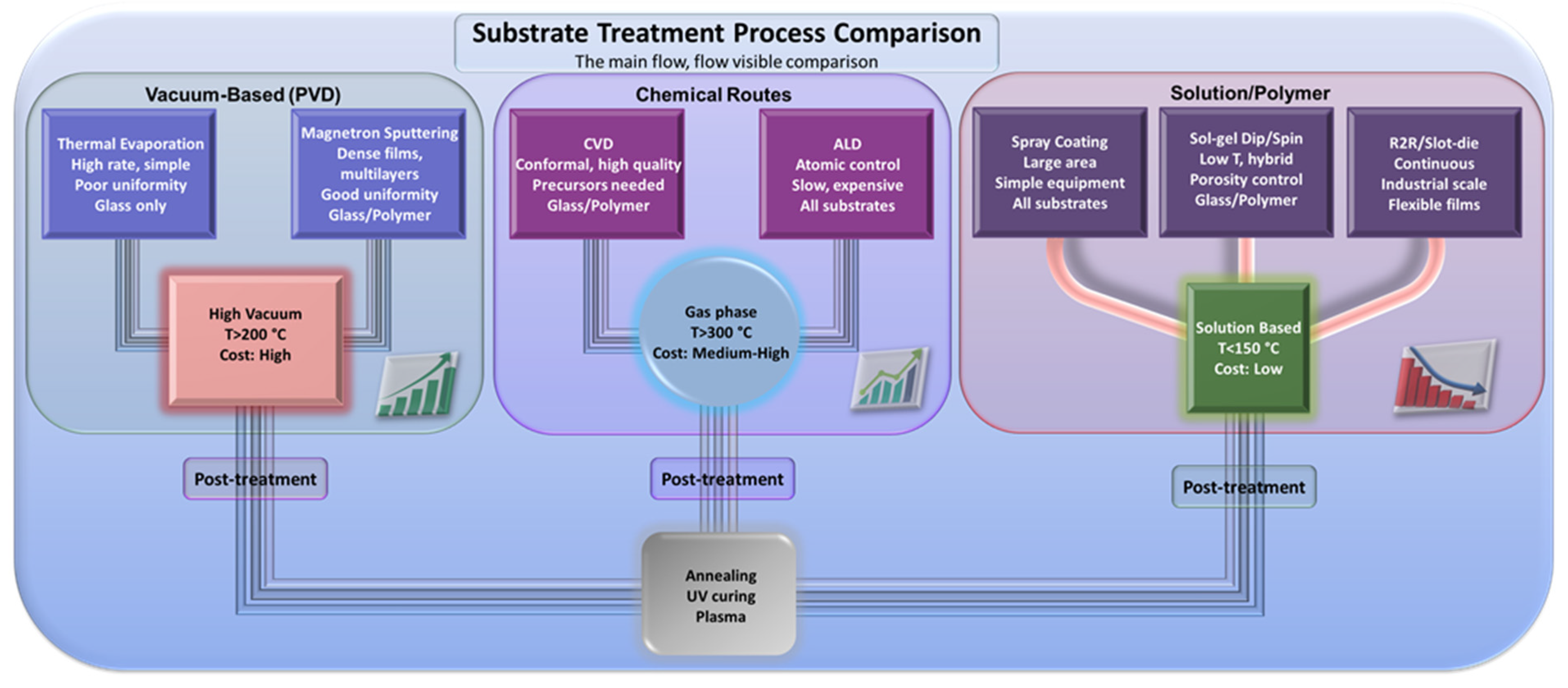
To material scientists, these substrates may be considered as bases for coating architecture design that would provide selective spectral properties, adjustable surface wettability, and increased environmental stability. High-temperature stable dielectric structures, metallic and metal–dielectric multilayer stacks, and dense oxide layers may be applied to glass via sputtering or CVD techniques to ensure precise optical characteristics and high barrier capability [
4,
16,
19,
20]. Low-temperature sol–gel, ultraviolet light-curing, or solution-based hybrid coating materials are recommended for thermoplastics like PC and PMMA to prevent thermal/mechanical degradation and delamination due to stress [
10,
21,
22]. For the flexible polyethylene substrates, which are extensively utilized as greenhouse covering membranes, the functional layers should exhibit good adhesion under substantial mechanical bending and weathering conditions while maintaining a high level of PAR transmission [
18,
21]. A detailed comparison of substrate compatibility and coating functions is provided in
Table 1.
2.1. Soda-Lime Glass as a Substrate for Functional Coatings
Soda-lime silicate glass continues to be the most widely used glass substrate due to its high visible light transmission rate, chemical stability, and durable nature (lasting over 20 years in some applications) [
9,
17]. Clear uncoated glass is able to transmit up to 80–90% of incident visible light rays, including the photosynthetic active radiation region, but does not provide good thermal insulation and UV or NIR radiation regulation [
1,
3,
17]. Coatings that can be applied on glass substrates include:
Multilayer films consisting of dielectrics and dielectric–metal layers that are used for solar and emissivity control [
4,
16,
23].
UV-blocking and photocatalytic oxide films based on TiO
2, ZnO, and related systems [
21,
24].
Superhydrophobic and hydrophilic silica-based nanofilms that exhibit self-cleaning properties and anti-fogging [
7,
28].
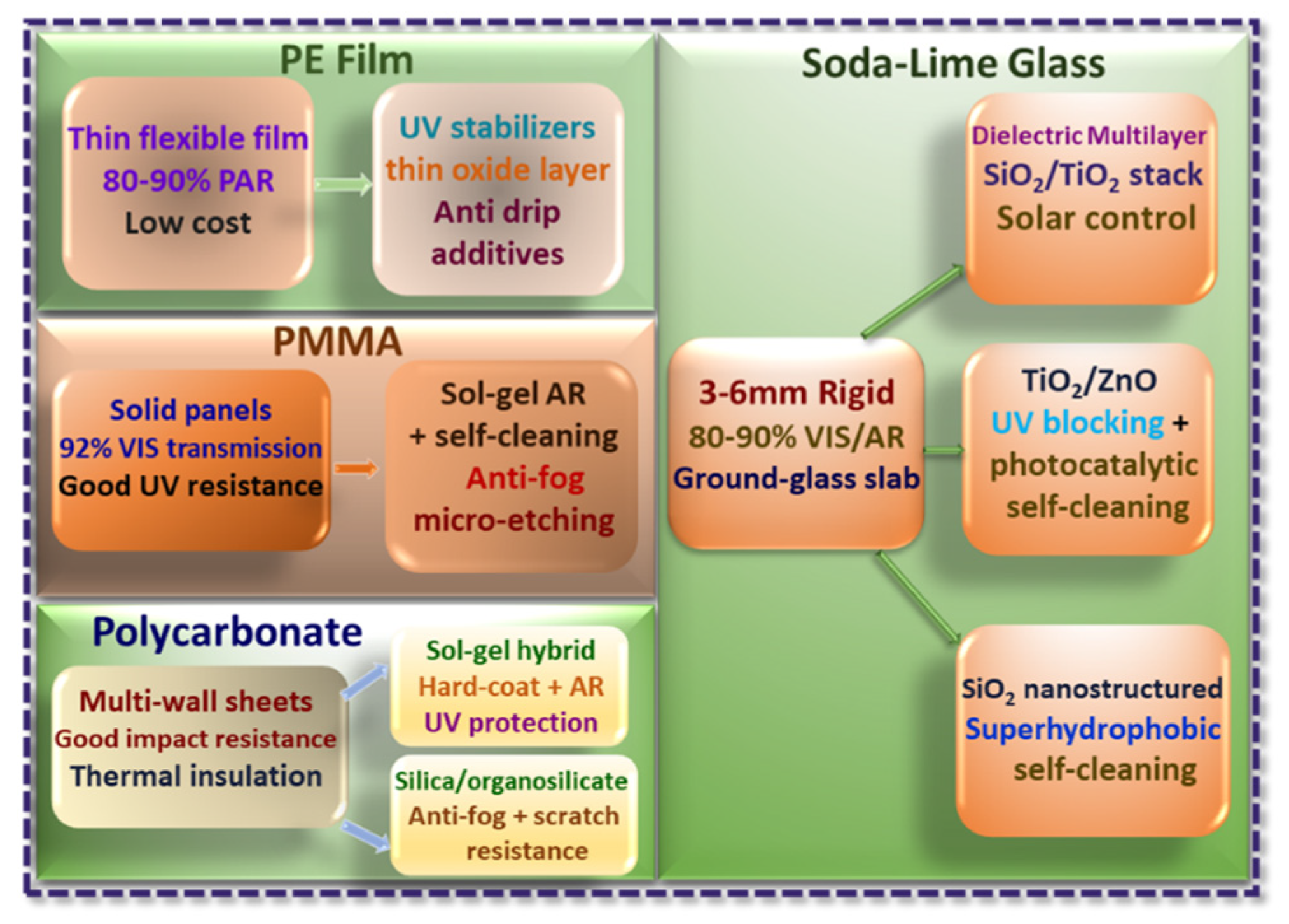
Due to its ability to withstand high temperatures during fabrication, it allows the formation of sputtered and CVD coatings along with thermally annealed coatings that exhibit controlled crystallinity and density; such characteristics make them suitable for use in greenhouses due to their long-term stability [
4,
19,
20]. The diversity in combination of substrates and coatings for use in glazing for greenhouses is depicted in
Figure 1.
2.2. Polycarbonate and PMMA Sheets
Both polycarbonate and PMMA plates find wide applications as rigid or semirigid greenhouses because of low density, high impact strength (especially PC), and better thermal insulating properties [
18,
25]. However, due to low surface hardness, high coefficient of thermal expansion, and tendency to yellowing as a result of UV exposure, coating becomes a necessity [
1,
18,
25]. Hardening or UV-protective coatings are commonly applied to PC in order to improve scratch resistance and prevent photodegradation, usually using the sol–gel process with nanomaterials based on organosilicate or silica chemistry [
6,
22,
26,
27]. For the PMMA plate, which already exhibits outstanding optical and UV-resistance properties, anti-reflection, anti-fogging, or hydrophilic self-cleaning coatings can be designed without compromising its transparency much [
22,
27].
The development of coating for PC and PMMA should take into account that the thermal and mechanical properties of the coating should be properly matched with those of the substrate; besides, the process temperature should not exceed the range of up to 120–140 °C [
10,
22,
27]. Solution-coated and UV-curable coatings appear to be particularly promising in this regard.
2.3. Polyethylene Films and Flexible Glazing Substrates
Low-density and linear-low-density polyethylene (LDPE/LLDPE) films are widely employed in greenhouses as flexible covers because of their relatively low prices and good light transmission properties (up to 80–90% for PAR radiation). However, their relatively short lifetime (3–5 years), UV sensitivity, and the fact that these materials become easily contaminated with dust and condensed water make it necessary to use certain additives and thin layers [
17,
18,
21].
It is common practice that commercial PE films contain UV absorbers, IR-absorbing or reflective additives, and wetting agents to impart anti-drip and anti-fog capabilities [
18,
21]. From a coating perspective, attention has focused on the deposition of oxides or mixed oxide-based thin films at low temperatures that can provide UV shielding, spectral selectivity, and wetting while not compromising mechanical integrity [
21,
24,
27]. The extreme demands posed by the thermal and mechanical properties of the PE substrate have made it an ideal yet difficult material on which to test coating technologies applicable to greenhouses.
2.4. Smart and Nanostructured Coating Architectures on Transparent Substrates
In addition, smart coatings and nanoengineered coatings can be used to provide further freedom for customizing the greenhouse microclimate [
15,
16,
29,
30]. Thermochromic VO
2 films deposited on glass permit dynamic control of the transmission of solar radiation and infrared radiation by taking into account changes in temperature [
29,
30,
31]. This approach provides a solution to the problem of energy conservation under conditions of high irradiation intensity. The use of metallic–dielectric thin-film coatings permits an optimization of luminous and thermal properties that depends on local weather conditions. In this regard, numerous simulations and applications in construction for glazing windows were described in the literature [
16,
23,
32]. This approach can be readily used for designing the roofs and sidewalls of greenhouses, since energy savings and microclimate stability play a crucial role there as well [
1,
2,
29].
Superhydrophobic or superhydrophilic nanostructured coatings, usually prepared using silica or titania nanoparticles through sol–gel and hydrothermal processes, have shown the feasibility of obtaining water contact angles higher than 150° or close to 0° while maintaining high levels of transparency [
7,
28,
33,
34]. Such coating layers could greatly minimize soiling-induced energy loss and improve light transmission performance by facilitating fast droplet removal (superhydrophobic) or allowing continuous shedding and photocatalytic removal of contaminants (superhydrophilic) [
7,
24,
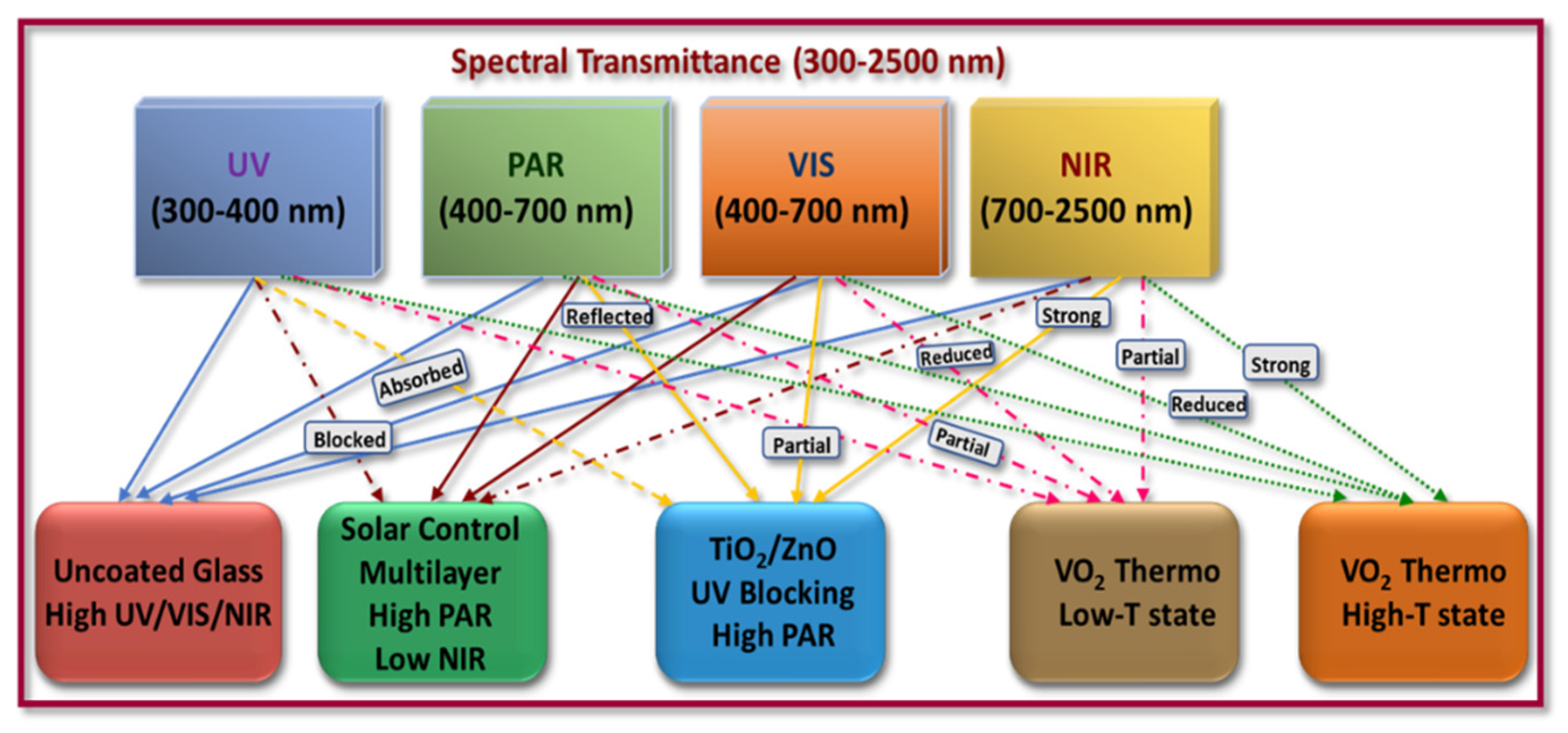
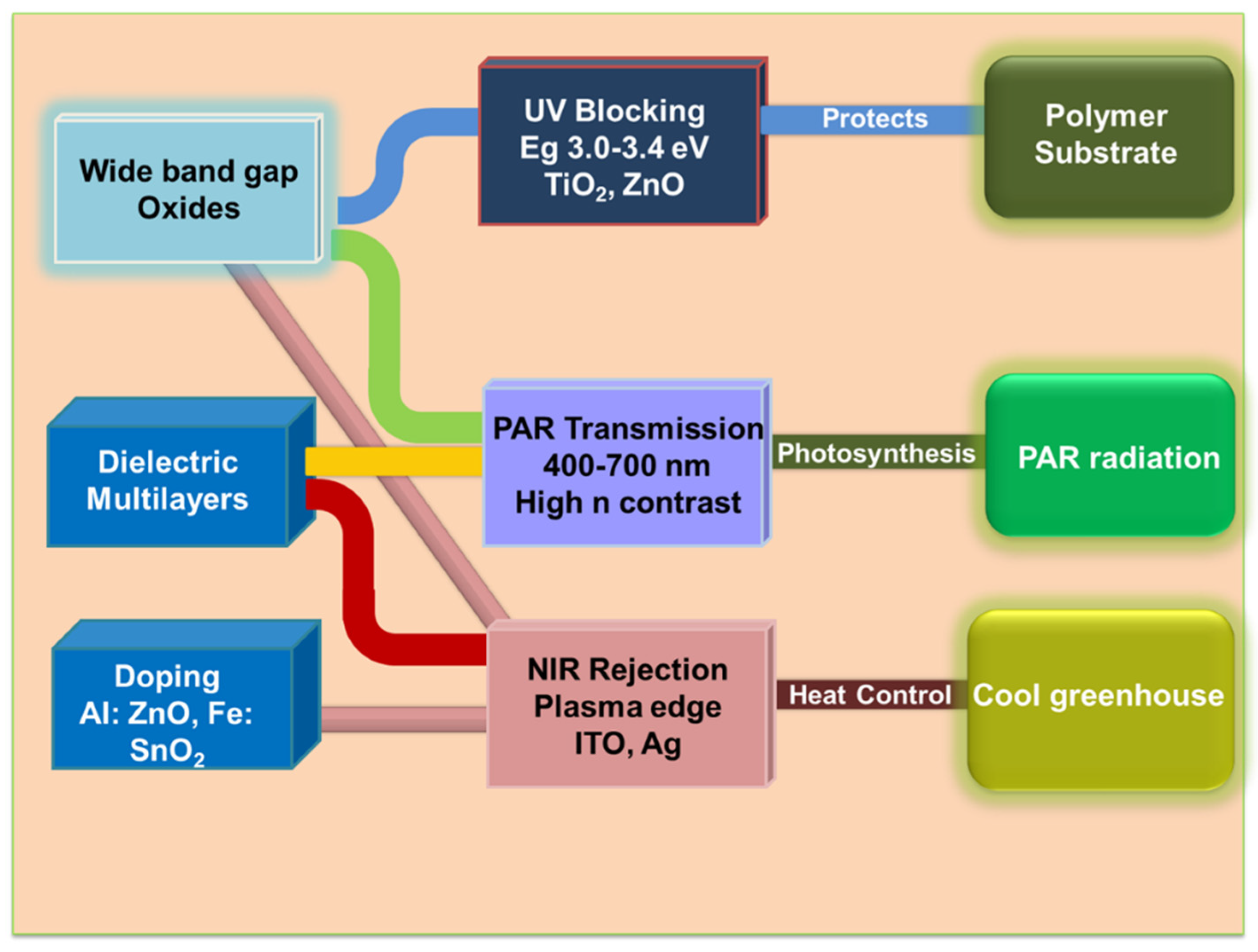
28]. This is an important way to incorporate such coating architectures onto the substrate materials mentioned previously in order to produce advanced glazing structures for greenhouses. Some representative examples of spectral transmittance characteristics in
Figure 2 show their ability to block UV, maintain PAR, and reflect NIR according to greenhouse application requirements.
From a materials-chemistry perspective, the functionality of these coatings is governed by the chemical bonding, composition, phase stability, defect chemistry, and surface reactions of the constituent materials. Wide-band-gap oxides such as TiO2, ZnO, and SiO2 derive their optical and surface functions from their electronic structures and metal–oxygen bonding environments, while their phase composition, crystallinity, oxygen-vacancy concentration, and surface hydroxyl groups can strongly influence photocatalytic activity, wettability, and spectral response. In metal–dielectric low-emissivity stacks, the chemical stability and oxidation resistance of the metallic layer, together with the refractive index and electronic properties of the dielectric layers, determine infrared reflection, visible transmission, and interfacial stability. For thermochromic oxides such as VO2, the reversible semiconductor–metal transition is closely associated with changes in electronic structure and V–O bonding, while dopants and defects can modify the transition temperature and optical modulation. Similarly, in sol-gel-derived hybrid coatings, precursor chemistry, hydrolysis and condensation reactions, cross-linking, and organic–inorganic interactions determine network formation, porosity, surface functionality, and mechanical stability. Thus, chemical composition and bonding provide the fundamental basis from which microstructure develops and ultimately controls the functional performance of greenhouse glazing coatings.
4. Structure–Property Relationships
However, for the optimal performance of optical coatings, including self-cleaning ones, their atomic composition, microstructure, and macroscopic properties need to be correlated with each other [
55,
56]. In the case of greenhouse glazing, the simultaneous presence of features such as high transmission of PAR radiation, selective near-infrared rejection, self-cleaning abilities, and resistance to environmental impact makes these correlations especially important [
55,
56,
57]. The following section examines the relationship between coating composition, crystal structures, and morphology and the optical properties of interfaces, surface wetting behavior, thermal emittance, and mechanical stability of the materials in question.
4.1. Optical Properties: Refractive Index, Band Gap, Interference Design, Spectral Selectivity
Optical properties in transparent coating films are mostly controlled by their electronic structures, refractive index difference, and interference mechanisms in multilayers [
55,
58]. Large band gap oxides like TiO
2 (3.0–3.2 eV), ZnO (3.3–3.4 eV), and SiO
2 (>9 eV) exhibit transparency for visible and PAR while selectively absorbing or reflecting UV and NIR through absorption thresholds or free carriers [
58,
59]. Dopant techniques like aluminum doping to ZnO and fluorine doping to SnO
2 control the number and movement of carriers, thus exhibiting low-emissive properties while having luminous transmittance greater than 80% [
59,
60].
In multilayer dielectric stacks, accurate manipulation of the refractive index of individual layers (n SiO
2 ≈ 1.46; n TiO
2 ≈ 2.4–2.6) and layer thickness (λ/4 at the design wavelength) results in constructive interference in the PAR region (400–700 nm) and destructive interference in the NIR region (700–2500 nm), resulting in solar heat gain coefficient (SHGC) values as low as 0.3–0.4 [
56,
61]. The gradual refractive index profile at the interface, possible using co-sputtering techniques or multilayer structures, reduces reflection losses, thus improving broadband anti-reflective properties that are important to maximize light delivery to greenhouse plants [
61,
62]. Surface texturing or porosity also increases light scattering for greater canopy penetration, all the while keeping high transmittance values [
62].
In greenhouse environments, the optical design of coatings must be optimized according to crop-specific spectral requirements rather than solely minimizing solar heat gain as commonly practiced in architectural glazing. Since PAR radiation (400–700 nm) directly drives photosynthesis, maintaining transmittance above approximately 80–85% is generally desirable to avoid reductions in crop growth and yield. Meanwhile, selective attenuation of NIR wavelengths is advantageous because excessive thermal loading can increase greenhouse temperatures, induce plant stress, and elevate cooling or ventilation demands. Several studies have demonstrated that spectral-selective multilayer coatings capable of transmitting PAR while reducing NIR penetration can improve thermal regulation without significantly compromising plant productivity. Furthermore, the transmission of UV radiation must be carefully engineered because moderate UV-A exposure may enhance secondary metabolite production, coloration, and pest resistance in crops, whereas excessive UV-B exposure can negatively affect plant health and accelerate polymer degradation in greenhouse coverings.
Quantitative structure–property correlations for leading greenhouse coating systems are summarized in
Table 3.
Figure 5 illustrates the specific mechanisms achieving spectral selectivity, with wide band gap oxides blocking UV while multilayer interference optimizes PAR versus NIR transmission.
Chemical Composition and Bonding as Drivers of Coating Function
The chemical composition of a functional coating determines its electronic structure, bonding characteristics, surface reactivity, and interaction with the underlying substrate and therefore represents a fundamental level of control over its optical and interfacial performance. In wide-band-gap oxide coatings such as TiO2, ZnO, and SiO2, metal–oxygen bonding and the resulting electronic structure determine the absorption edge and visible-light transparency. Modification of cation composition or introduction of aliovalent dopants can alter defect populations and carrier concentration, thereby affecting refractive index, electrical conductivity, free-carrier absorption, and infrared reflectance. For example, Al incorporation into ZnO and F incorporation into SnO2 can modify carrier concentration and infrared optical response, making these materials relevant to spectrally selective and low-emissivity coatings.
In photocatalytic TiO2 coatings, chemical composition and crystal phase are closely related to surface reactivity. Anatase TiO2 generally exhibits high photocatalytic activity because photogenerated charge carriers participate in surface redox reactions that promote the decomposition of adsorbed organic contaminants and surface hydroxylation, contributing to superhydrophilic behavior. Thus, photocatalytic and wetting properties are closely associated with the chemical and crystallographic state of the oxide surface.
In Ag-based low-emissivity multilayers, the metallic layer provides strong infrared reflection, whereas surrounding dielectric layers control optical interference, protect Ag from chemical degradation, and influence the optical response of the multilayer. Similarly, the thermochromic behavior of VO2 originates from its temperature-dependent electronic and structural transition, while dopants and compositional modifications can alter the transition temperature and optical modulation. These examples demonstrate the direct connection between chemical composition, phase stability, and optical functionality.
For sol-gel-derived coatings, hydrolysis and condensation reactions determine the development of the inorganic network, while precursor chemistry, solvent composition, catalyst concentration, drying, and thermal treatment influence porosity, hydroxyl content, shrinkage, and cracking. Organic–inorganic hybrid systems introduce additional chemical functionality but may also be more susceptible to UV-induced degradation. Therefore, coating chemistry must be considered together with processing conditions to obtain the required microstructure, functional properties, and long-term stability.
4.2. Surface Wetting and Self-Cleaning: Roughness, Chemistry, Hydrophilic vs. Hydrophobic Designs
Self-cleaning properties for coatings applied to greenhouses can be attained via a superhydrophobic state (contact angle θ > 150°) or a superhydrophilic one (θ ≈ 0°) of the coating surface, depending on the combination of topographical features and surface properties at a nanoscale level [
67,
69]. Superhydrophobic surfaces require hierarchical surface structures combined with surface energies lower than that of water, which can be accomplished using fluorosilane or hydrocarbon chemistries [
69]. Nanometric-sized SiO
2 particles incorporated into PDMS materials and plasma-etched silica films provide self-cleaning surfaces with contact angles exceeding 160° and roll-off angles of less than 5° on glass substrates [
67,
68].
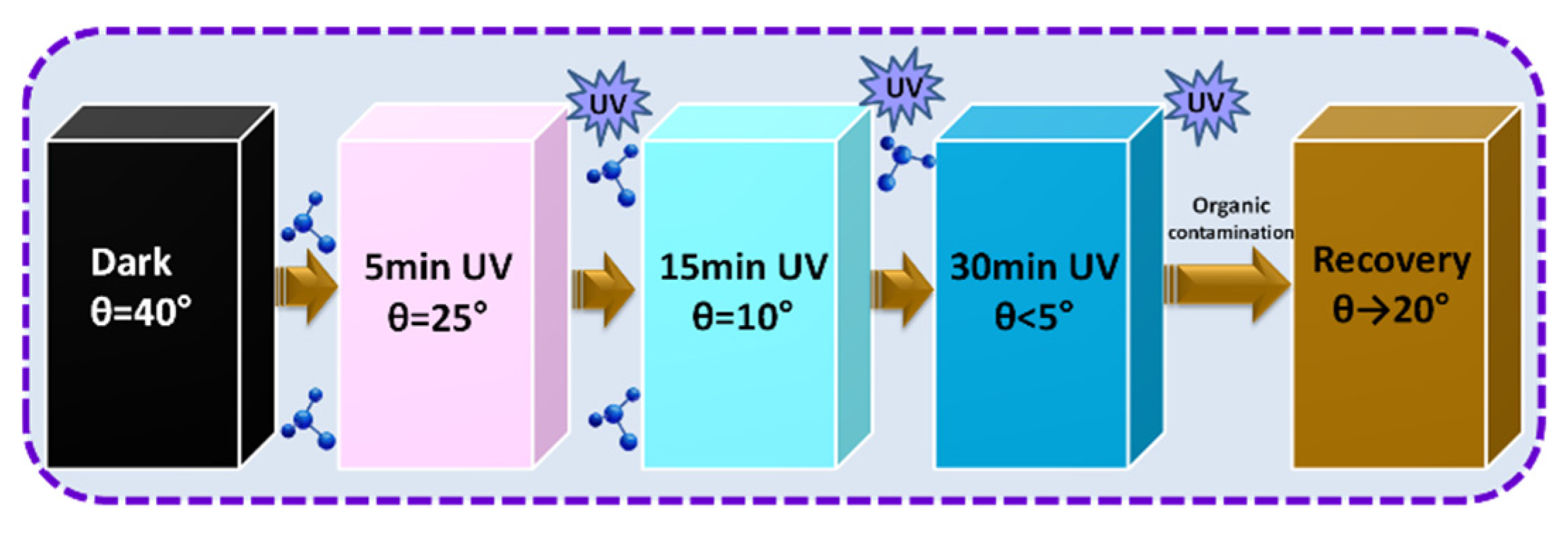
In contrast, superhydrophilic surfaces facilitate full water sheeting through nanoscale surface roughening on high-surface-energy substrates, usually aided by photocatalytic TiO
2, which continuously breaks down organic deposits using UV light [
63]. The anatase form of TiO
2 has a pronounced capacity for hydroxyl groups and hole trapping, leading to superhydrophilicity (θ < 5°), which is stable across repeated cleanings [
63]. Ensuring the stability of both states in response to wear, UV degradation, and hydrocarbon fouling presents a significant difficulty, as the progressive reduction in surface chemistry or physical structure reduces self-cleaning performance during greenhouse operating periods [
63,
68]. The development of photocatalytic superhydrophilicity on TiO
2 surfaces under UV radiation is illustrated in
Figure 6.
4.3. Thermal and Emissivity Control: Low-E Stacks, IR-Reflective Coatings
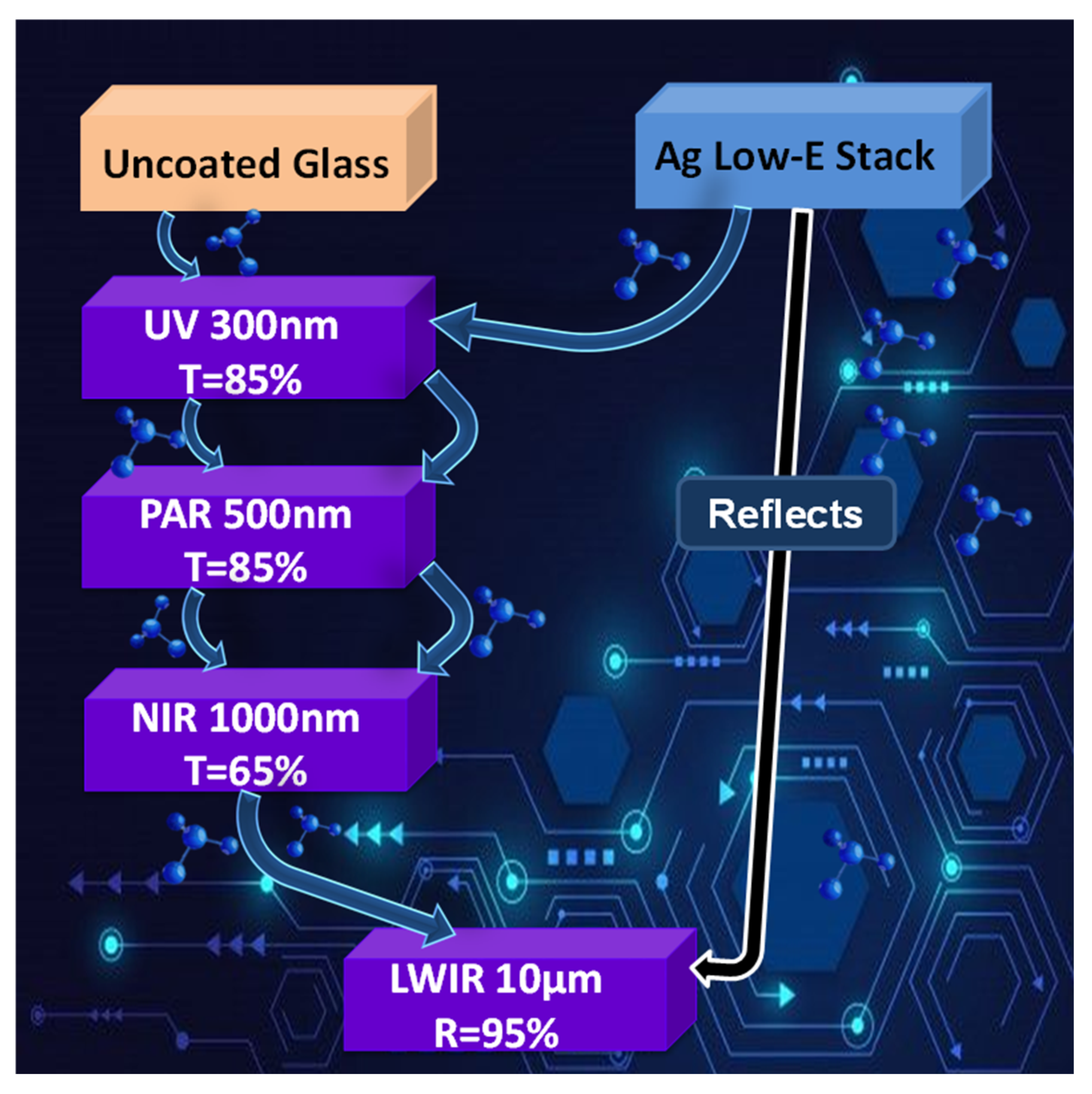
Low-E coatings reduce radiative thermal transfer by reflecting long-wave infrared (LWIR) radiation while maintaining high transmission of the desired solar wavelengths [
4]. Representative low-E multilayers employ one or more thin metallic Ag layers separated and/or enclosed by dielectric layers, such as dielectric/Ag/dielectric or dielectric/Ag/dielectric/Ag/dielectric architectures. The Ag layer provides the principal infrared-reflective and low-emissivity function, whereas the surrounding dielectric layers control optical interference, visible-light transmission, and spectral selectivity and also protect the Ag layer against oxidation, corrosion, and mechanical degradation [
4,
64]. The resulting optical and thermal performance therefore depends on the thickness, continuity, optical constants, and interfacial quality of both the metallic and dielectric layers [
64,
70]. Transparent conducting oxides such as ITO and FTO can provide infrared control with greater chemical stability, although their higher electrical sheet resistance generally leads to weaker infrared selectivity than highly conductive Ag-based layers [
64,
70].
The thermochromic coating of VO
2 allows for variable emissivity regulation, going from the low-emissivity state (ε ≈ 0.4) to the high-emissivity state (ε ≈ 0.8) upon heating through its thermochromic transition temperature (≈68 °C, with the transition temperature potentially reduced toward 40–50 °C through appropriate doping) [
65]. This phase change entails significant near-infrared reflectance modulation (ΔTsol > 10%), indicating the potential of VO
2-based coatings for adaptive solar and thermal control in glazing applications [
65,
66]. For greenhouse glazing, however, their practical effectiveness depends on achieving an appropriate transition temperature while maintaining adequate PAR transmission, solar modulation, and long-term durability.
4.4. Mechanical Properties: Hardness, Adhesion, Abrasion Resistance, Erosion Behavior
Outdoor glazing is subjected to mechanical stresses arising from airborne particles transported by wind, hail impact, repeated cleaning, handling, and temperature-induced expansion and contraction [
71]. Hardness (H), commonly measured by nanoindentation, provides an important indication of resistance to indentation and scratching, although it does not by itself determine the overall wear or erosion resistance of a coating. Reported hardness values vary substantially with composition, deposition method, crystallinity, porosity, densification, heat treatment, and indentation conditions. Representative sol-gel-derived oxide coatings can exhibit hardness values of approximately 1–5 GPa, whereas dense and highly crystalline oxide films produced by other deposition routes can reach values above 10 GPa [
71,
72]. Adhesion at coating/substrate interfaces, evaluated using tape, pull-off, or scratch tests through parameters such as the critical load (L
c), is equally important because poor interfacial bonding can lead to cracking and delamination during mechanical or environmental exposure. Graded interfaces and adhesion-promoting interlayers can therefore improve coating integrity and resistance to delamination [
72,
73].
Abrasion and erosion involve different mechanical damage mechanisms and should therefore be evaluated separately. Abrasion primarily results from repeated rubbing, sliding, or contact with cleaning tools and particulate matter, whereas solid-particle erosion results from repeated impact of airborne or transported particles on the coating surface. The resistance of a coating to these processes depends on multiple interrelated factors, including hardness, fracture toughness, elastic properties, microstructure, surface roughness, coating thickness, and coating/substrate adhesion. Erosion behavior is additionally influenced by the size, hardness, shape, and velocity of the impacting particles, as well as the impact angle and exposure conditions. Therefore, hardness alone cannot be used as a universal predictor of abrasion or erosion resistance, and the relative importance of these parameters depends on the coating composition, microstructure, and specific damage mechanism.
For transparent greenhouse glazing, mechanical degradation should also be evaluated in terms of its optical and functional consequences. Surface abrasion or particle erosion can increase surface roughness and haze, reduce visible and PAR transmission, and impair functional surface properties, such as photocatalytic activity and hydrophobicity, even before substantial coating loss occurs. Accordingly, abrasion and erosion resistance should be assessed under representative service conditions, with the particle characteristics, impact velocity and angle, exposure duration, and cleaning conditions clearly specified. Changes in optical transmission, haze, adhesion, surface roughness, and functional properties can then be used to assess the extent of degradation. Residual stresses generated during deposition or thermal treatment should also be considered because excessive tensile or compressive stresses can promote cracking, delamination, or failure during thermal cycling [
74].
4.5. Coupling Between Microstructure and Performance
The microstructure–property relationships discussed above originate from the underlying chemical characteristics of the coating materials. Variations in composition, bonding environment, oxidation state, dopant concentration, defect population, and surface functional groups can influence nucleation, crystallization, grain growth, porosity, and interfacial bonding during deposition and post-treatment. These chemically controlled structural features subsequently affect light absorption and scattering, charge-carrier behavior, surface hydroxylation and wettability, thermal emissivity, and mechanical stability. Therefore, the relationship can be considered as a continuous sequence of chemical composition and bonding-phase and defect structure-microstructure and interfaces-functional properties-greenhouse performance and durability.
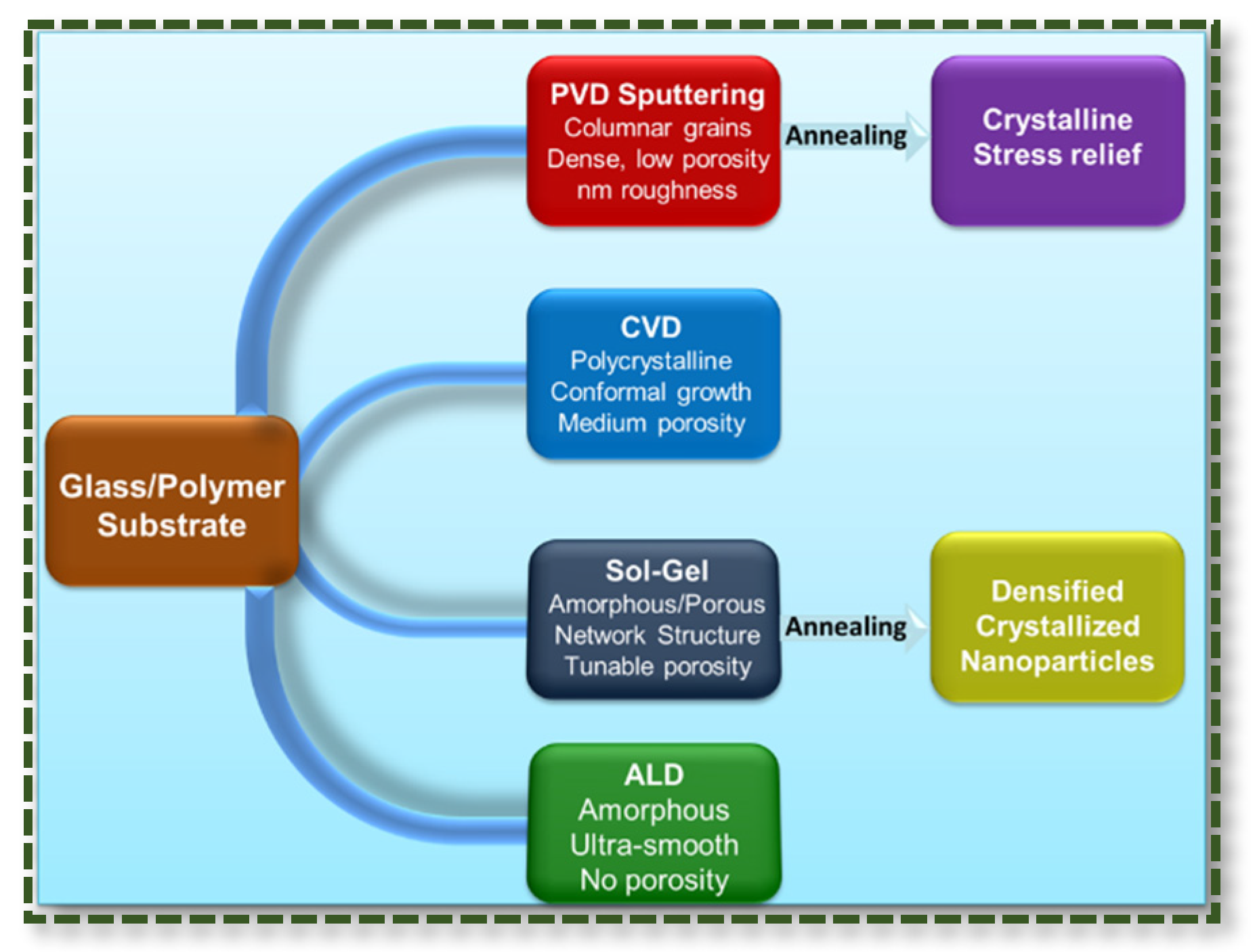
Microstructure is the fundamental determinant of all functional characteristics due to interconnected influences on light scattering, carrier mobility, surface activity, and mechanical strength [
35]. Grain growth in columnar form within sputtering films induces birefringence, but inter-columnar voids may occur, leading to water absorption and delamination [
22,
35]. Porosity in sol–gel layers, which enhances photocatalytic surface area and hydrophilicity, causes high scattering losses and moisture absorption unless carefully managed [
22,
75].
The presence of grain boundaries in polycrystalline oxides leads to a decrease in the efficiency of the photoreaction and an increase in thermochromic switching speed and acts as a fast diffusion channel for alkali ions originating from soda-lime glass and able to contaminate the silver-based low-emissivity coating [
75,
76]. The quality of the interfaces between each layer within the multilayered system defines the filter efficiency and development of stress due to temperature cycling [
76]. Moreover, the hierarchy of nanostructures contributes to better wetting by creating dual-scale roughness, improves the light diffusion effect by creating forward-scattering effects, and increases mechanical adhesion through increased surface area [
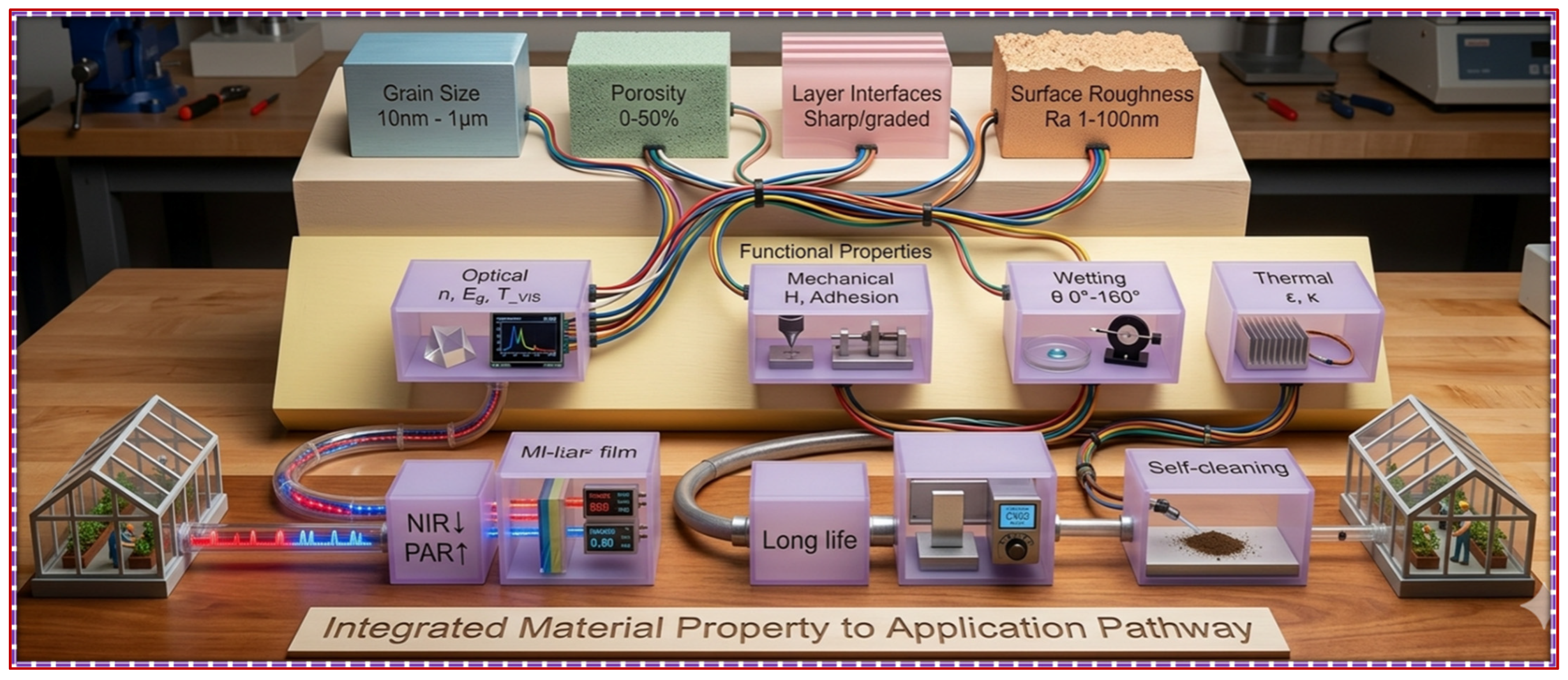
76,
77]. The basic connection between the microstructure characteristics and the functional characteristics is shown in
Figure 7, where the influence of grain size, porosity, and surface roughness on the transmission of light, wettability, mechanical stability, and heat management is demonstrated. The spectral selectivity of the low-emissivity silver layer is compared to the bare glass in
Figure 8.
At the coating/substrate interface, chemical compatibility and interfacial bonding strongly influence adhesion and environmental stability. Hydroxylated glass surfaces can interact with silanol-containing sol–gel precursors, while plasma or other surface-activation treatments can increase surface energy and improve wetting of the coating precursor. In contrast, polymeric substrates generally possess lower surface energy and different thermal expansion behavior, making interfacial adhesion more challenging. Consequently, the selection of adhesion-promoting interlayers, surface functionalization, and graded interfaces becomes particularly important for polymer-supported greenhouse coatings.
5. Durability and Environmental Stability
The long-term suitability of greenhouse glazing coatings depends on their ability to maintain optical, self-cleaning, and mechanical performance under the combined influences of ultraviolet irradiation, thermal cycling, mechanical abrasion, moisture ingress, and chemical exposure over the typical service lifetime of commercial greenhouses (10–20 years) [
58,
78]. Unlike conventional architectural glazing, greenhouse coatings operate under more complex environmental conditions because of continuous exposure to irrigation-induced wetting, elevated humidity, agrochemical residues, airborne soil particles, repeated cleaning, and intense solar radiation [
78,
79]. Under these conditions, multiple degradation mechanisms can act simultaneously, progressively deteriorating the optical properties, self-cleaning ability, adhesion, and mechanical durability of the coating and ultimately compromising its functional performance [
58,
80]. Therefore, durability evaluation of greenhouse coatings should extend beyond conventional single-factor laboratory aging tests and consider environmental conditions representative of agricultural operation, including persistent humidity, agrochemical contamination, repeated cleaning, mechanical abrasion, thermal cycling, and long-term UV exposure.
Because these stressors can interact during service, combined or sequential accelerated-aging protocols can provide a more realistic assessment of coating durability than isolated exposure to individual factors. A representative testing strategy could combine controlled UV irradiation with elevated humidity or condensation, thermal cycling, and periodic exposure to relevant agrochemical residues, followed by evaluation of changes in visible and PAR transmission, haze, surface wettability, chemical structure, adhesion, mechanical integrity, and other coating-specific functional properties. Such multi-stressor testing is important because interactions between UV radiation, moisture, temperature fluctuations, mechanical damage, and chemical contaminants may accelerate degradation or produce failure mechanisms that are not evident in single-factor tests. However, the intensity, duration, sequence, and frequency of each stressor should be selected according to the target greenhouse environment, coating chemistry, substrate, and intended service conditions since a single universal combined-aging protocol is not applicable to all greenhouse glazing systems.
5.1. UV-Induced Degradation and Photo-Corrosion
The mechanism for ultraviolet light-induced coating failure occurs mainly via photochemical cleavage of chemical bonds, carrier production, and catalysis at the surface [
81]. In TiO
2 and ZnO films exhibiting photocatalytic properties, the extended use of UV light results in the degradation of superhydrophilic properties owing to the degradation of hydroxyl groups and defects responsible for the superhydrophilic property, such that the contact angle gradually increases from <5° to between 20° and 40° over 1000 to 5000 h of QUV tests [
81,
82].
The organic molecules in sol–gel hybrid and polymer systems undergo accelerated photodegradation, wherein C-H, C-O, and Si-C bonds break to produce volatiles, carboxylic acids, and yellowing compounds that cause light scattering and reduced PAR transmission [
83,
84]. Fluorinated surface chemistries can undergo chemical changes under severe environmental exposure, and their long-term stability and potential release of fluorinated species should therefore be evaluated alongside their persistence and environmental implications [
84]. In the metallic low-emissivity films, UV scattering by the oxide film can oxidize the silver layer, resulting in increased sheet resistance and emissivity [
85].
5.2. Moisture, Temperature Cycling, and Mechanical Loading
The hydrothermal aging process involves using moisture and the effects of temperature to increase delamination and crack formation rates [
58,
86]. Moisture enters through the columnar voids present in PVD layers and connected pores in sol–gel layers and leads to hydrolysis of the Si-O-Si network and metal oxide bonds, as well as promoting alkali ion diffusion from the soda-lime glass substrate [
86,
87]. Differences between the thermal expansion coefficients of the coating material and the glass substrate can generate biaxial tensile or compressive stresses during thermal cycling, potentially promoting cracking or interfacial decohesion.
Erosion of the protective coating due to hail impact (hailstones of 5–20 mm in diameter and 10–30 m/s in impact velocity), erosion by wind-transported dust particles (particles of 10 to 50 μm SiO
2 in diameter and 5 to 20 m/s in velocity), and mechanical abrasion during cleaning are yet more factors deteriorating coating quality [
88,
89]. The initial cracks form on surface defects and further spread via fatigue processes; the rate and extent of crack initiation and propagation depend on coating thickness, residual stress, hardness, toughness, microstructure, and interfacial adhesion [
89].
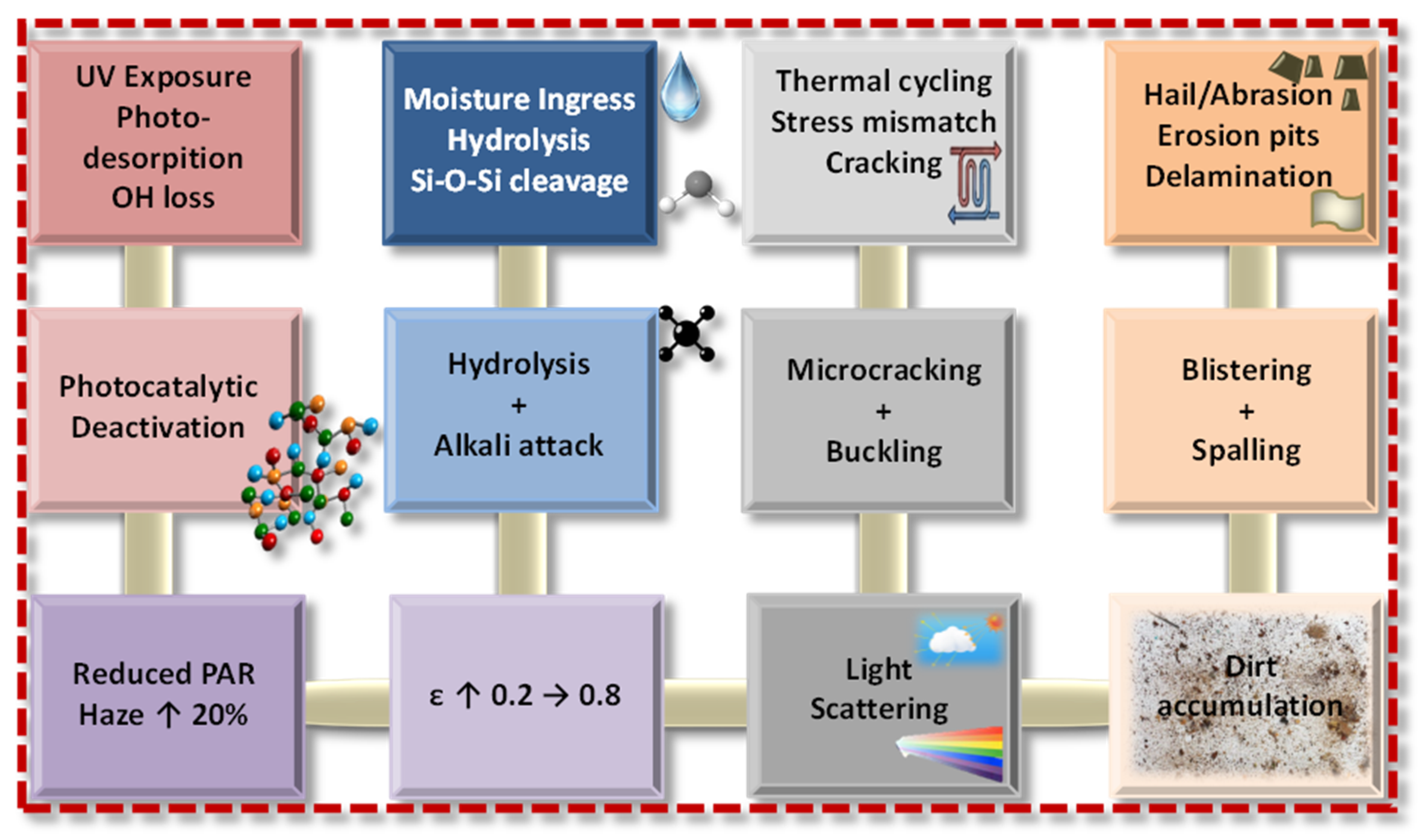
Degradation routes that influence greenhouse coatings are shown in
Figure 9, where self-cleaning properties become deactivated due to UV radiation while moisture-induced hydrolysis and physical damage further decrease PAR transmission.
5.3. Failure Modes: Delamination, Cracking, Yellowing, Loss of Functionality
Failure due to coating takes place by various interconnected mechanisms leading to deterioration of the performance of the greenhouse [
90]. Delamination is caused by blister formation due to separation between the coatings at edges where water enters or when hit by hailstones and results in light scattering as well as accelerated corrosion of the substrate [
87,
90]. The cohesive cracks are a result of film stresses exceeding the material’s fracture toughness [
87].
Yellowing due to conjugated carbon compounds (λ
max = 350–450 nm) causes loss of available PAR by 5–15% over 2–3 years, whereas the loss of superhydrophilicity or hydrophobic properties leads to the deposition of dirt, which may lead to up to a 20–50% decrease in transmittance within a few months [
91]. Metal-based coatings with low-E values exhibit emissivity changes from 0.04 to greater than 0.2, which results in the loss of winter-time heat retention effects [
91]. The thermochromic properties of VO
2 undergo a reduction of switching contrast (ΔT
sol) from more than 10% to less than 3%, caused by a blunting of the metal–insulator transition because of grain growth and defect accumulation [
92,
93].
5.4. Standardized Testing and Accelerated Aging Protocols
For accurate measurement of coating resistance, standard tests simulating the effects of climate in the greenhouse need to be established [
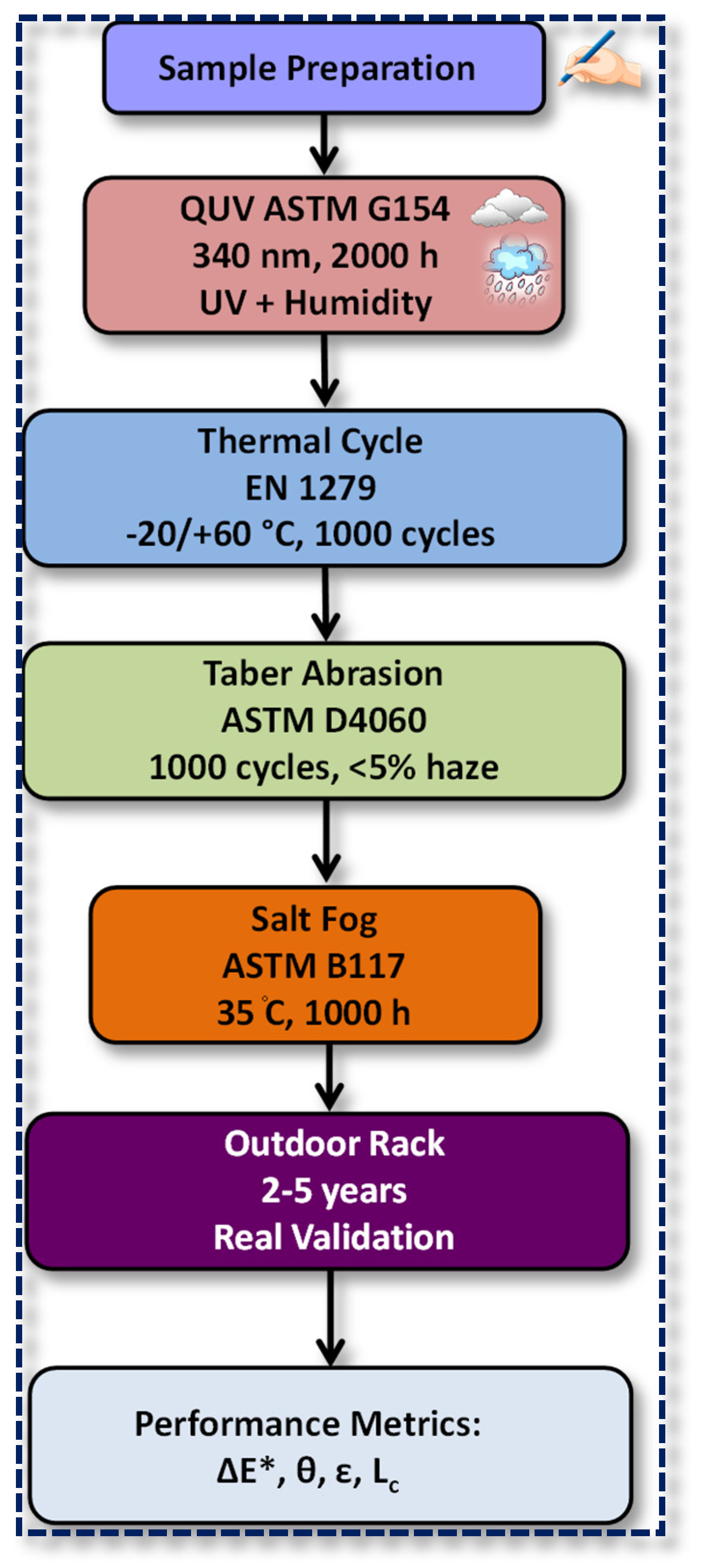
94]. The ASTM G154/G155 QUV test method for 340 nm light source irradiation with temperature cycling from 40 to 60 °C and exposure time between 200 and 4000 h examines UV resistance through color change (ΔE*), haze growth, and evolution of the contact angle [
94,
95]. Thermal cycling test (from –20 °C to +60 °C, up to 1000 cycles) evaluates adhesion failure and cracking by means of tape tests (ASTM D3359) and nano hardness critical load (Lc) [
95]. Taber wear test (with CS-10F wheels, 1000 cycles, haze change < 5%) and sand erosion testing (ASTM D968) quantify mechanical robustness [
95,
96].
Salt mist (ASTM B117, 35 °C, 5% NaCl, 1000 h) and chemical resistance tests (simulated acid rain, agro-chemicals) evaluate corrosion mechanisms appropriate for regions with a coastal environment or intensive agricultural practices [
96]. Accelerated exposure to weathering (e.g., ISO 11341 Xenon Arc Lamp, 3000 kJ/m
2) gives realistic estimates of lifetime when calibrated against outdoor exposure data; however, the interaction effects of stressors are difficult to predict and simulate [
96,
97]. Outdoor testing using a rack system in greenhouses is an ideal method, which takes about 2–5 years of exposure [
97].
Such protective techniques, like dense barrier layers (ALD Al
2O
3), self-healing chemistry, and adaptive multilayer systems with sacrificial top coats, have been found to be particularly promising for achieving commercial lifetime expectations in extreme greenhouses [
98].
Accelerated weathering test procedures that include QUV exposure, thermal cycles, abrasion, and salt fog (
Figure 10) can estimate 10–20 years of outdoor exposure.
Table 4 details the standardized metrics and pass criteria for each durability test relevant to greenhouse conditions.
8. Emerging Trends and Future Directions
The field is currently at an important stage in which advances in materials design, fabrication, nanotechnology, and modeling are converging to enable multifunctional glazing systems [
127]. Even though today’s glazing coatings can already provide numerous improvements in spectral selectivity and surface engineering, problems still arise with respect to cost-effectiveness, stability, scalability, and multifunctionality, driving the field toward novel directions of development [
127,
128]. Below are some of the trends that will define the direction of future progress.
8.1. Bioinspired and Hierarchical Nanostructures
Nature provides very effective strategies for dealing with light manipulation, wetting behavior, and mechanical robustness that cannot be replicated using conventional engineering methods [
129]. The compound eyes of moths consist of sub-wavelength structures called “moth eyes,” which are capable of producing broadband anti-reflective properties (reflectivity less than 1% at wavelengths of 400–1800 nm). On the other hand, the wings of cicadas consist of structurally colored regions along with superhydrophobic regions due to highly ordered nanopillar arrays [
129,
130]. These hierarchically structured materials with bi-level roughness (10–100 nm + 0.5–2 μm) have been shown to simultaneously enhance light harvesting, self-cleaning, and structural color effects for photosynthetic communication, which could inspire a new generation of glazing coatings [
130].
The recent developments in self-assembling block copolymers, nanoimprint lithography, and glancing-angle deposition have made it possible to manufacture these hierarchical structures on glass and polymer surfaces [
131]. In terms of bioinspired coatings for greenhouses, there is a potential to achieve exceptional PAR diffusion (>90%) and high transparency (>85%) while retaining superhydrophilic or superhydrophobic properties, which resist wear and tear [
131,
132]. The unique structural coloring feature of these materials can also offer visual indicators to tune crop-specific light spectrum requirements without any additional LED-based lighting sources [
132]. Technologies revolutionizing greenhouse glazing are illustrated in
Table 11 through Technology Readiness Levels, with bioinspired nanostructures demonstrating TRL 4–6 for 15% increased PAR diffusivity and ST-PV technologies operating at TRL 6–7 for multifunctional applications in food-energy co-production.
It is important to recognize that the reported Technology Readiness Level (TRL), commercialization potential, and expected deployment timelines of greenhouse coating technologies can vary widely. These differences arise from factors such as coating composition, fabrication techniques, film thickness, compatibility with different substrates, scalability of production, and long-term environmental stability. As a result, the values presented in this review should be considered as approximate indications based on the current body of literature, rather than definitive or universally applicable benchmarks.
8.2. Multifunctional and Adaptive Systems (Smart + PV Integration, Dual/Tri-Functional Coatings)
The combination of optical control, energy generation, and environmental interaction within a single-layer system is among the most challenging areas of development [
133]. Using semi-transparent perovskite or organic PVs (ST-PV) in glazing materials would provide electricity production of 10–50 W/m
2 to power greenhouse auxiliary systems using 70–80% of PAR radiation, thus creating food-energy dual-purpose structures [
107,
133]. Another promising area of research involves luminescent solar collectors (LSCs) that are embedded in polymer-coating materials which would transform UV/blue excess light into red crop-useful radiation [
107].
The “smart” nature of the functionality involves taking multifunctionality to the next level by involving responsiveness [
119]. Thermochromic materials based on salt hydrates, gels or hybrid perovskites have the potential for broader hysteresis and fast switching compared to VO
2, while electrochromic oxides, such as WO
3 and NiO, allow the active modulation of PAR via an applied voltage [
119,
138]. The emergence of coatings that are tri-functional by being spectral selective + self-cleaning + photovoltaic (or NIR controlling + dewing prevention + energy storage) is expected from high-throughput deposition techniques [
138].
8.3. Sustainable Materials, Recyclability, and Green Processing
Increasingly, environmental impacts and circular-economy principles are becoming important considerations in the development of functional glazing coatings [
99,
134,
135]. Sustainable coating design should consider not only operational benefits such as reduced heating and cooling demand or improved greenhouse productivity but also the environmental burdens associated with raw-material production, precursor synthesis, solvent use, deposition, post-treatment, maintenance, and end-of-life management. Water-based or low-VOC sol–gel formulations, bio-based precursors, and lower-energy deposition approaches can reduce some of these burdens, while atmospheric-pressure plasma and other solvent-minimized processes may offer opportunities for lower-resource coating fabrication [
134,
135,
139,
140]. However, the environmental advantage of a coating cannot be assumed solely from its processing route because energy consumption, precursor chemistry, coating lifetime, and performance gains must be considered together.
Life-cycle assessment (LCA) provides an appropriate framework for evaluating these trade-offs. An anticipatory LCA of a sol-gel-derived anti-reflective coating for greenhouse glass demonstrated that the environmental performance of a coating depends on the complete coating–glazing system and on factors such as production scale, manufacturing location, and assumed service life [
99]. Thus, a coating with improved optical transmission is not automatically environmentally preferable if its production requires substantially greater energy or chemical inputs. Conversely, a coating may provide a favorable environmental balance when its additional manufacturing impacts are compensated by improved light utilization, reduced operational energy demand, increased crop productivity, and extended glazing lifetime. Future LCA studies should therefore use consistent functional units and system boundaries and consider both environmental burdens and crop/energy benefits over the expected service life.
Fluorinated surface chemistries require particular environmental consideration. Fluorinated compounds are widely used to obtain low surface energy, water repellency, and chemical resistance in superhydrophobic coatings; however, persistent fluorinated substances, particularly PFAS-type chemistries, raise concerns because of their chemical persistence and potential environmental release. Therefore, the high water-repellency and self-cleaning performance of fluorinated coatings should be evaluated together with their persistence, potential release during manufacture and service, and end-of-life management. These concerns strengthen the motivation for developing fluorine-free hydrophobic and self-cleaning alternatives based on inorganic oxides, silica-based architectures, or other non-fluorinated surface chemistries [
135,
136].
Recyclability and end-of-life management are particularly challenging for multifunctional multilayer glazing. Conventional glass has established recycling pathways, whereas strongly adhered multilayer coatings containing metals, oxides, polymers, or organic–inorganic components can complicate separation and recovery. Coating removal, selective delamination, reusable substrates, and designs that facilitate material separation could improve the recyclability of coated glazing [
139,
141]. Accordingly, future multifunctional coatings should be designed not only for high initial optical and thermal performance but also for long service life, repairability, selective removal, material recovery, and compatibility with established glass-recycling streams.
Overall, sustainable greenhouse glazing should be evaluated using a life-cycle perspective that simultaneously considers embodied environmental impacts, processing energy, chemical safety, coating durability, operational energy savings, crop productivity, and end-of-life recovery. The most sustainable coating is therefore not necessarily the coating with the highest initial functional performance, but the one that achieves the required crop-specific optical and thermal functions with low environmental burden, long service life, minimal hazardous chemical use, and a realistic pathway for recycling or recovery.
8.4. Data-Driven and AI-Assisted Design of Coating Architectures
Machine learning and generative design technologies have enabled a data-driven approach to coatings research through the acceleration of the old trial-and-error process [
137]. Databases consisting of large amounts of data generated using high-throughput libraries formed by multilayer gradient sputtering or inkjet printing precursor arrays provide the training set needed to train neural networks for predicting optimal multilayers for any PAR/NIR/UV target or to train GANs for proposing entirely new hierarchical structures [
137,
142]. Neural networks trained on such data sets can identify the best multi-layer configurations for any PAR/NIR/UV target, whereas generative adversarial networks generate entirely new hierarchical nanostructures [
142].
Computer models that incorporate physics for the propagation of electromagnetic waves, photocatalytic reactions, and thermal/mechanical stresses allow virtual testing of coating structures before their creation [
137]. Subsequent optimization via Bayesian methods can help achieve globally optimal performance through experimentation [
137]. In the context of greenhouses, such methodologies can allow the generation of “on-demand” coatings that match the particular requirements of different plant species, climatic conditions, and structural configurations while offering digital twinning that allows predicting degradation and planning maintenance [
137,
143]. Integration of IoC sensors within the layers of functional coatings will bring about adaptive optimization [
143].
This confluence of trends places advanced coatings at the core of the future of sustainable agriculture, where the glazing system works to increase crop yields while producing power, conserving resources, and ensuring environmental resilience.
9. Conclusions
In this review, the state of the art of optical and self-cleaning coatings for transparent substrates applied in greenhouses has been considered with an emphasis on the interrelation of the chemical composition and morphology with functionality. It has been shown that substantial advances have already been achieved in terms of producing coatings that will increase transparency and control thermal effects while maintaining the cleanliness of the substrate. Dielectric films, photocatalytic oxide coatings, low-emissivity layers, and thermochromic coatings show a lot of promise when used for applications in greenhouses. Nevertheless, there are certain aspects that need further consideration; specifically, durability under the influence of various factors such as UV rays, humidity, and mechanical and chemical abrasion is one of them. Further, several coatings that have been optimized for architectural use would need to undergo additional improvements in order to be suitable for use in greenhouse systems due to their more stringent PAR transmission requirements, as well as their need for environmental compatibility. The future of research and development in this field hinges on the synergy between solid material design principles and effective manufacturing techniques. Methods involving nanostructured surfaces, bioinspired surfaces, hybrid coatings, and data-enabled optimization could provide potential directions for development. Meanwhile, there is a need for greater attention to be devoted to realistic durability studies and life-cycle assessments. Overall, this review highlights that the development of multifunctional greenhouse glazing coatings requires an integrated consideration of materials chemistry, processing, microstructure, functional properties, and environmental durability rather than optimization of a single coating function.